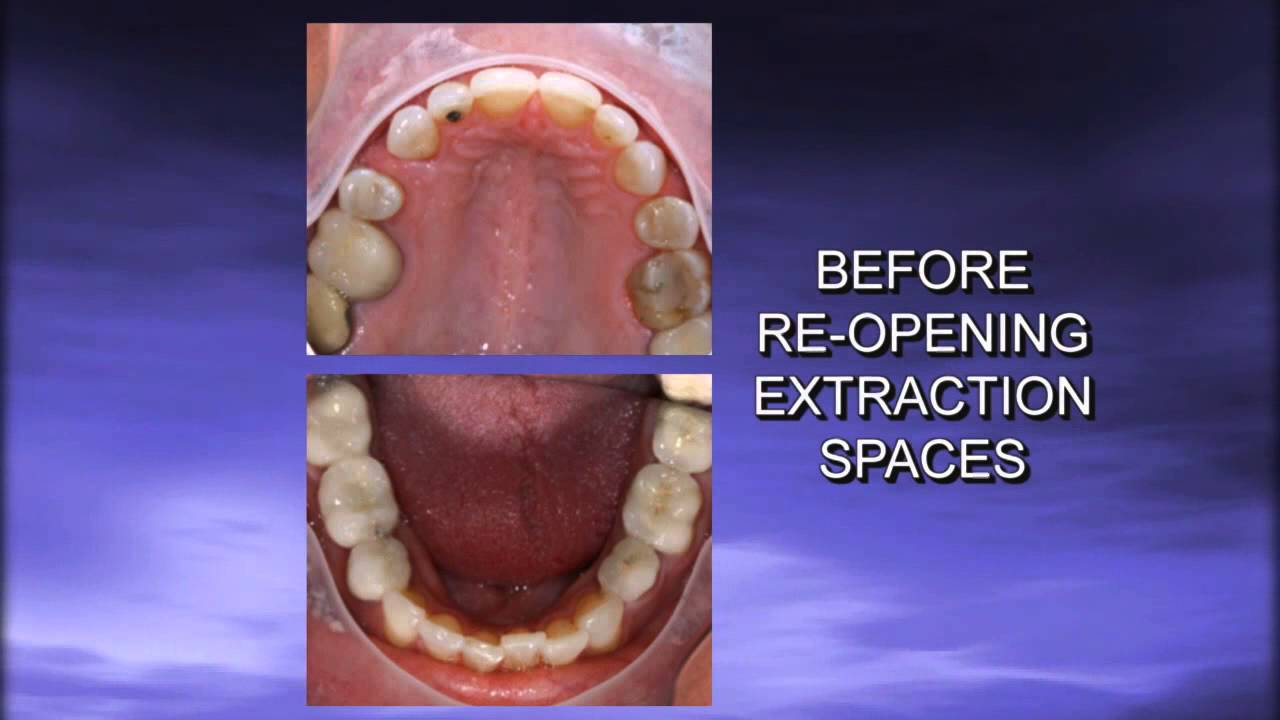
In a televised interview, Dr. William (Bill) Hang discusses how adult orthodontic treatment that involved extracting teeth can sometimes lead to health issues such as daily headaches, jaw pain, snoring, and obstructive sleep apnea (OSA). He explains that the removal of teeth can reduce the space available for the tongue, forcing it toward the back of the throat and narrowing the airway. By reopening the previously extracted spaces—using a removable appliance for 4–6 months followed by braces and eventual implants—tongue space is increased, which can alleviate OSA symptoms, reduce sinus infections, and improve the patient’s smile. Dr. Hang cites statistics that 40% of Americans over 40 snore, 60–80% of snorers test positive for OSA, and untreated OSA can cut life expectancy by about 20%. He presents a case where a patient who had four teeth extracted experienced daily headaches and choking episodes during sleep; after the space‑reopening protocol, her pain vanished, snoring stopped, and sinus infections decreased. The overall treatment duration is roughly one to one and a half years.
Chapters
Many adults have had teeth extracted as part of their orthodontics. Some people get along fine having had this done, but for others, reversing the prior orthodontics may get rid of headaches, jaw pain, snoring, and even sleep apnea. Dr. William Hang believes the space for the tongue in the mouth can directly affect someone's airway and their overall health. By bringing the teeth forward, it is often possible to increase tongue space so the tongue isn't forced to the back of the throat.
This patient had orthodontics over a period of 10 years. In the process, she had 4 teeth extracted. She had headaches almost every day. In fact, she told me that she buys her pain reliever by the jug at Costco. She snored and would wake up thinking she was drowning or choking to death. This is typical of someone who has obstructive sleep apnea, or OSA. OSA is defined as when someone stops breathing during sleep. Not a good thing. We reopened her extraction spaces, giving her more tongue space, and prepared to replace with implants the teeth she had removed. Her pain pattern went away, and she no longer snores or has dreams of drowning or choking because she has enough room in her mouth for her tongue.
It's great that this woman no longer has to suffer, but here are some facts.
40% of people over 40 in the US snore. There's research showing snoring alone is correlated with plaque formation in the carotid arteries. 60 to 80% of snorers test positive for obstructive sleep apnea. Untreated obstructive sleep apnea statistically results in a 20% reduction in life expectancy.
You must be wondering how reopening extraction spaces is done.
Our patients wear removable appliances to open the spaces where the teeth were extracted. This usually takes about 4 to 6 months. Then braces are used to align the teeth and prepare the spaces for implants that will replace the teeth that had been extracted. Overall, the treatment can take from a year to a year and a half. This patient simply wanted a better smile. I think we achieved that, but she also told me that since reopening her extraction spaces, she's not getting any more sinus infections, and she was getting 3 or 4 sinus infections a year.
Dr. William Hang, restoring tongue space for better breathing, less pain, and a more attractive smile.