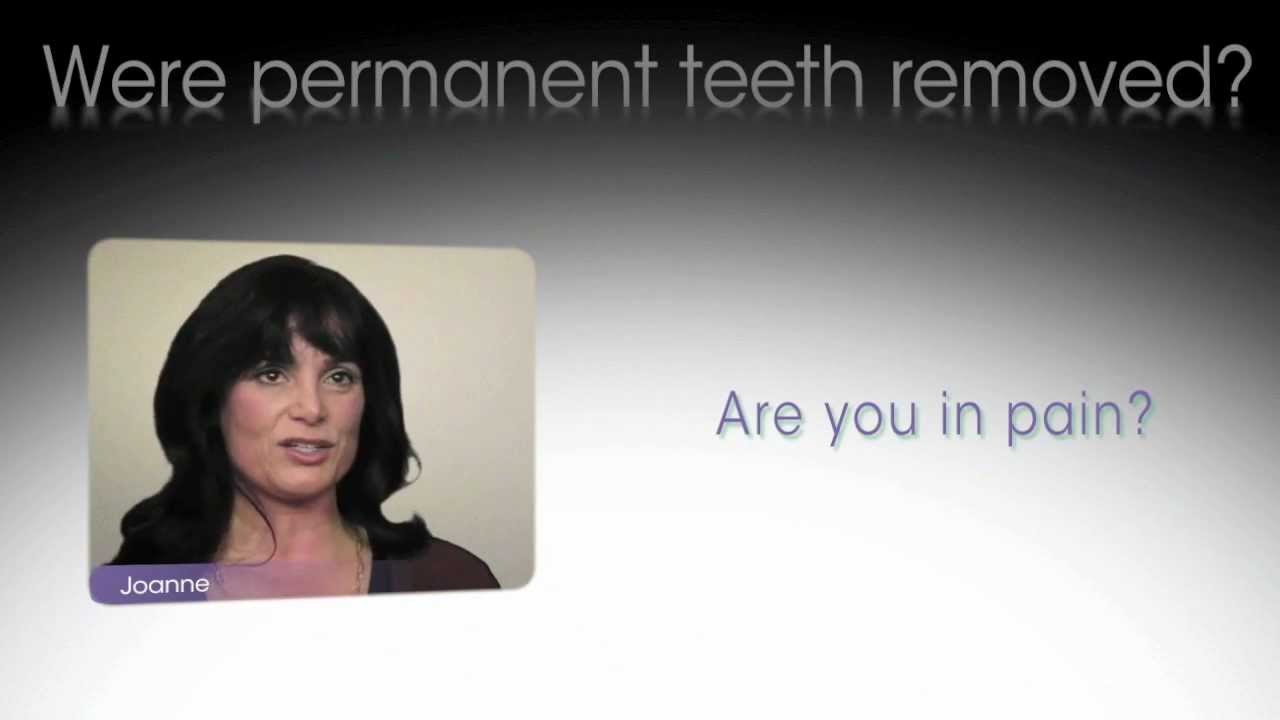
In this interview‑style video, patient Joanne recounts her dramatic improvement after Dr. Bill Hang reopened extraction spaces and restored tongue space in her mouth. Within months she experienced the disappearance of chronic neck, shoulder, and arm pain, a drastic reduction in daily headaches, and an overall better quality of life. Dr. Hang explains the underlying biomechanics: missing tongue space forces the tongue to rest between the teeth, leading to improper jaw posture, clenching, grinding, and over‑activation of the masseter, temporalis, and cervical muscles. He describes how facial cues—gonial angle, lip‑to‑nose relationship, jaw angle—help him identify patients likely to clench and develop TMJ‑related pain. The clinician also reflects on his professional evolution, noting that continuing education taught him that extracting teeth and retracting arches can create long‑term dysfunction, and that listening closely to patients is essential for diagnosis. Joanne shares the personal impact of her relief: a happier family dynamic, more engagement with her daughter, and emotional gratitude. The video blends patient narrative, clinical reasoning, and a broader critique of orthodontic practices that ignore the functional space needed for the tongue and jaw.
Chapters
I couldn't believe just months into this treatment that the pain in the neck and the arms and the shoulders were gone. So that was my first sign, and I didn't put it all together from my teeth, but that's the whole point behind it, is he's given me room in my mouth so that my tongue can rest and my jaws can rest. And when I would tell him, he goes, it's working! I go, oh my goodness! So when I think of my life before to now, it's incredibly different. I mean, do I ever get a headache? Of course I do. I don't have every day of my life a headache. I don't wake up in pain with this pressure above my eye, you know. So I can, I can deal with a headache here and there, but I can't— I could never go back to every single day of my life. Thinking about it makes me want to cry.
It's very simple. The concept is you're giving them back the tongue space. They don't have their tongue They can't breathe well, their jaw doesn't want to be in that position. They can't hold their teeth together, which they should. Their teeth should be lightly together at rest. They can't hold their teeth together in that position. They have to hang their jaw open. They'll posture their tongue between their teeth to kind of splint the upper and lower jaw together. Many of them will clench and grind, and that's where the real pain pattern comes. So, you get the masseter muscles and the anterior temporalis muscles get sore, and many of the cervical muscles as well. The patient postures their head forward and tips their head back like that, and then so all these muscles back here pay a dear price for that. And, you know, they may say, oh, I work at a computer all the time, and naturally, well, yeah, everybody works at a computer today. But when you open the spaces and get rid of the lack of tongue space and the neck pain goes away and they're still working at the computer, they figure it out. It wasn't the computer and that postural issue that was causing the problem.
And I just I would talk to God and just say, I don't want to be here anymore. I don't think it's fair to live like this. It's not fair to anybody. It wasn't fair to my husband and my family. I just don't want people to feel sorry for me. They didn't ask for it, you know.
Once you've been treating in the pain arena and you realize what you're looking for, and I wasn't trained in this in orthotics, you can essentially look at somebody's face. You can look at them in their eyes, across their forehead, and see the whole expression in their face. And you can have a pretty good idea of whether they're carrying a load of pain or not. You don't know the specifics, but you know the general thing. I can also look at the midface and see where the lips are relative to the nose and the chin. I can look at the angle of the jaw over here, and the patients with the more prominent gonial angle— we call it the gonial angle over here— and nicely developed masseter muscles, and the relatively shorter face, not long face like I have, those are the ones who are more likely to be clenching and/or grinding. And those are the ones that will typically have the pain pattern. And so I can say to somebody like, so how often do you have headaches? And they look at me and say, well, how did you know that I had them in the first place? Well, I say, this is what I do for a living, so I kind of know, and I see it written on your face. I'd be pretty surprised if you didn't have the pain pattern. That then opens a discussion, and then they sometimes, they just let it flow. Some are defensive because frankly they don't want to have to get into the discussion. They don't want to have to do something. They just are scared and they think, oh my gosh, I've gone through so much so far. I've done so much. I've looked for so many solutions and I can't find any, and here's just another clown who thinks he's got a solution for my pain pattern.
I got her— I got a phone number about Dr. Hang, and I held on to his number for 2 years. So when he was 5, I brought her in and we took care of her. And then he said to me, do you ever get headaches? And I giggled. I'm like, yes, all the time. 25 years' worth, you know. And then he goes, why don't you come in and we'll just, you know, have a consultation. I'm like, okay. I had no idea what he was talking about, but I did. And they spent like 2 hours with me. It's unbelievable. And then just a ton of different things, and they really believed in their heart that my chronic pain came from my mouth and I clenched all the time. And I don't clench all day long anymore, so I like— my jaws are relaxed now, you know.
I had, I had gone around and I'd taken enough continuing education that I knew taking out teeth was not a good thing. And I had stopped removing teeth and retracting. I knew that. I did that largely for aesthetic reasons and for the allegations by several people in the lecture circuit in dentistry that orthodontists were essentially wrecking faces and producing TMJ problems. That was an allegation that initially when I first heard it, I thought, who is this clown who's saying all this stuff? But when I started to think more about it, and after I did a lot of continuing education, and then began to listen to my patients, that's when I really began to learn. One of the practice management gurus that I heard in the 1980s said perhaps one of the most important things I've ever heard in a seminar. He said to you guys who wear the white coats and you think you know everything— we're the doctors, we're taught this stuff, we know it all, or we think we do— he said, sit down, shut up, Listen to your patients. They'll tell you what's wrong. You just have to be bright enough to understand what they're saying and then to know what to do about it, because patients are very intuitive. And I found that particularly with females, if you understand what they're saying— and you have to, have to listen carefully sometimes what they're saying— but they can diagnose their own case for you. You just have to be bright enough to figure out what they're saying and then translate that into something that you can do for them to address those issues.
I have a happy family. If mommy's not happy, no one's happy, truly. And it just sounds so, you know, cliché, but it's true. If mom's not happy, the house is not cool. So I can tell you, like, my husband will come home and he goes, Joanne, you feel good, I can tell. I'm so happy. He's actually expressing that. He goes, you feel good. I go, I do. You know, I really think with my daughter, she's She's more engaged and she asks to do more with me now. She didn't before. So I see a difference in that, and I'm willing to do it because I'm not in pain. I mean, don't get me wrong, I mean, at 8 o'clock at night, I'm done. I've already done a 12-hour day and I'm pooped.
Conceptually, it's— you would think that it would be just reversing what was done for the patient. Reopening extraction spaces is technically the most challenging thing that I do. Uh, in orthodontics, you could take the world's most crooked teeth with teeth jumbled up all over the place. Frankly, that's not that hard to treat. If you place the braces properly, you throw the wires in, and you know what you're doing, the teeth will line up. 40 years, I now understand that if you retract sometimes even a little bit, that can spell the difference between disaster and being okay. And how do you know where that point is? You, you don't know.
You might not believe it today, but I never thought Dr. Hang could ever take me out of pain. So if you really fall into the category of you remove teeth and you need to reopen your spaces, he can definitely take you out of pain. Some people are like, yeah, yeah, yeah. Some people want to hear it. I mean, I've told the story through the whole— the time that the braces were on, the whole journey, because I work with the public. And I'll get people that are interested and really want to hear my message, and I share. But when people ask, I get a, you know, if they're not really engaging, it's hard for me to really keep saying more and more because I feel like I'm annoying them. You know what I'm saying? Mm-hmm. So I most definitely tell them that you have to believe in them and it will, it will definitely happen. Like my girlfriend Jolene, it happened. She's out of pain.