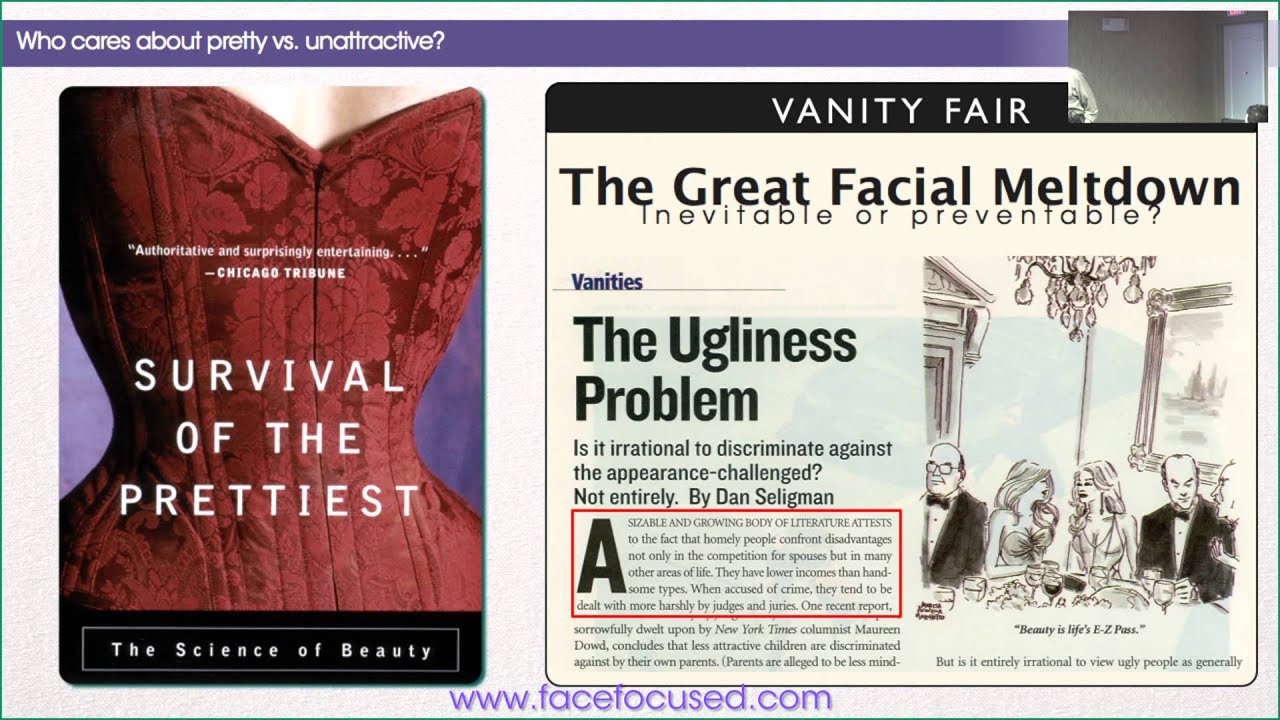
In this monologue, the speaker argues that physical attractiveness is closely linked to health, socioeconomic success, and legal outcomes. Citing Nancy Etcoff’s book Survival of the Prettiest and her Harvard affiliation, the speaker highlights that attractive individuals tend to have better jaw positioning and airway health, reducing the risk of obstructive sleep apnea. A growing body of literature is referenced to show that less attractive ("homely") people face systematic disadvantages: they earn lower incomes, have fewer opportunities in the marriage market, and receive harsher treatment from judges and juries when accused of crimes. The speaker also critiques modern political correctness for avoiding the word “ugly,” noting that openly discussing unattractiveness is significant in academic and public discourse.
Chapters
These are my grandchildren. We all want them to be as attractive as they can be. We want them to be as smart as they can possibly be. And in reality, we're going to talk about the fact that attractiveness and health are really kind of interrelated, whether we want to believe it or not. How many people have been to Cambridge, Massachusetts? Okay. Is that the mecca of beautiful people, where looking great is important? My point here is that Nancy Etcoff, who is the author of this book, Survival of the Prettiest, teaches at Harvard University. So, for someone to— from Harvard University to talk about survival of the prettiest, And talk about something as silly as looking good, I think that's significant. As politically incorrect as it is to admit that you think someone should look nice, I want my kids to be as attractive as they can be, and we— I think we all do. Are the prettiest the smartest? Maybe. They have better jaw position, better airways, and are less likely to suffer OSA. The ugliness problem. That's pretty serious when someone would use the term ugly in the politically correct— incorrect world where we couldn't even call a garbage man a garbage man. He would be a sanitary engineer, right? We couldn't even say that today because it's so politically incorrect, someone might get offended. For someone to say the word ugly in a publication is pretty significant. And so, here we have a quote out of that magazine. A sizable and growing body of literature attests to the fact that homely people confront disadvantages not not only in the competition for spouses, but in many other areas of life, have lower incomes than handsome types. When accused of a crime, they tend to be dealt with more harshly by judges and juries. Does that really surprise anybody? No. I don't think anybody's surprised about that at all.