In this lecture, the speaker presents the "cosmetic" or "indicator" line—a diagnostic measurement developed by Dr. John Mew over 50 years ago—as a superior alternative to traditional cephalometric analyses for assessing facial balance, airway health, and malocclusion risk. The line is measured as the linear distance from the incisal edge of the upper central incisor to the tip of the nose. Normative values are age‑ and sex‑specific (female: 21 mm + age; male: 23 mm + age for children; adult males 38‑42 mm, females 36‑40 mm). Deviations greater than 5 mm above the norm indicate a retrusive maxilla/mandible, poorer facial balance, and a higher likelihood of airway obstruction. The speaker critiques cephalometric analyses as unreliable, citing Larry Andrews’ comment that incisor position can vary up to 12 mm across methods. Through a series of patient case images, the talk demonstrates how the indicator line predicts growth patterns and malocclusion types (Class I, II, III), correlates with the Bolton Norm, and guides orthotropic treatment aimed at forward facial development. The presenter argues that the indicator line is the most important diagnostic tool in orthodontics because it directly reflects maxillary position across all malocclusions and informs airway‑focused treatment.
Chapters
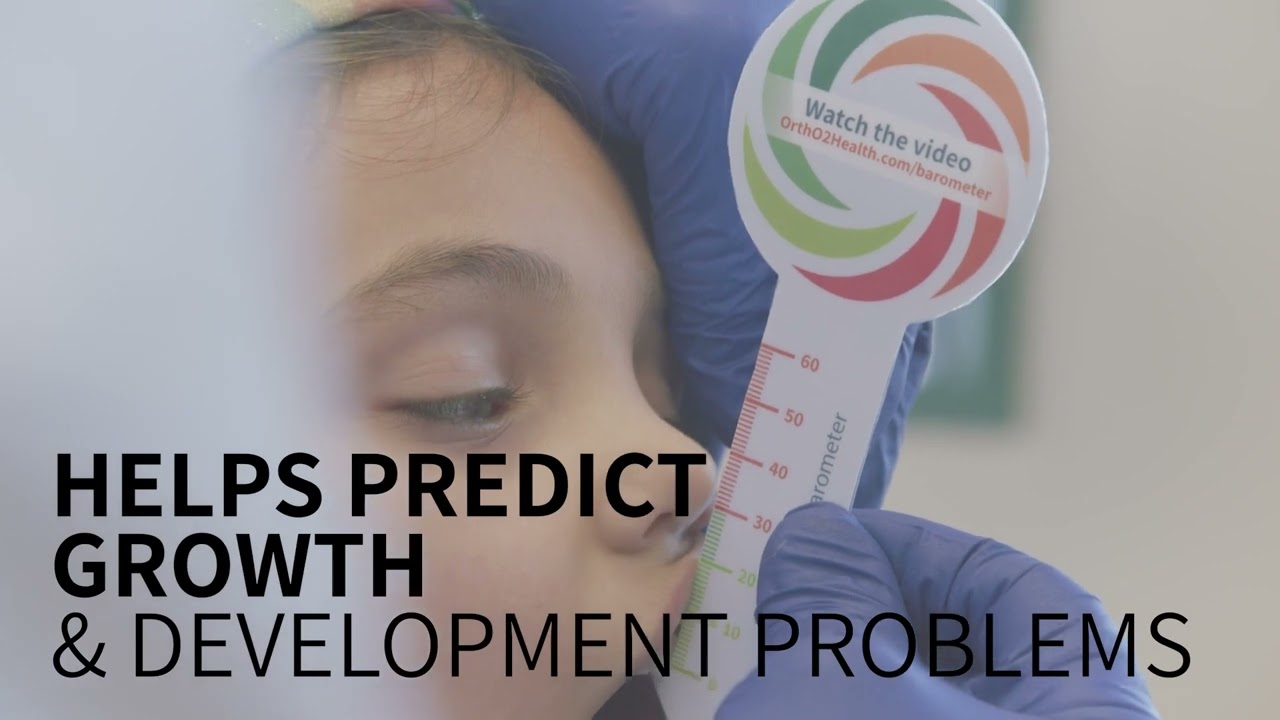
Welcome back. This segment is entitled Diagnostic Criteria, specifically for the cosmetic or indicator line. Dr. John Mew of London, England developed the indicator line measurement more than 50 years ago. Many of us in the United States call it the cosmetic line, but it's still the same thing. The backbone of orthodontic diagnosis traditionally has been cephalometric analyses. And this question was asked by Dr. Larry Andrews in a seminar many years ago that I attended. He answered that question himself and stated, because none of them work. He further stated, using various cephalometric analyses, the ideal position of the upper incisor in the face can vary by as much as 12 millimeters. With the sense of humor that I have, when I heard him say this, it reminded me of a birthday party where we did a pin the tail on the donkey routine. So, I think cephalometric analyses are every bit as accurate as doing this blindfolded. The point here is, I have never used traditional cephalometric analyses, because all they are is an average of people in Western society, and all of us in Western society have our faces down and back too far. It doesn't help us when we're dealing with airway issues and want to get patients to have better airways. So, we use these diagnostic criteria for children in the orthotropics age, under age 10, where we're trying to develop the maxilla and the mandible forward, but they're just as applicable for every child and for adults as well. John Mew developed this because he recognized that the very first thing to happen in every malocclusion, whether it's Class I, Class II, or Class III, is that the upper incisors drop down and back in the face. So, here is the measurement. It's the distance between the incisal edge of the upper incisor and the tip of the nose. It's very easy to calculate. For a child, for a female, it's 21 millimeters plus the patient's age in years. For a male, it's 23 millimeters plus the patient's age in years. And here I've illustrated it If you have a 5-year-old male, it's 23 plus 5, which equals 28. It's very accurate for adults as well. For a male adult, 38 to 42 is the ideal, and for a female, 36 to 40. If you find patients with— that have the number in this range, you'll generally see that they have a very balanced face. The larger the number is outside this range, the less balanced the face is going to be. It indicates usually that the upper and lower jaws are back dramatically, and those are the patients who are more likely to have airway issues, as the soft palate and the mandible with the tongue attached to it fall back. A measurement of more than 5 millimeters greater than the norm at any given age identifies a child's face that is growing less balanced than ideal. And those are the ones that we want to treat orthotropically to develop their faces forward, to get better facial balance and better airways. So, let's apply it to some children here. You see a girl who's here at age 6, and she's kind of cute. By age 9, no one would really describe her as being cute. The trouble here is that this is completely predictable. Her face was not growing favorably, and in the 3 years that passed, it got less balanced dramatically. But this could have easily been predicted because this girl's cosmetic or indicator line measurement was probably 8 to 10 millimeters too high, indicating that the facial growth was not favorable. Let's apply this to some other patients. Here's a girl who has a cosmetic line of 32, with the ideal being 30. Very, very close to the norm, something we rarely see in our practice. Because they don't need orthodontics. They don't show up in our practice. And frankly, there are very few kids that are like this. This patient has the Bolton Norm superimposed over the face, showing how well the face adapts to the Bolton Norm. We're going to deal with that in another segment, with the Bolton Norm. Now you can see a patient who's 10 years of age, and the number for a female at that age should be 21+ 10= 31, but hers is 46. And using the Bolton norm, you can see how far back her face really is. She has a serious deep bite occlusion with crowding as well. She needs treatment, but it's frankly very late to try to help her. Let's look at some other patients. Here's something we don't see very frequently at all, which is a patient whose face grows very, very, very favorably. And his cosmetic line was virtually on the money every time I took these pictures. And using the Bolton Norm, you can see just how well-balanced his face is. He had perfect teeth and never needed any orthodontics. He was also an excellent athlete. Here, however, is a young girl whose facial balance is changing, will change as you'll see right now. Her number was very high to begin with, and nothing was done to change that. And you can see how her face gets longer and longer and longer. Finally, down to this position, and it's not very well-balanced at all, as you can see. But the cosmetic line predicted this. You can understand that by now her airway is not very good, so that's why I put in the drinking straw to make reference to the fact that her airway is very poor. Let's look at— here's a patient with an Angle Class I malocclusion, and you see that he has some crowded teeth. His Cosmetic Line is 41.5 millimeters, and at his age, it should be 32. So, you can see how far back his face really is, and this is a Class I occlusion. So, people say Class I occlusion is normal. Well, yes and no. This— his facial balance is already back from where it really should be, and the orthodontist looks at it and sees the crowded teeth. There's much more to do than just take care of the crowded teeth. Let's look at a Class II malocclusion. In this particular case, this boy's cosmetic line is 46mm, and it should be 39. Basically, this means that the maxilla is too far back, and the mandible is even farther back. But then this is completely congruous with what we've talked about previously, where Class II malocclusions have the maxilla set too far back. And they're never too far forward. So, this cosmetic line, in this case, shows very accurately how that applies. Now, let's look at a patient with a Class III malocclusion. Most of us in orthodontics have routinely thought that the mandible is too far forward in these cases. In reality, that's rarely the case. What really happens is that in these Class III cases is that the maxilla is almost always down and back. And here it's shown in this case that that's the case. The cosmetic line in this case is 49.5 mm, and it should be 36 at this age. And you can see how far off the teeth are in the Class III direction. So, here you have it, the diagnostic criteria, the cosmetic or indicator line. In my opinion, it is the most important diagnostic tool in orthodontics and shows how the maxilla is back in every malocclusion.