248: Nigel Bennett — Make a Difference
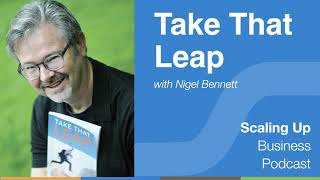
Nigel Bennett founded Aquaguard in 1992 to protect water after field experiences showed him the need. The company now operates in 104 countries with 3,000 clients, and Bennett used Scaling Up and peer groups to systematize growth. He stepped back in 2012, took a family trip in 2014-15, and now uses the business as a platform for volunteering and coaching.
Chapters
Foreign.
Welcome again to the Scaling Up Business podcast. So we're going to hear a great entrepreneur story today about getting your business and life dialed in so that it really is not only are you hitting your goals, but you're hitting your, like, your bigger life goals. Your whole life works. You're fulfilling your purpose and your passion in life and you're doing a great business at the same time. So we'll be talking in a minute with Nigel Bennett about what that is for him and how he got to that place. And I've got my afternoon coffee, you've got yours.
Here we go.
It's a warm day here in Northern California. We've had crazy wind the last couple days. Crazy, crazy wind. I was out foil surfing a couple days ago and the wind was just kind of too much blowing all around with it. And I'd like to get out again. If I wasn't talking to you, I'd be out there.
I'd say. I'd say the same thing. I'd be skiing if I was talking to you. Oh, Bill.
Let me remind folks that if you want to get your business dialed in, you want things to run smoothly without so much effort on your part, then you want to get your team working without your advice and without your instruction. And that's why I'm so happy to have as one of our sponsor partners, suite Process. If you've got team members who ask you the same questions over and over again and you wish you could just turn them on to one thing so they could get their questions answered and they can get back to work, well, there's a thing for that. It's sweet process. It's a software package, online software that enables companies to have one place for procedures, processes, policies, like everything in one place. Teach them, deploy them, refer to them and get everyone adopting them. And then also let those same people keep leveling up the processes, keep fixing them so they really are the latest and greatest, right? So you can keep building those things over time. With Suite Process, it becomes that one place, that one source of truth for the company where everybody can go, every level of the company can figure out how to get jobs done within the business. Makes it easy to train new people and train existing employees or cross train them in order for them to get their tasks done. And as a sponsor, they've got a special offer for the listeners of this show because they know that our audience and their core customer are so tightly aligned, they've extended their regular 14 day free trial. You can use our dedicated signup link and get a total of 28 days. Double that time. Go to sweetprocess.com scalingup sweetprocess.com scaling up to sign up now. No credit card required. All right. Hopefully get out there, take care of sweetprocess.com and they will hook you up. Hi, everyone. I'm Bill Gallagher, host of the show scaling coach. And I'm so happy to bring you back. Another great story in the world of scaling up. We're talking today with Nigel Bennett. Nigel is co founder and are you still CEO?
No, no, no, no. I'm just. No, no, no.
Aquaguard spill response aquaguard.com and we're really going to hear his story about growing his business and then getting out of the business without necessarily selling a business. Something that I know and love also so much. So how do you get out of it? You do it by applying the whole scaling up framework. We're going to talk with Nigel a little bit about that and some of the things that he's learned and then why that's so important, what you can do with that time, that money and that impact in the world. So where it all begins. So welcome to the show, Nigel.
Thanks, Bill. It's awesome to be here. Really appreciate it. I really. This is great. And yeah, I see. I follow you. Yeah, I follow you around. I see you ripping around out in the bay there on that, that hydrofoil thing. I don't know what the heck. That's just unbelievable what you're doing on that.
It's really, really cool. So, you know, I realized especially this year, I'm always thinking fun and having some fun and doing outdoor things is always important to me. But this year I'm like, God, I'm cooped up at home. I'm doing a lot of hours in front of the camera, whether it's zoom or live streaming or something like that. Same office every day right here. And can you see here the office? Yeah, I can see.
Yeah.
See behind the scene shot. So here we are. And I'm like, I gotta do something. So I, I like sailing. And that would be what I normally would do. And even when the wind's a little light, you can go out and kind of, you know, your a little slack, but you still can get out and sail. Well, even that's hard. And I don't, I rent a boat through a boat club, but they've been kind of shut down by Covid for and you'd have to have a crew with you the whole time, which raises some complications. I decided to pick up something new. And I looked at surfing, which I love to do, and I would normally do in, like, warm water places, except that's warm here and surf is kind of far from where. So the central bay doesn't really have surf. I mean, there's bay chop and stuff, or the. But not like breaking surf. So I looked around. What are people doing? They're kiting. There's this new thing called winging. They're foiling. I'm like, oh, I'm gonna get that. So I started doing that in the summer, and then the wind died. I'm like, I'm still here. And so I bought one of these e. Foil thing. So it's surfboard except with a motor on it.
I know, it's crazy. It's crazy.
It's electric motor, but it still gets you going. So it's electric wind.
Yeah, yeah. I saw. I saw another. A friend of ours, Tony Lilios, pick that up. He lives in Lake Tahoe, right. And he's ripping around on this. And then you started doing this, and I'm looking like, this is incredible.
You need one now.
I know, I know, I know, I know. I'm a surfer, too. I'm not a good surfer, but I. I try to surf as much as I can, and it's over the world.
Haven't you?
Yeah, yeah, yeah, yeah, we did. You know, I'll talk about it a bit later. But I was so fortunate back in 2012 to basically set up my business to run without me. And I. Then I grabbed my family and we took off for a year off the grid. And we. You know the movie Endless Summer? And we. We tried to do An Endless Summer, which we did, but we ended up in other places like Bhutan and Myanmar, where there wasn't, you know, the surf. So. But we were in Brazil and all these other. We did it. We did an endless summer surf trip with my kids. And. And it was really good. And I guess there's something that I wanted to say first is that a lot of your listeners probably don't realize that you and I were in prison together.
We haven't been to prison, so.
Yeah.
Here's my phone.
There you go. Sweet. Yeah, it's kind of blurry.
1964. Is that the year?
Yeah, I think it's 64. Yeah. Then there. Then there's Revisited, which is a great movie as well. Which is.
Which is.
They revisit the whole trip. But anyway, back to the prison thing. I know you were going to skirt that, but. No, we actually. We. Our families we did a, we did a volunteer in Northern California two years ago now. I think it was where we were helping, we were volunteering inside a maximum security prison, which was a really humbling and incredible experience. And then I just want the listeners to know that, you know, I watch your podcast all the time. It's fantastic. But your family has such a big heart. And Lori, your wife, you know, I was talking to her, she's in one of my business groups. And you know, the way you guys rallied together and we're, we're raising money and raising funds for the front care workers and meals and the amount of money that you guys were able to put together for the front, front, the front end workers working to help the people dealing with COVID was just amazing. So you guys, I just want to, you know, it's just honored to be on your show. But your purpose, the what you guys, you and Lori and your family is just, you know, it's just remarkable. And I just wanted your audience because your audience, I'm sure they don't know that and I'm sure you never talk about it, but it's really important and it's really important to me and my family. So thank you, thank you so much for what you guys do.
Let's talk about a few of those things. We'll. And we'll weave them into the show and they're your business and what you care about. So. Because it's about purpose centered business and how valuable. So we did, we did the, the prison coaching together. This is where we went for two days. You go as an entrepreneur, CEO, speaker, whatever, and someone of some accomplishment already, and you provide some underwriting the program and then you get to coach people who are incarcerated, right? And serious incarceration for serious crimes in a maximum security place. And the purpose, the person who led that is Kat Hoke. You can go. Listen to me. Amazing episode of the show. We talked about the program and it's just really great. They're not doing so much because of the COVID situation now in the prisons, but I'm sure they'll be back soon.
But it's such a great program for, you know, entrepreneurs to give back and to go. You know, you can go and you can volunteer with Kat and her an amazing group called Hustle 2.0. And you can go and you can actually coach these guys. You know, hopefully they're going to get out one day and help them with little micro businesses, little, little, little things. You know, they. We do a Dragon's Den, we do a Dragon's Den thing, and we vote for the bet. You know, it was. It was. Was really quite an experience anyway, so I kind of went off track there, but. No, no, it's a great. We.
We were coaching people. You know, the thing that I took away from that, I. So I was afraid to go into a prison, right. To go in the bars, pine, the wire, all of that. Was really nervous about that and afraid about how intense and, like, how aggressive these people, they're in there convicted of violent crimes. And as many of them will tell you, yeah, I did that and I did that. But then they tell you everything else, and I just was stunned by the beauty of the human spirit. Like, these people who by their own admission, had many of them, most of them had done the things that they were in for. They had committed crimes, including murders, and they were serving their time, paying their debt for that and reconciling themselves. But what I was stunned with was just how beautiful and human they were and how, like, I just sort of expected that maybe there wouldn't be a lot to redeem, but they were awesome. And I was reminded of how much I love people.
Yeah, I don't think I've cried that much. And just hearing their backstory, and I honestly believe that if you, me, or any of us were raised in the situation that they were raised in, we'd probably be in that same position.
When you hear their story, your backstory, that's what came next. Of course, that followed the whole sequence of a completely different life than I have led, made mistakes and done stupid things, especially when I was a teenager and young adult, that other people might have. Might. It might have progressed further. Right? Yeah. Yeah. So, yeah, that was really, like, powerful reminder of what makes people extraordinary. It's easy to get bogged down and people suck.
It is, it is, it is. And I, you know, going. Going down there, I had. I didn't know what to expect, like you. I was scared. I was going in, you know, all these different security checks, and I was scared and I thought, oh, these guys probably, they all need to be here. You know, they're, you know, criminals and that experience and learning their history and then coming out. And then I was sitting at a little restaurant with my wife Reiko, back in Vancouver here. The next morning, the Monday morning that we got back, and a friend of mine, A friend of mine walked by and he says, oh, what you been doing on the weekend? I said, wow. I was in a maximum security prison in. In Northern California kind of volunteering, and he Goes, oh, they all belong. To be locked up for life in there. And I'm like, that's actually probably what I thought on Friday. And just two or three days later, hearing the stories and like you said, the human side of it could be me, it could be you, it could be any of us. So it was really amazing for. Get a bunch of entrepreneurs from our class at MIT in Boston Entrepreneurs Conclave, and our families to go in and, you know, just give a little bit of. Give a little bit of back and a little bit of entrepreneurial coaching and sharing some of the even lessons from the edge that we've gone through in our entrepreneurial lives. And hopefully they could take a little bit from that and put that into their little businesses. So, yeah.
Yeah. So there's another connection we have, and one of our past guests on the show and a past speaker at the. The Scaling Up Summits is Lynn Twist.
Yeah. Yeah. Yeah. That's awesome. That's. That's funny because, I mean, I'm very. You guys are very close to Lynn. We're are. My family is very close to Lynn Twist. My son and I actually started a podcast called Impact, where we interview game changers and impact makers around the world. And Lynn actually, her. Her podcast goes live tomorrow. So we interviewed her last week, and she's coming up. Yeah. That's incredible. Incredible. She is. She's a remarkable. Remarkable.
Shout out to Lissy. Lissy, we need to invite Lynn to come back on and talk about the opportunity of this time. I think that would be really great. So long roundabout, and then you. Gracious Lori. So Lori and her friends, amazing. At the beginning of the pandemic, they realized that hospitals were going to be overwhelmed and businesses were going to be impacted. So they looked to connect the two with their own entrepreneurial style, and they started raising money to buy meals from restaurants and bring them to hospital staff. And it makes simple sense. There's been some things like that going on around the country. So they started this group, East Bay FDR, and they raised over $700,000 a month and delivered thousands and thousands of meals to the staffs at area hospitals. And then that eventually actually merged into a national organization.
And.
And Laura could say more about that. But the space that they pulled that together because it was so topical, so relevant, and in the moment was pretty amazing, right?
Absolutely. I mean, when she shared that story, I was like, oh, yeah? How much did you. I was. I was blown away how much she raised, and the numbers even got higher since I talked to her. Last. So that's. You guys is just fantastic. So again, is living with this purpose, with this purpose and is, you know, the older I get, the older I get, I'm 58, I think, turning 59, but the older I get, it's that, you know, it's, it's like living with purpose and leveraging my business to have purpose. And the purpose, you know, what is the purpose of my business. My purpose of the business when I was young is to make enough money to survive, which is great. And, but then when it comes to a point is that, you know, hoarding, hoarding as much money as you can, well, there's no point in that. You become pretty miserable pretty quick and it's that leveraging your porn to do good or whatever, there's, there's nothing more powerful to me. And, and to be able to do it with your family, like you guys do a lot with your family and we do everything with our family. All my kids, they're all in their 20s now and I just honestly believe, for me, anyway, there's nothing more powerful in my life to do some volunteer work or to do some, some purposeful work with your family. Yeah, that's it. I end right there for me.
So talk, take us back to the beginning. Talk about how you got into this business, why you did this business. Share some of that story.
So I guess it goes way back. The day after my, the day after my high school, I was one of these, you know, 18 year old, hungover kids that had never been outside of, you know, North America. And I was on a flight to Venezuela and I was, for the next, I don't know, six or eight months, I was hanging out of helicopters, taking photographs, fixed wing aircraft and helicopters around. We were mapping the coastline for my father's environmental mapping company. And so I was working for him for about 10 years in about 10 or 12 different countries. I was in Brazil, I was in Venezuela, I was in Indonesia, China, Egypt. But when I was in Egypt, I was really struck. I was doing an overflight of the Sinai Peninsula. I know the Sinai Peninsula. And I was going up the west side of the peninsula. Yeah, yeah, that's right. Just kind of south of Suez. And then I was going up the side. I actually flew out of a helicopter base about 100 km south of Suez. Military checkpoints, the whole bit. And actually I ended up wandering into a, into a minefield. I didn't, that's a whole different story. And I had to get coached through it. That was, yeah, it was kind of crazy. But I went to a helicopter base and there was this big American, ex Vietnam pilot, and he kind of waddles out and he says to me, you know, I'm instructed to take you on an overflight up the Sinai. And I'm like, okay, cool. And he says, but I can only take you to certain areas. The other areas are off limits. I can't show you. And I'm like, yeah, okay, fine. So I get the helicopter, put on the headset in the co pilot seat, and we had two oil executives in the back. And he says, I gotta, I gotta take these guys over to the other side, drop them off, and then I'll show you some areas. And as soon as I put the headset on, I could talk to him. He said, yeah, I'm gonna, I'm gonna take you and. But I'm gonna drop these guys off and I'll show you some spots I'm not supposed to take you. So we flew over, and as we're. As we're in the air, I had a camera. I had a camera kind of between my legs, and there's a glass, you know, glass floor in the front of the chopper.
Yeah.
And he looks over and he go, hey, kid, whatever you do, do not let the guys in the backseat see you're holding a camera. Because if they, if they do you, we could both be arrested for spying and thrown in jail. And I'm like, oh, shit. Okay. So we dropped these guys off and then we flew north. And all I saw was pipeline after pipeline after pipeline that had been ruptured. And it was like a lake of oil, or river oil, flowing into the Red Sea. And he said, take as many photographs as you guess. I was banging off photographs, as many as I could. We landed back at this base called Ras Garab, which is south of Suez. And he. I got out of the chopper and he looked at me. It was a big guy and he had a bit of a limp. And he looked at me and he said, okay, kid, take those photographs and show them to who needs to see them. And I'm like, okay. He says, I know what you're doing. I know why you're here, but I really don't think he can make a difference. I don't think he can make a difference. I was like, what, are you kidding me? I was probably 22 by this time. I said, what do you mean? I was full of vim and vigor and I, you know, I. I really, I never forgot that for the rest of my life. He told me that I, you know, I couldn't make a difference and I was working with my father, but I, I wrote a book called, I'll tell you, I'll show you the book later. But I wrote, I wrote a book about this adventure and my father ended up getting thrown in jail in Egypt and I had to escape after this. But I got back to Canada and Vancouver and that, that resonation of, you know, you can't make a difference really, really hit me hard. And so I broke off on my dad's company and I formed Aquaguard spill response in 1992. So 20 something years ago. And so now where are we? We're in 2021. And so since that time, you know, I grabbed my sister and another guy and we formed this company to help protect the world's most precious resource, which is water. And so we formed this business and we're, we've done business in about 104 countries or about 3,000 clients around the world today. Yeah, yeah. I don't have offices there, but I've done business first.
Launch time.
Yeah. No, no, no. Now this is 25, 28 years later. Took a while. Just like everything. But the, the years, the years went by. The years went by and you know, I. What I, I would go into my office every morning and I call it my, the doorknob effect. I would like a lot of people, you go to the, you go to your office door, you touch it and it feels like it's vibrating because you know, as soon as you step through it, it's going to be absolute chaos on the other side all day long. For the entrepreneur, Nigel, I need this, I need that, I need that. I went on for 20 years like that. I was in my shower every morning wondering, you know, can I hire somebody or can I make payroll or do I have to lay somebody off? Are we going to make it another month, year after year after year? And you'd go into the office and it just became complete hell. And another eo, a guy that I knew had joined the Entrepreneurs Organization or the Young Entrepreneurs Organization at that time, right back when before they changed the name and he was a 330 pound lineman for professional Canadian football team and he just retired and he joined EO because he had a business and he literally grabbed me by the scruff of the neck. He said, nigel, you got to come to a meeting with this young Entrepreneurs Organization. I'd like, you know what, I have no time. I've got young, young little kids. I've got a business that's Trying to survive. I haven't got time to screw around and, you know, with something like this. But he literally forced me to go. And that was one of the best decisions that I ever made because I got into the entrepreneur's organization, and in there, I got into a focus group, or we call a forum group. And with about nine or 10 of us, which stayed together for 15 years, and we were able to help, help each other, support each other with our businesses, with our families over many, many years. And that led me. Being in the entrepreneur's organization led me to where, actually, where I met Laurie. Your wife is at MIT with an entrepreneurial conclave, which was called Birthing a Giant, which was now our group is called the Gathering of Titans. And we've been together for 17 years. Or 16. 17 years. And the very first session that I went to, I sat. I was. I was ready to vomit because I. I didn't think I'm add, and I got dyslexia, and I had trouble in school. And I just never feel that I fit in with, you know, entrepreneurs or people that I thought were smart. And they were all going to be at this positive.
So most of our entrepreneurs have this. I don't feel like I fit in. I'm not sure I belong here. And there's a fancy label for it. You probably all know imposter syndrome. And then many of us have some kind of issue like ADD or something else, where we struggle with paying attention, staying focused, focused, reading, whatever, and that leads us to this affliction that we call entrepreneurship.
Exactly. And I'm driving up this driveway at this Endicott house at mit, and I just feel like I'm going to vomit on the driveway. I go in and I sit at the back of the class. There's a conference area, and there's 75 entrepreneurs from all over North America, and some from around the world, too. And I sat in the back, and I don't know anybody. Nobody knows anybody. And then Vern Harnish comes and sits up at the front, and he says to the whole group, he says, hey, guys, I'm Vern Harnish. You know, I'm facilitator here. I'm like, okay, that's cool. I don't even. I didn't even know who he was. And he says, let me tell you something. Every successful business person, every successful human has, has or had success. A coach or multiple coaches, he says. And he started spouting off like Steve Jobs was alive at the time. Steve Jobs and Michael Dell and Bill Gates, blah, blah, blah. He was going off and off about this. He says, you cannot do life alone. You cannot do life alone. Especially an entrepreneur. You cannot do life alone. And I, fortunately, had hired a coach about two, three months before this. And Vern asked our class, he said, how many of you have coaches? Put up your hands right now. And I'm like, okay. And I looked around, I thought everybody had a coach. I thought these guys were geniuses. There's three of us in the whole class. And Vern said, three of you said, come on, guys. Like, you know, you need to get a coach. So he's a scaling up coach that I've been working with for years called Kevin Lawrence that, you know, and lots.
Of other people also and been part of our community. Like that. So.
Exactly, exactly. Yeah.
Do you still work with him today? With Kevin?
The past couple of years, we scaled back to, you know, we were doing once a quarter, and now we chat. We chat. So. But I worked with him for 16, 17 years. Long, long time. Yeah.
Yeah.
And the most incredible thing was that, you know, I thought I hadn't had. I thought number one was it's too expensive. Number two is I don't have time. And. But what I realized that if I look back now, the only reason that I'm sitting here in front of you today is because, one, I joined the Entrepreneurs Organization or a really good peer group, and number two is I got a really good coach. And if I didn't have those two key things, I would not be sitting here today. And, I mean, we set. Kevin and I said all sorts of things that we set up. At first, he looked at my asteroid belt, where all the things were coming at me so fast. And we picked off the little guys first and worked our way up to the bigger things. And we fired CEOs and we hired people and, you know, tell people what.
Asteroid belt means to you.
Yeah, an asteroid belt. So we had various things inside my personal life and in my business life that I was dealing with. And what we did is we would take little bites out of little guys first, just to get a flow going. Getting a flow going. And then Kevin calls it licking the toad. So every morning you'd get up and you'd get rid of the ugly thing first, the ugliest thing first, and get on with your day, because if not, it's a knot in your stomach for the whole day. And my son. My son has it down in the gym here. He has lick the toad written on the workout machine. So he's down there doing the hardest stuff first. So it's like this, this family thing now we've got Lick the Toad. So, yeah, we worked our way through the asteroid belt and you know, I was. There's all these ups and downs through the business. But then one day came where I was on the phone with Kevin and we'd really got a rhythm going. We had, we got a rhythm going, we were knocking off things and we were really moving things forward. And I was able to set the business up to run without me. There's a long story. I mean, I went with Lynn Twist deep into the Amazon. My business was almost sold. I was selling it to a British company, a large British company. I've been working with them for about 18 months on due diligence, back and forth. And they give me a deposit and, and I had pretty much sold. I had one partner, one business partner. We pretty much sold it. But then I went deep into the Amazon rainforest with Lentwist and we did a ceremony with the, with a tribe called the Oshawar. And I don't know, I think it was my deep conscience that was talking to me during the ceremony, doing this hallucination that I was having that basically told me not to sell my company and to leverage my company to keep. Or to keep my company, leverage my company to do good in the world, whatever that meant. And I was pulling my hair out. I had already sold the business. I flew back to Vancouver, I flew to London, I pulled the deal off the table and I said, it's not for sale. I bought out my business partner and I brought a guy that had been working with our business for. Since he was 18 years old. He knew every facet of it and put him in to basically run the business. And I stepped back. So I'm sitting there on the couch in my living room and Reiko, my wife, is in the kitchen and I'm going through my asteroid belt and my list with Kevin Lawrence and he says, hey man, you've basically done everything on your list. I'm like, I said what? He said, you've done everything on your list. You've basically set everything up the way we wanted to set it up over the years. And you've got your freedom, you've got your freedom back because that's the number one thing you were going to sell. I asked you 10 years ago, if you were to sell your business right now, how much would you sell it for? And I told you $1, because I wanted my freedom back. We're now at the point we're now at the point where you've got that freedom. And I just didn't realize it. And he said, there's one thing left on your list. I said, okay, what's that? He says, the one thing that you wanted to do is get your freedom back and take your family and travel around the world for a year. And so I asked my wife if she still wanted to do it. She was in the kitchen and. And I yelled over to her, and I said, I doubt that she thinks we can go. And I yelled over. I said, reiko, we had this on our list. Do you think we can still go? She goes, absolutely, let's go. So I was astonished. And we put it together in like, three months, and we were gone. Gone for a year. Gone for a year. And again, being an entrepreneur and being the founder of the business since day one, my stomach was in knots for the first month or two because I really thought that I was so important that I was needed in the business. But as the months went by, I had less and less and less contact with my office. And I got back and it was doing much better without me. And that was in 2012. Well, actually, 2012 is when I set it up. We. We did our walkabout in 2014, 2015. And so it's six years ago now. And yeah, so I've kept the business and I leveraged my business. I leveraged my platform because I was really scared that if I. If I sold the. The business at that time, anyway, I sold the business, I would lose my platform. And so I've been able to leverage the platform that I've built over 30 years in all these different countries to do good. And it's just.
Exit and then what you've done with that. So the fun stuff and then how you got there. I did a similar thing with Lori years ago when we were running the jewelry company. We got to this point where we realized that we had promised each other that when the kids had a certain age, we were going to take long trips. And now it was approaching that time. And yet we just come out of the dip of 2009, and we were starting to grow pretty rapidly, actually. And we're. But we have to take this trip because we said this is the time. So we started doing that for. Preparing for that for a year, and then we did it. Among the things that we did is implement all the habits and get our processes dialed, which is why I want to mention again our sponsor process. So if you would like to get your processes handed over so that you can go sail around Italy or go surfing around the world or whatever is on your asteroid belt, whatever is your wish list, your bucket list, whatever you call it. But you have team members who pester you all day long with how to get things done and what's the right way to do things. And you want to get all that stuff into suite process and you want to have the team managing the ongoing refining of those things. So that's why we love having suite Process as a key partner sponsor of the show. Because they help companies create one central place to train and refer to that, that reference for all the processes, all the managers, all the ground level employees to be able to continuously collaborate to improve the process procedures and guidelines for the company over time. So it provides that all in one place and get everybody on board, train the new people, retrain, cross train existing people, let everybody be leveling up your process without you having to necessarily be there anymore. Pull out of your. And that's among the many things and there's a few others we're going to talk about in just a minute. But a really big one is starting to hand over those processes, get them nailed down and codified into something that's more living. Not like a paper process manual or an ops manual, but an online one. So. Sweetprocess.com scalingup at that special dedicated link for our listeners. Sweetprocess.com scalingup when you sign up there, you get twice the normal free trial. You get 28 days, nearly a month, unless it's February. Actually, as we release this right, you'll get a 28 day free trial, no credit card required. So go to sweetprocess.com scalingup try it out, support our sponsor. They help make the show possible. So what we did is we got, we were used to developing quarterly plans and annual plans and themes and things like that. And we got our dashboards nailed and our huddles and weekly rhythms all kind of nailed. So there was that regular cadence of meetings. I had a report from the dashboard every day and I could go away for a whole month. And they just kept running things. Then they went to our processes and they went to our values. They knew how to solve problems on their own.
Exactly. And that, yeah, and that's what, that's what we did. I mean we, we. I worked with Kevin Lawrence inside our business to install, you know, the Rockefeller habits, right, Verne's Rockefeller habits and you know, which really, really helped. And then when it came for the time to me to step out and Then have that chat with my CEO or my new business partner. Was that one page plan. I put together a one page plan, a one page deal with him. That was it. And just put everything on there. What Nigel will do now on, what Nigel will not do from now on. We both signed off on it.
Boom.
It's been like that for the past eight, eight, nine. Nine years. Nine years now.
And was that a person you developed internally or recruited externally? Talk about the, that keep partner your operation.
Yeah, he know my, my key partner. So I, I, I did a lot of, you know, screw ups over the years where I, I sat with Kevin and I wanted my freedom back. A lot of entrepreneurs, we work, we just want our freedom back at one point. And I, and I said to him, I said, kevin, I want my freedom back. And I said, you know, he asked again how much I would sell it for. I said a dollar. And so what we, what I wanted to do is I was scrambling around and I would poach the CEO or the president or the general manager from a competitor. I bring them over and they'd last three, four. Well, one lasted five years, another one, two years. It got shorter and shorter and I kept changing the name, hoping that would work. And it never worked. It never worked. Like bringing in parachuting in somebody that was from outside. Right. And all the while I had no idea, I didn't realize it, that we were growing organically, the right people inside the, inside the business. And that's where my business partner, Cameron Jans, he was with us since he was 18. But he worked his way from basically sweeping the shop floor all the way to production, all the way from production into estimating, all the way that, into understanding the finance and then managing everything and traveling all over the world visiting clients. And he was just the right guy. But I didn't see the, I didn't see it. I just didn't see it. And then I realized when it came time for me to move back, he was the guy running the business and I actually wasn't anymore. And so he bought into the business and, you know, we have a deal. What the deal is is I, you know, I cut my salary back, but I get dividends and he gets, he gets his salary and he gets a bonus for his sweat equity because he's there every day. He's there all night every day. I'm not, you know, I may be, I would probably be lying if I even said half a day a week at this point. But that's, that's the way we set it up. And it's worked. It's worked incredibly well for the past nine years.
I think that's an interesting thing that very often we start out looking outside and then there's somebody inside who'd really like it. Now I've definitely had people within companies who were delusional, like they thought that they were. They weren't really ready to stay the course for more than a little while. So it is something special.
But it is special.
It's easier in many cases to bring that in person and from inside. And the outside person is often disruptive, right?
Well, it's disruptive with your culture. The inside people are. They're either with the culture or they help build the culture. And then you parachute somebody in and everybody knows me, everybody wants to come knocking on my door because they want to deal with the new guy because he brings a different culture. And then that was very difficult for our teams was the disruption and the different management style that this person was bringing from the outside. And for us it just didn't work. But over time, organically growing somebody from the inside that is creating the culture and part of the culture and has the respect of everybody is. I mean, it's remarkable. And I don't know if it's very unique for me, but I just think it worked out really, really well for our business. Yeah, that's really great.
So you got all of the Rockefeller habits, which would include the right meeting cadence, the practice of using and focusing on priorities, a set of metrics that define the operation displayed in an appropriate kind of dashboard that becomes that ongoing. So you have great visibility to the, to a few select metrics that help you drive the business. And now you're working on the right priorities that are aligned against your long term things. Give people a sense of magnitude of the business today. How many people? Where are you operating like that?
Yeah, we're. Well, we're. You know, I hate talking about all the numbers and stuff because we're going through a bunch of stuff with competitors right now. But yeah, I mean, we're okay. We're. We are, we're operating right now, you know, of course here in North America. But our international markets, we're heavily into Peru, Brazil, Argentina, you know, the Middle East. Our Asian business has dropped off a little bit, you know, Indonesia and places like that. But yeah, yeah.
And will you actually manage or actually do the cleanup for people?
No, we actually manufacture. So what we do is we manufacture oil spill response equipment, so marine oil spill response equipment, so containment barriers, skimming systems, recovering it from the surface of the water. So small little guys that would fit in a, you know, in a, in a fish tote all the way up to a massive offshore oil skimming system that would be on a 20 foot by 20 foot by 10 by 12 foot high, all compressed. It comes alive like a giant transformer toy. So they're on ships patrolling the gulfs of Gulf of Mexico. We were involved in the BP Horizon oil spill down the Gulf in 2010 offshore Brazil, Korea, Japan, where they're all, you know those offshore supply vessels with the flat decks at the back. Our equipment goes on the back of those and is on patrol and, and what we do is we're most, we're more like, like a fire hall would have a fire truck and they would use the, the fire truck or the fire extinguisher in the event of a spill. We manufactured that equipment. We, we don't necessarily get involved in responding unless it's in a. I mean in North America we're very well equipped, so we supply to the end user that's going to be responding. But in Brazil and in Venezuela and Cuba and all these other different countries, they don't have the expertise. So we have on scene commanders that are mostly Venezuelans that got pushed out by the Maduro or the Chavez government and they all live in Panama and some are still in Venezuela. And they go and they're, they're our strike team and they'll help. And they speak Spanish and. Yes, so similarly we have that.
So. So you've got the equipment and then some people who know how to use it and so on.
Yeah. So the end user would buy the equipment, they would have it on standby and if they need it, we would send in the team to help train on it or be an on scene commander in the event of a spill.
And that would be either a cleanup company or an oil company.
Exactly. Yeah, cleanup company or an oil company or a coast guard or a navy or something. Yeah.
Interesting. And boom. Things that I see them putting out, when they throw those things out to contain.
That's it. That's our stuff. Yeah. Interesting.
Very cool. Well, so you've done that and what's up with the family now?
Wow. So, yeah, the family. Oh boy. So it's been interesting this whole lockdown. My son Dylan, who was in university when we did our walkabout, but he came in and out, he was doing environmental science, so he's working up in Northern Canada doing environmental stuff. And my other son, who is Devin, our middle son, he's 24 now. He came with us on our walkabout. He just graduated from high school. He was dyslexic like myself and had a really hard time in high school and was curled up in a ball and barely graduated and had a lot of self confidence issues. He came with us, but I took him to every business meeting. I was in London addressing the imo, International Maritime Organization and guys like that. And he would come along and he would. I bought a, you know, a cheap suit for him, threw him in the suit, went to London, went to these meetings and he was my AV manager. So. But this is something that's really cool for, for entrepreneurs is that if you have the chance to take your, you know, 18 to 25 year old kid with you into a business meeting, people really, really respect this. They respect you coming, they respect you teaching and it breaks the ice. It was the most incredible thing. I was with a lot of stuffy type, you know, the British type in these meetings and it opened up, opened the door. It was incredible to have him there. So I took him there, I put him on offshore supply vessels off Brazil in coveralls, running equipment. But all the while he wanted to be an actor and we put him in. He was in acting school in London because we were in London for a while and so he's an actor now. So he's in all these teasing. He's back here. He went to acting school and he's in Mighty Ducks and Kung Fu and he's in a bunch of. He's. Yeah, he's, he's killing it. And my daughter is, she's 20 now and she went back to school and she works at a vet. She's a vet assistant and a ski instructor. She was teaching skiing in Japan last winter. Got stuck there because of COVID But yeah, so it's been. And it's been. We're just, just really grateful, really fortunate. We're a really super tight family. We surf together, we play together, we do every, everything together like you guys, you know so well, hopefully the Amazon.
Together and to go do a little surfing together. I surfed in my twenties in Panama and have been diving and snorkeling in the Red Sea and Ah, there you go. I know these places. We share a love of this.
That's what.
Yeah.
When I was, you know, 21, 22, I did, I was doing under. I'm a diver too, so I was doing underwater surveys in the Red Sea and, and it was beautiful on one side of the island on the, on the Leeward side of the island, but the windward side of all these islands was just covered in oil and muck this thick. Oh, yeah. Terrific. Yeah.
One of my favorite spots in the world. Also one of the places where I got more spooked by a shark who came upon me suddenly. Ross Muhammad, Russ Mohammed.
Yes, I know. It's the tip. It's the tip of the Sinai. I know, Russell.
Yeah, yeah, yeah, yeah. Special offer for our listeners. This is a special offer. I'll make this for the next little bit, but we have something new and different. So here's the deal. I've got a whole set of new, extended, unreleased scaling up tools, the kinds of tools that the coaches use with you but are not part of the ones that we've got publicly on the website, Scaling up or scaling coach or any of that stuff right now. And I'm going to give them out to our new subscribers. So if you're a subscriber to the show or if you subscribe now to the show on anywhere, iTunes, YouTube, wherever, just go and screenshot that you're a subscriber and send that to infocalingcoach.com with a picture just like screenshot, Give a little picture that you've subscribed to the show on itunes and send us a note subject line, new subscriber, subscriber, any new subscriber in it and we'll send you a copy of these new scaling up tools. So just let us know that you subscribe, that you're one of our regular listeners and we will give you a copy of these new extended, unreleased tools, super inside thing, and they'll help you to figure out some of the things that we talk about getting your values right, getting your culture dialed, getting these things done that the coaches use and they have instructions on them, how to use them, that kind of thing. But totally for free, just for our subscribers. So special offer now send an email infocalingcoach.com and send the subject line has subscriber in it and just send a screenshot that you've subscribed to the scalingup podcast. If we can help you with anything else, send us a Note feedback to infoalingcoach.com if you'd like help finding a coach that fits your style or in your area or you think you'd like me to be one of my private clients, but we've got 200 coaches. I'm happy to help you find somebody who fits your situation. I want to give special thanks also to you mentioned before, Vern Harnish, Author and creator of the Scaling Up Framework. We've talked about some other guests in the past. Kevin Lawrence, Kat Oak, Lynn Twist. Who else have we talked about?
There's a ton of them. Yeah.
I'll probably see or talk to Tony Lillios tomorrow. Right. A whole range of these people that are in our world. I want to give thanks in the background here operating does all the booking for, for the show, Lucy Summers, all the guest prep, all the promotion before and after, everything that makes it happen besides me. Just talking here with our lovely guest. And then a shout out to our audio gets edited by Albert Burge at Podfly Productions and our show notes get written up by Ein Kudena and proofread by Tim McGowan so that we make far fewer typos and mistakes and misspellings. I want to thank everyone for listening. And a reminder to keep Scaling Up Nigel. If you want to find out information about Nigel's business, then you're going to go to aquaguard.com and anything else you want to shout out while we're wrapping up.
Yeah, right below. That's how you can reach me. Nigeljbennet.com if you want to know about my book, take that leap. Risking it all for what really matters. And all my proceeds from my book, that's all my proceeds, that's not just profit, that's all proceeds from my book go to various charities and causes that my family have care about and created and. Yeah, and then check out my son and my podcast called the Impact Podcast where we, where we interview incredible people doing amazing things all over the planet. And Bill's gonna be on our show soon with Lori. Hopefully here.
We'Ll talk about our passion projects, the things that we do and care about. Thanks again to everyone for listening. Keep scaling up.










