Adapting To The World Of Open Talent with John Winsor
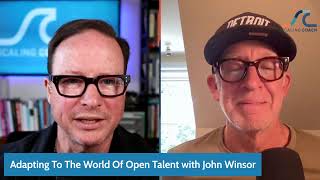
A recorded interview (Scaling Up Business podcast) in which host Bill Gallagher speaks with John Winsor about 'open talent'—the shift from gig work toward curated external talent clouds, internal talent marketplaces, and open innovation. Winsor describes his history (magazines, Radar Communications, Victors & Spoils, Havas), case studies (NASA, Harley-Davidson), market data (Korn Ferry projections), platform dynamics (Upwork, Toptal, curated benches), and practical opportunities and risks for organizations adopting open-talent workforce ecosystems.
Chapters
Foreign.
You can't do anything big on your own. You're going to need a lot of people if you want to do anything big. That's the world of talent. Where do we get it from? How's it evolving? What does open talent even mean? Like, how does our world work with talent change over time? What's happening right now? Where's it going? Hey, everybody. My name is Bill Gallagher. I'm the scaling coach and host of this fine Scaling Scaling Up Business podcast. And we love to bring the show to you every week. So one of the most fun things that I get to do is talk with authors, entrepreneurs, leaders in business who've done some work around scaling growing businesses so that you can scale your business easier, faster, and possibly have more fun in the process. And that is all the work of our company. @scalingcoach.com we also have monthly workshops on on scaling the mindset and the tools involved in scaling the company. And we have a free mini course that you can download. And it's all about what are the stages of growth in a company and how do you go from each stage? Which one are you at right now? And what's necessary to move to kind of the next stage of growth? All that and more@scalingcoach.com 550 back episodes and then some. All that more scalingcoach.com Anyway, I'm joined now by John Windsor, who's in Boulder, Colorado right now, and he's an expert in this concept of open talent. He has written a book on it, on open talent. He is at this LISH center for Open Talent, Harvard. There's a bunch of stuff that he's got to share with us. He's applied in his business. I'm excited to have him join the show. John, welcome to the show.
Hey, thanks. Thanks a lot, Bill. Appreciate it.
Yeah. So before we get into like your story and all that, why don't we talk about what is open talent?
Yeah, really?
Before we move into why you're involved in.
That's a great question. Well, you know, we were looking around. I mean, I've been in this market for a long time. You know, back when I started things, I was saying it was co creation. And then this guy, Jeff Howe, wrote a book in 2006 called Crowdsourcing, which I helped him on. Then it was crowdsourcing and then it became gig economy.
Yeah.
And essentially one of the things that's happened in the last four or five years is the gig economy has been defined as uber and, you know, and doordash and kind of commoditized, just jobs. Gig's all about, you know, having an algorithm to tell you where to go to work and who to, who to work with. You know, I need to pick somebody up at the airport at this time, that's what I'm going to do. Whereas open talent, you know, there are three legs to the open talent stool. One is building an external talent cloud, the second is building internal talent marketplaces, and the third is open innovation capabilities. And so in the context of external talent clouds, open talent really is this idea of high end freelancers. You know, they have the ability to do the work. And what we're seeing, if you look at the Korn Ferry data, Korn Ferry says that by 2030 that there'll be 85 million tech jobs that will not be filled because there's not enough, not enough talent to do it. It's going to cost companies $8.5 trillion. And so no matter who you are, you can't hire the best talent. It's just impossible to do. So even you even look at the hyperscalers, right now we're working with a couple platforms that are providing freelancers for the LLMs. And all those LLM models have been built all on freelance talent because they can't hire people fast enough to get it done. So the idea, our belief is the future of talent is companies focusing on building workforce ecosystems to be focused on an outcome. Think about the tasks that need to be done and what skills, whether they're digital skills from LLMs or their human skills. What skills need to be done to get those tasks done, to accelerate outcomes?
So we're going to get into it. I definitely have personal and client questions and challenges to talk about as we get into it. Let's talk about your background in this and what you did. I don't know, maybe it's well before the agency, but bring us into your world and how you kind of got passionate about this area.
Yeah, I mean, I got passionate about it as, as you know, any other entrepreneur does. Right. Because you kind of figure out how to, how to start a company. I've started six companies. The first company that I started was a small magazine publishing company and my wife was a professional triathlete and she and a bunch of friends here in Boulder noticed a magazine called Women's Sports and Fitness. It was for sale. Timing was gonna, you know, it was kind of putting it through bankruptcy. They were trying to sell it off, but sell their kind of stall of 40 editors and writers in New York and the Way that it worked back then was that you would have, let's just say, a rock climber in Boulder, Colorado, Lynn Hill, and an editor or writer from New York would come out and do a story on Lynn and go back to New York and write the story. And oftentimes it wouldn't be super authentic because the writer's not a rock climber, doesn't really understand what rock climbing is. And it missed the mark. So I was thinking about buying that magazine and I was terrified. And I went to Nike and I talked to Mark Parker and Tinker Hatfield. You know, Mark became CEO, but back then he was the mid level guy. And I said, what do you think? Do you think women are going to do sports, mid-80s? And Mark's like, yeah, women are going to do sports. You should definitely put your house on the line, every asset you own to do it. It's going to be awesome. We'll even run ads with you. And so I was, you know, convinced enough to put my house on the line and go for it. And. But the thing that made it work was that I flipped the business model. I essentially said, well, why shouldn't Lynn write her own story? And then let's have a couple letters that can actually just punch it up for the readers. And all of a sudden I dropped 38 people out of the FTE. And in a matter of, you know, weeks, I made it really profitable. And 13 years later I sold it to Conde Nas, along with a lot of other magazines. So that worked really well. And I was super intrigued by this idea that, wow, there's this power of the crowd, right? There's this ability to use this latent cognitive surplus out there. And so I started a company called Radar Communications. And the other thing I was interested in is that it seemed like in the advertising process, being a magazine that we knew that brands started with millions of dollars, but then by the time they bought a page and women's horse and fitness, it would be $5,010,000, right? And so I read a book called Diffusions of Innovation written by Everett Rogers back in the 50s, describing the diffusion curve. And essentially what I did is I took those early adoptive women and consumers and started a company called Radar. Instead of trying to make them an audience, put them at the top of the funnel by creating a crowd of people so the likes of Nike and Levi's and intel and HP and GM could tap into early adoptive consumers to help them design their market research and their marketing messages and their product design. And that worked really well, ended up at a agency, merged that company with an agency called Crispin Porter Boguski. And Crispin at the time was between the two of us, we had 100 people. We merged the two companies here in Boulder and put co creation or working with customers in this early adoptive way at the center of our business. And went from a 100 of US to 1200 of US in two years. Became global agency of the decade, all by using these kind of open talent principles. One of the problems was we were growing so fast we couldn't get any extra labor to work on the projects. So we did the audacious move on a client called Brahmo Electric Motorcycles. As we just became in Cannes, the global creative agency of the decade. We decided to crowdsource the creative for Brahmo and as you can imagine, it caused a shitstorm in the ad business. But all of a sudden, you know, there was that great guy Bill that you know, lives in, lives in Sydney that we always wanted to work, you know, with. We flown him over to interview him twice. He wasn't going to move from Sydney, but all of a sudden he was doing project work for us at night. And we were like, holy, like the work world's working for us. Why do we need to hire all these people? That went extremely well. And I started a company called Victors and Spoils. Victors and Spoils was an agency based on crowdsourcing principles. And I think there are two really important stories there that I learned about scaling that I think are super important for the audience. One of the things that we came up with that I've kind of lived by and seen in action is that I think that culturally we feel like this idea of culture, business culture, business opportunities is this massive trend. It's almost like the Mississippi river that runs down our environment. And our job is to do all this analysis and get prepared and get the right product and the right message and run ahead of it and hopefully get run over by culture. And our belief at Crispin was if you figure out what wants to happen and you help it happen at the right moment, that you can actually tip culture to your favor. And so that's the experience I had at Victors and Spoils because we had some notoriety at Crispin. Stuart Elliott from the New York Times was kind enough to do a three quarter page article about us before the launch of our company, Victors and Spoils. So you can imagine there are three of us in my garage running out of money with an unlaunched website saying holy shit, what the hell are we doing? Waiting for that article to run. And on an October morning in 2009, the article ran. And by the end of the day, we had 3,000 people signed up globally to work for us. And, and Dish Network gave us their $120 million advertising business, about $15 million of creative services fees. So we went from zero to 15 million in 12 hours. And so we're not a bad first 12 hours of kickoff of the company. But the thing that really put us on the map a couple years later, we were like every other agency in the world. We were hanging out, trying to figure out exactly what was know happened with Harley Davidson because they had just fired their agency of 32 years of car wrench. And like everybody else, right, we were trying to say, hey, you know, we want to be in that pitch. But we knew we couldn't ask for permission because there was no way we'd get in it. Most of those pitches back then were half million dollar affairs. Lots of golf games, dinners, all that stuff. And so I was out to coffee with my, you know, with my creative director. And he just had this really, you know, funny grin on his face. Instead of asking permission for permission, let's ask for forgiveness. We ran back to the office, 20 minutes, we made a video to our 10,000, then 10,000 people person crowd. And I just said on video, hey, I'm putting $10,000 of my own money up. We're working for Harley Davidson. Let's see if we can get a meeting with them. Let's do some awesome work. And then I wrote a blog post and the blog post said, Mark Hans ricker was the CMO's name. I said, hey, Mark Hans, you know, have a great time with those golf games. Super fun, great dinners in New York. You'll have a blast. All the While I've got 10,000 people around the world working on your business. Let me know if you want to have a meeting. That hit Twitter. Twenty minutes later, after my tweet hit, Mark Hans tweeted me back saying, I'm tired of old agencies. Come to Milwaukee. Two weeks later, we won the global billion dollar business from, from Harley Davidson and Blue blew the whole industry up.
So, so super baller stories there, right? Like swinging and then connecting and actually it's pretty cool.
Wow, thanks. Well, that, that led to me, you know, David Jones from Havas came up to me at TED and said, you're awesome at throwing rocks at the glass houses, the holding companies. What happens if you come in here and, and help me blow one up? Havas, which is 20,000 people. So I sold the company to Havas and became chief innovation officer. And one of the greatest things that came out of that is three guys from Harvard, Kareem Lakhani and Mike Tushman and Bharat Anand followed me around for 18 months. David and I around for 18 months trying to figure out this is a workable model. They wrote a case study on Victors and spoils and then wrote one on Havas, which was the first multimedia case study for hbs. It was a horrible implosion. David got fired, I got booted, you know. You know, because you can imagine the deep French culture was just like, there's not gonna. They're not gonna. You know, the French creatives are super important people. And the idea of somebody from Topeka, Kansas doing creative for Dasani is not gonna happen. Right? There's no way. In fact, the really and still the number one.
The idea of being untethered for French, I think is also difficult. The idea of upstarts, nobody's doing thing, I think is hard for French. The idea of just coming and going as you will, talent and jobs, I think it's pretty hard for bench. Like there's a lot of cultural, culture clash there.
Well, the most interesting thing that happened was that, you know, we got the case study done. It was done. David signed off on it. But the powers that be in Paris really wanted to make sure that they put their stamp on the case study. And so this woman who she fancied herself, she was on the board, fancied herself as the most creative person in the business in France, did this recording. And, and essentially in the recording in French, she said, john's the sorcerer's apprentice. He's going to ruin this industry by himself. This idea of open talent's ridiculous. It's horrible. And then Havas, in all their wisdom, closed captioned that. But they said something very different in the closed caption saying, john's a great guy, he's really innovative. He might not know the nuances, but really good luck with him. Unfortunately, the guy who's the most senior guy at Harvard Business School, Mike Tushman's been there 45 years. He speaks fluent French. And so his whole point over the last 10 years is, look how passive aggressive this French company is to think we're not smart enough to understand French. Like, this is the problem with organizations like Havas. And so anyway, that's kind of.
There's a funny thing there. I don't know what the business lesson is, but I See, on the regular, right, there are languages that I understand enough that I can follow. And today you'll watch something on Netflix or you see something in some of the context and they're saying something that you hear and get. And then you see the on screen subtitles and you're like, that isn't what she said. That isn't what they said. That's not it at all. They like change the whole story here.
Exactly.
I'm like, I'm like, what are they doing? But I think really, they're like, yeah, in that culture and in that language natively, that works, that communicates. That's a joke. That works like a lyric or something, that works. And then in this one, we don't think it connects, so they alter it to give it context. I think that's true. It's funny. In Hebrew prayers in like modern reform Jewish temple, like that you would see in the United States. They say stuff like in the ancient Hebrew. And I'm like, it has nothing to do with what's written there in English. Like it's not at all, that's not at all a direct translation. They've revised it to be less patriarchal.
And less culturally relevant, all that stuff. Yeah, I totally agree with it. Anyway, that's how I got to Harvard. So.
Interesting, interesting, interesting. Well, tell us about, let's talk about some other applications, some other companies that do it. NASA did some work in this area. I don't think at NASA at all is doing anything open talent. I think about a whole bunch of bureau bureaucrats and engineers who can't make anything happen anymore because they're so terrified of screwing up. But right, that's the outside, like.
Right. Yeah. Next year we built this thing called the center of Excellence for Collaborative Innovation at NASA. And next year, their budgets, their budget's a billion dollars to use open talent. It's working really, really well. And so I, you know, I think.
If you have to deal with it, what kinds of things are they?
Well, you have to go back to the beginning. Right. So the beginning of NASA's use of open talent was the fact that they had a budget cut of 80% for health and Human Services. And Jeff Davis ran that. He was the chief medical officer and he was terrified like, how do I keep astronauts alive in space for 20% of the budget? So he came to Kareem Lakhani at Harvard. He said, is there anything we can do? And he said, well, let's run an experiment. And the first experiment that was run was. Jeff was terrified because he had spent $20 million over a 10 year period with eight heliophysicists to create an algorithm to predict sunspots. And the idea was, is I need, if somebody's out there working on a longeron, I need to be able to get them in, into the secure.
Right, right.
Yeah, they're gonna die. These, these, these solar storms would kill somebody, the radiation.
Right.
And so he had, he had eight heliophys work on it for 10 years and got an algorithm that could predict sunspots for an hour and a half advance 50% accuracy. And what was terrifying Jeff, was that that was enough time to get back in, barely. But you know, if you're an astronaut and your job is, is to fix something on some linger on a way out from the space station and you've worked on for four years, you're going to flip the coin and probably stay out there to do your job. You're not going to blow it. Right. And so he couldn't get astronauts to come back. And so it was really concern for him. So we put it on a platform called Innocentive. And one of the guys that answered the quest, you know, it was essentially a $35,000 prize, three weeks to do the job. And this guy from New Hampshire, a retired cell phone engineer who had had a little bit of heliophysics, but he'd done a lot of radiation work around cell phone towers in communities. So he cranked it out. Guess what he did in creating his algorithm? Guess what the metrics were as far as prediction time and accuracy or accuracy? Oh, I don't know, 24 hours and 75 accurate for $35,000 in three weeks. After, after, you know, eight of the best heliophysics in the world spent 10 years and $20 million trying to do the same thing. So Jeff all of a sudden was like, holy, I have a thousand problems like that. Like, let me just like go do that now. Super disruptive inside NASA, right? Yes, but, but what's happened is, is what we've built and what we've done, what NASA's built, Steve Raider runs it now is you, there's, it really starts with a mindset, right? And you can just say I'm a world class innovation organization with 17,000 full time people. That's NASA, right? That like, that's how most of us would, you know, the ideal state of NASA, maybe not the bureaucracy and the.
Fear that you mentioned, they're both real, right? There's both passion and innovation and that kind of thing. But also it's a Big organization with a lot of history. Yeah, for sure.
But you could also look at it at a different way. You could say it's not, it's not a 17,000 place based personnel organization. It's actually 17,000 people that work there full time that are awesome connected with a digital tool called NASA work to their 30,000 contractors where they can compare and contrast and help each other. And the center of Excellence for Collaborative Innovation that works with 40 platforms to, to kind of connect into 110 million people across the globe. So in that mindset, you could say NASA is a networked organization that has the ability to tap into 110,047,000 people to help them solve their biggest problems. And that's the shift I think every organization needs to have, right? It's like I've run into too many CEOs, like, oh, I got the best people in the world. And you're like, no you don't. There's so many people that are out there better. No matter who you are, there are people that are better. And in fact, if they're really good, I mean, it's a nice thing to.
Say because it's pride and love of your people especially, but it's not actually, it's not factually true.
Right. Well, and if they're really awesome people, they're probably working for somebody else at night, right? I mean, it's reality today, right. I mean, I mean there's that there's a whole over, you know, during remote work revolution and Covid, there's this whole, you know, counter trend of kind of overemployment, right. Where people are working full two to three time full time jobs.
And it's probably not the majority of people, but it's a few.
It's a few. Yeah. And you know, I think the reality is, is there's just this paradigm shift, right? It's like for a hundred years the man side's been in control. They set the terms of employment. You know, there's, there was, there was, you know, this kind of. Sorry for that. Ding.
I got you not. I'm glad it's not me.
Yeah, hold on. Yeah, there. So I think for, you know, for 100 years there was this paradigm where the demand side had more power, right? They set the terms of employment. They could decide what benefit packages with the numbers we talked about from Korn Ferry, the 85 million jobs that won't get filled, all of a sudden the supply side has the power. And if you're a really talented person, I, I don't know if you read recently, but did you see the, the average salary of open. OpenAI's know, AI software engineers. See that number? No average salary, guess what it is.
500, 950. Oh. Huh. You know, I know a little something about that industry. My son is a top AI scientist for one of the companies out there.
Like, nice, nice.
Well, I have some insight and it's significant. Like, AI engineer jobs are exceptionally well paid and there are a lot of people who aren't actually that good who are.
Right.
Getting paid a lot of money right now.
Right. And you know, the crazy. I work with a platform that, you know that OpenAI, it's their second biggest bill is to buy freelance labor from behind computing time. From. Yeah, from this, this company. And you know, it's, it's thousands of jobs. The LLMs would not have been built without freelance talent. Nobody could hire people fast enough. And that's all been built though.
It's interesting to me because like, so I had some guys, I take CEOs and execs out sailing on the San Francisco Bay from time to time, and I had a group from one of those big social media companies that's involved in AI work. And they're like, yeah, we got so ahead of ourselves over our skis, as they say, with hiring. We had people who were like, I'm not really sure what we do around here. I don't really know what my job is. And they're like, we have thousands of people like that. And so they went into a big layoff thing as a lot were laying off just scads of people all over the place. And there was a big correction going on there. And I think probably the same thing's happening in parts of AI land too, because like, my son's company I've talked about before is Mid Journey, and he's the AI scientist at Mid Journey. And you know, they're pretty notable for their work in image creation, that kind of thing. But. But that's not a massive team and it's privately held, there's no investors. And like, they do pretty interesting stuff. Like, it's much more focused than open AI, but I think a lot of people are throwing just body. They're like, how do we use this? How do we use this? How do we monetize this? Like, there's product managers coming in left and right and engineers and probably people standing around going, I don't know, I'm working on something.
No, exactly. I love this. This is great. Nobody sees what I'm doing. I'm working for your competitor at night. One of my favorite stories that I, I was, I was at TED again. Sorry about that. God damn it. I turned off the, I turned off my, my, my thing. Yeah, it's turned, the program's turned off. It keeps happening. So I, I, I was a Ted and this really well known global creative director came up and gave me a big hug and I hadn't, you know, I knew he was, but I didn't really, you know, pay attention. And I was like, you know, I love you, man. Like, why? And he's like, let me tell you a story. Like, we're at, you know, one of the big, big shops. He's like, me and my team, we work on our accounts during the, you know, during the morning and we all go to lunch and grab our lunch and we go to a conference room, we shut the door and we go on Victors and spoils platform and we just do work for you guys for free all afternoon. It's awesome. We get to work on Harley, we get to work on, you know, all this super great global stuff. It's like, and our bosses don't even know we're working for you and we're getting paid to work for them. It's just the best thing ever.
Yeah. Yeah.
That's the reality in our digital world. Right? It's just the way it works.
So, so let's talk about the, the backside of it though, because I, I definitely have used it. I mean, I have only a few people on payroll, but I have a lot of people that I consider our team there in the background helping us produce the show right now. As somebody that I think of as part of our team that like a regular ongoing contributor, I've had vendors that I've worked with for 10 years. You know, you pick people and you work with them, but they're not W2 employees. Right. They might be even in another. Like the team that does our website is in another country. Like, you know, I've never met them in person. And I think we have that more and more. I remember back in the days of aol, I had one of my chief people for our company then that did a lot of our AOL stuff and she lived in New York and I'd never met her. And I was like, so weird to go and meet her one day, you know. So I think there's something there when it's, and it's more common than we realize, we're doing it more than we think they are. But then I think there's and there's certainly loads of resources. But also sometimes like, I feel like, oh, you could put something on upwork or 99designs or I don't know. And then you just like, you might get back trash and you might entrust people. Like I had some guy who's like, oh, we're going to do this certain work for you.
And.
And then he turned out to be a total scammer and I'm like, okay, I'm out a thousand dollars. I paid him on the first bit. And you know, right. It's not a lot of money, but.
No, it's still a big deal.
But that time and energy and spent, I hired somebody else to do something and we paid them a few thousand dollars and they turned out to be bozos. And like, I'm like, I don't know how you tell, like, should I hire that upwork person or not? Or you know.
Well, I think that there's a couple things going on, right? There's a thousand platforms and I think those big, you know, those big platforms are awesome, but they're B2C, right? They were made, they were created to do, you know, for, for, for you to hire an artist to help you with your grandma's, you know, your, your grandma's card or you know, to do a deck or do something. And, and so, so that's the first very high end. No, and I think we've seen that, right? It's like one of the things that I found so interesting in the book is that, well, Freelancer.com only works with a couple dozen Fortune 500 companies. A full 70% of Fortune 500 companies have a corporate email that works on the Freelancer.com platform on a weekly basis. So they're all people that are mid level people. And the story that we kind of unveiled or revealed in our research was that you're a mid level marketing person. You just did some great market research. You're super stoked, could do really accelerate for your career. You go to the corporate graphic design department, they're like, next week. We can't do something by next week. Are you kidding me? Right? We're three weeks out. So you scramble and you go to, you know, you go to, you know, online and you find a platform and you have somebody in Ukraine do it for 200 bucks overnight. You wake up in the morning and it's 90 there and you do a couple more cycles and you get your promotion. You're not telling the company. You use this person from Ukraine because you want all that value to accrue to you. So I think there's. That that's going on. I would say that what's stopping the open talent from scaling in a corporate environment is that these B2C platforms are really difficult for companies to go through. There's like way too much supply. Really hard to understand who the best person is. If you went in there and said, I need help with Shopify, it would be a nightmare. I just had that happen a few weeks ago with my wife who's trying to figure out Shopify. I mean, it was. We found somebody was good, but it took a lot of effort. What's happening that. What's emerging special?
I think that finding somebody and knowing which platform you're even on is one of the first things. Like it is, it is.
And what we're seeing emerging is very specialist platforms that, that actually test and curate, and they're really small. One of the bigger platforms in the, in the industry, in, in the, in the, in the enterprise space is Toptal. And Toptal has, you know, 5,000 people, whereas, you know, and they do more revenue than Upwork. And Upwork has 35 million people. And so that's the future, right? Like, I'm going to trust a platform to find me the very best person and curate it and get it dialed and make sure that it's guaranteed and it's, you know, it's compliant and secure. And I can bet my company on it, right? I can find the exact right production company for my podcast. I can create, you know, I can do the right website, I can do all that stuff because it's highly curated. And I think that's the future, right? The future is curated.
I hear an interesting business problem that I don't think anybody's really solved here. And it's the same problem with like, SaaS apps, right? There's a million software service things out there and there's a new one showing up every night because everybody loves funding them because when they work, they can be great little businesses. On the other hand, everybody like ticks off a bunch of feature boxes that they do this and they do that. When you actually get into it, you're like, yeah, I don't know if that's really what that is. And does that do what I want it to do and that kind of thing. So evaluating software is, I think, just as hard as evaluating these platforms. And then there are a jillion, like web pages out there that are like the top 10 translation websites compared. And they have these grids where they check mark and they're meaningless things and they're paid for by one of the people on there. The one that looks the best is the one paying. And, and I'm like, huh, there's some objective. Every now and then somebody writes an article. But as we know, sometimes articles are written by people with putting very little investment to actually figuring out the truth. They just need to put something that generates some eyeballs on whatever.
They're being sponsored by somebody or they're.
Sponsored by somebody increasingly. Right. Yeah. They're getting affiliate revenue off of two of them.
Right, Right. Yeah. I mean, I think, I think, you know, we, we tried to solve that problem at Open assembly and, you know, I couldn't be book writer, thought leader and, and build the technology. I had some VCs which are great communitas in New York, approached me. Doug Atkin, who's awesome about building a kayak of open talent. Let's be the right. And it was okay. It, you know, but I couldn't.
Out of business.
What's that?
Is kayak still in business?
I don't know that there's Provago and I don't even know. Like, it's been a while. Is it still in business?
There's one of them that went out. Yeah. Yeah. No kayak looks like it's still there.
Yeah. And so the, you know, the, the. I ended up merging that out and so it's now called Bench Talent Group. And they're trying to build talent benches, highly curated talent benches, which I think they're going to do great. Right? That's what's happening. There's been some really interesting transactions lately. Ronstadt just bought a platform called Torque. And I think what we're going to see, you know, if you think my, my experience is in the advertising and marketing space historically. And one of the things I find so fascinating, I'm sure you saw it as well, and that is back in the day when there was WPP and IPG and Publicist. Those are the big guys.
Yeah.
When I was there, they said, you know, we're advertising agencies. We do tv, radio, in print. That's it. Right. That's all we do. And these, these little gnats over there, these little, these little nats that are digital advertising agencies. Sapient Razorfish, Critical mass. They're a little annoying. Who would do advertising on Facebook? Like we do big super bowl ads. Well, you know, over time there was digital advertising industry and regular advertising industry. It's all kind of come back together right now. It's all advertising. Those digital shops Kind of took over, not by name, but took over the big holding companies. And I think that's what's going to happen. Right.
I think you've got, well, all the money now. Like, you know, the amount of money being spent on Google and Facebook is completely different than what's being spent on TV today.
Like, it's for sure that's going to happen with platforms. Right. The thousand platforms are going to merge with the, you know, 27,000 staffing companies and there's going to be a new industry that's going to be called staffing again. But it's the emergent of staffing and open talent that becomes kind of digitally transformed staffing. That's my. What's going to happen. Because every industry needs to do that, right? I mean, the example that you'll, you'll totally get that I, that I've been using a lot because people sometimes say digitally, why would you do that? And I make the analogy of if it was 2007, you and I were sitting at Harvard saying, we need a good dry cleaner, we would have pulled out the Yellow Pages and the Yellow Pages would have had. We'd probably flip through it and you'd say, oh, let's pick the one with the biggest ad. Because they spent the most money. They're probably the best. Whether that's right or wrong. Well, in 2007 in Boston, that the yellow pages cost $100 million to produce, and now the transaction cost of putting a recommendation or a shop putting something up on Google and having late, you know, as of an hour ago, kind of, you know, five star ratings, it's like it's gone to zero. The same thing, the matching and, you know, the finding and matching cost to talent. Same thing's going to happen, right. You're not going to have to use the yellow pages of a analog staffing company to find staff. You're going to. It's going to be digitally transformed. It's going to be really easy. You'll be able to say, I need a podcast developer. And you'll be able to go to the right platform and find that immediately and see who they work for and hire them right now, right? Yeah. It's only natural.
Yeah. Going out and looking and finding what you want, but then knowing that you've chosen the right person, making that decision really, really quickly. There's got to be some smarts and there's some consolidation that helps to make that process easier in time.
For sure. I think one of the things that I, I've done a bunch of case studies on Deloitte. And one of the things I find really interesting about Deloitte is that, you know, they're, they, they're the first ones to admit they charge five times somebody's salary to put them to work. And, and honestly, if you hired Deloitte, you don't know who's working on your business. You know, those low level people, right? Yeah, but if you go to a business talent group or you go to graphite, you look at everybody that you're hiring and you can dig in to see, you know, who did they work for, what did they say, are they good at these things? It's a lot easier to really dig deep and see what those talent are.
You know, it's funny, in the 90s, I had a software development company. It started as a creative agency and a publishing group and then, and then, and merged into software development through personal preferences. Really. And we got clients. And I remember one client was a friend of mine and when he first said, hey, we need some help with this, could you help us? And we essentially said, no bid because we don't think you can do that, what you're asking for in that timeframe, whatever. So they picked the other guy and they went and worked with them and they did it. And then he came back to me. He's like, would you really reconsider bidding this? We realize you can't do that. He didn't do it. And, and we think you're better. Right? Like, and, but we really, we don't want to pay. I forget the number. Exactly. Now we don't want to pay 150 an hour for this kind of work. Right. And this is the 90s. And I'm like, well, I don't, I'm not going to charge you hourly at all. I don't know, that sounds terrible. Like I agreed with him, but in fact, I plan to make a lot more than that. And I'm like, so, you know, how about we just outline your project and I sell you a project feed. He's like, oh my God, you could do that. Nobody does that. So I'd be like, okay, we laid out the thing. And I'm like, okay, well that looks to me like if we follow this process and do this kind of thing and these parameters, and that's probably, you know, what do you want to get? And he's like, well, we'd like to spend $120,000 and get, get done in eight weeks or whatever. And I said, well, what if we did this for that? And and so we agreed to like, these are the parameters. And then we went out and did it. Right now at the time I think we were making, I don't know, like 750 an hour on that work, right. And we were just really efficient. Then I would go to my suppliers and I would find subcontractors who work on pieces of things. We just did the product management, the strategy, the account management and strategy work on the thing and then we'd pick teams to work on stuff. And, and so we were probably netting 750 now. I was paying my guys the subs on it. 150 an hour roughly. And then at some point the client and the supplier both figured out the differential and well, really mostly the supply my subcontractor did. And he was livid and he's like, oh my God, you're ripping us off and you're taking advantage of us. And he's like, I can't believe you're doing this. And I'm like, you named your price, you named the hours, you said that's what you wanted and you didn't want to be on the hook. You were very risk averse. I took all the risk and won the business. And I, yes, I made four to five times the markup on that thing and you know, bought myself a new car. But actually I plunged most of it into another startup. That's another story for another day. I'm like, why are you upset? So after he got calmed down and asked for an increase in his rate, I'm like, fine. And I just went back and then marked it, but the client loved it, they were getting paid. I'm like, why are you. Look, I'm providing some value here. I'm absorbing some risk. I'm managing a project, I'm delivering expectations of everyone. That's where I get to make my money. Right. I think people forget that sometimes with these, the consumer open talent things like, you know, the really cheap is the cheap people are trying to get away with paying nothing for things like, oh, you know, I want to pay 50 cents for a really great logo. I'm like, well you're not going to get a really great logo for 50 cents. You're going to get one of those crazy Y figures that, you know, get overused with. It's going to be crap. So, you know, and you're going to get a hundred versions of them.
Exactly, exactly. Especially with AI today, right? It was like, you got to pay.
Something to get something good. It's going to take a little. Yeah, like, and start trying to like get over on everybody, you know.
Well, you were using open talent really early on, right? You were, you're, that's the, that's the, you know, that's what I like.
But, but it was different. Like they weren't really platforms. We'd be like, okay, I need, I need a really great Oracle DBA. And I think at the time I was paying 500 an hour for an Oracle DBA in Canada. We just found somebody that we thought was really great, but it was a lot more like personal networking, kind of checking around. There weren't like platforms to do it. And the platform seemed to have brought two things with them. They seem to have brought lots more possibilities and sped up that whole process. But they've also had lots of people jump in that aren't actually that great.
No, I agree, I agree. No, and I think that's the problem with platforms not curating their talent because for a lot of talent, you know, they, they're, they're great at what they do, the best talent, but they're not great at new business, they're not great at business development. But they want to do the work. And then likewise for companies. Yeah, you, you had an incentive and I think startups have an incentive to go figure it out because you have to. But big companies are lazy. You know, they don't, they don't, they don't want to like put in the extra time to go find that one Oracle shop in Canada. You know, it's like just imagine you're going to go to head of procurement, say, I found this great guy. He's like a friend of my brother in law. He kicks ass. He's in the Oracle, you know, he's in the Oracle aggregation business. Like your procurement guy would be like.
No, yeah, no, we got to go through a whole thing and kind of review and do a selection and there's always a lot of that kind of thing that goes on.
Yeah, for sure.
You know, I think the other thing that comes to mind, like, you know, I think there's, there's probably parallels across a lot are, that are going to come up with about finding, selecting and working with talent with resources. Like it's similar to matchmaking. Right? Like I have a, an old friend who loves to post about her bad dates and she's like, you know, she's single and she's dating all the time and she's like, oh my God, this guy. Like here's his picture. And I'm like, oh, this is so bad because These guys are getting outed on the regular, at least in part on her social platforms, but they're kind of opening up to it. She's like, this was the picture. But in reality, he was twice as heavy, and he, like, was 10 years older and.
Yeah, for sure. Yeah.
No job. He lived in his mom's place, you know.
Yeah, no doubt. And same thing with talent, right? It's hard to find that. It's hard to.
How do we distinguish? How do we know? When I was running the companies and doing that, we did a couple like that. But the thing that I understood at that time is that a buyer on the corporate side doesn't want to negotiate at all over hourly cost. They just want to get an outcome for a set price at a predictable time. If I'm a corporate manager, manager, I'm like, okay, I can scare up $500,000 or $60,000 or whatever the amount of 2 million, and I need to get this done in 12 weeks. Like, if I could bring that predictability to here's the time, here's the budget with some certainty, with somebody that I can trust to do this, that can. That can look me in the eye and say, yes, we'll do that. And I have some confidence in that. That's the magic, right?
That is the magic. That's the magic, man. And, you know, I think. I think the. What makes that easier is the transparency. Like, who did that person work for? What are the references? Can I call those references? You know?
Right.
What are people saying about that? I mean, I think the other thing is that, you know, the. The thing that we've been talking about in our community is, is this, like, how do we help talent know how to improve? And one of the things to do is instead of doing, you know, quarterly or annual, you know, reviews, like, why should we do project by project reviews to say, bill, you hired this person to do the oracle work, you know, kick ass in five areas, good in three, improvement in two. But shouldn't a platform get that feedback back to that person and say, here's the links to two trainings that you can up your skill and then them going out, and then as soon as they get certified to get back to you and saying, thanks a lot for the feedback? Bill just went, or Joe just went and got certified in the two areas that you gave him suggestion, and the whole system's improving.
Yeah.
Right now we're like, we wait till the end of the quarter, we say, oh, yeah, there was a project you kind of got lost on. I don't remember all the details, but you need to prove that it's just not effective.
I think in general, we don't like to close the loop on things. We don't do the debrief, the post mortem.
We all love the startup, we all love the, you know, all the dopamine hit of the big startup. But then all of a sudden, you know, things get lost in the weeds.
Especially a certain kind of us love.
A startup guys. Right.
Startup people, the folks who kick things off, the entrepreneurs love to start it off, then want somebody else to please see it through. And the thing to learn about yourself.
Is get out, get out of the way. I know.
Get out of the way, get out of the way. Let other people do it, sell it, exit, replace yourself, move on. You know, because you are different, you're wired differently. Yeah. Well, it's fascinating conversation. We've wandered a bunch on things.
Yeah.
Open talent Leveraging the global workforce to serve your biggest, solve your biggest challenges. Right. Adapting the world of open talent. Open Talent by John Windsor and Jen Pike. Yeah. And then John Windsor.com is we'll put that on the screen and in the show notes and that kind of thing. Big thanks to you. And then also as always, thanks to my team at Storion. Talked about our open talent team all over the world right there in multiple countries, getting our show ready and out the door each week, finding our guests, preparing them, getting the show distributed like that week in, week out, over 550 episodes. StoryOn co. And then our own website, scalingcoach.com where we have our workshops and our thing on the stages of the company to figure out where you're at and how to move to the next stage and all that. And these 550 plus episodes and more that you can kind of research and find something talking to somebody about something that you're dealing with right now. Maybe you need to develop your vivid vision. Well, go listen to my conversations with Brian Scudamore at 1-800-GET junk and see how he does it to build a company that's heading for a billion now. So all that and more. Scalingcoach.com and then thanks to my friend and mentor, Vern Harnish who created this whole scaling up framework that we've been using forever and ever. And we'll be going back to Harvard in August this year for our CEO annual summit. I think that's about sold out now though, so contact us if you want to go to that as one of our CEOs and then I don't know. That's about it. Until next time. Keep scaling and we'll talk to you soon.










