AI Will Expose How You Think with Geoff Woods
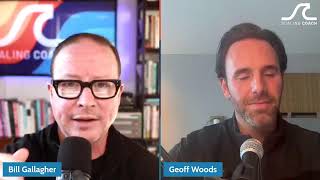
Geoff Woods explains why leaders say they'll adopt AI but don't, and introduces CRIT prompting: Context, Role, Interview, Task. He uses AI-generated personas like Steve Jobs and Warren Buffett as advisory boards to accelerate strategy work for companies like McDonald's and Nike, turning AI into a thinking partner instead of a content tool.
Chapters
Foreign. Jeff woods interviewed over 200 leaders for his book it's over a thousand now. He, he found that 100% of them said AI is the future. You probably are thinking that too. And 100 said they'd adopt it, but less than 5% actually did anything with it. I know Most of the CEOs that we're working with are feeling anxious about feeling they should be doing more. That's the topic of our conversation today. How do you get more AI use more in your life, in your company, in your leadership, like all that? That's our topic for today. It's not hip hop, but it's a groove. The music helps me a lot to get the show right. I'm Bill Gallagher, Scaling coach and host of the Scaling up podcast. Our show comes to you every week, 670 episodes or something. Now you'll find them all wherever you're getting this right now, YouTube, LinkedIn, wherever, like subscribe, share it with somebody. All that helps us out and we love bringing it, we love doing it. It's one of my favorite things to do is to record our show. So you'll find all that and more. And if you want to know about our workshops, our coaching programs, things like that, go to scalingcoach. And that's where you find all the back catalog links and things from our guests and so on and everything else we do. And you can be a part of our world. Scalingcoach.com all right, listen, my guest today I met at one of our Scaling up summits at Harvard and he wrote a book, AI Driven Leader. He founded this thing, AI Leadership and he co founded a training company with Gary Keller and Jay Pap San. He was a chief growth officer of a company that went from a few hundred million to twelve billion. He coached advised companies from ten million to tens of billions. And he was a professional hip hop dancer. Jeff woods, welcome to the show.
Thanks for having me, Bill. Good to see you, man.
Lots of the things that you use and we're going to talk about today are now used by our clients in our sessions and by, you know. Well, to be honest, I know that just in my work, some of the ideas that you're going to talk about today we have in use now with over 2000 companies and we've upgraded some of the AI work we're doing based on the things that you shared and ideas that were intriguing. So I'm grateful and I'm glad to bring this to an even wider audience now with the show. So welcome again. So you got career Advice As a college senior, you went from medical sales and hip hop dancing and tell us that story.
Yeah, so my senior year of college, I'm doing an internship, Bill. I sit down with the CEO right before graduating and I asked him what job he thought I should get after school. And he leans in and he goes, jeff, you're asking the wrong question. You really should be asking what are the skills I can master that are so valuable they'll serve me no matter where I go? Then go find jobs that'll help you build those skills. It is the best career advice I have received. It is what I tell my kids. It's what I tell everybody when they ask, what do I tell my kids? In a world of AI, it's don't worry about the job. Focus on mastering skills that are going to be valuable no matter where you go. In my case, he suggested I go into sales. I had a really good sales career with Xerox and medical device sales. But I got to this point in my career, Bill, and I'm sure you've seen this with clients where they achieve, they climb the ladder, they achieve the professional things and they're completely empty and unfulfilled. And this is when I had this introduction to the Jim Rohn quote. You're the average of the five people you spend the most time with. And I made a list of who my actual five were and saw the names of five amazing friends, but had this aha moment of I have amazing friends in my world, but I don't have amazing mentors. I had always had a dream to build a business that would make a big impact in the world, deliver real security for my family. The problem is I was seeking advice from people on how to do that when they weren't qualified to give it. None of them were business owners. And so that set me on a journey to surround myself with the right people. And that ultimately led me to getting into relationship with Gary Keller, who started Keller Williams and his co author Jay Papazan. They wrote a book called the One Thing. When I met them, I had no idea. The One Thing was remarkably successful. They were looking for somebody to turn their book into a training and consulting company. And that ended up becoming my opportunity. So November 1, 2015, I moved my family from Southern California to Austin, Texas. The three of us co founded a company and I got to learn firsthand from a self made billionaire, how do you scale companies? And my job was to take that, those ideas, those models to the world. And all of a sudden I found myself driving strategic Planning for some of the largest companies in the world. And this just became a superpower of figuring out how do you ask leaders the right questions to unlock new levels of growth. It is core to who I am today. Now I sold my stake in that business, went in house as an operator for a public company out of India. We grew their market cap from 750 million to 12 billion in four years. And that's where I discovered AI and ended up getting put in charge of AI for the whole company. And as I started to drive it through the organization, it just became so clear. Everybody's asking themselves the right qu the wrong questions about AI. They're asking what's the right use case. But that makes AI adoption your goal when it's not. It is strategy first, technology second. Can AI help you achieve your goals? Sure. Can it distract you from achieving your goals? Absolutely. It's not the tech that makes the difference, it's the leaders. No one was talking about leaders. And so I burnt the ships, resigned, said I'm going to write a book about this and I'm going to turn it into a company. The AI Driven Leader is now the number one book in the world for AI. And I've built an AI advisory company called AI Leadership where we show companies how do you harness this, where it actually matters to drive alignment between strategy execution and value creation.
You know, it's interesting about the choices we make and where we apply things. I think we've talked before, I'll share and maybe and I've mentioned to some, my son got into he's an AI scientist and he developed the mid journey versions 2 through 7 before he went to work for Cursor for a little while. And now he's an AI scientist with anthropic working on one of the sort of issues that they're grappling with. So I've been like, you know, super proud of him and very connected to things and it's fascinating to see from that perspective. And then all the other sort of AI carpetbaggers who are in talking about which tool to use and how to write the best emails with your AI and trying to figure out the exact right prompt to do. Rather than I'm like, let me tell you how Jack uses AI, right? And it's really different from what I see people trying to do in a variety of workshops and things, but it is more like what you do. And he starts a conversation with AI, he's like, okay, here's what I'm grappling with. And what do you Think about this. And he'll start with this inquiry of things. So it leads to successive questions and a little back and forth. It's not like one perfect prompt that spits out the perfect thing. It's a, like, it's an iterative thing in particular with the large language models. Right?
Correct.
Yeah. And it's interesting to me also to hear like your, your background because as, as a dad, both our kids, we encouraged them just to like focus on what you love, what you're interested in, what skills you want to develop. Right. Similar to that, that you were like, what skills do I need? Like where do I want to, what do I care about? Right. So find experiences, mentors, people, things like that, that could do that. And then Jack, Jack's not a. Well, neither kid is very usual, normal, typical kind of kid. And he was always like, this school isn't right there. So the one thing that I shared with him that worked and then, and then ultimately led to this is I said, instead of running away from something, find something to run to. So he's like, okay, I don't want to go. And he was at school at a prestigious program at UC Santa Barbara in math and science. And he's like, I, I got to get out of here. We're like, so find something to run to. If you're going to drop out of college, what are you going to? Why are you leaving instead of just leaving it? Because you, you don't like the, your advisor. And he found this group called the Miri Machine Intelligence Research Institute, which is doing AI safety research and he got himself a job there. Like, we're like, okay, good, go ahead. And then that led to something and then he raised some money from some of their backers and things like that. He did a series of startups and eventually he started dabbling with this image creation, right? Like that kind of sequence of finding the things that are of interest to you and then focusing on those and
amplifying stuff, you know, that is so in alignment with what I believe makes an AI driven leader. An AI driven leader is somebody who harnesses the technology to create better leaders, better businesses and better lives. How do you do that? It is by recognizing and making peace with the fact that we have been literally manufactured from our education system to think and act like machines. We now have machines that are better at acting like machines than we are as humans. So what's left? It's what makes us human. How do we get in touch with what are our God given strengths that each one of us have that truly differentiates us. Like Jacks are different from yours, Bill. They're different from mines. What are your strengths? How do you harness those and focus them on the 20% priorities of your role that drive 80% of the results in alignment with the goals of the company? And then you pull AI in to turn those strengths into superpowers. The reason the AI driven leader has done so well and people say it's such a different approach on AI is because it is a perfect reflection of me harnessing AI to turn my strengths of strategy and asking the right questions and turning that into a superpower. And so I was literally talking about this with my kids, where it is what makes you unique and different in life that is going to differentiate you. That is where the richness is in you really discovering who you are rather than conforming to who you think others think you should be. My book is about how do you apply that to the workforce and how do you start looking at jobs and roles and figuring out how do I not just fit into a box? And I'm a marketing manager, therefore I do. Abc. No, you are a human with very unique skills. How do we harness those strengths toward the 20% priorities of a marketing manager in alignment with the company goals and turn those strengths into superpowers? That's a whole new ballgame.
Yeah. So, you know, we've got all these people talking about, like quick hacks to get AI to produce content and things for you, Right? And we talked about here about needing to use it to help you think better. And so I don't know which of your stories applies, but I know for me, with our clients. So, like, we did a whole series of strategy workshops in the fall, and we have a in through January, where in the background. AI anytime.
Hold on, Bill, it's breaking up. Hold on. It got real choppy and it might be me. It might be you. Wanda, did you see that? Yeah.
Wanda's maybe also. Yeah. Well, the back now still. You hear me at all?
I can hear you, but there's a big delay with the audio and the visual. And the audio is all. Or the video is also blurry. How do.
Am I clear the bandwidth issue? Yeah, you seem clear to me.
Okay.
Yeah.
All right, rewind. Say that part again.
So I did a bunch of workshops, right. Myself and some collaborators on strategy. And in the workshops, we had people first describe the background of their business and then to create some context for it and then say, okay, I need to develop this thing. I want your help to produce this. Like my brand Promises or whatever they are and then you know, ask me some questions till you can give me this. And we gave them a limit like ask me three questions or whatever. And then it would give them some graphs. And then we had conversations in our rooms about what the output was. And what we found again and again is that it was really helpful in getting the thinking going. But as a final workout put product, not a single one that I witnessed was good. Like the final thing gave them in no case, no matter which AI tool it was using, it mostly was producing sort of generic business speak gray crap, right? So your brand problem, blah blah blah. And then I talked to them. But what it did was greatly focus and accelerate the thinking, the reasoning and the focus of the conversation. So it didn't give us the final output that was very usable or compelling. In any case, everything it gave us was sort of like whatever now. And most of these people are not like super experts. They don't have a profile set up telling it like the kind of language and you know, that kind of thing in most cases.
So let me tell you, it was their prompt.
Yeah, what's that?
Their prompt was insufficient.
You think?
I know. I have. I mean I haven't even tracked how many times I've done this in the last year where I've either been on stage like I was at scaling up or in a boardroom or just in a conversation over zoom where I said give me the single biggest problem you are facing in your company that if we can solve it right now, it will unlock a new level of growth with zero prep, zero net and zero of their data and written a prompt following a framework that I call CRIT stands for context role, interview, task. Yeah, and I say context describe the problem. And I use speech to text so I literally have my microphone start listening and they just talk and I capture every single word. And when they think, when they run out of air, I say what else? And when they run out of air, what else? Give me more like I'll go three layers deep on context because if you put garbage in, you are going to get garbage out. If you put quality and you will get quality out. Just the context section of CRIT is easily a half page. Role is when I have them describe the type of experts they want AI to describe them. And not just to say you're my thought partner or not just to say you're an aggressive growth minded board member. You're an aggressive growth minded board member with deep expertise in the steel industry, vertically integrated from distribution to mining. You're world class at holding the right tension to asking questions that are just difficult enough that people don't have the right answers yet. It pushes them to search for the answer, but not so impossible that it shuts them down. And you're great at maintaining their rapport while taking a stand for their greatness, while they're fighting for their limitations. Yeah, I'm given way more interview. Interview me. Ask me one question at a time. Up to three questions to gain deeper context. And then task is whatever I want AI to do. My favorite task is give me the top three high impact, non obvious strategies I could deploy to solve this problem. You're probably going to want to rewind this podcast and play with this. I have solved one of the toughest problems for the McDonald's at the C suite level in 10 minutes. Did the same thing for the CTO for Nike. I mean it's never failed. And we're not talking generic stuff, we are talking specific actionable things because it's about the context and it's about the interview of AI interviewing you. And the more context you put in on the front end, the smarter the question it's going to ask, which is going to unlock a deeper level of context which then informs a better follow up question that is a compounding effect that then leads to a very valuable output.
Well, I wouldn't say that it gave us wrong answers. So let me just qualify. And what I hear different that you're saying there is that probably in every case or virtually every case, the context was lighter. So you're probing it and saying say more, say more, say more. And your role description is richer than we had them do. And in every case they were directional and it was really useful in the thinking. What it didn't do is give them like if we said give us three brand promise statements, the final product needed some thinking and some human ad.
So two things to call out. One, you said they were directional. AI is a mirror. If you are directional, your answers will be directional. If you are vague, your answers will be vague. If you are specific, your answers will be specific. That's step one. Step two, when I go through that process and I get to an output or a result, that's the bad answer. It's just the first draft. It's just the first draft. AI's just, it's just predicting the next word. If I say the sky is, you think blue. It barks like a cat. You all just thought, dog. Oh dog, you're right, dog. And based on your reaction, AI learns To deliver a better response. So whatever output it gives, you be skeptical of it. This is where I then give it feedback. I then say, here's what I like about your response. Here's what I don't like about your response. Here's the top changes I want made to your response. AI will take that and create a better response. You're still not done. That's the best that you could do. This is where you get to play with Personas I love at that point to then say, great, now your, your role is to be the challenger. You are world class at stress testing the insufficiency of a plan and finding every CR back in the foundation that has to be plugged for this thing to be bulletproof. As the challenger, tell me what you like about this, what you don't like about this, and the top changes that need to be made to this. Oh, wait till you see what AI calls out there. And then I might even change it again and say, great, now be our ideal customer and give us feedback. And I'll describe our customer in vivid detail and have it simulate our customer to give it feedback. So I just like how as a coach you can ask a person different questions around the same topic, coming at it from different angles to shine new light on a situation. It's the same thing with AI having IT adopt different Personas to pressure test your strategies.
You know, I say in hearing you talk about this and then in thinking about my own uses, both alone and with clients, that back and forth probably benefits from having a coach, a collaborator, some people in the room with you working through it, because you won't think of everything to say or ask or push it in different directions yourself. At least not in the beginning. Probably.
I think yes. And I think that's why the book has done so well, is because it's filled with prompts like that or like the trainings that we do. Like we actually demo this live in front of people and then make them do it. So you are a hundred percent right. If you are starting from scratch and reinventing the wheel, you're moving too slow because there are people that are using this the way I am, that are light years ahead of you, that they could collapse your learning curve. So that becomes your day one. Then you start to go on the journey to figuring out what's the Bill Gallagher side way to approach this and figuring out what's your style. I'm just walking you through my style of using AI and it works really well.
So I took and I trained an AI for myself and I have a lot of writing and a lot of speaking a lot and I fed all that stuff in. There's about eight and a half million words that we trained the AI on and. And then it started to mimic and give me back. But maybe the most useful thing it gave me back because Chad GPT also knows a lot of that about me as well and can correct sort of aid my stuff. But I said both to my this Delphi AI and to chat. What is my style? What is my tone, my voice, my thing like that. And I had it create a style guide for me.
Yes.
And then we propped it and that then you know, is sitting in my anthropic profile and like that and really, really useful in figuring out like I don't want to sound like that. Like you know, that's not a thing for me.
Sure. I've done a similar thing. It's called Jeff GPT. So we fed it 304 pages of my book. Emails, transcripts. Different people on my team use it for different things. So I have an executive assistant who is based in Latin America. English is her second language and she responds to all emails as me. And you would never know the difference. My marketing person runs all copy through it. My team, if they have a proposal for something in the business like a business justification runs it past it to see how would Jeff poke holes in this so that they improve their odds of getting a yes, a more strategic version of this. I have created my own AI board.
That's a really cool thing. Tell our listeners about that.
So I do not have a real board and it is very lonely at the top. I wrote a crit one day context. You know my 10 year vision for the company is X and I drag and dropped it. And here's our business plan for the year, here's our culture documents, here's my personality profiles and like fed it all this data on me and then said basically I don't have a real board and it's lonely at the top and I want to create an AI board. Your role is to act as an, as an organizational psychologist whose specialty is assembling the right advisory boards focused on the skills that the CEO is missing that they would have to acquire to get to their 10 year vision. Interview me, ask me one question at a time, up to five questions to gain deeper context. Then your task is to lay out the skills that I am aware that I have, the skills I'm unaware that I have, that I do have and the skills that I'm missing. That I would need to attract to a board to ensure I get to my 10 year vision. And it laid it out and I didn't agree with everything. It said I'm the thought leader, it's the thought partner, so I don't blindly follow it. I said, here's what we're going to go with. I then had to do research on real people that have exemplified these skills and then turned those into personality profiles. So Steve Jobs is on my board for vision, product design and storytelling, but he is not allowed to give me advice on being a husband, a father or a leader. And I'm actually 100 serious.
Yeah.
Warren Buffett is on my board for long term planning and risk mitigation. I created a profile for my future self of the man I want to become 30 years in the future so that version of me can advise me today.
Oh, that's a cool. Yeah.
So here's something I did with this recently. In October, I was asked a question by a coach in my life, said, jeff, what do you want? I said, excuse me. He goes, you're building AI leadership. Imagine you are more successful than you can even comprehend. What do you want? What are you optimizing for? I did not have an answer to his question that I was satisfied with at least. I went to my AI board, fed it the transcript from that conversation because I have an AI notetaker always transcribing the the conversations in my life. And I said, I don't have an answer to this. I want you to act as my board and specifically call on my future self. I want you to harness the data you have from every conversation we've ever had. And I want you to pull in everything you know about me that I may or may not know about myself, to interview me, to ask me one question at a time, up to five questions to gain deeper context. And then your task is to lay out a clear vision for what my end game is on what I'm optimizing for so that I can answer that question and then turn this into a system to make sure that the business that we are building is in alignment with the kind of life I want to be living. Let me. I literally carry this thing around with me. I'm gonna read you some of the things that this thing said.
Awesome.
You're not actually optimizing for scale, annual, recurring revenue or valuation. You're optimizing for freedom, joy and meaningful impact. Freedom of time, freedom of money, freedom of relationship, freedom of purpose. Here's the critical insight you've been Pursuing scale to feel safe, not because it's what you actually want. You fear that if the business depends on you, it's risky and not real. But complexity is what is actually threatening your freedom, not simplicity. You don't want to escape being the face of your company. You want to design it so that your presence is a multiplier, not a prison. I keep being fearful of being the product inside my company. Here's what you need to hear. You don't need to scale bigger to be safe. You need to scale simpler to be free. You're not actually afraid of being the product. You're afraid of being locked in a grind where you lose your freedom. If you keep doing work that genuinely expands possibility for powerful people, the well will never dry up. You will always be in demand. Your deepest mode is trust and transformation, not technology, not defensibility, not annual recurring revenue structure. The fastest way to everything you want is to build an elegant business that matches your design, not private equities. So here's the real question. Now, are you willing to build something that optimizes for freedom now and not validation later?
You like it?
So what did I do with that insight? Yeah, wasn't just a cool thing that I read once. I was like, that's cool. I sent that to my executive multiplier. This is a woman whose entire job is about making me 100 times more valuable in my company. She has turned that into a Persona and a defense process. She has turned that into new standards for the models for my time. When I want to violate one of my own rules that we have put into the business so that my time gets allocated correctly, I have to go through an AI defense bot. That pressure test is pressure test my biases and assumptions and shows me the economic impact of violating my own rules. And we constantly are reviewing what tweaks do we need to make around this. I mean, this is literally transforming what I say yes to, what I say no to. It's transforming who we hire. It's transforming what goes on our business plan. This was from me writing crit with ChatGPT.
Yeah. So it's cool. And you hear the power and I can. And I can see and sense your thrill a bit, but it's. It lives a little conceptual for me. Now, can you give me an example
of
a particular thing or a person or whatever and then how it. What it did? Yeah.
Air Canada wanted me to do two different engagements this month. And there was negotiation. They were trying to negotiate on price. And I went to the defense process because it was a clear violation of one of the rules, which is I don't say yes to speaking engagements where it's a discounted rate or if it's not an icp. They are icp, but they're asking for a discounted rate. Therefore it's a violation of one of the rules. And I had AI interview me and it was, it was really fascinating because it basically it called out like how many days are you going to be out of the business? And between these two, I was going to lose four working days. And it's, it already knows there are three buckets of my time. There's communication days, connection days or creation days. And there's an economic value assigned to each one of those. And it showed me, based on the rate they were willing to pay, how much money I would be losing if we said yes to it. And it made actually very clear the bigger aha for me is there is no amount of money that I can charge that warrants me traveling and speaking unless there's a bigger back end opportunity which is transforming our rules for who I say yes to. Yeah, that happened in the last seven days.
That's pretty. So what happened? What did you do? You said no or you countered with them?
We said no. And they came back and said okay and said let's do it.
Yeah. I, I think sometimes people just, they, I, sometimes people ask for a discount just because that's what they do. They reflexively. That's what you do. You ask for a discount, you counter with something and you see what happens. And then we frequently will, like how. But I'll take it because maybe there's something there. Right. We don't have the temerity to stand.
But it really reframed of like no. I believe in the numbers we've assigned to the value of my time. Because if I, if I'm not losing those four days, I know what I would be doing and I know what the economic value is of that activity. Like there's real financial implication of me going there.
Well, two sides. Right. One is the value in your time. Like what your time, what you're giving up so that you need to make. But then there's the value you're creating. Right. For the organization or their clients or like whatever it is. Which is a different side of the value. Right?
Correct. It's made me what it does. It's really tough to read the label bill when you're inside the box. And I have become increasingly aware how often I have made decisions inside the box where I see One angle, I don't see all the angles. And this is where AI in this case, like an actual defense process has been custom built to challenge my biases and assumptions and to show me the things that I'm not thinking, thinking about that I really should be thinking about so I make faster, smarter decisions.
Yeah, I think changing that perspective is really useful if you can use it to get outside yourself, to come from different places. When I first started as a coach, I thought about what would I pay for coaching and what was I charging and that kind of thing. And so that was my first perspective. And then as I worked with smaller or larger companies, I thought about, they can afford more or less based on their size, so my comfort level, what I spent, what I felt comfortable charging for my time, and what I thought they could afford. And almost right away another coach said to me, that's ridiculous. You should think about the value you're creating for them and then you should be charging. And that totally changed. And I realized the price that I'm charging for my work has little to do with the amount of time I spent or how big they are. And I had very small companies who paid me a lot of money because what they were working on was like world scale. Right. And then I had very large companies who just wanted me help for a little thing and they were paying less because what we were working on wasn't that valuable and it was the value that I was delivering. And then I had a decision to make, like what kind of work did I want to do? Right. So yeah, yeah.
And I think this is also where AI is going to shift things toward value based pricing. It's not about hours anymore because if you're, if you're charging by billable hour, you're in trouble because AI is going to collapse how long it takes you to do something. And I mean, I had a conversation with an exec from a pretty big company. They got a quote from one of the major consulting companies to do something. It was going to take them 90 days to do it. I said with the AI model that we had created, we could deliver the same outcome, but instead of doing it in 90 days, we'd be done in a day. And he and I, I asked him, I said, I know what I'm going to charge for this. Your answer to the question I'm about to ask you is not going to change. I'm curious, what do you think I should be charging for this? And he said, honestly, I would pay you two to three times what I would pay Those guys. Because you're, you're, you're collapsing time for me.
Yeah.
And I'm like, oh, I'm undercharging.
So the value then. The other thing, though, to consider is the competitive replacement cost. Who else can and will do the similar work for what price? Right. And if there's a lot of people who do the same kind of thing, then you're not in a position of strength.
Correct.
Yeah. It's a fascinating thing. I think this is. So we're getting to. And you can hear again and again, we're talking about the thinking that went into it. You shared a story that maybe ties in here about a CEO who was trying not to do any sleeping, trying to work 24 7. And I have worked with many like this, and it leads to some pretty bad results. In fact, I've got one in my book about a CEO who tried to sort of work 24. Seven, be Superman. And he took a company from a $2 billion value to less than 200 million in a short. It was really painful to watch that go down and not intervene. Right. Not be able to enter.
So he. I often ask people the same question, which is, what's a problem that you are facing? That is big.
Yeah.
If we can solve it, it will unlock a huge, huge level of growth. And this was to a room of CEOs. And one, this guy volunteered and he said, I've got a really big one. I run a manufacturing company here in the us I leased all this capital equipment from a company in Japan. But things have really shifted in the market that. That structure is killing us. We are going to go bankrupt if we can't get it restructured. And I just looked at him bill and said, okay, what have you done? And he goes on to list five very detailed strategies he's deployed. And he admits none of it has worked because this is a public company in Japan that holds the debt. The board is refusing to restructure it because they think they're going to lose face in Japanese society.
That's a big deal.
And he looks at me and goes, I have no next steps. We're going out of business. Do you think AI can help? And I said, maybe. Any time I use AI, it's real curiosity. Is it going to work? I don't expect miracles, although they're often delivered. And I wrote crit, context, role, interview, task. I'm going to just rattle off the actual prompt. I wrote context. I'm a manufacturing CEO. I leased all this equipment from a company in Japan. Things have Shifted in the market. The debt structure is killing us. We're going to go bankrupt if we can't get it restructured. Here's the five strategies I've deployed. 1, 2, 3, 4, 5. None of them have worked because this is a public company in Japan and the board is refusing to restructure the debt because they think they'll lose face in Japanese society. I have no next steps and I fear we're going out of business. Your role is to act as an investment banker with deep expertise in restructuring debt. Interview me, ask me one question at a time, up to three questions to gain deeper context. Then your task is to generate the top five non obvious strategies I could deploy to get the board to restructure the debt. Now, here's what, what is amazing about this, Bill, how many books have you read in your life?
I don't know, a lot.
I want you to think of all the books you've ever read, all the pages, all the words, every one of them. What percent of that collective knowledge can you recall and apply right now?
Oh, pretty small number, right? Little threads, a nugget from each one.
Yeah. And you've done real well. Yeah. These AI models have been trained at least so far on about 500 million books worth of data. How long do you think it took AI to read through 500 million books to identify how an investment banker with deep expertise in restructuring debt, who also knew 2000 years of Japanese culture and history would think, act and turn the tables and ask a question?
Yeah, it's. Well, I suppose it depends on which model and version, but maybe five minutes or something like that.
Under a second.
Oh, you're using the automatic version.
Under a second. This is chat GPT. And the question it asked the CEO was, do you have any relationships with any other investment bank or any other influential leaders in Japan that this board would respect? I look at the CEO and he goes, oh my gosh, that's a great question. I would have never asked that. Holy smokes. I actually do. Like I watched the light bulb go off in his head. And AI continued to ask two more questions as precise as that before it turns the tables and goes, here's your five non obvious strategies. The number one recommendation was the Saving Face Consortium. It said, you have enough relationships with all the right people in Japan. Why don't you just focus on them and getting them to acquire your debt, give them really favorable terms, your debt will get restructured, the board will save face. I look at him, Bill, his whole body language has shifted. Remember, we're in a public setting, there's other people in the room. He's actually holding back tears. And this is when he turns and admits to everybody, I have not slept in 90 days. I have been working non stop,
but
I've been making peace with the fact that we are going out of business. But in less than 10 minutes, I actually have hope. Two months later, my phone rings and it's a text message from him. And it said, the ball is moving. I actually think this is going to get done. Here's my realization as a CEO, as a leader, what if your ability to think strategically was the difference between growing your business or going out of business?
Yeah.
How might that change how you think? How might it change how you act? How might it change how you view AI? And what if all you had to do was ask the right questions? This is why coaching matters. And I still believe in the world of AI As a former executive coach, coaches will still absolutely be valuable. But my gosh, is AI phenomenal at asking the right questions, which elevates the ability of the coach as well.
So we're using AI in this fashion before, during and after our client work. So we'll work with it together in the room and inquire. We'll have these conversations as we go. We'll get to a thorny thing. There's a lot of discussion and say, okay, let's consult our additional thing. But and it's not replacing me, it's complimenting my work. It's it conversations about it where it's not like, okay, boom, we just asked one magic question and then AI solved everything and, and put us out of business. Right?
Correct.
At least not at this point. Maybe some future state with some AGI, maybe, but that isn't today, that isn't right now. And yeah, it's a fascinating thing, one of the ones that we're doing regularly. So we'll, we'll encounter like, okay, we're having a problem with a process. So the team will lay out the process on the wall and we'll identify all the problems and then we'll take pictures of our wall work and we'll handwritten, you know, like here's our diagram or process and our notes and all that kind of thing. We'll just attach those pictures. Then we'll have this long crit conversation and we'll say, okay, we want this and we want to end up with an SOP and a checklist and an areas of improvement that we're going to go to work on this process first standardize it and then start to improve it. And you know, in a couple hours we do what people used to spend months and months on. But it isn't like two minutes, it's a couple hours of work. And.
Yeah, yeah, no doubt, no doubt. I mean we have, we have done off sites where, I mean, CEOs have said we will collapse three to six months of work into a day. Yeah, still is a full day. But you're collapsing months into literally hours. It's very powerful.
And then go back and then, you know, when I was young, I had a, like an internship at the university working for a professor on researching, I don't know, some new dissertation or something, some paper he's working on political science. And he would send me to the library to go research things related. So I'd go looking for books and works and things like that and then read all these things and write citations down on cards. And I can then give him all that, right? So doing the legwork of his thinking to amplify that so he could produce this work on. I remember, I remember a couple of the books, but not like the whole focus. Anyway, it doesn't matter. I spent like months and months on this project with him, right. And he's doing his Jim Collins level thinking about political science. I just started a PhD and I start having these conversations, right? You could think of a PhD, a particular, like an odd thing but like same kind of rigorous that we apply to our strategy. And I'll go and I'll say, okay, here's the problem that I'm situating with. And my thesis is this. And I. My design is like this. And what other works do I need to look at? What questions should I be asking? And it'll give me back like a list. I'm saying, okay, now take me through each of those things one at a time and then let's interview me. And I think that's the thing. So big long context, a real rich role. And then this, this sequential conversation. They should not give me five questions and I'll answer all of them because it'll go all sorts of different directions. Time meet your question. You could be unlimited about it, but it might ask you a lot of questions. You might run out of steam before you. So limit it in some way probably. And then tell it what your output needs to look like, right? And then, and then tweak on that. That's the first pass of the answer that you're going to then iterate on some more. So it's this thinking partner. Iterating developing a rich strategy to do something that you wouldn't do on your own.
You nailed it.
There's a lot there. We've talked for a while. I think we've given people a picture. We talked about some of the applications, some of the things that went into it. Right. So to recap for people, context, a real rich background of things. I've had people handwrite stuff in some cases. And we're going to do an exercise tomorrow with a group of CEOs where they're going to do a visualization and then handwriting and then other cases where we have them dictate. Right. Because what you don't want is that self editing, limiting, correcting all your stuff. No, just lots and lots on them. And then a Persona. Like, what role do you want the AI to play interviewing them, Ask you questions one at a time. You could say, ask it unlimited. If you don't do it max.
5.
5. I think I've said the same thing. Like 5. In some cases where we're pressed for time, I might say three even. Right. And then sell it. What is the output you want? And then don't treat that output as the final thing, the task. Right. So context, role, interview, task. That is all in the book and lots of stories. Then you heard Jeff mention talking about creating a board or virtual advisors. Right. So he's got Steve Jobs on his board and who else did you say? Warren Buffett, My future self. Right. Fantastic. Like rich stuff, creating that kind of thing that you could go to again and again and then use that in partnership with peers, your team, your coach, like that kind of thing and level up that so that you're just way more strategic with, with what you're doing. Right. As your thought partner. The website For Jeff is aileadership.com aileadership.com Jeff, what's at the site? What do they get there?
Yeah. So one, learn more about the book. I would highly encourage you to get on our newsletter. We write an email for CEOs that don't read email. And we have a pretty big list with a 60% open rate. Because every week we are sharing a real use case from a real leader and the actual prompt so you can apply it. It's just very practical and applicable. And we also have the AI Driven Leader podcast which is available video and audio. We have been very purposeful about documenting the journey of real CEOs who are applying this and getting results. And you will have a second episode, a crit episode, where I will literally ask them what's the biggest problem you're facing and we'll write crit and solve it on the podcast. So these are three ways between the book, the podcast, the newsletter that you can start, and if you're interested in driving this in your organization, we do advisory work where we actually embed this in your company in a way that drives greater alignment, execution and value creation.
So Jeff and his company are our more official partners of the in the world of scaling up these days and so I'm delighted to have you on the show. His website leadership.com tell me to listen to it on our show or watched or wherever whether you watched or listened. Thanks Jeff for joining us on the show today. Thanks so much for sharing all this. It's definitely impacting our work and our clients work. Thanks also to my friend and mentor Verne Harnish who created this whole scaling up mess that is responsible for the work that I do and in the life that I live. And to our production team, Anna Codina and Wanda Mitchell, who get our show scheduled and ready and out the door every week. If you want to know more, if you want to know about our workshops and things like that and scaling up and join us, get on our weekly list and like that, go to scaling coach.com that's where you find all like good stuff. Hard to hard to forget. Scalingcoach.com not too hard to remember. Thanks again everyone for watching for listening. Until next time. Keep scaling.










