Bet on You - How to Win with Risks - Angie Witkowski
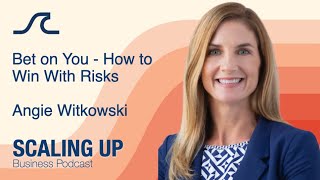
A Scaling Coach podcast episode (host Bill Gallagher) interviewing Angie Witkowski about her book "Bet on You". The discussion reframes risk as the pathway to reward, explores psychological barriers (fear, catastrophizing, prevention vs promotion mindsets), and gives practical advice: plan finances and worst-case scenarios, test ideas with small time investments, and enlist guides/champions rather than lone heroics. Illustrative anecdotes include parenting, buying a coffee shop, oil & gas companies branching into new energy, and endurance sports (running, open-water swimming) to show how mindset and stories shape outcomes.
Chapters
I'm feeling. It.
Feels beat. I. I love having my own beat.
Jealous. I need my own beat. It's like your walk on music.
You know, if you want to make sure everybody else is having fun, you got to start having fun yourself.
You go first.
I'm having a bad time, I'm certain. Certainly not going to make a good time for anybody else.
Absolutely.
Oh, if you're just joining us, we're talking today about risk and reward. Great conversation about using risk, leveraging risk. I don't know. I'm saying it wrong, but you'll get more of that in just a second. Hey again, everyone, my name is Bill Gallagher, scaling coach and host of this fine scaling up business podcast. It's. It's a great afternoon and I'm happy to have this conversation with Angie who is joining us to talk all about it. Before I get into that, let me just say all our shows and more, wherever you are now, whether it's audio or video, you should just know that it's in both. And we try to push it out everywhere that we can. LinkedIn, YouTube, Facebook, Twitter, Apple, Podcast, Spotify, Stitcher, etc. But our own website that we are partial to is scalingcoach.com and you'll find all the back catalog of shows there as well, and links and things about our programs and coaching and all that groovy stuff. Scalingcoach.com all right, Angie Witkowski, welcome to the show.
I am so happy to be here, Bill. Thanks for having me.
So, folks, Angie is a New York Times bestseller. Spark bet on you leading from the front. We're talking about bet on you today. And she's coached in lots of groovy big companies. She'll say more about that. Background is Marine Corps officer and ba, NBA, University of Michigan.
Go blue.
Go blue. I don't think you can be from there and not be a supporter, right?
Oh, you'd be surprised. I live in northern Michigan and I did not know this. I grew up here. I left for 20 years. I came back and I am in Michigan State, Spartan country. It is green and white here, not maize and blue, but that's okay. Big go big 10.
Yeah. Yeah. So well, I live in near Berkeley where we have Cal who has gold blue and my high school or my. Actually I didn't finish high school there, but my junior high was buff and blue, I think. Yeah, it's just like another yellow. It's another goal. Everybody's got to name it their own way so they can call it their own thing. And so you have two Kids, I.
Have a graduating senior this year, which is amazing and exciting. And I've got a 12 year old, both boys. I'm outnumbered.
One of each.
Yeah, it's. I love it. It's one of my. You know, we talk about leadership. It is the most challenging leadership role in the world. The pace sucks, the benefits are amazing. When they show up on time and. And I love it. It's great.
You know, the coolest thing on this topic before we move on to the core of today's show, somebody told me, I love to repeat it endlessly because I think it makes a difference for all of us is in the beginning of the kid's life, right? You're their manager. You manage everything about them. You tell them what to do and everything like that. And then at some point and without notice, they fire you as their manager.
I muted you for a second. I think there's a squirrel outside that my dog is. But they do.
I have my.
Like a loser in my household. I tell people, I tell my kids all the time that people pay me to give them advice. I'm a coach. And you won't even listen to me. I have no authority in your world. And they agree. They totally agree. Like, you're right. You're just mom.
Somewhere between 8 and 14, you're summarily dismissed without notice, and they disappear into their rooms, their lives, and they push you away. And then your job is to get hired back as a coach.
It is the hardest gig, which is why I think I'm a working parent. I understand business a little bit better than parent economics yet. Parent economics, when they want money, they know who to come to. So there's always that little loophole we find every now and again. But, yeah, it's a. It's been a great journey so far.
I'm a new grandfather, right? Granddaughter's about a month old.
What a joy. What a joy. Congratulations.
Young, but two things are really, really, really gratifying so far, right? Aside from the child herself. One of them is that within 24 hours of getting home from the hospital, we get a call from the boy. He's like, could you please come and help me? And tell me what. That's kind of cool because I'm like, okay, we didn't alienate and screw up too bad. And then of course, the other thing is seeing the way he holds her.
Oh, you're gonna make me cry. It's. I'm so glad you're bringing this up too, because in bed on you, and this is like a shameless. Segue. But we talk about taking risks and people often say, like, we're risk averse. But then you tell people you got married and you have children. Those are really big risks with amazing reward. Like, your wrists turn out. Like, imagine watching your son and seeing the joy cross his face. Like, this was a crazy risk and you did it and you're happy. Awesome. Congratulations to your son and to you and your family.
Yeah, it's. Yeah, that is among. Right. I. I often say, you know, as young couples, probably start with house plants and then have some pets, maybe a hamster before you get a dog. More emotional attachment to a dog. Right. Because the consequences are a little different when things don't turn out. And I think that's super true. Like, be ready. Like, it's a huge risk. It wasn't an intentional segue. I was just, you know, talking to share and be related to where I am in the moment. Right.
But yeah, no, my.
It is.
And it's. It's been an amazing journey. Writing bet on you because you share that word risk with people, and it's almost like it's a hot iron poker or something like that. They just have this really strong aversion to it. Like, oh, I don't really take risk. It's like. Pause for a second. That is just not true. We take risks all the time. I know that you are Air Force veteran. I served in the Marine Corps. That's a crazy risk. And that was perhaps a physical risk that we took. And maybe there's areas of our lives where we don't exercise that level of risk. Maybe financial risks. Of course. You're an entrepreneur. I'm an entrepreneur. There's, you know, risk there, but maybe there's places where you don't speak your mind. Maybe there's relationships where you don't have enough courage to really initiate difficult conversations because it represents a relationship risk. And so we're surrounded by risk. How do we look at it? How do we relate to it? And what can we do to change our relationship if we're not happy with it?
So step back for a second.
Yeah.
What was your inspiration for. For writing this book? Like, why did you decide, oh, I should write a book about risk right now?
Yeah. Well, first, the time we wrote it during the pandemic. So I finally had time because, like, my work and your work, I think we operate in a similar space. I was traveling, I was coaching, I was doing large events, keynoting and facilitating that shut down. So suddenly I had time in my hand. Yeah. Business Got disrupted, had to figure out what to do next. But really the inspiration came from. I've been writing on leadership for quite some time, and you've probably seen this with your work too, Bill. You get inside in your coaching relationships, the minds of really talented, successful people, and you start to see some of their holdbacks and hesitations about the things they want to do, but they don't think they have it within them to do it. And you look at it from the outside looking in like, are you crazy? You can start this business, Are you crazy? You can get a short term rental. You can have this conversation and helping people understand that within their abilities they can do whatever they want. It's just helping them get the risk taking mindset and what does that look like? And overcome their hesitations to really realize their potential.
Yeah, so. So that was the focus and the connection and writing now. This is not your first book, right?
It's the third one. Yeah, third. Third time's the charm. Third time is like, okay, why I'm never gonna do this again. Actually, this is. Third time's enough. We're good.
Well, I've been working on a book for over five years now, and I felt like I was getting kind of close a couple times. I'm like, yeah, it's not right. And I've gone back to it and some people are just like, oh my God, just put that thing out there and then write the next book. And in this case, I don't mind, like really taking the time to get it right, but I do kind of feel like now it's kind of coming together and aligning up to something that I feel like is worth the effort and the lift and that letting it all kind of cook and percolate is. Has been worthwhile.
Congratulations. And I think that you're describing the perfect recipe for change. Whenever you start something, you gotta get into it, then you discover it, then you learn it, then you work with it, then you hang with it, then you put it on a shelf, then you come back to it. That's how success happens. We tend to celebrate and prioritize, like overnight successes. We forget about the hard work that overnight success took 10 years in advance. And in bet on you. We talk about the idea that we need to reimagine our relationship with risk. It's not, quit your job, change your life. It's not, rip the band aid off and success is going to happen. It's, whoa, take your time. Just take that first step, followed by the next step, followed by the next step.
We talked yesterday with Vern Harnish about Sam Altman's maxims that he wrote recently about. And we talked about his notion that you should keep your overhead, your personal costs, your ability to take risks high by keeping your kind of baseline low so that it's not like the big stretch. And if your lifestyle gets out of hand, if you're trying to bridge from one thing to the other, if you don't have any reserves and excess capacity, then it gets really hard to take risks.
100%. We write about the formula for success, and I say we. It's my business partner, Courtney lynch, and myself, my co author. We've written all of our books together. We talk about that. You know, if you want to take that leap, you have to have a really understate, good, solid understanding of your financial situation, because that's a significant component to your success. And then you also really need to rely upon your judgment, your ability to make really good decisions, because that's going to be a factor in your safety net. But ultimately, you have to trust your. In you. Your talent is your safety net, too. So sometimes we put too much importance on finances and other people and external things, but just reminding ourselves too, like, you are your safety net. And you need to start making choices to make sure that if you stumble, if you fall, something's going to catch you. Your talent will. And what else?
So the first thing that I notice you talk about with the book is that is the common thing is risk, reward. Right. And you talk about that does not. That's not the opposite. So tell us a story or bring that to life for us.
Yeah. So imagine, Bill, that we're going to go to the casino, actually live in Northern Michigan, where there's a lot of casinos. So it's pretty real for me. We could go to the casino in 20 minutes if we wanted to. But imagine that we could. We tend to think about risk as a gamble, as if your success is going to be off a roll of. Roll of a dice. And it's like risk versus reward. And that's how we pitch that topic of risk. But it's like, no, no, no. It's not risk versus reward. It's risk is the path to reward. If you think about your life, every significant thing in your life happened because you took a risk. And when you put it that way, you start to say, hey, maybe I am a little bit more prone to take risk. Maybe I have this mindset. I just haven't really considered it that way. And so I think having that Reflection moment to really just contemplate what's my relationship with risk, how do I view risk and how might it work for me differently if I saw it as the necessary ingredient to get across this bridge and want to travel to?
I think for me risk shows up in all different things. Like there's the, there's like, oh, I have something to say. Should I really open my mouth right now? That that's a risk that I'm painfully aware of and that's not usually one where I think too clearly on. Sometimes I'm more prone to just open my mouth and take that risk. Right. Sometimes I shouldn't. But that of course they're starting a new venture, beginning a new thing, putting money in or time into something. It's funny, we think so much about having money at risk, but what's far more valuable and scarce forces are investing our time in something thing, the non.
Renewable resource of time and how we use it in bet on you. We talk about how to carve out the time to, to test and try the risk that you want to take. Like if you want to get into short term rental, what might that look like? The, the trying before you go, we'll call it whole hog into that venture. But it, it is really funny when you were talking about the risk versus reward and just some of the financials too. I've got a really dear friend of mine who served in the Marine Corps, worked in a corporate environment. Unfortunately they restructured, lost his job and he was going to go back to doing something that he always wanted to do. And he took a pause and said, well, I've got this really healthy retirement. What do I do? Like there's this business that my friend wants me to get into and he was just afraid and there's that word that I think sometimes we're uncomfortable with talking about. But he was just genuinely afraid and worst case scenario was dominating his mind. Like he was going to, you know, go bankrupt, his family was going to go homeless, they were going to lose everything. And I'm like, look at the things that you've done. You have done some crazy crap out there. You can do this and you're going to be successful. Just use your time wisely and you can make more money if it fails.
Yeah, what about like how much you risk? I see sometimes people, especially on the entrepreneurial side versus maybe the more professional corporate managers that we work with will like bet everything. Right. They'll make a lot of money in their first venture, they'll bet too much on the second. One, it won't get as lucky. They'll have overestimated their own role in the prior and then they end up losing badly. They find themselves in bankruptcy or on the verge of bankruptcy with a painful loss. I think that quantity of risk, how much you're gonna put. What's your limit before you walk away from the casino?
Yeah, exactly. I think having healthy boundaries, Bill, is what we're going to be calling that. And think about what made you successful the first time was probably careful planning, careful consideration, careful respect for dollars. What made you made you unsuccessful the second time is you abandoned the process, went on hubris and a little bit of arrogance and overconfidence and didn't put the careful consideration. So I like to think about planning is a really critical stage. Like, I think some like terrible decision making is. Are. It's like things like 90 Day Fiance, like that's a quit your job, change your life conversation. Because it's just a decision void of solid judgment. We need our judgment. It's going to be that North Star that's going to guide us. And so I feel like sometimes that is where risks go wrong, is people abandon their process. They abandon the skills, the principles that got them to where they need to.
Be in getting ready for the show. You talk about weight loss like a personal thing as a risk thing. What's the risk there? What's that all about?
Oh, my gosh. Fear of loss, fear of change. I mean, I think the change is so tough. I think anybody starting a diet, which is, you know, a risk, it's what if it doesn't work out this time? Again, I lose trust in myself. We need to self trust in order to build skills. So, yeah, I think at the center we. We write in the book about the two effing cousins. This wouldn't be a book written by marines if we didn't, you know, kind of dance around swear words here. So the two effing cousins of fear and fear failure. And those are powerful limiters in our choices. And we don't like to talk a lot about them. My husband and I, we bought during the pandemic a coffee shop. Now, neither of us knew how to grind an espresso bean. Neither of us know how to pour a latte or foam milk. And there's a bakery too. We don't really bake, so there was a lot of fear, but we didn't really talk about it directly until we did. Until we actually had to go, you know, get ready to sign the papers. We started talking about worst Case scenario and our fears.
What are we getting into here?
Yeah, it was exciting. But confronting your fears is possibly one of the most powerful things you can do as you venture into a new endeavor.
Yeah, I think that's an interesting thing. Fear of failure, right? Like, okay, I am excited about something. I'm standing on the precipice, and I start to imagine all the ways it could go badly.
You're catastrophizing the mistakes. I've got a dear friend who is an executive director at a nonprofit. She wanted to move into the independent contractor route. She had an easier time imagining herself failing miserably homeless on the streets of Chicago, crack whore. Like all these things, then doubling her salary in the course of a couple years. And that's where our mind goes. We catastrophize all the things that would go wrong, so much so that we don't even entertain. What if it goes right? So that fear of. Fear of failure in particular can be a powerful paralyzer, especially for perfectionists who think that everything is going to go as planned. I'm sure, Bill, within your career, you've discovered that rarely anything goes as planned. And yet look at where you are today.
Yeah, rarely does anything go as planned. That doesn't mean it all goes worse, Right? It goes different. We. We anticipate, we lay out, we take our best shot at kind of figuring out the predictable thing and the range of it. But sometimes a huge runaway success can be an issue because you're like, how do I staff this? How do I fund this? How do I level up for this? Both up and down are stressful. Figuring out how to contract if things aren't turning out, how to spend less, turn off the spigot is. It is a challenge, as is handling a deluge. And then it's incredibly frustrating to be plateaued. But it is a lot more tranquil most of the time than I think.
About those challenges that you just laid out too. And it's so important for us all to remember to have the presence of mind and to take a step back and think, okay, at each new level, at each new stage, there are skills, and I have the self trust within me to know that I can develop these skills. Like, let's unpack what's needed at this stage. So scaling up, I need to hire. And if it's not our, you know, strength, work with somebody who can help us. And that's another, I think, a critical thing that we as individuals who are, you know, pursuing our ambitions and finding success, success and scaling whatever endeavor we have is being able to go to other people and ask for help. In bet on you we call them go to guides. I like to think about not necessarily finding mentors, but going to people who are doing the thing that you are doing and asking for help. And we sometimes think that we're burdening people with questions, but people love to help. I'm sure if you're listening and somebody were to say, hey, can you tell me about this, what you did to navigate through this scenario, you'd be delighted for many reasons because they are considering you an expert and who doesn't want to help somebody.
Yes. So the in, in, in our show preview you mentioned oil and gas companies getting into new energy. And I think that's an interesting one because people have lots of opinions about it, right. They're, they're outsider. If you're at all an environmentalist, you think that the oil and gas companies have faked it and put a token efforts and not really gone to it and moved at a glacial pace. And. But I'm sure inside the oil and gas companies the idea of competing with, of undoing your core business is terrifying.
And having to collaborate with your competitors. The oil and gas industry recognizes that in order to attract talented people, we have to be of the times. We have to work together and start talking about new energy as an industry to bring in talent. And that's a risk, right? If I'm one company X working with, you know, working with and against company Y, there's got to be a level of trust here that you know that, that this is going to work and you're going to do what you say that you're going to do and I'm going to do what you have to say. So yeah, it's, it's fascinating but you know, it's really interesting is now whenever I travel to Houston, I go to headquarters of these large oil and gas companies and there are Tesla charging stations or EV charging stations out front. And it's been a dynamic shift.
Yeah, it is and it's ongoing with that. So what when you see something in front of you, what's your process or approach to understanding the risk? I know what my moves are. What, what are you talking about here?
I want to hear your moves. What do you do, Bill?
Well, my natural thing is to see the opportunity first. Right. So that's the thing that I lead with unless I'm in a crisis. But in both cases I like to have a plan for my worst case scenario. I like to think about the most predictable not in my mind. The most predictable scenario, bad, bad scenario, right. Like and the worst case, like how ugly could it get? And then I like to think about my coping mechanism for that. And if I have a plan for the worst case, if I have like okay, well this isn't going to kill me and I'm already facing this, then I have a lot of courage to move through the fear than if I don't have a plan. So. And part of that is just kind of getting conscious about it, right? Like so years ago at a bank, trying to shut down my business and, and I didn't have a plan and I was very anxious and panicky about the plan but I hadn't really spoken or even like gotten it clear for myself what is it that I'm so afraid of here, right. Like, so I had to talk it out and extrapolate the fear, the nature of the fear, which was more subconscious, right. And, and I, it's funny, it's a long time ago and we, I opened with a ment son but I really thought, well, if I screw up this business and I lose my house then my wife will leave me and I'll become a weekend dad. And the like the greatest fear was being a weekend dad, not being in my kids life 24 7, you know, that was the thing that terrified me. And so like getting like getting it all out, like that's what I'm really worried about. And then of course the problem was pretty rapidly addressed within the next couple minutes because as soon as I spoke it, my wife was like, like I'm not gonna leave you if the business fails. If we lose our house, here's three things we could do, you know, like, and that was like, oh, okay.
I was going back to like again. Let's like verbalize our fears and we.
Can verbalize it, get it out of the subconscious. Yeah.
One of my biggest problems in life, one of them, I've got a few, is that I like you see opportunity everywhere. And part of my challenge is regulating because of like everybody else, I've got limited bandwidth and I can't do everything. Or when I try to do everything, something fails and I don't fully commit to it. I half ass it and it's not going to be successful. So I think one of those things is first and recognizing that we have these two mindsets going at bat in our head. Prevention and promotion. I tend to have more of a promotion mindset. Like I can do it all. I'm you know, small town girl, join the Marines, build A business, wrote a book, all things, like, I can do anything, but it's just not true. And then the second thing is, like, so, okay, I look at things, knowing I tend to have this promotion, that prevention mindset. And the second piece is, do I want to do this? As your listeners probably know, the more successful that you get, more opportunity is going to come your way. And making sure that it's aligned with your core values. Like, is this even something that's on my radar? Is interesting. And if you determine, yeah, it is, I always think too, then is it going to be fun or is it just gonna suck? Because if it's gonna suck, like, I've done plenty of things that just sucked in life, but I thought I wanted to do it. So that's another thing. Because life is gonna be hard no matter which way you slice it. You might as well enjoy yourself if you're gonna be struggling through a challenge. So those are kind of my mental processes too. And of course, I always think, worst case scenario, once I get into it, then I think best case scenario, realizing that it's gonna be somewhere in between or it's gonna be entirely different. Most of everything, I start, like, I started off in the Navy. I ended up in the Marine Corps. What a great thing. I thought I was going to get stationed on the East Coast. I went to Hawaii for three years.
And for you, that's awful.
It was really tough. I was single. I had a Jeep wrangler. It was single in Hawaii. It was awesome. Best time of my life. Best people in the world. Best time of my life. But it's like, you know, whatever. You just. You got to start somewhere. You got to put yourself out there.
And see what happens in Vegas.
Oh, that sounds so fun. I don't know that I want to live in Vegas now. I love to visit Vegas, but if I was younger, that sounds like, Was it fun?
So Vegas is a lot of fun. And when you're young, you know, you're in your 20s, it's a fun place. It's it. And. And my mom's entire family was from Vegas. I grew up going to Vegas and having a lot of family connection to Vegas. So it actually was okay. But. But it is a place of great risk. And I have that are like, oh, we want to do our annual planning session Vegas. I'm like, bad idea. Because you will have, like, a couple of the people on the team who will go out and put on a little too much that night and, you know, end up with a Vegas weekend.
Story to Tell they go hard.
Yeah, go hard. And they come in hungover. If at all. They need the transfusion in the room.
I heard, I saw that. I was in Vegas. I guess I didn't realize that was as much of a thing as it is a thing. That was interesting.
Yeah, you can get that in. You can get that all over the place these days. Oh, come in anymore.
I know, B. I don't take those risks anymore. After like two glasses of wine, I know it's going to be a rough day the next day. So I feel like I've got some built in safeguards that I don't need. IVs.
You have two boys, You get to live it all over again. Awesome. So you talk about guides. I don't think we've really addressed that here. Or maybe you did it obliquely. But what are these guides to help with taking risks and navigating them?
Oh, well. For anyone listening, imagine the first crazy idea that you had and the reaction of naysayers and doubters in those worlds. That's why we need guides. We need people to say, oh my gosh, that sounds amazing versus I don't know, Angie. That sounds a little crazy because you're always going to get the skeptics, the doubters, the naysayers in your life. So we need people because people can promote us. They can give us wise guidance. We can get encouragement. We're more likely to pursue something if we're getting external recognition. That's important. So we write in bet on you about three types of people we need in our life. I mentioned the first kind earlier. It's championship people who are doing what we want to be doing just to reach out to them. It's not going to them and saying, can you mentor me? Because most people just do not have the time to enter into an informal mentoring relationship. But if you say, hey, can you go grab coffee with me? I just got some questions, most people say yes. So we need those. We also need big stagers like you, Bill, and people out there who've got a microphone and are building a community that we can tap into and get inspiration from. We need our people. There's this other group called no Choosers. These are people who are just in our life. We have to make sure that we have a filter for who gets to influence our powerful, important opinion of ourselves. Because if it's anyone and everyone, we're going to find ourselves on a confidence roller coaster. But if it's people who we know can help us and they're a part of Our life, we can just pay attention to them and lean into those relationships.
You know, whether it's having a coach, a mentor, a friend, a support supporter, a champion, a partner, I think all of these things help. Going onto a big risk alone is a little. Or. Or even if you're not actually alone, but you feel alone is a dangerous thing. A lot of times we're not actually alone, but we feel alone. And that can be a little bit intimidating.
It can. And I think the loneliness, too. It's. I'm sure with your coaching as well, if we're struggling and we're stuck, we have an amazing capacity to solve our own challenges. What that requires, though, is having a partner, somebody who can help us think out loud and just listen and ask really great questions and get us to a place where we've talked ourselves back away from the ledge and really workshopped our idea to get it to a place of viability. So I think that's such a valuable role that coaches in general plays, as do champions and guides.
I, for 11 years, I ran a bunch of triathlons and marathons, and I did about 45 events over those years. And it's a lot. You're doing a fair volume of training a week. Like, I would do 13 to 16 hours of training most weeks. And I would have lots of interesting ideas on my longer runs and rides. And one of them that. That occurred to me on a longer run one day, often about 30 minutes in to the run after I kind of get warmed up. You get that. Those chemicals flowing through the body and stuff. And then I. Then I would have, like, the thought. And one of these thoughts that I had still carries with me to this day. And it is, I am not alone. And I, you know, I'm out running by my. I did vast majority of my training by myself. If I was swimming in the bay, usually by myself. If I, you know, and I think about, well, there, yes, I'm not alone. There are sharks here with me, too.
But I was thinking that too. That's crazy risk, Bill.
Like, oh, it's really cold. I am not alone.
I look like a seal. Yeah. But I.
Without running. And I had this thought, and it still carries me frequently. I'm not alone. Others are watching me right now. People don't even know me are seeing me. And that person who just drove past me in the car dealing with their thing is challenged and inspired by watching me in my slow pace running down the road. And I'm having an effect on everyone. I do not operate in a Vacuum and people who will learn about it later. People are thinking about me now, knowing that I'm out, like my experience, family's thinking about where I am and when I'll be back and what we're doing later in the day. And, and I. It's super powerful, I think, when undertaking risks and things like that, to remember that you are actually not alone. There's a whole bunch of people connected to you in different ways, whose example you, you, who you are creating an example for, who are rooting and cheering you on, who want you to win.
You know, I love that. And it connects to. I'm a runner and I've done a few triathlete triathlons too, so we definitely have that in common. But I had this thought this morning when I was running, so for those again, listening, what a great cathartic place to, you know, get some therapy is just hitting a trail. I was thinking not about being alone so much as myself as an entrepreneur. And my thought was, it's up to me to kick my own ass. And certainly we are not alone. But it is on me to every single day find the ritual, find the discipline. Because I know if I'm holding back, I know if I'm not giving it all, I know if today might just be a skate run, but maybe tomorrow's gonna be a timed run. And I know when I'm holding back and nobody else knows that the world can look at you and say, wow, Angie, you're this, you're that, you're successful, you're great, blah, blah. But I know, like, I'm a really great judge of how much more I have to give. And that, to me, was just kind of exciting, actually. When we think about growing and developing and taking risks and scaling, you know, what you have to give and, you know, what's distracting you from it. And you know that accountability and facing your fears is going to help you find whatever it is you're seeking.
I, I remember well the first open water swim by myself and you know, I, I, San Francisco Bay, it's cold. I got there late because I worked late. Now it was, you know, sun was set, so it was that, that early dark, the low light, but not pitch black yet. And the fog had come in and it was kind of misty, foggy, misty, so you can't see. And it's dark and it's cold and there's a breeze coming across even with the fog. And it little bit choppy and it's really cold. Did I say it was cold? And as you get down and the cold hits your waist area. And I'm like, oh, I'm so miserable and I'm afraid and I know there's sea lions and other things out here and I'm by myself and it's late and I so don't want to do this. And that is a moment where all the risk is like high, heightened, like I'm going to the risk of being uncomfortable, the risk of actually being in danger or having something weird happen, scary especially. And, and then I. But then I thought about the people side of it too, and I thought, well, if I quit now, the risk is I'll have to tell people a story of quitting and of failing and not being up to this. But if I swim now in these miserable effing conditions, then I have huge bragging rights tomorrow. It's a lot more interesting of a story than if I swam on a sunny day in conditions in warm water. Like, this is actually kind of good because I love bragging rights, right? Like, oh, I love that. That's good. And so I just, I went and did my mile swim out and back and I just kept thinking bragging rights, bragging rights. And bragging rights was like every other stroke.
The stories we tell ourselves will entirely shape our experience. Isn't it so true, though? It's like we have this incredible capacity, if we so choose, to use it to retell our story. So I'm afraid of this. You could say I used to be afraid of this. And that could be very true. If you used to, could have been two seconds ago. I used to be afraid of this. I'm not afraid of this anymore.
I think that, that I'd have to go back and look. But I want to say that was 2004, right? I've been bragging about that one swim for going on 20 years because it wasn't a swim.
It wasn't the swim. It was the mind over matter exercise. And yes, you did it, but it was the mental or moral victory more so than the physical accomplishment. I get that entirely. I think that's something too, like not enough people really think about. If I do the thing I don't want to do, I'm not only going to be able to do the thing, I'm going to cultivate pride. I'm going to cultivate confidence. I'm going to cultivate self trust. That's going to carry me into the future. 20 years. 20 years.
You can of course find the book, bet on you how to win with risks, but you can also go to Angie Witkowski and because that seems sounds easy and phonetic for me to spell, but maybe you find it challenging, put it right there on the screen in the show notes as well right now. Angie Witkowski and there's your website and all the groovy things you do and your other books and that kind of thing. Let me remind our listeners as well that we bring our show to you every week. Big shout out to Wanda Mitchell who's in the background, who gets our guest scheduled prepared and the folks at Podfly Productions who get the show ed and out the door and the show notes created and all that kind of thing. And to my mentor and friend, the creator of all things Scaling up and the Rockefeller habits that came before it, Vern Harnish, without whom this would not be happening. So thank you Vern. And so you can find us more. If you want to drop us a note, you want to say something, give us feedback, tell us some parts you liked or didn't like or you'd like me to stop telling some story or another, send me an email info scalingcoach.com that's our email address. Love to hear from our listeners viewers. Thank you Angie for joining us on the show. Thank you everyone for tuning in. Share the show with somebody else. Pass it along. That's the coolest thing you can do for people. If you loved it right, if it sucked, then don't pass along. But if you dug it, then share it. Show the love. Thanks again everyone. Keep scaling. We'll talk to you again next time. Bye bye.










