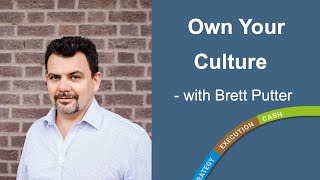
Interview (2021-01-13) with Brett Putter (CEO, Culture Gene) about creating, preserving and transferring company culture—with emphasis on remote/hybrid work. Key points: make values actionable by defining expected behaviors and counter-behaviors; document processes and onboarding (sponsor: SweetProcess); repeat cultural messaging; invest in wellbeing and social connection (regular 1:1s, celebrations, visibility); hire for cultural fit and allow strong cultures to attract/repel accordingly. Concrete examples: Busu (values were tick-box; reinvest to embed them), Algolia (made hiring decisions to live transparency/inclusion), Skimlinks (kitchen/toaster example), Jellyvision (standing-clap welcome).
Chapters
Live again. Oh, today is a podcast day. We got a lot of podcasts going on today, that's for sure. And I forgot to refill my coffee. Oh, yeah. So what are we talking about? We're talking about culture. And how do you create, maintain, preserve or transfer culture when you are working from home, Even if you get vaccinated soon and you get back to the office or you're in an area where you've controlled it, culture is. And our work styles are changing dramatically now. And we know, certainly followers of Scaling up know that values are important, but if they're just on a piece of paper on your website, it's not really values in the way that we see and intend to use them. So we're going to talk about that. How do you create a rich, vibrant culture rooted in values and some other things. We're going to talk about that in just a minute. Before we get into it, I want to remind everyone that fundamental to making yourself less essential to the business is getting things handed off right. We got to get our processes and our things handed off well. So we're so glad to talk to you about how to get your processes given away, how to teach them, how to refine them and develop them over time. If you've got team members who ask you the same questions over and over again and you wish there was some way that they could find all the information and that they could learn, that they could be trained on it, they could have as a reference without coming to you, without knocking your door, and there was a way to keep making that process better over time. Well, there is. Suite Process is that kind of software that helps companies have one central place for all the process of procedures and policies. And it, it makes managing the business, the managers, the supervisors, jobs, so much easier, working through all levels of the company and then as a whole team to combine to improve those processes over time. So Suite Process is just that kind of software becomes that one source of truth, the place where everybody can get their questions answered when they're not sure how to do something. And then as you bring new people on, you could train them in it. You can help retrain people or move people from one role to another using Suite Process. So it's that kind of thing that helps people figure out how to do things in a consistent. Right. Great execution is about relentless repeatability. And our teams don't work right. The people decision side of things don't work right if we're all at cross purposes doing things in different ways. So Suite Process helps you do that now for the listeners of the show as a sponsor of the show, suite process is doubling their regular trial from going from a 14 day free trial to 28 days free. You can sign up with no credit card required. Sweetprocess.com scaling up so if you go to that link above or that link, we'll put it, we've got it in the chat, in the visual crawl here. We'll put it in the notes as well. We've got a signup page for you there where you'll get that special offer as a sponsor of the show. Sweetprocess.com hi everyone, I'm Bill Gallagher, Scaling coach, host of the show. Our show is all about how to scale and grow your business no matter what's happening in the world, what's happening in the economy or what industry you're in or whatever. We're talking, our guest today, Brad, is going to talk to us about building this, this fantastic culture and he is normally lives in London. Right now he's in Portugal. And we're all dealing with world events that unite us all and yet all in different ways and from different places. You can find now hundreds of episodes on everything to do with people, strategy, execution, cash or what I like to talk about the fifth decision, what kind of leader you'll need and want to be. You can find all that@scalingcoach.com we've got downloads of the tools, show notes, the past shows, all of there. You can also find out information about our public workshops. We do them online these days and everything is right there for free@scalingcoach.com plus all the like the extra cost things like the workshops. If you would like a copy of the book Scaling up for free, you haven't read it yet, we'll give it to you. Just pay the shipping and handling cost. We'll ship it pretty much anywhere in the world that we can ship to. Scalingcoach.com all right, listen in now as we talk to Brett. Brett, Brett Putter. Putter. Is that how I pronounce it?
That's right. That's right.
Sounds like I know what I'm doing right as we talked to Brett Putter about how to create a great, great culture. Brett, welcome to the show.
Well, thanks for having me. It's great to be on the show. Really appreciate it spending some time with you today.
So guys, listeners and viewers, you should know that Brett is the CEO of Culture Gene. It's a culture leadership software and services platform. So their company helps people get online and deal with culture. And he's pretty passionate about creating an intentional culture. And this time has really challenged it like never before. Like, maybe before it was about the way you painted your office and the way that it looked and smelled and that kind of thing. I know when I help people visualize it, I ask them to close their eyes and think about the future state and to imagine walking in the office and doing like, all that now. Now you have to do that online. So, so glad to have you on the show. You're outside of Lisbon now, in Portugal? Yes.
Yeah. I met a little in a little village called Apple Tree beach, and.
Prior.
To Mazage, and it was named that because there are apple trees up the river, come down the river into the sea, so.
Oh, like bobbing apples.
Literally bobbing apples. Yeah. Beautiful little place. Very quiet. Obviously at the moment it's cold and. And. And darker and than it normally is. But it's. It's a gorgeous little place to just get away from it all.
Of course, apple bobbing is not really a good party activity anymore. The. The thing of where you go get the bob in the time of COVID we don't all dip ourselves in the same body.
Those days are long gone.
Oh, that's so great. You know, the last country I visited before the lockdowns was in. I think I left March 7th or 8th and I was in Lisbon. So last place I was was on the beach in Portugal before everything changed.
Very nice, Very nice. It's one of my favorite cities. One of the reasons why we're here.
Would love to get back there as soon as I can. You know, vaccinations are starting everywhere now. Some places are getting very fast. I think they're going pick up the pace here in the U.S. i now know three people. My mom, my sister. Right. And I'm blanking. Who else? Who's else been vaccinated? I don't know. A bunch of people in my world are starting to get it. My sisters in laws are getting vaccinated. One of my foreign mates is getting vaccinated. Things are changing. I see a light at the end of the tunnel here for these restrictions.
Me too. Me too. It's a distant light, but there is at least a light. I think we're gonna be fighting this for a couple more months than I would have liked. I thought it would bounce and then. And then slow down, but these new variants and new strains, obviously pushing the. Pushing the boundaries of everything. But I see a light at the end of the tunnel, and it seems like government and the health sector and this whole virus environment is really working together quite well, which normally it takes a lot longer and normally things are a lot slower, but this is such a critical issue for us.
So, like, talking of what, what's our number one subject? Right. Like this year I notice I've been listening to some podcasts and I'm like, oh, stop talking about that. Let's talk about the. Your subject that's near and dear to you, but it's changed and accelerated by this time frame. So tell us, how do you get interested in culture? How do you even think to start this company? What? Tell us back. I don't know, take us to your childhood or wherever, wherever it becomes that culture becomes alive and real for you and then take us kind of through that journey.
Sure. Well, in my case it's about five years ago now. I was running an executive search firm in London and we were working with high growth companies helping source C level executives across the world. And I was lucky enough to work with three companies where the founders or CEO had a very clear understanding of their culture. And this didn't happen that often five years ago and made me sort of stop and go, wow, there's something completely going on here. Because the processes were much harder to do. It's hard enough to find candidates anyway, good candidates, but finding candidates who match the values of a company, it's harder to do that. But once we got into the interview stage and then when the candidates joined the companies, it was clear to me that this was the missing link. These three processes just were almost miraculous. In the one case, the candidate and the CEO, it was almost as if they've been dancing tango for 10 years. They were finishing one another's sentences. And I just realized there's something more here and I started researching, studying and so on.
Yeah, it's really interesting. Well, so, and so you've built this company around it. We're going to talk about some of the things that you've observed. I'm guessing from your accent, you're South African.
Yeah, very good. I am. I've, I've been out of South Africa for 21 years, but I've retained some of that accent.
It lingers with you. Right. And, and one of the companies that you talked about in getting Ready for this went through a whole. You talked about Bernard, CEO of, how do you pronounce it? Busu.
Busu. Yeah, yeah, yeah. Bernard was a really great example of what most leaders experience, which is he had a company, rapidly growing company in education, tech and language learning. Moved to London from Spain, really built a big team. And as part of that process, they created a set of values. But it was a tick box exercise. They didn't really do anything with those values. So when things weren't going that well, the rats left the ship in great hordes. And he lost three quarters of his senior leadership team very, very quickly. And he realized that actually the values hadn't really, you know, he hadn't done anything with them. So he pulled the company out of the, out of the trouble it was in. And then he decided to reinvest in the values and really make them meaningful and make them lived in the organization and embed them in the company. And he's now grown that business tremendously since then. And his learning was, you know, it's not just lip service. It's not just a tick box exercise. You've really got to work on your culture as a. And build it into an asset in the business.
Interesting. Yeah, I think that's a thing that we saw, we used to see, well, we still see everywhere now, is that people sometimes create values that are very generic and throw away. So first we work on that and then they end up with values that aren't just on the website and, or in some pitch docs. But if I walk around the business, I don't see those values alive in the organization.
Yeah. And this is the fundamental problem. As you said, they put them up on the wall or put them up on some documentation and don't do anything with them. And so what we do with our company is we actually, we turn those values into actionable insights by defining expected behaviors against those values. So what does that value actually mean to the company? What do you expect? What do you not accept in terms of the behaviors from your team? And that then makes those values much more livable, actionable, rewardable, recognizable. And this is what a lot of companies don't do, is take that step into making your values real in the organization.
Yeah. So actually teaching people what it looks like when the value is being adhered or honored and what it looks like when it's being violated. Right, Both sides of it.
Exactly. Both sides of it. And what you, what you'll do is you'll. We'll then take it and say, okay, let's now start spotting when people are doing this. When. Let's reward and recognize people for doing this. And also let's pull people up if they don't.
Yes, really great. So teach it right and reward it and also penalize it if it isn't there. So there's nothing wrong with putting them on your walls or on your website. Right? That's great. It's part of the equ. But if you don't do the other things. And. And so talk about the next one, Algolia, because I think that's one where you brought it to life.
Yeah, so. So Algolia, one of their. The two founders, one of their early values, was being transparent.
What do they do?
So Algolia are an enterprise search engine. If you build. If you're building a company and you don't want to hire 50 search engineers to build a really awesome search product, you will sign up to Algolia and they'll charge you per search or however they charge you. And so they were looking at being transparent and being supportive and being inclusive, and they realized actually that they were not, as a company, they were not that inclusive. They looked at their engineering team, and the engineering team had very low diversity. And they felt that inclusion comes first and then you drive diversity. So what the company actually did is they decided they would build a recruitment team that would only recruit people from a diverse background. So all sorts of diversity, not your typical diversity. And they took their diversity figures in the engineering team from 5% to 11% diverse. And the target for this year was going to be 11% to 16% again, as they were growing from about 350 to 700 people. And this is a really good example of a leader spotting something, spotting that you're not living the value, spotting that you're saying it, but you're actually. You're actually not really delivering on it, and then taking action to solve that. Because your team know that you can say one thing but behave in a completely different way. And so they're watching you behave in different ways. And they're almost. It's almost like a jealous wife. They want to see that you are living these values and living what you say. So that was a really, really great example from. From my book.
That's really great. So seeing it brought to life and calling that out, I think that's the thing, like getting an audit or a review. I know sometimes as a coach, if I walk into a company that says they've already done their values or we do them, and then I visit the office later and I see something that's really inconsistent with the values, it's really like. It's just super obvious. But when you're living in it yourself, I don't know that it's really obvious. Right. If you say, like, cutting leading Edge, creative or top quality is your thing. And then I walk around your office and it's a sort of a bizarre mishmash of stuff thrown everywhere from an expediency standpoint and with cruddy, cheap furniture, then I'm like, I don't know about that. Like, I'm not sure that's your value. That's maybe your aspiration.
Yeah, and that's a great point on aspiration, because I think, I believe that a good set of values are both current and aspirational. So you're going to be stretched and not overstretched. But you've got that balance between this is what we do well now and we want to continue to do it, but this is what we're aiming to do better in the future. You're really spot on. It's quite hard when you're in the trenches to spot what you've missed. But the great leaders make their culture more visible, tangible and conscious so that it can be spotted. And they're talking about it and evaluating their decisions based on it on a continual basis.
So one of the other examples you put sounds very much like what could be done with a traditional business. You talked about this. Skim links. So tell us about that story because I think then maybe we talk about dealing with remote office and that kind of thing.
Yeah. So Skimlinks is a really good example of. Alethea Navarro was the founder and CEO of Skimlinks. It was recently sold, it was recently exited. And Alethea just had this second sense for company culture. And when they raised a fairly big round of funding and they could then afford to invest in a decent office, she placed the kitchen in the center of the office and in the center of the kitchen she placed a toaster. And the reason for that is when you smell toast, the smell of toast in the air, you feel like you're in a. You're at home or you're in a hotel and you feel comfortable, you feel safe, you feel warm, you feel like you're with family or you feel like you're enjoying yourself. And so she wanted that psychology to, for you to experience that as you walked out in the door first thing in the morning. I mean, she did a lot of tremendous, tremendous other things, but that's just one example of paying real attention to detail when it comes to culture and really thinking it through.
How do you keep from the smell of burnt toast propagating?
Maybe going too far. A great question, one I didn't ask of.
It should have put a limit on that, you can't turn that one up to 11.
If you like to end toast, bring it in yourself.
You know, it's funny, we used to. My daughter had a friend who came over when she was young and growing up, a school friend who's always wanted toast. She's like, there's something about the toast at your house. Like, I don't eat toast normally I come over to your house, I just want toast. And it's funny that you say that, but I think that this notion of experience is what I'm hearing within that it's what does it look like, sound like, smell like, taste like, what does it feel like as you operate in the business, as you do business with the company, that holistic thing. And, and it's a really useful thing from a visualization standpoint. When we do somebody's vivid vision or with a team or a group of CEOs, we have them sort of settle in first. We do some, some settling, breathing kind of things with their eyes closed. Then we have them imagine the future state. And we, we literally ask them, what do you hear? What does it sound or smell like as you walk in the business or as you go about your day? And I think even if we're not online thinking about that experience, is it fun? Is it off putting, Is it uncomfortable? Is it. And it doesn't need to be, you don't need to be coddled. Right. That's not necessarily the useful thing in this case. They thought about creating a homey kind of feel. Right. But can we create a whole experience? So how are you going to. It's certainly harder. Talk to us about now when people are doing so much work remotely and we're all on zoom and we're working mixed and even when we go back face to face, there'll be a mixture of work from home plus office and that kind of thing. Talk about that balance.
Yeah, I think this is the, the big challenge for most leaders right now is they, they're kind of getting away with, with, with this transition and not being deliberate about the thinking about, around transition.
I'm.
A lot of tech companies are doing okay at this because the tech companies are used to being more flexible, used to working remote from time to time and also being, you know, just digital and online all the time. But actually the broader, in the broader market is really starting to feel the pinch of this. And it's because their operating system or their culture is not designed for remote work. We, when we were office bound, took the office for granted and we allowed our office to be responsible for developing and maintaining our culture. Essentially, osmosis did the job for us where you onboarded somebody through osmosis. They learned about the job through osmosis and asking people in the office. They bumped into somebody in the hallway or had lunch with somebody and this informal communication system kind of worked. That's gone now. You think about. There are 12 or 13 elements of work that we relied on, whether it's proximity, whether it's body language, whether it's visibility, availability, whether it's informal communication, the water cooler moments. We relied on that in offices. And actually to understand how to work effectively in a remote or hybrid environment, you have to understand what remote companies are doing. And the remote companies luckily have been very, very sharing in what they're doing because they're very transparent. So a company like GitLab, which is 1300 employees and they've been going for 10 years, fully remote, they have a company manual that's online. You can literally go and see 90% of how the company operates online. It's an 8,000 page document. And so this is, this is one of the areas. And when you mentioned is it suite process the sponsor?
Yeah. One of the things that remote comm/scalingup.
Sweet process.com scalingup One of the things that remote companies do excessively well, they do nine. They have nine best practices that I've sort of researched and highlighted. One of them is processizing the business because a lot of processes were in our heads in an office based environment. But now you have to get it out on paper. You need to document these processes so that people can work through these processes. So what sweetprocess.com scaling up are doing is really, really spot on for. It's true. This is one of the nine best practices I've researched remote companies for the last year, year and a half because I've been building software for distributed teams and remote teams and I wanted to understand what it is that these companies do that is over and above because they don't have an office.
Yeah, I think that's, that's really great. So you think about what are the touch points? Right. So if I work remotely, I might have internal web tools, I might have a look and feel to it. Then I get on Zoom meetings. What's the tone or flavor of the style? Or conference calls, I join a Slack channel, I do these things kind of thing. What's the quality of the experience? Am I welcomed? Am I not? Is it playful? Is it formal? Like, is it on time? Is it a Little bit late. What's the whole vibe that you're giving people? Am I acknowledged as a human being or is it all business? Right. That end of things?
These are really critical questions that what typically happens is going from co located environment to a remote environment in such a short period of time results in communication channel chaos. So do we use Slack for synchronous or asynchronous communication? What's email for? What do we use Zoom for? When do we have meetings? How long do we have meetings? What type of meetings do we have? And also exactly right. How am I treated as a human being in these meetings? Because what we used to do is stand up and get a coffee and then go to a meeting and then maybe get in our car and drive to a meeting. And those breaks allowed us to decompress. We don't have any chance to decompress now. We're going from meeting to meeting to meeting to meeting. And that really is very, very hard to do. So you're really spot on that human element of digital. And digital work is a very tough and tough thing to get right.
So what are you telling people to do in that? How do they handle that?
So what remote companies do is they do a lot more one to ones than you would typically expect. So you will have a one to one. In some companies they do weekly one to ones and this is designed into the way the companies work. So I will have a one to one with everybody in my team and they don't have bigger teams than six, but everybody in my team. Every Friday it'll be a half an hour conversation where you, my colleague, lead the conversation. It's not about work, it's about what you want to talk about. We will also have business review one to ones, but they create more of social connection and they focus on social connection, how to, how to create a different vibe. You can't replicate offline, but you can build social connection and social community, which is what remote companies do and focus heavily on.
I think it's really great. I also, you know, one of the things that I've been saying, not being an expert in this, but I get on and I and I have a conversation with the CEO and they're like, okay, well we're going to have our team meeting coming up and you're going to help. And we work on the agenda and the outcomes and what we want to get there. And they're like, I'm really getting tired of these Zoom meetings. I'm like, great, I bet your people are getting tired of them too. Why don't you maybe not do everything on Zoom? Maybe do a few phone calls, try some different channels. Just acknowledge like that you're fatigued with them. Give them room to share that they're fatigued with them. Bring some playfulness into it, bring a little humanity into it. Maybe reserve the first five minutes just to talk about how everybody's doing in the day. Maybe create some mindfulness practice or something like that that you bring into the meeting and help people to, to, to like honor kind of what they're going through, their humanity, their.
You know, I think this is such a critical element. One of the nine best practices that I mentioned is around well being because they, because working, working remote often leads to loneliness, which is the first step towards burnout or mental health issues. And remote leaders are actually encouraged to have these kinds of conversations in a subtle and sensitive way to say, this is what I'm struggling with. I'm honestly, in my case it would be. I've got two kids, I've got a one year old and a three year old. I'm struggling to find the time during the day to do the work I need to do. And so to my team, we've got a small team of five people. I tell them I'm honestly going to work at night from 9 to 12, but that's because I'm getting four hours of time with my kids during the day. I'm not going to email you, I don't expect you to respond. You will only get an email from me at 9 o'. Clock. But just so that we have full transparency, I'm making up the time, I'm not doing extra work, I'm just waking up the time and I'm getting value from my family and my children. But it's something that I'm struggling with and I want to just communicate that with you. That allows people to be transparent back and allows people to be authentic back.
To share their own situation and what they're dealing with, right? I've been on the phone with CEOs and had kids come running in the room. I've been on the phone and had delivery drivers show up and the dogs start barking because I forgot to close my door. Like, you know, these are really normal kinds of things that we do when we work remotely. For years and years and years, decades I worked in a public office, right. And people came and went, but it was very professional and all that kind of thing. Now I work from here and up till now I worked on the road. So I'd be in my regular office, then I'd be on the road and now it's home, 24 7. Right. But that means that sometimes a plumber is going to show up. I've got to deal with that.
Yeah. I actually like it when that happens. It feels much more human when the other person's child is, you know, it's there or, you know, I, I had a call, I had a call with a friend I hadn't spoken to in ages and she had her baby on, you know, sleeping on her chest. A six month old little, little child. It was just, it was wonderful. It just was. So, you know, that extra human element and that extra caring element that you, that you don't get from this, you know, this interaction where you can't read one another's body languages like we would.
Yeah. And we get right, like we put on a Persona and there isn't. But if you, if you're a leader in the business, you can humanize it. And just like we do when we do trust kinds of exercises in some of our things, we encourage people to share something they don't normally share in a business setting with respect to their boundaries. We don't tell them what exactly, but people open up, they'll stretch the boundary a little bit. We'll often ask people to talk about their childhood, where'd they grow up and what order were they in, what was one of the big challenges they faced and how do they deal with that? Just doing that. Everybody sharing that can take a little while around a team, but elevates the trust in the team. Right. As we take it further, we ask people to talk about what did conflict look like in your family, in your culture, in your growing up and how has that evolved to where you are today. Not only do we continue to elevate trust in that conversation, we also have people understand each other's background with regard to debate. Debate and discussion. Right. Because how they handled that in their family created either a move towards something or away from something in how they are as an adult.
Yeah. Trust and transparency are very big key issues now because we trusted people when we could see them and when we worked, we realized how they worked and how they behaved. And now we will be hiring people who we may never meet or we will be hiring people who will meet once or twice a year. And you've got to have that transparent environment which allows you to trust people. Because if you're transparent, fully transparent, then you have nothing to hide. It's all out there. You can read whatever you want. And I think this element of creating the trust and then allowing people their psychologically creating a psychologically safe space for people to be themselves and to be human and to allow, you know, to have those conversations is vital.
Yeah, I think that's a really great place to keep it up. And then the other one is humanizing just dealing with what's going on right now. So you talk about your time frame. You had the person who's got the baby on their thing. We're all dealing with different things. Right. My kids are grown and they live in other cities and that creates other kinds of drama. Sometimes it's not without stuff still apparent. But, but, but there's a, like a welcoming of that and then there's all the world. I was leading a session. Lucy and I were with one of our teams the other day, and all of our political events were going down. They were having the, the votes and the. In the Congress and Senate and the disruptions and all that was going on while we were leading with our teams. We had to. You can't just pretend that's not happening and suppress it. People are having all kinds of different reactions and they were distracted. They were looking at the news and their computers instead of being right with each other. Right. So we have to deal with all of that.
And that's one of the things that as a leader of a business that's remote, you have to. The reason why you have to be repeating, you can't say it once and expect everybody to have heard it because there are distractions, because there are slack messages. And that wouldn't you, if the person was in front of you, you would see it. So that repetition and the reframing of the same message in different ways so that it sticks is really critical, really important that leaders repeat and repeat and repeat and repeat. Once I advise my clients, once, once the team are rolling their eyes, you are winning.
That's for sure the case. And we've seen that a few times, actually. One of our local business gurus and friends of Scaling Up, Pat Lincione, talks about that. When the team can make fun of you, like imitate, do an impression of you, talking about the values and stuff of the company, you're beginning to do a good job of communicating those things. Right. Like, you're like a broken record. I remember years ago when I was a new DJ on the radio and I was getting sick of some of the same songs we were playing. And so in the, in one evening, I called the program director for the station while some music was playing. I'm like, really? Do we have to like, aren't you sick of this stuff? Like these same songs. He's like, you're not playing music for you. Yes. You've heard it a million times. The listeners still love this music. Play the flippin playlist. Right? And he's kind of right. He's still a friend to this day, that guy. But there is something about like, look, people aren't necessarily tired of it and they need to like. And if they don't love your song, it's time for them to pick a new station. Right. To move on from. If, if they don't like that, that set of values, that kind of thing, they shouldn't be in your business. They should be in a different business.
Absolutely right. Absolutely right.
I had that a couple of years ago with somebody in our business. And that person, although they liked the idea of the value, there was no way they could uphold it. And it just became clear over time and they sort of fled the company. They're like, I can't be around this. Right. Our leading value is courageous authenticity. It's about really being open about what you're grappling with, about sharing yourself and having the courage to do that a little deeper than most. That's not a normal kind of value. That's not the way that everybody operates.
No. And I find that strong cultures and well written values will powerfully magnetic both from an attraction point of view and from a repulsion point of view. And if somebody does come into the system who shouldn't be in the system, the culture will do the job if it's strong enough to eject that person. And that's actually the best for the company. It's the best for the team and it's the best for the other person because they shouldn't be in that environment.
It was hard when they quit abruptly, but it was for the best. Right. Because they weren't going to win. And of course then we went on and made a better hire. Talk to me about one of the things that I often think about when I think about culture. I think about holidays, special events and birthdays really stand out strong for me. And every company does them a little bit differently how they handle these kinds of things. What do you say about that?
I think there is an opportunity for celebration in all of these. And companies often forget to celebrate. They forget to celebrate once again, the human element. I'm actually working with a client now who use a piece of software that does monthly surveys of how people are doing and over the last six months there's been a complaint about forgetting to remember people's birthdays and forgetting to celebrate.
People'S birthdays and anniversaries. Yeah.
And it's a small, it seems like a small thing, but it's a really massive thing to people. People. It's like that. Yeah. The anniversary in particular. I've been here for four years. Come on guys. You know this are blood, sweat and tears for your company. Give me show, give me that, give me that.
Show me some love.
Exactly. I think, I think there is a, there's not enough celebration in a lot of companies and so these are opportunities to, you know, really double down and celebrate. One of the companies I interviewed for my book, a CEO named Amanda Lennet, she works with, she. She's the CEO of Jellyvision. And what they do is when, when you finish the first day of, of your, of your work. So you, you're a new joiner after your first day. As you walk through the office, everybody stands up and claps. Just, they just clap. And it's a lot of people, it's 60, 80 people. People just start clapping. And that celebration makes such a difference to people. You don't expect it. You don't know it's coming. And it's just welcome. Thank you. We appreciate you.
Wow, that's, that's pretty powerful and palpable. Most of us, most human beings haven't had a standing ovation, right?
Exactly, exactly. So.
And let it in and like feel the love. It's cool.
Exactly. You feel like a rock star for 25 seconds as you walk through the office.
Yeah. Yeah. It's really great. I love this. Well, so before we get to some of the resources and key points, I want to remind people about suiteprocess.com if you've got people that are asking you the same kinds of questions over and over again. If you want would like one central resource. If you want to be a continuous improvement kind of organization and if you would like to make it easier to train new hires, suite process is your tool. It's that one source to get everything documented. Create relentless repeatability in the business. One place where everybody can get the questions answered about how to do things, how to cross train. Right. You can do all that new hire training, onboarding, cross training and process improvement. Get it off of your desk, stop running the business. Become less critical to the day to day operation in the business. And sweetprocess.com is your source for that. Now we. I've got a special offer for our Listeners Sweet Process will double their regular 14 day trial and give you a 28 day free trial. So nearly a month that you can. Or a month if it's February. Right. Sweetprocess.com scalingup Sign up now at that special link and you'll get that 28 day free trial without even adding a credit card. So go to sweetprocess.com scalingup and sign up now and try that. See if that makes a difference for your business. You got nothing to lose. Oh Brett, so some of the things that you talked about I think that are so useful. So let's focus on communication, process size the business right we talked about. You gave a big shout out to suite process. Add in appropriate structure, not extra structure, but the right structure around those traditions. Bring people together, figure out how to make those social human connections, document the things going to the process stuff, build and enhance the trust, add that into the communication. Be deliberate about all these culture touch points and then weave it into the recruiting and the onboarding as well. Yeah. Did I capture it? Do we leave anything out?
No, that's. You nailed it spot on there. It's, I think if, if every leader looked at those, those nine best practices and started to implement them into their business from a remote or hybrid point of view, they would be positioning their business well for the future. That's really, really, really, I think it's part of the secret source of success in the coming years.
So if you want to check out Brett's company, you can go to Culturegene AI Culture Gene. We'll put the link in there as well. Oh, there it is. In the crawl demo, Culturegene AI will get you information about Brett's company. You can see what they do and how it works. I want to give reminder to everyone that if you like the show, share it with somebody else so they you can help your friends and neighbors, your fellow business leaders with it. If you give us a review and a rating wherever you get your podcast, that helps us a great deal and we really appreciate that. If you want to send us some feedback. Infocalingcoach.com if we can help you find a Coach, go to scalingcoach.com of course, 250 episodes, that whole back catalog, free downloads of the tools, that kind of thing. Free offer of the book, we'll send you the book for free. Just pay the shipping and handling@scalingcoach.com all that stuff, our workshops, everything. Scalingcoach.com I want to give big thanks to Vern Harnish who created first the Rockefeller habits and then the scaling up framework that we use in helping companies to grow and scale. And special shout out to Lucy Summers is in the background managing the show and keeping things flowing, getting our shows set up, preparing our guests, promoting them out and all that Lucy Summers there. And our audio is edited by Albert Burge at Podfly Productions. Our show notes are written up by Ein Codena and proofread by Tim McGowan. Thanks again to everyone for listening and watching. Keep scaling up. We'll talk to you again next time. Thank you Brett. Bye everyone.










