Brian Smith - UGG "The Birth of a Brand"
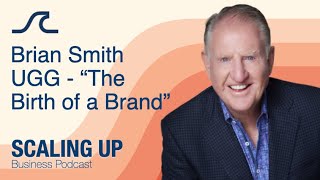
Brian Smith founded UGG after discovering sheepskin boots in California, selling just 28 pairs the first year. A pivot to authentic surf imagery boosted sales to $220,000, but the company nearly collapsed from inventory struggles and a supplier who distributed knockoffs under the brand "Thugs." Oprah's endorsement eventually drove explosive growth before Smith sold the company in 1995.
Questions this video answers
28 pairs
The Birth of a Brand
1995
22 minutes
Chapters
Foreign. There we are. Hey, everybody. We're talking today about how to build a billion dollar brand. How do you build a billion dollar company, do a billion dollars a year, year after year? It doesn't start with a billion, that's for sure. We're talking with the founder of Uggs. Ugg founder Brian Smith is our guest today. We'll get to that in just a minute.
Hey, everybody.
I'm Bill Gallagher, Scaling coach, host of the Scaling Up Business podcast. Our show comes to you every week with business leaders, thought leaders, authors, entrepreneurs, coaches and more, all about how to grow and scale your business, the challenges that you face to get the strategy right, to get the team dialed in, to execute well, to optimize and manage your cash and, and to navigate all of that as a leader. All those areas and more we talk about every week now for years and years, we bring our show to you. You'll find all those shows and more wherever you're getting this right now. YouTube, LinkedIn, Facebook, Twitter, I don't know, wherever. Spotify, Apple Podcast, Stitcher, etc. All that and more. Or scalingcoach.com Our website is@scalingcoach.com and that's where we've got all the back catalog and that kind of thing. Actually redoing that right now. I'm very excited. Can't wait to reveal the new show, the new site with our new branding, bunch of new things on it soon@scalingcoach.com all right, we're about to get into it now. Welcome to the show, Brian Smith.
Hi, Bill. How you doing?
Brian is down in San Diego. I'm up in San Francisco. I met Brian recently in San Francisco where he gave a talk to a group of entrepreneurs there. And I was really glad to meet him. I loved when you opened the Conversation and he shows this Pink Floyd Dark side of the Moon shirt. And I'm like, He's like, I bought this album. I was listening to this album. I'm like, that was the first album I bought myself. I was a little bit younger, and I bought it on the north shore of Oahu where I had just been surfing the town of Haleiwa. And I bought at this little head shop, I think you call them in those days, Head shop, record shop, all kind of combined together. Dark side of the Moon, my first personal purchase album.
That's fabulous. Yeah.
And I love. Here's the thing I love. So I like unusual sports and outdoor things and things like that. I started surfing at a very young age. I still do a little bit, mostly Today I do this wing, foil surfing. Anyway, so when you were talking about your journey and how you didn't really like traditional business, which we're all, I'm gonna let you tell your story, but here's a guy for our listeners, our viewers, who started a company, went through many ups and downs over 20 years to get it to that place where it went through a billion and many near death experiences for the business. Anyway, so I'm glad to welcome to the show.
Thanks. Thanks, Bill. Yeah, the reason I open with the Pink Floyd shirt is that I heard the words, and then one day you find 10 years have got behind you. No one told you when to run. You missed the starting gun. Right? And I just graduated as a chartered accountant and I quit the same day after 10 years of studying. And I realized there was more to my, that I wanted out of my life than being an accountant. So those words, like, galvanized me and I ended up meditating, thinking, oh, my God, all the big trends are coming out of California. So I just decided to go to California on a whim. And I'd always wanted to surf Malibu. So I arrived at LA and rented a little house in Santa Monica and bought a van and went straight up to Malibu. And I was really on a mission to, to find the next big thing, like waterbeds or Levi jeans or, you know, surf brands that all come from California. And I spent probably four or five months just pretty much surfing all the time, but keeping my eyes out in newspapers and business magazines and things. But it was one day in late October, the water had got real cold and the wind was chilly, and I was sitting on the beach at Malibu. I was pulling on my sheepskin boots that I brought from Australia, and I just had this massive dose of goosebumps. Like, oh, my God, one in two Australians has some sort of sheepskin footwear, and there is none in America. And that was like a massive goosebumps event again. And I looked at my buddy Doug and just said, oh, man, we got to go into business, man. We're going to be instant millionaires. But like, every entrepreneur starts out with that. Aha. And they all have that same reaction, you know, it's really great.
Yeah. So I, you know, if you've been an entrepreneur, business leader for a while, you know that the idea is like 1/2 of 1% of the value. It's what you do with it. Now, there is value in an idea, right? An idea, but an idea at the right moment in the right way, and a whole lot of effort to get it to something big. And I think that that's a really useful thing. We've all had great ideas that we knew were kind of interesting, but we're never going to come to much of anything without a profound amount of work.
That's right, yeah, yeah. So we ended up calling a couple of manufacturers down there and we got to be distributors for one. And we ordered six pairs of boots. And Doug, my buddy, was going to be the salesman and he went around to every shoe store in Southern California and came back with about 150 business cards. But he just said, brian, everyone tells me that we're crazy selling trying to sell sheepskin in California. And on the surface that sort of was logical, but California's climate's identical to most of Australia, so it wasn't the real answer. And it turned out that we had to think laterally. When you're an entrepreneur and you hit that wall, you got to figure out a way around. And I thought, well, all my buddies up at Malibu think this is the best idea in the world. And, and it struck me that, oh my God, all those guys had been down to Australia surfing and they brought four or five pairs back for their buddies. So within the surfing community it was really well known. So, you know, looking for the easy, the low hanging fruit, you know, Doug and I just said, okay, let's go after the surf shops. And the initial reaction when we went in and showed the samples was, oh my God, fantastic, you're going to make a fortune. And so that spurred us into realizing that we, we had to get some inventory. So we raised 20 grand just, just like so easily from a group of friends. And we bought 500 pairs in from Australia and they arrived in mid December and we, we got them all together and went on the road again to all these surf shops that said it was going to be so fantastic. And every one of them just went, oh my God, that's great, Brian. But we couldn't sell them in our store. We just sell surfboards and trunks and flip flops, you know. And so the bottom line is the first year's sales of Ugg was 28 pairs, if you can believe that.
Yeah, retire on that.
A thousand dollars, you know, but you know, in retrospect, if you look at the, every business listed on those stock exchange pages of the Wall Street Journal, every one of those companies at some time back in their beginning, probably all started out with a thousand dollars in sales, right? So it led me to write my book, which was, it's called the Birth of A brand. There you go.
Birth of a brand.
And the theme of the book is that you can't give birth to adults. You know, everyone that starts a new business, they conceive it, they have the idea, and then they take the first action. And for me, the Bertha Vog was buying six pairs of samples. Right? And then.
Hang on, hang on, hang on, hang on. Pause. Your story's good. I want you to tell, but I just, like, I want to not rush through both the saying and that idea. Sometimes I'll hear people like, oh, God, I died hearing all these big companies. Why do we talk about Southwest? Why do we talk about Costco? Why do we talk about. I'm like. Because they all started as, like, teeny, tiny companies.
Now someone with an idea. Yeah.
Small thing. A small idea, and then they got going with it. Almost nothing is launched with major investment now. Companies spin off divisions, and they create things like that. But most companies that end up as something later start up as a very teeny thing. A couple of customers, a handful of products, and then later, there's millions and billions sold. Right? And that second thing that you said there was, you don't give birth to adults. Right. We give birth to an infant that needs a great deal of nurturing and training and rearing to get to that place that is fully mature.
Absolutely. Yeah. That first infancy is horrible for every entrepreneur because they think they're failing. And that's when most entrepreneurs give up on those ideas. But if you can nurture it through that infancy, it'll start toddling. And, you know, you get magazines writing articles about you, and all your true believer friends is telling all their friends about it. And that quickly goes into the youth phase, which is really the best. It's got your consistent inventory coming in. The sales and marketing's working. The accounting administrator warehouse is working. You can run a 20, $30 million company in that youth phase, but if it's a really great product or a really great service, you hit the teenage years, and that's when all bets are off. You remember wanting to be at every party on a Saturday night when you're a teenager. Well, it's so dangerous in business because you want to be in every major trade show and every mass retailer, and you can outstrip your capital so, so quickly and go bankrupt in that phase. I was on the edge several times.
You. And I'll let you go on in that. But consider this breakthrough breakdown. Breakthrough breakdown. That's the cycle. You have a breakthrough, you get a bunch of orders. Now you're like, oh shit, how are we going to produce it, how are we going to fund it, how are we going to ship it, how are we going to. And then every time you have one or the other, then you've got something. Now you deal with the breakdown, suddenly have another breakthrough, but then what comes after that is another breakdown. Yay.
I've never heard it put in those terms, but you're absolutely right. That's exactly how it works. And if I look back on the whole 20 years of Ugg that I, you know, when I owned the company, I never was able to get enough inventory, you know, that we, we'd have sales was a big problem at first, but after it really caught on, just financing the inventory was like a nightmare. And that had a whole story before.
You go to the inventory and the financing thing, because I think there's good, great lessons there. Talk, talk about trying to get the sales going and the advertising and the, you know, the whole tadpole business about the first campaigns that you ran. Because I did those where I had models and great things like that that didn't exactly work.
Yeah. And it was a real, it was a four year episode in me learning about branding. And I started advertising with these models on the beach at Wind and Sea in La Jolla, you know, and had perfect, perfect, you know, hair and clothing and the big white tall boots, you know, the major part of the ad. And I ran those ads and the sales went from like 6 to 10,000. It should have been way, way more. And so the next year I got better looking models and another expensive photographer and did the same thing and the sales went to like 20,000. It was just horrible. And it should have been way, way more, you know, and that third season I decided, okay, I'm going to give up, you know, it's too hard. Americans don't understand sheepskin boots. And I don't seem to be able to hit the mark on advertising. And I was having a beer with one of my retailers and I was explaining that I was going to go out of business, he'd go, shut up, Brian. He calls out back to all these little 12, 13 year old grommets who, you know, keep the surfboards in the shop. And he said, what do you guys think of Uggs? And every one of them just went, oh man, those Uggs are so fake. Have you seen those ads? Those models, they can't surf. And like, instantly I realized I spent three years advertising the absolute worst image to my target market. In other words, I was killing my brand in Trying to get it going, you know, I thought I was doing all the right things. So I ended up lateral thinking again. And I called up a buddy who is running this Scholastic Surf association in Orange county. And I said, pete, you got any young kids who are going to go pro soon? And he gave me two guys, Mike Parsons and Ted Robinson. And I just went surfing with them to Blacks beach in La Jolla and Trestles up in San Onofre and these walks. I just took a photograph of him walking to the beach and back from the beach and. And I knew every little kid who reads Surfer magazine would just die to be walking along the path with Mike Parsons or Ted Robinson, you know, And I ran the ads in November, December, and the sales went to $220,000. Just. Why? Because I'd finally, you know, created an image that I knew every reader wanted to be in. And the Ugg boots in the ads were, like, so tiny, you could hardly see the boots in the ads. Right. So that led me to the realization that you never advertise your product. You advertise the features and the benefits, and the more emotion you can get into the ad, whether it's a TV ad or a Facebook ad or even, you know, the paper we were doing in magazines, the more you can get people that want to be in that photograph, that's how successful you'll be. And that. That.
That's a really, really useful thing to point out. So you. In one case, they want it to be the thing. They're both. They're both intended to be aspirational. When we hire models and put them in a beautiful place, it's because in. Sometimes people imagine and want to be those models in those places. But in your case, trying to appeal to young surfers is they didn't want to be those people. They were viewed as plastic fashion people. Their aspiration was to be the gritty surfers walking down a dirty road to a lesser known or a surf break harder to find.
That image created a whole movement in the youth of Southern California beach areas, because every cool kid you know is saying, hey, mom, everyone. All the cool kids have got Ugg boots at school. I want a pair of Ugg boots, you know? And it became such a social pressure that it just took off. And that was the beginning of me then switching from advertising to how the hell do I get product?
Right? Yeah. So the first breakthrough is actually creating the demand, Right. At first, you're trying to figure out who to sell it to and how to get them to buy it. And. And you're trying things and spending things. Now you've got something up. Now you've got to produce it and pay for that production.
Yeah, yeah. So the branding phase, I just figured out, like, a brand is not your trademark registration, and a brand is not your logo, and a brand is not your product. Right. Your brand is what the consumers think of you. And I'd finally overcome that obstacle. Now I had everybody just wanting to be in on it. And so the whole next phase was trying to, you know, position the company to, like, raise money at banks and things, trying to get enough money for the inventory. And that turned out to be. Even though I was a chartered accountant, you know, I quit that to become an entrepreneur. I didn't understand finance. And I. And back then, there were no peer groups, like, which is really funny.
Right. You studied to be an accountant, hated the idea of it, went to find your own path on a beach in Southern California and came up with these Ugg boots, started to figure it out, and then you encounter cash problems because you don't understand the finance. Really hilarious.
It is. And you would think accountants understand it, but finance is a totally different thing. And. And this is before, you know, now you can go to the, you know, software aisle in a store and buy a program on how to start up a business, and it's got all of the spreadsheets and the forecasting you need. Well, I had none of that. I had to totally wing this on my own and that, you know, for years I'd be trying to raise money at banks. And I go, oh, it's a fad. You know, it won't be around next year. And I, you know, after six or seven years of this, I'm going, it ain't a fad. And they go, you know, fashion. It'll. You know, So I was always really having difficulty raising money for inventory.
It's funny because really, like, the shoes were pretty basic in the beginning, the boots and then. But if you look at them today, all the different colors and variations of it really is fashion. But it's a fashion where you're continuing to drive within the platform of that.
Yeah, yeah, yeah. It was an evolving process. It started with California, and then it sort of got into the snowboarding and skiing. And by using the same method this time, I got young snowboarders, you know, with the crazy colored hair and everything. And that really made it take off in the ski areas. And I had a lot of trouble trying to figure out how to get to the kids back east, you know, But I was ended up traveling with one of my sales reps at a sporting goods store. And I said to the guy, what do the kids do here in winter? And he just said, what do you mean, they all play hockey? And when I did some research, I realized hockey's way, way bigger than surfing, you know. And so I started finding the youth hockey programs. I advertised in them little magazine in, in Minneapolis called Let's Play Hockey, you know, for all the kids and, and did a great marketing campaign through there and that then all the moms back east, you know, who have to take the kids and sit in a freezing cold rink for two hours, you know, they started buying them from themselves and for their daughters. And that was really the beginning of it. Branching out from a really cool male ownership into more of a female and family type business.
Yeah, I remember really clearly when all of a sudden I saw all the women and girls on the ski slopes, right in the after ski, walking around in their Ugg boots. And I thought, wow, those look fantastic. After you've been skiing all day and your feet have been cramped in a boot, the idea of putting those on looks fantastic.
But even that market had its problems, you know, because so much of the ski areas would go, no, that's sheepskin. It's way too delicate. It can get. We have mud and we have slush and we need rubber, you know, we need sorrels, right? And just breaking through that barrier of all the surf the ski shop owners was really, it took a couple of years and finally I was able to convince this one woman, and she owned about eight ski stores, and I finally convinced her to trade show to put an Ugg boot on. And she, she just told us that it would never work, you know, back east. And, and she put a foot in it and went, oh my God, I could sell thousands of these in my after ski department, you know. And she put in one order that was bigger than our previous year's sales, right? So I had no idea that anyone could order this many boots. And that turned out, you know, years and years later I would have, you know, the owner of one of the biggest sporting good chains in California just walked into the trade show booth and said, okay, I need 8,000 pairs. Tell me what sizes and colors, you know. So, you know, going from like 160 pairs, which was like a humongous order, to 8,000, it just showed you how the Ugg did eventually scale.
Talk to us about your knockoff competition, the thug life, the thugs that were sold and how you discovered those and kind of share that story.
Yeah, that's a pretty long story. I'll just give you the highlights at the end of it. But the bottom line is my partner had died, and my supplier didn't think I was going to be able to pull it together and be able to finance it because my partner was the money man. And so over the progressive. This was in February, and we ship every September, October. And for months and months, I was sending orders down to him, and he would keep saying, well, I just can't find the skins. How are you going to pay me? You know, and I was busy trying to, you know, with a business plan, trying to raise a couple of million bucks just to pay the inventory. And it got all the way down to the wire in September, and the trade show was coming up, and we didn't have any way to get new product for the. Even though the sales were in the millions. Yeah. And this, you know, I got to this trade show and I found out that. That all of my product, I had new black ones and charcoal ones and all the natural and sand colors. And I. This other booth was called Thunderwear, and they had done a deal with my supplier. They never told me. And they were sort of side, you know, back ending the product into Thunderwear. They called the. The brand was thugs. Right. Which I thought was appropriate. And, you know, I thought I was out of business, but I'd been in negotiations with a tannery in Australia. And when he heard what had happened, you know, this. My supply didn't end run. He just said, screw him. I'll get you all the boots you need. And so he cranked up the tannery and he got five distributed manufacturers on board and started sending me product. And by the end of December, we shipped about, you know, 60% of all of our orders. We threw away millions of dollars of orders that year. And. But at least we were still in business. You know, it was one of the very, very lucky breaks that I. There were many lucky breaks. And if, you know, you read my book, it's full of disasters. Lucky breaks, disasters. Lucky breaks. And that's really what being an entrepreneur is all about, not giving up.
Yeah, I think that's really key. Don't give up. And because if you give up, there isn't an opportunity for that thing to happen. That little opening, that little breakthrough that lets you navigate through the other side. If you give up, all chance of that are gone. So you might fail, you might get shut down. But if you give up before anybody forces you, then you miss all Chance for the lucky break, the breakthrough, the time it takes to.
That's a really good nuance. Because failing is what being an entrepreneur is all about. That if you don't fail, you don't grow. But if you give up, then that you're never defeated. Defeat isn't a real thing until the second you give up and then you're defeated. But if you still got a glimmer of hope and you want to keep working out like I did, I just got so lucky with that, you know, the tannery coming through and supplying me.
Yeah, well, I, you know what I think is really great? Because I can remember having brilliant breakthroughs and multi, multi, multi million dollar years and selling just large amounts of product and then having suppliers. Some tell me, yeah, no, we're not going to work with you and tighten the screws financially. And others really find ways to work with you and cooperate and to solve the problem together. And I can remember one guy in the middle of the recession back in late 2008, 2009, saying, oh, Mr. Bill, you're a good man. Here's the deal. I'll give you a $5 million line of credit, and I'll give you these great terms, and I just want a couple things in return. And we shifted as much production to that guy as possible. And we had some factories and some places tell us no, and then we had other places say, yeah, we'll work with you, and guess where? We moved every bit of production we could. We moved it all to the places that were cooperative. And the people treated us like an enemy, an adversary, or in one case, they talked to us like all you Americans are criminals. You know, they got less and less of our business.
That's, that's great. And that's how it should work, you know? Yeah, I was, I was just blessed that year that my customers were so low. Like, I'd spent three years on the road traveling with my sales reps all across the country. And each rep had to give me the 10 best customers, you know, for the, for the visit. And so I got to know like 300, you know, retail buyers a year and be in their store and meeting them face to face and sometimes playing golf, sometimes fishing, sometimes, you know, surfing. But we got to be friends. And this went on for three years. So that's like 900 visits. And when this company did the end run around me with thugs, I, I found out just pure fluke, you know, the customers, brokers ship boots to me, the thugs boots to me, and my ugg boots to them and they're 30 minutes up the coast. So I drove up there and I swapped them around and as I was coming back, I'm thinking how come we couldn't keep boots in our warehouse for 24 hours? You know, as the shipping was coming in and the Thugs warehouse was floor to ceiling full of boots. And I'd finally realized that my, my God, the power of the loyalty of my customer base, you know, because they had all found out on the grapevine that this company had sort of ditched me and they refused to buy the thugs. So the, you know, the Thugs warehouse was full when I was there after Christmas, which is, you know, and it just really pointed out how critical customer service is. And you know, now we're in an age of web scale.
Hang on, hang on. Before you talk about the, the immediacy of today, right. This is a really critical thing because it wasn't just the, it was the partners, it was the end user customers. There's like a core integrity. And you can see just in talking to you, here's a nice guy, here's a guy who did right by people and then you know, other people who are like always scheming and trying to get over on people. And I think what you're pointing to is that kind of thing comes around and you know, when I want somebody to do business with me or whatever and they know that I am coming from a place of fairness and generosity and honesty, that they are going to stick with me versus the other person who, if they ever did business with them, it was an opportunity in the moment and not loyalty.
I have this saying that cream rises, you know, as long as they're not shaking the bottle, you know, cream, cream will eventually rise and you'll find out you're dealing with the best people. As long as you have integrity, you'll attract integrous people to you.
Yeah, so. And you were starting to talk about the Internet, the immediacy.
Yeah, because today, today it's all driven by websites and clicks and, and influencers and you know, Facebook ads and all that sort of stuff. And, and you know, someone clicks, they buy a product. Well, if that's the end of it, that's sort of useless. I mentor a girl who when she first started was sending out little cards. You know, a week later, and then another week after that they get a phone call and, and so she's built a 100% online business with this lamb leather bag. It's a cross shoulder bag. And the striking thing is that we did a survey and over 50% of her customers own more than one bag, and there's like 10% own more than five bags, and there's some that own 20 bags. You know, it's just insane. But she's been able to develop this sisterhood. You know, it's. The brand is Sash, so she calls them Sash Sisters. Anyone, you know who sees another person wearing a sash bag, they have to take a photo and send it in, and they become part of the Sash Sisterhood. So it is possible to create a really good customer service and a really good following, especially online with all these chat rooms. Now, if you're not doing that with your business, you're missing out on a lot of business.
So you had some breakthrough with some people like that, influencers and stuff as well. You had Pamela Anderson and Neil Young and then one big name that finally broke it up for you. Talk about the influencers in your world.
Sure. Luckily, there's two parts to answer this. There's the first influences, like way. Way back when I was beginning in the 80s, you know, I'd see Sting or Tom Petty or, you know, all these. These musicians wearing Uggs on stage. So I got photographs of them or in Rolling Stone magazine. And then my. My buddy who. You remember, I was sitting on the beach with Doug when we said, we're going to be millionaires. Well, he. He went and got another job, obviously, because we had no money there. But I was. I was coming back on a plane from somewhere, and I noticed the girl next to me is reading People magazine or Us magazine. There's all these photos of celebrities walking around Hollywood, you know, and they're wearing the latest denim, this, or the latest, you know, whatever. And so I was talking to Doug. I said, you know, how the hell do you get to these people? He says, oh, you know, you. You got to get a. You know, find out who the stylists are. I said, what the hell are stylists? You know? He says, well, it's the makeup artists and the wardrobe stylists and the hair people. And so I found a mailing list of all these stylists in Hollywood, and I sent a letter out to about 400 people and said, hey, if you want a free pair of ugg boots, give me a call. And about 40 of them responded. And I sent 40 pairs of free Ugg boots out. And before long, you know, I'd be watching TV on a sitcom, and someone's wearing Ugg boots, you know, and then two weeks later, there'd be a movie, and it's they're wearing Ugg boots, you know, all the way up through to Tom Cruise in, you know, Eyes Wide Shut, you know, and that stylus thing became, you know, a fashion item. And as we started to get into the Hollywood scene. But that led to the most amazing encounter with. We'd been shipping boots to this woman in London, Trudy Styler, who is the wife of Sting for years. And one day she called up and Brian. Oh, Brian, I need the biggest favor. I've just been to a seminar. It's changed my world. I need the most perfect pair of size, whatever, tall sand Ugg boots, and here's where to ship them. And I go, yep, I'm ready. She goes, oprah. Care of Oprah Winfrey Chicago. Right? And that was. Was when she announced that, you know, Uggs were her most favorite things. And. And she put us on the Best Picks for Christmas show when. When she was at the absolute peak of her popularity. We had 22 minutes of nothing but Uggs on Oprah. And that was what really broke the whole thing open. Like, you know, and. And this is. Remember how we opened the show? You're going to. I'm going to teach people how to be a billionaire, right? Well, the interesting thing is you can't start a business that's going to make a billion dollars because you need some, number one, the product or the service has to be fantastic and radical breakthrough, right? You can control that part. What you can't control is that you need a worldwide societal shift to happen which picks up whatever it is you've got and runs with it because you've been there working at it for so long. And some great examples is Nike. You know, they were failing five or six years trying to get into the running industry. Advertising in running magazines and colleges and things like that. And then the sport of jogging took off, and everyone's going, oh, I need the best running shoes, you know. And so they buy all these old magazines and who's been there? Nike. Nike, Nike, right? Not doing very well, but they're always there, right? So that's when Nike got picked up and went into the millions and the hundreds of millions and billions, right? And Reeboks, another one they were trying to sell for nearly 10 years in Santa Monica, this dance shoe. And they'd been advertising in the dance magazines and, you know, high school cheerleading events and shit like that. And eventually the sport of aerobics took off completely outside of Reebok's control. And everyone's going, well, what's the best dance Shoe. And look at the magazine. Oh, there's Reebok, Reebok, Reebok, let's get that. And they got into the millions and 100 millions and billions. And that's what happened with Ugg. As soon as Oprah started to talk about it as one of her favorite things. You know, we were already doing millions at that time and it was really close to when I sold the company and we, you know, Ugg, then after I sold it, got into, you know, we're already in the millions, but they went into the hundreds of millions and eventually the billions. So, so that's one key. You know, I, I, I want to applaud everyone who's trying to start a billion do, but just have that reality check. If you get to 20 million, you're a winner. You get to 100 million, you're an absolute star. If you can get it to 300 million, which is where most big companies sort of, they have a ceiling because they haven't had the societal shift happen. In fact, that brings up a great story. Right before COVID I had to go up and speak to 300 employees at Zoom. And afterwards the CEO and the couple of the founders took me out for dinner and they were up to 240, 250 million. Right. And they're just crying the blues about everything they try. They think they've got every corporate customer involved, you know, and you know, there's no way consumers are going to buy it. It has to be corporate. And then, you know, three months later, Covid, all the restrictions hit and I think Zoom was one of the fastest billion dollar growth things I've ever seen, you know, so it just just highlights that without the societal shift, you know. And back on Nike, I read, you know, the book Shoe Dog by Phil Knight, the founder, and it turns out that Ugg's first five year sales was greater than Nike's first five years sales. Right. So they were in infancy, just like I was.
You know, there's so much to being clear about who you are, doing something different and finding your moment in history. But one of the other things that we see again and again is people who lean into these societal shifts find opportunity. Our company was nearly decimated in 2008 and we came swinging back out, selling and growing like crazy because we looked at what was happening and we adapted our product to the moment and, and we helped countless companies in 2020 start to find ways to adapt in both immediate and longer term ways. As Covid hit and accelerated lots of changes. We use a thing called our sweat tool. It's a way to look at what you're good at and what you're not good at against the trends. And I just wonder how, like, what experience or what stories you have to share about how you. I mean, you've talked a little bit about it, like, oh, I see the. I see hockey and snow sports, and so we took augs out to that. But how did you. And. And where did you look at trends? Did you do it formally or informally? How did you.
It was. It was pretty informal because keep in mind that, you know, I sold the business in 1995. That was the year the Internet started, right. So I didn't have to benefit of all the. That you can get online now, but I did have an awareness in the. In the overall US Market. I needed to get my brand out of the ninja. We were huge in surfing and snowboarding and hockey, but we needed an overall brand makeover. And so I came up with the idea of casual comfort. And. Yeah, and we were doing about, you know, 12, 15 million around this time. And. And I had the money to hire a PR agency because I. I thought if. If I can launch this properly. And I wanted to be on the front section of the lifestyle page in USA Today, right? And so I made an appointment with that. That fashion editor at USA Today. And. And so in the weeks preceding that, I went to this PR agency in Boston and built this beautiful press kit and a whole pitch on how to get this into USA Today. And by the time we arrived, you know, at USA Today, our appointment was at 3. We arrived five minutes early, and the editor came out going, oh, Brian, I'm so sorry. I've double booked. I, you know, and I just did this lateral thinking really quickly, and I. Because I knew I did. My process was 40 minutes, right? So I thought. I pulled out this old tattered file with all of these celebrities in it. And she was going through it, and she saw this photo of Pamela Anderson on the set of Baywatch in a red swimsuit wearing these big, tall, white Ugg boots. And I was. I was sort of embarrassed by that because that's not how you wear Uggs. But she grabbed it and she. She wrote down the name of the publisher and the, you know, the photographer and. And said, I gotta go. You know, do you have a press kit? Yep. And she was gone. And, you know, I knew that we'd just blown, you know, I think cost about 60 grand, that. That. That whole exercise. And so the next morning, I'm at Chicago Airport on The way back to San Diego and I got my coffee And I got USA Today, you know, expecting nothing because this was like 15 hours later, right? And I open up USA Today and then go the money section and then the lifestyle section. Here's a photo of Pamela Anderson. And in the next page, the entire page was about the whole history of shearling and wool in fashion and you know, all the new boot companies and everything like that. And by the time I got back to San Diego that afternoon, I found that the phones had not stopped ringing from retailers all across the country wanting to know how to stock them and from consumers saying, where the hell is a company? Where's a retailer near me? Right. And so that was one of the, one of those other lucky breakthroughs that sort of came out of an accident, you know, it was, it was so cool.
Luck favors the well prepared. I think has been said. It's amazing how lucky you are when you have all, everything lined up and you're able to capitalize on it.
Totally. Yeah, yeah.
Friend of mine said to me in the 2008 downturn, he said, well, look, it's a really great time to buy a Ferrari, Lamborghini, G Wagon, whatever you want, this is your time. I'm like, yeah, I can't buy any of those things. I'm laying people off right now. I'm buying a Prius.
Right? Yeah, yeah, no, I did my share of downsizing in 2009 as well. I started a concrete precast, concrete delivery business. It was doing fantastic. But you know, in 2009, like August, construction stopped worldwide. So I had to sort of pivot and figure out what I was going to do as well. It sounds like you. I'm going to look into that sweat tool thing. That, that sounds really interesting.
We'll talk about that and I'll, I'll give our listeners, viewers something to talk to you about afterwards. But I think you've hit on so many good things but, but like one of the core ones here, John Paul Gettyon, our friend from Hawaii. Aloha, John Paul says you're never defeated until you give up quotes. You calls that out there. I think that's really the key. Like all these ups and downs, like you just have to keep at it and keep finding a way. One of our clients, past clients, not working with them anymore, but we did for many years had a very tourism centric business and I said, listen, do whatever it takes. Just hang on, just don't give up. And he sold his house and they paired off people and they Trimmed out locations, but they ended up on the other side of it with a very profitable, great, fun, growing company again. And totally different. Sometimes these, the most, like, traumatic things actually are the breakthrough that you were looking for. I think you said that in one of the stories.
In fact, my piece of my book's full of philosophy and religious thought and stuff like that that I've developed over the years. But the one that fits what you just said is that nearly always your most disappointing disappointments will become your greatest blessings. And you know that example you just gave about selling the house and everything? I had to do that during that recession as well. Even though I'd previously made millions of dollars when I sold ugg, I still ran into financial trouble because I'd invested so much in my new business and that eventually we pulled through it. And, you know, I love asking everybody in the audience, you know, put your hand up. If in the last 12 months something disastrous happened in your personal life or your business, and now you thank God that happened, right? Every audience over 60, 70% of people put their hands up. It's just one of those immutable laws.
You know, I think we go along in life fat, dumb and happy until something happens. And in any given moment, something can occur as a breakthrough or breakdown, right? Like a miracle or a tragedy and. But. But ultimately surprises. And, you know, you get a call, you weren't expecting it, Somebody shares some news with you, an email shows up and you're like, crap. And then you hang on, and then another one shows up. You're like, oh, that's interesting. And the key is, like, playing through all of it. One of our key clients sold their business. I'm like, yay. Of course that means I don't have a client, but that also means I have an opening for another client. And then I get two emails of people who are looking for some help with their growth plans. I don't know if I'll work with either of them, but, you know, it's like, one thing goes out, you got to kind of let it come and go. And like, all of that happen. And when you think about, like, for years we struggled with the thing with one major customer. Too much concentration, A business model wrapped around a unique client and then nearly wiped out the business and personally by a downturn in the economy that allows us to innovate and then go through. But in that moment, we had to cut corners. We had to tighten our belt. We had think frugally, but we also had to think freshly and not give up. And I think that's what comes through again and again in your book. Hang on one second. Let me give a shout out to our sponsors and to a couple of folks. I want to talk about a very cool thing that you've got going on for people. So. So a great offer. Also, before we get to the one that we've got to share about you, the news, and that is from our sponsor, recruiter.com so it's really tough to hire people right now. It's really a challenge. And a new innovation has come from one of our sponsors. Recruiter.com has this new program called Shortlist. And Shortlist lets you put in the job requirements, that kind of thing, and then they'll pre screen and find you 10 solid interested candidates. 10 solid interested candidates and charge you just 3,000 bucks for that. So hire one, hire them all as you like. 10 qualified candidates on your short list for only 3,000 bucks. There's a special offer there for our audience. Scale up is the, the promo code. Scale up is the promo code. So. And you'll find it right there. Start.recruiter.com shortlist. And we should probably delete that trailing period on Shortlist, but it's on the screen there and we'll put it in the show notes, that kind of thing as well. So if you want to give that a try, this is maybe another way. It could be really great for you, I don't know. But it's at least worth a try to see if it actually doesn't provide a pathway. You got to figure out the thing that works for you in recruiting and it's been more challenging than ever the last couple of years. I want to give also a special shout out and thanks to Vern Harnish, author, creator of the Scaling Up Framework, the original Rockefeller Habits. He's my friend, he's my mentor in all things scaling up. And to a couple of the other folks, Wanda Mitchell in the background producing our show, getting our guests ready, show scheduled, that kind of thing. Getting out the door, the folks at Podfly Productions who produce our show every week, get the audio, get the show notes, all that kind of thing. Get it out. So it takes a lot of partners to do this every week, week in, week out, for years now. So big thanks to those and to Recruiter. Now, here's the deal. Brian has got a special thing. You can go and spend a day with Brian to rethink your business, your brand down in San Diego. So uggfounder.com is his website, brianuggfounder.com is the way to reach him, but he's got a very special offer. I'll tell you more about it, but it's super, super affordable and you go down there and do a deep dive in the way you run your business, your strategy and how you're navigating as a leader. This is a to spend a full day, one on one with a guy who's built a brand that did over a billion a year for years on RO and went through all of the lessons of decades of that kind of work. And I'll be sending people down Brian's way and and giving him a little hand with that thing. So great offer from Brian. Go check it out. Brian, I want to thank you so much for coming on our show and dropping some wisdom and stories on it. If you liked Brian's style, like the conversation, think he might be a person to help mentor you and get you going along the way. He's a great one to look out for. If we can help you with anything else, you want to drop us a line, feedback, comments, find a coach in the scaling up world or anything like that, send me a note infocalingcoach.com I've gotten already today. I think seven or eight guest suggestions for the show plus a couple of requests for coaching today alone. So info scalingcoach.com is an email that we watch if you'd like to give us some feedback. Thanks again everyone for watching. Thanks Brian for joining with us.
Thank you guys again soon.
Thanks. Bye bye now. Keep scaling up.










