Easier Conversations with Chris Jennings
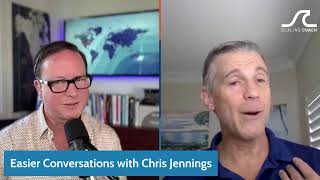
Sales coach Chris Jennings argues that fear and imposter syndrome make people over-prepare and disconnect in conversations. His fix: relaxed confidence built through daily practice, personality tools like DISC to adapt your approach, and arming frontline staff with targeted questions. Client wins include a steel distributor that captured more intelligence from driver conversations.
Chapters
Well, hey, we're talking about good communication today. What makes for great communication, effective communication in a company. How do we level up your communication and have easier conversations? So the world of all that. Right. The hardest part of, of running a business is talking to other people, coordinating anything and you can't do anything on your own. So you got to learn to communicate and handle challenging conversations and business.
Business. Yeah, absolutely. Yeah, I would say in general.
Hang on, hang on, hang on. Hey everybody. My name is Bill Gallagher. Let's talk about the show first. This is the Scaling up business podcast. I'm your host and scaling coach. Our show comes to you every week with something to do to help you grow your business. Get the leadership right, dial in the team, refine your strategy and get better at all parts of execution in the cash management. So that's our show and I don't know, 580 some shows now and all. Wherever you're getting this right now, like subscribe, download, turn on your notifications like that. But you can also go to scalingcoach.com and if you go to scalingcoach.com you'll find all that back catalog in a searchable way. But also some of our things like our, our monthly workshop on getting started, scaling up, also our coaching programs when that's appropriate when you hit that stage. So Skin Coach.com is our website and all that. I, I want to bring on Chris Jennings now. Chris, welcome to show he's on. You heard him. So Chris is best selling author, he's a business coach. He's managing partner of the Chris Jennings group. I don't know where that name came from.
One guess.
Right? Right. So he's also like me, I suppose a recovering triathlete. I think he, he did his triathlons at a little more than I did, but he did a bunch of them. So talk us, let's start there actually. Why did you stop doing them? Why'd you start doing them? What? Tell us about your.
Yeah, I'd always had a fascination with them and I had a client who was prepping for a triathlon one day. I'm like, tell me about that. And he's like, all you got to do is sign up. So I signed up. I went to my first try out in Palm Springs. I had a mountain bike and I was getting passed by everybody with the souped up road bikes. But you know, when I came across the finish line, even though I was getting passed by 70 year old ladies, you know, along the way I got to the finish line and they Said in Chris Jennings. You know, coming from Irvine, California, I caught the bug and, and, and then became a regular four or five tries a year, usually international distance. Met my wife because we were signed up for the malibu try and 2003. We're both staying up for the same try and we've been together since. And I, I did try still, gosh, until I was about 53 and then running got to my back and so I do, I still cycle, I still swim, I hike, I don't run. So I'll do a relay. Like I said, I'll pick up the swim for anybody any day.
So, yeah, I'm ready. I, I did about 45 mostly tries and also some marathons and longer distance things. And I was a really back of the pack swimmer and I was not a great cyclist, but I made up for it by running slowly.
So, yeah, there's, yeah, if you're a good swimmer, it's a depressing sport because you get. While you come out of the water first, you get past the rest of the race. The whole restaurant, the whole rest of the race.
I got good at the transition. I'm like. And, and because I was the last one there, like, you know, everybody could pay attention to how smooth my transitions were. Like the FL. Flying mount with the shoes on the bike and the never pausing for anything, everything just in motion the whole time. You'd think I was running a great race, but good for you.
I was making a, you know, bologna sandwich and carving up in between. My transition times were terrible, but I had a lot of fun out there. And I love, you know what, I love the triathlon community and, and I love the nature of people who are, you know, competitive athletes. It's a, some level and it translates into a lot of the work that I do coaching sales teams and other organizations. So there's a lot of, A lot of crossover.
Well, right. There's preparation, planning, there's performing. It's not about much about team stuff unless you're doing a relay. For me, I like the, there's all the technique and the preparation in the transition. Right. So it really took everything to learn how to swim. And I never was a fast swimmer, but I'm like, but I could swim three miles. It just, you know, I'm going to come in at the end of that kind of. And in any kind of water. Right. We were talking about doing the San Francisco race. That water is cold, foggy and choppy and.
Yeah, yeah, Alcatraz is for real. That's. It was my. Again, like My favorite race was Alcatraz, but it's for real. You know, I, you become a student of the game. And I'm, I've always tell people and it's throughout my, all my books. I got to be a student of the game. So if you're in sales or you're a leadership, you're in leadership. You know, you got to be a student of leadership. You got to be a student of, of whatever it is that you're doing and always looking to improve a little bit. Right. And not getting complacent and.
Yeah.
You know, like you'd see people change out, change out a handlebar, you know, for 700 bucks just because, you know, they get an extra like smoother trans, smoother gear shift or something. So yeah, that's. You got to be a student of the game.
Yeah. You know, my multi thousand dollar wheel set was really the peak of that. Like they look fantastic, but I'm not riding level that really needs or benefits from it. But they look fantastic. Like the full carbon with the glue on tires.
And you know, my, my fastest bikes were always when I borrowed a. I, I rented a bike from the owner of the Santa Cruz bike store. Every time I did Santa Cruz, which I did Santa Cruz with all three of my daughters and myself at the same time. And, and I always rented a bike from the owner there and he always had the best bike. I mean, his bike's smooth, but yeah, it was cool. Yeah, I enjoyed it.
So I stopped doing triathlons because I just like, it became a little exhausting. Like, they're complicated. You have, you have at least three different sports to be practicing and preparing and then you have putting them together and then you might do other things like strength or yoga work or that kind of thing. And so I was like, I'm spending 14 hours a week on training and I'm like, that's a lot.
Yeah, I mean I still like, I, I like to work out. Working out for me is fun. I probably do two hours a day, six days a week and it's some bit of, you know, all the things.
That'S a. Yep, that's a fair amount. Yeah. Yeah. The thing that, for me that is interesting about it, it's not really related to our topic, I suppose of the day, but it's, but it's like it became like complicated to manage with my work travel. Right. Because I don't work in one region, I work worldwide. And so it just became a little bit. So let's talk about this book and the conversations where did you think that you should do that? And.
So Conversations Made Easy, which was my first book, which was about building a playbook and for growing sales and just connecting with people on a real level.
Yeah.
And you know, I've been a sales coach consultant for almost 30 years now. And what I've found time and time again is people just have a hard time talking to other people. They're afraid to talk to other people, they're afraid to pick up the phone, they're afraid to even get into a zoom meeting or meet somebody in person. And so what does everybody do? They email instead. And an email leaves a lot up to the imagination, assuming it even gets ready.
Or tech.
Yeah. Or text or whatever it might be. So I just, I've noted what I've noticed in my, my travels working with different teams is that people struggle with how to talk to people. So we've made it, we have a system to make it easier to have a better conversation.
Right.
And, and, and part of it, Frank and I gotta open with this and we can take it wherever we want. Part of it is just not trying so hard, is that people are trying so hard to sound impressive and be smart and not super on top of it. And you like super informed about everything, but you know, frankly that nobody really cares. And the harder you try to sound super smart or impressive or polished, like really the more you disconnect from your audience, then you connect with your audience and it's interesting.
You start talking first about. People are concerned, they're afraid, right. To have conversations and then they, they do things to compensate. They try to sound smart. Right. Because I'm afraid, I'm afraid of being found out for being a fraud and imposter, for being unprepared for being a moron. Right. Like we have all those self doubts going on. Right. I'm too much of some way all the time. And I'm really trying to hide that. You know, people are in their head.
They're in there.
I don't have enough of this kind of thing. Right.
Yeah, yeah. They're in their head about how they sound, how they come across, how what other people think of them. And the truth is it really doesn't matter what other people think of them. It matters what they think of themselves. And if they have good confidence in themselves, they'll just naturally strike up a decent conversation with anybody about anything. If they're second guessing themselves all the time. They're in their head all the time. You can't focus on the conversation.
Yeah. So, so so fear is probably the biggest thing. And then it shows up in lots of different ways. Well, is personally, was it a thing you struggled with or are you someone who's naturally conversational?
You know, as. This is a great question, like as a kid and people, sometimes people are shocked to find this out. I was painfully shy, right. You know, as a teenager, painfully shy. And I got to college, I went to ucla and I had a few older friends that seem to have a way about them of just connecting with people. And so I watch what they did and I paid attention to them. And, and then I got early into my career and I remember, you know, so I'm a, I'm a speaker. I probably do 100 to 100 talks a year, let's say. Right. And, and so I remember like early career needing to get into a, you know, presentations course. And I was in my head and I remember the first presentation I did of this course that I got signed up for with this big company I work for out of college. And, and you know, so we'll give Chris some feedback. He's like, Chris comes across super confident, like really, like, he comes across like he really knows what he's talking about. And I'm here. I was shaking in my boots, you know, doing this practice trial run, you know, and you quickly come to find out that, you know, you know, we're all just people, we're all just doing our best. You don't have to try that. I don't care if you're talking to a CEO or you're talking to the guy who washes your car or whoever you're talking to. My thing is treat everybody the same, right? If you, I said if you start, I always listen. We listen to a lot of recorded calls to like coach conversations. And, and, and as soon as I hear somebody switch into professional speak, right where they're trying to sound on top of it, I'm like, you're blowing it now and you're disconnecting from your audience. So I would say you should. If, if you're talking to a customer or prospective customer any differently than you're talking to a buddy of yours, somebody you met at the gym, you know, some, a friend of yours, somebody you live with, somebody you work with, you're talking to your customers differently, they're gonna notice something's different about the way you're communicating, and it's gonna probably reduce the amount of trust that occurs.
So I totally get that you go away in your head for some self concern or an attempt to be a particular way. And now you're not in conversation.
You're not. Right. You're trying too hard. You're disconnected. And so, you know, what part of what I'm always listening for? Are you just. Are you paying attention to what people are telling you? Are you listening? Just engage in the conversation. I will not be reading from a notebook today when I talk to you, Bill. I will just be talking to you about whatever you want to talk about, man. And there's. There's no rehearsed script that I've got, nor do I run any of my talks that I would give in an organization, you know, with the rehearsed script. I have some outlines that I'm following, but there's a.
There's a great quote. Charlie Parker says you practice roughly. I'm not going to say this. Right. You practice your instrument. You practice, practice, practice, practice. And then you get up there and you just wail like you set aside everything else, and you just be in the conversation. So all the practice is great, but if you then try to reproduce that faithfully you like, you'll not give a great performance. Right?
Yeah. Just like on race day at a triathlon, you can train hills, you can train sprints, you can train all the stuff that you do, but really, on race day, just go out and have a nice. Have a good time on your race. Right? And, you know, stay focused on what you try to do, and, yeah, you'll be fine.
You know, I confessed I did one of the slowest swims. I was a slow, slow swimmer. Right. And then. And so I had a little dread of that. And then one day, I want. I did the escape race, like, seven times, and we went out, and it was beautiful. Beautiful morning, like, beautiful San Francisco. The. The race would be like May, June, and so the beginning. Not yet really summer, and not with our fog. And. But anyway, so we go out. Looks fantastic. I'm like, the water's flat. This is going to be epic.
Yeah.
And. And I'm so excited about it. And so I get ready, and then before we jump off the boat and into the water, the fog rolls in hard and the wind kicks up, and by the time we jump in, there's chop and a wind in our face, and. And I can't see anything. I can't see the shore. I got nothing. Now you're, like, swimming, and it's. Well, here's the thing, though, that's funny. So all of that prep and all that worry and all the thought that I might do well, I just threw Out. I'm like, I just have to live and survive this. So I look for like the, the. They. They'll have kayakers out there to kind of mark the sides. So I'm like, I have no idea where I'm swimming. I'm just gonna kind of keep swimming where I think people are swimming and look every now and then and just hope for the best. And so I'm just like, I just have to get through this. I did one of my best swims ever right on that race. I think. I think I did 45 minutes on that race. And I was. I'm like, it's awesome, right? Because that's a fairly. It's with a current push, but like two and a half mile kind of curve. So I'm super happy about that. But I think there's something about getting out of your own way, right? Like, you go into a business, a sales, investor pitch, whatever, and you're swimming around in your own head with a bunch of stuff and thrashing around. And if you just stop and actually look at the other person, then trust that your prep will show up when it needs to. Right?
Yeah, it's a really good point. I mean, I mean, I want people to have goals. I want people to have a plan of what they do every day, week in, week out, day in, day out. And if you're following your plan and you're doing the things that you said you would, you. You would do to the best of your ability, not even perfectly. And then when you get in front of a customer, you just trust in the planning that you've done. And I find this a lot too, because, you know, not enough sales organizations, in particular, organizations in general have enough opportunities. So if you have very limited number of opportunities, we'll guess, you know, in a really small pipeline of prospects, for example, you're trying so hard to impress them that it's, it's. You're trying too hard and it's going to squirrel the connection in your conversation. So I'm big on just doing your activity. So you got a full pipeline of opportunities. So you win, you win an account or you win the lesson. Either way, you're ahead. And I don't want you ever worrying about the outcome. Yeah, I find when people get too attached to the outcomes that they are too in their head, they push for an outcome and the customer pushes back and there's a disconnect. So, yeah, stick to your plan, stick to your goals. Execute on that to the best of your ability. If you're doing that 80% of the time you know you're going to land in some really good spots.
Right. So let's share, let's share some of your client example stories because you have so many and I think that'll help bring some of it more to life, make it more tangible for people. One of the first one you shared in preparation was about a steel distribution company in Southern California and their drivers tell us that story. What went on there? Yeah, yeah.
So working with this group, we're working with the outside sales team and you know, it's a distribution group and distribution is competitive. So they're, we're trying to help them hold on to margins. And, and we decided to do a project with the drivers because we went to the drivers and we said, hey, every time you make a delivery, I want you to find one or two customers on site and ask them from the short list of questions, questions like, hey, what's causing your backlog these days? You got room to inventory this much product here on site? Do you heat treat that before we, you install it? And what we found were the drivers started to come back with all these interesting opportunities. And I say interesting, these were high margin opportunities because you, you sell a piece of steel through distribution, you're looking at 25 points of margin, give or take a little bit. But you heat treat a piece of steel and put it through distribution, now you're getting 50, 60, 70 points of margin. And really. So I look at sales as a team sport. Those drivers we would call special teams players. And if you can arm the special teams players in your organizations, those project managers, drivers, installers, IT support product managers, if you arm them with just a few helpful questions that are going to bring out some really cool and interesting opportunities from your clients and stimulate helpful dialogue, it really changes the game on your overall results because frankly, most people don't want to talk to salespeople. But if you've got a project manager, an engineer, a product expert who's there to help you fix a problem, then they're happy to talk to you. And a lot of sales opportunities and a lot of great conversations are missed because that's not targeted in a helpful, thoughtful way. So if you can arm your special teams groups with some good questions to talk to the customers, I think it's going to help your company get your arms completely around that customer at all levels. Sales, drivers, installers, et cetera.
You know, here's what I think is interesting about this example because we all have frontline people that are talking to people like Service product like whatever. There's, there's a driver, there's customer service, there's performance people, there's all kinds of folks that are having some interaction and then, and so there's going to be some conversation but it, it could be entirely social or accidental like I'm going to just talk about whatever and fine, talk about the weather, the traffic, events of the day so sports outcomes, things like that. But if you also then bring some intentional conversations, how are things going around you? How are things in your, in this area? How are things in your industry? Like do you have this inventory? How's the operation going? Like you know. Yeah, those kinds of conversations adding after the social bit a little bit of intentional like thing to appreciate the other person's world. Right?
Yeah, yeah. Taking an active interest in your customers and this in the situations that you know they encounter on a regular basis Y and then arming your team with some, you know, thoughtful questions to bring up. It's only going to increase the connection that you have with them. It's only going to increase the likelihood that you start, they, that customer starts to, to do the majority if not all of their business with you because they, they like how your team operates. It's not just that lead person like.
You'Re talking about the other thing I think operationally that's missing. So you got people talking now you've given them some intentionality is looping back. So what did you hear today? Like collecting that intelligence back and sharing it collectively with the wider team and across the company is also often missing huge.
So we built so, so that's, so we would call that one of our handoffs. So you know we've got two books out conversations made easy and the client retention matrix which by the way we've offered to your listeners for free that's going to handle shipping. At our website kris jenningsgroup.com we'll put the link up at the end. Yeah, yeah, yeah. So put the link up for your listeners. They can click. All they got to do is cover, cover shipping. But, but that, that handoff is one part of that process getting it back from the driver to somebody in and who's customer facing in that particular case. What we did is we told the drivers look anytime you find an opportunity you text Nancy and the inside sales group. Hey, I found the customer. XYZ company needs heat treating on their stainless products. You know they're expecting your call at 3 o'. Clock. They shot them a text. They got the recognition for it, they got the reward. We celebrated Some of those wins, we really played as a team. And, you know, in communication improves. But the. What I've seen too is there's some. A lot of times there's infighting between sales and ops. And if you really got a well coordinated effort, all of a sudden we're all playing for the same team. The internal communication improves, the external communication improves. It's a. It's a great way to go.
One of our teams did a thing like that, and they wanted the ops teams to be listening for certain kinds of work. And every time they heard one and they reported it back and they got it, they. They put a case of beer in the warehouse.
Perfect.
And then on Friday, they divvied up however much beer was there. Everybody had one. And then they put the rest in their trucks and sent them home for the weekend. Now they get their weekend beer and everybody was super happy. It was a very, very effective promotion. People were listening for it. And the, you know, the cost is pretty minimal on a thing like that. Like you're buying some cases of beer. But the. And the fun of it was very high. Right. The engagement was very high without a big dollar expense.
And it does. And. Right. And I would say that special teams group is not motivated by money the way a sales team would be. Right.
Yeah.
So if you did, you know, like your example, or you sent home dinner to that driver's family with a note like, hey, thanks, Todd, for making the connection over at XYZ company, Send the dinner home to the family, you buy lunch for his whole group because of what Todd found, like a couple little things like that for 100 bucks. And it's. It's really amazing. It's a fun thing to watch.
Yeah. Yeah. Well, yeah, it's really great. So getting people who aren't. Who are naturally having conversations, but have more intentional conversations and looping that back into the team is. Is really that talk about Derek's company and the work that you did there.
Yeah. So Derek runs this great IT recruiting firm up in Canada, and they had some well established systems, strong KPIs. Derek's a really smart guy, aggressive, like, let's grow and go and thoughtful person.
That's our people.
Yeah. Thoughtful leadership team. The whole thing.
Yeah. Yeah.
But the problem was he had a lot of people who were, you know, some deep in their career, some early career, a little mix of both. So we went out on some sales calls with them, and the conversations that they were having with their customers were so rote. They were so descriptive of all of the wonderful things that we do as an organization. Look, Derek's got great things that he does as a company, but they weren't really talking to the customer. So I went on about three or four field rides trying to think. There's a woman I remember being out on a, on a sales call with, in this icy place in Calgary and a like cold February day. And we come out, we're in her car, we're talking about her conversation with the hiring manager. I was like, hey, did you just, you know, a couple things. Like I, I got what you did on your presentation, but had you thought about asking him about when he gets behind on a project? Like, what happens to him, the rest of his team, like how much overtime do they have to work or does it cost the company any money? So just like helping them start to talk to people in a real way, really, it was so enlightening for them that they didn't have to try so hard to be professional. They just had to ask good questions and they started to really connect with their customers in a much more significant way. The, the other aspect of it too is just in reaching out to new people and people freak out. Okay, so people freak out when you got to call somebody new and, and, and so we just took the temperature down and gave them some like, sort of off color, you know, you know, things to say that were more relatable in terms of. Look, I'm gonna imagine you get calls like this regularly, all the time. This is a. Probably a long shot at best. But I thought on the off chance, if there's anything we could do to help you, I should at least reach out to you, tell you what I'm up to, maybe ask you a couple of questions. I'll let you decide if we should be talking or not. Just a little bit of that theme of a more casual tone to the conversation. Change the game or their appointment numbers go up. They've done phenomenal. I can't say enough good things about what Derek's done with that company and the people.
Yeah, you know, it's interesting. You model that right there. And I hear two things in it. One, I hear like creating some self deprecating, some room. It's kind of, it puts it at ease. But you're not doing it as a truly insecure person. So I can say the same words coming from, you probably don't want to talk to me, I don't like it. Or listen, I don't know, like I'm, I'm kind of free and easy like you probably don't want to have this. You probably get a lot of conversations like this. I come from it. From a different places. The energy is really different. Right?
Yeah. Yeah.
One, I am being a loser. Talking like a loser in the other way. I'm being a winner. I'm available.
You're killing me now. Yeah, well, you. You're right. There is that. You know, that very tentative, like, sheepish. I don't.
Probably don't want to do business with.
Yeah. You're gonna slam the door in my face.
Any product sucks.
Yeah. All that nonsense. All that, like, head trash that just bogs us down. That takes us nowhere. But, you know, I'll come back to, like, what are we doing to, you know, so, like, the triathlon. Going back to our theme of triathlons, you know, just the training you do for that, like, helps kind of balance you out as an individual.
Yeah, right.
It makes you more whole, brings you endorphins. It helps your confidence. So you don't need customers to buy from you to feel good about yourself.
Yeah.
And if customers buy from you and you can help them, you look, you're happy about it, but you don't need it.
Yeah.
And that. That little hint of desperation versus the abundance mentality, really, like, if you go into a conversation coming from a place of abundance, like, I'd like to help you, and. And if you're a hiring manager who has got three open roles and there's not a. You haven't found a good business analyst to fill these three open roles for the last three months, then we probably should be talking. If not, you know, maybe we shouldn't be talking.
So one of the other examples you shared, actually, you talked about a few companies that use personality profiles to understand differences. We use the cliftonstrengths from the Gallup Organization. Yeah. You've used disc and other things. Talk to us about that.
Yeah. You know, so there's a lot that I like. I like disc. I like motivational profiles. I got a skill assessment and then emotional intelligence and, you know, so disc and how people are wired. I think understanding disc is an important baseline for most people. Like my wife and I that the wife that I met at. Because we were signed up for the triathlon, she is high S and high C. I am high I and high D. Right. We're the opposite side of the spectrum. So she wants to go a little more slow and a little more cautiously. So I have to tone it down because not everybody's like, hi, I high D. Kris Jennings. Go, go, go. Take some risks and, and she needs details. And when I, and when she, and I know that I need to give her details. So if you have a customer that has a disdain for details, but you're giving them all these facts and figures, you're going to blow it up before you even got out of the gate. So understanding disc helps you understanding how you're motivated, knowing like on the skills. A lot of people struggle with time management. I'm pretty much convinced that human being, all human beings at this point are completely overwhelmed. We got more information between inboxes and text going off, alarms going off, your ring door, camera, you can't possibly process everything that's going on. And if you can't prioritize and you're not a good time manager and you can't go, this goes to the bottom, this comes to the top, you're going to drown. And if you treat all projects the same, you're going to drown. So understanding if you got some time management deficiencies worth working on, that's probably helpful. And then your eq, your emotional intelligence, you know, understanding how to read like your emotion, your awareness of your emotions, of how to regulate your emotions. So if you're afraid, can you regulate that or does that fear come oozing out of you like in the example you gave us a second ago? And can you read others emotions and regulate to their emotions? So EQ to me is a really important science and it helps internal teams communicate better and helps external teams communicate better with clients, etc.
How do you develop EQ with your teams? What kinds of work do you do that influence then their conversations?
Yeah, so it depends on where you're at. Right. So I've had people who are, you know, a lot of people, especially in salespeople, they are one speed, right? And they, they have this one speed, they go and, and you don't adjust to the audience around you. So we, one of the things I think that makes an excellent salesperson is your ability to read the room, to understand if somebody's disconnected, to understand if that's something they just said was more important than the original topic that we had planned. And you can follow that. So we'll coach on how to, how to read the room. Sometimes we'll have them bring us recorded calls. Sometimes we're going to run scrimmages and then videotape those scrimmages and give them feedback of how they're coming across. So it, because if you're one size fits all, you know you're going to Miss out on the. Probably the majority of the audience that's out there. Right.
So that's awareness about the emotional state of the room, looking for clues, using that. What about your own. Do you do any work with that?
Yeah, absolutely.
So regulating. Do you have practices or exercises around?
Yeah, so. So a lot of that to me is in building. I'm going to come back to building your confidence so that you have the relaxed confidence so that you're not worried about your own self as much as you are worried, more concerned with the room. How's the room doing? How are, how engaged is the. You know, I'll come back to how engages the room. But you got to work on your own self esteem. You got to work on your own, you know, your own whole being, your, how you, your downtime, your sleep, like everything. I'm gonna, I'm writing my last book and I can't give you the title yet, but, but I have got a whole like a bunch of things on sleep to improve how you are. Your eat, your diet, your exercise. Like a lot of that stuff is impacting how you show up. And frankly, I think a lot of people are buying how you show up. If you show up confident and competent and have a relaxed confidence, people are attracted to that. If you're pushing too hard or you're. Or maybe you're too timid and you're on either side of that spectrum, you're missing and you got to go right down the middle lane.
Yeah, right. For me, the, like, the personal confidence, the confidence with my team starts really with gratitude when I am noticing what I have and grateful for it. Like I become aware of and I start to move into a more of an abundance mindset. Right. Like my mindset is, look, I have what I need, I'm good, I'm prepared, I'm where I should be, like that kind of thing. And it starts with noticing that like being grateful for. Look at all the things I have and look at all the things like. And then I start to come from that. And now I'm really like relaxed, easy, and I'm confident about it. I'm not feeling insecure. I'm finding ways to set aside and deal with any neediness before I get in the conversation. Right. The other thing though, that occurs for me and I'm curious how you would deal with this. But inevitably we can get triggered, right? Things come up in a conversation and then suddenly we're back in like a needy or scarcity place or whatever. For me, I'm always thinking to myself, don't try to suppress it. You just got nervous, afraid, like, whatever. I'll try to like locate the feeling in the body. I'll try to welcome it, notice it. If at all possible, I might even speak it, like, name it. Like, oh man, I just got distracted by a whole thing I'm worried about. I don't even say what it is, but I could just acknowledge that I just disappeared from the conversation and then I can kind of come back in, right? So letting any emotion arise, fear, anxiety, like whatever it comes up, or as frequently with me, like I can be like moved by something and then cry. In a business setting, people are like, oh crap, yeah, not, not long, but just, yeah, teary eyed. And, and I like, but, but I don't hang on to it, right? I don't stay. It's like there and it's gone like in a minute. And I think that's a thing that people don't realize. It's like they'll try to push it down instead of like, like the regulating. You got to notice it and then move it. So I don't know if you do anything particular with that, like, along those lines, but.
Well, the, the one example that I see come up a lot is in price negotiations. So you talk about fear, right? So, and you know, two hours ago I was on a call with a customer of ours and we're in the, you know, it's our second call with them and we had sent him a little sow and he's redlined out our pricing and replace it with his desired pricing. And that didn't divide me. I said, hey, you know, Tristan, I like how you redlined our proposal. I said, that's a good strategy, man. And where'd you pick that up? And we just had a little friendly banter around it. And I, I explained the difference between why it would be, you know, this price versus that price, and we were happy to do the work for either. But, you know, here's the services that we get pulled out. My point on that is I didn't get flustered because the guy asks for a different pricing. Like, but what I see the most is like almost, almost everybody that every group I've ever worked for, people are so triggered when a customer says, hey, I would like a discount. And, and I always say, like, you know, I think prospects feel obligated to ask for discounts. It doesn't mean that they expect to get them.
Right. And yeah, some people are just wired with, I'm always going to ask, I have to ask and you know, like, I don't expect it, but. But other times people really want it. Like, I, I've had people pushing like, well, I really. Could you do it for this? I'm like, sure, what are we going to give up? We'll take some things out.
Exactly. Yeah. And that's fair. Right? So in this case, Tristan want. I said, tristan, we built this. If we do all this work, but if we don't do that, we give all that to you to do. Yeah, we don't want. We're going to go to this price and it's fine. But like you were saying, it's like you don't want to get triggered by the stuff. Yeah, I think one of the ways you also don't get triggered. I love the idea of gratitude. I love the idea of having a spiritual practice in general and so that, you know, having some like a bigger purpose to what's going on, but also just going through the cycles enough, having enough meetings with people, having enough calls, calling a customer that's maybe too small for you and doing a practice call as you practice having like these kinds of conversations with somebody you're not that worried about, you find your natural rhythm and then you can go just act that way with everybody and you're gonna.
Yeah, yeah, yeah. It's really awesome. We've covered a lot of great things here today. Well, you had one other story that I thought was useful. You were talking about Jeff's team and. Oh, yeah, maybe useful.
Yeah, yeah. So, yeah, so Jeff's team, he. He contacted us. Market research firm was market research firm. Right. That, that reached out to us when they were probably a few years into the effort of trying to get their, their team. They were mostly was all special teams players. They didn't have any official salespeople. They just the market researchers brought the work to the marketplace, sold the work, delivered the work. They're the experts. And. But you find a lot of professional services firms throughout the world, engineers and architects and researchers, where business development conversations, talking about how much to charge, asking people to sign a contract, asking to work exclusively, looking for a referral. Any of those things get them really uncomfortable. Yeah, but the great thing about Jeff's team and as a leadership team, they were, they said, hey, listen, these are skills that we can learn, just like you learn to become a great researcher. So we're going to dedicate an hour every other week to improving those skills on how to talk to customers and how to get stand firm in our pricing. And it was really his leadership and Dave, we worked with at the time, those leaders just said, we're going to dedicate time to the team, improving their how to communicate with their customers. A lot of companies that I see, especially in that small to middle range, they don't dedicate the time. The biggest organizations, you know, if you work for Salesforce, they're spending time with you all the time working on your communication skills, how to talk better to a customer. But that small to medium company just needs to dedicate the time. And people's skills improved significantly and they grew dramatically. Had a couple of private equity deals along the way and good infusion of capital and acquiring a bunch of companies and kept on growing. But it was a cool team, and it was a cool team because they all, they were all students of the game and they all wanted to get better. And they would call and ask questions when they got stuck and they weren't sure what to say. And they were looking at their screen and email and I know like they'd call me and I'm going like, you know, you got to pick up the phone and call them, right? Because you're going to send them this email that is not going to land the way you want it to land. So you send them a note right now.
If they even read it.
If they even read it, you send them a note or a text, say, are you available for a call? That's it.
Yeah.
Right? That's your email. And you get on the phone, you talk about it and we'll figure it out. So yeah, but they did awesome.
Well, I love in that in particular the you reference or you imply like role play as a form of practice. So we're going to practice. How do you practice and develop skills and conversations? You have to practice them. You have them. So we do it all the time. We're like, okay, you got to make a pitch to a presenter, a board, a customer, whatever, or an employee team. What are you worried about? And then one party, the person doing it will practice. Then somebody else will play that part in the way you're most worried about. Like, they'll be your worst fear. And you just do it a few times till you get comfortable with your worst fear. Of course, that's not necessarily how it's going to go, but you get freed up to like just be with people in conversation.
I know if you do it like that same company, I had a guy from their from there. His name was Chris. He worked out of Atlanta. He said, hey, I saw this RFP go out. The RFP was from this big company, it's probably a pricing exercise, not super exciting, but it was in an industry he was interested in. So I, I helped them get on the approved vendor list. We worked and we worked it hard. We did a bunch of scrimmages, a bunch of role plays. We ended up in the final five. We worked it even harder. We ended up to the final two. It was us and the incumbent. The incumbent was the best competitor we had in the industry. Nothing bad. There's soup you could say about those guys. Super smart. And it was a $13 million a year piece of business which we took from the incumbent. And I guarantee you the reason we took that piece of business is the incumbent mailed it in, figuring it was a renewal. We've been working with this client forever, and they mailed it in and we outworked them in advance. We had several scrimmages of how do we go from purchasing business? And so that. But, Bill, the reality is people get uncomfortable with it and they don't dedicate the time. If you don't dedicate the time. And the leadership doesn't say, hey, everybody, this is something we're gonna do, right? Practicing how to talk to customers is something we're going to do once a week, once a month, whatever it is, and work through the discomfort and you're going to be a lot better.
Well, that's a good place to leave it. Chris Jennings. Chrisjenningsgroup.com Chris, thank you for joining us today. If you go to Chris's website, we'll put it up on the screen, we'll put it in the show notes. Also, he's got some free books that you can get there and got some special offers for you. So go to krisjenningsgroup.com to talk to Chris, find out more about what his team does.
You got it. Yeah. I hope people enjoy the books like I wrote it because someday I won't be here doing this and, you know, and read it all out into audible and the whole thing. But, you know, we're happy to spot some people some books and we hope they take advantage of it. And Bill, I love what you're doing. I enjoyed the conversation. And you're done with Tri Ice also, or.
I'm done. I've been focusing more on surfing and in particular wing surfing today, a kind of hydrofoil with a wing.
So very cool. All right, I'll let you know. So Ryan Cook on my team and I, he said he would join me in that swim from Corsica to Sardinia. So whenever we get it scheduled. I'll tempt you and I'll let you know if you want to get back in the water and, and at least.
I'll come help with your boat crew.
Oh, yeah.
I, I've never. Sardinia is one of the places I've never been to and I have ancestors from Sardinia, so I'd love to go.
So do I. Yeah, I have. I was there two summers ago and we were in Corsica this past summer. And so I. It's doable. I can see it.
See it. You can feel it. Well, big thanks as always to my friend and mentor, creator of the whole Scaling up book and framework, Vern Harnish, who did that and the Rockefeller habits that came before it. And then to the folks at story on who produce our show each week. Crystal, Seth, Cameron and team, thank you all for helping us get the show out. Thanks again for everyone for watching for listening. If you're looking for stuff about our programs and coaching and workshops, we got at least one every month. Go to scalingcoach.com scalingcoach.com is our website. And of course you can, like, subscribe wherever you are right now, give a review, share the show with somebody else, all that stuff. We love it. Thanks again everyone for watching for listening. Until next week. Keep scaling. All right.
Thanks, Bill.










