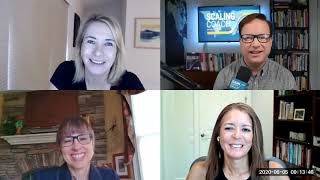
Bill Gallagher hosts coaches Lisa Ridley, Cheryl Barone, and Krista McClain on stress mindset and how to reframe it. They cover quiet time, team huddles, scoreboards for visibility, and spotting shifts like remote work and hybrid offices.
Chapters
All right, and we're live. Hello and welcome everyone to the Scaling up business podcast. I'm your friendly neighborhood scaling coach and host of the show, Bill Gallagher on the show with me today. Oh, let's kill the music. The music is groovy, but time to go. Our warm up music, Lisa Ridley from Scottsdale Phoenix area in Arizona, Cheryl Barone from Sarasota, Florida and Krista McClain from Cincinnati, Ohio. Welcome, welcome.
Thank you.
Thanks, Phil. Nice to be here.
So once again we're talking through the Facebook live via the power of the Internets, a series of tubes transferring information along what's known known as the information superhighway.
You had to do it? Yeah.
Oh, yeah. Just for me, Bill. What's that?
That was just for me.
Just for you. I try to get it all in there, but I'm sure we could talk about what the kids are up to these days. So we try to come once a month for a conversation like this with other coaches to get different perspectives on what's going on. And we talk about some of the things Vern's been talking about in the and the world of scaling Up. We have now over 220 episodes. Some video, some live conversations, some pre recorded and we're increasing all the time now. You'll find all of those@scalingcoach.com, iTunes, Stitcher, wherever you get your podcast stuff. The YouTubes like all that so you can find us there all the time. And more and more we're going live just because it's fun and different. So welcome guys. Let me let you all say a little bit about your background, where you are and your work because I don't have, honestly, because I just don't have your bios in front of me, Lisa.
Sure, yeah. Hi, Lisa Ridley. I spent the first 10 years of my career helping a very entrepreneurial company grow in scale. We went from three cities to 22 cities across the country, started a couple of my own companies, did that for about 10 years and then realized that I love growing and scaling companies but I don't really care what the company is. So that's what led me to my perfect, probably, I don't know, fourth chapter at this point in life, career wise, working as a scaling up coach and helping entrepreneurs grow and scale, which is just a lot of fun.
Nice. And Lisa is also a member of the advisory board for the coaches worldwide with me. So Cheryl, welcome.
Yeah, so similar to Lisa, it's interesting. I feel like being a coach is the culmination of my career. As well. Starting out after my MBA from Wharton, I went into corporate America for a while and then had one of those entrepreneurial fits and purchased the assets of a trucking company with my husband, business partner Louie. And we grew and scaled that company to be 20 times the size. And then I realized that I could extricate myself from the day to day and help other companies grow and scale as well, which is much more fun.
Kristin Wow.
I feel like a fish out of water. I haven't hit that coaching segment yet, but perhaps that's coming. I'm 24 years in the entrepreneurial space in software and I just started a company last year to do illustrated models for people of conversations and things specifically in the business world. Strategies, vision, mission values, brand launch, things like that.
Well, you're all badasses and I can't wait to dive into it. So a little preview. We're going to talk about stress management, about getting think time. We're going to talk about training yourself, training your team. We want to talk about adaptive, like how do we execute in this time and what that represents, what we're seeing, all that, some of our tools and how we're updating tools in the world of scaling up the critical importance of process improvement. I think you'll hear through all of that. And then we really want to finish with, I think one of the hottest, most important things and that's trends. How do you pivot? Well, you pivot by spotting the right trends and taking advantage of things and just being a tad smarter than the other people that play in your space. So that's kind of where we're going. And then, Kristen, you're going to do a little talk about to us about what you're going to do during our session here.
Yes. So I call it an illustrated model. You've seen people at the back of the room in a networking setting, maybe in a conference, drawing large scale on a wall, sort of what's happening with cute pictures and things like that. I do that a little bit differently in that I try to boil it down to the complete essence with integrated images and words and colors to talk about what to represent what we've talked about today and make it actionable in the future. And so hopefully people will be able to take the notes from this section and actually with integrated images and work.
Nice, nice, nice. Well, it'll be cool to, to see how it develops and I think it's a great way to kind of capture the notes and help to visualize. I know when I watch somebody doing it and I seeing it, I find I remember more than. So it's a first for our show. We've had it in some of our sessions, advisory board meetings, coach, things like that. And so I think it's cool that you're doing it. All right, so, well, look, this is just real and present for all of us right now. The first thing is about people dealing with stress. Verne talks about the risks of dying from stress. There's a New York Times article out about how we're stressed right now and how we're dealing with it. How are you guys doing it? What do you hear from your clients, the companies you're working with now, about stress management?
You know, it's interesting that this is the topic because it's something that I, a few years ago read Kelly McGonagall's book on the Upside of Stress, right? Where it really is about reframing how you view stress and what the word stress means in our life. And. And it was so impactful to me. It's probably one of my top five books that I require all of my clients to read it. Like, see, it's one of the very short list of books that's like, we're not going to work together after a certain period of time unless you read this and understand the power of it. So it's been really helpful during this whole period to have. To have those concepts to be able to relate to them and talk to them. I won't dive into that now. I think we're going to talk more about it. But it's just a lot of it is about mindset, right? What is our mindset in terms of how we approach what's happening. So that's been a lot of our focus is talking about mindset and what we can control and focus on and what we can't.
To tag on to that. I'm listening to a book called Solve for Happy, and it's by Mo Gawat. And we're talking there about. He has seven steps, really, that is also about reframing. And the first question you can ask yourself is, what is the worst thing that could happen? And so if you manage to. That moves it from your reptilian brain to your prefrontal cortex. And then you can reason with yourself and realize that, so what if it does happen? And then be prepared and really attack it intellectually. And then in accordance with the Cal Newport article as well, then take a look at your core values and use that stress to energize yourself towards achieving it. Once you've kind of calmed your mind down.
You know, I've used that a number of times personally through crises in business and life. And I talk with our leaders all the time about it now, and I definitely see people doing it. But I remember I was going through a difficult, like a possible bankruptcy and a difficult bank negotiation. And I had a financial advisor, and he said, listen, there's no more debtors prison, and at least in our country, there's no debtors prison. So he said, so relax, you're not going to jail. Your business may fail, you may have consequences, you might go bankrupt, you might lose your house, things like that. He said, but it's all a negotiation now. And then I started to look at my family and situation in different times. I think there are things that all of us fear more than anything else that we're, like, wired to fear. So I've often feared, like, when my kids were younger, I feared having a breakup of the family and then becoming a weekend dad. And that, like, was horrifying to me. I never wanted to be that. And, you know, it's very clear from my childhood, like, what it was about, seeing my family split up and all that, that bothered me. But that was like, the end. I think we all have those things. If you can make a plan for the worst that is maybe less likely to happen. You can often deal with what's actually on and start to get clear, because what's actually going on and what you're like working on, the fear, running the show before you kind of expose it, are awfully different things, aren't they?
That is true. And when I, during the Great Recession with our company, One Horn Transportation, it was originally a trucking company with a brokerage on the side. And then as we kind of saw the beginning of the Great Recession, because we were a leading indicator, since we were working in consumer construction, we were suddenly losing accounts or the accounts just weren't being active. And so we pivoted, and that was a good opportunity for us to pivot from owning the trucks to becoming a straight brokerage. And then in the end, it really was a much better business model for us. So it can also create an opportunity.
Yeah, can I bounce off that? So I've been reading a bunch of books that I sort of missed over that were the sports books. So I've been through Shoe Dog, and so I'm working through some of them that I just skipped over reading. And it's been really interest to me how athletes expect stress and use stress as a way to get stronger or better at what they do. And so for them, it's not even a negative thing. It's almost like you have to do that to be able to take, get to the next level.
You can't build muscle without stress.
Right, for sure. And so that stress being an opportunity that you just said, I think is really a critical part of it. It's just stresses your reaction to what's happening in the world. And so your reaction, you can choose what that is to a certain extent or train yourself to choose what that is.
Yeah. And to build upon that, Kristin. It's also the reframing and the visualization that the athletes use, too. So they can visualize hitting that golf shot or whatever it is, or doing that ski jump. Those are my two sports. And if they visualize it over and over, they can calm themselves but still use that stress energy in order to achieve. And so if we as business leaders can visualize what is it going to look like when we kind of come out on the other side of this and how we fit into the economy and our clients and that kind of thing, it also can give us more strength, I believe.
Yeah. I think, Bill, your point is really well stated, though, in terms of what is it that what are the fears? And I think that this current state we're in right now, there are. There's a series of fears, right. And we're still on a foggy road, like, right. We don't. There's not any certainty and there's not going to be any certainty for a while. I mean, I think, in fact, that's the trick, right? How can we be comfortable with ambiguity? How can we say, okay, you know what, let's just say that we are going to be a state of ambiguity and kind of a pretty weird world economy until there's a vaccine and a lot of people have been vaccinated. Let's say it's another year. Right. And so if that's the case, then what are the fears? What do I need to worry about now? What is the problem that needs to be solved this quarter right now, right in front of me over the next 12 weeks? What are the most immediate problems to be solved that I can solve? What are the problems that I think might need to be solved as we look forward? Because I don't know, I'm going to have to stay fluid. But as we sort of chunk it down, I think that acknowledging what we're worried about, what we're experiencing, the stress about, what we can control now and what we can't and we're just going to have to let go of which, as some of us who are recovering perfectionists and control freaks, that's part of the challenge, right, is to say, I can't control 60% of this. So what is Cheryl's point? What is the opportunity? What can I control? What can I work on now? And what am I kidding myself about? Because I think that's been. One of the things that's been really interesting to me is there's optimism and then there's blind optimism. And I think that while we want to be pragmatically optimistic and positive because nobody wants to follow a pessimist, right? I mean, we need to keep our team energized and engaged. We've got to be realistic about what we're facing. And I think that, you know, I was talking to a coach the other day, and they were talking about one of their clients who was really just sort of, you know, going, well, we got this. We got this. As he walked through their cash situation, he was like, so wait, as I look at it, you have 90 days and you're out of business. Are you looking at that? Are you looking at. And she's like, well, well, no. I was like, no, tell me how that's not true. Like, come on, we have to face the brutal facts, and then we can solve it.
You know, there's a balance here, though. Like, we know that being optimistic and being confident is powerful and useful. And yet there's a hilarious video clip out there where somebody's like, I believe I can fly. And then they jump off the roof and they crash, like, massively, right? And we're not short of confidence and optimism in the good old US Of A. Where we're all located. But sometimes it can be completely idiotic. I think the thing that's useful in what all of you said goes back to where we begin. And we are so wired to start to move into, like, okay, what are the steps? But the beginning point of self awareness. I'm reacting unconsciously. I'm acting from fear. Is the thing that I think we kind of. We take for granted after we've done it a little bit. And in any given moment, we may not be doing it, but it's the importance of, like, stopping to say, wait a minute, I'm like, I'm triggered. I'm thrashing around. And I see that again and again with our clients where they're putting in, like, really excessive hours. They're suffering through stuff. They're trying to Superman it or superwoman it. Right. Like, they're trying to just, like, go nuts and use force through everything instead of collaborating and talking and being creative and, you know, all of those other kinds of things.
And isn't. Oh, sorry, go ahead. I was gonna say isn't. Throwing more time at. It doesn't necessarily help the situation if you're not putting in the right kind of time. Like, I know we're talking about thinking time later, like, just the doing time doesn't necessarily mean you're climbing up the right hill. Right?
Yeah.
Yeah. And one of the interesting things, you know, is I. Obviously, the topic is very near and dear to my heart, but the more reading and studying I've done is the. Ironically, when we look at stress as something that is harmful to us, then what the studies show is that one of the things that we're inclined to do is to try to distract ourselves from the source of stress. Right? So the very thing that's causing us stress, that if we simply look back and say, okay, I'm noticing what I'm experiencing, how I'm feeling emotionally, physically, how this is impacting me, I'm digging into, wow, this is what I believe is the source of my stress. What can I do about it? Like, instead of looking at it that way, then we tend to go into avoidance and we tend to push it away, which just increases the downside of stress because we're actually kind of running away from it and saying, okay, let's address this and let's dive in. Let's just totally dive into it. But I think that article that you referenced, one thing that's so powerful about it is that the physical reality is that stress is harmful to us only if we believe it's harmful to us. Literally, that is the difference. If we believe that stress is harmful, then it will physically manifest itself in harmful ways to our body. If we believe that stress is something that is empowering to us, that makes us stronger, that gives us energy and adrenaline, and helps us focus our mind and our body to do what we need to do, then in fact, it has positive physiological effects on us, which is, to me, so exciting. I mean, the power of mindset is really unbelievable. And if ever we needed the power of mindset, what we're dealing with today is like, a pretty great time to actually latch onto that and firmly understand how we approach this is going to really drive how we come out of it.
I'm reminded that suffering is optional, Right. And that suffering is a function of resistance. And that if we can, in fact, embrace, accept the things. Right. There's what's going on that we avoid. Right. And that's where in times of difficulty, alcohol and like a drink or some weed or whatever your poison is, is the thing that we do to escape a little bit and that quickly gets out of hand. Right. It's one thing to celebrate a great day with a glass of wine or whatever. Your thing is a great week. It's another thing to have it because you just have had enough. Right. And that is the thing that quick. But that when we actually look at, okay, what's going on, when we open our mail, when we deal with the stress, when we confront things head on, there's less resistance and less suffering. We choose the problem and then it ceases to have the same power over us. Right? Yeah.
One of the things I just. Just really quickly I love is I. Right after. I'm probably. I don't know, I think we were in April and May where this has been going on long enough to understand that, wow, we're in this for a bit. But it was still really fresh. And I had a full day meeting with one of my teams by Zoom. And we get on and I was just so struck by the energy in the voices and the faces and as I looked and I was like, man, you guys are. And like, you're excited. And they're like, yeah, we have just decided this is the biggest opportunity we've ever been handed. Like, this is going to be the defining moment of our company. We are so excited to see what we're going to do with this and what comes next. It's like to fat. We just keep thinking fast forward to a year at least. Like you keep telling us, let's look at. We want to look back and say, wow, we have no regrets. We did everything that we should have and we just like dove into it. And I was like, how awesome is that that you actually can talk yourself into just being like. And we had this inspirational meeting where, like, in like a full day meeting, they came up with solutions where we were all going, how did we even do that? Like, where did that come from? It all came from their approach. It just all came from the energy they brought to it.
Yeah. And in Viktor Frankl's book, the Men's Search for Meaning, you know, you could control your mind. I mean, he was in a concentration camp and he could control the way he thinks about things and the way he approaches things. And I found that, you know, at the beginning of the COVID situation, you know, I was having stress manifest Itself in my stomach, for example. And then I made a list of things I could control and things I couldn't control. And I burned the list of things I couldn't control and posted the list of things I could control right on my screen on the side. And it just is kind of like, you know, your attitude and how you approach things and that kind of thing. And it really just changes your outlook to do kind of what they said in that article, to acknowledge the stress and then own it and then, you know, use it. Use it and say, all right, yeah, I'm really worried about this because it, you know, is bothering, you know, my sense of success or my ability to succeed, but I can still succeed, and this is how I'm going to try to do it. And then suddenly you have your list of activities that you're going to do. And I had that in a client meeting, like Lisa mentioned as well, where. And once they started to think about what they can do, and then suddenly the ideas kind of boil up and everybody just left there more on a high than when they arrived.
Well, the article cites the correlation between death and stress and how people experiencing stress are more likely to die. And I think we've all probably seen in our lives people that seem to get sick more or get sicker from the same things when they're carrying more stress. But the interesting thing is that it's not simply like living on your couch for the rest of your life to avoid all feeling and difficulty. It's the way that you relate to the challenges that you face that creates the stress. Right. Changing that relationship. Yeah.
And I don't know if you've actually read the study. The thing that was interesting about that study was that, you know, it's 30,000 people. They studied them over eight years. They asked them the level of stress and whether they believed it was harmful. If they were under a high level of stress and they believed that stress was harmful to their health, they were 43% more likely to have died. The group that was least likely, lowest risk of dying were those not those that were under the least amount of stress. It was simply those who believed that stress was not harmful to them. So, in fact, they had a lower risk of dying than those who were under low stress. So that's actually, to me, that's like, really, really powerful.
So say that apart again so folks get it.
Yeah. So those who believed that stress was not harmful to their health have the lowest risk of dying, lower even than those who are not experiencing very much stress. So that's like, that's how powerful our mindset is in deciding how we internalize, how we live this, how we breathe it. It's kind of one of the examples given in one of the books is, let's say that, like, the most common fear, you have a fear of public speaking. So let's say that you're getting ready to go on.
Maybe not this group.
Your palms are sweating. Yeah, we love this stuff, right? Your palms are sweating, your knees are shaking. You feel like you're gonna throw up, right? So you could say to yourself, I hate this. I hate public speaking. And this is like, I'm so bad at this. I'm so worried and scared. And you could go on stage that way and. Or. And they've done, like, some mindset interventions where they said, instead, this is what's so exciting. This is your body's way giving you the energy and the adrenaline to focus and to be energized and amped up and to go out there and kill it and to be absolutely amazing. Isn't that amazing that your body is doing this for you? And when they do that, what they've done is they had sort of these two groups, and then they pulled the audience, and the audience rated those speakers who simply had that mindset. They still were scared of public speaking, right? But they viewed this as a gift from their body to help them be energized. They said those speakers were so much better. Like, they actually. It just showed up in everything that they did, and it had a positive effect on them.
You know, it's funny, I was leading a preview workshop with a group of 200 plus EO members from the European region earlier this year for an event that was delayed. And I had them do something by video that we do frequently in our small groups and that kind of thing. One of the many techniques you could use for meditation, useful in dealing with anything like this, is something called a body scan, right? And so you settle for a minute and close your eyes, if that's comfortable, and settle your breathing. And then you just start to sort of move through your body, Take your awareness through the body. How are my toes doing? And how are my feet? And let's move up the legs. And you kind of get through all the place and just notice what's going on, right? Instead of, like resisting it with, we sort of go into it and bring our focus and attention to it, and it starts to quiet. Right. The body, but also brings a great deal of awareness to that thing that's going on. And although this is a group that loves public speaking. And I've done tons. There are definitely times where I'm just, like, freaked out. It's a new topic or an audience that I perceive as being more challenging or something like that. And then I'll just notice. I'm like, well, wow, look at. My heart is racing. Feel the palms and. And so. And then I'll just kind of go into that and, like, take it and kind of let the experience, like, rise up and what am I worried about? And kind of explore that. That, you know, go into it and not so much what I'm worried about or, like, that, like, the room out there, but more like, what's going on with me. First, like, my reaction, and then outward to the world. And then, like, you know, I'll jack my music up and be like, what am I here for? What's my purpose? And. And enter with that same nervous energy, but now, like, channeled into the group. And I could go on and say, like, wow, I was so worked up and so afraid to come before and talk to you guys, you know, like, that kind of thing. And that's actually pretty useful.
I love what Cheryl said about visualizations, because for me, Bill, I do the same thing with. The visualization I use is the surf. And I visualize it. To me, it's the difference between sort of, like, diving into the surf and feeling like you're drowning, Like. Like getting caught in the undertow or diving into the surf and body, like, taking all that power and energy and sort of doing like, a little body wave in and body surfing in on top of it, like, riding the wave of energy. And that's one of my mental exercises that I do before something like that, where it's like, okay, you're writing this. You're not drowning in it.
I love that. Yeah.
Get on top of it and let it just, like, sort of carry you along. And now this is just like, you're in flow. You're like, man, this is great.
I really like that. I'm sorry.
No, I was gonna say, that's really interesting. You just brought, like, literally in the last 24 hours. That's the second surfing analogy that I've heard and.
Right.
And the woman who used it yesterday, another woman was a surfer in Australia, and she said, you know, it's about getting on the board and being ready. You have to watch the waves and know which one to ride. You have to know how to get on it. Like, the whole analogy was just perfect. You have to know how to get on it. And then the most important thing is you have to know when to get off.
There you go. Right?
And it's such a. You're right because there's just like so many nuances to that particular sport that I hadn't thought about in terms of stress. And she was talking about the same thing, stress and how to get through sort of the situation that we're running into right now. It's really interesting.
Well, as a lifetime surfer, body surfer, there's times when it bowls you over when you don't get out and there you are tumbling in the tube. The thing is that if you just kind of hang out, it passes by and you just hold your breath for a minute. You come up and hopefully you didn't smack the reef or anything like that. Too bad, but there is that kind of like you're gonna get tumbled sometimes, right? And so you've got to get. You've got to let it pass and then get out to ride another wave. So let's talk about quiet time to think. I think the thing that I noticed first for myself is that all my normal rhythms and patterns and plans got disrupted back in mid March. And slowly I'm evolving that time to think. And I'm talking about this again and again with our leadership teams. Now, it usually starts first with the CEOs and then goes back. But Vern points to. Where's the Gary Snyder quote? I lost that. I don't have it here. Damn it. So is getting that alone time. There was a. He shared a link to a Brad Feld interview as well with Tim Ferriss, talking about getting quiet time to think and reflect. And I noticed that I've had to replan it back in. I've had to encourage our CEOs and then the leadership teams in turn to build that back end to find the right rhythms that give them enough think time. How are you guys dealing with it? What are you seeing with your teams?
Well, I have a client who used to take a two hour period of time every week and go to the Starbucks instead of her office and just really sit back and think. You know, have that as the strategic thinking time. And she still does it, but she's had to find a different place to do it because, you know, with everybody being, you know, either at home or, you know, you can't go out in public anywhere, but she still is able to do that and she finds it refreshing. And during our last quarterly meeting, we were trying to get people on the team as well to do that. And people really struggle with Carving that out. And so one of the things that I do is talk about day parts, like identify the day part where you're most energetic and where you're thinking your mind is the clearest and where you can really think. So for me that's like a 10 to 12 time frame. Like in the morning, not 2 o' clock after lunch, for example. And so when I plan my day and I plan that deep work, like Cal newcomers would say, I do that in that day part where I have the most energy and I put it in my calendar and then I don't let anybody distract me during that, lock myself away. And I encourage, you know, my leaders on the teams that I coach to do the same thing. And it was great to have this one client who actually was doing that before I started working with her because it's wonderful to work with like minded people.
So I love, I love, I love big applause to you and your teams. This designing your own calendar to fit kind of your natural patterns and to tune it to do that. We all have different times where we feel creative or energetic or that kind of thing. And thoughtfully creating and designing your workflow and your normal rhythm around it I think is outstanding. Good job.
Yeah. I think one of the interesting things that you said, Bill, is rhythms change, right. So when I'm with clients and with clients or you know, back pre zoom days and then I have a lovely home office, which I love, and it's perfect. But generally our rhythm was like I had pretty much the whole house to myself. And then Covid hits and I've got two college age kids who are home now. And I kept like kind of convincing to like give them. Like, you guys are in my office. Like my daughter finally said, are you taking the whole house as your office? I'm like, yes, yes. This whole, this is my office, this is my space. Go. You know, so we, I had to really. And I found it talking to clients, it was the same thing. Everyone's rhythm is disrupted. They had little kids being homeschooled and they're working at home and they're trying to like just literally finding a physical space where they could be alone and get that think time, I think was one of the challenges that some people are still dealing with. And it's summer in Scottsdale. That means it's really hot. So for me it started, it meant getting up at 5:30 or 6 and taking an hour long walk every morning. Getting out of the house while it's still cool enough and just doing that. So I had to Change that think time rhythm. Because what was possible before didn't work now. The other thing that I've done for a while, and I think I shared with this with you guys, is I carve out. I don't do as well with small blocks of time. So this is something I share with my clients too because we don't all work the same way, right. So if I, I like being in the flow of the day, just going, going, going. I do better with large blocks at a time. So on Fridays I try to carve out at least four to six hours that are. I just call them strategy Fridays. And my clients know they're probably not going to talk to me on Fridays. Like, they're probably like I'm carving out that time for think time for working on me and the business and giving myself permission to take a big block of time. Like that is really, for me, that's really powerful. And I'm in awe of like for people who can do two hours of blocks at a time. But that just doesn't work as well for me.
Yeah, totally. I personally, that's a long time for me. I need like lots of little breaks in there to stretch and move and feel a little sunshine or you know, do that kind of thing.
Yeah, I do that too. I do both.
It's really important though, like if you do block that off to really make sure you let everybody know they can't take disturb you. Because once you get into flow, like would say, you know, and you're doing your deep work and you know, all the creative, then you get an interruption. They say it can take, you know, 15 to 20 minutes to get yourself back on track. And yeah, I have had clients that have put a sign on their door, you know, that they're doing their deep work zone and to do that for two hours, no disturbances. And then, you know, they come out of it and can be available again to the people who are reporting to them.
I do deep work in the mornings and I'm curious for you guys. I do feel there's a period of time that's too short that it takes me to get into the flow. So for me it's a 90 minute block. If it's less than 90 minutes, I feel like I don't quite get to that level of velocity that I need. If I just have a half an hour, I don't know what you guys think. I've not tried the four to six hours, Lisa, but that's a great suggestion. I might try that on Fridays. That's a Great idea.
I think less than 90 minutes. I agree with you, Kristin. You know, you're not going to accomplish enough and you'll really get into that flow and the creativity and some of the best ideas come like at that time, versus if you only spend an hour on something, then you might miss out on all the other really great ideas that your mind could bring you to.
Yeah, I think we all have different wiring. Like for me, I've got to put on like loud driving music to sustain the concentration. Right. It's an add kind of kind of thing where I get too easily distracted. And I think a lot of our founder types, the more visionary folks in the world of the CliftonStrengths from Gallup. I lead with ideation, which means that I'm just generating like ideas all the time. I wake up with ideas, I have ideas in the shower and so on through the day. And I have to kind of let those ideas go, most of them, or I just kind of. And I have to keep bringing myself back. And one of the things that helps me is like loud driving music of some kind or another. But I can also use it to like amp myself up to like raise the energy kind of intentionally. And it, like, it can drive my wife kind of crazy. So we have, I don't know, 12 Sonos zones around the office. Plus I have some pretty serious speakers in the studio here. So I can apply it appropriately when it works for me and then quickly turn it off and not like overwhelm her with it as well.
I find that during that post lunch, 2 o' clock time frame, I have an itunes playlist that's called Liven up and it really helps to re energize me and I'll do something easy. But having that music, that definitely perks.
Me up as well, you know?
Right. I can bring it into meetings all the time and punctuate things. But I think thinking about like that, like, there's times to settle and times to warm up, right. Often in the beginning of the day, I'll bring on something that's kind of slow and sexy and kind of like feel into the day. And then other times we'll like bring it up a lot, but it may or may not be the thing for you. But then the other thing, like getting in that walking time, right? Walking, exercise, running, biking. I used to do very long bike rides. One long one on the weekend and then maybe a medium one or two in midweek. And that would be the time I would listen to my podcast, my books on tape, or I would just tune out for a minute and just let the, let the thoughts kind of churn through. And I would do the same thing on longer runs. If I was going to go for, you know, a two, three, four hour run, I would just move through a lot of ideas. And of course the idea of getting in the flow, like when you've got those chemicals triggered as well, like, you know, I would be 40 minutes into a run and then I would just start weeping, you know, because there was some pent up emotion there, something to move through. And I think that gives access to the clear thinking that follows in a minute. At first you're overwhelmed with the emotion, but then comes that space.
Yeah, I think finding ways to physically move is really critically important right now. Now, obviously always, but now more than ever. Whatever. You know, gyms, I don't know, but you guys, gyms are closed. It's like so walking, riding your bike, doing something about one of those mini tramps, which I just love. Like, just, that's actually my, like get up and moving around. Like I have a sit stand desk, so that's awesome. But those little mini tramps, they're awesome if you want to like get up and get five or 10 minutes of just getting your blood flowing.
Here we go. Sit stand.
Yeah.
I felt the energy going down in the room. Zoom room with one of my clients. I had everybody get up and do jumping jacks in the middle.
Right? So good. Make them go take a walk. Say, okay, we're taking a break now. Go outside and walk for a minute. Move around, move your body. Like do what you need to do to get out in that. Like there's like energy and tension that we hold in the body and it's hard to think when that gets in the way. I think even in your office. So I have the sit stand desk and after a while, not so much on recording, but other times I'll get up and I'll stand for a while and that kind of feels good. And then I'll add in. This is really funny. I put this under my desk.
I have a balance board that you can like sit there, like the balance board.
But like I can pop around on it and you know, and kind of feel the thing. It looks a little weird. So I have to kind of cop to it when I'm with people because it looks a little bit weird that you're bouncing and they need to sort of be brought into what you're doing because they can only see like this part, not kind of what it is. It's a little, you know, it's a loft, but if you handle it right, that kind of thing. So getting out for break, stopping the action, the conversation, I think makes a huge difference for our teams and letting them think. Here's another one that I started to use more and more. This guy appears frequently. Elmo comes in when it's time to move on. Elmo.
I really hate that guy. Like, really seriously. That has bad, bad memories.
That has bad memories.
That song just does not get out. That voice does not get out of your head.
Elmo wants to visit your neighbor.
Yes.
That voice. Yeah.
I'm not drawing that film. Not even remotely.
So here's the deal. Elmo in our case stands for enough. Let's move on.
Oh, that's clever.
I might be able to reshift that.
That's a little something. I didn't invent that. Rich Manders is who turned me into that. I don't know if he came up with that or somebody else got that, but I thought it was pretty brilliant. We've adopted it. We've even sent these off to our clients to introduce and so easy to, like pull onto your screen to have things. And it's kind of like old school, like shtick, like radio jock shock, you know? Also things like sound effects, like when we celebrate stuff. We have cowbell and more cowbell. Right. Which is actually a whole other thing. The Blue Oyster Cult skit. Go look it up. If you haven't seen Christopher Walken and Will Ferrell in the classic, who else is in that? Chris Kattan, some of the others. So damn funny. More cowbell. But not all the teams don't have enough celebration and they don't have enough. We have CEOs coming in to. They're saying, I'm sick of how do I get on my zoom meetings. I'm like, well, what do you think your team's feeling? Maybe you should call it out and deal with it together as a team instead of figuring out how to get the hell out of it. Right. Reminder to everyone. We're all still coaching, folks. In fact, I think we're seeing more demand than ever before. I know we've added more new clients since the pandemic than in seven years of full time coaching. It's been really extraordinary. After the initial shock, people are like, I want an advocate, I want a partner, I want an ally through this whole thing. I need some advice. I need some coaching. And we're doing workshops. I just did one a few days ago. Our next workshop is coming up September 10th, you can register online. We're talking more about scaling forward and four Ps within scaling up in particular in the workshop. Do you guys have workshops or events coming up that you want to shout out?
Yeah, I have a workshop coming up which we're actually doing in a two day format where we're kind of splitting the half day into two days. So we're doing it September 1st and 3rd. I believe that Thursday.
That's nice. And where can people register for that?
I will. They can go to Scalingup coach.
Okay, great. Awesome. And Cheryl, anything in your world?
Not right now, thanks.
Awesome. Well, we're all. I think I know that we have gotten way more flexible in our engagements because we're doing things more online, more virtual like this. We're adding in more asynchronous, like video learning segments in with our teams. We're doing remote and virtual. We've even done a few now in person planning sessions, again with teams where we do them outside in a distanced environment, but taking advantage of the good weather here in California and doing some outdoors with lots of flip charts. That works pretty well too. But mostly online now and then being creative about the approach of all that we're doing. And then we've started to emphasize more growth institute online courses. So we've brought them in and then we've done hybrid engagements now where we're putting people through all the core courses around scaling up and then the related things. And then we do a little bit of video and phone coaching in between to help folks get that. How have your work with clients changed in this timeframe?
Well, instead of working the full day planning session, I broke them into two days of four hours. Just because people after a certain point just get zoomed out and the energy level I find goes down and they really like it to spread it across more days in order to be able to kind of take a breather from zoom. But I used to use, when I was in person all the time a lot of post its flip charts and that kind of thing. And I'm finding that mural is a very effective tool. And some of the clients like it better actually, because they have terrible handwriting and they can type. But yeah, you've seen that.
It makes for easier notes at the end.
Yeah, definitely.
Yeah, same thing. I mean, you kind of. It reminds me of. So I was coaching during the recession, you know, back 2000, 2007, 8, 9. And you know, I've never, I remember thinking that like I would meet people. Oh, you must be really selfish. Are you kidding? I've never been busier like, because if you hopefully at least did your part and had some, some cash on your balance sheet and could afford it. There never is a time where you, it's more important to be strategic, to focus, to understand how to look forward and to really have the right structures and tools in place to do everything that you can to optimize the opportunities that's presented and, or just to make sure you survive. I mean, let's face it, depending on what your business is, some of the opportunities are greater than others. But there are opportunities that need to be seized and, or businesses that need to be completely recreated. There are some businesses that simply are not going to. Probably the most telling example is not a client of mine, but it's an EO buddy of one of my clients and we were talking right when this first happened and he said, well, at least I'm worried about my business, but at least I'm not in, you know, say Joe's spot. I go, what's Joe's business? He's an event planner. Yeah, Joe's gonna have to pivot in a big way in person events and all of his rental equipment. That's not happening. So. But there are ways to reinvent. So yeah, really, really busy, lots of zoom, splitting some things up, using some of that time like for this full day meeting times instead to, to maybe sometimes drop in on doing some individual coaching as well as sitting in on some of the team meetings because teams are struggling with how to ensure that they are doing all the right things distancing wise. But if they weren't used to operating virtually before, there are some struggles there. And so there's all kinds of opportunities. But I think there's going to be some things that stay with us out of this which will be very positive, which is how do we get really, really good together when we're not together?
I think there's a brilliant opportunity because it's not going back to the old way nor is it the continuation of this. It's always evolving a new normal. Verne shares an article and a post with Soren Dayal, CEO of Magidrives in Australia, who scaled his firm and sold it to Oracle. And he talks in particular about not only our online tools, the scaling up scoreboard through Align today, but the daily huddle in particular. And we've seen teams that have done a great deal now by implementing daily huddles for the first time or where they've added to their huddles or refined their huddles based on what was going on. So they were doing it before and now they've had to move them.
Yeah, we've had some examples of people who have, you know, right at the beginning of COVID when everybody was, you know, moved to go work from home, two daily huddles just to keep that connection and, you know, still keeping them short, but in order to really make sure, then check in with everybody and make sure everybody's okay. Because working from home is not the same for everybody. I mean, I have a really nice office. A couple weeks ago, or last week even, I was on my dining room table because I had a college student in my office. It wasn't planned to live here, but, you know, I didn't have little kids running around that I had to home school and that kind of thing. And so being able to have that second check in of a huddle was something that they found very effective. Heard that from one of my clients and then a couple of other just yo friends that were doing that.
Yeah, we doubled ours down. So we always do the morning huddle, obviously from the scaling up methodology, but we started an afternoon huddle because we just felt like people were left hanging at the end of the day. And our team had never done that in person. And we have a pretty tight team. But the afternoon huddle has worked really well for us as sort of a closure to the end of the day.
And what do you do in that huddle? Do you have any particular things that you touch on?
It's so funny because in our offices we have an open office plan. It's a computer. Everybody's in computers, right? We have team of developers and they sit in a certain pod and so as we're in the office, they just go around the pod and each person has their place. So when everybody stands up, they all go to the same area, the circle and they go around the circle. So when we started the zoom thing, it sort of doesn't matter where they are. They go in the same order as if they were standing in the office, which we had no idea. But it's just like literally, you know, that Nick starts it off and so he's going to start it off and they go around as if we were there. So it's sort of humorous. And everybody, for us, we do Sprint methodology. So everybody just reports on what they're doing for the day, what they're checking in, checking out progress that they made. So we have a very specific thing that we have to do.
I have a suggestion of something to play with that we've been doing and finding a lot of reception with our teams, either in the main huddle or in a closing huddle in the day. Encourage a round of brags. So let everyone brag about something and encourage them to find the power of, like, an intentional brag, not like one of those passive brags where I'm hungry for, but I want to own, like, something I'm proud of and then a round of gratitude, something I'm grateful for. Could be with each other or just, you know, circumstances in the universe, But I think both of those things. You could do a round of each super, super powerful.
And that feels like it would change the tone and just really uplift the happiness quotient of people, because we did that with our kids. Actually think of three things at the dinner table every night that you're grateful for, and then people start to look for those during the day so they can report on them. And, you know, it's a proven thing, according to Seligman. Yeah.
Another thing I think, too, that we is just because of this whole sometimes disconnectedness, I have some teams who are bringing in a personal update into their huddle, depending on the size of the.
Team.
Just to sort of bring a little bit more of the humanity. And they're working at home. There's different things going on. Like you said, people are homeschooling kids or this or that. So they don't do it in every huddle, but they carve out a huddle where they've just been, okay, personal update. Let's just hear about what's going on with you and kind of extend that time. And that has been really, I think, helpful for some of that camaraderie and teamwork.
Yeah, we do pizza and beer happy hours. And so we deliver pizzas to everybody's home. One time, they all, like, literally magically appeared at the same time. No matter. You could see it on the camera. It was the wildest thing. Like, it was beautiful. And we just have a happy hour.
How about to you for doing something really cool for your team?
Yeah, that's great.
Awesome. That's real. Love that. Like, send them out. You know, send them out pizza and beer. Send them a bottle of wine. I've had that happen a couple times in this thing where something. A little surprise shows up in the middle of one of our sessions. I think the timing of that, though, having it come in the bill, it was unbelievable.
I was thinking about it because we're doing it this afternoon, so we were ordering them this morning. So we'll see how. We'll see how it goes the next time, right?
The other thing, I guess at the end of the day that I've been told by some of my groups is giving shout outs because you can still give a shout out to somebody who helped you even if you're not still all together because people are still collaborating obviously to get things done together. And it just also brings that feeling of warmth and connectedness.
So inviting people to go find an object that's special and meaningful just to share something, to open up a little bit, elevate trust, go a little deeper as a useful thing to do. Everybody run if you're in your. And then some people who might be in offices could go find something that represents something or tell a story and another one is that takes that up a little bit is find something and tell us an embarrassing story that takes a little bit more work, but is actually both great for connecting but also kind of fun and playful to open up about embarrassments. We start to see we share a lot of the same embarrassments in life. One of the things that just to underscore at the beginning of this, that most gets dislocated when your work habits are disrupted, right? If you were working in offices and now you're either all out of the office or mixed in and out, sometimes in and out, is the need to bring visibility to the results and the status of the team. And that's where our Scaling Up Scoreboard comes in. There are lots of ways you could do this, but we have a purpose built one for the world and the things of Scaling up. Scaling Up Scoreboard is powered by Align and it's now integrated with Zapier. If you're a little techie or you have techy people on your teams and you want to integrate with some of the other tools that you have, particularly your SaaS tools, your software services, that online applications you can link to Zapier via the information superhighway and the Interwebs, a series of tubes, Right. And you can integrate these kinds of things really well and start to bring in a tool like Align today into all your so that when you're calling out stucks or you're giving tasks to people, those can show up in the other productivity tools that your team might be using as well, which I think is super, super cool and we've been hungry for with our teams that are using it for a very long time. So I'm personally really excited about Zapier and starting to integrate especially because I have so many Tech teams in particular in the SaaS space, that we want to get integrated better with some of the other things they do. So it's a more natural extension of their workflow instead of just another tool. Oh my God, you want me to use another tool? Is a refrain that I get as equally from tech teams as from any other team. Right. But when we have that done and we're using that in either our weekly meeting or daily huddles now, we can see critical numbers together, we can see how we're doing, we can see status of priorities or quarterly rocks, how we're doing. We can keep the theme visible for the corner.
Well, it really helps to create. Go ahead, Lisa.
No, I'm sorry, I was just gonna say I think that goes back to one of the points made earlier, which is, you know, one of the things that I had team, like right at the beginning of all of this, like in March, I had everyone go and watch Jim Collins, you know, little three minute talk on the Stockdale Paradox and which is really about facing the brutal facts, right? Like if you don't, if you're not familiar with it, look it up and there's some great three minute videos. But we've got to face the brutal facts and we've got to know what's coming. And nothing will help us do that better than the right numbers for looking at the numbers. If we're looking at our cash flow, if we're doing our cash flow forecast, if we're looking at what's really happening with our sales and with our clients, then we've got the information. And once we have the information, we can clearly identify what are the problems to be solved and what are the solutions focused that we want to take. And it's, you gotta be looking at those numbers all the time, which is. I'm sure I'm preaching to the choir, but if you're not, do I have.
To say I've sensed a. I attend a ton of events because of the illustrated business and I have seen a rebirth in the Stockdale Paradox. I've literally heard the Stockdale Paradox more in the last four or five months than since Good to great from way back when. Right. And I think that's fantastic because it is literally the brutal facts of what's going on, not changeable. Just admit it and move on. See what you can do with it. One of the most interesting things I heard from someone who was mentioning it was in terms of going back to that thinking time, Bill, was they said, literally look at what's going on and then very quickly thereafter, make a list of the resources that you have available to you. What do you do really? Well, forget about the delivery mechanism. Think about what you do physically, what you do, and what may have changed for you is the delivery mechanism for that thing. And so how could you deliver what you do differently? So I'm thinking about the events planner that you were talking about a minute ago. You know, you're an events planner. Events are still happening. They're just happening differently. And maybe that's not available, but you've got organizational skills, you've got all kinds of other things, you know, online tools and things that you use to help people put things together. How could you use that in a different industry or market? Right. And just literally shift where you're competing?
Yeah, I think that's one of the biggest values, or not values, but most useful things to look at. And I phrase it somewhat differently when I've been working with clients, which is not so much what we do, but what is the value that you deliver? Like, what is the value that you bring and what are the skills and abilities and resources that you have that would allow you to deliver that value, perhaps in a different way? And going to your point, in the event planner, there are all kinds of things that person could do. I think, sadly, what they did do is they just sort of shut everything down. Now, I'm guessing this is going on long enough. I'm hoping they weren't my client, but hopefully they're figuring out different ways to pivot because there are ways to deliver value in different ways here.
Well, we're getting our next conversation, actually. And that is, what are the opportunities to pivot? I'm working currently with an event planning company. I've worked with a number of event planners, travel and tourism related. I still have a client in that space now. Party event rentals, businesses, that kind of thing. And the smart ones are figuring out where to pivot. The tool that we use all the time for that we call sweat or strengths, weaknesses, trends. It's like swot, except it's more strategic in that we're looking at what are the trends that we see going on, what's new and different happening, and where is the puck going, as Wayne Gretzky reminds us, that need to not focus on where things are now, but where they're headed and to begin to anticipate and move leveraging core strengths and weaknesses against those opportunities, finding them in where things are going. And I think about, like, why is our coaching taking off so much in this time frame. Why are we adding more new clients across the board now? I think it's because of some of the things that I saw and experienced in particular in the 2009 time period where we retracted, we got more flexible, we deconstructed things, we offered lower entry price points. Those are the kinds of things that were really on purpose. And then we struck the right tone that was appropriate to the time with our products in that company. And we've been doing our best to do the same thing in this timeframe. And I think it's really well rewarded. Verne mentions 27 growth opportunities. Frost and Sullivan. We'll put the link to all these things in the show notes as well. But he's been calling out their trends. I know we've got some more trends coming up in next week's insights from Vern's insights as well. But we're starting to see a lot of things and if you think about, okay, there's things that we're already dealing with like the work from home and that kind of thing, but where's it going? What are we likely to see emerging? What's going to happen next? Right. Is everybody going to go back to an office? Yeah. Even when there's a clearance for, you know, let's say there's a rock solid vaccination and great remedies, there's still going to be now a change that's going to last. And the need for traditional office space is going to be different. The open office environment is maybe dead for time or severely diminished from what it was. Right. Especially in our software companies.
Ironically, we were in an office space just before that that was all offices. And I'm like, wow, that's so 1980s. We need to move. We'll figure it out.
Right. And we see some coming in with less density barriers, rules about moving around, that kind of thing already.
One of my clients is a design and operation furniture business. So it's been really interesting as we navigate and look at that and there's again, so looking at pivoting, there's all kinds of opportunities. One of the things is, so companies that maybe were already going to move, their lease was up, they're getting out of their space. My client is going in and buying up the used furniture and repurposing that because people are maybe looking more people are looking at used furniture. So they're offering that as a completely different opportunity where maybe it's a mix of new and old. There are home office setups, there are barriers, there's personal Protection, like, they're doing some really amazing and creative things. And as we look ahead, the other thing that it's been a great opportunity is they've been more regionally focused. Just they could be. And as we've looked at what they do and their skills, and they do really amazing virtual designs. So they have a way to walk you through and fly you through your office and do this. So they've extended their marketing to really. This forced them to take a step back and say, why are we going? Why are we regional? Why are we not national? We can do this with anyone. We know who our core customer is, and we can deliver huge value to them in a way that others cannot, because there's some really unique value propositions. So that it's. Again, there's all kinds of opportunities, even in office space furniture, which you would think, wow, who's doing that? Well, financial, healthcare, pharma, you know, banks. There's all kinds of folks that construction, essential services. All kinds of businesses still are in offices right now.
Well, what's the top challenge that we've seen for the last two years or more, actually, in the us? People.
Right?
People. Right. So now you can attract and engage people, depending on your kind of work, you can attract, engage people all over the world and you can serve people more and more. If you've successfully moved to this, that has changed 25% unemployment and rising in the United States and more or less around the world in different places. And yes, there will still be some that are working, but in different rules. My brother has to go into an office every day, but they've created more separation. They all wear masks and goggles and things like that in their work environment. Right. And they have rules about moving around. Charlie, you were going to say?
Yeah, so one of my clients up in New Jersey, they started to make it optional for people to come in to the office. And then, you know, what happens is you have people who, you know, are like us. We have our home office, and it's great. We just stay in the home office. But there are people that have, you know, that other situation I was talking about with, like, no real good place to work from home. And so they're able to come back in and be more productive, but they can be spaced out because other people who still want to stay home. And so the balance between the two makes it feasible for them to open safely and, you know, accommodate the people who do want to come back and have their masks and, you know, stay their distances and that kind of thing. But still Enables the company to have their whole workforce at their most productive space or practices.
Yeah, I think it's really great and you're going to see more and more of this now. I'm an empty nester. Our kids are grown. It's just my wife and I now live in the house so it's a lot easier for me to pimp out my office. And I've got better video lighting now. I wore maybe a bad shirt for video today. It's probably doing all kinds of weird patterns on you and tripping you out. That's not the mushrooms from your pizza, it's energizing you. But like, and you know, I've got better microphones and I've added more bookshelves and things like that made the office. I replaced the couch with a chair over there and like I've made it nicer. Nicer. But then other people will have to do other kinds of things. Like we also put a shed in outside because we need to create a second office for my wife and move what had been in a storage room out to a shed. And people are starting to create sheds on their properties now for that kind of thing. The stand up desks are selling hotter than ever before. Right. People are starting to figure out to put the windows in front of you, not behind you. Right. So I have my back turned to the wall and I've turned around the other way and the windows are all in front of me here. And in fact I've had to add stuff because. Because it gets too bright. I've had to add window coverings because it blows you out. And we add better microphones for people working from home now like all of these different ways of dealing with stuff. Think about where that's going to go even as we get back to going to work. Right. I've been traveling maybe more than some coaches 130 days on the road last year away from home and half my clients are at in the Bay Area. So the rest are all over the world. But I still work with and have been adding people Hong Kong, Taiwan, New Zealand, Australia, London, Canada. Places where I've added new clients in the last little bit. And we're still working. It just means I work weird hours sometimes.
Well, I think to me from a personal perspective as a coach I would say so I got to a point I used to, I used to travel all over. I still travel a ton but I several years ago just really restricted my base so that I wasn't going to go into all these different time zones because as you know, when you, when you're coming from. No, no.
It's exhausting.
It is exhausting. And I still had my. I have a son going up to college now, so I will getting ready to be an empty nester. But I have a husband I'm fond of and kids I like. And I was like, no, I'm gonna stay home. So I traveled a lot, but quick trips. One of the things that's exciting, exciting opportunity, not just for me, but for anyone who does this.
Right.
Is that now I'm like, well, it doesn't matter. Like, right. I've got a client. Tennessee again, other places. Because we, I think going back to mindset, we took away the mindset that you had to be in person to have really great effectiveness meetings. Yes, you can have really great effective meetings if you're willing to focus and know, yes, sure, we love seeing each other and we love that physicality, but we can have great meetings doing this and then have less frequent touches in person, which is something that I'm doing. So it really opens up the opportunity to work with all kinds of people. Not just if you're a coach, but regardless. Going back to my office furniture guys, they're doing virtual fly throughs with designers, you know, for folks in Chicago and they're in Salt Lake City. And it's phenomenal. And that's not something that I think that the client or the supplier would have been as open to before.
But don't you think that also. Sorry, I was gonna say, don't you think that also shows for the coaches who are really strong that have the ability to bring that presence into a zoom meeting or an indirect way and there are going to be some coaches that can't make that connection.
Absolutely.
And so you're seeing the cream rise, right? Yeah, yeah, yeah.
I don't think it's the cream. I think it's more about what suits you and what you love. And if you can find your, your passion or your juice, can you bring some play to it in some way? So I kind of like it and I'm embracing and upgrading equipment and lights and things like that. But not everybody does. And some people do it out of necessity. But just like we talked about the stressors and things like that, if you sort of dive into the challenge, the discomfort, you can discover something or create something. There a way to relate to it that is powerful for you, that lights you up.
I was just going to say I moved recently, two years almost. And first I was traveling up and up and up to drives Me to different clients that were much further away. So it's eating up a lot of time and now doing things, virtually everybody's realizing that it's not necessary to see each other in person as much. And I personally am getting used to it. And I don't mind at all. I could have clients all over the country and into Canada in our time zone, because I'm not like, bill, gonna do Asian client, per se. But, yeah, I'm really just pleased that you have that relationship and then you can keep everybody engaged and really productive and working. And then I have other coach friends who just say, I hate it, I hate it. You know, and so it just really depends on the person.
And I think too, like, for instance, I have one client who I've been coaching almost two years. She works in Scottsdale half the time. She has family in Taiwan. Doesn't Taiwan have here. Never met her in person. Like, the only client. Like, I've literally just. I've never met her in person. And she's phenomenal. I adore working with her. She's fantastic. And we have built our entire relationship and, you know, like this. So it's. I think if nothing else, it's just knowing that it's possible and it creates all kinds of cool, different ways of redesigning your own life and your own business.
It's funny, one of the old contractor, like, a regular, dedicated person that I worked with back in one of my old tech companies in the 90s, I worked with this woman for like four or five years. And then finally, by accident, we were both in New York at the same time, and we met for the first time in person. We had a coffee or something. It was the trippiest thing. We'd worked together. Like, oh, my God. And that was before the video conferencing was as widespread and available and practical as it is today. Back in those days, it was the sort of exclusive province of very, very large companies or expensive sessions via things like Sprint's meeting channel and that kind of thing. Today, of course, every phone is equipped with some kind of video conferencing. And we're living so much of our life on Zoom and Google Video and et cetera. So things have changed. Let's dive into trends. I in the last few weeks, moved out of my office of 23 years, and for 23 years, with four or five different companies, I've had operating in the same building, in a couple different suites in the same building. But I've been in the same building for 23 years, and we Just moved out now. And it's like, you know what? We don't need any more. And so we operate two companies from the house now and then we have remote team members around and, and we do shipping and we have remote overseas partners and things like that. But. But for the first time, we're not doing that. So what happens to the landlord? What does he do if more and more people are doing like that? Well, I know what I do. I'd probably start to think very long and hard about how I convert back to live workspaces. We were in very cool kind of lofty brick and beam, you know, where converted warehouse space that he had been eliminating live work from for a long period of time, probably because of the issues of dealing with renter protection laws and the sort of, the easier way of that. But what's going to happen? So what are you going to do if you lend to. What are you going to do if you are a landlord? How is that going to change? Where do we see growth going? Economies go up and down, GDP grows globally up and down, but even with the dips, it's going to keep growing. So even if we find ourselves in a profound depression soon, which is one of the very possible scenarios, there will be opportunities for folks in the short term. We're seeing more virtual, more remote connected delivery services, right? We have some kind of Amazon drop off virtually every day here. We're doing telemedicine. If I want to consult my doctor, talk about something that's bugging me, I can fire up and schedule a video session and say, well, it's kind of hurting me over here. And I feel it down to here. And he can say, I will try this. So we're doing more and more of that. We've seen more people needing to create and implement dashboards. We're seeing virtual learning, online collaboration, expanded collaboration because we can. Online entertainment is shifting now. It's tough to do stand up comedy, right? If you don't have. If you can't get the laughter, the reaction from people like, how do you do that? How do you know if you're killing it or you're dying?
I saw a CBS with Jim Gaffigan, did a stand up live in a. On a stage with socially distanced cars. Like a, Like a. I think it was either a frequency or maybe it was a drive in theater thing or something, right? We adapt. We. Yeah, I, you know, it's interesting because none of us have a crystal ball. That sure would be nice. But I think that there, I think some Things certainly are gonna change. We're gonna certainly. My hope is we take the good stuff. The good stuff, like, wow, we don't have to get on a plane every time. We can do a hybrid of things and do it really effectively. And at the same time, I think. I don't know about you guys, but there's this hunger to see people physically in person. Right.
And to travel.
We. And yeah, like, we are hardwired to. To crave intimacy, physical, see each other. Like, Right. We are not built to live on screens. So I think that. I believe that there's gonna be. And we can look back at this a year from now or two years from now and see how right I was. I don't. I don't know. I could be all wrong. I don't think that things are going to change as drastically, forever as we think, because for those that can, there's going to be going back to the office. There are those who are going to do what you did and say, you know what? I don't need an office. This is crazy. This is an expense I just don't need. And so that's going to shift. And then there are those who do the hybrid, like the. Kristen, the example that I think you were giving, where it's. No, I think it was Cheryl, where some are going into the office, some are staying home. We're looking at a hybrid of space and how we do that. So maybe less demand there, but I think that it's going to be a mixture. And I think that to your point, if you can repurpose some of that real estate, they may be doing that, and others, they may be looking for different kinds of tenants or different rental solutions. How can we do more Swap space, more hot seats, more things that are going to give people flexibility and options. So we're not paying for this huge footprint. We don't need 20,000 square feet. Maybe we just need eight. And how do we parcel things out there that way?
One of the other changes I'm seeing is just in terms of salespeople, because people used to travel, travel, travel all the time. And now that they're not, people are eliminating the need for it. Because everybody's used to zoom now. And so people, I think in the future, even when we can travel again, will be saying, you know, do we really need to. Or can this get done? And you save so much time and money. Time and money, exactly. Thank you, Lisa. Definitely the travel for the money. But I'm just talking also about more efficiency was where I was going with it in the sense that you can meet with twice as many people in a day versus doing it physically. And so then what does that do to the workforce and sales and that kind of thing and the opportunities for, for people in the future?
Well, if you don't travel quite as often, maybe you can make the times when you do travel, you do get together better. I found so many teams over time cut short and compromise on their off site meeting. And it's this really rushed thing and the remote people fly in and then they all go right away and there's not enough like play and connecting time and we just get right into the agenda and we want to walk out with a quarterly plan and that kind of thing. And that's the meetings I'm doing. But think about all the other kinds of things they do. And when they go to conferences, I used to go to conference after trade show, after whatever, and we'd fly in and we'd set up the booth and we'd do the thing and then we'd fly the hell out and, and like, and you're like, wait, you were in New York seven times this year. What did you do? Did you have any fun?
I was wondering if there's a little bit of opportunity here because especially where people are used to, to your point, Bill, you know, an off site meeting, they know what that looks like. They've been into that room a million times before. They walk in with all these preconceived notions and there's still the opportunity now as things are opening back up to say, okay, this is going to be done differently than it has. And so as someone at the front of the room, you have the ability, I would think, to navigate that a little differently and control it. And so for me, when we travel, there's all the risk involved in everything going wrong that you, you can't, you know, getting back to the stress thing, like you can't control the airplane, you can't control weather and timelines and getting there and are they prepared for you or not? And you know, do they have everything they need? And you're going to be able to better control some of that because if you don't have to travel to do that, they're going to be looking to you to lead that session and sort of that, that opportunity will die over time. Like then people are going to get used to it being done remotely. But there's this sort of natural window, I think, to sort of shift how work is done.
It's an opportunity though, because as you say, like, there's. If I never lead another meeting in a windowless Marriott meeting room for the rest of my life, I'll be fine if I did more and more meetings outdoors. I like. Oh, I want to find a room with outdoor monitors. And we're gonna do an event with three EO chapters in the Bay Area.
Oh, I know a place for you.
We picked a place.
Oh, darn. I was gonna say this is like a pool house where all the doors open up and then there's. There's two pictures.
Exactly.
It's awesome.
So send me that. For another thing, we're doing this one at an outdoor theater venue where they do outdoor performances. So there's a stage and there's separated outdoor seating in a beautiful wooded area. So it'd be lots of stuff. There's going to be separation. People wear masks. They only sit with their housemates, spouses, et cetera. And there's plenty of physical stuff. So we can have a mix of what feels a little bit more normal. And then, you know, people can practice and they'll gather around with their masks on. We're doing a planning session with one of the boards coming up, and we're going to be in somebody's backyard, all the seats at about, you know, nine feet apart. And then in. In the outdoor setting, we could take our masks off. We can have flip charts. People can approach one at a time and do things like that. So we're finding ways to do that. But even after this and you. We don't need to do that. I'd really love to do more. More windows, more outdoor, more hybrid kinds of things. Better quality, maybe less frequency. Kristen, I think you were going to interject something before I was on a. A rant there.
No, not at all. I just. For us, in the way that we do work, we delivered already mostly remote in the software business that I have. And so that's been a real opportunity for us in terms of. We're already used to doing it. Most of the other people in my industry do not do it that way. They do it on site with a lot of service charges. And so for us, there's been this natural opportunity. And I think, again, that looking to the resources, how do you deliver it, and how can you shift that or pivot that a little bit differently? So we've sort of pushed on the gas because we think we have a unique window here of remoteless delivery. Right. Or remote delivery, I guess, contactless delivery.
Our transportation brokerage company is similar in the sense that all our freight brokers are all around the country, and they've always been. And they usually work from a home office. And so, you know, we haven't skipped a beat in the sense of, you know, running the company. It's, you know, gone up and down a little bit in terms of how many loads I have. But, you know, but that's what we've been used to. We never met, like Lisa was saying, you know, the client with the transportation business, there are people that we've never met in person and we even haven't zoomed with because, you know, we started the relationship on the phone. But now I feel that anybody I'm meeting that's new, I zoom all the time because I don't have that physical connection like you mentioned, Lisa.
So let's look out further as we sort of bring on the opportunities I now have. I don't know how many devices I've got a phone, a laptop, desktop, watch that's connected. Our TVs all have devices in them and are connected often multiple ways. Right. I've got the Apple TV in the back, but then it also smart tv, so it's got that. We've got the Sonos zones with music all over the house. I've got WI fi in the car connected to some separate service from the car manufacturer. We've got security cameras on the entrances and the outside of the house. Like all of these things. Right. They say that we should have seven devices per connected human by 2025 in just five years. I'm already well beyond that in our own environment here. So what does that mean? The smart home is more and more. I avoid a number of things that allow remote access. Like my locks are not remotely WI FI connected, because that feels like you're just asking for it. But more and more people are doing that kind of thing now. We're also seeing more economic polarization where a remote worker or somebody working like I am or similar office things may be less affected by this thing. Other people who have to work in person are more infected. So more polarization economically. We see variance in climate risk at first. We see that the transportation, the oil and the smog is maybe improving. But what about now? I don't ever want to get in an Uber. I certainly don't want to ride the train anymore. Where I've been without a car for two and a half years now. I'm feeling like, again, I need to get a car again. Because as we start to move around more, I don't want to borrow my wife's car more. And More home health, even robotic care, more and more. I mean, AI has already been a trend for a while now and considering a trend is unlikely to stop. Right. What are some of the longer terms? I thought it was kind of interesting. There's this move here for our folks in the United States. There's been this enhanced unemployment where they get some extra money and they're moving through trying to extend that now. And I muse that the current, the Republican political party may do this to improve their political prospects moving into and preserving it through the election. Wouldn't it be funny if it just sort of continued and that basic income essentially became a de facto practice and it was because of a Republican administration. That'd be hilarious to me. I'm fairly liberal, if you haven't guessed. But. And we've been talking already about hybrid workplaces. What is the future office can be like? So what are the longer term things? Where do you see things going five years out from now? How do you see this shaking out?
Well, retail in general, I believe we've all seen it. You were talking about Amazon and we're seeing all these bankruptcies now. So what are we going to do with all that space and people are comfortable shopping from home and don't need to try things on and that kind of thing. We can ship them back and more.
And more and more.
What are they going to do with all these big malls if the traffic goes down? And that's another thing. Similar to where they're going to do with all the commercial.
Well, those are already dying, have been dying for a while. Right. And will probably continue. What kind of retail and what kind of retail spaces are continuing. Experiential, I think is a thing that, you know, where there's a kind of a rich multifaceted entertainment, food, dining, social.
And I think it goes back to the point that came up earlier that Kristin brought up, which is, I think it's important to. I mean this is a really important time for every business, not just now, but as we evolve over the next few years. And always like trends are probably the most important question that we focus on when we do strategic planning with clients. Right. Because it's not about where we are today. And that's regardless of whether we're going through a pandemic or whatever's happening in the world, we always have to be looking ahead at what's changing and shifting. And the question I ask is what is it that is an opportunity if we are aware of it and planning for it and what's going to sink our ship or potentially really hurt us if we're not planning and aware of it. And I think there's a couple things that I always recommend to clients. First of all, if you don't use something like Flipboard, which allows you to aggregate information from a bunch of different sources, sources that you don't normally look at. So, for instance, don't just, yeah, you're immersed in your industry and, you know, your business. Get it. But, you know, like my Flipboard, I have everything from the Economist to Popular Science and Popular Mechanics to tech magazines to, you name it, like funky, Weird Things. And then what it does is it'll pull together a bunch of articles, sort of a daily news report, and then you can look at all these other. It exposes you to information and articles outside of what you would normally run into. And so if you don't have a way that you're constantly getting out of your rut, like we always get into news ruts and like, get out of the.
Your.
Your information source rut so that you're constantly being exposed to different ideas, just weird, funky ideas that different things are popping up in different industries. And there's a reason that most innovation happens outside the industry, because people have a fresh way of looking at it. They don't know what they don't know. They ask stupid questions. They say, but wait, what if. Right? Look at all of the major innovations that we point to. None of them came from within that industry, Airbnb. So we have the power to do that for ourselves, and we should be doing that regardless of what's going on in the world, because that's going to help us get there. The other thing is looking at the value. Look at Best Buy. I'm not a huge Best Buy fan, but all these bricks and mortar stores, stores that have gone away, they decided we're going to have to focus on value. We're going to have to focus on service. People are still going to have questions that they want answered in person. And so they've done some really great things in terms of their pivots, you know, a few years ago, to get people who still want to go to Best Buy versus just ordering that same modem from Amazon, where they can get it for the same price and get it without having to leave their house. And looking at those empty retail spaces. What is experiential. What's the carvana? What's the, you know, like, right. What's. What's gonna happen? That's gonna be kind of cool, sort of hybrid of in person and yep, yep.
I think one of the trends that I see that we've not talked about yet today, but I see it in, in both of the businesses that I have is personalization. I think that personalization is something that is going to go through the roof if it's not already in the industry that that particular company is in. I think people want to only have or get what they want or need. Right. They don't want all that extra stuff. So the whole idea of putting all this stuff together and giving you a package deal, they're like, yeah, but what if I don't want that thing? Take that out now. What do I pay? So I think the idea of the menu of services or items that you can choose is something that's just not going to go away in any industry. From my perspective.
100%. We saw that starting back in the mid 2000s, 2008, 9. We saw already a move to greater personalization, and we rode that hard with new products that were more personal and meaningful. So the meaning, significance mattered more in the products that we were offering at that time.
Right.
And then I think they look to you for the experience of, okay, what do you think I need? What do you think would be best for me? I still want that consultation. I just don't want to have to buy everything you sell. I want to buy the things that are meaningful to me. To your point?
Yeah. Well.
And I think that, you know, Herman Simons, you know, confessions of a Pricing man. One of the things that I stress with clients, we're talking about value and pricing, which is the single biggest way you almost always can improve your cash flow and profitability. Right. Is playing with your pricing in a productive way. What consumers consistently are willing to pay more for convenience and peace of mind. So keeping that in mind as we look at our offerings, whatever the offering is convenience and peace of mind. And so if I can have that convenience and peace of mind and that true value, then I'm willing to pay more for that. In fact, I'd rather overpay for it than be cheated on the value that I'm being delivered.
Oh, it's really good. We've covered so much ground today. I want to give you all around to say a few things about where people can get in touch with you. Before we do that, though, I want to say that if the show helps you, please share it with somebody else right now. Like it. Subscribe Comment. We bring a new show like this every week. You can drop us a note with any feedback to infocalingcoach.com I want to give special thanks to Vern Harnish, author and creator of the Scaling Up Framework and the original Rockefeller Habits. The show is produced by Lucy Summers. The audio is edited by Albert Burge at Podfly Productions and our show notes will be written and compiled by Ein Codena, proofread by Tim McGowan, Lisa, Cheryl and Kristen. Why don't you guys tell us a little bit where people can get more information about you and your work.
Sure, yeah. Best place for me is Compass Group. So Compass like true north. CompassGroup Coach, my website, workshops, things like that. Any other fun stuff?
CompassGroup Coach.
Yep.
Great. So my website is Lexagen L E X A G E N dot net and that is where also most of my information is. And as well you know, if you're active on LinkedIn, it's fun to connect and connect with growth minded CEOs and business leaders and people who just like to share new ideas. And I also have a book called the Hot Tub Manifesto which talks about how we grew and scaled our transportation brokerage to end up being able to live the life of our dreams. And so now I get to be a coach and help other people.
Love the title.
Yeah, that comes from all our ideas. All our great ideas came in the hot tub.
I'm not sure how we didn't talk about that earlier in this conversation.
And there, there's my business justification for putting a hot tub in the backyard.
There you go.
Kristen, can you show us what you've been working on?
Yes, I can.
And we'll put a link to this in the show notes and put it back in. But you can take it.
I'll send it to you. But here is what I've done today.
Love it. And Elmo did make the cut.
Elmo did make the cut.
Elmo makes an appearance. I love it.
Only because you had the little thing that went with it. Otherwise he was out. I'll send it over to your team, Bill. But people can reach me at for software simex.com it's C I M x.com and for the illustration it's the Vivid Incompany c I m x.com cimx.com and.
The Vivid incompany.com the Vivid Inc. Company. Mm.
That's like the Facebook, Bill.
The Facebook exactly as you old timers.
Like to call it.
Well, funny. Vivid Ink is owned by a tattoo parlor. So it's me and the tattoo parlor. I don't know, might be a coordination in the future.
Maybe should tattoo well on that. Happy note, it's been another show. Thanks so much for joining us. We'll talk to everyone again in a show like this next month. We'll talk to everyone again next week. Thank you for wherever you are. Keep scaling up.
Thanks for having us.
Thanks.










