Exploring all corners of the house - Scaling Up panel discussion
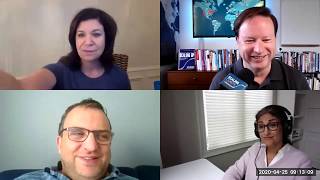
Panel discussion (recorded April 25, 2020) hosted by Bill Gallagher with coaches Deb Gabor, Ami Kassar and Anita Kabel about operating, scaling and surviving during the early COVID‑19 era. The conversation mixes practical remote‑work advice (Zoom best practices, camera/lighting/mic tips, green‑screen slides), facilitation/collaboration tooling (breakout rooms, Mural/Miro, digitized whiteboards), employee engagement ideas (Sanity Hour, gifts, rituals), business pivots and retooling examples, and funding/cash strategy (PPP tradeoffs and Main Street Lending mechanics). The tone is informal, experience‑driven and focused on immediate, implementable tactics for leaders and teams.
Chapters
Enjoying all corners of my house.
Intimately familiar with all corners of my house now.
Yes.
Thank you so much for exploring the world.
Yeah.
Well, hello and welcome again to the Scaling Up Business podcast. I'm your host and scaling coach, Bill Gallagher. So this is a special panel show. We decided to have on this time some different kinds of coaches, you could say where we've only had Scaling up coaches on our panel conversations in the past. Today we have some coaches in different realms because we thought maybe it'd be appropriate in this time to expand the perspective and that kind of thing. So I just want to remind folks that we're in a different world. Right. Did you wonder you woke up in the same place every day instead of in a hotel room? You haven't been to your office probably in over a month. And we're all dealing with it in different. Some of you are really hard hit and you've had to lay off lots of people and others of us are dealing with an overwhelm of business around something and then many, probably most are somewhere in between. So that is all that we want to deal with right now. How do we scale up, how do we recover growth? How do we get through this from surviving to thriving? So we have invited a range of folks on now reminder that we're here every week. We have over 200 episodes now, of course of the show on different topics, some of them in video, some of them not. The panel shows you'll Also find on YouTube if you want to do that. We have several hundred of these episodes. The tools and downloads, all those kinds of things are@scalingcoach.com the website has all the free offers and that kind of thing. You'll also find them in the show notes if you get them on itunes or on Spotify or Stitcher or wherever you get them, you'll find those kinds of things and I'll even give you a copy of the book for free. You just pay the shipping and handling. Scaling up that international best selling book right there, scalingcoach.com so listen in now as we talk with Deb Gabor, Ami Kassar and Anita Kabel. So in no particular order, just the way they're organized in front of me on the camera and zoom. Where all our professional lives are it seems these days. And you've all been on the show before, our regular loyal listeners who chime in have seen all of you. But Anita is a coach who worked in China, now lives in Michigan, still does some work remotely in China. Welcome show. Anita, are you in Michigan today?
I am certainly in place in Michigan and I think we're on another 15 days here, so. Yeah, yeah.
And Anita is a. I'll let you say a little bit more about your background, but she's a really effective coach with a particular interest in the human development and the tools that go well beyond all of that. So Anita, what else should they know about you?
Thanks, Bill. Yeah, I've been helping businesses scale, including my own, for the last 15 years. And I figured quite early on, because I was a young leader back then, that actually it's not so much what we do, but how we do it. So the human side of it, how we make decisions, what emotions affect us, how we show up in the world is really the critical factor for game changing strategy. So I studied neuroscience and school of life of business. I've helped over 40 clients scale up so far and now doing it in the US as opposed to China. But interestingly enough, I've been virtual for over 18 months helping clients back in Asia, or I thought it was virtual. Now we're on this vertical climb, figuring out what else is new. So yeah, great to be here. Thanks for having me on, Bill.
Thank you.
And Ami is an expert as a coach in the world of finance and funding. So he's helping people, working nonstop lately, trying to figure out how to get the cash to make it through and where creatively and appropriately to do that. Short of walking into a bank with a pistol.
That'S an option.
It's always an option. Ami, where are you today?
I'm in my home in Philadelphia and much to my sheer amazement, I've not been on an airplane in 50 days.
Yeah, you can tell from my branding behind me if you're watching on the video, like, I'm very much about like all the places I work around the world. Before the lockdown, I was in many, many countries working with people and like, oh, what's my identity all about if I'm not on the road.
And our marriages, it's all good. I feel blessed. As exhausting as the last few weeks have been, I feel blessed to have being able to have the opportunity to help as many people in different ways that I can and help bring perspective and help them figure out the cash and money side as much as possible.
So it does seem a bit random in my world and we could talk more about that as we get through it. But the people, the clients and friends that I know that have received or not received money seems completely like random. Who got it, who didn't.
There's a definite Definite lottery element.
Yeah. And yet somehow some of the very big companies seem to have gotten plenty just fine discussion.
Correct. All right.
Anything else to say about you and your work?
We just, you know, for over a decade we've been helping businesses figure out the best capital structures to grow. I have a book out I published two years ago called the Growth Dilemma. And one interesting thing is I'm not sure how much of that is really relevant in today's world right now, but that's a different story. So.
Yeah, yeah, you know, I noticed that and we'll for sure get into this. But so much is relevant but applied differently or in a different context. Right. But the universal things are kind of always there behind the. Anyway, awesome. Thank you, Deb. And where are you now?
I'm in my dining room in Austin, Texas.
Deb Gabor joining from. And Deb is in an expert in particular in the marketing side and brand strategy, but really relevant. And the thing that immediately sprung to mind aside from that, I've been seeing you a lot lately.
I'm everywhere.
Let everybody else join in. So Deb's T shirt says day drink.
I didn't realize this was going to be video, so I dressed for audio only.
Yeah. Reminding of different coping strategies to get through it.
Right. Saturday. Why not, right?
I did recently, if it's warm.
Yeah. I did a webinar. Actually, they're called Debonairs now you can all use. But I did a webinar a couple of weeks ago and I literally received a booze order in the middle of it. And so I had one of those moments where I was like, everybody, there's someone knocking on my door. And usually when people knock on the door, they just leave whatever it is. But they were really insistent. And so I was like, hold on. I go to the door and there's my booze delivery and he wants to see my ID. And I was like, I'm a 51 year old woman. What do you need to see my ID for? I'm home. Like I'm home alone with four pets. The knock at the door. So I have to run into the kitchen, grab my driver's license, like, go and show it to him. In the meantime, I have like my technical person who's on the webinar with me. And I'm like, hey, Tom, why don't you talk about earned versus owned versus paid media? And he was like, and then what I got, this is the most ridiculous thing. So I ordered like a really, really small thing. Apparently they were out of it. And I got a gallon sized thing of the most ridiculous liquor, which is Tequila rose, which is a tequila based strawberry flavored liqueur. But a bottle this big. So anyway, that's my quarantine story.
Wow.
Do you have any left, Deb?
I was going to say it's looking good on you.
A week ago. So it's gone.
Oh my God, that's so funny. I got two gift boxes in the last week. One was some wines from a coach that I've been mentoring and then another was a gift from John Rulin and so really nice things in the world. And then the week before we had some flowers show up. So it is nice to to see some social interactions moved in a different way.
Yeah.
So Deb, Branding is sex. What's the title of the book?
So yeah, I've written two best selling books about branding brand strategy. The first one is called Branding is sex, get your customer laid and sell the hell out of anything. I always tell people, you know, I'm doing a really good job of attracting my ideal client because if you find that offensive, we're probably not going to work together. And the second book is called Irrational Loyalty. Building a brand that thrives in turbulent times. Wow, is that a book for today? So, you know, that's really about how brands need to show up like people with a set of values and beliefs and to draw people into them, you know, using their values and beliefs to do that. So I've been doing a ton of speaking online, you know, helping people understand, you know, what are some of the near term things that they need to do in order to protect their brand and then what are changes that maybe they should think about making because the world is never going to be the same and they need to evolve their brand for a post pandemic world. So that's, I've spent a lot of time talking to audiences about that kind of stuff.
So much evolving and people adapting in the world right now, finding ways to survive and get through and then many looking hopefully now already for the pivot opportunities and moving into what's next and what's relevant, which is probably a moving target.
Right.
So why don't we start off with one of the like the basic structural kinds of things I thought is what are you guys noticing that's working and not working in the world of online zoom meetings? Right. So many of our folks, at least the managing and the information workers are able to move and do things online. So whether it's zoom or whether it's your Google hangouts or Skype sessions or whatever. What are you noticing that's working and not working in that environment?
So at the beginning of this, one of the things that I thought I was supposed to do was try to replicate the in office scenario where, you know, I run a marketing company, and so we really thrive on being together and having a lot of interaction and collaboration. So I was doing stuff like popping in to people using, like, Google. Google Hangouts video. You know, I would just, like, pop up and people are like, what are you doing here? Which is very much like what I would do if I was physically in the office. I'd come over, walking around, and I'll say. At first I was like, yeah, this is good. I'm staying connected to people and whatever. And then I realized that I'm actually creating a really invasive kind of situation, right? I literally have been on back to. Back to back Zoom meetings and online virtual events and speaking, things that I'm doing and whatever, and I feel extra fatigued because I can't hide what I'm doing. Whereas on a phone call, like, if I want to walk into the kitchen and get myself a cup of coffee or refresh my water or move some things around on my desk or pick my nose or whatever, you can do that. So in Zoom, when you have people in this little tiny box, or if you do mistakenly what I was doing, where I'd pop up in people's windows and they're like, shit, she's here, right? You're creating an environment where people are. They have to be on, right? They have to interact. And then one of the things that I have noticed about Zoom, that's anxiety.
Just.
Yeah, no, I was creating a lot of anxiety for my team. I really was. And then I was like, I need to not do this. I need to ask permission first and emphasize the phone. But one of the other things that I recognize about Zoom, we're missing a huge part of the communication channel, which is. Which is the nonverbal part in many ways. You can only see me from here. You're not even hearing all of the tones of my voice because it's gone through an electronic medium. You're not, like, you're not really picking up my micro expressions and things like that. And I think people have to try harder to pick up the full message, and I think that makes people tired.
Yeah, yeah, yeah, yeah. There was an item in the BBC in the last week about that, about, why are the meetings fatiguing? And they're like, because there's a delay which requires you it's just a little bit off. And so you have to pay attention, listen for who's trying to chime in and they. What else did they say? They said you're self conscious, you, you don't know if everyone's looking at you or not. And for sure, with more and more people in a meeting, it gets harder and harder. So am I being looked at or not? Is it okay to turn off my camera for a second and scratch myself?
Yeah, I mean, we're looking for feedback from other people that, that comes from their, like their physical person and eye contact. I can't make eye contact with any, any of you right now. You know, I'm looking, I have four on the screen and I'm like, do I look at Bill right now? Do I look at Anita? Do I look at Ami? You know, it's we as humans from a communication perspective, we need that feedback loop and we're missing some of the feedback loop too. So that self consciousness, that anxiety, like, are people looking at me? You're not getting the feedback. And especially for people who really need that feedback, like, I know Ami doesn't really care what other people think of him. But you know, for me, I'm a person that, because of what I do for a living and things like that. And then also just being like a person who really relies on interpersonal relationships, that feedback is super important to me to ensure that I'm like, I'm on message, I'm on strategy, and then I'm actually connecting.
Yeah. You know, I, I wish I could show. Well, I've shown. If you are on my social feeds, you have seen some behind the scenes recordings or shot. And I have here two, two monitors in front of me, right side by side. And then they, their bezels are kind of where they meet and slightly overlap. And then in between those, in the middle of the screen is my camera. So there's a camera on every screen because I have an Apple World. But I don't use those. I use the better camera that's mounted in the middle and down so I'm more closely aligned to eye contact with people. But very few people do that. A few will elevate their, like they put their laptop on a thing and then position it, which like I might do if I was working a different part of the house and get that and it makes a difference. Like I'm much more closely looking at you now in your eyes, but which is very close to the camera and the angle is less perceptible. But of course Our cameras don't come from the middle of our screens right now, so it's very hard to get it done. And then the lighting. Right. Makes a difference. So don't put a big bright window behind you. Anita's got a bright window behind her, but she also has a fair amount of light on her.
I've got a window in front of me as well.
Yeah, so you've got kind of even lighting, which is nice. And Ami's just beautifully lit.
Perfect. It's beautiful.
Right.
I have a little ring light that goes up. Most of the time I stand at my desk, but I wanted to sit down for this so I can telescope it up and down and whatever. Because you know what, a woman my age, we don't need a lot of shadows on our faces.
Oh, my God.
Now we get to super controller.
I tried to get a better camera. Like, I was like, all right, this is the time where I need to invest in a camera. I can't find one anywhere.
Yeah, yeah. Well, the smoothing option in Zoom for sure helps, right?
Oh, are you suggesting I need to use that?
Is there an option?
Ari obviously did.
Yeah. In the preferences in the video, there's a smoothing thing which kind of evens out the complexion. It's maybe already on for you, but it's kind of like a little bit of Mac.
Oh, maybe not.
You can test it.
You know, So I have three lights in front of me. I have two here and then one over here to fill. And then there's windows all around here. The biggest window of which I've actually had to black out with an old blanket, actually a Saks Fifth Avenue blanket taken from business class in United. But getting that light kind of even and consistent makes a difference. And then the mic, what kind of a microphone are you using? Are you using the one built in or using something separate? You're not gonna all have a $400 microphone. Yeah, you've got a pretty good one.
Oh, great.
Yeah. That mic, by the way, just as a technical thing, Deb, is that mic is not very directional. That's like, at 2020 USB, probably.
Yeah, it has the.
Yeah. So it's great in a studio, but as dogs move around and things, you'll notice more and more I have one of those here that I don't use anymore.
Yeah.
But you know what? I'm not pro like you, and this is what was available. And also, so here's something interesting. I've been doing these online sessions, and there has been a human being, a man who has attended a Lot of these sessions. And he actually sent me this whole setup in the mail.
Awesome.
Wow.
So that one's a pretty good. Especially if you can control the sound background and like that. I used to use one of those. Here's one that I suggest for everyone. I don't get anything for this, but this is the audio Technica at 2005. What's great about it is a Kazenter mic. It's way more directional, so it won't pick up your kids or dogs as much from behind or around. And you can run it off USB or if you start to upgrade xlr. And it also has a monitor, so you can put in some headphones or something and begin to listen to how you sound. Because some of these mics, like this one that I'm on right now, is really directional. When I go off the mic.
Yeah.
Just disappears. And you can't tell that if you're not listening to a feedback thing on it. Right. You're not sensitive anyway. This is awfully technical. Right. But it's one of the things that's working or not. I think we're all getting more, isn't it?
I gave up on you. I got the Auto Technica, but I gave up on it because I feel like my donut and I'm super self conscious about, you know, holding onto a microphone. I'm moving around so much and it all animates it.
You can do it like this. I can drop this down and still kind of point it up. Now it's off the frame. Right. And you can't see that. I also use a boom. But then I do a show every week. And if you think about it, many of us are doing the equivalent of that hour of the day now. So I think some of these things really make sense. What about other things like how the meetings flow, the agendas that. What are you guys noticing in that?
Well, I just wanted to share. It's not quite on topic, but it was fascinating experience that last weekend. One of my dearest friends son was his son's bar mitzvah and it was canceled and they decided to do it over Zoom. And they were. It was really such a. I think it's an experience I'll never forget. Yeah. Because they made the best out of an awful situation.
Yeah.
And there were 40 or so of their very closest friends and family from around the country there. And each person had their part and the kid did his part and the kid read from the Torah and parents spoke and it was like. In some ways it was a Lot more intimate and meaningful than being in a synagogue. And it was just, it. It was just a really striking experience. Perhaps one of the most interesting experiences I've had throughout all of this. And it made me realize that while Zoom and all these virtual meetings have their deficiencies, there are certain roles and places for them that just really quite. Was really. It was mind boggling, actually.
Yeah, we had two seders this year, and the Gallagher Seder. Right. Just to say that those two words together don't quite fit, right? The Irish name Seder don't quite go.
My daughter is Hannah McEvili. And we, you know, we have. Yeah, she's like, when I grow up, mom, I'm gonna open a business called McEvili's Jewish Deli.
She hasn't grown up yet, though.
My daughter could come help her a little bit because she's whiter than me and very red hair. She looks way born of Ireland or Scotland, and she is among the most, in her heart, Jewish in the family. But we have this Haggadah that my dad made when the kids were very young that's the most hyper, abbreviated, comical kids kind of Seder that you could imagine that we went through. But we had two of these and we had everybody on via Zoom, right? And so everybody was in and because, like, my son lives nearby and my brother and they're not the most. We like delivered kind of the Seder plate fixings to them. We made them harass it, took it over and that kind of thing. But. And then we dropped it off like, you know, without contact and stuff. But then. And then we had our stuff remotely, so we had somebody from LA and somebody from San Francisco, and then people from the different East Bay. And then my mom came in from Utah. And so everybody's in all over and going through the thing. It was really cool. And we went through the whole thing and then the kids all went nuts in every house to try to find the afikoman in each place. And like, these, all these references aren't going to make any difference, right. If you're not a Jew. But the idea of how are you recreating traditions, right? What did you do for your Easter family brunch? And. And what are you doing now for Ramadan, which just kicked off, right. And ends with Adolf Hitter, where people would normally would travel and return to each other, Right. Is it big? It's a big thing.
Yeah. My family are Middle Eastern, so we're, we're, we're doing our first get together at sunset this evening. So it'll be amazing. Yeah, yeah, yeah. Because I can't copy as well. And we'd always go to their house, you know, so now we're going to be, you know, having pizza and everyone else will be having a niece. It's okay. We'll manage. But, yeah, we held the graduation for my niece last week, which was spectacular, you know, and held all these lovely, as you were saying, all these lovely sort of extras that everyone in the entire family tuned in. So there were 50 or 60 of us, the kids going crazy, looking at each other, and, you know, it was really, really special.
A couple of things I noticed. We've been using one of the most magic things in our workshops and our client sessions are breakout rooms. And I did a webinar in the last two weeks that didn't have that. And there was definitely something missing by comparison. So if you ask a question or ask for some interaction and you have 10 or more people in the room, you're not going to get the same participation as if you say, okay, I'm going to break you up into groups of two now, and please discuss this question. And you just need a couple minutes. But when you throw people out into the breakout rooms, and I've done now sessions over 100, where we throw people out in, say randomly in groups of three or some breakout rooms organized with small company teams, and we throw people in those, and just a couple of minutes each way is enough for many the questions that you might pose. And then you can feed the question out to all of the rooms with a prompt to remind them what you asked them to go talk about. And that makes a massive difference in the interaction. Just giving people some break. And then when they come back asking instead of you say what you shared in the breakout room, say what you heard can make a big difference because we're often more comfortable to talk about something that we heard someone else say than our own ideas, because not everyone is quite as cheeky and bold as.
The rest of us.
One of the things that we've been doing on Zoom, and this started very early on, we have a daily huddle every day at 9:12, whether we're in the office or not. And wherever I am in the world, I've always called into that. And so when I sent everybody home in early March, you know, we kept up the daily huddle. But one of the things that I noticed was, especially my people who work in New York City, which was hit early and hard, and it just was like. It just was emotionally difficult. I one day, like, really really early on I was like, would it be helpful if we had a touch base at the end of the day? Like, let's get on zoom. And so we created something. It initially started as like, let's get on zoom and let's do a happy hour. Well, it's evolved into. It's called Sanity Hour. And we use it as this like touch base at the end of the day, which is like a little bit less formal. And a couple things that I've been doing is I send a surprise gift to everyone at their home every week. So one week it was fresh baked cookies from a company. One week I sent them a pizza. A couple weeks ago I sent them this amazing coloring book called.
It's called what it's called.
Yeah, it's obscene. But we had everybody do an art piece from the book and then send it in. And we did an art show. We had a juried art show yesterday and we usually do like a silly thing every Friday. So yesterday we had a PPE fashion show where everybody had to like dress up in their masks and, you know, whatever they were wearing. And I had sent to everybody's house, I had these incredible custom hats made that say hashtag Sanity Hour on them, you know, with the company brand. And so we're. One of. My big takeaway is that people do need. They need more connection, like, you know, more interpersonal connection rather than less. They need time to like work on their own. They need privacy and they need interaction and they need more interactivity like what you're talking about, Bill, Using breakout rooms, giving prompts, actually asking people to type things in the chat box, all of that kind of stuff. Reporting on what they heard versus what they said, all of that kind of stuff. But the biggest thing is creating experiences that are specifically designed for this medium. And that's where I've seen some really incredible things emerge over the last couple of weeks is I talked to a team building expert yesterday that I'm actually bringing in to do some pop up exercises with my team. Things like adapting some of the games of improv into this. One of the cool ideas that they came up with was they call it in a world where you have to create like you have to recreate on zoom the plot of a very, very well known movie. And everyone has to participate and you get 15 minutes to work with your little team to create your movie and then you perform it for each other, like actually using the medium of zoom. And that's the kind of stuff like those. I'm really, really inspired when I see those things happening because people are figuring it out. At first I was a hot mess on Zoom and now it just gets better and better and better.
Check this out. I have been doing workshops and things like that and I was really frustrated with the experience on the other side of it where I've got a little thumbnail of the speaker and then a big thing of the slide and copy down slides, which I always hate anyway, so I went ahead and did this.
What the heck? That's so cool.
I have a green screen that pulls down behind. Or you could also get one to pop up or that you pull across or whatever. So there's a green screen in here. And then I just made my slides the background. So if you're just listening behind me, I pulled down the green screen and then what's appeared is a slide which right. I could find, flip through my slides, right. For the particular conversation and you could see the only thing I've done is leave a little room on them for my own head to appear superimposed. But like that's a little hack that.
Awesome. That's fantastic.
Making a bigger impact, right?
That's very cool. I've also seen this camera which I would really like to get one. My plan is I want to put. Put a whiteboard back here and there's a camera. It's about $499. It's called Captivo. And a guy that I had on one of my broadcasts a couple of weeks ago, he has his home studio outfitted with that. But basically it's a camera that can photograph whatever's on your whiteboard and it digitizes it and then you can distribute it to everybody. Because I run a lot of brand work workshops and we're really trying to figure that out. The other tool that we're using a lot is Mural, which Mural is really helping with anything where you need people to like write on, post it notes and put it on a board or take notes or whatever.
I'll get rid of the green.
Love that.
Yeah, that's a pull down one, right. You can get the pop up kind, but I might pull it in. And then I also have mounted on behind me a large monitor which can mirror or add to one of the screens in my desktop or I can drive it from another like a tablet or a laptop, which is helpful. But when I'm using Mural, then I can throw it behind me and I can gesture to it and people can get a sense of what we're talking about or that kind of thing. Even if I'm not sharing the screen. Right.
I think that's really genius because, you know, going back to what we were talking about earlier about the zoom fatigue, you know, I think there's, there's also a new phrase which is the doom, gloom, zoom, gloom. Sorry. You know, if people are just really, absolutely overwhelmed with everything we're throwing at them. And it's one thing if it's a webinar and you're teaching, and it's quite another thing if you're facilitating a conversation. And then, you know, someone made the example the other day. You wouldn't read a novel while you're cooking dinner. You know, you can't pay attention to two really big things at one time. And so if you're, you know, worried about how you look versus what you're going to say versus, you know, what's actually happening or what you're supposed to respond to, it's just a massive neurological overstimuli and it's impossible to get the best out of anyone. So from our perspective, as we're running, you know, meetings all day long, we really, really have to think about what is it that we're transmitting, how quickly, who's the extroverts, who's the introverts, and how even what people are picking up in their peripheral vision. If you want these meetings to be a success and people not to be absolutely exhausted after your session, you've got to get the right balance of all the elements that make people able to participate effectively.
Speaking of these kinds of things, we have moved our conferences, meetings and summits online now, and we've done a couple of them with thousands of people attending and they've gone really, really well. Instead of doing multi day long things, Vern's done a couple of hours at a time and he's asked each speaker to condense it down to about 10 minutes and focus in on it. And we've got people like Stanley McChrystal, retired general Stanley McChrystal, former commander of the Special Forces, talking about transforming the way that they manage their teams and how that's relevant and, and lots and lots of other speakers. I don't know, somebody was on there talking about marketing and, you know, Deb's come on to our coaches and talked about that and AMIs talked with groups about the funding. And so we've had all these things. We've got another one coming up on May 20th. They're only two hours long. They're a lot of fun. The last one we ended with some musical Games and things like that where they, they made up songs about the speakers and then they did some name that tune and other kinds of things quickly that they fused into it. So the summit 3.0 we have Mark Cuban, David Gardner, co founder, Motley Fool, Raj Sisodia who's been on the show before talking about healing organizations and he's a co founder of Conscious Capitalism and the value of that. We will have quite a. And there are some other really compelling big name speakers still joining that May 20th conference. So if you haven't done it, go to, go to scalingup.com and register for the May 20th. Put it in. It'll start at 3:20 in the afternoon. So late in the afternoon on the 20th Eastern Time, about just after lunchtime here on the west coast. And then wherever you are in the world, you can also watch by replay if you need to later or if the time, you know, if you're in Australia or some other kind of thing. I know we have a lot of listeners in Australia, New Zealand, Singapore. So these are really great, like boom, boom, boom, boom, boom. Really great nuggets of ideas from big thinkers. Not just their old shtick, but whatever their core genius is then applied and presented in a way that's relevant for the shit we're all dealing with right now. Pardon my language. Our listeners know that I'm a little profane at times, but super, super helpful. I strongly encourage you to do it as you sign up. If you aren't working with a coach, put my name in there and they'll know that I sent you along. And if we have breakouts, I may get to interact with you during those time frames. So go to scalingup.com register for the next summit May 20th. Deb, you started talking about the tools and I think that's a great segue. Years ago, some of my software and technology teams were using these tools, whether it be Stormboard, Miro, Jamboard, some of these kinds of things. We've moved all of our people now to Miro and found that really successful. What else are you guys seeing in terms of online collaboration? I know the whiteboard feature in Zoom is pretty mediocre and not very helpful and collaborative. What are you guys seeing?
You listed them all off?
All of them, right?
Yeah. You know, we've doubled down on the use of murall and you know, one of the things that we've done in order to make that work better for us. So you know that in the brand strategy process that we do, the climax of the process is this eight Hour workshop and it's usually done in person. And of course we've had to really adapt that. You know, one of the value propositions is like we'll get that done in one eight hour day. Well, that's not possible because you know the ergonomics of sitting on a zoom call for eight hours, you want to shoot yourself in the face. So you know, we, as I just.
Sit up straight because my back is bucking.
Yeah. And so you know, sort of tooling, retooling the tools kind of and retooling the experiences and really stripping out anything extra and pre programming in tools like Mural, like having everything ready to go so that we can seamlessly move from one activity the next. That, that's, you know, that's what a lot of our experiential work has, has been about. And you know, I'm still, I'm still onboarding. You know, we signed two new client deals yesterday and they're both going to need brand workshops, you know, somewhere here in the next couple of weeks. So, and it's what's really cool is it's kind of an evolution and, and my team is really clever about figuring out how to use the tools and move between like somebody writing on post it, big post it notes over here and then move to mural and do something in a breakout room. Bring everybody together. It's, I don't know, it's been really cool to watch and it's so interesting. Like one of the big changes for me is I really, I've always valued this in person interaction because it's sort of like our clients and us, we're in the trenches when we go through this strategy process because you come out at the end of the day and you have this alignment and you've got, you know, you have clarity on the brand and people really love it and they're really excited coming out of it. And that's one of the biggest things that bonds our clients to us and creates that emotional connection. It's hard to do it in these like short 90 minute bursts. So. But I had often it's really, I mean it's fascinating because I had often said, no, we won't ever do these workshops in a remote way. Well, and now we've been forced to do workshops in a remote way and I actually think it's transformative to our business. Right. Just figuring out how to do things differently now. I'm sorry that I signed a lease to expand my office into the office next door to us, you know, and do construction and Stuff like that. Because then I'm like, wow, I'd rather, you know, figure out a way to like send some people home and have them work remotely a couple of days a week and stagger people in the office than take on more space, you know.
Well, we're going to need to de densify some of our space for sure.
Right.
Physically, the separation and the plexi barriers in places and things like that as well. I was going to. Is probably going to be with us for years and years to come now. Been looming for a long time now, but.
Well, I think we just, you know, we're going to perfect these techniques in such a way. I don't know whether you're starting to hear it, but a lot of people are saying they absolutely love virtual facilitation and even more than meeting in person. So, you know, when you try and decode why that is, I think there's a certain amount of flexibility and freedom we're learning how to do now, like you say, with the breakout rooms breaking into smaller groups and being able to really deeply focus on something. And I think there may be a bit of a trick to that too. I think sometimes it's better to turn off the camera so that you're just. Just for those sessions, not for every part of it because of course you want the connectivity, but, you know, and to have people really deeply focused on the work and get that moment of insight where, you know, you're not perhaps gonna get the same thing in person because there's a bit more space around you and you go get a cup of coffee and you can distract yourself again. But actually that ping that insight moment is the. Is the game changer. That's the one that gives you that feeling of wow, you know, what an extraordinary experience I just had and doing great work. So the quality of the work.
Yeah, I found about 90 minutes of well constructed people can stomach before they need to stand up and stretch and. And some people are doing less, but I definitely wouldn't go two hours because you're starting to get people anxious and they're uncomfortable, right? Yeah, 90 minutes. Give them a stretch break or that kind of thing. And I encourage people at times and I turn off the slides or whatever we're sharing. Let's just talk to each other for a second and listen. Managing breakout rooms to get smaller things can make a big difference, right? In that.
Absolutely. I think that visual gating is a big deal because there's so much stimuli happening on the screen that actually sometimes, you know, again, we're just learning different skills and what works. But I'm with you. I'm actually doing more sessions, less 90 minutes over more days even. So I'm not even doing them back to back. I'm just playing with that right now.
I'm doing that with my work in the Middle East. We're gonna break it into a couple days each and mostly because I don't think I can lead sessions all through the night.
That's exhausting. Yeah.
So we're gonna kind of meet somewhere in the crossover early my time, late, their time or vice versa. But yeah, you know, the other thing we've done is taken, I think probably like Deb here and we've templatized all of our worksheets and interactions. So we've combined what we would typically do with like a participant workbook and wall work with post its and things like that and flip chart paper all together so that all the people tools. We now have areas in mural template things where we can work through. Let's create brand promises together. Let's do attribute mapping together. Let's figure out what your bhag is. So we now have templates for those things. The same thing. True people strategy, execution and cash. All the retrospective stuff, the warm up stuff. Let's work on the rock habits checklist together. All of those kinds of things we can do now with templates on mural, which, you know, we've done in a couple of weeks. We've moved everything there. So just with experimentation.
One question, Bill, is.
Yeah.
Think about all the time and effort and travel we've all saved. I'm not sure Nita much of you are a traveler, but I know Deb and Bill and I are road warriors.
Yeah. Yeah. Usually I am too. Yeah.
And think. And I mean, whereas I used to hate webinars, I used to despise them. Yeah. I used, I used to never want to do them. I used to feel like I was talking to a mirror.
Yes.
And now I'm doing three, four, five a day.
Yes.
And. But getting my message out differently. Maybe not quite as well. Yes, differently. And sure, I'm fried and exhausted at the end of the day, but think about how much more efficient it is. Also.
Yeah. You know, I have a, like a mixed feeling. Deb.
Yeah, I was going to say like, you know, I always put a premium on, you know, speaking at large events. And that also is, that's the way I make a lot of my money is getting paid to pick to be at big events and then also, you know, running Running these full day workshops and stuff like that. And so when that went away, I had to quickly, I had to quickly change what I was doing. And over the last four weeks, I haven't done as many webinars as AMI has, but I have different kind of content. But between the private webinars that I've been doing for like coaching organizations and EO chapters and ypo and you know, these different organizations, ad feds in other states and all that kind of stuff, plus the public ones that I'm doing, I have grown my community like exponentially and added many, many, many people into my community, which from a marketing perspective, like, I'm not looking to monetize that, but I'm using my content to draw more people to me. And it's a little bit more of an intimate medium than from stage. But that's been really interesting is just how much newness that's generated for us. You know, revenue wise, we're nowhere near what we're supposed to be at for Forecast, but I have met so many new people who need what we sell. And we are having new business meetings without doing any business development. And you know, if I could share with other people here who are listening to this, you know, this idea of building community and generously giving your expertise to other people with the purpose of drawing people in, you know, like what Bill's doing here with this, you know, with this program and whatever, like sharing expertise, it actually, it actually works to bring people to you. And this, you know, all the conversations about, you know, monetizing content or whatever, you don't have to monetize the content. You monetize your influence and you monetize your connection. And it doesn't matter how much content you create if you don't have an audience to consume it. I've seen organizations, I've seen individuals and just my own experience really, really grow their impact just through creating more connections with more people using a different format. And that's one of the best things to come out of this because, you know, I had that initial holy crap feeling. My very first speaking engagement that got canceled. AMI knows this because we were texting with each other was at south by Southwest. And we were like, you know, we were going back and forth. And when south by Southwest canceled, that's when I knew. I'm like, this is a real thing. And then everything else happened after that. And six months worth of travel, like six months of travel, like just completely wiped out and all that kind of stuff. And I had my moment to grieve and then I went through an exercise like, you know, in the spirit of the Stockdale Paradox. And I faced the brutal facts of my own reality, right? I was like, I have six months to create content and create community and give generously my expertise to other people with the sole purpose of elevating them and not asking for anything in return. And I'm six weeks into that right now and it couldn't be better for my business.
You know, I have six mixed feelings. Like personally, I miss waking up and going down to the beach before I lead a session. In a couple weeks I was supposed to be on Santorini for a week leading a large multi day workshop, right? I have a nice house and a great deck, but it ain't Santorini.
No, I'm grieving that too. Like I miss traveling. I was supposed to be with Ami at the beginning of April. Like that's weeks past, you know, it came and went and I'm with you, it makes me.
But here, but I don't have to fly. And every time I'd go somewhere, it'd be largely a day down and I'd be like, oh, when can I talk to this person? I need to throw a phone call in there somewhere. Could I do it on my connection in Chicago or you know, could I figure out how to squeeze something in? But now I'm like, well, I don't know. I talk to you at 7pm tonight if you want. Which also blurs things. But it is, it is easier, right? I don't go, oh, I'm going to lead a session down in San Diego today with one of my teams and then I'm going to fly back and I'm going to spend hours commuting. You know, like most days I don't commute but. But sometimes when I do, it can be pretty long. Oh, I've got to board a 15 hour flight now. I'm not doing that. So you do get, as Ami says, you get back that time. But it is a little surreal to talk to someone in another part of the world and then walk downstairs and your family's there.
That's crazy.
There's another side to it though, isn't there? I mean, if you're, if your purpose was clear in the first place and like you're saying, Deb, if you know your core customer, like those two things might of being a little bit abstract because I've never done a day's marketing in my life. You know, I worked from referral to referral for many years and I landed here in the US And I'm like, shit, what now? You know, I'm not known at all. So this has been a really interesting exercise for me. You know, if I'm getting out of bed every day and I'm able to live my purpose and serve people and make impact and figure out how to do that and who wants to listen to it and what mediums they want to hear me, you know, I think that it's been so energizing and totally unexpected and really, really welcome. And yeah, you're on purpose. So I think it's never been a bigger time to be purposeful.
Let's talk about pivots in a second, but let me as we complete kind of conversation about tools, let me remind folks that visibility to the company's plans and performance is Rockefeller Habit number 10 and understanding where that is. And if you used to have a whiteboard or an area where you gathered, you've now got to have some kind of an equivalent. So Scaling up has some software, the Scaling Up Scoreboard. And you go to scalingup scalingupscoreboard.com in addition, if you're working with a coach, you can designate your coach. The coach can see how you're doing there and give you feedback on that kind of thing. Then if you are working through the cash, not just getting money, but understanding your cash position, there is, there's a tool there, a cash flow stress test that you can find@scalingup.com we've got also Amplify's made employee health survey. If you want to get a quick pulse check on your people, we've got that available@scalingup.com so some tools that are helpful and useful to figuring that out. Talk about these pivots you're talking about getting on purpose. Deb is working with people on that, but people are really interested in this now. What's next? How do I pivot to it? And I think there's kind of be some stages, right? Especially because we won't just be suddenly like the lights are on and there's a vaccine and everybody can go back to work. It won't be anywhere near like that. There will be like you'll be out, but you'll be covered. You'll be separated and you may be some things will go back. It'll ease back in most places, right. I know Florida and Georgia are all going to be at the beach tomorrow, but most of us are going to have something more staged like that where we're allowed to. I saw news that Dubai was beginning to ease back into things. But like, a restaurant could seat one third the people, and then not everybody. Like, I'm just not going to go sit in a restaurant. But some of the more interesting pivots now, I think are the first one that I heard was among the most entertaining. And strip joint, right?
Oh, yeah.
Erotic dance performance in the northwest of the US Saw their business evaporate overnight. And they got together, as they would do in a place like Portland, in a much more collaborative style than some places. He said, what can we do? What if we could send the girls out to people's homes and then they could just, with social distancing, like, dance in front and then they could. The guys in the kitchen said, well, what about us? And they said, and somebody said, it'd be just like Uber, but we call it Boober. And we'd say, now, setting aside the judgments about whether that's appropriate or not, or male, female, all that.
Have you been waiting all morning to tell that joke?
Boober. This was their thing. It's been totally written up. They're like, it'd be just like Uber, except with boobs. It'd be Boober.
So that was going to be my worst example, right?
And then the guys in the kitchen said, what about us? Because they make, you know, wings and burgers and things like that. And they said, no, it's going to be like Boober eats. So the bouncers and the other staff drive the girls. Two girls show up and deliver food from the kitchen with pasties and stuff. It's not truly nude and whatever, but they're cheeky. And boober eats. And they're like, so I don't want to. There are plenty of valid criticism, that kind of world and what that represents, but the creativity, the ingenuity, the scrappiness, to pivot that quickly. And they've gotten a tremendous amount of press. I think it's super fun and playful that they're doing that and getting that. But there are other kinds of pivots as well. I talked before this comes out. I'll have a conversation on the show with Kevin Hundle, business guy, a guy who did accelerator trainings before that I first met that way. And he's in the EO organization, has been in leadership there. But his company makes and distributes things like speaker boxes for the back of your car. You know, the cars that roll down the neighborhood just with massive beats and other kinds of audio products. And their business first went down a little bit with supply side as Chinese production went down, and then it went down massively as their dealers weren't interacting and selling things. And he had to lay off most of his 60 foot person and idle his 50,000 square foot facility. And then he realized that the plastics they dealt with and the materials that they dealt with were suitable for barriers and face masks and things like that. And so they started making those. And then they realized their Chinese suppliers also had plenty of access to loads and loads of masks. So we started. So now they're making all kinds of protective gear with a Trend Safety is the new division of A Trend usa. And he started to move and he's hired back everyone open job postings to make and distribute these kinds of things. So that's a really obvious one. Right, but what are some of the ones that you guys are hearing about?
So I was inspired very early in this process by lvmh, which is the parent company of Louis Vuitton and Christian Dior. And this was really even before things picked up pace here in the United States. But they were able to retool their perfume factories to turn them into facilities to make hand sanitizer. And they were able to meet France's need for hand sanitizer in just 72 hours. And so this idea of retooling the factory is something that we've been talking to our clients about. And so I've had conversations with, here's a really good example. Eco Friendly Dry Cleaner here in Austin, Texas. They have a number of locations. You know, he was really struggling. They have a service where they pick up your cleaning, they drop it off. So couple of things they've pivoted in a couple different ways. One is like we're all on zoom. I'm wearing a T shirt, you know, Anita's wearing a sweater. We're dressed casually. We don't have a lot of dry clean only clothes right now. Right. And so he was like, I'm looking at my business going away, but I'm sitting in my dining room right now and I'm looking at some really dingy drapes. So, you know, retooling the factory with content a little bit to make people aware of, you know, here are things in your home that you can also dry clean while you're at home, keep the cleanest space. So that's helpful content. Like through this lens of how can we be indispensable at point this time? Here was another thing I said, you know, you can probably create some really useful and helpful content. Who better than the people who see our go to work clothes? Who better than them to be the arbiter of what's fashionable for Zoom, right? You can create, like, some really fun, uplifting content to bridge the gap with your existing community, your existing customers. And then two more things that this company was able to do. They have a network of vans and drivers, right? And even if people are not doing pickup and drop off dry cleaning from their homes, they have vans and drivers. There are neighborhood restaurants that want to be able to prepare food and create family meals. And so they set up some relationships between the vans and drivers and these restaurants to, like, bring. Bring favorite neighborhood foods, you know, to people in those areas. And it's. It's like two in one, because it helps that restaurant, and then it also helps, you know, keep these people employed. And then the last thing was they swung into action and they. They created something where the people of. The people of the community could, with a text message, donate a load of laundry to a frontline worker. And they would come to the house. You just have to leave your Covid clothes outside on the porch. They come, get them, wash and fold, bring them back, and they got the community involved with a text message way where you could donate loads of laundry. So these pivots are really coming from asking the question of how can we be indispensable at this time? And what it does is it sort of surfaces new thinking.
You know, we've read about or seen, whether you're super conscious of it or not, innovation labs in large companies in the past, and they're colorful, bright places with toys, and they look playful because that's where we innovate. That's all bullshit. You want to cause innovation really quickly. You want somebody, how was the lever invented? Some guy found himself in a cave with a stick, needed to dig his way out, right? That's, you know, or these things happen in times of hardship, right? When your business is on the ropes, when the worlds change, the people that innovate are the ones who come up with that. And the people that I talk to that are like, well, we're just gonna wait this out. And like, well, we're gonna hunker down. And that's nonsense. Other people are gonna eat your lunch, and the brand affiliations and the loyalties are gonna move in this time frame, and people are not gonna go, oh, how did I used to do my cleaning? No, they're gonna have moved to the people that do it the other way, right? They got through and adapted. Even if it changes again and goes back to something a little bit more like things used to be. It's, it never ever goes back to the way it was.
Right.
You can't go home.
No, I think there's something in that really specific problems everybody's facing trying to pivot their lives and their businesses right now. And it's the extreme beauty of the constrained brief. You've just got three moves you can make. How are you going to make them? I think my favorite pivot so far has been, has been the summit, the scaling UP summit, the 10 minute learning segments. I'm like, thank you. I've got a cliff to climb here. I do not know how to cram it all into my head. Thank you. You know, and as you said, it wasn't just regurgitating the book. It was about, here's what I really think. And I wouldn't have access to that caliber of horsepower anywhere else.
Well, you know, one of our guests on the show in the past, Paul Akers, talks his book Two Second Lean and been around and talked about that before. And I love his content. I love his YouTube videos. I love the core idea. He gave a talk at one of our summits once that went on for like an hour and a half.
Okay.
This talk needs to be leaner. I think he could take that because he's, he's awesome in general. But that one was a great. And we've all been in a talk like that where. Or read a business book like that that was way too long and was inefficient. And I actually noticed that our sessions online are a little shorter. Instead of doing eight hours, I usually do six now. And we'll string it over multiple days if need be. But we're more productive like in terms of sheer output. Now we're not getting the drinks and dinner together and that kind of thing, which I think Deb has a great idea about delivering food and, and drinks to people and that kind of thing. Could you, could you do something to make it more fun and engaging?
Right.
In some way to touch people, like send everybody a bottle of wine and then have happy hour on Friday. Right.
So one of the things that we're doing in a couple of weeks is I got in touch with a chef who had to close his restaurant. He has restaurant catering business. He also has like an organic farm that. It's a farm to table kind of thing. And he's in Cleveland, Ohio. And I wouldn't normally get access to his food. We're creating a company event, don't tell anybody where we're coordinating to have food sent to everyone's home. And we're doing an online, you know, an online chef driven cooking event with people. And every week I'm upping my game in terms of, like, how can I serve my. How can I serve my team better, how can I engage them, how can I show appreciation, and how can I delight them? So this coming Friday, the gift that they're getting is they're getting Play Doh. They don't know that they're getting Play Doh. And we're gonna have a sculpture competition. I already told them they can't make genitals. And, you know, it tells you what kind of team I have. The fact that I. That I had to tell them, you know, that I'm telling them in advance. Yeah. But, you know, and so when I think about, when I think about these incredible pivots, you know, they happen on a small scale, they happen on a big scale. I have never felt more creative than I do now. Like, I have more ideas than I've ever had. I have talked to. I have a passion for the arts community. My daughter's a musical theater performer. Like, her entire season has been canceled. She's like, yes, I have a job in Broadway. There is no Broadway. And so I really, I feel for these artists. And I've had a number of competition competitions, conversations with them to talk about how do we, like, how can you repackage what you do in a way for people to consume it now that's gonna elevate them. Like, you play such an important role. And I've seen some of the most creative things. Online performances, online concert halls, behind the scenes tours, you know, things that actually artists can use to make money, you know, just content. The smoothie shop down the street from me is part of a chain, you know, around Austin. And since they're not getting a lot of traffic in for people to buy smoothies, what they're doing is they're selling these really great produce boxes, which for $30 every week, I get this huge box of organic restaurant grade produce delivered to my house and I split it with one of my co workers who lives nearby. I mean, I have seen just endless creativity in what people are doing. And I. Creativity begets creativity. For me, I'm just, that's. That's my life. But I admire just the way people are, the way people are thinking. And the one thing that seems to be common through all of these things is that they seem to be asking this question, how can I be indispensable right now? Like, what can I do right now? And the ideas that come out are, you know, they're mind blowing to me. And in the category of like, wow, I wish I would have thought of that, you know.
Yeah. Interesting though. I see a little bit of a different, the world through a different lens because I'm dealing with people with their money issues and their debt issues and their loan issues and definitely feels to me like there's a, there's a herd mentality. So this is at least for the entrepreneurs and the business owners. First tranche was you gotta go get this PP money. Yeah. And everyone was on the line on the race to do that. Now not everyone, but a lot of people, at least in our communities got it. And now the herd mentality is I gotta figure out how to maximize every penny of forgivable PPP money I possibly can, which is like the survivalist instead. And how do I work the system and the program so I can get every single penny I can into my company reminding people it's a paycheck protection program. It's not the entrepreneur protection program. It was amazing to me. I was on a, doing a webinar for Zoominar or whatever the debinar for.
Like.
30 business owners the other day and I was talking to them about this new Main street lending program which is going to be out in two weeks. Which actually if the PPP is a band aid, this gives you capital and the facility to actually think about growing and expanding your business and you know, up to the tunes depending on how well you did last year for several million dollars. Yeah. And no one in the call could move there. Everyone was focused on how could I squeeze an extra 10, 20, 30 grand out of my forgivable PPP money instead of holy shit, I might be able to get low interest, millions of dollars to give me a war chest to evolve and grow my company. And it was quite. Now the herd will move, but the herd totally obsessed now with the forgiveness just from at least the lens that I've been seeing.
Totally true. I think there's, as a coach, anyway, one of the hardest things to do is move to a future backed conversation. You know, we need to be talking about BHAC and what is your long term goal? I mean, okay, let's talk about a year out which you know, might seem like a huge amount of time now, but facilitating that conversation, it takes, it takes, it takes some courage for clients to go there.
But we have, it's hard to make that shift.
It's hard. But yeah, that's our next. Absolutely. Couldn't agree more. It's our next job. We haven't already.
I've been thinking about, I've been thinking about my, you know, my own company situation. There are a lot of other people, people in my industry who like, already caved. Right. There's another person that I know really, really well who runs a business very similar to mine in the agency business. And like the day, the day shit hit the fan, she's like, all right, I'm laying off all these people and, you know, we're going to close down and all this kind of stuff and whatever. And I'm like, I'm not, I'm. I'm not going to go. I'm not going to go down. Right. And I also. So now is a time where there are incredible resources available or there's incredible resources that aren't available, but because of the way their shitty companies are treating them, it'll be easy to make them available. Now is a time I want to upgrade my team. Like, I really want to upgrade the talent. Because one of the hardest things in a human capital intensive business is finding people who are really, really amazing. And I know that they're out there. So that's one thing and that's something that you need capital for. Another thing is, like, other businesses that are sort of in my ecosystem or in my realm that maybe would be good acquisition targets are. There's a lot of people out there who are not good at running businesses, who have businesses for whom this situation is going to show them, like, holy crap, I'm not good at this. And it would be really great for me to have somebody else lead this. Like, I actually.
Or I don't have the stomach or the heart or the desire for them anymore.
Yeah. And I feel like I personally am made for this moment. Like, I'm. There are just, there are some of us who are like, all right, this is the thing. But I'm looking at, like, what are the opportunities going to be for me to like, buy a bolt on business? Or how can I. How can I, like, acquire the talent that's going to give me a new capability? Or how can I go pick up those clients that somebody else left behind? Like, all these, all these organizations that are, you know, that are canceling contracts right now. Those businesses that are able to not only survive this but sort of reignite themselves and thrive in a new environment are going to need to hire people like me. Like. And so, you know, with regard to the PPP thing, you know, I initially, I'm one of the, I'm one Of the people. I'm one of the few people. I did receive a PPP loan. And here's another thing that's going on, just an aside is this thing called PPP shaming. Like I have survivor guilt. It's hard for me to talk about it in front of other people. But I'm looking at my PPP loan and it's not like I was trying to game it to get the maximum forgivability out of it. I was like, let me look at this in the way that it really was intended. Like the idea is to help tide me over and really honor my commitment that I made to my employees, which is to keep as many of them employed as long as I possibly could. Anything that's forgivable, I'm looking at it as it's a bonus. So I had to take a step back because I was doing what Ami was saying where people are like, how do I squeeze more out of this? And I'm, you know, trying to jockey around the people and I'm like, well, if I fire this person and then I bring this vendor on as an employee, like stuff like that. And then I was like, wait a second. That is not you. That is compromising to your integrity as a human being. Deb Gabor, how should I really look at this? And I like zoomed way out. And this is how I looked at it was I'm going to use it for what it's intended for. I'm going to act in a way that is in the best way interest of my business and me. And I'm going to use it that way in a more holistic way. Right. And the piece of it that's not forgivable. It's cheap money.
Yeah.
You know, and for a business my size.
But use it on growth. Right. Not to fund a bankrupt business.
Ppp, guys. PPP is like a bandit.
Yeah.
Okay. PPP is. And again, I'm not sure when this will air, but couple weeks compared to. One of the things that struck me is that the. In my pre crisis talks I used to try, you know, holler up and down that you have to prepare for the unexpected. Yeah. And you have to prepare your balance sheet and to have your lines later. The lines of credit. And for the unexpected. Yeah. And I used to make jokes, oh, you might wake up and we'd blow up North Korea or there'd be war with Iran. I never dreamed of the unexpected being you'd wake up one day and if America was shut down. But. And some people would listen to Me and some people wouldn't, but that's okay. But usually in normal times, when the ships hit the fan, there's no way for a company to get money. You can't. Or if you're going to get money, it's extremely expensive money.
In 2009, there wasn't a lot to get.
Well now with this Main street lending program, at least if you were doing well last year, certainly even if the shits hit the fan, there's an opportunity to shore up your balance sheet and to get some cash. And the window for it is fairly tight. It'll exist for a few weeks and then it'll be over. And people are like, oh, I don't want to pay two and a half percent interest for that money or if it's not forgivable, I don't want it or things like that. And I don't want to pay a one point origination fee for that money to the bank or I'm not interested in any more debt right now. The world is too scary. Yeah. And I'm saying all good. But if you really want to live to fight another day and you're ready for that war and that battle, shore up your army and shore up your balance sheet right now. And very few people can actually shift to that thinking right now, which is really interesting.
I agree with you 100% except.
Right.
I do remember the misuse of it. So your intention 100%. But what often happens, like in 2001, I used, after 2001, I used the available debt financial structures to keep alive a business that had ended and changed and was weak. And so a couple years later when there was far less sympathy and so support and that kind of thing, after that my business, the gig was kind of up and now I had to deal with killing off the parts of the business that hadn't worked in a long time. But now all of that debt, I'd use that money now. I owed that money and my savings and my personal cash and my house was on the line. Right. So I think it's dangerous to use available debt to prop up a business that needs some fixing.
I agree. But if you can take the debt and recognize that A the business needs fixing and B, there will be acquisition opportunities like Deb is mentioning.
Genius.
Then you should be really grabbing, trying to grab this cash now. And if you have that, I'm going to I give you a new, I think the trademark Deb is going to call the Deb Set like mindset. We have the Deb set now. Yeah. One in 500 business owners and entrepreneurs has the dev set right now.
But for those that do, get ready for the acquisitions.
Get ready for the acquisitions. Shore up your balance sheet. Get the cash while you can. Take advantage of the resources now. Love your team like Deb is doing. First thing I did now, when I realized, oh, my God, our team's about to work 24 hours a day for the next month, I gave everyone raises. Now I realize I'm the antithesis of, of what's happening to 99% of businesses right now, even though we've hardly made any money. But that's okay. So this is the time, you know, if you've got the Deb set, to love your team. Think proactively, think aggressively. Think about how the world has changed. But the reality is that 99.9% of the world isn't there yet. And if you don't get, those who really take advantage of this have to get there.
Yes.
How do we get this money? Like this? Is this. The Main Street Lending program is for companies that had $250,000 in EBITDA at least. Is that that program?
So at least again, when this comes out, the program will have already changed. So the way the program is constructed as of what is today, April 27, it's four times your EBITDA last year minus your existing debt, or six times your EBITDA with a cap of 30% of your existing debt.
With any EBITDA threshold minimum, well, the.
Minimum loan size you can get right now is a million bucks. So on the very baseline scenario, if you had zero debt or you have zero PPP and you had $250,000 of EBITDA last year, you can get a million bucks.
I sure would like a million bucks to go out there and upgrade my team.
And we should talk about a debt.
Think about that war chest, right? Having the war chest versus taking on a lot of debt to support something that isn't working. Having a war chest to go invest in. What is in terms of figuring out what's working Right. I want to give a plug to our workshops. I'll be leading two in the next. I'm leading one a month now, where I used to do, like one a quarter, at least in the public sense. And then we also do private company workshops as well. If you just want to work through some of these things with your private company, of course we can do that, and so can our 200 coaches around the world. So I know Anita is also available to lead workshops. And then each of you are doing things in your own realm. But if you want to do a scaling up workshop and work on updating the strategy, course, we're happy to do that. I have one May 12th coming up that you can register for public and we have flexible pricing options. If you're pricing, then we'll have one again on June 10th in San Francisco. There's a load of them if you want to register for ours. Scalingcoach.com you'll find others in the world of scaling up all over the world if you want one close to home. But I've had people, I had somebody participating from Asia in our last one who was up from midnight to 4 in the morning to be in the workshop because they were a regular listener of the show. So we welcome you May 12th and June 10th for our public workshops in scaling Up. But in all of the tools there, we're talking about what is people, strategy, execution, cash in light of the present circumstances. So it's all tailored to what we're dealing with now. It's highly interactive and online. But the key exercise that I use in the last downturn that companies I advised used last downturn that we're using actively right now, the core of it that finds the pivot that is the way out is our sweat or swt. It's a more strategic version of the swot. And the key here is looking at trends, but not just trends in your own industry, but trends broadly. My wife's been involved. One of our friends said, you know, restaurants are struggling and ER workers are working nonstop and people want to do something. And she saw the intersection of those two things, her Venn diagram in her mind and said, let's let people donate to fund meals that we will deliver to the ER staff in particular. And there are programs like this all over. This particular one is for our region and for our area. East Bay Feed ER is the group. I'll just give them a shout out. Verne shouted out in one of his posts yesterday. But my wife and her friends have raised $450,000 so far as of today, and they've lined up to feed all of the folks in the area and they're now expanding it to some other frontline workers. They're delivering hundreds and hundreds of meals a day to these people working on the front line, some of them whom they don't necessarily need it for sustenance, but they are saying our work is really hard right now and this is one of the bright spots that leaves us feeling connected and cared for by the community. Thank you. This makes a huge difference. And the restaurants are like, thank God we're keeping our kitchen busy and that kind of thing. And people are driving and delivering. But what is it that you could do, right? When you look at the trends in the world, where do you see the intersection of things? Deb was talking about this before, right? What is happening? How do you be indispensable right now? What could you do with your business? And it maybe is really different. It could be just a novel way of doing what you've always done, or it could be something very much adjacent to your business that isn't very directly related. And we had tremendous growth in 2009 and the few years after that, because after tightening our belt and shutting things down and getting some room to breathe and maneuver, we innovated, right? And the companies that I worked with made millions of dollars in that in the next couple of years because they pivoted to. They took it, they shifted into. They didn't wait for normal to return because normal never, ever returns, right, Y', all, When you get on airplanes, you have little bags of toiletries that all your liquids are in one little thing. And if you don't have the special pass, like you take your shoes off when it's that way forever, right? Like little. Some things kind of go back to assembly, but it's a new normal. So what are you going to do now to be relevant now? That's our SWT exercise. How do you be? What. What are the trends that you could spot? Right?
I think a really important part of that, Bill, is what you said about getting an external person to help you think different. You know, it's so hard to do it by yourself. It is really. You know, you're, You're. You don't even know what a sort of groove you're stuck in. So, you know, having someone to burst out your thinking, have, you know, new questions and look at things from different angles changes the game.
I've had I'll be a commercial for coaching because I've had a scaling up coach for. I'm going on three years. And over a period of time, I went from having my worst year in business ever, which I started my company in 2003, to having my most profitable year ever. Like, I increased profitability in the hundreds of percentage points by bringing just sort of the alignment, getting everybody on the same page. One of the things that coaching really showed me was like, who was on the bus with me and who wasn't. And so really being able to have a very, very Aligned and most importantly, accountable team. And then bringing in a structure for open and shared accountability. It becomes really, really easy to lead and manage when you can actually have like a visual bead on. And I'm talking about like, you know, an accountability system, but like, you know, what are our priorities? Who is assigned to those things? Where are they on those assignments? And then I'll say, the most important thing that I've gotten out of coaching is being able to identify what are, what really are the priorities that are the levers that we need to pool that are going to move the business forward. I went through a period where it seemed like it was like a step forward, step back, step forward, step back. And we were very, very much in a plateau. And then that when that plateau, like went off a cliff and I had that very, very bad year, I was like, something has to change here. And it became over, I would say, like over the course of about 3/4, 3 data points makes a trend. It became very clear exactly what needed to happen. And the process of going through coaching, it shined a flashlight on the things that I needed to do. They were like, staring me in the face and just having that move forward ability and being able to have that kind of clarity. I have to give major props to my coach, you know, who really, really helped our entire.
So it's Rob Monson.
Rob Monson. Rob Monson, my coach. So I had started out initially with another coach who unfortunately, he was an awesome coach. He left coaching and so then I ended up with Rob. But like, both of those experiences, there was lots of continuity because the cool thing is like, they were both using the scaling up method. And yeah, I think my own experience has been really great, mostly for me personally. Right. So, like, when the business is good and all that kind of stuff, I now can. I feel like I'm able to prioritize my needs and really build the business that I want. And it's because of that clarity that I have the DEB set, as AMI called it. But. But, you know, I'm looking at, like, this is a scary time, but I am looking like two to three steps ahead of my competitors. You know, I've already retooled my. I've already retooled my business. And based on my own experience as somebody who relies on live events to bring people into my community, I was like, I was glad that I've invested significantly in monetizing my own account authority in other ways. I was like, those are services we can resell to other people. Right. And you know, like, really getting out there and creating a practice around authority, marketing and all that kind of stuff, like, these are things like people are gonna need. I'm ready to go. And so I think coaching, I think coaching, like, really sort of cleared the path so that I could see. I could see that instead of like, oh, my God, this is the end of my life and the end of my, you know, the end of my business, I'm able to see clearly and not catastrophize everything. So I know, Bill, you probably weren't expecting a commercial about coaching, but I.
Love it and I won't say anything more except that if you'd like to have a conversation about coaching, not just with me, we have 200 coaches and we have thousands of listeners. But more than ever, people are looking for some support in it right now. If you're ready for that after what Deb said, send me a Note or Schedule infoscalingcoach.com or is the email go to scalingcoach.com Schedule an appointment or do an inquiry there. We'll talk with you right away. I'll recommend Anita. Whatever. If you're sure that I've had people who listen to the show, they're like, oh, we love your show. We listen all the time. You're definitely not our coach. You have the wrong vibe for us for what we really want in coaching that's really appropriate. We have coaches that come with a hard financial perspective. We have coaches that are great accountability coaches. Neither of those is me. We have coaches that are deep into the neuroscience. Right. We have coaches that come at it from all sorts of different angles and all within the scaling up family and different engagement models, that kind of thing. I'm happy to see. Suggest somebody in your time zone or who's appropriate for you or maybe you want to do it. I'm talking to somebody in Asia next week who thinks that maybe I'm the one to help them or maybe there's somebody else that I could recommend. So I'm happy to talk with you about it. Whether or not it's a fit, I definitely have some thoughts about where it's a fit and where it's not and what it takes to make a good client as well. There are some people who fail the process for a variety of reasons. That's a subject for another day, but scalingcoach.com, infocalingcoach.com we'll give a shout out to a couple of the others in just a second, but I think we've kind of We've probably exhausted people with our conversation today. I want you to know if this show helped you, please share it with somebody else. Pass it along. Let somebody else know that could benefit from this thinking in this conversation right now. If you like it and you give us a review that helps us. If you subscribe, you'll get them every week and the updates and you'll see them and you won't miss one. If you've got some feedback for us, of course you can also send it to infocalingcoach.com by email. I want to give special thanks to Verne Harnish, who created both the Scaling up framework and the Rockefeller Habits that preceded it. Our show is produced by Lucy Summers, who got all of you ready to go and in the right place, the right time, gave you the heads up on it. Our audio is edited by Albert Burge at Podfly Productions, who helps us put together the show every week for now, for years. And the show notes are compiled and written by ein Kodina. Tim McGowan proofreads them. Let's give a few other acknowledgments. Anita Cabell, what is your website? How do folks get in touch with you?
Sure, I am leading edgebusinesscoaching.com and I'm giving a great deal of advice and as much as I can possibly put back into the space right now. So feel free to reach out if you just want to explore the options.
Leading Edge business coaching, right? And you're in the Eastern time zone, which is helpful, correct?
Yeah.
But also work the Asia time zone.
Yeah, I'm a 12 hour day. Go.
And Ami, what's your info? Website, et cetera.
Deb gaboriscool.com?
I think we just need to debit.
You can find us@multifunding.com multifunding.com if you have questions about Main street or anything else. Ami is your dude. Deb Gabor.
Deb Gabor. Just find me@deb gabor.com all the stuff is.
There you go.
And easy to remember, right? DebGabor.com you know, it's funny, I used to have Bill Gallagher.com. i lost it years ago. Really tragic. Savage buy it back. But scalingcoach.com is pretty good SEO for me, I'm guessing. So.
Yeah, that's awesome.
All right, thanks again everyone for listening. Keep Scaling Up. Talk to you again next week.
Thank you.
Thank you.
Thanks.
Awesome.










