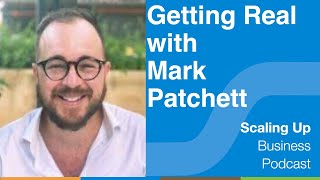
Mark Patchett runs Growth Shop, which gives e-commerce brands fractional access to a growth team and custom analytics tools. He scaled Nectar Sleep from $10M to $240M in 18 months and now targets companies at $3–5M ARR, aiming to push them toward $100–500M in 24–36 months. One portfolio brand went from under $1M to $68M in a year.
Chapters
Foreign.
Yes. Oh, we're talking about growth and with a particular focus on the intersection of your strategy and the technology that underlies it. We'll talk a little bit about direct consumer and so but we'll have some always some takeaway lessons for everyone. This is a Getting Real episode. Listen in as we talk to Mark Patchett. Mark, are you outside there today? Is that beautiful sky or is that a fake background?
No, no, it's not a living background. It's in Mykonos in Greece getting a little bit of sunshine.
Oh, yeah, in Mykonos in Greece.
Yeah, we're doing it. Yeah.
Living your best life.
Oh, I love that. Nice working. It's pumping. They open the borders to America and Canada and the place is pumping.
All right.
Yeah, they've allowed a couple of Australians in, so I got lucky.
Did you have to show vaccine or testing or what did you have to do?
You need to show vaccine card, negative ecr. They also allow if you've had Covid and you can show that you had it and you're now negative, they let you in as well. So the Greeks, it's a seasonal place, so they've got open arms. They like to be as flexible as they need to be to get the amount they're paying, the amount they're charging for bottles of water here. They needed as many people as they could.
All right, so let's talk then a little bit about your business. Before we get into all of it, let me remind folks that these Getting Real episodes are conversations with CEOs about the growth of their company, what they do and how they've done it, their successes, their failures, their proud moments, the things they w they could have a do over on. And, and I think we all learn from experience and talking with each other with all of it getting real. Episodes are sponsored by the entrepreneurs organizations of the Bay Area. And so these the Entrepreneur, or commonly known as E.O. e.O. Organization is a global organization of entrepreneurs. It's a member led a peer kind of an organization where entrepreneurs can grow and connect and and learn from each and have some fun. Fact I'm doing an event there in Greece in the spring on Santorini with a few hundred other EO members. So anyway, these the entrepreneurs organization, we got three chapters in the Bay Area where I'm located in the San Francisco Bay Area, but they're all over the world across the Bay Area. I've been involved with the organization since it was known back as yeo back over 21 years ago. So I'm very proud to be a member of that organization and president of one of the chapters. And I love having them as a partner for the show as well. But it's really a place to grow and connect with other people in a kind of a peer level to help each other develop your business, develop yourself, survive the process. And that's very much like our work@scalingcoach.com Anyway, if you'd like more information about the EO network, the EO organization, you'll go to eonetwork.org and you'll find all of like everything you can get more information you can apply to join all that kind of thing, EO Network. So I'll put it there, there, there it is on the little banner on the show and we'll put in the show notes as well. So like that. So we're talking today, as I said with Mark. Mark, welcome to show from lovely Mykonos. Mark's company is a really unique and interesting one. So I think it's worth a conversation. It's not easy. It's called the and they help especially direct to consumer companies grow. Sometimes they even invest, but they use a combination of strategy, work with technology tools and things like that. I'll let him tell you more about it, but I thought it was interesting and worth a conversation. Welcome again, Mark, to the show.
Good to be here.
So talk to us a little bit more, give us the elevator pitch for the company. Tell us kind of better than I did what it is that you do.
So the general gist of Grow Shop came from my decade ish experience working with E commerce brands, direct to consumer brands and I noticed a bit of a gap in the market. So a lot of the experience is working with small and medium sized businesses. So these are businesses that had a bit of traction or had a little bit more traction. So these are companies doing 3 to 5 million a year. And usually they'd got to that point because they actually found some kind of product market fit because they understood the customer, they understood the product. So they had experience usually before starting that company in that space where they're like, I know there's a better solution out there to do this. And in the US market, that alone can usually get you to the 3 to 5 million level. But they didn't have management structures, they didn't have large teams. They'd usually worked with, you know, a bunch of flaky agencies, burnt or got lucky. And then it was paired with my experience working with companies that had grown very quickly and often they'd had some Venture backing or ambitious growth goals. So some of them included Nectar Sleep, where I was VP of growth. They're working with some really smart guys like Scott, McLeod and Fay, where we took 10 million to 240 million, 18 months, really, really fast growth. So you saw both worlds and you saw the gap in the middle. So what I wanted to create for growth Shop was a organization that had the sophistication that you'd find in a very well established company, but give access to these businesses that were struggling to get from 3 to 5 to 15 to 50 million. And what was quite apparent is that you often didn't need a really expensive team, you only needed access to 25% of that team. But most of the agencies out there didn't understand how to actually grow these businesses. They might understand like something like Facebook or AdWords, but they didn't understand what it really took to grow these businesses. So we built that, which is almost like fractional access to a pre built world class team to help these businesses grow.
That's really cool. So you've got a combination of some advising work with some actual team members, with some technology pieces that you're using to get the companies through that.
Yeah, yeah, exactly man. Because the other pieces I saw doing this for a while is that you'd find these really good strategists, like, you know what, here's how you do it, man. This is what's going wrong. Here's how you get from A to B to C, good luck. And then you get these like complex growth plans and then they're like, how the fuck do I actually do this? So we, we have the strategy component, but then we've also got the execution side. So we've got a team built which is across London, Kiev in Ukraine and also Saigon, India, which actually helped doing that. And then on the technology front, there's two parts to it. So one part is that we know the tools that are really good and we built the blueprint. So instead of companies spending all their time talking to enterprise reps who are trying to rinse them on expensive contracts, we're like, look, this is what you're meant to pay. This is the tool you need. And we've already built the shit out to do it. And the other part of it is that there's still some gaps in the market where tools haven't been built. A big example of that is on the growth modeling front. So there's complex tools which use artificial intelligence and machine learning, which when you're going 3 to 5 million to the next level, you don't actually need stuff. So we've built a custom business intelligence platform that we plug into all the projects we're working on as well.
That's badass. So how long have you been doing this overall growth?
The E Commerce bits for a decade plus. Then Growth Shop launched a current version last January with our first deal there where we had a chunk of equity in the business, which was a good example actually. They had a really good product. They'd never cracked a million a year. We plugged in the gross shop model and we took them to 68 million last year. So really, really quick growth, which was nice, nice proof of concept that it worked. That's a nice thing to see.
Awesome. And then what's the exit on these companies? Do you just get out of them? Do you hold them? Do you sell them off? Do you have some private equity partner?
So the exit cadence target Exit cadence is taking on and then an exit at the 24 to 36 month period. So usually the businesses that we've talked to have got really simple cap tables. They usually wouldn't have taken on any institutional type of capital and the deals individually would be too small for private equity and the nature of the products usually wouldn't lend themselves to venture capital. So our aim is to take them to a level that is big enough to then be interesting for a private equity exit.
Interesting. So you started doing this. What was it that you've had some ups and downs along the way? What do you consider your lucky break?
Where did you. It's probably not one big one. It's probably a sequence of lots of aha types of moments. But if it was, if it was to be refined down into one, it would have been working with the amazing guys at Nectar Slate where I loved working with them because it was purely a performance focused business. So when we, when we entered that business into that market was going ahead, guys like Casper and Purple and Casper at the time had raised like 380 million bucks. And then the founder of this company were like look, we got like 10 million. We need to be bigger and we're not going to inject the kind of capital they've got. Work it out. We trust you guys. Just get it done. So we had a huge amount of executional freedom to test any of the ideas we had, but at scale. So that allowed us to develop the ideas we had and to build upon a lot of the things that already done. So I think it would be down.
To that time Interesting at this point then what have been the mistakes or the regrets. Where did you take a wrong turn? Stumble? Find yourself in a business you shouldn't be in. Tell us about some of those.
There's a few, but a lot of them were getting too heavy on opex. So it was neglecting the fact that you can build a business that has really aggressive growth goals. And you see revenue kicking up like this, you can naturally think that all right, that means we need a bigger team. It means we need management structures. So you start expanding at this rate where when revenue dips, stuck with this cash crunch and you're stuck with these really tricky cycles. Because we were essentially building companies that had venture backed growth but the kind of operational cost basis was much more like a real company or much more like a company that needs to be built on profit. So it was growing the team size too quickly, the expense of the technology stack too quickly for sure. And not foreseeing that. The beautiful revenue line which I love my Excel graphs and when they dip, you know, it's a painful thing. But not putting the business in a position where we foresee that things may slow temporarily for a bit. For sure.
Yeah. Not being flexible or nimble enough with that. If you would say, what would you say as a leader is your superpower at this point? What's the thing that you lean on or do that is either well known or maybe underappreciated?
There's a few bits there where I got good at picking projects that I really gave a shit about. And one of found things that I really cared about, the superpower would be finding other people and getting them really excited about working on the same project. But the key there was that it needs to be very honest. So you could temporarily use a superpower like that. But if it's not authentic, there's only so much it can do. So it was getting better at finding projects that were exciting and then doing a really good job at finding people and getting them excited about the same vision.
And what would you say is the challenge for the company right now? What are you struggling with? What are you needing to work on?
So there's, there's always a balance in time really. So there's a lot of great deals out there? Well, actually there's a lot of good deals out there which are like 65 to 75% a good fit. And it's difficult when you try to grow a business and you want to move extremely quickly saying no revenue or saying no to pretty good opportunities instead of just focusing on the fundamentals and then Waiting out to get, to get the real winners sure is a dangerous task.
So let me your audio work up for me a little bit there. You're saying the struggle is trusting yourself.
No, it's being patient enough when you know what the right deals are. So it's being patient enough to not rush into something that's like 70% as good as it should be. And even if it means immediate revenue and it means a cash for the company, just pacing it out, that's always a challenge because you know, you're looking at the P and L, you're looking for, you know, your portfolio growth that you got for the next couple years. But saying no, you got always knows what the right answer is. So I think the challenge is often listening to your gut more than potentially immediate P and L requirements.
In the, in our areas of people, strategy, execution, cash, what is your strongest?
Right now it would be the people. So we got, we've got a phenomenal team. Yeah, phenomenal people. Because they all, they all good.
You're able to hire people. People are working together.
Well, yeah, yeah, we, we've, we've done a good job at it. So if you take the Ukraine as an example, so Galena is our head of country there, she was a successful accelerator out of there and we plucked her from that company. And even before we were really hiring in Ukraine, we did a good job at investing in the local market. So anywhere where we're hiring people, we give a shit about that local market. So instead of just trying to take advantage of an outsourced market, we sponsor wind and technology there, we sponsor projector school, we sponsor the engineering schools out there. We've done a lot to front load work, which does cost a bit of money. But the back end is that you've got this reputation in the market, people give a shit about you. And anytime we do an event, we've got a bunch of CVs coming in and people wanting to work for the company because of what the company is instead of just trying to get in a paycheck. So we've done, we've done well at that.
So so far, I hear caring about your work, caring about your people giving a shit, in your words, as being kind of a central theme.
Yeah, yeah, completely. So the values we've got is smarter, faster, happier, which is something where all three need to be achieved in one go, which is how can you build amazing businesses really quickly while everyone in the company can confidently say it's the happiest they've ever been in a job which is tough when you've got these big growth goals and especially when you're in this instantly run, you know, happiness surveys and happiness check ins and we've got a phenomenal head of happiness in the company, Ria. And when we find ourselves in situations where people are getting a little bit burnt out, we have to slow down the overall growth of the business until we reverse engineer what the actual fundamental problems are. So it means structuring the company in a way where you can take a hit on immediate goals to know that in the long run it's going to pay off. That's something. That's quite so.
And then in those same areas, people, strategy, execution, cash, what do you feel like is the weaker of the areas.
Elements? In short terms, there's always, there's always little cash crunches when you, when you're pivoting out from particular deals. And we had like a lot of reliance on, on one deal where I probably should have pivoted to diversify income streams a little bit faster, probably three months faster. But it's, it's all caught up now. But that, that puts like a stress on me as the founder, which I insulate the team from as much as possible. But that's something I probably would have about three months ago. Well, three months.
You know, it's good on you for copying that. I would say that with regard to any challenge in the cash model, the cash area of the business. Most CEOs lie about that even in private conversations saying oh yeah, everything's fine. Oh yeah, we make a lot of money. Is such BS on such a regular basis like oh no, it's really up and down. Oh, it's seasonal, it's cyclical. We haven't figured out how to balance it yet. We make, we have big wins and then we have stuff and we worry about the in between and I carry the load of it. That's real kudos on you for actually copying to that. That's definitely some work to do to figure out how to fine tune that, how to smooth it and how to optimize it so that it's not stressful when you come out of something and then find yourself in the in between. That's really, really useful work to do there. And a lot of people don't talk about that. So.
Yeah, no, entirely man. And I think a big part of that was I, I ran, I, I created like an adaptation of the spot analysis on myself where I had, which is, which is, which is quite tough because you have to be really honest about it and I wrote it all out. And even, even when I'm like typing out my, my weaknesses, I'm like lying a bit about it. At first I was like, no, no, you have to call on yourself. And then the. But the tricky thing there was realizing what you or the outcome is what you're really good at and what you know about. And I love the vision and I love the inspiration of people, but I fucking suck at a lot of the operation stuff. I really do. I really do. So then the outcome of the strengths, weaknesses, opportunities, threats was what's something you just need to cop it and just get better at versus what's something where you really need to supplement it with someone? And when you're a younger business, it can be expensive to hire a really good head of operations. But then we found like a phenomenal CFO who took on a lot of those parts, who just intuitively could come in the business and say, do this, this, this, this. Look, I know you're really inspirational and I know you got big vision, but here's the reality check, you know what I mean? You might have a cash crunch if you don't consider this. So that works really well knowing which types of competencies I needed to supplement into the business.
Yeah, I hear you. Well done. So weaker on the operational side, soft on the cash model, but I hear a passion for the strategy and for the team in particular for you. And it sounds like there's a little bit of that over the company, which I think is interesting because the companies are always kind of an outgrowth or an amplification of us, right. As founders and leaders in the business.
How many people?
How many people total on your team, including your regular contractors, that kind of thing. Your extended team.
Now we've got 33 people across all the different destinations.
Yeah, it's pretty good sized. And then how many would you consider core leaders? Your. Your leadership team?
The leadership team would be. We've got heads off and then we've got a new management team that we're building out. So the management team is four people and then we've got another five heads of. Who feed a lot into the management.
Oh, nice. Right. So some kind of first level, next level group of folks and then. God, I lost my train of thought. I just. Wait, what did I want to ask you?
That's when you can drop one of the songs on. You're playing again a minute. The magic button saves the day.
Right? Oh, I got this great new mixer thing. Right. So we could. Oh yeah, that brings me that didn't help really. That sent me further out of my train of thought. Well, I was looking at your, the people and the state. Oh, I wanted to ask you, have you used a coach either for yourself or the team?
Yeah, a lot. A lot I've worked with. Who have you used?
How's it going?
It's really interesting. So I started, I started reading like self help books when I was like 11. I was always just fascinated by trying to understand my brain and, and the patterns. Then from there I started working with some interesting, like coaches, sorry, like psychology, psychologists and therapists. And I had an interesting psychologist when I was living in London. He was from Barcelona. So I'd fly over there and go and meet with this guy. And it was, it was the first experience I had where he had me do these like stupid little games, which is like, man, what does this even mean? It doesn't mean anything. And I draw it out and he'll be like, mark, you have terrible attention to detail. I was like, what? I'm like, bullshit, man. He goes, let me show you. He goes, your active listening skills are atrocious. And it was one of the ones which just like comes in hard. I was like, fuck. His name is Coach Solomon. So that was the first experience I'd have where someone was just kind of savage at ripping into my weaknesses, which I started building on. Then the next coach I had is a guy called Scott Jeffrey, who was profound. So I found him through an article that was shared on a WhatsApp group which is all about the decals for the pineal gland. So someone had told me about this at a party. I was like, man, I want to open up my third eye. How do I check out this shit? So then found this amazingly researched article from him. And then his service is called the CEO Sage, which was meant to be a combination between business and then personal growth and the intersection of both. Because if you talk to anyone that really cares about their business, you realize that they're one and the same. So I worked with him for a couple years, went on a really, really fascinating journey that transcended across business and health and psychology. And that was huge for me. And I worked with him while I was traveling the world and working with Nectar. And it was, it was one of the most important experiences I had in my, in my whole business career. And the same thing when you, you've got like a personal trainer, a big part of it is just that you actually do it and you're forced to have a cadence where you think about Your body or you think about your mind on a regular interval and then it's just amplified by the extra knowledge that you get from these people. So that was huge for me. I've lost your audio. Lost your audio. Can you hear me?
Okay, I bet I'm back.
Oh, you're back. You're back. Yeah.
Interesting. Okay. No, no, no. I have you. That's the time I've had. There's a glitch or a bug in the system, so it won't be optimal now, but let's try if I can switch.
Dead.
Interesting. And then again. Right, yeah, but it won't be interesting. There's a bug either with Chrome or with our video switcher, one of the two that just glitches out now. I've been trying to nail it down. Ah, so, okay. And what about coaches with the whole team or besides you?
We have had coaching from like a mentor perspective.
Yeah.
Some of the, you know, the CX people. But one of the things we're introducing that was really, really useful to me is that I've always used services like Clarity FM and services like Growth Mentor where I mentored on Growth Mentor. Plus I took advantage of the different mentors. So we're starting that well, which is really, really good. And I'd recommend anyone do it because something like Clarity, I used them the first time, was promoted to a CMO role from like a head marketing and I was like, shit, I've got no idea what the hell I'm doing. How can I learn from other CMO people? And then found this service and within like a 15 to a 30 minute conversation, you A, realize that you already know a lot and then B, you realize what you don't know and you can fill those gaps. We're going to start using Growth Mentor for the broader team as well, which is a really, really good service.
Yeah. And then talk to us about your goals. What do you really want to build with the business with Go Shop?
So there's a few different things. What we're, we're angling the whole business around is growing brands that focus on some kind of positive impact in the world. And a lot of that is, a lot of that is centralized around either the outcome that a product has for somebody or it's something to do with say like supply chain of a product. So a company we're talking with at the moment is releasing this phenomenal brand of beautifully designed sneakers, but they're all made from plant based products. Really, really cool. Oh, audio's dead, huh? Oh, you're back. Yeah. Which is super, super cool. You've got, you've got things built out of like cactus leather. I didn't like Mango pop, but they've made the product look beautiful and the construction quality really, really high, which is a good fit for what we do. Because you could create something like that and you have everything worked out. But then the go to market strategy, if you haven't got that right, this amazing vision that you got could fizzle or it could just flatline. So it's finding brands that have that type of composition in the strategy, that's what we really care about. But then also brands that have the capability or have the potential to be worth over 100 to 500 million each. So there's still mass market and it's taking something that has good away from the fringes. So it's not just like a hemp, hemp based sweater that you can buy at Joshua Tree, you know what I mean? Like, these are still things because ultimately mass, mass market is where you have mass impact. So it's taking, taking that type of product and expanding it to the world.
Yeah, some, some twigs and, and is groovy and all right, you can tuck a flower behind your ear and I love that. But that's, that's not going to displace or disrupt or necessarily alter the world. And that, that intersection of something that is a net positive with something that still has got some commercial potential, has got some scale and mass is, is, is a challenge. With our last company, we had a fashion jewelry brand and we wanted to make it eco and sustainable and fair trade and do all that kind of thing. And we worked on standards in the industry and we found that people liked it, but it wasn't the overall driver for the whole thing. So it made them feel better about the product, but it wasn't the reason they came for the product. And then so figuring out like, okay, we have to lead with color, with fashion. And then the other message of is you can wear this with a clear conscience, you can feel good about your purchase was a positive thing, but it wasn't the leading thing. And I think that's a big challenge, right? You, you are going to find people who are going to buy a sneaker because it's made out of. I didn't even know there was such a thing as cactus leather, but now I do. But so you will find people, but then you'll find other people will buy it and be like, oh my God, this has got these other attributes in it and they'll Be like, super excited about it. Right? It's renewable.
Yeah. And similar to how you're describing it, there's. There's the reason someone buys something, and then there's the reason they tell their friends they bought it, which I, I learned. I. I learned that the hard way. So one of my failed businesses was a water filtration company, and it was called Waranu Water, which was the worst name ever. So based in Australia, we wanted to have. We wanted to have a name that was Aboriginal. So I remember sitting in the library and the things like, the things like this thick. And I went through every page and I was like, how do I find an Aboriginal word that had anything to do with water? And it was, we're on it. Which was very hard working with their American counterparts because they were like, warrenaru, Warrenaru. And we, we spent like 70% of our capital on printing out beautiful, shiny labels until we. We realized that the plural, which is war honors, had one of our. This is the problem. You know, when you're creating a brand and you share it with your friends and they're like, do you realize that when you've written a plural of your brand, it spells war anus. Oh, God. We printed everything. I was like, it's just a disaster. But the, the hook behind the brand was inspired by the McCoskey shoe model, where we were donating one filter for everyone that we produced to a Cambodian orphanage that we'd partnered with. And we thought that would allow us to charge a premium of 20%. And it just didn't. Just didn't. Because people would be comparing like for like. And they're like, this thing, this sitting under my sink. You know what I mean? I can't walk around with a pair of Toms on and people can say, hey, what a good girl. Hi, what a great girl. Look what they stand for. People won't even see it. So we, we. We put way too much weight on that social hook or that social impact. We realize that there's, like multiple doors that you've got to go through, which is that you need to have a product that solves a problem. You need to be competitively priced if you want to go to mass market. And then if you have something additional on the back of that, then it's going to be a good hook, and it's actually going to be the referral driver that you've got on the back end. But if you don't pass those, Those first two doors, you're not going to pass, go.
Oh, I can so Relate. I've worked on my own brands and with others on the brand identity and naming and then the finding the URL and on and on and on. It's a real challenge to figure that out. And then what does it appeal? And then, and then you step back, you've created something and sometimes you go, oh, wait a minute, that's awkward. Like that doesn't mean anything. And you end up with a war anus.
Yeah, yeah, entirely. And the hard, the hard thing about it is it's something you just can't really nail with qualitative research either because there's, particularly if there's something with a social impact component. Until you go to market, the only thing that validates it is cold sales. Really, that's what I found because people always like, yeah, that really matters to me. You know, I mean like, does it matter enough for you to put your credit card details in, you know, put your money where your mouth is.
Well, startup and growth guru Guy Kawasaki talks about this a lot. He talks about their work at Al, Apple and that kind of thing. He's like, yeah, people tell you a lot of nonsense in, in marketing research. They're like, oh yeah, I really like that yellow one. That's really cool. And then you do that in a focus group or even in a, in a long survey. And then you're like, okay, thanks for coming in. And on your way out the door, we've got, you could pick one of these that you like and people go in and out of picking and they'll be like, oh, I, I. And they'll take the black one instead of the yellow one. And so that's a fascinating tale of people, what people say and what they do as being two different things. It looks like we've lost Mark and Mark's rejoining us and coming back on into the stream. My audio kicks in now. Your, your Internet.
It didn't like what I was saying. It's like, this guy's had enough, get him out of here.
Well, let me remind our listeners if you like conversations like this getting real, it's one of the hallmarks of our convers around eo, the Entrepreneurs organization. EO is a global network of entrepreneurs comprised of chapters operating in particular city areas around the world. And member leaders come together. It's a peer led organization, so people take on leadership. They help with each other, they bring in speakers, they meet in small forum groups, they do fun activities together, they travel to Greece together. They do all kinds of things, helping each other to deal with the issues of Growing a business from a holistic standpoint, right? The entrepreneur plus the business altogether, going through that path with the unique challenges and then. And you could also say kind of the afflictions of an entrepreneur, entrepreneur mindset, entrepreneur personality types are unusual, not normal. And so being in a room, in a venue, at an event with a lot of people like that, like yourself, can be really helpful as you navigate. There are three chapters in the Bay Area where I live. I'm president of one of them this year. If you'd like more information about EO or to check us out, go to eonetwork.org you can get more information or apply there to come join us. We'd love to, to talk to you and see if it's a fit. So let me, let's just talk about a couple of things. What do you think? So growing on this goal and, and continuing on this theme of giving a shit, things you care about, things that make a difference.
Right.
Well, look, my purpose is in life is making a difference. I want to, you know, when I'm dead and gone, I want people to gather around at my memorial and say, he was one of the good guys, he made a difference. He was a contribution. He gave of himself to me and to us. You know, that's what I want said. So my business, our purpose is helping leaders because that's who we work with. Build a better world. Or you, you could say, realize their visions, fulfill their visions for a better world and we don't end up working with people who want to take and who want to just grab whatever they can. But people who want to actually create and build things are the kind of people that we end up working with. Right. So there's a purpose alignment there. And I hear that, Dan, in the, in your work, there's doing something for something that matters with people we care about, for things that we care about, and doing it a way that we feel good about. What's next for you guys on your growth journey for growth shop?
It's just executing the roadmap. So we're opening up our New York office in Q4, which there's still nowhere quite like it. Like, it's amazing having the London office and amazingly in Ukraine, which it's becoming almost like a tech epicenter of all of Europe. But the division and drive that you find in the U.S. you know, whether it's, whether it's on the west coast or in New York City, there's nothing quite like it. So it's, it's building out our footprint in a similar way that we did in the new crowd over there and just supporting lots of great organizations and dialing in and just helping lots of people and getting in early. It's like what we were talking about before. When you talk to growth people that have done it before and talk to them really early, they can help you understand the economic viability of how you're positioning your product and how you're building things out. So we love having those different types of, of conversations quite early with people.
Well, big thanks to you, Mark. Thanks for coming on the show and joining us today. For our listeners, if you want more information about Mark or his company, you're going to find them at Growth Shop. Growth Shop is the place to go get more information about the company. I want to give thanks to our producers for getting our show ready and out the door each week. Our producer, Lucy Summers for scheduling, preparing the guest, promoting the shows, all that kind of thing. The folks at Podfly Productions who get a who clean up the audio mistakes when we have like this get it all sounding good and fantastic as we get it out onto the audio platforms away from the live stream. So thanks to those guys, Alby Burge, our audio producer, Ein Kadina, who writes up our show notes and Tim McGowan who proofreads them. Also big thanks to Vern Harnish, author and creator of the Scaling Up Framework and the original Rockefeller Habits, and one of my mentors. If you would like more information or anything about us, go to scalingcoach.com ScalingCoach.com is where you find us each week. You can drop us a note@scalingcoach.com Infocalingcoach.com is an email for us. You go to the website, you'll find everything there. But wherever you get this video, audio, whatever it is like it, subscribe to it. You'll get updates every week. Thanks again everyone for listening for watching. Keep Scaling Up. Talk to you again next time.
Bye bye.










