Getting Real with Mike Gunderson — Gunderson Direct
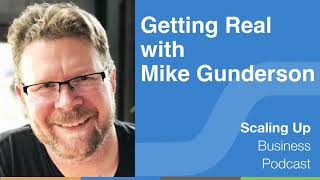
A podcast-style interview (Getting Real / Scaling Coach series) in which host Bill Gallagher interviews Mike Gunderson about his career and entrepreneurship. Gunderson recounts his background in art direction, entry into direct mail marketing, founding and scaling Gunderson Direct, early lucky breaks (notably Wells Fargo), regrets about late hiring, running a team through COVID, and a side venture Respond.Fast that integrates smart‑speaker response with direct mail. The episode mixes business lessons (hiring, niche focus, measurement) with personal anecdotes and hobbies.
Chapters
Foreign. So today's conversation, if you have ever thought maybe you're being a little timid about your business, waiting, hesitating, playing a little small, not all in, right? This entrepreneur we're talking to today is going to share some experience with you and talk about how he played it and what his regrets are and what he's doing now and that kind of thing. Hey everyone, my name is Bill Gallagher. I'm the scaling coach. I'm host of the show and you can find our episodes every week on leadership, on scaling up everything else@scalycoach.com or iTunes, Stitcher, Spotify, YouTube, wherever you get your podcast, video kinds of content, we've got all that there. These Getting Real episodes are conversations that we do with entrepreneurs studying and learning how their leadership has changed and evolved as they've grown the business over time. We look at the kinds of lucky breaks they've had and how they navigated breakdowns and surprises. We talk about the things that have frightened or surprised them or embarrassed them. We talk about regrets. We talk about where they're working and growing even today as leaders. So that's the world of the scaling up getting real shows. This episode in particular. These episodes in general are sponsored by the Bay Area Entrepreneur Organization chapters, known as eo. Our member led organization is the very best place for entrepreneurs to find peers to learn and grow and connect with. And I'm proud to have been a member of this organization for the last 20 years in different roles and through several different companies of my own. The EO members in the Bay Area are supported and connected to over 14,000 across 61 chapters on every continent. I guess not Antarctica, but it gives them access to a world of entrepreneurship and business that is really unparalleled. If you'd like to get more information or to apply for membership, just go to eonetwork.org all right, so listen in now as we talk with Mike Gunderson of Gunderson Direct about his journey, his experience, his business and everything that's going on. Welcome to the show, Mike.
Hey, Bill. I like our glasses affinity we got going on. It's very nice.
We're rocking Glass symmetry. Yeah, you know, it's funny, I have three different pair of glasses on there. That's an indication of my age. And I had laser on my eyes years ago. But the doctor and friend said, yeah, you're still going to need reading classes.
I had the same exact thing, man. In my mid-20s I went to go get Lasik thinking it was going to solve all My problems. And at about three to five years in, I was right back where I started.
Boom, there you're back. And now I notice I need certain ones to do things like this on my main computer in our episodes, that kind of thing. I need one pair of glasses for walking around the house. I have these others, and then, of course, I break them nonstop. They just are not built to the same degree that any of the others are. I should tell our listeners you're the founder of Gutterson Direct, a direct marketing firm that helps people with direct mail. And I heard that when I got to know you, and I'm like, wow, direct mail, that's cool. I did a lot of cool things with direct mail. And it's funny because I didn't really think about it still existing. And yet I go to my mailbox and there is still stuff there every day. Not as much as there once was. And, in fact, that's maybe a good thing. We're going to talk a little bit about that. He's also founder and CEO of a new business that I don't know squat about. Respond. Fast connecting through smart speakers. And I know so many people have those around the house. My wife won't let me turn on any Alexa or. Or hey, Google, or any of that kind of thing. I've got hey, Siri on the phone, but not on our smart speakers. And it's funny, a couple that have IT enabled, but yeah, I mean, that.
Technology is amazing to me, but I think people are dying for a reason to use the thing. It's on their counter. They use it for podcasts and music and egg timers. Right. But no real use in marketing and advertising. So excited to launch that last year, and we're starting to make a real go of it, which is nice.
I use. It's funny. I use the watch and my phone and the Siri voice prompts nonstop for all kinds of different things. And in some of the most public moments, they completely fail me. But actually, most of the time, like, 90 some percent of the time, I can go, hey, Google, count or hey, Siri Countdown. 20 minutes and see what'll happen. I did it live.
Okay, 20 minutes and counting.
Right?
Oh, I like English accent. Very nice.
Irish. Irish.
I just love how pissed we get at any of these voice assistants when they don't get our requests correct. I was joking with one person. Like, what if we just talked of regular humans? When they didn't hear us correctly, we just started yelling at them like we yell at our smart speaker. I think that'd be really fun. That's not what I said.
Oh, but here's where it fails me the most of the time in the car saying, hey, give me directions to 1720 Main street in San Mateo. It'll fail like every time with somebody else in the car trying to like, oh, they're like, oh, you're showing up. But if I'm like, hey, read me that text message or playback. Anyway, I think the idea of tying in marketing that way, especially response oriented things like. Anyway, we'll get into that. So that's cool. He's got a background in art direction, worked in the financial sector and he's been a president of Eosilicon Valley. He served on the board there for years and years and years. He couldn't quit because they had pictures of him. And so he's married, they have three kids and a Morgan three wheeler.
I love that car, man. That was my Covid crisis purchase, man. It was fantastic. Been wanting that car for many years and finally bit the bullet. And I tell you, I haven't had more fun and allows me to get away just for a few instances to. To work on it in the garage. So I get a little bit of alone time away from my lovely three kids. But every once in a while it is nice to get away for kids.
In the three wheeler in the Morgan.
My kids absolutely love it. My, my oldest daughter was very hesitant to go in it. I think it scattered. Looked a little bit too much like an air roller coaster. But my son just, he just really digs it. My youngest daughter, I mean, I think she really thinks she's on an amusement park ride. I mean, she really enjoys it. And then finally Ellie, my oldest, went for a ride recently and she really enjoyed herself, so.
So that does look like a pretty spirited drive.
My wife didn't have any idea. She. She was like, I don't get this thing. I took her for a ride, she came back and she looked at me, she looked over at me, she goes, okay, I get it, I get it. I know what you mean now. So that was pretty awesome.
Yes. I think it's important to have, especially now, these distractions, right? You gotta have some hobbies, some escapes, some fun and play and do something that lights you up. So driving through the hills. We both live near these beautiful hills of the Bay Area and there's lots of great lights.
I just did Red Red Road the other day. It was fantastic in that car. It was so much. And you're doing something weird too, man. What is this thing that you're on, like, some sort of hydrofoil or something. That's awesome.
So I have a couple hydrofoil surfboards, one for use with, like, paddling in or wind or like that, so you can hold a wing or you can paddle in with it. And then another one with an electric motor for the off season when there's no wind these days, except with a storm. So I've been riding that just to get out of the house, get wet.
Yeah, it looks fun, man. That looks like a blast.
You know, I heard a thing the other day, and I'm like, oh, I hadn't heard that. It's like a unicycle for the water.
There you go.
So because you balance on it. So the hydrofoil is under the water and is powered up and raising you. And then you're kind of. Your surfboard is propped on top of the little popsicle stick master.
So.
And then you kind of bounce, and that does it. But it's very kind of sensitive. So it's not like. Like in surfing, you. You really dig into that. That back heel, and you pivot around the turn or into the toe, and you. You pivot it right. You're. You're carving into the wave with this one. It's just little fine weight shifts and you're flipping around really fast. So it's. I'm still getting good at it.
That's cool, man. Right on.
Super fun. Needed something to get out. I've been a sailor, I've been a cyclist. I've been a skydiver, a skier, scuba pilot, all kinds of things. And I used to do a lot of sailing on the bay, but now with the COVID you can't really get in with a crew. The club I used to belong to shut down entirely.
Oh, man.
One of our former members has run a sailing club forever, and they were really shut down because of the way they operate. Just didn't work in this time with the circumstances, so it's been tough, and I needed to get out there, so. So there you go. All right, so we're going to talk about the background. I love, actually, this kind of accidental way you end up in entrepreneurship. You didn't. Did you, as a kid ever think that you'd be an entrepreneur?
You know, it's funny. I was going back through some old stuff in my. You know, I have a chest full of childhood stuff, and I did create. I think it was something like the beach club or something like that, where I had a little clubhouse in my backyard.
Wasn't that a Barbie Thing.
Yeah, it was kind of like that. But we had a whole Bill of Rights and we had initiation fees. And I remember we had six or seven kids from the neighborhood were part of the club. And I do remember that moment of wanting to put together those contracts and, and get people to get excited about joining something. And we had built a really cool. My father was in construction his whole life building kitchens and custom furniture. And he helped us build this really great two story clubhouse. And I do remember that instance, how cool it was to be the president of something, to own something, to run something. And although it didn't last very long, it was definitely a piece of. It was in me early on to want to build something from scratch, but it just took me a long time to pursue it.
So then you go out to school, you learn art direction, art design, that kind of thing, right?
That's right. I headed up to the Academy of Art University here in San Francisco. Got me out of Riverside County, Corona, California, which I love. But I was seeking to have kind of a big city life. And when I came to San Francisco for the first time visiting the school, I was just blown away by the beauty of it, by the buildings, kind of that, that whole kind of moving on up feel, you know, corporate life. And so, yeah, I came up there with, yeah, with very little money in my pocket, a small motorcycle, living in Hayward, California and making a go of it, finding a job before my money ran out and really bootstrapped my move up here. Found a job just in time to make my first print. And from that started school and have been here ever since. I absolutely love the Bay Area.
That's cool. So you get this job and maybe I had a couple. But you were working in financial services, art direction, as that company implodes. Talk about that transition, how you begin the business and that, that next year.
Yeah, well, I started with Providion Financial, which at the time was the largest, one of the largest credit card manufacturer, excuse me, credit card issuers in the, in the United States. And they drove, you know, a good portion of their business, most of their business through direct mail advertising. And I never thought I was working at Chevron before that down in the, the 555 headquarters on Market Street. And they had moved everybody out to, out to, what is it, Dublin or over there at Bishop Ranch. And I didn't want to make that move. I wanted to stay in San Francisco. I was living in Hayward. That was my East Bay experience. And I really wanted to continue having that life in San Francisco. And so I Found a job there at Providion Financial. Never thinking I'd be doing direct mail. Didn't really even know what direct mail was. But one of the things that I found fascinating about it was it was unlike doing CD covers or ads or even packaging design, there are real metrics that go to what happens when you change from this headline to that headline, or from a blue envelope to a yellow envelope or from a letter package to a postcard. And to be able to get that real time feedback and find out what exactly worked in that medium, it was just really exciting. And it actually gave worth to the design that we were doing. We weren't just doing it, it was going out in vaporware, we were doing it. And then we'd get a marketing manager come back and say, oh my God, I can't believe that that new package you guys created worked so well. We, we, you know, we got a, you know, 30% lift on, on the response rate or conversion rate. And that kind of stuff just got me super excited about designing for metrics and designing for, for something that had some sort of analysis behind it that we could actually measure our work on.
Love it. So I used to use a ton of direct mail in a couple of different companies, but the biggest one where I did the largest programs was when I was an exec at Sprint.
Yeah, absolutely.
And we had an agency out here that did a lot of stuff and we did things in multiple languages and all different kinds and types and we just had huge luck with it. That was a very active channel for us for a long time. And we did some very creative kind of cutting edge things that just blew people out of the water. Sometimes every now and then you get lucky with something, you're like, oh my God, that, like that found its target.
I love that.
Yeah. So we'll talk some other time about some of those that I can't share in a live stream. Maybe still not appropriate. Anyway. So you then go out on your own.
That's right.
You start freelancing for a while. Talk about that next year and when you finally realized you had a business and like that.
Yeah, well, all through working at Providion and even Chevron, I'd always maintain a little bit of a freelance career. I think it's always good to have some, some additional work that you're working on that's not directly towards either your clients. Yeah, exactly. And, and we encourage that here at Gunderson Direct too. You know, if you have a side hustle or if you want to design, we have, we have one woman, Tara, who has a very successful T shirt company. She does a lot of history in Alameda and she's just got fantastic designs that, that show up and she, she works on that on the side and, and eventually, you know, that could be big enough that she could say, see you later, Gunderson. I'm going to pursue this. And that would be the most exciting thing. Although she is very talented here at Gunderson Direct. And I just think that that keeps kind of your creative juices flowing. You know, if you're stuck doing credit cards. Yeah, I mean, there's a lot of excitement there. But if you're only doing credit cards to the, to the unbanked, eventually you start to, I feel like, lose a little bit of, of creativity and kind of fun in your job. And so I was doing a lot of freelance at the time, and then when we got let go, but when I got let go of providing financial, I was a little bit stuck. You know, I didn't really know what to do. I had to kind of do the unemployment dance and had to go online at the time I think was like 2002 or three or something like that. Go onto monster.com, make sure that I showed that I applied for the these positions. And I just felt like I was getting nowhere fast. I mean, just everything I sent off, I never got anything back. But at the time I did have a couple freelance gigs. And then at the same time, I got Let Go Video and unfortunately was kind of imploding at the time. And so a lot of executives got let go, a lot of marketing managers got let go. And fortunately for me, they ended up at other marketing positions at other financial institutions like Wells Fargo, Union bank and some other large institutions. And at that time they needed some help with their direct mail programs. And because I kept and built relationships internally at that corporate job and I made myself known, I think it was an opportunity then for them to reach back out to me and start working on their direct mail creative. And that's really how we built our business. And the first year was tough. I think I made about half of what my salary was. And luckily my wife, who's been very supportive for the entire career of mine, she helped support us that first year. And then the second year we made a little bit more than my salary. And it was like, well, this is cool. Plus, I just loved it. I loved owning every aspect of the income that came in. And then the third year was a banner year. It was like double. And then we were like, okay, we're onto something here. This is very cool. And then we. We stopped looking for jobs and we really doubled down on Gunderson Direct. And at that time, we offered everything, right. We offered websites, logos, direct mail. And then about six years or seven years later, we really put our focus on direct mail.
I want to highlight, I don't know how many listeners are later stage scaling up or early stage or even startup. I'm sure we have some in all categories, but there's a whole early stage. You're making money, you're maybe even supporting yourself. But you were still like, I'll just do anything. If it's in the ballpark, I'll try it. Like, pay me. You got some money, let's go. I'm pretty sure I could figure that out. There's definitely a phase of that. And then you start to figure out, oh, I actually suck at that and I'm good at that. And I muddled through that. The client's happy, but I know that that wasn't my best.
So true. It's such. You know, it's funny, I started a.
Right.
I started an online creative community that went nowhere fast, but I sure had a lot of fun developing it. And that's the problem half the time is I have a lot of fun building stuff, just not a lot of fun scaling stuff. So that's. That's a hard part. But it was called. Do you love this? The name of the website was designhor.com and it was essentially that, like, I will. I will work for money. I will work for creator. Anything you need, we will design and create for you. And anyways, that's what you feel like sometimes, especially when you're starting out like it's you. You have no options. It's just kind of like whatever comes in the door.
Well, you think about that today, like, you know, you want a business card or a logo or something like that. Now, admittedly, the kinds of logos that come out of some of these online shops where they're shopping the job to anyone who will take it overseas are pretty crap.
You know, some. Some have managed to get some derivative.
Little stick figures and why people and, you know, things like that. Come on.
I think it's. I think it's become very commoditized, unfortunately. And so you really need to start to stand out. And to be honest with you, making the change from the everything to everybody business model of Gunderson Design at the time to making the switch of Gunderson Direct about six years later and really focusing on Direct mail marketing is what excelled our business and what gave us a niche where we weren't sitting there chasing the cheese with everybody else doing everything. But hey, you need direct mail creative. Mike Gunderson is your guy and eventually Gunderson Direct is your team. And that has been very successful business model for us.
So talk to me about what was your first lucky break? Where did you get lucky?
Early on, I can remember the biggest break that we had was working. I was working for a company called Peach Direct, which was not much of a company, but I did a little bit of work there for them. And one of the folks that ended up over there was a guy that I knew, Pete Ruiz, who was always a really nice guy. He had introduced me to some, somebody over at Wells Fargo, a woman named Pam Reiner, and she was instrumental in getting me on board Wells Fargo and, and allowing me to do a few projects. Now look, she's working with big agencies. I'm a guy at a desk. And she gave me this, this chance to really kind of start to put together some creative for her. And we got along really great. We kind of were on the same page. She was very excited about bringing some new creative and she was very, she was, you know, very bullish about testing new packages at the time. And, and we just started doing a lot of work for her and her team in Wells Fargo Business Direct. And Wells Fargo, by the way, still client of ours. And we have maintained that relationship now for, gosh, almost, I would say almost 17 years. And I would say we're probably one of the longest standing agencies that Wells Fargo still can, continues to use, and we're proud of that. But, but that was the big break was when I called my dad up and I said, you'll never guess who I just had a meeting with. When you're a small time guy trying to make it, trying to get a business, trying to get a name for yourself at the time, by the way. And look, Wells Fargo's had its bumpy roads, but at the time Wells Fargo was pristine. I mean, just beautiful company. Everybody was striving to be Wells Fargo at the time, and they're making a turnaround too, you know, but, but at the time, it was the biggest name in financials. And at that very moment, when I called, my dad told me, hey, I just had this meeting with Wells Fargo, the sense of pride, I was beaming. It was just one of those moments. A big brand, one of the biggest brands in the world really at the time, is talking to Mike Anderson about helping them Develop some direct mail. Creative.
It's interesting how a brand can go up or down, get thrown under the bus and do that. Wells Fargo was a client of my old software business, and we built their first online banking application. Yeah. Back in the mid-90s. And so we built this online banking thing on AOL, and there was a great deal of concern at the time about security and that kind of thing. We did a lot of work on mitigating that. It wasn't as sophisticated as it is today, but it was the very beginning of that online banking thing. And the brand was unparalleled. Right. The heritage, especially from a design standpoint, the digital assets of a brand like Wells Fargo were so fun to work with. So, so fun. And then people change, that kind of thing. And our people went over to bank of America, we started working with them. That wasn't as good a relationship for that company, but it was really a good move. So then, talk about the biggest mistake. So what's a regret that you've had so far in growing this business?
The biggest regret that I've had, and it goes back to when I first made a million dollars in revenue. And a guy named Jamie Keating told me about EO, and I was right at about like, 850something. And he goes, hey, man, sounds like business is going really well. I used to meet with him, you know, from time to time. We raced, we rode motorcycles together. It was a lot of fun. And he said, hey, if you get to this million dollar mark, you got to really look at eo. And. And I didn't really know anything about it. And I said, okay, well, that sounds good. And I was still just a guy with a studio artist. Like, it was just me and one other person in my office. And I had some freelancers that I worked with, copywriters mainly, but I did everything. And. And one of the biggest things I learned from EO was really getting and building the confidence to build a team to hire people. And my biggest regret is just not knowing that. I mean, for so long. I mean, it's all around you. It's understandable why that would matter. But I had so much anxiety about, like, payroll tax and, you know, hiring and the right amount of money and making sure I get them paid, that I just. I steered away from it for many, many years. In fact, I didn't really start building the team here at Gunderson until about 10 years into my business. And. And what I found was once I built the team, I was like, it freed me up, right? I was I'm still like the main sales guy, but it freed me up to do more client meetings, it freed me up to take on more work. And some of the things that I learned through EO and really understanding business from a guy who doesn't have any business background is having that confidence, building that confidence to actually build out the team. And so my biggest regret was waiting that long. And even with Neo waiting another year before I really got started at hiring some folks and building up the team here at Gunderson Direct.
Let me underscore that a little bit and shout out some of the tools and things like that because it's such a good. You did such an elegant job of illustrating that. But we start off often with passion in some particular domain. Most of us aren't general business people, at least not in the beginning. Maybe later you become it, but early on you're like, you have an idea for a newspaper or you're thinking, I should build this app, or I am good at direct marketing. So you go down this path, but you don't know a squat about accounting, bookkeeping, chart of accounts, legal entities, setting up an office, IT hiring, firing, outsourcing, any of that stuff. And you have to figure out how to do that. And then as you start to grow, you have to figure out how to hire people, recruit them, engage them, manage them, manage projects, that kind of thing. You might not be good at any of that. And yet we do it and we muddle through it until we realize, no, there are a few things I'm actually good at and I should keep focusing on those. And so a great book in this subject is the E. Myth, right, which talks about the myth of that. Oh, entrepreneurship is a total cakewalk. And, you know, you open your door and hang out your shingle and you are making millions, right? You're living the high life, flying private jets and popping crystal, baby. So, right, that's. That's the life for you and me.
I think it's overrated, Crystal, to be honest with you.
Totally, totally wouldn't drink that. Give me the beer of champagnes.
That's right. I'll take that too, Andre.
So I, so I. There's that. And then we want to look at what are you actually good at. So for that we have our love exercise. We also use Gallup strengths to identify kind of what your core things are. You might use other tools as well and think about, well, who am I in this role? And then we start to peel it back in the scaling up world with functional and process accountability. We Start to figure out, oh, somebody else should handle ops and somebody should handle the accounting stuff and somebody else should handle the money movement, and yet another person should handle it or talent development or recruiting. And we start to divvy those kinds of things up. We hire people who are actually good at them. Then we start to get the team working together and maybe even all that's not you. And really you are R and D. In many cases, the founder starts to move into kind of the. The intellectual capital of the business. Or it could be like a lot of us, you started in sales, you were really good at getting the work, and they tried to find other people to do the work. Like, oh, crap, I sold something. I better find somebody to do this. But I think that's a really good call out there. There's a critical transition. And we had Mike Birtzel on last week, right. And they started this new business. It's now growing like gangbusters, but they're still actually touching. They're like packing boxes, designing.
They like.
I gotta get. Step back from that because that's the whole like, lid on the ability of this thing to 10x and. And really blow up.
Right. It's.
It could support them at this level.
But I'm impressed by their business too. You know, the tenacity of both them. Both Mike and Maureen, to me, are. Are just fantastic entrepreneurs and. And the fact that they keep at it and keep at it. But. Yeah, I agree. Yeah. Now's the time. Okay, how do we now scale? Let's get it out of the garage.
Because, you know your arches are going to fall and your hips are going to fail and before you know it.
That's right. We're not getting any younger. Right. We just talked about the glasses.
Oh, my God. So I always love doing things I can remember putting together, like sales kits and things kind of like that with our creative teams. And then we'd send them out to our telemarketing and our customer service and operators, that kind of thing, to try to whoop them up about things like these little meeting kit kinds of things. Very much like an a box thing. I love the concepting of them. The idea of actually filling them horrifies me. Oh, my God. Oh, that's.
Well, that's. That's how I feel about hiring people. You know, when we. One of my. One of my very early hires was a woman named Jackie, who's still with us today. She's fantastic. She started as an office manager here at Gunderson Direct, and she really found affinity for wanting to do more the HR role. And so she, she would go to seminars and she'd go to classes and she'd, she'd take on all these tasks and to now where like we couldn't do it without her. She handles all our payroll, she handles all of our hiring, all of our firing, all of our reviews. You know, she checks in with every employee. And so there's a lot of really good stuff with, with those types of positions. And I think so many entrepreneurs hire those positions a little bit too late, you know. And that stuff can, as you know, can just bog you down. Employee issues can bog you down. And so to have somebody really take the reins on that and make all your other employees feel heard is just super important to do that earlier than later, in my opinion.
So I want to talk about your biggest challenges so far, how you've been dealing in the last year and kind of what's cool now. But before we get to that, let me remind our listeners that our show is sponsored by the EO Bay Area Chapters. The Entrepreneurs Organization, commonly known as EO is a member led organization and it's really the best place for entrepreneurs to find peers to connect to learn and grow with people that share your pain points, your passion and your particular challenges. I've been a member of the organization for 20 years now. I first joined a long time ago and I've held different leadership roles locally and globally. And I've been in the org with multiple companies. I'm hooked on it. I've become a lifer. At this point. Our members are connected not only to each other in forum groups and across the chapters within their chapter, across chapters in the region, but then also connected across 61 chapters around the world comprising 14,000 members. And that just creates an access to a world of entrepreneurship. You're going to be in India, Great. Let's find you somebody to go have lunch with or talk about something in Jaipur. Maybe you're going to stop over in Hong Kong on the way. We've got people there that can connect and give you some tips on what to do or just get together and have a beer with you. You're going to stop through the Middle East. We've got chapters in all the major cities and fascinating entrepreneurs that would love to have a coffee or a tea with you. So connecting and finding those kinds of people in a like non promotional, peer led, member led organization is just fantastic. So I'm a huge booster of it, really proud to have them as a sponsor of these shows. If you'd like more information about EO or the chapters or to apply for membership, just go to eonetwork.org, and you'll find everything you need right there. So let's talk about how you've been dealing in the last year. What's been your biggest challenge so far in the business and how have you been dealing with the challenges of the last year?
Well, we were hit pretty hard, you know, so about half our business is working with companies that market to consumers and then about half our business are working with companies that market to businesses. So B2B SaaS, these kinds of companies and business to business services. And the issue we had really was when Covid hit and everybody was essentially a work at home worker at that point we, we had pretty much stopped mailing for some of those medium, small, medium sized businesses. So. And we are still on hold until we get everybody back into the workforce, get them back into those buildings and be able to get them to receive their pieces of mail promoting those different products and services. So that has been the most difficult or maybe the most impact we have felt through this crisis. Now I will say that my team has been resilient. We have brought on more B2C type companies in direct mail. We have managed to grow some of the current clients that we have on the books. And so business has been okay. I'm not going to sit here and say it's been great. You know, we had an unbelievable 2019, I mean record setting sales and service and, and we had a record setting first three months of 2020. I mean to where when you saw those numbers you're like, oh my God, we're going to crush the goals we just set for ourselves. And then the unknown came and we had no idea how impactful that was going to be. Luckily we had nice cash reserves from the year before. We were able to take advantage of ppp which was really great to help get us through really. April, May were really difficult months for us. And now I think what's the hardest thing is wanting to so hard is so, you know, we really want to get out of this Covid fog and it's just one of those things where we just don't have, it's just out of our control. We just, we can't, we, we can plan and we keep doing that and we keep pushing it out, but we can't make people get back in the office. Right. And so that's been. The biggest difficulty is making is, is trying to plan around something that we truly don't have any control over, especially 2021 now. We're very optimistic, obviously, coming out of this, and I feel like we're going to be flowing, you know, we're going to be flipped. We're going to have three bad months this year and maybe and hopefully nine great months. That's my hope for the business. And it has started strong. The year started very, very good for us. And so I'm hoping we can start to kind of clear from this fog and be able to get back to business as usual.
Well, you know, my mailbox is emptied during the lunch break today and it's got circulars and mailers for pavers for credit, offers for a lot of home renovation kinds of things, for sure. And when you think about it, like, oh, what are some things that we've done? And we've upgraded all of our outdoor spaces over the last year. We bought. Added a hot tub in the backyard. You know, we've done. We added a shed on the side. We moved one of the businesses home. And so we've done quite a bit of upgrading in things that we haven't done before either, because we moved out of. We used to have a couple offices and we exited all those entirely last year. And then we're spending more time outside and at home. So, you know, that's where you can go on vacation.
And vacation is your home. People are using the funds. Right. To do those improvements we had. We added solar, we added a brand new H vac system because it was like, well, we're here and might as well try to get this work done. Yeah.
And then also adding work from home suites. Right. So, like now I've got cameras and I've got lighting and better microphones and mixers and all kinds of fancier stuff here now, because where do I work? I work from here now instead of flying around.
I've seen that setup. It's very nice.
Right there. There you go. Here's the behind.
Yeah, it's great. I love that. I love that you've taken it, man. You've kind of really built something here. It's nice.
Yeah, it's been very, very good to me, as they say. So let's talk about where you're going now. Oh, actually, before we do that, let's a couple other fun ones. What is something that you could brag about and something you're grateful for.
Brag about? I'm going to brag about the fact that I've been able to run this business for the last nine months without shedding any employees. I've worked very, very hard to keep the team together, to build a management team that has been just unblocked, believably supportive. I think, you know, as being an entrepreneur, you second guess yourself all the time and. And you need some folks that you can lean on that like that kind of cheerlead you a little bit and tell you making the right decisions. And not every decision has been great. You know, we. We had to reduce some salary early on. We got everybody back up to full pay. We didn't get those lovely bonuses that we received in 2019 that were so fantastic for the team and they could count on it.
But.
But we were able to make it through, and we're continuing to make it through. And I said this late last year, I said, there is no better team right now in any point in time that I feel better about moving into 2021 with. I mean, we brought on some new employees that are perfect fit for the agency. And the employees that we have had have just been so resilient through all this, both in their personal and professional lives. And so I'll brag about being able to be that leader, hopefully for them where they don't have a ton of anxiety about losing their jobs and that they feel supported, even at home with Gunderson Direct.
And then what are you grateful for then?
Not to sound too cheesy, but I'm just grateful for the support of my family and my wife. My kids are huge direct mail fans. They run out to the mailbox they love when they get a piece of mail. I mean, it's really cool. And my team and my leadership team, they've been just so supportive during all this, and I'm grateful. It's really important, I think, to look back and. And take a moment and say, look, you're not going at this alone, and you have the support of friends and family and co workers around you, and. And I think it makes it all worth it. You know, this is a rough year. Last year was a rough year. This year hopefully will be a better year, but we'll make it through and we'll look back and be like, that was some crazy. But hopefully we're making it through stronger and more resilient and better processes for a switchover like this. By the way, as a byproduct of all this, I mean, we switched all of our stuff to Dropbox. We've switched all of our communication tools. We've reduced the amount of tools that we use. And although I do want everybody to come back in the Office. A lot of those switches have been so efficient for us that it has really just made us a better organization.
I'm grateful for my new flavor of sparkling water, Lacroix Tangerine Shout out. Could you send me a case or two? I'd be very grateful. This is the first can of this I've had. I'm digging it. Shameless plug. I could use a case for reals. I would not say no. Let's talk about a quirk. Do you have a quirk or something? Weird thing, bad habit that you'd be willing to share with us?
Yeah, I would say that my bad habit is aligned with many entrepreneurs that you and I both know. And that's just the shiny object syndrome, you know, I mean, it is so difficult sometimes to see. Exactly. I mean, I'm on this now. I'm looking at a 44 minute long episode here so far, and I'm, I'm itching to do something else, but, but this has been fantastic, Bill.
I, I, I, oh, you're ready to leave now?
But I would say that's my biggest problem. I do have this other company respond fast. I want, I want to, I want to put time into and I want to grow. But Gunderson Direct is having a moment and we want to make sure that we're giving that all the care it needs. And then just. And I've actually gotten some feedback from, from, from colleagues and employees that oftentimes will have a staff meeting or something and I'll be looking off to the right and it's clear that I'm not paying attention to anything. And so that's my biggest, my biggest quirk. And it's something I constantly have to work on every day. What do you got there? Shiny object.
The quarantine. I love it.
That's your shiny object right there.
All right, so talk about, let's finish with a couple of things. What are you working on now? What's your big goal? What's the big game right now? Where are you headed for?
Gunnison Direct. It's really to just start digging ourselves out of this, this whole. Luckily, it's not as deep as we all thought it was going to be and we're feeling very optimistic right now about how the year is going. I mean, it's really kicked off to be really fantastic. And then for respond fast, I just, I want to really get some traction on. We recently got news that technology, when you pair it with your direct mail efforts, can receive a 2% discount on postage. That's been really great. So if you are a big mailer, the SoFi's of the world, the one main financials of the world, by adding this to your mailer, you can receive a substantial discount on postage, which is a really great benefit of using the technology. Plus, you're bringing smart speakers to consumers with a new way to respond to that direct mail. So they can obviously respond via URL or phone number, but now they can respond right to their smart speaker, get the information they need, and hopefully transact on a new product or service. So we're excited about both those businesses and we have big goals for both of those this year. And so our big hope obviously is that we get this pandemic behind us and we start getting back focused on growing the business.
That's awesome. And then what, what do you feel like is going to be your challenge with that? Where, where do you feel like there might be some.
My challenge is the unknown, Bill. I mean, that's the biggest challenge right now is just the, the ebbs and flow of, of of pandemic news. Restaurants open, restaurants closed, businesses open, businesses closed. I mean is we service these businesses and we have an opportunity to service business businesses. That doesn't affect us as much. But could you imagine being a restaurant owner where they are investing in outdoor seating and they're investing in staff and they're trying to keep the doors open. They got the rent and they can't get people in those seats. That's really difficult. So I'm grateful for the fact that we can pick and choose the type of businesses we work with in order to, you know, try to avoid any major losses. And I think that that's the biggest challenge for us right now is just when is all this going to be behind us? People are saying, oh, a couple months. I heard one that would be August. It's hard to say. And so it's really difficult to really navigate your company for growth without really understanding how this pandemic's going to affect us moving forward.
For sure. It's funny, we send different things. We send training materials and reference materials and congratulations kinds of things to our clients all the time. And this year we've had to figure out what their home addresses are and whether they're actually working in the office like you are, or most of them work from home. Sometimes the CEO or a couple people come in the office, but the vast majority, so figuring out where to send things, where before, you know, if we were going to send a bunch of workbooks or whatever books, we'd send them all to the office. It'd be fine. Now we've got to think about the distribution of the team.
Well, culture is a challenge, you know, I mean, it's just challenging. We make the best of it with a daily standup staff meeting, some zoom events for the staff, and those are fun, but we miss each other, you know? We do.
Yeah. All right, so if you want more information on Mike and his company, gundersondirect.com is the place to go. Gunderson Direct. We'll put it in the crawl there. We'll put it in the show notes.
Awesome.
And then reminder, if you want information about EO, eonetwork.org is the place to get that blanket information for all the chapters, that kind of thing. Do all that, including our local chapters. I want to give a big shout out to Lucy Harnish, who's behind the scenes producing, scheduling, getting our guests prepped for the show and that kind of thing. If you like the show, please turn somebody else onto it. Press and make it viral as much as you can. The business show, but share it with somebody, let us know. And then of course, it really helps us if you give us a full review and rating on itunes. In particular, you can get our show on iTunes. Stitcher, Spotify, YouTube. Really any platform that you could think of where you get this kind of thing. If there isn't one, let us know. We'll make sure we it gets added to that as well. But we've got three shows a week now. A daily tip or a weekly tip that comes out on Tuesday with a little short nugget of something useful in the world of scaling up, a deep dive with one of our gurus and experts, and then a getting real conversation with a CEO about their journey of growing the business. So three a week now, we've got loads of great material for us, and the show has really grown over the last few years, which is outstanding. If you'd like to subscribe, you can do it in any of those places. Or if you go to scalingcoach.com, you subscribe. You can also search all the back catalog of episodes to find, like the downloads, the links, or that kind of thing to the things that we talk about, special offers from the guests and so on. So all that@scalingcoach.com Big shout out to Vern Harnish, author and creator of the Scaling Up Framework and founder of the eo, Then the Y organization. Our show is edited by Albert Burge at Podfly Productions, and our show notes are written up by Aaron Kadena and proofread by Tim McGowan. Thanks again everyone for listening and keep scaling up.










