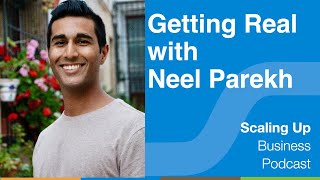
Neel Parekh built Made This, a remote cleaning company for vacation rentals and turnovers, while backpacking in 2013. He franchised it to scale faster, launched his first franchise in Denver at the end of 2020, and aims for roughly 20 franchises in three to five years. The company operates with a remote team across multiple countries and has never taken outside funding.
Questions this video answers
Around 2013 (began part-time, then went full-time).
Greater Los Angeles and the Bay Area (company-launched branch in Denver).
Denver, Colorado — launched at the end of 2020.
No — the business is bootstrapped; Neel stated he has not raised outside capital.
Sign approximately 20 franchisees within roughly a 3–5 year timeframe.
Chapters
Come on.
There it is. There we are. It takes a minute to go live, but once again, there we are. Live recording one of our Getting Real episodes. We're talking with an entrepreneur today about their journey about growing a new franchise business. We'll be talking with Neil Parek about made this franchise and hearing his story about how, why, what he created, how he's growing, what he's developing, like all that and more. Hi everyone, my name is Bill Gallagher, host of the Scaling Up Business podcast, your scaling coach, your friendly neighborhood scaling coach. You can find episodes like this and much more on scaling Up. Everything to do scaling up as well as the leadership to grow your business@scalingcoach.com downloads of all the tools and things that our guests talk about, show notes. We'll even send you a copy of the bestseller book Scaling up for free if you just pay the Shipping handling@scalingcoach.com so these getting Real episodes are where we take a deep dive with a leader about their experience and their growth over time developing the business. This episode is sponsored by the Bay Area Entrepreneurs Organization chapters. And so this group's known as eo. We call it EO most of the time. But EO is a member led organization for entrepreneurs is really the best place for entrepreneurs to connect, to learn, to grow, to develop their businesses with. And I've been involved in the organization for about 22 years now with several different companies and I've been involved as a member, as a member leader, locally, globally and so on. I'm the incoming president for our newest chapter in the Bay Area for the next year. So I'm proud to have them as a sponsor and partner in all of it. If you'd like to find out what does EO involved. Do you even qualify to join eo? Is it a fit for you? Are you, are you appropriate for the organization? You can find all that and more about the EO organization, the members, the Bay Area chapters or chapters in whatever city you happen to be living in. Just go to eonetwork.org eonetwork.org is the place to get more information. So listen in now as we talk with Neil Parek about growing his business and what that's been like and so on. So welcome to the show, Neil.
Thank you very much, Bill. Excited to be here.
Thanks. Where are you today?
I am in Los Angeles, not too far south from where you are. I guess you're up in the Bay Area, right? In Oakland?
Yeah, we have a new location in Los Angeles and we've been working with some new clients in the LA area recently. So that's super cool.
Yeah.
So it's nice for you to reach out and we're going to get into all that and more. I think it'd be great if you talk a little bit about your inspiration, the reason that you started the business in the first place.
Yeah, sure. And I think that's always a great starting point for any entrepreneur. That's like the first question I want to know is why? Why are you doing this crazy hard thing to begin with? Many people it's for passion of the product and for me, I think it might be a little bit different. So I guess to start off with, I run a company called Made this now Made this franchise, which is a fully remote cleaning business focused on a couple niches, one just residential cleaning and the other one is vacation rentals, like in between Airbnb turnovers. So we're actually the first franchise right now, which is. We're the first and only franchise focusing on vacation rental turnovers.
There's a lot of people doing this and a lot of people who have Airbnb and vrbo and etc. But you're the first one doing a franchise cleaning space to turn those things over, which is brilliant because it's growing faster than everything, right?
More.
More overnight stay inventory there than with anything else. And it has really been a big deal during the pandemic.
It is crazy how quickly it's grown and it makes sense. Like you look at the market cap of Airbnb, it's already more than Marriott until it's been combined. Like, this is just the way the world is going now. Like, if my, my. My friends and I say, hey, we're going to go on a trip. The question is, who's booking the Airbnb, who's booking the engagement to home? It's never a hotel. So anyways, it's. It's just selling pickaxes to the gold miners. That's kind of how we think about it, right? We. We don't get involved in it, but we are providing the cleaning services with the cleaners around that. So, yeah, that, that's a lot of the niche and such a highly fragmented market, I think, in my opinion, ripe for franchising. So that's what we dove into last year. But for your question about how did I get started, or more importantly, why I got started. Yeah, so I worked in venture capital for a few years prior to doing this. For about four years, I worked at a private equity company. We were doing a lot of Tech investing, it was great. I learned a ton. I actually really, really liked the people I was working with. It was a lot of hours, but it wasn't like New York finance where it's crazy, but I just wanted to. I felt like I kind of didn't really fit in in the finance world, honestly. And I always knew I wanted to quit and travel. At some point I got the travel bug and I said, hey, I'm going to go backpack for a year, then I'll figure it out. Maybe I'll go work for a tech company, maybe we'll come back to finance, who knows? So I thought, hey, it'd be great to have some sort of side hustle while I'm traveling. And the secondary reason was also my parents used to have video rental stores. Do you remember those bills? Like the old blockbusters?
Yeah, I'm old enough to remember those.
Every Friday night or Saturday night is just crazy. It's like a party in those things. But they had them all the way until 2017. So obviously by that point they weren't doing as well financially. So I wanted to have something which they could work on remotely from home as well. So two impetuses. One, I wanted to quit and travel, have some sort of side hustle to do while traveling. And the other part is having something that can support my parents financially and allow them to maybe work from home. All that lends itself to a remote business model, which is not what I started out doing. Right. But eventually, through lots of trial and error with many, many different things, that's what I came to. But those are the two whys.
Yeah, it's interesting. So you're essentially organizing, providing and organizing middleman, standardizing place in between the person providing the cleaning service and the people who need the cleaning. Right?
Exactly, exactly. In a more curated, customized fashion. Because the reality with vacation rental turnovers is you can't, you can't do an Uber automation with it. Right. It's too heavily relying on reviews. It's, it's, you know, you can't never not show up to a cleaning because the ratings go away, you're gonna lose the five thousand dollar reservation. It needs to be curated. And so that way. Many people have tried to approach the industry with an Uber type model. In my opinion, it doesn't work. It's not that type of industry. So it's a very highly curated service and we have guarantees around like never no show guarantee. Right. Or at least on the residential end is free re cleans, you know, satisfaction guarantee. So the guarantees provide assurances and on our ends, we just do everything we can to make sure the people in the system are the people who could execute the cleaning for the clients the best. And just exactly like you said, being the middleman for that and having this very curated platform.
So first you develop this service, this platform, and now you're franchising that, taking that structure system that you've developed and then offering that to others.
Exactly, exactly. Yeah.
So how many markets are you now covering? Like what, like how widespread is the business at this point?
So yeah, we, we are currently in all of greater Los Angeles, all of the Bay Area and we launched our first branches location at the end of 2020 when we got launched, that is in Denver, Denver, Colorado and hopefully this year a couple more locations ensuring things are really good and then just kind of grow from there.
So two cities and now a franchise. And now you're starting to grow the franchise piece now.
Exactly, exactly.
Really good. So tell me about. Well, let's talk about this maybe from a different angle. I want to hear about the, the lucky breaks that you've had, that kind of thing. But why don't you start with how did you learn about franchising? What work doesn't work? How have you developed this franchise? Because that's a unique thing in itself.
The franchise that is a different world. Like that is not where you could just start a company and say, great, I'm going to franchise it and do it. Because it's a different business where you're not selling cleaning products anymore or cleaning or cleaners or solutions like that. What you're doing is you're selling a business. You're selling someone five years of their life and a bunch of money for them to open up their own. Made this franchise. Right. So completely different sales cycle. Everything is completely different. But Bill, your question was how did I create the systems and set up?
Well, how did you learn about that? How did you decide how to design yours? What's studying or prep did you do to get into the franchise world?
Working with a lot of coaches. Honestly in terms of how to expand, there's a couple options in front of me as of a couple years ago, which was, hey, do I just keep growing made this in California as it is?
Yeah.
Automate it, systemize it, get a manager into place and go do something else. Do I try to expand by myself in, in different places? And there was a lot of demand for this type of service in many other cities. So we could have expanded ourselves. And when talking about with advisors, an idea came up Saying, hey, why don't you do franchising? Right? Where you could sell the blueprint of what you're doing and you could scale more rapidly than if you're doing it yourself. And at first I didn't like it just because, I don't know, franchising, to me it sounds so old school. My parents do. And now you have these cool digital online type of businesses. No one does franchising. So at first I kind of shunned it. But then when I was looking into it more, I thought, well, the competition is a lot of very old school cleaning companies. I like to come at it in a new way, like fully remote, you know, focused on like someone once called us the franchise for millennials. I like that. I think that's kind of cool. It's just like the new face of franchising in the clean world. So, you know, talking with the viruses and decided, hey, let's go for it. Let's see how this actually can work and scale from there. And franchising is a beast, Bill. Like, it's a year of setting up. You have to go through all these licenses agreements. You have to get what's called FDD, like this 200 page legal document written up like it's kind of wild. But as you know, Bill, with many businesses, that's nice barrier to entry in some capacity. So.
So reminder to our listeners and maybe new to you, that a couple of guys who both learned from scaling up and and then added to scaling up are the founders and leaders of what's now O2E brands. But the biggest one that you'll know is 1-800-got- junk. And Brian Scudamore was a big proponent of many parts of the world of scaling up, has had a scaling up coach and so on. And his old partner, second in command, Cameron Herold, who's now a guru in the world, especially for. Yeah, so and. And Cameron has both learned from and then contributed to the world of scaling up over time. So we know a lot about France and we have others in other sectors as well. We definitely see it as a very viable business model in some cases. Not every case, right?
Yeah, not. Not every case, absolutely. I think it lent itself very well to local services, for example, as opposed to maybe physical products. However, the cool part about franchising is that it forces you to be able to scale. Right. Because I have to teach my franchisees how to do this in a way which is replicable versus if it was just me, I kind of know what I'm doing. I don't need to systemize it. I just let people know, hey, this is what you do. So I think that's why a lot of franchises, honestly were able to grow so fast is owners, you have to systemize. You have to create an OPS manual. Legally, you need to give them OPS manual. Legally, you need to give them X, Y and Z, meaning you're going to get all your ducks in a row quicker than you normally would have. And that's what happened in our case is, oh, shoot, we have one franchise, we have two franchises. Now I have to go back and redo what we're doing over and over and over versus I don't think I ever would have done that if I didn't really need to.
Yeah, really good. So what's been your lucky break so far?
I think most people have a ton of lucky breaks. Mine was probably getting into the vacation rental space at the right time. Huh? Right. 2013 is when we started and I did it a couple years part time before going full time. And then I booked a one way flight to South America and I was gone for five years just working on this, but just traveling. But the cool part is like, right before I left is right when people started to really hone in on the Airbnb. I'll call it Airbnb. Any vacation rental niche where they're in their house hacking back in the day, you sign a lease, then you figure out Airbnb could make a bunch of money and then you just get a bunch of leases. So that was the initial stages of the Airbnb boom. Then people started buying real estate, making business models out of it, and now it's a fully developed industry. But the time, like in la, at least, we were the only fish who would be able to take on Airbnb cleanings just because we immediately came across at the time, we'd have to reinvent everything. We just said, oh, cool, we're going to focus on this niche and dove into it, right? So we were the only guys on the block doing it.
If you look at the evolution, right, of Airbnb in the beginning, right, We've got people are kind of like, oh, hey, you could crash on my couch or my spare bedroom and that kind of thing. Like really sharing, connected kind of thing. People like me, especially olds, are like, ugh, I don't want to interact with anyone. I just want my own space. And yeah, would gravitate to the hotel, but very quickly that became whole houses, separate units, things like that. And then really professional Airbnb places where I'M actually going to put furniture and linens and things like that in this to make this a dedicated Airbnb, not some old sheets that I happen to have.
Yeah, absolutely. And it's so funny, Bill, to look at the evolution of how. I was thinking about this recently in this slight tangent, how big tech companies will like, cannibalize the old industry and then end up doing the exact same thing again. And for example, in Airbnb's case, Airbnb took over hotel shut down. Now a lot of companies are buying hotels and converting them to Airbnbs. Like, wait a second, this is the exact same thing, just under a different brand. And I got an Uber the other day and I thought it was so funny because the Uber pulled up and you remember the taxis, they have like the ad on the top where it's like this triangular thing which goes on top of the taxi. Yes. Now the Ubers have that.
Yeah.
So it's just a full reversal. Amazon's opening up physical bookstores again. It's just like, what is going on, These tech companies.
And with COVID they've put in like some of them plastic barriers between the front seat of the back seat, like cab, and some of them sick of like drunk partiers in the back will put vinyl furniture, our vinyl seat covers, right. So before you know it, it's just like an old gross yellow New York cab where the back plastic seat is dirty and you've got a big plastic barrier between you and the other, and there's a ad piece on the top.
Of it and be a big yellow car. It's. It's so funny how it's gone all in a full circle, including Airbnb. Like some places that we send cleaners to, it's full on hotels, right? They call them residential homes, they call them Airbnbs, but they just took over hotel, converted it. Same thing. The only thing they're doing is they're listing on Airbnb, vrbo, booking.com, all those websites.
So my wife has always liked Airbnbs from, from fairly early on because she would like to rent like a home or a whole apartment. She wants the whole kitchen, a family room, the gathering thing, and. And renting a whole suite or a corner. Connected rooms in a hotel can start to get prohibitive really quickly to get the equivalent. So she was for like apartment rentals and we would go to New York. We used to go to New York a whole bunch of times a year and for business and we would have an apartment for a week or Two. And there were lots of services that would rent furnished apartments. I can remember going to them and you'd like arrive at one and like the regular occupant resident would be like hurriedly grabbing their things out and tidying around. I just felt like, ew, I'm now in somebody else's space. Not like that professional, clean, clean commercial space that I'm walking into. And so that was a little bit off it. And that actually was my impediment often to the Airbnb. I wanted to arrive and be greeted at a front desk to say, oh, we've got you a little bit better room. And then a room that maybe wasn't the coolest always, but like, was consistent and professional, that kind of thing. And every now and then I'd get an Airbnb and be like, oh, I can't seem to find any hotel rooms in Palo Alto next week, but. And I need a place for a night or two. And so I'd get somebody's Airbnb and then I'd go in and be like, oh, this is like their weird, like kids room and they've got some sheets on the bed and what the heck am I doing?
Those are the early days of it. Right now it's all just professional. Right. And honestly, at least.
Right. And you could tell the ones that are and that aren't.
Yeah. And they're priced accordingly too.
Right.
And that's kind of how it is. But it's, it's interesting because of COVID it's kind of sped up the need, in my opinion, for very professional grade cleaners. Because on your profile you want to say, I didn't just clean this half, half half assed cleaning of this place. I just. We actually got a professional cleaner to do this. You want to market that. You want to say they use disinfectant products. You want to, you want to do all these different things. So I think it's really sped up the need. In addition to one, having your own space, like, who wants to go stay in a hotel with 100 different people during COVID times rather than your own Airbnb? And two, having a professional cleaning service. It's just sped up a lot of this industry overall.
Yes. And in the last year in particular, people want to know that you wipe down the remote controls and the phone with like something. Right. That I'm not touching, something that somebody else gross. Was touching. Who knows what the heck they have and that kind of thing. Level. There's another level of clean. In fact, one of the Regular places we've been staying at puts little seals on the door like, this was cleaned on this date. So you're like, nobody's been in there and don't clean as much, but you do sort of feel like, okay, the funk in there is my funk.
Yeah, exactly. Exactly. There's a premium price you pay just for that comfort, so that's okay.
Right. So talk about then, if that's where you've gotten lucky with your right timing and that insight. What do you feel like is your biggest mistake so far? What do you wish you could do over?
I wish I would, Kelly. Try to go a little bit bigger earlier on. Try to put more risk, maybe hire people quicker, early on, fire people. I mean, that's always the biggest mistake, right? Is you don't fire people quick enough. But I think on mine is, I think I went a little bit more of a conservative approach and grown modestly every single year instead of just saying, let me just go gangbusters and see what happens. And, you know, I started it when I was 24. Right. That was. That was when I first started it. And I think I could have afforded to take a lot more risk then, and I didn't. I just went with a more conservative approach. So I think I would have said, hey, just try to go bigger, you know, see what happens. Worst case, it doesn't work, and that's okay. He could recover. So not. Not trying to go big enough as quick as I think I could have. Yeah.
As you get older, right. And you have more people depending on you for their livelihood, and you become more settled, the room to make a mistake, start over, have something go bad, like your tolerance for that drops.
It really does.
It does misfire. Now I've got all this invested in my life, but I'm just living in an apartment. I got nothing. I could walk away from this if it goes belly up. That's a great time to experiment, to do big. Although I am reminded. So I had a development company, tech development company in the 90s, and then we started a SaaS business, an early business on top of that. And I met with. I was on, like, a panel about raising money and pulling the team together and doing that kind of thing just before the whole market went belly up in 2001. And somebody asked me, well, what if you'd had $5 million instead of $1 million to start the business? And I was like, I would have made five times bigger, faster of the same mistakes.
Honestly, that is true as well. Right. It's gonna take you One way or.
Another, I just done him with like better furniture. And.
I would probably say, like, hey, I, I'm glad I never took out debt. It's completely bootstrapped. I haven't raised capital. No, no. Capital bootstrap from day one. Yep.
Yeah.
And you know, having worked in the venture capital, private equity world, I'm like, I'd rather just bootstrap it. It seems it's stressful to be involved with private equity in some capacity. It just depends on your goals. Of course there's many pros of it, but, you know, I'm not telling anyone, hey, go, go get a bunch of debt. And if it goes bad, it's okay. You're young and you can take it. Because you know that could also sit you back many years as well. But might as well at least try to go big into your full potential. I think that's, that's what I, I did not do.
Taking money from smart people who know your world, who can bring connections and entree and things like that, taking smart money on the equity side can make a big difference. Taking dumb money who wants to give you stupid ideas about things can be really frustrating. We actually, we just did a show recently about vivid vision with someone who helped craft that. And if you have a loose idea but just a demo or an early stage company and then you raise a bunch of money, you know, people are gonna pull your idea in lots of different directions that maybe aren't useful and don't fit your vision. Debt can actually be right now because money is so cheap, if you can figure out how to use it well, incredibly cheap and easy way to fund growth of the business. And as you grow, right, you need to build things out, you need to do trainings, you need to sell franchises, you'll need to service the initial ones and getting them started and honing whatever you created initially will undoubtedly need some revision, right? So there's room for that. And it's maybe not your time yet to do it, but you may change your mind.
I agree. Especially with franchising, right? If you're starting a small local services business, do you really need to raise money? Probably not. However, franchising, doing things big. If you're starting a software company and you need a lot of development, you have a big idea for online marketplace. You know, there's smart money which could help you go much further, much faster.
Systems, operations, manual, playbooks, checklists, software tools, franchise agreements, all of that kind of stuff. Like if you, you'd just do that faster if you had a Team building it if you were funded differently with people who knew that.
Very true. And think about it this way, is the time, the time value of what? Like how much time would I have to spend to develop that? Let's say a year right now if I had money from some person I've raised money from and I could speed that up and do that in three months. Instead all of a sudden that nine more months to sell franchise. Now you could probably argue that within nine months I could sell X amount of franchises. It completely pays off the money I've raised immediately just by doing things faster. So I would agree. I think there's a, there's a, there's a proper way to think about it as well. Just, you know, that's like the pitch I also give with franchising is look, yeah, you can figure this out yourself. It's not rocket science. You're not, we're not doing anything crazy. However, you're going to lose a year making the same mistakes I did. At least a year, maybe two years. Now look at how much revenue we're doing right now. And if I had one or two years more of that revenue.
Right, right, right.
Like it pays itself back immediately. So definitely agree.
What kind of advisory board or folks do you have keeping you sharp and giving you feedback on your moves and in growing the business?
Yeah, I am always part of mastermind groups and coaching. It's just so invaluable just to make you avoid any mistakes. So I'm part of a mastermind group and a coaching program just for local businesses, like local services businesses, which is great because I could develop my corporate offices and take those changes and move it over to the franchise locations too. Also part of a mastermind group and coaching program for franchising. Just people running franchise businesses in general. So any business I start, anything I do, even physical activity and gym workouts, that'd be with coaching or groups. It's just. It makes you go so much faster, I think. So that's using my sounding board. Before I do anything I need to any big changes, I'd always run it by the group. Many times there's other business owners who've already gone through that problem who say this is I did and didn't work. More often than not, I don't have like a crazy aha moment. But more it's like, hey, don't do that. And I'm just like, whew, I just saved myself a bunch of time and trial and error by having someone tell me they've already done it and it doesn't work. So that's been the biggest benefit.
And any franchise specific advisors now working with you?
Yeah, yeah. I'm part of a franchise mastermind group more than just individual coaching, so.
Great. So you're getting both some peers as well as some people will be down the road.
Exactly, exactly.
What's a brag? Right. What have you, what's been a smooth move you've done? What do you feel proud of?
That's such an awkward question, isn't it, Bill? It's like, well, 100%. I would say my, my humble brag would be that because I did this remotely, I was able to travel the world for five years while building this business. Everything is completely remote. My team is across seven or eight different countries right now. I was personally living in, you know, traveling through, living in 30 countries in the last five years. I think it's really cool. I mean, this is a, a very recent day and age where you could have a local services business and still do it remote. Like it's only happened right now because of the way technology has gone, because of the time we're in, because of the Internet speed and of the countries. So I think I was able to jump on that. I'll call it bandwagon or whatever it is pretty early on. I think it's all, you know, I ended up meeting a lot of other entrepreneurs who are doing something similar, building the network, international network of people, which has honestly helped grow my business so much faster. Right. Because I'm connecting with so many unique types of people just from being in that location, independent entrepreneur type of community. I think it's helped me out a lot personally. But that'd be my humble brag is, hey, I've traveled a lot of countries while working full time, while trying to build a franchise business. And I thought, I think it's kind of cool.
Okay, quick one then. Where was it really hard to work and where was it really easy to work.
Bill? There's so many places where I was like, I will pay $1,000 for good wi fi right now. I don't care, just give me good WI fi. It's like the most first world problem possible, but so many places. I was so pissed off at the speed of the WI fi.
Yeah.
So now I learned after a couple years of traveling, I will only go to places which have access to like a co working space at least. And if they don't have access to that, then, you know, make a home base in that place close by and just do day trips. Somewhere else if I need to. But a lot of Central America was where I was going initially because it was good for time zones and that was kind of hard, to be honest, with the Internet speed. Not the great in the middle of Guatemala, you know, you're just somewhere in the mountains. You're like, all right, I'm just trying to get signal here, I just need to send this invoice over. Yeah. So I end up getting like hot spots which you never fully work out well. So, you know, there's tricks to get around it. It's not nearly as hard as you would think, but I did get prevented from going to places I would have loved to go to. Middle of the Amazon forest. I guarantee there's no WI fi over there, so, you know, just can't do things like that. But a lot of, a lot of places where it's remote, where some of the coolest, coolest experiences would happen, you might not be able to go to just because the WI fi situation.
So where did you find good WI fi?
Everywhere around Europe, of course. Thailand is actually like kind of one of the meccas for location independent entrepreneurs, like digital nomads, as they call them. So there's always really good WI fi there, surprisingly. You know, honestly, if you stay in any big cities and you're going to find co working spaces, co living spaces, it's going to be there. And so, I mean, the whole world's so dependent on WI fi now that as long as you're not anywhere completely remote, you're gonna be fine. I was in the middle of Africa and I was getting WI fi. So it's pretty good now.
Interesting. Interesting. Yeah, yeah, I think, you know, I can remember working in the, before the web. In the 90s the web existed, but it was not a force yet and, but still using different online services. And so I would get my laptop out and I would work on something and then I would go find like the fax machine in the hotel and. Or I'd open the wall jack in my room and I'd connect banana clips to the phone and then I dial into the phone to the dial in usually a Telenet access network, which is an old packet switch network, I don't even know if it exists today, but. And we would dial and then you connect to something, a CompuServe, a Dow Jones, a AOL, a Prodigy, like some other thing through Telenet. And then you'd, you'd exchange your email and do that kind of thing and you'd get your files which are Pretty tight bandwidth and then you'd go work on that kind of thing. And I remember I was working on the beach at a cafe in Bali and they wouldn't have called it a co working place. I think it was Sanur and some probably 95 or 94, something like that. Right. Early days of stuff and still not why it's still a lot of dial up Internets in those days. And somebody comes, oh mate, you got to put away your computer like it's, it's time to play now. And. And I said, no, no, no, I'm working here. This is your vacation. This is my life. And, and I forget he said something like, screw you, you know.
Yeah.
And then he moved on. But it was really challenging in those days to get that. In fact, I wrote a whole book that we sold that didn't end up getting published called Digital Nomad. But it was about how to work and every place and you really like, you had to figure out how to dial up and how to connect in and you had to do some crazy things to get your connection.
Yeah, I am thoroughly impressed you're able to do that in Bali in the 90s. Like even now some places in Bali it's hard and you were doing that in the 90s. Geez, yeah.
But you wear around, you know, Cuda, Sanur, Nusa, Dua, Ubud, Seminyak, anywhere in Bali now and even across Javan you're going to find places that are co working cafes, right. They used to be a cafe, they added WI fi. There's no Internet behind it.
Hey, what's kind of cool, Bill, is like in many developing countries, oftentimes what happens is they just skip one generation of technology and go straight to the next. For example, in Africa, you know, they never got into fully credit cards, right. But now they're already way ahead of the US in terms of mobile banking because that's just what they just transitioned over there. So a lot, a lot of places, let's say in Africa maybe don't have great WI fi, but they have fantastic data and you're able to do it that way through data.
Mobile GSM I think is one of the things that leapfrogged a lot where countries couldn't wire that last mile like we have with phones in Western first world countries, they went straight to wireless and that's why mobile or cellular technologies have just been such an important force around the world. Right.
I'm wondering, you know, all these phone lines which we'll see on the street here, the big landlines like, is the US just going to look so antiquated in 30 years compared to developing countries just because we have these lines? Developing countries don't even need them anymore. They just went straight to mobile.
Yeah. So you've got power transmission. Right. You walk down a street in Ubud or somewhere, and you're still going to see power lines out. And they probably still have some phone lines in some places. But yeah, you're right, there are some places where they'll go out. In fact, we don't have here in the house. So I have fiber to the house now, which is brilliant. But we don't have a landline anymore, so there's no more copper pair working in the house. I'm sure it's still strung to the side of the house. But we have power coming in. We have unused cable tv, which is also off now, and we just have one fiber connection, which is badass and, you know, just super fast pipeline.
Yeah. Really don't need anything wired anymore.
Yes. And actually a lot of that upgraded. Right before, we used to have a cable modem for the house. Cable, Internet. And then I had a business class thing in my office. But we closed our office of many years last year. And then we just upgraded things around the house. So now we have backup power, we have backup Internet. We have like a range of things like that. So there's cellular plus fiber. We're good to go.
I wish I had that whole set of we're traveling, but.
All right, so let's talk then about. Let's keep talking about you as a leader then. Superpower and bad habits. Right. So what's your kryptonite and, and, and what's your superpower?
Let's see. Superpower. I would say it'd be around probably team management. Remote team management especially. I think one thing I did learn in corporate. I had this moment when I was there and like I said, hey, I love the people, Everything was fine. But the problem is when you're working somewhere, you kind of. You can't fully act like yourself. Right. At work, people are kind of like acting as a. They're a little bit more professional version of themselves. And I realized, like, holy crap, I'm doing this eight to 12 hours per day, every single day. Not acting like myself. That's wild that most people have to go through that experience of just not acting like themselves at work. So whenever I start my company, the whole thing is, you're remote. I don't care what you do. Act however you want. Just be you. Because you're going to be here for eight to 12 hours a day. It's exhausting to not be yourself during the time. So my focus has always been be who you are. This is who we are. Either you completely jive with it or you don't. And that's totally fine. I just want you to be who you are. So I think a lot of that methodology and a lot of that philosophy has seeped into our job ads in terms of recruiting, but mostly internal team members versus the cleaners, but a lot of the office staff. So I think a lot of the finding internal team members, making them inducted, indoctrinated into the culture and also just managing remote staff. And everyone has remote staff now, right? It's post Covid. So everyone has remote staff. However, we've been doing this for so long that as many systems and tools in place for that. So I'd say something, something along that realm would be what I call interesting.
Insight, like being yourself, room to be yourself fully, like free and expressed and all that kind of thing. And yet there are also things that you maybe don't want to bring to the workplace. Maybe you're a badass dancer, right. And maybe that loosens you up a little bit. But you know, we don't need to start every meeting with your dance moves. Necessary.
Yeah, exactly. So I say that with a caveat.
Appropriate in the place and what's not. Like we learn a new language, we speak that language, we embrace certain things when we go to work. And yet there's where it goes too far and you're actually suppressing something special and important about yourself. That's an interesting insight and a balance there, right?
It is a balance because you can't fully be yourself at all times. But that's not just at work. Like in any social situation, you still have to kind of tame yourself to who the environment is and what you're actually getting into. With the social situations, it's very much the same where you know, you just can't do say whatever you want just because I've created this environment where you feel more comfortable with doing it. I. So I definitely agree. However, it's. Yeah, I guess it is completely balancing act because I just remember feeling so almost like depressed in a way of like I just can't even be myself at work. Right. Which honestly, if you think about the remote workspace is makes that not as needed in. In a way because if you remote workspace you can be yourself because it's mostly just on video calls which you're Talking to people, then you're kind of doing your own thing. So it becomes a little bit easier to not have that act, I will say, of being somebody else, just for the professional sense.
Well, you know, early in my career, I. I worked for a big telecom company and I had some big success and that kind of thing. But along the way I had some embarrassing setbacks and frustrations where I said something that was really out of character and out of place. Anything acted in particular ways. And I, and I, I was, I was found shame and embarrassment. I developed fear and then I ended up limiting myself and becoming a very sort of like neutral, reserved kind of thing, maybe a little bit about like what you're talking about. So instead of being irreverent, funny, playful, like really expressive and loose, I became kind of more gray and reserved and that kind of thing. And, And I noticed that my results also. So I grew up a piece of business pretty big and did that. But. But I also then found that I got that I sort of suppressed some things that were more uniquely me in the process. And it took me a lot of time to kind of rediscover swagger, right. To get back a little play, to get back a little freedom, to be loose, to be playful, to be funny, to be maybe a little irreverent or a little borderline sometimes. And that's actually gives you some power, right, but pisses people, some people off.
Yeah. Did that come back to you after you left the company? Or was that.
Well, well after that took a. The few gigs and years in between for me to go, you know, like, that was a. More of a midlife thing. Like, wait a minute, how did I get to be like this?
Jesus, what do you think caused that? Was it just.
Yeah. Natural thing about life that narrows us in with this mistake and that embarrassing moment. And when we get into the safer and safer place that is more and more gray and boring and that kind of thing.
And.
And then at some point we look at it maybe, or maybe we freaking die like that. But look at it and we could go, wait a minute. I used to be fun. I used to be cool. I used to like, whatever, wow, maybe I need to throw this stuff off and go nuts. And, you know, there are different life reckonings and moments that can cause that for us, but that's always available to sort of get that self awareness and then reclaim that thing. You know, when you ask a kid what they want and they're like, I want a 747 and I want to do this and I want to go to the moon and I want to whatever. Like, boundless enthusiasm and passion, energy. And then like over time they like reign that in until like they're. I'm a middle manager and I'd like to have a Camry. Right. Like.
Nothing wrong with Camrys, by the way. That was my first car.
Super awesome. Yeah, it was badass. Did you put things on it? Like enhance it?
Yeah. Talk of the town in my high school, of course. Yeah. But that is, it is funny that you've had that experience. You've had that realization later on as well. I'm so curious if it's just. Honestly, I think you summarize it perfectly where it's like those random embarrassing moments where you probably remember it too much in your head. Then you think, oh shoot, I shouldn't have said that. And then you tone it down, tone it down, tone it down, tone it down. And it's tough to battle that without self realization. Right. Like, you can't just work yourself out of that naturally.
Well, did you ever watch like a video of someone who does something really out of character, like an old person who busts some great dance moves or like says something or whatever and you're like, oh my God, look at that freedom. They just don't give a crap anymore. And they're just gonna like be totally. I want to be old like that.
Yep, yep, absolutely. And hopefully I can get there without being old. Right.
Maybe. What's a bad habit that you are currently struggling with?
A bad habit, I'd say I'll give you a habit in business I think I'm struggling with right now is actively trying not to get involved in the day to day operations. And though you know all about this with scaling up, but it's tough, you know, sometimes I feel guilt because I see my team struggling and I'm like, you know, I'm just gonna get involved, help them out. Problem with that though, I've realized is then they'll start relying on you for the. That they'll start pinging you in Slack saying, Neil, what do we do in this situation? But it is tough to watch something burning and knowing I could put it out and not putting it out. Right.
Yeah.
And I. It is, it's tough. And you know, if I sit back objectively and look at it, I can say, look, the time value of my money, I'd rather spend it on doing franchise operations. Just have the bigger ROI as opposed to putting out a, a fire with an individual cleaning customer in la. But same time, you're like, well, shoot, if I don't put this out, we're going to lose money. The team's struggling. What do I do? So I think it's a habit for me just reverting to being the superhero. It's a bad habit for me to, like, maybe feel guilt for my not hopping on my team when I should. That's something I'm kind of grappling with, of trying to truly get over from, like, a mentality perspective.
Yeah, I totally get that. And that is why we enshrine and teach and deeply ingrain our habits into a company. So let's get the meeting cadence down, right? Let's develop the scorecards and dashboards for the business. Let's do metrics that do that. Let's have a regular cadence of setting priorities and tracking priorities for the business so that you are not as involved in things. Let's develop a culture of accountability where we have clear owners of key functions and core processes so that those things are owned out. We relate to people as owners, and we are not answering every question every day. But then there's that other side of it is like what you're struggling with right now is saying, yeah, no, I'm not going to tell you what to do.
I'm not going to solve this. I'm not going to take this customer call. Like, you know, you guys figure it out and deal with it.
Figure it out. Yeah.
And honestly. But that's tough part because you don't know if it's your lack of systems which have caused this to happen, or is it the person's not taking ownership over it. It's hard to know, right? You're like, oh, shoot, maybe I didn't put them in the right position to succeed, the right seat on the bus. And that's why this isn't happening. And that's the ongoing struggle, I think. And we run L10 meetings as well, but there's so many different layers of it I think that you need to get through. And it's constant reiterations which make it better and better. And that's kind of what, in my opinion, this is kind of the journey. Just got to reiterate it from start to finish, see what's not working well, keep doing it over and over and over.
So for our listeners, that's like our 4D meeting. Teams will have a meeting every week or two, and they will go through discovery, discussion, decision, and delegation and try to keep themselves on track to their quarter plans with that. That's the equivalent in our world yeah. It's interesting you said, well, if the company fails, right, It'll be your fault. And if the company's successful, you can thank everyone else for making it that way.
Story of our lives, right?
Yeah. There's an old like saying, I think it's an old like Arabic saying that success has a thousand fathers, but failure is an orphan.
Very accurate.
If you were going to go back and talk to your younger self, maybe before company or as you began your career, what advice would you give that younger Neil?
Mine would be very, I'd still, I'd still say, hey, go do your travel thing like what you wanted to do. I'd say it's very much what we talked about earlier, Bill, with the risk taking. And look, you can afford to take risks if you don't need the money right now. Put all your profits back to growing the business scale, scale, scale as much as you can and just keep learning and try a lot of different things out. So move faster if you have the ability to move faster. If you don't need to pull out profits, don't pull up profits and just grow and just, just try to go a little bit bigger faster and see what happens. Worst case you fail. But it's okay, you know, a little.
More courage, a little more risk and more courage, more.
And like at the beginning, that was my first true entrepreneurial endeavor. Right. I tried a bunch of different like side projects, side hustles, but this is my first big one. So with that you're also worried if you yourself are able to do it.
You do any early things, like as a kid, did you have any entrepreneurial activities?
Oh yeah, a ton of them. And I think it's part of it. Growing up with. My parents were immigrants. They had small businesses their whole life just to support it, including the video rental stores. But let's see, here's a funny one. This was in college. It was just more of hustles than anything, Bill. Just because I didn't. I wasn't like thinking about scaling up or like having meetings with my team. I was just like, how do I make a quick buck basically?
Yeah.
So started first with like drop shipping, you know, Nike SB shoes from China. Then this one is kind of funny is do you remember 2008? Obama got elected and the newspapers in college at the time. Yeah, yeah. This guy Obama on if you heard.
Of him, it's hard to remember that that was a thing over. Given the last four years.
I know, I know.
Yeah.
So he got elected in 2008 and the newspapers all Said first black president. And I was. I was at UC San Diego at the time, and they were giving out free newspapers. Anyways, I checked ebay, and all those newspapers were selling for $100 on eBay. So my friends and I were like, oh, my God, we should go get the newspapers. All of them are gone, of course. So we thought, okay, what's the next biggest thing that's going to happen? Oh, Obama's inauguration.
Yeah.
So we got a group together, Woke up at 4am on his inauguration day, took every single newspaper from campus, hundreds of newspapers, put them on a little dorm room, and thought, we're gonna get rich. Not a single one of them sold. Not a single one. So I still have all of those newspapers. I threw away most of them, but still have a good amount of them. Just Obama got inaugurated. Great. No one bought this at all.
Nobody remembers number two. You know, like, the first astronauts went base, went to the moon. They were like parades for them and everything. The guys who went on the next one are like, there's my parade.
It's equally cool.
Yeah, yeah.
So a lot. A lot of, like, hustles more than proper businesses. Bill, I'm curious, what was your first endeavor?
That's a good question. Paper route is actually a job, although you're supposed to sort of run it yourself and to collect money and that kind of thing. I had a little thing selling tickets that I did in a particularly entrepreneurial way. So there were entrepreneurial qualities to some of the early things that I did. Actual business might have been my newspaper, then in college years, but I definitely sold things and had kind of hustles early on. Right. Not all of them entirely legal, but, you know, being the supplier of everything your high school needed is a useful thing. So let's talk about, what are you building? What's your big goal right now? Where are you going?
My big goal is made this franchise. So we talked about, made this lot, systemize it. Now starting to sell franchises. And honestly, I'm trying to get not. Not like a huge amount of franchises. I know a lot of franchise systems are a thousand units, 100 units, thousand units, 2,000 units. I just want to be honest, sign up 20 people who I know where we could drastically help change their lives with. Made this franchise in the way I did it. Right. So pretty much people who want a blueprint, and I can say, if you want exactly what I did, I would love to teach you one on one, highly curated, and just scale to 20 franchises and kind of see what happens.
20 franchises is the Next path, the next goal on your path and, and how. What kind of time frame do you think you're going to do that in.
This year we're just aiming for modest growth. I want to prove out everything. So a couple more and then we'll have three and then from there it could be within the next three to five years we'll probably achieve that.
So it's a five year kind of thing.
Three to five year thing is the ideal. It depends on like my advice which I would give my younger self I need to give myself right now is spend the money, hire someone to scale this faster. Right. Like the same thing I was preaching to my 24 year old self I should probably preach myself right now. So let's see.
Yeah, we helped one company scale not with a franchise but with a company owned geographic spread a few years ago and there really was. There was developing the market opening playbook, there was developing the operating playbook, there was national operations, there were a couple of things to really hone and then bring the right people in and do it. And the company sold successfully and put some money in the founder's pocket and the early people in the company. But it didn't there they were a little, they didn't go all in on some of those things. Hiring the people developing top rate tools and so the success could have been at least 10x what it was in terms of the pat and the whole thing.
Yeah. And it's scary to say I'm going to devote all these resources to personnel which I don't really know are ever going to pan out. Right. And it's much easier just to say I'm just going to keep it myself and figure it out when I do it. Then you just ran out of time.
Yeah. The problem and you keep it small. Well, I want to remind our listeners that our episodes are getting real. Episodes in particular are sponsored by the Bay Area EO Chapters. EO stands for Entrepreneurs Organizations. It's a member led organization for entrepreneurs. You've got to qualify and apply and be accepted to join the organization. But it's really cool if you can. I've been around the thing for 22 years now with several companies. I'm one of the leaders in the organization. We have three chapters in the Bay Area where I live now. I'm president of one of them for the next year and have been involved in other things over the years. But it's a great place to learn, connect with others. We have 14,000 members around the world and I can call up somebody in virtually any chapter in any country and get a resource, find a friend, talk through an issue, that kind of thing. It really is an easy place place to connect with other people. So if that's might be of interest to you in growing developing your company, check out eonetwork.org if you don't qualify for our initial thing, we also have an accelerator program to help you get started and get over the first kind of hurdles in it. So eonetwork.org is the place to find out more.
I'd like to give you a plug for EO as well. I'm not an eo. I'm in another entrepreneur group. I've heard countless amazing yeah, how could you? For anyone listening, I've heard incredible things about eo. I'm not part of eo. I've interviewed with them though, and no one has ever said a bad thing about joining eo. If it's not eo, join some entrepreneur group. You need something?
Thank you.
But EO is a good one I've heard many good things about.
So I also want to give big thanks to Vern Harnish, author and creator of the Scaling Up Framework, and to Lucy Summers, who's producing our show in the background here getting things ready, getting our guests ready, and getting things scheduled up. Our audio gets edited by Albert Burge at Podfly Productions and the shownotes are written up by Ein Kudina and proofread by Tim McGowan. Thanks again everyone for listening. Keep Scaling Up. Oh, and I didn't mention right made this franchise there. We'll put it in the show notes. We'll put it in the crawl here as well. Thank you Bill everyone. Thank you Neil. Talk to you guys next time.










