Getting Real with René Serbon — Dermal Systems Inc.
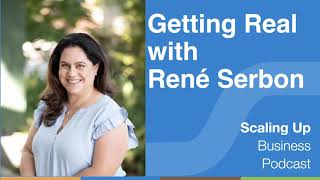
A Scaling Up/Scaling Coach YouTube interview (host Bill Gallagher) with Renée Serban, a skincare entrepreneur and educator who builds international B2B skincare product and education businesses grounded in corneotherapy. They discuss her multicultural background (South Africa, New Zealand, Canada), clinical-to-education career shift, distribution across North America and global consulting, operational challenges (cash flow, HR, delegation, imposter syndrome), leadership strengths (skin expertise, systems, networking), specific hard moments (partner split while having first child) and growth anecdotes (59% and 39% year growth during childbearing years). The episode includes sponsor mentions and production credits.
Questions this video answers
2021-06-27
reneserban.com
South Africa (birth/early life), moved to New Zealand at age 14, moved to Canada at age 28.
Just over 10 years (clinical and business experience).
Her business grew 59% in the year she had a three-month-old baby; another year grew 39%.
Chapters
We're getting real today with an entrepreneur about the growth of their business, hearing about how they built an international business in a very unique and specific category. Listen in. Hi everyone, my name is Bill Gallagher. I'm your Scaling coach and host of the Scaling Up Business Podcast. We bring shows like this every week to you. About three episodes a week now, well over 300 at this point, so hundreds of back catalog episodes on every subject to do with people, strategy, execution, cash and everything to do with growing your business. These shows and more you can find@scalingcoach.com or wherever you get your Scaling up content. Our episode is sponsored by the Bay Area Entrepreneur Organization Chapters known as eo. These member led organizations Chapters are the really the best place for entrepreneurs to learn and connect and grow with each other. I've been a member of the EO Organization for many years now in a variety of leadership positions with multiple companies and it's been an extraordinary journey and experience for me. If you'd like to find out how the organization would benefit you, or if you even qualify, you can check out how to connect with the members of the area EO chapters as well as the 14,000 members around the world. Find out all that@eonetwork.org you can also apply there if that's of interest to you and then begin the conversation. You do have to apply and be accepted, but it's really a terrific way. It certainly benefited me. I feel very strongly about it. So we're going to be joined in a moment now by Renee Servant who's going to tell her story about growing her business and the experience of building that internationally. So Renee, tell our listeners and viewers a little bit about the business. Like describe so you do. You're a skincare expert international and you work with estheticians, skin care clinics, things like this around the world, selling them products and education, training and doing things using the approaches that that you've developed over time.
Yes, basically I categorize it as skincare professionals and additional to that I help them grow their businesses by strategies. I call it the business savvy side of my business to grow strategies, systems and procedures within their business and additional to that do a lot of non product aligned skin education on anatomy, physiology and cosmetic chemistry that puts almost every other person that I know to sleep but it pushes my buttons and fuels my fire.
I won't talk to you today about my skin issues, but I will talk about your business.
I'll focus on the business.
How did you get? Yeah, well let me also say as we Were setting up the show. You may hear that Renee has a blended accent. I'm always fascinated by the different languages, things like that. I was having trouble placing. I'm like, I know she's in New Zealand, but I hear more South Africa. And it's not just as simple as those two, right? It's. It's New Zealand, South Africa and Canada.
That's right. So I've literally spent a third of my life in each of those countries, starting in South Africa with way too much sun for my skin, then went to New Zealand, which is way more sun for my skin. But what did we know back then? Yes, I moved to New Zealand at the age of 14 and then to Canada at the age of 28. And yes, I won't tell you how old I'm. I'm only 21, but yes, it's.
I was going to say 27.
I'll keep you. Yes. You know, and it's interesting, I think all those aspects literally teaches you different things that, you know, have given me great tool sets and business aspects as well. So you know what life is like. Your journey kind of, you know, gives you all the tools to function where you're at right now. So I love it. And my path was definitely, I think any entrepreneurial path is a little bit curly and up and down. It's not as an elevated line as people seemingly thinks. It's from the. That it. Or that it looks like from the outside. And so, you know, here we are carrying on.
So why this line of work? Why did you end up doing this? What is it that you love about this and when and did you start off right in the beginning working for yourself? Talk a little bit about your choice and direction there?
Yes. No. Do you know, I've always had an entrepreneurial spirit. I remember my last three years of high school, I actually did homeschooling, begged my mom to homeschool school me. And I had a little clothing shop that I was running while I was sitting doing all my schoolwork. So my parents will tell you that has always been like part of my makeup, but I didn't. I come from a family of medical professionals. And so, you know, the done thing is that you of course go to university and follow a slightly more academic path. And I was already breaking the rules that I made up in my own mind about, you know, that I have to get a degree. And so I went to business studies at Massey University and in New Zealand. But before that I had a six month gap between finishing high school and the intake of university. So I thought to myself that I'll go and do nail technology because how awesome would it be if I can run my own schedule and see clients out of my flat and you know, kind of be my own boss? Because I kind of like things my way a little bit, admittedly. And so it was great. But what I didn't realize is that the minute that I stopped, stepped fully into that and ended up working in a clinic that I got bit by the beauty beast, I call it. And I was just so thrilled and intrigued by the difference you can make in people's lives by helping them feel more comfortable and more confident in their own skin. And so I kicked up university and went to beauty school. Literally.
It is something that people feel very strong about. If you've got problems with your teeth or a skin condition or some unusual thing, it can really get in the way of your self expression, your confidence. Right. It's a significant thing.
It's a big thing because it just stops you from putting your very best foot forward. And you know, yes, you can look at it and think that it's just such a superficial thing. It is separate from who you are as an individual. And that is true. But let me tell you, if I can play a role and elevating people's confidence and helping them fully flourish in the world, I'll have that in a heartbeat. Even if that role is small and for a moment in time.
Yeah, it's a, it's a noticeable thing. I notice that I just to connect the thing like how it matters. You wouldn't think I care about this, but I will get like a heat based rosacea kind of thing and I'll like break out and my face will get really red and it's easy to talk about it right. When I'm not in the middle of it. Right. But if I had it right now, I'd be really uncomfortable and more self conscious about the whole thing. And certainly as we've moved, right, it's become even more important this last year as everybody's on video all the time and, and somehow in some ways that actually increases the, the spotlight or self conscious qualities of your thing versus being in person.
It has been very interesting to watch people's response to this because it's different than looking at yourself in the mirror, watching a video of yourself and engaging with other people because it's so in your face. You don't typically watch yourself talking to other people. And it didn't really resonate with me as much as this year because I've always done online training for people, but definitely highlighted that people, you know, and you can see it in the people when they turn on the zooms and they like, lean and they go, oh, my goodness, look at this, look at that. Yeah, just highlights the smaller imperfections. But I also want to highlight to people that, you know, things like pores and so forth is very natural to have. So I think that we are in this environment, we are particularly critical of ourselves, which I don't necessarily think is a healthy thing. So I always encourage my clients to take 10 steps back from that 10x mirror. It's not your friend. Because nobody else really looks at you up that close and personal. Exactly. Totally. You know exactly what I mean.
What about that thing right there? Yeah, relax, pull back a little bit. Well, unfortunately, we don't have it here because this isn't zoom. But in zoom, which has become so important, they have that like digital touch up. So it'll give you a little smoothing, which evens things out for some people.
Oh, yes. The beautification mode is everyone's best friend, for sure. No beautification mode here today. I had to, like, literally bring my best.
Yeah, but, you know, not everybody controls some of that stuff or knows how to talk about your business. As you've grown a little bit, what are the lucky breaks that you've had, you know, been your big breakthrough, where you've benefited from?
I think the lucky break for me was when I really realized in clinic what I don't want to do versus what I do want to do. So I remember very distinctly a day where I was booked back, back to back to back to back with, you know, advanced waxing services, let's call it that. And I was busy building a very strong reputation for the meanest wax in town. And I had a moment of thinking to myself, and this might not be like, you know, the. The politically correct way to think about it, but I kind of thought, gosh, Renee, your parents are academics. And, you know, I love myself having a good wax, but I didn't want to do it 20. 20, you know, 20. I was going to say 20, but 12 hours a day, you know, back to back. That's not what I wanted to be known for and the legacy that I want to build, but I do love the people who do want to do that. The point that I was coming to for me and my inner core was, what is it that you want to be the master of? Do you want to be the jack of all trades, of all the little things? In the beauty industry, or do you want to zone into one thing and make master one particular thing? And, you know, skin was that for me. So I very much pursued doing that in that moment when I walked into the clinic and have another 12 hours and had a little mini breakdown and some tears as I went home saying, what have I done? And choosing this as a path, I thought, no, pull your socks up, look at what's out there, fill the gap. Because there was an educational gap for me and really being great at skin, I found it. My boss wouldn't sent me on the training course because I was too good making money for her and the waxing side of stuff. So I took annual leave and I went and took the course anyway. So. And that was definitely a projectory change in my career, like really going, oh, my goodness, if you understand products and you understand the underlying causes of skin, then you can really make a fundamental difference in people's health for their skin. But there was a challenge in implementing it into the clinic, and that's something that the course didn't train me. And over time I came to realize that, wait a minute, this. Systems and procedures and explaining it to clients and helping them understand what they need to do on a daily basis to get the results they want is my zone of genius. I know how to implement the knowledge and transfer it to the client, which is very necessary because otherwise we're just stuck where we are anyway. So that's what I do now. And the distribution came as an end result of that. When I went to teach this in clinics, and then people would say, okay, so what products do you use for your clients? What, you know, equipment do you use to analyze your client's skin? And it was very opportunistic. And that I had connections via my mentor, who is the lady who taught the skill skin anatomy course that I went on. And yes, we were. I started to teach with her and we came across the things and tools that I now use, and it was just opportunistic. But I did not shy away from the opportunities, even when they scared me. So. And I think that's key for anybody. It's like, you know, sometimes you just got to say yes and figure it out. As Richard Branson says, say yes and figure it out how later.
So what do you. What do you suppose has been then the biggest challenge? What have you really struggled with?
You know, I've been in this business now for 10 years over just over 10 years, but. And even in clinical work and running clinics and so forth for many Many years. I think it always comes back to a handful of things. I think cash flow is always a beast that has to be wrangled and tamed and controlled and human resource, human resour management is a challenging and rewarding thing. At the same time. If you have the right people in the right positions to elevate your business and you cannot do it on your own, then that is very, very, very good for you. But if you're unable to get the right people working with you or you have that more difficulty and like having the wrong people, that can be very challenging for a business. So you know, I take my time and really trying to make sure that I surround myself with excellent team members as much as I can. And you know, sometimes I can't employ them either. I've come to a point where it's like I don't have the skill set or somebody hasn't come in my orb. But I've learned to love having and embracing critical contractors as well. And that has really helped me especially in the last year as well.
What do you feel like has been then your biggest mistake in the business so far? Where do you wish you could do.
Over the thing that I tell even my clients about their skin. It's like that self doubt that, not trusting yourself, not thinking that you yourself are good enough to do the thing that you love. That has been very critical for me. I think I'm an A type personality. I love perfection. I love it when people also think my way is the right way. But you know, that can be a beast if you're, if you're taking too long to have things perfect. It really stalls you. And not believing that you have the capacity to do it has been a yes. I definitely think I can redo that because I could have grown so much faster if I just trusted myself a little bit more and you know, take the bull by the horn and take the next step. Which sometimes I waited for permission from somebody else to do it.
Yeah, that's interesting. I'll wait till somebody tells me I can do this and step up.
You know, I kind of like to highlight like that. People tell me if it's a totally crazy idea, you know. So I think you have to be flexible but you know, just, yeah, trust that I have an ability to make great decisions. And if I think about my childhood, oh, I made decisions easy and fast. Fast. I was that kid. And somehow, you know, through adulthood I kind of, you know, lost that own little trust in my, in my little warrior self. And as I'm Learning to practice, you know, really trusting myself in my own decision making and not checking with 20 other people to say yes or no to an investment or, or a new product that I want to bring in or anything like that somehow goes better. And the thing is that when you make the wrong decision, I've also learned it's not the end of the world. You can change things. A bad decision, just realize quick that it's fast and change. It's not the end of the world. Usually.
Now that you've gone through some time, what do you feel like you as a leader are actually good at? What's your secret sauce, your superpower?
I know skin inside and out. And in the business that I am in, like, if you have a skin problem that you need fixed, man, let me tell you, I can fix it for you. And if I can't, you can be sure I know somebody who can. So I think that digs back into my ability to network with people who are way smarter than I am, which is also beneficial, you know, so that I'm always having people in my or who know more than I do so that I can always level up. But in the same brief, you know, always make sure that I'm sharing my knowledge with people who are one step behind me. And you always have people steps in front of you, steps behind you. But skin is where it's at for me. It's my superpower. I know how to train it, I know how to explain it, I know how to get results of it. And I do it all day, every day, and I love it so much. I never work a day in my life, but don't tell anybody else that.
So it's the subject matter that matters to you the most about it. Being in the industry you're in, is there an aspect of leading the business that you feel you love or are the most passionate about?
Yes, I am overall good with, like, systems and procedures, so follow ups and looping back to people or explaining to my team how I want that to happen and that we execute that. As a team and human resources, I'm good at connecting with people or at least conveying what I want and need to convey so that we're all working towards the same goal and filtering out. I'm very good also at very quickly realizing if somebody is not a great fit for my team. I've had to learn that the very hard way, hanging onto the wrong people for too long. And that's unfair to me and to them because I'm holding them back from their Greatest potential, too. So as a people pleaser, that's hard for me because you might like the individual, but they might not be great for the position. So I've become really sharp at honing in on that. And. And sometimes it just means shifting somebody in a role. Sometimes it means you need somebody else. I am good at people relationships, so.
I let you brag there. But what then think you suck at? Where should you not be working? What gets you in trouble?
I need other people. Carry on.
Our show. This segment is called Getting Real. Right. So we're interested not just in the nice things that we can say.
There's always. There's so much to learn. There's so much to learn. So there's a. I'm going to say three key things. Number one, I suck at delegating because I think that I do things really well. So I'm not the most awesome delegator. Yeah. And my team, literally, I have to teach them, like, you know, this is one of the agreements that I have of my team members is that we kind of lay out what our project is and they claim pieces of it for me. And then I say, okay, I would like to do these components of the project and they. I give them permission to pry it from my hands at times. So they, they literally highlight to me when I am struggling with delegating. But that is a big thing because it exhausts you as an entrepreneur at the end of the day. So that's something that I still have to focus on on a daily basis. I'm much better at it now than I was 10 years ago, but still a lot of room for improvement, people pleasing. I think that's very tough. I really feel like everybody needs, you know, like, I want to please everybody and want everybody to love me and my services and my team and everything. But the reality is, is that that's not always the way it goes. So really I have to, you know, accept that you're going to have that little category of customer complaints. And I get very upset about them sometimes where, you know, usually you can talk to people about it, but I literally just have to let go, especially as the business scale, because there's just a. There is just a correlation. And, you know, you know, people who are clients are happy. And then this very small segment that you just cannot please everybody, it nearly kills. And then the third thing, I'm great with ideas. I am like a great idea person, but I personally am not great at following up and following through, closing the loop, so to say. And that's something I know about myself because I just move on to the next grand idea too quickly. So I make sure that I have people on my team who can hold my feet to the fire and bring it, help me come back to it and help me close those loops.
Yeah, it sounds like a pretty typical entrepreneur for a lot of the people that we deal with. We have trouble with the focus and delegating and wanting to do too much for everyone and like that. So I hear a lot of really common themes here. If you could go over and give your younger self some advice, maybe say, hey, take that left instead of the right, you know, do that one a little bit differently. Drop that client. What is it that, what's that one thing that you would give yourself advice? What would you change?
I definitely think that you, that you know more than you think you do. So trust that what you have to offer is enough. And when you know more, you offer more to people. So yeah, that I definitely know more than I think I do. Because, you know, it's always that little, I suppose you can label it as imposter syndrome that you think, what if they found out that I didn't quite know as much about skin because I'm an esthetician. Yes. I'm not a dermatologist, but I work so well with dermatologists. And that is the other thing is that just because somebody has a medical qualification and I don't. Yes, the base knowledge is absolutely very different, but it does not mean that I am inferior in any capacity. I just chose a different path and I do things a different way. And you can always find a way to be complementary in each other, especially in this industry because it's a very competitive, can be sometimes nasty industry, if I say so myself. So find that. Yes, don't worry about titles so much and just show up in your own knowledge.
That's probably useful for all of us all the time. So what are you trying to build? Where are you going with this business? What is your long term goal or vision?
Yes, so I follow a very unusual pathway in the industry because obviously I'm a rebel with a cause and the process to skin that I follow and I teach is not mainstream in our industry whatsoever. We follow the principles of a science called corneotherapy, which in a nutshell means that when we treat an approach skin, we do it from the outside in. So we try to keep the epidermis intact, intact at all times instead of blasting it, peeling it, lasering it, ablating it to oblivion. Where the industry is very Much the opposite. So my big goal is that I would love to see corneotherapy as a household concept or household known point in the skin industry. Kind of like when somebody says that they use organic skincare, you kind of immediately know what they stand for and the approach that they take in their skin care. I would like corneotherapy to be very well known like that in households across the world.
Yeah. When I first read it in the background information on you, I'm like, you're going to fix my eyes now?
Yes, because cornea means like cornea, but cornea is the very outermost cell once it's ready to shed. So, yes, it's a, it's actually a science that has been around for ages. So. Yeah, so just like you were saying, is it like eyes? It's like I want people to immediately know that it's skin.
And what do you think is going to be your challenge in having this become like common knowledge and at the forefront and you be there with it?
Absolutely. I think it's exposure, which is part of why I'm here talking to you about my business. Because I think, you know, you can learn from different industries. I certainly learn a lot from many different industries. But just taking the opportunities, when anybody has an interest to hear about you, your business and your passion to take it and step up in the spotlight and say what it is that you do and what you love and, you know, what drives you. So exposure, I think is the big thing for North America in particular. Corneotherapy, for example, is a bit more well known in other areas of the world. So it is education that comes with that as well. So platforms to the opportunities to educate people on what it is. Which is very funny because the concept was started by an American dermatologist. Fun fact.
So. And where do you serve today? How wide is your work?
Yeah, so it's a little bit different for the different pillars of my business. So the skin care line, I have two. The one is in Canada, I have exclusive in Canada. The other one is Canada and the U.S. which is like a mask, a wonderful mask product that we have that really puts fire out of people's skin and diagnostic devices is North America. And the education and consulting side is global.
Aha. So a mix of things all over and, and the one that you can do most digitally is the one that is the, the broadest at this point, actually.
Yeah, so the broadest in my industry. But the. For sure, like business to business. But I get a lot of inquiries from people who want to use the skincare line as example. And because I'm a great networker, I know Cornea therapists in every country almost. So I am a very good referrer to people to hook them up with somebody near and dear to them as well.
Interesting. So you I've covered a range of things as we do in the show. I wonder what is that? I'm not asking you about that you are expecting or preparing to talk about.
I think, you know, we have had a really great cover of everything. I, you know, I love opportunities like this. I think, you know, the, there's definitely been hurdles and you know, since this is all about getting real, I do want people to know that, you know, it sounds like, yes, I'm taking the opportunities and just rolling with it, but there's been some really, really challenging times. And that's probably the one question you didn't quite ask up front. You've asked and I probably answered it in a roundabout way. The hardest moment in business is the one thing you didn't ask. Would you like to know the answer?
Yeah. So talk to us about that. What's been the hardest moment?
So the hardest moment was when I had my firstborn child and the business was in infancy. And then I decided to go and have a child. I was in a partnership of business and at the that exact moment, as Murphy's Law would have it, my business partner decided to go his own way and I go mine my own way. And I was like this. That was a profound moment that I had to just like, yes, I'm going to do it. My mentor encouraged me, my parents encouraged me. My husband said, you can do this. But that was deep moments of self thought and deep moments of self reflection to think that I can do it all with a baby on my hip. And it's really interesting even when you, when you have not as much capacity as you think you do or time in particular, it's funny how what you can do when you really focus on the little amounts of time that you do. Because that year my business grow 59% with a three month old baby that I was hauling across the country to go and see my clients and do training and things. And then I repeated that a few years later. Crazy thought. But again that year my company grew 39%. Not a sustainable growth strategy or scaling strategy at all. But it was just interesting that it taught me that if you really focus, you can accomplish a lot.
Yeah. And easier said than done sometimes. I want to remind our listeners that we're sponsored by the Chapters the Bay Area Chapters of the EO organization. Eo it stands for entrepreneurs Organization. And we have three chapters in the Bay Area. Of course we're in many cities and countries around the world. We have over 14,000 members around the world. We have, I don't know a number, I don't know the current number actually in the Bay Area organization in the three chapters that we operate here from Silicon Valley to San Francisco to the East Bay. And it's just a great organization to connect with other entrepreneurs, entrepreneurs to get to know them, to learn from each other, to support each other in the growth and the mastery of the business. And of course then to connect with others around the world is a unique privilege. It's a member led organization so it creates, it's like an extraordinary value but it has a flavor and a quality all its own that had me join 21, 22 years ago now and then continue to be involved in the organization through multiple companies that, that I just have really, really enjoyed. So if you'd like more information to know how it works, what we do to see if you qualify and would be accepted, you're going to go to eonetwork.org so you'll find a lot of more, you know, network.org anyway that's, that's our sponsor. And then let me tell folks if they want to find out more. The your website address is reneserban.com we'll put that on there so they get the spelling right on that and we'll put it in the show notes that kind of as well. I want to give thanks to Lucy Summers who gets our guest scheduled and prepared and distributes the show and does all the things that a good producer would do around the show. And to Vern Harnish, author and creator of the Scaling Up Framework. Our audio producer Albert Burge at Podfly Productions. Our show notes written up by Ian Kadina and proofread by Tim McGowan. I want to thank everyone for listening. Keep Scaling Up. We'll talk to you again next time.










