Tim Winter built Paradigm Homes into a lean operation with just 8-9 employees by outsourcing design and subcontracting trades. A herniated disc and back surgeries in 2017 pushed him to hire a coach and restructure. He nearly lost the company overleveraging on speculative homes, then pivoted to design-build work for clients with existing lots.
Chapters
Foreign. Okay. Hey, welcome back, everyone. We're talking today with an entrepreneur about their story of growth and scaling up and. And hearing a little bit of what they've learned along the way. My name is Bill Gallagher, scaling coach and host of the Scaling Up Business podcast. We're welcoming Tim Winter to the show today. Tim Winter, Paradigm Homes on the East Coast. Yes.
Yes, sir. Thanks for having me. Appreciate it.
Thanks. We bring our show to you every week. Conversations with gurus, other entrepreneurs, tips, all kinds of things that you need to grow and scale your business. All that and more@scalingcoach.com we're going to our conversation. We're going to get into our conversation now with Tim Winter from Paradigm Homes. Tim, welcome to the show again.
Appreciate you having me. Yeah, we're in Northern Virginia outside of crazy D.C. crazy place to live these days, but we call it home.
Yes. Well, it's nice over there. I like, I like the whole region. Like, every part of the country has its own vibe and every part of the world has its own vibe. Like there's something to appreciate and get into everywhere you go.
Absolutely. Now, we love to travel, as you can see the photo behind me. I'll tell that story later. But, yeah, we, my wife and I, love, appreciate new cultures and new people and experience and, you know, food and even the, you know, all the things that come with, you know, different cities and different vibes. It's definitely. We love it. So I get it.
Awesome. Well, tell us about. So Paradise Homes is a custom home builder. Right. Give us some facts and figures and that kind of thing. It's a company you started after working in the industry and like that, but give us a little bit of, like, the magnitude and don't undersell it.
Yeah, sure, absolutely. So, you know, Paradigm Homes, we're in the Northern Virginia area, actually. We just launched a new division in Charleston, South Carolina, as well. So that's kind of becoming new and fresh in 2022. So what we do here is we build thoughtfully designed custom homes and additions. What does that mean? Well, exactly, that we're building something that's unique for our clients, that we're not just grabbing a plan off the shelf and saying, this is what you get. This is all you get. This is how you're going to get it. We're going to walk alongside our clients, design something that's unique to them, to their lifestyle, to their family, how they live, how they operate, how they function on a daily basis. It's really important to us to make sure we're capturing more of what our clients needs are versus what we think they are. As a builder. I started paradigm in 2007. Again, great time to start a business. I was with a national builder for about seven years prior to that. And you know, I've learned a lot in the last almost 15 years of trials and tribulations. And you know, I think one of the biggest things is just, you know, consistency and flexibility, being able to shift and innovate and being able to flex when the times, you know, even like we've gone through in the last 18 to 20 months with the, you know, the different flex we've had to do. So, yeah, it's been a fun journey and we're excited for our future and where we've gone. And a lot of those lessons are propelling us into new endeavors, into 2022 and hopefully beyond.
So give us a sense. I don't know what's comfortable to share, like how many projects, how many team members, what's the leadership team like? Some facts and figures around the scope of your business today.
Yeah, for sure. So we've got, right now there's eight people, about to be nine next week on our. And we do everything basically as a construction management firm. So what that means is we're outsourcing for the most part, a lot of our design, interior design, as well as our landscape design and civil engineering work. And then we subcontract a good majority of our workforce. It helps us stay nimble as far as like bringing on too many people as far as overhead goes, and helps us manage when kind of, you know, this industry kind of ebbs and flows a little bit. Gives us a little bit more the ability to kind of structure and not be too top heavy. From a staffing perspective. We basically run everything kind of as a project management level. So I've got a project management, project manager that oversees design, project manager oversees kind of selections and product and kind of operations. Those are my main guys in the office. And then I've got the field managers, the guys that are basically the ones in the field constructing the homes, manning the subcontractors, managing the client relationships as the building goes on. And then we've got kind of the behind the scenes administrative team, bookkeepers and things like that. And then myself, you know, I'm kind of overseeing a little bit of everything as well as kind of helping kind of some of our direct and future endeavors, as well as we've got a business development manager who's out there bringing in new business, building relationships with our realtor and Other strategic partners that we like to team up with who are a great referral source for us. So we try to be kind of lean and nimble, but ever so growing. Culture is important to us. We're not just hiring anybody off the street. We're looking for those people that have the right core values, the right work ethic, and kind of the right really important, the integrity, and more importantly, those that can just kind of get things done. So culture is something we've been really working on, you know, really so much in more in the last, you know, two to two to three years. I hired an executive scaling up executive coach exactly two years ago, and it's been a game changer. I can go into more of that a little bit later. But that has really helped develop our culture and how we've kind of structured things here with our team, which is exactly what it is. We're very team oriented. That is how we do everything. Even how I lead, right. I'm just a member of the team. Even though at the end of the day, you know, my card might say owner or CEO or whatever you want to call me sometimes, I'm also the janitor. It doesn't matter, right? We're all team members. We're all working to achieve what we call. We're solutions architects. We're here to kind of solve our clients challenges, problems, whatever they might be, so that at the end of the day, they get the home that they've, you know, come to us for, to help them, you know, kind of get what's important to them, not what we think is important for them. You've heard me say that before.
Why did you get into this business?
So I've been in this business since I was a kid. My dad used to buy houses, fix them up, rent them out, and I was free labor until I think I got wise enough to start to ask for some money. So I've been around it my whole life. I mean, growing up, you know, my grandfather, I had one grandfather that was a pastor, but also was a jack of all trades, carpenter, mechanic. I mean, this guy could do everything. And so he always was around. We were doing a big addition in our. In our home when I was growing up, so got to kind of watch him work. They brought me alongside to kind of do some of those things as well as I had another grandfather too, that was kind of, you know, coming out of the depression, hard working, everything was very, you know, about kind of work ethic. So I've always been around that kind of dynamic of. Of Men and even my mom's an entrepreneur. She's in the home. When we were growing up, she used to cut hair in the basement. She owns a beauty salon now, but at the time she was cutting hair in the basement. She ran a catering business. So I've always been around kind of that kind of driven, hard performing, self working people. And so as I kind of, you know, kind of came into age when I turned 18, my dad actually helped me find, find and build my first. Not build, but buy my first house. And it was through that process that actually we reversed roles. My dad was my first employee. He became the project manager while I was off at school. But he helped me kind of go through the process and renovate this house. And we rented it for a couple years. And so I've always been around it, just enjoyed it. My dad, he was big into. I want you to learn this kind of work with your back now so that you learn to work with your brain later. Was his as he had me out there. Even though growing up, that's not what I wanted to hear.
Right.
I wanted to go hang out with my buddies and play, you know, baseball or basketball as a big sports guy. So like. But having to do chores around the house and helping these guys do work around the house, it was not really what I wanted to do. But now looking back, I'm super thankful for. It almost chokes me up. It's. It's made me the man I am today. Sorry. You never think, you know, having somebody that just would pour into you like that, you know, I always took it the opposite. But going back like it was a, it was an impact. Even hearing that story again today just brings that obviously the emotion that drives me to do well and to kick ass and what we do. So I get up every day, hard driving and I think that's, you know, comes from my family in the background and that's why I'm in this industry, you know. From there I graduated, I went to school at Penn State and my wife and I at the time, my wife, we were engaged at the time. We said, whoever gets a job first, that's where we're going. So NV Homes came calling in Northern Virginia and we've been in Northern Virginia for over 20 years. So yeah, it's been a fun ride and journey, but this industry is, it's not easy, but it's a lot of fun.
What has been your luckiest break so far?
I don't know. I'm not a luck guy, more of a faith guy. So I wouldn't say, you know, there's been a lot of trials and tribulations in my life that I've gone through.
What are you then most blessed with or grateful for?
Right, sure. Honestly, I think it's some. I think it's a trial that I went through several years ago. I would say it probably started in 2016 into 2017. Still trying to figure out some of the business components of it. A good friend of mine in 2017 asked me to climb Mount Rainier. So we were doing it for a charity, for his charity and another charity. And in that process, the morning of, I woke up with extreme pain in my back. I'll shorten this story. But I ended up going still to Seattle, and we climbed Mount Rainier, got through some of the pain. We didn't summit because the weather wasn't there, but I came back from that a couple weeks later and basically was laid up on my back on the living room floor for about maybe six or seven weeks. And for a guy that's hard driving, like, you heard my story, that's always driving, pushing. I think I'm most thankful for that six weeks because it helped me slow down and process. Ended up having a herniated disc. Ended up having two back surgeries through the end of 2017. Because of that, it also impacted my business. At the time, I was the main salesperson. So when you're laid up on the floor, you're not growing your business, you're not closing deals, you're not moving things forward, you're not leading your team. And so I really had to trust, honestly in God and the faith that I have to kind of keep things going. And then coming out into 2018 and then eventually hiring Trey House, my executive coach, in 2019, I look back to that time as probably one of the most significant, impactful moments. And it's not something that. That just was a positive. Now it is, but back then, it was. I look at that trial as a positive. I don't know if most people will look at it that way. At the time, I was not having a lot of fun laying on the floor. I'm like, you know. But it was still a. One of those moments. I look back and I'm most thankful for.
If you. Yeah. So that's. And what do you.
What.
Maybe it's the same thing. But what would you say is your biggest accomplishment so far?
Biggest accomplishment? I would have to say coming on that. The reverse end of that. Right. Coming out of really analyzing the business to see what we were Doing right what we were doing wrong and having somebody like Trey walk alongside me was. I can't even put a value on it. It's invaluable. Right. Because when it's just you, I have my wife who's a great support and you know, deals with all of my crazy ideas and all the things that I go through. But you know, not walking through some of the X's and O's of the business on a day to day, you know, I look back at that, you know, that three year kind of window, that was a big component of the success. I had to realize that I was broken physically a little bit, which essentially broke the business. And then I had to rebuild and rebound. And so we're on this growth trajectory that I'm super thankful for that I couldn't. It's nothing that I've done. It's the hard work mixed with a great team mixed with, you know, my faith and mix with the blessings that God has given us and a market that is crazy. So there's all these things that have kind of fallen into place, but it's nothing that I can say that I've done right. It's all just progression of life.
That modesty screams loud. So what, what do you suppose is. Is your biggest mistake so far or failure?
So I would say one of the.
You screwed up.
What have I screwed up? Well, I think so. Prior to that, 16, 17, kind of, you know, decline and then rise back up to where we are now, 1450, 2014, 2015. I had this great idea. I'm gonna go raise a bunch of money and bring some investors in and take on some bank debt and go build some spec homes, that was not a good decision because when your business model is all on speculation and it takes 16 to 18 months to move one of these homes and you're not cash flowing properly and you don't have a big cash reserve. You know, that was a big lesson learned and to be honest, it almost sunk the ship. I get it was one of those things. I mean, cash flow in every business is the lifeblood, right? If you don't have it, you're done. And so I was pretty much done. Thankfully we sold some of those properties. And then really what that did is it switched gears for us. We came out of that and said, you know what, we're going to focus on design, build. We're going to go after clients that already own the lot. We're going to, we're gonna minimize our risk from that perspective and we're gonna Create a great client, customer experience that's second to none so that we don't have to worry about selling a house 18 months from now. We need to worry and focus on making sure our clients have a great experience. And so that kind of failure, mistake or lessons learned, whatever you wanna call it, from overleveraging, kind of getting out over our skis on those spec homes, we really transitioned us into what, you know, what we are doing today. And it's really because of that shift, because of that failure or almost catastrophic failure, we won't be talking today. That shift is what basically has propelled us to why we're really good at what we do now.
Yeah, it's interesting. In the middle of something, a failure, a setback, looks like it's real. But in the long view of things, you're like, oh, the failure of that business led to this other thing. The failure of that relationship led to this other one. Like, each of these things leads to something else, sets a path, especially if you lean into it, learn from it.
Right.
Keep moving forward.
Absolutely, absolutely.
What, what can you brag about today?
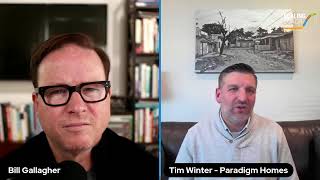
I'm not a huge bragger, but I would like to tell some kind of like, success stories. I'm going to brag on my wife. So the image behind us is in the, in the Dominican Republic. And eight years ago, she went down with our church on a trip to do kind of anti human trafficking. So they were working with ladies. There's an organization there that tries to pull women out of trafficking areas. And on that trip, she was doing some home visits in this neighborhood and was giving out food and doing different things. And, and, and she came across this particular home and she tells the story better, but she came across this particular home and she saw like, just the condition of it. And she was flooded with emotion. And she's like, you know, she heard God say, this is why you're here. You're here to build houses. And she's like, I don't know how to build houses, you know. So she came back excited, this kind of directing and vision. And she said, we need to do something, you know, how to build houses. We need to build houses for those people. Let's figure this out. So fast forward seven years later, right? We started that in 2014. That was. She was down there in the fall of 2013. So we started the Paradigm Foundation. And the Paradigm Paradigm foundation serves what we call the ultra poor. Those are living, those living on less than $2 a day. So we work with local churches, we work with local pastors. We never want to come in as like, here we come to save the day. We want to give a hand up, not a handout. So my wife's vision of this has really transpired to her leadership and her directive of what we're doing. And I'm most proud of that. I mean, it's one of the other things that gets me up in the morning. That's why this image is behind me. It's a motivator that we're called to do more. One of our core values at Paradigm is to create a lasting impact. Well, how do we do that? Well, we're giving those less fortunate the ability to have dignified living, to have a home that they can be proud of. And the stories that we've heard, the families that we've seen changed. So we're going into year number eight and we're close to over 50 houses and one church and we're in four countries right now. We started in the Dominican Republic and then we went into Kenya and then we just launched Brazil in the middle of a pandemic. Nonetheless, last beginning of this year and then into Central African Republic. So, yeah, I think if I have to brag on anything, I'm going to brag on my wife for following her calling and giving us the vision to start this foundation. And it's super exciting. You know, Lord willing, we'll be on, you know, maybe many other countries around the world, who knows where this goes. But yeah, we're super excited for being able to help those in need.
Nice. And the URL is in the crawl down below. There's probably a little typo in there. Just if you're looking at it without the slash, I think is probably the correct one. We'll check that out. So what's your biggest longest term goal at this point for the business?
You know, it changes. But I think, like I said, we're getting ready to launch our next division of Paradigm Homes into the Charleston, South Carolina, Mount Pleasant area. We've got two projects in design right now. So I'm super excited about that. I would like to honestly drop a few more of these up and down kind of the East Coast, Florida is a hot market right now. We've created a process and a playbook that builders, you know, I think don't really sometimes struggle, myself included. You know, we struggle to run a business. It's a tough industry. Variable cash flows and different things like that. So we've built what I call the Paradigm Playbook that we can now go and take multiple Paradigm homes and Kind of drop these different custom home divisions up and down. So I'd like to, you know, maybe put four or five of those in place is kind of my longer term vision. I don't know how long that takes, but we've got our test run here in Charleston. So excited about that. And then at some point, to be honest, like what I've learned, I like to give back from a sense of, you know, maybe it's a coaching component to builders and helping them understand this playbook and understand how to run a strong, you know, custom home building or remodeling or whatever it is. Because I think we've, you know, been at this for 15 years. I've made some mistakes, I've learned my lessons. You know, I've had support and assistance come along. We've built a really strong playbook now. I think at some point I'd like to give back and basically help others achieve their goals and run a successful home building or remodeling operation. At some point. I think that's there. I'm also in the process of starting a consulting company for high net worth individuals. So we kind of step in the gap of executives or athletes are very, extremely busy, don't know what they're getting into. We kind of come in and kind of act as an owner rep as an extension of them. We brought in our first client to do that. This year we're looking to do more of that. It's just something that's kind of unique from that perspective of just like I said, we want to help people. That's our whole component of paradigm is creating that lasting impact. Whether it's building homes for people here in the States, whether it's building more and more homes for those around the world that are, you know, in the ultra poor, or it's helping those that, you know, kind of get stuck in the middle of, hey, I don't know how to build a house, I need some guidance. You're an expert, you're a guru. Can you help me? So, you know, that's a long winded answer, but that's kind of where I think I'm going. You know, that might change, but that's kind of the vision right now.
And what is your biggest personal gap or challenge? What do you think that you need to develop in order to, to get there?
I think more. Tim's right. More. Maybe not the crazy visionary, all the ideas, but people that can come in. Great team members, right? Really developing my team right now. I've got some younger leaders that are Growing and maturing. So really continuing to pour into them so that as we move into these other markets, maybe dropping one of them or two of them or recruiting. The right culture, I think is going to be my biggest kind of growth component of what I need and the biggest challenge, honestly. Right. It's, you know, without the right people in the right seats, where are we going? Right. So that's, that's my biggest kind of fixation right now is making sure that we're training and developing well and developing the right talented individuals that want to join our team.
That's great. What you mentioned earlier that you were grateful that you'd hired a coach. Who told you to hire a coach? How did you find your coach? What was your process like more than the specific coach or approach? Because we all have, I mean, I actually tend to have three or four coaches at any given point addressing different aspects of my life. So. But I'm interested in this selection and that process of finding.
Yeah. So I just, I think going through that the different trials are looking at things. I'm like, I just kind of came to a realization that I've always loved to learn and grow and learn from other people. And so I started looking at the Vistages and some of the, the corporate, you know, the bigger groups and trying to learn. But I'm like, I really don't want to sit in a room and hear 11 other people's problems. I have my own problems. I need some. I need personalized support. Right. So because of my back injury, one of my recovery, instead of going to your traditional physical therapy, I hired a personal trainer. And I think with that, that's what helped me recover a lot faster. And so that mindset was learn better one on one than I do collectively in a group. So when I was interviewing some different components and the different groups that are out there, I realized that, you know, I need somebody one on one. And so coincidence or maybe divine appointment. I was having lunch with my good friend Trey, who had just left his corporate job. He was a president of an organization and he was leaving there and he's like, I'm going to go start my own coaching business. And we had lunch and I didn't think anything of it. And so two or three days later I called him up, I said, hey, do you want a client? I need a coach. And so we started talking. And so I was his guinea pig and vice versa. And so having somebody that I Knew already for 10 years, we were in Bible studies together, we had talked business, actually built a project for him and his family three or four years ago. So we knew each other already. So that was an easy plug and play to where I can let somebody under the hood and kind of see what's going on. I can be vulnerable right out of the gate, which is what I needed. And so it was just one of those things where it just, it clicked and we had some hard conversations in the beginning and having somebody to basically hold me accountable because that's the thing with me. If say I'm going to do something and you challenge me to do it, I'm going to do it and probably, you know, go above and beyond. That's just my who I am. And so, you know, hiring that individual, you know, coach was, it's been a game changer. And now I, you know, I don't have four, but I've got three or four others. I've got my physical coach, you know, physical, you know, my trainer. I've got a spiritual coach. I've got a group of advisors that I've had for years, business, business advisors. So it's so important to surround yourself with just high quality, much wiser men, women, whatever. Especially when you're going through something, you can call on that individual and say, hey, this is what I'm dealing with. You're an expert in it. How would you do this? What would you do? Or am I thinking right? I'm a firm believer and I think I'll keep bringing in different individuals as I grow and mature. And I just recently joined a mastermind full of guys that are high level, you know, individuals. So always trying to make myself better. You can't do, you can't run this race of life on your own. You need other individuals to, to spur you along, to push you and to succeed.
So yeah, you know, our best clients and, and I would say I. The same is true for me. Our best clients have both a mastermind or forum group of some kind, a peer group, and then they also have a, a professional coach of some kind. And many of them have multiple coach. They've got a financial coach, they've got a running coach, they've got a, you know, a physical coach, they've got different, a speaking coach, maybe different things like that that they're doing. They've got a business coach. And I think that whole approach is, is one that like I've used for a long time. And so to be a coach also was a natural thing for me after some time to evolve into it. But it didn't mean that I didn't need one myself.
Yeah.
What's that?
That's part of it. What? We as men sometimes don't want to admit the fact that we need help. Right. I think that was part of the. If I would have had that help 15 years ago, maybe I wouldn't have gone through those things, but also wouldn't be able to sit here and tell you some of my stories and my trials of how I've progress, but it's. It. We as men don't like to ask for help.
Well, I. I was putting together a shed outside the house the other day, and. And I. It seemed really obvious and basic, so I just started putting it together, and then something didn't work, right? And I'm like, wait a minute. And I look back and I'm like, oh, yeah, my wife came over roughly at that time. She's like, you didn't read the instructions, did you?
What instructions? It came with those.
She said, such a man. Yeah, I don't need to look at anything. I know everything. Yeah, it's really, really good. So if you go back and give yourself, your younger self any advice, what would you say?
Ask for help? I mean, I would begin there. I mean, honestly, like, find some. Some. Some men or women that are running the race before you, maybe in the same industry or where your weaknesses are, and have them kind of pull some things out, but then also having someone that can expand upon your strengths and so that you can hire for some of those areas where you're not, you know, designed for. Right. So, yeah, I definitely go back and revisit some wise counsel and look at that route and advice, and I'm doing that now. I advise people to look at that now, especially I mentor some younger guys that are kind of into industry and things like that, and I applaud them for wanting to ask for help. And they're, you know, their 20s, because I wasn't really asking for help.
Well, I want to thank you so much for being on the show. Tim Winter, CEO of Paradigm Homes and the nonprofit you mentioned, Paradigm Foundation. We'll throw that in the show notes and up on the show. I love just hearing people's stories and seeing the passion. Right. That's. I think the theme that I got is your passion and your gratitude for the opportunity of your life and your work and the chance to make a difference for everyone else. I want to thank everyone for tuning in, and thanks to Wanda for producing the show in the background. If our show helped you, if you liked it, send it to somebody else. If you want to drop us a line. Send an email to info scalingcoach.com you'll find the whole back catalog there@scalingcoach.com but our email is info scalingcoach.com big thanks to Vern Harnish, author and creator of our Scaling Up Framework, and to the folks at Pop Flight Productions, Albert Burge, Ayn Kadina and Tim McGowan, who get our show edited and ready and out the door. The show notes written up and proofread and everything ready to go. Thanks again everyone for listening. Keep Scaling Up.










