Jason Forrest - The Mindset of a Sales Warrior
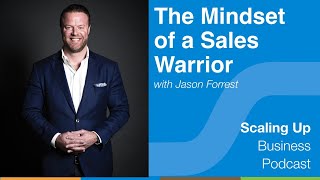
This is a podcast interview (Scaling Coach) hosted by Bill Gallagher with guest Jason Forrest (2021). The conversation focuses on sales performance, behavioral change for salespeople, hiring and recruiting elite 'sales warriors,' and practical training methods (including Forrest’s '5-4-3' framework, 'triple bind' opening, and the concept of 'leashes'—limiting beliefs). Case studies discussed include Komatsu (enterprise heavy machinery) and Red Rock (gold/precious-metals firm). Practical takeaways emphasize hiring goal-oriented, unleashed, procedural salespeople and using scripted, repeatable processes to scale selling.
Chapters
Foreign. There it is. We're talking all about performance, selling, unleashing your sales force. Unleashing yourself is the topic of our conversation. If your salesforce and even you in your chair could use some unleashing our guest. Our conversation will be great for you today. Everyone. My name is Bill Gallagher. I'm the host of the show, your friendly neighborhood scaling coach. I'm tired today so I'm faking it. Can you tell I'm a little punchy. I had a very early morning session. I don't know how. You know, we all have those days, right. And I think it's better just to call it out and be real and, and then push on through. So that's what I'm feeling today. Reminder. We bring shows like this to you three times a something to do with scaling, growing your business and the leadership required to take the company through those stages. Today's conversation will be a great dive into one of those areas in the area of selling performance in particular. And you'll find this show and all the rest@scalingcoach.com wherever you get your podcast. Groovy content. So welcome to show Jason Forrest. Jason heads of company in this he's also an EO member from Fort Worth area and has. He's a top rated speaker sales trainer, that kind of thing with a, with a reputation working with both very, very large and some fairly small companies. So a big range and a deep family background. Right. Like from a small child was raised learning to appreciate the world of selling. So welcome to the show Jason.
Thanks Bill. I'm glad to, glad to be here. Yeah, no, I had a very fortunate childhood. It was like the perfect, you know, kind of trinity. My father has a, an old jewelry store in Plano, Texas. I've been around for gosh, I mean I've been around for 42 years and so his jewelry store has been around long about as long as I've been around. And then my mom has been teaching debate at a college level for over 50 years. This is actually in 2021. She's retiring. She's retiring right to from speech and debate. Retiring this year at the college level which is exciting having a, having a big retirement party for her over in Fort Worth. And then my Sunday school teacher growing up was Zig Ziggler. So I was very fortunate. Yeah, isn't that crazy?
I know Zig Ziggler.
So I didn't really appreciate him back then. You know, this was when I was in probably middle school, early high school and, and you know, it's I'm like a typical.
Like, I should give you a round to it.
Well, I was one of those kids that didn't like to go to school, go to. Go to, you know, go to church. And my parents, you know, got me going to church to send to watch Zig, and I could watch him all day long, you know, so it was great.
So that's awesome. That's. That's quite the legacy, actually. One of the. One of my favorite leadership exercises, techniques for sorting people out is something that I think I first heard from Zig Ziglar. And I'm pretty sure he didn't invent it, but it's the be. Do have exercise. Did you ever learn that one?
Yes, I do remember him talking about that, but I don't. I don't. I couldn't recall off the top of my. Yeah, but I do know you're talking about, though.
It's pretty. I'll just. Because I've introduced it now, I'll finish the idea. But it's that notion that people think when they finally have something, I can't do his voice properly, then they will do certain things and they'll be left being a certain way. And he says, in reality, you want to reverse that. You start being a certain way and then you start doing certain things, and pretty soon you'll actually have the things you want.
Yeah, well, I love that. And when I. When, for example, when I coach people, when I coach salespeople, and specifically sales and the lane we try to stand, but sometimes it goes over to executives and other things. But, you know, I always ask people, great, so, you know, what problem are you wanting to solve right now? That if you were to solve that problem, you'd be able to, you know, advance salesforward and increase your commission? You know, what is that specifically? And, you know, they'll tell me whatever it is, you know, I need to. I need to learn how to, you know, overcome this objection that we're 20% higher price than the competitor, whatever it is. So then I'll say, okay, well, you know, I want you to think into the fact that you're 20% more expensive than the competitor. You know, how does that make you feel? And they'll say, well, it makes me feel, you know, makes me feel. Feel frustrated. Well, we'll feel so. So really think into being frustrated. And when you're thinking and being frustrated, you know, how does that make you feel? And they'll say, well, it makes me feel scared. So great. So now that you're. Now that you're feeling scared. How do you. How do you want to feel instead? And they'll say, well, I want to feel, you know, I want to feel. I want to feel confident, you know, confident that, you know, that my price is what it needs to be, and my price is the right price, and there's value there. And I'm able to overcome the objections that people give me about my price. I said, great, so let's make that the goal today, then. So the goal today, it sounds like, is I want to show you some tactical ways that you can use the power of your language as well as a process in order to communicate the value of why you're 20% more expensive. But at the same time, let's make that a goal that we're going to go from feeling scared to feeling confident. And we'll do a check in before we leave today to see if we've accomplished that goal. How does that sound? As, like a good use of our time today? So to me, it just reminded me of kind of what Zig was talking about, right? Is that so much of changing behavior. And that's something that we teach for my latest book, the Mindset of a Sales Warrior, because it's all about dialing in three things. Our mindset, process, and our language. So when it comes to behavioral change, it's always those are the three components that we believe in. Mindset, process, language. And so, but if you think about everyone kind of picture a kind of a triangle right now at the bottom of a triangle, you would write the word programming. And so programming is what we've been told to be true all of our life. You know, so, for example, like, if you were to actually ask majority of people, the majority of people, you're asking this one question that is that did. Were you raised a Republican or Democrat, or did you choose to be one? 90% of people were not. Did not choose to be their political party. They were raised to be their political party. So it comes from a programming we're not conscious on. I'm a conscious Republican or I'm a conscious Democrat. It's just all I ever known. And only about 10 to 15% of us, on average, actually have made a conscious choice. Do I really believe this or not? So what we've been programmed is what we've been told to be true, which drives our beliefs, which we think to be true, which drives our emotions, which is how we feel in that moment, which drives our motivations, which drives our behaviors, which drives our results. And so that's why it's important. And I think what, what Zig was saying many, many years ago and what we're trying to adopt in our coaching practices is, okay, well if, if you're having a hard time doing this behavior that we're asking you to do, we. Well, what's the feeling that's connected to that? And that's, I mean, that's perfect, Bill. Even with your stuff on the scaling up stuff, because you know, you have stuff like the one page plan, which is amazing. And it's a, it's. Well, what's stopping you from using the one page plan? You know? And when you, and when you think about using the one page plan, how does it make you feel? Well, it makes me feel. It makes me feel like I'm trapped and it makes me feel like restricted that I have to like stick to this thing. Okay, well how do you want to feel instead? I want to feel like empowered and I want to feel, you know, free. Okay, well, let's see if we can get you to a point of feeling free about using the one page plan. You know.
So you're focused on changing the mindset and in particular removing the barriers people have about the way. Is that right?
Like, I mean really, I mean I'm a behavioral change expert. I mean that's my, that's my focus and passion. So when I started my company, my simple story is I was the head of sales training for a Fortune 500 company when I was 25 years old. And I was given the simple task to go out there and find a third party kind of vendor, third party sales training organization that we could bring into our company and that I could get certified on and all the other in house trainers get certified on. And I could not find anyone, I could not find anyone that I believed was genuine to how top 1% salespeople sell. I thought that the, that everything that was out there was gin pop selling. It's what the average did and it made the average feel good. But it, but the top 1% would reject it. And that's because confidently I was a top 1% salesperson. And then I became a trainer. So I was the opposite of most people, those who can't do teachers. And I was actually a top 1% then decided to teach because I was following in the footsteps of my mom and Zig, you know, being teachers. And so I was frustrated with the other options out there and so I decided to create my own company. And so the whole company's concept was the vision was to be the first sales training company that could actually change behavior. And that is created by a sales warrior teaching real life top 1% sales practices. That's authentic and genuine and real. And the research says that 164 billion with a B is spent every year on sales, on training, and 70% fails to achieve its ROI. And so I wanted to be the first sales training company that just kind of changed that and been in the 30%.
So let's talk about some of the examples because I think they help highlight the concepts and stuff that and bring it to life. You shared a few as we were getting ready for the show about Komatsu, about hiring, about commodities or gold and precious metals company. I don't know where. Where do you think we should start with those?
I mean, there's so many that are great examples. So let's take Komatsu. So Komatsu is a, you know, gosh, I don't know, $40 billion company worldwide. So I. They're the largest heavy machinery company in the world. We specifically were called in to just work with their national accounts team, which was on the US side of the business, which is about 4 billion or so in revenue and total. Not just them specifically, but anyway, so we were taught to run into them. So their whole objective was to be kind of the ultimate of the Green Beret Navy Seals warriors. Their job is to go penetrate, you know, completely new accounts and. And really cool success story was one of the. One of their key accounts they were targeting was Keywit. And so Keywit's the largest commercial development. Commercial company. Commercial development company in the United States. They build more highways than any other commercial construction company. And so Kiewit was a longtime customer of Caterpillar and Volvo and other heavy machinery. They were not using Komatsu for some reason. And so from a mindset perspective, everyone had told this one national account rep, Chad, there's just no way. Don't even try to go after Keywit like we've all tried before. Other people have tried. They've all died in the field of battle. Like just give it up, you know. And anyway, so through our practices, you know, we not only taught them the right scripting on what to say, but also the right process on how to get in there and then specifically removed the leashes. And a leash is nothing more than, you know, it's synonymous with limiting belief that people have. But we break it down into four types of leashes. So it's either self confidence, self image, a story, a reluctance, or a rule that prevents people from Engaging or executing. And so we removed those from Chad and other people and he went on and penetrated Kiewit. He sold them, you know, I don't know, 15, 20, $30 million in heavy machinery. And now he's got a Trojan horse in that organization that he can then, you know, upsell and maximize.
And do you recall what the leash was that was in his way? What was.
Well, the specific leash came from which was, was actually the story. Right. So the story was its story. The story started off as that Kiewit is not a Komatsu buyer. They've got a long standing relationship with Caterpillar. Caterpillar is the. Caterpillar is the largest. Yeah, Caterpillar is, Caterpillar is that, you know, is the American company. Right. So Caterpillar is an American company, Kiewitz, an American company. And Kiewit's not going to do business with a Japanese organization. And so that was kind of like the story that was created. And it's, I just kind of disprove that for him and my team disprove that. And we just said, okay, well how do you know that to be true? Well, because no one else has ever sold there before. Well, okay, so has any do it. Do we have any evidence of other companies that are similar to Keywit that were long, long standing Caterpillar customers, but then after seeing the benefits of Komatsu, they've made a change? Well, yeah, we have hundreds of examples. Okay, so it's not, it's not, it's not true with a capital T. It's just currently true for those sales people that died and couldn't figure it out. So what we've got to figure out is, you know, we got to do, do our reconnaissance work and figure out, you know, well, what are they dissatisfied with with Caterpillar? You know, what frustrates them with Caterpillar? What problem are they trying to solve? And then you've got to position, you know, we got to, we got to work on your scripting, your messaging, on positioning Komatsu in order to push forward. And we got to remove that leash. And so they did and they, they made a bunch of money.
The when, when you have focused on hiring, first you talked about people not hiring people who are leashed. How do you know that somebody's leashed? I mean, don't we all have leashes all the time that we're dealing with, that we inherit or invent for ourselves moment by moment?
Good point. Yeah. So no, we 100%, all of us, all of us have leashes. Like what I would always tell people is, you know, whenever I ask people, so what's a problem that's preventing you from selling more? If I ever have an answer from anyone that says, well, I don't have any problems, I feel like I'm gonna make my quota this month, then I would. My immediate response is great, we're doubling your quota now what's your problem? So I always tell people, either you have a problem or you're not playing in a big enough game.
Yeah. So if you're, if you're not creating some, then you're playing safe. Right.
You're playing safe. Right. So yes, we all have some sort of, we have, all have some sort of leash depending upon what level we're playing at. However, so as it relates to the salespeople we're looking for, you know, when we're interviewing, and that's funny you mentioned that. So you know, we are both a training company and two years ago we've added this recruiting arm as well. So we've kind of disrupted the sales recruiting side by combining a training company, an assessment company, recruiting company into one. And that's because I was honestly just really sick and tired of all the sales recruiting options that were out there. I felt they just didn't get it. And so we decided to disrupt that. So we use our neuro linguistic programming background. There's about 2,000 master practitioners in NLP. I'm one of those back, I'm one of those people. And so neuro linguistic programming, Neuro is brain, linguistics is our speech patterns. And what's been proven by science, psychology is the way that we speak is a window in how we think. And how we think is a window and how we feel and how he feels window and what we do. Right. So my recruiters create, we created a series of NLP questions almost in kind of an ab system. And so my recruiters remove the bias of if they like a person or don't like a person and they just literally ask these questions. And if they don't answer the correct way, then they are not moved forward and they cannot say, you know, but I really liked this person or I feel good about this person, it doesn't matter. And the reason for that is because most recruiters are the reason. So most hr. I'm about to be very provocative here, Bill. So most interviewers, so if you have HR interviewing, you've got recruiters interviewing. Those are the reasons why you're not attracting sales warriors. Because we, we, we enter, we bring in who we like, not who's right for the job. And so if I, if you have a head of HR or some recruiter that is not very goal oriented when it comes to selling and you have a salesperson that's like me that talks very aggressively. Nah, Jason's too aggressive. He's not going to work in our culture. You're just going to eliminate your top person. You don't, you don't want, you don't want Jason working for your competition, do you? So, so we're very big on number one, my recruiting team. I use the same assessments that measure their leashes story, self image, reluctance, rules. I use those on my recruiting team to make sure they're as biased free or leash free as possible. In addition to that, we hold them accountable by giving them a simple interview hiring guide that they have to use. In addition to that, we use third party assessments to hold them accountable to make sure that they're not putting their kind of unnecessary by or the incomplete biases in there. So we only can bring in the ultimate sales warrior.
Now do you believe there's this ultimate sales warrior or is it situational that there's a certain kind of sales approach for each business situation, market, customer set?
I mean, you know, it's funny you say that. So the people who bring me in, in my company when I say sales warrior, they're looking for a closer. They're looking for, they're not looking for an account manager. And that's the mistake that people make. So if you look, if you've got, if you've got some business that is all about just making your clients happy and it's just about, then that's not probably what we're going to be helping you with. But if you're looking to penetrate new market share like Komatsu and they wanted to again, you know, win market share and take clients away from their biggest competitors, then you need a warrior to do that. That's the only way you're going to work. It's only going to, it's going to work.
Yeah. Yeah. So your particular focus is really on that growth oriented hunter sales approach. And you're not doing the business account management type thing.
And Bill, the reason why is because there's a thousand competitors that can do that. You know, like that's, that's the, to me, that's the easy you don't need. You should not be hiring a recruiting firm to go find you an account manager. You 100% can do that internally. Do not waste your money on that. What I'm going to find for you is that 1%, you know, that, that elite top gun, best of the best, that's, that is fearless, that fearless prospector that's going to go out there and be disciplined to make their, and to always perfect their message and their mindset and their language and all of that has to be perfected. Again, those people are very difficult to find. So that's our service.
So the company that you, the golden metals company, what kind of work are they doing and how did you help them?
Yeah, that's another great success story. So Komatsu was B2B and their big, huge company, right. And then this company called Red Rock and they are a gold and precious metals company and so which is, you know, great company, great company, highly recommend them. So basically they were started out of the ashes of 08 to give people a hedge against the securities market and a hedge against the government. So the idea behind their, their sales pitch. Right, which is a great one, I think it's great. And that is, look, if you're concerned about the rise in inflation, which I project it to be about 4% over the next 12 months. If you're concerned about, you know, the housing prices bubbling, if you're concerned about interest rates going up, as they probably should, to counter inflation, then you need to hedge your bet into, into some sort of physical asset. And they sell precious metals, they sell gold and silver and stuff like that. Right. So, so, so we have a couple of success stories with them. In their case, it wasn't a matter of, of, of leads. They have plenty of marketing. You've probably seen stuff like that where they send out, you know, brochures and so forth and people call in, they're interested in kind of this commodity stuff. Right. But they had a problem with conversion and so we were able to help their salespeople just streamline their messaging and improve their conversion and go. We had salespeople that went from $3,000 a month in commission to $30,000 a month in commission in three months. So some pretty, pretty big changes. I mean the biggest quarter they ever had. I mean some stuff like that. So, so theirs was not a marketing thing. Theirs was a sales conversion thing which, which, which we can help out with as well.
And getting that.
And we helped them out on the training side and the recruiting side and still, still, still do a lot of, quite a bit of work with them.
Nice. So, so you up the recruiting and you do the training. What does the training process look like? What are you actually doing with A company like this, that's great.
So, so again that's, that's our bread and butter. That's what we're known for. We just won a, a golden, what's it called? A Global Guru. It's Global Guru. Global Guru award for Warrior Selling is listed as the number one sales training program in the United States, number two in the world. And then our sales management program, leadership Sales coaching is listed as number one in the world, which is great. So basically it's called Warrior Selling. It's a night. The, the minimum engagement is 90 days. We, it starts off with a two day bootcamp where we teach people not just kind of what to do and why to do it, but how to do it. So again that's a big frustration that I have that our competitors are focused on telling people what to do. Hey, make sure you handle objections, make sure you present present value, make sure you challenge perspective. They'll tell you actually how to pull it off. So everything we do is very tactical. It's very chunked down. We also get into the mindset component so we're always figuring out what is the story, self image, reluctance or rule that's holding them back from, from execution. Then everything we do is a follow up program. So they, they, we create a customized sales personal script with them. They then practice that with their customers on a weekly basis. They get on a two hour a week zoom call with my trainers in a public setting. Their job there is to bring their real life sales challenges to the table and be unleashed by my team. So the reason why we're able to basically guarantee an ROI is because like Bill, if you had a salesperson, they were on one of our calls, they would bring whatever sales obstacle is in their way from a real life prospect. They bring it to the table with one of my trained instructors and my trained instructors would sell through them. So it's not theory, it's they're making money during those, those weekly calls which is what separates from everyone else.
So you're role playing or they're doing or they're selling together with them. I'm not sure I follow.
Yeah, so, so let's, let's go back in the example of like Komatsu, right? So, so Komatsu said hey I really, I'm about to position myself. I'm about to. I finally got a meeting with keyword. So let's, let's go over you know, how, how keywords going to play out and then the sale and then they're basically kind of coaching them and Preparing them for what that conversation is going to look like, using our 5, 4, 3 sales process and preempting what specific objections keyword is going to give them and how to sell through them, and then role playing and practicing that.
So you touched on something interesting there. What's the 543 sales process?
So the 543 is something that I invented. So it's 12 individual concepts. To me, I kind of see myself as like the Bruce Lee of sales training, meaning Bruce Lee was very big on. Study all the great masters, study kung fu, study boxing, study Jeet kune do. That's what he created, Jeet kune do. Study all these different arts, right? And then what's the best of that art? And then throw away the rest. So that's really what I've done with the five, four, three. So, for example, you know, it's five steps to understand the customer's mission. Four steps present solutions, three steps to resolve the sale. So I'm sure a lot of people have heard of the challenger process. Well, the challenger process is great, but it's only around one key concept, and that's create a challenging selling message. Create a provocative selling message. They don't teach you, though, how to set up the customer when so to get in rapport so the customer can hear that challenging message. They don't teach you how to handle objections. They don't teach you how to compare what you're offering to other offerings. They don't teach you how to close. They don't teach you any of that stuff. Right? So I agree with the challenger method, but it's just one of our 12 steps. So in the 5,043, it's just one of the 12 concepts. So that's what I've done is I've just kind of taken the best concepts from the hundred different sales training offerings that are out there. And I've said, I like this one concept. Let me put it in my training and then combine it with the rest of them to create kind of the ultimate mixed martial arts sales process.
So we've got the hiring, we've got the sales training, we've got the role play. If you were going to tell our listeners some main takeaways that they could get started at doing right now to level up their sales efforts, what would you say?
Yeah, well, the biggest thing I would say is, you know, let's just take one simple concept, right? And that is that, number one, I would create, you know, what are the three reasons why people choose you? So what are the three reasons why people come to you and choose you. And, you know, you need to start working on what's called your triple bind. And so that's one of the things that we teach out of the gate. It's an NLP technique, but so it's, you know, so it'd be something like this, right? So, you know, Mr. Customer, you know, there's a few reasons why people choose us. It's either A, B, or C. I'm curious, of those three, what would you say is most important to you? Or what would you like to have a conversation around today? So the reason why that's critical is because most salespeople really fail in the very beginning. They fail when they start the conversation. They fail when they open their mouth because they'll say something like, hey, Bill, I'm curious, what has you calling in today? Or hey, what can I help you with? Or what are you interested in? As soon as I ask that dumb question, I'm now putting all the power in your lap. You are now the customer that controls me. So I knew I lose all position of strength, which means you now dictate the price, the terms, you dictate everything. And so instead, I want to create a selling message in the form of a triple bind of what are some common reasons why, you know, you would come to me. And then that allows me to guide the conversation with a kind of mutually purposeful relationship.
So, so what would you. What's a. What's a different question that you would ask then?
So what's an example of a triple buying?
You mean? Yeah, yeah.
So like, in like an. It could be something like, like, in my world, it would be, hey, great. So there's a. There's, you know, three reasons why people are interested in. In our recruiting services. It's. Number one, they're. They're frustrated with all of the time and effort that they're putting forth trying to find and recruit and hire, you know, a top salesperson. Number two, it's because they've. They have hired several salespeople but have a high tracker to turnover, and they're just not succeeding with the right salespeople. And then number three is that they've got a tremendous amount of, you know, kind of inbound leads, and they really need to do something about getting the new salesperson up to speed very quickly. And, and we could help them with that as well. So I'm curious, you know, what. What's the main reason why you're interested in our recruiting services today? So these see that's how it's different than if I, if you were to call in on my recruiting services or I was to get, or let's say you were a Google lead or something and I would just say, hey Bill, I'm curious what has you interested in my recruiting services? Well that puts all the pressure on you to like tell me why I'm valuable versus me. Give you a multiple choice question. So think of it like would you rather have a fill in the blank open ended question or would you rather have a multiple choice question in your test life?
So you're opening with the situations rather than just an open friendly thing. You're starting to categorize them, find them, have them self identify in that first phase.
Yeah, you're having them. It's just, it's a way to get the conversation moving forward. It's a way to get into business rapport not fit fake rapport. So I'm a big fan of that. A lot of people kind of miss Teach what rapport is. Rapport is not talking about the weather or talking about the football game. Rapport is about what is your problem you're trying to move away from and what is the outcome you're trying to move towards. And we want to get into business rapport as fast as we possibly can so we can be in alignment, so that we can mutually decide if we're going to help each other, if I'm going to be able to help you or not. That's a big leash by the way, Bill, that, that, that most salespeople have because they've been mistaught. It's the whole like make a friend, make a sale or you know, when March of Coronavirus came out all over LinkedIn it said stop selling and start helping. So that, that presupposes that if I sell you, I'm not helping you. And so I was all over LinkedIn saying, Look, I believe the opposite. I believe that when I sell you something, I'm helping you. Especially if I can show you how to, how not to, how not to fire people during the time of coronavirus. Right. So 90% of our clients that were in our full program met or exceeded their sales goals in March and April when we had some of the highest, you know, firing and terminations unemployment in the history of the nation.
Yeah. So before we run out of time, most important takeaways or things for people to start doing now to improve their selling.
Well, I mean the people who are listening right now I assume are mostly like business owners. Right. And so I Mean, the biggest thing I would say is, you know, number one, you need to make sure that you're bringing and hiring Gumps. So my name is Jason Forrest of Forest Gumps. Right. So Gumps goal oriented. They're very clear on who their targets are, who their prospects are. The more goal oriented they are, the less you have to manage them. If you have salespeople right now that you're having to manage and having to say, hey, I'm curious, salesperson, who are you following up with today? Or have you followed up with so and so lately? You should never have to ask that question. High goal oriented people should be telling you where their obstacles are and who they're working. U stands for unleashed. They're unleashed other stories, self image, reluctances and rules. So they're fear fearless. M stands for motivated. They have the energy to continue to prospect even when they get ghosted. And we all get ghosted every single day with people not following, not calling us back. And then P stands for procedural based, which is probably my favorite. It might be your favorite too, Bill. So there are two types of meta patterns. One is option based versus procedural based. So an option based is like a visionary CEO where every day is a new day for them and they never follow a process that save their life. So procedural based people are people who don't create processes, but they follow them well. The mistake that we make when it comes to selling is we, we fall. We have very structured processes in finance, accounting operations, customer service, every area of our business except for one area, and that's sales. Sales. We think it's some sort of art. We think it's just a bunch of visionaries every day going with their gut and flying by the seat of their pants. What we teach is the top 1% salespeople are very procedural and they live and die by a process. They live and die by rituals. So the last thing I would say is make sure you're hiring procedural based salespeople. And so how do you know, Bill? You ask them a simple question, and that is, hey, I'm curious. Tell me about, tell me the sales process that you normally follow. So like, tell me your sales process. If they respond back, well, Bill, it depends. Every customer is different. They're option based. If they go, oh, well, step one, I do this. Step two, I do this. Step three, I do this. Step four, I do this. They're procedural. And here's the thing, right? If you have procedural based salespeople lead to predictable processes that lead to predictable results. If you have option based salespeople leading, they lead to every customer is different, which leads to unpredictable processes and therefore unpredictable results. And you cannot scale a company. And that's what you're all about is scaling.
Absolutely. Well, that makes a lot of sense in our world, and it's something we definitely think in the early stages you're trying to figure things out, but then after you get it, just like every other area of business, you've got to work it out to procedures and apply some of these things in a consistent, scalable way. If you want more information about Jason, you're going to find him at fpg.com super easy to remember 3 letter URL fpg.com and I want to give a shout out to Lucy Summers working in the background helping get our show ready, produced, out the door, distributed, that kind of thing. If our show helped you, please share it with somebody else like it and subscribe to get them every week. You'll find the shows all the back catalog@scalingcoach.com you can also drop us an email to info scalingcoach.com I want to give thanks to Vern Harnish, author and creator of the Scaling Up Framework. Our show is edited by Albert Burge at Podfly Productions and the show notes are written up by Ayn Kudina and proofread by Tim McGowan. Thanks for us. Thanks again everyone for listening watching. We'll talk to you again next time. Keep Scaling Up.










