Matt Hulett - Unlocking Market Leadership
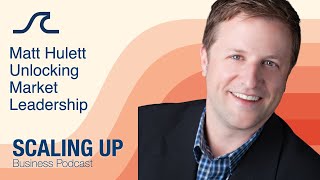
Podcast interview (Scaling Up Business) where Bill Gallagher interviews Matt Hulett about market leadership, turnarounds, product/timing strategy, customer segmentation, scaling through people, and clear communication. Hulett discusses specific turnaround examples (Rosetta Stone, Expedia, Rovio), his framework from the book Unlock: Five Questions to Unleash Your Company's Hidden Power (TAM, Timing, Track record, Plan, Momentum), and practical leadership tactics (focus on a core customer segment, mobile/digital transformation, talent assessment, frequent reviews, condensing company North Star).
Chapters
Foreign. Market leadership. You want it, we got it. We'll tell you all about it in just a minute. My name is Bill Gallagher. I'm a little punchy. It's Friday afternoon and I've been doing a whole series of recordings today. I love a good studio day, but know. There you go. I'm the Scaling Coach, host of the Scaling Up Business podcast. We bring our show to you every week, but as I've just told you, usually we record a whole bunch of those all at once and then we trickle them out. So if you're watching live, good for you. And we bring these shows. So we've got hundreds and hundreds of shows now with thought leaders on strategy, CEOs about their experience, gurus in people and team building, better execution. How did we get that dialed right? Lots of things to do with leadership and even a little bit to do with optimizing the cash for the company. All that and more@scalingcoach.com scalingcoach.com all right, so I said we're going to talk about market leadership, how we get it. And we're talking to a six time CEO, four public companies, billions of dollars in market valuation, a gajillion is the technical term, and a couple public companies as well. So I think you learned some hard lessons. You have some great stories to tell. Hopefully he'll share some of those with him. We're going to set the bar and the expectation. Hi, Matt Hewlett. Welcome to the show.
Hey, great to be here. Longtime listener, first time caller.
You know, when you do a little podcast show like this and you have thousands, thousands of listeners and then you run into them in public places, but you're not, you know, Howard Stern. It is a little weird. It's like, oh, wait, I have fans.
You do? No, it's, I'm really, I'm really pumped. I mean, it's. Your audience is very similar to the types of listeners and people I hang out with. So I'm very excited to be here.
Yes, it's, it's a, it's a weird group of, of interesting geeks who do interesting things. And so I'm really glad to have you on the show and, and share some of experience with our audience. But Howard Stern, we're not.
Hey, there's only one.
There's only one, right? Let's not be him. So we're gonna get into this now. Why don't you talk about, like, what, like, horrible childhood? Did you have deep trauma that made you decide to be a serial CEO?
What's funny I actually wrote about it in this, this new book that was. Yeah, it was very frameworky when I started writing and it became kind of a memoir. But I actually took an example out of the 2006 movie taken with Liam Neeson, and I won't do the voice because I'll slaughter it. I sound like Sean Connery when I do it.
I have a particular set of skills.
I have a man with a particular set of skills. So when I was younger, my parents got divorced. I was the man of the house early in life. So I was always kind of thrust in these chaotic situations where I had to triage early on.
Right?
Yeah, yeah, early on. And I had to kind of, like, structure things. It was chaotic. And then later in life, this skill set became kind of what I did for a living because, you know, right around web 1.0, I was kind of on a growth trajectory. I was at these early stage companies that were growing very quickly. Web 1.0 burst. I actually worked for a venture capitalist that did a slide deck called RIP from Mike Moritz of Sequoia Capital. And everything blew up and of course, valuations, companies. And I went, hey, I'm a man with a particular set of skills. So I kind of got through that lesson and then I started building kind of a repertoire of transformations, I guess they're called now or turnarounds. And so I guess it's because in a long winded way of this upbringing. But that's. That's my theory, at least.
Yeah, I think that's useful. And there are these things that we lean into and then build on. Right. And I wonder sometimes if it wasn't always there because certain people presented with the same circumstances would react to it differently, would learn to run away and become a painter or like that kind of thing. But we have these stressors, these challenges in life, and then the way that we handle them builds up our skills. But it's probably already based on some of the things that we have as well. So some of it's learned, some of it's born with kind of thing. It's. It's fascinating. Right. So there you are, Particular set of skills. You start doing this. I think. Let's be, you know, not explain it so much. Let's talk a little bit about some of the experiences you've done. A bunch of companies, you've written about them, you've talked about them. Where do you want to start, Rosetta? Somewhere else?
Yeah. I mean, some of the most interesting ones are the companies that no one's ever heard of. You know, triple bank shot turnarounds. But I think Rosetta Stone's probably the, the most interesting one to talk about. And everyone knows the brand.
Yes, I know the Stone.
Everyone knows the Stone. I'll just jump into it. That that was, to be honest, it was the most satisfying turnaround I've ever done because it was the most clearly. You know, I'm allowed to swear on this podcast. Yes, it was clearly up. It was the most clearly up company. And laid out like this, it was a small cap company with three different business models and struggling to grow.
Yeah.
And, and so I was, I was brought in not to take on the sexy business that was growing, which was the literacy business, but it was the, the iconic brand that we all know. The CD rom, the yellow box. And when I came in there, it was still pretty much CD Rom based in 2017. Unbelievably so.
You know, 2017, a CD Rom, right. I haven't had a CD Rom on any computer in a decade.
I know. In fact, you know, it's such an iconic brand that, you know, in zoom, even to this day, I'll still see the CD ROM box, you know, behind the person. You know, you don't see it on my. I'm promoting the book. So it's all books, but, you know, I'll have a CD ROM box as well.
Yeah.
But basically it was interesting how companies fall into this because, you know, the, the hardest things to do with turnarounds is to try to. And you can't do this. You can't manufacture a big addressable market. You can't manufacture the right timing, but you can start looking at the track record and the plan. And so with Rosetta Stone company, that didn't really have a strategy in this language learning world. In fact, they didn't even want to focus on the consumer business. So the consumer. Let me rewind. When I came in, they're like, there's this big problem and we can't get this thing to grow. We think we may have to take this company private and it's all effed up. And then, in fact, the consulting firm that was there said, actually, we're going to do the B2B business. This business that was selling language to corporations, something that we weren't even good at. We weren't even good at SaaS sales. We weren't even good at selling to corporations. Let's ignore the consumer space because Babel and Duolingo, they've killed us. And I said, wait a minute, we have 97 brand awareness in the consumer market, people still like the product. We're just not on the phone. And it was a little bit more difficult than that. It was. I sound a little bit more intelligent than that pitch. But we walked through and built kind of the digital transformation of the consumer business.
If you're not mobile, if you're not online versus CD rom, you're like, it's bizarre. You're just missing bizarre.
Yeah. So basically we took the core kind of pedagogy, the core way you learn a language because it's immersive, you speak into it. There's a lot of good stuff like speaking into something mobile makes a lot of sense. And so we, we built a new mobile app inside this company that was kind of screwed up and really grew the revenues, but we didn't grow it in a way that most people would think that we did because we knew we ceded market share from Duolingo, which was Free Babel, which is a German based company. It was very aggressive in advertising, basically flanking what we did. And what we decided to do is we're going to focus on folks that really want to learn a language and we're going to focus on folks that are a little bit more higher income, folks that probably read the Wall Street Journal, listen to this, show Bloomberg and really focus on the premium aspect of that. And that's like a third of the market, but still a third of the market with the highest lifetime value. And we really focused on that and sales really soared.
Yeah, you know, I hear a few things in there that I think are really so one is just coming into the time and being relevant to now. We do that with our sweat tool strengths, weakness trends. Let's look at what, what are the trends, what's happening, what's even reality right now. And then I also hear focusing on a core customer, not every customer, not every segment, but let's a lot of it and focus on that thing that we think we can do better and, and own more and, and is worth more to us. And let's be everything for them. Which I think is, is also really brilliant.
Yeah, it's, it's amazing. You, it's not amazing to you because you've seen so many repetitions of this across so many companies. When I go into a company and I'm not a professional consultant, although I Play 1 on TV, it's amazing to me how many businesses and strategies revolve around back of the bowling pin versus hitting the first bowling pin. When I was at Expedia, I started this business. It was a B2B version of Expedia for businesses. And they hit their heads over. We have all this research, we can't figure out how to do this. It's not like the consumer business. We can't figure it out. And what you quickly found out was it was a lot of folks that said, look, if I only get a small percent of a big market, that's a big, that's a big, that's a big go to market strategy. What they realize is there's this thing called firmographic. So not all corporations buy things the same way. There's these things called verticals. Some verticals like to have travel agents in that day outside their offices. So what we decided to do at Expedia in terms of this theme of going after customers is, okay, let's go after customers that were technology oriented, that maybe needed costs to be efficient like manufacturing or more technology companies like Amazon. And we focus on mid market companies that were smaller, that wanted a technology solution as our first beachhead to grow the business beyond that.
Yeah, I love that. Let's pick a segment and then really like work on serving it, really own it and then build out from there as opposed to let's get a little sliver of the whole thing, which in the end you have, right? You might have a sliver of the whole thing, but you figured out we talk about Ikea a lot, right? 7% maybe of the furniture industry, but 70% of this flat pack, build it yourself, carry it home yourself. So most of a category that they have really built and grown really different than, than owning the whole thing and a different kind of profitability, but solidly owning that piece of it.
Yeah, that's right.
So Expedia does this, right? They went after this thing, figured out a piece of it and captured that.
Yeah, we, we grew it from like zero to a billion dollars in three years. And I, I was in my early 30s and I was like half the time I'd go home with, what do you call it now? Everyone has a name for it. I'd call it like imposter syndrome. I think we still call it that. I'd come home and say, there's no way I'd give myself this job, you know, what am I doing doing this? You know, and I'd be on stage, you know, and you know, presenting these analyst conferences, like I'm like, I'm 30 years old, what am I doing? But yeah, we grew the business really, really quickly. And I think that time at Expedia just a little bit about the company at that era of Expedia, which is a very big company now, you had folks that were entrepreneurial that spun Expedia out of Microsoft. You have Rich Barton, who's now the CEO of Zillow, and this huge kind of fraternity and sorority, these great entrepreneurs that thought really big that spun out of that business. So I kind of learned as being like the worst player on the New York Yankees or pick your favorite team. I was like, maybe like barely hanging on to start, but I learned from the best. And it was just a fantastic way to stay humble. But also learn how to. They call blitzscaling now, but really understanding how to bootstrap into a market and really scale it quickly.
Blitzscaling Author, former guest of the show Chris Yeh been on before talking about blitzscaling. Go back and listen to that old episode. You know, I had a similar experience and it carries with me to this day. I pull lots of lessons from it. I was kind of a upstart entrant into a big company, and I started on a project and it turned out to be the most profitable piece of the whole business. And it was still fairly small, but it was driving two thirds of the corporate profit. And suddenly everything changed. In my case, I was less imposter syndrome. I was a little more arrogant about it. And that led to some painful lesson after the fact.
I've been there.
I've been there as I thought I was, but. But I was like, come on, man, I got this thing. Y' all are chumps. And we, we grew a piece of a business in the same way before I was 30. And I think there's also, though, some great lessons about that, about the blitzscaling, about the thing that, that I'm trying to reinforce all the time with our leaders. And that is like, you worry about 10x ing your company because you're like, I can't even work twice as hard, let alone 10 times as hard. Like, you're not even gonna work 50% harder. Not in any sustainable way. But you have to change the way you work 10 times over the way, not the amount. Right. Has gotta shift. You have to learn to work through and with other people scaling through people.
Absolutely, absolutely. At the right stage, too. That's the difficult piece, is figuring out the right team at the right stage. You know, I've actually done some, you know, I've listened to many of your episodes and I. And I. I'm not as pedantic as. As you are. I wish I was. I'm a little bit more Folksy and colloquial. But, but you know, I have brought in coaches from times where we've done that, you know, you know, scatter plot of the disc and I'm always like, I'm always a dic, so my team always calls me the dick. But, but you know, doing an assessment of where you are in terms of your team composition for this stage of the company. I spend a lot of time mapping it out analytically, but also thinking about it and spending the time every week thinking about the team members I need for that next tranche of growth so that I'm not caught flat footed when that VP of sales isn't quite the one that I need now. I'll need them two years from now.
God, that's so great. And I wish more did that. No, you need a head of operations yesterday. Get on that. Let's get that done. Or that head of sales is definitely not going forward. You can see it, they can see it. They're resisting the thing. They're hoping something changes, but they're not at all stepping up. It's, let's make a change that's right for it. Right. Well, some companies and some individuals within companies will grow along with the company, but an awful lot are like, they're complacent. They're like, so let them go somewhere else where they can be happy. Right. And thrive and that kind of thing.
Well, I think when you, when we talk about scale through people, you know, it's, it's, you have to be really intentional about that and actually have the right leadership looking at the right metrics to understand if you're scaling through people. Like I've tried to be super analytical on how I think about human capital. I hate that term. Everyone says human capital. How about team capital? You know, any for anywhere from like, you know, I do these poll surveys on, you know, how are you doing, like the NPS of your, of your team, you start getting insights from that and you start getting insights like, you know, engineering team in this region starting to have low esat and you start kind of diving into that. Bill in engineering is, you know, perhaps over his skis and being a manager and should be more of an ic. So these, there's these remote first kind of tactics I've also learned over the last five or six years. We were all remote first at Rosetta Stone before the pandemic. That's really helped me because as I turn around these companies, it's not only the state that we're in now, but it's the future state where I want to go. And you're always looking at span and scope, you're always looking at talent. And you have to have a conversation with everyone. I do performance reviews every quarter. You have to have this continuous feedback loop in order to have a sense by the time the board talks to you about why is your attrition this way, what's your nine box succession plan? You want to have a, you know, it's, it's kind of a journey to get to that conversation every year versus, you know, a state and time. I don't know if that made any sense, but I constantly think about it.
Oh, there you like so many things to underscore there, right. You talked about transitioning, about somebody getting ahead of their skis or not. We think about a chief engineer who's really great and who manages to have a little bit more of a strategic mindset and then you get them into stuff but they have trouble working through other people. They, they're always trying to get into things and they, they, they don't recognize that managing people and the narrative is now their main job. And they've got to figure out how to engineer that, not get some bit of code more efficient. Right. Like you can't do anything huge on your own. You're going to do something big. You've got to learn how to work with people. And you talk about doing quarterly reviews, much, much more touch points and people make such a big deal out of it. Just get it done, give lots of feedback. We recommend doing every two week coaching sessions or one on ones because most people can't do them every week. It's a little optimistic. Depending on the number of people you have, like maybe you've got eight people reporting to you. Do four and four or something like that, right? Get four done one week. But if you're going to do one on one every month, it's too little to give enough feedback. If you're going to do one on one every week, you might get exhausted with that. You might have trouble doing it. Depending on your schedule and what you do it, it might be achievable. But, but lots of frequent touch points with people giving people that kind of thing and then getting lots of people to be able to do stuff with you and for you, you can move mountains, right. And, but being then interested in that whole landscape of folks that time, you know, when I was 27, the whole key I had, I had P and L accountability for a business. I had a small budget but enough to start some trouble. And Then indirect control of like 15,000 people. Like, not. No, direct control of that. So now I have to figure out how to get all those people to play with me, to play my game. Right. That's a different kind of skill set.
Well, in being able to condense with that example, that's another element to this, is the communication part of scaling is how do you take something that's relatively complex? And I always tell my folks, instead of sending me 80 slides, let's get it to 10. It's very hard to get something very complex into 10 slides. And I always tell. And I'm about to do this next week, actually, I won't tell you the number because I'm a public company. But I was like, look, Subway sandwich test. And everyone's like, what is that? I go, what's the. What's the price of a five dollar? Sorry, you know, I just gave it away. What's a. What's the price of a subway? And it's $5, actually. It's just so. It's so, you know, built into my being. I just say $5. And so I always tell people, it's like, look, what's that?
Who's buried in Grant's tomb?
You got me. Yeah. But the. The thing is, you know, most there's, you know, why is there seven digits in a telephone number? United States? It's because we're not smart enough to have more digits than the Europeans. But I find that if you walk, you know, do these town halls, you have these executives with like 80 different data points. You want someone to remember. Same thing. When I do, I have a product background. You know, what's the North Star for a product? What's the North Star for your company? And I would say, look, at the end of the day, if I put this on in the elevator and they can't recite the number or the thing, like a Subway sandwich jingle, you're not doing your job. Yeah. LTV to CAC and EBITDA on revenue, blah, blah. You know, you. Look, we're all busy and we're all, like, way too productive. Dumb it down for me. And so I always try to strive for how do you take something not only scale through people, but also how do you scale through communication? So everyone's aligned.
Yeah. Keep condensing the message. Pat Lynchini's known to say a few times, when your team can do an amusing impression of you delivering the core company strategy. Right. And the company plan, then you're beginning to say it enough times.
Exactly. Yeah, it's funny. I was, you know, manager was really frustrated. He was talking to me the other day, and he's like, I don't know what it is. I have the, you know, the weekly 100 ones. We write stuff down and, you know, I'm like, look, the sky is blue. The sky is blue. The sky is blue. As much as you repeat it, you leave the room and someone says, the sky is pink. I mean, you have to. When you're sick of saying it, it's still not enough.
Yeah, it's a really. It's a really good message. When I. Early on, I was a radio dj and I remember having a conversation with the program director, and I'm like, I'm getting sick of some of these songs. He's like, bill, those songs aren't for you. You listen to whatever you want on your own time. But the audience isn't sick of those songs. So play Modern English one more time.
I love Modern English.
Melt with you right? Again and again they'd call up, play Melt with you one more time. I'm like, oh, my God, I hate this song. All right, now. I'm like, but. But I. I can remember many times, you know, that I was 20. Think back now and bring that forward. Day in and day out, we're like, oh, I'm tired of talking about that. Yeah, that Go to the simple heart of things. We need to get good at something. We need to overcome some challenge. We're pulling towards this next milestone that let's get a single focal point. Teams struggle every. We work with teams for a couple of years at a time. They struggle to agree on the number one thing for the quarter from the outside, and in hindsight, it'll be abundantly obvious. But in that moment, it takes some effort. But you gotta figure out, like, the main thing. What's the heart of our strategy? What is our brand promise, right? These are things like, let's get clear and let's say it. Not with a whole slide filled with bullet points that we're gonna read off to people that everybody's like, huh? What is that? Right? You gotta it way back. I want seven words up there. Think about a billboard, right? You got to read that thing as you rip by your attention span of a child, your whole team, and get them in that.
I love it. I just have to. I just had this conversation the other day with a friend of mine. He's like, no one understands. It's really simple. No one is really frustrated. No one really understands what I'm saying. It's Just really simple. It was a new mission statement. And I was like, okay, lay it on me. And it was, you know, it was like four sentences in. I was already checking like my stocks.
Yeah.
And I was. And I went back and I said, this is too much. And he was like, well. And he excited. Well, Amazon has, you know, 80 different cultural value, whatever it was. And I was like, you're not Amazon. You haven't built a cult yet. You're. It's just too complex. It's like a 10 person company. Like, what the hell are we doing here?
Yeah. And there's a lot to criticize about Amazon's culture.
I'm in Seattle right now. I'm surrounded by Amazonians. They're surrounding me.
So talk to. I won't say. You don't have to say anything. Talk to us about Rovio.
Yeah, so in, in the book I, I struggled with a section that, around timing and I actually put it off. So the whole. When this is, this is where I subtly bring up the book. I. A lot of people think I'm on the spectrum. I can completely plug all the time. There's five, there's five. There's five sections in it. And it's TAM timing, track record, plan and Momentum. It's the Insight score. It's like your FICO score. And I was writing this book because I've had these slides for years that kind of broke this out. And I said, look, I'm going to make it really simple. T 3pm insight score. And I was writing the book and I got the timing and I said, you know what? I'm going to skip that. I'm going to go to Momentum or I'm going to skip that. I'm going to go somewhere else. And my wife's like, you know, are you going to. When are you going to finish this book? And I was like, I have to get the timing. And she's like, well, just finish it. I said, well, it's the most difficult piece the business. And I'm like, that's not why I'm not calling you from like an island off the coast of whatever, in a secret bunker with Elon Musk. You know, I, I haven't figured timing out in all my businesses. And so you're looking for a behavior change, a technological change, basically trying to find a small market that's growing very quickly. And so I, in the book I kind of talked about some of the things that I did that were successful and some of the things that I did that weren't successful. And there's some tips and tricks around how you can define whether a market is starting to tip to a good market. And so I kind of talk about data bread problems. And you can do some things like looking at customer acquisition costs, fake front door for products and things like that. There's lots of practitioner work in there. So I finished the section. I was like, you know, I don't like this section because I don't come off sounding like an expert. I have like so many stories. I was like, I have so many stories in there about like strategy and plan development. I felt pretty good about that. I layered some of my own experience. And the story says, you know, who do I know that can be honest about this subject? And I'm saying honest because everyone lies about this. Every entrepreneur that I talk to, they're like, oh, I didn't have any perspective on this. I just got lucky. Everyone goes serendipity. And it was. And so I talked to the gentleman that started Concur that sold for $8 billion to SAP. I talked to Ricardo Zacconi, the CEO of King, who sold his, his business for billions of dollars. Candy Crush, the Activision Blizzard. Yeah, Rovio. So I get the Rovio. And I knew Rovio. They were my game development house at a small company that I had called Game House as part of Real Networks. And one day I called up these guys and they built games for me and suddenly they wouldn't take my calls. And I was like, why aren't these guys taking my calls? Because I gave them games to develop and we had this fart game that was horrible. It was a fart game in an elevator, with your finger, you move the fart around. It got increasingly complex. It was a horrible game, actually. And I had to call them about killing the game or something was going wrong. And I called one of the co founders and I. And he's like, you know, with this finished voice, I'm sorry, I cannot do business with you. I'm like, oh, why is that? We have developed perhaps the most successful brand of all time called Angry Birds. Thank you. I will always be a friend, you know, something like very. You know, that's the worst Finnish accent ever. And I called up Nicholas Head, who was the other brothers two cousins who started the business. And I said, look, can you break down how you built Angry Birds? And he started with, it was all serendipity. And what he quickly figured out with all these liars, these wonderful liars, is that they had a secret. They had some secret because everything you can build anything. It's all in the cloud. You don't even have to know code now. And they had some secret. And his secret was games are going to go mobile, but the technology available wasn't available yet. And he knew that because he worked on traditional games on these Nokia handsets, these funky Java Brew games, and he knew what people wanted because he saw what they were doing in the traditional desktop games. He knew what that was. He knew what people like I was doing on PC games, like casual games and matching games. He knew that that needed to be on the handset. He literally was like, I need to wait for this thing to get better. And so when Apple came out, he actually even waited. He actually said in the book, he actually was so skeptical because he was waiting so long for about a half a year. And then he decided, this is the opportunity with the accelerometer and the gps, this is the opportunity to jump on. But it was only because he spent years literally thinking about this problem, knowing where the consumer demand was and knew full well from Nokia because they were his back door, where the technology needed to go. He had this edge and secret that he knew how to build really good games in this crappy environment and he knew what consumers wanted. And actually he goes through the book even saying how he would create features out of bugs and how like some of the, like he didn't even know which handsets to support. And then he'd break the game and get feedback from developers. And his whole approach was delightfully honest. But this steadfast opinion and all of these entrepreneurs I talked to had this opinion of, yeah, it was serendipity, but I just had this specific edge because I was in the space, I knew the consumer well and I knew a couple things need to happen. And you know, God, I hope I don't run out of capital that they had the grid and the perseverance to see through it.
It's interesting how they're calling out the serendipity and yet not reckon I think sometimes honestly not recognizing a whole lifetime of arriving at a moment, right? Lifetime of working and the sum, summation of lots of things coming together. And there's one of my favorite quotes, right? Luck favors the prepared mind. Louis Pasteur and this notion that people are like, well, they really got lucky when the pandemic hit. Now they spent years working and improving Zoom while other people had video conferencing things that sucked, that just were just horrible experiences to work with some of these other platforms. And Zoom had its issues with security and that kind of thing. But it was so much better than what a lot worked. And then boom, here we are. And they're like, oh, look at that. The pandemic blessed them.
I think that's a. That's a great example. That's an example of, you know, there's the two. The hardest thing to do with market timing is behavior shift, because you're going to spend. You're probably going to spend a lot of money. You're either on the right side of that equation or the wrong. And usually you're on the wrong. The technology shift is interesting because that's a zoom thing where zoom just got it right. They didn't have to convince people to do video conferencing. They just focus on this core problem like Stripe did. Like, when I heard about Stripe, I'm like, oh, God, another fintech product. But mobile slick API focused on startups, one segment. And I mean, that's another example of people kind of. That was their edge. For whatever particular reason, everyone had a perspective and they picked a small but growing market. And in those cases, they didn't have to convince people to do it, which is an easier way to time the market.
Yeah, well, there were other platforms before, and I remember I just hated them all. Gotomeeting. Right. Ugh. Just. People are like, oh, I'm going to send you up a go to meeting. I'm like, okay, great. I'll log on 10 minutes before to download the client of the hour.
It's true. It's true. Even like now Skype, I'm just like, oh, my God, really?
Yeah. Do we have two? But in some ways, it was a lot better than a lot of the other things that were around before.
That's right. That's right.
And then be careful about picking a Google solution because they might just cancel it one day.
I know. And there you go. I think, I think that, I think, I think it was interesting about your compounding of experiences, the Louis Pasteur quote. And I think there is. There's, you know, a lot of examples like that. You know, the Slack example is interesting because they started out as a game company and very quickly went into communication. Discord is another kind of parallel to that. It started as a game and then communications, and, you know, it's almost like the. It's like a triple LS kind of pivot. Like, you know, I'm in a potato chip business and now I'm going to go into the car business. You know, there's these very strange pivots. And so you know, that, that seemingly strange.
Right. But with a bit of logic that goes behind.
Yeah. So it's, it's. To your point about. It's the entrepreneur understanding the edge or the insight.
Well, my old developer back in my 90s software company had done some cool things for me and he was going to Cal and he and his brother were gamers. His brother was a really great gamer and, you know, won a Ferrari and playing that kind of thing. So. And then they decided, well, there should be like a gaming league and they created this gamers.com thing and they started building that. And then they realized, I don't know why my camera's not focused there, but. And then they realized they had developed community management tools that would be useful somewhere else. And they started this other company called Lithium and they started selling that out. And then that created a growth. I mean, if you think about some of the most interesting things have these progressions and move in different ways that were unpredictable. And only the worst examples are when somebody didn't adapt and didn't pivot and then went out of business as being no longer relevant.
Yeah, I mean, I was at a business for years. I was there twice called Real Networks and I was. You had that example earlier where you were young and cocky. You know, I don't know if you can see behind me, but this, that poster is like a product box. I was the product manager for the Real Player, which was like the most popular product on the Internet outside of browsers. And like I started, it was 3,000 downloaded 3,000 times a day. And then when I left, it was downloaded 300,000 times a day, notice I'm saying downloaded. And it was the only way to listen to streaming audio and video on the Internet, really. And, you know, it was, you know, I was really cocky by the end of my tenure there because it was like the Twitter, the Facebook of its day. You know, now you look at it, it's a, it's, you know, a shadow of what it was. And you know, it had every opportunity to grow in lots of different businesses. And then you, you know, a lot of these businesses refuse to adapt or focus on way too many things.
Yeah, yeah. I remember it being as dominant as it was at the time. I largely hated it.
They hate me then I, I know.
I hated the dependence that we had on it. I'm like, why do we have to do that? Why do we have to, you know, why is it tied to that one? Why haven't we figured out another way to do this than. Than that Real player, but good for you.
Yeah, well, there's lots of learnings there. But you know that actually from. In terms of focus, we talked about customer focus just to stay on this for a second. So that, that was a challenge. Product background, you know, is over 28.8 modem is crazy to say that today you could only fit an audio audio on there. And so voice was less demanding than music. And also the way your brain and ears work, you're much more forgiving on that. And so there was a lot of tricks we'd play to squeeze audio through a very small connection. So you tied the kind of the customer experience, the ecosystem that you're in, low bandwidth to content.
Yep. Yeah. And the whole, the, the pipe, the client on one end and then the server on the other end, you know, that was a problem that we hadn't solved with any simple way at that point. And then our minds were blown. When 56k modems came along.
US robotics, we.
Oh my God. I remember when I moved into this house, I put in an ISDN line. I was like, oh, I am so money at home now.
Is that 128K? Is that right?
Yeah, it's like 112. Right. Get it both ways or 64, I guess. Yeah. Anyways, fascinating history. And to think when I was a kid I had a 300 dial up acoustic coupler. Whoa. Put the little speaker microphone on your handset, dial in and then put that on. Hopefully you had DTMF at that point and not a rotary dial.
But you're out geeking me here. Checkmate. I'm 52.
Yeah, it's really great. All right, so some good things in here and of course more. The book is Unlock Five Questions to Unleash youh Company's Hidden Power. And I think that's really, you know, when we're selling a company we, we look for the Rembrandts in the attic. We look for the things that would change, would get you out of an EBIT based multiple with typical PE kind of valuation. We want to find that thing that's really valuable to someone else that they'll pay you for so they don't have to build themselves. And if you can figure out what you do, that's great. What's important, what needs focus. I think that's, that's like needs reading.
Well, I was all alone as a young, I guess, entrepreneur at that point and didn't have a book like this. And so I started building these slides from it. But you know, back in the Day it was always about cutting costs and, you know, trying to get that PE multiple. And a lot of businesses I found were outsourcing some of their brains to people who didn't run the business business. And so what I was trying to do in a way is scale through the book to help entrepreneurs and executives. Whether it's a turnaround or whether it's a small startup, you're trying to navigate the BCG 2 by 2 matrix. You don't want to be a dog, you want to be a star. You want to be a high relative growth market share company and a high absolute growth market share company. And so what I try to do is give someone a fair chance at evaluating their business because not every business has those hidden assets, Bill. So it's also a very honest book. It's, I'm not, you know, you can't read and go, oh my God, you know, my laundromat business is going to be, you know, 20x or, you know, it's a, it's a very, you know, grounded and pragmatic view on how to look at your business.
Yeah. Get in with some, some fairly basic things. Well, a lot of times there are some fairly basic things that we're missing. Right. As we, as we evaluate the business, we get so caught up in some operational thing or that we miss some of that big picture stuff which we talked about. And then your job as the, either the ultimate or in the senior leadership of the company is to find that simple clarity and where you can focus on that kind of thing. You focus on like first assessing yourself, getting the timing right, plotting your course right. Figuring out where to go and then bringing that focus to the business.
Exactly.
Is there anything we didn't cover?
We cover a lot. No, I think we covered it all. I think, you know, the one thing I would say is, you know, conceptually, you know, for anyone who's watching or listening is, you know, I, I make it really clear in the book that it's almost like you can't pass going monopoly. As you know, TAM and timing are very difficult to manufacture. You know, those are things you really have to assess. They're like Darwinian, sorry, not Darwinian, Newtonian physics. And so, you know, really taking a hard assessment and a quantitative view of that is really important. But really that momentum piece of getting capital and team right is, is the accelerator to the entire equation. And so I actually have you take a, you know, a test through the, through the book. Each variable, the first four, you rate one, two or three, add those up. But the momentum is a multiplier of 1, 2, and 3. And so a lot of times I have a lot of Batman references in the book. And being weird, I talk about how to pitch VCs and be kind of weird. And what I mean by all this is a lot of times with the Batman reference, it's not just the willingness to act that is actually really important. And then action is the right capital, the right time, and the right team that becomes the accelerator.
I wish I could do the Batman.
Voice, but, oh, the new movie is so awesome. And if you can see, I actually have a full life. Well, not full life, but a full mannequin here of Batman off to the side. I can't, I can't show you, otherwise the connection will be dropped.
Batman's a great superhero because one, he gets to channel his anger a little bit, which is good. And, and then the other one is he doesn't actually have any powers. He just has like the belt with all the gizmos and stuff, right? He's, he's in pretty good shape. And he's rich and he's rich. He's a good, he's more handsome than any of us. He's taller. But he can't fly, right?
That's right.
Can't fly, turn invisible, fling off bullets, things like that. So he has to, he has to augment himself a lot of stuff. So there's a lot of.
A lot of accoutrements to being a superhero with Batman.
Accoutrement. All right, so again, the book Unlock five questions to unleash your company's hidden power. You can find it on Amazon or wherever you get your books. A couple of then shout outs to some of our folks. Big thanks to Vern Harnish for creating the whole scaling up framework that we use and we love. Started with the Rockefeller habits and has grown on well beyond that. Big thanks to Wanda Mitchell producing our show in the background. Thanks, Wanda. And to the folks at Podfly Productions, Albert Burge, Anna Codena, Tim McGowan who get our show ready every week and all that. If you want more information, you want to find a coach for scaling up in your area or anything like that that we can help you with. InfoCalingCoach.com is the email address info scalingcoach.com like subscribe to get the stuff every week and you won't miss an episode. You can listen or not as you like, but it's great not to miss out on. Get them there in your library of, of whatever your podcast viewing channel browsing thing is. So love to have you do that. Thanks again, everyone, for listening, for watching. We'll talk to you again next time. Keep scaling up.










