Rebuilding From Rock Bottom:Turn Bankruptcy Into a Breakthrough with Mike Chaput
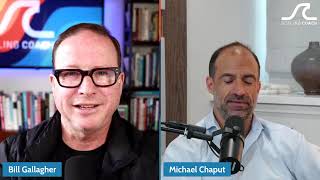
A recorded interview in which Bill Gallagher speaks with entrepreneur Mike Chaput about his journey from buying a tech reseller (PCs Networks in January 2000), surviving the dot‑com collapse, experiencing a company failure and personal bankruptcy (filed in 2004), then founding Insight — a recurring‑revenue IT services firm that grew substantially (reported ~$35M+). The conversation covers practical lessons in selling and service delivery, leadership and visioning (Rockefeller Habits / one‑page plan), personal health and habit changes (SAVERS, affirmation/visualization practices influenced by Napoleon Hill and mentors), mentorship (Gary Pica, Vern Harnish), views on “return on luck,” and using AI/LLMs to speed planning and documentation. The interview is aimed at entrepreneurs and leaders seeking resilience, go‑to‑market and scaling advice.
Questions this video answers
January 2000
2004
~$35M+ (revenue)
September 2003
Clemson University (South Carolina)
Chapters
Foreign. Well, we learned so much from real experience, right? People willing to share, to talk about what went well, what didn't go well, the, the crises, the disasters they navigated and how they turn it around by not giving up, by innovating, by leaning into new circumstances. That's our show today. Hang in there. You're going to learn about going from bankruptcy to 35 million plus and all that from somebody who's willing to tell the story. Hey, everybody, Bill Gallagher, scaling coach and host of the Scaling Up Business podcast. Our show comes every week. We bring now 650 plus shows to wherever you're watching this right now. LinkedIn, Spotify, YouTube, Apple Podcasts, you know, wherever you're getting, like subscribe, turn on your notifications and if you want to go do a workshop with me to get started in doing some of the work that we're going to talk about today. Scalingcoach.com we do a workshop every month and you get your feet wet. You start in, you get a little time with me and a few other people talking about your business and starting to figure out how to apply the ideas that we talk about with our guests and our clients all the time. Scalingcoach.com that's the website to go to. Anyway, with all that, I want to introduce a very old friend who I met like back in the 90s, Mike Chaput. Mike Chaput doesn't live too far from here. He had a company once upon a time with a different name. He'll tell some of the story and it nearly bankrupted him or it bankrupted him. He'll talk about that. So how do you go from that and then recovery and get over 100 employees and have, you know, be over 35 million and growing? How do you navigate that kind of thing? All that goes into that. He'll share some of his stories and thoughts about that as we go through. Welcome to show Mike.
Thanks, Bill. Nice to see you again.
Nice to see you again. It's been a long time. So Mike and I were both members of an organization called YEO once upon a time. It's known today as EO or the Entrepreneurs Organization. I've been a member of that for about 26 years and that's where we first met. He had his first company there. So take us back. Right. We talked about how you navigated something, but what was the business and what was that like? And like go back.
Yeah. So to put a time and a date on it, my partner and I actually borrowed money and bought a company called PCs Networks back in January of 2000, by the way, we joined Yeo, like very similar time. It was like, you know, February or March of that year. Somebody told us that would be a good idea. I was 24 years old. I had an electrical engineering and a computer engineering degree. I didn't understand what a profit and loss statement was. Just to put it in perspective, like a bank lent us a bunch of money and these owners, you know, also lent us some money. Um, and Josh and I, my, My business partner. Josh was 25, I was 24. We had a couple years of experience at Texas Instruments, but it just did not qualify us at all to be CEO or operations or sales. Like, we hadn't done anything. We were like kids. And so, yeah, it was kind of nuts. And then of course, In January of 2000, those in the Bay Area remember this. But about three months later, the bottom fell out of the dot com bubble. Nobody bought anything. The business was a. What was called a value added reseller. We were basically a technology reseller with a service arm. And so all of a sudden the gear that people bought was like, abundant at auction. So there. That dropped in the floor and there was just a massive glut of service providers and a total, you know, there was no, no demand. And. Yeah, and all of a sudden we were. That was the business we were in. With no experience and the. And somehow miraculously, through pure will and grit, we managed to figure out strategies to stay alive, pay down note, all that stuff all the way up until 2004. So it was like four, a little more than four years before we just kind of got a knockout blow. And one of the ways that we had even made it that far was we had kind of launched a software development arm and then one day a team of three. Software development arm. And about, you know, more than half of our profit and about a third of our revenue just walked out the day. Wasn't even half the profit. It was like covering the expenses. It walked out the door to go on its own. And the bottom fell out of the math, didn't work in the business anymore. And we had to figure out what to do from there. So the whole thing went under. It was. That was in 2004. And we dusted ourselves off and launched another company to be. That was like crazy.
Hold there. Let's not go through all that. Let's go back and go through a little bit of that. Because at that time. So I joined eo. My wife actually joined first. She had her jewelry company and it was the 90s and and through the earlier in the 90s, I was in telecom. And then I had radio. We had a radio business. And then. And then I saw this Internet thing come along. And I'd been kind of involved with Internet and earlier versions of stuff and BBS things and. But when we saw the web, it was like, okay, great. So I started in that myself. And I had two companies in the late 90s. I had a software development company and I had an early SaaS business. And. And that's what I had at that time. Right. So the whole dot com bust happens and 2001, it just looked like it was game over for me. So I actually shut down both of them. I thought it was temporary, but I never opened them back up again. In the beginning of 2002, we closed both businesses. We thought we were putting them on hold. We never went back to it. Right. And so I didn't try to hang out there because we had 33rd company, we had the jewelry business. So I'm like, well, let's just focus on this for a little while and we'll put the others on. Because I saw that same thing. I'm like, okay, wait, the development budgets are drying up. They're like everything, like. And there's a million people like me. Like, I don't. You know. And so I jumped out. And you hung on though. Like, so 2000, I think 2001, you could still ride a lot of things. Even after September 11th and all of that kind of thing, there was still some work to be done. But by the end of that year, it was bleak, Bill.
It felt like the. The punches just kept coming one after another. I mean, if it was first, we did this all with no experience. So, you know, like by the time we figured out how to get through the first year, it was like 911 hit and then of commerce just stopped. And it was like we were. We were so hand to mouth with our. With our revenue and our sales. Like the. The model was you had to sell a new project and then deliver the new project, and that gave you enough Runway to sell another at 9 11. Like, nobody answered their phones. And like, for most businesses, that's not a big deal. Like if it happened to my business now, it wouldn't be that big of a deal. But in that case, like if the pipeline had a hiccup in it, that was, you know, three weeks long while everybody mourned, like that meant we were under. So like we, you know, like when 911 happened, it was just like, oh my God, like, this is it, this is now like, I can't believe we made it all the way here just to be, be, be sunk by that.
That may, that may not be the case for you anymore, but I would venture more than half the business in the world, you know, in the US in the world, and even in our listener base, viewers are, are similar. Like if your pipeline dried, if your new business slowed and you just had or even contract a little bit, you, you, you couldn't string it together because it's so like waiting on the next, like hit a revenue, the next bit of cash. I think that's super, super common. So if you had to go back, right, and now, I don't know, pick your date. But if you had to go back and give yourself advice at the end of 2001, what would you say?
Well, you know, it's really hard. So, you know, and it's really hard to, you know, second guess fate, so to speak. But I really think that 24 year old young men are probably not experienced enough or wise enough to take such, take the burden of responsibility of running, you know, multimillion dollars of revenue. And I mean, there's a rare, put it this way, it's a rare young man that's competent and capable to do this. And I certainly didn't have the wisdom or the experience or the knowledge or the mentorship or the network to do it yet. I think that's okay. Like, I mean, there are plenty of stories, entrepreneurs, Zuckerbergs and stuff, who grows, who grow great businesses. And it's hard for me to look back because ultimately I use that experience and leveraged it into what is now, I think a really great company. So I don't really know. But you know, in retrospect, it was, it was hard on my relationships, it was hard on my health. It was like, it was emotionally distressful. I was like perpetual, it was perpetual misery for, you know, kind of nearly a decade. Because even after we started the second business, it wasn't like that business was like, oh well, now that you have a second business, that one's great. No, it was like the same thing again three or four years while we struggled to kind of string a couple wins together in order to develop something good. It took eight years or nine years to have a business that was kind of durable and stable with good customer base and good employees and a good revenue model and recurring revenues.
So in the transition from the failure of one business and then starting up the other one, talk about how you personally navigated that, how did you manage Your health, how did you manage your living expenses, how did you manage relationship, family life, like all those kinds of things?
It's a really funny. So think about this Bill. My first son, Daniel, was born in September of 2003 and my bankruptcy was like six months later. And my wife, who at that point in time was a successful technology sales rep at an analyst company that got bought by the Gartner Group. And once my son was born, she was like, I'm out, I'm out of the workforce. So like she left the workforce in September 2003 and I filed for bankruptcy in 2004 and was supposed to be like the sole provider of my new family. So the one thing that I just didn't, didn't do the kind of the pay it forward wisdom is I didn't have the, I didn't have the skills to cope with that kind of stress. And I ended up developing some kind of long term systemic health issues with my gut and so on and so forth. And then that, you know, led me down a whole, you know, discovery path about better philosophy with which to anchor on in order to manage and cope with life. So, you know, it's like, I guess it's a tough question, but you know, ultimately it's, you know, life is kind of a fail forward thing. You deal with struggle and then in that struggle you, well, in the cave, so to speak, you gain new skills and new capabilities and that's how you ascend. So again, hard to say, don't ever go to the cave. But you know, that's where you, where you get wise.
What was your change in philosophy? What was the experience or influence or whatever that gave you the perspective? Did you go to a retreat or take a class or take some hallucinogens? What was your.
Well, yeah, maybe a little all that the now the, you know, it's a really interesting question. So. And it, the Dan. So I don't know if you've read this book, but it's a book, everybody talks about it. And so then I, I read it back when I like the first time I read it, it was really weird to me. And it's that it's Napoleon Hill's Think and Grow Rich. And I read that book and it was like this old guy in the 40s talking about kind of manifesting is basically the idea and I just dismissed it. It was so new age for me and it did, wasn't practical and I don't want to sit around like, you know, in my quiet space thinking about my goals. It just it wasn't. It wasn't useful to me. And then when we launched the new company Insight, I met this. This guy. He's famous in my industry. His name is Gary Pica, and he was a mentor to me. We were in a peer group and he. He taught me this idea of affirmation statements. And, And I. And I really wanted what he had. He had this. He had this great, successful recurring revenue model. And, and he was showing me how to do it. And so I'm like, well, if this is what he did, maybe I'll just. I'll just try these affirmation statements. It reminded me a lot of the Napoleon Hill. And so I did that, and I didn't think much of it because it's so slow. Like it was, you know, it took years. And all of us, you know, all of a sudden we started manifesting, you know, success. And I didn't, let's say, immediately credit it to the affirmation statements. It was just something that I was doing kind of on the side. It was, it was not something I put a lot of like, oh, that's why, you know, I didn't create a causal effect. Well, anyway, then I had these health issues associated with my gut, and I, I went and saw this kind of naturopathic doctor after exhausting western medicine. And he was basically prescribe me affirmation statements for my health. And I was like, wait a minute, that's kind of what I did for the business. Maybe I should just give this a shot with my health. So I started doing these kind of affirmation statements associated with my health. I started following this thing that he called Savers, which is basically, you start morning with silence. You do affirmation statements. You do visualization statements. And visualization, as you and I are both on this thing, it's a huge part of leadership. You know, you create a vision for the future. Well, you can do the same thing for your life and your health. So you do visualization statements. So that's the V. Silence, affirmation visualizations. E is exercise, and then there's reading, and then there's scribing, and these are all writing. So, you know, I write every day, I try to read every day. So I try to do all these things each day. And I just started applying the same kind of techniques on the personal front that had led me to some success on the business front, which is creating a great vision for your future, you know, controlling your thoughts about it. By the way, it took me forever to figure out why this works. And ultimately your goals change perception itself. Things in the world are relative to the goal, whether it's a tool, an obstacle, a friend or a foe, it's all in relationship to what you're trying to do. So establishing your vision at the whatever at the personal level or at the, at the corporate level, those are, you know, equally as important.
That's interesting. So you, you had these multiple touch points between books and things that friends recommended and, and then your health event where that started to crystallize into being vision driven. Having a vision for something and then working around it, right?
Yes. And, and so, you know, it's, it's. By the way, it's the same for your relationship at home and for your relationship at work. It's like, have structure around, you know, like what you're trying to do, where you're trying to go together. Shared set of values, a shared set of missions. It's like, you know, if you want things to work, you have to create kind of uniting principles that bring multiple people into the same space. You know, there's something higher order with which to sacrifice towards. So, you know, it's like if people don't know what the higher order thing that they're making sacrifices towards are, then everybody gets, everybody gets squirrely. But if they understand, like, well, I have to, you know, the, the per, the best example, like the simplest example is a child has to sacrifice his turn to a playmate, but what they get in exchange for that sacrifice is a friendship. And that's higher order. It's better to have a friendship than it is to have every turn. And it's, it's the same thing. You need to sacrifice lower order ideals to higher order things that are worth more. And you need to do this on the personal side and on the business side. And that's how you bring, how you bring groups together.
So how many kids now? Same.
I have two. They're both in what. My youngest is heading to college this year. So they're.
Congratulations.
Yeah, 18 and 21.
Where is he going?
They're, interestingly enough, they're both going to Clemson University in South Carolina. So that was a surprise. We didn't expect them to both end up at the same spot, but that's how it worked out.
You have some connection to that or did they just like it?
My in laws live about 30 miles from there and one of their uncles has three degrees from Clemson. So there's a family connection. It's also just, by the way, an insanely gorgeous spot in the world. If you haven't been to that area of South Carolina. It's beautiful. There's lakes everywhere. And they've got a great football program. Most people know it for that. And it's just kind of a pretty decent university in that part of the world, the Southeast.
So you've got one there now and one heading there.
Yeah, I got a senior and then I've got a freshman starting this, this fall.
Big deal. Congratulations on that. Yeah, thank you. And still married.
I'm still married. Yeah. We've been through a lot. So that's, it's something, you know, it's actually something to put a lot of pride in. And by the way, as crazy as it sounds like, I'm also with the same exact business partner who was my freshman college roommate.
Josh.
Yeah. So there's, there's something, there's something to that, you know, being able to cultivate really long term relationships that I haven't even fully put my finger on why people put up with me for so long, to be honest.
Yeah. So you. So there's something there for you about preserving relationships and staying in contact, working through it with people, because very often marriages and business partnerships and things like that fail, Right? Next you're going to tell me you're with the same bank.
Well, it's like, you know, maybe we're shopping banks right now, but actually it's true that we've been with. Although it pivoted, it was Merrill lynch for a while and then they got bought by bank of America and we're still with bank of America. Excuse me.
So kind of you are. All right, so that's what you went through with the family and the relationship. You suffered it, but you weathered it together. At what point do you decide we're going to start a new business? We're going to call this thing Insight. Talk about the thoughts about how that like, so a bankruptcy is a scale, right? How'd you, how did you, like, what was it like there that you were in the middle of that? Where did you decide to jump back in again?
There's a lot of angles to talk about, but let's, let's just break down what, what happened. So we were, we were hand to mouth for four years. Like, like it took every dollar to pay the obligations, payroll and debt service and all that kind of stuff. And, and there were, we, we had grown this software dev business. In addition to the hardware resell, by the way, the. One of the ways that we even survived so long is we ended up riding a new technology wave in the security and firewall space. With a company called Sonicwall. We became one of their best. One of their best resellers. And we got a bunch of leads and we were getting a bunch of work, and it. It filled a big giant gap. But the other way we did it was we developed a. Basically a development around Microsoft SQL. We had this gentleman who worked for the company, and we grew that business. And I was out hustling, doing all the sales, and we tripled the size of the revenues, and it was having great contribution margins. First thing that happened was that developer convinced us to hire his wife, and she was a great developer. And then he convinced us to hire this lady from Russia who only speak Russian. And then the next thing you know, he took the. The wife, the Russian lady, and himself, and they went and just took the entire base of business. And there was just no possible. We had. We just had no vision to how to figure out how to make the thing. I mean, at the time, we were probably 3 million in total revenues, and that was like 1.5 million of the whole revenues. And it was. And we couldn't. We couldn't map the thing together without it. So it was. It was simply a moment where it was like, okay, this thing isn't going to work. And we. We negotiated with all the people who. We had obligations to which a huge obligation was actually the lease. That's what. That's what took. Took us under. We signed a really poor lease at the very first day. And unfortunately, that was personally guaranteed. And so, you know, we tried to renegotiate with them. They wouldn't. And it was like, well, without. Without that piece, there's just no continuing. So we. We obviously consulted with an attorney and, and we. We got some advice around, you know, how we could start another business. There's. There's a bunch of, you know, details associated with that, but once we established that the. Once we established the bankruptcy and there was a certain amount of assets we could retain in our house and everything like that, and then after that, we were free to conduct whatever commerce we wanted to, and we didn't really have anything else to do, so there was some void in the marketplace. And we started a new brand and solicited and found some new clients and was very small and incredibly modest. We had this gritty little space in Berkeley that didn't require a personal guarantee. It didn't care about our bankruptcy. And we built a company called Insight. And it worked. I mean, it was, like, kind of unbelievable how.
What's the business of Insight today? Versus what you were doing back then. So you've been doing reselling and developing and value adding and all kinds of things around IT infrastructure. What was your concept? Or did you just stumble into it with nsight? How'd you even come up with the name?
Well, we, the name at the time, it was incredibly hard to find any kind of reasonable name with a dot com address. We ended up pivoting to net and then we were just trying to figure out any kind of name in a hurry that had some kind of memorabilia that we could figure out a way to maybe connect to our brand at some point. It wasn't particularly thoughtful or strategic as maybe I hope it was, but we were kind of like thinking something like, you know, the end of it suffering is in sight or something like that. You know, we were trying to like figure out a way to create, you know, a connection to maybe what we did, which was like, hey, you know, end your IT pain. So that was the question in the business model. I mean we, I want to say we stole it, but it was freely shared with us. So stealing isn't a great, a great analog. But this, this guy, Gary Pica and his business Dynamic Digital out of Philadelphia had sorted this out. They had, they had come up with an IT service model catered to small businesses where it was recurring in nature. And he had a scope of services. And Josh and I flew out to Philadelphia and, and he toured us around and we saw all of his departments and the light bulb went off and I just said yes, you know, all the people we used to do business. There was a section. So I don't know if you remember Howard Yellen, but Howard Yellen was a, was a, was a yeo or back in the day when we were there. And he had this little business called pcg and it was a, it was a consultancy that did IT services to the legal industry. And he was going to shut it down, but instead of shutting it down, he decided to kind of like gifted to Josh and I for like a song. Like we had to pay him some, some, some recurring of the profit while we ran it for, for a minute. This is in 2002. So it was another kind of thing that buoyed us up in there. But what one of the things that PCG did that we found really interesting is their lawyers had these like recurring scheduled days. And that became kind of nice because it was like we could manage it. There was like a guy who show up on Tuesday at one law firm and another one. So that was like the first Idea it's like, oh, recurring revenue. That. That should be like, something that we. That we figure out because we don't have to think about the projects. But Gary had turned his whole business into a recurring revenue business. So I thought, you know, who could use this strategy where all those old law firms that we used to serve that had these recurring scheduled days, because this is much better, they basically get it managed services. They can call us at any point in time. We can remote into their systems. We can handle all the maintenance remotely. It just seemed like a much better model. So we stole his model. And there was a. It wasn't just the law firms, but it was like there was a bunch of clientele at that time who was using the schedule day concept with consultants. And this was just a much better delivery model. And so we said, okay, well, we can do this. And so we talked to a bunch of customers that we knew, and we found new customers. And the one thing that I learned really well, Bill, in the four years before the bankruptcy was how to sell. Like, it was an essential skill. Like, I. We would have lasted even a quarter if we could. We couldn't figure out how to sell. We also learned how to network us, like through. Yeah, that was kind of a part of the selling. And so we learned those skills really well. So when we launched the second business, I was like, already knew how to go to market. I already knew how to network. I already knew how to describe these, you know, what the problem was and what our solution was and how to take a point of view and how to close, basically. And so we sold our first slew of customers on this recurring model. And they were. I mean, obviously they were happy with this. We. The one thing is the partnership, the small team that we started, Insight was really competent on the IT side. Like, we knew how to do service delivery as well. And so if you know how to do service delivery and you know how to sell, you can kind of start putting together the basics of a business. And so that's what we did. And then more and more people wanted in, you know, customers, and then we were able to sell employees. And we had to master a whole bunch of other skills along the way to scale. But that's how we got started.
I think it's a really, really useful insight on insight. So if you know how to sell, right, like, you could find somebody, hopefully you find somebody who can deliver the work, but if you can just do the work, but you can't sell, you may suffer and fail in business, right? Like, the fundamental Thing about knowing how to do something, and I mean, sell something is far more important than like, you know, I go sell something, and if that wasn't work, I'd sell something else. And, you know, if you're focused on selling and then if you're, if you're a guy like me, where you're trying to sell and deliver and you're the primary thing, that's the hardest by far.
You got to master all of them all in one brain.
It's a. So actually there's a key thing, like when you think about the small. I bet some of our smaller company audience are like this too, where, look, I sell based on leads. I get referral business really. You know, we have things like this show and people refer and come up and show up around it. But really the, the volume, the traffic is people who know me, who know my work and, and who see our work in the world and they're like, okay, we want a piece of that. So there's no part of like outbound prospecting in my world. And I, and I think that's a problem if your company is like that. Like, it's happened to work in my case, but not. It would be a lot easier if I had started the beginning with a great, like, outbound pipeline. A way to call you up and go, hey, CEO, you want to come work? I'll help you scale your company. Right. It just doesn't work that way in my world. But that is a fundamental thing that makes all the difference. If you can figure out how to knock on doors and build some business, that can make a massive difference.
Well, Bill, to, to do a quick plug for, for you and what you do. So I met Vern Harnish. He spoke at an EO event. And like in those early 2000 years, I don't remember exactly the year, and he gave away the first, the First Rockefeller habits 1.0. I have a signed copy still from, from him on that. I, I ended up buying the 2.0 version, you know, years later and just going through that. But to me, I think the idea behind his playbook is very simple. And I always use the example of building a house. It's like nobody can build something that's in your head. Not going to be able to put that house is not going to manifest. It needs a central drawing of what. It needs some descriptive drawings of what that house is going to be. Then the descriptive drawings need to get successively more detailed such that the carpenter knows exactly what to do. You know, the structural engineers know, like you have to. And that's what the one page plan is ultimately trying to do. It's trying to get the leader to say, hey, this is what we're trying to do and here's how it's going to break down. Like I need, first I need my big hairy, audacious goal, the pinnacle, the vision. Then I need to figure out what the line is through five years. So if we're going to get that goal, what are we going to do five years? Then it's like, well, if we're going to hit any of these five year goals, what do we need to do? One, then quarter and then all the way down to what, you know, what Susan does on Monday morning and what are the metrics we're going to hold her accountable towards through that line. And you know, the, the, this like I, we struggled with it Bill, forever. Like we didn't know, oh, do we set this target first? This target, what should it be? What's a good, what's the right extraction layer for a one year goal? Is it specific enough? Is not specific enough. And you can, you can spin your wheels a lot doing that. And if you can work with somebody who's done it, who knows what they're doing, who can guide you through it, you can create a great vision. It's like you wouldn't build a house and just try to be the architect. You know, you would, you would get an architect to help you. You know, what do you want in your house? And then, and I think that's what I think ultimately that's what you do. And I think most leaders could, could benefit from that kind of guide.
So you think, how long did you spend working through those things?
Oh gosh, years. And I mean we went through, we, we've been through Rockefeller habit, we went through Pat Lencioni's the advantage. We've done EOs, you know, so we've, we've tried all the, all the stuff. We're worse. We've also baked in a huge amount of lean philosophy. So there's a bunch of that embedded and there's a, there's, there's business planning methodology inside a lean. But ultimately we haven't found anything better than the one page business plan, at least not as a way of, of consolidating all these concepts. So we still use the Rockefeller habits one page business plan as a way of codifying the most distilled form of our vision. And so that's still in, I did.
A new client, a new client this week that they've been in business for a little while. They're actually doing acquisition growth right now. But we did their first plan and they've done a bunch of versions on their own and with a lot of stress and that kind of thing. A little advance work, a couple of phone calls and then in two days we knock out what's the purpose, the why statement, what's the vision, what's the bhag, what are the values, how does it all work together? What are the brand promises, what's the vision narrative, what are the annual initiatives, what are the quarterly priority? Like all that and a bunch more in like two days. And I was with, on a call earlier today with another client that's fairly new and we did all of their smaller business and we did all their vision, purpose, brand, all that stuff in one day. Right. So you think about that like you might struggle with it for years and then you get some help. Now it costs something. So you know, it costs anywhere from a few grand to many thousands depending on our approach and how we're working, how big your team is and things like that. So the complexity of things can change it. But like in any case, no matter the approach, it's getting done in a couple of days and it's going to be good. It's not like just slapped together like just because I'm, it's what I do for a living. Right. Like and I've done it for thousands of companies now. Right. So when you do it on your own, when you struggle with it as a 24 year old or 34 year old or a 42 year old or whatever it is, it's hard when you're working on your own. I know I did it myself for lots of companies and we iterated on it, we spent away and we did retreats and things like that. And then when you're working with. And I, my first coaches sped it up for me. We learned from Vernon and we did it faster and then I, and then when I went to go be a coach full time, I'm like, I guess I should just work with Vern because he's the one who made a difference for me.
Well, there's, there's a bunch of things that people who attempt to do this on a self service basis, there's a bunch of things that are subtle that you'll get stuck on. So for example, you're setting a one year target and like you don't know whether it's, let's say, too specific or not specific enough. Should it be more measurable should it be more lofty? And it's just like, you know, there's no answer to that question. You know exactly. There's no exact answer. So if somebody's seen a bunch of these and the seen companies that what targets have tended to work and what's all that's not like it's, you get that wisdom in your room, you could just, you can short circuit how long it takes to get to a consensus like this is good enough that you could. We got to the 80% here with this. We directionally, we know what to do. One of the things that we've done Bill, as we in the one page business plan, it's the distilled version of it. But then we come back and for each of the segments we do a long form write up. So each leader takes a section and they write in detail what that little thing means. So like the one year plan, like where did it come from? So that way we can have a distilled version that you can see and then you can have like. Well, if you really want to understand how this one year goal is and where it sits and why it's connected to the five year and how it's connected to the bhag, you can, you can read a write up and the large language models make this a little easier to do as well because you can record your meetings, they can kind of give you the first version of this. And so there's a lot of stuff you can do now that we couldn't do back in the day.
Yeah, it's funny, our competitive analysis, strategy development, we're using the AI LLMs and before, during and after all of our meetings now. And it just speeds everything up from when we're working by hand and things on the wall, like taking all that and putting that into one concise set of notes like that gets done easier. Recording the meetings, transcribing the meetings, summarizing the things like get all of it is enhanced, aided, speeded today with LLMs. And I think that what you point out is like there's the speed of that, the having an outside perspective on knowing it's good enough. You can relax now and somebody to tell you that and, and somebody to know how to guide you through that. But, but it's just, it could also be fun. Like it doesn't have to be such a struggle. Right.
Well, I'm with you. I think so I've got this, you know, take I've been, I've been putting out there. So there, there's these two, two guys, Doshi McGregor, and they wrote this book called Total Motivation and they talk about motivation. The three kind of durable sources of motivation are play, purpose and potential. Okay, and that's, and so what you're talking about is this source of play. Now I'm going to hit play in here in a second, but let me talk about the three motivations that are non durable. They're not iterable and they actually don't work. And it's economic pressure, emotional pressure, and inertia. So if you're just doing it because you've always done it, that's inertia. It's not a great source of motivation. And if you're trying to impress your dad or your wife, that's emotional pressure, you don't want that. And if it's economic pressure, you're just doing it because who's going to pay the bill? Bills like these things are very exhaustible resources. But when it's play and, and you're doing it because it's fun like you talk about, and I think it's absolutely fun. It's like some of the most fun time you can have, like stimulating conversations with the smart people you have a great relationship with and you're working on something exciting together. I mean, what's better than that? So whenever you can make the work play, you're, you're not only going to get a better result, but you're going to, it's going to be an inexhaustible source of motive. And of course things are going to work out a lot better if you're in that space.
The more playful, the more combined, integrated we can get, the better for sure. So talk about. Let me ask you a couple additional questions about the new business. So what would you say has been your luckiest break? Where have you gotten lucky with the new thing?
Boy, I don't, you know, I'm kind of in the school of Jim Collins return on luck. You know, I don't actually, I don't believe in the traditional sense of luck. So that is to say that there are constant disruptions, you know, so like, you know, the example I've been using in the face of the large language model is there was the disruption of broadband Internet. Okay, that was a disruption. And if you look at the way that Blockbuster played it, you'd be like, oh, well, they got really unlucky because their business model was disrupted by broadband Internet and it just killed the brick and mortar distribution of, of content. But they easily bill, they easily could have been Netflix I mean, they were in a much better situation to be Netflix than Netflix was. I mean they had customers, they had brand, they had, you know, contracts with the media companies. So it was a bad luck that brought, I mean it could have been great luck, you know. So, you know, we've been through all kinds of like bad luck events and we, we just kind of played them appropriately like, like, I mean, Covid turned out to be good for us, you know, because everybody needed to figure out work from home. And that's, that was a technology solution that we're really good at technology. So, you know, it was like, like we, but we played it right. Like there's tons of people who didn't figure out, didn't see it, you know. So I guess I just, I see everything more like a coin. There's a heads and a tails to all these luck events and to me it's more about return on luck. So I could talk about all the disruptions, the banking cris. We, we won in that crisis. I don't know how, but it was like. What happened was a bunch of larger companies started to try to cut back and all of a sudden one of the areas they wanted to cut back was their IT staff. And all of a sudden they kind of entered in market and we found that there was like a, an opportunity for us to go after these shrinking companies and re retrofit their IT departments. And so we saw an opportunity in IT even though the market was crashing. So, you know, like, it's weird but like I'm kind of thinking, you know, some of the, some of the bad luck, I, you know, you might think banking crisis was a terrible luck thing, but we, we ended up doing well, Covid. We ended up doing well. So, you know, I, I don't, I don't know. I mean there's, there's no obvious thing comes to mind.
There's this old study. It was like Cambridge or Oxford or something like that. They want to study lucky people. So they asked people, are you lucky or are you not lucky? Like how do you describe yourself? And they, and they put people in two buckets, but they gave them both the same situation. So they gave them this theoretical like little experiential thing. And they set up roughly the same set of circumstances on one where they put an opportunity to get lucky along the way. And the unlucky, the people who thought of themselves as unlucky went about and had an ordinary experience. They went out and they came back and they said, yeah, I walked down the street and I Got a cup of coffee like you told me to, and I, it's fine. Like, you know, here you go.
They didn't perceive the luck event at all.
Right. The other, the lucky people on average found the money that was laying there on the street and met the interesting millionaire in the coffee shop and came back with a rich story to tell about what a great day they had.
So this is by the way, the same. This is back to Napoleon Hill. All full circle to that. So your, your self identity is why affirmation statements work. Your self identity, the thing you tell yourself about yourself, affects your perception of the world. The same world. Yeah, but, but you're able to perceive it differently based on your self identity. So the, the world of so called fact is not the same for everybody because you have to perceive it and your focus is, and attention is a limited resource. And so, you know, this is a perfect example of how your identity affects your experience.
You know, it's funny, I, I hate the word. And the use of the word manifesting just really bugs me. It's one of those things. It's, it's kind of triggering for me.
Right.
And, and it's not because I don't believe in what's being said there. It's because I think most people don't understand it and they use it in a way that disempowers themselves. So thinking about that, the lucky study, and maybe I'm not even telling it right, maybe it didn't even happen. Like that doesn't matter. You have a set of circumstances. Everybody had the same set of circumstances. So whether you were out, you know, manifesting whatever, like we all are surrounded by opportunities to discover money, to meet interesting people, to seize opportunities, that kind of thing. And the people that are sitting around there doing their manifesting work are personally, it's not magic. You're thinking about looking for the opportunities in the world and then you're taking advantage of them because they're actually already out there. It's not like doing some incantations brought them to you. No, they're there. The doing the incantations primes you to be looking for them, to actually seize them when they arise. Right.
You perceive the world relative to your goal. Like if something's a tool or an obstacle is only. You can only see whether it's a tool or obstacle if you know what you're trying to accomplish. Otherwise you can't even see that as a tool. Like you have to know your right.
You, like you have to pick up the money, you have to say hi to the guy or gal. Right. Like you. You have to do something to realize.
Right? Yeah. And you. And you have to have an identity or a goal or a vision in order, like, you know, just think about your feed. It's like your feed is a machine. Your machine algorithm that whatever you stop for a second at, it's going to show you more of that. So if you know you're trying to be a great CEO, you might pause when somebody starts talking about how to be a great CEO for a second and then what's going to happen to your feed? It's going to show you more of that stuff. If you don't want to be a great CEO, you're just going to swipe up really quickly and you're not. And the world's not going to reveal anything else to you about how to be a great CEO. So you have to prime yourself with a goal. I want to be a great CEO in order for the the world to disclose to you what it's going to require to be a great CEO. Maybe you're going to watch this podcast or something.
Yeah. Well, we've talked about an awful lot of good stuff and we've talked for a while now. I think we've given people enough to chew on for the week. If you're in the middle of something or face something soon, don't give up. There is something better on the other side of it, navigating through it, hanging on to those relationships, looking for what you really want. Finding a way through to the other side, I hope is a message that you got from Mike and his story today. Thanks so much for joining us. If you want to know more about Mike, mikechapet.net got all his links to all his good stuff there, mikechapet.net, his LinkedIn, his et cetera. So that's a way to get in touch with him and find his company inside and all that and more@mikechapet.net if you want to do a workshop with me, come do get started with scaling up. Go to scalingcoach.com and you'll find out, here's something else. If you got something valuable out of it, I'd love to hear from you. I think with this world of podcasting and YouTubing and that kind of thing, it's so like I'm speaking into the void. I'd love to hear from you. Drop me a note. I read and respond to every single comment you can. Make it public and comment on wherever you're getting this right now. Or send me a note on LinkedIn or whatever platform that you're on and I'll reply privately. But I'd love to hear how it's valuable this show or any of the others. Love to hear from you. Send me a note. Thanks. Mike Chapet thank you for being with us. Thanks to my mutual friend and mentor, Vern Harnish, who created the whole scaling up mess that I'm a part of and has impacted so many thousands of companies today around the world. And to Wanda and Anna, who got our show ready and produced in and out every week and keep us in front of everybody. Thanks again for watching, for listening. Until next time, keep scaling. We'll talk to you soon.










