Rewiring Your Brain For Success with Hanneke Antonelli
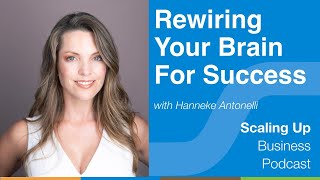
Hanneke Antonelli talks with Bill Gallagher about rewiring your mindset for business success. She introduces her book The Up Level Project and a formula linking beliefs, language, thoughts, and feelings to results, with examples from her coaching work with leaders and entrepreneurs.
Chapters
The broadcast live again.
Woohoo. Here we are.
We're talking about mindset today. Managing your mindset, getting your head in the right space to not screw it up, to do a good job, to grow, to build your business. Yes.
Please don't screw up your mindset. It's bad start. Bad start.
Hi, everyone, I'm Bill Gallagher. So scaling coach, host of the show. We bring our show every week to you three times a week with something in the world of scaling up, growing your business, elevating the people, strategy, execution, cash, and the leadership to go along with it. Today's conversation, very much along that line.
Yes. We're definitely going to dive way into that. Thank you for having me here, Bill.
Thank you. Welcome to the show. So guys should know Hanukkah, right? Sounds like a Jewish holiday. Yeah, she's from South Africa. It's like an Afrikaans name, I'm guessing.
Yes, yes. Well done. Yes, it is an Afrikaans name. It's this Afrikaans name. Well, actually it's more Dutch, but. Yes, Dutch. Yeah.
Kind of the same thing, right?
Yeah. You know, what's the difference between Dutch and Afrikaans? We don't know.
2,000 miles.
200 years, actually.
Yeah, yeah. So anyway, we're going to get into all that and more. Just a second. We've done 300 episodes now. There's something on almost everything. Go find all that and more@scalingcoach.com that's our website, scalingcoach.com all the tools, download, show notes, that kind of thing@scalingcoach.com plus, if you'd like some help finding a coach in your area, we can help you find one and somebody who fits, whatever you need. Scalingcoach.com Anyway, we're going to get into it now with Hanukkah and she's got a book coming out as we record this. Actually, it's actually today that the book is launching, right?
Yeah, it's happening today and it's been fun. The up level project. It's live on Amazon and everywhere else where you can buy a book.
The up level.
The up level project. Yes.
Raise it up. So let's get into all of that, the book and the ideas, the stories and that kind of thing that help you to manage your mindset or level up. But before we do that, let's talk about you and how you came to work in this thing, write this book. Like that kind of thing. So did you tell your mom at 7 that you wanted to write a book one day about mindset?
Of course I did. Of course I did. That's the first words out of my mouth. How did you know? No, actually, no, I actually, you know, I grew up in South Africa, as I mentioned. And I remember first I was gonna become a doctor because that's what people did back then. And I remember the first, like, questionnaire was like, why do you want to become a doctor? And I couldn't really fill that out. And I was like, and then I should probably not become a doctor. So I went to school and I actually got a business degree. And when I finished up, what I do remember saying to my mom while watching Keeping the Faith with Jenna Elfman and Edward Norton was she had this like, corner office and she was just so badass. And I was like, one day I want to, you know, have a real power career. And so when I finished university in South Africa, I had a huge student loan and there was no. And we also don't get like the rates that your students get over here. You're borrowing it straight from the bank at prime minus one, and the interest rates are super sky high. And I was like, man, this isn't going to work. I'm going to get my visa and go to London and do a side of travel while I pay off the student loan in a stronger currency. So fast forward, I land a job as a money broker and I become the high powered woman and I am miserable. I did not enjoy it at all. It wasn't for me. I mean, at first it was super glamorous and, you know, you got the credit card and all those fun perks that comes with this big corporate career. But I just realized then and there that actually this wasn't for me. Now at this point, I had struggled with depression and I had actually ended up in a psych ward in South Africa. And I had decided, like, I was going to do everything in my power never to ever go back there again. So when I start working on Wall Street, I start working with my first coach. Yes.
All excited. You're on a tear. I struggled with depression and I ended up in a psych ward. I decided I never. Like, that's a big flip of deal and you're like, ripping through it.
I'm ripping through it. I'm like, dude, we've got other things to tell you about. Like, let's get to it. No.
So we all have moments of challenge and trial that hit us in life. That's not a small thing.
Yes. No, I mean, that's not a small thing at all. And so, you know, what happened was as I was 19 my medicine malfunctioned on me. And as they were trying to tinker to get it back, like they actually just gave me the wrong dosages. And I was basically on suicide watch for a week. And. And so I remember being in. This is sort of where my story start. So I'm in the psych ward and this woman checked out and she was, you know, she was already a mom and she had a family. And she checks out on a Friday afternoon and I'm like, okay, people leave this place. Like, I'm not going to be here forever. And so she checks out on Friday afternoon and on Friday evening at 9pm she's back in the psych ward. And I remember it making such an impression on me because I was like, oh, my word, this, I don't want this for the rest of my life. And so it was right there and then that I made a commitment to myself that I was going to do whatever it took to get better. And I was going to wean myself off of this medicine that I can't trust, that does so many wonderful, beautiful things for other people, but somehow had not worked for me. And so I did that. I, you know, within a year had weaned myself off of, off of the drugs. And then I'm going to drop another bomb on the audience. And then the night that I take my last, my last depression poll, I actually got raped. And so I have, like, luckily had a lot of support around me and I was able to overcome that. And that's then how I, you know, moved to London and move on and overcame that and then eventually decided that, you know, I had gotten so much from coaching and people who had helped me with my mindset over the years that I wanted to give that back to people. So while working on Wall Street, I hire my first coach and then fast forward a couple of years. I had started a Pilates business. And then from there I was like, okay, I don't want to become a YouTube sensation. I don't want a brick and mortar. So what's next? And so it's then that I land in the world of coaching and wanting to pay this forward because it has helped me so much in my own personal life to overcome all these adversities.
And to go from severe emotional trauma and psych impact and the experience of being scared and being institutionalized, even briefly, and then a deeply intimate, personal physical assault and then navigating your life and your career. That's a lot of stuff to grapple with. And it can't help but Shape you and teach you something?
Yeah. Yes, absolutely. Like, I definitely, you know, I. It wasn't easy. It was obviously hard and horrible as I was going through it. And yes, it strike me, it has helped me to become stronger, to become more resilient, to be able to, you know, I'm able to kind of bounce off of things quicker as a result of that. But it taught me these lessons and specifically these mindset lessons and like, how to really work with your mindset to continue on and to continue to move forward or overcome difficult situations.
Yeah. So before we go into what you learned and what you did and the other things, I think it's useful to remind our listeners and viewers that the. Although maybe you haven't had anything quite so dramatic, but I promise you that all around us are people and events and things like that. And then sometimes, like we've had things, we don't recognize them as being significant and profound and having an impact on us. But I, but, but it's, it's. It's the water we swim in as human beings. There's breakdowns and traumas and upsets and fears and things like that all going on that we're all grappling with and figuring out how to do. And whether you recognize it or not, it surrounds you, even if you haven't noticed it touch you directly. But it's there.
I think that was. Yeah, I just want to touch on that. I think there are way more people who deal with mental illness that we know about in our lives because it's not something that people want to talk about or it's not even, you know, it's just not the thing that people openly talk about. It's Mental Health Awareness Month. Actually. It's. I think it's kind of fitting that we've. We're having this conversation today and if you are that person, like, I want to really tell you or encourage you to ask for help, because that's like the first. The first way of how you are going to be able to do this or overcome this and make changes in your lives. And then for those of us who are in our daily lives and we are not aware, I think it's also just really listening more to our friends and the people around us. I think when the first time, when I shared what had happened to me with the sexual assault, I was blown away by the amount of friends who reached out and they were like, oh, my word, this happened to me as well. And so the more we can a. Open up and tell our personal stories, people we're often like, oh my God, what's the neighbors gonna say? But actually the neighbors aren't going to say anything because the neighbors are your friends who are going through similar situations and your story can help them. Which is a big reason why I wrote the book is, you know, I do believe that my story can help other people to overcome. It doesn't have to be the same things that I'm facing, but adversities in their life. And yeah, it can be of service in that way. So starting to own all of the bits of our life that is messy and not so pretty and being more open to talk about them can have such a huge impact on the people around us and it can help them.
Yeah, it's a real gift and contribution to let yourself experience it, share it, remember it, process it. It's valuable for all of us to go there, right into the things that we don't. And even in a business setting just to ground it to that. So first of all, there's us needing to be powerful and effective in the face of all those kinds of challenges and lead our teams in a clear headed way and not to be distracted or diminished by other kinds of things. And then there's the people around us that we lead. And I've had CFOs and COOs and CEOs have mental breakdowns of one kind or another. We've had deaths, we've had suicides. We've had things in the companies that we work with and in their families. Right. So even if your CFO is doing fine, but a family member is traumatized in some way or in the middle of a crisis, then you're suddenly impacted as well. Like everybody's drawn into that. There's no escaping this thing. So it's useful to think about that. We've had. I'm blanking on the name. I do that all the time these days. One of the other coaches wrote about, put your own oxygen mask on first and need to think about and take care of yourself. You cannot take care of the people around you. If you're grappling with something yourself, acknowledging it like that.
And I think that's why it's so important, you know, in leadership positions as business owners. You know, look at what happened to Kate Spade. Like, you know, like the mental health is a huge thing that's so overlooked in entrepreneurship. And then when.
Or Tony Hsieh Sados. Right?
Yeah. So many people. And like if we, if we go back, like there's this mainstream, like just think positive, just think Positive, like, that's not what mindset is. Mindset isn't me sitting here ignoring my feelings, ignoring, you know, things that are going on in my psyche. It's actually you becoming present and, you know, look, taking a deeper look and working through all of these things which then impact your mindset. And I think this is so overlooked in entrepreneurship. It's specifically now such a, you know, the buzz word. And it's like all hyped up to be this glam lifestyle where most of the time, being an entrepreneur, it's like you're, you're, you know, your sleeves are rolled up and you're in the kitchen doing a whole bunch of crap. And, and so I think it's so important as an entrepreneur that you remember that it's your job to, to take care of your mental health. And that means taking care of your mindset and taking. And putting that oxygen mask on first.
Yeah. You know, I'll share two small personal experience, well, a couple that I think go along with this as well. And then you can, you can point out your process and what you learned around these. But one of them, I was in the middle of a big family trauma drama and I hadn't slept at all. I'd been up all night talking to family members or just like distressed about what was going on. It was some years ago. I'm not currently in this moment. It's all resolved now. But at the time, I was deeply, deeply upset and I hadn't slept at all. In the next morning, I had to give a full day workshop on some of our scaling up stuff to a group of 40. And so I walked to the front of the room without any sleep and still in some emotional turmoil over the whole thing. Except in that moment, there's also nothing for me to do about the family situation. Right. There's just like, they need some time, some other things and.
Yeah.
So right now I just need to leave this damn workshop. And so, but I'm clearly not like, super great. So I just walked to the front of the room. I said, listen, guys, I just want, you know, I'm, I'm really tired. I didn't sleep last night. I'm dealing with something. There's nothing else to do right now. There's nothing you should know. I'm okay. It's handled for the time being. And I really can't say more right now. But I, and I want, you know, I promise to just bring everything I got and, and get it with you. People so responded to the courage to share that Right. And I think I probably cried a little bit in the middle of that, like just. Or felt it was visibly emotional and. And then I, you know, I just was there with them having named what was going on. Right then setting it aside and then making a promise to them to deliver something and then being with them like the, the reaction from the group was outstanding. Like the reviews, the whole thing was like over the top or it was different. I don't know. It was like being real and raw and then going for it. I was truly, truly exhausted. But you know, we have more reserve than we realize.
Yeah. But yes, absolutely, we are more resilient than we, we think we are. And that's such a beautiful example of taking radical responsibility for where you are at and then being a radical leader in the moment of, you know, telling people what's going on, which is this, the whole vulnerability, another buzzwords that, that, that's off at the moment, but it's just about being honest. Like this is where I'm at. Here's what's happened. But you're, you didn't over share with them, which then kept their trust with you intact. And as a result you were more relatable. And because you were more relatable, they were more intrigued. And so I'm not surprised that you got amazing reviews from that.
Another one that went a little different wasn't so much me, but on one of my teams, I'm in the middle of leading a day, you know, planning quarterly or annual planning for one of our teams this few years ago also. And one of the senior team members shows up late and then begins behaving erratically and not being like in a different conversation, like talking about things that are only loosely related, not connected to the train of thought. And I thought to myself, wow, this person is somewhere else entirely. And they're not. Not rational or functioning in a normal way. And they're on the verge and then their energy level, like they're on the verge of a breakdown.
Yeah.
And so I gave the room something to do and I took the CEO aside and I said, listen, that guy is not on your team right now. He's somewhere in some other land mentally. And I think you need to be worried about him having a full blown mental breakdown. And, and he's like, really? And I'm so. Yeah, no, no joke. You know, I've seen this a couple times and there's headed for something and whether it happens or not, and let's hope that, you know, this is just a moment of I don't know, maybe he's drunk or something. You should take some steps, right? You need to secure the physical space, the, the Internet space, the digital space. You need to lock up money. Like you need to do stuff. You need to advise the board that you've got something going on here with a key member. And they only did a little bit of that. Not the full preventative things anyway. The next day began a multi day breakdown of this person full tilt, like, you know, break of some kind and the office was vandalized, broken into, things were damaged and money was, a great deal of money was diverted, right. And they were able to claw it back and to address the damage. But a substantial thing like went on. That person lost their mind for a little bit and had some kind of a break. And you got to be aware of it and watching for it and sensitive to it and not just be like hopeful that things are going to be fine, right. When it is going to lean into it.
Yeah, and. Yeah, exactly. And that's like where it's become so important, where you know it's very important for you. When you are in a leadership position, whether that's as an entrepreneur and you're stepping into the more CEO role of your business versus the client deliverable or when you are in the C suite already, a good chunk of your any management position actually a good chunk of your role becomes supporting the people around you and noticing when things are off with them and having the awareness to then support them in that moment. And to do that, that means you have to create a safe space. And how do we create a safe space space, emotional space for someone, right? We build trust with them. How do we build trust with them? We treat them that they're a freaking human being with a life. We ask them about their personal life and what they're doing this weekend and what they did this weekend. And that stuff that's often gets overlooked because we're so busy in the nitty gritty of running a business and making money that we forget that the people working for us are human beings with feelings and thoughts and lives other than just in this room. And so the more you can allow yourself to create some freedom in your schedule so that you can become that person, the better results you will see in your business.
Yeah, it's really well said. Like you know, at the high functioning end of things, if, if you want to raise performance and that kind of thing, there's a personal reason why somebody's performing or not performing. There's interconnection between their Hopes and dreams and that kind of thing. And just being aware of what's going on with them to the extent they're comfortable in sharing with you. Right. People don't want to share with you everything going on with their partners necessarily. And sometimes they do. Like, finding that balance is a really critical thing. Right. Giving some room to it and then managing what's appropriate to the level of business. Obviously, if somebody comes into your office every day and wants therapy, they've confused about your role.
Yes. Yes. You are not the therapist. Enter stage right, like, or exit stage right or just, you know, you can. Even so I remember. So the most powerful thing for me, if you ever find yourself in this situation, this was a friend who did this with me, but I'm forever grateful that she did this with me. So before I had the breakdown, before I, you know, they had adjusted my medicine, I was in a very deep and dark place. And I would every afternoon go to my friend, I would sit down and I would, you know, unpack all of my stuff with her. And one afternoon I will never forget, she, like, takes me by the shoulders and she's like, hanukkah, I love you, but I can know more. This is above my pay grade. You need to go and find a therapist.
Yes.
And, and so if you are in a conversation like that with someone in your life or, you know, and you're afraid to say this to this person, trust me, that person is going to so appreciate you for the rest of their lives if you give them that information. Because you are not a therapist unless you are like, you know, you went to school, unless you are. But if you are not a therapist and, or if you're not a coach, and I mean, even coaches, like, we're not supposed to be dealing with people who have personality disorder and have, are not high functioning human beings. Like, you know, we also will say, hey, I think you need to go see a therapist. There is nothing wrong with that. That person will respect you so much more. And it was for the benefit of your friendship, but also to keep your, your friends safe or your, your staff members safe.
Yes. Yeah, there's a time to call in that. So talk to us then about how did you take care of yourself? Because I think that's your first story really is how you navigated and got yourself weaned off and figured out how to deal with those issues for you that had been before then medicated.
Yes. Yeah. So number one was first making the commitment. Right. Like, so before you want to achieve anything, it's all about that quality of commitment that you are going to bring to it. And so if your commitment is not at an 8 or higher, then you have to ask yourself, well, is this something that I really want to attain or is it just like fluff that I'm saying I want or is this even a goal that is my goal or is it someone else take this goal for me and I don't give a shit. So you really want to ask yourself that. Now obviously, mental health, like very personal thing, I was super 100% committed to it. And so the first thing that I did was I was like, okay, I am going to surround myself with help, I am going to seek out help and I am going to continue to show up for myself. And so then, you know, through all of that I start working with this life coach in London. And that really changed my life because I had worked through the trauma. I wasn't really, you know, classified as depressed anymore. And therapy wasn't really giving me the results that I want at that point. Point. And so coaching really worked for me because I am a very action driven human being. I like forward focus.
Really?
No, I don't know what gives you that impression that I wouldn't be. But anyway, so basically she says this thing to me or she gives me this book to read. Somebody should have Told Us by Jack Pransky. And he does this, he says this thing that all of a sudden my mind just goes, not all thoughts are true.
What?
Because I've been treating, you know, treating all of my thoughts. It's like they're all truth. I'm attaching all the value to all of them. And so what, you're constantly in, in fight or flight mode when you operate from that. Anyway, this is also the first time that I really dug into how your mind actually works and that something happens and then it's your belief system and the way you were brought up and the stuff that you believe about life that it comes through that filter. And then you will have a thought. And because you have a thought, you will have a feeling. Because you have a feeling you're going to have a reaction. And so through then working through, you know, even a little deeper into personal development, I start to realize that, hey, but you know, your language actually plays a role in this as well. And, and so that's how I then deduce that the uplavable formula, which is basically your beliefs plus your language plus your thoughts plus your feelings plus your actions is going to be the thing that gives you a result or an experience. And so I start realizing, like, the more I can tap into. Okay, that thought isn't true. But if I want this experience, what kind of thoughts would I be having? What would I be believing if you know that, like, if I wanted that experience already and if I make adjustments to just one of these things in this formula, then I can dramatically improve my results and my, my experience of what's happening. And that is how the up level formula was born.
So you started moving yourself through this process of self management.
Yes.
And separating from your thoughts and feelings about what was happening in the world then to the actions and things that you.
Yeah, and like my beliefs around stuff. And, and yeah, and what am I saying about this thing? Like, I will never forget I quit Wall street. And I'm like, I'm never in my life going to make this much money again. Well, if I can, if I say that, then that means I believe that. And if I believe that, then I'm going to act in alignment with that belief always. And so then I will never make more money than I might or might on Wall Street. And once I released that business went better. Make more money than I did on Wall Street.
Yes. Interesting. So I always think, going along with that, one of the ways to change my beliefs is to change the stimulus. So I surround myself with different people or I do different things, so I give myself different people and experiences so that my reference is altered. And obviously if you go to learn something new, you surround yourself with people who have a skill that you don't have and that kind of thing. That's one. But that general process feels always really healthy and good because I think 100%, we start looking and feeling and remembering and thinking about things a particular way. And then somebody will share the same experience back to you. And you're like, that's not how that went.
Yeah, right, exactly. That's like how we, we will have these like. Well, that's not, that's not what I remember of it. Yeah, because that was your perceived ideas and notions and from what happened. But actually there's, there's two opinions and then there's what's actually happened. You know what actually happens.
My wife showed me a picture of me this morning from a couple of years ago. A very distinctive, funny moment. I had no idea what the hell was going on in that moment. I remember nothing of that moment. I don't recognize it at all. And I'm pretty sure that I wasn't having a break or over excessively inebriated or anything like that it just, like I didn't catalog, like it's gone. And I realize I'm 56, but.
I'm.
Not early onset or anything like that.
Yeah, yeah, yeah, yeah. But it is interesting, right, how our.
Mind will stuff certain ways and we attach more value and meaning to one thing than to another.
And.
And our memory of it is completely different than the person sitting right next to us.
Exactly. And this is where your brain starts operating from confirmation bias. Right. So if you believe a certain thing, then your brain is going to start to show you instances to support that belief and that thought.
Yes.
And so if you're not aware, so your brain's actually, you can't trust your brain, people, if you walk away with anything today, like your thoughts are not real, just walk away with that, then you'll be in a good spot. But the thing is, like, you have this thing called confirmation bias and negativity bias that works in against you. And so it's very important for you to remember this as you're building your business and as you're working with people. Because we can start to believe things about our team member and then we can go like, this person's always like this. And now your brain's going to start to look and point out to you about how that person's always like that. But if you allow yourself to go, well, actually, this is just confirmation bias working. It works a little bit like when you buy a new car and all of a sudden that car is everywhere now, but that car was always everywhere. Your brain is now just aware of it. And so you want to remember that specifically as a leader, that your brain can start to function about this so that you can start to see your team members as whole people versus just this little bit that I believe about them. And the more you can do that, the more you're going to be able to just be more open to possibility about things. And so therefore your thoughts about that person will improve, your feelings about, like whatever is going on is going to improve. And therefore your actions towards that person will probably improve. And therefore you will have a whole different experience of what's happening. So that's very important to remember. And then the negativity bias thing is the whole thing about, you know, almost all of things we think are either the same as yesterday or negative. And so, so you have to remember that as you're going through your day. So that if you want to start to work this formula, you know, beliefs plus thoughts plus actions plus feelings plus language is going to give you My results you want to be aware of. Where are you going? Back to an old belief or a negative thought that you're no longer wanting to attach value to.
Yeah. So let's share a few of the stories and examples you shared. As we were getting ready for the show, you talked about somebody trying to start a second business. Tell us all about that and what happened there.
Yeah, so actually it was right before COVID and it was in March, and this person had acquired me as they wanted to start to an app alongside their business. So they were going to run two businesses. But the more we talked about it, the more it came out that, like, the reason we were starting the second business here was because they were actually trying to run away from the first business because they were always a good idea, right?
Yeah.
Yeah. I'm just going to, you know, and then everywhere you are, everywhere you go, there you are, there you are. You're not going to escape the problem unless you fix it here. And so as we were working together, I helped her to basically step away from the client deliverable work. And we were joking. She has a chef's business. And we were like, stop chopping the onions. Right? Like, don't chop the onions anymore. Let's just get you out of the kitchen. And so by, by seeing and exploring, you know, what her beliefs were about why she could not step out of the kitchen, why, you know, what was she thinking would happen and, and starting to really drill down and reframing things and having new thoughts and ideas about stuff. She was able to push her company beyond a million dollars and last year with 50% margins, and she was now able to expand and go to multiple locations and cities with her business. And she decided, she was like, you know what? This app thing is great and I still believe in it, but that doesn't need to happen now because I'm no longer running away from my first business because I have these amazing profit margins. And now that I can see these new possibilities of working because of the up level formula, it's, you know, she had her joy back. She has more freedom and she has a fantastic team now that supports her.
Yeah, it's interesting that I hear like thinking about being really clear about why you're doing something.
Yes, yes.
Why am I doing this? If you're running away from one thing after another, one product, one company, one kind of business partner, employee, spouse, whatever, you will find yourself again and again with the same kind of pattern of something, for whatever reason, not having distinguished what it was versus noticing the whole thing. And then actively reaching for something new from a completely sort of a clear space.
Yes. Yeah. So it's like the one space you're coming from fear and disempowerment. And the other side of it is like, you know, owning the responsibility and the what is in your power to change and then acting from that.
Yeah, it's really, really useful and clear. So and then one of the other ones you were talking about leadership and where the leadership was coming from and his interaction with his team. Who was that?
And yeah, so this was a business owner with 20 years of experience and it's a theater company and he had this big aha moment. He was like, oh my word, I have always just been leading my team by giving them tasks to do.
Yes.
Versus leading my team by setting goals for them. And within that he realized like, oh, and the reason I'm acting like that is because I'm never leading myself first. And so really starting to notice like you can only lead others when you lead yourself first. So you have to.
What do you mean by that? What is leading yourself versus not leading yourself? What do you mean by that?
So leading yourself being building awareness, right? Like building huge radical self awareness about actions, how you act in certain circumstances, what your triggers are, where you get tripped up, what your sabotages are, how you distract yourself, and then also really knowing what your strengths are as a leader. And you can do those by doing a lot of personality tastes, but also just learning what works with your team, debriefing with your team so that you really start to build a really good idea of who you are as a leader. So that's leading yourself first, right? Like you are only going to be able to take your team as far as you're willing to go. So you're not like prepared to do all the self or personal development work. You're only going to go to a certain place. The deeper you go within yourself and the more you understand your values, your qualities and your business's mission, all that, that's how you then are able to lead others.
So that's actually a really good point. I talk about something related to that, I think all the time with our teams. And that's the good news, bad news. It's a good news, bad news thing. And it also shows in two different sides. So you deserve the company you have right now and you have the company. You deserve the company that you have today. If you're the leader, the owner of the or even a part of it is perfectly matched to the level of leader that You've been, it's perfectly matched. You talk about co dependent in the mental health space. Right.
Another buzzword.
But you think about that like you're in sync with each other. They exist and operate around you in a particular way and you around them in a way that's matched to the way that you've been operating. So you want to level up the company, you want to scale and grow and you throw things on like that. But if you don't also level yourself up, then you end up pulling it right back down to where you were because you kind of hit a capacity level or it blows you out. Right. Sometimes it runs away from you and you get ejected and other times you pull it back down to a level and in a way of operating that's comfortable for you. But in either case, have you learned to swim in the deeper water?
Exactly. And so this is that whole thing about what got you here isn't going to get you there or where you want to go. Exactly. Right.
Because.
Because what you want to do here is if you want different results, if you want to up level, that means you have to change your actions. So if you're going to change your actions, the thing that change your actions is your beliefs, your thoughts, your feelings, your language with your team. And then I think people forget that like businesses and teams, we all function like little families and we all have our screwed up relationships with each other, you know, and so we, we want to become more mindful of that and sort of nip it in the butt as it's happening and calling it in, like saying, you know, I've noticed that every time I do this, you react in this way. Can we talk about this?
No, I don't.
Exactly know. That never happens. Like maybe you do. Exactly. But. And so as the leader, if you're really going to level up and take that things up a notch, you're going to have to go there with your team. And the only way you can go there with your team is if you have done the personal development work on yourself so that you can handle like you can hold the space for that to happen or you can at least hire the people that are going to hold the space for you to allow these conversations to happen.
Yes. And unfortunately some of you are like me out there and our listeners, viewers, and you really would like somebody else to be at fault and you'd like somebody else to change. Certainly don't want to do the work yourself and I never do. And I always think it's somebody else's fault. First and it's a deep seated, deep rooted arrogance. But there's such liberation when you realize that something that you're doing is causing this is creating an environment that welcomes whatever it is that you don't dig. It's so much easier to work on you than the other people. Right. So the good news is it's your fault. So it's, it's way easier to alter yourself. That.
Yes. And that's, that's the only thing that you ever have control over. Right. Is yourself, is you. And so if you want your environment to change, then you have to first be the change. Like that's like, you know the slogan that we see everything, be the change you want to see. But that's, there's so much truth in that. And, and it is cheesy. But you only ever control yourself. You can't control other people.
So tell us the other story about the person who was very hands on the client with only a few people who was trying to scale but, but was used to playing small talk about that.
Yeah. So that was interesting. That was someone with a brick and mortar office and they were very much still in the client deliverable work, seeing a ton of clients every week. But they really had this vision of wanting to scale and grow their profits and have multiple locations and they, you know, they were kind of getting twofold stock number one, seeing too many clients, not having enough time to actually do the business strategist visionary work and also not having enough time to be able to manage and lead a team that is bigger. And so when we start working together, it all boiled down for that person that they had this deep rooted belief that a success takes blood, sweat and tears that you're going to have to give up stuff. It's compromise, it's hustling. Yeah, yeah. It's like, you know, like just. Yeah. People get so stuck and hung up on that. And when you believe that, then if you're already at your max and capacity, then there's no way you're going to want to do anything else. Because I mean how I'm going to, you're going to, you're going to self destruct. And so as we started to really just, you know, change and shift, shifted her belief to realizing that actually success takes quality of commitment and quality of work. It's not just hustling around the hour, it's being strategic with what you're doing and what those big rocks were in her business that were the big profit drivers and that could help her to expand her business, then it was able or she was able to, to hire more people. And she quickly expanded to two and then three offices and went to 10 full time staff members. She herself stepped way back from the client deliverable work. And as a result she was also able to create some more freedom by taking Fridays off.
Awesome. That's a victory, right?
Win, win, win.
Yeah, reorganize it to have it be better, but it's going to require a shift and all of that. Well, so let's just recap some things I think before we run out of time. The mindset is so important. The self awareness makes a difference in that you rattled off a formula. Beliefs, thoughts, language, actions and feelings, gives you your results. So we've got how we believe in things, we've got our thoughts about things, we've got the words we use to speak about things. And then the actions that we take then along with our feelings leads into then the results that we've got. And they are all working together. Yeah, very related.
I think the other thing to remember here is that they don't all. You know, I wrote it out as like a very linear formula just for people to get it, you know, to be able to have a visual. But it's very important to remember that this all kind of works in the jumbo jambo, like not always linear. And so even if you just, you know, up level or upgrade one or two of the things in the formula, you will see results and then that's how we build momentum. Right. It's like little degrees of change will eventually give you that avalanche of change that you're looking.
You know. The other thing is all this is in your control, right?
Yeah.
So beliefs are. Well, I don't know what your definition of beliefs would be but like, you know, the things that we hold to be true without evidence, thoughts are connected, ideas that are running around in our head. The language is the way that we're speaking or carrying ourselves. Actions, the things that we can see going on and then the feelings, the emotions that we have about it, which we may or may not be totally in touch with, but certainly experiencing. And all of those things come together, any one of them by themselves is, is an incomplete thing. They're all in interacting with each other.
Right, exactly.
And feeding each other.
Exactly. Yeah, very much feeding each other for sure.
Yeah. I notice if I feel a little off or whatever, if I go take a walk, a run, if I dance, if I do something like that, all some actions, my thoughts and feelings will change significantly. Right. And then that'll start to shift my beliefs in the moment.
And that all comes like if we are going to go, you know, if we take it just a step deeper. I know we're at the end of our time here, but, you know, basically all those things are energy, right? And energy cannot be created or destroyed. They can just be transmuted into something else. So you going for that like run is taking whatever pent up nervous energy, however, you know, your bad mood and physically changing that energy into something else by getting endorphins. Because people also tend to forget that there's also a whole physiological thing that's going on in your body that's also creating a whole bunch of stuff. But anyway, we don't have enough time for that today. Let's move on.
So much there. So the book, the up level project, the website, we'll put it on the thing here because the spelling may be challenging. Hanukkah Antonelli.
Yeah, try and spell that, guys.
Spelled differently than we spell the fall holiday. Hanukkah Antonella. So anyway, it's been a pleasure to have you on the show. I want to give a shout out to Lucy Summers in the background there producing our show, getting our guests ready, scheduled, getting the shows shipped out. Albert Burge at Podfly Productions for editing our audio. Ayn Kudina for writing up our show, notes to McGowan for proofreading everything. And big thanks to Verne Harnish, author and creator of our original Scaling up network. If you loved it, like it, subscribe and you'll get them every week. Share it with somebody else. That's the best gift you could give. Share something that gave value to you. We hope to talk to you again next time. Thanks again everyone for listening, for watching. Keep Scaling Up.
Thank you. Bye.










