Scaling A Luxury Watch Business to $90M with Eugene Tutunikov
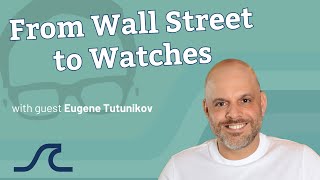
This content was created by Bill Gallagher. This content was uploaded by Bill Gallagher. This is a YouTube interview episode titled "Scaling A Luxury Watch Business to $90M with Eugene Tutunikov" (created 2025-02-19) featuring Bill Gallagher (host, Scaling coach/Scaling Up Business podcast) interviewing Eugene Tutunikov, CEO and founder of SwissWatchExpo. The conversation covers Eugene's immigrant family background, his pivot from Wall Street to building a pre-owned luxury watch business, operational details (authentication, in-house watchmaking, video/FaceTime sales), timing and COVID-driven demand, inventory and pricing dynamics, customer trends, competition (marketplaces like Chrono24 and eBay), scaling advice, and working with family. The episode is practical and business-focused, aimed at entrepreneurs scaling e-commerce and luxury retail businesses.
Questions this video answers
Surpassed $90 million in sales last year.
He said they'll easily surpass $100 million this year.
36 person team, with 13 in the watchmaking department.
Over 90% of the business is online.
Over 10,000 watches this year.
Chapters
Foreign. So we're talking all about how do you create a fun business and get it over $90 million and keep it fun? That's the subject of our show today. We've got a great guest. Stay tuned. Hey, everybody. Bill Gallagher, Scaling coach, host of the Scaling Up Business podcast. Here we are today. Got another show for you, one of many. Our show comes to you every week. If you want to know more, we'll tell you later, but go to scalingcoach.com or just like and subscribe wherever you are right now. In addition to our shows about growing your business, we do workshops, coaching, things like that. All that and more. Scalingcoach.com. All right. Hey, I'm joined now by Eugene Tatunikov. Did I say that right?
You did. I'm very impressed. You're better than all my grade school teachers, I'll tell you that much.
Eugene Tatuna, cop, immigrant, brand guy, had a whole career pivot. He's got a company. He's the CEO and founder of SwissWatchexpo. You might see it if you like that sort of thing, if you like those fancy watches. He's got a pretty cool business around it. He's going to tell us a story about how he grew it. Welcome to the show again, Eugene. Glad to have you, Bill.
Thank you so much for having me. I've been looking forward to this all week and I know it's going to be a fun conversation.
Yeah, you know, I, so I, in, in one of our past companies, we, we put out some watches and so I went to go educate myself because I don't have a lot of background. I went to the show in Basel and I walked around and saw all the crazy, crazy watches that they have at the big show at Basel, Switzerland. And it was so cool. It's also fascinating to see how much they like there's the enduring thing of the kind of watches you do, which are cool and classic and that kind of thing. And then along folks like the Swatch company and they're disruptive and now the Apple watch. And like there are waves of disruption and then the kind of the enduring thing, the classic mechanical movements that is your world. Right. What got you interested? Like, where did you develop a fascination fixation for this kind of watch?
I'll jump into. But it's funny that you mention Apple watches because a common question I get is how much is Apple Watch eating into our business? And I love Apple watches. I think they're phenomenal product. And a lot of our customers have both luxury watches that they're buying from us as well as they wear an Apple watch every day. But the reason I love the Apple watch, it's essentially a gateway drug. The younger generation usually starts with a, you know, electrical watch, digital watch and they get used to wearing something on their wrist and if they didn't have that, they would not get used to it. So they might start with an Apple watch in their, in their teens. And when they get a little older, then they get influenced by the celebrities, the marketing. They learn about the market for luxury watches and they end up craving to have something a little bit more luxury that keeps its value. The beauty about the watches that we sell is that they are timeless. I know you love your Apple watch, but in 20 years I don't think it's going to be worth much or up to date. So you would probably have to replace it. Whereas any watch that we sell in 20 years, it's actually going to be even cooler than it is right now.
I think I have about six total watches and maybe one or two like from my grandfather as well.
So very cool.
And I understand. And you see a lot of young people today who like, they just rely on time from their mobile, from their handheld. Right. And they.
Exactly. And that would be the danger for us. Yeah, that would be the danger. Whereas the Apple watch gets them used to uncomfortable having something on their wrist.
Yeah, I love the, I mean I love all of it, but the idea of something of utility but also craftsmanship. And I think that's where you get into that, like the, the fashion of it, like wearing a different watch for different occasions, having a collection, having something that is a work of craftsmanship and art on your, on your wrist. I saw actually a news item this morning about a watch that can adjust its calendar over time and, and keep the days right. With leap years for 400 years. Right. Including like that's a cool.
That is very cool. And to think that that's being made mechanically over hundreds of hours of manpower. Usually it's really something really neat. They're technological innovations in their own right and they are works of art as well.
And think about it like, somebody asked me recently why I don't have more like, you know, Internet connected doorbells and locks and things like that where my house isn't more connected than it is. And I'm like, yeah, because all those things are going to break, they're going to get hacked, they're going to become obsolete, the company's going to go out of business and it won't work. But my old door Lock on there. That is an innovation of a technology of a time will work 100 years from now.
Yeah, yeah, exactly. It's reliable.
It won't be made obsolete like my first iPhone.
Just like most of the watches we sell, they do not have a battery, so they do not stop running. As long as you can move your. Your wrist to power it, they will keep on running.
All right, if you could go back in time and buy any watch from any period at its original retail price, what would you go buy?
Oh, I would definitely go ahead and buy some of the early Daytona watches, like around the Paul Newman age. I think his Daytona went for auction at over $16 million. But any. Any Daytona, I think the original retail at that time was probably $1,000 or so for the Daytonas they were making. Granted, that's the one that he wore. But any Daytona from from that era could easily fetch eight figures. Seven or eight figures.
Interesting how you think about something with history and heritage around it. I've driven a few, like Jaguar E Types. Right. And there was a time when they were neglected because they have terrible brakes and they overheat. But it's a stunningly beautiful car and it's enduring, and some people have fixed some of those aspects of it. But even if with all its faults, like, to have one today in pristine condition is a fantastic, nostalgic kind of an indulgence. Right? Yeah.
And it seems that the wealthy clientele, or at least a lot of them do, want something that brings nostalgia back to them. They have their craving a historic item that can't be reproduced now. And, you know, as long as they were willing to buy them, the value of these pieces, whether it's art, classic cars, or vintage watches, the value will continue to go up. There's a trend in the world where a lot of wealthy consumers want something that's really scarce.
Yeah.
You know, I think that's probably scare. The valuation of NFL teams is going through the roof because you can't get more scarce than that. But, you know, if you're a billionaire and you can only spend so much on watches and cars, but what do you get? You get an NFL team.
I was on a private island a few weeks ago. That's pretty good, too.
That's pretty good.
Yeah, that's pretty good. Look, you could. Although it could be lonely.
I don't know how many people are on there with you, so it depends.
We were with about 55 friends and family, so it was awesome. And way more staff than we needed. It was a fantastic luxury experience. There was nothing remotely lonely about it. It was beautiful and awesome without being bougie, without being pretentious, whatever you want, but also like. And out of the generosity of one of our dearest friends, you know, it's fantastic. What a exceptional kind of experience. Right. I, I think there are lots of different ways that you could spend your time and your money and that connection to something special and unique. I get like, I, I have a couple objects that I don't think about every day, but they're like, I have this little glass jar that I bought in Israel that's thousands of years old. You know, like, it's a really special thing to connect it to something so ancient. And, you know, somebody created that for somebody at a moment, you know, of a life event. And like, there it is. And now we have it and we'll never know exactly where it came from. Right.
We've seen a lot of our customers reaching out and they're looking for a birth year watch. So the watch that was born the same made the same year they were born. That's a very common trend. They're, you know, they're 60 or 70 years old, they're reaching out to us and they're looking for a watch of the same year production as, as when they were born.
Yes. I'd like to have, I've, I've looked at, I. And frequently look at different 64 year cars because that's my birth year.
Right, like there. Yeah.
Okay, so let's, let's share some of your story. So you come from an immigrant family, right. You were saying in the beginning, talk about that, of coming in, what it was like, just that experience and then how you see. Tell us the story of that and how it relates to starting your own business.
Yeah, I really feel that my family and I have absolutely lived their American dream. We're very patriotic. On our immigration anniversary every year we toast to America. And we've been doing that since we moved here. So we love the country very much. We came over in 1989 as refugees from the former Soviet Union. With just a few hundred dollars, we settled in the Philadelphia area. It was me, my parents and a lot of their friends also came over around the same time. So we had a whole community of us. First few years, everybody's on food stamps. I was only six years old. My parents were 26. They had me when they were young. And them as well as all their friends were professionals in the Soviet Union. Teachers, doctors, engineers, et cetera. And then they came to the US without any Language and no money. So very humbling for them. I was just a child witnessing all this. But the biggest inspiration for me was within six or seven years, pretty much everyone we knew was, went from food stamps, you know, dirty large apartment buildings, to living in the suburbs, owning their home and with a Lexus or Mercedes in the driveway. And it was, that was all done by them without asking for handouts or anything along those lines. And it was very, very inspirational to me because it kind of at that pivotal age in life, 7 to 12 years old, I could really tell that, you know, anything's possible in this country as long as you work at it, the opportunity is there. So yeah, we're, we're very proud Americans. So I went to, you know, high school in Pennsylvania. Then I went to NYU for finance, economics and math. And I thought I was going to spend my whole career, professional life on Wall Street. I was a math nerd. And I got a really coveted job out of undergrad on a trading desk. I stayed in that business for 10 years. During that period, my mother, who was still in Pennsylvania working as a computer programmer, moved to Atlanta, Georgia and got together with my stepfather who was as a trained Rolex master watchmaker. So think of it as a, a watch mechanic. So he knows how to take the watches apart into hundreds of small pieces, put it back together, authenticate them. And he's, he's really, really good at what he does. He was, he was managing a Rolex service center in Atlanta and on the side him and my mother would buy watches and sell them on ebay. This was in 2008. And as they saw some potential there, they eventually opened up a little local storefront. So they had a local storefront and ebay business. I was still working in finance in New York. I was 25 years old. I invested in the business. Never thought I would really get involved, but they would start telling me stories of hey, somebody flew in from Florida to buy a watch. We, we shipped the watch to Texas. And you know, I was getting excited. I was like, well, you know, if they could sell one or two watches a day, this seems like this could be a really, really big opportunity for us. And eventually they've, you know, I joined a business about eight years ago to really build a name for ourselves online. So not just in the local market and ebay, but really cement ourselves as a leader in pre owned watches. There's a lot of worry from consumers when they're making such a big purchase online, especially if it's a pre owned product.
Yeah.
So eventually, over the years we've kind of built a reputation. We've, we've grown over 10 times in the eight years since I've joined. We now have a 36 person team. We have 13. Thirteen people on our team are part of the watchmaking department, which my stepfather still runs. And they are absolute masters at their craft. They take a two or 20 year old watch first, they authenticate it because there's 40 million fake watches a year being sold. Yeah.
To be honest, having touched a few of them, I could like, I think you could tell like right away, like they don't have the same haft. They, they're. Maybe they're.
Yeah, those, that's probably, that's probably 99 of them. But there's also what are called super fakes and they're not, they're not cheap to make and it's very hard to tell them apart unless you actually open up the watch and get in the movement and you see how the movement was made. So we, we open up every watch, we authenticate it, refurbish it, we do all this work in house. We get it to as close to new condition as possible and then we sell it locally and online. Over 90% of the business is online. And it's been, it's been an awesome ride. We, you know, we've started the business from scratch, never took any investment. We surpassed 90 million in sales last year and we'll easily surpass 100 million this year, which will be an amazing milestone. And I think within the next handful years we'll go 2 to 300 million a year.
What would you consider your luckiest break that you've had so far with this business?
I think there was a couple lucky breaks. If we did this business 10 years before, 10 years after, I don't think we would have succeeded.
So your timing is a lucky brand.
The timing was just perfect.
Yeah.
When we were, when I joined in 2016, summer of 2016, and there was right around that time there was a huge shift in consumer sentiment in terms of consumers are getting comfortable buying luxury goods online.
Uh huh huh.
And it was really, that's when it really started to pick up. In 2006, consumers were very few people would go online and put their credit card down on a $10,000 item in 2006. But 2016, we saw that really pick up across all categories, whether it's jewelry, watches, handbags. Consumers were shifting more and more of their luxury purchasing online. And we were at the same time really developing our e commerce business, figuring out Our SEO tactics, our paid advertising tactics, how to build a brand online, et cetera. So we were there. And then the second very lucky break, as you can imagine, was 2020. So we were already positioned, we already had the E commerce, we were already running a lot of paid advertising, investing in SEO before COVID So we were pretty early to that. And then when Covid happened, you know, it was lucky for the business. I wouldn't say it's. It's a lucky break, but it was lucky for the business because a lot of consumers ended up stuck at home with a lot of discretionary income. They couldn't go out to dinner, they couldn't travel, and they were online and they were looking for interesting ways to spend their money that especially in products that hold their value well or increase in price. So we had a. When they went online, they were very. They would run into our business, and then a lot of them became customers for life and they, you know, give us a lot of referrals. So we, we, we captured a lot of customers in that 2020 period. I, we, we would get these letters in email of people like a woman in Long island in her 60s. She's like, I buy watches for all my grandkids all the time. I, I collect watches. I always go to the mall because I couldn't go to the mall. They showed me how to shop online. I FaceTimed with your team. I bought a watch. And she's like, oh, my God, I'm the mall again. To talk to that jeweler. You guys are the best because you guys have much better selection and better prices and so forth. So we won a lot of customers over during COVID just because they couldn't go back to their. The habits they were comfortable with. So they were forced online, were disrupted.
Yeah, yeah, yeah, I think. And, and I did. People were there other people who sold because they were cleaning up or, or needed money or that kind of thing. Did that planned as well, Gave you inventory?
Not, not so much because it was interesting. You would think that. But for whatever reason, consumer savings actually went up quite a bit as compared to a natural economic recession. So in 2008, 2009. Yes, a lot of consumers are selling to us. We're being able to buy inventory at really good prices compared to before. During COVID it was, it was more net buying than that selling. Consumers seemed to have the money and they were sitting at home and they were looking for ways to spend.
So that drove your prices up a bit.
So actually, our prices. Yeah, our prices went through the Roof. And it was actually quite difficult to buy inventory. There was trade shows that we were buying at before COVID they shut down. Consumers were comfortable selling, buying watches from us online, but selling a watch to us online, which we have a process for, was still uncomfortable for many. They, they want to go take it somewhere physically, locally and get paid on the spot. They were scared to put it in a FedEx box and send it to us. So there was actually a shortage, shortage of inventory that led to a sharp increase in prices.
As somebody who in my past has shipped gold, silver and diamonds and other gemstones all over the world, I understand sometimes the anxiety. And you're looking at a parcel stuck in customs in a weird country and you're like, oh, I need to unstick that. And then how about a moment where you were like a moment of crisis where you felt like you might lose everything or things were caving in on you.
Well, when everything was shut down during COVID it was very scary. Our business dropped over 35% year over year for a couple months, which thankfully we were in a financial good spot. But we're lucky. We have a very dedicated, hard working team and Georgia and e commerce business was considered an essential business. So we had to shut. We had to shut down for local customers. Georgia had a very interesting. The first businesses they opened in Georgia to the public were bowling alleys and nail salons. I don't know why that was so they had a really interesting reaction to Covid in some ways. But in any case, we, you know, me and my parents are, my parents are still every day in the business and amazing partners to me. But we were in the office and we didn't know how many of our employees would be willing to. We couldn't, you know, we couldn't by any means force them to come in. But most of our employees still came in and we kept the business running. But it was, you know, 60 to 90 days were pretty much hell. Everyone's in masks. We don't know what's going on with the world. Our doors are shut to local customers. We could not deal with local customers at all. But we were able to fulfill online orders. But it was hard for us to buy inventory. You know, people are getting sick in the office. So it was up. It was a very scary, scary time because we didn't know what was going on. Yeah, a lot of, a lot of companies had the luxury to go work from home. We have to, we have to buy watches, fix them up and then, you know, sell them online, pack them up and ship them. And that has to be done physically. We're selling a physical good. It's not like everybody could just be at home. So the watchmakers had to be coming in operations, people had to be coming in. Salespeople were working mostly from home. But yeah, it was definitely very nerve wracking. And we were, like I mentioned, we dropped 35% for a couple months in a row over year. Yeah, a couple months. And then it rebounded. But leading up to Covid, we were growing at 40, 50% year over year consistently. So that's a big swing. That's like a, when you go 40% up to 35% down, that's like a, it's a huge, huge swing in sales.
So what's your competition like? Who do you compete with in this market online and how do you compete? What is it that makes you special?
I'd say our biggest competition are marketplaces such as Chrono 24, which is the biggest in the watch space, and also ebay. They still get a lot of traffic online and still get a lot of business. But we're able to continue growing faster than them because we offer a much better experience. When you go in a marketplace, you don't know who you're buying from. You don't know the quality of the inventory. It's not necessarily graded all the same. You don't necessarily have the same customer service experience. So we do all the repairs and servicing in house. We're, we're selling the best quality of pre owned product out there because like, you know, we'll, I'll look at watches that the watchmaking team, they see some little nick and they refuse to ship it out, has to go back to the shop. And I'm like, I don't even see it. They're like, no, this has to be perfect or it's not going out the door. They're, they're, they are like obsessive artists with their craft, which is, which is amazing. But when you go on a, on a marketplace, you're dealing with multiple sellers. Quality in the inventory is not consistent. You don't really know what kind of authentication was being done. Have they actually opened up the watch or not? You know, we, we know, we price fare. If you go to the marketplaces, you have prices that are like all over the place for the same watch. So there's a lot of work for the consumer to figure out, you know, who to buy from and if they could trust this person. Whereas if, if they come to us, they know they're Going to get a consistent quality and very fair price. They're, you know, we own all our inventory. People sometimes list things on marketplaces they don't even own. They'll, they'll sell it and then they try to find it somewhere to fulfill the order. So they'll play games like that. And they know if there's ever, if they buy a watch from us, if there's ever an issue, we'll take care of it right away. They could just ship it back to us. We have a warranty. The marketplaces are very inconsistent experience.
The marketplace difference is they're trying to just be a middleman but not really own the inventory.
Yeah. And they never touch the inventory. It's just you could go in those marketplaces personally and sell a watch to somebody in Texas. Well, that person in Texas needs to trust that Bill knows enough to ensure this watch is authentic. And, and you could tell him it's great quality. But you know, when he gets it, he might say, well, this is not good quality. It's all beat up.
Yeah. These days I really hate buying anything from a place like ebay because I just have no idea how it's going to go. And even, I mean there's so many things and I have a family member who sells quite a bit through ebay in what they do and some friends and stuff. But it's not a place as a consumer, it's like you need to know what you're doing. It feels like to me there, the.
Way we do most of our sales is I have a seven person sales team here and they spend most of their day on video calls with customers all over the country. They show. It's a very amazing experience. We have an awesome showroom. We have a 5,000 square foot showroom. The whole building's over 7,000 square feet with the office space. But the show during that FaceTime, we kind of give them a tour of the showroom. We have an actual police officer here at all times in uniform. So they get to meet the police officer. He'll say hi. So right away that builds a lot of trust. You're not going to question if their business is legit. When there's a police officer on the video saying hi to you. You get to meet members of the sales team. You get to usually see me and my family on the FaceTime. Then you get to see the watchmakers working on the watches in real time. And then our salesperson that's working with you will have watches in his hands that you're considering and he Will show them to you live. He will educate you on them, answer any questions about them that you may have. So it's a very hands on sales approach, but it leads to a very loyal customer base, especially once they get the watch and it's pristine. So it's funny, a lot of people in E commerce and people have approached us to invest. They're like, well, how do you get fewer people to contact you and just buying your website? And we're like, well, we don't really want that because you're not gonna, it's not gonna stick in your mind as much as it does if you go through the whole video sales process.
Yeah, yeah.
And you get that watch and then you're gonna go, what do watch collectors love to do? You're gonna wear that watch with your friends to dinner and next thing you know you're talking about, wow, this, this was a really cool experience. You gotta got, you guys gotta talk to them. They've got 3,000 watches. You could see them on showcases. I saw the watchmaker that worked on my watch. The space is really cool design. And then they don't play games and then they overnight the watch and I was wearing it for dinner next day.
I imagine there's a shift that happens so people go from thinking about it and browsing. I've been on your website, you have all kinds of stuff like there and people probably have certain ideas like, oh, I like, I like the submariners and the seamasters and the GMTs and those are like my sort of style of classic sporty watch. And. But I also kind of like to browse around the sort of, I don't know, like weird like ones that are less well known and the unusual and stuff not necessarily by them, but I think there's probably a whole bunch of romance. And then at some point I get to like having a video call or two where I start to think more seriously about it and what I'm really going to. How do you, where, how does that inflection happen in your world?
Yeah, that's exactly the process we have right now. We're doing over 600,000 unique visitors a month on our website. And most of them are just browsing. I mean, personally I have friends that are, they will text me inventory that we list before I even know. They're like, oh my God, this watch you just listed an hour ago. I mean, I mean, I mean people are, you know, a lot of people are obsessed. Not because they're going to buy it, because they're just, I mean they bought watches before, but they're not intending, but they're, you know, watch collect. Watch collectors are absolutely obsessed. So we have a lot, a lot of browsers that are just browsing. But then yes, when they're, when they get more serious. I don't know, I don't really know any other company that does this. On every product page there's a little button that says request FaceTime to us. Tells us you want to see this watch live. I don't know. You can't do this on any other, you can't do this on Saks fifth avenue.com or any, anywhere else as far as I know where you could just say I want to see this Live and FaceTime. But we, we offer that which is pretty cool.
That's especially, it's got a lot of extra little features, buttons, dials, bezels and things like that. And you like all that?
Yeah, yeah, it's, yeah. We have beautiful product photography, but nothing beats seeing it live. And also you're not just seeing it, you know, you're, we don't have, we have a non commissioned sales team of a bunch of watch nerds. They, they, they work here very long hours and then they go home and they read watch blogs for fun. So, so they are, they're not, they're never trying to upsell anyone. They don't get paid commission. They work as a team. But when you do that FaceTime, you're now interacting with somebody in our sales team and they give you, they'll give you so much information about the history of the watch, the features, comparing the different models and so forth. So it's a very, very neat experience.
That's really cool. So where's, what are the trends that you're seeing now and where is the business going now?
I think, I think the trends are, there's, I think the consumer is realizing that there's a issue with the proliferation of fakes out there. And it's interesting. We had a lot of small Competitors appear in 2020, 2021. One or two, one or two person operations that would try to probably get some credit line and try to list some watches online and try to compete on a razor thin margins, but they didn't have the expertise to really authenticate watches in house. There's only a few firms out there that have the scale to do it. I mean we're, we're going to sell over 10,000 watches this year. That's a lot of watches to open up.
That's a lot of watches.
You have to Open, you have to open every one of them up. 65% of them get serviced. That's a lot of work. I think consumers are finally realizing that that local jeweler with 12 pre owned watches, while he might meanwhile, it's not necessarily that he's malicious. He may not know any better and sell either a fake watch or a watch or the swap movement. We had a, you know, we had a customer try to sell us a two year old Nautilus with a 1995 Patek Philippe Calatramov movement in there, which is both made by Patek Philippe, but you know, destroyed the value of the watch by over 60, $60,000 which you know, our watchmaking team caught, but your.
Local jeweler would never catch because it's a Frankenstein watch.
It was a Frankenstein watch. They were actually shocked that he was able to get it working on mid-90s called the travel Movement on a Nautilus model somehow. But for $60,000 people will play all kinds of games. So consumers I think are waking up to the fact that they can only trust really established players like us, which is great. So there's a lot of consolidation happening in the space. The other big shift, I would say is the mentality of a younger customer. Before, you know, all the marketing for all the luxury brands is you're buying a watch for life to pass it down to your kids. Well, the consumer under 40 is not thinking that way. They have a very high velocity in their, in their collection. They will buy a watch, they will wear it for six to 18 months and then they will come back and trade it in for something else. And they're, they, if you, the idea of them keeping a watch for life doesn't even cross their mind. They just have a completely different mentality. So it's interesting to see that. And, and they're also very, very digital savvy. They don't, they don't necessarily want to go in to some store and spend six hours flipping through a catalog while they're drinking champagne. They actually want to find something, see it on video and wear it to dinner tomorrow. And that usually if you go to one of those, you know, official dealers, you're not going to wait for the watch for another six to 18 months when they, while they order it for you, it's on a wait list. They don't want to do any of that. They want to see it, they want to buy it and they want to have it on their wrist for dinner the next day.
If you go back to your younger self, step back in Time. What advice would you give yourself? What would you do over.
Yeah, you learn. You learn so many lessons as a business grows. Yeah. Higher, slower, fire faster. I'd say, I think a lot of people have gone through that education process. Be patient with results. Sometimes things take time. You don't need to be patient with actions. But not everything happens in the timeline. The results don't always happen in the timeline that you wanted, but they could still happen in the future. And know from the outset that you're going to be all in for a number of years and you're going to have to make a lot of personal sacrifices. Because I think at first I was kind of trying to pretend I did it and then I just realized, look, this is going to be number one thing in my life ahead of relationships, you know, some years, health, friendships, this and that. And I think it kind of for all businesses, there's a certain period of time where you just got to go all in, commit to it.
You and if you were. So we have big range of business sizes in our audience from early stage to much larger than your company. If you're talking to somebody who's sitting there between 5 and 10 million and looking at you trying to get to 90 million, what advice do you have for an earlier stage company trying to scale up?
The biggest advice is don't focus on too many things. Try to figure out one plan of action. Don't do, don't experiment with multiple product lines or business models all in the same business, which a lot of people do. The other advice is really make it a step function. I think everyone thinks like parabolic growth is very sexy. You raise money, throw money at a problem and oh my God, it tripled in a year. Well, I would hate to triple it a year. I think there's a lot of things that break and actually oftentimes makes you a worse company further down the line because you grew too fast. So I think compounding is the strongest force in the world. I read a fact today, it's Amazon Web Services. When they started it, when they launched it the first year, did 20 million in sales and now does 20 million every hour and a half. So it's been over 20 years since I think they launched it. But the point is, if you can get a business that grows 20, 30 or 40% a year, even if you start very, very small, you give it 10, 20 years, it's going to be very, very big. Because compounding is compounding. It's a very strong force.
All right, so you work with family how have you made that work? I've worked with family. We have lots of people at family businesses. How do you make that work? What's your advice for a family business?
Well, first of all, I think there's nothing more rewarding than building something great with people that you love. Especially in my case. While, you know, family dynamics can be tense and tricky at times, the one thing that we've never questioned is trust. Where I think, you know, some business partners could have backstabbing or, you know, we've never. With us, that never crossed their mind. And I think in most family business that's not usually not a, not a concern. There's other, you know, concerns that make the dynamics more. More complicated. But when we were a very small company, it was kind of like we were all in each other's face. And now we've kind of tried to divide the different areas between us and not necessarily day to day try to influence the day to day work of each other. And that's very helpful. And this isn't just for a family business, but I've learned that success seems to lower tension all around with whatever, whatever business partners you have. When you're small and you're starting out and you're. Everything's difficult, but when you see things really taking off, everyone's a little bit more relaxed.
Yes. But you can't always be winning, right?
Yeah, for sure.
In spite of the lyric, all I do right we if you win, you have to spend time losing too. So this really helpful things. Any last thoughts for us? We'll throw up the link. Swisswatchexpo.com for you.
Last thoughts. Bill, I enjoyed the conversation. If you're ever in Atlanta, let's get together for lunch or dinner. I'd love to show you the operation. I couldn't think of a more fun business. Couldn't think of a more fun business than buying and selling watches online. I think, you know, I pivoted from Wall street to this and I think a lot of what I learned on Wall street made me a better executive in this business.
Yeah.
So I would just tell people, don't be afraid to pivot in your career. If you're going to start a business, know, know the pain and effort you're getting yourself into. Don't lie to yourself. Be ready for the road ahead and, you know, find something that you're passionate about and you can have fun at because otherwise 12, 13 hour days are going to be very difficult.
Yeah, it's a lot easier to stick it out and go through the bumpy spots if you love what you do. Eugene Tatunikoff swisswatchexpo.com Thank you so much for coming on and joining us today on the show talking about your business. I'm sure you'll have some browsers so we'll be going looking at like what could I get a, a watch with some groovy retro vibe and a cool movement, right? So switchwashexpo.com There it is. Eugene Tatunikov, thanks again so much for being on our show. Thanks also to my friend and mentor Verne Harnish, who created the whole scaling up framework. If you want to know more about our workshops, our coaching programs, things like that to get your business over 90 million, find yourself over to scalingcoach.com that's our website has all our programs, things like that, scalingcoach.com and to the folks, Christelle, Seth and Cameron and the team, thank you guys for being on and getting our show ready and out the door every week. It's such a pleasure to do this part of the business. Thanks again everyone for watching. Keep scaling until next time.










