Scaling Up Coaches Panel with Liat Lazar, Kristin McLane and Daniel Marcos
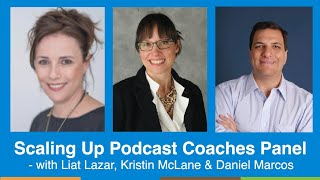
Bill Gallagher hosts Daniel Marcos, Kristin McLane, and Liat Lazar on scaling strategies for growing companies. They cover pricing models like Power of One and good/better/best, how to spot bottlenecks in your business, and why remote work flexibility matters post-COVID. Best Buy's turnaround and Treeline's pricing shifts show what works in practice.
Chapters
There we are live once again. We're joined by some great entrepreneurs today. Entrepreneurs, coaches, etc. And I think we have one more joining in just a minute. So we are talking about a whole lot of things today. Talking about unicorns. We're talking about business models. We're talking about grabbing the middle ground. We're talking about the importance of flexibility, about compensation, about talent development. We're going to talk about big companies, small companies. We'll go from companies you never heard of to companies like Best Buy. We're going to talk about pricing. Pricing. Pricing is a thread. I noticed as I reviewed all of that. So that and so much more. So that's our conversation. Stay tuned. Hi, everyone. My name is Bill Gallagher, Scaling Coach, host of the Scaling Up Business Podcast. We bring our show to you every week and we talk about all things to do with business growth and scaling, growing your company like that and more. I'm joined Today by Kristen McClain, Daniel Marcos, and maybe one more to join us as they sort out their Internets. We're spanning the world today, starting in San Francisco. We go to Cincinnati, Mexico City, and. And maybe somewhere very far away. So big hello to Daniel Marcos and Krista McLean so far. Daniel, where are you? Tell us about yourself a little bit. Daniel's coach, definitely one of the people who really has been a good friend of mine in the world of scaling up and really the one responsible for or having me kind of embrace the scaling up world in my coaching practice.
Hey, Bill, how are you? Hey, Christian. Super excited to be here, sharing with you guys. So I'm in Mexico City now. I have to come for business for seven days. So I'm here. And by the way, I'm in a hotel. My wife is going to be walking in the back sometimes. So I'm the CEO of Growth Institute, the online arm of Scaling Up Online. And we've been teaching executives how to scale their company with everything that goes around. We believe scaling up is an amazing methodology, but if you combine it with top grading, great game of business and these methodologies, it just skyrocked the growth and reduce the drama. And that's exactly what we do. And we've helped around 10,000 companies scale in the last nine and a half years. I'm also a scaling up coach. As Bill mentioned. I've been a coach for the last 13 years as an entrepreneur for 23, having to pay peril every couple of weeks. People know what that means. So I'm very excited to be here.
Thank you. Welcome and so glad. I love Mexico City. I have only been once to Mexico City.
It's an amazing city and the food is just mind blowing.
Incredible. Kristen joins us from Cincinnati. Kristen, how are things there today in Cincinnati?
Doing well. Weather is breaking, which is great. It's been a record hot summer and we've been sweating it out here. So grateful for the change. But yeah, I'm coming from Cincinnati. Entrepreneur. I have a computer software business, 25 years old in the manufacturing software space. And I'm really excited to talk about pricing today. I've been working on pricing in my business, so that was a really interesting piece for me. And then I own a illustration company called the Vivid Ink Company that puts conversations like this into illustrated ink drawings. I've been reading a lot recently and I see that people are 60 times now more likely to remember what they hear because it's coming at them so fast with a picture.
So I had a college professor once who drew the course as we went through the course. And he's like, listen, if you just show up and participate and you pay attention to this, most of you will probably do fine. You don't need to take your own notes. And it really was true. Like he drew the thing. I could picture it, I could remember it. I don't know if that works for everyone, but it worked for me. It worked for a lot of us. And we've used this visual facilitation in our board meetings, at our summits, at a variety of things. And it really helps people to create a picture of something. And it's not so much the artifact of it, although it's very cool. It's like that process somehow cements us and helps to organize it for me anyway.
Right? For sure. It helps me too, while I'm drawing it to remember what I'm hearing, which is why I started doing it in the first place.
So, Christine, what you say, you think it's interesting, I've been in meetings and I'm talking or whatever, and there are people drawing and I think they're distracted. And they're the ones that get the most because they were having a mental model in picture of what they were doing.
There's a. I can't remember the word for it, but there's an actual methodology of doodling in a very, very specific pattern. Even if you draw just pattern repeatedly, that allows you to open that area of your brain that can remember and really participate as well. And there are people who do that as well. I'm really fascinated by them. I can't do that. But I find that to be really fascinating.
So first, like I was before I was getting offended when they were dueling, but now I just was like, wow, this is great.
Right?
They're going to get much better results.
Right.
And we're also joined now by Liotte Lazar from Tel Aviv. Liat. Hey.
Hi everyone. Good to see you from the technology mystery. Sorry for popping up late, but I'm very glad to be here with this great panel.
So what time is it for you?
You're still seven, seven and ten minutes. Yeah, yeah. Good, good, good, good timing.
So Liad is also a scaling up coach, the first one that we have actually based in Israel. So very excited. We have coaches from Tel Aviv to Cairo to Dubai. Like it's really great to, to cover the region. So all over the world now. So welcome again. Leah. The others were just saying a little bit about what's happening in their world and their work. Tell our listeners, viewers a little bit about yourself before we get into conversation.
Okay, so I am a scaling up coach, the first to be in Israel and I'm very happy and I think it's a great timing to be a scaling up coach in Israel since the COVID was creating two scenarios. One that a lot of companies went into broke down and the others started to scale. So this is a great timing to help and coach companies how to scale because a lot of CEOs found themselves with no knowledge how to do this growth, this massive growth. About myself, I was part of two startups that scaled substantially. I worked in two of Fortune 500 companies. So I am combining the two. I'm an HR executive in my past, so I combine those two skills, skills and knowledges from the corporates and also from the startup. And for the past four years, I'm an executive coach for leadership and management teams.
Well, thanks and once again, welcome. I like what you said about how the pandemic period has forced changes. Vern shares a quote with us recently. If everything were perfect, you would never learn, you would never grow. Beyonce of all people. And like so many companies were accelerating now. We were just talking, I was talking with my wife earlier this morning about the incredible hardship and how some people really hit hard, but everyone was pushed in different ways. And if you're flexible, we're going to talk about flexibility. And you adapted. Many of the people that we work with actually accelerated things because they innovated, they adapted, they leaned into the things that were going on in the world. The, the other thing, the other quote Vern shares is from Shekhar Kapoor we are the stories we tell ourselves. And so if your narrative is there's no way to win or that kind of thing, you might be surprised at what actually shows up.
Yeah, sorry.
I was here a podcast this morning. They were interviewing this entrepreneur about if the American dream still alive. And the guy said, I work with a lot of youth and yes, it's harder for some committees, but it's still alive. Like, and it's really a mindset thing. If you believe you can do it and you want to mentor yourself or be around mentors and everything, you're going to be able to do it. And so it's still alive. It's just. And by the way, that's the way it's describing the us, the America dream. But almost in every country you're able today with social media, you could be anywhere in the world and just be giving amazing impact to around the world. We're seeing with kids making millions from anywhere in the world in YouTube, and they just have a different mindset. They're just adding so much value to the world that the world is paying back in that way. So I really believe whatever you want to call it, still very, very well alive in the world. And now with technology, it's even easier and faster.
I believe that this, I like this part in our job. I believe that as coach, this is what we should do in some of the cases, change CEOs and the management story, sometimes it's not a good story. And this is where our place is to change this story. And this is what I think that I'm with a. With the, with the intensive work. This is my role when I coach companies and management teams.
Yeah, sorry. I was gonna say it's really interesting. This time of year always reminds me of things. You watch the Olympics and all these people spend 10,000 hours to compete for, you know, 30 seconds or a minute at their entire life is on the line. And when you think of everything they've worked so hard for, for an entrepreneur, it doesn't often come down to that small amount of time. And so it reminds me of what's possible, for sure, right? You spend all that time and you make a decision, and then you have a chance to make another decision. And so that pivot moment or that innovation that's possible in Covid was really, really gigantic for many of us.
Yeah, well, the flexibility, right, that, that theme, that, that's the thing that's rewarded, that responsiveness. People talk about pivoting, right? You gotta be flexible to bend, to pivot, to adapt. Now we're seeing it. So I suddenly, you know, we did upgraded all stuff and got serious about this in the last year and that paid off really well. But now everybody wants to meet in person and suddenly I'm flying everywhere and looking at my schedule, I'm like, wait, wait, wait, we booked that back to back. There's no travel day in between. I can't get from Cincinnati to Orange county in less than a day. And as we're seeing, there's fewer flights and complications now. So, like, you know, I got back to California by the skin of my teeth. My assistant was delayed for a whole day. That's a pretty significant issue and impact there. So that flexibility now we're seeing with the return to work. I've had a lot of companies now talking about getting people back into the office and now some of them are backpedaling on that. Wait, wait, maybe we got to get a few more people vaccinated. Maybe there's some issues with all. And that blend of the in person meeting the in person office, what is that going to look like? What are you guys hearing and what, and what are you personally doing?
Yeah, I can talk about our team. You know, ironically, our lease came due just at the end of the pandemic. As everybody was getting vaccinated, our lease was due. And so, you know, it gives you a great, I mean, it was just opportunistic. But what do you, what do you do with that? And so we opted to get the same amount of space but in a different, totally different format, wide open, and assume that people would not be working every day in the office. And so we built pods or spaces for people to come together when they come back to the office for very specific meetings. And we've started to set up a schedule whereby our team will come in for very specific days together and then the rest is flex for them. And that's, I feel, what we need to do to stay current with things. I read in one of the pieces that you sent us that people are much more worried about when they're working rather than where they're working necessarily. And we find that to be true too. They all need flexibility with time. And so for us, we're having to be more flexible and even maybe slow down a little bit to speed up. I know that sounds weird, but I feel this great sense of having to take a minute in order to progress, which I always felt driven to go fast before. Just some differences that I'm seeing.
Yeah, definitely a push in that way. Daniel Leon so for us At Growth.
Institute, we had one of our offices lease expired last April. Yeah. And we cancel it. And then we have another that lasted for one more year, but we called them and said, hey, we're not going to use it. Well, let's cancel the contract. We negotiated an agreement and we cancel the contract. So we've been fully remote since last April. We have two team members are missing it, the rest are loving it. So what we're looking for in Austin and Mexico City, that's where we have most of our team, is to have an office for one day a week. And today, Mondays, Mondays a team, they work, everyone go to the office and then rest of the week be out. It's been a challenge to have that, but today there's so much empty space that people are willing to negotiate. So that's what we're doing today. We really believe the touch, the human contact is going to be important, but have that flexibility of being able to work wherever you are. But we really believe being able to meet once a week or every couple of weeks all together in an office and just have all our meetings and go and have lunch and have a laugh, I think is going to be very important to be able to balance that out. But Chris, what you said, the flexibility. People are asking flexibility of time and place. And we believe it's just place. No, it's also time. So one of my best team members, usually around 10pm, that's when she reconnects and she has, she does so much things done between like 10 and 11:30. And that's her space, that's her time. And we have very, very clear priorities, objectives, KPIs for everyone. And she's always surpassing her objectives. So people say, hey, do you mind? And I was like, I don't. She works four or five hours in the morning and then gets reconnected again at night. And she does great work. So I believe if you have the right team members and you give them the right flexibility, they will give you way more productivity. But it has to be a good combination. If you don't trust the team member or you have to train them or things like that is way more complicated.
In Israel, what surprised me is that most of the population is vaccinated. And it was surprising to see that a lot of companies are using the mixed model, the hybrid model, you know, not full, not full return to the office, but a combination. And the other thing, I really connect to what you said, flexibility is, is a real, is a real changer. And in everything in your job and in your personal, the combination between you, the ability to combine your personal life and your work life. This balance is key now to employment conditions.
Well, Vern shares with us a future forum Pulse, citing that 93% of knowledge workers. Right. Service based info, technology type workers, want flexibility in their schedule. And we're seeing that in the physical space as well. Clients that I'm working with, company sponsors, there's a whole range of people. We're seeing a mix of that, like reconfiguring offices to create more meeting spaces, casual working, hot desking, that kind of thing. Like, we had some of that before, but now people are thinking even more organically about how they want to use the workplace and what their schedule is going to look like. Right. Oh, I'm going to work from 10 to 11. You're going to work from just one hour, hour and a half a day. Daniel.
I want to point out that I want that. No, I, you know, it's, it's interesting too. I don't know how it happened, but it feels to me too like the before, for the people who were looking for flexibility, it was because maybe they had children or other commitments and there was almost a negative vibe to asking for that flexibility. Now everybody wants that flexibility. And there's no divide between people who have children and people who don't, people who work out and people who don't, people who give to the community and people who, who don't like. It's just everybody wants that flexibility because they've gotten used to that in their lifestyle. And I love that freedom. Like, I don't want to go back to the office five days a week, God help me, you know, I really just don't want to be locked to that desk. Right, right.
You know, that is, I think the thing is, it's the schedule, it's the work style, it's all the circumstances. I know people who have no desire to get back to the office for their regular work, but they sure want to get away from their family for a few hours a week.
Yep.
So it's, it's interesting what you're saying. I have one team member that she works from home, her husband work from home, and she's, I need some time away, so can I have some money for Starbucks? So we gave her some Starbucks time and she goes to Starbucks a couple hours a day and just to be out of her house and be two hours away, it's really important and that she's happy. So. Yes, you need that space sometimes.
Yeah, I want to share some, something Very nice that I heard that I saw in tv because the Israeli tech is blowing here. A lot of. There's a demand for people and lack of talent. And One of the CEOs was telling that when he wants to do a one on one meeting with his employees, they need jog with them or have a walk with them. You know, they trying to be creative in order to get out of the office, but combine the work. So everything this flexibility, by the way, you know, combines your sport, your activity, your gym with your one on one working meeting with your employees. Crazy.
I thought one of the pieces spoke about the individuality of it. You can't assume that one model fits all. And the idea that, you know, maybe you even need to. Something that I hadn't thought about before, maybe you even need to push the older workforce that decides that. I still need to go in Monday to Friday. As soon as you open that thing, I'm. I'm at my desk. That even for them, you need to push them to think differently so that the people who are not doing it don't feel like they're competing for space or facetime in the office. I like the idea of having that very organized schedule for how it's going to go. Not just give it open flexibility, but actually have a plan for what that looks like. We've started to build that for ourselves and it's really fun to involve the team to do that.
I think that flexibility was one of the, of the, of the words that describe the Y generation. And now also the X generation likes it. I like it very much. I like this flexibility. It become a common knowledge for everyone and a common practice for all generations. So this is what interesting in this aspect.
Yeah.
You know, as you guys are talking, I'm reminded of Tamson, Willie Barker, Dr. Tamson has been a speaker, a guest. She's got I think a thing on the Growth Institute. Right, Daniel?
Yep.
Yeah, a little mini course there. And she really talks about taking our cues from nature, noticing the way that insects and animals work together, the organic and fluid nature of things. I think probably watching and seeing like allowing things rather than trying to force an outcome. It'd be interesting to see kind of what emerges and what feels right. Because there's real opportunity in this next period of, of seeing how we reorganize ourselves, not try to get back to something, but to move in, lean into what's next.
Right, right. I have a, I have a slide that I have that I teach a lot on, trying to get people to think differently and I show like an old style, like old west carriage and it says culture, society, politics, education, and that's how we run. And it's trying to hold like instead of a horse, they have this rocket ship and you're trying to manage all these technologies with a carriage from 1800s. The constitution of the countries was probably written 150, 200 years ago when electricity didn't exist. And now we have electricity, Internet and wi fi and all these kind of things. Just the constitution is completely old. We have to rewrite our political systems, social systems, everything that we've been running with. So I really believe capitalism already expired. We need to build a different capitalism. The one we have has created these billionaires that have really played with the world in many, many ways. And hey, no disrespect, great that they were able to do it. It's just their perspective in life is just completely different. So I really believe all the systems that we built already expired. We need to reinvent them. And for me, this decade of the 20s, 30s is going to be a complete reinvention. And I was talking with someone that teaches this integral leadership and he said that people are able to think in systems, are going to be able to come out of this much, much stronger because a lot of the systems of the world are getting reorganized and the ones who are able to understand, identify them, they're really going to be able to do great. And just on a side note of that, yesterday I was having dinner with my wife. We're here in Mexico, Joseph and I, on vacation and doing some paperwork that we need to do. And we're having a lot of time to talk and go and have lunch and dinner. And we're talking about how lucky, because of the business that we have and what we have, the liberties that we have in life. And I see people that have 10,000 employees in an office or a call center or a factory. How complicated life is today. So in a sense, really, really grateful and lucky. But in the sense really we're just seeing. Sometimes we see it on our own eyes or perspective. And the perspective of the other people is very different. We talk about all this flexibility of space and time. Imagine having a factory with 10,000 employees. How do you deal with flexibility of time and space? The knowledge worker, easy. We were able to adapt much, much faster. But there's some other situations that are complicated and that's why we're having the issues of logistics that we're having. Logistics in the world is a disaster today. I recently moved to Austin. I've been trying to buy a car. It's been impossible. There's no cars. It's just, there's no cars. Like I was trying to get a drive test of a car. Nine weeks, I was not able to get it. So I just said I'm not gonna buy the car anymore. I was not able to test drive it.
Fascinating. So we have the chip shortages, right? And then on top of that we have a demand for people who have started to be more independent. They don't want to drive public transit, they didn't want to go Ubers been significantly reduced and moved to food delivery. By and large, I, I haven't owned a car for four years and just last month I got a car for the first time. Right. After four years of just being on Uber and in airplanes.
So getting. Can I just go back a minute? I'm just curious, do you feel like this flexibility that everybody's asking for? I sort of feel that companies that do process driven work or companies that use things like scaling coach, that are very, very rigorous in how they build their culture and what they do day to day are probably more likely to be successful, successful at the flexibility part. And those that don't, it's more going to be like total chaos. Do you feel that when. So Daniel, I work in the manufacturing space. So I've been to those facilities where there are 10,000 people in a facility. Right? Those, those are. And we, we caution the customers that we work with that you have to make the place someplace that somebody would want to come. And very often those facilities that you're talking about might be very, very jam packed. They don't give people any room to breathe. They're, they're really trying to get the most out of the minimum AM space. That's not necessarily the best way to productivity or profitability. Right. Like giving them the space to have everything they need and move around is actually quite better in, in both cases, for both the pandemic and for the worker themselves. Just in terms of happiness on the job and productivity and efficiency at the job.
So Christine, what you're saying. I think I, I was reading an article that, I thought it was brilliant. This guy was saying in the future there's going to be just two types of companies, the platforms and everyone else is going to be a distributor or is going to work through that platform. So if you're able to have that factory and you build cars, let's say your Ford and you produce cars or Toyota or any of these, like they have these big factories that they able to make this work. But then how many other families companies are going to depend on them, all the dealerships and all the shops to fix them and all that. Amazon. Amazon is a perfect platform. And how many people live from Amazon being a great platform? So we're really going to have two kind of businesses, very few that are going to become really, really big platforms that we're all going to work through. Like, hey, this platform, Streamyard or Zoom or whatever, it's an amazing, huge company. And how many people live by teaching or facilitating or coaching or whatever through Zoom? Right, so. So Kristen, what you said is really important. We still don't have to have those companies that are the platforms, but there's going to be very few that are going to figure out how to do it right. And then all the rest we're going to be attached, let's say to them or work through them and be able to do our business depending on them.
A big theme running through our topics and things today is on the money side of things and we're talking about pricing. But if we start with pricing people, right, people want flexibility. What's the number one thing they want though is great compensation. And, and great compensation can show up in lots of different forms. Right. Vern has a new book out, scaling up compensation that he just did. And we'll talk about some of the things he wrote, co wrote with Dr. Sebastian Ross that has some interesting things, but we're seeing definitely a pressure on wages and the end and some refocus on compensation. Certainly at the top level there's a lot of attention on wait, how much are some CEOs making? Right. The winner take all. The Bezos of the world who thanks his staff and employees and customers around the world for helping him build a interestingly shaped rocket and go into space.
Yep. That really rubbed me the wrong way, I gotta tell you.
Yeah, it's funny. And, and we know from others who've championed the other side of it that fairness in pay, like people really feeling like they're part of the same game, they're not being trickled on. They right is a, is kind of an important thing. Verne talks about being different, about fairness, not sameness, not the same exact pay for everyone, but some equity and some thoughtfulness in that thing. Being careful and thoughtful about the carrots that you provide the bone. You know, don't give people a performance bonus for something they can't drive or have that bonus held back for things that they can't do and have it be overly focused on an awful lot of people want some stability and predictability in that they don't all want to be variably based, but on the things that they can do. Can we gamify them? Lots of little fun short games. I always cringe when I hear somebody creating an annual bonus. An annual thing like it's way too long. We don't think about that. Like even keeping a focus alive for a quarter takes some real effort to think about, right? We think about things in a few days and weeks at a time. So can we gamify the improvements and then how can we create common or shared views on things I've seen again and again. In a past company, we made all of our salespeople, they had a personal performance piece, but then they also the bigger piece was the common one. How are we doing collectively? Because I didn't want them fighting over accounts and deals. Right? Like let's figure out a little bit for your personal but then a lot of collective like let's work together on something thing.
So I think by. I totally agree that compensation is one of the basic, basic in. In for companies. When I enter a company, I, I like to have a survey, a market survey. And this is, you know, it's only 3,000 in Israel there is one big survey company that is doing surveys, $3,000 a year. And even startups and even big companies are refraining from having this survey. And this survey gives you the where, where you can, where do you. What where, how do you pay? Where would you like to pay? What kind of. What is your total package in comparison to others? So instead of putting the investing these $3,000 companies rather than going by intuition or buy three calls that the CEO is doing to the, to his peers and the HR executive is doing to her peers and they are coming with some strategy and I really hate it. I think it's not professional. This is the huge outcome investment of the company and you must treat it very, very professional. You must build your compensation strategy from the beginning. Two months ago I got a call from an executive that told me one of their points was I want to increase. We are six months company. We are great, we have great talent. All the 20 people are great. We want to give them salary increase now. I said okay, do you know any data? Do you need to give the salary increase what will be in a year from now if the company will still growing and having success? So she didn't want to hear anymore. But, but I think it's very important to start with having the data and then Implementing the strategy that fits your organization and can be competitive in the industry.
Right.
Being informed by what's actually happening in the world rather than being driven by fear. What can think of. Personally, of times when people came to me and demanded more and I gave it to them and then regretted it and other times I lost people and you know, it's one of the elements, but God, it's an important one. One, the other one. Our recent speaker, Hubert Jolie, really transformed Best Buy. Right. And a big piece of that was compensation. Right? Compensation and humanity, you could say, in the greatest sense. Right. He developed a deep regard for people and you could hear it in his remarks and it comes through in his book. But you talk about somebody who created a 10x improvement to their stock price and it's palpable. I remember being in Best Buys years ago that it was just terrible, terrible experience. Right. A big bright store with a lot of stuff in it that you might want, but just an awful experience. And then recently we had to go and to build out our LA studio and buy a bunch of stuff. Right. And I was struck by what a cool experience it was, how much the people helped us. Like it went out of their way and they did things and they didn't appear to be clamoring to get us over to a terminal to get our sale and their commissions. And I don't know exactly how it's working over there, but something is right. And it's worth reading a little bit more.
Yeah. And interesting that it's a big box store and was able to do that. Right. They often talk about the death of the big box store and I, I just literally went into a Best Buy about two weeks ago and it was a great experience. Needed a pair of headphones, not a big purchase, but wanted to get a decent pair. And you know, that was my one item and you know, they helped me. They knew what their product was. It. You're right. It's a very, very different experience. More laid back too, a little bit.
Sorry, sorry.
No, go ahead, Daniel.
And if you have tried the outside, curbside pickup. It's amazing. Is it? You can't imagine how good it is. I was blown away. They sent you an email and said, hey, whenever you get to a store. Oh, they said, your product is ready. Come to a store. You go to a store and you park. There's like this parking lot designated said parking spot one or whatever. You tell them what parking spot you are. And the app has a scanner that the lady comes out and scan through your window. So you don't even have to open your window so they could check on your app and confirm that it's you. And then they give your stuff incredibly good. And by the way, going back to what you were talking at the beginning, Liat, about mindset, in the book of this guy that did the turnaround, he said everyone was saying Best Buy was going to go under because of Amazon and Amazon was killing Best Buy and Best Buy was being called by E Commerce. And the guy said, no, that's just a mindset that we have adopted. We have to adopt a mindset that we're struggling because we're not doing the right job. If we have the store should be an advantage against Amazon, not something against. And he just changed the mindset and now it's an amazing store and amazing experience. And he said we should be able, because of the stores to do better than Amazon. And it's just a mindset stuff. And that's why they're doing so great.
You know, it's interesting. Sometimes you, you really want to go and touch and feel and see and have a direct experience selecting something. And other times you kind of know what you want and if Amazon's going to deliver it to you tomorrow or even the same day, you're in great shape. I needed some special cable yesterday and Amazon sent me three and they arrived the same day, right. And I didn't have to take time to go to the store, that kind of thing. But when I needed to go and think about like, okay, what kind of an alarm system are we going to put in this studio? And, you know, what are we going to like, I wanted to go look at it and think about it, right. In a different way than I might do with an online shopping.
Getting right back to the office experience, right? There are going to be people who don't want to go to the office and they're going to people who want to touch and feel it, right? It's that whole mindset of nothing is one way anymore. Maybe, you know, that flexibility of choice of how you buy, how you work, where you work sort of seems similar pattern.
So this notion of figuring out what you need to do from compensation, from workplace, from pivoting from all of that kind of thing really speaks to why our coaching practices have had such a. A huge growth in the last year. And sometimes people are like, wow, you know so much. And yeah, we bring experience. We've all largely been senior execs, or Most of us CEOs of companies at different points and through different stages but, but it's not even so much that as a coach doesn't swim in the same water as you.
Right.
So they're outside of your world. They can see what you're doing, they can observe it. And that additional perspective, bringing then also perspective of a lot of other companies is the thing that's so great about the coach. And the coach doesn't know your industry, doesn't know your company, doesn't know your problems firsthand like you do. But that's also the benefit because they're outside of all that. They can see what you do. And their real commitment, their real strength is they care. They want you to win. They have some tools, they have some experience to apply to it and then a just a very different perspective, commitment to your winning and a totally different perspective. And that's why our. Any coach really and why coaching has been such a huge thing. So if you think this sounds like a commercial, it is.
Yeah. And I want to add because I re. I really, since I'm, you know, I'm here with the, with this, with the scaling as a scaling up coach. So I think that this, the mindset then experience that I have is, it's good. But this combination with the scaling up tools, it's endless. The opportunities are endless and everything is going together very, very well. And you see in short times the results. This is what I see in the companies.
So if you want to find a coach in your area, you can go to scalingcoach.com or send us an email info scaling coach. We'll put up the links to the folks here as well. But we're happy to help you find a coach whether it's Tel Aviv or Cairo or Frankfurt or Cincinnati, like wherever it is that you need or the style.
Right.
We all have a little different style. I know coaches who are really great at accountability and they're focused on holding you accountable. I don't do that hardly at all. I know coaches who bring like, no, I want you to have a breakthrough in the way you see the world and the way you work together and like that. I have a very, very like, I'm really great at some things, but I'm not some other things. And each of us has that. I know a coach who's fantastic with the numbers, who brings real rigor to their look at your numbers and discerning patterns. I do a little bit of that. It's not a big, you know, like knowing yourself, knowing who you are and, and, and which is what's so cool. Not only geographically but Also, like, stylistically, what do you need? So we're here to. To help with any of that.
I want to add another thing. Two weeks ago, approached me a CEO that was referred by a vc, a European VP that told him, and its name is Pure Terra, that told him that there are 200 coaches of scaling up around the world and this should take someone to work with the scaling up coach. And he made it as an obligation because the scaling up coaches are bringing results. By the way, this is exactly what the CEO told me. And it was since he's in Israel, so he wanted something that speak his language. So he approached me. But this was. It wasn't for me. It was from a vc, a European vc. So that was amazing for me.
Yeah, somebody who knows and gets your world. And look, there's different folks who have different expertise, different perspective and that kind of thing. So finding the right person, I think makes a difference because you do have to listen to them. If you hate everything the coach says. Right. It's probably not going to go very well. If the coach pushes you a little, that's very different. Right. You want a coach who's going to push you, but you've got to be able to listen and work with them in the first place.
I think there's more opportunity. You know, like coaches, you're right. They give a different perspective. So you're looking at a problem. You've always done the same thing. You're trying to do something different, but in reality, you're going to go to your same patterns when push comes to shove. And the coach often gives you that mirror view. Right. Like, here's the other view. Here's the thing that you're not seeing. I think in today's day and age, with everything that's gone on with COVID it almost seems like a coach would be more valuable because. Because you can't do things the way you always did them anymore. That is not going to be a path to success moving forward. And so, I mean, I've always believed in coaches, but I just feel like I've been leaning on mine a little bit more because I feel like there's opportunity. I just had this conversation the other day. We have a very large client that represents a fairly substantial amount of our portfolio. And we were trying to sell them something that we've sold them before, and, you know, it's not always successful. And so we're like, we're coming at it the same way. Like, why don't we go to somebody who's never done this before who doesn't know anything about the account and ask them, how would you sell this? How would you approach this? Because whatever we've been doing has not been working. So go a different route. And I think the coach gives you that natural ability for that path, you know, that less trod.
Yeah, right. Well, crisis is an interesting word. Crisis we think of as a time of danger, but the origin of the word is really just a turning point. So we think of it as negative. But of course there's. In times of change, there's huge opportunity, right? Great turmoil happens. People do amazing things. And so many companies started in the last year. We'll have to cover that in a future show. But the number of companies that started up in the last year is pretty amazing. And when we see the things that you think about companies that started in downturns, right? Apple, most powerful brand in the world, trillion dollar business, right. Like started in a downturn. In times of change, there's great opportunity. Continuing on our money conversations, we talked about pricing people and how we pay them and that kind of thing. Our pricing in general, we're seeing a lot of that. Like there's pricing pressure, there's very real inflationary pressure now and an opportunity to change things to be innovative. Vern shares a thing on our scaleups.com website where we're covering lots of stories. If you haven't been to Scaleups.com, strongly suggest you check it out. But there's a story there about a sales recruiting firm, Treeline, that was really struggling in the last bit and no surprise right in the beginning of the pandemic, things are kind of a disaster and the pressures on pricing and staffing and people are cutting back. Right. But they innovated in their pricing model. They did a do it with you so we've got teach you and do it for you kind of thing. They did a do it with you. It struck some hybrid new way in the middle there and and in their category that's turned out to be really compelling where they will get a whole bunch of people like into the interview process for a flat price and combine and that's propelled them now to grow and applying some of the other stuff of thinking about how they allocate their people more clearly against different roles can make a big difference than or has made a big difference for them. And in getting their cash and profit and starting to have them moving towards a new period of growth in the company. So pricing and the different approaches of pricing, big important topic.
Sorry, go ahead, go first I'll go after you.
Go ahead.
Okay. So that's why I like Power of One. Alan Mills. It's such a powerful technology to talk about price increase. Most of the teams spend a lot of hours, how can we reduce price cost? How can we reduce this whatever. And we said, when was the last time you really spent an hour talking about how to raise prices? And when you do the Power of One, most of the times price is the number one lever that you have to improve cash flow and bottom line. So spend more time with your client on that. It makes a huge difference. I've been using Power One from long time ago, but after they released the tool, I just use it every quarter. And the conversations on the quarterly meetings are completely different with the team because now they could have a sense that, hey, if I do this, what's going to be the financial impact and cash flow or profit income for me? That's why I really, really, really enjoy the tool. Without that, Alan created and in pricing, Bill, what you said, based on all the changes that we've been having, inflation and chain, supply chain, the rest pricing has really become a very, very, very important issue. That's why it's been coming up so, so much recently. And companies have to adjust and the ones that are able to adjust faster are usually going to come out stronger after all of this.
Yeah, that. Kristen, what were you going to say about pricing?
Well, I was going to ask a question first, actually. I was going to ask the question of do you feel like they always tell you don't go to price first, like you're not going to win a market by price. You're going to win a market by brand or by your experience or by the product, the offering that you have and things like that. Do you feel like that's shifted a lot like I feel in my market and we shifted our pricing model completely during COVID But I feel like in my, at least in my market, that price is a great lever right now to use to win a market which.
Assuming you have a valuable service or product.
Exactly, exactly.
Yeah, there's that.
Exactly. Valuable and results. That's. That's the two words that came to my mind.
Yeah. Yeah. I'm reminded of some, it was some like comedy or something. Somebody came back, you know, to the household and the husband or somebody and they're like, look how much money I saved. They're like, yeah, we didn't need that thing. Yeah.
But going a little bit of what Kristin said, I really believe pricing. It's a strategy tool. I Hate to be the lowest price for the long term. You usually cannot win in the short term if you can afford it. Yes, it's a great place. The problem is that once you've gone in lower price it's very, very difficult to come back. I've seen clients that they go a really low price to win to a market but then they have a huge challenge to bring the price back to the real price. And that's been a discussion we've been having a lot. What's the right excuse we're going to use when we get the pricing lower so that excuse will help us to come back to the real price back then? And that's been a very interesting discussion we've been having with some of the clients that we've been coaching. And having that excuse right makes all the difference if you want to come back to a real price in the future. And for me the low price long term, very few companies have been able to, to do it like Walmart but Walmart and indeed we call Walmart inside Scaling up the Robbie threads. I don't know anyone that loves to sell to Walmart but they all sell to Walmart because it's Walmart, right? But no one enjoys really selling to Walmart. But hey, I really, I'm really happy that walmart exists in the world because it balance the powers of money around the world. So I, I think, I think Walmart's an extremely important piece about the economy but very, very few companies because they have taken to the extreme are able to live with low price for a long time.
We think about the mix of things too. Like I can remember my wife's company in the 90s, right? They were completely tapped out with production. They couldn't, they were, they, they were getting more orders than they could actually make, right? They didn't have any more capacity. And I said well, just keep raising prices. That went for a number of years. They kept raising prices and the orders didn't go up. Some of the gains in those late 90s were really due to and certainly aided by the price increases. But then came 2001 and the downturn in the end of that gravy train and suddenly there was tremendous price pressure, right? So then it required to go and rethink that the whole supply chain, but as well as the design and to produce things for a different time. Right, but, but I've seen this a couple times. Like I've had people say oh we need to hire a pricing firm and figure out. I'm like no, you don't just figure out which clients are you losing money on and figure out how to raise their prices until a few of them go away. And then when they start to go away, you've raised the prices enough. Right. Like there's a balance there. You could do the math on it and do fancy analysis, but really like you could just raise until you start to lose a few accounts, if you lose a few contracts and then you've begun to find the right sensitivity.
Seems like data is always the winning source, right?
Yeah. Real evidence on the ground. We've seen in this last year with our clients a variety of things. What comes to mind right now, first of all is the flexibility thing. So like Herb's client, we've seen a few companies unbundle things that were previously bundled and give people flexibility. That was a big driver, I think, in the middle of the most like disruptive time of the pandemic last year. And now we're seeing add ons and things like that. Of course, good, better, best pricing is always kind of interesting for people. And that's one that, that works as well. Having a mix of like high profit add ons and then some loss leader entries. You know, you could be clever with your pricing.
Yeah, we. So as a software business, you sell a seat of software, you paid for a second. I mean, it's as old as the hills. Right. Like, so how many people do you have? Well, do the math, you know, right. For us in the manufacturing space, manufacturers have really taken a hit recently, but it's always a conservative space to sell into. They don't traditionally have huge wins there. So we've always felt price pressures. And during COVID we actually jumped into the, okay, do something that nobody else is doing and see if anybody bites. And so we went to the flat fee model and we said, no matter how big you are, it's this amount of money. And so if you can afford that amount of money, you know it's yours. And we did the same thing with our services. We said we know exactly how many services it takes to implement it because we're very process driven. So can we put a price on what it takes to install? And so you know what it takes to install, you know what it takes to buy it. So here's your all in price. And then it's just a matter of can they afford it? Will they save enough money to make it? It's been very, in a very interesting ride for us, but I will tell you, the uptick in lead gen for us has been substantial. Just because we're doing it a little differently.
And regarding pricing, Bill, some of you said that is very important. I always talk to clients and said, okay, let's talk about pricing. And I was like, oh, you cannot higher prices, your clients are going to be mad. And I was like, let me ask you some questions. So first question, what's the price of gas? And everyone knows price of gas. And they say when you go to the supermarket, what's the price of avocados? Everyone knows price of avocados. And then you ask like three or four price. And then you say, okay, what's the price of clinics? Or what's the price of toilet paper? No one has any idea of the price of toilet paper. So we said, okay, what's the avocado in our business that people care about the pricing and what is the toilet paper that people don't care about pricing? And we usually are very competitive in the avocado prices and very uncompetitive and we create margins on toilet paper and it just makes huge difference. When I buy toilet paper in Amazon, I never look at the price. No, just like toilet paper clinics, click send it to my house, right? If they sell it $5, $10 more, I will never realize it's just.
And I'm especially not buying the cheapest one.
I think everyone's a little bit different in that mix of things. We, one of our old clients sold last year for a billion dollars and they really built their business on a free opener, right? And we see this a lot in SaaS companies and in some tech companies, they create a free place, a place to develop a relationship and that kind of thing. A place for people to try things and then they start to sell and sell on top of that. And you know, clearly it worked. They ended up with a billion dollar exit, right? But another of our recent clients recently put a, a free version of their software. Like you start playing with this piece of technology and, and then we have all these supported and customized versions that you could do, but you know, you just want to play with it yourself, kick the tires and try it out and use it in your environment and that kind of thing. Boom. And that helped them propel to. They're the dominant player in their category worldwide now, right? After a few years, after being a small collection, a small team who started with the scaling up process, we've got another going into that, building a free offering right now. That mix of things, we just did one with our most recent workshop, we did a two day masterclass, four part masterclass for people. And we had a free tier like you can come in for free. Interestingly, a vast number of the free ticket folks didn't even show up and they watch things later in replay and they're just getting access to stuff and seeing. So pretty low engagement there. But then it went significantly up from there in in the cost to attend. But then those people got private coaching session, they got digital tools and they got live real time interactivity and they got their own little breakout rooms. And so there was a whole bunch of add on for that. But you know, the whole thing together was more than we've had in a, in a couple of years in that kind of a workshop. Do any of you have workshops or events coming up to that we should shout out?
So we have the scaling of master business course that we run every quarter. We have one starting next week. Usually we get 80 or so companies going through the program together. And you get all the videos we've learned and everything. Very, very. It's our most demanded class at the Growth Institute. And it's our next week.
Next week. Jump in now if you're watching live and if you're listening, when this comes out in audio, you want to get immediately in and jump in faster because this will be next week. By the time the audio hits on this, seeing the video, we'll get it a little bit sooner. We have a couple coming up. I'm doing a three day boot camp with Vern at the end of September. It'll be at Lake Tahoe at a fantastic venue in Squaw Valley. So if you want to come join us. Three days. I think we only have a couple of spots left, one or two companies left in that. That's a small group of CEOs and CEOs coming together to do a three day deep dive in stuff. So you're doing the scaling up basic work with you and your second in command and. And you're doing it alongside a number of other companies like that in a very like cool intimate space with Vern and myself and perhaps some others. So super excited about that. Go to CEO-bootcamp.com to find that. I don't know if I have that in our crawl here. Anyway, CEO boot camp. We'll put it in the show notes as well. But go find our bootcamp and then of course we're doing a big thing in Dallas December 7 to 9. Our first big in person plan and I'll be co leading that with Vern as well in Dallas. So you can go register for that now. And that'll be one of our large multi day deep dive December 7 to 9 Dallas. And of course you register early, you'll get better seating towards the front of the room and that kind of thing. You can get your whole team them together. So.
When are you coming to Israel, Bill?
When sharing we should do one, we.
Should get your, your YPO and EO chapters on board and we should do a workshop there. I would love to.
I will looking forward.
I'll. I'll watch some, some Israeli TV again and start to get my better.
I would come and draw it. I'm just saying.
I live between travel so it's a great excuse to be there.
Yeah, it's a great time to go. I've got my vaccine card. Right?
Yep, yep.
Good.
Yeah, little tailings are. So let's do it then the other thing we're doing a combo thing. If you want to do the scaling implementation and you want to do more of a self paced kind of a thing. We have a hybrid offering now where you can use the Growth Institute scaling up course and then add in some private coaching sessions to do that. So hybrids start pretty inexpensively for, for getting that going. So we'll talk more about that in a minute. Let's talk about unicorns. Unicorns.
Too many. Let's start with that.
Too many. 756.
Do you know that 1 out of 10 is from Israel by the way? Come on in the world is from Israel. Yeah, not surprised.
And you guys deserve it.
That's the reason that everything is extensive and the tech industry is boiling. Really?
Yeah, really. No surprise. The United States and the UK produced a lot and without question the most unicorn execs came from Stanford University. So just you know, huge number of companies breaking out. And I've had the privilege of helping three companies hit the billion dollar mark in valuation at this point. And I have a couple that are, that are working on it right now and so it's very exciting to work with them and have them. It, you know it's a, it's a notable milestone to get over a valued over a billion dollars.
But let me ask a question. How many of them are real valuations? And I've seen valuations of tech being very high and guys, I'm from Mexico originally. It's my home country. Of course I wanted to do great but we had four unicorns this year and I was like what? And there are companies that they don't run all Latin America, they're Mexican companies are operating Mexican market and we have four Unicorns in the year. Yeah. What. And by the way, there's two, they're very worth it. The other two, I'm not that sexy about it, but really I've seen these valuations being crazy. So what do you believe about valuations? And are they really worth it?
You know what, like somebody pays something, you get something right there. It's worth it, right? It was worth it to somebody.
Exactly.
Worth it to an investor. Worth it to the stock market. You know, I, well you look at so much of that and you think like, look, look at the stunning rise in the value of Tesla relative to the automotive industry and historicals, right? Well, they're like doing something that at least the market recognizes as new and particularly disruptive. You might criticize that at the fundamental level, but I remember very distinctly the first time I got into a Tesla Model S and I got in, it.
Was an aha moment.
The dash looked like that. And then, and then my friend said to me, he said, watch this. And he put the pedal down and the car like my head snapped back and it was completely quiet, not like a whole growling kind of thing. And I realized something in that, about the fundamental nature of that disruption that for years, well, decades Detroit had shown us amazing concept cars, right? And then they'd sold us the Nova, the Cavalier, Like crap, like year after year of declining nonsense. And then amazing concept cars that, you know, as a, as a young boy I grew up like we draw them and think about them and imagine amazing future. But they didn't, that's not what we could buy, right? And I think things have started to change now. But it is no surprise that the globally the automotive industry is innovating and adding features in response to that way of working. But I also have had the privilege to work with some companies in the Tesla supply chain and some of the things that they've done are just brilliant. Like looking at the Gigafactory here in Nevada, they had this thing and we've known about just in time, delivery for automotive for years, that kind of thing. But they put their supplier subcontractors in the Gigafactory. So other companies in there that are making and producing, so they're like, okay, we'll give you a contract for batteries or better cases or whatever, but you have to actually build them in our, we'll lease you some space, right?
That's awesome.
Brilliant. And they're paying to do it, right? You're like, yeah, absolutely, yeah, yeah.
That's a totally different and a game changing kind of thing. One of the things before we move off this thing with unicorns that we see again and again is the importance of building, retaining talent. Right. Stanford University, producing more unicorn execs than any place. If you're not building a learning organization, then you're missing the opportunities to have those insights to grow and innovate and do this kind of thing. We've assembled that with Growth Institute and there's a whole bit. Daniel, you wrote an article for Entrepreneur magazine just recently. Talk to us about that about and how that ties into your work.
So we really believe that you could not build a great company. You have to focus on building a great team. If you build a great team, the great team is going to build a great company. And that's getting way more apparent in the book of the turnaround of Best Buy we just talked about. It was perfectly apparent. We really believe that you have to work on building these teams. And if you go back in history, one of the best decisions that the business have done is like ge when GE was the dominant company in the world, they had crotonbuilt and crotonville was their secret weapon. Interestingly, Steve Jobs, Steve Jobs learned how to focus on one project for two or three years when he was at Pixar and when he came back to Apple, that was his thing, right? Focus two or three years in building something that is amazing. When he knew he was going to die, when cancer came back and he knew it was inevitable, he said what's the one thing I have to do to keep Apple alive? And he built Apple University and it's university for their employees. And now Apple it's worth, I don't know, five times from what it was worth the day he died. So you really have to really start focusing on building this knowledge inside your company. And that's where the private universities and today you could build your own private university for pennies on the dollar compared to five ten years ago. Accessing the best thought leaders in the world. And we've seen this happening on and on. Indeed we had one of our clients just got sold. It was a painting company, he had like 30 or 40 painters. And he got acquired by a company with two or 300 painters. And I kind of did a case study with one of our students objectives and I told him hey, what happened? And he said, well, I was in a conference that I met this competitor of mine, much bigger than me, six, seven times bigger than me. And we begin talking and I was telling him everything I was doing in my business. And he said like you're running much better than I'm running with a 30 people company. Than I'm running with a 200 people company. So he acquired him and said whatever you did in your company, I want you to replicate it inside my company. And this guy has built a learning organization from a know it all to a learn it all. And by the way, interesting story if you see the first speeches that Saga Nadella, the new director, the new CEO of Microsoft, he said we're going to go from a know it all organization without attacking Ballmer. But Ballmer thought he was the smartest guy in the room and he changed it to completely a learning organization. And you've seen the stock of Microsoft. Just interesting story. When Steve Ballmer was CEO, the company lost it was worth $50 when Steve Ballmer took it and 14 years after was worth $36. The stock went down 30% in 14 years. And then Satya Nadella comes in as CEO and has multiplied valuation by six times by doing a learning organization. So there's enough proof in the world that the more you focus on growing your team, the more your team is going to grow your company. And that's kind of the feedback that we wrote on the article for Juvenile magazine.
I would like to add another perspective. Six months ago I did a survey among software developers and I asked them, what will make you leave this company? What will be the number one reason? And the number one reason was that their personal development is the most important thing for them to, to live, to stay in a company. And so it's exactly support, you know, what you said also, you know, I.
Think it's a lia it's a great segue into what technology has been able to do for us and the whole virtual thing has been able to do for us. Harvard, mit, all of them, Wharton, are putting all of these free classes online because the virtual university thing has opened up so much. And so to your point, Leah, they're worried about their own personal development. I don't want a book club where we're all reading the exact same book and then we're all going to talk about that exact same book. Like I want to push myself in the direction that I want to go and you're going to go in your own direction, but we're going to take this company forward. And that whole virtual university thing for me has opened up so many opportunities for my people to be able to take on what they want to do. Right.
Growth institute.com.
And by the way, we're building private universities for companies with access to the best of Salim Pirandis. All these amazing, amazing thought leaders. And we build your own private university for nothing.
You know, so many of the coaches, certainly we give all of the short courses to our clients as part of a learning library. And I find that we do have to recommend things to them, like, hey, I think you guys should go watch this one now, to get them to engage it. And, you know, some people do more, but the interest now and the acceptance of the online learning has just really increased this last year. So especially when it's done, like, right by design. We've watched our kids and public schools do online learning, mostly a very mediocre way, and not with a lot of expertise, but with our thought leaders, with our gurus, with our coaches, we've moved and developed better platforms, better delivery, things that are really suited to this online. And in particular, that asynchronous approach, like where you can do it on your own time and then add in a cohort or some private coaching. And that kind, I think, to complement it, I think, is really brilliant.
You still have to guide some of the learning, but if you go back to a case study that they did a better book club, it doesn't matter that much what they're learning. What matters is that they're learning consistently and they're going to figure out how to add things. We have a case study inside Growth Institute that we have $2,000 per year for employee development. Any employee could spend $2,000 for their own development development. And we had an employee in customer support that she came and said, hey, you know what? I've been trying to take this certificate in public relations. Would you mind paying it? And I was like, it does have to be anything with your job, but we have to do it. So we paid for her, and she went through the program, and when she finished, she gave me a proposal and said, hey, I want to build the department of PR at Growth East. And I was like, we don't have a PR department. And she said, that's what has it worked. Let me give you opportunity maybe of what can we do? And it's been amazing what she's been able to do. And it came because we sponsored a program for her in a. In training that it was not in her field. And she just saw the company in a completely different way and brought a really important piece of the company today.
Yeah, you know, I had a CEO tell me a few years ago that, oh, I don't want to spend money on training my people. And they're just Just going to go work for somebody else. They're going to demand a higher. I'm like, okay, so have a bunch of people who are falling further and further behind in your employment, right? Like, where's the logic in that? Oh, well, I'm for their job. I'm like, yeah, it's very narrow. There's no innovation if you're only focused on the immediate tasks of their thing. It requires all the concentration of the thinking to happen in your head or in your senior leaders, right? So we're talking about five or six people that are doing any kind of innovating creativity. And everybody else should just do your job. Like, okay, you know, somebody's gonna your lunch.
So I tell people, if you don't imagine you.
Sorry, go ahead. I was gonna say what, what Leah was saying earlier. You either are gonna give them the training and you're worried they're gonna go elsewhere, or they're worried that you're not giving them the training and they're still gonna go elsewhere. So it doesn't matter which path. You just got to do what's right for the company and for the person, which is provide them the opportunity because they may do something magical or they.
Could be untrained and hang around forever.
And be less and less valuable to you over time. So when they leave, you're like, thank God that person left because they never learned anything.
That's the alternative. I asked them, hey, imagine you train them on. They call, yeah, that's okay, but imagine you don't train them. What's the alternative? They will stay. What's more expensive? And let me go back to salaries and compensation. The other day, I have an employee come to me and say, hey, I heard that this person that has been two years in the company is making more money than I'm doing and I've been here 10, so I need you to raise my salary. And I was like, it should be ashamed that you've been 10 years in the company and the person with two years, you're giving more value than you. So figure out how to give more value and then come back to gas for a race. And then you should get paid for the value you create for the company and for the world. So the more value you create, the more money you make. So you should be ashamed that that person two years creating more value than you. And she's like, oops, I'll be back. That was the last conversation of that.
One of our training programs that we have been working on, curriculum for and developing for a number of years is done through the entrepreneurs organ. It's the EO accelerator program where we take a piece of scaling up and we apply it to very early stage growth. But, you know, scaling up is really about growth. We're not about just an operating system to get your company. We're really growth oriented. And so we've had a really great partnership with that EO accelerator program. One of the participants, Angela Pointon, founder of a company called 11 out of 11. It's a content marketing firm. So they took the whole pricing conversation from the things they learned about the Power of One we've been talking about today in their cash tools training. And the biggest thing she did was get more paid up front. So they did boost prices a little bit, but they also got a bigger upfront investment and dramatically changed the cash situation of the company. So a little boost in pricing, a big boost in when things are paid, and that has helped her to grow her business to scale well beyond 50 people now. And then pulling those folks together, thinking about that whole cash model has given her a really cool business in a category that we're seeing a lot of people in that. And she started to leapfrog as a result of that. I'm reminded too of the approach that we've had with both our own clients as well as the companies that they work with, getting folks to change how they buy right when things are paid for. And that kind of thing can make a dramatic difference in your ability to grow and fund the growth, fund it internally.
I didn't in reading that it didn't appear either that she gave any disc discounts for early pay or earlier pay. She just changed the pay cycle. And I'm like, that's brilliant, man.
Yeah.
And by the way, usually people say, well, the client will never accept that. Have you asked? Yeah, just ask. Indeed. Vern tells a great story himself. 2000, September 2000. He had a conference going to be in October or something, 2001. And because of all the planes and September 11, he had to cancel the conference. And he was a million dollars in debt and his business was going to go under. He called his best clients and said, hey, you purchased $80,000 last year of contracts. If you pay me 50,000 today, I'll give you the same value next year. And 17 of them paid up front a full year just because he asked. Crazy. And he said they're never going to do it. And 17 of them did it. You just wired them a $50,000 check next week.
Yeah. Years ago, we started doing business with qvc. And as we were doing it, my advisory board said, oh my God, be careful and go learn about other people doing qvc. It could put you out of business. So I did look around and that kind of thing and, and then I looked at their standard contract and we were very excited to work with them because, you know, great breakouts for certain brands to be on qvc. But when I read that contract, I could see how so many companies had been put out by. So I went back to them because it was all new business and you know, we had a stable business as it was. And I said, listen, I'm really worried about this. Like if I do this and it goes like that, it could kill us. And I really can't do that. So is there something we could do about this? And in the end, every single thing that we asked for they gave us right? And you know, we're still selling a product and they're paying for it and at a particular price, that kind of thing. But all of the other structural terms, the send backs and the guarantees and the payment schedule and all that kind of thing, they said sure, you know, and so just ask. They hit it makes a massive difference. And I've seen that time and again with all kinds of companies and a few pushback. I remember trying to renegotiate something with Amazon years ago and they were like, go to hell, Take it or leave it. And a similar thing with Federated Stores and we were working on a big new contract there and they're like, yeah, this is the way we work, go to hell. But many other people said, oh yeah, we could do that that way. And so sometimes they say no. But like until you ask and you know, you don't have to ask nasty, right? You could ask nice. Like I, it's really dramatic, I think again and again, like what you can.
Get, I think if you explain with the right messaging and attitude, then they're open to conversation. We had a student going through a negotiations class with the thermometic and when he started, around week two, he called the professor and said, hey, you know what? My biggest vendor, sorry, my biggest client does like 40% of our revenue. But they've been asking for this concession and this concession and we've been giving everything. When I'm going through the class, I realized that I'm not really making any money, so I want to go back. How should I come back and just come back and say that? Said, hey, you know what, I've been giving you all these concessions that happy to. Because you're my best client. It's just not a good ratio for me anymore, so. Or we come back to something that works for both or we're going to have to start working together. And the company said we would love to figure out how to keep you happy because we're very happy working with you. So we want to buy more from you, but if you're not happy, it's not going to be great for us long term. So they sat down on the table, they renegotiated the contract and he put a million dollars more on the bottom line for three years because of the renegotiation. So he called me and said, hey, the class based a hundred times itself just in the one negotiation that was.
A pretty good day.
Just the attitude of coming back and said, hey, I love you to death, I want to work with you. It's just I'm not making any money. And they were like, we're sorry, we thought everything we're asking were not a big deal for you. So if that makes you with problems, don't worry, let us know and we'll figure out. And they figure out. So just going back and having a conversation just makes a big, big difference in the conversation.
Yeah, going back, having conversation and also thinking from a different place. The companies that we work with that want to dominate their category globally, that want to hit a billion, that want a hundred x, those companies approach the thinking in really different ways than the standard. If you stop thinking so incrementally and start taking a longer, bigger view, reorganizes the approaches that you take. I remember a company we worked with some years ago and we wanted to 10x and we were like, wow, people buy in so small to this brand and then they put very little effort behind it. And then there's very, the results are all modest and that kind of thing. And we just don't get the breakthrough because we don't have the same commitment. So we started thinking about, well, what if we were 10 times or more bigger, how would we do things? So that organized reorganized the way we thought about operations, about production, about selling, about packaging, about all that. And one of the biggest things was in the sales and the buy in. So we shifted what the beginning of the first order was and therefore the commitment and how much investment was to be a ten times bigger thing. And then we did some good, better best pricing to create some brackets around that. And so that our 10x was now good, better and best were actually above that. And the results were amazing. Like the buy in the Commitment, the investment, the effort really took things off and the better and best things that were just thrown in there to make our 10x leap better were taken. And people actually bought those that think anybody buy those things. But in fact they did. That created another set of problems. Topic for another so quick story at.
The Growth Institute last April May, we wanted to have a big change and we hired this agency to help us grow our classes. And we did our plan and the agency said, hey, for us to really give you value, you have to triple your class sizes on scaling up. And one of my team members said it's impossible. We could not triple the classes. We're going to give a terrible experience. And we said no, let's think about this. And someone said no, no, we can. And we had this discussion a couple of months ago. We quadrupled the size of the class but we were obligated to get this thing called masterminds into the class before it was just one call with a group and then we said hey, we have four times the students we could afford to do masterminds. Other people, that's what they value the most in the class. They said like oh my God, the videos were very amazing. The coaching calls with her, but the coach, the guys is great. But the masterminds, that's amazing because we're in group of eight and pushed because of the marketing agency said hey, we could triple or quadruple the size of your classes. And we said hey, how can we keep this small environment feeling to you are getting these one on ones or very close. And we were pushed by the marketing agency to improve our product and that has changed dramatically the way we run Growth Institute. And we were able to more than double revenue in the last year and the completion rate at experience grew like 10, 12% because of that. So don't just see it on one perspective talking a little bit of what we were talking before. If you're able to think in systems and see how the systems interact, you're going to be able to do much better than that much faster answer to everything that is happening.
Talking about yeah, sorry Krista, I have a question.
So just you were talking a little bit about that contract work and if you're dealing with companies that are trying to get to a billion dollars. So what about the companies that are in that billion like the very largest companies in the world that are trained to do things a certain way and are always going to do it that way and have been doing it that way forever. When you get to negotiation, have you Guys seen any change in how negotiations are happening with those very largest companies who are known to negotiate the bull in the china shop? Sort of, you're going to do it my way or the highway. We're walking out. Go to hell. Like that whole idea of what you said, has that shifted any? Have you seen that? Based on Covid and flexibility and pricing and all the things been talking about.
Also the story in Mexico used to have the biggest media company in Latin America called Televisa. And I've been having my own personal bad experiences with them. But if you go and see their valuation, their stock valuation, it's just they've been destroyed. And because they were the domino player in all Latin America, they used to play. Said, this is my where your highway. And when we had few options, then you had to accept that they continue to play that of my way or the highway. And now you have so many options and the market has completely opened because of all the other marketing opportunities with social media and all the other things that now they got a huge hit in their business. They are still alive just because of all the assets they had built in the past, but they're struggling because they didn't want to change. So I think when things change dramatically, you have to wait or adapt or be out or be pushed out. And that's what Salim Ishmael, I really like the way he explains it. He said companies build an immune system that keeps them alive, and that's part of the immune system that made them great. Said, hey, we're so big that this is the way we negotiate my way or the highway. But the immune system that keeps you alive at one moment will kill you the next if you don't evolve your immune system fast enough. And in their case, they didn't want to change. And by the way, the company is run by the second or third generation and they were billionaires since they were kids, so they just don't have this sense of how could I fix this? So they just said, hey, I don't care. I'm already set for life. So my way or the highway. And the stock market is giving you exactly the response of how you negotiate. So they've been. They've been destroying the market.
Interesting.
You know, I grew up living all over the world and I've worked all over the world and in different languages and cultures and things like that. And I think there's massive differences in the way that we approach negotiation and business dealings. There are stylistic differences in every region. What's normal and acceptable in one place is deeply offensive in another. What's normal and acceptable in one place is viewed as weak or foolish in another. Right? And so there are those realities between things. But a bully is a bully, right? In any within any environment and a sustainable win win partnering value creating business and culture is distinct from that and we all know those and they can go for a while but when things go off for company that's win lose and a bully and that kind of thing, everybody is ready to kick them. Nobody's going to lend them a hand and help them save them. We saw famously here in the United States some years ago Enron exploit everything, manipulate everything and compete and focus on win lose whenever possible. They'd clear out everyone's pocketbook to enrich their own. And they were celebrated for a time for playing the system really, really well. But when they failed, they failed spectacularly. And the cfo, you know, people went to jail, right? So and they were rounded out. So like I don't know, you know, I walked away from doing business with with Federated years ago because I thought they were nasty and I have not regretted that. Even though, you know that was giving up millions of dollars like yeah, life is short. Is unpleasant. Well, thinking of systems, that kind of thing. Let me give a shout out to our dashboard accountability system. You want to get your company on the same page, get them organized. The our vision summary one PA strategic plan is that page. But it's really critical in this time in particular we talked opened our show today with a focus on working flexibly. But if you used to use a situation room and a whiteboard and that kind of thing, you gotta have moved it online and we have software to do it. Scalingup.com software. The scaling up scoreboard is a tool known also as align today that we use to keep track of things. There are a number of tools out there you can use other project management tools. This one happens to be purpose built to do the core things at the senior level that we need to do and can make an immediate difference. I'm really grateful that over half of our client companies are using it and to some degree and I think it can make a big difference in tracking your KPIs. I've had people say, well it's just another system we have to deal with and it's not on absolutely it is that and it's something to do. But it. But the rigor that that forces on you to update your priorities, to update your numbers, to interact with something pays off hugely.
Right?
Sharpen us all you know everyone should, should, should this. This helps us to set the priority and to be very focused on what we should achieve till the end. Till the last employee.
To keep it visible.
Exactly.
So scaling upscoreboard.com or that's not the URL, it's scalingup.com scoreboard. Right. Is that right? Did I say that right? No. Software. Scalingup.com software off of my notes before I was done with that. Hey, I teased at the beginning of the show we're going to talk about strategy and we've referenced a lot through our conversation about moves and strategy. But there's a recap or a re looking at what that actually means. And we're reminded that the work that led into scaling up is the Rockefeller habits. And the Rockefeller habits was Verne Harnishes distillation of the business practices of John D. Rockefeller outlined in Chernow's book Titan. It's useful to note that Rockefeller controlled 90% of the oil industry before his 40th birthday. Now that was an early stage industry. He was a pioneer in that industry. But this move that he did of seizing the middle we've seen again and again in place. Is there something that you could move to control? In this case he focused on transportation, distribution, locking up contracts with railroads and then controlling and forcing people to sell out to him the distributors and the refineries. But we've also seen it like when the old ipod was introduced, there were Rio MP3 players out there. Steve and the team at Apple realized that these little tiny Toshiba drives go in there and hold your entire music library. You didn't have to download 30 songs again like you used to do with the the rio and other MP3 players at the time. So he bought up all the production and that's the kind of thing that we're thinking about. Could you do something? Is there a power move to do a way to lock up something? And we've seen that also with key talent. Some companies is there some specialized thing or something you could do maybe not globally but in your region or trade area. I don't do have folks working on these kinds of moves. I have a couple.
So 100% today the more strategic companies they understand what's the bottleneck of entry and if that has a resource they get that talking about chips earlier today or hey vaccines, let's talk about vaccines. How many countries in the world they move really really fast and they're able to be up faster. So you have to do your strategy by designer by default. And there's A lot of companies that they just accept what the market dictates and they just get acceptably pushed by the market. And some that said, okay, now I'm going to do this strategically and they can build a strategy that is really going to impact the market and will move the market. And if they are able to understand the bottlenecks and be able to control the constraints of the industry, then they usually are able to come out much, much stronger. And sorry, in this case of the vaccine, the countries, the richest country in the world, they had more purchasing power and they just, hey, the case of Israel, very interesting. They said, hey, we'll get just one vaccine to all the country, but you have to give us a contract to all the country immediately. The US did a little bit different, but you have some countries that are way more open. I'm in Mexico today, as I said, and outside of my hotel is one of the places putting vaccines. People are doing eight hours of line to get a vaccine today and it's just they, they cannot go back to work or something like that and they have to get the vaccine and they don't care. They just spend eight hours online. So what's a constraint in your industry today for the countries has been the vaccines, but what's the constraint in your industry that you're taking as an example? Bill Byrne a lot of time tells the story of the pumps, of the, of the soap. This the company I did the first pumps that has the soap. Instead of coming in like in a gel, it comes already like you know, I don't know how you say it in English, but like a Spuma.
Soft soap was the brand corporation. Right. And they had a soft soap, a liquid soap with a pump dispenser.
Correct. And they, and they went to the supplier and said, hey, what's your production? Well like 3 billion pumps, we buy them all. And that's the way they call the market. At least for a year or two years.
Yeah. But really critical in giving that leg up on what their competitors might have done had they handled that a little differently. Right. Going along that line, one of our recent clients wanted to dominate all of these new audio centric products and features along technology products. And they're like we have this set of tools to do work with voice and audio in and out.
Right.
You think about all of the different speaker systems and that both play music and listen to music. Think about the cars, they're like all of these things, headphones and everything. Smart audio technology is skyrocketing, is going to be a Major, major thing for a long time. And we have tools that could do and we want to be in like virtually everything. So they set out a plan to be the embedded tool set for all of these things. Not to create their own like best speaker bar, headphone or whatever it was, but to be in all of those things out there and to control all of it and then to innovate and allow and have a leverage into that. And now they're in the majority of the devices that you have and see that are listed. Listening to you, playing music for you, like that kind of thing. You're in your car, in your GoPro, in your Tesla, BMW and so on. It's just amazing to see how that's exactly our kind of scaling up strategy model and figure out how to get the toehold in the chips, in the systems with all of the other companies.
I'm working with a recruiting firm that, you know, they have a lot of clients, a lot of customers. So in order to grow one of their strategies, not only to, to recruit more people internally, but they have their, their main benefit is their technology knowledge. They have one of, they have technology advantage that we are working on expanding it internally and doing it more professionally and not necessarily hire more internal people to go and help other companies. So it's also working on the, on other aspects that we leverage your capabilities.
Yeah. Ram Charon wrote an article for Chief Executive talking about the business models of Facebook, Amazon, Netflix, Google. And looking at these, they're getting a lot of antitrust pressure now, social impact pressure, a lot of concern about just how powerful they are. That's not a new kind of conversation when companies become so dominant. But he pointed to three common elements that are critical to strategy that are worth thinking about for all of our companies. And we've touched on most of these today. The first is dynamic pricing. How smart can we be? You sit on an airplane and fly across the country, around the world, every person in every seat, all around you is paying a different price for the same trip. That's kind of nasty and uncomfortable as a consumer, but it also has benefits. It means that if you're willing to plan and think about it and be flexible, flexible, you can probably find a super, super great value. It also means though that they're going to maximize the profit per seat flying through the air with their fuel cost and all that. So can you get more creative? Can you be more dynamic? We've seen a lot of that, we've talked about that today. The second one is data. Do we have data? I think if we're not collecting, using, producing, taking advantage of market intelligence, we're making a profound mistake. If you're flying blind based on what you think about yourself, you're, you're a.
Fool and you're going to be pushed out of the market.
You're going to be pushed out.
Exactly.
Feedback.
My wife challenged me on something yesterday. I'm like, do you know that? No, I know that. Now we've, we, we had an idea, we tested it, we asked people regularly. No, we're clear. This is, you know, this is validated at this point, right? So I think you've got to have some proof of something. You might have hunches, you might have ideas, but you know, if you go around just thinking that what you think or want to believe will be true, you're gonna, you're gonna be hurt. Wow, what is going on here?
You hear that, that they're calling you?
I do not know what that is.
Saturday, go start your weekend. Go start your weekend.
Yeah. Last piece of the three legged business strategy there is cash generation. If you're not figuring out how to accelerate cash in the business, if, if you're the one getting paid last and you're paying everyone else first, employees, suppliers, landlords, etc. Then it's really going to be a struggle to grow and build your business. So figure out how to design it in so that you're producing cash more easily. Makes a huge difference. And this is a great, great thing to look at. These three spokes with your councils. What, what do you all have on this? What are you seeing from your team's clients, etc.
Well, I can go towards the pricing flexibility. You know, for us, we deal mainly in the middle market. That middle market is huge, right? That could be anybody from a 5 or 10 million up to 250, 500 million. You know, really depends on the segment of the market that you're talking about. And for us that pricing flexibility has really been really evident as well as the cash flow situation has been really evident for that lower half of the middle market. Right. They're really getting scrunched by supply chain shortages, labor, all kinds of things. Again, I'm in manufacturing, but so we've seen the need to do both things with cash flow for those companies. Now the interesting part is we're offering cash flow flexibility for our customers. I'm now thinking about, oh my gosh, cash flow flexibility for me, like, what does that look like? So that article had me thinking.
But some creativity is, is always needed, right? Some Rethinking things.
And the data thing. I'll just do one last piece on the data thing. You know, one of the things that we constantly go back to is how often do we connect with our own customers to ask them data on how they're doing when there's not a problem. Right now, for a coach, you're naturally reaching out to people all the time. But for us in software, you know, we have to make an effort to reach out to people when they're not reaching out to us. And so we're. We just started a data collection survey that we're going to be doing, reaching out to all of our customers this year to just see how are you doing. It's been a year since we've talked. Like the pandemic has changed a lot of things. What are you seeing? What do you need? And getting back to the flexibility we talked earlier, we feel that, that that's going to be a part of coming out of that. Right. Everybody's going to have their own needs and wants that flexibility across the board is critical right now for business and innovation, I think.
Yes. Some new approach to all of those pieces.
Yeah.
Daniel. Things to promote links, that kind of thing for you all to share.
Growtheasy, Dot. You want to build your own private university with thought leaders like Salim Ismail and Bernhardish and Peter Mandis and all the rest. We're building these universities starting at fifteen hundred dollars a month. So very, very inexpensive and you have access to all the big faculty. And this is just a discussion I was having this week. This head of HR from a company said, I will just get the university if you could put all your course in my own lms. And I say, great, so. So tell me the faculty you have in your lms. And she was like, what do you mean? Tell me your names. Like, who's the faculty in your lms? They said, well, no one know, you know. And I was like, that's the issue. Because people are trying to be cheap and have everything on their own. LMS and their own control. They're missing learning from the best in the world and talking about having what chokes on the industry. Or we have partnered with the best brands in business for scaling companies for life. Indeed. I remember the discussion I had with Salim Ishmael nine years ago. I was at Singularity and he was telling me this book he was writing. And I said, I want to buy your rights online. And he said, what do you mean? And I was like, yeah, how you go and you sell your rights to a publisher for the book. We usually partner with you and now you partner for online education. And he was like, what do you mean? And I was like, yeah, that's going to be the future and that's what it's today. So you have to have access to be learning with the best in the world. And that's what we have with Rotis. Yeah, really great.
And we've got your links and stuff, your contact info down below. Liam Lazar, we need to do a workshop or maybe even a couple of workshops in a master class in Tel Aviv would be really good. We can arrange. Yeah. And Kristen, thank you guys all for joining the show today. If our show helped you, if you dug it, like subscribe, give us a review, that kind of thing, pass it along to somebody else who might be interested in the show, share the love. If you want to give us some feedback, get in touch, contact us. Info scalingcoach.com if you go to our website, we'll give you a copy of the book Scaling up for free. Just pay shipping and handling. So scalingcoach.com info scalingcoach.com is the email. Big thanks to Vern Harnish, author and creator of our Scaling up framework, and to Lucy Summers, who produces our show, gets our guests together, lines up things every week for us and, and gets it out the door, and the people at Potfly Productions who produce the audio track for our show and all that. So Aldi Burge, who edits our audio, Ein Kudina, who writes up our show notes, Tim McGowan, who produces everything. Becky. Thanks again everyone for listening for watching. We'll talk to you again next time. Keep Scaling up.
Thank you. Bye.
Thank you.
Bye Bye.










