Service as a Growth Strategy with Mike Faith, Headsets.com
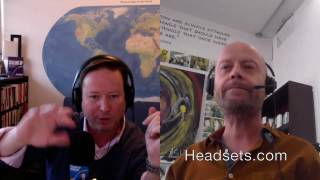
Mike Faith came to the US with $1,000, founded Headsets.com, and built it into a competitor by making service the core strategy. After reading Tom Peters, he shifted to hiring and training obsessively, leased the headsets.com domain for roughly $1M, and set a BHAG to overtake the industry's largest manufacturer.
Chapters
Hello and welcome again to the Scaling of business podcast. I'm your host and growth coach, Bill Gallagher. We've got a great show today. It's another entrepreneur success story. One of our scaling up success stories who's used the rock habits and the principles of scaling up to grow their business dramatically. And I'm just so excited to have Mike Faith from headsets.com on the show. Welcome to the show, Mike.
Hey, Bill. Thanks very much for having me. It's a pleasure to be here.
Awesome. So this show will be on both itunes and on YouTube because we've got some video and you're looking good today. I like the haircut and the headset.
Don't forget the headset.
Headset's fantastic. I got my headset over here. I use a sennheiser wireless from headsets.com.
Good place to buy a headset from. And I'm pleased to hear it, Bill. Keep it up. Is that the office runner you've got?
Yeah, yeah. Here, here, let me just grab it and show it because people love this. So I have this one, right? And I use this both between the landline and then the computer. So a lot of times for our zoom meetings or whatever, when I'm on coaching calls, I can wear this thing and pace around, which is really helpful to keep your attention and focus. If you're add like me, pace around and move around the office while you're on a coaching call. So fabulous sound. I can fill my coffee, walk back and forth while staying intimately, powerfully connected. Focus for the recordings. This mic has a little more warmth and stuff to it, but this is great for all my regular work.
Bill, this is terrific. Can I take a clipping of this? And can we make it into an infomercial? You would do wonders for us. Thank you.
Absolutely. Sennheiser Wireless. Terrific sound. Great battery life. Really happy with the thing and the connection. Hit a button to go between the landline or the computer. Connection is. Is really beautiful. So there you go. There's my plug. I'm obviously a fan. We've been friends for a long time, right? We've both been members of the Entrepreneur organization. Since when did you first join?
Gosh, I think probably about 13 years ago now. Maybe 2002. 2003.
Yeah, yeah, yeah. So I joined a couple years just before that. And then I did take a couple years off in the middle back. We were known in those days as Yeo Young Entrepreneurs Organization. When I hit 4:40, I bailed. But I came back for the love for people like you, the camaraderie and the spirit was unlike any other business group that I belong to. So I am so excited. So we're going to tell your story today and talk about it. So a couple things you guys should know. So Mike's the founder and CEO of headsets.com, but they're a three time Inc. 500 fastest growing business and twice named a best place to work in the Bay Area. Here they have offices both here and in Nashville. And Mike's got a great story and he's just always a lot of fun to talk to. So, Mike, tell us about. So it sounds like from your accent, I'm going to go way out on a limb here that you are not born in this country. You might be an immigrant.
You're very intuitive. And I'm scared to leave the country in case they don't let me back in at the moment. We're not going to go there. I am. I was born in England and I left there in 1991 to seek fortune, riches, good weather and great people in the US of A.
Nice. In 91. No, maybe it was 92. I left Kansas City and moved back to California. And you came here from England, So with probably just a little bit of money in your pocket at the time. Right. And a love of life. Yeah.
In fact, I sold everything to come here. So I had about $1,000, which is shows you kind of, you know, how my most recent business success had been in the uk. So I've had some successes and some failures and they're all good learning points, of course. But. Yeah, scraped together about $1,000 and got an airplane ride and turned up with two suitcases.
What made you want to do that? Why did you. Why did you come here?
Well, I came in with my wife at the time and successfully completed 20 years of marriage. So I get a medal for that, so I'm told. But the reason was I liked the thought of the business environment. I'd always kind of thought of myself as a little bit more natural in America than I felt in the UK or Europe.
Interesting. Yeah, interesting. I could get that. You're a bit of a promoter, I would say.
Thank you. You were doing pretty well with the headset just now, Bill.
All right, so we have that in common. So tell me about that. So you came here. A thousand bucks. You started. Tell us a little bit of how your business evolved, how you came to the rock habits, Neo and all of that.
Sure. Yeah. Yeah, yeah. So, I mean, I did it. I took a job at first for a while. And I've done a few jobs in my life, but I've never been really wonderful at following how everyone else wants to do it. I tend to prefer to, like many entrepreneurs, design my own system and do it how I want to do it. So I had two or three kind of short termish jobs a year, 18 months here. But I started one business and I'm trying to. This must have been maybe 96, 95, 96, and got up to 2 or 3 million dollars a year. And we were using phone headsets and they weren't very good and the quality wasn't very good. And I thought, oh, there's an opportunity here. So based on a Data point of 1, which is usually enough for me to make major life decisions, no research groups here, I thought, gosh, if I can't get what I want, there's an opportunity. So I started what at the time was headset discounters. And we sold headsets at a discount.
Yes.
And I think I was about three years in when I realized this selling things at a discount doesn't work or not as your main business proposition. So almost overnight I switched to a new model. I listened to Tom Peters. I was a big Tom Peters fan and in search of excellence. I remember I listened to him one night when I went to bed and talking about, you know, customer service is an effective barrier to entry because other people just can't do it no matter how hard they try. I thought, that's it. So the next morning I came in and switched the business and had a complete focus on customer service. And it was an overnight leap. No, no incremental gains for me on this stuff. Major transformational leaps which disrupt things and disrupt me and the people around me and the business. But it was the right thing to do. And we became the premium service provider in the headset business. And that was kind of our start for really a launch that continued to this day. And we've been in business 20 years now and just selling more and more headsets and doing a terrific job of giving great customer service around it. And that's the only thing we do, Bill. We're specialists. In fact, we're the only specialist in the office headset market. We do more of it than anyone else. We know what we're doing better than anyone else. And every time we try and deviate from that focus a little bit, we kind of learn the lesson that it's not good and we come back to our core of telephone headsets.
Yeah, totally get that. Well, just to Draw a couple connections to some things that are right in the news right now. Right. So I read this morning with interest that Macy's, 3/4 of Macy's customers, over 75% of Macy's customers, feel better about Amazon than they do of Macy's.
Yeah, yeah.
Based on NPS data. Right. And would much rather do business. So that's staggering. Right. The old store is, in fact dying. I've reported on this a couple times about how traditional department stores are dying. Nordstrom seems to be holding on. But why? They're a service leader. Right. There's something that they offer that's an advantage. So you know, many companies, if you read Richard Branson's story about starting Virginia, there are many companies that begin something with some discount thing, but it's not terribly sustainable advantage unless you build enormous scale and leverage. Costco is one. But they have a unique business model and raise a lot of money through their membership fees, which is distinct from just being a pure discounter. And they're now, I think, number two retailer in the world at about $108 billion in sales. So that's got a discount angle to it, but has some advantage, some loyalty that's a little different than we see in just a straight discount. And if you think about the shift between a company like Macy's and Amazon and what's happening to that and how, I mean, going into a Macy's can be kind of a dreadful experience. Today you're hard pressed to find anyone to help you. They're unmotivated, they don't care and they don't know anything.
Correct.
And it's a direct. Where I can help myself and go around Amazon and I buy all sorts of things all day long from Amazon. At the same time, Amazon is gobbling up companies like Zappos. Right. Which is another service leader. And Amazon itself might not be a great. Like they don't have a lot of people answering your calls and handling issues like that, but they make that process so easy and so universal. And then they have specialists like Zappos that just focus on one piece of business and excel with extraordinary service, which is, I think, what you've learned. So in order to do that, you've probably got to have some great hiring, some great training, some core values at heart. Tell us about that.
Sure, sure. Yeah. And, you know, I think one of the differences in any business is the people that you hire and how you train them and how you sustain them and how you motivate them. So people are a really big component of what we do, we have very extensive hir processes. In fact, as people often say internally here, that our customer service hiring is such an extensive process to get hired that I would never pass it. And it's probably true because I wouldn't be great at that because I've got too high impatience in order to make a good job of that position. And we look to screen for that a lot. We do follow some of the Rockefeller habits. You know, I love some of Vern's message, and I think one of our big takeaways that I really like that we use a lot is the meeting cadence, I think he calls it, where we have, you know, daily huddles and weekly team meetings and quarterly off sites. I think that's helped us a lot in terms of people being on board and understanding our mission as a business and the challenges that we're facing each day and each week and how we're going to overcome them together. And then we're big on training generally. I mean, I don't know who it was that said, you know, if you. If you train your people and they leave, that's a problem. But if you don't train your people and they stay, that's a bigger problem. So we spend a lot of time and effort on training, whether it's internal time and resources or sending people on external courses, because we feel that's important to develop people. And if people leave and take it elsewhere and they thank me for training them, that's great. And if they don't thank me, I'm still happy. Because you don't always get the thanks. But, you know, it's the right thing to do. And doing the right thing is always the right thing.
Yeah. It makes a difference over time. And I think you can look yourself in the mirror and feel good about who you are. You know, I have a mirror in my shower where I shave. And there's something, you know, as you're going through that, considering you're thinking about your life and your world and your day and your year and, you know, all of those kinds of things that you might think about as you get ready in the morning, it's really great to know at the end that you're happy with the person in the mirror, that you're comfortable, that there's nothing that you can't be with. With that guy.
Yeah, totally, totally. Always happy, but never content.
Well, the hunger, right? So the hunger, the drive, right. That's our number one thing that we look for. Well, are you hungry? So it could come from, like, A desire to prove your parent or your third grade teacher wrong or something like that. It could also come from a powerful vision for something that you see possible in the world, something that you'd like to bring into being. And I think over time, all the companies that we work with, if they don't already have it, they soon discover a powerful purpose that galvanizes not only them, but everybody else. It's usually there. It's just not well expressed before we start to work with them. And they start to see both personal purpose and company purpose being tightly connected. And there's real power in that. But then there's the other one. Not just that you've got drive, you know, why AM I at 52, with some success and stuff, still hungry and out to impact millions of leaders around the world? I don't know, it's just the way I'm wired. I've got.
Who's 52, you or me? Bill?
I'm 52. Yeah. Are you also 52?
Well, I am as well. That's why I wondered, how do you know this? Why are you telling the world? My age now?
I'm cool with that, too. So that's beautiful. So.
And you mentioned hunger there, Bill, and I think that's very. I mean, that's what drives us, isn't it, as entrepreneurs? And that's what drives the successful people in my business. They've got a hunger.
Yeah.
And is it ego? Is it financial? Is it inherent? I don't know always. Because I think it's three layers deep in their psychology. And even in my own psychology, I don't always know, but I know I've got that hunger that drives me. And sometimes that hunger is a desire and sometimes that hunger is an annoyance.
Yeah.
But I feel it and I want more and I want to get it right. And it's a wonderful thing for motivation.
Yes. And it, you know, it's good to be aware of it and be healthy and have good habits and things like that. But. But there's a place to use it. Right. And I've seen that. Like, I had a guy once. Well, more than once, I think, but I'm thinking of one in particular that was really a delightful human being. And I hired him in sales. Great industry background, great knowledge of the customer base and things like that, and love of people and great connection and really great values, but he didn't have any hunger. And when I had him working on new account, new business work, that did not work out so well. But when I put him in terms of More of a sales and account management role. It was just fabulous at that. People loved him. He loved people. He's great at taking care of things. It's about aligning right to the right kind of role. If you've got that drive right.
Yep, absolutely. And I think that some of that alignment, again, is what we get in the Rockefeller habits of communicating that alignment so that the whole team knows where you're going and why.
I think that your hiring practice and your meeting cadence all sound really good. I do know some of our people who are new to the habits and working on things, sometimes struggle with it. They're like, oh, why this daily meeting? It's irrelevant. And then as a coach, we observe what they've done and we realize, okay, you're kind of going about it wrong. And maybe it's. The agenda is not well managed or people don't prepare, or it's. It rambles or it's too long, or you don't have a good agenda or you've got irrelevant things, like any number of things that need fine tuning to make it work. But it's surprising how many times they're, like, just going to abandon it. We're like, we tried it. It didn't work. We're abandoning that. I'm like, okay, what's the number one problem around here? Well, we're really all working in silos. I'm like, okay, that's what the synchronization is all about to get you aware of each other. And the unfortunate thing sometimes they have to discover is that until they cultivate or break through something, they don't actually care. So there are many times that people, they're worried about working in silos. They want other people to care about them, but they haven't noticed that they don't actually care about what other people else are doing. So sometimes we have to confront the ugly truth. Right. And develop some caring concern beyond ourselves to. To impact that.
Yeah, yeah. And I think you mentioned, you know, other meetings, productive or not, and making them productive is really important. And it requires some discipline. It requires a leader to set it off. And this is how we do. And, you know, to curtail the ramblers and to get the people that don't speak up to speak up. And we have these meeting cards. In fact, I'm gonna. I'm gonna reach over and just show you. You're gonna love these, Bill.
Yeah.
I promise you. Yeah, we might. We've made these. I think we might even produce them. And, and that. So in a meeting, everyone Gets these cards. And like, so what? And. Can I say that on your show? And we're going down the rabbit hole. And the fact you can just hold the card. I love those. There's a good one as well. You give someone a. That was awesome. And it's just kind of fun. We all have them and we use them. It just speeds our meetings up. But whichever way you do it, that.
Is a good way to unsuck your meetings.
Yeah. Because otherwise people just talk and they're useless. And productive meetings are valuable, but they've got to be productive meetings.
That's right. So one of the things that we. In our daily and weekly meetings with virtually all clients is we get them reading some version of something that we like to call a manifesto. And the manifesto is usually purpose values, BHAG and brand promises. And then sometimes we'll tag it with the theme of the quarter. Right. But if I start out with my purpose. Right. Helping leaders build a better world. And then I talk about how we value bold authenticity and always being at work on yourself and creating and innovating and thinking rather than just having thoughts and laughing, especially at ourselves. People begin to get a great picture of something. And then I say we're on a mission to impact 1 million leaders in the next 10 years and 5 million in 30 years. And our theme this quarter is Firestarter. There's a rich picture there. And if I just take the moment to read that with intentionality and then reflect on what does that have to do with today or what does that have to do with yesterday, I start to deeply ingrain something. Do you do anything along those lines?
Yeah, yeah, we're doing this probably a little bit. A little bit different than what you've got there, Bill. But everyone understands what our goals are for the year. Like, we've got our 2017 goals and they're printed, and we've got the company goals and the functional goals, and they're printed, and everyone's got a copy, and they're posted throughout the company. And we'll start meetings by talking about it. This is the goal. Anything we talk about should probably lead us to that goal and should be relevant to that. So it helps keep the focus and the mission and the awareness of what our intent is, why we're here every day.
Really get it. Really got it. That's awesome. So we've got the hiring, we've got the great training, and now you start to be noted. When did you buy the. The domain? Headsets.com.
Yeah. So that we originally Leased that I think it was in 2000 with a lease to own. We didn't have the money to buy it. Yeah. And it was a million dollar deal. It was the 8th most expensive domain transacted at the time. Who wants to be number eight? But to be number one I think would have been 14 million. So we were happy with number eight and the. Yeah, we didn't have any money, so we had a $2,000 down. Escalating payments over 10 years which went towards the purchase price.
Did you work that out with the domain owner or did you finance it separate? No, with.
It worked out with the domain owner. I put myself on the line. I personally guaranteed it. We paid it off after about eight years and it was probably one of the smartest financial things we ever did because it put us on the map. It put us on the map with customers, it put us at the top of the search engines and just as importantly, it put us on the map with the manufacturers because all of a sudden they turned their heads around and said, who are these people? And they took notice and we were able to go and make deals with a lot more credibility. Sometimes paying a lot of money for something and letting people know about it can be self fulfilling in terms of it's good because you did it and that's what makes it good. And there was an element of that. Although the search engine value alone of us coming up top of the search engines most of the time was paid for it as well.
Had to be huge. So you went from being known as headset discounters to headsets.com?
Yep.
And how did the timing of the service focus versus the domain lineup, what came first there?
Yeah, they were within a few months of each other. And we're thinking back 17 years now, Bill. 16 years. 16. 17 years.
It's hard to think that long ago.
Yeah, yeah. But they were about the same time and they weren't connected events, but they were on a similar timeframe.
Well, they're in the same season.
You got it. Thank you.
The same era.
Yes.
Yeah. Well, you've had just phenomenal growth and it's a pleasure to watch the company grow and for you to begin to really own that space and dominate that and be known for something and hold your head up high about the business. It's a really great thing. So what's the outlook now? Where are you going? What's the focus these days?
Yeah, we want to stay with headsets. We like that business. We know what we're doing. We're staying with it, we like doing more of it. I'm on a mission for another. I think it's going to take me about another decade and a half, maybe two decades, which is to beat the number one company in the industry who's a manufacturer. So we're moving further and further back down the manufacturing chain and we'll overtake them in the next 20 years. Actually, I really want to do it a lot sooner, but if I do it within 20 years, that'll be good. And it's just, it's not the money, it's the fun, it's the goal. It's the they're number one, it's David and Goliath situation. They're virtually a monopoly in the US and we're in chin away. And we got our strategy and our tactics and we're focused on it. And we'll overtake them within the next two decades.
And they must know this by now.
I don't think they believe it and I'm happy with that. They can go on not believe in it, but their belief system doesn't really bother me. It's our belief system here.
Yeah.
Is the one that counts.
Yeah, yeah, totally get that. Nice. Really nice. So, so that's the long term goal, right? Is to do that. What about international? Are you where, where all do you ship to?
Yeah, we're US and Canada. We own the domains in the UK headsets.co.uk and we own some other ones. Oracularis for Spanish and Kopf. How if I said that right for German. But we like the US market. We think if we can achieve our goal of becoming number one, whether it's 10 years out or 20 years out, that's good. Perhaps the guy after me in 25 years time will want to do more internationally. But for right now, the US market is big and the Canadian market's big and that's where we're going to focus.
It is big. Yeah, yeah, absolutely. Well, this is so great. So I, and I think there are a lot of great points here about meeting cadence, about hiring, about strategy, about owning a word. Right. Headsets.com which lives in that, about having a bhag out to out in the future for things, about having the right meeting rhythm. So a lot of terrific lessons for people to think about in a great growth story. And it doesn't happen all at once. Right. It takes time to work through these things and on these things. So it's worth it to stay the course and do the work along the way. I think people have got the URL that we're going to put in the show notes now. It might be headsets.com?
Was that headsets.com I didn't quite catch that.
I think that's headsets.com and you might find it in our show notes. A couple things in our world that folks would like to know about. So we do a couple workshops a year and we've got one coming up right now. You may be listening to this. After that, find the latest workshop for us, go to scalingupbusiness.com, look for our link for the latest workshop and do that. Of course, you'll find our podcast and our tips in a couple of places and I'll tell you about those in a second. But also on our website is a free download to a growth kit. That growth kit has a quick overview of the Scaling up book from the book and gives you a quick overview of the ideas and the methodology there, and then has some instructions on how to run your own company strategy and planning meeting so you can get started even without a coach. And maybe even if you want to do it on your own, you can use that recipe to get going along with some worksheets, a few of the worksheets to really begin to get some of that work done with your team on your own terms. And then of course, if you'll go to itunes or over, you get your podcast and subscribe. We do a podcast every week with a business success story, an author or thought leader or another coach talking about a case study with one of theirs. So we've got something new for you every week right here. And there are other lessons, tutorials@YouTube.com billgallagher or scalingupbusiness.com so thanks so much again for having us and we'll see you or talk to you next time.
Sam.










