The High-Stakes World of Event Production with Rennie Colelli
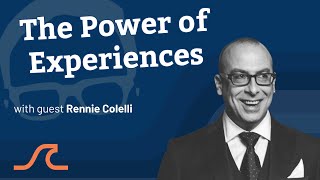
Interview with Bill Gallagher and guest Rennie Colelli (founder of BB Blanc). Rennie recounts his start as a DJ in the 1980s, building a large social-events company (sold in March 2008), then founding BB Blanc in June 2008 with a deliberate pivot toward corporate experiential/AV production. Key themes: systematizing operations to scale (sales, people, equipment), crossing the "Valley of Death" when growing, building credibility to win corporate clients, memorable client activations (race car, automaker holiday event scaled from ~1,400 to ~4,500 attendees), and pandemic-driven changes (studio/virtual production and renewed focus on immersive in-person experiences). Contact: bbblanc.com.
Questions this video answers
March 17, 2008.
About 30–40 people.
About 1,200 events per year.
Approximately 20–25 events in one night.
Around June 2008 (about three months after the sale).
Chapters
If you're watching, he's already on screen. Rene Keleli is our guest today. He's going to talk to us about growing in his high stakes world of event production. Rene Colelli joins us from Canada. Rene is the founder of a company called BB Blanc and he's grown this company to pretty good sized AV production company. But he got his start as a dj. That's probably why I like him. And he's got a passion for music and live entertainment and you know, he's all about experience. Right. And real time demands. Right. No room for fluff when you're live, when you're dealing with stuff that is Rene's world. Welcome to show Rene.
Hey, thanks Bill. Great to be here today.
Yeah, you know, starting off, we were starting. You got your start as a music DJ in the 80s. I started first on the radio and the nightclubs in the 80s also. So a very like a different time. That's funny. That was 40 good old days ago. 80s music was 40 years ago. Let that sink in. Right. That's a truly terrifying thing. So how did you get your start in that world?
So basically I have two older brothers and they both dabbled in the DJ world. You know, I think it was more for the fun in the party part of it. But when they realized how much worker was, I think they just left the equipment on the side and they said I'd rather just attend the events. So I kind of picked it up and I had a passion for building, so I used to build my own speakers, my own light shows and stuff. And then I just needed to keep doing more shows so I could buy more equipment, so buy more records so I could do more shows and more bigger shows and more exciting shows, you know, and keep going from there. I was young at the time, 14, 15. Right. But yeah, it was a lot of fun and I was pretty good at it. The part I love the best though, and what kept me going is, you know, in the beginning it was the building and the creating the exciting shows, but really was seeing the happiness on people's face and you know, doing a big event, usually milestone events and you know, people leaving so excited and with great memories. So it was all about the experience. So that was amazing.
How did you get your shows or pick them, create them? Like how did you find the work?
Yeah, so at the time, you know, was just the kid. So I would take whatever I could, a house party, a school dance and then, you know, as I got a bit older, closer to my twenties then I, I started Doing weddings. And I kind of. That was kind of my niche after I stayed out of nightclubs and all the other stuff, the weddings, you know, you could always get paid, you know, so I like that. So. And I actually got really good. Really good. I was always good at playing music. I knew which music to play and stuff. And then I became a really good emcee. Once I built my confidence playing the music, I got better and better. Talking on the mic.
Yeah.
And getting people just to have a great time doing stuff they never would have done, and leaving there with a great experience at the end of the night.
Yeah, that's a really interesting thing. Like, you start taking anything you can get, right? And then you figure out and you develop skills, and then you figure out what you're good at, and then you start to specialize, and then it starts to feel like a real business. But in the beginning, it's like crumbs or whatever, you know, I. I started DJing by accident because I was in the radio station late one night and talking to a friend there, and I did some promotions and things with the local radio station and. And the guy didn't show up. And the music director was a friend, and he got on the phone, he's like, this guy's gotta go, Bill. Just do the show.
Right?
So it's two in the morning. He's like, look, you've been in there. You're gonna get a five minute intro from the guy leaving and then just do whatever you want for the next four hours and, you know, kind of our thing. Do as much of that as you can and don't stress, you know, so. So I like. I'm like, okay, two in the morning. I'm like, all right. And the felt the stakes felt pretty low. And the guy shows me and I'm nervous and. But then he stays there for a minute while I bring in the first song and announce and transition. And then he's like, okay, I'm gone. Then I'm like, all right, well, here I am in the studio and I just kept playing music. And then it at like six in the morning, calls me up. He's like, hey, Bill, that was pretty good, man. So I'm gonna fire that guy. And.
You got a gig.
Go to take the show. Like, that's your show.
That's amazing. It's funny how those things happen, you know?
Yeah.
And it's interesting. When I started out, like, you know, you're just doing your best to be a good dj, then all of a sudden you have to Become a sales guy. You have to become a networker. You have to become a good buyer. You know, all these things because you know there's only you. And you know when you're doing your gig, the only thing you're focused on is trying to get your next gig. So you want to do a great job delivering your service, right?
Yeah.
And then you want to make sure through the night, you talk to a few people to find out who's getting married next and make sure you get a referral or something. Right. So I remember all those skills and then sitting down with. At the time, I didn't even have an office. I used to just. It's a funny story. I remember my girlfriend at the time, who's now my wife. I'd say, kath, okay, we're gonna go out for some drinks, but before we go, we have to stop at somebody's place because I. I'm gonna do a contract for a wedding. So I'd go to their home. I'd end up meeting the. The kids getting married. I'd have to sit down with their parents. So then I was coming from an Italian background, like, everything was negotiation, Right. So the kids were happy. And then I'd have to negotiate the price with the parents. But those. Those skills stayed with me for many, many years, helped me grow my business. So when you're young, you learn. You learn pretty quick to get the deal.
So that's really. I. I put on shows, like, with. I helped produce live acts, and I did nightclubs, and then we would do some school dances or things like that too.
Right.
Again, like, hey, I'm getting paid. I'm getting four or five hundred bucks today. I'm super happy about it.
You know, getting paid to have a good time. What's better than that? Little did we know.
Yeah, it would. It would lead and morph to things. In my case, I went on to more of a sales and marketing track and then general business kinds of things, because being all night and just teaching and then also, like, the. The scratching and mixing became much more of an important thing, and I didn't really want to work at that that much. Picking songs and announcing was groovy for me.
You know what else? Like, at that time, then I got even better and better at what I was doing, and I got better at getting referrals. So then comes the interesting part of growing a business, when it gets bigger than yourself. You know the email story about baking apple pies, Right?
Yes.
So. And I would say that's one of the Things I did really well, I was able to systemize, systematize my business, put in processes, make things step by step. So as I hired people and trained them, then I could let them go and they could deliver the service at a very high level. So by the time I was in my probably early 20s, I was running five systems out of my house. So the interesting thing about doing events locally here in Toronto is like they all started at 5:30 and they all ended at 1:00am so you had to be like super organized. Right. Time. There's no cell phones. At best, maybe you had a pager.
Right, right.
So you had to prepare everything way in advance, make sure these guys were trained, they had the notes, they everything was working. So there was a lot to do because basically I hired operators. Right, yeah, sorry, go ahead.
I said you've got multiple crews going out. If you're going to start to do multiple events, it's not just one a night now. Now you've got it. So now you have to develop all those sims to make sure that you can deliver on the promise of the thing. Because even if you have a decent MC and a DJ or one in the same, like, you've then got the setup and you've got showing up on time and you've got everything else and, and with the crowd. Right.
And then there's not only like, you know, they got to be able to play good music, keep people entertained. There's a lot of soft skills. Right, right. It's very. Emotions are running high in that world. Right.
So yeah, it's a fascinating thing. So you ran that for how long?
So basically my first company I ran till 2008 on my son's 13th birthday. I sold it on March 17, 2008, and by the time I finished, I had probably about 30, 30, 40 people with me and I was doing about 1200 events a year. So in one night we would do anywhere, probably 20 to 25 events. And again, this is in the time where, you know, you have to load every truck. Phones were just starting, like a lot of logistics. Sometimes I felt I was in the military. Like everything had to be so bulletproof because like, you know, people weren't local. Right. When you sent the truck, it could be going an hour and a half away. Like there's, there's really no dues in our business. It's a big deal. Right.
Yeah. And in that case you've got like trusses for lights and things like that.
All kinds of shows.
Not just speakers.
Yeah. And you know, it's Great. Like, we're always playing with the sales process, right? You know, you bring the couples in. We had a showroom, you know, where we could do, you know, sell the sizzle. And then we always had our tiers of packages, you know, ABC or, you know.
Yeah, yeah.
You know, nobody really wanted the basic, you know, the 10, 15% took your top package and then the rest of them settled in, in the middle, Right. So.
Right.
So it was pretty interesting experience. Experience and learning process to watch people.
How they buy, both in terms of pricing and in terms of packaging your offerings. Right. Creating that. Always have a good, better, best level, whether it's a physical product or it's a. An experience level. Like, having some upgrades on that whole kind of thing can make a big. Make a big difference.
So the interesting part of my first company, it was like, by the end of it, we were probably doing 90% social events and about. We had just started to dabble into corporate. Corporate conference, meeting, event stuff. And we're probably doing maybe 10, 10, 15%. So 85, 90 social, 10, 15% corporate. So I'll never forget the day the deal closed. I went to my place of business, handed in my laptop, my car keys, my phone and my car, took a cab to the lawyer's office. This was a little hard, right, Because I had started the business from my garage, from when I was a kid. Everybody knew me as the guy, right? And I was leaving, and I remember the lawyer at the time asking me, he said, rennie, how old are you? I said, 39. Goes, believe me, in five years, this would be the best thing that ever happened to you. Like, I didn't understand in the moment, right? But, yeah, sure enough, he was right. Five years later, like, there's something to be said about starting over.
Yeah.
I mean, starting your first business, you know, when you're very young, you don't really know much. You're just figuring everything out as you go along. But the opportunity to start over in 2008, which I kind of kicked it off about three months later, June of 2008, and it was interesting. It's not really starting over. It's starting over with 25 years experience, right? So everything of the name selection, you know, how we're going to present ourselves, what are we here to do in the next 10 years? Because, you know, I had put my own milestone. I was 39. I said, okay, by the time I'm 50, I want to hit this big target, right? And it's like, you know, nobody thought I could do it. They Thought it was done. And basically I put my head down for about two years. People would call me, I wouldn't call them back. Friends. I was just so laser focused to rebuild this thing. I heard you on a podcast yesterday with Peter, I think his name was Peter Martin. And he talked about the chip on the shoulder. So when I started over, I had a little chip on my shoulder, like, because I wasn't, I wasn't quite done in the first company. So when I started over, I'm like, okay, not only am I going to get this right, I want to make sure, like we. There's this thing I had on my, on my cork board, it said, be so good they can't ignore you. So I put everything into it to get it to the next level. And yeah, that was an interesting journey.
Asked years ago is if you were gonna compete with yourself, what would you do? And the correlate, or a variation of that question is, if you were gonna start this business over, how would you reinvent? Like, what would you change if you could start it all over today? And I think you probably ought to have some good answers for that. I certainly do. Thinking back about prior businesses, I'm like, oh, if I was doing that again, I would change this. Right? You know, and of course the hindsight is one thing, but there's also the cumulative wisdom that you apply. Like in your case, 25 years of one business, now you've got a new one and you're like, okay, what am I going to do differently this time? So talk about the new business. What did you start, what did you intend to build and where are you today?
So when I started over, like, most of my contacts in network were in the social events world, right? Having done so many for so many years. But I had figured out near the end of my first career is that like social is, is like an amazing world, but there's a, there's a lot more opportunity in the corporate. And what I mean by that is like social was pretty much at the time just weekend work, Saturdays at best, some Friday, Sunday stuff on the mobile entertainment world. Right, right. But corporate, like, you had Monday to Friday and occasionally weekends. So I was carrying a lot of overhead equipment, bodies, and I was, I wasn't utilizing them to the greatest ability. So one of my focuses, starting BB Blanc was, okay, how are we going to do this? How are we going to take and leverage everything we learned all these years? Because the one thing we're really good at is creating experiences for people. Even the corporate shows. I was doing in my past life, like we're able to bring people in the room and take them on a journey through the, through the evening. Right. Or the, or the conference or meeting. So we wanted to get there, so I wanted to flip the numbers. So basically I wanted to go from like 80, 90% social to 80, 90% corporate within about 10 years.
Yeah.
So we started out pretty much 99 social. And by about 2008, we started. By about 2013, I think we got it up to about 20% in the corporate market. And so you have to understand, like in the social world I was a big, well, I was a big deal, but in the, in the corporate world I was a small potato. Right. It's completely different world.
Right.
We're competing against the billion dollar companies that are, you know, and people, producers are trusting these partnerships for years and years and years. So we have to figure out how to break into this market and to win some credibility. So that was a big learning curve for us.
Yeah, you know, it's a whole other world. I have a friend who comes from LA entertainment business who is a, a key executive with one of the big events companies that does the big, like the global expos, the, the World Cups, the. Oh yeah, those, you know, those kinds of things. And huge, huge shows and experiences and months go into preparation for them. And the teams are enormous to put those things on.
Right.
But they're, they're not just playing to a big stadium, they're playing to a world audience. And they, the, the shows and creations, they go last over time. Right.
Like it's, it's hard to imagine what goes into producing like a show. Like. Yeah, the ones you're talking about are way beyond our capabilities. Like we kind of max out at, you know, three to 5,000 people, large convention spaces. That's kind of our comfort zone or like kind of the top. But the ones you're speaking of are even more complicated. But so many logistics and twists and turns and details that have to be figured out and, and no take twos at our business. You know, CEO's showing up at 10:00am Everything's got to be hot and ready to go.
Yeah, yeah, it's really good. Well, let's talk about a few of your stories and examples. You had one where you were gonna sell a team, sell an aid, I don't know, sell some agency on a thing, but you had the equipment for those. Talk about that h. Not having the team and, and that insight.
Yeah, so this was early in, I would probably say 2011, 2012. So this is my, my button pusher wakeup call. So, you know, I was a pretty good at getting myself into the right circles. You know, if I wanted the business, I could figure out, like the degrees of separation, who to call, who to talk to to get to the table. So, you know, I managed to.
You.
Know, get myself to the table for. With a large agency that produces pharma events. So these pharma events were all throughout Canada. And, you know, it's like the show, it's like the, the trophy events, right? Big ones, pharma, big money they can spend on the, on the wow. And those were the shows that we wanted to be at, right? So I managed to get to the table after all the niceties and everything, and everyone's comfortable. You know, the producer says, look, Rennie, you're a good guy. This is, this is a situation. We know you can get the equipment. Equipment is pretty readily available. If you don't have enough, you can find it, you rent it, right? But he said to me, rennie, who's going to be the team pushing the button? You know, when things go astray or things get a little wacky, who. Who's on your team? Who's going to be hitting that button? So now you understand, now my tail is going between my legs because I don't really have the answers and I'm not quite there yet in my journey. So, you know, it was a pretty humbling moment for me. And, you know, I left that meeting realizing, you know, I had some work to do on building the team. What I, what the big learning was there is that these people spending this type of money and taking this type of risk because it's a very stressful job producing events. Nobody wants to make a mistake because usually cost them their job. Right? They're not willing to take a big risk, you know. Yeah, they're, they're not gonna, you know, take a risk. They have long embedded relationships with people that have been through, like, wars with them right through the trenches. And they're, they're not just going to toss those relationships to give someone a new chance. Unless even, even if the pricing was good, the, the value offer had to be really extraordinary and we had to get our act together. So I left that meeting with some, with some Bruce Deo. But I was inspired. The guy was nice to me and he was, he was pretty honest. So I realized what we have to do. So our business boils on three major things. We need sales. You need the right sales, you need the right people to do the Jobs and you need the right equipment and none of those things ever happen in order. You know, when you want to get the big sale, you don't have the right people. When you want to get the the right people, you don't have the right equipment, etc. Etc. So it's like a dance when you're scaling. I know Vern Harnish, I remember reading his book and he had this thing that always stuck in my head. It was called the Valley of Death. You know, when you scale from zero to a million, you're like a star. But then to get 0 to 10 million, it's like first you have to cross the Valley of Death. And that's kind of where we were at that point. So we had to figure out how to scale and make it through.
You know, I talk about that all the time in our workshops and coaching sessions, that kind of thing. I have to remind people, look, look, when you are plateaued, when you hit a level and you can't break out of it, that's really frustrating, right? And then if you have a setback, if there's a recession or a problem with your company or production or whatever, and you contract in some way, well, that's really stressful. You worry about can I stay Al and that kind of thing. But also when you grow, it's stressful because you have to fund it, staff it, deliver it, like produce it, whatever, right? And that's also stressful. And that I think for me the message is twofold. One is it's always hard. It's never ever getting any easier. And fewer and fewer people make it to the next level, to the higher level. So if you want to enjoy the process and you want to make it to a higher level, then lean in, choose the problems, embrace it. Stop complaining about the challenges you have. That's kind of an opportunity, right? There's a.
Absolutely.
And if you think about our non business friends, right? And for our listeners, viewers, your business friends, right? Like you could talk to them about staff problems or things like that, but you can't even talk about problems with staff hiring, that kind of thing to non business friends because it just sounds like bragging, right. You're very. So be grateful for the set of problems that you have. We all walk through life with a set of problems. No matter what your role, job, path in life is, you're going to have some challenges, right? So enjoy the ones you got because this is a unique and different kind of path in life.
Absolutely. And look, the challenges, they either like force you to step up or you got to step aside. Right. Because the world doesn't stop for anybody.
Right, right. You could, you could run the thing into the ground. That happens too. You could. I've shut down a company before, so that can happen. Right. Like, it's not always on the up and up. I think one of the things that's really great about your story is, you know, you ran it for a time and then you got out of the first business and then you're like, I'm going to do it differently this time. I'm going to reinvent, I'm going to reimagine. I'm going to choose a different segment of business. Same world, but a different part of it working. A different schedule, a different time, different tempo, different budgets. That's an interesting thing. You took a conscious choice, but you did it not with the existing company. You sold that off. Right. That gives you some breathing room. It gives you a chance to fully reinvent. Not with the legacy and the obligation there. That's really great.
It's actually pretty amazing. And I didn't realize at the time, like I mentioned, but years later, it's actually one of the best things that ever happened to me. Freed me from all, all the stuff I avoided. So many pitfalls. I was able to move faster. I was a lot smarter. You know, I joined peer groups and they had helped me kind of navigate a lot of things. I was an EO Toronto and I had a lot of good mentors there that helped me scale early on.
Yeah, yeah.
And I'm still with them and great people there. So that's been amazing for me as well. The other thing I wanted to touch on is like starting over after you've been through it, like you can really say, hey, I want to build a 10 million dollar company, a $20 million company, 30 million. You can really set that bar now and say, you know what, I have some experience. I think I can do this. Right. I know what I did wrong. I know who I need to talk to. I know which road I need, path I need to go down. And that was amazing. And like the one big thing we did early on is like we set our, like, you know, like setting the GPS in your car, you know, if you're trying to get to New York from Toronto, it's, you know, don't start going north. Right. So, you know, we had a clear path. We had our ambition set from day one and we designed our business, you know, in the architecture for to build a 10, 20, $30 million business so a lot of strategic planning, building scalable systems, understanding that it was going to be a lot more than just me. I had to build a leadership team, management team processes, all that stuff to make this all work. Right. Yeah. Deal.
Well, I think we're originally connected through some of the other EO Toronto people, people like Curtis Priest.
Oh, yes, Curtis. He was in my first forum. Curtis. He's amazing.
Yeah. And I led a retreat for their forum once, and we were on the top of an elevator shaft and a building that did.
Kitchen cabinets.
Kitchen cabinets? Yeah.
Oh, my God. Yes. That was my forum. I was there. Yeah.
Long time ago.
Kitchens.
Dimitri Buterin in the chapter there. And so a lot of good. Yeah. So talk about. Yeah. Small world. Talk about the. At one point, you. You had a race car delivered to a. Right. What happens? Who asked for the race car? How do you get a race car into your event?
Oh, my God. So this is. This is a. This is a story, man. This is a story. Like when people ask you and you say, I know a guy. This is my I know a guy story. So my account manager, she's dealing with one of the largest retail companies, North America, and they're doing their kind of full rally. It's like a sales session, right. And it's all teed up. Everything's ready to go. And then the CEO reaches out to their planner and says, hey, any chance we could get a race car and put our logos on it and then we can have it at the event to take pictures? Yeah, because it was something around speed or something like that. I don't remember exactly the details, but my account manager, he calls me, he goes, goes, hey, Ren, any chance you could find a race car? And I'm like, give me a minute. So, oddly enough, like, my. The first building I bought, the builder that I bought it from, he owns a racetrack, and he owns, like, a nascar. So I pick up the phone and I call him, and I said, hey, tj, would you be interested in renting one of your race cars to our clients? Can you deliver it to point A? And then after they remove, there's another show at point B, and we got to decal it, and then we got to take all the details off and give it back to you. It's like, yeah, we could do that. So it's a funny story. This. The CEO, he was a CEO here in Canada, and then he got moved to the US to take over a new role. And in his office still today, he has that picture of that car with the decals. On it from that event. So, you know, networks. Right.
So little out of the way things. One of my old software developers started a gaming and community management business with his brother. His brother was a champion gamer and at one point he won a Ferrari from Carmack. And. And they ended up. I guess he wasn't a super car guy at the time. They ended up building the Ferrari into the lobby of their office. So when they put their office down in Richmond, they build it into the lobby and enclosed in the thing so that everybody walk able to walk around that. And you think about that, you get more mileage out of a car like that, to use a term, putting in a lobby like that than you would driving around town where, you know, Ferrari isn't the most common thing in that particular town. But you know what's a novelty for.
People to see it, right.
Everybody feels a connection to. It's kind of cool. Like it's a novelty. Right. Something a different kind of thing. In preparation, you shared another story. I don't know. This is the same story about the Fortune 500 company. Talk to us about that. What kind of company was that? What did you do? The.
Just before the pandemic, we had one of the large automakers reach out to us and they were doing an annual holiday party for one of their manufacturing plants. And I think at the peak of this event, like, because, you know, we went through 2008 and the auto market had pretty rough time. I think prior to the 2008, there were around 2,000 people in attendance.
Yeah.
So. And then after 2008, they were just struggling, you know, I guess they didn't have the funds or put the funds towards it or there wasn't the creativity. Anyways, we got a shot to bid on this event and they were. They were pretty frustrated, like because they wanted to give something back to their people. Right. Working hard all year. And this was always the event that people were like couldn't wait to attend. And there was losing. Losing its mojo. So basically when we sat down with this client and the good thing is they were looking for a change. And the great thing is that they found us because, you know, if you give us a little bit of room and you actually trust us, we can really elevate your event, you know, if you. Because that's what we are. We're masters at creating events and emotional experiences for people. So basically in about three, four years, we were able to take that event from 1400 people to like a phenomenal event of over. I think this year is going to be over 4, 500 people this year. So basically integrated cutting edge technology, creative staging and live entertainment and storytelling. So it became a very immersive event for all the attendees that they just like. As soon as the tickets go on sale, boom, it's sold out within an hour. It's unbelievable. Now people can't wait to come to this event every year.
Well, you know, a multi year event, like you created something great and now it's recurring and improving and every year, right.
And you have to see what it, what it did was the shareholders that gained confidence and the, they just saw how positive it was for the workers.
Right.
They saw that making this investment in this show, you know, just, you know, we've stretched their budget as well over the years, but they saw that as a great investment in morale and you know, team building. So that's turned out to be like just fantastic partnership for us. And that's like a true, true partnership. You know, when you're working together and you have full trust with the client, you have ample timelines to prepare properly, all that stuff is coming together, which is amazing. We thrive on that.
What do you see what's happening in events and experiential events today it feels like everything got completely disrupted with COVID and it's slow to come back and now it seems like it's different than it used to be. What do you see today?
Yeah, so basically today things have gotten a lot more immersive. People want to have an experience. So, you know, after we were locked up for two years, you know, people thought we were going to move into, you know, the post pandemic was going to be like mostly virtual. But that's not the case. Like, you know, as human beings we're all craving meaningful in person experiences. There's nothing better than that. And so that's a big thing. So live events are back big time. And the other thing is that the companies now view these as strategic investments rather than cost centers. So they have a impact far beyond the room through social media, amplification, content capture, digital engagement. You know, a single event now can reach thousands and thousands of people even after it's done. So the other big thing is technical innovation.
That's the thing. I think we like, we think about the event, the immediate impact and that you can count on, right? It'll go. But if you do something really cool, if a moment happens and you've created room for a moment to arise, like it could actually have legs far beyond. Of course, the same is true if you screw it up Also, like carry out, right.
The story of my life. Risk and reward. Right. So, but you know, if you have ample time, you could design those, those little things into the shows, which are great. And like the technical innovations. It's pretty amazing today what we can do. Like, if you look at my background, although that's a virtual backroom, that's our actual. We have a studio which we had built here during the pandemic. And that's the studio in the background. Yeah, very immersive. That's the thing that basically saved us in the pandemic because companies that were flying around all their top employees and you know, let's say flying them, your sales team to Vegas for three days of meetings and parties and celebrations and rah rah for the next year. Well, you know, the zoom meeting wasn't just cutting it anymore. So, you know, it took us a while to get our bearings, but we built that studio and that was a big game changer for us as well because that basically cemented us.
Right. Like, and there's a certain amount of production. I mean, we advanced a great deal in the pandemic because I added this setup here, we upgraded this studio and I added the. Here, let me switch cameras. I got a teleprompter. Well, you can't see it with that angle that I'm looking at. So I can always make good eye contact. I've got my notes with me. We've got background, we can insert slides, we can overlay stuff. You know, there's a lot of ability to do things that you didn't.
We.
We can add in our music and sound effects. All of those kinds of things can be done. And I can do it, you know, a lot myself. Like the core of the things I can do right here. And then the production team can go improve the audio a little bit after the fact, edit out any weird things or like that kind of thing, cut things together as needed. So why can be done then on your own? And even if you're a CEO, an executive with a company, right. Upgrading your presence, whether it's to do a one on one meeting or. Or to speak to the company as a whole, or to talk to a partner or to join a remote event, like you could do that today, upgrade your camera and your light a little bit, don't be backlit, right?
Absolutely.
Get a good mic, right?
Yeah, absolutely.
Some of those things are not that hard to do anymore. Well, it's a great conversation about growing your business, pivoting early starts, lessons learned, going through all of that if you want to know more about Rennie, you'll find his company, bbblanc.com we'll throw that in the show notes for you. BB blanc.com 3B S L-C.com is is how you'd spell it.
You never asked me what the name came from. That's like everyone's favorite question.
You know, I just sort of figured BB was like a DJ name or something like that.
So you want to know the story?
Yeah, tell me.
All right, so BB Blanc. So when like I mentioned to you, I didn't feel like I was quite finished. So if I had to start over, the BB is for bigger and better and the block for white fresh start.
So that's the BB story, the white canvas. Oh, I love that name.
Good.
Bigger and better. Put it together well. It's great conversation. Thank you for joining us today and sharing a little of your story and journey with us. Of course, you've got the link there. Go check them out if you want to know more about us or if you want to take me up on that free offer, see what a coaching call is actually like. I promise, no pitch, just all value. Right to the good stuff. Just send me a note. Billcalingcoach.com like subscribe, turn on your notifications, where you are, wherever you are now. LinkedIn, YouTube, etc. Apple Podcasts, that kind of thing. So we try to be everywhere that we could possibly be so you'll find our 600 shows and more wherever that is now. You can look through that back kettle. There's lots of good stuff here about former shows, that kind of thing to listen to, to help you deal with a problem that you're thinking about, or just to keep leveling yourself up as you go. I want to give a big shout out and thanks to my friend and mentor, Vern Harnish, who created the whole scaling up framework and the team at Storyon who produces our show, gets ready, gets it out the door each and every week. Story on Cameron Seth Laird. Yeah, I'm blurring them all. Cameron Laird, Seth Christellen team and all that. So thanks again everyone for watching, for listening. Until next time, keep scaling.










