The Power of Mattering with Zach Mercurio
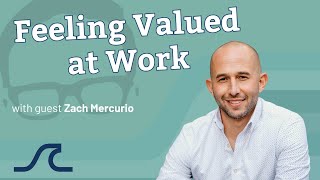
A recorded interview between host Bill Gallagher and Dr. Zach Mercurio about 'mattering'—the psychological experience of feeling seen, valued, and able to contribute. They use personal stories and research (custodial studies, Rotterdam Eye Hospital check-ins, National Park maintenance, NASA archival work) to show how small, specific interactions and practices (one-word check-ins, showing indisputable evidence of impact, laddering tasks to purpose, asking for help) increase employee engagement, reduce burnout, and strengthen purpose in organizations. The conversation is aimed at business leaders and HR/operations teams looking for scalable, actionable ways to improve morale and performance.
Questions this video answers
The Power of Mattering
ZachMercurio.com
More than 620 episodes
A green/yellow/red one-word check-in; over six months the check-in group showed almost double patient satisfaction, lower burnout, and higher engagement
Blackboard "ladders to the moon" that linked daily task groups up through measurable objectives to putting a person on the moon; researchers noted NASA had over 300,000 contract workers during the effort.
Chapters
Who matters on your team? Who matters in your business? Who do you matter to? That is kind of subject and why does any of that matter in growing your business? What the heck does mattering have to do with anything that is the subject of our conversation today. It is an access to having your people step up and having you be connected to everyone. And it probably isn't just employee employer. It probably goes to a lot more than that. Hey everybody, my name is Bill Gallagher, scaling coach and host of this super fine Scaling Up Business podcast. Our show comes here every week with an author, a guru, an expert, a CEO, somebody to tell you something about scaling your company. And got more than 620 episodes. Now, wherever you're getting this right now or@scalingcoach.com ScalingCoach.com is our own website that not only has all these back episodes, but also everything about our monthly workshops and our other coaching programs around getting your business growing and with less suffering. Like really enjoying the whole journey of growing your business, no matter the ups and downs that will inevitably come your way. All right, I'm joined now. Zach Mercurio. Zach, welcome to the show.
Bill, it's great to be here. Thanks for having me.
Zach's a, he's the author of a book called Power of Mattering that we are going to talk about today. He's a PhD. He's a keynote speaker consultant. He has worked with all kinds of other groups like the US Air Force and American Express, and he's been published in Harvard Business Review and Forbes, and he works with Simon Sinek's group. And so anyway, he's he matters. His work matters.
Thank you. You too.
To have you on the show today.
I'm excited to be here.
I'm excited to be here. I like, I feel good about this topic right as I start, and yet I think it's somewhat like a complicated topic. So I look forward to hearing your stories and diving into the issues and thoughts around mattering from the book. But before, like all that, maybe something that you're not totally prepared for is at what point did you first realize that you mattered or didn't matter? Like, when did mattering enter your radar as a human being?
Yeah, I didn't know that it entered my radar, but it was in my first job out of college and I was in advertising. I was selling digital advertising, which back then was banner ads on websites. And I would get sent out as a salesperson and I would go have these amazing conversations with people who were putting their lives into their businesses. We worked with A lot of growing businesses. And they were people, humans, living important lives, right? But then I'd go back to the office and the meetings would be, how much did you get out of them? We'd go into.
Me, right?
We'd go into meetings and talk about.
What are they worth?
Metrics. Yeah, yeah. What are they worth? And. And I also realized at the same time that all of the people around me in that company were. They would come in on Monday and they would talk about what they did last weekend, or they would come in and talk about what they were doing the next weekend. And I was. I was astounded at how many people were. Were living for 2/7 of their lives. And I couldn't. I couldn't shake that feeling of, what am I doing here? Why am I here? And so that's a time where I felt that I didn't matter because I couldn't see the value I was adding, and I didn't feel valued. Flip that. You know, two years since that moment, that experience, I ended up going back into higher education because I wanted to study, you know, what made people tick. Like, I wanted to make sure people didn't have to experience what I was experiencing. So I studied adult education, I studied adult psychology. And I think the moment I realized that I did matter and my work did matter was when I was about to launch a study, and the study was around how university custodians, janitors, come to experience meaningfulness in their work. And I remember I asked a. I asked a janitor, you know, what made their life meaningful. And they talked to me. They told me about a moment in which somebody came in, a building user came in, looked them in the eye, used their name, and said thank you to them for cleaning. And it was the moment in their entire life where they felt that they mattered. It wasn't a big award. It wasn't a big perk. It wasn't a pay increase. It was this small moment. And I realized then that, you know, it was these small moments with people that can really make a huge difference. And I felt like if I can get people to architect more of these moments of mattering, then this is important work. And that's the journey I've been on ever since.
So before we go to the mechanism of it, and I hear, like, the power of just acknowledging someone's contribution and connecting it to everything else that matters there in causing a feeling of mattering. I think about as a young kid, right? Who did I matter to and who didn't I matter to? And what immediately occurs to me, I mean, I wouldn't have thought of it in this way at the time, but I clearly matter to my dad and to my grandmother, and they were the two strongest adult presence in my life from the early stage that. That I identified with. And. And I have a mom, and I love my mom and all that, but not as strong a figure for me at an early age. And then I think about certain social and school groups where I felt invisible. I felt like just one of many. And I didn't feel like I mattered, like, not my voice wasn't always welcome. Have a voice. And it wasn't always, like, welcomed. And I'm like, those are places where I'm like, yeah, I didn't matter, or I didn't experience mattering. I didn't think about it consciously. But when I think about, there are certain places where I'm like, I don't need to hang out here. I don't need to play here.
Like, you know, and that's the difference. I mean, the contrast for me in that first job, I felt like a means to an end. I didn't feel like a worthy end in myself. And I see that often, like, really the great, great leaders who could do this for other people, anybody, and I mean, leader, anybody who influences anybody, they. They tend not to see people as just means to their end, but as were the ends in themselves. And that's why when that janitor, you know, when I was starting and in my initial study into this and these moments of mattering came to the front forefront as key mechanisms of thriving for people, when she said, you know, someone remembered my name and thanked me, it was. It was that feeling seen, that she was a worthy end in herself. Like someone knew her as individual. And I think going back to that, going back to that account that you had of feeling invisible, of not feeling seen, of not feeling heard, of not feeling that we're significant, that can have tragic consequences if it's perpetually repeated in people's lives. And some evidence, you know, indicates that we're facing a deficit of mattering in our workplaces, in our society right now. It's masquerading as things like loneliness epidemic or disengagement. But really, when you get down into it, there's these moments of insignificance where people feel like you felt, you know, that that whole I'm in a room yelling and no one's hearing me as.
You'Re speaking about it. What comes to mind for me is that that mattering, like, as an individual and also then my work, like, does my work. Does our work matter? Does my work matter? There's a certain amount of, like, declaration and, like, choice. I say, I matter, you say, I matter. Oh. And then I'm like, oh, yeah, I guess I do. Like, I agree with you. Say I matter. I agree with you. I feel important. And I say, or I might even, as a strong character, look in the mirror and say, you know, I matter. And then decide I matter and feel totally differently about it. Same thing's true. Like, you know what? I've had people say my company doesn't matter. And I'm really like, yeah, we're not life and death. And I'm like, oh, my God. You make this really cool thing that just brings joy to people's lives. And joy is important. And they're like, oh, yeah, I guess we matter.
Yeah. So to go back, a great depiction of this in the research of mattering is when. So another custodian that I studied and the reason why I studied janitors was because these are people. These are people in a frontline occupation that come in after the lights get turned off, often invisible, very easy to say, oh, what I do doesn't matter. And I asked another one. I said, hey, you know, tell me about a time in your. In your job when you felt the most amount of meaning in your work. And she proceeded to tell me that it was on Monday mornings when she came in to clean the university dormitory bathrooms after a weekend at a university. I mean, that sounds disgusting. And so I simply asked her, I said, I broke researcher mode because I was a student at the time. And I said, what? That sounds gross. And she said, it's the part of my job that I hate the most. But every time I go into that bathroom, I say to myself, I'm cleaning this bathroom so that these kids don't get sick.
Right?
But it's a fairly elegant statement, a mindset, you know, we've come to call it a. So that mindset, you know, and what's purposeful isn't always pleasurable, right? I'm doing this so that what? But she didn't just start that way. She was near homelessness before she got that position. It was the only job that would hire her. And I asked her, I said, you know, what change? She said during her first few months on the job, she clocked in, clocked out. She said, I wish I could have done something more with my life. Why am I just a janitor? How do you go from, I'm just a janitor? So I'm cleaning this bathroom so that these kids don't get sick. She told me she had a supervisor in her first month. Noticed she was struggling, brought her into a training room, opened a dictionary, and had her read aloud. The definition of custodian, which is a person responsible for a building and everyone in, was a really amazing practice when you think about it. And he said, that's you, you know, however you got here. The meaning of your job in your life may to get a paycheck, but the meaning in your job is why your job exists, which is to make sure nobody in this building gets sick. You take custody of everybo in this building. And she said those two minutes completely changed her belief systems about herself and her job. And it was two minutes with a supervisor who showed her the evidence of her significance. So while you say, yeah, I can say in a mirror, I can say, yes, I matter, there's a difference between knowing I matter and experiencing mattering. Yeah.
Saying something and mouthing it when you don't feel it or whatever is different than looking at it and knowing, yeah, no, I matter. Like seeing the connection for yourself in some ways.
And what's powerful about that belief that I matter is like any belief, it's strengthened when we experience the evidence of our significance in our environment. So that's what the supervisor did for her. And mattering comes from two primary components. It's feeling valued and then knowing exactly how we add value. And when we feel valued, it's easier for us to believe that we add value. So when we feel valued by people, we develop self esteem that I'm worthy and self efficacy, I'm capable, which make it easier for us to develop the confidence that I'm adding value. And it's like a reinforcing cycle.
So the outside evidence, somebody saying, hey, you matter, you're valued, makes it easier for me to believe that. And then seeing the connection to why, like having it be a sincere thing, not just some flowery language that's important, the.
The sincere thing. Because it's not just. It's not just telling people that they matter. It's showing them exactly how they matter.
Yeah.
So what I love about the. The supervisor. And she said she didn't even remember who that supervisor was. You know, he got reassigned a month and a half after she said, I don't even know her name. But what I loved about what he did, it was a pretty. It was a pretty sophisticated practice. I mean, he showed her the indisputable evidence that she mattered. It would be very Hard for her to say, oh, you know what? Yeah, I don't take custody over this building and everyone in it. Right. But he. He showed her the. The evidence. And. And that's why I think that when you cultivate mattering for someone else, it takes a level of skill that we've. We've relegated to common sense. Like, yeah, I'll tell people that they matter. Yeah, I'll show people that they're valued. But there's a skill to giving people the indisputable evidence of their significance that results in them maintaining the belief that they're valued. Actually, see and believe how they add value. It's different than just having, like, a purpose statement on the wall and saying, hey, look, you make a difference. It's a skill to show people exactly how they make a difference.
What I'm thinking of as you speak about that is the reflexive way that we often say to armed military servicemen and women, like, thank you for your service. Thank you for your. Oh, thank you for your service. And it's a nice habit. I'm glad we do it. But I think a lot of times, really, why are you thanking them for it? What do you get out of it? What do you appreciate about that? Do you have any sense of what it's like to be in conflict, to go to war, if you really got at a deep level? We live a peaceful, privileged life, by and large, here in the United States. And there are these servicemen who they might serve entirely in, you know, safe environments, but many of them have gone to conflict areas in. Ostensibly to protect our safety and our way of life and put themselves in harm's way. And even if they didn't directly fight or were harmed, they witnessed and heard it. Like, if you could get, like, the whole picture of that, like, the Prof. The fear of going there and their loved ones, and, like, you could let all of that be like, you know, thank you for your service. I sleep better tonight because of you. Thank you.
That's it. And you specifically named and even being able to say, hey, I have. I have no idea what it would be like. Yeah. But I can. I can imagine. I can imagine being away from my kids. I can imagine sacrificing for someone I'll never meet. And you did that. Thank you. Right.
But I could see also with, like, the janitor being, like, taking someone aside, taking a whole team of them aside and saying, listen, I. I just. I. I have no idea what your lives are like or where you come from and the background and that kind of thing, but I know you come in here after dark every night and you clean this place up and you get it ready. And then tomorrow we'll walk our, you know, truly fine young people at a formative place in their life, and they'll go on to do, you know, everything from extraordinary to, like, average things. But, like, it shapes it, and you create the environment where all that like, like imagination and learning and connection can begin. And so you might not realize that cleaning a bathroom and emptying garbage cans and vacuuming and like, whatever makes a difference, but it makes a difference in all those people and everything that they'll do for the rest of their life, like, to, like, love and appreciate people.
And that's what mattering is all about. That specificity, the way that you're doing it right now and giving these examples is it's not just telling people that they matter. It's taking the extra effort to show them exactly how they matter. You know, one of the things, one of the phrases that people in our research frequently use when they talk about a leader who helps them feel that they matter or someone in their life who helps them feel that they matter, the phrase is that people typically say to them, if it wasn't for you, like, hey, if it wasn't for you, I wouldn't be able to get where I'm going. I mean, you can just try this. Find the person holding the construction sign.
Yeah, right.
And I've done this because of the research I've done. Hey, if it wasn't for you, like, I just want to let you know, if it wasn't for you, I wouldn't be able to even get to where I'm going. Just do that once, and you will probably be the only person, sad, sadly, who has talked, for example, to a construction worker in that way. Or, you know, in Covid. I realized as I was researching the power of mattering, the delivery driver, right, they would come off and drop off the package. Now, I got into the, you know, thanks. Or I'd wait for them to leave. And that because I'm an introvert, I'd wait for them to leave, and then I'd go get the package off and I'd put it back. And then one day I just, like, stopped and I said, what's your name? And we started talking. And then I started telling, joking around, being like, here's what you brought me. Here's what it's going to do. Here. Here's why I'm excited about it. My kids are excited about it.
And just that, yeah, just that picture of something, right.
Like seeing people just get, when you do this, you'll see someone just come alive. One great place to do this is in airports, right. If you go into the bathroom at an airport and you see a janitor or the cart, I want you to everybody to do an experiment and just look them in the eye and say, hey, hey, I just wanted to thank you for cleaning. That's all you can say. And you will see someone startled to be seen because you'll start, you'll start noticing everybody just walk by one another. Now we're talking about these frontlines positions right now. But this, this passing by one another, not seeing one another is happening in all types of workplaces right now, in all types of organizations right now where people feel unseen, unheard, undervalued. There was one report that found that 30% of people indicated they felt invisible or flat out ignored in their workplaces. You know, Gallup just released their engagement data. It's the lowest it's been in a decade. Despite all of the surveys, all of the attention, all of the best selling books, it was at 31%. Now but if you dig deeper into the data, just 39% of people said that they had someone at work that cared about them as a person. Just 30% said that they had someone at work that invested in their unique potential. Right. So it's not a disengagement crisis. It's really in my view, a mattering deficit. I love it.
I think there's this whole world of not realizing that connection that we have and not granting to others. We do big workshops, hotel events, conferences. Every now and then we'll find and bring staff like to the front of the room or to the side and tell them about who we are and the work we're doing and that kind of thing, and thank them for like making the event possible, for the way they serve, for the way they cleaned and all that. And it is really a pretty remarkable thing to see them, you know, like not used to being thanked for things.
Right. Why do you think we're so bad at it?
I think because we're busy and self absorbed, preoccupied and we don't stop to think that it, that telling someone makes a difference. We're just in our own world, like we're doing our own thing.
Yeah. And we think, and we tend to think it's just going to happen. Right. We tend to be in a hurry, addiction. So we don't even have enough time to actually do this. Well, but often what's happened really since the 70s is that this stuff's been relegated to, quote, unquote, soft skills. And any. Anytime our brains think something is soft or simple, we're susceptible to what's called an overconfidence bias where we don't even know it's happening, but we think we're better at it than we are. And over the last 20 years, one of the things that we've noticed is that as more people have technological platforms, whether it's slack or whether they're using their phones to communicate in short transactions, like if you give me good news, for example, now I can just send you a thumbs up emoji and say, hey, great. I don't have to sit with you and say, hey, Bill, I've noticed you've been, I've noticed that you've been working on that for a long time. I'm really proud of you. Or if you send me some bad news, I can just send a sad emoji to you and say, oh, I'm sorry to hear that. I don't have to sit with you and deal with that discomfort, hear you, come to understand you, empathize with you, be compassionate towards you. And so we've also been over the last 20 years not using these skills that you, you enacted those skills when you did that example of thanking someone for their service. But we've also not had to use those skills. And what we don't understand and realize is that when we don't use something, it atrophies and we become less proficient at it. So we don't, we don't have the time, we don't create the time. And we're actually less proficient at these things that have been relegated to soft or common sense, which means that, you know, while they may be common sense, they're not common practice as the data is indicating. But we can get it back.
Yeah. So, yeah, before we get into all that, why don't you tell us about working with the Dutch hospital and what happened there.
So hospitals, for example, nurses, if you go in and observe a check in process, they call them huddles. In a hospital setting, what you'll observe is clinical teams get together and at the beginning of every shift, they basically go around and they, they share how it's going. But it usually looks like this, here's what's wrong clinically, in every room, go have a great shift. Right? And it's no wonder why burnout rates, disengagement rates, patient satisfaction rates are low. I mean, that's how these people who are sacrificing a lot to do these jobs endure every, every shift. Here's what's going wrong. Go fix it. So researchers at the Rotterdam Eye Hospital decided to split clinical teams into two groups. One group, they had them do a check in and it was just a green, yellow, red check in at the beginning of the shift. Green means you're good, you're in flow. Yellow means you're a little bit reactionary. There's some things pulling at your attention. Red means you're offline. There's so much that's overloading you right now, it's hard to be present. And they just did it. And this is a check in process that emerged from the military decades earlier. It's been tested time after time. And when they measured the results over six months, the group that did these check ins at the beginning of their shifts had almost double the patient satisfaction rates, lower burnout and higher engagement. And the researchers went in and they asked why, you know, what's going on? And all they said was some version of we're having better conversations in our break room. And why was that? Well, for example, if you or I, if you and I, Bill, do a check in and you're a red, do you think I'm going to walk down the hall, see you as a red, and just think to myself, man, I hope Bill figures that one out. Or am I more likely because I have that data to say, hey, I noticed you're a res. Everything okay? Right? And just that, you know, and that practice of noticing people, of seeing people, which includes their emotions and their energy, just that data can compel compassion because oftentimes what happens is we don't have the data to see people because we're just brushing by them. So like that's an example of a practice, a tangible practice, have some way to check in on how the people are doing before you ask them to do whatever they're doing, is a powerful way to see them notice them, which is a key indicator of mattering. I have a client, it's a, it's a large airline and I, I like when I go to the gate and I see the pilot put on the vest and go inspect the plane. Like that just makes me feel better. So it's a comforting feeling.
He's doing his nice, right?
But I asked the client, I asked some of the supervisors there, I said, who, who checks the pilot every day? And there wasn't a process, they do a psychological evaluation every few months, but there wasn't a process to check the energy and emotion of the people. But we have all of these robust systems to check the equipment, to check whatever it is that we're doing, check the product, check quality, but we're not checking the quality of the energy of our people, which is ironically, the very energy we need to accomplish whatever it is that we say we want to accomplish. So I'm glad you asked about that story because that's a, that's what I mean by, it's a skill, it's a, that's a tangible practice to check in on how the people are.
And let me just underscore because our listeners, viewers, probably many of them, have read about and are using both daily huddles and weekly meetings. And I notice as I, even with teams I work with for a little while, I go and check in on things and I realize they're not necessarily doing it as designed. So in both the check ins, the huddles and in the weekly meetings, there is a tendency, like your original story in the hospital, to just go right into what's wrong, the problems, right? And as business operators, we have meetings that are largely focused on fixing problems. And yet the experience of being in those meetings day after day, year after year is that everything is always not working. Like if you were to sum up, the whole thing is everything's broken all the time and breaking and like. And so there's two practices that we have that seem to make a massive difference. But to your point, the first one is often done as a one word opener. And the one word opener, ideally they just name their present state. Now that's not like they come in and they say awesome as some bs, but they actually have permission to say tired or stressed or angry or optimistic or delighted or a little silly. They could say anything. And many of them stretch it into a phrase good to go, but others, and when teaching it, we're always emphasizing, look, if you just walked in from a really difficult morning because your 7 year old has got something going on at school and was quite emotional and now you're feeling some of their feeling and like you could actually just say I'm exhausted and drained and that'd be fine because it allows you to one, to be seen, right? To be seen and recognized by everybody else on the team. And it also like lets you move into the meeting. So that's how you were. And now we're here for this. Like there's, it's like a mindfulness practice as well that lets you name your present state, which also then allows you to move to the next state. Because if you try to move into the next state with that in the background, it's all just like, people are talking about whatever and you're just like I'm exhausted and I'm tapped out and I'm whatever. And that is, is like in the background and there's no room to like set it aside to bracket it to like, you know, do anything with it. You're just, you got these two things that are competing for space in your head.
And some leaders I work with are like, hey, I don't want to do these check ins because it'll open up a can of worms. And I always say, well, the worms are in the can.
The worms are there, man.
You know, so what, what, what's great though is that what you do with what they say. Also the follow up conversations that you have. I mean I, I, I had a leader who I was coaching and they had a meeting and they did a check in at the beginning it was similar and someone said they're overloaded and they have the standing other standing meeting on Fridays and the leader immediately said right after the person share, don't you take them in front of everybody? Why don't you take the meeting off on Friday to get caught up? And, and it was like what I love about that is that's an act of compassion. It's, it's small, but it's an act of compassion. Right. You can empathize and be like, oh yeah, it's that time of the quarter, everybody's struggling and normalize despair in that way like most leaders do. Or you can offer an action that can alleviate that struggle however, however small. And what, what I noticed on that call is everybody's non verbals relax.
Yeah, yeah.
Right. Because it's, it's, this isn't just a rote exercise. It's like also my, my leader sees me and offers compassion. So I think that what you do with the data that you gather as well as a leader and how you follow up on it is also important to helping people feel seen. But I, yeah, I see most leaders in organization, most meetings and organizations I see are really update fests. Yeah, they're transact, they're transactional.
In the heat of the pandemic, I had a CEO talk to me about how he was doing and he had set up a zoom like everybody did and they were meeting with all their teens remotely and that kind of thing. And he's like, he's like, I'm just like, I've got, he had young kids and he was like I'm just stressed out with them and they're running in and out, and I'm like. And I need to, like, put on a professional face and tell everybody I'm okay and that it's good. And I'm like, really? Do you think that they don't have kids and that they aren't exhausted and they aren't trying to deal with. Why don't you just say, hey, guys, having a tough morning weekend was kind of a challenge. Or this week, or, like, name whatever it is and then ask how everybody else is doing and let people share a little bit and then together, just acknowledge your humanity and what you're grappling with. Right. He was like, huh? Is that okay as a leader? I'm like, absolutely. That's okay as a leader. Being a leader doesn't mean, like, having everything perfect and figured out. And yet somehow we often think that, like, reflexively, like, oh, I just, like, have it all buttoned up at all times.
I love that. The art of giving up authority as well. So you do another thing. So I had a client, same situation, and he said all this stuff was keeping him up at night. I go into a meeting and write it on the board. Everything that's keeping you up at night, and ask them for help. Yes.
Beautiful.
And what's powerful about that is that activates the second side of mattering. So feeling valued is feeling seen, feeling seen in your struggles, feeling supported, feeling like you as a full person are seen so your energy can be used. But the second part of mattering is knowing how you can add value. We actually fear being helpless. Like, so when. When you as a leader, give people the opportunity to help, when you withhold the opportunity to help, you're actually withholding the opportunity for people to feel that they matter. So by giving up authority and asking people for help and saying, hey, here's what's keeping me up at night. I don't know what to do about this. Here are the pressures I'm under. Look, any ideas that you have, you're actually giving people the opportunity to feel that they matter by adding value, which is knowing how they. And their unique strengths, their unique gifts, their unique ideas, their unique wisdom can actually make a difference. And I think that that's important. It's not just about seeing hearing value in people. It's about making sure that they clearly see exactly how they add value and giving them opportunities to do that. So I love that. And he went back and did it, and he said it was one of the best conversations his leadership team ever had. Because they. I mean, think about that. A leader comes to you and says, here's the things that are keeping me up at night. How. How can you help? It's just a. It's a. It's a. It's a game changer.
The other thing that we do at the beginning of. Of our meetings is we encourage a round of good news to start the thing, and we like to tell that all teams need more cowbell and that kind of thing. But I think there's something in there about mattering. Right. Here you go, cowbell.
I need one of those.
Right. So I think, like, if we feel like we're making some progress in some way, like we're. Even if we. If we develop a practice of looking for even the tiniest bit of progress, and we acknowledge that at the beginning of something, we can see how our work impacts something, how we're. We're getting a little traction on something, even if it's a particularly grand struggle.
Yeah. So one of the. One of the practices that I always talk about is what are called stories of significance. So not just telling stories of good news, but telling stories of impact, like how somebody on the team made a difference for you that week. Right. So, so. Or how somebody's work made a difference for an end user that you saw. You may not have given that to person yet, but collecting and telling these stories, you could be creative about it, too. I had a. A Manor facilities manager for one of the parks in the National Park Service. Now we think of the Park Service, right, of going and experiencing this awe and these amazing environments, but there are so many people that maintain those facilities in very harsh conditions to enable all these visitors to come. And he. He would have this practice, and he had considered consistently the highest morale, lowest turnover in the Park Service. And I asked him what he did, and he had a practice where every Friday he would email them pictures of projects they had worked on, of visitors using those projects. So if the maintenance team worked on fixing a bridge, he would go out, take a picture of visitors walking across the bridge, and then on Fridays, he had a ritual of sending these pictures to say, hey, look what you did. Look at the difference that it made. And I love that because again, it goes back to the indisputable evidence that you matter, that you add value. So collecting and telling these stories of significance, of the impact of someone's work, and then being specific as well, you know, because it's different than just saying thank you, showing people the difference they make and how they make it is a skill as well. So describing the behaviors they used to, naming their strengths or gifts or wisdom or perspective that they brought, and then really showing them how it had an impact on you or someone else, and getting specific can. Can really amp up that sense of, yes, I do matter. I'm adding value, and it can keep the team going. And really, in sometimes difficult times.
Yeah, I think it's so. It's so cool to connect the dots of why you matter and why our work matters and the work that we do in the world so that I can see that I connect to whatever else is that somehow I hold as special. And that. And that connection, like, to the greater purpose. And I mean, I can hear why you're connected with Simon in that work there, because again and again, we work with teams. I worked with one a few years ago. That always stands out for me because the CEO, he was like, oh, Bill, you should be my coach. I like your vibe, you know, and a lot of times, you know, that's a big factor. That's good.
So.
And so we start working. But as we got to our first session or two, he was like, yeah, I don't know about this purpose thing. See, I like everything else about you, but, like, I bought this business to make some money, and we do a service and. And like, I. But I just don't think purpose, like, really. So I said, okay, well, just indulge me and let's see what happens. So I asked the team to go take a walk as I. One of my favorite methods of doing things. And I said, everybody go out walk on pairs and just ask, like, why? What do you do? And why does it matter? And why does that matter? Why does that matter? Until you get to something that you just don't have anything else to say about it, you feel strongly about. And they came back and they all put up their different words on the wall, and then we moved the little piece of paper around. And in a matter of moments, what emerged is we keep the world working. And people were like, oh. There was like a little gasp as that were. Those words were arranged, and they were like, oh, yeah, that's beautiful. Like, I feel special, right? Like, and I. I've. You know, I'm. I'm a little moved by everything all the time, but. But I still, like, all these years later, I think about it. And they ended up putting it on the back of the T shirts that they wore around the office. And, you know, people felt a little more connected to.
They did.
And why it mattered. And it's interesting that some people interpreted that as helping the companies to thrive because they connected and empathize more with the company owners and managers and other people thought about the people they put to work working in those companies. It was a staffing firm, right. Like, so they could think about it from either way. It worked either way or both. Right. But as just like a beautiful thing. And then they could see why that thing that they did today helped that guy get a job, that helped him keep his family going and fed and like that.
And when it's real, you know, I see a lot of the purpose people who question purpose, right. They, they probably think about it as some grand cause or having some big huge cause that's really detached from what you do, whether it's a social cause or something else. But it's really the reason for which your company exists. What would be lost if you were gone.
Right.
And every organization on the planet is in human service in some way. There is a human being at the end of every supplier, service chain on the planet or alongside it that makes it happen. And when you can connect with that, and, you know, sometimes your biggest social purpose is to make sure that the people who come in and spend one third of their one waking life with you away from the people who love them go home feeling noticed, affirmed and needed as humans. Like if you, if you're struggling to see how your product makes a difference, it probably does. But if you're struggling, just remember that, that you take up most of someone's one irreplaceable life. And, and that can be an incredible purpose as well. But I will go one step further and saying, as you said, being able to connect that purpose, what was it we make? Keep the world working.
Working.
Yeah, yeah. Being able to connect it back to everyday tasks is very important. This is where most organizations who try to pursue the purpose route fail is they don't have the skills, leadership skills in place to connect it every day back to the everyday task. So you've probably heard the story of John F. Kennedy was launching the Apollo missions and he saw a janitor there and he asked the janitor, hey, what do you do? And the janitor very calmly said, oh, I'm putting a person on the moon. And you know, it's a feel good story. It's good one for like a TED Talk or something. But researchers at the Wharton School actually went further and they tried to figure out, okay, how did NASA, who had over 300,000 contract workers, many of whom wouldn't be contracted when NASA landed on the moon. And they didn't even know if that was possible or not. How do you get all of those people to buy into landing on the moon by the end of the decade to advance science, a mission so big, so ridiculous, so science fiction, that it seemed so removed. And what researchers did is they did an archival study where they went and they took. They looked at photographs of NASA facilities during that time, meeting agendas, all of these different management practices. And one of the ones they found was that in these photos on the blackboards at NASA, they had what were called ladders to the moon. Putting a person on the moon to advance science was on the top, but at the bottom rung of the ladder was the task group that that particular work group was working on that month. The next rung up was a tangible, measurable objective that that task was necessary for to make possible. The next rung up was a tangible, measurable objective that that objective would make possible all the way up to putting a person on the moon by the end of the decade to advance science. And they repeatedly went through the ladder daily, obsessively, to make sure people just didn't know the purpose. They saw measurably how they were needed for the purpose. I mean, that's a practice that I've come to call laddering, right? Being able to ladder people up to that bigger purpose, to show them how they're adding value. And that makes this stick. When again, indisputable evidence that you and your work matters.
It's a very engineering approach to letting people feel like they're going to connect the dots literally.
But it's what you connect the dots literally. Yeah, like a stepping stones approach. But it's also a way of communicating, right? As a leader, when you're. If you're onboarding somebody, for example, and you're telling them about their tasks, start at the top, but then say, hey, and I want to let you know what you're going to be doing first. This is what it enables when you're implementing a change in an organization, putting it at the top, showing people how they are needed for that change. This is often what we get wrong instead of. We try to prescribe things to people instead of generating it, letting them see it, letting them feel it, letting energy pull them forward with the purpose. But it can be powerful to have a practice that takes that big purpose, which is important, and embeds it in the life, the everyday life of somebody. Because imagine going home like I always my work. I imagine people going home to the dinner TABLE talking about what they do. You know, I'm just putting parts in boxes or I'm doing something so that people can get to where they're going safely. And I use that example because I worked with a company that packaged mirrors that go on cars. And I asked them, I said, you know, what's, what's your purpose? And they said, well, we can't. We just put parts in boxes. This is what a leader said. And I told them, I told my 6 year old at the time who I was working with, and I said, you see all those mirrors out there on all these cars that I'm working with a company that puts all of those there. And he was just like floored. And I told them, I go, when my kid is behind me every day and I back up, I may not think of you, but the reason why I'm looking in a mirror that's built well and I can see that kid behind me is because of you.
I think the thing to underscore, to wrap, is the sort of people who listen to this show or watch the show, you're people who are doing something in the world. You have a drive to do something that contributes, that puts a dent in the universe, that improves the world in some way, or you wouldn't be listening to this show. And the thing is that I'd submit that your biggest challenge and complaint is very often people. But if you could get your people also want to make a dent in the universe to do something that matters and you could help them see their connection to what you're passionate about and why they matter in the equation of what you think matters. That you would come to love your people and you might even come to love people in general and to realize that you can't do anything really significant in this planet in this lifetime without engaging a lot of other people. And the power to doing that is right here. The beginning of all that. You know, all of our meetings and formats and frameworks and all that, like at the, at the root of it all is getting people to step up and work in a way that's their best. Right? And mattering on things that matter is the beginning of all that.
And here's the good news as I'll just add on to that as we end.
Yeah.
We find in our research that mattering comes through interactions. Mattering happens in moments. I mean, and so as a leader, one of the most significant things you can do is optimize the interactions you already have. This is not about adding more to your plate. It's about optimizing your interaction so people.
Feel seen this thing better, they feel.
Heard and they feel needed, valued and needed. And I would add that I know your show is called Scaling Up Business. This is a skill set that we can learn, we can relearn, we can hone, we can measure and you can scale. By ensuring everybody knows these skills, knows the outcome across your organization, anybody who leads, anybody, you can scale these skills.
Whether you have a team of two or whether you have a team of 2,000, this makes a difference. Zach Mercurio the Power of Mattering is the book and ZachMercurio.com is the website. If you want to check out more of Zach's, you can go get the book anywhere and you can go to his website as well. Zach, thanks so much for coming on the show, talking with us today. It's a conversation that matters.
Thanks Bill.
Thanks again everyone for watching for listening. Thanks to my friend and mentor, Vern Harnish, who created the whole Scaling up book and framework that we use. That's the core of our work. Thanks to the folks at Storeon, Christel, Seth Cameron and team that get our show ready, in and out, out every week. Thanks again to all of you for watching, for listening. Till next time, keep scaling.










