The Science Behind High Spiritual Intelligence in Leadership with Yosi Amram
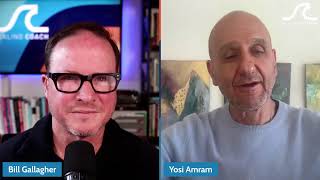
Yosi Amram, a psychologist and leadership coach, explains spiritual intelligence as learnable skills like purpose, presence, and compassion that improve team morale and productivity. Peak experiences, including psychedelic-assisted ones, can shift perception, but need grounding in science and practice to matter in leadership.
Chapters
Oh, you've heard of emotional intelligence. You've heard of iq. You know, lots of different kinds of intelligence. Today we're talking about spiritual intelligence and why it matters to leaders and in business. I know for many of you, spirituality has a set meaning. Already. For me, it's some trouble. My family's of mixed religious background, and it was a source of argument. My parents were obsessed with spirituality. I think in some sense, I'm a deeply spiritual person. For some of you, that sounds like it evokes religion. For some of you, it's anti. I don't know, Whatever it is, tune in. Stay with us because I think it'll be an interesting conversation. Hey, everybody. Bill Gallagher, scaling coach and host of this super groovy Scaling up business podcast. I don't know, I'm. I'm entertained by it myself. Hopefully you join me in that journey. Our show, 650 plus of them now. Wherever you're getting this right now, like, subscribe notifications, share it, give us a review. All that kind of stuff helps us out, do us a solid, help us out. Much appreciated. And if you want to know more or join one of our cohorts or do a growth assessment with me, lots of stuff like that we can do to help you out. Scalingcoach.com check us out. We do also a newsletter every couple weeks. So we've got that. We've got our monthly workshops and we'll do a growth assessment on possible paths for your growth of your business. All right, listen, I'm joined now. If you're watching on screen, you can already see him here, Yossi Amram. So, Yossi. Oh, so they got echo in my world. Yossi is a licensed psychologist. He's a leadership coach. He's an author. He has degrees from MIT and Harvard. He's got a PhD in clinical and transpersonal psychology. He grew up overseas. He was exposed to a lot of things and had to confront spirituality and what that meant for him. He developed this whole thing, this work, spiritually intelligent leadership, how to inspire by being inspired. It's awful hard to inspire people if you're not already inspired yourself. Right. So that's the subject of our conversation. Welcome to show Yossi.
Thank you, Bill. I'm having fun already. I appreciate your energy and the music and you're framing the conversation around spirituality, leadership. Yeah, it's so packed and so loaded for so many of us. So hopefully we'll. We'll shed some light and, you know, clarify any misconceptions and associations that people may have.
Well, I so we're going to get in a lot of things. I, I'm in the opening of the show I mentioned that for me spirituality is one of those loaded ambiguous terms that I think people. It means whatever you want it to mean, like an inkblot for people in some regards. There's not necessarily rigor around it. It also then brings up arguments as it moves into religion and good or bad or right or wrong. But you led tech companies, you have been a business leader, gone through growth, through stock price ups and downs and all kinds of things like that. And then you had a psycho spiritual breakdown of your own. Talk about the sort of the shaping moments that led you. You know, I don't even go back to your childhood if you want, but what are the things that led you to be in this work?
Yeah, I will tell my story. Hopefully I'll try and do that in more than a second and a half, but less than an hour and a half. It's a long story, but as many of us. But I do want to highlight some of the things you said because of all the loading that has to do with that which seems to. There's a dichotomy. It seems like spirituality is non rational, is mystical, etc. I want to say that everything I'm talking about is scientifically validated and consistent with logic and science. So the results are been demonstrated scientifically. What I'm talking about that it contributes the bottom line to productivity, to profitability and to well being individually and collectively. So I just want to kind of get that right out of the box so people don't get confused. Because there is all this stuff that spirituality is divorced from practicality. And we used to have a similar dichotomy between being emotional and being reasonable. And then we came up with emotional intelligence that said no, you know, being emotional is not the same as being emotionally intelligent. And so being spiritual is also not the same as being spiritually intelligent. So spiritual is you can have a spiritual belief, you can believe in God, the immortality of the soul, you can believe in reincarnation, you can believe in angels, whatever, all that woo woo stuff, right? But spiritual intelligence is not that. It's about the ability to embody these qualities and virtues that have been celebrated for thousands of years across all the world's wisdom traditions. Things like purpose, service, gratitude, humility, presence, compassion, forgiveness and so on. I can rattle off. There's all these qualities that emerged as universal across all the world's traditions for thousands of years, which now the fields of positive psychology and leadership development Validate the people with greater purpose or servant orientation or, or people who express gratitude or embody trust or compassion or presence are more effective and happier as leaders, as human beings. Okay, that's my quick commercial to try and at least say, say the basics. But your question was how did I get here? Right?
Yeah.
So I'm going to try and tell my story.
Pause the story for a minute. If I, if I pull the through line out from, from the notes before and from what you just said, there's a whole lot of qualities or expressions of something that are fairly universal beyond specific faiths and traditions and practices and things like that. But they come down to something greater than oneself, something bigger, more enduring, more eternal than the individual.
Well, yes and no, not necessarily. So, yeah. If you connect to something bigger than yourself more than your separate egoic self, then these qualities come out naturally. So when we connect to our essence with our life force that we call it, I mean, there's a lot going around. The word spirituality, but when you think about what is the root of spirituality comes from Latin. The root word is spiritus, which is the animating breath of life. So basically, when we connect to ourselves spiritually, you might say we're connected to our life force energy, what animates us. And that's. And then as leaders, what is our role? I mean, one of our Harvard, my first Harvard Business School cases was managers and leaders. Are they the same or different? Managers manage resources, make decisions important. What do leaders do? They inspire. What is the root of the word inspire? It's spirit. So leaders breathe life. They breathe aliveness into their teams, into their organizations by instilling a sense of purpose while we here having a vision, having a mission, and that enlivens the organization, brings people together in a shared community around a shared goal. And that is the life force of the organization. And if the organization is toxic or, or sick, you might say, and different people are pulling in different directions, like organs in our body, fighting each other. And we have a toxic body that's with an autoimmune disease that attack, attacking its own cells. And that can happen in an organization when you think about it as an organism. So I'm just trying to kind of motivate how this kind of actually makes sense when you think about the etymology of the word spirit and what our roles as leaders are. And as you said, we can't inspire until when we are inspired. Leadership, first and foremost is an inside job. I can't lead anybody until when I lead myself. I can't inspire Anybody. Until when I inspire myself. So am I. Am I making sense so far? Yeah.
So I hear, like a connection to life force. Breathing life into things, bringing aliveness to ourself. The quality of aliveness, life. And then you could take that into not a separate, unique, individualistic nature, but life more broadly connected. Right. Like, I think about. Oh, I think about actually two experiences, both of them somewhat hallucinogenic, aided, but one of them, I was looking out at the surf as a young boy, and I. And I saw myself and God and everything connected. And I'm like, this is like life, God, it's all connected. And then another time, sitting in a park and watching the air move through the trees and the grass and the thing. And then feeling my own breath. And this case, I was on mushrooms, and I. And I was just like, we're all alive together, and maybe there's not really separation between us, but. But we're all connected in life.
Yeah.
Very spiritual experiences.
Yeah, but I mean, actually, it sounds spiritual, as you said. It sounds mystical. You were on mushrooms. Some people have these experiences on LSD or acid trips or whatever it is. But when you think about it, Oksha. Right now, I'm here, you're there. There's a plant on my desk here. There's trees outside. All right, but am I really existing independently? Okay. Every inhale I take, you know, I like to joke around. I get high on plant medicine. And what I. But what I'm talking about is just the inhalation of the oxygen, which is the exhale of the plant, the green plant on my desk, and the. And. And when I exhale, I exhale carbon dioxide, which the plant and the trees inhale. So we are part of a web of life. You can't.
I give, you take. You take. I give.
Yeah. And. And that's how nature works. You go into the. The forest and the. The tree leave, falls and disintegrate, becomes compost for the next thing to sprout. So.
Right, right, right.
We are part of a web of life. Now, from the egoic point of view, it feels like I'm here and you're there and we're separate. But this is kind of what you might call a Copernican revolution of consciousness that. You know, up until Copernicus and Galileo, we thought, oh, the. The Earth is at the center of the universe. And then the sky, the sun, rotates around it. And it was kind of an optical illusion. And until we understood no, Earth is actually coming out the sun and is sustained by the Sun. And so, you know, the whole perception shifted. But so from an egoic standpoint, it could look or feel like we're separate, but in actuality we're part of a web of life and we don't have a separate independent existence. But this is a little bit of a paradox if I can get a little philosophical here in physics. In physics there is this thing called the particle wave duality, right? So when you, when you look at an electron or a photon, in some ways it behaves like a particle, a distinct entity with a particular space and time location and velocity. And then sometimes it's like a probability distribution. In quantum physics, it's the field. And, and when you look at it, it in some ways it behaves like a particle, and in some ways it behaves like a wave which is spread out throughout space. And I think obviously we exist as individuals because, you know, you have your own will, you have your own experience right now in this moment while we're connecting. And I have my experience and my experience is mine, and your experience is source. So we are individuals, okay, we're distinct entities, but that doesn't mean we're separate. So the trees in the forest are distinct trees, but they're, when you look at it under the surface, the root system are all connected and they're constantly sending signals. And if one of them is attacked by some kind of moss or whatever, they send signals and all the other trees respond, kind of like their immune system. So they're distinct, but they're not separate. We're distinct, we're unique, we're individuals. This is not to take away our individuality. So in spiritually intelligent leadership, we have to do both, which is we have to stand our ground, knew who are we are. Follow our own inner compass, our North Star, and be clear to live and express our truth. But on the other hand, we have to stay open to the input from other people. And that's how collaboration and co creation happens. So again, this is like, speaks to both our individuality and our uniqueness as well as our interconnectedness and interdependence and mutuality which creates this. One plus one equals three. When you bring a team of people with a shared intention and a shared mission and vision, there's a multiplicative effect of their energy and we can achieve things that none of us could do individually. And that's the art of, and science of leadership, if you will.
It's funny, there's power in the individual, there's agency, there's a choice, there's Something to be expressed for the ego and our distinction. And yet there's also unbelievable power in the connection. And when you see it and feel it, whether I'm looking out at the waves and thinking about just having surfed or, or sitting in the park and feeling connected to nature, breathing in what's breathed out from the trees or that kind of thing, or when I think about it more viscerally, when I look at my team and they just did something together, and I realized we worked together towards something that I couldn't solve on my own. All of those are very powerful, connected moments. And I think about, there's a moment. So I served in the US Military, and in the initial training of almost any military anywhere in the world, one of the things you learn to do is march, right? You march around, you march around. You, like, work at it. And you give up your individuality. You wear a uniform, you cut your hair off, you do things like that most of the time. And there's a moment that I remember where I felt the connection. And it is when we are marching and the first time all of our heels struck at the same time, and you could hear it and feel it. Oh, we're together. We're more powerful together. And it's like moving and empowering. Oh, we're a unit now. And you can see it and feel it in your business. Maybe you didn't serve in the military. You could be in a marching band, you could be like other kinds of things like that, or even a small group. But where you get in sync with other human beings and you realize you're working together, it's powerful.
And I'm part of something bigger. And one of the issues we're dealing with in our culture today is a loneliness epidemic. And particularly post Covid, you know, people are working from home and so on, and their anxiety, depression rates, substance abuse, suicide rates have skyrocketed over the years. And there's a sense of isolation and loneliness. And we are social beings, social animals you can call it. So we need to feel like we belong. And without it, we feel depressed. And evolutionarily, we didn't survive as individuals in the jungle. We had to be part of a tribe. So this is wired into our biology, into our psyche, this notion that I need to belong, I can't survive on my own. And so we have abandonment fears, we have all these things. But yet, as you said, we're also individuals and we want to assert our agency and our free will and so on. But it's a little bit like like in a symphony. Okay. In a symphony you have these different instruments. You have the drums and you have the pianos and you have the violin and whatever. And they're all, all have their individual, you know, music that they play, but when they come together in harmony, so you have this something that none of them on their own can do. Yeah, you can have a beautiful virtuoso of a drummer, but there's a whole different symphony when you, when all these instruments come together in harmony and there's coherence and in some, some greater beauty emerges. And you could see that on a basketball court or on a football field or on a soccer team. You see like how the group. And there's beauty to it and, and there's, I don't know, it's just, it just kind of. You people love to watch that and like how the coordination of, of some great basketball players and how they pass the ball to each other and then like, like, wow, that's beauty.
So this world, like we're, we're like deep into some beautiful, connected ideas here, right? And, and it's a great, it's an enjoyable conversation for me, but we were about to talk about how you come to it because I don't think that all of us grow up and start thinking and talking this way and thinking about these things. What was your experience? Right. You dealing with life, you were in business, you went through your own challenges. Tell a little bit of your story.
Okay. Yeah, so you mentioned you, you served in the military. I'm gonna reluctantly share some of my military stories. So. So I was born and raised in, in Israel, war torn part of the world. And last few years have been horrific what's going on there. And it's very disturbing on many levels. Fortunately, I was there in a time that was more peaceful. But like all Israeli young men at age 18, despite being a pacifist in my leaning, I was drafted into three years of mandatory service and I was a math and science nerd and shy, introverted. But to my surprise, I had the fastest promotion record in the history of my regiment and won all these leadership awards. So I excelled in that command and control environment of the military, which is necessary in battle, but really doesn't help actualize and activate the individual human potential. But it's great for creating camaraderie and shared this destiny. But. So even though I excelled at it, it chafed at my soul and I resolved to someday want to build an organization based on more humanistic principles that inspire and brings out the best in people and that became kind of my lifelong aspiration and dream, which brought me to the US to study engineering and business and ultimately led me to, to be a founder of my own company. And my first company was called Individual Inc. And the name Individual stood for two things. One is supporting the growth of each individual. We're talking about the individual, but in the, in a team and a community context, which the military did a great job of uniting people because your existence in your life depended on your comrades. And so I was like, how do we bring out the best in each individual but give them a sense of belonging in a community? And that became kind of my overarching desire. So the company was called, as I mentioned, Individual. And it was the first company to do personalized interactive newspapers before the Internet. So you'd get bills, morning news on your fax machine where we would scan all the wire services and databases, etc. And then you told us which articles were relevant or not. And the software had self learning and would adjust to you. And I raised money from the top Silicon Valley venture capitalist and, and the corporate partners, Microsoft, the major newspaper publishers that were interested in the future of media and all that was growing great. But there was a lot of pressure to perform with all the investors and shareholders and employees. And then the Internet came and it was clear that everything we were selling on a premium subscription basis was going to be free and ad supported on the Internet. So that was a big threat on how we change our business model and not eat our own children and capitalize our revenue because there was a pressure to keep growing. And frankly I didn't know how to deal with that. And I, I had been working 70 hours a week, 80 hours a week, and I was burnt out. So I kind of froze in fear and I just couldn't face my employees and tell them what, how we're going to survive in this new world of the Internet. So I just disappeared for a week. But I gathered myself up, I came back and I persisted. And together with my management team we figured out a strategy, turned the company into an Internet company, ultimately took it public. We were fast rising hot Internet stock and I was running around trying to capitalize on the Internet and. But I was interested in mind, body, connection, consciousness matter, all these things. And one day I was just trying to relax and getting a deep tissue massage and I was relaxing, relaxing, relaxing. And then you might say my ego dissolved. And then I saw through the illusion of separation and duality. Normally we think there's an I, whatever the I is that nobody can Define. And then there's my awareness, and then there's the object of my awareness. So right now I'm aware of my feet on the ground and the breath in my belly and my chest. So there's I. There's awareness and then the object, but reality. When I dove into that experience in a relaxed state, I was all, it's really all one field, one field, seamless field of, of awareness, consciousness. And it kind of blew my mind. I opened my eyes, I was looking through the face cradle on the massage table and the floor felt like it was inside me. There was no separation. And that really blew the fuse and threw me, what you might say, into a manic episode. So here I was, the CEO of a public company with a rising stock price, having all these downloads about where the Internet was going. I wanted to really capitalize on it. This was before Facebook and Google and a lot of things, things they did was like, I saw where it was going. I wanted my company to do it today, yesterday. And my team couldn't keep up and my board couldn't keep on. And they were like, you need to go chill out, y. Take, take some weeks off. You know, you're, you're just, we can't, we can't do it at this space. And I was like, no, no way. And so eventually they, because we have to do this yesterday and there's a market window and all of the, that thing. And so they ultimately said, okay, well you, you won't agree, we're going to vote to put you on a voluntary leave of absence. So there was nothing voluntary about it. And the board passed a resolution to put me on a voluntary leave of absence. It was announced to Wall street and you know, their headline stories, Wall Street Journal, Amraam takes leave. Stock drops 37%. You know, new York Times, Amram, you know, forced to take leave by his board, you know, etc. And then insinuating I was emotionally unstable. And then I got canceled. Basically, I was moved from being the top echelon of people who were sought after in Silicon Valley to someone that nobody would return calls or emails. So it's very embarrassing, very traumatic, very shame inducing. But, you know, ultimately was a blessing in disguise because it got me to ask these questions. Why was I so identified with my business? Why did I burn out like this? And was this spiritual awakening real or was it delusional? And that got me to then go back to school and get a PhD in psychology and, and uncover this term spiritual intelligence, and research it and to try and Put some science behind it so it's less woo woo, and then discover that there are these universal qualities like you alluded to earlier, regardless of the tradition, whether it's coming from Christianity, Islam, Judaism, shamanism, Buddhism, Taoism, Hinduism, all of these. They spoke of the same qualities of a good life. A life of purpose and service and trust and gratitude and presence and compassion and forgiveness and humility and integrity. So they've been. Humanity has known that these are the qualities of a good life that's good for the individual and pro social. And now modern science. Putting aside my research and other research in spiritual intelligence, there's this field called positive psychology that Marty Seligman started and others. And they have this thing called Values Strengths Inventory and Values in Action Character Strengths inventory. They identify 24 qualities of, of a good human life and the same things, purpose and gratitude and joy and humility and transcendence and, and so on. So you've got these ancient traditions speaking about these qualities and then now you have positive psychology speaking about the same quality. And now you have another field called leadership development. So there was a study by Bain and Company, one of the top management consulting companies in the world, and they studied 2,000 companies and thousands of employees. And what they found is that employees that are inspired are twice as productive as people that are just going about doing their job. And what were the qualities of the leaders that got those people inspired? And that was service orientation, servant leadership, purpose, presence, care, compassion, listening, integrity, centeredness. Those same qualities that are showing up in my research on spiritual intelligence and spiritually intelligent leadership are also showing up on what it makes to make a good effective leader. In the business literature, you know, through Bain and company, they identified 33 qualities. Again, half of them map directly to the same qualities that came through my research. So there's a convergence of evidence from, you know, the spiritual traditions, the field of positive psychology, and the field of leadership that are saying these are the human virtues and qualities that lead to good, fulfilling life and make us more effective, more productive as leaders, as human beings. So I think to me that's very exciting because when you have lines of evidence coming from completely different directions, pointing at the same thing, it, it increases your confidence that this is real, this is not just some, some thing that some crazy guy who was on an LSD trip dreamed up. And now.
It'S interesting, like I think the hallucinogens are. I mean, I'm not recommending to anyone. They've certainly been helpful for me. But you have to make your own choices and for some people it's maybe a bad idea, but. But I think they can help us unlock a more flexible way of thinking, looking, perceiving the world and then the memory of it. Like I don't have to be on LSD anymore to remember the insight and feeling. I carry it with me my whole life. I remember a particular thing at I don't know, 16 or something. And it's still like a deep personal effect. There are a few things that are more enduring and then from, you know, time to time you might do something because it was helpful to access something and you have new set of concerns. But there is something that can be useful in starting to grapple. You had your moment where you started tap into something and then you got fired up and then a little bit like flying too close to the sun and getting a little too wrapped up. Your board kicked you out because you didn't know how to grapple with this thing that you were touching.
Yeah. Or grounded. Yeah, yeah. So yeah, I'm not knocking down the LSD and whatever, but the point is that gives you opens the door of perception as it's been said. But then you want to go and do the science and see, you know, is this real and look at people and what happens. And then there's research that shows that leaders with greater spiritual intelligence, like in my doctoral research, lean teams with greater morale, higher productivity, lower turnover, greater commitment. And then other studies by other researchers, banks with higher level of employee spiritual intelligence produce better return on assets compared to their peers or leaders. In another study, leaders with greater spiritual intelligence produce better financial results for their business unit. So, you know, those studies were not done under the influence of lsd, but that opened up the doorway to explore. And then you go and study it more scientifically and with logic and standard things. And like it or not, that's the currency in our culture. That's how emotional intelligence gained traction in our zeitgeist, because there are several models of what it is and measures. And then it was shown that people greater emotional intelligence are better leaders or have better successful careers or better relationships. And so we're kind of looking at a similar type of thing here. So yeah, those momentary experiences are powerful. They awaken, they open the door and then you gotta ground it and you gotta look at it that see that it makes sense.
Yeah. So I, you look, I think there are people that are inherently more or less spiritual and then there are people that develop a capacity for it. And then you talk about the intelligence or the awareness and you compared it to like, emotional. You could be emotional but not be emotionally intelligent.
Right.
Like, there are times when I've been deeply emotional in my life and then other times where I developed emotional intelligence. And. And I think about, uh. We should have her on at some point. Susan. David. Talk about emotional agility. But. But like, so I could be emo. Well, one, I could be suppressed emotion. Like, I could have repressed suppressed emotion and then I could let it out. And I think in particular in my life, there was a, like an early childhood time where I was super emotional and everything was good. And then a time where I business and I repressed the emotion and then it uncorked and I was like, a little out of control. Like you and your manic episode and that kind of thing. And just a couple of emotional notes were always being expressed. And then I developed awareness and then I could have the emotion and move through it and use it, but not be used by it and. And have facility with it, be able to tap into it, enjoy it, like.
And regulate it and.
Yeah, and I think the same thing when I think about spirituality, especially getting older. Like, you know, I was a certain kind of a kid and my parents took me to learn meditation when I was like six years old.
Right.
Mostly to learn some focus and some control. And then I leaned into other kinds of practices. The religious thing became uncomfortable, but I began to develop more awarenesses. And then certain books or things had an influence on me. Like I read this Castaneda book when I was very young about dream states and shamans and things like that. And. And I love that. But then also philosophy book and things like that, that opened up a change of awareness. Maybe now, I don't know, post 50, maybe I start to be able to integrate all of that thinking and probably have. I haven't done what are your assessment or that kind of thing, but I feel like there's a different ability to lean into something that has often been unsettling for me. Right. The.
Yeah. So there's a maturation and a ripening and an integration and so. Yeah. And so you revealed you're over 50. I'm surprised.
I'm 61 and I'm a grandpa.
All right. Congratulations. I can't wait to be a grandpa. Hopefully soon.
Do you have children?
I do. I have two children. My daughter's 35 and my son's 31. And I'm keeping my fingers crossed with my daughter. She's getting in that state, so.
Well, I thought it was going to be like that for me, but two A little over two years, three years ago now, our son called us on my birthday and revealed that he and his girlfriend, we thought they were actually married, were pregnant. We're expecting a child. So he like just jumped 10 years ahead of plan for me. So I'm ahead of schedule there, but yeah, that's awesome.
Hopefully it's joy filled being.
Oh my God. Right. Like, when I think about, you know, I. You and I, we've had business successes, we've had client, personal and client, and we've accomplished things. That's all great. Then when I look at. And my son is like, he's already in many ways more successful than me and his business. But what I'm really proud of is the way I see him holding his daughter.
Yeah. And your voice quivers and there's an emotion coming up. This is touching you at something deep. And that tenderness and that love that he, he expresses. And then when you see water and that purity of being and that innocence and the purity of that life force, that's when you mesmerize. And that's why so many people are taken when they hold the baby. And it just calms immediately our nervous system. And that purity and that life force that you see it, you know, that distortion and all the defenses that we develop because we are wounded, because we're hurt. And so this is the journey. We start out with that purity that, in a sense, that life force, that aliveness, that openness to life. And then we shut down because we're hurt, we're traumatized. And we have to do all this therapy and trauma work and meditation and mushroom journeys and acid journeys or whatever it is we do to go back to open ourselves to the fullness of life. And then life becomes richer. And then you look at your son holding his daughter and the tenderness that comes through this man, you know, that's strong and powerful. But somehow when he's holding his daughter. Yeah. Different frequency, different vibration comes through. And it's touching when you see that.
Yeah. So let me ask you about this. One of the most impactful and important exercises, lessons for me was thinking about what happens after my life. Right. Like the end of my life. So I spent a lot of years trying to build things and I have certain accomplishments. And every year I think about what do I want to accomplish this year and how does that map and along. And I imagine I'll live, you know, into my 90s. Who knows what really will happen? But I. But I imagine that and I imagine the next year and I set goals and I create plans and I schedule things, and I. I do stuff. Right.
And so you're leading life with vision. You have a vision around the future, which is a core part of leadership. We have a vision of the future, and. And we set the intention. And, you know, you do that in sports. The. The golfer envisions the golf ball landing in. In the. Or the tennis player.
Yes. And you work on it. Okay. But. But all that aside, I think that if my life ends today, yeah, it was good. I got my life done. I did. I did. I did my job. And. And. And that came to me because of the. So the. Somebody said the obituary is what you did in your life, how many children in your career and things like that. But the eulogy is the quality nature of who you were. Like your being, your essence that is shared and then carried forward by all the people. So whatever money you leave or that kind of thing is gone pretty quickly by the folks you leave it to most of the time, but the essence is carried with them. I think about who was my grandmother for me, and I move deeply because I now carry that. Whatever was precious about that, I carry that now. It's part of me now. Then I think about who I want to be remembered as. So I think about at my funeral, my memorial, the family, the people that I love that love me, gather around, they say nice things, and then they go to lunch. Right. And so what is that that I want them to say? And I think, like, for me, it was really immediately clear. I just want them to say that I was generous, that I made a difference in their life. And that quality of contribution, generosity, love and caring, like, if I have that today and every day, then I got my job done in my life. I've already did what I needed to do. Right. Like, yeah.
And it's fulfilling. It's satisfying. Yeah. And all the research about people on their death, deathbed, what were wishes are exactly those kinds of issues. Not that I made more money, I had a better house or, you know, I had more sex partners or whatever it is, or I got more likes on. On Instagram or whatever. No, I mean, it is like the quality of human connection that I spread love and joy. And, you know, I'm just thinking about the impact that your son is having on his daughter and just holding her in that tenderness. I mean, she might never remember it specifically, right? But her nervous system, her psyche, absorbed in that love as nutrient. And, you know, he's had. He's having an amazing impact on her just through that, those moments of holding and tenderness, love. And so I can only imagine, you know, you've had that kind of impact on your children. And hopefully I had that on my children, which, you know, are the greatest startup creation that I have had. You know, I think about the creativity of bringing a human being and growing them and the complexity. And I'm blessed with two wonderful kids that I'm proud of and love, and they love me. And it's. The field of love between us is palpable. Yeah. So that is, that is the legacy that we, we leave. That's meaningful.
There are two things there, though. There are the problems that you solve, the work that you did, and then there's the essence of it. Like, so I think of being remembered as someone who makes a difference because I want other people to be generous and like, you know, I want us all to bring that. I want that for humanity and for the world. But there are specific things that also, like, I feel real, like, deeply about. It's not like whether I get my book done in the next six months or whatever, but they're like, I, so when I first got married, I stood in a holy place and I'm like, okay, I'm in a holy place. I should say a prayer. Like, what do I want to pray for? I'm like, okay, so what do I really want? And, you know, first got married, right? So like 30 years ago, and I said, I want a nice family. I want a boy and a girl, and that's enough. Like, and I want a good, healthy, happy family. And somehow that, like, that, like, wish and I got it right. Like, I, you know, I, many times along the way, I wasn't sure whether it would turn out, but, but like, you know, I, I, I wished for that. I think about that, so I think about my quality. And if there's a few key things that, like, we really want to tackle and work on and be remembered for, and somehow those are, like, connected to all of that. Like, that's something being expressed, right?
Yeah. Well, you wanted a healthy, beautiful family. To me, I mean, when you, if I ask you, and we explore what's underneath that, my guess is that you wanted to be in a field of love where you wanted to embody, express, share and receive, be in this field of love with other people. And I think that is part of our potential as human beings. That's what our hearts are here for. So we naturally want to actualize it. I mean, like, the acorn wants to grow and develop into a tree. It has that seed potential. We Come into this world with a heart. And that's why we talk about your daughter. I mean, she is pure, innocent love. She's there to love. I'm sure she loves her parents. Like, you know, she's just, like, mesmerized when she looks at them, because they are like her God. She reveres them, she loves them, and she feels their love. So we have this capacity for love, and we want to feel it. I mean, what else is more things? So I know we're talking about family and feeling that love with. With our children. We're looking at scaling up businesses here, and how's this related? But I'm gonna make the. The radical claim that you could still bring the. The quality of love into your leadership. It's not. It's not gonna look like you're holding your daughter with this tenderness, but there's that benevolent thing a little bit.
Right? Like, I remember my. My team had a challenge some years ago, and I didn't know how to do it. And we rallied the team, and then, you know, over the next year, we broke through the challenge and set a new record. And I remember doing something to thank them, and I remember looking at them and being, like, deeply grateful and being proud of them. Us, like, as connected, not as separate things, but being proud of us collectively. And. And that was a feeling of love, love, gratitude, pride, appreciation.
You saw their beauty. We talk. You saw their beauty, and you saw their unique essence and how their contribution. And just like a parent looks at their children, is proud of them, and sees their potential and can kind of encourage them and support them to actualize their potential. That is a quality of love. It's the same persons, but it shows up a little differently. You're not gonna hug them and kiss them, you know, with your employees, because whatever we. Because the laws and whatever we don't touch. And you're not gonna date them, and you're not gonna go have sex with them like you would with your life that your wife that you love or whatever, so. But it's the love. Yeah, it's so.
Yeah.
But, you know, The Eskimos have 50 words for love, for snow, and we have one word for love, and we use it. I love my coffee, my children. I love my. My beer. I love my job. But, you know, I love my parents. I mean, I love my romantic partners, but they're all very qual. Different qualities of love, but love in essence. But. So we're just poor in love. And that's why we. We don't have the refined taste like a sommelier in wine. They. They can tell the nuances of different flavors of wine. I just can tell it's red or white, and that's all I could tell. I can't say it's okie, it's fruity, it's whatever the daughter who's a sommelier can. Can tell. So I. I'd rather be a connoisseur of love and tell you about all the flavors and variations and textures of love that can show up in our life, whether with our children, with our family members, our employees, our teammates. And I could be, you know, enriched by the different qualities of love that shows up in my life, the different qualities of joy, different qualities of belonging.
Well, we've talked for a while. I think the thing that I am thinking about, wrap this up and put a button on it and ribbon and tie it up and put it to bed, is you may find yourself, like, feeling very spiritually connected, or you may notice on some deep level that you are. Are in a spiritual quandary, that something's amiss, that you are in a crisis of some kind, and it's worth to look into it, to lean into that, to expand your spiritual capacity so that you have the awareness and the facility to tap into what guides you, what connects you, what empowers you in that way so that you can inspire yourself. Because if you aren't inspired, good luck inspiring your team. They can see right through the BS and it's not going to. Yeah, that's my wisdom.
Yeah, that's great. That's great. I would just add to that and underscore that is that, you know, like we started in the beginning, you know, you can embody and develop these spiritual intelligence capacities without, you know, that mystical experience. And, you know, I've coached over 100 CEOs, and they've ranged from the devout religious to the spiritual but not religious, to the agnostic, to the atheists. But regardless, when they connected to their sense of purpose and they started expressing appreciation and gratitude to their teammates and they started developing presence and, and authentic presence and compassion and, and. And those qualities, regardless of whether they call themselves spiritual or not, their effectiveness, their power, their interconnectedness, their empowerment expanded, and they became more effective and more fulfilled human beings. So.
Awesome. That's it.
That's it.
Okay, so you want to know more about Yossi and his work, the book, all that Yossi. Yossi.net Y O S I A M R A M.net Find it there. All links to his other works and that kind of thing and lots of good stuff@yossi.net yossi thank you so much. I'm glad we connected here. I'd love to maybe meet you for a coffee or something. We should eat it.
Yeah, yeah. You're in Oakland, so I'm there periodically. We can have lunch, coffee and share tips about spiritually intelligent leadership in business and our life. You know, because we're all leaders. It could be in our work environment, but we're leaders in our neighborhoods, in our communities, in our families. And so we want to be spiritually intelligent leaders, lead our lives with greater purpose. Meaning, joy, love, why not?
Awesome. Thanks to Wanda and Anna for getting our show produced. Thanks to my friend and mentor Vern Harnish, who created the whole Scaling up framework. Find us at scalingcoach. Com. Thanks again to all of you for watching, for listening. Until next time, keep scaling.










