Thriving in a World of Constant Change with Fred Marshall
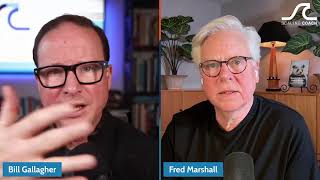
Fred Marshall, CEO of Quantum Learning, discusses how to handle rapid change and information overload. His gardening hobby teaches patience and long-term thinking. He recommends weekly incremental actions, managing open loops, and using AI tools like Claude to filter noise and protect your mental bandwidth.
Chapters
You know, easily three-quarters of us, the vast majority of us, are anxious about the future of our work and the future of the world. Things are changing, it feels like faster than ever, and that's uncomfortable. It's unsettling in so many ways. And we wonder, is this time any different than any other? Years ago, Alvin Toffler wrote Future Shock, and it seems now more appropriate than ever. What if there's a different approach to all that? That's our conversation today. How do we lean into it? How do we deal with it? How do we handle the pace of change and the anxiety that we're grappling with? Hey, everybody, I'm Bill Gallagher, scaling coach and host of this Super groovy Scaling Up Business podcast. Our show comes to you every week with an author, a speaker, a topic, a story, something to do with growing, scaling your company, and surviving, maybe even enjoying the whole process. You'll find more than 650 episodes and more at scalingcoach.com or wherever you're getting this right now. YouTube, LinkedIn, Facebook, Twitter, you know, X, all those places. Podcast, Apple Podcasts, Stitcher, Spotify, etc. All right, all right. My guest, Fred Marshall. He started as a biochemist, molecular biologist, lab science, and he applied that kind of research methodology to business leadership and management. And, and he's CEO and founder of a company called Quantum Learning. Whose clients include people like Apple, Pfizer, Genentech, people, those are organizations, right? Very large organizations. Many others. He's trained over 130,000 people across many countries and helped launch lots of brands in the biopharma world, generating billions. He's got a new book coming out, Thrive: The Antidote to Future Shock. And I think this topic of anxiety and future changes and all that is so near and dear to all of us. He's also an obsessive-compulsive gardener, at least according to his bio.
True, true. Welcome to the show. Thank you. So glad to be here.
Your website says CEO, investor, author. What does gardening teach you that you can't learn anywhere else? Tell us about your gardening.
That's a great question. You know, the thing about gardening is it's an exercise in love and patience. You know, gardens take a long time to build and become really great. And I've been working on my garden for, you know, almost 30 years now. And it's pretty great, I have to say. But storms happen, trees fall down. Recently we had a tree just cut right through the middle of this Italian garden. It's like, oh man, huge, massive tree. it's dynamic, it's interesting, it's beautiful, it has seasons, and you have to have this kind of combination of strategic thinking. You have to know where you're going ultimately with this thing, but at the same time, you have to live in the moment and, you know, literally smell the roses.
What do you garden? What do you grow?
I grow, so I have an Italian-style garden, which means boxwood and fountains and statues, and I have arborvitae instead of cypress trees. But the goal is to imitate someplace around Siena, Florence, Italy, and pretend I'm there even though I'm in wintry cold Pennsylvania right now.
Yeah, it's funny. It's actually been really sunny here in Northern California where I am. But as we talk, the weather like just turned and suddenly it's like cold. I walked around like, what am I doing? It's gotten cold and cloudy again. I don't know. Well, you can kind of see out the window there, but, right, it's changed rapidly on me. So yeah, the gardening.
So, well, you know what they say? They say it's always sunny in Philadelphia. And that tends to be true. It's sunny a lot here, and I love it. But the last couple of days, it was like 5 degrees. Sunny, dry, you know, you touch your car, you get electric shock because it's so dry outside. But we love it anyway. It's 4 seasons of magic.
Well, responding to nature, allowing, being patient, letting things grow and develop. For me, when I think about future shock, when I think about change and that kind of thing, one of the things that's given me a great deal of perspective, balance, and patience against all that is the garden. I look out the front of my house is set back quite a bit and I have trees. And then I live in a very tree neighborhood and looking out into the trees and walking around the trees is just enormously helpful when there's a major terrorist attack or a market freefall or some other kind of like shocking, unsettling event. I look out and I'm like, yeah, the sun came up again today or the clouds came out or like, like this thing that feels enormous, like life still is happening, like the world is still— it feels like things aren't working anymore, but in fact, maybe a lot is still working.
You know, nature is the best medicine by far, right? Going out, and I'm a little bit jealous because you can grow pretty much anything in Oakland where you are. You've got the mist from the bay, but you've got a lot of sunshine and it's It's the perfect combination for Thriving.
It's pretty good. So Thriving is kind of— I don't know, maybe tease a little bit about the book, and then let's talk about how you arrive at the book.
OK, well, you know, the big challenge that I faced, and I think everybody faced is, or faces, is we're all kind of on the edge of overwhelm. All the time these days. There's so much streaming in. We have more information flowing into our lives through our phones, through text messages and everything else. And it's created this kind of dynamic where there's just too much to process emotionally, mentally, even physically. We just got too much data streaming in. The average millennial picks up their phone 100 times a day. That's once every 9 minutes. It's hard to build a breathtaking future in 9-minute chunks. And so, one of the big challenges is how do you get unaddicted to the dopamine hits and the outrage algorithms that are designed to monetize your attention and hang ads in front of you? How do you escape that and live a meaningful, beautiful life? I know a lot of people who struggle with that. I know I've struggled with that. And I wrote the book to give people a roadmap to simplify it, to kind of get rid of the clutter You know, there's sort of mental, emotional noise clutter that we need to kind of get rid of. And that's all part of the journey to going from wherever you are to this state where you can truly thrive. You know, run with your strengths and make your weaknesses not a big deal.
So, I mean, it seems like the why is obvious, right? That kind of thinking and stuff is obvious in the world, right? Right? The need for this. But why you? Why did you say, I'm going to write this? What's your—
What prompted me to do that? And who, you know, why should anybody bother to listen to me? I get that. Well, you know, one fast way to say it is like all my dreams have come true. And that's really true. Like I bumped— I was cleaning up my closet and I found this journal. That had all the goals that I'd set when I was 22 years old. And I looked down the list and it's like every single one of them happened, but they all took at least a decade longer than I thought they were going to take. And so it's like, oh, okay, that's interesting. Yeah, I have, I have done a lot and I'm a big investor in AI startups. I've got, you know, a pretty big portfolio. I can see what's coming. I have privileged access to things that I'm not allowed to talk about because I'm under nondisclosure. But I can tell you that it's going to get intense and it's going to be fantastic at the same time. And I wrote this book to give people access to ways of thinking that are completely new and different. And you could label it exponential thinking if you wanted to. I'm not a big fan of those kinds of labels, but it's really the kind of thinking that's needed in an exponential world. Because we're out of the linear environment and we're into exponential change. And you can see that every day with a new version of an AI, agentic AI, climate, all kinds of things have shifted from linear to exponential, hard to predict what's gonna happen. So we need new tools. And I've built what I think are simple tools that anybody can use to do that.
It's interesting, this shift, right? I definitely am older. So I, um, you know, I remember sending and receiving postcards when we would travel places and, uh, and then having to dig through news and mostly the news that was available, unless you had some kind of access to foreign papers or things like that, like you didn't have very immediate news about too much of the world when I was young. Uh, and then along came a thing like CNN. And then came—
24-hour news was a breakthrough.
And things like, then early, more broader access was like Dow Jones news retrieval. And you could access dynamically, not just wait to see what AP stories got fed to you in the New York Times or whatever your paper was. But the amount and volume was far more limited to get. And maybe you listened, like I always had a shortwave radio. As a kid, right? And I would fiddle around.
My brother did, so I know it well. And you know what's interesting though, Bill, is the difference. Like you, what you just described is so perfect because you were initiating, you were reaching out to find the news that you thought was relevant to you. I think one of the things that's different today is we're getting news whether we want it or not. Your phone is beeping at you whether you want it to or not. And that's new. That's a completely different thing.
Just nonstop. Oh, I didn't know about that, or I didn't know about that. And of course, algorithms and things try to figure out what you're interested in, susceptible in, and will feed you things, you know, as well as along with ads and things like that. Yeah, I find that I'm personally tuning out and being much more selective with the social media in, say, the last year, that something started to shift not long ago. Where it's just like, oh, it's just too much and there's too much crap in there. So my time, I'm, I will go and look at things for a variety of reasons, both amusing, personal, as well as business. But then I'm like, yeah, this is like, this is just crap in here.
I know what you mean, right? It's just nonsense. It's noise.
It's all noise. But AI starts to add into me and I'll be flicking through news and I'm like, this story's terribly written. I don't actually know what's going on here. And then I'm like, so instead of looking for 10 more stories anymore, I immediately go to Claude or chat and I'll say, what really happened over there? Do we have anything else going on? And then it'll say, or I'll go back and I'll say, they've been saying for a week now that an entire armada is in the, but are they really in the Persian Gulf? What the hell does it mean? How far away, like, is that carrier? Like, what's really happening there? And I can ask and I can get analysis and deeper dives and things like that. So I have some tool and some agency. It's to make sense for me of the onslaught of stuff that I maybe or maybe didn't, depending on the subject, wanted to know or not want to know about.
Well, this is the incredible power that's been given to us. You just have to prompt Chat or Gemini or whatever, and you can get unbelievably sophisticated answers. You can have it do things for you. Agentic AI is happening. Right now. It's not an idea anymore. It's a real thing. And I've set up all kinds of little agentic AIs to do stuff like track all the things that are infecting the stock price of NVIDIA, supply and demand chains, black swan events that might happen in the Taiwan Straits. You can get very sophisticated now just through prompting. And then you can have fun too. Like we're going out this weekend. We want to go to a cool place. What do you recommend in Manhattan? We're going to be in the, you know, near this area, what's cool and hot in the city because we want to, we want to party tonight. I know I don't look like a party guy, but you never know.
I'm sure you have your festival wear and you put on a sparkly jumpsuit and a crazy hat and you're on the way.
Oh, that's a vision. Yeah. Alarmed now.
Yeah. How many kids do you have?
Uh, 3 kids and 3 grandchildren. Uh, they are, they're 40, 38, and 35 and a half, 36 almost.
So they're, they're fully adults at this point? Oh yeah, yeah, yeah.
And you know, their, their friends actually were part of the reason why I got stimulated to write this book, because I see what's going on in their lives and their worlds and how much they have to handle. The kids of the flu who got to do daycare, they're commuting into the city, one's working from home, who's going to pick up this? It's too much. It's too much. We need ways to cut through the clutter and really lead good lives, not just get by.
Well, I know I have a family member, well, actually more than one now, who sends me news items and reels and things like that on the regular that they're just freaking out about. Right? Like, oh my God, this political leader is doing this and this change is gonna happen and this group is doing that. And I'm like, settle down. I'm like, you're just, they're playing you nonstop. Just breathe, take a walk. And if you're really serious, before you send this to me or get yourself worked up about it, go ask AI to fact check it. Like, is it really true? Does it matter?
And even if it is true, I think, I think one of the most important things that we have to manage is our attention. You have so much attention in a day, and where are you going to spend it? Are you going to spend it on your kids? You're going to spend it on this, you know, building this new thing for your business? Are you going to spend it on news feeds and all the drama that may be fake or it may be real? How much of your emotional attention and your mental bandwidth do you want to dedicate to to that? And I think the answer is probably less than we're doing now, so we could put it into more, you know, satisfying and meaningful places.
And when you talk about that, what's all in future shock? When you say future shock, what, what falls in that category for you? What is shocking?
Well, so, you know, if you read Alvin Toffler's book from 1970, which is where the, the theme came from. He says it's the acceleration of change. Too much information, too much change, and our inability to adapt as fast as it's changing. So it's like you're, you know, you're running up an escalator that's going down, and it's going faster than you can run up. That's kind of the feeling.
Yeah. And so I think about, so there's news and events, there's technology, there's arts and entertainment, like all of it feels like it's changing. And, but sometimes I think, well, that's just because I'm 60.
Yeah, I wish that were true, right? We're getting slower, it's getting faster. Yeah, I think, you know, the good news is, you know, when you get older, you have a little bit more perspective. You, you know what to get upset about, you know what to ignore. It's like babies crying. You know that that's a, I'm not getting what I want cry, not I've just cut my finger cry, or I need to go to the emergency department cry. We learn to distinguish those things. I think for young people, it's harder. But there's something else too, because for them, these changes that Alvin Toffler suggested were coming are showing up in really unusual and interesting ways. Like something as simple as the American dream, right? What was that? That was, I get a good education, I'm going to get a good job. Meet somebody, fall in love, buy a house, live a good life. That was the model. And now, it's kind of turned on its head. You get a good education, maybe you get a lot of debt, you're paying off the debt instead of building equity in a home. Everything gets pushed to the future. You thought you were going to have a house by this age, but it's a decade behind that because you're spending money someplace else. That's a structural thing. And we need better ways to manage that because saying, oh, grind harder, try harder, that's not going to cut it in a world where even if you did that, it wouldn't matter. And human beings are finite. We have only so much emotional and mental bandwidth in a day. If you're tapped out at the end of every single day, that's a problem. And it needs to be solved at a structural level. But it also needs to be solved in the way we manage our time and energy.
So, when I think about the young family and friends, younger family, adults, but younger adults, I hear a few things. One of them is, most of them, with a couple exceptions, I'm never going to be able to buy a house. Right? Yeah.
And then, they've kind of given up.
And then a couple who are able to buy a house are like, I wouldn't want to buy a house. It's too constraining. I can do as well or better just straight investing in the market. And if I don't buy, I have flexibility in where and how I live.
I think that's a pretty good argument, actually. I have an investment mindset. Maybe, you know, invest the difference.
I haven't run the numbers and that kind of thing. I mean, historically we were like, okay, well, that rent is an investment with tax advantages. If you're buying, right? So I don't know what the equation looks like, but, and then the other one is like complete distrust of institutions. Like all these companies are trying to fuck us and the government can't be trusted. And you might like this party or that party, but maybe they're all bunk. And maybe everybody is in the Epstein files. And like, just like profound distrust profound distrust. And the media is all running an angle on us. And that, like, and like, when I think about future shock from a particular young person's standpoint, I think about that. And then when I think about getting a little bit older, I, I think about there is no safety net, like the concerns of people. There's no safety net. My job's going to be cut out by AI, right or wrong, soon, you know. And I don't know what to do with it anyway, and this is all happening too fast for me, right?
That's kind of the feeling. I think so. Yeah, it's not good. It's not good.
And on both political sides, right?
So like, it's politically neutral for sure.
We're both afraid of every— of the other and everything and everyone else's motive, right? There's a clinging or hope that my tribe will take care of me. Right? Yeah, my clients are all over, but I, and so I kind of hear all sides of them.
That's good. Yeah, it's good to have all views. I'm a big fan of that. You know, we, we need to get back to something that's really important and fundamental, and that is agency and taking responsibility for what you can control, not sweating what you can't control, and, and making sure that Every day or every week, you're putting some of your energy. And I think the week is kind of a magic unit of action. I might not be able to get something done today, but I could probably get it done this week. Every week, have a cadence of action that's building the future you want. And then you don't— you just call government institutions or whatever, just call that noise. Don't worry about that. Just focus on the things that you can control. And I think if you do that well, Everything works out. And then leverage the incredible tools that are here. AI being, you know, the elephant in the room. But there are other tools that are available to us to do extraordinary things. You know, your, your, your whole thing is how do you scale a business? The tools to scale businesses today are like never before in human history. Right? You have everything.
Your competition also has everything, right? Right?
So, yeah, but they don't use it as well. They probably use it less than you might think because they're caught up in the day-to-day. I mean, one of the things I think is fascinating is how much of your attention is spent by the drama and, you know, pressures of today versus how much of your attention you're investing in the future. It could be your granddaughter, you know, which I try to invest time in my granddaughter. Every week on Tuesdays and Thursdays for a little bit, as much as I can. Because I know it will compound. And then you've got exponential growth happening for the things you care about. And I think that little shift in mindset, it's not, it's not rocket science, can make a big difference. Because over time, consistent weekly investments in relationships, in systems, in yourself, your own skills and your own development, And then the forest bathing, which you referred to earlier, can all really add up over time. You know, it's like working out. I started working out when I was 60, so I'm 70 now. And I thought, okay, now or never. I started doing workouts twice a week, and suddenly I'm like really strong. It's like, when did that happen? I don't know when it happened, but every week, you know, I'm getting around the corner here. Yeah, I do a little 60 minutes twice a week. And then another 60 of aerobics. It adds up.
So I hear a couple things in what you're saying so far. Uh, the first one is like the Serenity Prayer, right? Like, um, like being able to accept things and focus on what you can actually change and where you can, and then a little bit of weekly action against something that you want, and then intentionality and design around the areas of your life that need attention.
Yeah. And I think it's good to divide it into two chunks. You've got the stuff that needs attention now.
Yeah.
And then the stuff that's going to take a while to build. And that's why gardening is such a powerful metaphor. It'll take you a decade to build an amazing relationship with your children. So they'll want to come back from college and hang out with you. That's not going to happen in a weekend. And one bad event isn't going to change that. It's a long-term investment. And if you can divide your attention into those two buckets, make sure the present's working pretty well, deal with the problems that come up, which they do, and then consistently invest in the main building blocks of life. And we know what they are, right? It's your mind, it's your body, it's your systems, it's your relationships, it's a little wonder and joy. I think that we were grinding so much, we don't make room for wonder, we don't make room for joy, those, you know, little magic moments that are happening all the time. And then maybe contribution too, because I think, you know, for those people who are ambitious, ambition is a great thing, especially when it's tempered with contribution. You know, if you can contribute at a high level, if you're ambitious, you know, karma comes back around. The more you create, the more you get. And shift from a consumption mindset to a creation mindset. That may be one of the most important mental shifts that people need to make. Stop consuming stuff on, you know, Instagram and TikTok. It's okay, a little bit's fine. But think about what can you create? How can you help others? What of value could you imagine? And then use these incredible tools today to build it. That's how you get real traction and real meaning, which I think is another thing that people are really hungry for.
Well, I regularly with our clients, we're having a conversation about, okay, we're doing these things to grow the company. And then there's just the day-to-day, like a customer problem, a system, a thing, paying bills like that. So your bandwidth to do new and growth-oriented things is fairly limited. Right? So, then we're wondering, like, so, like, how much can we move it? And I generally say, from personal and client experience, if you spend half an hour or an hour a week doing a little something new, like getting in that workout around the growth of the business, and you did that, like, you'd get, you know, you'd get 48 weeks of productive lift, uh, counting for some vacation time and bad weeks, right? You'd get 48 weeks of stuff in there where you nudge things forward. And if you're a leader working with other people, then there's some, some amplification between your own team and vendors and partners and things like that. And we can actually move a lot with that.
Well, that's the compounding effect, and I love the way you articulated too, because it's not just compounding your own time, but it's also compounding the time of your network, the people who are working with you, the supplier, the supply chain, even customers. You know, customers like to innovate too. And they're there. I've always found my customers were happy to partner. They're kind of excited to partner. Ooh, we're doing something cool with quantum, leading-edge stuff. Yeah, count me in. People like that. And you can enroll them and they want to contribute. They want to try to do something new. It looks good on their resume and it helps them internally with their customers.
So moving things forward a little bit every week, the compounding effect of that, remembering to go back and put a little attention. And then, and then you talked about respecting and understanding your wholeness, right? Your psychology and your physicality and your, your sleep and your rest and your fun and your, like, all of that kind of thing, like having a balance to that. I'll find that I'll be out doing something like really fun. And then that is the moment where my brain has enough bandwidth for then for some other things that I was too busy to think about before, where they would finally click and crystallize into something and be like, oh, that's what I need to do with that client or that situation or that family member. But it'll be 'cause I was surfing, right? Like it'll come to me when I'm out there.
It's so weird, isn't it? It's like, that's when it pops up, your mind is relaxed and in neutral. And then, yeah, yeah, those magic moments when everything, when everything gels. So for— it's surfing for you? Is that kind of—
yeah, I— so I do mostly, I do this thing called wing surfing. And then in the off-season, maybe I'll get a few days in, or I'll do some longboard surfing, or I'll go skiing. I've had a few days of skiing the last couple weeks. Next week I'll get some board and wing surfing time, um, working in Hawaii. So yeah, it's pretty good.
Sounds glorious.
But I think that like, well, I also did 150 nights away from home last year. Um, and, uh, I know that, I know that game, right?
And 80 flights. How did you train 130,000 people, Fred?
Yeah, yeah, a lot of airplanes on the road. Yeah, that's where you get Global Services or 1K Flyer. Like, for sure, you get upgrades, but it doesn't replace the fact that you're like going, going, going, going. And I— but I think against that, like, at this point, and with the amount of agency that I have, I also got nearly 60 days of surfing last year of one kind or another, right? So yeah, 30 of my 150 days was on the beach in Mexico where where I spent time writing a book, right? So, how cool is that?
That's how it's done. That's what we're talking about. You are living the model. You are thriving, my friend.
And that, right? But I don't know that everyone does that at a younger age.
You know, I wish we did more, and I did do some myself younger, but it's an interesting paradox. I, you know, there's this investment phase that you go through when you're younger, where you're building, you're building your systems, you're building your infrastructure. And then once that's in place, that frees you up to do the things that you and I are just talking about. But yeah, it's fascinating. I don't know how to do it when the kids are little and, you know, both parents are working. And that's something I think about a lot is how do you set up the infrastructure and the systems in your own life at the household level and at the career level or business level so that you do have not just the time but the bandwidth. And maybe the emotional bandwidth is the real rate-limiting one. Because when you're fried and overwhelmed, you know, you're not going to get much done.
Well, I, you know, I feel like our kids are programmed today to be too busy. They're filled with practices, soccer games, you know, etc. Like on and on and on there, there a lot. And then homework for endless hours. And there's not just like, hey, go chill out, go play with friends. Like, and, and certainly nobody can just run outside and run down the street in, in most places anymore. We're all too like worried for that kind of thing to happen. And I feel like there's a massive amount that gets missed out on like that, where we've gotten too protective of time and, and that, and, and filled everything with with stuff, you know.
Yeah, we let our anxiety about what might happen cause us to, you know, just be smothering our kids rather than letting them— you know, you know this probably, but when I was a kid, my parents never knew where we were, what we were doing. We'd sort of show up at the end of the day. It was pretty wild, uh, the wild, wild west.
My location services were always off.
Mine too. But, you know, it— you can do it. You just have to do it in a different way. And, and I think maybe if we had to pick one culprit, this phone is maybe the enemy. And that is, when I feel like I, I need a little time to chill, people are looking at their phone instead of doing something else. And I think that, that, you know, my, my son, uh, and daughter both will brick their phone. I'm sure you've heard about this, where you, you basically stick it in this brick and it's sort of locked and all you can do is check the essential things and, and, you know, almost all the apps are locked out.
Yeah, I don't know that.
Love it. They love it. Yeah, brick your phone. It's a good thing.
I, for me, it does help to put it down and to take a walk or to meditate or to, uh, take a hot tub Or, you know, do— there are certain things that you can do. Like, I can't look at the phone if I'm surfing. I can't look at the phone while I'm skiing. So some of those things are so all-envolving, you know, go take a run, dance, do things like that. You can't keep— you could listen to a podcast while you do it. Some of those things you— or you could listen to music, or you could just listen to the wind, you know, you could.
Yeah, you know that quite— what we're brushing around is the idea of slowing down. It's a very fast world right now. We're going from thing to thing to thing to thing. Slowing down is a powerful thing. You kind of reset your nervous system. You prioritize what's important. You can ignore the stuff that doesn't matter. You regain perspective. It can be powerful, and I'm a big fan of slowing down. And then, you know, your child will suddenly show up, or your grandchild's like, They want to play, they want attention.
You know, between my last client call and this recording, I had, I don't know, 10, 15 minutes. And there's a family member who I have been so anxious to— haven't been able to talk to for a couple days. And there's some things going on. And I've been so anxious and I came in and I just, I'm like, hey, boom, boom, boom, boom, boom. And I like implored him out. And I think maybe they didn't need to hear any of it. But, but they looked at me and they're like, yeah, just, you're not listening to me, chill out. Like, and in my mind, I've been like, those, like, 3 things have been spinning around my head. And I'm like, they've got to know that they've got to— and do they really? I don't— I think that they didn't think they needed to hear any of that. And probably what they would have needed is just me to look at them for a minute and go, "How you doing?" You know?
Yeah, yeah, a real connection. It gets back to slowing down. Slow your mind down enough and not be so, you know, focused on what you're worried about or what you need to get done and just really be with them. I think that's one of the hardest things to do. I'm not particularly great at it myself, but I try my best, at least when I know it's happening. You had the presence of mind to know that it was unfolding the way it should have been? You were able to adapt?
I just had this fear, like, okay, I only have like 10 minutes here. I've got to come up and do this thing. We're scheduled. And, um, and then, but what if, um, I don't know what their schedule is. What if they're just gone and by the time you and I get done, and then I don't have a chance to do this? And I'm worried that like I didn't share something with them that would have made the thing that made the difference in a critical moment in their life, like, and that I might have missed that, right? I was terrified that I, like, this has been spinning in my mind for like 3 days now. Um, wow, wow. And, and, but, but that anxiety, right, about not having time for a family member, right, like, has been running me. And, and so I like see that, but the cost of it was I wasn't really there in the moment.
Yeah, it's such a great irony because all of your heart and your intention was right in the right place, right? I suspect some of that might have come through somehow or another. Maybe not. I don't know. Yeah. You know, live and learn.
We'll find out.
You'll find out. But, you know, this moment that we're having right now, This is— isn't this what we're talking about? Like, like taking time for this, right? This is it. To have this little connection that we just had, that's kind of rare. I think it's— I'm certainly affected by it, um, and it's meaningful to me. Um, yeah, yeah, this is— I think this is— there's— this is available to us. It's available to us if we just kind of slow down and open ourselves to it. Yes, it's there.
Well, I think so. First of all, there's a self-awareness that there's a future that is shocking. There's a self-awareness that we've got some anxiety going on. We may notice it in our thinking. We may feel it in our body if we're tuned in and listen to our gut. Like, literally, your stomach sometimes is one of the key places I notice it. I might also notice in the back of my neck.
It's so intelligent. Our gut has so much wisdom. Yeah. Yeah.
What is your gut sense, right? You feel sick to your stomach over something. Maybe you should take a pause for a moment on that.
Yeah. You know, one of the things I've thought about a lot is how do you, in a distracted world, how do you listen to that quiet signal inside? 'Cause there's the hot emotion that can be distracting. I'm upset, I'm angry, I'm frustrated, whatever it is. And then there's the quiet signal that kind of knows what's important, knows what to do. And sometimes I think we need to push all the noise to the side so we can hear that deep signal that's there, and it's powerful, and it knows what's up. And I, for me personally, I found that all the problems I've had in life are when I don't listen to that signal.
Yeah.
Or I either don't hear it or I hear it and go, yeah, yeah, whatever. Then I get into trouble.
You rush through it. So what haven't I asked you about the book and the model and the work? What haven't we talked about? What is the antidote that we need so badly?
I think to trust that the future can be breathtaking. That it can be incredible if you want it to be. And I think almost everybody does want it to be. That tools like AI, they're not— they can be scary. They can be intimidating. They can feel overwhelming. They're superpowers, unbelievable superpowers that are right there. And it doesn't take long to figure them out. And that's where that consistent weekly investment, you know, pays off big time. But I think the other part of it that to me is so important is the meaning that we get in our lives comes from this combination of slowing down and being open to things, and at the same time, managing where we put our attention and kind of being a little systematic about it. It's kind of like be organized and systematic, and then just let it go. That's a sweet combo pack that I think is where great things happen.
You know, it's funny for me. So, scheduling has been liberating. My schedule is liberating for me. And yet, when I show it to most people, it's not very liberating, right? Most people are looking at my schedule and it feels constraining. It feels overwhelming. You look at all the stuff swimming around there and the first reaction to it is overwhelming. But the reason that it lives for me as liberating is because, like, I don't have to worry about a preparation for a client workday or some other kind of thing like that, because I know that it lives in there in the appropriate timeframe. Like, I have a deliverable for some curriculum that I work on every quarter. And I don't actually know or remember when it's due, but I know that the time to work on it is already in my calendar. And so, I just, I can relax about it. I know that when that time comes up, I'll either do the work then or I'll have to find another time for it. I may move something around. It may not occur the way that it is, but I don't have to think about it right now. Because I know that it's programmed in there. So the only thing that I'm anxious about is something I haven't calendared yet. And then I also—
oh yeah, go ahead.
I also reserve time for the unstructured things. So I don't have this anymore, but I used to put in for Sunday, um, I used to have like 4 hours or so, 4 to 6 hours in, I forget exactly now, but it was surprised and delighted at what the threw my way. And that was my, like, Sunday morning appointment for spontaneity and for presence and for disconnecting, right? Like, and, uh, I call it wild card. That's your wild card.
Yeah. So I'm gonna show up, is gonna show up.
I, I have time for lunch and dinner. I have getting up in the morning time. So, like, basic kinds of things like that live in there so that when I go to throw in an appointment or call or something like that, then I have to move around the other things so I don't end up shortchanging it. It might mean that I get up early one day or something like that, or I, or I move or skip a workout. But, but because some basic things are in there, then I am always grappling with the wholeness, like the wholeness of my humanity in life. I'm always having to think about that, right? So then, and then I'm left with some free time and some playtime and some time to take a walk walk or that kind of thing.
Get out there and surf for sure. You know, one of the big aha moments that I had, maybe 7 or 8 years ago now, is the role that open loops play in my quality of sleep. If there's something that needs to get done that isn't done yet, it'll just spin around up there, and I'll be up till 2 in the morning, or I'll fall asleep and wake up at 2 in the morning, and it's still spinning. And, you know, finding a way to manage those open loops and stick them in the calendar. You say, you know, I can't deal with it now. I sometimes, I'll literally just open my phone in the middle of the night and just go, you know, 10 o'clock tomorrow, do this, solve this thing.
Right, right.
And getting it out of my head. David Allen used to talk about that. Remember that? And Getting Things Done?
Yeah.
And it's such a simple idea, but it's so powerful.
Mark off. I'd rather put time for something than add it to a list because the list makes me anxious. The calendaring of it lets me relax because that isn't now. If the list is like forever, always there. But if, but if I put it in tomorrow or next week or whatever, and then even if I don't do it, as I look at it, I manage the calendar. I'm like, oh, that didn't get done. Let's roll that forward or find a new home, or maybe It's past time to deal with it. And I just need to let you know, hey, Fred, I didn't get that done. And I don't know what it's going to mean for our work, but that didn't happen. Like, I could grapple with the breakdown, but I, but I don't have to deal with it necessarily right now. Right.
Which is, which is important because if you have too many things in your head, you're just not effective. We know that people can't multitask. There's so many studies now that have firmly established that performance just nosedives if you have more than 2 things going on in your brain. Unless it's doing dishes and listening to a podcast or driving your car. So some automated behavior, yeah, no problem.
But, and even that, like, anything, if you're too much into whatever your podcast, you're not going to drive that well. And if you're too much into the driving, you're not going to podcast that well. Like, you know, yeah, you'll listen to it.
You'll have that fantastic experience where you get somewhere and you You don't know how you got there.
So I, I remember I used to handle some phone calls in particular, like I would talk to my mom on a long run or a long bike when I wanted to bring the tempo down. Now I couldn't do it when I was really working hard, like climbing or— but if I, but I would be like, okay, now I'm on kind of a long flat stretch. I can recover. This is a good time to call mom. And then I'd call and I'd talk to her for 30 minutes or whatever. And then I'd pick the tempo back up again or something like that. You know, like figuring out—
That's a kind of elegant multitasking because, you know, you don't have to think when you're riding your bike. It's just autopilot. And that's the beauty of— Yeah, I mean, you have to watch a little awareness for traffic. Cars are important. Certainly don't want to be looking at your phone while you're riding your bike, that's for sure.
Yeah. Well, There's a lot of good stuff to chew on here. Future Shock, your anxiety around what's going on in the world and where we're headed. Thrive, the book Thrive: Antidote to Future Shock. Want to throw that up? Thrive Future You is there. Fred Marshall, thank you so much for joining us, for talking about it all today. And if you want to know, go to his website, get the book. You'll probably get it wherever you get it now, but But your registration information, all that kind of stuff will be at the website, thrivefutureyou.com.
Thank you.
Fred, thanks for being on the show. Thanks everyone for watching, for listening. Hope it was helpful for you. Pass it along, share it with somebody else. Take a chill out, do what you can do, manage yourself, thrive in the face of all of that anxiety. That's our lesson for today. Keep Scaling, 650+ episodes. You'll find all our programs, workshops, that kind of crap. Scalingcoach.com. Uh, not crap, good stuff. Uh, and, uh, thanks to, uh, to Wanda and to Anna for getting our show produced and out the door every week. And to my friend and mentor Vern Harnish, who created the whole Scaling Up Framework that's the heart of our work. Thanks again, everyone, for watching, for listening. Until next time, keep scaling.










