Transforming Anxiety into Leadership Power with Scott Ramey
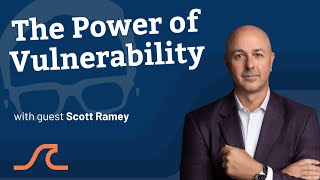
This is a YouTube interview (host Bill Gallagher with guest Scott Ramey) exploring how Scott transformed his lifelong panic/anxiety into a career coaching leaders on presence, voice, and confidence. He recounts a first panic attack in 1992, corporate leadership experience, and a pivot to found the Ramey Group. Key elements: the SPEAK coaching framework (Style, Presence, Empathy, Authenticity, Knowledge); the role of vulnerability and storytelling (including oxytocin research via Dr. Sue Miller); practical tactics (opening rehearsal, message clarity, mirror work); and client vignettes (daughter Aubrey’s turnaround, an insurance executive’s clarity, a CEO’s pitch refinement). The episode targets business leaders wanting to improve authenticity and communication; it closes with a CTA to scottramey.com and scalingcoach.com.
Chapters
Scott. Scott Ramey joins us now. So Scott is an expert in. He's got this company, the Ramey Group. He helps people develop and be better at their presentations, have more confidence, have developed their voice, that kind of thing. He's a former executive with big insurance and things like that and finance, and he's just really passionate about helping people do this. He's developed a framework around it. We'll talk more about that and hear his stories, that kind of thing. But he's worked on both, both his own personal and client struggles in order to find that voice. Anyway, Scott, welcome to the show.
Thanks, Bill. Such a pleasure to be here. Thank you for having me.
Well, I. So I've done lots of different kinds of voice coaching and training, speaking coaching and training over the years. I'm curious, what was your first, what got you into this thinking? What exposed you to that?
Well, it was, it was out of necessity. It was at a point, you know, I had my first panic attack in 1992 as a junior in college. So, you know, you can imagine. And if you, if those in the audience or if you had one yourself, I mean, it, it transforms your life, that experience, the feelings, the. Or almost disassociation with the body, the energy. It's really terrifying, the context of that, just to kind of paint this picture and maybe just step a little bit. I was grew up in Indiana, played college basketball. I think the first kid in our high school to get a Division 1 athletic scholarship. So, you know, good for me. And, and all joking aside, I was very proud of that moment, but that was my passion. I wanted to play college basketball. And growing up in Indiana, it's kind of a rite of passage. And I grew up in an area not far from where Hoosiers was filmed. And, you know, people from my high school are extras in that film. But it didn't work out. I broke my foot five times and I just felt like I was kind of a hanger on or I wasn't really contributing to the team. And there was no pressure. I didn't feel any pressure. I needed to move on, but I felt like it was time to move on. So I was walking across the campus of Niagara University, a frigid, cold October. November day. November day. And I ran into our athletic trainer who had spent a lot of time with me. His name was Ray Krist, Ray Kist. And Ray is just this kind of burly, tough New Yorker, quintessential slick back hair, beautiful human being, but somebody who'd really invested in me and cared a lot about Niagara University and cared a lot about the players and cared a lot about me. And as I went to tell him that I was going to transfer, and this is well before the transfer portal and the famous transfer portal today, back then, you actually had to set out a year. I just started sweating profusely, Bill. I mean, profusely. And at the time I had hair, so my bangs were sticking to my forehead. You can imagine that, um, like, what on earth is going on here? And Ray looked at me with a hu. With major disappointment, shook his head and just turned and walked away. And that was the beginning of. Of panic and anxiety in my life. And so I'm 52 now, so that was 1992. Just to put that in perspective, you know, knock on wood, panic attacks are. Are few and far between these days, but living with anxiety my entire. My entire life, you know, fast forward as I started to interview and I was finding myself. Anytime I was questioned a lot, I would. Would trigger a panic attack. I mean, anytime I find myself. And I transferred to John Carroll University. Great spot for you. Yeah. Being on the spot, being kind of felt. Felt like I was being, you know, under a light, if you will, really. Figuratively, of course, but not really. But anytime I was in that spotlight, I would crumble and I crumble with a panic attack and severe anxiety. And so I knew then that I had to figure this out. How am I going to get hired? How am I going to progress in my career? What steps am I going to take? And through diligence. And actually it was a presentation training course, ironically, which is probably the least important thing that I want to do in that moment, helped me start to think about the fact that I need to take the focus off myself and on others. It's been a journey, a lifelong journey. A lot of modalities, a lot of techniques. I think as. As I've aged more and become more mature, the. The anxiety's lessened a lot. And. And you know, as you get older and have the re. Have resources, you can explore why the anxiety exists and you can start to really kind of work on all things holistic in your body and your mind to address that. But it was just the reason why this is such a passion for me is I. And what pisses me off, it makes me really, really sad and has for my entire career.
Yeah.
As an executive, is when someone gets into the room and they shrink or somebody who has. Who we all know, who has unlimited potential, is afraid or isn't able to convey their message in a way that's they're going to be taken seriously. And that really upset me and made me sad. And as I decided to exit corporate America, what impact could I make on the world? And the impact is how do I teach people that have similar issues or concerns or even ailments to do what I've done in my career, which is own your voice so you can own the room and it will transform your career. So that's the origin story that really took what I thought was maybe just a fundamental skill that leaders and individuals need to have. But what I saw with my career, my ability to take control of a situation and own a room because of I was confident with what I wanted to convey and how I wanted to convey it, it transformed my career. And I know that it does that for many, many people if they really lean into it.
That's really interesting. As you started talking I'm like oh, I immediately remembered an incident, right? Like I was in the ninth grade and there was a question asked and I was the sort of person who just always felt like I could answer any question. And I raised my hand like reflexively, instinctively and then the teacher called on me right away and it was fantastic, right? That's like my moment to shine. This is how I've been my whole life. I can speak up and I can say the right thing, except I can't always. And in this moment I couldn't. And I'm in the ninth grade and as the teacher calls on me I become flustered. Now I'm in a foreign country and I don't speak the language that well. I'm in a foreign country in a foreign language, going to starting my high school in a different language. And I realized in that moment in a blank that I didn't understand the question, question even. And I had trouble finding the words as a language to answer and I had a panic attack. And mine, yeah, I got sweaty and I just passed out. Like I, I like, I had this whole like ah, identity crisis and then I like passed out and I've never done anything like that before or after or that kind of thing. But in that moment I had something. Now maybe I ate something bad at that moment it chose to like whatever. Like maybe there's some other explanation but I think it was just anxiety that overcame me in that moment. A full on identity crisis. And I would say the biggest thing that I decided after that is that I'm always, I'm going to be careful, right? So I'm going to be careful and I'm Going to think about what I have to say and what point I have to make. And so I developed skills and routines and learned and listened for ways to speak spontaneously about something. But I would always like, okay, there's a situation here. I want to make three points. I'm going to tell this story. So I would like organize a thing and then go up and talk. And it's made me great at that kind of thing. Like I can, you know, even though I'm not the main speaker, I can go do something. And then people are like, oh, it's great. And you're so inspiring and like, you know, little techniques, organizing. But it came from in part that like, don't ever raise your hand until you figured it out.
That, and that's certainly a method and a coping mechanism to, to have. I just, I think back to. I had a great childhood, you know, in a humble and up humble Indiana upgrading one of four boys. I joked that we were, you know, an Indiana boy band other than the Jackson 5, and we had a really great upbringing. My mom, Becky. We would joke that you don't want to get Becky on the horn if something were to go down at school or something because she would really take care of and defend us with such vigor. She had a rule in our house that if any one of us came home bloody, all of us better come home bloody. I mean, that's the kind of environment she created and it was great. And you know, my brother recently, I've, I have. My youngest brother John was at, was at our home visiting recently and my oldest daughter Aubrey said, hey, how good of an athlete was dad? And my brother's like, oh, he could do anything. Like he would hit a home run, he would come and score 30 points. And the point being is that I remember very vividly I was all state football and at the high school I went to, they would have us come out and they'd do a big ceremony and they create this beautiful big picture and they put up on the wall and they would hand you the microphone, they ask you to speak. And I had no fear, Bill, and I mean no fear in high school, and felt like I was invincible, that I could literally do anything in my life, anything that was asked of me. In fact, one of our neighbors and friends reached up as I was speaking, reached over to my, to my mother and said, I don't think they're going to be able to pry that microphone out of his hand. But so imagine like the devastation literally. And I would classify it not to be overdramatic here, but I would say it was devastated. It was this devastating moment to feel that you were that, that fallible and you started to question everything about who you were and yeah, am I as strong as I think I might be? Can I, can I do what I think I can do?
Yeah.
And it was disheartening. Now again, this is not a sob story. This is, you know, I was able to pull myself together and work through my challenges and build a really successful corporate career. My hope is that I can give others hope because I see takes one to no one. I've sat in so many rooms where people come in and they're not as confident as they otherwise should be. Bright, talented, engaging, authentic, empathy driven leaders that will just shrink under the moment of pressure. And like I said earlier, just makes me sad and breaks my heart and I want to help.
You know, I see the shrinking thing and being in an unfamiliar place and we definitely see that with leaders, with others who are like, wait a minute, you're so like, where did you just go there? And we see leaders in all realms, but our work is mostly with business leaders. And then you also see, I think there's a more subtle thing as well. Like in my situation, I learned a bunch of techniques that are useful and serve me well. But also then I suppressed something like a freedom and a playfulness. And it wasn't until a whole lot of later work that I got back that. So being thoughtful and strategic about something is great, but if you also suppress your playfulness. And I had another more minor incident, no passing out this time. But I said something, I used some phrasing at a, in a very large company where I was about to make a presentation and my boss said something to me and I, and I just was like, I crumbled a little bit inside. And I was like, I can't be like free and easy. I have to be thoughtful and careful and professional. Right. And for a long time I spoke on big, you know, front of 750 people, 500 things, industry things, media things. But I was like inhibited and careful. And as a consequence I got very like mediocre, like ratings, scorings, feedback, things like that, right. I got like, it was fine, like whatever, but there wasn't like the oh my God, that was awesome, you rock my world kind of feedback, right? And I. So there was a suppression that went along with that strategic survival mechanism that was so useful. And I also didn't have as much fun with it, right? And then of course I always get like, there's a through line of feedback I'll get like, he's really arrogant. Which is, of course, true.
So do you feel. Do you feel like you weren't being really, truly your authentic self? And that was. That's the. Yeah, I was being.
You name it. I was being careful in what I said. Instead of being like, you know, I'd rather be a little, like, outrageous and then apologize or acknowledge, hey, I'm a little, like, unconventional, irreverent, like, whatever, but I'm just, like, going for it with you. Or I just really care about what you're saying. I spoke to a group at a conference yesterday in San Francisco, and I noticed after, I don't know, a few minutes in, I dropped a few F bombs, and I'm like, listen, I'm clearly not like your careful corporate speaker, and I apologize for that, and I'm not going to manage this. I may do it again, and if it offends you, I'm really sorry, but I'm not putting my attention on that. I'm just, like, out to deliver value, and I'm going to be kind of unrestrained, you know, so I'm not building F bombs as a cornerstone of my identity, but I'm also not holding. Like, I want to just be fully out there, you know, so acknowledge, like, hey, it's going to.
Well, it's cool that you know that and you acknowledge that. I'll tell you, I had a really, really powerful conversation with someone I know pretty well two weeks ago. A leader, an up and comer. Yeah, by. By all corporate measures would be high potential. Let's. Let's just call, you know, this. How they would classify this person. And he called me. He asked for time. We got together, and the first thing he said to me is, I don't have anxiety. My wife does. I'm like, okay, first of all, you don't have to have anxiety for us to work together, but thank you for the disclaimer.
And.
But then he went on and said, look, I. I don't have any. I just. I don't have a problem. When I. When I get into my presentation, everybody gives me positive feedback afterwards. I feel like it goes really well. I feel comfortable. I'm not anxious. I. I really can crush it when I get up on stage and get going. I said, what's the problem? Then he's like, the problem is getting into the opening, the pres. The opening, the presentation.
Getting started.
Getting started. I said, well, tell me more. He's like, well, I'm not sure if I even want to be a leader. I'm like, okay, now we're talking about something completely different, a little deeper. I said, and so we played this game, you know, kind of a why? Tell me more, tell me more. And what it came down to is this, that he really, to your, to your, your story, he wasn't really being truly who he is. And he went on to tell me this amazing story about at the age of four, how their family led or fled Nicaragua, that they sold every piece of, of furniture and any valuables that they had bundled the cash among the six of the family members, begin to move from Nicaragua through Mexico, are arrested in Mexico, finds himself in a Mexican prison with his family members at the age of four, and then ultimately settles outside of Compton in la. And that there's this picture and this perception that he had to be to fit in and to be, to be, you know, what he thinks he, or what his family thought he needed to be or what he thought he needed to be, that he had to do certain things, like always wear a suit and tie in every event.
Yeah.
And I said two things.
Yeah.
Yeah. He said, look, Scott, in my culture, we, we do work, we do really great work, Provide a service, we get paid. We do great work, we provide a service, we get paid over. And he kept saying over and over again. And I said, and let me guess, that's exactly how you're managing your team. And he just kind of, you could just see the energy release his body. Point being is he really wasn't truly authentically being himself. He was being someone who thought he shouldn't, that he should be. And that, and my point to him was as is you, as you ex, as you move through your career and get to senior levels, you don't want to turn back and look and see nobody there. You want to bring people with you. And then if you want to, in order to bring people with you, you need to be you and authentically you and demonstrate vulnerability.
Yeah.
And so it's this beautiful breakthrough moment where he realized that he had his opening. He just told me his opening, so next opening is going to be easy. But that he needed to be authentically himself. And you know, and I, again, I can resonate with that because for 31 years in corporate America, over three decades, I wore a mask of strength and stability. And every day I would wake up anxious beyond anxious in fight or flight. And again, it worked out well. I'm at. Cause I'm not at effect. There's no victim here. However, I, I. What I've learned from my experience and in launching my business and starting to work with individuals is that I have had such relief, personally speaking, by telling my message and my story. And if I had to do it all over again, I would have done it 30 years ago and been open and honest about it. But I grew up in the 90s. Don't ever let him see a sweat, stiff upper lip. You have to show strength in, in, in leadership. And I don't think it would have changed to how, how my career would have progressed. It probably only would have enhanced it. And I probably would have not felt the angst every single day I woke up when I interact with people.
Interesting. Yeah, I, you know, I, I could see the guys talk, listen, his next time he takes the stage or walks to the front of the room and saying, listen that, you know, I started Nicaragua to get here today.
Yeah.
Right. And, you know, and you think about that. What a fascinating story. Like beginning another country and being a little kid and being in jail, like being in jail at any age in Mexico doesn't sound awesome to me.
No.
But. And then, you know, and then Compton is not exactly the nicer part of Los Angeles. Right. So he's had a whole wealth of experience. And then to be wearing a suit and standing in the front of the room, like, there's pride in that. And, and if you can own the whole story, it actually isn't constraining anymore. Right. Like, if you can tell the whole thing and why you enjoy putting on a suit or what makes you feel good about it. Right. I wore a suit for many years and worked in big offices and that kind of thing. And I'm like, I'm so glad that I can wear a T shirt today. Most of the time.
I have a rul rule now that you'll never see me in a tie ever again, Bill. That's my one rule as we go forward. And sometimes in a baseball cap.
I, I connected probably 30 ties, but I, I, I think I put one on once in the last year.
I hope I don't have to wear one again. I certainly will. If, if the, if the role requires.
It or the black tie event or you go to a city like London or something like, that's a good.
If I'm doing a keynote. Yeah, of course. And fundraiser and. Yeah. The master ceremony or whatever it might be. I, as I was, as I was diving more into developing the content and putting together the business model and trying to think about how I can provide value and not just what I think will Work. But is there science behind what I'm doing? And particularly around vulnerability? I contacted Dr. Sue Miller from Indiana University. She happens to have a place here in Atlantic Beach. I sent her an email. Blind. Cold. You know, it was cold. I would never in a million words, years, even expected her to respond. Yeah, but she works on social connection, and she's the premen expert on oxytocin. A lot of research around oxytocin and social connection. And I read, I read a lot of her papers, and I thought, there's probably something more here around human connection and vulnerability and storytelling. So I sent her a hypothesis. I said, Dr. Sue, we don't know each other. I grew up in Indiana, hopefully to gain some favor. She's at Indiana University now. Here's my hypothesis. If I am in a room with complete strangers and I am on a stage and I tell a story that demonstrates vulnerability, one is oxytocin release, and two, is the audience in churn going to have a release of oxytocin knowing that this is emotional, vulnerable story. That was my hypothesis. And to my surprise, she was gracious enough to respond almost immediately. And she says, yes, you're on the right track. So I'm my, my thinking on this and, and it's reality for me as a. As a leader and has been in my entire career. When I think back, like, how was I able to. To accelerate cultural building, team development, bringing folks together is because I was always authentic and I always demonstrated vulnerability. Always. They got to know me, my family, my. When I made a mistake, I was quick to admit it. And in turn, people felt safe and comfortable and they wouldn't bury bad, you know, they wouldn't bury bad KPIs. They would show them as red, not as green. And then we were able to solve problems together rather than, you know, constantly swirling and everybody gets into a readout. It's like, oh, everything's great in my business. No, it's not. It never is. So this is indeed vulnerability and storytelling and sharing the reality with your team members, whether they're direct reports or they're contractors, connecting with it, and I mean really, truly connecting with them, will increase productivity by a magnitude of, gosh, I don't know how. How much, but a lot. And particularly as we think about communicating, if you're on stage or in small groups, it is the cheat code, and people need to do more of it, because I still see it time and time again, reluctance to share vulnerable moments.
Well, people, right. We see people all the time who are not fully open and Honest. And we hear that authenticity is a good thing and Brene Brown has certainly built a career around the whole thing. And then we also hear terms like speak my truth and, and I think to share something vulnerable is an interesting truth we want to hear. But if speaking your truth means mouthing, like just opinionating on people we don't need or care so much about, like, everybody's got an opinion. My opinion is different than yours. I don't really care if you're inhibited and you don't say like. So I'm much more interested in the emotion, like I'm really upset right now than I think something or when he does that or this, that, that. Like I, I'm really disappointed. Or I'm more interested in the emotion and the failing and the thing that you're hiding as your truth or the anything else than the tough exterior, you know?
Yeah, I agree.
That's much more engaging. Like I can now relate to you and your str. I may not even agree with it still, but I can relate and appreciate your position, like, oh, I'm totally the upside side from you, but I now have some empathy for you because you shared what was going on and I get it.
Right. Yeah. I think back, I agree. I think back to my experiences where maybe the organization wasn't operating at a level it needed to operate and the message would be more about, well, we need to increase earnings per share, drive more revenue or reduce surrenders. But it wasn't connecting it to the why and the heart. Like connecting people to the heart. And then you hear things like, well, they just don't get it or they're not on board. No, I mean, no. Our job as leaders is to paint, is to paint a compelling vision. This is where we're going. This is how it impacts you. And I think vulnerability transforms strangers and allies and stories in the shared experience. At the end of the day, I think of it in terms of four pieces to the puzzle to really create authentic connection. One is affinity. Do we care for each other? Am I demonstrating how I care for you? Are we communicating? It's pretty self explanatory, but as you know, Bill, it's remarkable how little communication often takes place, particularly in a large setting of an organization, no matter how big or small the organization may be. So affinity communication, do we know where we're going? The shared experience? Do we know what we're working towards? Do we agree? Do we have alignment? And then lastly, the last piece is vulnerability. Are they, do they care enough? Do they understand what, what is the. Where my heart is and my energy and what I'm trying to care about.
What do we collectively care about together? Right. There's a. There's a powerful connection. Well, I want to share some of the other stories that you identified as we prepared for this show. Your daughter Aubrey has had a significant impact on you and you and her. Talk about. Talk about Aubrey.
Oh, she's a special young woman. So she just graduated from college, is in her. Is now, you know, in the financial services industry. So she, in some respects, followed in her dad's footsteps. But Aubrey's the reason why I'm doing what I'm doing, frankly. And it's. It happened two years ago. She. Aubrey was a Division 1 soccer player and was in a situation that was called suboptimal for her from a. From an athletic standpoint. There's a lot to it, Bill, but it just wasn't.
But you said suboptimal.
Suboptimal, shitty situation. Yeah. They're both kind of the same. Well, again, look, I. I think there's always two perspectives on everything. She wasn't playing the level that she wanted to play. She probably wasn't when she was playing. Probably wasn't playing at the level that she wanted to play. It happens. And it was. Started out in her junior year playing really, really well, and then got benched, and she made some mistakes, and she owns those mistakes, and it wasn't great. She was. So that was happening in one perspective. The other is that she had just left a sports psychologist and had called my wife, Michelle, and said, they're recommending I go on an antidepressant.
Oh, yeah. That's confronting for a parent, right?
Confronting for a young adult. Yeah. And the third was she. She had just finished a speech class and she received a D. Yeah. So we had the trifecta. An unhappy player, an unhappy kid, and a happy student. And she's in Chicago, and we're here in Jacksonville, Florida. And so Michelle walks up the steps and says, I think you need to call Aubrey and, like, what's going on? And she explains. And they had just gotten off the phone for like an hour and a half. And I said, okay, I'll give her a call. But I knew as a dad, the only thing I could say to her that would help was, I have anxiety that I've been living with it for years because we were in this, and I know my child well enough to know, as I should know her well, that nothing I could say to her, like, it's going to be okay, no, you know, just keep working harder. You're going to get back on the pitch. Don't worry about it. You're going to make this happen. Or yeah, you know, just work harder on your next presentation and prepare more and it's going to be better. I just knew it wasn't going to work. And so she answered the phone, she was in tears. And I said, aubrey, your dad has been living with anxiety his entire professional career. And she just starts bawling, which then in turns I start to cry. Yeah. And her response was the most beautiful thing that's ever happened. She said, dad, I had no idea and I'm so sorry, I didn't know.
Yeah.
I said, thank you, bud. And we had a quite. Anyway, nice moment. I said, so look, they're going to get through the anxiety part of it. How do I know? Because I know. I've lived with my entire life. We can, you can work through this, but let's handle one thing that I know I can help you on with, and that is how we can turn this D around into an A in your speech class, huh? That I know, my friend. I can help you. Yeah, yeah, yeah, I said, so hang up, call me back on FaceTime. And she did. And I taught her the method I teach, now, teach my students today, and I've taught for years, some people who struggle with presentations. And she went to speech the next night and received an A. And the class, the professor came up to her afterwards and said, are you going to share with me your secrets? And she said no. And she turned and walked away. So it was one of those moments. I was proud of her for that too, by the way. But just, but that was, that was just the beginning, Bill, because my brand identity is. Own your voice, own the room. Yeah. Because I really, really want people to know that we are so much more capable.
Your voice, though, you're not just talking about the sound, the timber, the tone, right? Yeah. No, I'm talking about your message, your identity, all that.
Right, all of it, which includes your sound.
Yeah.
Your presence, everything but. Yeah, that's exactly right. And she went on to decide to transfer. She entered the portal. She transferred. She went to a wonderful school, mid major college up in the Midwest. She played every minute of every game. They won the Missouri Valley Conference. She was all Missouri Valley Conference. And they went to the NCAA tournament the first time in 19 or 20 years. But it just, it catapulted her to realize that she can be at cause, that she can take responsibility, that she can own her Destiny and really change the trajectory of her confidence. Because at the end of the day, you know, look, when people ask me like, oh, you know Scott, you've done a lot of things in your career. You've met, you've, you've run large organizations, you've worked for Fortune 500 companies, Fortune 68 company. You're not just a presentation guy. I said no, I'm a confidence guy. Because at the end of the day, community communicating, particularly as a leader is the, from my standpoint is one of the, the most important traits you need to have. You need to be an effective communicator. It will change the trajectory of your career.
Yeah.
And so that confidence just starts to cascade for people. And that's what I saw with Aubrey. That's what I'm seeing with a CEO I'm currently working with who was a co founder, had a successful exit and she has now created her own platform hiring platform. It's building a better hiring platform for the, for employees and employers to, to match purpose driven, really brilliant idea. But she wasn't a number one, she was a number two. She was a co founder. And stepping into that role is new to her. It's a new experience. She is more than capable, brilliant, thoughtful, provocative in a positive way. In terms of how disruptive her idea is, I mean like really world class human being. But this is a new experience. And so we've been working together for her next capital raise to help refine her story. Fine tune it, simplify it.
Yeah.
But also just allow her and allow her to emerge with confidence to really step into that number one position. And it's been amazing to watch her transformation that she's owning the voice. And I have no doubt that when she goes to sits across for the next VC that she's pitches, they're going to be blown away by her confidence and what she's bringing to the table because the idea is brilliant. It's just how do we amplify that message and really take her her pitch to a new level.
You started to tell us a story about an insurance exec and developing confidence for them. Tell us about that. And what kind of work did you do? Like how did they find confidence when they didn't have it?
Well, this particular individual I happened to work with at one point in my career and so we knew one another and she reached out to me and she was riddled with confidence issues and we spent a day together. The part of my program is a day intensive and we really walk through a lot of things but the first thing we talk about is success reluctance. And it's a concept that my mentor, who's now 92 years old, introduced to me back in 2003. And the basic premise of success reluctance is that what got you here won't get you any further, but it's that we all have unlimited potential. But in many instances, we create these scenarios in very, very much the form and look and feel like self sabotage, putting ourselves in positions to not necessarily capitalize on our strengths, creating, creating barriers or obstacles that will allow us to move forward. Another way of thinking about was kind of we're tethered and we just get to a point where we're about to break through and we pull back and we get to a point and we pull back. And these are, these are characteristics she had. Brilliant, brilliant, brilliant individual attorney, has pedigree, hard worker, dedicated. But she just didn't have the confidence that she needed to have in order to position herself in a way that she needed to position herself.
Yeah.
And oftentimes, even in, even in her setting as an attorney would often not be able to communicate with business leaders in a way that was assertive enough and clear enough and direct given direction enough for them to act on what she's sharing. It was very kind of diluted or convoluted in many instances. So we worked together and we worked on really her messaging first and foremost because she tend to be really long winded and wasn't clear and concise. And we, we are, I mean, like look, it's, we don't need more time usually to make a point. We just need fewer words. Yeah. And you know, in, in particularly in, in business environments, like, well, how much time do I have? How much time do I have? And we want to fill the time. Less is more. And so we got, we got really clear on creating more clarity for her so she could organize her thoughts in a clear and concise way and share them in a way that could be remembered and repeated. Because as a business, as a, as an advisor, an attorney, you need your business people to be able to remember what you told them. And so they can take that information, that guidance and that wisdom and apply it in a practical sense. So it was great, it was a great session and she was wonderful and grateful, but we gave her confidence. And then she subsequently sent me an email. It was two weeks ago, so it was almost two months ago. We worked together and she just, she said, I just gave a presentation. I wasn't nervous at all.
Yeah.
Because she had clarity on what she Wanted to say.
She focused it down and got that. You know, I think that like a practice at anything will give you some confidence. Right. So you're concerned about the sound of your voice. Well, go to work on it. Get some coaching around it, Learn to listen to it. I think about when I first heard my own voice, I was so uncomfortable with it, as I think most are. When I first saw my own face in the camera, I was uncomfortable with it. And then over time with practice, I got more comfortable with it. Right. Like the formulating your message can be uncomfortable. You can lack confidence with it. You spend more time and practice and feedback in it. You're going to get more comfortable and confident with it. Exposing your fears and concerns and like going right into them. What am I afraid of and why? And developing some strategy around that. Like all those things seem to make a difference. Right.
And it does, it does. And practicing off Broadway, don't, don't practice on, you know, don't practice a big pitch on a big client. Like. No, I mean that sincerely. I mean how many times the board.
With your boss, a customer, like all that. Go role play it a little bit, practice it somewhere before. Right?
Yeah, it's. I mean, look, I know everyone's busy, everyone's busy. But I think you owe it to your audience to make sure that you're prepared. And when you come into the setting, whatever that setting is, you should rehearse, you should have rehearsed. You need to know exactly what's your desired outcome, what's the main idea? I want to take away organizing the content in a way that's memorable, that you know, because let's be honest, a lot of what you say won't be remembered, but they're certainly going to remember how you feel and the passion and the energy that you brought to the table. And so it's, it is multifaceted and it's, it's a very complex, it's complex work. But if the secret is how to what's try to help people find their unique style, like what is it? How do they. For me, when I was in corporate and even today, I had three words that I wanted everyone to take away when after my interaction, he's lofty, he's playful and he's wise.
Aha.
That's what I wanted them to remember.
Uh huh.
So when people, some people got kind of in the gossip, in the gossip churn, I would want to elevate the conversation if we were starting to get critical about what's happening in the organization. I Wanted to elevate the conversation. I wanted to bring, bring, bring wisdom to at times when people just couldn't see that things were going to improve and get better. So defining that style, your unique style and how you want to be remembered and of course it includes your voice and how you know your tone and temperament and some degree what you're wearing. But more so how do you want people to remember you and, and how do you want them to make them, how do you want them to feel after you've interacted with them?
Yeah, you know, I've had, I'd love to hear some of the work that you do, like granular level because I've had vocal improv, I've had speaking and singing voice coaching, I've had voiceover work. I've done work with movement, the structure of talks, the presentation formatting, like how to structure the flow of things, how to design curriculum. I've had training and work in all of those different areas and I, I, they all help. Oh, comedy, I did stand up comedy, like all that kind of stuff. And yet the like the deepest thing is like an acting and speaking thing called mirror work. And if you practice a talk or lines or whatever in the mirror again and again till at some point the lines disappear and the humanity is there and the connection to the person in the mirror there, like that's the deepest thing. But the thing that, that revealed to me more than anything else was dealing with everything over there. Right. Looking at myself in the mirror or right now in the camera, that is that I can't be with. Right. And getting so like I'm a human. I got all these faults, I know what they are. I know the things that bug people again and again about me. I know I'm going to make a mistake like getting like totally comfortable with my myself just gives massive freedom to then rely on movement, speaking, voice, message, etc, right like that intimacy, all of that kind of emotional range. Learning to move through emotions, not to resist them, to let them come up and go. Like all of that kind of stuff comes together with, with the, the self acceptance and self awareness and, and like you could say love. Really like when you truly like love yourself, you look in the mirror and you're like, oh, I'm good with that guy or gal. Yeah, I get them. That's a powerful place to be.
It's, I'm glad you brought up love. It's, it's certainly it was a hallmark for me when I was leading teams in corporate America. I started using the term agape because I figured love just freaked people out. Like, oh, my God, Raymond's talking about love. Like, but it's so. Yeah, but. But from a spiritual scent, like, how do you connect with people at a deeper level to show that you really care? You love and admire. And countless times I told people I love them in a corporate setting, because I did. I cared for them.
Yeah.
So how I've. How I've created.
Care is fundamental to love. Right. Care. And then one other thing. Acceptance. Right. Like, if I care and acceptance, I got love. If I don't care but I accept, well, that's kind of indifference. Like, you do whatever. I could care less. Right. I have to actually care to generate love. If I care but I don't accept, that's actually the opposite of love. That's hate. Right. Yeah.
Before I tell you, like, the what I. The framework that I created to kind of unpack what you asked Bill, I will share with another story. Just a brief story.
Yeah, please.
It was around love and caring. I could hire people pretty well because I, I. Part of my superpower out of all the anxiety and my unwind, willingness and unwanting to be interviewed because I got really good at asking questions of others because if I realized that if I was the one asking the questions, they wouldn't be asking me the questions you pick up. And I would connect with them at a. At. At the soul, at the. You know, beyond what I was seeing, like, really at the heart of who they were.
Yeah.
And I'll never forget, I was hiring a position, was one of my first hires in a new role. And I met who's now a friend. And I'm sure he won't mind me using his name, Joe. I met Joe. And Joe was telling me about how he grew up. He grew up in Iowa. His parents were divorced when he was in middle school. He essentially raised himself, took care of himself all the way through high school. Yeah.
Yeah.
Mom wasn't in town, and so I learned a few things about Joe. I learned that he was hard worker, self starter, motivated. He would talk about how he'd get up and work out every morning, how he'd drive himself to school, he'll make himself breakfast, lunch, dinner. Like. Like, this is a guy who I want to work with. But I also knew that Joe didn't have that stable. That stable anchor in his life, and that if the team could somehow become that anchor for him, he would be a teammate and friend for life. And that's exactly what happened.
Yeah. He had a need, had an emotional hunger. Right.
100 and so, like, how many times have we seen, like, leaders that aren't willing to engage and really get to know their people? Because, like, well, I. Why would I want to get to know them so closely and love and care for them? Because what happens if I have to have a difficult conversation with them?
Right.
Or put them on performance plan? I would argue that's bogus. That, that they will be less likely to be on a performance plan. And if you were to put them on a performance plan, they're going to be disappointed themselves because they disappointed you. That you can love somebody and hold them accountable. They're not mutually exclusive.
Yes, yes. In fact, I would say if you really love someone, then you have to hold them accountable for who you know them to be. That is greater than who they are showing up in the present. Mom.
Right. Because you, you understand what their potential is. Their ceiling is unlimited.
Enough with this nonsense. Show me some of that hero that I know you are.
Right, Exactly. So to answer your question more specifically, as I, as I started, like, okay, look, I want to coach, I want to help people own their voice, teach them to own the room. I said, I've got to create a framework that's easy to remember, but also very common sense and practical. Because if I'm not anything, I'm a simple kid from Indiana. And so I created this speak framework, which is S is for style. We talked a little bit about that. What is your unique, authentic voice? And it's not about just being heard, it's about being felt.
Yeah.
P is for presence. Being in the moment. We've all heard, like, you know, people who really make an impact on you. We hear some things like, gosh, I was the most important person in the room. But how do you teach that to do in a one on one small group and stage setting? And the beautiful thing about presence, and I like to say the greatest gift you can give your audience is to be present, is it's really driven and motivated by eye contact and connecting with them at a much deeper level. Eyes are indeed the window to the soul. You want to pick up, you want to speed up your pace, slow down your pace, become more deliberate, be more thoughtful, trigger your movement on stage. Eye, cat, eye contact. And how you connect with one person at a time is the way to do that. So I work on a lot with individuals on that. E is for empathy. When it's no longer about you, the pressure is no longer on you. And I learned that the hard way every time I was anxious when I was early in my career it's because I was about what I am doing. How am I being perceived and I wasn't thinking about the audience. And you've got to turn that on your head. If you're anxious, really make it about your audience. Understand them. To your point earlier, Bill, do the work up front. Anticipate the questions, the objections, issues that are going to be raised and build them in your, in your presentation, in your communication. So you're as if you're, you're mind reader and you're anticipating that and it's an art and a science to that. But we, we work through it from an empathy standpoint. A is authenticity. We've talked a lot about that. You have to be vulnerable is I, I believe as 100 vulnerability matters. And maybe the most important of all five is knowledge. We tend to want to share everything we know. We and we're everyone is bright and amazing and have all the knowledge and experience and wisdom. But your wisdom, your wisdom is not the words you speak. It's the clarity you create. And so I have a very special simple proprietary framework, I call it the power of three where I help people organize their thoughts in bullet points, not scripted. Because if we memorize and we script, we're concerned about what's on the page, not the person.
Yeah, that's right.
And so, you know, going back to my founder, the CEO that I'm working with, I, I introduced that and she held it up after we practiced her pitch and said this is life changing because it's so simple, but yet it allows you to be truly authentically yourself and connect with people in the moment. Know where you need to go on the roadmap. Make the audience the hero and get the outcome that you want. Because they're like, why wouldn't I buy for this person? They were so convincing.
Well, I think we should leave it there. There's lots of good stuff to go through. We've, we've shared some great stories and some great ideas about elevating finding your voice. Elevating your voice, finding your. Whether you're raising money, whether you're hiring, whether you're selling, whether you're evangelizing to an industry group, whatever it is like you've got things that you're passionate about and to, to bring power to your voice is the work. Scott the ScottRamey.com let's go up the URL there on the screen and it'll go be in the show notes as well. If you're listening while doing something else like your workout or your commute or whatever. You'll find it there. Thescottremey.com and you can go check out his thing and see if it's for you and like that. Scott, thanks so much for joining us on the show today.
Thank you Bill. I enjoyed my time with you. Thank you so much.
Yeah. Reminder to everyone, go to scalingcoach.com to subscribe to our newsletter and get updates on all of our shows, little synopses and summaries so you can know and go back to whichever ones you want. Plus I put out articles and go deeper into some of the things that we do in a written form there and then we have at least one workshop every month that we're doing. And of course we've got coaches, coaching programs and things like that if you need more. So scalingcoach.com is ours if you go find that like subscribe, turn it on, share it with somebody else wherever you are. If you want to drop us a line, send us a note. Infocalingcoach.com is a good email address to send us. Suggest something, tell us a part you like. I got a note from a listener this morning who talked about one of the episodes and how it prompted them to close one business, start a new business. And I was truly gratified to hear that we'd inspired someone and caused some action out in the world. So I love hearing your stories, what what matters to you, what you've particularly enjoyed benefit from. Special thanks to my friend and mentor, Vern Harnish, who created the whole Scaling up framework and the Rockefeller Habits, the game before it, and the folks at Storion who get our show ready, produced in and out every week. Cameron, Seth, Crystal, etc, the whole team@storyon.com with storyon.co Anyway, there they are. That's our production team for the Scaling podcast. Thanks again everyone for watching for listening. We'll talk to you again next time. Keep scaling.










