Why the Best Teams in History Excelled with Sam Walker
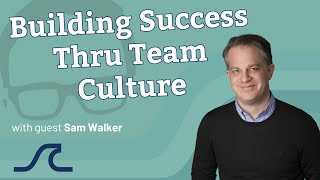
A 2025 YouTube interview in which Bill Gallagher talks with Sam Walker (author of The Captain Class) about Walker’s cross-sport research into what sustains dynasty-level team performance. Walker argues that a reluctant, behind-the-scenes captain—rarely the obvious superstar—recurrently appears as the vital factor in long-term dominance. They illustrate with case studies (Burns Park Bombers, Chicago Bulls—Bill Cartwright’s role, 2004 Red Sox/Jason Varitek, New Zealand All Blacks, Cuban women’s volleyball, Chelsea under Tuchel), discuss leadership traits (servant-but-assertive, invisible labor, testing boundaries), and promote Walker’s keynote at Scaling Up Live (June 11–12, Denver).
Chapters
Foreign. Yeah. There we are again. So what can we learn from the highest performing teams ever? That's the subject of our show today. And I'm not going to hide it, tease it too much for you. We're talking with the author of the Captain Class fantastic book and keynote speaker at our upcoming event in the middle of the year. And so we're going to get into that. Just a minute. Hey again, everybody, my name is Bill Gallagher, Scaling coach and host of the Scaling up podcast here. The Scaling Up Business podcast comes to you every week, more than 600 episodes. Wherever you're getting right now, turn on your notifications, like it, subscribe, all that kind of thing. You know the drill. That doesn't help too much to say it, but maybe it's good to remind you. And also you can go to our website, scalingcoach.com where we have monthly workshops on Scaling up and our coaching programs, things like that. You'll find all that there. We'll talk in a minute with Sam about his program. So listen, the book. Sam Walker is a really accomplished sports journalist and he was the head of global sports editor for Wall Street Journal and their sports coverage and he wrote this book, the Captain Class. And Captain Class is a fantastic book talking about what are the insights, you know, not just across one sport but many sports across the world over time. And he identified some things that were really essential to leadership and of course, learning performance from sports and applying to business is a thing we know and love. So let's bring Sam Walker on. Sam, welcome to show.
Phil, it's great to be with you.
Glad to have you on the show. Thanks for joining us today. So as I said before, Sam is a keynote speaker for our upcoming scaling up live 6-11-12 at the Denver center for the Performing Arts. And we'll throw that up later and we'll put the link in the show notes and that kind of thing and then we'll put also his everything else in. But the super best selling book, the Captain Class is super useful one for us and we're delighted to have him both as a keynote speaker at that event but also as a guest on our show today. So again, welcome to show.
Thanks, Bill. It's great. It's great. I love the show.
Thanks so much. So let's just get into maybe a little bit of the beginning. So you've looked at sports across a whole range, right? Of categories, that kind of thing. Not just like football or whatever, American football or soccer, international football, the rest of the world. If you had to put together Your, like, fantasy dinner party, right? Who's sitting around the table at that party? You know, who are the cricket team captains and the rugby team captains and who are the people that you've got?
Wow, it's so hard. I mean, I got to interact with so many incredible leaders. You know, I think, going back in time, I'd love to. Dwight Eisenhower is a big hero of mine in his. His leadership style. He would definitely be seated at the table. I'd love to learn more about his leadership. In terms of the book. You know, there. There are people like Carlos Puyol, the Barcelona captain, who's a fantastic guy. Buck Shelford, the captain of the New Zealand all blacks in the 1980s, would be fun to have at that table. There's. It's. It's tough to narrow it down. Bill Russell, who's probably, I think, the greatest captain in the history of sports, the former Boston Celtics captain, who won 11 NBA titles in 13 seasons and was a fascinating, complicated guy, would be. Would be at my table. I think also, one of my favorite captains from the book is Carla Overbeck, who is the captain of the U.S. women's soccer team in 1999. And no one remembers her at all. They remember Mia Hamm and Julie Foudy and Brandy Chastain, all these others. But she was really the heart and soul, and she's an incredible person and really fun in a sort of smaller setting. So. Yeah. And then I could go on and on. I mean, if you want to get into history, I would. I would want to get Genghis Khan at the table, too. You know, I think, you know, if I could, I don't know what that would be like.
Off.
Right off of my head. Right. It's like if I didn't. If I drop. Used the wrong fork. But, you know, he's another person. I think throughout history, I've been fascinated.
With Genghis that if you used a fork, he might be a fingers guy.
Right? Yeah, right. If I.
Right.
If I drank from a cup, then it's like, off of your head.
Beat Euros trick. Yeah. I love that table. And, you know, I think it's interesting in there. You talk about having Pujol table. We all know Messi, though, way more than Puyol. Right. Like, and pick any sort of sport or category. There's a lot of times there's a hammer Chastain, that we know before we know the captain or we know the person leading behind the scenes sometimes.
That was one of the fascinating things about this process. I mean, to give You a little context. I covered sports for the Wall Street Journal. I was a columnist for years and I had a very weird job and I didn't have a beat. I didn't cover one particular sport or kind of team. So all I really saw with any regularity were these major championships. So I got to interact with all these great teams. Teams are at the height of their power, you know, championship caliber teams. And I started to just get very curious about what was it that they had in comm. What was it that made them so, so great. And so what I, when I started the whole process, I, I thought, okay, I'm going to try to isolate the greatest teams in the history of sports. And I quickly realized that's a huge job. And I had to really look at every sport everywhere in the world. So there were, you know, 37 different categories of sports all over the world since the 1880s. That was the pool that I used to try to identify the most elite teams of all time. So after doing all of that work, then the question was, I know, right? It was this mother of all spreadsheets. I mean, it crashed my computer five times. But, but basically what. When I had to. That was hard enough just to get that list together. But then it was, what is it? What's the thing? And, and it wasn't. I didn't think leadership, I didn't think player leadership. I thought, you know, maybe it was talent, tactics, coaching, money and resources. All these other things I thought would be the, the unifying thing that they all had in common. And, and at the end of the day, you know, it really was clear that it was the captains. It was, these teams are winning streaks overlapped almost very closely, if not precisely with the arrival and departure of this one player who was always the leader of the team or the captain. So I kind of backed into this whole concept of leadership being the key to elite sustained performance.
That's a brilliant, like, deductive insight. There you go, looking for something, end up with something else. And it's fantastic to see that kind of thing emerge. And, and I think we, when we're leading organizations, I think, and when we're not winning, we really would like anyone or anything else to be to blame and not to look in the mirror. Right. But that is really the place to look. I always like to say you deserve the company you have, and you have the company you deserve. Right. And studying these leaders is a fascinating thing. I've had a chance to see some of these teams in these moments. You know, I can remember seeing Bulls games, Bulls, Pistons, in fact, in Chicago in the late 80s. And that was a special time to see, you know.
Yeah, there was a little window there in the, in the early 90s, really, when I was a sports writer through kind of through the 90s, where there are a lot of these great teams. And the Bulls were a great example of that. The Bulls are one of the teams that I, I talk about a lot and people ask me about a lot because they're not really on my list of the top 17 teams of all time. There were a couple of other NBA teams that kind of met the criteria more than the Bulls did. But the interesting thing about them is everyone thinks Michael Jordan was the leader and the driver of that team. But to my incredible surprise, it wasn't Jordan. It was Bill Cartwright, you know, who is this kind of somewhat obscure figure on that team. And they couldn't win anything until Cartwright showed up. And Cartwright was sort of the glue behind the scenes. That's the thing. A lot, A lot of these captains, I mean, you say you remember Messi, you remember Mia Ham, you remember all the stars. But to my great shock, it wasn't the superstars. Right. These leaders were often, were very rarely stars. You could be a star and do this, but the, the work of leadership in a team setting is so hard and takes so much of your time and focus and so focused on other people. It's very hard to be an elite performer and pull yourself away to prepare how you need to prepare in order to, to lead in the way that you need to lead a team, to really sustain greatness. So that was shocking. And, and you know, Bill Cartwright was another example of someone who will never get the credit for what he did, but really the work he did quietly behind the scenes to bring that team together and get them to play as a team was really the key. And Michael Jordan never had the time or the bandwidth or really the attitude to do that. So it's a very important leader in some ways. But without Cartwright, without that central captain figure handling everything, being that that person that's going to run into the burning building if no one else will, you know, teams aren't able to. To sustain excellence for very long.
Go back, talk to us about the Burns Park Bombers.
Wow. Way deep into the, into the book there. Yeah, so that. That was the only great team I'd been on, you know, and it was. I was 12 and I don't know what it was, but it was. We just couldn't lose and we'd never been good before. We never good after that. And that stuck with me. It was that feeling. And I asked people if they've ever been on a great team. And it's hard to describe. I mean, you can't really articulate what it feels like when you're on a team that's so much stronger as a collective, but that's what it felt like. And I had that early experience, kind of formative experience, of having that sense of being part of something bigger than yourself and something that was capable beyond what you thought you were capable of. And it stuck with me. And I think I missed that and I wanted that. So when I started seeing these teams that had that great quality, it just. It's always been enormously attractive to me. It's something I've always sought out. So, you know, we tend to write about things as authors or, you know, our deepest sort of psychological needs and contradictions come out. And for me, it was that idea of being part of a great collective. So that, that really set me on this course. And I think, you know, having been exposed to all these great teams, Barcelona and the Bulls and the Patriots and the Yankees in the late 1990s, great teams, I really started to. To. To feel like I had to try to figure it out and try to come to some understanding of the DNA of a great team, you know, and what is it that separates these elite, unbelievable teams from everybody else?
Well, let me share one myself, because I think there's a contrasting lesson. So our kids played soccer like every American kid plays, you know, soccer, football early on. And my daughter's team went undefeated and their coach was just elated, right? And you know, they played their whole season, didn't lose a single game. They were fantastic. It looked great. And every single kid quit, really. And nobody continued on, to my knowledge. I think maybe one or two did, but the vast majority of the kids left. Our daughter was like, never wanted any part of any of it ever again. And I think that sometimes a leader can push something for a moment of performance, right? So he had one season that in, and given his upbringing and background, he was like, this is amazing. Like, I can't believe I did this. Like, oh, you know, and I'm like, yeah, your team's miserable and they're all going to quit and you're never going to get another season, right? And they're moving on. And you're forgetting these are like seven year olds. So, like, what do you do? I think sometimes a leader will push a team so hard, right? And they won't get Any sustained performance. Right. Which wouldn't show up on your. On your list then either. Right.
That's what I say a lot when I work with. With especially companies, but sports teams, military, whatever it is, that's. That's the key thing to remember. It's like there are a million paths that can get you to some level of excellence, you know, and there are a million styles of leadership. They're combinations of talent, you know, tactics, strategy, resources. There are a million ways to achieve something. Once you know you can win a championship, once you can win it, maybe two, you know, with. With just some. Any formula. But what I really want to study and one of the things I did when I was looking at these teams, you know, I had, as I said, I had thousands of winning. Every winning team in the history of sports, basically. And I had to narrow it down to the best of the best. And I got pretty far down there. Maybe 140 teams I thought were really kind of in the conversation. But the. That really weeded it down to a manageable number to the 17 was I realized that I didn't want to study teams that had one great season or two that had. That just kind of all. Everything broke right for them and. And they won. I wanted to study teams that had continued to win, that had a culture of winning, of excellence that would survive. Even some people came and went. So I set the. The. The floor at 4 years, 4 years minimum of. Of global domination in the sport. And that really narrowed it down a lot. So this formula, I talk about this style of leadership in all my travels, and I'm not just tooting my horn. In all my travels, everywhere, I've worked with a lot of elite teams. I really focus on dynasties wherever I can. I have never seen a team that sustained excellence, sustained it for a long time that did not have a leadership model like this. I really honestly believe there's only one way to lead a dynasty through a culture of winning. And it's this pattern that I can see over and over again, the one that I've described in the book, it's a slightly counterintuitive way of leading. It's not the Hollywood image of what a leader is, but every time, I mean, if you want to sustain it, you know, so my mantra going in when I work with teams is let's. You're building, you're trying to win something, but let's try to build it so that it can become this. This dynasty. Like, let's not try to just, you know, pull the lever and hit Triple cherries. Right. Like, let's try to build something that will actually sustain a. A winning culture. And that's been the sort of challenge for me after writing the book, is how you actually intentionally do that. But again, it's not. There are a million ways to have. To have a great year, have an amazing season.
Right, Right.
But if you want to sustain it, there's really. This is the model. This is a leadership model.
Well, before we move on from the earlier the Bulls. You spent time with the Bulls. What did you notice there? What did you.
So I've spent time with that team before I started working on the book. When I was a sports writer, I was. I was covering them. And, you know, I. One of the fascinating things to me that I work on a lot now is, you know, I study captains, and I think to have a great team, you have to have the central captain figure, someone who everyone's going to look to in a crisis and model their behavior. That one person everyone knows is going to handle that thing if no one else will handle it. But what I've also learned is that teams are so complex and big, that there's so many different leadership roles that need to be played inside a team. There are 18 of them, and I have a chart, and this is kind of the basis of my research, using personality assessments to sort of model people's leadership styles and what they're probably good at and what might be hard for them. And there are 18 different things, so no one can do it. All right? So the idea that there's a perfect leader, anyone can handle all the responsibilities is. Is just silly. And that's something I kind of noticed with the Bulls, because Michael Jordan provided a lot of leadership on that team. I mean, he was. He was fire. He would push people. He would. He would uphold standards. He would. You know, he showed incredible effort and contagious effort, but he wasn't really doing the tough interpersonal communication that needed to be done in order to bring people along. And he also alienated people.
Right.
I mean, he was pretty hard on his teammates.
Right.
I mean, he was. Everyone was afraid of him.
Right.
So there was a lot that he couldn't do. And I. I always wondered when I was with that team, you know, who is actually doing all of that? Like, who is. Because. Because he was such a force and such a singular force. I was wondering, you know, was it Steve Kerr? Was it who was actually, you know, doing all those at Phil Jackson, like, who is actually kind of bringing people together and holding that collective together? So that was always a question that I had when I was with that team. What I didn't know at the time was that Bill Cartwright was that quiet sort of person behind the scenes and was doing all the difficult leadership work and got to know him a little bit during this process and really got a great sense of how he works. And the fact that he never wanted any attention, didn't care if he got any attention. That's one of the things that was so frustrating about writing this book was these captains, by definition, are not people who want to be in the spotlight. They don't want the credit. All they care about is the team outcome, the collective outcome. So they're not very. They're not exactly dying to talk about themselves, you know, and it's very hard to. I had to get a lot of information from everyone around them as opposed to from the captains themselves.
Yeah, I. And when I think about, like, the best leadership, of course we. We hear about it. We've heard the phrase before, servant leadership. Right. I serve the team, I serve the mission. That's what I'm all about. Not my own cult of personality. And people feel doesn't. And I might push people really hard, but not for me and for what I want, but for who the team could be.
Yeah, no, I like the term servant leadership, but I'm a little. I think. I think there's more to it than that. I mean, you really have to. These captains had a really strong spine, you know, and they. They would. They wouldn't hesitate to have little conflicts about anything if they thought it was getting the way of the team.
And that was whether with.
With people or with the entire team. They had the ability to dissent and to push back against any bad idea. Even if everyone thought it was a good idea, even if even it was already almost a fet accompli, they would not hesitate to push back and to create, to. To introduce conflict. So sometimes people think servant. You would never introduce conflict into a team. Great leaders are always willing to do that. Yeah.
Servant implies. I don't think it's inherent, but it implies often a passivity and a subservience to the mission of the team. But you're talking here about the willingness to go right at a conflict or a problem without flinching in service of a greater kind of a thing. I'm just back from New Zealand. Why don't you talk to us about the All Blacks?
So I could have written a book just about the All Blacks. In fact, there were times where I was like, I just Want to write about this one team? Yeah, nothing animates me more than that team. I just think it's fascinating. So this is. You don't know anything about this team. It's the national rugby team of New Zealand. They're called the All Blacks, wear All Black uniforms. And they started playing, I think in the 1870s or 1880s. Right. And new Zealand was all basically a new country at that point. Point. And they. This is a country of 4 million people.
Europeans wasn't.
Yeah, right. Well, I mean, it was. Right. The Europeans came.
Right, Right.
The interesting thing about New Zealand is so much of the history of the country is wrapped up in, in the All Blacks because, yeah, you know, the Mai, you know, the native people in, in, in. In that area were the greatest warrior tribe of all time. I mean, feared by everyone, really. The greatest. You know, fighting, sort of. Yeah. Unbelievable. And they were never conquered. So this wasn't a colonial thing. The Europeans came and were like living there at the mercy of the Maori. Like, you guys are kind of useful, so we'll keep you. But this was really not a colonial thing. It was more a merger of cultures. And the first thing this country did together, this unified country of very different people, was rugby. It was the one thing they had in common. And so the whole culture of New Zealand is, really comes a lot from, from the rugby, that. Rugby collaboration and some of the traditions, the Maori traditions, like the haka, this, this tribal dance they do before every man. All Blacks before every match. And it kind of intimidates the opponents, but it also brings them into perfect alignment and warrior unity. And it's, it's a, I think, a big part of why they're so great. You have to imagine this is, this is a country of 4 million people, right? It's about the size of metro Seattle. And they have dominated the world for 150 years. At a global sport, I mean, against countries with 50 times the population, it's just unbelievable. There were three All Blacks teams that were in my final, you know, group of the top two tiers of teams. And it was hard to. There were two that actually, I think are ranked as the greatest of all time and for different reasons. It's amazing culture and, and it's just. It's the greatest sporting culture ever seen. One of the greatest team, probably the greatest team culture. And the way that it's so strongly repeats itself and it's, it's taken on this momentum where, where it's just. Everyone understands what it's about and everyone kind of Falls in line. And it's really something. I think we should have electrodes and, you know, and, like, monitors and EKGs on these guys when they're out playing. Because it's just something we should all study if we were interested in creating better teams.
Yeah, it's fantastic. And you could see it and feel it anywhere you go in the country. I've only been to the country once. I've been aware of the team forever. And it's got one of those super, super enduring legacies, even if you don't know a whole lot about it. And we start to see that. That thing, you know, they're known for their haka. We see that thing like, you know, you don't. People are like, oh, yeah. The team that does that thing. It's. Even if it's very background for you, it's. It's got a little space in your brain.
Yeah, no, it's amazing. Did you get a chance to see any. An All Blacks match or anything? It's too bad. Yeah.
Next time, maybe. One of the next things. I was there to do some work, and then I did some quick sort of driving around. A little too much coverage of too much of the country in one week, but fascinating place. More sheep there than people, for sure.
Sure.
So let's talk about maybe a transformation then. You know, a team that is winning, sustaining performance for 100 years is one thing, and we all wish we had that in our business. But what about a team that wasn't. That changed You. You write about the Red Sox.
Yeah, the Red Sox were huge. For me, I think the Red Sox in 2004 were really the team that. That really propelled me to actually start doing this. And it was fascinating because that was a team that, I mean, had a lot of talent, people had high expectations. And I was actually writing my first book, which was unrelated to this, and I spent a lot of time with that team, more time than I'd spent with any team before. And this is 2004. I think the curse was still alive. It was 88. Nine years or something since they traded Babe Ruth and they hadn't won a. A World Series. And people thought the franchise was really cursed. And, you know, the team. This was the best team they'd had in a long time. But by August, they were nine games back. The Yankees, they were basically written off. I mean, it was basically this. This is just not gonna work. And they traded. They traded Omar Garcia Para. They did some other things that. That sort of were. Were interesting around that time, but all of A sudden they just, they just clicked. They just became. It just. I, I watched this transition from the clubhouse. They were a very fun, kind of loose. They call themselves the idiots. They were a fun place to be, but it, they didn't feel serious. They didn't feel. It's like they had that seriousness of purpose that great teams have. But all of that just changed. I mean it changed almost overnight and it was just, it was completely different vibe and, and they were still fun and loose, but there was a sense of mission, a sense of achievement and they were just winning, they were beating people really profoundly. You know, throughout that whole period. This is the team that goes on to, to go into the. Squeak, into the playoffs and they get to the, to the American League Championship series. They go down three to nothing against the Yankees. They have lost three games in a row. No team's ever come back from 3, 0. And they went back and won four straight. And then they went to the World Series, Won the World Series, broke the curse. Unforgettable team. You know, no one will ever forget that in Boston. So I was witness to this and just that trend, that moment of transformation and it took me so long to unravel what exactly had happened. But you know, ultimately, you know, Jason Veritek, who was the catcher, was really the heart and soul of that team. But now he had Nomar Garcia para, who was long tenured superstar. And Garcia Parro was unhappy because they talked about trading him. He was a little mopey. He was kind of like sucking the life out of the locker room in a way. And Veritech and Gar Swear had been college teammates, so Veritech kind of deferred to him, you know, in a way. But as soon as he was out of the picture, suddenly here's our captain, our leader, a quiet strong guy who does all the work behind us. That Jason Vertek became that guy. And it was just amazing to watch the transformation of the way the team settled in, just relaxed. Everyone settled into the roles so they could do their jobs knowing that, that everything that had to be done from a leadership perspective would be taken care of. And that that was again, I've seen this over and over again, this transformation. And one of my favorites was Chelsea, the Premier League Soccer team a few years ago. So Thomas Tuchel was, came in as the manager. The team was really struggling. He's, he'd read my book. He sort of applied a lot of the principles to his captain selections. The first, he made a few small adjustments to the lineup, including bringing Their captain back and having him play Cesar Aspilaqueta, have him come in, play more, and it was over. It was overnight. I mean, suddenly they just were playing and they went. They. I think they won 23 straight without. 23 straight without losing. And they went on to win the Champions League that year, you know, from a place of just everyone had written them off. So. These transformations can happen so fast. If you put the right person in charge, it's just amazing how everything will organize around that person and how you can immediately change a culture and, and, and become the best expression of what you can be. And, and it blows me away. I mean, I never thought it would be that obvious. It's not easy because you have to find the right person. It's hard work for them. But I'm just constantly amazed at how quickly this can happen.
You know, one of the things I hear through these stories is the leader is not always the defining transformational leader is not always the. The obvious one. He's not always a star player, not always the titled person, not as sometimes emerges from behind and is not at all clear. But they're the glue that rallies, that pulls that pressures, that makes something happen.
Exactly. I mean, I have to say, you can be a superstar and a great leader. I mean, Tom Brady is one of my favorite examples. I mean, Tom Brady just worked not only incessantly on his, on, on his craft, but also behind the scenes, like making sure he was doing all that leadership work. And it was just enormously hard to do it. Most of these cab. The best way to do it is to be someone who's not the face of the effort, not the star. If you're the superstar, you know, you kind of have to be a little selfish. You know, you have to go do whatever it is that you do to prepare to perform at that level. The best way you can help the team is to perform at your highest level, because no one else can. Can achieve that. So that's what you need to be doing, able to do in a way. You need to be left alone, knowing that you don't have to worry that someone's not taking care of the leadership. The number one mistake people make is, is going to a team that's high performing. It needs a new manager and saying, oh, let's take the person with the best numbers, the best performance, the obvious person who commands the most attention or as the most eloquent or. And. And making that person the cap person who looks like they should be the cap. The obvious person that is rarely the right decision. In fact, the best person I tell people, go and look at the team and say, who's the last person anyone ever think would be the captain of this team? Like, start there. It's probably not that particular person, you know, over by the copier sniffing glue. It's not. It's not. Probably not that person. Right. But. But you're closer to the right answer if you go in that direction. Great leaders are not obvious. They're rarely obvious. They're the people who do the hard, invisible work. Behind the scenes means, in a way, if you're a great leader, you're doing the things you will never get credit for. There's things as a leader you'll never get credit for. No one will ever know you did it. If you're a great leader, you do it anyway. You know, if you're not, you're. You're probably less inclined to do it. And there's also this, this, this idea of reluctance, you know, which is so important, so great. These great elite leaders are reluctant to take these jobs. So everyone thinks, oh, if you're not standing with your hand up saying, pick me, I want to be the leader, that you lack the confidence or, you know, to do the job, and so you. Disqualified. That is actually not a good sign. The reluctance should be your approach. Because a great leader understands a couple of things. One, the prestige of the getting the job is going to last about three days, and then it's just going to be hard work. Right? It's going to be really hard. So the calculus of a great leader is how hard will it be for me to actually do this job versus how brutal will it be for me to sit here and watch somebody else screw it up?
Right.
And usually the reason they take the leadership roles because they cannot bear to watch somebody do it badly. You understand what leadership is? You know, that's an incredible burden. It takes so much of you, your time and effort and focus and emotional labor, and it's going to take so much of your effort in order to do it well.
Yeah.
So anyway, that's.
Yeah, you know, I hear that. I'm reminded of, like, looking back on my career, I certainly wouldn't put myself in the league with those folks, but I can see moments where I did some of those things. And I remember in particular, in the middle of a previous recession and I was leading a company and I had this thought, like, there's a way through this. That's fantastic. That's a breakout. Companies do this. I just don't know what it is for me right now. And what I'd really love is to get a whole bunch of CEOs together and like talk about this and help each other and solve it. And I belong to this group, but I want to come together in a particular kind of an event to make this happen. So I'm like, I'm too busy to pull that off, but I could really use that. And then it occurred to me, you know what? Other people could use that. And I had a coach at the time who was working on my leadership skill, who was helping me with our strategy, that kind of thing. And he'd been coaching, coaching me about this kind of like invisible, behind the scenes leadership. And so I thought about it. I'm like, well, who else wants to make this happen? I know all of us CEOs want something like this, whether we realize it or not right now, but who wants to make it? Who wants to be the cause of it? And I identified this guy. I'm like, oh, I know this guy. And he's like trying to make his way and make a name and show up in this organization. And so, so I took him aside. The next time I saw him, I said, I've been thinking, this is a weird time we're in and it would be really great if we could come together in a thing like this. And he was like, oh, that's a fantastic idea. Oh my God, I'm so glad you said that.
You know what?
I'm going to do that. I'm going to put that thing together. And it wasn't that much longer that I was standing in a room with 75 CEOs across a range of industries and this event was going on. This guy was doing the whole thing and like leading it and whatever. And now his, like, stock had risen in the wider organization because he put together this thing. And it turned out it like helped a whole bunch of people, right? Like, huge. And, and both then and later he talked to me. He told me about how great it was and how cool it was that he'd had this brilliant idea to put this event together. And he completely forgot that I'm the one that suggested it to him, you know, And I had like a half a beat of like, like, dude, like, I gave you that nugget, you know, like, thank me for that, right? But I, like, I, I didn't let it show on my face and I just buttoned it up and I'm like, that I did something cool there, I should remember and do that again. And he will like, Take that and do more stuff. And I know I'm the cause of that and that's enough. And you don't need to know his name or the group or anything like that. Like, you know, but there's a, like a lesson in there for all of us. Are you willing to cause something without the credit and take the satisfaction quietly, internally?
You know, that's it. That's the golden thing. And it's the one thing I've not been able to isolate through personality assessments or anything. It's just, you either have it or you don't, which is that ability to say, my ego is genuinely tied to the outcome for the collective and I don't care how I'm perceived or what, what role or how much credit I get, as long as the collective succeeds. And that's, that's the golden thing. If you find people who have that quality, they're really valuable and undervalued in the world. I think, you know, there's a certain.
Amount of ego that makes you want to even try in the first place, right? There's a, there's an aspect or element of ego that produces any result. Absent any ego, you know, you just stand around marveling at the sky, right? But, but a little bit. And then of course too much creates some real problems. But this like the right amount, the Goldilocks amount right there. It is such a, such a cool thing. Let's take some other, while we still have some time, some other less obvious sports that people don't know. How about a Cuban women's volleyball team?
So this is one, this is one of the things about this process, like I didn't know idea what I was going to find. And so I look at all these teams, you know, throughout history, and I have the winning streaks and I start winnowing them down. And I discover that the greatest Olympic team of all time, by far, it's not even close, is the Cuban women's volleyball team. From 1990 to about 2000, a 10 year stretch. In 10 years, they did not lose a match of any consequence. This team, right, did not lose anything. And, and this is a country from a, this is from a tiny country, 9 million people, you know, poor, politically repressed, no great volleyball tradition. You know, it kind of came out of nowhere and they were just unbeatable. And you know, a lot of their players, they didn't have a big talent pool, so their players were undersized. I mean, they weren't even like as the normal size of like, you know, what you would think Women's volleyball players were. And they were just unbelievable. And. And so much of what I discovered is that teams like that, I mean, they didn't. They wouldn't travel much. They were rarely went abroad, you know, because they're in Cuba. They were in their own sort of stewing in their own juices and that. And a lot of times, that's where this elite greatness comes from, because they have to make do with who they have. And they just come up with this formula that suddenly is just unstoppable and. And better than what everyone else is doing. So it can go in the opposite way. It could be worse, but in this case. So there are a couple things about that team. One is I talked to. I was talking to an American coach before I went down there to Cuba to talk to the team, and I said, what about the Cubans? What was it about the Cubans? And he said, you know, I once I was at a tournament and I wanted to. I wanted to see how they practice, because I feel like, how do they organize practice? I mean, they're so good. It. And he's like, I came in with all my notes, you know, and I'm ready. Like, how much they work on setting, how much they work on, how much do they. You know, what kind of conditioning do they do? Everything. And he. And he sneaks into the. To the arena to watch them practice. And he said, you know, what happened? He said, they were there for more than three hours, and all they did was hit the ball as hard as they could over and over and over again, just hitting the ball as hard. It's the most aggressive. They did no drills. They did nothing. It was just. Just how hard can you hit the ball? And that was it. And so they were kind of a different group. Now the leader was this one, Maria Louise, the captain, who's an extraordinary person and one of the greatest. What I use them for, they're great example of many great leadership qualities. But hers was one of the most difficult for me to understand, which was the willingness to test the rules. And it took me a long time to figure this out. It's not about. It's not that cheaters prosper. It's that when you're in a sports context, the rules are sort of gray. You have referees there for a reason, because you have to interpret things on the spot. They're not like the laws of that we live in. In a polite society, you have to be willing to. A great captain. What I realized is willing to go right to the edge of what's allowable. And they'll study the rules and the officials, and they'll go right to the edge of what they can get away with. And they're very good at getting away with it.
It.
And sometimes publicly they'll be accused of, you know, being bad sports or being, you know, having sort of character deficiencies, but they'll go right to that limit because they don't care how they're perceived. All they care about is the team winning. So we have to be willing to, as a leader, to push the. To the. To the absolute boundary of what is acceptable or allowable in order to help your team. And that's the mentality of a great leader. And in the 1996 Olympics, I won't tell the story, but it's one of my favorite chapters in the book, which is one. The sort of. What they did to the Brazilian team in order to beat the Brazilian team at the Olympics in 1996. And it was a really fascinating sports strategy, but it was also very controversial. There was a massive fight after the game, and the Atlanta Police had to break. It was a mess. Right. But. But looking at her thinking and why she did what she did and why that team approached that game the way they did, it's really a way rare window into the. To the mind of a great elite leader and what they're willing to do to help the collective and. And even when it blows back on them personally. So they were a fascinating team. And, you know, Cuba's never really done anything in volleyball since then. I mean, you know, it's. It was just this one moment where they were just absolutely unstoppable.
Well, that's a. A couple years of moment, right? Like.
Yeah, yeah. Ten years.
Yeah. Let me reference something I didn't warn you about Ted Lasso. When you think about all the real lessons you learned and you get a comical fictional character, what do you make of a show like that and those ideas?
I loved it. I thought it was great. I thought it was so funny because what I've learned and I've worked with some Premier League teams, I've done a lot with. With. With sports in the uk, and they are very. They have very kind of backwards ideas about captains, what captains should be. So the fact that that show was set in that setting made it so much better because that. That whole style of coaching is completely foreign to the. To that. To that audience, but I thought it was great. And actually Brendan, who's the coach? Beard. I got to know him. I used to work with the US Men's soccer team, and he was a big supporter. So, you know, we talked a lot about these concepts. I don't know how much that. That informed, you know, the writing of the show, but I thought it was terrific. I just. I thought it was the thing I loved about it. I mean, I don't. You know, I think they didn't. They did a better job with the girl of a coach than they did the role of a captain. I thought that maybe underplayed what a captain needs to do inside a team, but so much of it was about that thing. You know, it's. That's the thing I say, you know, at some point, you ha. You know, you have the talent. If you have some success as a team, that's where most people mess up. You know, when you're. When you're. You're trying to build a great team and you. You know that you have the. The ingredients because you've won, you've done something, you know, to show that you have the talent, everything changes. And that's what people understand. And I think with scaling, that's an important thing, because when you're. When you have the talent, when you've achieved some level of success, you. You have to stop right there and say, okay, we're not building anymore. Let's go back and understand exactly why we got there and who is actually driving this and who is performing what roles and why this worked worked at this moment. And so it's going back and doing forensics and saying, okay, this is who we are. This is our culture. This is what we're about. And really just buying into that and committing to that culture, to that model that got you there, and being ruthless in a very short amount of time about getting rid of people that don't fit, you know, changing your tactics, changing your practice, everything around that idea of who you are. And that's what I think Ted Lasso really got at. It's like, who are we? You know, and how do we relate to each other more effectively? And it's not about, you know, tactics are important, but really what comes down to, like, how much do we want to play for each other? You know, how much do we care? How committed are we to an identity? How willing are we to transform ourselves to fit that identity? And when you have a team, that's all, you know, coalescing around an idea like that, you know, they're gonna. They're gonna overperform, you know, And I think that kind of came through really, really strongly. And I thought I Thought it was, you know, entertaining show on top of it. But. But yeah, no, I was very happy with that. I thought it was a step in the right direction.
Yeah, you know, that the role of American style, optimistic coach, the sort of Ned Flanders of coaching that he plays there. But is, is amusing like in a, in a UK culture. But, but I think also they highlight throughout, like you could see both key players and captains being, being, bringing out the best in the team, but also getting in the way of the team's success. So they show that it's just not in the foreground in the same way that, that, that Ted.
Yeah, that's. It's so funny. One of the things that I do when I work with, with, with professional sports teams is, and anyone really is it's the hardest thing to understand and the hardest thing to commit to, which is what I've learned is that, you know, a great captain I had has the traits that I describe in the book. But, but the best captains are also really the embodiment of the culture of the team. The person who is the, personifies who we are and what we're about. And they're also the person who never hesitates to enforce, to defend, to teach, to protect that culture. So there's an element of the, the captain reflecting the, the collective. And so, you know, when I, when I work with these teams, I say, you know, first of all, you have to, you have to really understand who you are before you can understand who your leader should be. And, you know, throughout that show, I thought there were, there were good examples too, of what happens when you have a toxic star, you know, someone who is a toxic superstar. So the thing I always say, which is really hard to do and easy to say, is that if you want to have a great team, you really have to hire. You have to onboard people for culture over competence. You have to say, if someone doesn't fit your culture, you can't bring them in, no matter how talented they are, because you bring in someone who's a huge talent, you know, you wind up and they don't fit your culture, you're stuck because you can't bench them because they're so important. But they're also kind of destroying that sense of identity that you have.
You know, a really successful company I was advising for some time had hired a star player like that. It's often in sales, as it was in this case. And that person, though, didn't have the company values and was. Didn't fit the culture well and ended up being a Huge problem. They had to let him go. I, in a prior company, I hired a rock star who blew out all sales records really rapidly and then created several years of mess that, that really eroded company value because, you know, not because they meant to be evil, but did harm to the business because they sold from a fundamentally different place in a very different way. Like we see it again and again, star performers, whether they be in sales or in some other realm, can create a real problem if they aren't stars that are there clearly aligned with the culture and the values of the company as a whole. Right.
That's, it's absolutely true. And you know, what I saw in the book was all these great teams. Like they always had that unselfish, team oriented superstar. You know, it's Steph Curry, you know, and the Golden State warriors. It's, it's Pele, you know, it's Lionel Messi, you know, all these teams would have that one person who was just a talent above all. But when it came time to be in a team environment, they had no problem, you know, just following the rules, following the leaders, you know, doing what they could to sort of help as they could. That's it. I mean, I just think taking someone who's a big talent that's not team oriented is, I mean, you may have, you may win once, you want to win once, you want to have a great one, great year, you know, you probably can, but it's, you're not going to be able to sustain it over time.
Ah, it's a good place to leave it. So scaling up live. Sam will be keynoting there. June 11 to 12 Denver center for the Performing Arts that's done with the chief executive group. It's going to be a great program. We've got a lot of great other speakers there. You'll get to hear him share more live. You meet him in person, talk and hear the whole thing. He'll share more and other stories as we go through and you'll have a chance to pick his brain and do like that. So we'll put the link there. There it is on the screen but also in the show notes and then Sam's company in the link. So the book, right, the captain. You can go find that wherever, right in the airport as you're checking and grabbing a copy of the book. You can find it on Amazon. You can find it all over the place these days. Fantastic book, great reading and lots of little nuggets to pull in there for yourself and the leaders on your team about how to level up your leadership. And then probably Sam's website too. Buysamwalker.com There it is. Buysamwalker.com Sam, thank you so much for joining us for coming on the show and sharing some of these books, these fantastic stories with us and just being you.
Thanks Bill. I really appreciate it.
It was fun. Thanks again to my friend and mentor, Vern Harnish, who created this whole scaling up framework without whom none of this would have been necessary, and to the folks at Storion who get our show prepared and out the door each week. Christel and Cameron and Seth and team. Thanks Storion guys. Thanks again everyone for watching, for listening. Until next week. Keep scaling it.










