
2022 Housing Market Forecast w/ Nikolas Scoolis
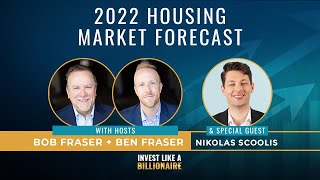
Nicholas Skoulas of Zonda Research forecasts 4-5% home price growth for 2022, driven by pandemic-era relocation demand and a 20% nationwide shortage of buildable lots. Rising construction costs and labor shortages will keep supply tight for years.
Chapters
This is the Invest Like a Billionaire podcast, where we uncover the alternative investments and strategies that billionaires use to grow wealth. The tools and tactics you'll learn from this podcast will make you a better investor and help you build legacy wealth. Join us as we dive into the world of alternative investments, uncover strategies of the ultra-wealthy, discuss economics, and and interview successful investors. All right, guys, we got a really exciting interview for you today. This is with Nicholas Skoulas, and he is the manager of housing economics at Zonda Research. Zonda is the number one provider of housing economic data. And so this is something that's really important for us in the business that we operate in and for our investors. And so we've got some— this is a great interview. There's a lot of good data here. I definitely recommend listening to this, not at fast speed, and probably listen to it a few times to pick up all the nuggets. But he hits on his forecast for the 2022 housing—
where housing prices going, where is the housing market going, and how is it all going to be affected by interest rates and, and oil and Ukraine. So Stay tuned. Super, super, super good data.
I hope you enjoy. Welcome to the Invest Like a Billionaire podcast. I am your co-host Ben Fraser, joined by fellow co-host Bob Fraser. And today we're joined with our guest Nicholas Skoulas. We're really excited to bring him on. He is the manager of housing economics at Zonda. And Nicholas, give us a little bit of your background and what Zonda does.
As I said, I'm the manager of housing economics at Zonda. Zonda is the largest national data provider of housing market data, as well as a consultancy. So we help underwrite developments as well as other projects. And then as well, within the Zonda umbrella, we operate builder.com, which is a big media presence in the space.
Awesome. Yeah, so I've been actually following your all's research for a little while and really love the data you put out. And obviously with some of our strategies in the single-family market, very, very relevant data. And wanted to bring you on to kind of get a sense of where's the housing market at right now. And a lot of investors, you know, have the sense of maybe we're entering bubble territory with some interest rate hikes, you know, how does that affect affordability and the price. So we really want to dive in today. We have a lot of territory to cover. So, um, let's start with kind of the big picture, you know, uh, where do you kind of see, you know, where the single-family residential market has been And we've discussed offline, maybe we're kind of at this transitional point. So where is it kind of headed? Give us some real big picture backdrop here to set the stage.
Yeah, for sure. As you said, this is a bit of a transitional point because we're coming out of about pre-pandemic. We were in a period of strong historical demand. It wasn't pre-rate recession strong, but it was strong enough that it was pushing housing numbers forward. Prices were going up. and we were seeing increases. And then as the pandemic hit, obviously we had that initial pullback with, uh, the uncertainty that came in the first 2 months of the pandemic. We didn't really know how it was going to happen, but then as it became kind of our new normal, we moved into this like supercharged demand phase because it wasn't just the stimulus that was being received and given out, it was also the creation of this new buyer segment which we call relocation buyers because people were given the opportunity to kind of re-evaluate their living options and say, one, what am I looking for in a house? Uh, because the house became basically our everything— our office, gym, schools even. Um, not for me personally, but for many. So there, there's a re-evaluation of, okay, do we need to live in this smaller place, or can we move somewhere that could give us more of the things that we're actively looking for now? So with that creation of the relocation buyer markets that may have been under-demanded became in high demand. And you see these people fleeing and taking the equity that they've accumulated over the last— since maybe 2010 when prices started going back up— and taking that money out and investing it into what is seen as quote-unquote relative affordability. Because maybe a $600,000 home is expensive in one market, but if you're talking about a California homeowner who's seeing average home prices of about $1 million, that looks like chump change. So it's just an easy transition and started fueling demand in places that we've never seen and kind of turned the market into a supercharged housing market, which was kind of intimidating for most people if you didn't have that equity or significant down payments. And now we're moving into an area where rates are starting to increase, which is making affordability for those not fully cash buyers look a little more intimidating because simply rates going from 3%, even though we were sub-3% at the end of last year, to 4%, that's equivalent of a top-line price increase of about 13.5%. So if you pair that with the appreciation we saw over the last 2 years where some markets were appreciating almost 30%, we're getting into an area where there's a lot of ground that's been made up in terms of that demand of what prices or what the value of the home might actually be. So we're in a new period and going forward, kind of navigating that space will be really interesting.
Before we jump into, to going forward, let's just look back for a minute. So what has been the other factors creating this outsized demand? So relocation buyers is one. What about household formation? I've been reading about than millennials and suddenly decided to do household formation and, you know, a little bit late bloomers, but hey, they're getting, they're getting on with it. And, you know, is that a factor?
Of course. Yeah. Millennials are the largest living generation, of course. And we're moving through that stage of where traditionally the households have been forming, getting married, having kids. And that leads to it as a need for more space. I think fundamentally the desire for nesting and homeownership is just inherent. But of course, people value the flexibility that renting brings. So when the opportunity presents itself that homeownership is attainable, people do want to jump on it. I mean, I personally fall in this category. We're looking to buy, but just haven't been able to find the right option. So that, that inherent force. And then as we progress, even now Gen Z is starting to move into the labor force, which will again bring even more demand going forward.
So what is— so those are the two biggest factors you would say, and are there any others, uh, that are, that are really demand creation factors?
Uh, low rates, absolutely. So not only is it just like low rates make the monthly payment more affordable even at a higher price, there's also what we're seeing right now as rates jump. It's counterintuitive, but we're seeing people say, okay, rates are jumping now, I need to lock into homeownership now. To lock in that rate before it gets higher and worse. So if you look at the most recent releases in terms of like the home sales, the home sales are still strong even as the rates jumped basically 60 basis points in 3 weeks.
Right. So, so high demand. And I think, you know, and I'm sure you would agree, but I think it's also, you know, if you look at consumer, consumer statistics right now, You're seeing household net worth has hit an all-time high. It's about 20%— grew 20% since 2020. Literally, household net worth across the United States on average is 20% higher. If you look at household personal income per capita, grew 15% since, since 2000. So we're seeing an extremely healthy consumer, extremely healthy job market. So I think people are feeling flush. They're feeling like they're feeling like they're on top of the world, they're in command of their career, they've got a little bit of cash in the bank and, um, and income coming in, and they're, they're feeling very flush.
Yeah. If you have that kind of nest egg, you feel safer about taking the leap into the investment. But as well as other aspects contributing to that net worth growth, of course, is the stock market has been historically successful, uh, the run-up in equity prior to the pandemic as well. So you just have all these aspects just kind of creating this demand.
Okay. So, so, yeah. So huge demand meets limited supply. And, and as I've been, I've been contending really for about 8 years now that there's a, you know, forget demand, there's a, there's just no supply. And the reason is that if you look in the charts of, you know, new homes built, new, new single-family dwellings being built, It fell off a cliff in the great financial crisis, and it really never recovered. It's basically sitting down right, you know, near nothing. And only recently, only the last— I believe it's about 2 quarters ago— it finally ticked up into a, a, a subnormal range, like, you know, but it's at a historic low, like a, like a 30-year low. And so there's no new homes being built. Well, You know, if you have any kind of population pressure or any kind of demand, it's— you're going to see price increases. And my contention was that, that, you know, you know, in the 2005, before the great financial crisis, you could buy a lot, you could build a home, you could sell it pretty much anywhere in the United States, and you would actually make a profit. Today, that's really not true. You buy a lot, the lots are more expensive, you build on it. While there's been inflation, there's Building materials are expensive, labor is more expensive. You sell it, you're actually going to lose money. And so my contention is that you either need to, you know, reduce the cost of labor and materials, which is never going to happen, or, you know, or prices need to go up. And until there is greater supply in the housing market, you will see pricing pressure because there simply is no new homes being built. While meanwhile, while population is increasing. So, you know, would you agree with that? And You know, yeah, I would.
I would like to preface though, I think the initial underbuilding out of the Great Recession was partially due to the overbuilding in the couple of years before. So there was leftover product that needs to be accounted for. Sure. But then after that stage, there was underbuilding because I think there was kind of a mentality shift or a psychological shift where builders were a lot more nervous or safety first, making sure that this was real. Coming out of the Great Recession. They wanted to make sure demand was real. And then that led to a period of underbuilding, which of course has got us to where we are now. And I think we've created in-house this thing called the Zonda Lot Supply Index, which isolates out vacant develop lots, which are lots that are ready to be built on now. And if you look at just where it was 24 months ago to where it is now, every single market now is completely undersupplied by Double digits, 20%. So we've shifted basically any lots that the builders had prior to the pandemic are gone, developed-wise. And now we're seeing further down the low, uh, line, we call them total upcoming lots. And those have— are the ones that are gone from just basically a grass field to starting to being worked on slowly. And that increase has— that number has increased about 20% from where it was a year over year. So we know builders are responding as fast as they can, but there are issues within supply delays, labor shortages, those things that is kind of pushing that process slower than it typically historically has.
So let me, let me understand this. So I'm not sure I followed all that. So, so your Lots Index was lots that were ready to build and, and you're seeing those. So they've basically— that number has shrunk like crazy.
Yes.
Which would mean that those have been— they've been built on.
They've been absorbed.
Yeah, they've been absorbed.
Okay.
And then you have a further kind of upstream metric that is looking at the new lots being developed and that, and that you're seeing a lot of activity in that, but it's slow. Is that, is that—
Yeah. And so like we talk about like what, like how many months does each stage typically take? And it's, it's obviously slower than normal because of all the shortages you mentioned. But there are lots coming. So builders now are all kind of rapidly trying to fill this demand with lots. But even so, the amount that's increased is only about 200,000 lots on a year-over-year basis.
That's nothing.
Not that many. And yeah, in the long-term demand picture. But so there's lots coming, but is it enough? Doesn't seem like it.
But, and so, so you said every market in the United States is undersupplied right now, you know, roughly by, by 20%. How do you, how do you, how do you drive at that number?
So we have local experts across the country and we basically try to come up with an individualized number. This is for major metros. So a list of about 30 and with the local experts' help, we determine like how long a lot would have to be through the process to be considered absorbed. So we use that metric, that number, and then we look at the months of supply and we adjust that number based on where the activity is taking place. So give more weight to higher demand areas and then use that number relative to that equilibrium number we've derived. And the shift is, is crazy when you look at it nationally. It's just from what was considered like maybe relatively appropriate down to about 80% below equilibrium in some places.
So, so month supply is kind of an easy metric to look at of how much available inventory is there to purchase right now. And the average is somewhere around 6 months. Is that right?
Or that would be equilibrium? Yes. And it fluctuates in the existing side. I think it is about 6. In the new home side, I think it's a little bit lower.
So even though we see the new home construction, new home starts, you know, as published by the, by the— like on the Fed data I look at, we've seen that tick up. You're basically saying it's, it's not going to accelerate any time in the next couple of months. It's it's still gonna be held down because of these upstream issues. We just don't have new lots coming available, being built. So we're likely to see the supply continue to be constrained for the next, you know, what, 6 months, 18 months maybe.
Yeah, we hear from builders all the time and they tell us like, okay, we're building more. And we see it trickling through the data, it's just slow. It's not enough. But the whole process. Yeah, it's not enough. And then also the process is that a lot of builders were selling homes as sales before the homes were even constructed. So sometimes the lots we're seeing and tracking or the starts we're seeing and tracking are already sold. So that doesn't fill the demand void that's still out there.
Yeah. So we are seeing the economics, you know, is your belief that the economics of home building are there? That in, of course, many metro areas, they can actually, the builders can actually afford to build. And profitably build homes and create new supply?
I think builders primarily pass the cost increases on. I think who they're targeting as a buyer is really important going forward. I'm a proponent of right-sizing. I think a lot of builders will pass increases in terms of per square foot basis, maybe rather than top-line basis to keep homeownership attainable. So that means just building smaller homes, charging more on a per square foot rather than building a bigger home, maybe. Because that top line number is more unrealistic for some people, because I think it's how do you engage those entry-level buyers in a lot of markets or, or buyers that are looking for first-time homeownership at whatever price point. And obviously with the rate increases, if you're not an all-cash buyer, you've already experienced double-digit appreciation in 2 months on top of— right, 20%. Okay.
So, so let's shift to obviously a new regime here, right, with interest rates spiking up, you know, primarily because of the inflation metrics, I think, you know, you know, plus the Fed as well. And so obviously that's going to cool demand, right? Because, yeah, affordability, as you, as you point out, drops significantly. So the payments increase. I mean, as you're saying, by 15%, you know, you know, on a, which basically means that you can buy, you know, 85% of the house you could buy before, right?
Exactly, yeah.
So it's definitely gonna cool demand. On the other hand, as we've just said, we're not seeing new supply. So we've got a war here between still, you know, a lack of supply against possibly cooling demand.
And I'd like to make one little interjection there on the demand side, even though we may see an affordability issue with rates increasing, we have seen pretty dramatic wage growth over the past year. So obviously, you know, an increase in housing costs is relative to, you know, overall income coming in. So it may not be as dramatic. Do you guys track that kind of data and see what the impact would be there?
Yeah, well, let's— I want you to break down your affordability metric, 'cause my affordability metrics, and I actually look at, okay, just the interest cost as a percentage of your, of your, of your income, it's actually not that bad. So I'd like to hear how you're measuring affordability.
Yeah. So multiple ways. Yes, we look at just the straight ratio of price to household income, but as well as we calculate on a monthly payment basis. So we take the income data, we then divide it by house, by income, by household. So the number of households in each income bracket. And then we divide it out and actually calculate what the quote unquote affordable line is. That would be assuming 30% of your income to housing, uh, at the rate you're looking at. And then we can calculate an affordability ratio that way. And I think looking backwards, affordability wasn't that bad because of how low rates were. I mean, they were at— I got quoted at a rate at 2.62%, which is historically like nothing, right? But now it's, it's shifting. And I think that's just kind of the picture we have to look at, because while wages are growing, the most wage gains have been at the very bottom. There's kind of been a re— a readjustment of what an acceptable minimum wage is, or what workers are willing to accept that is. So that jump has been the biggest, going from whatever, $10 an hour to $15 an hour, and that's a 50% jump. But obviously that isn't a big driver of homeownership because at that price, at that wage, you're not affording a house really.
Gotcha. So, so you've, you've really broken down the metrics, you know, affordability in a very detailed way to kind of assemble your affordability data. So, yeah, very, very interesting. You know, although again, I would, I would argue, okay, I've been a big traveler in Europe and Asia. And housing is way more expensive in urban areas in Europe and in Asia. And so, you know, so, so how affordable is affordable, you know? And yeah, at what point does—
I'll trust your expertise on that. I would probably pose the question of how is the cost of living in the other aspects of life relative to just housing? But I don't— I'm not— that's, that's out of my realm of knowledge.
Well, talk a little bit about how, you know, affordability crunch in housing, how that impacts maybe, you know, shifts in, in the demand side. I mean, does that push more, more people to rent longer? Does that— yeah, talk about how that impacts the demand side.
Yeah, I think what my gut says is how people almost universally would prefer to own than rent, assuming a level playing field. Like, if you're comparing the house-to-house basis, you'd rather invest in something that could be yours, that it could increase your, your wealth, than not. But if the household you want— you can't afford where you want to live, you can't afford the size of the house you want, you look to rent. And I think we're going to see continued rental gains as people continue to get priced out of houses. Um, our multifamily division is run by a team in Texas And she said this is the hottest multifamily market she's ever seen, right? Ever. And there, there is on the multifamily side, in terms of institutional investment in apartment complexes, there is a very significant amount of supply coming on that way. And that poses some questions about the long-term growth there. But I think if you're an individual owner of single-family rentals, I think you're in a very good position, especially if your location is good. And you're in secondary or tertiary job markets, which may have a lower cost of living than, say, San Francisco, Los Angeles, New York, but still have enough lifestyle to attract those young families and that next generation of workers, I think you're probably in a good position.
Yeah, I mean, we've, we've seen the data on rent growth, right? And I can't remember, I think it was around 15% year over year. I mean, it's insane. So you can talk about, you know, unaffordability of single-family ownership, but you got the same issue on rents.
Yeah.
Increasing. So is it just going to be housing? It's just getting less affordable, you know, and whether you rent or buy.
I think it'll be a pendulum shift. Yeah. I think obviously the nature of the beast is charge what you can get, and eventually the chart, the, the pendulum will shift too far and then it will shift back and we'll kind of settle into whatever the new normal is. But so you can blame—
so yeah, the price to rent ratio. So I mean, are you tracking that? Because it's interesting because, you know, we're— we kind of, you know, pay a lot of attention to the Midwest and the Midwest. It's still quite a bit cheaper to buy than to rent. If you look at PITI, is significantly lower than rent in most cases. And now I think it's reversed on the coasts, you know, in California, New York in particular. But it's not in, in other areas. So do you, do you track that and what are your thoughts there?
Yeah, it's, it is something we look at and that makes it more interesting to like, obviously we work with a lot of home builders about what product you have to deliver to make homeownership more interesting there. We published something on like what areas are the most interesting for entry-level buyers. And a lot of them did come up in the Midwest, Chicago, Cincinnati, uh, Indianapolis, because of the, mix of lifestyle and opportunity, as well as just the mix of younger people there because of that attainability.
Yeah, yeah, it's interesting going back to kind of your, your pendulum, um, idea there. It's, it's interesting to me to see this, you know, as affordability, um, uh, becomes less attainable, you know, one of the ways to solve that— you made the point earlier— is to increase density or, or decrease the square foot, and you increase the price per square foot. But you're also seeing at the same time a pretty big shift especially from the bigger metros on the coast where a lot of net migration is wanting to go to more of the suburban, to more of the sprawling homes. And so maybe there's a drive to that right now, but it kind of will come back as the prices continue to run up where the builders have to go back down to that smaller square foot.
I think you're 100% right because when you're making that decision to leave like, I don't know, say San Francisco, to move somewhere else, you're giving up that lifestyle component. So then when you're comparing prices, say, 2 years ago, and you're looking at, say, okay, I want to move to Phoenix because it's X% cheaper than San Francisco, well, Phoenix has appreciated at a rate maybe 3 times as fast as San Francisco has over that period. So now your trade-off is a much harder conversation. It's like, okay, I'm giving up San Francisco for this, but now Phoenix is only whatever, 50% cheaper rather than 80% cheaper. So there's definitely, definitely a conversation. Yeah.
And then this net— this relocation buyers, who are the net losers in relocation? What, you know, I've kind of read in some articles maybe a year ago about, you know, some of the larger, very expensive metros were net losers. Is that accurate? And, you know, where is that today?
Yeah, at the time, for sure. San Francisco rent, I know especially, has not fully recovered yet. It's still below where it was a year ago. Just speaking anecdotally, from what I see in New York, the demand in New York— this is the pen— New York is the ultimate pendulum of this. It shifted to basically, because the city was so dead, it shifted. Maybe rents were half off, and now rents are maybe 20% above where they were. I think there's always going to be demand of those expensive cities for certain people, and I think they were the net losers of the relocation buyers. But now, okay, we've said this a million times, employers are starting to call back employees to offices is Google set their date in March. They probably set the date like 4 or 5 times now. But if that's real, then there's going to have to be some decisions made. It's, are we going to go back to try to get the wages that we're accustomed to from these big tech hubs, or are we going to be willing to sacrifice that and look at something different?
Yeah, and Tadek, to your point on the relocation buyers, because a lot of these companies went virtual, you know, employees kind of had where do I want to be? And I can work anywhere at this point.
So we saw one of the largest markets, I think, was Boise, you know, Boise, Idaho, right? It's just beautiful mountain town.
So over 30% appreciation there, and it's just crazy.
So people really were— became, you know, kind of lifestyle buyers and were making a change in lifestyle. It's hard for me to see that's going to disappear, especially because, you know, I look at office space, I, I think, yeah, there is return to work, but I think there's going to be a huge you know, huge swath of the workers who continue to be virtual and choose lifestyle locations.
I 100% agree. I mean, I work 100% virtually now, and I can't see myself going back full-time ever. I think once you get that carrot out, it's really hard to attract, especially in a job market where we're at, where it's so hard to get employees in general, even virtual employees. So I think it'll be interesting I think the conversation where it gets tricky for the employees is once there's cost of living adjustments to their wages. If you're working for a tech company that's based out of San Francisco and working that tech company wage, and then you move to Boise, are the— is the tech company going to adjust your wage for cost of living relative? Because then it's a big, a big thing. You're just making less money.
Obviously you're saying cost of living adjustment down, so they'd actually reduce your, your salary.
Yeah, that's a big conversation being had. Really? Big firms have—
has anyone done it yet, or that's just speculative?
Um, I believe Google made pretty big progress in implementing it, but then got a bunch of pushback. Yeah, but it was even— it was even ridiculous. It was for people like, if you were based in New York and you were living in Connecticut, as people did that commute prior, they were adjusting your income down. If you were working full remote in Connecticut, even if you did work in New York before and made that commute.
Yeah, that's going to be a tough one. It's hard to take people backwards. You really can't do it, especially in— yeah, in this— not much elasticity down environment. Yeah, there isn't. There isn't.
So what are the markets, you know, conversely, that are the winners kind of in this relocation?
I think those secondary and tertiary job areas that have lifestyle attraction. I think places like Tampa and Jacksonville big winners. I think places in the Midwest, Indianapolis specifically, has been a big winner in terms of housing. It sells by far the fastest new home-wise. Charlotte, Raleigh, a lot of smile states. I mean, Austin continues to be insane. I still think there's room to grow in Austin as well, but it's— if you had bought in Austin 2 years ago, you'd be a very, very happy person.
So what's your forecast for '22? Sounds like you're saying flat price growth and slowing sales, right? Because of these—
well, we're forecasting growing sales because of the increases that we are seeing in supply, even though it's not substantial, because the way last year ended on a new home basis, it really trickled in because there was that conjunction of all the homes being just unavailable. We do think there's going to be homes being delivered, especially in the second half of the year. So we're, we're forecasting on a year-over-year basis because last year declined from the year prior of about 9%, which seems substantial, but it's only an increase of about like 15,000 from what 2020 was. So it's at, at about 839,000. For prices, it's, it's much harder to gauge because we're obviously still at about 15%, 18% year-over-year growth. But I think it's definitely going to taper down significantly. Like we could end the year at 4 or 5% year-over-year growth.
So you're predicting growth, just maybe more normalized, slowing but growing. Yeah, I think, well, especially with inflation at 7.5%, it'd be pretty hard to predict, predict housing would not keep pace, to be honest. So, so I think— but so you're being— you're saying it's going to, you know, there's going to be definite pricing pressure. Again, I'm not sure I see that with just with the supply shortages everywhere, but possibly so. Yeah, I think I—
well, like I said, on the new home side, I think there's going to be per square foot gains snuck in that aren't on the top line, that aren't tracked the same way.
Gotcha. Gotcha.
How do you think that the supply crunch is, is solved and when does that get solved? You know, when, when we're still kind of in this high inflation environment with materials and labor is still, you know, very, very difficult to come by. I mean, it seems like that's going to be a bigger issue for a longer period of time.
I mean, I agree 100%. If you're thinking about single-family homes, the way you solve it is with density. But whether that's realistic in reality, I don't know.
Yeah. And I mean, I think we'll see, you know, we've seen lumber prices, of course, spike up. You know, it was like 5x or something like that. During COVID and then it of course crashed down. Well, now it's almost back to where it was before.
Yeah.
And but I'm a firm believer in capitalism, you know, deploying capital to where it can make more capital. And I promise you, those sawmills are figuring out how to solve that stuff and it's going to come back down. There's no, there's no really systemic problem. It's just supply chain issues. So I think we will see prices. I think we'll see inflation ease a little bit. You know, of course, oil is the wild card. But besides that, I think we'll see things ease. And as that eases, I think you'll see builders readily stepping up, you know, cranking up as fast as they can. You know, I think labor is a bigger problem. We've seen, you know, what happens, you know, when you— when you had the big— the great financial crisis, the jobs disappear. So the trades, you know, the framers and the drywallers and the plumbers, they just— the jobs go away. And the people go away. So we, you know, there's just a shortage of skilled workers in the, in the construction trades that's going to be very difficult to, to scale up.
Um, construction jobs are actually above where they were prior to the pandemic, and they were one of the first ones to, to hit that figure. Um, so it's how far, how much further can we even go above that? It's not like, right, in a lot of industries where we're just below where we are and we're trying to fill that hole again. Construction's above and trying to add more on top of it.
Yeah.
So how do you attract it?
And every construction company I know is like dying for labor. They can't find good labor. You know, they're, they're saying it just doesn't exist. And, you know, so, yeah, I think, I think the supply crunch is going to continue for at least a couple more years. You know, hopefully we'll see inflation ease and more product come on the market.
But so you see your forecast for this year, you said, is about 4 4 to 5% growth in the single-family market as a whole. Um, obviously there's going to be— by the end of the year, by the end of the year, there's gonna be some outsized winners in there kind of based on some demographic, um, uh, trends. And then do you see that continue for into 2023? Do you see it slowing down even further? What do you guys see a little bit further out?
Yeah, continue— continuing moderation, I think, until we can get, uh, that more supply paired with when rates decide to come back down, which I don't think is in the near term.
Yeah. So shifting a little bit to kind of something that's on a lot of people's minds, kind of in this current crisis in Ukraine. And, you know, does this kind of become a domino effect that, you know, starts a, you know, a global recession? And—
Oh, poo poo. Come on.
Hey, I got to play both sides of it here, right? But talk a little bit about your all's perspective on how the Ukraine crisis kind of impacts real estate, if you have data from maybe historical crises like this and how that generally plays out?
Yeah, it's a hot topic for sure, and it's something we've obviously been asked about a lot over the last couple weeks. Anytime there's something that topical, it is. Based on the analysis we've done, it seems like the direct impact on the United States economy will be pretty minimal. There will be a couple percentage points shaved off of GDP probably due to oil prices, being high, but the amount of the oil reliance that the US has from Russia directly is right, pretty small. Um, it's about, I think, 8% of total imports. That doesn't account for the domestic production at all. The more pressing issue with the— aside from the humanitarian side— is the EU relies on Russian oil very significantly. It's about 30% of their total consumption, maybe even 40% depending on where you're sourcing it from. So how that— because we're all obviously globally connected— if the demand in the EU goes down for US goods and services, that could trickle down into our economy pretty significantly. The uncertainty is the biggest factor because like no one knows what's going to happen, whether the war ends shortly or is dragged on and prolonged. Um, but how the EU is impacted and then how that EU impacts us is my biggest worry in that sense, rather than the direct impact that the Russia-Ukraine has on us. Right.
I was reading a report from Goldman that said that every $10 per barrel increase in the price of oil will, will, will add about 3.5% to the inflation numbers. And Powell said that today, 0.1% drop in GDP for the United States. So that's their, that's their take. And so, you know, but yeah, you're right. There is outsized risk in Europe that it could put Europe in a recession if we see shortages and/or, you know, price increases for Russian oil. And it's interesting. Yeah, because we're seeing now that a lot of the— even though the oil trade wasn't embargoed and sanctioned. Yeah. We're seeing a lot of voluntary sanctions happening. So companies and banks are refusing to transact. Insurance companies are refusing to provide insurance for Russian trade. So it's happening. And, you know, it's going to be a lot harder on Russia than it is on anyone else. And the Europeans are, you know, are pretty— they're stalwarts on this. They're not backing down. And so it's interesting because I think it's a different topic, but I think we'll see some real different political outcomes here where Europe will really try to get energy independence from now on, you know, and I think there'll be more demand for NATO, you know, you know, what is Finland going to do? Exactly. Who wants to be the next Ukraine? You know, when you've got this bully, you know, bully with guns. So everybody's going to say we're joining NATO. You know, I don't know. Of course, NATO doesn't, you know, hey, we're getting majorly off housing, but I, I think it's a, I think it's a real shift in the political climate and economic climate.
No sense of geopolitical expert, but I think what, what you read is just no one can really gauge what Russia is going to do next because it's just out of the realm of rational thinking. Exactly. You're gonna, you're gonna tank your economy to fulfill this dream of reuniting the USSR, uh, so it's just The, uh, the uncertainty is the big question, and that's what's scary. No one likes uncertainty or volatility, right?
Yeah. On the other hand, it could be— I mean, you know, could be this whole thing suppresses interest rate increases.
So yeah, but if— then what happens if it suppresses the interest rate increases and then inflation keeps going up, right? Although I'm a believer that inflation will work out once the supply chain works out, but yeah. When is that going to be?
Yeah. Wow. Good stuff. This is juicy. Yeah, this is great.
Well, Nicholas, what's the best way if listeners want to get their hands on some of Zonda's research, just kind of get in kind of the mix of things you guys are doing? What's the best way to connect with you all?
ZondaHome.com.
ZondaHome.com. There you go. Well, Nicholas, thank you so much for sharing these very juicy details. And, uh, really, really helpful, um, insights. And probably love to have you back on maybe, uh, you know, periodically just to share, share updates on the, um, the housing market. But, um, anyway, hope this was helpful for our listeners. And again, we appreciate your support and any 5-star reviews you guys want to leave, uh, and sharing this with your friends. So thanks a lot, Nick.
Thanks so much for having me. Appreciate it.










