
Advisor To Ultra-Wealthy Families Shares About Alts & Legacy Planning With Ryan Parson
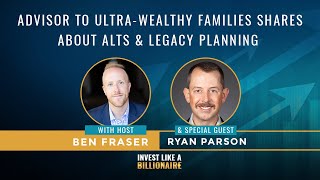
In this episode of the Invest Like a Billionaire podcast, co‑hosts Ben Frazier and Bob Fraser interview Ryan Parson, a Certified Financial Planner, Chartered Financial Consultant and founder of Sunlight Peaks Financial Partners. Parson explains how his background working for an alternative‑investment sponsor gives him a deep understanding of private‑equity and real‑estate opportunities that most traditional advisors lack. He argues that ultra‑wealthy families allocate roughly 50% of their wealth to alternatives, while most accredited investors hold near zero, and he outlines why alternatives provide true diversification, especially after the 2008 crisis when stocks and bonds moved in lockstep. The conversation moves to stress‑testing portfolios against macro risks such as prolonged inflation and rising tax rates, emphasizing the need to embed buffers and scenario analysis into cash‑flow projections. Parson advocates a holistic, top‑down wealth‑architecture approach: start with family values, legacy goals, liquidity needs, and tax considerations, then filter investment opportunities (cash‑flow‑focused vs growth‑oriented) through that lens. He discusses current tax and estate‑planning challenges, including potential changes to estate‑tax law, charitable‑giving strategies, and multi‑generational gifting. To make billionaire‑level tools accessible, Parson describes his “Virtual Family Office” model, which delivers sophisticated deal‑sourcing, due‑diligence, and advisory services to families with $2‑10 million in net worth. Practical advice on evaluating real‑estate deals under inflationary pressure—favoring cash‑flow and liquidity over speculative appreciation—is also shared. The episode closes with guidance on how listeners can contact Sunlight Peaks for personalized strategic conversations.
Chapters
This is the Invest Like a Billionaire podcast, where we uncover the alternative investments and strategies that billionaires use to grow wealth. The tools and tactics you'll learn from this podcast will make you a better investor and help you build legacy wealth. Join us as we dive into the world of alternative investments, uncover strategies of the ultra-wealthy, discuss economics, and and interview successful investors. Hello, podcast listeners. We are really excited about this episode. We just spoke with Ryan Parson and he is a financial advisor for high net worth individuals and families, but he focuses on alternative investments. And so we've talked about this in other episodes, but most financial advisors and those that are in this space are not focused on the private equity markets, private alternatives. And that's kind of where Ryan has cut his teeth. And he talks a lot about this episode, how he approaches financial planning in a sense for these high net worth families, but using a lot of alternative strategies to really amplify their wealth and help it be protected. And grow over time and even legacy planning. So hope you enjoy this episode. We think you'll like it. Welcome back to the Invest Like a Billionaire podcast. I am your co-host Ben Frazier, joined by co-host Bob Fraser, and we are really excited about today's episode. Today we're joined by our guest Ryan Parson and really excited to jump into his background and what he does helping high net worth families and, you You know, again, for this, this podcast, we're focusing on the alternative investment strategies and tools that the ultra high net worth and ultra wealthy are using and implementing those in our situations financially. And Ryan is in a really unique position. He's been working with high net worth families for over 20 years, really as an educator in this space. And he has launched Sunlight Peaks Financial Partners. And he is a wealth strategist now working with, with these families, helping them protect their wealth and really doing some pretty cool things. Really excited to dive in. And Ryan, you have more than 20 years of experience in the financial services space, experienced teacher, speaker, and you really providing your members a lot of great tools with their wealth, wealth planning, access to off-market opportunities, which we'll kind of dive into a little bit. And you wrote a book, I think a few years ago, that's an Amazon bestseller, called Your Money CEO: Finding Financial Confidence in Today's Chaos. And what I'm really excited about, Ryan, and this is really unique for someone operating this kind of private equity alternative investment space, is you are a certified financial planner and a chartered financial consultant. So you are actually registered with the SEC as a firm. And but you're doing a lot of things that maybe the traditional sector of investing advisory is, is not really doing. And so just share a little bit about your background. I kind of gave real highlights here, but I'd love to dive more into your story of kind of how did you end up here and, and really why do you see this as being so beneficial for your clients?
Well, Ben and Bob, thank you very, very much, guys, for, uh, having me here. It's a— it's always a pleasure to, uh, share and teach and, and really talk with, uh, really strategic thinkers like the two of you are and really helping your audience, your clients, your investor clients understand wealth through different lenses. Because I, I know a lot of your clients that you all serve, uh, aren't following necessarily a traditional path, and they, you know, they've opted to take more control of their wealth in terms of how they, uh, think about their wealth, the outcomes that they want with their wealth, and obviously using alternative, uh, investments in real estate and otherwise to help get them to where they want to be at. And so I always appreciate being able to share and help others with their journey of really living their best life of significance, which is something that's very important to me. So just from the normal disclaimer, guys, we're just having a conversation, sharing thoughts and opinions. It's not specific financial advice or tax advice or investment advice to any one person, but we're just having a nice conversation about what different ways to be thinking about wealth. So with that said, gentlemen, And again, I appreciate being here because this path that I've been on anyway with my own wealth certainly has been one of not following the traditional line of thinking and just necessarily traditional investments. Having grown up in a family of real estate investors and myself doing a lot with the real estate primarily in my own portfolio, I started to realize quite a while ago that Beyond investing itself, there's a lot of other significant implications that the wealthy are looking for, whether it's a tax strategy, whether it's how you think about your wealth, your legacy, and how you transfer those assets to your children or whoever that may be, whether you're thinking about charitable giving and magnifying your charitable gifts to the extent that that's important to you, to wealth protection and making sure your assets are not unjustly taken from you through litigation or divorce or identity theft today, wire fraud, all those new things that really are part of the modern-day world that all of us as investors are faced with. And for families like mine, I know client investors that you all serve, because we've chosen to take kind of an alternative path, the way we're growing our wealth, accumulating our wealth, we start to get to a point where we realize all these other implications, tax, charity, wealth protection, so on and so forth, start to become a bigger element that creates more complexity in our lives than maybe when we started off in alternatives and real estate that we didn't fully contemplate and appreciate. And you get there and achieve the level of success that you do. And that's certainly what I realized as well, is that, you know, I needed more help just even with my own wealth on all of those areas. And quite frankly, guys, it wasn't out there to find other really consummate professionals, strategic advisors, those that I could trust that have that specialized knowledge in all these areas. And that's what we realized we needed to be able to help serve our clients with and our prospective clients with when you get to a point where like I said, it becomes more complex and you just need and desire more of that help on your team. And that's what I realized, what our clients realized, and our clients will always determine where we go and hence where we are today to bring those—
I think one of the interesting things that really sets you apart is your background working for an alternative sponsor. So you worked for years and you were in the education space training people people how to make these investments, but not as a financial advisor, a registered investment advisor. But you got deep into the alt space. And one of our premises for the show and our themes for the show is that typical billionaires have 50% of their wealth allocated to alternatives. The typical high net worth, just accredited investor, has closer to zero. And the truth is alternatives are far superior, right? But it's nothing that you learned, right? When in your, you know, you got a finance degree, you went to school, you learned modern portfolio theory, and you learned it's all about stocks and bonds. And most financial advisors, we joke sometimes someone an investor will come to us and, you know, and they say, well, I'm going to have my financial advisor, you know, look at, look at this alternative. And literally the financial advisors almost universally say, don't walk away from this, run away from this. It's bad because it's private. And we just want to laugh because it's so, it's so ignorant of really what the space is. And I find most financial advisors are just completely ignorant about this whole world of alts. And, uh, that are, they're really vastly superior in a lot of ways, you know, and short in a couple ways. But we, we've kind of talked about that. But, but I think your focus on alts is very, very unique, you know. So just talk about, you know, what, what in your view are some of the, some of the, the case for alts? What, what's the case for alts? Why do you put your, you know, you're super educated in stocks and bonds, obviously, but Why do you put your investors in alts?
Well, that's a great question, Bob. And, you know, it really, uh, for any, uh, successful individual or entrepreneur or high net worth family, they start to realize there might be something more or different than what they want, that they want, that maybe what they have been getting isn't serving for a whole myriad of reasons. But, you know, a big reason why we see, you know, and I love the name of your show, show, by the way, Invest Like a Billionaire, because there's a lot of lessons we can learn from the super rich. And I think alternatives in real estate certainly is, is, is one of them, uh, because the, the issues are the same regardless, uh, of the size of the net worth, because it's really about how you're growing it and protecting it. And I think, uh, a lot of high net worth families, when they make that decision on their own, I might add, um, that they need some other type of diversification in their portfolio beyond traditional stocks, bonds, mutual funds, cash value life insurance, annuities. And, you know, everything can have a place in different scenarios.
It's a great point. You know, back in the Great Financial Crisis, you know, stocks used to— you know, before that, bonds used to be divergent from stocks. But we saw, you know, the correlations. Everything went to one, right? Everything went down at the same time. There was no safe place. And so the idea of, you know, the only way to get true diversification is with alts.
And I think that's what a lot of families, Bob Fraser, you know, decide, and they come to that conclusion on their own. There needs to be some other level of diversification there. So they seek those, uh, they seek out the various different types of alternatives. And I think there's also Another common thing, the theme about investors that choose to do this, and, you know, I'm being very mindful to say, you know, they choose to do this on their own. It's not about being convinced, it's not about being sold. There's got to be something rooted in your values, your goals, your outcomes for your family, and your financial goals that kind of lead you to this conclusion. But another, I think, big element guys that a lot of families look for is really being able to, especially if they're managing their own investments, that they feel like they have control over them and can be more— they can have greater influence on the outcomes to the extent they wish to do so, um, or they have access to the deal sponsors that they're entrusting their capital to, you know, unlike just sending the money into their 401 plan or Wall Street, which seems, you know, for some families like a great big abyss.
You'll be involved.
Yeah, yeah, that's, that's, that's exactly right. So I think there's, there certainly is a lot of reasons, and they're all very individual to each investor and each family. But I think those are some of the reasons that, you know, alternatives have become, you know, so popular. Um, and, and frankly, the, the laws have changed, guys. As you know, uh, after the JOBS Act came into play, it really opened up a lot of opportunities for accredited investors that just simply didn't have the access to deal sponsors, didn't have access to the investors and the investors didn't have access to the deal sponsors. And so there's, you know, been regulatory change. There certainly has been technological change. Bob, you mentioned, you know, Modern Portfolio Theory earlier, without getting into all the enjoyment or joy of talking about that. But, you know, Modern Portfolio Theory, modern-day technology. I mean, it's just so much easier for deal sponsors and investors to find each other. You know, the internet age, and, you know, big things that have occurred that's just frankly taken down the barriers of entry. And as a result of that, and you combine it with, you know, a generally pretty long, good running market in real estate and in different types of investments as well, it's created a level of euphoria for investors that just haven't seen seen something bad happen yet or seen a market downturn. And I think, you know, when you look at what are, you know, ultra-high-net-worth families, billionaires doing, they really find themselves, guys, stress testing their decisions, stress testing, you know, assumptions that they've made and going, if what we believe, what if what we believe to be true and what has got us to our level of wealth What if that's no longer true because of this massive evolvement of market change, political change, and social change taking place? You know, in my lifetime, in my investing career, and, you know, my, my, my own journey of my own wealth, I've never seen this level of change at those areas— economic, political, and social— like it's happening right now. And I think that's causing a lot of high-net-worth families to really rethink the way they've done so, or at least challenge their own thinking about doing things and just making sure that what you, like I said, what you believe to be true, what's gotten you to where you're at with your wealth, can it keep you there? If you think some of these changes that are happening around us could impact the way your wealth sustains itself going forward.
And what do you think are the biggest challenges, uh, you know, that your investors, uh, your, your, your clients are thinking about right now? And what are the biggest risks, areas areas that need to be stress tested?
Yeah, great question, Bob. You know, stress testing kind of is a two-pronged approach. You can take, you know, kind of an individual issue about your wealth because so many high-net-worth families, you know, the way they created it, it's all different. Some of them did it through their own businesses. Some of them did it through their investment portfolios. Others inherited their wealth. So how the issues that exist vary very widely from from family to family. And so you might just take a kind of an individual thing that might be unique to your family, or you may take and stress test everything about your wealth. Generally speaking, you identify kind of one area that's of most critical importance. And, you know, right now, where we're at with everything, obviously taxes and inflation tends to be a very big concern for many investors of all different kinds of size of net worth. And so we see a lot of families right now, guys, starting to re-examine what they think inflation was, you know, what historically it's been, if they've been using some of those historical numbers and go, what if it lasts for an extended period of time at some of these inflated numbers that inflation is at today? And what does that really mean to the sustainability of their wealth? So I think that's a big element. And you know that a lot of investors are thinking about. But one really, you know, key difference of understanding the sustainability of wealth for an individual is, are you doing these things prior to the event occurring? You know, we live in a society, guys, that is very much a right now, in the media, instant gratification. You know, we got to have it right here and right now. Wealth doesn't happen— that wealth isn't built in a day, wealth isn't saved in a day. And, you know, when good economic times are happening, uh, the way they have been, you know, for so long, especially over the last decade, investors can get lulled into a false sense of security, and, and they kind of stop thinking about, well, what if something undesirable happens, like higher inflation? Or what if taxes go a lot higher than what we expected because we've been lived in, you know, a generally lower period of time in terms of lower inflation, lower taxes, so on and so forth. But at the end of the day, guys, all of those are individual decisions. Every one of us has a different view on inflation and taxes of where we think it's at, where we think it's going. And so the point of that is you may stress test your portfolio with respect to your own assumptions and where you think it's going and kind of start to see the outcomes of that. Before it actually happens. And when you can see potential outcomes kind of in the lab, so to speak, it'll influence your decisions that you would make maybe today going forward and some of the adjustments you would consider making to your portfolio. Again, it's beyond just investments. So when you think of tax and cash flows and legacy planning and charitable giving, it impacts all of those issues.
Yeah, that makes a lot of sense. And, you know, I think both those topics that you mentioned of our potential challenges of inflation and increased taxes is, uh, uh, an acute thing that a lot of investors are feeling and concerned about, you know. And obviously, like you're saying, it's an individual, um, kind of level impact in how you evaluate it. But where do you see, like, in a general market sense— I mean, what's your, what's your opinion? Where do you, where do you see inflation going? And then how does that impact someone's, um, view of where they invest and, and what types of investments are going to be good? Because obviously you don't, you don't want to, you know, stay too long, get hit by the end of a cycle, but you also don't want to be in cash for too long and miss, you know, potential, uh, run-up while it's still going, you know?
Right. Yeah, there's that. That's a really big question. And, you know, something you, one of you mentioned earlier, uh, here in the recording, things tend to revert back to a mean over time. When you have these periods of high or a period of low, whatever it is you're comparing that to, it generally settles back in, and that settling may shift one side or the other a little bit, but it generally settles back in. And my crystal ball broke a long time ago, Ben. So trying to predict the future is really nothing that is strong strategy to try to do. But the reality of it is when you've got buffers built into your strategic plan to deal with and assume from a long-term perspective, there are going to be times where inflation is higher. There's going to be times throughout your lifetime where taxes are higher. And so the reality of it is that much we do generally know. We never know when it is or to what extent that it is, but if you've contemplated that into your cash flow projections already and your scenarios already, when it actually happens, such as like what we might be experiencing right now, it doesn't have to be a game changer. It's a game changer for those that didn't plan for it and didn't already assume it. It's, it's not so much of a game changer for those that had already started thinking through some of those what-ifs. So, because at the, at the time, big changes start to occur, guys. Trying to make immediate maneuvers, especially to an alternative investment portfolio or real estate portfolio because of its general lack of liquidity, can be harder to maneuver in a shorter period of time.
Yeah.
So those are some of the considerations that you need to make and contemplate ahead of time, which influences maybe the different types of deals you would do, um, uh, in time.
Sure. Yeah. I mean, kind of playing out that train of thought, you know, if there is higher inflation, if that's kind of the assumption and not that you're saying that it is or not, but, you know, specifically as it relates to real estate, for example, because you're a real estate investor yourself and that's the space we know we're in. You know, I think about inflation is, is generally can be a good thing if you're on the right side of the real estate equation. And a lot of that can be passed through, you know, through the form of higher rents if it's some kind of residential property. But the issue also comes with interest rates, right? So if we have too high of inflation for too long, then the Federal Reserve has indicated they will raise interest rates to slow that down. And that can impact cap rates, which can hurt values. But, you know, how do you— in this kind of— like you're saying, there's a lot of changes happening very quickly and there's a lot of turbulence here and you want to be more cautious and you're obviously very focused on the protection side of things with your clients. You know, how does that maybe framework impact how you evaluate a potential deal? Are you focused more on, hey, I'm not going to be— I'm not going to go on a deal that's, you know, really banking on a high level of appreciation in this particular market because that's just an unknown. I want more cash flow right now. Or just how does that kind of in the like practical decision-making process of evaluating opportunities, you know, maybe in specifically in real estate, and you do a lot, a lot there.
Sure. Well, the, the, the, you know, the, the first thing it really, really starts with, guys, you know, for us anyway, is, is really understanding what, what is it that the outcome that an investor wants? And, you know, what really are they doing? Why do they invest? Um, what is the outcome that they're looking for? And when do they need certain different types of outcomes to reasonably come to pass? And so when you, it, it realizing that every one of us is very different in terms of our investment comfort levels, our investment experience, our tolerances for different things. Like you were just mentioning, Ben, raising interest rates, lowering interest rates— all of us have a different viewpoint and a different feeling on that. And so, you know, depending on what you're trying to do, you know, with something like that, if you don't have, you know, taking a real estate type of a deal and appreciation, which of course can be a pretty big wild card and a future unknown depending on you know, where a market cycle is at, um, and just, you know, what the deal is and what the demand for deals are going forward, um, you know, in terms of being able to sell or create the liquidity from a particular real estate project. But, you know, generally speaking, if it's everything when it comes to making some of these decisions tends to come back to what is the cash flow and the need for liquidity. And so if you have, say, plenty of cash flow from whatever source, you know, you might have it coming from your active income, your investment portfolio, whatever that is made up of, and you might say, well, I don't need any more income right now, so I want to focus on more growth types of real estate deals, for example, that's putting the income in the liquidity event sometime into the future. And I'm willing to take that risk of, you know, uh, potentially a higher rate of return because of that lack of liquidity and cash flow today. So those are some of the examples that a lot of high net worth families are really contemplating right now of trying to understand that and balance all of these competing market conditions and the, then the, uh, changing, uh, regulatory environment, you know, whether it's around IRAs or around consumers and real estate, you know, and what can be done during a pandemic. Pandemic are not done and those types of things. These are all new contemplations, uh, you know, for investors to be considering. But it really still usually falls back on what are the— your core values, what are your real— your goals that you're wanting to accomplish with your wealth, and then cash flow, liquidity, and timing so that you can be, you know, reasonably assured you have the cash when you need it, whether it comes in some form of a regular coupon payment, monthly, quarterly, something like that, or it comes in, you know, in the future when a project is sold, let's say.
Yeah, another big kind of concern with investors right now is just potential increase for taxes, right? And that's, you know, targeting the higher net worths and the higher income earners. Um, and so, you know, not have to give specifics because I know it's an individual kind of conversation, but where are you kind of seeing the best places to, um, you know, be prepared for that? And what are the kind of conversations you're having now with investors of, you know, making changes kind of preemptively, um, to, to not get caught with a huge tax bill that you weren't expecting?
Well, there, there's several different, you know, big things that we see a lot of families working on right now. And, you know, one of those, Ben, when you talk about tax, you know, has to do with the estate tax law. You know, for a lot of high-net-worth families that you all serve in your businesses, the estate planning issue has become a much greater issue, uh, uh, and, uh, anticipated, uh, by a lot of people to become an even bigger issue as Congress, uh, potentially makes some changes to different things. But the, the taxes on an, on an estate can be substantial in a lot of cases. And so utilizing, starting to take a closer look at that, especially especially as accredited investors and higher net worth families start to fully appreciate everything that goes into a taxable estate, uh, beyond maybe just some of the investments and the, uh, that they've made in their portfolio, you know, values of their businesses and different things that can have tremendous implications here. They're really starting to look at their estate and legacy plans and, and really starting to be able to revisit, well, what is the purpose of the wealth? Who do we want to have inherit the wealth? Uh, and is it time to start maybe rethinking, um, how we utilize our businesses differently and how we can utilize our businesses differently to help deal with some of the tax implications? Uh, how do we need to start to integrate maybe our kids or our grandkids into our family values to start thinking about some of those things? Because most people would say, guys, if given the opportunity opportunity, they would want somebody to inherit their wealth and not let Uncle Sam take, uh, the vast majority of it, uh, you know, through the tax code. And so how do you legally and thoughtfully work your way through that? There's a lot of strategic ways to do that, including how you think about your charitable giving plans. And there's— so there's a lot of things out there that a lot of accredited investors just haven't been exposed to yet, um, of how you can legally mitigate taxes both at an estate level and even an income tax level that is really then commensurate with the values and what you're trying to accomplish. So we're seeing a lot of that today, Ben, a renewed look at what a charitable giving plan might be and what a multi-generational gifting plan could potentially look like to help mitigate the long-term impacts, you know, of taxes both as we know them to be today and inevitably will be changing into the future.
Yeah, I love that you kind of look at it holistically. You know, a lot of folks just think, you know, I just looking at the investment opportunities, but you're looking at a holistic way of, you know, how do we protect the wealth, how do you transfer wealth between generations. And I would imagine— I mean, I'm not, you know, doing what you're doing and not having these conversations with clients, but I would imagine that it's probably an area where a lot of investors need need to beef up in their thinking and putting together these estates and kind of thinking through all the implications there. And talk a little bit more about that, like when you're meeting with a new family or a new client, and what do you see are the biggest areas of maybe gaps in their kind of financial plan that they're not thinking about and no one's really talking about?
Yeah, I appreciate you bringing that up, Ben, because it really is when you think through the last decade or, you know, the little bit longer than that now when we've been in this, you know, this space where a lot of new wealth has been created, a lot of new accredited investors have come to the scene, so to speak. And a lot of that has been, you know, when you decide something new, or especially if you decide I want to start being a real estate investor and whatever that looks like for you, Sometimes we have a little bit of a shiny object syndrome. You know, we see something cool. It's like, wait a minute, I want to go do that. Or we hear a cool technique somewhere. We read it, we hear it on the news, it comes into our being, however it comes into our being, and we go, oh, I got to go do that. And so therefore, a lot of planning happens very haphazardly, or it's been piecemealed together. And so what we really try to focus on with our existing clients and then any, you know, new family that we might be looking at and seeing if we can make a significant impact on their lives is really starting off with really a total client profile and understanding what of all of these elements are important to them. And, you know, we spend a pretty extreme amount of time today with a new family before we would even consider making a decision if we can bring them on and truly make a significant difference in their lives. And so that help understanding those different areas of priority about things that we've talked about— wealth protection, tax, uh, strategy, uh, cash flow needs, liquidity needs. When you start to take a really comprehensive approach, guys, and not just think about your wealth as an investment standpoint, or think of whatever you think of financial planning might be, or whatever you think of even then wealth management might be, I'm talking really comprehensively thinking about your wealth, that starts to then influence your investment decisions as opposed to having investment decisions influence your greater values, your greater goals. And so when you start to think about it in that mindset, it makes, uh, it can make investing easier because it's more rooted in what you're— what is most important to you and what is most valuable to you, uh, in a way that you architect, as opposed to, like I say, just the shiny object syndrome, uh, which I certainly am guilty of myself, uh, you know, and have been. And, you know, because you see something cool, it's like, I want to do that. Um, but the, the question you really have to be disciplined to ask yourself Well, that might be a really cool strategy or a cool deal to do, but is it cool for me?
Yeah.
And when you've got more of those parameters in place around your wealth that encompasses all those things that are important to you, it becomes a lot easier to stay disciplined and therefore increases the probability dramatically of you obtaining all that's truly important to you.
Yeah, I love that. It's basically a, a top-down approach versus a bottom-up approach where you're looking at what are your goals, what are you trying to accomplish for your, for your family, what's important to you, what are your values, and then using that as a filter for all the way at the bottom, which is the investment allocation and the tax strategies and those kind of things. And it— I would imagine in a lot of ways it helps, it helps, uh, create an easier filter because I know a lot of, a lot of a lot of investors that are getting into this kind of private equity space maybe, maybe feel overwhelmed with, you know, one of the biggest challenges we find with investors is I just don't know how to do due diligence, or I don't know how to, um, you know, find these deals, and I don't know, you know, which ones are going to fit, fit best for, you know, what I need. And the challenge a lot of times is they don't even understand fully what is going on in these opportunities. And it helps kind of create that filter of, hey, now I know what I'm going after, I know what my primary needs are like you're saying, if you have a client that, you know, they're fine on cash flow and they want to work more on maybe tax savings and legacy planning and long-term growth, then that's a very different set of investments that you're going to look at if you're focused more on current income, current, current cash flow. And I love that because it is, it is something that is really important to look at it from that, that approach.
I'm, I'm glad you brought that up, and you— I think you said that really, really well, Ben, in that, you know, one of the things that we've seen, and I, I've seen it, I've experienced it with my own wealth and, you know, a lot of other really successful families and investors that I know, um, uh, then that I've known over the years, you know, we, we, we got into the space of real estate or alternatives like we mentioned at the beginning of the, of the show here today because we made a conscious decision to do that. We realized we needed something else. We may not have known all the reasons, we just knew maybe a traditional or a conventional path, however you want to describe it, um, just wasn't going to get the job done for whatever reasons that it wasn't going to get the job done. And as a result of that, Ben and Bob, a lot of us became what I call do-it-yourself investors. And, you know, we've learned what we've learned. We tried to, you know, go to seminars, we tried to read more, we tried to, you know, find the guys like you that were in this space and how, what do you learn? And what does this deal look like? What's that mean? You know, what is, you know, all of these different things, Unit A, Unit B, coupon payments, IRRs, you know, all those things that we love talking about in the world of alternative investments. But we had to become do-it-yourself because there was no other real efficient mechanism to do it. And there's nothing wrong with that. Being able to take that approach, as I, as I mentioned earlier, guys, we get to a point where we just all have our natural limitations. We have our natural desires, you know, where we, we've learned what we can learn and we're not comfortable taking a next step for whatever reason. Uh, we've associated with who we've associated and we realize, well, we need some more people with different types of specialized knowledge in our worlds. And so it's really become today how you, you being very true and honest with yourself, what parts of your wealth do you do really well with and what parts of your wealth do you really need to outsource? And those components will change over time. And that's a big reason and big motivation for me why I've created the Virtual Family Office to allow and help other high net worth families that have come to the realization and the conclusion, my life just has a little bit more complexity than what I want to keep managing on my own. There's a lot of it I still want to manage and I'm happy to manage, but I've kind of crossed a little bit of a divide, so to speak, that we need more help in all of these areas that you fellas have kind of brought up and mentioned today are just examples of it all, of what it might be that you start to realize, what don't I know? Or you've gotten to a point where, you know what, and this becomes a really big delineator, I think, gentlemen, about when do— is good enough good enough? But I still want the best. And in that, you know, when you look at, you know, super high net worth families, billionaire families, They want the best. They want the best people on their teams. They're not going to settle for just good enough. And quite frankly, you guys, I'm a firm believer and I'm kind of on a mission here to help the high net worth families that we serve that have become accredited in recent years because of the market. How do you keep it and bring that type of thing, bring those tools, bring that type of of support in a virtual family office structure. So you've got access to the line of thinking, the tools, just like billionaire families and how they run their full-time family office with, but bring these tools to the high net worth families and successful individuals that we serve in a virtual family office format. And I think that's going to be a big element in the future. If you're truly serious about preserving your wealth, however you've gone about accumulating it, you're going to have to adapt some pretty significant structures that are very simple and very elegant, but you're going to have to do them because with all of these changes and these forces that are really after high net worth families today, your likelihood of keeping your wealth diminishes dramatically unless you take some dramatic actions to help deal with these forces around us that can be challenging to deal with.
Yeah. I love that. People probably heard the term family office and the natural thought is that that's for the very ultra, ultra wealthy families of $100 million plus, but to your point, and even and even the evolution of the private equity markets with the JOBS Act where there's more access being given. There's also more resources that are being available to these families, you know, we'll say in kind of the $2 million to $10 million net worth where maybe they're kind of, you know, a couple decades ago were kind of, you know, good luck trying to find these other resources and strategies unless you knew a lot of people and had the right network. But now it's, you can bring a lot of those strategies that the ultra-high net worth families are using using to protect and grow their wealth and bring it at a different scale to a whole new subset of investors. And, um, Ryan, what's the best way to kind of get a hold of you if someone's interested in kind of having this more strategic conversation about their wealth and they're kind of at that stage where they want to be thinking about, you know, multi-generational, um, uh, kind of planning? What's the best way for them to reach you?
Sure, we love talking and having a personal one-on-one conversation. So a quick reach out on our website, sunlightpeaks.com. Uh, will very easily find this. It's very, uh, simple, uh, very elegant, very streamlined. So I'd say, uh, start with our website first and we can go from there.
Awesome. Well, thanks so much for, for coming on and sharing, sharing some of your thoughts. It's really helpful. I love a lot of things you said. And, um, uh, guys, if this is interesting to you, definitely reach out to Ryan and his team and have a conversation. And, uh, Yeah, appreciate you coming on.
Ben and Bob, it's a pleasure, and I appreciate you all doing this because I know putting these together, the production of all of it, and getting it out there is not an easy task. But it's really important what you're doing to help educate and show investors part of the new realities going on in the marketplace. And I just really appreciate you guys, what you're doing with it, and including us on your quest to make the world better through your visions as well. Well, awesome.
Thanks, Ryan.










