
Betting Big On Retail Real Estate With Philip Block And Robert Levy
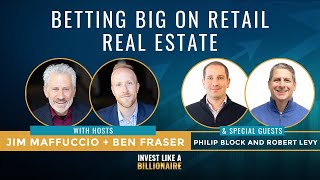
Philip Block and Robert Levy of LBX Investments argue that high-quality retail real estate, especially grocery-anchored open-air centers, weathered COVID better than expected. They target 7-8% cap rates in the Southeast and Midwest, using strategies like out-parcel arbitrage and tenant upgrades to hit double-digit cash-on-cash returns.
Chapters
This is the Invest Like a Billionaire podcast, where we uncover the alternative investments and strategies that billionaires use to grow wealth. The tools and tactics you'll learn from this podcast will make you a better investor and help you build legacy wealth. Join us as we dive into the world of alternative investments, uncover strategies of the ultra-wealthy, discuss economics, and interview successful investors. Welcome back, Invest Like a Billionaire podcast listeners. We got a great episode for you today. We are joined by Phil Block and Rob Levy of LBX Investments, and these guys are experts in retail real estate investing, and they've been doing it for quite some time. They actually both come from Wall Street investment banking backgrounds and then been in real estate for a long time and got into the real estate retail sector about 6 years ago doing these kind of national anchor tenant properties. And it's— I wanted to bring them on because retail was hit very heavily by COVID, was very impacted, but we're kind of seeing this resurgence of retail, brick-and-mortar physical retail properties and wanted to bring these guys on to share about where they're kind of seeing opportunities. So I think you're going to love this episode. They get into a lot of the trends that are going on. And just as a quick disclaimer, we have had listeners ask us, we bring on other operators and folks that are actually providing investment opportunities, if we've done due diligence and if we've invested with them. And so you do want to make the note, we bring people on, we're not generally invested with them. We haven't done full due diligence. This is purely exploratory. You know, you really got to do your own due diligence. If it is interesting, reach out to them on your own, but do want to make that really clear. You know, we're not promoting what they're doing necessarily. And if you do want to get in touch with them, you know, we're happy to make introductions. So you can reach out to us. We have a general email, investorrelations@aspenfunds.us, that you can reach out to us to make a connection for you to them if you're interested. We also really appreciate your support of this podcast. It's been really awesome to see all the listeners that are enjoying it and leaving reviews and subscribing. So just a reminder, if you're enjoying, uh, the podcast, please subscribe on your preferred platform, whether that's iTunes, Spotify, or YouTube. Don't forget, we have a YouTube channel. You can watch them all on YouTube. And obviously, if you're feeling really good, you can leave us a review. And we always appreciate the reviews, as that helps, you know, other listeners get exposed to it and hear about it. And lastly, if you are interested in learning more about alternative investment opportunities, you can join our investor club if you go to our website, aspenfunds.us, and click on the Offerings tab at the top of the page. With that, I hope you enjoy this episode. Thanks for listening. Welcome back to the Invest Like a Billionaire podcast. I am your co-host Ben Fraser and joined by co-host Jim Maffuccio on the other line. How's it going, Jim?
Good, going great.
All right, we've got some great guests today. We've got, uh, the two partners of LBX Investments, and LBX focuses on retail real estate investing and have pretty impressive backgrounds. Really excited to bring you guys on just to hear your thoughts on retail real estate as an asset class and as an investment and where you guys are finding the opportunities in this market. So Robert, Philip, share a little bit of your backgrounds.
Sure. So this is Rob Levy. Guys, thank you very much for hosting us on the podcast. We really appreciate it. I've been in the real estate business for over 30 years now, and so I have done a ton of different things from investment banking to finance. Started my career off in asset management for a large institutional investor. And then, and Phil can give his background certainly, but we worked together for a number of years at a publicly traded real estate company where I was the CFO and I became the CEO. We were a large investment manager and finance company. We were public and we took the company private and left soon thereafter. So I've really done so many different things in and around real estate, and which we'll talk about. And Phil also has a very diverse background and really, we feel it really helps us kind of assess risk and execute on our strategies. We have very deep experience and knowledge on the financing side and structuring side of real estate. So anyway, been around the block and done a bunch of different things in and around real estate and I'll hand it off to Phil. Sure.
Yeah, Rob, this is Phil Block. It's great to be here. We appreciate it. Rob has a few years on me, which I like to remind him of. But I also, I have, you know, 15+ years I've been working in and around the real estate space. And in, like Rob, in various capacities from investment banking and private equity on the finance side. And now, for 6+ years, we've been focused on acquiring and operating our own real estate. So it's been a great partnership.
That's awesome. And you guys mostly focus on retail properties, is that correct?
Yeah. I mean, we have diverse backgrounds, as we mentioned, but our strategy has been almost solely focused on on shopping center acquisitions for the last, call it 6 years.
Awesome. I'm excited to dive into why that asset class in a little bit, but give a little context. I think we've talked about on this podcast before and the story over the last 2 years is that retail was hit pretty hard and as a lot of retailers had to close and shut down because of the virus, that created a lot of disruption in the market. And people weren't out shopping as much and restaurants, you know, couldn't have people coming. So you guys put together a really great market commentary at the end of this podcast. I wanna link to it 'cause it's really excellent to kind of break down y'all's analysis of this. But if you kind of talk a little bit about how did COVID, you know, maybe fundamentally change the retail real estate sector? Sure.
I mean, our view is honestly that COVID was, and I never wanna, think of it in a positive manner because of all the negative implications of COVID But from a pure ownership of retail perspective, it had some real positive aspects. First of all, it really did support our thesis. Our thesis is if you buy good real estate in good markets with the right credit and the right, you know, visibility and demographics and all those things that you want in a good piece of retail, that that property will flourish and withstand the downturns. And that's exactly what happened with our portfolio in, during COVID We, our property performed great. Our collections were excellent. Our occupancy did not really dip at all. We had very few failures, if any. And in fact, coming out of COVID our, the pace of our leasing momentum has only accelerated. And so, we feel as it's really great validation for our investment thesis, because, you know, can you really figure out, you can really have a worse downturn than what happened in COVID in the retail world? It's really hard to, I mean, certainly they could always be worse, but it's hard to really think through something like that, that could be worse. So, no, that's number one. Number two, It was somewhat of an accelerant, like we've seen it in a lot of areas of the economy. It has— the impact of COVID accelerated certain things. Retail world, it accelerated the downfall of some retailers who were going to fail anyway. They were just bad companies and bad retailers, and they had bad credit, and they were not good operators. And so it kind of just flushed some of that stuff out of the system. And then the better retailers— and we could talk about who the real strong ones are today— they all flourished and they all grew and they took the places of the bad retailers. And then, and the third thing that happened is, was, was really interesting. The local guys all kind of stepped up and paid their rent, right? It was like the biggest issues that we had were with the nationals who were just trying to take advantage of the situation. And they had their lawyers and, you know, and bankers and accountants knocking on our door asking for relief, which we gave some up, but nothing permanent. It was just like, you know, deferral type stuff. It was the local guys who stepped up every month and paid their rent. And it was very interesting because we expected kind of the opposite, right? We expect the local guys to really struggle, struggle, and the national guys to pay their rents. And that didn't happen. And so, what happened therefore is that our centers, you know, we're mid-90s occupancy today. We collected close to 100%. Of rent during COVID and now our, you know, our lease momentum, our leasing momentum is strong coming out of it. So, it was a positive experience for us.
It's kind of like the, you know, the way COVID on the human body, you know, it's like the businesses that made it through, their immune systems are stronger, right? So, they've tweaked their model, they've sharpened their pencils, whatever, changed, accelerated improvements in their operation, and they come out of it stronger. And obviously, if they're stronger, it supports your model. And, and a lot of, like you said, a lot of those businesses that were— they were probably already on their way to fail. They had comorbidities, right? And I hate to be insensitive, but I mean, that's kind of true. Like, a lot of the retailers that went out of business probably were on their way out of business already. So it's just interesting. And I love that you guys have that, you know, you're looking at the opportunity and And, you know, moving up and to the right instead of everything's going to heck in a handbasket. So it's awesome.
Well, also, I'll just add one more thing that, you know, also a lot of it is overstated, right? And Phil and I, we love when, you know, the CNNs of the world or, you know, whoever it is in the press overstates the death of retail. We think that's a wonderful thing for our business because it just impacts our ability to buy real estate at attractive yields. We remember in the middle of COVID I think it was UBS, I feel like it was UBS or Deutsche Bank, one of those two put out a research piece that said that there was going to be like 80,000 store closings over the next few years coming out of COVID And we sat there, we're like, wow, could they be right? It just felt wrong, but you never know. These are smart people, at least theoretically, putting out this research. I mean, nothing could be further than the truth, right? From the truth. It's just a lot of it is, you know, eye-catching, you know, headline type stuff that is just not reality.
Yeah, it's really interesting. I mean, I'd love to hear your thoughts on, you know, what differentiates the good retailers from the bad ones and, you know, what were the ones that were already on their way down, you know, because COVID did create a shakedown and there were retailers that went out of business. But it sounds like a lot of the ones that are in your properties largely remained fine. And I'm assuming a lot of that was, uh, helped by the government stimulus and the PPP loans and other things. But, you know, I even remember, you know, driving down and seeing a lot of restaurants and just the innovation that was sparked and just the creativity of the ones that, um, you know, we're gonna find a way to make it through. And, you know, a lot of these maybe changes that were kind of already percolating and kind of changing the industry maybe were accelerated both in the positive and the negative side of things.
Yeah, yeah, no, absolutely. It is amazing. I mean, human ingenuity, right? And these are small business owners, right? When you think about the difference, as Rob was kind of talking about, between the large nationals and the small local guys— small local restaurant is a family-owned business. This is their livelihood, so they have no choice but to figure out how to make it work. And, you know, we all saw that. And it's amazing how so many of them came through better off. And you're right, certainly PPP funding and other government stimulus was beneficial, but it's a lot of smart people trying to figure out how to make a living and get by. And those are the last— right, those are the last places to close.
Yeah. Talk about some of the things that, you know, you saw the best retailers kind of do in those situations and what were the ways that they were able to kind innovate and maybe some trends that you see are going to be around for a while?
I think step back, if you step back for a second, maybe to your earlier question, there's, in terms of the accelerant, you had the mall, the enclosed mall tenants. And we talked about this a lot because we've been focused on this and there was the e-pocalypse before COVID and this was Amazon going to eat everybody's lunch and everybody's going to go away. And what that really was, in our view, was just kind of an overblown media type of narrative that was really about kind of B and C malls where we had just too much enclosed retail and people didn't want to shop that way anymore. And the retailers that were stuck in those formats really struggled, and COVID was kind of an accelerant to their decline. So the Sears and JCPenney, which went through bankruptcy and has come out with less stores, and we actually have exposure, we have one JCPenney store, but in general, those types of stores really struggled. I think some of the smaller format enclosed mall tenants, if they didn't get out, like Old Navy has done a really good job. You now see them as an example of somebody who's evolved in the Target-type centers, open air, in the right kind of format, and they've done a good job of driving new traffic, whereas previously they were in enclosed malls, kind of stuck in the back, and you just don't have the type of foot traffic in those locations anymore. So I think guys like that have done well. And in the bigger format, the TJ Maxx's of the world— TJ Maxx, Marshalls, HomeGoods, Five Below, Ross— like those stores do tremendously because of the way that they're run and they have low cost of operations and they're selling discount type of clothing versus the Macy's of the world. The Macy's actually, as Rob could tell you, is performing pretty well. It's kind of remarkable, their turnaround. I think they've done a lot in the e-commerce world. But some of those names are the ones that kind of jump out to me. Obviously, everybody knows how well grocery has done through COVID. Everybody seems to be shopping more.
Yeah, well, it seems like there's been a huge rebound, right? Because consumers are very flush with cash and been pent up, you know, demand and stuck inside for a long time. And so it seemed to be, you know, we've seen some pretty, pretty strong GDP numbers and spending numbers. And so that's obviously going to benefit retail. I'd love to kind of dive into, you know, your point on it's been a long-term story that e-commerce is the death of brick and mortar. But you guys make the case that there's always going to be the need for brick and mortar, and maybe the consumer expectations or preferences change from the indoor malls to kind of the outdoor shopping centers, but there's always going to be a need for it. Talk a little bit about why that is and how much further can e-commerce go kind of cannibalizing brick-and-mortar, and where do you see that stabilizing?
Well, it's interesting. First of all, if you look at the pure e-commerce companies, and some of them are public, there's not a single pure e-commerce company that is profitable, including Amazon. Amazon makes its money as a web service, cloud service company. If you look purely at their e-commerce business, it is not profitable. It is supported by their other businesses. And then if you look at, you know, Wayfair, I think is one of them. There's a few kind of pure-play e-commerce companies. They are struggling because the cost of storing all this stuff, distribution of all this stuff, returns is a massive cost for these companies. And especially when you can't return to a store and you return returning packages across the country, across the world, big heavy packages. It is just, it's a nonprofit business. So the profitable e-commerce companies are the ones that have also physical locations. And in fact, some of the pure-play e-commerce companies that are better at what they're doing are opening up physical locations like Amazon, right? I mean, Amazon is a great example of that with Whole Foods and Amazon Fresh and all the other stuff they're doing, they're figuring out that they need to have the ability to really connect with their customers and provide services and provide local delivery and local returns and all that stuff that a physical company can do. And then the better kind of pure or more old-school physical play companies like Targets and Walmarts and TJ Maxx, etc., they're figuring out how to use the internet better to support their businesses. And so our view is it's that hybrid that's really going to be the most profitable approach, and the best companies are figuring out how to do that. And that's playing out. And if you look at some of these companies— are public companies, so you can look at them. Look at, look at, you know, Target's, you know, financials and TJ Maxx's, TJX's financials and Ross and Burlington and all these companies that you would think because they're not e-commerce companies that they're getting their lunch handed to them. It's just not true. Look at their balance sheets, look at their income statements. Their profit margins are strong, their same-store growth is excellent. And that's what we think is going to be the best anchors for our centers going forward.
That's really interesting. So you see the hybrid approach where they have a physical presence and an online presence, and they've kind of integrated those experiences for the consumer is kind of the long-term trend, or the most successful retailers will do that. And you guys have in your research that there's actually expansion of brick and mortar for a lot of these larger retailers, right, where they're actually investing in opening more locations, which is kind of contrary to the larger narrative that, you know, most people hear.
Yeah, absolutely. We're absolutely seeing that. I mean, there's no doubt we are in negotiations right now with a number of these retailers to open up locations in our centers.
That's really counterintuitive for— because I'm not somebody who studied— I've been in residential real estate for forever, for too many years. But, you know, that's counterintuitive to me. I mean, to find out that these big, you know, online-only like Amazon isn't making money on their Because, you know, the perception out there is, and the narrative is, oh man, these guys are, they're going to gobble everyone up, they're making money hand over foot, they've got the, they've got the whole world cornered, you know. And it's just, it's just not the case. And it's just, uh, it's fascinating how that hybrid model actually works. And you were talking about returns, and there's no accountability with returns with these kind of— I mean, I, I mean, I've talked to— we all know people who have, you know, they shipped me the wrong lawnmower and I said, you want me to send it back? No, I don't. Yeah, that's an exaggeration, but Obviously, the cost of them having to take it back in is more than just saying, the heck with it, just keep it. I mean, it's got a scratch in it, whatever, and you wonder how much, you know, that's just got to be a huge item on their, on the cost side of their, on the expense side of their sheet. So that's crazy.
It's actually not an exaggeration. And, you know, Phil and I talked about, we, this is something that we have read about and seen a bunch of, which is a bunch of e-commerce companies who are saying As you just said, just keep it, which is craziness, right? Could you imagine as a company saying that you should just keep a product that you don't want to use and that you're not going to pay for? That tells you something about the Pure Plate economy.
They're not just being nice. They're not just being generous. That's not the reason they're saying keep it, right? So yeah, it's crazy.
Yeah, it's interesting. I mean, during COVID our great example is my wife loves Target but doesn't want to go to stores necessarily. Using the app and then, you know, doing the drive up and everything gets brought out to you. So it's kind of that perfect integration of, you know, still the online mobile experience, but, you know, still having to go pick it up physically at the locations. And it's been a great experience and a lot of other retailers are doing that. So it's really interesting. You know, talk a little bit about, you know, in this environment right now where, you know, we're seeing these headline inflation numbers that are very high. And talk a little bit about how that impacts the retail sector. People might be more familiar with it from a residential real estate standpoint or industrial standpoint, but how does it impact the retail real estate properties?
Well, from which perspective? I mean, it is interesting, like as an—
Yeah, I think both. Both would be great.
Yeah, well, because if you think about in multifamily, as an example, as taxes go up, as your construction costs grow up, as common area maintenance type of things go up, your sweeping, your, you know, lawn mower, etc., as those inputs increase, you're eating those as an owner, as an investor. And as a shopping center owner, as a commercial owner, we're passing those expenses on to our tenants. So, we're, as long as you have a full shopping center, we have triple net leases in large part. So, we have, in our view, we have less exposure in the short term to increases in our inputs and our costs. On the other side, you can't raise rents as quickly, right? Like in a hotel, you have a a single-day lease or one-night lease.
Right.
An apartment, you have a 1-year. And in shopping centers, we have 5- to 10-year leases. In large part, now, we have built-in rent bumps that cover some level of inflation. If you had massive inflation for a prolonged period, our rental rates certainly would be hit. But the other side to that is that in 10 years, we'd have well below market rents. And, you know, there's kind of staggered lease rollovers, so you can increase rents over time. So it depends on your view, I guess, of how, how sustained this inflation is going to be and what that looks like. But we can kind of lock in our income in a way that they can't, right? We don't have the same type of exposure. And especially in this environment, in my personal view, We're trying to protect our downside more than anything and lock in cash flow, right? If, listen, if we hit a double-digit cash flow and inflation goes to 20%, we're going to be hurt by that, but we're going to have many bigger issues, frankly.
So, you're built in rent bumps then? They're a pre-negotiated fixed amount, an absolute amount, as opposed to an index. Has the space experimented with indexing at all? Like saying, hey, it's going to be the Consumer Price Index, you probably wouldn't find any tenants if you did that.
You couldn't do that on a full stop basis. There's not zero like that. We have seen a few leases I can think of, but it's very, very rare that you would index like that. I mean, again, if we had varied and sustained high inflation, maybe you would start seeing things like that, but that's really not the situation. Situation today. The bigger concern obviously would just be, are the tenants making money? And long-term, as you continue to jack their costs, is it sustainable to them? But we all know how these businesses work and fundamentally, they're going to increase the cost to the end user. So we're just going to pay more for the goods and services and they'll do fine.
Yeah. So arguably, inflation is actually good for the retailers because a lot of those increases in costs get pushed through. At least the margin may stay the same, if not increase. So they're going to be able to sustain an increase in the rental rate. So you're basically saying on the upside and the revenue side, you have these longer-term leases, but you build in these kind of rent escalators over time. So you kind of have a very high level of predictability of your cash flow. And then on the expense side, you're not going to have as much increase or exposure to, to your point, the high construction costs, the high adjustments in property taxes, utilities, those kind of things that you may have in other asset classes. So your NOI is maybe not going to track inflation as closely, but it's not going to be negatively impacted. It'll probably track it to a certain degree. Is that accurate?
I think that's right. I think that you have much more risk to the— A lot of people are talking about inflation and how that's going to impact the revenue side. We haven't seen inflation like this in a long time, but I think In my estimate, you're going to have much more pain on the expense side than gain on the revenue side in other asset classes, potentially.
Yeah. I would love to hear your thoughts too, just coming from both your backgrounds in finance and in a larger scope of the real estate world, what your view of inflation is. And obviously, a lot of this is being caused by supply chain disruptions, which impacts retail anyway. And I'm sure you guys kind of keep tabs on those topics, but where do you guys kind of see this going if you have any thoughts on kind of the bigger picture of the inflation environment and how long sustained will we see very high levels of inflation?
Man, if I knew the answer to that question, I don't know. We read a lot, we talk a lot about this stuff. I mean, my personal view is that we're going to see some sustained inflation for the next couple of years. And then it's going to, we're going to, you know, the supply chain issues will naturally take care of themselves because that's what businesses do. They figure out how to deal with this stuff, but it's going to take some time. I don't think this is like a 3-month or a 6-month thing. I think it's going to take some time to get there. I think that's what the market is predicting. It's going to take a couple of years to kind of work this way through. But again, I mean, from our business perspective, you know, and we'll, I know we'll get into kind of the investment, you know, how we, how we invest in these assets and our thesis, but You know, we feel very protected. And, um, and on top of that, you know, our, where we invest, the cash flow is king, right? We're not investing, we're investing differently than maybe other asset classes are because we're investing primarily for cash flow and then, you know, with some potential upside. And so for us, as you know, as we were talking about, we can lock in some steady revenues and some, you know, we can, protect ourselves against increases in, in expenses and kind of lock in a cash flow and with some growth over time. And that's really what we love about our asset class.
Yeah, very cool. I'd love to shift, uh, the conversation to more the investment side of things, right? And I'd love to hear just how, how you guys, you know, found your way investing in this asset class, kind of coming from your backgrounds, kind of more in high finance and broader exposure to real estate? And what drew you originally to retail?
Well, we're contrarian by nature. We are looking for opportunity. And so Phil and I, as he and I mentioned, we both have very diverse backgrounds. We spent many years in a multifamily investment and finance company. I have experience, about 7 or 8 years of experience in the lodging space, and Phil has other experiences elsewhere. So we do have diverse backgrounds in real estate. And we, you know, as we started to kind of form our partnership and thinking through this, we felt we wanted to go to the sector where others were exiting, where, you know, where there was a, you know, kind of a view that there was, you know, challenges and where capital was leaving. We felt that if capital was leaving it, there might be opportunity for us to make money there. To invest well. And so that's what we did, started doing 6 years ago, investing in this space. And it's been great. You know, we would love to invest in other asset classes. We have nibbled around multifamily over the past few years and have always kind of come up short. You know, when we invest in shopping centers, it's a very different experience. When you invest in multifamily, and again, I don't want to pick on multifamily, there's great assets out there and it's a great sector, but you know, you're typically competing against 40 or 50 other prospective investors. When we invest in retail, it's, it's us and, you know, 3 to 5 others. And we, you know, it's just, it's a much different playing field. And, and, uh, we think that there's an opportunity there because of the lack of capital that is chasing those deals. And that's why we were attracted to retail in the first place. Yeah.
So in the kind of shifting landscape of retail, where do you guys see the biggest opportunities or what are the types of assets that you're targeting, you're going after? Probably not malls, right?
Yeah, not malls. Yeah, I mean, we're open-air focused. We really have focused until very recently on just kind of super high-growth markets in the Southeast with the feeling that there's a reason you're going to have kind of new tenants opening in those locations because you have population growth, demo growth, right? Good jobs, good incomes. And if you buy in kind of the better real estate there and you see 5% population growth over a 2 or 3-year period, you know, that sustain, that is the recipe for success. And we were right. And frankly, we wish— we joke about it now— we wish we bought a lot more because everybody now is rushing to the Southeast, right? That was one of the accelerants of COVID certainly. That's been really interesting. So when we were initially buying, kind of starting 6 years ago and really just until COVID, we, you know, the REITs we're selling, we're largely buying from the public REITs or large institutions, and they were selling their assets in the Southeast. They're kind of one-off assets. And now if you listen to the CEOs on their public earnings calls, they're all saying the same thing. They're selling in the Midwest and they're trying to buy as much as they can in these growth markets in the Southeast. So we feel like we were certainly ahead of the curve on that. And being kind of the contrarians that we are, if they're selling in the Midwest, now we start to see some opportunities there. Just by nature, we're looking for sustainable cash flow, downside protection and some ability to add income and grow our profit over time, right? Some value-add. And so, we've been able to really kind of find those, again, kind of the Target centers, the grocer-anchored centers. We want a good anchor that is really kind of driving traffic to that center and we want below-market rents. And now, again, like there are just kind of strange opportunities where, as Rob said, we're competing against 3 or 5 folks. And if everybody is selling or all institutions are selling in some market and you can pick up the best target center in that market that is incredibly dense, you know, like we bought a Whole Foods Center in Chicago because Chicago is a big deal in Chicago and everybody's scared of Chicago. And so there were very few bids. And so we bought it at like an 8 cap and where it's like double-digit cash on cash. And we have long-term leases on everybody, and you could just never do— like, it doesn't really make any sense, and you could never replicate that today in Charlotte or Atlanta or Miami, you know.
Yeah, that's so interesting. Um, you know, talk a little bit about, you know, for my education, our listeners, when you say open air, um, are you meaning like kind of individual buildings on pad sites, or these are like strip centers that have individual entrances from the outside? Is that kind of what you're What's he talking about?
Yeah, strip center or power center, they call it. So your typical, you know, if you use a Target Center, a Target and a Marshalls and a Ross, and then maybe there's some pad sites in front, meaning like a Starbucks and a, you know, McDonald's or whatever it might be kind of out on the road. And so that whole project, and one of the things that we do often is You can buy that whole property together at a certain cap rate. And you guys know the 1031 market, and it's, you know, there's so much demand for those kind of single tenant or small strip centers. So we will create a parcel just for those. So maybe we buy the whole Target Center at a 7.5 cap, and then we can sell the McDonald's at a 4.5 cap. And then our basis and our cash flow on what we own is just enhanced that much.
Is that typically like that McDonald's? Would it be on its own legal lot or do you have to go through some sort of lot line adjustment or a subdivision process to break that off?
It really depends. We often have to break or a few of them will be on their own and some won't be and you have to create it.
So, how do you guys— I mean, you mentioned you guys look for value-add opportunities in retail and obviously, For those that are investing in multifamily or other residential properties, it's kind of clear what that means, right? Improve the property, get market rents that are maybe higher than current.
It's real clear what it means. It means raise the rent.
Raise the rent. So where are you guys finding that? If you're buying at a 7.5 cap, that's already pretty incredible. But is kind of like you're saying, parceling out the McDonald's lease and selling that and kind of returning, reducing your basis and returning capital. Is that one of the strategies or what are kind of the primary ways that you maybe add value aside from just locking in the current in-place tenant cash flow?
Yeah. That's certainly one of the strategies. We have really kind of 3 basic strategies about how we're adding value typically in our properties. The first is, as Phil just described, kind of the arbitrage between buying at a 7.5 and selling at a 4.5 or a 5, right? That's, that's a clear value-add strategy. And sometimes those out parcels are already developed. You have a McDonald's or Taco Bell or whatever. And other times it's vacant land and the previous owner just didn't take advantage of it. And we either sell the land or we lease the land and sell the leased land, or we, or we do a bill to suit. Depending on what the tenant is looking for. Some tenants, like for example Starbucks, mostly what they do is build-to-suits, but, and then others want to lease the land from you and you can sell off that ground lease. So, there's different kind of iterations on that, but that's certainly one of our key strategies. The second is that, and as I think Phil mentioned before, we love to buy from some of the larger owners because they really focus on, they buy good real estate, they put a lot of money into that real estate, but they don't always do all the kind of value-add stuff that we would do. And some of the things that they don't do is really focus on some of the small shop leasing, right? They focus on the big guys, you know, the 25,000 square foot TJ Maxx or, you know, whatever. That's what they kind of, that's what their relationships are, but they might be doing their leasing from a few hundred miles away in some corporate office somewhere. And we do all of our leasing locally. And so we focus on, you know, creating value with the small shop space through pushing rents, and pushing occupancy on, on that. Like, for example, we bought a center in Orlando, which is right next to the University of Central Florida. It's a great location, great property. We had some outparcel opportunities which we've sold off at great, attractive yields. And then, you know, the property was, was close to, I think it was just north of 90% occupied, but that was because you took into consideration the big anchors. If you take the anchors out of it, the small shop space was only about 60% occupied. So we took that small shop space, we did some renovations, we did, we upgraded the facade, we upgraded landscaping, and then we, uh, the average rent at the time that we acquired the property was around $16, $17. Today we're, today we're leasing space at $24, $25, and we push occupancy north of 90% on the small shop space. So that's like That's really how we can really add value in these properties. Yeah.
That's really cool. I think I want to take a step back here because some of the numbers you were throwing around are pretty crazy when you compare it to other asset classes, right? If you're saying your going-in cap rate is at 7.5% or 8% and you're getting double-digit cash-on-cash yields, I mean, that's kind of insane. For someone that's maybe more familiar with multifamily, where you're seeing deals trade in the low 4s. We've been hearing of some deals traded in the mid to low 3s in the hot markets in Texas and other places on a going-in basis. And there's just— it gets really hard to make deals pencil at those cap rates, right? And it's really hard to get any cash flow. And more and more you're relying on kind of the rent growth projections, which some markets, you know, could be achievable, but gets me a little more speculative the lower you go. And you guys are seeing, I mean, on a going-in basis, a 7.5 cap on actual financials. Is that accurate?
Yeah, in some cases wider. Absolutely. And we agree. That's why— listen, it's why every— why we've struggled to buy multifamily. And listen, we were wrong, right? 4 years ago, we said the same thing about multi and we were right about retail, I think even right relative, but nobody anticipated the kind of continued cap rate compression that we've seen in multifamily. And you've had certainly some significant rental increases as well, but we like the cash flow, right? We can lock in, as we said before, we can kind of lock in that sustained cash flow with some growth day one. And ultimately, our feeling is that investors will be able to differentiate good assets from bad and good asset classes from bad. And as more institutional capital comes back into that space, you'll have cap rate compression because we shouldn't be able to hit an 18% cash-on-cash on a Whole Foods center in the first year, right? Like, that shouldn't happen. And as investors come back, that yield gets pushed down and our profit increases.
Yeah. So a lot of times people think as your cap rates are generally risk adjusted, so the higher the risk, the higher the cap rate. But you're making the argument that, hey, if I got a Whole Foods on a long-term lease or a Target or TJ Maxx that, you know, very healthy companies as my tenants, then my risk is pretty low. And the spread, the difference between the cap rates on multifamily versus cap to retail, it's a really good risk-adjusted return. Yeah, very interesting.
I got a question. So both in terms of a pro forma for, say, you're presenting to your investors or an exit if you're looking to sell. So let's just say you have your big anchor tenants, you have your grocery store, you have your TJ Maxx, whatever it is, and then the rest of the space is, you know, constitutes all these smaller shops. Do you— does the industry expect, and is there kind of a normal— you project X amount of vacancy, or do you— is it all based on, hey, let's get everything full and then try to sell it based on a pro forma that shows the whole thing full? How does that— in the apartment world, there's some kind of, you know, there's a lot more liquidity in a sense because it's smaller units spread out over, you know, 200 small units, right? But, but I always felt like in retail, if you lose one of your big tenants, I mean, you're your pro forma goes down the toilet. So, you got to assume that they're going to stay and you got them on a long-term lease. What kind of projections do you do in terms of the remaining space? Do you have to factor in an anticipated vacancy?
Sure. Yeah, no, I mean, it's a really good question. Certainly, on the rest of the space, like a 3% to 5%, it depends on the submarket, but there's always a vacancy factor. And on top of that, we're modeling roll from those tenants as well as the larger tenants, uh, what— based on their lease timing. So as they— as you get to the end of their leases, and many have options, but even at that option roll period, we are taking a vacancy factor. So maybe you're saying there's a 75% chance that that tenant's going to renew, and we think tenant by tenant. So you're discounting We're discounting your— and then, so you're applying a cost, you're applying a reduced rent for some period of time. Maybe you, you say for 12 months, you're going to take out 25% of that income. And then we're also going to increase the dollars that we have for tenant improvement money for new tenants and for leasing commissions for the new tenant to make sure that all of that's factored in. So when we're underwriting, that's all baked in and we're kind of prepared for that. In fact, In almost all cases, we're beating those numbers because we're very careful. Because as you said, if you lose a large tenant, you know, you're kind of SOL, right? Like, you could be in a world of pain, which is why we spend so much time underwriting and figuring out who's paying too much rent, who's not paying enough, how are these tenants doing, who wants to be in the market, who wants to move from kind of maybe a dying mall or center somewhere else within the market. And we're not taking— we're not gambling on this, I guess I'd say, right?
We're never taking—
yeah, we're just complex, binary risk. We're just not going to do it.
Yeah, I think kind of maybe last question is, you kind of already alluded to it, but where are you kind of seeing the opportunity going forward? You know, maybe, uh, you know, more capital has kind of moved to the Southeast, to your point, and maybe they're leaving, leaving some meat on the bone back where they're leaving. So talk a little bit about about that?
Yeah, listen, our, our, our view, our goal honestly is to, is to buy when the big guys are selling and sell to them when they're buying, right? That's, that's our strategy. And it doesn't mean that we're not going to find deals in the Southeast. We're still looking. In fact, we have a deal under contract right now in Atlanta. So, there will be opportunities for us to find good deals in those better markets in the Southeast that we really like. But we're also looking elsewhere. We just bid on a deal outside of Detroit in Novi, Michigan, but it's a solid submarket, excellent incomes. This is the best piece of commercial real estate in that submarket. We actually got outbid, so we did not— we didn't get the deal, but it's just a good example of we like that deal a lot. We were buying that at about an 8 cap and It had great tenancy, it had the right layout and right demographics, and we could buy that at an ACAP and do all the things that we're talking about. There were outparcel opportunities to carve some off and to sell at attractive yields, and there was some lease-up opportunities. And that's the type of deal that we will look for outside of the Southeast, and we'll find that. You know, we've been talking about the deal we, Phil mentioned the deal we bought in Chicago, the Whole Foods anchor deal. So, there will be We are going to be expanding our focus geographically and we'll find plenty of opportunities in those geographies.
Awesome. Well, what's the best way for listeners to get a hold of you if they're interested in learning more? And like I said, we'll put a link to the market commentary that listeners can read if they want to get more in the weeds on what you guys are putting out there. But what's the best way to reach out to you guys?
Our, our website is the best way. We have— it's lbxinvestments.com, and our— both Phil and my contact information is on there, as is our, our head of investor relations, Heath Binder, his, his contact information. We have published a bunch of research and quarterly information about the, about the markets and in the retail investment world. Um, so if you go on there, reach out to any one of us, or you could also sign up, um, on our website for like distribution of all of our research and information about new deals coming up. Happy if you do that as well. That's probably the best way to, um, you know, to connect with us immediately.
Awesome. Well, thank you guys so much for coming on and sharing your knowledge in this space. This is something that's very interesting and, uh, You guys definitely seem to have a great handle on this space. So thanks for coming on.










