
Building Wealth through Franchising feat. Jon Ostenson
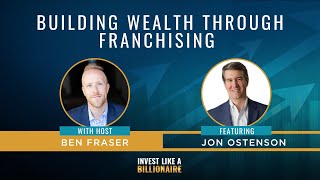
Jon Ostenson, CEO of FranBridge Consulting, explains how franchising can build wealth with lower risk than starting from scratch. Most franchises survive past five years, require $150k-$400k upfront, and generate 15-27% EBITDA. Service franchises like home care and youth sports offer higher margins and recession resilience than food concepts.
Chapters
Hello, future billionaires. Welcome back to the Invest Like a Billionaire podcast. You're not going to want to miss today's episode. It's really, really fascinating interview with John Austin, Franbridge Consulting. John is the top 1% of franchise consultants in the country. He's been in this franchising space for many, many years and really kind of shares all the good, the bad, the ugly of what it means to be in franchising. You know, I've shared a lot of this podcast about the value of being an entrepreneur, about being a business owner. It's one of the fastest ways to accelerate your wealth growth, but it's sometimes difficult to start something from scratch, right? So there's a lot of, you know, proven reasons why franchising is a great method. It's not for everybody, and we talk about that, kind of what the kind of requirements and skill sets are needed. But he kind of breaks it down. What is it like to be a franchise owner? What types of franchises is he most interested in? Is it really, you know, possible to do this as a semi-active or semi-absentee owner? And then also to invest purely passively in franchising. Uh, he shares some kind of new ways that the industry is shifting to allow investors to invest purely passively. So if you're interested in business ownership, franchise, you definitely want to check this out and really hear from the knowledge of John that he has to share. So hope you enjoy this episode. And again, if you are enjoying this podcast, we always appreciate the support and leaving a review and sharing with a friend or two. I really appreciate you guys listening. Thanks so much. This is the Invest Like a Billionaire podcast where we uncover the alternative investments and strategies that billionaires use to grow wealth. The tools and tactics you'll learn from this podcast will make you a better investor and help you build legacy wealth. Join us as we dive into the world of alternative investments, uncover strategies of the ultra-wealthy, discuss economics, and interview successful investors. Looking for passive investments done for you? With Aspen Funds, we help accredited investors that are looking for higher yields and diversification from the stock market. As a passive investor, we do all the work for you, making sure your money is working hard for you in alternative investments. In fact, our team invests alongside you in every deal, so our interests are aligned. We focus on macro-driven alternative investments so your portfolio is best positioned for this economic environment. Get started and download your free economic report today. Hello and welcome back to another episode of the Invest Like a Billionaire podcast. I am your host today, Ben Frazier, and today we've got an exciting guest, John Ostenson, and really excited to have John on today talking all about franchising. So real quick background on John. He's the CEO of FranBridge Consulting. He's a top 1% franchise consultant, author of a really cool book called Non-Food Franchising, and was formerly a franchise president, a multi-brand franchisee. And he's a frequent contributor on a lot of publications like Forbes, Inc., Bloomberg. So he knows his stuff and super excited to talk about this topic. So, John, thanks so much for coming on.
Ben, thanks for having me. I love the show and excited about our conversation.
Well, this is a little bit outside of some of the normal kind of content we talk about, which is heavy on the real estate side of things. That's kind of a lot of what we do. But what I love about this and, you know, secretly I have a lot of excitement about this personally because I used to be a commercial lender and did a lot of SBA financing. When I did that, I did a lot of M&A work for franchises and just saw kind of under the hood of a lot of what these franchisees were able to do in purchasing these kind of established brands and kind of a play-by-play for launching this business and really, really cool thing. And so I love this topic. I think this is an amazing way to, to build wealth, to grow wealth. And to kind of have a different, you know, diversification strategy than just real estate. So give us kind of the real quick rundown of what does it mean to be, you know, franchisee? What is franchising and why does it, you know, make sense for some folks?
Absolutely. And I'll start by saying, hey, franchising is not right for everyone. Some people are too entrepreneurial and want to put their thumbprints all over a business. But I'd say for the vast majority, it truly is a better path to business ownership and You know, some of the reasons there, you've got the franchisor on the sidelines. That's essentially your coach. The better you do, the better they do. And obviously not every franchisor is created equal. And that's where we help our clients identify those with the track records and the leadership teams to be able to provide that future support. But to your point, you have a playbook day one. You know, there is a path to profitability. It's been proven out elsewhere. Now it's just time to go execute it. You're not questioning, is there profitability to be had in this model? You've got other franchisees all across North America that are running the same business day in, day out. So you're constantly exchanging best practices and learning from each other. And, you know, it's cliché to say, but you're really in business for yourself, but you're not all by yourself. Yeah. And then there's smaller, you know, benefits such as supply chain efficiencies and maybe being able to buy in bulk, whether it be goods or services, and you get a discounted price. You know, oftentimes you have marketing analytics, you know, they've proven out in other markets, you know, what marketing is optimized, and you can transcend that into your market rather than having to start from scratch. So, you know, a lot of things are put into place, and we've had a lot of clients, whether it be actively or oftentimes semi-passively, step into ownership and build up portfolios and really see franchising as an asset class within their portfolio.
Yeah, I love that. And I said this a lot on the podcast, right? Our whole Goal of this podcast is Investing with Billionaires, study what the ultra-wealthy are doing to preserve, to grow their wealth. And one of the things when I was a lender, as I was, you know, looking under the hood of a lot of these wealthy, you know, borrowers of our business, these business owners, many times got to see their personal financial statements and look exactly what they were doing to, you know, create these net worths that were impressive. And it kind of came down to really two things. It was kind of a common denominator that I noticed and One of them was investing in real estate and the other was a lot of times they're business owners. Right. And those are kind of two very clear, well-trodden paths of building wealth. And to your point, you know, it's, it's not right for everybody, franchising, that is, but it can really help get from that kind of 0 to 1 phase and go from 1 to 10. Right. And, and being a lender and focused on a lot of small business activity, the numbers— and we've all heard them, right— are pretty surprising of the number of small businesses that fail every year. It's very difficult to get proof of concept. It's very difficult to get scale, to beat out competition, to have profitable businesses. So when you're investing and you're buying into a franchise system, a lot of times that kind of initial proof of concept and the profitability and the, you know, all the other pieces that go into it, you know, do you have the right operating expense kind of ratio and the right margins in place? And all that has already kind of been determined for you, figured out for you. Now it's a matter of can it apply to this market? Can my skill sets, you know, work in this particular business? And so I think there's just some really cool things you were saying where it just— it creates that kind of play-by-play. It eliminates a lot of the risks of starting a business from scratch with a brand new concept and You know, for some people it's not right, you know, but for a lot of people it can be. So talk a little bit about your process because you said it's not for everybody. So how do you determine if it is right for you to even get into this? And then knowing a lot of our audiences, you know, maybe they don't want to be, you know, full-time business owners. Is it really possible to do this in a semi-passive way?
Yeah. No, I'd start by saying, to your point on real estate, I think that's a really good point. Probably 75% of our clients also invest in investment real estate, myself included. You know, I've got both components in portfolio. And, you know, with business ownership, there are tax benefits, just in the same way real estate provides some. Here you've got some active income benefits where, you know, whether you're paying your kids in the business, and therefore they're able to contribute to a Roth IRA now, or life insurance policies— things you couldn't have done as a W-2 employee, you're able to through business ownership. And of course, you get expense, you know, write-offs for taxes, you get the cash flow, but you also get that asset exit value down the road, which I'm happy to talk more about. But no, you know, I'd say we oftentimes talk to clients and they say, hey, what, what provides the fewest headaches, fewest number of employees, largest return? You know, that's kind of the common theme. And I'd say, you know, there's two traditional methods of ownership. One would be owner-operator, where you step in and run the day-to-day. Probably about a third of our clients are doing that. And then there's the model of semi-absentee or semi-passive, where, you know, two-thirds of our clients are saying, hey, let's put a manager in place day one. And we all know that it comes down to having a good person that you put in place where you align incentives and you trust them. The nice thing of franchising is you do have that franchisor on the sideline that can serve as the technical resource to help them with their day-to-day operations. So, you know, as the owner, the buck still stops with you, but you do get a lot of heavy lifting along the way where some of that daily burden falls off of you. And, you know, we just have client case study after case study where, uh, you know, they've built up portfolios of investments. I was talking with a client yesterday. Every year he and I do a franchise deal together and he buys several locations and puts a young guy from his organization over, you know, in charge of running these. You know, he's the largest franchisee of Two Men and a Truck moving service, operates in 10 markets, $35 million a year in revenue. But he's started investing in property services businesses and just very scalable variable cost type models. And it gives him the opportunity to create jobs and new entrepreneurs, and he's doing very well financially. So, you know, lots of case studies similar to that with different people along the way. But I'd say the ultimate goal for most people is not to run the day-to-day. Maybe they do it for a period of time, maybe they never do it. And one thing I mentioned to you the other day, Ben, was there is a passive model. It's very rare. It's kind of the unicorn out there. But there are 3 or 4 companies that have what's called an investor model where they will run the business for you. I'm personally invested in one of them myself. Obviously, these have been very attractive. I've had many clients buying into these opportunities.
And just to be clear, is this an investment at the franchisor level or at a franchisee level?
At the franchisee level. So I had a client yesterday buy the right to go all of Boston for a spray foam insulation business. You know, there are a couple in the pet space. The one that I bought into down in Miami, couple locations of a custom orthotics and footwear business where we've got a great franchisee at the helm. He's already running some corporate locations, had staff in place and said, hey, we might as well do this on behalf of franchisees as well.
Wow. Okay. I want to come back to that in a minute because I think that's really interesting to dive into. But one of the things you said earlier, I think I want to kind of zone in on it because it is really, really important to understand is the similarities between business ownership and real estate ownership. Right. Because in a lot of ways they're very, very similar. And, you know, folks that listen to this podcast a lot, you know, heavy in real estate, you go buy a piece of real estate, it generates income and you're buying that income on a multiple, right? It's usually called cap rate. You know, we have our own terms in real estate, but it's effectively a multiple you're buying of that, of that cash flow. And then you do things hopefully that can increase that cash flow by increasing the revenue or reducing expenses. Maybe you have a unique business plan that's going to bring new amenities or whatever and you increase the value, your cash flow, number one, but you increase the value down the road because of increased net cash flow and it's based on a multiple. And so businesses are priced very similarly, right? And sometimes the multiples are lower because, you know, potentially risk is higher. So, you know, whereas real estate, you may be purchasing a 20x multiple, which would be a 5% cap rate, maybe on a business, it's depending on the business and the size and the franchisee, I would guess 3 to 10x multiple somewhere in there. Right. And so going to be a little bit, you know, lower multiple, but it also helps you from a higher cash flow standpoint generally. And then you have that enterprise value down the road. So I just wanted to pause there because I think it's really important to make that correlation because it is, you know, very similar in a lot of ways. Yeah.
No, I think real estate investors are a great fit for franchising in a lot of ways because they want to be a little more hands-off traditionally. And with real estate, the feedback I continue to get and I see it firsthand because I invest in real estate myself, there are only so many good deals to be had. Now, you guys do an excellent job of finding the deals, Ben, but, you know, it's not as easy as it used to be to find out there. So I continually hear that theme and say, we have cash on the sidelines, where can we get yield? Maybe outside the public markets to complement what we're doing. So that's one piece of it. But also there are so many franchise businesses that really interest real estate investors. You know, if there were a common theme of what we're seeing across the landscape, it would be boring businesses, as I like to call them. It's understandable, cash-flowing, Amazon-resistant type businesses and things like home and property services. Maybe that's insulation or gutters or dumpsters or floor coatings. You know, in some markets it may still be oil changes or, you know, kind of niches in the health and wellness space or businesses that will do well regardless of the economy, you know, people are always going to spend on their pets, on their kids, on their aging parents, on their health, on their homes. So businesses and niches that support these areas, I like to term as kind of non-sexy. And I do think non-sexy is the new sexy when it comes to business ownership. But that's where people love just the different models that play in these areas.
So that should be the name of your next book, right? Non-sexy is the new sexy.
That's right.
I like it. I mean, I remember looking at some franchises. There was one that I found that is a bit was a locksmith company. So they basically, you know, basically buy the rights to the brand and you have some equipment, you go around, you do commercial, you know, locksmithing. There's one that does pool services, right? It's just a service-based company. And you go in markets that have a lot of pools and, you know, everyone has a pool, needs to get a service. And just things like that. You don't really think about it as like, oh, that could be a profitable business, but these kind of needs that, you know, are a lot of times not connected to the economy, right? People have to spend on these anyway, to your point of the home and, you know, pets even, and other things that just people are going to continue to spend on are, you know, can have a lot of recession resistance even. But, you know, I want to get into the passive, semi-passive in a little bit, but talk a little bit about more of your kind of thesis for these boring businesses, right? As opposed to like the food franchises. I think a lot of people think franchise and think McDonald's or they think, you know, Jimmy John's or these kind of other big brands that are all food-based, retail-focused. And while those are franchises, right, a lot of times you can buy into those. So there are a lot of times a lot of other factors that maybe make them less attractive than some of these more boring, maybe service-based businesses. Just give us a little bit of, of compare contrast between some of those.
Yeah, I'd start by saying we definitely need the food guys. I appreciate them. I'm a consumer myself and, you know, admire what they do. It's a lot of work for about 95% of our clients. They come to us and say, hey, we're interested in areas outside of food. And, you know, some of the reasons behind that would be maybe less CapEx out of the gate. You know, there's less of a retail buildout, less equipment. You don't have the inventory that can go bad in a lot of cases. So you have less spoilage, therefore higher margins. Maybe you have a smaller team that's, you know, fewer operating hours, fewer hourly employees. Now, if you certainly get in with the Jimmy John's and you grow that and have a sizable portfolio, it can be a really attractive investment. However, there are so many foods, whether it be you think about fro-yo, frozen yogurt, that are hit or miss and they're trendy. And we don't like trendy, we don't like sexy. We like things that are going to be around to stand the test of time. 92% of franchises are still in business after 5 years. You compare that to your traditional startup, it's pretty eye-opening. Now, not everyone's thriving, but those that are in industries that are needs-based, less discretionary, are thriving in large part.
That 92% is as a whole franchises or the non-food franchises specifically?
That would be what the IFA, International Franchise Association, shows in total for all franchises.
Okay, interesting. So even the ones that maybe are more fatty, you know, those are probably the outliers that are skewing— skewing those over anyway. But I remember the whole Froyo fad, right? There was one popping up at every corner, and now I think there's like one that I know of these days. You know, it's— it's— you do want to be careful of those types. But even still, you know, as a whole, you're saying that the— the— the amount of franchises that are still operating 5 years later is over 90%. That's pretty— Pretty impressive. Yeah, no, for sure. I would imagine too, like, a service-based business is going to have a lot less, you know, startup costs than, you know, a big, big brand, you know, heavy retail type deal. Talk about kind of what are the upfront capital costs, you know, what can you expect? You know, it probably ranges a lot, but how much money do you need to start a franchise? I know, like, for McDonald's, I think you got to at least be planning to invest $1 million per store or something. I've heard—
I don't know if that's the right number, but I know it's up there. Yeah, certainly if we're doing laundromats or something along those lines, you're probably paying $1 million. But I'd say most of what our clients are getting involved in today, from senior care to youth sports to, you know, some of these home and property services businesses, you know, when you look at the all-in investment franchise fee, startup cost of working capital all grouped together, what we call the Item 7 within their FDD, you're usually in the ballpark of somewhere between $150,000 and $400,000. And in some cases that may even mean 2 or 3 territories or locations. So including working capital, you're kind of in that ballpark. Some people are using cash. We do have some that love the idea of leverage, and SBA lending is very, very common, as you alluded to. Some are using an old retirement plan through what's called a ROBS program where they can roll that over to purchase the business. And some are using a, you know, a HELOC or they, you know, will use a portfolio loan. So a lot of ways to fund that business.
Talk about the ROBS program. That was a really cool thing that was created. I think it's Rollover for Business Startup or something, right? So people don't realize you can— if you have retirement funds in a 401 or an IRA, the government allows you within certain parameters to roll some of that into, into these businesses. It actually financed a lot of deals through the SBA that allowed the down payment to be through the IRA. So actual cash that they had to come up with buy the business, they didn't need much, right? It was actually could use their retirement that they saved up. So talk about that program a little bit. That's pretty cool. Yeah.
Big stipulation is that it does have to be a previous employer, but then you're able to self-direct and you usually use a third-party facilitator. And there are a lot of these companies that we partner with to help our clients, but you use a third party and there are a few hurdles you have to jump through to kind of on an ongoing maintenance standpoint to make sure that you don't have you don't fall susceptible to those tax consequences. And so they have set it up, but there are some stipulations around it which we're happy to speak more.
Yeah. So just again, what's kind of the range of investment that you're going to see, you know, of cash out of pocket and, you know, assume that you maybe use some leverage or, you know, what would kind of be a normal range?
Yeah, I'd say if you're all in for $250,000, you know, you're probably putting in somewhere around $50,000, $60,000 in cash, call it 20%, 25%, and then rest you can finance.
Okay. Yeah. So it's probably about the same amount of an investment into a real estate deal. I'm sure $50K, $50K is a lot of times the minimum investment. So for a similar, similar amount, that's interesting. Okay. So talk about, you know, one of the things that I discovered when I was doing some of this M&A lending, you know, this wasn't, this wasn't franchising, this was buying actual you know, non-franchise businesses, but there would— there's this broker that would go and recruit these kind of corporate executives to then come and be their own business owner. They would, you know, leave kind of corporate America and go run— like, I remember one was just like a rock quarry. I mean, it was kind of this random business and they like, I can run a rock quarry. Well, turns out they couldn't run a rock quarry and it was afterwards the last thing they wanted to do and had no idea how to sell this, had no idea how to really be an entrepreneur or, you know, a hybrid entrepreneur and really struggled. And so, you know, I think there is an element of, you know, to play both sides of it. What, what are kind of the key skill sets? What are the things that, you know, you want to make sure and do a self-assessment of to understand, you know, do I have what it takes and do I have the desire to do this? And then maybe also plays out and how you invest, whether that's, you know, owner-operator, you know, semi-passive or kind of the full passive, which I'd love to get into more.
Yeah, absolutely. No, I think understanding yourself, understanding kind of the why behind your— why you're doing, you know, do you bring a partner in? Do you have a key employee that you could hire, you know, to kind of help you run it? You know, the nice thing about franchising, the goal really is to going as eyes wide open as possible. And so we've designed our process to kind of complement the franchisor's process where they'll take you through a series of calls and presentations and really expose you to all facets of the business. You also get to see their FDD, their franchise disclosure document. It's a big intimidating document, but we always encourage our clients to go through it with a franchise attorney to help point out, you know, different areas, make sure you really understand it. And there you get to see past performance of other franchisees. It's what's called the Item 19. So at least you're able to plug in some reasonable assumptions into your pro forma. You also get to talk to other owners. It's what we call validation, where you talk to other owners along the way and hear about their experience and ask them questions. So is it entirely foolproof? It's not. You're still taking a risk stepping out there, but you're so much more informed than if you were just to do a back of the napkin pro forma buying a traditional business.
Yeah. What's kind of the, you know, spectrum of you know, success over time with, you know, franchisees? I know like network marketing, say only the top 1% actually make, make enough money to make it work. Okay. Right. Is that a similar experience in franchisees or is it a little more evenly spread out where, hey, 50% are going to— I mean, obviously there's averages, but talk a little bit about how that is. That skewed pretty, pretty heavily to the top ones or is it usually a little more even distribution?
I'd say oftentimes it is fairly more skewed, just like anything. I mean, you're going to have those that are top performers and those that are struggling. And I like to think about it in quartiles. Oftentimes that top quartile, your middle 50%, your bottom quartile. When I was a franchisee at Shelf Genie, I got to see, you know, the visibility into, you know, 100+ owners across North America running the same business day in, day out. And we had our top performers or we had those that we had to lean in and coach a little bit more than we had. And for some of them, You know, some of them just don't think big enough and they are comfortable with making $150,000 a year and they're happy and that replaced their corporate job. Others say, hey, I want to really go big, replace myself and go get the next thing and, you know, do a good bit more income. So in those cases, I'd say this sounds cliché, but our top performers were those that came in. They were humble enough to follow the system and not try to be the smartest guy in the room. They didn't bring all that baggage from their past marketing agency into play. You know, and so I'd say that's one thing, follow the system. And number two would be how you deal with people. You know, be someone that people want to work for, be someone that they want to continue working for, attract talent, retain talent, make tough calls when needed. It sounds, it sounds so basic, but it's true. Just like in any business.
Yeah. I mean, what would be some other kind of top skills that you would say are necessary? I've obviously people is, you know, most businesses are people businesses, right? And being able to work well with people is very, very important. But What else? I mean, you got to have some drive, obviously, if you want to go be your own business owner. But are there any other things that are kind of, you know, key and that are kind of more general that can apply to a lot of different businesses?
Yeah, I think if there's some degree of sales in your background or it's not, you're going to be a tip of the spear in this new venture, but you know how— what to look for in salespeople and how to incentivize and coach them. I'd say that's a nice skill set. You know, if you have any bandwidth at all to get involved in the community and that could be, Sponsoring the Little League baseball team down the road, or it could be getting involved in Chamber of Commerce. You know, some of that organic piece to complement the, let's say, the paid marketing. And that's always a nice addition where maybe you're able to reduce your cost per customer acquisition, let's say. Yeah, but I think just again, being teachable and going in and, you know, it comes down to partnering with a good franchisor. You know, not all franchisors are created equal, just like in any industry. And that's where we help our clients find the right ones. You know, but going in and saying, hey, you know, we're going to follow the system and, you know, call us out if we need coaching. And, you know, and then bring on good people. So much of it comes down to good people.
Absolutely. That's probably honestly part of the challenge with the retail or food service-based businesses is labor right now. And the, you know, staffing is such a, such a big challenge. You know, when you go more service-based and just lower overhead, lower staff requirements, that is a helpful thing. Very, very cool. So, so talk a little bit more just about the kind of semi-passive and this kind of passive investor approach. I mean, both of those sound a little too good to be true, so I'm skeptical, but, you know, convince me otherwise.
Yeah, semi-passive. The buck still stops with you. I mean, it's always been common in franchising. You put someone in place to run that day-to-day operation. Again, they can lean on the franchisor for support. End of the day, the buck still stops with you. If that person walks out the door, if they decide, you know, if they're— if they need to be replaced, they're not doing a good job. That's where, as a business owner, it can create some headaches and you have to lean in until you find someone to replace them. So I'd say that's probably people's number one concern in their mind is, you know, who is that key person? We do have a recruiter on our team that can help clients find that general manager. But, but still, you know, you send them off to training, get trained up by the franchisor, So I'd say that that's probably the biggest piece with that. The passive side, again, there's only a couple of companies that are doing this. I'm hoping that more companies jump on board over time. You know, there's some strategic reasons why it can make sense for certain companies that are staffed up to be able to support this. But essentially the franchisor, they help recruit the general manager in a passive opportunity and then they manage the manager and you as the owner you know, there will be a few steps in the beginning where you're maybe signing a lease or maybe you're signing, you know, some other documents, but then you're getting on a call once or twice a month, checking in with the team, making decisions, letting the team report back on performance to you. So I personally just signed a lease, you know, in Delray down in South Florida this past week for my first location within one of these models. I'm excited about that. You know, it's retail, but it's retail light, I would call it. Okay.
So, so in this, in this structure, the franchisor is the one managing the manager of the franchisee. So that's really— so that, that actually to me feels like it creates a good alignment of interest, right? Because the franchisees are paying the franchise fees to the franchisor, which is how they make their money. But now the franchisor is taking the risk that the franchisees that they're managing are going to be able to be successful to pay them. Right. So, I mean, am I thinking about that right? Or it seems like there's a good alignment of interest in that model.
You absolutely are. In theory, franchising is aligned that way, that the better the franchisee does, the better the franchisor does. So the franchisor is incented to lean in and support and coach and in this case actually manage personnel for them. You know, again, just like any industry, you're going to have great franchisors you know, with the track record, they've supported successful franchisees. Then you're going to have some that maybe don't have as much franchise experience, but they have a lot of industry experience. And then the older I get, the more I say it is so important to invest in the leadership team behind a company. That's what I look at every time I invest. And I want to see franchisors that have a combination of industry experience and franchise experience. That's your business partner. That's a huge value add of why you buy into a franchise. It's not just the playbook or not just the system. It's not the brand. It's that leadership team that's your business partner.
Yeah, well, talk about that a little bit because you've talked a lot about the franchisees and the skill sets required, but what makes a good franchisor and what separates, you know, the top brands from the mediocre brands? And what are some kind of maybe yellow flags that would give you pause for concern of, you know, hey, my buddy started this franchise and they're you know, wanted me to jump in with them. Should I do that? Right. I mean, that's— yeah. Talk about what separates the good from the great in that.
Yeah. The easiest screen there is, you know, how well-capitalized are they? You know, obviously they've got to have a lot of money in the bank because when you start a franchise, there's a lot of expenses pre-revenue that you're generating on the franchisor side. You know, one of the things I like to see also is that many franchisors that are emerging, newer brands that are in expansion mode, you know, expanding across the U.S., which is very common these days, I like to see that they've partnered with a great franchise organization. That may be an organization that helps them more on the sales side of the business so that they can then spend their time supporting new franchisees and getting them up to speed. So that would be one piece which I dig into more. But so much of it comes down to their experience and their track record. You know, it's not just the promise of tomorrow, but it's what have you done in the past. And so, you know, I'd say the industry experience usually is natural check the box. They wouldn't be in their position if they didn't have that industry experience and have created a successful model. But if they don't have franchise experience in their background, I want to see that they've complemented that with franchise veterans that they brought in, just because supporting franchisees is a different animal. And you've got to have franchisors to understand when they need to be tough and hold their ground, but also when to really lean in. You know, I, I think franchising is a great path for a lot of companies from an expansion standpoint. You know, on paper, you're able to typically expand pretty rapidly using other people's funding who have skin in the game, that know their local markets. And private equity absolutely loves franchising. When you look at all their acquisitions, you know, the flip side is you've got to go in and be staffed up and ready to support your owners or else you're going to have a lot of headaches on your hand. You're going to wake up one day with kids all across the country. With expectations of you that you maybe you didn't properly set in the beginning. So, you know, it's a unique dance. It's a unique dynamic that can really be done well. I've also seen instances where it hasn't been done as well.
So what's the incentive for a franchisor to do this fully passive model? Because, I mean, ultimately all that they're benefiting from is the capital of the investors. So it's just— it's basically a more efficient way for them to allocate their own capital. Or what was— what's the incentive for them to do all the work in you know, have investors, you know, make, make the returns. Yeah.
No, you're essentially opening up a bunch of corporate locations, but you're using the franchisee funding to do it. So rather than having to take on debt, rather than having to take on private equity, if you have private equity come in, they would oftentimes be dictating, you know, some of the moves that you make. So you get, you get them off your back. You really get to do what's right for the business. And when you think about that long-term game, all of a sudden you've got owners or you've got locations across North America that are running the playbook because your team's running them. It's not at the whim of the franchisee. And so you're able to streamline a lot more of the communication and the support and the efficiencies in the operations of running the business. And so, but I'd say I was talking with one of them yesterday and he said it is so nice not having private equity involved. And yet we've been able to scale rapidly, which you usually— you wouldn't be able to do without that private equity backing.
I mean, yeah, because private equity, they can write big checks, but they, they want a lot for it. They want you to hit certain benchmarks. They usually have short timeframes, right? They want a 3 to 5 year kind of max, you know, growth and then sell. And so sometimes the interests aren't aligned with the business plan of the franchisor. And so they, you know, want to have more patient capital. They want to have capital that's not going to have this, this that, you know, sense of, you know, burn it all in your pocket and got to get the money back, you know, return to their investors.
And I will say, in defense of private equity within the franchising realm, I think of Princeton Equity Group or some others that call me every couple of weeks and say, hey, John, what are you seeing out there? A lot of them have cash on the sidelines. They've got a billion-dollar mandate they need to go franchise. That's the case with a few of them. But they love that predictable revenue model the franchising provides. They like the scalability. They like all the dynamics around why it's an attractive model. On the franchisee side as well. So private equity loves, loves, loves franchising, typically on the franchisor side. But you think about like an Orange Theory or a PODS, sometimes they will roll up franchisees as well. But I'd say a lot of, a lot of what I see right now is more patient capital on the PE side in franchising. It's more strategic and they're building out these portfolios of brands than maybe they're bringing in centralized, you know, sales call centers or, you know, marketing. They're able to do things more not just from an expansion of one franchise system, but multiple franchise systems pulled together. There's some synergies around that. That's very common these days.
Okay, interesting. What can you give us any kind of like detail or even a case study or like what could an investor expect in that kind of, you know, position as a passive investor in one of these, one of these deals? Is it you know, you get a cash flow, is it just a pure kind of total return and wait for the capital event down the road? Is what's kind of obviously it's different for every deal, but just give me some context for what that looks like as an investor.
Yeah, you know, the one that I just bought into, I'd say this is a more conservative one from a financial standpoint. Then I'll give you one that's a little more aggressive from the numbers standpoint. You know, all in investment, I'm probably 160, 170 per location. I'm doing a handful of locations. And with this one, the franchisor is running the business for me. I mean, they've got some locations that do as much as $800,000 or $900,000 in revenue. But what I've modeled out is $600,000 in revenue per location trickling down to around 15 to 20% EBITDA. So call it, you know, somewhere between $80,000 and $120,000, we'll call it $100,000. Well, it's not a bad— you know, that's not a huge number, but it's not a bad return when you consider what I paid.
And then your cash on cash is going to be very, very high.
Yeah. And the other exit down the road, you know, when I look at— there's a company that we did 9 placements with last year. It's in the gutter industry, $6 billion industry, highly, highly fragmented without a large national player. But this is a company that came in with a better— and this is one that most people run semi-passive, not passive, but all-in investment. You're right around $200,000 for this one. Their franchisees and their item 19 are averaging $1.7 million in revenue. Now, not every franchise system is created like this, but shows you what can be done. 1.7. They were at 1.2 the prior year. So you're seeing really good system-wide growth year over year. And they were doing that at like a 27% bottom line margin, EBITDA margin. So that translates to $500,000. Let's go conservative and assume it's less than that in our pro forma, even though that's their historical average. When you look at that $200,000 initial investment, be pretty attractive. So again, not everyone's created that. Not everyone's created a life here, but there are some.
But yeah, absolutely. Well, very, very cool. Josh, this is always fun to chat with you and hear about, about this space. What's the best way for folks to kind of reach out and learn more about what you're doing and about this whole world of franchise investing?
Yeah, first off, it's entirely free to work with us, very much like an executive search or real estate type model. We get paid by the franchisors when placements happen. So no cost at all on that piece. Nice and clean. But I'd say come out to our website, franbridgeconsulting.com. That's F-R-A-N like franchise, franbridgeconsulting.com. You'll have a pop-up out there, multiple places where you can sign up for a free copy of our book. And when you do, I'll have my assistant reach out and also offer a link to my calendar in case you'd ever like to take a next step and have a conversation.
Awesome. We'll put that in the show notes so folks can click on the link and learn more. And John, thanks so much for coming on. Really, really appreciate it.
Enjoyed it, Ben. Thanks for having me.










