
Forecasting the U.S. Economy: Insights from WSJ’s Most Accurate Economist
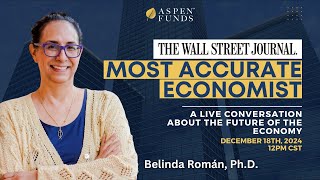
In this live webinar, host Speaker A interviews economist Belinda Roman—ranked by the Wall Street Journal as the most accurate forecaster in 2023—alongside commentator Bob Fraser. The discussion covers Roman’s forecasting methodology, the upcoming Trump administration’s policy agenda, and its potential macroeconomic impacts. Key topics include tariffs and trade with Mexico, Canada, and China; immigration and labor shortages; tax cuts, budget deficits, and government spending; Federal Reserve policy, recent rate cuts, and expectations for future interest rates; Treasury market dynamics and long‑term bond yields; GDP growth outlook for 2025; inflation persistence; consumer spending, credit card debt, and wage trends; energy policy and drilling; and investment cash availability, especially in real‑estate. Roman provides qualitative insights—using data from FRED, Treasury, ADP, and local economic indicators like San Antonio—as well as behavioral considerations that she believes improve forecast accuracy. The panel debates the likelihood of extreme tariff or immigration policies, the feasibility of reshoring, and the balance between tax cuts and fiscal sustainability. The session ends with a live Q&A covering Treasury rates, energy drilling, consumer resilience, and where listeners can follow Roman’s upcoming 2025 forecast.
Chapters
All right, we're live. Hello everybody, thank you so much for jumping on today. This is live webinar and we're very, very excited because we have our good friend Belinda Roman, um, joining us today. She is an economist and was actually ranked by the Wall Street Journal as the most accurate forecaster in 2023. And coming— we had her on the podcast earlier this year to talk about what she saw in 2024, and a lot of those things have played out. And so we thought, hey, what a great time, end of the year here, going into 2025. We have a new administration coming into the presidency and a lot of question marks, right? I think as we sit today, the Fed is actually meeting and discussing whether they're going to cut rates again. And so there's a lot of things happening, a lot of uncertainty, a lot of questions, especially with the new policies being proposed. So we thought, who better than to come on and share their thoughts than Belinda? So Belinda, thank you so much for coming on this webinar today.
Yeah, thank you very much for inviting me.
Yeah, it's gonna be super fun. So for those that maybe don't know much about your background, um, and what you do, share a little bit of that, and then Um, would love to kind of go from there.
Okay, well, uh, I'm an economics professor at St. Mary's University, and I joined the panel for the Wall Street Journal several years ago when they, they put a call out for, for new and additional economists to participate. Uh, and so I decided, well, you know, I'm gonna throw my hat in the ring because, A, it's my job, and B, I, you know, I want to to, to have the experience. So the first couple of times I was really, really out, uh, and that was a bit frustrating. But as time progressed, I think I was able to give a little bit more refinement to my, to my, uh, forecasting. And, you know, as luck would have it, I think it was the 2023, I was pretty— I wasn't spot on, but I was the closest to what the prediction, what the actual forecast came out as. So I've been doing it now for 4 or 5 years. Yeah.
So talk a little bit about maybe your process. We talked about some of the podcast, but just as a rehash on kind of how you look at the world, maybe look at things differently than other economists when you're kind of putting together your kind of big picture approach to what's going to happen.
Right. Well, so I mean, I do the typical stuff. I do go and I, you know, go to pull a lot of data sets off of Fred, you know, the Federal Reserve is, is very good at collating and putting things together. So I look at all of that. I go to the US Treasury, uh, you know, I'll check some of the other ADP, some of the other websites, and I'll pull all that together and I'll construct a model. And then I'll run a couple of regressions and forecasting, and then I'll go back and I'll start looking at, well, what's going on in the business press? And what do I see happening when I, you know, use San Antonio as my model for a lot of things because it's right in the middle of the road. It's not quite the 50th but the 47th most dynamic economy in the US. So it's kind of middling. So I can use it as my average and say, what do I see? Do I see a lot of vacant signs? Do I see businesses coming and going? You can see a lot of things if you're paying attention. So I do a lot of that and read the foreign press and look at the foreign datasets and then kind of put it together and say, okay, you know, how do I feel? You know, you got it. So it's much an art as it is a science. And I think it's that art part that requires that we think a little bit more about the human element, the human behavioral element in what's happening in these aggregate sets. And I think that helped me in 2023. A little bit different, I think, for 2024, because there were so many moving pieces and, you know, surprises that were difficult to, to predict. But, you know, hopefully I did a decent job this time around.
Awesome. Well, we're gonna dive right in. And just as a heads up for those that are watching live on the webinar here, you know, lucky you, because we're going to carve out a little bit of time at the end of this session to do some Q&A. So be thinking of questions as we're going along and things that you feel like we didn't cover or want more insight on. Be sure to keep those in the back of your mind, and then we'll call for questions here in a little bit. But let's, let's jump right in, Belinda. So obviously, top of mind for most people is with the transition of the presidency, new administration, very, very different way that they approach the economy, the way they approach the, the budget and tax cuts and all these different things. What are you seeing? What are you thinking about? And what do you kind of see, you know, where are we going into, going to 2025? And what are the big things in your radar that you're thinking about?
Yeah, yeah. I mean, we know Trump, the Trump administration from the last time, uh, in terms of where he wants to go. So I think that gives us a good measure of what to think about. So tariffs you know, make, you know, make America first again, that sort of thing. Try to get everything reshoring, the strong immigration policy and development of business. So he's a pro-business president. So I, I can— I think that we can use that as our baseline to, to understand what's going on. I, I also feel like this time around perhaps he's going to be a little bit more measured because he understands the system in DC, and because DC is just totally different from the rest of us, right? So I'm thinking about that. And then of course I was actually at a, uh, the first ever Lone Star Trade Summit, and everybody talking about tariffs and immigration, tariffs and immigration with Canada, with Mexico, and you know where we stand on that. So I think that first out of the gate is going to be very important for us. Where those, uh, whether or not the tariffs will be as ominous as he's saying and as restrictive, or is that the opening salvo and is he going to work his way back? And it looks like already Canada's making adjustments because I saw they announced they're going to spend billions of dollars on border security. What we haven't heard is anything from Mexico yet. Have we? I think those are interesting pieces that we need to think about because they're the ones that are right there with us, our two contiguous borders. We need to make sure that everything's moving and flowing properly as it makes its way through everything. I think those are the big challenges.
Let me jump in here. I watched 2017 and when he came out with the tax cuts and the breaks on reshoring of overseas cash for businesses and other things and reduce the corporate tax rate, I said our economy is going to get on fire. And it did. He is probably the most astute economically president we've ever had, you know, because of his business sense, I think. So if he goes all in on tariffs, the worst part, if he goes as far as he could possibly go, the most extreme things that he said, And if he does the most extreme things he said in immigration, I mean, I think we're going to really struggle economically. But my view is that it's his art of the deal, right? It's the way he's negotiating. And I believe there has been movement in Mexico. I think they have already started detaining people that are trying to cross. And so he's coming out really strong. But to me, the big question is what will he actually do, right? Because if he implements tariffs as he's threatened, you know, it is inflationary, right? It is gonna be very disruptive to our economy and for the world. And same with immigration. I mean, you know, yeah, do we want 15 million people have come over in the last 2 years? But we do need, we need labor, right? So anyhow, so it really remains to be seen. And it's, I mean, so much of our prediction is really predicated on how extreme is he actually going to be versus his rhetoric.
Exactly. Yeah. And that's a hard one because you're, you know, when you watch all the media, domestic media outlets, you gotta get the spin out of there. Right.
And they're alarmist.
They're alarmist.
He's saying very alarming things. But the question is, will he actually do them? And my gut says no. He's not.
That's what I think. Yeah. That's what I think too. And I mean, you know, he's got some big partners. Texas is a big partner. And I know the governor's already come out and said, we have not, we can't have that 'cause you bring Texas down if you do it in an extreme way. So there's gotta be some softening. It just, how is it gonna play out? And can we, you know, withstand the rhetoric and all the hype around it and see it more clearly? Yeah, that's a challenge. That's a big challenge.
He's already said, I mean, Mexico is, is I think our biggest trading partner right now. And, and if he put, if he slapped on 20% tariffs, I mean, you talk about disruptive. But he's already said he's negotiating tariffs against, you know, immigration. So control immigration, Mexico, and we'll forget the tariffs. That's what, that's what it feels like he's posturing. I mean, he said this. Yeah, a couple times. So I think we'll see immediately some, you know, maybe some short tariffs just as he brings the threat home. But I think he really wants immigration to be controlled.
Exactly.
So we'll see. You know, I think the tariffs against China are probably more real.
Yes.
Right. Because he feels China as a greater threat to America.
For sure. And mind you, Biden never removed those tariffs that Trump put on, so they're continuing. So, you know, again, like you say, it's posturing. It's, it's the art of the deal.
Yeah.
Yeah.
But, you know, I haven't looked a lot at the economics of immigration. Um, I mean, you know, but we are having a labor shortage in America. I mean, I don't think there's any question about that, right? So I love the idea of immigration. I just want controlled immigration and responsible immigration, right? And we need We need people who want to work. You know, so I don't think it's all bad. You know, what's your view of immigration and kind of the labor crisis?
Sure. You know, I'm— everybody, you know, The Economist would say immigration is good because it replenishes the labor force. But, you know, it's not that simple because you have labor force that's low wage, low skill, medium wage, medium skill, high skill, entrepreneurial. So it's a lot of different levels of immigration. And, you know, construction is very sensitive to immigration. Agriculture is very sensitive to immigration. But, you know, agricultural workers tend to come in on the agricultural visas, the migrant workers. So that's a whole program that's never really actually stopped. So immigration is good. But like you say, the control, because the stress it puts on local communities and, you know, the perceptions and again the hype, the negative hype around it in media, I think make it very difficult for people to see the benefits of proper immigration.
And especially as you're saying, it may be filling the lower wage or more unskilled type jobs, which we actually need. I mean, when is the last time—
Yes.
You haven't seen, you know, McDonald's, you haven't seen for want, help wanted signs at McDonald's or Starbucks or, I mean, everybody's just dying for labor.
Yes.
So I do think we need a lot of low-skilled, unskilled labor, but we certainly don't need to import crime.
Exactly. That's the issue. And even along the borders, 'cause if you looked at, if you look at the way the vote played out, some of those border communities that were traditionally blue went red. And I think that's indicative of issues like crime, security, that sort of thing. They— because people who live on the border, especially the southern border, they have family across the border. So of course they want immigration, don't they? They do. But, but they don't want crime and they don't want the illegality that comes with it. And that's a distinction that needs to be made. Otherwise, everybody's very supportive of it.
Yeah. And it remains to be seen what Trump will actually do. Again, my guess is he will deport some. But it's not going to be, you know, 13 million people. We'll see. But if it did, if it was worst case, if he really did the massive deportations that have been threatened, what happens in the economy? What kind of dynamics would we see?
No, no, that tanks states like Texas, California, Arizona, New Mexico for sure. And then further afield, because we know that immigrant— the networks extend all the way to Chicago, to the Carolinas. To, you know, the Farm Belt, all of those. So you start pulling all those people out and, you know, you're going to have some significant losses.
And you think economic strength would—
yes, yes. So I don't think it's going to happen, and we're not going to be able to replenish from other parts of the world. Yeah. So we're going to have to really think hard, right?
You know, you know, um, and tariffs, again, again, I think it's going to be mitigated, but let's say it isn't. What, what if he really slaps tariffs? And let's just say China. What if he, what if he implements additional 20% tariffs across the board on, on China. I mean, that's, that's inflationary. I mean, I mean, what, what do you see?
Yes, it's inflationary, but you know that, um, there's an issue in the tariff, you know, when we do the analysis, and you all probably do this as well in, in your fund management, that sensitivity, that elasticity, and it depends on what the product is. So if it's across the board, some products are more sensitive to tariffs than others. And so how you— whether— in other words, whether or not you can push that over onto the consumer or you have to absorb it yourself.
Uh, give us an example of sensitive tariffs versus ones that maybe aren't so sensitive.
Yeah, okay, let's take for example, you know, the avocado, right? If he puts a tariff on avocados, that's going to be very hard Your block is going up. Yeah, exactly. Because you know why? Because Mexico is such a big producer and exporter to us that we basically conceded that product to them. Not that we ever really produced it in the same order. So if we want it, we're going to have to absorb that tariff, the consumer. Whereas if you have products that are on both sides of the border that are produced equally then you can say, you know what, I'm not going to, I'm not going to pay it. And the business has to absorb it. So you have a cost in a different way. So that's what I, that's what I was thinking when I'm thinking about this question. I'm like, well, what is it exactly that we're going to see?
We don't know yet.
No. And if it's, you know, value-added chain, some of the value-added is very small as it crosses the border. So 25% on something that costs $1 is not the same as 25% on something that costs $100 or $10,000, right? The magnitude. So we'd have to look at those value chains and the maquila business, you know, the twin plants, and see where is all of this actually going to fall.
Okay, what about China tariffs in particular? Yeah, because I do think— I do think Mexico and Canada is posturing. I don't think China is as much posturing. So if he slaps on massive tariffs across the board on China, what do you see happening there?
Well, I mean, everything we get has made in— made in China on it. Yeah, again, it's going to be whether or not, you know, how significant, how important that item is to the production process, right? So if we're getting components and those components are— 25% is not a prohibitive tariff, but it's significant enough to make it costly, and we may end up having to pay more. And there's the inflation again.
And but, but if they keep— he's trying to stimulate local production, reshoring, nearshoring, then it will have that effect.
Exactly.
One of the things that I love about what you do that I think a lot of economists aren't that good at is you're thinking about, okay, well, what behaviors will change?
Yes. Right.
And so, okay, is China going to sit back and do nothing? Chances are absolutely not. And so there's been a lot of fear of, oh, they'll stop buying our treasuries. And I think that's kind of ridiculous. They don't really have a choice. They're gonna keep buying Treasury as long as they have dollars coming in from their trade surplus with America. They're gonna have to buy dollars and they're gonna buy our bonds. So I don't think that's real, but I think they can bring tariffs back to us on all the stuff that we import from them, the materials. They're the number one processor of metals, zinc, graphite, 100 things, lithium. Um, they're the, they're, uh, rare earths, right? All those things that are really very— people don't realize how much, how necessary they are. It isn't just the trinkets we get from China. Yeah, it's, it's the raw materials or the processed materials.
Exactly.
And they, if they put tariffs on us, I mean, it's going to raise— it's going to be hugely disruptive. And I mean, you'll see the price of phones, iPhones go up. You'll see the price of you know, everything go up. But, you know, talk more about the China, you know, their reaction and how they might react.
Well, yeah, I think, uh, I mean, I think China—
do you see them stopping buying treasuries?
No, I don't. No, I don't, because they've got their own issues. Let us not forget that over on in China, they've got their own issues, and they're trying to figure out how to manage their domestic economy. So they need places to park their, their currencies, don't they? So I don't see that. And the Europeans are having trouble as well. Same thing I'm doing there. And the Middle East is in crisis, so I don't see them doing it. So you can argue— and Japan, I noticed, was struggling as well. So the safe haven is us. So I don't see that. But I think if we try to put tariffs on them, they've also been investing in Latin America where there are a lot of rare earth metals and investing in Africa. So they're using, you know, these other third parties quite possibly to be their, their intermediaries. Exactly. And so it gets harder. Yeah, it's very, it's very clever. You know, they've been working and building out, um, ports in Central America. They— I know that they've got some big investments in Latin America. So I, I know that they're, they're thinking, okay, it's like a chess game. Right. And I, I agree with you. I think Trump, you know, he's a thinker. He might not present like that because he's also very good at the rhetoric and the show. But I think he's also a thinker and he realizes some of this that's going on. Yeah. And so, you know, it's— he will— he'll think about it. He'll think about it.
So you agree if— I mean, across the board, very onerous tariffs against China could be very disruptive.
Yes.
Really to the global economy.
Yes.
Yes. But again, I would say catastrophic. I don't see some systemic crisis happening out of this. I just see turmoil and prices rising, shortages happening, that kind of thing in various areas.
Exactly. And then it's a tit-for-tat process, right? Game theory is like, you did that, I'm going to do this. You did that. So there's got to be some logic and hopefully cooler heads prevail.
Right.
Very, very good. I saw that the Chinese premier is not coming to the inauguration.
So seriously, that's kind of—
it was clever to invite him nonetheless.
Exactly right. Hey, Belinda, let's shift a little bit to tax cuts. Obviously, we saw massive tax cuts in the last Trump administration early on. What's your perspective on How significant do you think he'll go on those, and what will be the kind of downstream impact of that, um, you know, in the economy?
Sure. Yeah, well, I think he's all— he's pursuing several different types of tax cuts that I think, you know, they sound good. So for example, on your Social Security or on tips and all of that, you know, he's, he's, he's thinking about those, those areas. Plus he's also thinking about the business taxes. So on the one side, that's really good because that frees up, you know, resources. People now have disposable income, you have investable dollars that you can use, but those are also going to be inflationary because we're trying to buy. And then you have these tariffs because they're— and they're going to be restrictive. So it's going to be this double whammy if they go through.
Now, how are tax cuts inflationary? Because it increases demand?
Exactly. Okay, they can be increasing demand. Okay, and so it's got to be— they— I think they have— they'll have to run in parallel because otherwise you'll never have enough demand to meet the supply to meet the increasing demand. So you get a lot of dollars chasing limited production. Then we put this— these tariffs on, uh, on China and even more limited production. So it has to— it has to happen in a thoughtful way. You can do both at the same time. It's not impossible, but it, you know, it's a challenge. It's a balancing act.
So if you can do it, you know, sorry. Yeah, and, and, you know, my guess is it depends what they prioritize, right? They have— they don't have a heavy majority in the House, so, you know, I don't know what— you know, I think the current thinking is they're not going to be able to get all the permanent tax cuts in place. It's going to be too contentious with with Republicans that, you know, they're not— they don't have enough buy-in. So they might try, you know, fixing the— working on the border first and a couple other things, and the tax cuts second. So we'll, we'll see.
But, um, no, no, you're absolutely right. The, the, uh, the backstop or the brake is of course Congress, and what— especially the House, because they got to run again in 2 years. You know, Trump is— this is his second term, so he's for all intents and purposes a lame duck president starting out that way, right? So he can only go so far before the next wave of elections, and then the Senate, you know, it's a constant turn. So these— this year and a half really is right.
And that's what happened in 2017. He had this gangbusters out of the gate economy, just skyrocketed.
On what he did.
Then he, then he lost Congress, and then it was just more chaos, you know.
Exactly. Yeah, they went into a stalemate almost, and it was like nothing got done, right? And so there we are. So it's really a short-term— that's, that's why I'm saying, hmm, this is probably going to be the short-term, uh, situation, and then we'll deal with the fallout.
Yeah, I was reading an article or analysis the other day on his proposed tax cuts um, you know, depends what he does. And, you know, there's a whole range of it, but some estimates were as high as, you know, $4 trillion of adding to the deficit on top of what are already about $2 trillion a year deficit, um, from those tax cuts. And so obviously his, his mindset is let's, you know, do the tax cuts to stymie demand and, uh, hopefully increase production and the US and, you know, the business boom to help drive future growth that will then create a bigger tax base and pay for all that. But it's, you know, hoping for expected growth. And also, in the short term, seems inflationary. But the other big piece of this, another big question a lot of people are thinking about, is the budget, right? And he's coming in, you know, with Elon and Vivek of the Department of Government Efficiency, um, saying we're gonna start slashing left and right. Um, you know, but talk about that. What, what do you think is, is realistic from, you know, balancing the budget, quote unquote, and what can they actually do? Um, to cut—
term realistic and balancing budget in the same, uh, the same—
yeah, that's great.
Exactly.
Well, I mean, I can appreciate, uh, wanting to kind of manage the bureaucracy of government a little bit more. But, you know, there are a lot of cities and states that are very dependent on the government bureaucracy because of the VA, because, you know, the defense industry in general. Uh, Northern Virginia has a lot of different government agencies. So the minute you start cutting away all of that, that's a lot of unemployed people. That need to go somewhere. And so I think that's going to be the challenge. Where— what do we do with all of that if we're going to be downsizing in one place? They've got that— it's got to be absorbed somewhere else. And so where is that absorption going to take place? Um, or maybe not at all. So I, you know, I can appreciate it. I haven't worked in DC. I can see what people are are thinking. On the other hand, it's like, you know, there's— this is this tangled web of relationships and jobs that you can't just happily cut and say, okay, bye, because, you know, some of them are very significant and important pieces of local dynamics. Um, so I hope that's something that's thoughtful, whatever they're going to plan doing.
Well, and, and I mean, honestly, I think these guys can make some good headway in reducing bureaucracy and headcount But that's a different idea than balancing the budget. I mean, the budget is incredibly, uh, far away from being balanced right now. And it's— and what is it, nearly— it's more than two-thirds of the spending is mandatory spending. Yes, on Social Security, Medicare, pensions, these, these things. And you simply can't reduce it. I don't care what you do, right? Unless you, unless you go change the laws. Yeah, which it's never going to happen, right? Those things are those things are sacred cows.
Yeah.
So that, you know, and then you add defense in there, that's another 10, 10% or so. And then the rest, there's, there's very little that's actually discretionary.
Exactly.
Um, so I, I, there's no, there's no chance of balancing the budget. Um, and it's unfortunate that there has been so little discussion about, um, you know, really spending, you know, in this election cycle. No one's thinking about it. You know, and we've seen, we've seen the deficit skyrocket, you know, really started, started the end of Trump's era, Trump's era, then it just skyrocketed through, through Biden. And Trump is looking again at, you know, he's not even talking about deficits. And, and which, which tells you which way they're going to go, right?
Well, yeah, there has to be a commensurate increase in, in revenues somewhere. So that's going to have to be what, tax revenues. But if you're cutting taxes, that's not going to work. So, so how do they do it? You have to increase the income somewhere along the line so that they generate more revenue as well, right? Right. And so all these change, but then you're cutting people's employment. So how's that going to work? You know, the balance is very, very difficult indeed.
But, but, you know, you saw in the Reagan era, you saw, you saw that actually reducing taxes increases revenue sometimes because it's not intuitive. Same in the Trump era. But it brings up the deficits. I've been surprised at how strong the Treasury auctions have been. I mean, we're auctioning 2 to 3 times the Treasuries that we were auctioning just 4 or 5 years ago. Well, that is massive supply.
Yes.
Why— how is the— how is it being absorbed and without rates skyrocketing? And is there, is there a point at which the auctions, the supply overwhelms demand and, uh, and, and we see rates go nuts, right? Long-term rates start to, start to go crazy, right? People don't realize the Fed controls short-term rates, but long-term rates are controlled by the, by the open market auction. And we're seeing, but we're seeing no, no signs of that. We're seeing booming auctions right now. And I don't know what, I don't know, do you spend a lot of time thinking about the treasury markets and long, long-term rates? And are you look, do you, do you look at the auctions and, uh, do, what are your concerns about the treasury market and long-term rates?
Well, I, I was looking at 'em because I was interested in what the actual FOMC, uh, guidance was. And it was all around the auctions, wasn't it? It was all around what they were going to do and not do with their, their balance sheet. But I think as long as, you know, there was a point where the demand was not as strong as they thought it would be. That was earlier in the year.
Yeah, that's right.
And that— yeah, right. So that— and that changed. And I think that changed because the, you know, the economic environment, not only domestic but international.
Exactly.
Is challenging. And so again, we come back to that. Is China going to quit buying? Is— who's going to quit buying? Nobody's going to quit buying because where else do you go, quite frankly, for as a safe haven? And there isn't anywhere to go. So if you don't have growth in the equities market, you buy bonds, right? Yes, exactly.
What's happening and what we don't realize, we have an America-centric view, but we're sitting in a very big world here and Europe is in the doldrums economically. They're circling the toilet bowl. And so there's a massive buying spree of bonds. And do you want to own European bonds? You want to own US bonds, and you definitely want to own US bonds.
Exactly.
They're far superior. And the same in China and these other economies, you know, the same thing, you know, Korea and other, you know, these other buyers. So I think that's boosting the Treasury market. But do you see a problem? Do you see a problem? You have a hint of a problem down the road, or are you pretty, you pretty unworried about it?
In terms of the demand for the treasuries? No, I think for the short-term—
Supply and demand.
Yeah, I think for the short-term, I think that's where we are. Again, it all depends on how this administration, I think, plays out in the next 6 months, 6 to 9 months, and what other adjustments we see coming. Then we'll come back and say, okay, I can see that there's a change here now.
Okay, but you know, so at this point, not alarmed, and long term you're withholding your— your—
yes, yes, I'm waiting, waiting. Yeah, we don't have a new administration yet, we just have a lot of talk, right?
All right. Yeah, but Linda, you haven't talked about GDP growth. I know that's your— that's going to be your big forecast and you've not completed it yet, but give us— give us a sense. What's, what's your forecast going to be? Is it going to be strong or is it going to be weak?
No, I think it's going to be strong. I think it's going to be strong because, you know, all the signs are there. You can tell, right? And you can already tell from, from— we haven't been able to slow it down. Actually, the Fed hasn't been able to slow it down. And again, if we're the safe harbor and we're the ones that can actually maintain the global economy, then we have to keep growing, right? Right. While we're waiting for Europe or whoever else needs to settle in to settle in. So that means we've got to have that kind of growth, right? But that doesn't, you know, the, the— I think to me some of the issue is, is that when you read the press and you'll, you might see that, you know, one part of the country is struggling, the other part is, is a little bit more dynamic. You see all these different pockets of experience. And those are not the same as this big macro picture.
Right, exactly.
And so that's, that's where I think some of the confusion comes in.
But, you know, right, I mean, exactly, you hear all the time, oh, the consumer is struggling and the dollar stores and all this. But then if you look at consumer spending from Fred, right, it's, it's been up and to the right.
I mean, people are saying that, yeah, on the whole, people are spending.
Yeah, the lower quartile is really suffering, but overall people are spending like crazy.
Yeah.
Okay, but so GDP growth goes to inflation. What's your— again, I know you haven't finished your models and all that, but do you see inflation being stubborn and/or, you know, being difficult to get down and/or trending up? Or where is your inflation thinking coming?
Yeah, I think that, you know, they're gonna— they move— I think they're gonna— they'll still have a hard time with inflation. Let me put it that way. Yeah, I think so. And we're already seeing it. You know, for a while there I thought, oh, okay, well, maybe it's working. But no, no, it's—
yeah, if the economy is strong, you're going to see hiring be strong, right?
Yes.
And if hiring is strong, because we are already on the knife's edge with labor shortage, you're going to see labor wages continuing to increase, which is good and bad, right? Yeah. And they're also going to see energy demand. You know, those are the two wild cards to me. Right. And if energy prices, oil prices stay high and labor prices stay high, inflation is going to be a bear to come down. So I see inflation being sticky like you do, and I see them not being able to bring rates back down to the, you know, the 1% range.
Like, no, no, I don't think that's—
we're going to be more stuck in the current range. Maybe it'll come down. Yeah, in a short rate.
I agree with that. Yeah, I don't think they're going to come down as quickly as everybody, you know, those optimistic at the beginning of the year, there would be 6 or what, 7 rate cuts?
I know, 9. It was the dot plot was 9, 9 reductions. And of course that, that went out the window. I mean, do you— how, what would be your— how far do you think they can go? I mean, before— I mean, do you think they can come down much more, the rates?
And as a heads up, they, they did just cut 25 basis points while we've been on this webinar.
There you go. Yeah. And I think they—
you called it, Melinda, you called it.
They're gonna— yeah, they had to do that actually, you know, they had to because Powell was very clear. Whatever's going on in the political winds and everything else, we're going down this road. Now the question is, once we get into 2025, is that road gonna, gonna change a little bit?
And what's your view? Is the road gonna be downhill?
Yeah, level out? No, I think it's— I, I think they're going for about 3 maybe 3, 3.5, somewhere around there, because they can't really go much, much lower as things are right now.
Yeah, well, that would be very beneficial for real estate and, you know, everything else.
So do you see them hitting that before the end of next year? Because with a 25 basis point cut, they're probably, what, 4.25, 4.4 right now? So that's still another 100 basis points to go. Do you think that's going to be achieved in '25, or what, what would, what would determine that?
I think it's going to be achieved in '25, and then in '26 they're going to try to get closer to that 2, 2.5 that they have been targeting, the, the 2.5%, um, inflation rate.
Yeah.
So they've been— so I think they're, they're trying to do it over a couple of years. Um, but of course the spanner in the works is Trump got elected and, and things are, you know, kind of turned around. And, and, and so we've got to wait and see how some of these things, uh, change. They're not quick to, uh, respond to the market noise and the media noise. They, they watch very carefully what they're gonna do. Uh, so I don't think they'll just all of a sudden turn around and say, okay, let's go for it, like we would maybe hope. So I think that would be so measured.
If, if we see Trump come out the gates really strong, because to your point earlier, he really has a window here in the first 18 months or so, you know, to push a lot of this through.
Yes.
And we see inflation start to tick up, what do you think that does to the Fed? Does that change their, um, kind of perspective on the, the downhill cut here?
Yeah, they may flatten out and try to use some of their other monetary tools to see if they can do something before they start, you know, saying, okay, well, let's raise the interest rate again. Because the minute they raise the interest rate is the minute that everybody panics, right? Had they not made the cut, now everybody would have been like, oh no, no, no, the Fed's worried, right?
So it's a mind game, isn't it?
Yes, it is. You know, they're very much about expectations. Right. So they were like, no, we're gonna keep going because this is, this is our plan. But as things start to develop, I think they're gonna be thinking about, thinking about, okay, well, if we go up, that's it. That really spooks people. I'm not sure we want to do that. Yeah.
Okay, well, we got some limited time left, about 15 minutes. We're gonna transition to Q&A. We've already seen some great questions drop in the chat here. So let's, uh, start hitting some of these. If you have other questions you've been thinking of, please put those in. We're gonna come to those now. So yeah, great question here by Gerald. We've already, uh, hit on this a little bit, but let's dive in a little bit more. So the Fed just cut interest rates by another 25 basis points. Would appreciate hearing thoughts on long-term Treasury rates, 20 to 30-year bonds. Yeah, we've been talking a little bit shorter term, but what do you think kind of long-term rates are going to look like.
Yeah, yeah. Normally when I do my forecast, I'll look at the 30 and the, the 10.
Yeah.
Okay, okay.
Well, give us your answer for that.
Yeah. And so they've been, they've been a challenge, but they're— what is it, the 30 was at what, 4.4, I think, if I'm not— somewhere around there.
That's about right.
So, um, at least the last time I looked, and I had them up around 4, uh, when I was doing, doing that. Um, so I'm thinking, you know, they're gonna probably— maybe they'll come down a little bit. Um, but again, what's going to happen— I mean, the Treasury bonds and how the Fed manages the money supply and what they decide to do with their balance sheet is very important, and how they're going to, to play out that policy, because that is what is governing some of this movement, right? And then afterwards, the resale of them. So I'm thinking, uh, we're still watching some of that, uh, yeah. So yeah, those are hard for me. Those are hard.
You said before you thought there was a balanced, you know, supply demand was fairly balanced right now, so it's not going to move much. And then you're withholding judgment, so we'll see what happens.
Yeah, exactly. Yeah. Those are always the hardest ones for me to kind of look at and say, okay, what's really going on here?
Yeah. Okay. Another question from Peter Luther. Won't energy come down with more drilling?
Yes, yes, it will. But the last time—
he said they're going to drill more.
Yeah, exactly. Who said— I mean, Trump once said, you know, we want to open up and do more drilling, but do the companies want to do more drilling?
Exactly.
Trump doesn't own any drills, I don't think, you know.
Yeah. And The last time I heard a presentation from the energy economist at the Fed, the Dallas Fed, but the one that they have in Houston that's really plugged into the energy sector, he said they're not interested in drilling like that. They're not interested in drilling like they used to. So it's going to have to come from somewhere else. Yeah.
Bob, what was it? We were just looking at Chevron just put out some of their expectations.
They said they're not interested in drilling. I mean, no one is right now. You know, no one's interested in crashing the market. Um, they're interested in just a lot of great long-term growth. You know what, you know, we saw a lot of the drilling on federal land being shut down. We'll see if Trump opens that up, which that, that would be— that would— if you're bringing more supply on, but that would take years to develop. It takes years and years to develop an oil field, so it's not going to affect pricing anytime soon if he does that.
Now, on the flip side of that, if, if we are cutting taxes, we are bringing manufacturing back and driving a hot economy, that's going to increase demand for fossil fuel, right?
So the biggest marginal demand is from China, and if China's economy is in the doldrums, which in my view they're in, they're in full crash mode right now, and they're just, they're trying to prevent it, they're trying to parachute it down, but I don't see demand from China increasing anytime soon.
No, no. And that's a matter of fact, I think oil I'm sorry, I was going to say that I saw on the— I think it's the Financial Times had a piece on the shift in China to EV, and that was surprising, the extent to which they were shifting to EV. Yeah, so I found that interesting. So there's all sorts of things moving there, but the US companies are not interested in drilling, and all the easy-to-get-to oil has already been gone, hasn't it? So now they gotta— if they're gonna do it, it's gonna take— to your point, it's gonna take much longer, and it takes more technology, and that takes time.
Yeah, well, I think China has a ton of coal. I know they have a ton of coal, so they would much rather power their vehicles by electricity, coal-generated electricity, than by oil, which they import. So that isn't super surprising to me, I don't think, you know.
Right.
Yeah, we have another question, a couple more questions here. Um, the consumer— this is a good one. So what's the true condition of the consumer? Can their spending continue at the current pace? We have this in a few different ways, but, um, good, good question.
Yeah, very good question, because at the same time that the consumer is happily spending, so their credit bills are also going higher. So you've got to ask yourself if some of this spending is driven by credit cards. And credit cards with, with very steep interest rates. You know, some of them are like 29%. So, and wages, although they are growing, they're not growing— they didn't grow as quickly as everything else did. They're starting to cap, you know, over these years they haven't caught up. But so I wonder about that. And then you start to make all these changes in the employment because you're cutting here, you're cutting there, that large dependency on on the public sector at all these different levels. So I wonder how, how much longer the American consumer can be as buoyant as they are right now.
It's been surprising how resilient the American consumer has been. You know, I do think it was all stimulus-driven, but stimulus has been a long time ago, you know. So we'll see. But I know wages are stubbornly high. You saw, I mean, wages, you saw a lot of you know, real wage growth was substantial over the last, let's say, 5 to 10 years.
Yeah.
And, you know, since the COVID era, right?
Yes.
Very, very strong. So I think a lot of people are feeling flush. Add to the— add to the stock market, the wealth effect, right? The stock market being high. You look at the spike in homes prices during COVID So you have the wealth effect in full force. So all those things are fueling it. But yeah, I'm a little surprised too. I mean, how long does it— does it run? Will We'll see. You know, I think you saw consumer sentiment now for the first time getting more optimistic, and I think it's because of the election. Yes, consumer sentiment drives, drives willingness to spend.
Yes, exactly.
I, I think it's going to run for another year or two, would be my, my guess. I mean, I can't say more after that, but I think it's going to keep running for, for a bit.
Yeah, this is another one of those, those, uh, ideas where you've got levels. You know, the strata of spender. So the spending that takes place at the higher income is, is, is, is, you know, very— is significant, it's buoyant, it's, it, you know. But as you go down the income levels, it's starting to slow very much, very much so. And so it's, you know, how much of a drag is that going to be? Because how many yachts can anybody buy? I don't know, you know, those kinds of questions. So it's that that lower income, middle income that, that we might be wanting to think about. Yeah.
Next question here. Isn't Trump's thoughts with tariffs to bring manufacturing back to the US?
Yeah, I think, I think he's always been an advocate of that reshoring, right? Let's bring, you know, bring some of those jobs back. So I think that's part of his strategy to see if he can coax more investment in the United States, um, you know, or closer, and, and that way we have more jobs, right? And better paying jobs, because if some of that technology work comes back, it's better paying jobs. So that kind of offsets some of the other things that are going on. So I do think he's interested in seeing more of that come back to the U.S.
Yeah, but so much of manufacturing can't come back, or the— like the, the rare earths, I mean, or Some of the things, you know, you know, that they're, they're processing all these raw materials in China. No one wants that in America. So, yeah, you know, and it's going to take a while. It's the reshoring trend is already in massive force. It's already a huge trend. I think they're spending over $1 trillion a year right now to reshore. U.S. companies are. So, yeah, I think it'll help all that.
Yes, I agree with that. Yeah, I think that's part of his strategy.
Sean, how are Belinda's comments affecting decisions Aspen is planning to make in 2025? Good question. And we're actually going to be doing our own State of the Union first week of January, talking about our perspectives on the economy and where we see opportunities from an investment standpoint. So we're going to address all that in a couple of weeks.
Stay tuned.
Stay tuned for that.
Yep. Okay.
Next question. I think we got a couple more here left and then should be wrapping up here pretty quick.
Paul.
Hey, Paul. What do we know about the amount of cash that might be invested in 2025? Um, yeah, so yeah, maybe level of investment from institutional investors or retail investors. I mean, you know, from our— my perspective, there's been a lot of cash on the sidelines from an investment mandate standpoint, but not a lot of deals that have been penciling. So like 2024, it's the, the lowest level of transaction volume we've seen in, in over a decade. Um, and, you know, a lot of that is driven— and I'm talking specifically real estate because that's really where we focus a lot of our acquisition, uh, focus on. But the, uh, you know, going forward, a lot of that I think depends on what happens to interest rates because there is that kind of sweet spot. I've been hearing from multiple brokers in our space that say You know, if, if rates get cut, you know, 100 basis points, um, which is a big, big cut at the end of the day, that, that is going to massively increase the cash that's coming back in the market. But, and, you know, until we kind of get more to that, that neutral zone of where it starts to make sense, where sellers are willing to sell and buyers want to buy at, um, it's still going to be stalemate. Um, thoughts from a broader perspective, Belinda, even outside of real estate, that you're seeing just from investment into the US.
The dry powder on the sidelines.
Yeah, I— well, you know, the US is a good, uh, is a good bet for investment, isn't it? Especially if you, if you're looking— I, I always think of it in terms of safe harbors for, for everybody that's got cash. Uh, so we may, you know, just see the sitting in the banks in the US, which, which happens a lot, and that gets recycled. You know, that's money in banking 101. The more, the more savings you get in the US, the more investment capital that banks have for other things. So, um, you know, I don't look too much at these types of issues, but I, I do see that, you know, some of the banks are really solvent, so they got a lot of cash. So that means there's money for to, to fund some of these real estate deals if, if we ever get to the right interest rate, or even startups. I'd like to see more entrepreneurial activity.
Yeah, we haven't seen the crash in the real estate market that a lot of people predicted, right?
No commercial.
And because, you know, the servicers just extended, right, and modified the loans, and, and, uh, investors are holding out, refusing to, you know. And I don't, I don't know if that's going to change, especially if rates keep— if rates come down. Yeah, they will be rescued by the low-rate environment.
Yeah. Awesome.
Well, I think that's a wrap. So, um, there you go. Oh, we got one more question here. Okay, last question, then we'll be done. Another quote from Trump is to reduce credit card interest to 10%. That would be popular.
That would— he'd be reelected again and again as a write-in because we were just talking about that, because some of the credit card rates are, you know, they're 29. so he does that and they'll just write him in all the time because I don't know that the banks, you know, the lenders will be that happy with the credit cards, but he's certainly—
I think that credit would probably evaporate, right, to most consumers at that rate. But yeah, Belinda, what's the best way for folks that may want to hear more of your insights and kind of follow along with your perspectives? We have a URL here, romaneconomics.com. Is that the best place for our listeners to engage more with you there.
Absolutely. Or, you know, write to me, write to me at thelinda@romaneconomics.com. I should spend more time putting my thoughts out there, but then, you know, I'm doing things like visiting with you and driving around town looking to see what's happening.
Yeah, exactly.
Cost-benefit analysis there.
When will we see your official forecast for 2025?
It'll be about 10 days into January. That's when the Wall Street Journal calls for it, and then they publish it. So that'll be out by then. That'll be great. Yeah.
Okay, exciting. Well, Belinda, it's always a pleasure to get to do this with you. And we're so thankful for you to take the time. And we love pulling out the thoughts out of you. Because it's a lot in there that it's really valuable. So thank you so much. Hopefully everyone got a lot of value from this webinar. And be sure to sign up on our website for our newsletter and get more information about ours like this. So with that, thanks so much. Have a great day.
Thank you.










