
Gold is not your safe haven
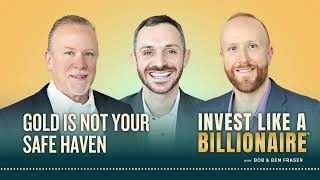
Bob and Ben Fraser argue gold's recent surge is driven by herd sentiment, not inflation fundamentals. TIPS, real estate, and Bitcoin offer better inflation protection. They recommend keeping gold to just 5-10% of a portfolio and warn the rally will reverse once momentum fades.
Chapters
Welcome back, future billionaires, to another episode of the Invest Like a Billionaire podcast. We have all seen the headlines, maybe you've even stood in line recently to buy some of it yourself. Gold prices are spiking, and this really what seems to be driving this is fear of inflation, fear of dollar debasement, maybe even uncertainty about what central banks are going to do next. So today I am I'm joined with Bob and Ben Fraser from Aspen Funds, authors of the Invest Like a Billionaire book, to really unpack what's actually happening in the markets today, and really most importantly, what signals investors should be paying attention to and how to react or invest wisely in a moment like this. So without further ado, let's jump in. Guys, welcome to the show. So Bob, let's start with you and the basics of understanding what's happening here. Clearly what's not driving gold prices is people standing in line at Costco what actually causes gold prices to rise?
Yeah, I mean, I've traded gold for a very long time. I made a lot of money in gold run-ups, made a lot of money in the run-up to 2000, made a lot of money in the run-up, peaked in 2011. And gold is a very, very interesting thing. It really trades kind of as the anti-dollar, you know, primarily. So dollar up, gold down, dollar down, gold up. And that is due to kind of international demand. So when the dollar is down, then gold is more expensive in non-dollar terms. So that's really my primary understanding of, of gold. And then it's really driven a lot by just technical factors, um, you know, momentum, honestly. So I don't find a lot of fundamental correlations with gold in terms of kind of where demand is actually coming from.
Is that central banks? Is that like large institutions? Where do you suspect a lot of this demand is coming from other than retail investors?
Yeah, you don't really find a lot of institutional demand for gold. It could be some of the ETFs, right? There's some gold ETFs, but they are fairly small generally. So you're not finding a lot of that. It can be central banks which are buying, which I do think central banks are buying recently. So that's creating more, a little more demand.
Understood. It seems like there is a, you know, we mentioned some of the fears around inflation. What do you think are some of the current fears in the market that are driving gold prices higher today?
Well, some of the traditional kind of understanding of gold is it like it's safe haven demand, but where was gold when Russia's invading Ukraine, when China's amping up their rhetoric? So, so it seems to be a safe haven, but it really has not been that historically. Gold just doesn't always spike when there's a lot of global uncertainty and risk. You've seen a lot of expectation of lower rates, meaning driving, you know, the dollar down, a weaker US dollar. But the dollar really hasn't been weakening. The dollar has been pretty much in a range, you know. So again, I don't find a lot of fundamental drivers of value. And certainly inflation— gold has really not been a big inflation hedge. And I point that out in the book, that if you look at over decades, Gold hasn't even paced with inflation at all. So I don't find a lot of correlation with gold in any fundamental economic factors.
It seems like though there is a lot of— and maybe Ben, you can speak to this too— like there's a lot of chatter about the debasement of the dollar, or fear, even as you mentioned, the weakening of the US dollar. And do you think that is playing into at least the narrative of why it's a good idea to own gold?
I think it's interesting because you look at two different indicators, and one is as Bob was saying, gold is seen as a hedge for inflation, right? So, you know, if the market believes that inflation is going to run away and we're going to see it much higher down the road, you'd expect gold to go up to kind of hedge against that. But the interesting thing is, if you look at the bond market and the yield curve, the market, at least the bond market, is not pricing in much inflation. You know, if you look at the 5-year and the 10-year Treasury, they're not indicating high inflation. So I think the other kind of potential that's kind of being wrapped into the market sentiment for gold is fear of, you know, a weakening economy, which is kind of the opposite. So it feels like it doesn't really know what it's, you know, what's gonna happen. And I think that that's honestly part of what's going on in the market where because it is seen as an inflation hedge, a fear hedge against debasement of the US dollar, uncertainty hedge with the tariffs and all that, feels like there's this flight to safety that's driving some of that. I don't know, Bob, if you have any thoughts to add to that.
Maybe if I'll clarify that idea, like why bonds are an important kind of, I guess, chart or signal to look at as well, not just the price of gold. I think that would be actually really helpful to understand.
So bonds trade in the free market and there are these things called TIPS, Treasury Inflation Protected Securities, and they're indexed to inflation. So basically looking at the bond market, You can tell exactly what the market thinks future inflation is going to be. And you can say, well, that's just the bond market. Well, the bond market trades 1,000 times bigger than the gold market. I mean, it's the smartest people in the world. It's the entire globe is basically saying inflation is X. So you can't look at gold and say it's going up and say it is predicting inflation. Gold is not smarter than the bond market. The bond market is definitely the driver. So gold is not predicting inflation. Also, gold is not predicting the dollar collapse. Because the bond market is, again, is way, you know, you look at government players, hedge funds, these guys are all trading the dollar much more than they're trading gold. And if there was a lot of risk, you would be seeing it in the bond market as well. Bonds would be collapsing and rates skyrocketing. So when you see the Argentinian dollar or whatever, when you see real problems in a currency, you see the value values of those things drop in the bond market first. So we're not seeing any of those things. Now, there is a lot of buzz, and this is because there is a lot of people that have been— I mean, gold is one of those things that a lot of people make money selling gold and selling kind of protection packages, right? Economic protection packages. And this has been going on for decades. I mean, I've, I've watched these guys for decades predict the collapse of the dollar, the, the government collapsing, the collapse of world order, the collapse of the banking system, the collapse of the dollar. I mean, this is a narrative that has really never ended. And, and none of these guys are legitimate economists. And these are people that are basically sponsoring web pages to sell their newsletters and their, their protection packages. And there's a lot of noise, but it's always been this way. I've been in this market for decades, and these guys have always been around stoking fears. And anytime there's a little, there's a little hiccup in the market, they just start throwing logs in the fire and it's all going down.
It's funny too, because it feels a little bit of a herd mentality, right? It's— gold has crossed the $4,000 mark, which is the highest it's been. But now, you know, these big talking heads are saying, oh, it's going to go to $5,000 and then $10,000. And it feels like I've heard those similar sentiments in the past. As soon as gold has a spike, it's— oh, now is the time that it's going to finally have its day. And be the real safe haven asset. And to your point, it is interesting in our space in real estate where there is this kind of undercurrent of we own real assets as opposed to fiat or paper assets in the stock market. And so there's kind of this anti quote unquote real assets, and I think gold falls into that. So it is kind of an attractive clickbait headline of with the anti-apocalypse portrayed, but The problem is we haven't had an apocalypse and, you know, probably aren't going to.
Yeah, I mean, I do find it interesting though, and I want to get to some of these talking heads in a little bit and how that plays into investor psychology. But, you know, I did find it interesting. I mean, here's a clearly a business economic leader, and Jamie Dimon, CEO of JPMorgan Chase, he just was at a conference earlier this week or maybe late last week. He says, this is one of the few times in my life it's semi-rational to own some gold. And Bob, you've historically, as you've, you know, stated here on the podcast, been pretty skeptical of gold. In the book, actually, I found this quote. You say gold and silver have a negative yield, meaning they cost money to store, and little utility. That reflects what Jamie Dimon would say as well. And you say, unless you believe we're headed back to the Dark Ages, for example, like nuclear war, you find little reason to own much of either metal, meaning gold and silver. And so like Jamie Dimon, he's maybe updated his sentiment a little bit. Have any of these recent events changed your thinking in terms of owning gold in today's market? No.
And you know, Jamie Dimon has never liked gold. So that was definitely a little bit of an eye-opener to me. So, I mean, honestly, Bitcoin is superior in it doesn't have a negative yield. It's much easier to deploy large amounts. It's much easier to transport, it's free to store, and it's just way more liquid. It's just far more superior as a currency, if you will. So the only reason to own gold and silver is if you really believe there's going to be an EMP and it's going to take out the banks and your car's not going to start and you're not going to have power and, and you need something to buy toilet paper with. So, so I just, you know, that's really the only, you know, gold and silver is superior if we go to a barter economy and we go back to the Dark Ages, right? And you don't want Bitcoin. What am I gonna do with a flash drive? But on the other hand, you can't eat silver or gold either. So it's not a good replacement for toilet paper, so.
Well, this is what's funny too, is the whole Jamie Dimon thing. I think it's clickbait headlines. 'Cause if you dig into what he actually said, he said he's not a gold buyer because it costs, he said, quotes, "4% to own it." But then he said, "This is one of the few times in my life that it's semi-rational." to have some in your portfolio. So it's like this, you know, yeah, I don't own it, but hey, there could be a good case that you could have some of it. But I think if we could take this back to the billionaire portfolio, right, at the end of the day, where we look at what the big institutional investors and billionaires have in their portfolios, there is some allocation to commodities, and gold probably makes up a part of that, but it's a very small percentage of the overall portfolio. And I think that's a very important thing if you're considering in your portfolio is it shouldn't be more than 5%, maybe 10% depending on your net worth. But it is interesting, in a similar article, Ray Dalio, there's another well-known hedge fund billionaire guy who is, we have some very different opinions from him on different things, but he's saying investors should go allocate up to 15% of their portfolios into gold, which feels a little extreme, but.
Well, keep in mind, this is a guy that was predicting China to take over the world, recommend we all learn Chinese, and completely ignored the demographic collapse that's happening in China and the fact that they're communist, non-democratic country. It's like, I don't know what Ray's thinking most of the time.
Yeah, agreed.
So Ellis, I'll just cut to the chase. What I think is driving gold prices is primarily momentum. I think it's been in the doldrums. If you look at gold, it peaked out at about $2,000 there since 2020, and it's just been kind of bumping up against that for the last 5 years. And it had a breakout. So it's a really technical— so you have enough demand that it continues to bump up against supply, and at some point demand exceeds supply, and then it runs. And then once it runs, now everybody piles in because it's a momentum trade. And because why we're having this podcast, because everybody's talking about it, everybody's paying attention, it grabs headlines.
Right.
And so people buy because people are buying. Why do lemmings jump in the ocean? Because the other lemming jumped in the ocean. That's what's happening is primarily momentum. Gold has done this a number of times. I remember making money when gold hit $330 decades ago and it had a big run-up. It went a 3x over those years. I made a lot of money into the gold rally into 2011 when it hit $2,000, $1,900, and then crashed from there. Sold everything and had at the top of the market, did great in that run-up. So it has these runs, but then it's not a long-term, so it doesn't have sticky demand because it's expensive to own. And it's hard to store. What are you going to do? You're going to put it in a safe deposit box? You're going to— if you're going to buy an ETF, well, there's fees and expenses related to that. It doesn't earn any income. Or you're going to do what the Vikings did and dig a hole in your floor and bury it. It's not very convenient. It's not a long-term hold, a lot of friction to hold gold. And it's different than holding a bond, which pays you money, or holding Bitcoin, which doesn't cost you anything. It's very easy to hold very large amounts and very easy to get in and out of it. So I think it's primarily momentum and sentiment that is driving it up. And it— I promise you, it will crash because it always does. The momentum runs out of steam when everybody's bullish, when everybody thinks gold is going to go up, then who's left to buy? Nobody. And so then it'll, it'll do a crash.
It'll be interesting. I mean, because to your point of momentum, and we have potentially 2 more rate cuts coming between now and the end of the year, right? So that will pour fire on the inflation conversation. So it will be interesting to see how long this rally will continue through the end of the year. I'm curious, guys, kind of outside of gold then, what other asset classes, I mean, tend to benefit in this kind of environment?
Yeah, well, I think to your point on rate cuts, there's these kind of two different sides of the coin because a rate cut indicates economic weakness or lack of inflation, right? The Fed is saying, hey, we don't see inflation as being as significant of an issue as it has been, so we're going to cut rates to stoke the economy. So the reason that gold trades up when there's rate cuts is generally fear of economic weakness. And I think that's probably the bigger driver, is not necessarily expected inflation, but hey, our jobs are weakening a little bit, maybe economic growth is going to be lower, we have some of these other headwinds. So I think that's probably the reason, but I totally agree with Bob. It feels very much— there's this herd mentality around it. And soon as all the news outlets start talking about, you know, this is the time to buy gold, that usually means it's the wrong time to buy gold, right? Because now the majority are aware of this big run-up in price. And at the end of the day, on every trade, there's a buyer and a seller. And once you run out of, of buyers, then prices go down. So I'm in total agreement there. And I think the other thing to— that we make a, a big point of this in the book is gold is not a good inflation hedge. It has not tracked inflation over the past 50-plus years. But what is a good inflation hedge if you believe inflation is going to keep going up or staying sticky is real estate. Real estate, and specifically residential real estate, is the, the most highly correlated asset to inflation that, that we found from a correlation standpoint. And I'm a big believer right now of it's, it's a good time to be jumping back in with rates potentially coming down. We're starting to see the long-term yields go down, so it's borrowing costs are are going down. Prices have reset 20 to 30% in different markets. But my favorite way to play real estate right now is actually in preferred equity or structured credit where we are investing in this kind of new era of real estate, but actually lower in the capital stack and reducing our exposure and our downside risk. So that's one of my favorites. Bob Fraser, I don't know if you have any other favorites that you like right now in this kind of an environment.
Yeah, those would be my top two. If you believe there's inflation, you definitely wanna own real estate. If you believe there's a lot of risk, then you wanna own private credit, especially real estate private credit for the points you mentioned. So you're getting great returns and way down the capital stack. I also, I think you should own Bitcoin. I said in the book, I said it's investible and I don't believe it deserves a core position, but I think I'm changing that. I think you should have a small core position in Bitcoin. So I think it's a, it's a great little asset to have some of, but it's super volatile, incredibly speculative. So just keep it, just do small allocations.
Interesting. I want to ask you guys this because when I, when I, I'm on social media and I see a lot of things across the world right now, there are lines out the door of gold shops, like literally, like we're talking all over the world, people are standing in line to buy gold. I mean, Costco is sold out of the gold bars. Like, it is, it's pretty amazing. And when I see that, I just think of that quote from Warren Buffett where he says, be fearful when others are greedy and greedy when others are fearful. And I guess I just wanted to ask you guys, like, from an investor psychology standpoint, it's so natural for us to run towards the, the line at the door, right? What keeps you anchored to not, you know, rush in when everyone's rushing in?
Well, I've seen a lot of my friends get bankrupted in 2011 when gold crashed from, you know, $1,900 an ounce and crashed by 50%. And they were levered into gold market. So it will break your heart. So that's what moderates me is I've been an active gold investor for 4 decades. So, and I will point out overseas, it's a bit of a different game. If I lived in China and I had a communist government breathing down my neck and controlling my bank accounts and restricting my access to cryptos and other things, I would be buying gold because it is out of the reach of confiscatory kind of regimes, police states, et cetera. It's like people don't trust the system. And for good reason. And so they're— yeah, line up and go buy your wife a few necklaces and bracelets. And hey, that's what the Vikings did for years, right? They wore their wealth.
That's a great way to play this, though. You're all right. Like, you could go to Costco or you could give your wife something nice. That's a pretty interesting thought there.
The Vikings had their silver wrapped around their arms, and when they're buying something, they just— they just take a piece of their bracelet and tear it off. And it's a way to keep it safe, right? When you're— you got your your wealth and your sword all on your body. And you know, you want my, you want my wealth? Well, you got to go through my sword.
Don't take it, right?
But hey, that's not the age we live in anymore.
So I think to your comment, Ellis, it's investors want to think they're contrarian, right? Because to be a successful investor, you have to be somewhat contrarian. But the problem is the herd is not contrarian. And so when you see lines out the door, that should be a shining red flag that, hey, this is the wrong time. You're too late, right? So to be contrarian, what it truly feels like is to jump into a market when everyone else is fearful, right? I mean, another quote that we talk about sometimes, it was at JPMorgan, right? Who said, it's the best time to invest when the blood is in the streets, right? Where it's everyone else is fearful, everyone else is concerned that the world is going to an apocalypse. That's the best time to back up the truck, right? And so I think it's really important to understand that the human nature element of investing very much gets in the way of long-term success of being contrarian. So you really have to meter your own instincts and emotional nature to really be successful. And I think that's, I mean, that's such a great visualization, right, of lines out the street at the Gold Bar place.
Well, for me, I mean, I agree with Bob in terms of my understanding or my interest in Bitcoin, but to hear Bob Fraser say he's a Bitcoin investor now, that just is a sign we got to be at the top. We got to be at the top of the market then. So I'm holding off on buying more Bitcoin after today. Guys, here's one more thing I want to get to. Going back to investor psychology, investor sentiment, I follow different people on social media. I was thinking about this the other day. I mean, there are a lot of these one-asset bulls, that's kind of what I like to call them. You know, and I think of Peter Schiff is a gold bull, right? I don't know if you guys follow him. Michael Saylor would be the Bitcoin bull. And these guys have built their whole businesses, social media presences, like I wouldn't even say like their identity on these one-asset classes. Peter being gold, Michael being Bitcoin. I guess I just want to ask you guys, like how should investors view thought leaders like them and others who are heavily concentrated in a single asset? Narrative? Do you find them helpful? Or that, you know, like thought leaders?
That's a stretch.
Yeah, I mean, well, Peter Schiff, I mean, he, he would call himself a macro economist. He would call him a global strategist.
So I think he's the only person that would vote himself that title.
So I mean, that's my point. I mean, these guys have huge followings, right? And so that they are considered thought leaders in this.
I don't think they're thought leaders. I think they're influencers, nothing more. And using their platform to basically hawk their goods.
Yeah, I mean, if you have an inherent bias to one thing, then you're always going to look at every up or down movement in price or anything that impacts supply and demand as a positive because you have one position that you have to defend. And that's a very scary place to be in investing because we all know everything goes in cycles. There's good times to invest. There's good times in certain asset classes and there's bad times. And if you are always one position, inevitably you will be in the doldrums for a period of time. And there's nothing that you can do to go the other way, right?
I've watched the gold market go down for a decade and people are just keep buying more and they keep buying more and it keeps going down and keeps going down. And where's Peter Schiff? Well, he's quiet. And then as soon as, you know, there's something going on, then it's, you know, it's let's go buy gold again. Hopefully investors can see through this. Gold is not the only thing you should own, and you shouldn't always buy it. It's an extremely volatile commodity. It's very risky, and you should treat it as such.
Noteworthy news: we're now selling gold bars at aspenfunds.us/gold. Uh, no, that's it, everyone. Thanks so much for your time and your interest. If you want to have, you know, more discussions like this, we actually just launched our online investor community at investlikeabillionaire.org. Go check that out there and find more interesting and relevant topics like this where you can chat with us and other investors. Investlikeabillionaire.org. Thanks everyone, we'll see you next week.










