
How to build a Passive Alternative Portfolio: The Wealth Pyramid
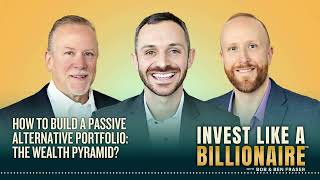
Ben Fraser presents the Wealth Pyramid, a three-tier framework for building a private alternatives portfolio. The base holds 50-60% in low-risk debt targeting 9-11% returns, the middle 20-30% in value-add equity for 12-15%, and the top tier in high-risk deals for 15-20%+. Fraser stresses cash flow over IRR and disciplined diversification across operators and geographies.
Chapters
And what I've seen so often is investors have no strategy with how they're investing. It's very haphazard and it's very much driven by the deals that show up in their inbox from the sponsors that they're following or from the friends that are sending it to them. That's not a good investment strategy.
Hey, welcome back everyone to the Invest Like a Billionaire podcast. This is not your host Ben Fraser. My name is Ellis Hammond. I serve as the Vice President of Capital here at Aspen Funds, but I am joined today with the one and only Ben Fraser. What's up, man?
What's up? You forgot to say hello future billionaires, but you sound really good when you, when you did the intro. So I know I'll have to work on that for next time.
Yeah, there's always, always room to grow. Hey, I'm excited to be doing something a little bit different. You know, we thought I thought it would be really fun to turn the mic around and interview you on something I know that you've been wanting to speak about for a while, which is kind of helping investors think about not just investing in alternatives, but how to build a portfolio, how to build a better portfolio in alternatives. So I am looking forward to diving into that today. But hey, while I got you, you know, as someone who kind of works behind the curtains on this podcast show, we've gotten a lot of great feedback from our guests, but what about you, man? How have you enjoyed kind of the new iLab version 2 and our new guests. Give us a little feedback on what it's been like for you.
Yeah, it's been really fun. I mean, we've been doing this podcast now for, I think, coming up on 4 years, 3 to 4 years. And, you know, by the end of last year, I was just getting a little bit tired. You know, we work full-time, you know, managing and raising funds. And so I needed a reset. And I love how we've relaunched it, have kind of new focuses, really going deeper on the things that people really want to hear and really care about. And so we've got even a lot more kind of coming.
What have you been surprised by, you know, from these guests who are kind of opening up? Because a lot of guys have really— I've been surprised how many have really opened up their portfolios. They've opened up their financial statements even. I mean, is there anything that's been surprising or even maybe affirming? Totally.
No. Yes. One of those things where you feel a little bit almost scared to ask it because, you know, it's such a personal thing.
Yeah.
But the willingness of our guests to share their net worth. right, share what they have done to get to that point. It's so helpful, right? Because this is where a big gap for investors in private markets struggle is knowing, am I on the right path, right? And getting to hear from others as peers and even a few steps ahead to understand, okay, I like where he's at. I like how he got there. So how can I create a plan to bring in some of those things? To get to that point is so helpful.
Is there anything that stuck with you?
You know, it is interesting. It is probably a function of a bias that we have in our database and network, but the amount of guests that we've had on of their investment in the public markets is, is way, way lower than I was thinking. I would say on average, just a rough number, I would say would be 30% or less across the board. And it's very obviously inverse of what we actually see in the broader data. But I also think that's what's so helpful about interviewing these types of folks, because that's what the ultra-wealthy are doing. That's what the billionaires are doing. And so for those that aren't at those numbers yet, getting to see what that looks like is actually, I think, really illuminating for a lot of people that aren't there.
Yeah, that's really cool. I've super enjoyed it. It's like always interesting, you know, when you're listening to an interview and you ask the net worth question, someone says $10 million, or you've had some guys in the $40 to $50 million range, and it's just like, Whoa, you know, like, when do you get to hear this other information?
Yeah.
And being able to, you know, take away nuggets from them has been really, really exciting.
I think the other big takeaway for me that's been helpful is the perspective that you get from investing through many, many years, many decades in some cases, and many cycles. Because what's been challenging, I think, for a lot of people that have jumped into investing in alternatives just a couple years ago, 2021, 2022, that was the peak of the market in commercial real estate. And things have gotten a lot more challenging from there. And just some people are losing money, some people are, you know, having capital calls on their properties, and they're not looking great. And so it can be very deflating, it can be very discouraging, I think, for a lot of people that got all excited, they saw the run-up in the years before, and Oh, this is as easy as fog in a mirror, right? You're going to make so much money and the expectations weren't met. So how do you recover from the disappointment, but then actually use it as takeaways and learnings? That's why I'm always trying to drill into in these interviews is what are the things you learn? Because you don't actually learn a whole lot in the things that go well, because a lot of times it goes well because of luck. It was the market that did whatever, but the way you learn is from seeing the things that you missed and in hindsight now become clear that you can take with you for the future and become better. And so I'm really hoping that like a lot of people are listening to the show are getting that, right? Where it's, yes, maybe there's some things that didn't work out the way you want them to, but how can you take that and leverage it into learnings, takeaways, growth for the next cycle? Because we are going to have another bull cycle, right? And there's going to be another really good run that we have. And you don't want to miss out on it just because you got burned and disappointed in the last cycle.
100%. Well, for those who are listening, we have so many more compelling guests coming on. And this is just a quick offer. If you know, you're investing in alternatives and you're open to sharing your story, we'd love to hear from you and potentially even interview you as a guest on this show, as we are, you know, constantly looking for good guests who are willing to open up their portfolios to the masses, which, you know, is easier said than, you know, done. So can get why that can be challenging sometimes to find great guests. But Ben, I want to transition our conversation because I do think we have a very, very practical, helpful topic today, which I've been excited to share. And this is something you've spoke about many times, and you call it the wealth pyramid. And the way I think about this when you present this is, you know, like the, the food pyramid.
Exactly.
You know what I mean? Like, I don't even know what it is anymore. For my diet, it's like protein, carbs, and wine. Like, that would be my food pyramid, but I know there's other things inside the food pyramid.
No, those are the only important ones.
But in the wealth pyramid, it's something very similar— maybe not similar to my food pyramid, but similar to the actual food pyramid— of how do you build a healthy portfolio that creates security and certainty and long-term health for the investor. Would you say that's a pretty good way to describe kind of what you mean by the wealth pyramid.
Yeah, this is a great connection for it because people understand what the food pyramid looks like. And it's the base of the pyramid are the ones that you require more of. And it's also the foundation that supports the next layers of the pyramid. And as you go up, you know, they become a smaller portion of your overall diet. And it's the same thing for a portfolio because the problem for a lot of investors is they get excited about private alternatives, they get excited about investing in real estate, in, you know, debt funds and other types of private investments. But then they're confronted with the next big question, which is, well, how much do I invest in? And what I've seen so often is investors have no strategy with how they're investing. It's very haphazard. And it's very much driven by the deals that show up in their inbox that are either from the sponsors that they're following or from the friends that are sending it to them. And they just invest really kind of randomly into different deals without a clear strategy of one, risk and return, two, diversification, and three, is this actually meeting my long-term goals, right? And so this is a helpful framework. And the idea is that the bottom layer of the pyramid you want it to be the heaviest allocation in your portfolio. I would say anywhere from, you know, 50 to 60% of your overall investment portfolio should be in this base layer. And this is going to be the investments that are lower returns, but also much lower risk. We'll get into the reasons for this in a little bit, but you know, you can target, say, a 9 to 11% rate of return at that level. So those are, you know, debt funds. Those are other types of cash-flowing-focused investments that don't have a ton some upside, but they have much lower risk.
So when you say lower risk, lower returns in that 9% yield mark, in that regard, are you primarily focused on yield or cash flow?
Exactly. The primary focus on that should be current cash flow. Because what I think a lot of investors did in the kind of last cycle, and they're kind of realizing, oh, wow, that wasn't necessarily the best way to build a portfolio, is they're chasing the headline return, they're chasing the IRR. But IRR doesn't necessarily mean cash flow. You can't pay your bills off of IRR. You need the cash flow to create this consistent cash coming in every month that supports the foundation of your overall wealth. And you're also not taking the same levels of risk that you would on an equity-focused investment. So it reduces your downside risk. And that's why this base layer of the portfolio has to be the largest, because you want to take the least amount of risks in this portfolio. And sometimes it's not sexy to go chase the kind of high single-digit, low double-digit rates of return, but it also creates this, this foundation of consistency that you can build off of reducing risk. And you don't have to worry about taking a loss at an inopportune time because you don't have the cash flow to support it.
So I get it. Okay. So let's move up a layer in the pyramid and I'm going to come back. Got a couple more questions, but why don't you finish the pyramid? I want to dive in a little bit.
Yeah. The next layer is kind of that middle layer, right? I would say it's going to be anywhere from 20 to 30% of your overall portfolio. And this would be a hybrid, right? So it has some cash flow, some current yield associated with it, but it's, it's also got some more upside. So maybe you're targeting, say, 12 to 15%, rate of return on this type of investment. So you're not going and taking moonshots. These aren't your development deals. But I would say a solid value-add deal fits kind of into this bucket, right, where you're expecting some, some current cash flow. And you're also going to generally get more tax benefits in this bucket, right? You know, one of the downsides of, of high current yield is it's not super tax efficient. And so you can make up for that a lot of times in these higher tiers, but kind of 12 to 15% rate of return, smaller portion of the portfolio and a hybrid between cash flow and growth.
Can you give some examples of kind of what this would look like? Maybe that Aspen does?
Yeah, I think a great example is just a value-add deal, right? Where you're taking an existing asset that has cash flow, but there's maybe under-market rents, or there's an opportunity. And, you know, a lot of our retail and industrial deals we do where we can convert from gross leases to triple net leases, because that's the market and the market rate is higher than what's currently at the property. You can do capital improvements and drive more revenue. So you don't realize that in cash flow usually right away, but you can realize that upon a sale down the road when you've increased the revenue that an asset or a property in this case is generating, and that creates a much bigger return on the back end. but you're getting some cash flow along the way. So at a high level, you are taking more risk here, right? Because generally you're going to have leverage, you're going to utilize leverage to create a multiple on your equity by improving the value from that leverage.
Let's go up the wealth pyramid. Is this the last level?
Last level, we keep it simple. 3 tiers in this pyramid, kind of like your 3-tier food pyramid.
Yeah, that is true. At least we have something in common. That's right. Tell me what the wine is then, Ben. I want to know what's in the wine section.
At this top of the tier, this is the smallest allocation. And what's kind of interesting, I think a lot of people, if they're like using this framework and maybe overlaying this framework on their portfolio they made over the past 3 years, it's likely that all these percentages were inverse, right?
Upside down pyramid. That's such a good point, man.
Upside down pyramid.
Yeah, right.
And a lot of people are investing, and I would say this is your kind of 15 to 20, maybe 20+ percent rate of return targets. And you don't want to get overallocated in these because if you're getting that rate of return, you are taking a lot more risk doing so. Now you want to play in these categories because I think there's some great, great opportunities that are not even moonshots. They're just a little bit higher risk, right? We have some development deals that we do. Development's a little bit higher risk, but we got a great strategy we're executing on. It's going really well. And we're hitting those types of returns. Oil and gas is another great example, right? But you're going for more in these buckets, which is okay. I think that's the difference is it's not that you shouldn't invest in these things. You just shouldn't invest 50% of your portfolio in these investments, right? You gotta have some level of discipline in how much you're allocating into these types of buckets. So an example would be exactly that, a development deal. So we do industrial development. Well, why is that riskier? Well, there's no building when we start, we're taking some construction risk. And then there's no tenant many times, this is speculative development. So we're taking some tenancy risk, we're hoping that the tenants will want to lease the property once it's done. And then we're also taking market risk on can we sell this stabilized building after we get to that point for the market rate that we would hope to on the front end of the project. And you have time all along the way, you have debt all along the way. And so it's increasing your risk. So you would expect that to be a higher rate of return to compensate for that risk. Right. And so in all these things, I think one of the most helpful concepts to use when investing is think about your investing through a risk-adjusted return framework. Meaning if I adjust this return for the risk that I'm taking, and this, it can be as a simple mental exercise, is the perceived risk that I'm taking in this investment worth the extra few percentage points rate of return that I get going up to this tier of risk? And that's a question you have to answer yourself, right? But if it feels like a good trade-off, then yeah, maybe it's good to do that. But be disciplined not to go all for it, because this is the hard part. As humans, especially humans that have a higher risk tolerance that are willing to take risk, you kind of want to bet all the chips on red, right? You kind of— oh, I know this deal is going to go really well. I'm going to go all in. And maybe it does work and you get really lucky. You can also make good picks, but then it can also breed the hubris. It can breed overconfidence so that the next time you go and place it all on red, it doesn't hit and now you've lost it. And that's really painful, right?
This is really good. So let me just kind of understand. Let me stay back at the pyramid. So the bottom tier is more yield-focused, probably less leverage, lower returns, but lower risk here is kind of your bottom tier. And then you move up into mix of yield and cash flow, but that's typically your low to mid-teens IRR. And then above that, you're probably really introducing leverage here at this level or something that creates higher yield, but you're taking on some type of— there's speculation or there's higher leverage in this top of the wealth pyramid. So I have two questions because I think it relates mainly as I'm having a lot of conversations with investors. The first question I have for people I'm sure listening or having is, Does this change at all for someone? And there's two people that I have in mind. Like we had a physician come in yesterday, right? Who came into our office and income is not the issue for him right now, right? He's making plenty of money. The other example I think of is someone who maybe just had an exit, right? So I had another conversation with a business owner who just had a $10 million exit. So they're coming into a waterfall of cash. So does this change at all for either of those two avatars, right? Or listeners who, you know, you're saying, hey, go fill up the bucket with yield and they're thinking, I, dude, I don't need any more income. Like I got lots of it and I don't want to have to pay more taxes on it. Cause that's one of the reasons why a lot of folks don't want to go into that stuff. So talk about both of those profiles.
Yeah, I love that question because these are two very common scenarios that we see. I would play the devil's advocate on the, on the first individual who's the doctor making really good income and say, well, what if your investment portfolio could produce passive income? That's the same as your salary. Is that worth something to you? Right? Because a lot of people don't think about the idea of replacing their income through their investment portfolio, right? You're working 60, 70 hours a week. What if you could work half that and you don't have to worry about it because you're making the same amount through your passive investment portfolio? That's one thing, right? And maybe they say, no, I love what I do. I don't really care about that. Well, here's the other thing that we didn't really get into, but we have a whole section on this in the book and you alluded to it, which is the power of compounding. Right. A true compounding return of say 9 to 10% over a 20 to 30 year period will far outperform any other thing you can do. If you have volatility, right? If you're making 30% one year, but you lose 20% the next year, you're making 30%. We have a whole graph that shows this and it's absurd how much more money you make if you can just do simple compounding. So the great thing is a lot of the yield-focused investments you can make, you can actually compound if you don't need the cash flow. That's okay. Compound it back into more growth because compounding is the 8th wonder of the world, as Albert Einstein would say. So it's not necessarily about, well, I don't need the income. Well, I get that. One, I think you probably do and you're not realizing it, but two, it's actually reducing your risk and creating that foundation of just income generation and wealth building in your portfolio as a discipline. And so that's really smart to do. The other individual, remind me of what their scenario was again.
The bigger exit, $5 to $10 million exit, business owner, post-exit founder.
Yeah, well, I think similar things apply, right? They actually now have the opposite problem where they do need a lot of income because they got to replace what they're making before. So I think it's a great strategy. And again, it's challenging, especially for someone that's a post-exit founder. They have a disproportionate comfort with risk than most people. And what we've found is entrepreneurs sometimes actually make the worst investors because they took so much risk betting on themselves to make it big in their business. But that same approach doesn't always work in passive investing. And there's, you know, tons of examples we could give. But ultimately, because you're not in control at the end of the day when you're passive investing, so it's important to spread out those chips across operators, across geographies, across asset classes, across the pyramid of risk and return. And that's why it's so important to use a framework like this to help give you guideposts for what should my targets be. And I'm not going to go put all my chips on red because my cousin has a new tech startup that's going to be the next Uber, and I'm going to go put all my chips on that. That's not a good investment strategy.
So, you know, What I didn't hear you talk about in the pyramid is a level that is just for sheltering taxes, right? Or sheltering capital for tax savings. Is that layered into this pyramid or kind of how do you think about that as you're building this wealth pyramid in these different groups?
Yeah, I alluded to it in the kind of second tier. You're going to see some more tax advantages because you're investing more generally in equity, right? A debt investment, you don't get tax advantages generally. An equity investment, you do get tax advantages. And yeah, many times the higher, you know, rate of return things, depending on what the asset class is, depending on the strategy, you can have higher tax losses as well. Like oil and gas is a great example that you can get some great tax losses. You know, the challenge here is you never want to lead with tax as the primary motivator for an investment, right? Getting a tax advantage should never be the number one reason you invest in something. Never, ever, ever, ever, ever. This is something that I've seen people get into. Difficult situations on because they invest in something because it has a great tax benefit. But my pushback is always, okay, yeah, you get that tax benefit for that $100K you invest in that, but you're taking so much risk that you're likely going to turn that into a complete loss, which defeats the whole purpose. Right? So is it worth taking a complete loss on an investment to get the hope of maybe a 30% tax deduction? It never is. The math doesn't make sense to do that. And so, I think it's important to be tax smart. We can do another episode maybe down the road on how to think about, you know, investment and taxes. And, you know, you have different types of income and different types of losses and how those overlay each other. I think it's important to invest with a very tax smart lens, but you never want the taxes to be the primary driver of what you're investing in ever.
I love how Mike says, don't let the tax tail wag the dog.
Exactly.
I think that's so true. This is so helpful. Thanks for sharing this. And, and I'll give a quick little teaser. We're going to share more about this in the next week or two, but we are hosting a summit called the Billionaire Summit, which is going to be incredibly exciting. If you want to see all of our guest speakers we have, I was just going over the lineup with our team earlier. I'm like, this is, this is the best summit that I've ever attended, period. Like, I'm so pumped to have been a part of this and have a platform to be able to get the type of capital allocators, real estate investors, tax strategists to come to this. So I don't want to hammer this because we're going to do more, but I will just say, if you want to go ahead and register early, go to thebillionairesummit.com and check it out. If you enjoyed this, you're going to love the summit. So thebillionairesummit.com. Ben, thanks so much.
This is fun, man. Do more.










