
I sold my business for 8 figures… now what? with David Neidig
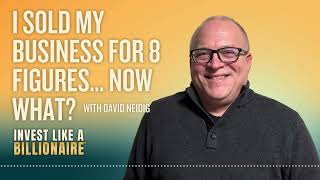
In this episode of the Invest Like a Billionaire podcast, host (Speaker A) interviews David Neidig, a third‑generation owner of a 70‑year‑old family‑run manufacturing business. The conversation walks through the decision to sell the company through an Employee Stock Ownership Plan (ESOP) rather than to private equity or strategic buyers, emphasizing legacy preservation and community continuity. They detail the M&A timeline—initiated in 2019, paused during COVID‑19, and completed around 2024—highlighting the two‑year closing period and the impact of the pandemic on the process. The deal structure is explained: a mid‑eight‑figure valuation, senior debt financing, and a seller note comprising roughly 70‑75 % of the purchase price, with cash flow from the note extending over a decade. The discussion covers the rigorous financial due diligence required for an ESOP, the transition to GAAP‑compliant accounting, and the creation of a quality‑of‑earnings report. Post‑sale, David describes how the liquidity event shifted his focus to passive and alternative investments, notably multifamily syndications and other hard‑asset, non‑discretionary income‑generating opportunities. He shares his investment thesis, the importance of personal relationships and in‑person meetings when selecting deals, and his evolving allocation strategy that avoids strict percentage targets. The role of advisors—financial planners, CPAs, attorneys—and the building of a family‑office‑like network are discussed. Finally, David offers advice to pre‑exit entrepreneurs: adopt GAAP early, anticipate extensive diligence, and prepare financial statements well in advance. He reflects on his new “career” as a steward of capital, aiming for tax efficiency, legacy impact, and teaching future generations.
Chapters
Hello, future billionaires. Welcome back to another episode of the Invest Like a Billionaire podcast. We've got a really fun conversation coming your way. We are going to be chatting with a friend and an investor of ours, David Knightig. This is going to be part of our Passive Investor Spotlight series. It's going to be all about David's journey as a business owner, who built this business with his brothers for over 30 years. It's a second-generation business and then had a liquidity event, sold the business, but actually sold it through an ESOP, which is really cool to get into that and has had a really awesome journey learning about passive investments, alternative investments. And as we were chatting the other day, we're like, hey David, we'd love to get you on the podcast to share your journey. And I think, David, you said this is your first podcast interview.
So—
It is.
It's my first.
All right. Well, this will be really fun. And, you know, this is so helpful just to hear a story of someone that has, you know, done this, had success, and then what are the things that you've learned from it? So let's start a little bit before you sold the business. And so give us a little bit of context and really kind of take us back just a couple of years as you were thinking about wanting to create the exit and sell the business and all the thought process around that.
Okay, well, first let me say thanks for having me on the show. And, you know, I think you guys have built a great company. You guys have a lot to be proud of. So thanks.
Appreciate that.
But, uh, yeah, so my dad and uncle had started a manufacturing company like 70 years ago, and ultimately it became 3 brothers, me and my 2 brothers, and I worked there for like 40 years until we sold the business. So starting in 2019, we began the M&A process. Of course, you can look at selling to private equity, strategic buyers. And as we were contemplating all the options, you know, we still live in the area and it was like, well, do you wanna sell to a company who's gonna slash and burn everything you've built, get rid of the people, you know, whatever. So we're like, what's our options? So we looked at an ESOP, which is an employee stock ownership plan. And said, this is what we want. It really builds on the legacy that my dad and uncle had started a long time ago. And ultimately, if the company continues to be successful, there'll be a big boost to a lot of people's retirements. We'll just put it that way.
Yeah.
That are currently in the ESOP, who are the beneficial owners.
So for those that don't know what an ESOP is, an ESOP is effectively you're, you're selling the company, but you're selling it to a lot of the existing employees. Yes. And for you guys, that was important because you wanted to have the continuity. You were part of the community. You knew a lot of the people that are in the company and—
Yep.
—concerned, hey, if private equity comes in, they're all about the bottom line, they might slash jobs. And for you, it's important to have a holistic approach to this.
Right. Yeah. So you actually sell the company to what's called a trustee. ESOPs are very tightly regulated by the Department of Labor because they consider them a retirement plan. Yeah. So you sell to a trustee. You know, there's several companies that do it. and then they administer the plan. But the people who are part of the ESOP, as far as employees go, they're, they're now called beneficial owners. And so as the new company pays down their debt, both senior debt and seller note, that builds equity in the company, and that's how the beneficial owners' value starts to rise.
Got it. So even one step before this, what was the decision factors that led to even deciding to want to sell? What was kind of the idea there? Just, hey, been in the company a long time and ready to retire?
And yeah, I mean, it's a hard business that we were in, high stress. You know, my older brother was 67, I mean, he is now, and my younger brother's 54, and I'm right in the middle. So it was just, it was time. And we have a third generation of family members that were at the company and actually are currently running the new ESOP. They're all participating in it. So we talked and just said, you know, we think this is what's best at this time. I love that.
So talk a little bit about, as you kind of evaluated, what are the different ways to sell the business? You know, were there things that you were doing kind of preparation for the sale, things that you needed to do that you weren't even really thinking about when you're just operating the business and just trying to make a profit that were different when you're thinking about selling? And does that change for an ESOP or not?
It doesn't really change. You still go through the same financial due diligence, right? So of course we weren't doing due diligence, but whoever the purchaser is or the companies that are interested, they're gonna make you do due diligence, right? And so we did what's called a Q of E, which is a quality of earnings. So it's basically certified financial statements from a third party. So, you know, as we were looking to sell the business, it was basically still all hands on deck, build the business, make good profit. And, you know, my older brother who was always in charge of administration and finance, he pretty much was the only one dealing with the financial institutions and those firms.
Yeah, I think we talked about this the other day when you were in town, and it was interesting to me to hear that, you know, ESOP, you think, hey, I'm selling to the employees, it's, you know, somewhat a closely held transaction. In a sense, right? But there was a lot of third-party involvement. And because of the regulation around ESOPs, which was surprising to me, but also created some, not challenges, but just additional hoops that you had to jump through that maybe you weren't aware of, or— Oh yeah.
You know, our accounting systems, of course, were not set up at that point to handle the rigorous diligence that was being done. So there was a lot of changes that we had to make. You know, now the company is a They're using all the GAAP accounting practices. But to get to that point, there was a lot of work. And until we got to that point and, you know, basically had to redo all the books so that they complied to that, and then you could do the Q of E that would paint the correct picture to whoever the suitor was.
What was the length of time from beginning the conversation of with the trustee and third party and to kind of actually completing the transaction?
Yeah, we started in 2019 and then of course 2020 it all fell apart because of COVID So we picked up back pursuing the M&A in probably 2022 in earnest. Oh, interesting.
So you're going down the path, but then COVID was a big like, yep, wow, how do we— we got to jump back into business, make sure we survive.
Yeah, it disrupted everything and sales went down. And so we said, well, we got to do a reset here. So we just kind of put things on hold. Picked it up in 2022, and then it took about 2 years ultimately.
And then from a comparison to maybe a sale to private equity, I would assume that with an ESOP, you're not going to get a huge lump sum, right? Because potentially the new beneficial owners are not contributing a large sum to go buy in. It's kind of more of a carryback note structure versus private equity. You probably get, you know, a nice cash— Yeah, 80% upfront, and then maybe some kind of carryback note. Is that, is that accurate? Or what was the kind of transaction structure?
Yep. So there was senior debt that was involved and then there was a seller note and the seller note was probably 70-75% of the transaction. Right.
So if you could give us, you know, maybe a range of kind of sale price of the business, you know, if you give exact numbers, but just kind of give us a range of where we're talking about here.
Sure. So the top number in the transaction was a little above mid-eight figures. And so then our seller note was right around the mid-eight figure.
And that was really split between you and your two brothers, right? Yes, exactly. So what was that moment like? You know, you've worked in the business for 40 years and I know you a little bit and you're just, you know, guys are hard workers. You're head to the grindstone. You didn't live high on the hog for a long time, but all of a sudden you have life-changing money. Right. You know, we actually started to engage a little bit before you had sold the business and you're already kind of thinking ahead of like, okay, this is going to be a big change, you know, of lifestyle, of a great problem, but now a problem. I have to figure out what to do with all this capital and now cash flow coming back from the seller note. What was that process like? You know, you've been working hard for 40 years. What were the things going through your head and what was kind of the preparation that you felt you had to do to get ready for that? Yeah.
So, you know, as being a typical small business, everything went back in the company, right? So as you said, we didn't really live high on the hog and, you know, we made a good living, but any extra money at the end of the year, it was going into capex for the business, right? So, yeah, that was our retirement plan, was the business, right? But as we were moving forward, getting anticipation of closing on the transaction, I started to research. I started to think, hey, I'm going to need to figure out what do I do once this starts rolling in, right? And so I contacted you guys. I think in 2023 was when we first started working together. But I guess overall, you know, we didn't get a big lump sum at closing. We got some, but not a lot. Most of the value is going to come rolling in over 10 years as the seller note gets paid off. But still, it's more investable capital than I've ever had, right? So yeah, I knew I had to do something. So just very old school, I started listening to a lot of podcasts and, you know, doing a lot of internet research and making spreadsheets.
That's a little more new school, actually, than old school.
I'd say, well, maybe that is, you know, but It's interesting because I had gotten involved in what I know now to be a syndication, a multifamily syndication all the way back in 2012. Ah, and it was with a local company developer and it has gone really well. I'm still invested with it. We actually sold a portion of it when we did the transaction cuz the company had actually bought some shares in this project and you know, it ended up returning maybe 17% ROI. And the ones I'm still involved with are still that way. One of them 7% cash a year and the other one's like 13%. So they're really successful. So, you know, I knew like I like that type thing. Yeah, that type of investment. I'm not a big public market guy. I just like things that are hard assets. So yeah, that's why I started researching. I actually found out, oh, I'm actually involved in a syndication. Happy accident. Yeah. And so I just started down that path of trying to find companies I felt I would want to work with and start to build that network. Yeah.
So what was the maybe hesitation against the public markets, right? What was kind of the driver to say, hey, I'm, I'm gonna look for maybe a different path than just going a 60/40 portfolio and just stuff money into the markets? Because I think that's where most people would start, but you didn't start there. So what was that? Right.
I mean, I had a 401, right? That was a legacy one from the company. So, you know, it's, it's not that I don't have money in the public markets, but it's probably a control issue, like you said. Yeah, like, I just feel like once it's there, there's not much I can do about it, right? Unless you're going to try to day trade and you're going to mess around with it, and then that'll be a disaster because I wouldn't really know what I was doing. So I just like hard assets. Yeah, our business for the last 70 years is a hard asset business, right? And so I understand it, and it makes sense. Even if I'm a passive investor with a company like Aspen I still feel like there's a little bit of hands-on control, right? Even though I'm not involved in that way, but it just feels that way. And so that was really the mindset. I'm just— it's the way I'm wired. And it's funny because my two brothers, they're both pretty much only public markets at this point, but we share everything, right? Yeah. We know each other's business. We talk about it. We bounce ideas off each other. So they're very interested in what I'm doing. And, you know, we talk a lot about alternative investments. And I think my one brother's done some private equity investing with a local private equity firm. So, you know, it's an interesting process.
It's pretty cool. I remember you saying that you, I think, still do like a daily lunch. Yeah, right. Yeah, we do. And now the Gen 3. And yep, talk about that because that's actually really cool that you guys have done that and kind of built that, you know, habit.
Yeah. So, you know, the company we were not a big company, right? But, you know, 150, 200 employees and a lot of things going on every day. And it's just something that my dad and uncle had started years ago where it was like, well, we at least need to make the effort to get together for lunch every day. Yeah. And then that's when we talk about everything, right? I mean, you talk about problems and so we still do that. So at least my older brother and I still live in the area. And we get together basically every day with this third-generation group that's running the ESOP and talk about whatever, you know, my two brothers and I are on the board of directors of the ESOP, you know. So of course we have a very vested interest in the success of the ESOP because that's where basically all of our capital is tied up, right, in the seller note.
So yeah, so I got 75% of that. Yeah, exactly. Price you got to get back.
Yeah. So We want them to be wildly successful. And then my older brother and I still do some contract work for the ESOP, so we're pretty much in tune with what's going on. And it's just my uncle always said his greatest joy in life was being able to come to work and work with his brother every day. And it wasn't the success of the company, it wasn't anything else. That was his greatest joy, right? So we believe that as well and try to instill that in the next generation.
I love that. Like, that's pretty cool. And that's, I think a lot of people could benefit from something like that, right? If you're in a family business or just any business really, but absolutely having a tight pulse on everything that's going on, right? Shifting back to the alternative investments. So you started doing the research, you got the engineering mindset, you want to understand things, want to have some level of involvement control in it. You know, what was your approach to investing? Like, you want real assets, but what was your goal? Was it capital preservation? Was it, you know, long-term growth? Was it income? Was it a combination of these things? What were the things that were, as you were learning and understanding, you know, what do I really need? What do I want to support my goals? And how did you kind of come to making your first investments?
Well, my initial goal was to deploy capital. Yeah. You know, I guess I didn't feel in a rush, but I felt like I got to get started. Yeah. And probably my main guiding principle at the beginning, and still mostly is, is investing in non-discretionary income type assets. So multifamily, let's say oil and gas, things like that.
And non-discretionary, meaning the actual demand from the underlying clients is— this is a necessity business, is that what you're saying?
Yep. Okay. A lot of ways you can make money. Right? And so, and I know there's a lot of syndications for different things. I just feel like at the end of the day, somebody has to pay their rent to live somewhere. Yep. Or they have to be able to drive their car to get to work. They need to pay their mortgage on their house. So it's, that's kind of what drives what I have invested in so far. I love that. I am now getting to the next stage of strategy, trying to determine what do I need from an income standpoint what makes sense from a tax standpoint? Because, you know, with the seller note money coming in, I have income, right? And the ESOP is leasing the plant that they're operating in from me and my brothers. And so I have a lot of income coming in from that. So I don't necessarily need income in what I'm investing in. Right. But I realize there's different strategies when you look at that, right? Like some people like getting a cash distribution every month because you're getting some return, right? You're not having to wait until the exit of the project. To find out, did you make any money? So I realize there's a lot of different strategies, and probably the thing I'm trying to most get focused and educated on now is, I guess, what you call tax efficiency and figuring out how do I grow the capital and reduce the tax burden. Right.
So what was the process to write those first couple checks, right? Because one step of making the concerted effort to educate yourself, to learn, you know, the world of passive investing and alternative investments and all the vernacular, all the different flavors, like you said. That's another thing to actually write a check. And because in some ways, yes, you have more control in alternative investments because you can be a little more selective of what you invest in. Right. I think the control is really in your allocation and you get to decide where you want to be based on what your driving thesis is. And you have a great thesis, non-discretionary income back investments, but as an LP, a limited partner, you know, you are limited, you are passive. So there is a handing over some of the keys of control— exactly— of the investments to somebody else. And so what was that like? And what did you kind of use as kind of a barometer or a framework for deciding where you ended up placing capital and who you placed it with?
Mostly Writing checks came with much fear and trepidation, but probably just, you know, like I said, I'm kind of old school. So anybody I've invested with, I've actually met in person. And why was that important to you?
Why?
Because it's just how I've done business all my life. And even as things changed technology-wise and with COVID and everything else, I just— I was the kind of person like, no, I'm going to get in front of somebody, whether I'm buying something from them or selling something to them. I like being able to sit across the table from somebody and look in their eye, right? So the people I've invested with, I've got to know personally, and I feel that we have shared values, and that matters to me. And so that's kind of been my guiding principle.
Yeah, I love that. And then the other kind of pieces here, you had kind of guiding principles, you had some thesis for the types of investments you were looking for initially. What was your approach to an allocation strategy, or did you have any initially of, I want to have X percent in this Y% in this and kind of target these portfolio buckets?
Right. I didn't really have a strategy percentage-wise. You know, I started off doing the minimum investment in any of the alternatives I've done. I've bumped that a little bit at this point, doing a little more than minimums. As long as I was following my strategy of non-discretionary income type assets, I just spread it around. So I think I'll refine that as I go forward. Like, well, how many private equity companies do I want to deal with? Companies like Aspen, right? I mean, do I want to deal with one? Well, probably not. But do I want 50? Right. That's probably not practical. So I end up with, let's say, a handful, 5, 10. Well, then at some point I have to do more than the minimum investment with each of those companies. Yeah. You know, as a project comes up, so I haven't got that all ironed out in my own head, but it's something that I'll be figuring out as time goes on.
Yeah, I like that approach, right? Because I think in a simplistic way, okay, I just want to have 25% in this type of real estate and 10% in commodity-based investments and another 15% and whatever. And it's— I think it's good to have a goal, but a lot of times it's a little more challenging in private equity to hit those because, like you said, you're kind of picking the right jockeys. You want to pick like, who are the firms you want to work with as a first point of decision, but then they might not have projects every quarter. Exactly. Or even every year. And so now it's okay, I gotta react to what is coming at me and then decide, is this a fit for me? And if so, where does it fit and how much does it fit in? And so I think it's a very balanced approach because I think it can be overly simplistic to just say, Yeah, I'm going to do 25% in this because you also then run into the risk of overconcentration.
Yeah, well, and every market is not always good. Yeah, right. So multifamily isn't always the best market maybe to be in, right? So if you're, if your strategy is, well, I'm just going multifamily, that's fine, especially if you're an expert in that, right? But, you know, I feel like you just got to use some discernment and that's why it is so important to build relationships with good companies that you have confidence that they know how to pick the projects, right? It's why I want to be a passive investor, right? I don't want to have to pick the projects. I've already had a business. I've already done all that, right? So I want to find good people to work with who are capable and have a good track record and grow with them. Yeah, makes a lot of sense.
What was your approach with outside advisors, whether that be, you know, investment advisors, CPAs, attorneys? And we've talked a little bit about how do you build kind of this family family office resource around you? I mean, what does that look like right now, and what's kind of your mindset with using these kind of third parties?
Right, so we of course always had a financial advisor with my 401k, and so currently have like two, let's call it, public market financial advisors. Now, consequently, one of those guys is very interested in what I'm doing with ALTS, and so he's even reviewed some of the deals personally, not from a professional advisor or financial advisor standpoint, but just personally as a friend. But pretty much, you know, when you get a certified financial planner or financial advisor, right, they don't know anything about the alternative markets. And if they do, it's negative, right? So, and that's okay, they stay in their lane, and, and I get that, right? Other than that, you're kind of on your own. I mean, this is why I've tried to do so much research. I haven't quite got involved with a lot of other investors at this point, like the school app that you guys have started, Aspen, is going to be a great resource. And there's other companies that have these type of investor networks that I intend to get involved with at some point because that way we can learn from each other, right? Yeah. But it's kind of the Wild West. You're on your own. And this is why it's so important that you go slow and don't swing for the fences, in my opinion. Just try to get a lot of base hits and things will probably go pretty decent then.
Yeah, that's awesome. Rounding out the conversation here, what were some things as a business owner who went through a sale, what are some things that maybe you, you learned along the way, or even maybe hindsight reflection you've had that maybe you do differently or maybe not do differently that you would maybe give advice to another pre-exit entrepreneur, business owner that is, you know, maybe 5 years out from selling? Like what were the things that maybe you wish you had someone to tell you before you kind of made that final decision?
Yeah, that's a good question. You know, what we learned is depending upon your size of business determines the kind of diligence that the suitors will demand, right? So the smaller your business is, the less diligence required. But as you start getting to different levels of whether it's EBITDA or just whatever your transaction is going to be, right, it begins to require additional diligence, right? And so, like I said earlier, we didn't realize the scrutiny that was going to be required. And, uh, you know, I suppose that would be the biggest piece of advice. You know, if you have, you know, a $50 to $100 million business, if you're not using GAAP accounting, you got to get there probably. And if you get all that done ahead of time, it'll save you a lot of trouble then when you go through the M&A process.
Yeah. What about from an investor from a passive investor perspective, what are the things that— you've only been doing it a couple years, you're still kind of early in the journey, but what are the biggest insights you've gained over the past few years of doing this? And maybe how has your approach shifted from when you first started and what is important to you now versus then?
I have learned that I have a lot to learn. I'm not a financial guy, so I am educating myself financially. I kind of look at this as my new career, right? And so— Yep. I want to be a good steward with everything that I have now been given, but I don't want to do it just so I can live a better life. But you know, you want to be a blessing to other people at the end of the day and something that has some lasting impact and teach my kids and grandkids the same thing, right? Now I've got this opportunity to do this. So that's kind of where I'm at.
I love that. Yeah. Well, David, this has been a really fun conversation and I always enjoy getting to chat with you. Thanks. I guarantee our listeners got a lot of good nuggets out of this conversation. So appreciate you being willing to come on and share with us.
No, thanks for having me again.










