
Sophisticated Family Office Investments Ft. Mike Streit, a Family Office Executive
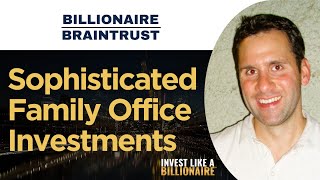
In this episode of the Invest Like a Billionaire podcast, family‑office executive Mike Streit discusses how a single‑family office thinks about investing. He traces his journey from a commercial‑real‑estate broker to running a family office, emphasizing the long‑term, multi‑generational mindset that distinguishes family offices from typical institutional investors. Streit outlines a simple three‑bucket allocation model—cash (T‑bills, money‑market), public equities (S&P 500 via ETFs), and alternatives (private equity, venture capital)—and explains why alternatives, despite illiquidity and higher fees, can deliver higher net returns and provide intangible benefits such as access to C‑suite executives, valuable relationships, and accelerated learning. He describes the office’s opportunistic, case‑by‑case approach, focusing on lower‑middle‑market private‑equity deals and noting that fundraising slowdowns have created attractive entry points into top‑tier PE and VC funds. The conversation shifts to energy, where Streit highlights capital scarcity in oil & gas, demand tailwinds from a growing global middle class, and the exploding energy needs of data centers, while also acknowledging the challenges facing climate‑tech investments. He stresses the importance of networking, joining allocator groups, and seeking diverse viewpoints to avoid echo chambers. Finally, he offers practical advice for aspiring alternative investors: reach out, attend local hubs, and engage in conversations to learn and uncover opportunities.
Chapters
My name is Mike Strite. I run a single-family office. I started my career as a commercial real estate broker in the year 2000. So even while I was a full-time commercial real estate broker for 18 years, I always had my finger on the pulse of the family office.
One of the things we've talked a lot about on our podcast is investing in alternatives, right? And investing outside of the public markets. You know, I'll call everyday millionaires someone from a $2 to $20 million net worth somewhere.
When you invest in a private equity deal or venture capital deal, you'll make some incredible relationships. You'll begin to understand the world in a whole different way. When I look at any investments, I think they fall into basically 3 simple buckets. For those that are wanting to really level up their game and invest, if you don't need the money for the next 3 to 5 years, the stock market's a much better place to put your money than in cash.
Welcome back to another episode of the Invest Like a Billionaire podcast. I am your host, Ben Fraser, and today we've got our special host, Steve Woodruff. Super excited for today's conversation. This is part of our Billionaire Brain Trust segment. So on these segments, we bring on people that are either working with family offices, ultra-wealthy, or they themselves. And so we brought on Mike Streit today. Very excited to talk with him. And so, as you know, if you listen to the podcast for a while, Invest Like a Billionaire, the goal is to learn from those that are in the wealthier echelon than a lot of the everyday millionaires, so to speak. And what can we take from the things that they're doing differently? How do they think differently about investing? What are they investing in? How is their approach to understanding risk, tax mitigation, all these things? So a lot of fun topics we're going to hit on today. Steve, give us a little introduction on how you met Mike and TSFP. We're super excited.
Great. Good to be with you again, Ben. Good to be with you, Mike. Really excited for this time. I met Mike earlier this year at a family office conference. He was one of the speakers. And what really drew me to him and I really wanted to have another conversation was he was really passionate about demand for energy going up, the needs to be investing in the space. We've had a number of conversations since that initial meeting that have been great. It's obvious that Mike does his research, talks to a lot of smart people, makes calculated decisions before allocating any capital for the family that he represents. And so we knew we had to get him on the podcast, and I know it's going to be a fun conversation. So Mike, thank you so much for being with us. We really appreciate the time.
This is the Invest Like a Billionaire podcast where we uncover the alternative investments and strategies that billionaires use to grow wealth. The tools and tactics you'll learn from this podcast will make you a better investor and help you build legacy wealth. Join us as we dive into the world of alternative investments, uncover strategies of the ultra-wealthy, discuss economics, and interview successful investors.
Thanks for having me, guys. Um, as you mentioned, my name is Mike Stride. I run a single-family office and Briefly about my background. I started my career as a commercial real estate broker in the year 2000. And a few years after that, I met my wife and her family has a family office. At that time, my father-in-law was running the office, but he and I were always sharing investment ideas and other big picture strategies. And he was also always kind enough to include me in LP meetings, investment meetings. And did things to help me further understand other facets of the operation of the family office. So even while I was a full-time commercial real estate broker for 18 years, I always had my finger on the pulse of the family office.
I just think it's so interesting because, you know, a lot of times, you know, if you grow up in a wealthy family or, you know, multigenerational kind of wealthy family, might take for granted some of the things that you may, you know, maybe privileged to have, um, or even mindsets that have been passed down that aren't the norm. And so I'm curious for you, kind of coming into this family, what was, what was unique when you kind of first started, um, uh, kind of interacting more and obviously coming more involved and now running it? What was unique to you from your experience to maybe how they thought differently, how they approached things differently, and, uh, things that stood out in that kind of initial integration.
I, I guess I like to say that, um, regular institutions, individuals, what have you, maybe sort of think on a day-to-day, quarter-to-quarter basis. But what I find with family offices is that it's almost a quarter century to a quarter century thought process, way of thinking, which is, which was very interesting, very, very unique.
So, so time horizon is, is much longer from, you know, the next 30 to 90 days to next 30 to 90 years, right?
Exactly. Exactly. You know, there's a sense that, you know, you're borrowing this from your kids and your grandkids and you're just passing through.
Interesting. Yeah. So let's talk a bit more as you started becoming more involved in, uh, the meetings, uh, with the investment managers, um, and just the overall, uh, family office. What was that like and kind of what's your role now, um, in, in the family office?
So again, it was always really interesting to get involved in these meetings and the kind of meetings I was getting involved with Sure, maybe there were some stock market investing discussions, but the investment meetings, the LP meetings that I went to were these direct investment type deals, private equity type deals. So, uh, it, it's fun because if you, let's say you buy a stock in, I don't, any company big or small, you have no access to the C-suite of that company, probably no access to any employees of that company. And you, there's nothing you or your consortium can do to guide that company, change that company, improve that company. Where private investments, sure, maybe you can change the trajectory, help improve, you know, what they're doing. But the great thing is that you get access to the C-suite, to, to, you get access to the other investors in these investments. So it's a, it's a tight-knit group and it's a whole different mindset from just buying a stock and hoping it goes up and every quarter see what the earnings releases were, which, who knows, which are so manipulated and so hard for the layperson to understand that you're just so disconnected from the day-to-day operating business. So that was the key takeaway to me being involved in these LP meetings of active investments.
Yeah. One of the things we've talked a lot about on our podcast is, you know, there's a lot of things that the ultra-wealthy do differently, but one of them is investing in alternatives, right? And investing outside outside of the public markets. And for the, for the most of the data I can find of, um, you know, I'll call everyday millionaires somewhere from a $2 to $20 million net worth, somewhere in there, 90% of their wealth is generally in the public markets, you know. And a lot of the 60/40 portfolio is kind of the, you know, it's been the standard for a long time. But if you look at the, the wealthiest investors, you know, and there's lots of different data to support this, most endowments, larger families, institutional investors have large allocations, indirect investments in private equity, in real estate. And was that a surprise to you coming into this? Was that something you had known of coming from the commercial real estate background? And how is the approach of the family's investment themes or how they decide to allocate, you know, are there certain frameworks or is it really opportunistically driven? You know, talk about some of those things.
So I would say it's more opportunistically driven. I'll get into some of our, our strike zones a little earlier on. But you mentioned commercial real estate and, you know, I think commercial real estate is really a good training ground for running a family office because it's sort of similar jobs. Sure, you're fulfilling a fiduciary duty to your client, but you're working on complicated transactions, solving complicated problems. And, you know, even beyond that, in the real estate business, while I did have some institutions and Fortune 500 companies, a lot of the clients I did have were family offices. So it gave me an insight into how they think. But yeah, a lot of family offices do, do invest in real estate, do invest in direct deals. So I had, I had, I had kind of seen that that's how, that that's how more sophisticated groups do it. That they invest in deals that they can control the outcome better, that they really have access to information on, not just public markets.
And talk a bit more about the reason why. I mean, you're kind of alluding to it, you know, controls is one aspect, information is the other. You know, the flip side of it, and some of the big knock on private investments generally is, you know, can be lack of transparency, lack of liquidity. You know, it can be hard to get information. So, How did those two things kind of get resolved and what are the real benefits or why is that a big part of the investment strategy of, of, you know, Summit Offices as well as you guys?
So when I look at making any investments, I look at the sort of the continuum of investments, and I think they fall into basically three simple buckets. You have cash, which is, you know, a generic term for T-bills, money markets, CDs. These all yield about 5% right now. You have virtually no risk, no volatility, and good liquidity. And 5% is a decent yield for no risk, especially in the context of the last 20 years.
Sure.
So that's bucket number one. Then you have the stock market. And I think the best proxy for the air quotes stock market is the S&P 500. And a good way to invest in the S&P 500 is simply with an ETF. The SPY, the VOO, either of those. Um, so when you invest in the S&P 500, yeah, you have some risk, but it's relatively safe considering you're investing in the 500 biggest companies in the US. Uh, huge companies, established companies. Look, there's risk, but you know, some— it's definitely mitigated. So S&P 500 has pretty much returned between 7% and 10% annually. And with an ETF, you'll get the advantages of daily liquidity and negligible fees. So if you don't need the money for the next 3 to 5 years, the stock market's a much, much better place to put your money than in cash. And then lastly, what you really want to know about is alternatives. So alternatives like venture capital, private equity, they're typically illiquid for 5 or 10 years. So that's bad. They typically have high fees. That's bad. The fees will be, you know, a 2% annual management fee. And you'll give up probably 20% of your profits. Um, uh, the investments will carry more risk because they're smaller companies, and they'll carry more risk than the S&P 500 because it's likely going to be less than 500 companies. I don't care how big your portfolio is or how many companies you invest in. So, um, so that's all the bad stuff, but here's the good stuff. While the S&P 500 has returned 7 to 10% annually for, you know, the last several decades. Well, alternatives have returned between low teens and low 20s for the last few decades, and that's net of fees and expenses. So who knows if those returns will continue, but it's easy to see why many groups seek exposure to alternative investments.
That, that's great. I, I was just speaking with another chief investment officer of a, several several families, and she uses the acronym that all of her families, their allocation is CBA. C standing for cash, a portion that's out of the market and secure. B for beta, really in the market expecting market-like returns, not trying to outperform the market with that piece. And then A, alpha, your outperformance, which is entirely in alternatives. And it's exactly what you're saying. You don't necessarily want everything all in one piece. There's trade-offs to all of them. But if you're looking for alpha, for outperformance, it's— you're really going to be finding it in the alternative space.
So, yeah, I don't know what the perfect allocation is. You talk to 100 people, you get 100 different answers. But I can tell you that for us, long-time horizon means that we're basically going to be evergreen looking for private alternative-type investments. One thing I really like about private investments, and I alluded to it earlier with the long-term thinking of family offices, is that you have sort of an intangible benefit. When you invest in a private equity deal or venture capital deal, you'll make some incredible relationships and you'll begin to understand the world in a whole different way. I guess as an adjunct to this, I read all these annual family office reports from the big wealth advisors, the big big investment banks. And a key takeaway in all of those is that these family offices, no matter how big they are, no matter what part of the world they're in, they struggle to develop their next-gen family members. And all family offices say they want to, to do a better job coming up with a system to develop their next-gen family members. And I think the best way to do that is by exposing your next-gens to investing. Sure, Savings accounts are great. Stock market investing is good too, but alternatives are the only way that you can help them build financial knowledge and also help them to build great relationships.
Yeah, I love that. On the allocation side, I mean, you kind of, kind of did it, but do you guys have like rigid percentages or rebalancing that you do over time, or is it really— we'll kind of let the winner's ride and get out of bounds at certain times, or do you try— you have certain frameworks or guide rails you're trying to hit in those 3 buckets that you have in general, or is it pretty, uh, look at it case by case?
It's case by case. As I mentioned earlier, there's no specific, uh, percentage allocation we need. But again, with a long-time horizon, we are evergreen looking for alternative investments. Yeah.
Interesting. Talk a little bit about that because you've hit it a few times, and I think it's a really powerful but a very simple concept, right? Is long time horizons. Because this is something that I see really plague a lot of retail investors because if they've been investing mostly in the stock market, they're used to liquidity, right? And so that is something they kind of take for granted when they're investing in these longer lockups, and that can feel scary, right? Because it is, It is a negative. You have to understand the downside of illiquidity, but because of that, you can generally get that alpha. You can get that premium return over time. And no one knows what the next year's going to look like. I don't know what interest rates are going to do next year or even 2 years or 3 years, but I know on a long enough time horizon, on a 10 to 15 year time horizon, we're going to go through another market cycle and there's going to be better times to sell assets. There'll be better times to buy. And when you're not locked in on shorter time horizons, you know, you said quarter to quarter. I mean, even, even 1 to 3 years, right? That's, that's hard to know what's going to happen in those short time, time cycles. But in a longer time cycle, you get the benefit of going through a whole cycle, a market cycle, to where you have— you're not worried about, you know, the next little recession or next crash or whatever it is because you can, you know, it's going to come back. Is that the real benefit from your mindset, or how does that play into the types of investments you end up doing? And how can other investors kind of take that and improve their ability to expand their time horizons?
Well, I look at either you can have a long time horizon or you can't based on your liquidity. But I think lack of liquidity is a bad thing. I think it's never a good thing to have a lack of liquidity. It's just the price you pay to be in alternative investments. You could say in some sense that the lack of liquidity saves you, saves you from yourself. You know, think of how your home appreciates. A big asset, it appreciates very slowly and it's so illiquid that next thing you know, 5, 10, 20 years down the road, you look up and say, oh my God, my house is worth that much. Look, if it were a stock and it was raising that much, You probably would've sold it 5, 5 years in to raise money to buy the next hot thing. So look, liquidity, illiquidity is never good, but there are some, you know, tangential benefits from it.
Yeah. Talk a little bit about, you know, shifting to more current themes. So obviously Mike, you know, you were talking on stage recently and we're pretty aligned on some of the energy kind of themes that we're seeing, oil and gas. And talk about that a little bit. And where do you see— because I'd love to get a little more specifics here and kind of what you're looking at, what's interesting to you, how do you view these from an investment standpoint, these different areas, asset classes, themes?
So before I get into maybe some oil and gas specific stuff, Generally speaking, we really like private equity and venture capital right now. And the reason we find them so compelling is that sentiment is just terrible. You've talked about cycles where things are good and things are bad. Things are bad right now. You may have seen it recently, but the head of an Ivy League endowment recently came out and said this is the worst environment he has ever seen for private equity.
Wow.
Counter, counterintuitively. I think that kind of sentiment is bullish for new investments in private equity now. You're seeing some weird things out there right now on, on the fundraising side. Fundraising's been sluggish for both PE and VC. And as a result, I've seen a lot of funds that have been substantially marked up. But since capital raising is so tough, these funds are still open to new investors at par. Look, all marks should be taken with a grain of salt, but this sort of illustrates the state of the market right now. Along the same lines, I've seen opportunities to actually be able to get into top-tier funds that are historically oversubscribed or on an invite-only basis. This window in time where capital is hard to come by, maybe one of the few chances you'll ever have to invest with some of these world-class groups. And, and beyond the, just the potential annual returns, we can go back to the intangibles I talked about investing in private equity. By investing with a world-class group, you'll get to see how that GP operates. You'll get to see how they view the world. You'll probably meet other LPs at LP meetings, which are probably also world-class. You'll get to see how they view the world. You get to see how they do things. So, You know, that I think is a way for you to level up your own investing acumen. And I suspect the good times don't last forever and the bad times don't last forever. And times are bad right now, but they won't be forever. When and how that changes, who knows? But, you know, I guess to put a bow on this train of thought, when would you rather be investing? When people are desperate to get into alternative investments like they were 5 years ago, or now where fund managers are desperate to find investors? I, I, I know my answer.
Yeah, it's a great point, and it's, uh, how most of the best investors have made money, right? By being somewhat contrarian and going, you know, the opposite times of the cycle. It's the best time to buy is when there's less buyers available because there's less capital available. Right. And the worst time to buy is when, you know, everything gets bid up and there's so much capital available. And but it's difficult because it's hard to raise the equity, it's hard to form the capital, and banks are pulling back. And so it's the hardest time to get deals done. But arguably, when you can get in at a nice basis or you can get in, you know, when things are at a low point, That's the whole— that's how you win investing, right? You buy low, sell high. I mean, we all understand that intuitively, but it's difficult as humans who are emotionally driven to, you know, have to go against what the herd is saying or kind of think contrarian. And I think, again, to pull it back to the long-term time horizon, I think that a longer-term time horizon affords you the ability, you know, maybe you don't have to call the perfect bottom, right? Because we don't really know when the bottom is, but we don't know in general timeframes if there's better times to buy and better times to sell. And to me, it feels like we're in that time, both on multiple asset classes, of a buying opportunity, right? Because there's less capital in the system and I want to scoop up as much as I can right now because I know when interest rates come back down, those values are going to go back up and there's more capital availability and, you know, the economy gets back on track, it'll be a good, better time to sell then. And I want to sell at a higher point. So, you know, talk a little bit about PE and VC and then we can go shift over to oil and gas. But where are you seeing opportunities there? So you're talking about investing in historical funds that, you know, are allowing to invest at par even though they may have the values of the portfolio have increased. You know, VC is generally more startup, more a lot of times tech-focused. PE is generally more, you know, some type of existing company that's being bought out by another capitalization group where you kind of both are interesting, both have a lot of opportunity. Is there one that's more interesting than the other? There are certain verticals that you're seeing a lot of opportunity in.
So I think there's a lot of opportunity in both. For us, we gravitate more toward private equity, more lower middle market type companies. We're not a control investor. We'll invest in individual deals or in funds. But, but lower middle markets, there's a ton of opportunity. And think about it. How many publicly traded companies are there? Thousands. But how many lower middle market companies are there? Hundreds of thousands. Tens of thousands. So there are always pockets of opportunity. And, you know, think about those individual companies. You talk about it on your show all the time that, um, person who owns a lot of these companies is maybe in their 50s or 60s. They're ready to sell the company and it's a stable cash flowing business. There are a lot of opportunities out there right now and valuations lower, less people chasing those deals. I think, yeah, I think overall it's an advantageous time.
Yeah. Interesting. Let's shift to oil and gas. So what, what gets you interested? What got you interested in that originally? And what's kind of your current kind of thesis in that sector?
So, you know, I was talking to an oil and gas guy 6 months ago, maybe. And, uh, we were, I just wanted to see what kind of deals he was putting together. And he said, look, fundraising is tough. You know, I used to know, you know, all my colleagues, they used to raise a $300 million fund every 3 years. Um, but that's dried up because they said that the main source of their $300 million funds were university endowments. And as we know, university endowments, they don't play in oil and gas anymore. Uh, and a lot of other institutional investors have done the same. The same thing. So it leaves oil and gas desperate for new capital, which should be advantageous for new investors. So that's sort of the capital side. But then on the demand side, you have so many tailwinds converging for oil and gas. Countries are looking to reduce their energy reliance on unstable nations. Look at Europe right now. You have the rise of a global middle class, basically hundreds of millions of people around the world that are gonna be buying their first cars, refrigerators, and air conditioning units. And lastly, which is probably, you know, most apropos to current events, is the proliferation of data centers, which pretty much run the internet, run AI, run cryptocurrency, and data centers are energy hogs. Here are some interesting stats I've seen about data centers. Again, take them with a grain of salt, but They're interesting. So one new data center comes online every 3, 3 days right now. One every 3 days is coming online.
And this is in the US or globally?
This is globally. Okay. Based on the sources I saw, again, you see a lot of different numbers out there, but, but that's a consensus number. I've, I've read that one new data center uses as much energy as up to 80,000 homes. Now, look, I've seen numbers as high as 500,000 or as low as 10,000, but a data center uses a lot of energy. And currently, 2.5% of all energy output in the US is consumed by data, data centers. And it's estimated that by 2030, that number's gonna increase to 6%. If that comes to fruition, that would be a 140% increase in 6 years. And there aren't many trends that are moving at that pace. And then lastly, here's an, here's an interesting, more of a, an anecdote. But a colleague told me that one major US city, that the data centers that are currently permitted will end up doubling that city's energy demand once those data centers come online. And this doesn't even consider additional population growth or increased energy demand from other sources. So look, take it all with a grain of salt, but, but this illustrates sort of the magnitude of the, of the state of the world in this current technological boom that we're in. And it makes me wonder how on earth are we going to power all this?
Yeah, it's a great, great question because you're talking all about demand side, which is great conversation. You haven't talked about supply at all, but the demand side most of these estimates by the agencies are predicting, you know, decreasing demand over the next 10 years for at least fossil fuels, right? So you're saying energy needs, which is probably mostly electricity, but most of our electricity is powered by natural gas and coal, which are fossil fuels. And we're not going to be radically shifting that anytime soon to renewable energy, at least to a massive a massive degree, takes the majority of it. And so there's going to be a need for that to continue to be supported by the fossil fuels. And most estimates that I can find from the large agencies that are reporting on the estimations is it's, you know, decreasing demand. But it's, it's hard to see that in, you know, a 10 to 15 year window. Are you seeing the same thing or Well, what's kind of your, your thought on that?
You know, you read a lot of different things, but the numbers are cut and dried. Our smartphones and our tablets and our laptops, ironically, they're energy hogs. You would think as we move from the smokestacks to the, the little tiny devices that we hold, that it would be the opposite. But our energy consumption keeps, keeps going up. I don't I don't see any way around that. And look, I'd rather we're not burning fossil fuels and everything else. I wish there were better, cleaner solutions. But, you know, on the flip side, we talked about capital a little bit. With capital being more expensive, there is less patience from investors to invest in things that aren't paying out right now, whether that's wind, solar, and, or all the, you know, tangents along those lines. I, I, we, we do have an investment in a climate tech VC fund, and the companies have been struggling. It's not, it's not a good time to be in climate tech. I guess maybe that makes it a great time to be investing in climate tech, but, but it's, it's tough sledding right now for climate tech.
Yeah. Interesting. Well, Mike, this has been really, really interesting. We, we go on for a long time. You're such a wealth of knowledge. Any kind of final nuggets you would leave with our listeners just is, from your perspective, this stuff you do day in, day out, you're in the middle of it and been very successful. But for those that are wanting to really level up their game in investing, wanting to shift their mindsets to longer-term time horizons, think contrary and look for opportunities, not be scared by the ups and downs and the whims of the market cycles, what are some nuggets you could leave with our listeners here?
I would say, I don't know how early you are in the stages of wanting to do alternative investments, but I would say reach out. Maybe it's in your local city or nearby city or a hub where there are a lot of groups investing in what you want to do or what you want to invest in. But reach out to as many as possible, speak to as many as possible, try to learn as much as possible. And maybe it's for you, maybe it isn't, but start there. Start by having as many conversations as you can. And again, with fundraising being sluggish, people you wouldn't think would speak to you, they may find time to, to hear you out. So that, that would be my advice.
I love that. One of the kind of little tangents, because you made me think of this, what you said earlier, but one of the kind of intangible benefits you mentioned early on about investing in these kind of direct type of investments as an LP is access to other networks and access to other smart people and I believe in what we talked before, you're part of an allocators group, right? And so you're talking with other people that you're bouncing these ideas off of. And by doing that, you learn a lot, right? And so other investors, I see this as a huge value as you're getting up the learning curve on alternative investments, getting in these networks, getting in these circles, asking the right questions, learning from other people's mistakes, making those shortcuts so that you can get up to speed faster is so valuable. And, you know, I would assume that's been the case for you because you kind of alluded to it. But is that something that you see value in aside from just the pure economic return?
Absolutely. If you can be part of allocated groups, that is so valuable. And even this allocated group, I don't even have any investments with this group. It's just a group that organically came together. And I don't know if I mentioned it yet, But in that allocated group recently, you had sort of two schools of thought. You had some people in that group saying that private equity investing is dead, which, boy, I love to hear that. That tells me that we're close to the bottom of a cycle. But another gentleman on that call said, look, there are always pockets of opportunity out there, no matter where interest rates are, no matter geopolitical tension, whatever. None of that stuff matters. There are always seams of opportunity. So just insight like that to be, not be in your own head or echo chamber with the few people you associate with. Meet as many people as you can and the world comes into focus a little more. It's a very fun process as you transition from the stock market to investing in direct deals. Your view of the world completely changes. It's really fun.
Yeah. Well, Mike, this has been such a treat for me and for Steve and for our listeners. So thanks so much for coming on and really appreciate you sharing all your wisdom.
Thank you for having me, guys. It's been a ton of fun. Thank you.
This is the Invest Like a Billionaire podcast where we uncover the alternative investments and strategies that billionaires use to grow wealth. The tools and tactics you'll learn from this podcast will make you a better investor and help you build legacy wealth. Join us as we dive into the world of alternative investments, uncover strategies of the ultra-wealthy, discuss economics, and interview successful investors.










