
When the exit doesn’t go as planned with Curt Stevenson
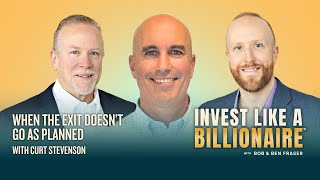
Curt Stevenson left tech consulting after a disappointing stock payout and built a diversified real-estate portfolio: 27% stocks, 19% in a secured income fund, 17% single-family rentals, plus multifamily and commercial syndications. He explains why he shifted from chasing high returns to prioritizing steady cash flow and sponsor quality.
Chapters
Kurt Stevenson is a tech entrepreneur on the brink of an early retirement, but the money that made it possible, it wasn't from the dot-com boom, it wasn't from an exit on the sale of a business, it was from real estate investing. He's been in the real estate game for decades and has a huge wealth of experience and a broad portfolio to show for it. In this episode, Kurt tells me about how he's investing today, so he can build a stable retirement income and finally say goodbye to the 9 to 5. Here's Kurt. So Kurt, thanks for coming to the show.
Thank you for having me. I'm happy to be here.
Well, this is gonna be really fun. For those that don't know you, don't know anything of your background, give a little bit of sense of what you've done professionally, a little bit of your family. Just give us a little sense of where you're at in life and also just some of the story of how you got to where you are.
Yeah, sure. Happy to. So on a personal note, happily married for just over 30 years. I've got 3 adult children, the youngest one just recently out of college. So my wife and I are very recent empty nesters and loving that life.
Oh man. All right. Yeah.
Professionally speaking, I started my career at a then Big 8 consulting company, did that for a few years and decided to sort of start my own version of that. So went out and started a small consulting company, ended up several years later having a successful exit from that business. And then I've gone on to several other tech companies, both as a founder and leader, and been really fortunate along the way to have a couple other exits. And, uh, I've really enjoyed my professional career.
That's awesome. So really a background in consulting and accounting, it sounds like.
Yeah. Tech software, this weird little niche recently in insurtech. So sort of a combination of insurance and technology and heavily tech-enabled insurance companies. Love it.
I'd love to hear a little bit, because I think this is a common thread for a lot of people that listen to our podcast, and it's the entrepreneurial journey. So I think hit a little bit on that. I'd love to hear, you know, what was the process? You worked for a Big 8 firm at that point, decided to move out on your own, do a similar thing. And what was that entrepreneurial journey like? You know, give us some of the high points, maybe some of the low points. And what age did you end up selling that first company?
Yeah, so I guess I've always had sort of an entrepreneurial bug. Even as a kid in high school, I started a little landscaping business, and unlike a lot of other entrepreneurs, I actually enjoyed the sort of running a business aspect of things. So I sort of had that mindset, but when I spun off and started my own consulting company, I guess my motives were primarily capitalist. You know, I was sort of looking at, okay, hey, my company's out at the time billing me out for, $200 an hour and I'm seeing a fraction of that. So I just, I saw that opportunity to sort of charge my clients less and take home more. And I started that, I was probably in my late 20s, ended up selling it in my very early 30s and had to stick it out for a few years.
Was that something that you kind of always planned to do to sell the company? Was that a surprise? Was that something that maybe you'd do differently looking back?
Great question. I guess I did always— I've had the desire to retire young, if you will. And I took on a partner, by the way, in that first business after about a year. And he and I just got a little tired of the grind. So consulting is a very linear business. You really only get out of it what you put in. So to make an extra $200,000 in revenue, you've got to bring on another person who might be costing $125,000. So it was a good business and it was good to me and my family, but it didn't scale really well. It was small enough that we were still doing billable work and being out on client sites and just got a little tired of that and thought it was a good time to sell. So a combination of hard work and luck made that exit pretty positive in 2001.
So at that time, the exit proceeds, was that like life-changing money? I can retire, be done, or was it a good head start but still you wanted to keep working? Or just give us a sense of the size or kind of range of that.
Yeah. So if I was able to get all of that value in cash, it would have been life-changing for me, like significantly life-changing. Basically what happened is we pretty much owned the business 50/50, and after paying the investment bankers their share, which was a lesson learned at the time, that was a lot. But we got paid out roughly half cash and half stock. So with the cash that I got out of that, I fully funded my 3 kids' 529 plans. Just really nice thing to be able to check off the list of things to worry about. But the fact that half of that was paid in stock is something that on paper, I'm sitting here looking at this account balance and the cash and saying, oh, this is great. I can kick back and start doing some more things that I love. And the reality was that the public company, it ended up essentially being worthless. Wow. It took a while, but yeah, it was some bad management decisions by the company that had acquired us. So I went from this point in my early 30s of thinking, hey, I'm pretty much set for life to realizing I had to go back to work, you know, essentially full-time.
Oh man.
Wow.
Yeah.
That's a tough lesson.
That's a tough realization. Yeah. Looking back, would you do anything differently or would you have done anything differently or not?
Yeah. I mean, I guess I probably would've negotiated harder for an all-cash deal. Would I have got that? Who knows? So it was a good lesson learned. I took away from that just more of an awareness of like, You don't really have the cash from anything, you know, whether it's a business or an investment until you have the cash.
Right. And so at that point you had some money, maybe not quite life-changing level, but still a good amount of equity that is in your back pocket. You funded your kids' college, you're getting things settled, but did you start doing a lot of investing at that point or what were you initially doing?
Yeah, so I had done a lot of stock market investing pretty much on my own. It was a great time in the sort of the dot-com boom to be making stock investments and primarily in tech. So the kind of consulting I was doing at the time, I was very close to a lot of the hardware and software companies that were both driving and thriving from the dot-com boom. So I actually did pretty well on the side. My timing was pretty good and I enjoyed that. But really somewhere along the way, I read a book called Equity Happens, which was by Robert Helms and Russell Gray, listening to their podcast, The Real Estate Guys Radio. It got this sort of bug going that long-term real estate was a way to invest and get passive income and a little diversification outside of the stock market. So I eventually, somewhere in the point between where I had sold that first business and when I actually stopped working there, I did buy my first investment property. And it was a 6-family in a pretty rough neighborhood. On paper though, it looked awesome. So I bought this thing for about $220 grand.
Probably great cash on cash on paper, right?
Amazing. It was $3,600, 6 units at $600 each. So $3,600 a month. It was like a 1.6 rent ratio, you know, on all the spreadsheets. It was like, wow, this is awesome.
Oh yeah.
You know, the reality was I never had all 6 of those tenants paying at the same time, but it was still a pretty good investment. And I learned a lot of lessons through that.
Got it. Did you have any, you know, blow up in the tech wreck? Did the whole kind of dot-com fallout impact you at all, or had you shifted a lot of your allocation to the real estate at that point?
Yeah, no, I was pretty fortunate not to lose anything big in the stock market. I mean, I had some bad investments and some good ones, but overall that was a net positive experience. I guess one lesson I learned though in that period is that there was probably a period of time where I was doing well and I thought it was because I was good and I was probably just part of a rising tide lifts all ships in that point leading up to the bubble bursting. But yeah, fortunately I wasn't long on any major tech stocks when things started to tank.
Good timing there. Yeah.
Again, that better to be lucky than good sometimes, right?
Yeah, absolutely. So at this point, you're, you know, mid-30s. The other payout that you had expected wasn't coming. You kind of already got bit by the real estate bug and, you know, bought your first property. And what was kind of your approach there when you're kind of making the shift back to, okay, I got to go back to work first, got to earn income. Do you have a different mindset at this point?
Yeah, so I did. So that property that I mentioned, the 6-family, it was taking a lot of my time, which at that point in my life when I got into that, I had time. So I, it was about an hour away from where I lived at the time. I was pretty handy. I actually sort of like doing small renovations and stuff. So I was spending a day to 2 days a week between renovations and fixing things and then actually going down there and collecting rent. And you know, when I said this isn't a great neighborhood, like I had one guy on parole. I'm like bumping into parole officers when I'm down there collecting the $600 in rent.
Oh my God.
So it was working fine, but as soon as I realized I needed to go back to work full-time, I was like, I can't keep this up. You know, I had a young family at the time, wanted to spend time with my wife and kids and didn't want to spend every night and weekend like collecting rent and fixing toilets. So Somewhere along the way, I became aware of this concept of turnkey investing, and specifically I met a guy named Terry Kerr. His company was called MidSouth Homebuyers. They're based in Memphis, and at the time he was selling fully renovated single-family rentals for about $50,000, which coming from the Boston area was like, what? You could buy a house for 50 grand?
Yeah.
But they were renting for $650.
This is what, like early 2000s timeframe or what's kind of timeframe?
Probably like 2005 to 2010, somewhere in there.
Okay.
Yeah, more like 2005. And yeah, so they were renting for more than this sort of like, I had this 1% rent ratio formula in mind and they were hitting that. And the great thing about this company is they would buy the houses at an auction, renovate them, and then they had a property management company that did all the work. So that was sort of the turnkey thing. It was like you could be a long-distance landlord, not have to worry about anything. And it was pretty cool. I mean, they'd call me when any major repairs were needed, but for the most part, I'd get a report every month and a direct deposit. That probably gave me my first taste of like passive income. And here we are, 20-ish years later, my wife and I have bought 12 or 13 properties through Terry and his team, and many of them sight unseen. My last 4 that I bought, I still haven't seen in person.
Wow. And so how'd that work? Turnkey back then, probably the numbers actually could have worked. I've heard mixed results from different people on, hey, it was kind of oversold to me, or the cash on cash actually wasn't real, or, hey, it's in the ghetto, it's not in a good area. And now as values have risen so much, you're not even going to get close to the 1% rule, which basically is your rental rate divided by the value of the home. You want that to be around 1%, right? So what was kind of your experience?
So it was positive. And again, I give a lot of credit to First of all, the Memphis geography at the time, or sort of metropolitan area, these aren't like gorgeous homes, but it's like a very solid blue-collar working population and pretty reliable renters. I have also done single-family turnkeys in some other geographies, Dallas-Fort Worth, Houston, Atlanta, Indianapolis. That didn't work out so well. But I guess to your point, you know, at some point I realized, okay, this model's working really well. but my net cash flow from these properties is like $200 to $300 a month. And I'm doing the math and I'm like, $200 to $300 a property to really get the income that I want. I'm going to need to buy like 60 or 70 of these things. And I was like, all right, at some point that's not going to get me where I want to go. I actually am pretty passionate about talking about real estate investing. And you've heard the term like a get rich quick scheme. I would sort of jokingly refer to this as my get rich really slowly scheme. So it worked well. It just wasn't working fast enough. Right.
So you're probably getting some market appreciation. Memphis is a burgeoning area at that point, and it's not, not working, but it's not quite getting you to your goals. So what was maybe a change to your approach at that point once you had that realization?
Yeah. So somewhere along the way there, and you know how it is, you get into sort of these networks of other investors and you learn who you can trust. And I got introduced to the concept of syndications. So you play a role as a limited partner. Some thresholds depending on the investment can be low as $50,000 or $100,000, and you're just that, you're a passive investor. It's actively managed by a sponsor or general partners. They're out there buying the multifamily apartment or retail strip mall or whatever it might be. And I was like, okay, this makes sense. At the time I started getting into that, late 2000s, they would pay a pretty reliable return.
And were these mostly like multifamily or?
Yeah, mostly multifamily and industrial at first. Like I did a big warehouse project, at least a couple strip malls, but yeah, mainly multifamily was where I started. But yeah, so in addition to the cash flow, they typically also had a pretty nice exit. So in 5 or 7 years you'd exit at somewhere between a 2x and a 5x multiple. And I was like, okay, I can kind of get into this. And all I'm really doing is reconciling the bank account once a quarter or something like that. So That was a good taste of the passive income.
Right. So you're starting to get better returns and less work. So let's shift a little bit here on your portfolio, where you're at now and the evolution of your portfolio. This is kind of the fun part, right? Just for the listeners, sometimes it's helpful to understand just range of net worth. Are you comfortable sharing kind of a range of where your net worth is right now?
Yeah, I'll share a range. I've, in the last couple of years, crossed the 8-figure mark. So very low 8 figures.
Awesome. And what does your allocation look like right now between, you know, stocks, syndications, passive investment, maybe active real estate that you own and other things?
So one class of investments that I didn't mention before now is that I'm an investor in the Aspen Income Fund. I don't know exactly what you'd call that asset class. I'm going to call it a secured income fund.
If—
does that work?
Yeah, it's a debt fund. Yeah.
Yeah. So I'll get back to the allocation in a second, but one of the things just over the last, like 3 to 4 years, I've realized that in terms of my goals of getting passive income to sort of exceed my living expenses, I've been doing that for a few years, but it's been kind of lumpy. So I've been counting on like liquidations here and there to sort of balance that out. It hasn't been that completely recurring. I can count on it every month or every quarter even. Steady cash flow, like enough to sort of make me step back from my W-2 job. And so I think I heard on another podcast about Aspen Income and not to prop you up too much, but it's been amazing. So I started with a fairly modest investment there and I just absolutely love the— and I believe this is still, I think this was the case for a while, but like 9% guaranteed coming into my bank account every month. And I was like, okay, this is pretty awesome. To the point that I mentioned we're recent empty nesters, but my wife and I decided to sell our primary home last year. We took the proceeds of that and added that to our investment in Aspen Income, and that throws off enough cash every month to cover our rent and utilities and stuff in Boston. So I bring that up because that's now to your portfolio allocation question. I'm still just about 27% in stocks and mutual funds, and then that secured income fund That is my second biggest allocation, combination of you and another entity that I'm invested in. That's just under 19% of my portfolio. And then after that is the single-family rentals. That's about 17%.
And those are the ones you own this whole time in mostly Memphis? Yeah. Awesome.
So mostly Memphis. I still have two in Dallas-Fort Worth, one in Houston. So yeah, that's still, you know, my third biggest allocation. Then after that, is commercial and industrial syndications. That's about 12%. Multifamily's just under 12%. Then I had to come up with a new category called personal use real estate. I don't actually track that, but when I was thinking about my net worth, I was like, I guess I really should include that. Like, I just, to be conservative in my accounting, I don't count that, but that's about 11% of my portfolio. And then I happen to have just under 5% in kind of a niche right now, which is car washes.
Yeah.
So a syndicator that I've had some good success with has been sponsoring some car wash investments over the last— probably been in those about 3 years. And then I have just over 2% in true startups led by friends and former colleagues of mine.
Very cool.
I'm playing like a little bit of an advisor role. That's more like, you know, I'm not counting on that for ongoing income, but it's like, right, there could be some great upside someday.
And it's something you're passionate about, you love, and you get to support friends and people that you believe in.
Yeah.
So would you say your allocation between the different categories has largely stayed the same over the course of time, or is— have there been any kind of monumental shifts as you've kind of shifted more passive?
No, it hasn't stayed the same at all. It's definitely shifted as my, I guess, investment goals and lifestyle have shifted. So starting again with single-family rentals, growing into the multifamily and commercial syndications. You know this, you've talked about it on many of your episodes, but like multifamily has been struggling over the last handful of years.
Yep.
And it went from pretty reliable to all of a sudden they're cutting back on distributions, completely withholding distributions. You know, as you and most of your listeners probably know, those accrue, and assuming the market bounces back, they'll probably be paid out in the end. But from like a reliability perspective, that just wasn't what I was looking for at the time. So that's what pushed me to get you know, more into funds like Aspen Income and Secured Income that their model is paying out either reliable quarterly or monthly distribution.
And there's usually trade-offs, right? So for like an income-focused fund or a debt fund, you're not going to be going and getting the big, you know, 15%, 20% IRRs, but you can get high single digits, low double digits, and it's more consistent cash flow focus. And I think it's a really important point. You kind of alluded to it, but I think a lot of investors, when they get into syndications, it's exciting because there's like all this potential and it's like, man, you go make these returns and I get some tax benefits and I can diversify in different asset classes. But they don't fully understand that the returns don't necessarily equal the distributions that you're getting because most of the return on an equity syndication, common equity syndication, is in the back end when you sell the project. And that's something you can't control. It's something that the market impacts and ultimately the sponsor decides on. Right. And so the reliability factor was not where you wanted it. And I think that's an important realization for a lot of investors that are maybe newer to it, because you cannot equate cash in your bank to the IRRs that you're seeing in the headline projections. Right. Because again, those are just pure projections, pure pro formas. And hopefully they exceed it. Hopefully they hit it. Right. But sometimes they don't. And then a lot of times, especially right now with the higher interest rates, we're seeing a real big pullback on actual cash distributions from cash flow because cash flow is being squeezed from every angle in most real estate asset classes. So it's, I think something that's really important to understand. And it sounds like you've kind of shifted some of your portfolio to kind of, you know, I'm gonna accept a little bit lower returns for this portion of my portfolio, but the trade-off is I get a little more reliability or confidence of the money is hitting my account every month and it just creates more predictability.
Yeah, very well said. You know, part of that is I'm at a point in life where I will probably step away from a W-2 job in the not too distant future. And so that reliability is really important. You know, on that note, there's going to be a place in my portfolio for the high flyers and the long shots, but I just, I want to have that steady income that I know my wife and I can live off of, and then I'll continue to take some higher risks.
Yeah, I love what you said too. Like, you shared percentages, which is helpful to understand the allocation of, right? Because you said you do venture, you do startups, you do things you're excited about, but it's a small portion and it's kind of, hey, if this works out, that's awesome. If it doesn't, it's not going to substantially change my financial picture. So, you know, I, I love just to hear from you on the kind of overarching story here, because you've been investing in real estate alternatives for a long period of time. And, you know, I'm just thinking from someone that's maybe newer to the game, investing in maybe the past couple years, right? Especially multifamily was the hot asset class for so many. Everyone, you know, that was what was most what was being offered. And it's challenging, right? It's struggling. Any deal that was purchased in 2021, 2022, it was kind of market peak. And interest rates have really impacted it. A lot of markets are oversupplied. So it's been challenging, you know, but I love hearing people that have been doing this for a while and to have some maybe broader cycle experience to know, hey, I've been through one of these before, a couple of these before and have some perspective. And I'd also love to hear too, how have you kind of managed through that and maybe managed through some expectations and you kind of pivoted from there?
Yeah. Well, first of all, I guess advice to anyone who's just starting out is don't wait. You know, so I think my biggest regret in my real estate investing career is I didn't start till my 30s. I wish I had started 10 years earlier because I would be that much further ahead by now. In terms of the sort of adapting, I think it's really important to pay attention to the markets. I listen to a ton of podcasts. Yours is great. I mentioned The Real Estate Guys. There are several others and just getting a pulse on like, the impact of increasing insurance costs and taxes and things like that. I think that's really important to help evaluate your sponsors. You know, you get these monthly or quarterly reports, but it's like, okay, so everyone's starting to see this now. Like it's not just one sponsor here and there that's deciding to cut back on distributions and really understanding why and what that is. And for example, now I happen to have a, still a handful of multifamily syndications in Texas, and they're going through this HFC process now where they're basically filing for some sort of special tax status. This, which will help the overall cash flow. So being aware of things like that, of the macroeconomy, you know, realizing, okay, interest rates are going up. Let's say people who started real estate investing when, you know, effective interest rates were like zero 10 years ago. I was borrowing money out of a, it's not a margin account, but like at my bank I could borrow, like use my stock and mutual fund portfolio as collateral. I was borrowing from that, essentially paying myself back. Paying the bank like 2 to 3%, it's like, oh wait, I can invest in Aspen Income at 9% and I'm only paying like 2 or 3%. Why wouldn't I totally maximize this out? And you know where I'm going with that. So had I seen signs earlier, I probably would have cut back on my variable rate borrowing. Like if I was really paying attention to the fact that, okay, interest rates are going up, you know, I would have probably started unwinding that sooner than I did. I have unwound that now. All I have left for debt is fixed rate at pretty attractive rates. So, you know, that's just one example of seeing the signs. I wish I saw that one a little sooner, but I think I was able to adjust relatively quickly.
It's interesting because a lot of the research that we've looked at in the private markets, the biggest contributor to success and growth of a portfolio or in the investing side is sponsor selection. And I think it's so important to really be very picky with the sponsors that you work with. And I'm just curious, would you say that your kind of qualifications or the types of sponsors you want to work with now is different than maybe you wanted to work with a few years ago? But communication-wise or strategic decision-wise, are there things that you've learned as a passive investor that you take with you that I'm going to ask these questions, or I'm going to weight this a little more heavily in my analysis for the next time I'm investing with a sponsor?
Yeah. So I've been overall very fortunate with sponsors. Something I, I actually pay attention to in my portfolio now is not getting over-concentrated in any one sponsor, even those who have provided good results. But I've pretty much stuck with sponsors that have given me good results in the past. And I guess from an advice perspective, you know, I would say ask around, like talk to other investors, see where they've had success. So I don't necessarily have criteria other than, track record. And actually, Ben, you used the term communication, and I think that's key. Like when multifamily started running into troubles and they're talking about that in monthly reports and like, hey, we're keeping an eye on this. Like insurance costs are higher than we expected and showing budget to actual variance and things like that. And like giving you those early warning signs and being really transparent about, hey, this wasn't in the pro forma. We didn't see this coming. It's like, I'd much rather hear that early then get surprised like, oh hey, we're stopping distributions this month and not really explaining it till 3 months later.
Right? Yeah. Because it's a lot more concerning to think everything's okay because they're not saying anything. All of a sudden, and we're going to foreclosure and you know, you're going to lose all your money. Like, yeah, that's not an approach that anyone wants to hear.
But exactly.
I think it's important, right? And it's interesting because I've seen a lot of communication from sponsors and it's very clear the ones that are being transparent and it's the others that either are not, or they're just, they're trying to tamp down information, right? Because it goes against human nature. When something's difficult and something's not going the way you expect, no one wants to go and, you know, share, hey, it's not working what I thought it was going to be, right? But it's also, I think, one of the most critical aspects as a passive investor, because when you become a passive investor, you are just that, you are passive, right? So you're at the mercy now of the communication, the decisions that the sponsor, the GP, is making. And I think transparent communication is the lifeblood of that relationship and that trust, right? And so I think it's so important. I tell investors, how do you determine that up front, right? Because it's— how do I know if they're going to be communicative or not? And I think you can ask simple questions like, one, show me the reporting that you send to a normal investor. This is, you know, before you invest with someone. Ask to see what their reporting looks like.
That's a great question.
And just get some basic packages and just, is it good? Is it not? Is it, do they even have anything?
How often am I going to get that?
How often am I getting that? And then another question I think is really, really important is, okay, tell me about the investment that has performed the worst. And can you share with me the communication that you share with investors about that investment? Because now, you know, they can send you all the good stuff, right? That's always easy. Just like, you know, send me the investor referrals that are all going to pat me on the back.
Hold on, I got to write that down. That was a good one.
Yeah, yeah, because then you can get a really quick sense of, well, we don't have any assets that are underperforming. Well, if that's true, then they're probably not being forthright, or they haven't been doing it long enough, right? And then you can really get a sense of what are they doing? Are they getting in front of it? Are they sharing things transparently? So I think those are some great indicators early on for something I think is really, really important. And you obviously share that sentiment on importance. Curt, what's next for you in life? So you've got to this point, it sounds like your passive income being generated is paying a lot of the bills and maybe making a transition out of active income earning timeframe. And what's next for you and the wife as empty nesters now?
Great question. Yeah. So sometime in the next couple of years, I do plan to wind down the full-time W-2 work. I've got a really long list of things that I want to do with my time. I'm pretty active. So a lot of it is just while I'm still young enough to do it. Spend more time with my wife, mountain biking, gotta work on that golf game. I've been putting that off for like 30 years, traveling more. I would want to maybe get a part-time job at my local brewery. I've always wanted to get my captain's license for boating so I could, in theory, captain a commercial vessel, get a side gig running either a fishing charter or transporting yachts. I do a lot of volunteer work. I'm part of a great program that does coaching adaptive skiing and snowboarding. So people with physical and cognitive disabilities and, you know, That's a weekend job for me now, but I'd love to spend more time doing that. So yeah, that's the beginning of the list. I got a lot of plans.
Sounds like a good list, man. Well, that's exciting. And, you know, congrats on success to this point. And again, thank you so much for coming on. I got a lot out of this episode. It was really, really fun. And to hear your story and the learnings along the way, I'm sure our listeners will get a lot out of it. So thanks so much for coming on.
Yeah, my pleasure. Thank you for having me.
So glad we got Kurt on because he's learned a lot over decades of investing. Now, if there's one thing I took away from that conversation, it's this: don't count your cash until it's in the account. He thought after his exit he could rely on the stock that he was granted from his sales business, and then it plummeted. And then later he thought he could rely on rental income, and sometimes it didn't materialize, right? And it's just a reminder that you can't Don't rely on the theoretical income until it's in the bank. I also think he hit on some really important ways to vet potential sponsors. Talk with other investors. What does communication look like? How often is it coming? These are things you can ask and look at before you invest. And we know that sponsor selection is the number one driver of success in private market alternatives. So you have to do your due diligence. Well, that's all for this week. We have a whole lot more great content coming down the pipeline soon, so be sure to rate, review, share with a friend, and we'll see you next time.










