
Why You Should Self-Insure Your Business feat. Van Carlson
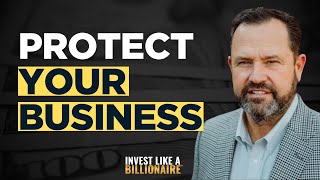
Van Carlson explains Section 831(b) self-insurance plans, which let companies set aside tax-deferred dollars for risks traditional insurers won't cover or price too high. Congress created the code in 1986. Businesses with over $1 million revenue and coverage gaps from hail, wind, cyber, or pandemic risk are good candidates.
Chapters
The unfortunate part about the insurance industry is the one-glove-all-fits mentality. The more unique your business is, the more unique services you provide, probably more gaps you have in coverage.
So you can put away, I mean, pretty large sums compared to like other types of tax-deferred vehicles. But then, you know, it's not money that you can ever see or touch or smell or know what's going on.
If you need it, it's a bad day and you're going to be thankful you have it. Being a risk manager for almost 30 years now, there's a lot of things business owners find themselves all the time self-insuring risk for. Congress recognized this back in 1986. There's a magazine cover behind me from Time magazine that was published in March of '86. It says, "Good morning, America, your insurance has been canceled." And it's really similar to what's going on in today's markets too, unfortunately. I think a lot of business owners are finding themselves with substantial rate increases, paying more and getting less in coverage. Our clients are very successful people and they're capable of managing their money.
Hello, future billionaires. Welcome back to another episode of the Invest Like a Billionaire podcast. Got a very interesting episode for you today. This one is something you may not think you're interested in, but you definitely are if you're a business owner. And this is all about insurance. So a little bit of a unique topic, but we brought on an expert, Van Carlson. He's been in the space for 30 years. He talks about how you as a business owner can self-insure almost any risk that you have and put away tax-deferred dollars into your own insurance plan that you control, that you direct. The capital, you can make investments from it, you can borrow against it and actually get the benefit of it if you don't use the funds down the road. It actually is pretty tax efficient. So this is a really cool way as a lot of business owners are experiencing a reduction in coverage, increase in premiums, and a lot of challenges getting claims. Definitely want to learn about this. This is a part of TASCO that's been around for almost 40 years, but a lot of people are unfamiliar with it, myself included. I've learned a lot today. You're going to hear all about it on this episode. You definitely want to hear it to the end if you're a business owner. So check it out. Enjoy.
This is the Invest Like a Billionaire podcast where we uncover the alternative investments and strategies that billionaires use to grow wealth. The tools and tactics you'll learn from this podcast will make you a better investor and help you build legacy wealth. Join us as we dive into the world of alternative investments, uncover strategies of the ultra-wealthy, discuss economics, and interview successful investors.
Welcome back to another episode of the Invest Like a Billionaire podcast. I'm your host, Ben Frazier. Today, got a great guest, super excited about this. Uh, Van Carlson's coming to us teach us all about 831. I figured you probably don't know what that is, but you definitely want to know and you want to hear all he's going to share. So, Van, give us a little background on who you are. Give us a little sense of what you and your firm do and why should we pay attention to this kind of obscure thing that I never heard of until we started talking about it. I don't know if our listeners have heard much of this. Fill us in on what you do and what this kind of interesting program is.
Yeah. So, and then, hey, thanks for having me on your show. I'm in risk management. That's the sexy part of business, managing risk. I was the property casualty agent that you so forward look at, you look forward to seeing every year. And so, but risk management is obviously a key component of any successful enterprise. That is a a necessary thing that you have to pay attention to. And really, when we talk about 831, that is just a part of the tax code. It's no different than the 401, right? That's— you're just going to find out where you go by the federal tax registration code and you would look that up and see what an 831 is. What an 831 is, is really identifying self-insuring risk. And so being a risk manager for almost 30 years now, There's a lot of things business owners find themselves all the time self-insuring risk for. Congress recognized this back in 1986. There's a magazine cover behind me that from Time magazine that was published in March of '86 that says, Good morning, America, your insurance has been canceled. And it's really similar to what's going on in today's markets, too. Unfortunately, I think a lot of business owners are finding themselves with substantial rate increases. Paying more and getting less in coverage. Very similar to what's gone on back in the '80s. So really what happened was Congress got together in 1986 and formed an incentive that were recognizing business owners that were self-insuring risk or just simply couldn't buy insurance for certain situations to give them an incentive. And that 831 allows you to take expenses at your operating company level, deduct them, and put them into an 831. The hook there is The 831 has to look and feel like an insurance company. So you don't need an administrator for that. And that's what we do as a— no different than a 401 administrator. You would never want to administer your own 401 plan. You have to find an administrator for that. Well, you also have to find an administrator for the 831 plans as well. So it's a break— being able to use tax-deferred dollars to manage risk in the future. And so, you know, unfortunately, Ben, the best example I give on that today, and I think it's, you know, is COVID, PPP stuff, ERC stuff, stuff that the government had to step up to the plate in order to offer business owners a lifeline because traditional insurance companies weren't going to do that. They couldn't afford to do that, truthfully, and they'll never be able to afford to do that. And so this is really where we've been able to grow our business substantially over the last several years is because clients have now have a realization that they are self-insuring a lot of risk. You know, that's just, you know, the PPP stuff, you know, hey, you know, essentially you're just going to be forced to shut down. Are the customers to stop coming to your— even if you were essential, doesn't mean the customers are going to keep coming to your business, right? So That's a big— that was a big, you know, we talked to business owners about that today when we're out talking around, around, around the country. It's like, well, if you were relying on that, you know, this code exists today. You can build up your own PPP plan on a tax-deferred basis and rely on yourself going forward. I don't know what the future— I hope to God we never have a situation like we had in 2020. But, but we lived it and it happened. You know, is it going to happen again? And if you— and if it is, if it will, then how do you position yourself better in the market? And that's really what the 831 allows you to do. And really, you're just taking— you're taking tax-deferred dollars, handling a risk that's not being insured for. If anything happened, you know, outside of that, all you're doing is pulling cash flow out of your business to pay for an expense that you weren't— that wasn't budgeted for.
Right.
That's where it, you know, you put the business at risk, unfortunately, in those situations. And that's something that we're trying to help around the country and And I really appreciate being on your show because, you know, we're trying to bring awareness out, education out, all those things. So clients such as yourself hearing about it for the first time, it's been on the books for 38 years. And, you know, and the reality is, is a lot of people don't know about it. The first people that adopted this were really big Fortune 500 companies. They have a lot of their own insurance companies. Nobody's selling them product liability. Nobody's selling Microsoft Product liability, right? When they roll out a new software, it's— they're self-insuring that. And so they own a lot of insurance companies, um, and they use it, leverage it in certain ways that gives them, I think, a competitive edge even in the marketplace if you know what you're doing. So this is where we kind of bring out— this is really taught me in '08, uh, when I was traditional insurance leading into '08, when the Great Recession hit. That's when I really got interested in managing the financial risk business owners take on, not just their using traditional insurances to do that with. And that's really when I— that's when we started the company. And then we have over 800 plans around the country we manage. We have a lot of strategic partners that offer our products. And, you know, we, we're on track to double in 3 years and we're excited where we're at in this marketplace. And really where, you know, and really the market's the one driving it. I mean, traditional insurance companies are finding themselves in very, very difficult spots right now trying to make a profit. The coverages that are gotten so much, I mean, 1986, cell phones weren't even a thing. Social media wasn't a thing. Supply chain risk wasn't really happening. It was just on the cusp of global economy. And so the world's gotten so much more complicated over the last, those years, and traditional insurance companies are not responding very well to those to those additional risks for business owners.
Yeah. Well, I am super glad we're talking about this. I mean, a lot of our listeners are entrepreneurs. They have businesses and insurance is, you know, it's something that you just have to do, right? It's what, depending on what business you're in and you're paying your premiums and, you know, we've all seen it across probably every insurance line where deductibles keep going up or coverage keeps, you know, being reduced. In our world in real estate, I mean, it's, it's very acute, right? Property insurance is skyrocketed the past kind of 18 months, especially in certain parts of the country to where you can't even really get it and get meaningful coverage to where you're kind of forced to self-insure it in some ways. But, you know, what's kind of caused this, this swing from like you're saying, it's kind of what we saw back in the '80s, you know, is there just been more claims than normal? Like, I know in the real estate side, you have a lot of storms, right, in the Gulf Coast areas that creates a lot of damage, which creates a lot of, you know, outflows of cash from the insurance companies and boosts up claims. But why is this happening across the board? And is there just getting squeezed on margins in other ways?
Yeah, I, you know, a couple things on that. Um, first off, reinsurance markets. So reinsurance markets are heavily, uh, best example I talk about is actually 9/11. When 9/11 happened and those towers fell, there was one company with the deck sheet, but there was actually 28 companies that were reinsuring that risk in the back room.
So explain what a reinsurer is, because that's—
so reinsurance companies buy risk from an existing insurance company. So it's one way for the, we call it a fronting company, the frontline insurance company, you know, they'll take the risk, they'll issue the policy, but they can sell that risk off to reinsurance companies in the back room. And that reinsurance company's only buying risk from a company that's already underwritten that risk. So what that allows the reinsurance companies to do is take on, they don't have, because they're not issuing risk directly to a customer or to a consumer, they don't have near the regulations a fronting company would have. So they're a little bit more, you know, and they demand more. So they demand more on their returns. They demand, I mean, and so that's what's really happening right now. It's like if you can go out and buy a AAA minus bond, corporate bond for getting 9, 10%, do reinsurance companies really want to take their reserves right now and put it into the market when they maybe not can only get 7 or 8 on their returns? Or, you know, a lot of them are looking for 30% returns. So that's also driving prices up. So even when the reinsurance markets come in, that fronting company is the one that's passing that additional cost on out that they got to sell that risk to the reinsurance carrier to— they're passing it on to the consumers. That's why you've seen those big rate increases. And then at the same time, you're seeing a lot of exclusions come in at the same time because the reinsurance markets are like, hey, you know, we want actual cash value minus depreciation risk. Now, we're getting so many phone calls out of Florida right now because what's going on out there alone, I mean, To your point about exclusions, ACV is a serious issue for commercial businesses. And the other one, the other two big factors is that in fact, we're responding to the market by offering a gap policy today because you're insuring your building for X, but it's going to cost Y to replace. Well, a lot of business owners don't know there's coinsurance clauses in there. So if you're not, you're already taking a substantial rate increase. You know, hey, I'm really underinsuring my building. It's going to cost $5 million. I've got a $5 million coverage, but it's going to cost $9 million to rebuild. Well, if you have a claim, it's going to trigger a coinsurance clause inside that because it's the way the insurance company keeps you from not really— you might have replacement costs on your building, but they want to make sure they're insuring it for the proper premium, for the proper risk. And so if the building is underinsured, there's additional clauses in there that different hooks to you as a property owner that you're going to come in with more dollars than you realize. It's just not going to be deductible.
So basically their funds will be contingent on you coughing up your share of whatever the replacement cost is.
Yeah. And if you— and if the building deemed to be underinsured at the time of the loss, it's going to trigger those coinsurance clauses within the contracts. Wow.
And if you don't meet those, then they're not liable for that claim.
Is that how they are still?
But you're going to—
you're going to feel more of the pain. You're going to pay more of the claim. Than you are, than you're anticipating. So what we're doing now is working with commercial building owners is we're building a gap policy now for that very reason, because the replacement cost, I mean, that's a, that's a moving target today. And unfortunately, I mean, yeah, you know, I mean, what you can buy a building for versus what you can replace it for, you know, is substantially different too. Right. So those are all things you have to take into consideration and really understand your policy you're buying because And we're seeing a lot of pressure on roofs right now. You know, you got a 20-year-old roof on a building, actual cash value minus depreciation. You're really self-insuring that roof. So, I mean, if you got hail damage on it from, from shingles, let's say, and it's ACV, I mean, a 20-year-old roof is going to be depreciated down to nothing and that's all they're going to cover you for is the depreciation value. Now, that's a— that those are risks. Those are lots of risks, unfortunately, that business owners find themselves taking on. Unbeknownst to them, unfortunately.
So talk a little bit about just some of the mechanics. How are these structured? You said tax-deferred dollars. So is there a limit that you contribute in a given year? You get the deduction for— I believe these are C-corps, right? So talk a little bit about some of the mechanics of how this works.
Yeah, great. Great. Thanks for the question. Yeah. So these are C-corps. So, you know, we form the C-corp, get the number, we get all that stuff going. And then we're doing the underwriting in the process. I mean, that's what we do. I have a team of underwriters that kind of assess the risk and the premium dollars. So for example, every year, this year, starting this year, you can put $2.85 million away into this every year. So operating company now, just because you have that doesn't mean you get to do that, right? So that's where we come in and we do some methodology on the pricing, on the, on the premiums. And we'll always give our clients the ceiling. Hey, this is the most you can do, and it's really driven by gross revenue. So it's going to be driven by rent receipts and into the unique risk you might have. You know, when you talk about entrepreneurs, you know, the unfortunate part about the insurance industry is the one-glove-all-fits mentality. You know, the more unique your business is, the more unique services you provide, probably the more gaps you have in coverage. Because they're just, they're just giving you a boilerplate policy and say, here you go, you know, and I get that too. I mean, the insurance industry, you could, you know, I get that. But then we dive into those policies and start looking for endorsements, you know, look for additional coverage that really the client wants. And then how do you assess the dollars on that? So what we're— so then from there, you know, we're going to do the underwriting, we'll do the methodology and the pricing, generate the invoice. Client writes a check, a premium check out to their comfort level, whatever that looks like. And again, we're managing that with the clients and then they're able to expense it out of their operating company level. They send it to us and then we have the EIN and then we push it into their C corp, the reserves. That's premium. And like I was saying, the biggest thing under the— as long as you could— as long as you meet— there's a 4-part test you have to adhere to. There are some rules and regulations to this thing, obviously. The IRS doesn't like these things. They're, they're a benefit to the taxpayer. And anytime there are benefits to the taxpayer, IRS doesn't like that. They have their role to play. Right. But there is certain rules and regulations you got to adhere to. And again, as an administrator, we're, we're making sure that those dollars do stay tax deferred. Now, the only thing inside the C corp that doesn't stay tax deferred is in realized investment gains. So, for example, if a client said, hey, I want to put $1 million into this thing, We say, okay, Bob, you're good to go. We put $1,000,000 into their C corp. They put it into a bank and have a money market account, for example, and it's getting 4%. Let's— 5%. 5% easier. It's $50,000. They're going to pay corporate taxes on that $50,000. So anytime you have realized investment gains inside this vehicle, you will pay taxes on it. It could be managed by their financial planner. It could be managed. It becomes another bucket of money for the, for the, for the stakeholders.
And well, I mean, that's a pretty cool point, right? So you can put away, I mean, pretty large sums compared to like other types of tax-deferred vehicles, you know, retirement vehicles. I mean, this is massive. Obviously, there's qualifications like you said you have to meet for different types of companies. But then, you know, it's not money that you can never see or touch or smell or know what's going on. You actually can direct the investment strategy. You can hire someone to help manage that. You can— I believe you can do self-directed kind of investments into an investment agreement, what you can and can't do with the reserves with us.
Outside of that, though, our clients are very successful people and they're, they're capable of managing their money. And so this is, you know, look, think of this like an HSA account, too, by the way. I just, you know, one of those— to your point, you know, if you can build those HSA plans up and hey, if you're fortunate enough to have not to use it for medical reasons, you know, it does become another retirement bucket down the road. And we make that very clear to business owners. That's really the endgame here. That's the incentive Congress put in place. If you didn't have those incentives, you wouldn't do the program, right? And so, um, that, those are things that are long-term. Now, God forbid if, you know, and we don't pull any punches about this, if you need it, it's a bad day and you're going to be thankful you have it. I mean, basically tax-deferred dollars that you put away, last several years, and it's, and it's going to make you, if not whole, at least survive a situation where you're on your own anyway. And, and that's just, that's really where I got really passionate about this business, because the risk takers that are out there, um, how do we manage their risk? Because we need more of those risk takers, not less. And so anytime we can help mitigate those risks. And really the guys that are just like, you know, okay, they calculate, they're not reckless about risk, but they're calculating risk and the reward's big enough. I'm going to go do this, you know, but can we increase the reward and to even make it more, do it even more? And I really think that's where Congress came into, and good on them in 1986 to have the, I guess, the foresight to say, yeah, the world's going to get a heck of a lot more complicated. Than 1986. And we keep seeing that, right? I mean, you know, cyber risk alone today, the amount of information we collect as business owners and the amount of, I mean, the responsibility that comes with that and the policies that are being written today are just, they're meeting contractual obligations, but at the end of the day, are they really covering anything? And I hate to say it, but out there, you know, your listeners might be paying a lot of premiums for these policies right now in cyber, but the exclusions that are in 'em today, are so substantial that you gotta wonder sometimes whether it's even worth having. But, you know, the person you're working with is requiring it. And so you buy it and then you take the risk. If you ever used it, would I ever get it again? And so it's just a, it's a very complicated thing right now in the world we're in, say, you know, and property owners are the same way. You know, do I take on a high enough deductible because do I want to turn a claim in that's less than $100,000 today. You got to do, you got to do some soul searching on that, unfortunately, because you take the risk of being non-renewed. And in fact, I would tell you, you're going to get non-renewed. I mean, it's that market. I mean, a big carrier in Florida just announced 100% they're non-renewing, they're non-renewing everybody and they're leaving the state. And it was a major commercial carrier. It was auto owners. And the fact that they were just, I mean, those were small to middle market business owners that were really their bread and butter. And now they're scrambling to try to look for insurance. And unfortunately, you know, I don't know when that's going to end. You know, I don't see it on the horizon right now. When interest rates start coming down, when inflation starts getting replacement cost goes in better, reinsurance companies want to come back to the market. Meanwhile, we had a hurricane hit the earliest it's ever hit in Texas, you know, just recently. And they're projecting a bad hurricane season this year.
So, right.
That's not how many, how many more carriers do we, you know? Yeah, insurance carriers are going to, they're just going to keep doing what they got to do to stay alive themselves. Right.
So, so a business owner, obviously they may have some of these gaps. So you structure these policies to work and cover a multitude of types of risks, right? Where you maybe you own a building, you can cover kind of a gap there, and maybe you have other liability because you're a consumer-facing business, slip and fall type stuff. It can act kind of like as an umbrella type of a policy, or you have to have different policies for different types of risks.
You would have to have the policy for different types of risk. And the reason why for that biggest reason is one of the part tests for part tests is distribution of risk.
Risk.
And so, um, you can't participate in risk that you don't really have as a business owner. So that's, you know, the best example I give on that is foodborne illness. Um, you know, if you don't manufacture, distribute, or produce food, then you don't have that risk. And so why would you be in those pools? So that's why we segment the policies out, uh, for the business owners. Um, and then two, we just do a deep dive on the clients and understand what the real risk is, what risk they're retaining, Deductible reimbursement is someone that we start to fund for because we got clients that will take on a 10%, 20% coinsurance clause on the property today. You know, if the building's worth, you know, $10 million, they're on the hook for anywhere from $1 million to $2.5 million. Those are sizable deductibles that we're seeing today. And that's really to offset the costs of the premiums and then be able to get a policy. I mean, that's the world we're finding ourselves in real fast right now. It's kind of— I just met with some people this morning on this similar the situations they're having. And one can't even get insurance right now. They had a claim 3 years ago and now they can't even get insurance. And the mortgage companies are looking at them pretty strong. You know, the lenders are looking at them like, what are you— what are we doing here?
And so you structure like a single plan with like subcategories of risk. We have to have different, different plans for every, for every risk.
No, we would do it like you— the first scenario you mentioned where we would just So it's— you got one operating company there. We'd underwrite the operating company, look at their different risks. And they have, you know, one of the things that we're seeing right now, too, is we're dealing with single-payer policies where, like in the Midwest, where there's hail coverage. Hail coverage has gotten very expensive, always has been. And there's also huge gaps of actual coinsurance clauses on hail coverage. You know, you have a deductible for your fire in your building. It might be $5,000. If it is hail damage, it might be— you might be on the hook for 30 or 40% of the loss. And so what's happening in the Midwest right now is we have a lot of farming— farmers and dairymen right now are just deciding to carve out hail coverage altogether. Don't even insure for it. I mean, I'm not using traditional insurance companies for that. It's too darn expensive and it's limited in coverage. I'm just going to self-insure that through an 831. So now we're carving out single peril policies. So a good example would be like earthquake areas where you may only have 60% of value of your building insured. I want to buy up from that. Well, then we'll form an 831 for that. Wind damage is being excluded in Florida right now, shockingly. So business owners are finding themselves covering wind coverage. And so as these things happen, how do you mitigate that? Is utilizing tax-deferred dollars. I mean, and then the idea is you build up the surplus of reserves inside this vehicle, you know, you're in a much better stable position for, you know, God forbid if those days were to happen.
So who determines if an expense is qualified expense? I don't know if that's the right word or not, but there's an issue where you know, there is wind damage, hail damage, whatever on a roof. Is that something that you guys help as the administrator determine, hey, this, this would be qualifying under the kind of tax code here, or is there a risk of, hey, I spend money on something with this plan that's actually not, you know, covered under the code. Now I have a penalty or extra liability or something.
I mean, it's not— it's, it's— think of it as a claims process. No different than any— if you just had a claim on the building. So you'd still have to go through a claims process with us. We still adjudicate the claim, no different. And we actually hire independent adjusters to go out and assess damages, no different than traditional too. You know, when I was talking about distribution of risk is, you know, you're going to have to share in some of these, some risks that are unfamiliar to you. What that allows us to do, though, is it really puts everything in proper procedures where You know, you don't want to, to your point about a policy, and every year, shockingly enough, as broad as we try to write policies to make sure we try to capture risk in certain segments like, oh, supply chain risk. Supply chain risk is huge for a lot of different industries. Every year we find something that's not covered and we try to, you know, the next year we try to adjust to that. But meanwhile, it is a contract, it is a policy, and we have to adhere to that. And so to your point, there'll be times when we have to deny coverages because it's not simply covered or it's covered. But, you know, it's far more damages than what the coverage is, but we hit the limit of the policy and it is what it is. I mean, so I mean, it's just no, it's very, it's ran like an insurance company. That's one of the part 4 part test. The fourth part of that test has to act in principles of insurance. So we make sure there is a proper claims process in place. We make sure that the reserves and surpluses meet the adequate requirements for reserves in order to be able to honor the claims that you have. So all those things, make sure that there's a 4-part part of the policy, that the policy's written in a way that's actually going to cover something. I mean, there's just all sorts of things that we do as an administrator to make sure we stay in compliance.
Yeah, that makes sense. You know, who, who should consider doing this, right? Because I'm assuming there's kind of a threshold of, hey, unless you're at this level of revenue or have these, you know, levels of potential risk, it's probably better, cheaper, less brain damage to just work with a third-party insurer. But, you know, when, when should, when should a business owner start to think about, hey, I'm kind of crossing that threshold to where it makes sense to do this, or would you say anybody kind of should, should look into this, or where does that kind of start to make sense?
You know, we're, we're, we're on a mission to make this a normal business practice. So more business owners know about this to, you know, obviously in the beginning cash is cash and, you know, you're, you're rolling and, you know, you're trying to leverage cash as best you can to grow your business. Right. And at some point you say, okay, enough's enough, or, or whatever happens out there in the world of business. But, you know, from a gross revenue standpoint, I would say no more if you're not grossing more than $1 million. But then again, it depends on the type of industry you're in too. And I would, you know, quite honestly, you know, I hate to say it, but, you know, business owners meet the threshold of pain. And at some point when you have that threshold of pain, either you're paying more than you've ever paid and you're getting less for coverage and that's annoying you. That you should look at other ways. I mean, if you're self-insuring risk, is there a more efficient way of doing it? And I guess I try to make it as simple as possible. You have this risk, you're self-insuring it. Do you want to use pretax dollars or after-tax dollars? That's what— that's all the code comes down to.
And do you want— I mean, you're insuring the risk, you have to either way. You're either paying premiums and making the insurance companies rich or you're paying premiums to your own plan that down the road, if you never had to file claims to balance what's there, you now have extra cash that you, you have available, right? So, I mean, to me, it's, it's a necessary evil, right? That, you know, no one wakes up and thinks, man, I can't wait to pay my premium on insurance. But it's, it's, it's something where you can actually get more benefit from it and have more control over what you're covering and filling gaps and then also potentially get the reward down the road of, you know, not, not needing to file claims against it.
Yeah, 100%. And like I said, if you need it, you're going to be very thankful you got it because it's not a— it's not been a good day. I mean, I—
so when COVID happened, which was obviously massive anomaly and, you know, shut the world down for a while, Did that kind of unlock, you know, some like 831 plans to help continue business or what happened in that? Because in my mind, it's not like a— how do you insure for, you know, an epidemic or pandemic to happen? And could you actually use the funds in that scenario?
Yeah, we had a 1,500% increase that year in claims. We actually paid quicker out through claims than the government did. Especially to restaurant owners and dental practitioners, guys that were just, just— wow, hit right away. And so, you know, you know, as you build these things up over the years, you had the surpluses, you had the reserves. We were able to do it. So, so yeah, absolutely. I mean, we saw a huge uptick in claims, but at the same time, we had a huge uptick in interest. You know, we have a lot of CPAs we work with all over the country for referrals, and most CPAs You know, you're not a CPA, so I wouldn't expect you to know about this code. But I'm always amazed how many CPAs I deal with around the country that have never heard of this code. And I'm like, really? You haven't heard of this code? Are you still a CPA or are you just— I mean, what are you doing anyway? Do you read the notices that come out? But anyway, I don't want to beat up CPA community too bad. They're a good referral source. But no, But my only point is, is on that is, is that, you know, a lot of people don't know about this thing and even CPAs don't know about this. And so, you know, when it came out that— and we've talked to a lot of CPAs over the years. So when COVID hit, they all of a sudden got it. They're like, oh, I get what you guys are doing. You know, I don't want to make it sound like a rocket ship, but to some people that don't like insurance, that don't— that, that think of it as, you know, and I get all that, trust me. Um, this is something you got to think about a little bit and say, is this, is this good for me? Is this right for me? And, and I would say the bigger the risk you are, the bigger risk taker you are, um, this thing is going to be right up your alley. I mean, it just, it just is. I mean, it's just your, your appetite for risk, uh, is substantial enough to where you say, you know what, I'm— and I I'm dealing with almost weekly now where somebody's self-insuring their building and I'm like, what?
100% of it.
Yeah.
Wow.
Yeah. Because they're looking at the cost. They're like, hey, man, this is eating into my rent so much I can't pass it on to my tenant anymore. These big rate increases on a triple net.
So, you know, I mean, in that scenario, I mean, my first thought is, well, what do the banks think about that?
Right?
Because banks want to make sure you're covered with that. They view it as qualifying.
Yeah. To your point, these are cash— these are businesses that are paid— these are buildings that are paid for. So to your point, yeah, you can't— okay, mortgage. Now they'll force-place insurance on you. And what's interesting about that, and I've had this brought up a couple of times, that might be as cheap on the force-place insurance the banks give you and then buying a policy out in the public.
The self-insured pay force-place might actually be cheaper than paying the Yeah, it's interesting. I mean, I've got to see some of that, but yeah. So what happens? I mean, let's, let's say, you know, things worked in your favor down the road. You got a pile of money in this account. Now you're retired from the business. You sell the business. What happens? How do you— can you access that?
Do you just write a big check to the government and say, hey, well, the whole thing about it is, is, yeah, you will allow you to keep it up to 3 years after you sell the business or that you don't cede risk into it. Of it, um, will allow you up to 3 years. A lot of our business owners end up buying another business, ironically enough. So they'll— but, um, we'll let them stay open for 3 years. But however, this is a C-corp, you are a shareholder, so you would redeem the shares, uh, and they can— they come out of capital gains, um, or you can move it into a holding company or anything like that. We don't participate in those things. It really depends on what the client wants to do, but The reality, though, is, is it's a, it's a distribution on our end. If they say, hey, let's close it down and it comes out of capital gains, long-term capital gains, which is in, in a little—
in what I think is kind of the second part of my question is from a tax standpoint. I mean, it actually seems pretty favorable, right? Because if you're contributing dollars tax-free and at ordinary income rates, you know, you would normally be paying you know, higher than capital gains rates. And so obviously with C-corps, you have double taxation, but it's only at distribution. So when you actually redeem membership shares, is it kind of, is it a better scenario from a tax standpoint? Am I thinking about that right?
Well, it's a tax arbitrage, right? I mean, it's— Yeah. Yeah. So I mean, yeah, we have clients that do that, right? I mean, instead of, you know, they'll take a distribution every year out of their C-corp 831 plan. And we'll actually force a distribution too. If they're not having claims by year 4 and 5 and they're funding max funding based on our methodology, we'll require them to take a distribution if they want to keep funding. So right now, to your point, they win. Relative to our fees, the client still wins because of the double taxation. The double taxation is only on investment gains, realized event.
Oh yeah, that's kind of— it's good.
Yeah. Premiums and bulk of the premium is staying tax deferred. So when they pull it out through a dividend, that's really the first time that money's being taxed. You know, they had—
then people got to call you, man.
I like this.
This is cool. Well, yeah, what's— what's—
for a lot of reasons, for, you know, I think that's really the long-term planning strategies in the back room. They can work with their financial planners or advisors or trusted advisor in this, you know, and do what big businesses do. I mean, big business has been doing this for a long time and And they'll continue to do it. And I just try to, you know, like I said, the risk takers, entrepreneurs out there that are taking that idea and running with it and turn it into a profitable company. It's not easy to do. And how do we, how do we make the most of that? And it's utilizing tools like this.
Very cool. Well, what's the best way for people to learn more about what you do and more about this kind of cool part of the tax code?
Yeah, I mean, 831b.com is our website. we were lucky to get that years ago. Nobody knew what, you know, we, we took advantage of nobody not knowing about it. Um, and so, uh, but I would start there. Uh, you can always reach out to me, van@831b.com. That's van@831b.com. I'm happy to put you in touch with, uh, any strategic advisors around the country where you may be. Um, and we have about 120, uh, currently, um, around the country. And then, like I said, I have a really good sales team here and you know, our whole process of this thing, and it's like anything else when it comes to sales and educate first and see if it's good for you or not good for you. I, you know, I think every business owner out there should be looking at every tool there is available to them. And that's all this is, is another tool. And, you know, it's not a silver bullet. It's not, it's not that sexy. You know, it's, it's a, it's risk management. But I think it's a great advantage to business owners when they look at it the right way.
Very cool. Well, man, thanks so much for coming on, sharing your wisdom on this topic, and, uh, definitely interesting. I'm sure a lot of our listeners will get some value from it. So thanks so much.
Thank you, appreciate it.
This is the Invest Like a Billionaire podcast, where we uncover the alternative investments and strategies that billionaires use to grow wealth. The tools and tactics you'll learn from this podcast will make you better investor and help you build legacy wealth. Join us as we dive into the world of alternative investments, uncover strategies of the ultra-wealthy, discuss economics, and interview successful investors.










