
WSJ’s Most Accurate Economist feat. Dr. Belinda Román
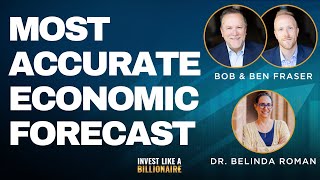
In this episode of the Invest Like a Billionaire podcast, co‑hosts Ben and Bob Fraser interview Dr. Belinda Román, an Associate Professor of Economics at St. Mary’s University and the Wall Street Journal’s 2023 most accurate forecaster. Dr. Román explains how she evolved from a rigid econometric approach to a hybrid method that blends hard data with on‑the‑ground observations. She argues that the U.S. economy is on a “glide path” rather than a sharp recession, driven by strong consumer spending that underpins a soft‑landing outlook for 2024 and a continuation of modest growth into 2025. Both hosts and guest discuss why inflation remains sticky—wage pressures, demographic‑driven labor shortages, and energy under‑investment—making a rapid return to the Fed’s 2 % target unlikely. The conversation turns to fiscal policy: massive Treasury issuance, record deficits, and the limits of Modern Monetary Theory, with concerns that the composition of federal spending (infrastructure vs. debt‑financing) will shape future rate dynamics. They also examine demographic trends, immigration, Social Security solvency, and the political cycle’s impact on economic expectations. Real‑estate stress, especially in office and multifamily sectors, is highlighted as a rate‑sensitive barometer. Finally, Dr. Román outlines the WSJ’s quarterly forecasting process and her plans for the 2025 outlook, emphasizing the importance of adjusted data and teaching her methodology to students.
Chapters
We're seriously going to have to think about the spending and what we're spending on. We still have a lot of momentum. There's a lot of positive feedback loops going on in the economy, and the federal spending is still quite high in certain areas. So why wouldn't we continue to see growth?
You predicted stronger '24. You've been right. What are you seeing for '25?
I think it's one of those, like, we're on a little glide path because if you look at the graphs and you read closely what the Fed is saying, you see that there's some slowing, but there's always growth and there's always inflation. Some price adjustments upward are a good thing so long as everybody else is following along. We'll catch up, especially consumers in certain parts of the US are going to start to catch up. They're adjusting their spending already.
Hello, future billionaires. Welcome back to the Invest Like a Billionaire podcast.
Bob, who do we have on? Oh my goodness. You would not believe who is going to join us. This is Belinda Roman, literally the number one most accurate economic forecaster for 2023, according to the Wall Street Journal. So She's going to come on and tell us what's been happening and tell us what we can expect.
Don't want to miss it. Enjoy the show. It's going to be great.
This is the Invest Like a Billionaire podcast where we uncover the alternative investments and strategies that billionaires use to grow wealth. The tools and tactics you'll learn from this podcast will make you a better investor and help you build legacy wealth. Join us as we dive into the world of alternative investments, uncover strategies of the ultra-wealthy, discuss economics, and interview successful investors.
Welcome back to another episode of the Invest Like a Billionaire podcast. I am your co-host Ben Fraser, joined by fellow co-host Bob Fraser. Today we have a very exciting guest. I've been looking forward to this conversation for probably a few months now. So we have with us today Belinda Rahman. She is the Associate Professor of Economics at St. Mary's University in San Antonio. And we first heard about her when the Wall Street Journal picked her as the most accurate economist for her 2023 predictions. And so we said, hey, we've got to reach out to Belinda and have a conversation. And so, Now we're here and very excited to have her on the show and get her take on her kind of unique methodology of how she looks at economic predictors. And then also get her take on what's her take on the go-forward, you know, play out of the US economy here and internationally as well. So Belinda, thanks so much for coming onto the show.
Yeah, thank you very much for inviting me. Thank you.
Yeah, well, give us a little bit of background just on your kind of story, how you got into what you're doing, and then a little bit of your methodology for kind of how you think about, you know, economic predictions.
Right. Okay. Well, you know, I was invited to join the panel for The Wall Street Journal. They had a call, and I thought, you know, I want to answer this because that is part of my training is to practice my profession. So I decided to throw my hat in the ring and say, okay, yeah, I'll try this. There was a couple of years back. I think it's been about 4 years now. Um, the first couple of times I was like, I'm going to be an econometrician. I'm going to be very rigid. I'm going to follow all these things. And I failed miserably. Uh, it was too low. I was getting the numbers wrong. And I thought, well, there's something else that I need to think about. And that's when I started to think more about the experiences of people and what I see in the media and what I hear as I'm walking around, you know, San Antonio and other parts. What do I see? The closed, you know, people opening, closing, shutting doors. Something else is going on that's not captured in the numbers. And then how do I integrate that into my analysis? Because that's always the challenge, to put the anecdotal and the fuzzy stuff in your hard numbers. And so that's kind of what I've been working on. Since the first 2 years, I was completely out of line with even the panel. I was like, I'm wrong. Or it's not that I'm wrong. I'm just too different, but I was too low and I couldn't understand.
You had to be completely shocked when they picked you as the number 1 most accurate forecaster.
I was, I was when actually when I got the email from the Wall Street Journal, like we need to talk to you. I thought, oh no, I'm in trouble. Right? What did I do? I missed something. I, you know, I didn't put a number in and they were like, no, you'll be interested to know that you came out at the top of the list. I was like, what? Okay. All right.
Okay.
So that means my adjustments helped. Now, mind you, I wasn't, I didn't get everything exactly right. I was the closest to what ended up being the final numbers. So, you know, that was clarification.
I mean, there's such huge variation. I mean, you know, Everybody back in 2023 was predicting a recession. Everybody. And I actually was one of the few who wasn't. So, which is why when I saw the article and what you had predicted, I'm like, well, there's someone who is very much out of consensus and has been right. You know, and my analysis was driven entirely on the consumer. You know, when 70% of the economy is a consumer and you look what's happening, the consumer was on fire with their spending. You look, very high cash balances, you know, low debt service, low financial obligations, um, and high wealth effect. I mean, I'm thinking the consumer is going to drive this thing home.
And there's just—
when, when the consumer is that, you know, uh, that spend, as you know, that spending that much, you're just not— you cannot see recession because they're going to create massive demand. And I could not get my head around the recession in spite of the yield curve being inverted and all that. Yeah.
Exactly. Exactly. As a matter of fact, about 2, 3 years ago, I was in a presentation by the local Fed and they were talking about that inversion. I'm like, okay, where is it? When's it going to happen? And that was the problem. It's like, well, it's going to happen, but we don't know where. And that got me thinking. I was like, wait a minute, we need to be a little bit more, you know, thoughtful about what we're actually saying. And with all of this, 70% of the economy is consumer.
And the consumer spending like there is no tomorrow and creating incredible demand. How can you predict recession? You have— there has to first be consumer change. And I'm still waiting for it. I'm still waiting. You see little dips, but it's still on fire. And I'm thinking '24 is going to look a lot like '23.
Mike. You know, I would agree with you. I think there's these little dips. We'll never know if the recession actually happened until the, you know, National Bureau of Economic Research tells us. In 2 or 3 years from now, but that's too late for us, isn't it? So, you know, you see some softening, and that's why I tried to use that language. You see some softening, and they'll tell us officially whether or not it's going to be a recession, but there's some softening, but we still have a lot of momentum and a lot of positive— there's a lot of positive feedback loops going on in the economy, and the federal spending is still quite high in certain areas. So why wouldn't we continue to see growth? Why would I continue down those paths?
Yeah, you predicted, you know, stronger '24, you know, a little softer, but strong. And you've been right. And again, a lot of people are, you know, we're still predicting recession the beginning of the year. And now it seems like more and more people are getting on board with the soft landing, you know, and which literally I was been saying for a couple years. And I still think we're going to see the same, right? So, Longer range, what are you seeing for '25? You know, are you seeing more of the same?
I think so. I mean, I think it's one of those, like, we're on a little glide path because if you look at the graphs and you read closely what the Fed is saying and everybody else, you see that there's some slowing, but there's always growth and there's always inflation. You know, when you actually think about inflation, some price adjustments upward are a good thing so long as everybody else is following along. So I thought, no, this can't be, this can't be that it's all just going to bottom out. It's going to, we're going to continue, but we're going to slow. And that's okay. That's a good thing. We'll catch up, especially consumers in certain parts of the US are going to start to catch up and they're adjusting their spending already because we're hearing about sales and the big box stores are starting to change their prices coming down. So things are changing. It's just not going to be this precipitous thing that we've been trying to imagine. That V-shape that they kept saying, it's going to be like this, and then it's a W, and then it's a K. I was like, you know, what are we doing?
Yeah. So, you know, some of the big questions, of course, have been, you know, around inflation. And again, very few people have got inflation right. And And my view for a couple years was that we're going to see higher inflation. It's going to be stickier than we wanted because I think so many economists are stuck on cyclical analysis, not structural analysis. And if you look at inflation, there's a couple structural elements here. One is labor shortage. There's a labor shortage that is driven not cyclically. It's not just by the business cycle. It's driven by— there's a labor shortage driven by demographics and worker habits changing. Um, people are opting to not work, um, and there's a— just a, just a labor shortage that drives up all labor costs. And you see it's still— labor costs are still rising. And the element is energy, and energy is a very tiny component of the inflation indexes, but it's much bigger impact because energy underlies everything. And I see energy prices continuing to be a sticky factor because of underinvestment in energy globally. And— —has dropped 55%. So my view is that inflation is going to be stickier than people want, and it's been so. And I've said for a couple years, I don't think they're going to be able to get to 2%, not right now. Not unless they create a massive hard landing in the economy. So what has been your forecast for inflation? And, you know, what were you forecasting for '24? And what's your view going forward?
Yeah, I would agree with your assessment. I think prices, especially wages, that's where all of that is— all of that is stickier than we give it credit for. So it's hard to bring— it's hard to bring those numbers down. Uh, and so I, I, when I looked at my forecast, I was like, this is going to take longer than we want it to take. We can't have that immediate gratification like we like. So it's going to take longer. It needs to be more sensible. And I, and I also agree with your assessment of, of, you know, the demographics, uh, you know, from a, from a woman's perspective, you also got childcare and all the other things that all of that is more, more expensive as well. So it's counter to the narrative that we're going to get down faster. So I had inflation a little bit higher for longer, coming down. The interest rates not changing. When I read that some of the predictions were 6 times this year, I was like, no way. They started at 9. Yeah, 9 at the beginning of the year. Yeah, I was like, no, no, it's easier to go up than it is to come down. Let's be real about that. So I was like, no, I think they're going to be more sensitive and more deliberate. And as much as they don't want to be a part of the political calendar, it's probably in the back of mind. If you change too close to the election or just after, it's just going to, you know, it's not going to look right, is it? So I think they're paddling.
Yeah. Yeah. Accused of taking sides. Exactly. Exactly. They've clearly tried to be very independent, you know?
Exactly.
Yeah, so inflation has been sticky, and it just seems like it's going to continue to be. You know, do you think the Fed is going to be able to get to their 2% goal? Do you think we're going to see that in the next, let's say, 12 to 18 months?
Well, it's kind of one of those questions that it's all about how you manage the numbers, how you calculate inflation, and how you think about the numbers. As opposed to how it feels for everybody. So maybe they get there in 2, 3 years, but everybody's still going to feel that pinch because all the numbers stayed higher than we originally wanted. It's, it's where the inflation numbers will adjust. And I don't think they're going to come— it's going to be hard to get them down in some of the food prices because we're just going through so many catastrophic changes there. And then, like you said, the energy, the energy sector isn't investing in the way that we probably thought they would because they're trying to pivot as well and get other things in place. So I think those kinds of issues are going to be what keeps inflation slightly higher for longer. And we just, we need to be thinking and cognizant of that. And then you got, I mean, Macroeconomics 101, more federal spending, more more inflation, more movement, pressure upward. It's, it's, it's all of that coming to, to home to Brewster. So how do you control it?
Right. And so, you know, I want to talk about rates, interest rates. And of course, you know, the Fed controls the lower end of the market, right? They control short rates, right, by setting them. But longer rates are controlled at auction, right? Yeah. And, and we've seen You know, I don't know if you've been tracking how closely you track the Treasury auctions and long rates, but we've seen some very weak Treasury auctions. And we're seeing record Treasury issuances. We're seeing Treasury quarterly issuances at $7 trillion in a couple of the quarters, recent quarters. I mean, to put that in context, during the Bush years, we had about $1 trillion per quarter. Mm-hmm. During the Obama years, about $2 trillion per quarter, and Trump about $2.5 trillion. Under, under Biden, it's been $5 to $7 trillion. Well, any, anybody tells you if you've got lots of supply, you know, it's supply and demand, and we've got twice as much supply and really 4 times as much as there was 10 years ago. What's the demand? Who's going to buy the treasuries? And we've had extremely weak auctions. My view is, you know, and so this is, I'm a super economics dork, you know, for, you know, so, you know, you know, I tracked, I actually started as more of an Austrian hard money economist years, you know, decades ago. But recently MMT has become kind of a fashion. And the idea is that we can run massive deficits and that never, we never pay for them, right? We never have to pay for them. I think we're seeing the endgame of MMT. I think we're seeing there is limits to how much we can borrow and how much deficit spending we can do. And I think we're seeing a lot of pressure on this. And I think rates, it's likely we may see rates continuing to be very, very high and continuing to trend even higher as long as the federal, the government continues on this path. So I'd love your take on that.
No, absolutely. I agree with you there. I think that, that, that's— the Fed has been very cautious not to say that because they're only one side, one pillar of, you know, the policy, the economic policy. But I think they've been pointing at it for a while now, that federal spending and the political cycle is, is, is an issue. And as our politics, international politics changes and some of our partners don't want to buy as much as they used to of our debt, that's a problem. And so, but we're not saying it, we're saying it without saying it. So you see headlines that might say we're changing, we're pivoting, we're changing this, we're changing that. And so, I think, you know, we're seriously going to have to think about the spending, the spending and what we're spending on. Because, you know, modern monetary theory is, you know, yeah, spend, spend, spend, but like anything else, it's about what you spend on. So are you spending on developing out your workforce? Are you spending on developing out your infrastructure or, you know, the technology around everything? Or are you spending it on buying more bonds, buying more things, creating almost like a, you know, for lack of a better word, a Ponzi scheme where you're buying to buy to buy to buy rather than buying to produce. And build out a base. Right. And that's where I think we're having it. We're having an issue, except for the military spending, because that's a big chunk of the federal budget, isn't it? That— and we're involved in a number of things. Maybe a couple of years down the line, some of the technologies become commercialized, but we don't have that time to wait, do we? We don't. Yeah.
So, yeah, let's look at the budget. I mean, so much of it is mandatory spending, right? You look at Social Security, Medicare. It's all mandatory. And what is it, 2030 is now the end date where now Social Security is bankrupt again. And, and here, and look at our demographics, we have more and more people entering into it and fewer paying into it. Yeah, with the retirement of baby boomers, there's only one way that goes. Um, we're seeing higher interest rate payments, so the, as a percentage of the budget, that's climbing. We're seeing fewer buyers of treasuries because of the trade deficit. So when we buy stuff overseas, they recycle those dollars into treasuries. That's not happening. We're seeing the green economy, you know, the Inflation Reduction Act, which I just want to laugh every time I hear the title, you know, $1 trillion spent on green subsidies. We know that, I mean, we just, you know, we can't afford this. And the, but the green economy is very, very expensive. And, and all these things where, you know, so we're seeing this deficit spending kind of going haywire and are the markets going to hold us accountable?
Right, exactly. Yeah. No. Well, it are, and are the voters right? Because that's also the future. What we're doing now is the burden of the future. That's right. So how do we feel about that? And if, if there aren't going to be any workers, you know, it's a very complicated story, isn't it? But our, our present is Is it sustainable in the future? Yeah. And I do think about those things because our demographics are changing, our politics with regard to immigration, which has been helpful, you know, over the history of the United States, immigration, more people working. And we just had a long history of it, especially those of us that are in flyover country, right? We rely on a lot of people coming and going and working in agriculture and different industries. So Uh, the immigration debate to me is, is an element of it. Forget the politics. It's we need workers because the demographics are changing. No question.
And you know, the workforce shortage can be solved by that. So, so, so Belinda, the question is, is, is there going to be a price to pay for the, for the deficits through higher interest rates? Uh, long rates.
Yeah. Long rates. Okay. So the interest rates are high right now, aren't they? And I do, I mean, I do go and look at the Treasury and I see when they're retiring debt and replacing. And all of that was great when the interest rates were low, but now that they're higher, that's a challenge. And so, you know, if we stay at this higher rate for longer, then, you know, our, our bills are going to be higher for longer as well. And so I think the Fed is trying to balance all of that, but it's almost an impossible task, isn't it? Because there's too many other headwinds. Coming their way. And, and, uh, I think that's gonna be difficult. I mean, I hope that we don't get to the point where we do like some countries do and say, let's lop off a few zeros off of these numbers and start over again. Uh, I don't see us doing that, but I do see us perilously heading towards a, a bigger challenge. Yeah. Yeah.
It's hard for me to see how we're not gonna see higher rates. I think, A lot of people are expecting rates to normalize. And of course, this is all the younger people who have— who have interest rates, long rates normal at 2%. But if you look back, you know, I'm a little bit older and, you know, long rates have been 5% and 6% throughout most of the United States history, right? And I mean, I think since the, you know, '80s, '70s, well, '80s of course was much higher. Um, yeah, but you know, normalized rates, we're probably right there. Very possible because of the deficits that we can see even higher than this for an extended period of time to induce buyers to buy all this debt that is being produced.
Exactly. And mind you, we're competing with Europe and other places that are also trying to, to sell. Uh, that's why I think, uh, economic history is important. To know your history because, you know, rates went really high in the '70s and we were in a very different— so, you know, if you go back, you push out your time horizons, you see that there are these moments where rates can be really, really high and how detrimental they are to certain other aspects of the economy.
So, keeping that in mind. Yeah, Jamie Dimon, you know, the CEO of, um, JP Morgan, um, said, you know, he's expecting higher rates and they're preparing for rates as high as 8%, you know, long treasury rates. And, and he called out that he said the green economy, the remilitarization, and the aging workforce, all things he, he's very concerned about it. And, uh, you know, it's kind of a shock to Wall Street when he said that in his annual report, you know. Yeah. So I, I think it's a real possibility that we're going to, we're going to see rates go up before we see them go down, long rates.
I think the Fed's hoping that's not the case. I know everybody is. I mean, yeah, yeah, we're in the real estate sector.
Who wants to see high rates?
Exactly, because that's— I mean, you feel it a lot, don't you? Very real, very interest rate, uh, sensitive. So I think if you're looking at all the presidents are out talking now and some of them are talking about, you know, maybe there's a hike there, maybe there's not. And sometimes I read them and I wonder if that's their position or are they out there kind of priming the pump a little bit? What's happening that these conversations are happening? And then you see it in the stock market numbers. I think today the Dow started 300 points down. I was like, well, what is going on now? And who said something so that we can figure it out, right?
Yeah, I've given up trying to figure out why the markets moved today. You know, they, boy, it's a, you know, who knows? You know? You know, yeah, so, you know, so what's your, what do you think, you know, just give us thoughts about 2025 and, you know, and, you know, the election. How, how much do you think the election plays into economics, rates, you know, inflation?
Well, um, I mean, the economy's kind of chugging along anyway, isn't it, despite the best efforts of, of either side. So that's, that's the good news. And I think it's, it's, um, in some of these entitlements and maybe some of the discretionary spending where we, where we start to think about, okay, how are the— how is that national picture gonna influence. I think my position is always that, you know, it's all local and what happens at the local levels and how can local governments and state governments manage expectations as well as the requirements because that has to bubble up at some point and it starts to change and if local governments don't, can't do what they need to do, their revenues are changing or they're actually quite buoyant, like they are in some cities, then, you know, that's maybe good news and it's a counter to what happens at the national level. That's what I, that's what I'm thinking at the moment because, you know, some cities are experiencing, you know, where, where you're benefiting and maybe this is happening in, in the Midwest, in Kansas City, where you're getting in those influxes, your sales tax, all those revenue that fund what local are increasing. So that's happening in some of the cities in Texas where we're seeing these windfalls, which they can then recycle. Are they going to recycle them into, again, infrastructure, education, healthcare, all those things that we need to help what we've been talking about? Or is it going to go somewhere else? Or is it going to go and just sit somewhere else and not be productive for what we need? Yeah. I mean, and that's what I look at some, you know, focus and say, what are we actually doing?
I mean, you're making a great point that so much of government spending, it can actually be positive or can be neutral or even negative, right? To the economy. And I'm thinking about California, which is now running record deficits. I think they're at $45 billion deficit at this point. And, you know, they've spent the money. I mean, and they're seeing, I mean, they've raised the minimum wage, which is driving business away, taxes on gasoline. And you're seeing a huge exodus of wealthy people leaving. Same with New York. I'm looking at the, you know, reading articles about the city of— city of Illinois and the city of Chicago. Right. And their huge deficits, and they use the federal stimulus money to pay their pensions, bring their pensions up current, you know? Way behind on their pensions. And this kind of spending, it's just not helpful. And so much of what's going on, I don't think is going to grow the economy. Yeah, we're seeing the stimulus, everybody, all the states benefited from the stimulus. You're talking about local economies, But they, they didn't really spend it well and they didn't use it to produce growth and pro-business or, you know, pro-jobs kind of spending that I've, that I've seen.
Yeah, no, that's true. I mean, some of the studies I see that are coming out, the money didn't flow in the way we had hoped. And so, you know, that's an issue. Again, it's about how you spend, how you spend to develop out the local structure because the macro economy is all of us building up to it, right? It's, we don't scale literally linearly, but we contribute to that. So if it's not the local that is developing out their infrastructure and doing something positive like that, then how can you see it? It's eventually going to come out in the macro as well. And that's why we're having a hard time, I think, understanding it and pegging it properly in our analysis.
You know, I don't know how much you're aware or how much you track the real estate industry, but you're seeing huge kind of collapse of office real estate and real struggle in multifamily real estate. And it's been overbuilt. And of course, office has completely changed. You know, how much are you seeing that? Are you tracking that at all? And what are you seeing there? No, yes.
You know, that's a question that everyone's asking. How do we build up, for example, the business districts that are in the core of the city, like Chicago saying they're going to offer big incentives to get people back downtown. Certain cities are, you know, even here in San Antonio, we're thinking of redeveloping downtown to get more activity there because nobody's using the commercial space, at least not how they want it. And, you know, part of that is the psychology. If we found out during COVID that we're too close to each other, that causes a problem, then of course we spread out, right? So that trend is there and maybe still apprehensive. And then, you know, it's crazy. So I do watch it because it tells you something. Maybe we're not all going to be there. So if we're going to spread out, that's not very environmentally friendly, is it? Because we're going to spread out and use up more, we become more suburban. And so I watch that and I watch also the building because, you know, if companies are starting to slow down, some property prices are starting to come down, the values are changing. So, you know, that's important things to watch because they're so important in terms— and they're interest rate sensitive. So it's been taking a little bit longer to see it filter through. Yeah.
What's your view of the stimulus? I mean, of course, there was record stimulus. You know, to me it seems like it was political, you know, a gift, right? These politicians looked at the chance to give away stuff and it produced a lot of what we're seeing in terms of inflation, consumer spending, et cetera. What's your view on stimulus?
You know, it's a fact. Yeah, I mean, I've been thinking a little bit about this, you know, because a lot of economists, you know, there's two camps. It's like, do we give everybody a guaranteed income? A guaranteed something versus some other, or you don't get anything. And I think, again, it's about how you spend that money. So if you give money as no strings attached, sometimes it doesn't work out the way you wanted it to work out. And we might be seeing, we might be seeing some of that and maybe some of that money would have been better served saying we need to beef up the healthcare system. Clearly we found that was an issue that the nursing homes, everything, all the things that we saw collapsing, that's what we should have been supporting and giving more to. Instead, it was kind of, here's a pot of money, go spend it. And I'm not sure that was the best idea either. And I'm a big advocate for equity and supporting, you know, and looking at poverty and that sort of thing. But sometimes you also got to think a little bit more about the unintended consequences of some of these actions. Yeah, for sure.
When are you going to prepare your 2025 outlook? Is that something you'll be looking at at the end of the year?
Uh, yes, at the end of the year. So the Wall Street Journal asks us quarterly. So I was like, okay, what month am I? So I can start thinking about the next month and the next quarter. And then in December is when they'll ask us for, okay, what are you thinking for 2025? Because that's what they base their, their, uh, you know, this is the person that was the most accurate or not.
So I gotta actually give them your forecast for inflation, for economic growth, GDP growth, et cetera, et cetera.
Exactly. Give them all of that. Yeah. All right. Yeah. And I go back and look and then I've also noticed something interesting about the numbers. Yes. The, you know, the headline numbers there and then 2 or 3 months later, it's adjusted. They keep adjusting and some of them go up, some of them go down and I'm like, well, that's really the number I should be watching because that's closer to what we are really going to be, uh, where we're going to be sometimes.
A lot of attention to the adjustments. That makes sense. Yeah. Yes.
Because that means, you know, we have some of the labor numbers, especially like February and March was like, whoa, that's a big number. That one came down some. And then the one in March was a little bit lower and that went up. So there's a net change there. That's an interesting, because that means they're also over-optimistic or under, under, you know, forecasting some of the numbers. So clearly we need to be thinking a little bit more about all of this. That's great.
And do you publish anything to a blog or anything like that? Oh, I wish.
You know, I'm chasing my students around campus. They stay on track. Otherwise, I'd like to spend more time putting some, some material out there, but maybe this summer I'll be able to put some more of my work up on there. But most of my time is, is that maintenance. And, you know, I tell the students, look, you can do this too. You can, let's, let's try it. Let's see what you think. Tell me what you think. Tell me what you would, what you would predict in this case. Not what you read on TikTok or anywhere like that. Not to demonize anybody. Just what do you think based on what we've learned and how the method works and what are you seeing? So that's going to be the next generation. I want them to get it right so I have my Social Security, right? Good luck.
I can't imagine getting your economics from TikTok.
Yeah. Well, try to do that. Yeah. There's some crazy stuff out there and I'm like, okay. But at the end of the day, you got to kind of think for yourself as well. Critical thinking and say, is this real or not? Yeah. Awesome.
Belinda, so fun to have you on. Thank you so much for coming on and sharing your wisdom and what you're seeing in the markets. And for all those listeners, be sure to follow The Wall Street Journal and Belinda's 2025 forecast and, you know, see if you win the top spot again. And love to have you back on down the road.
If I don't, I'll be a one-hit wonder, won't I? I guess I'll join some of those, you know, names and the— well, you know, I don't forecast for competition, for competitive purposes. I do it for a different reason. And I think that's also an important thing to remember. I'm not competing. I'm just trying to get it right and understand what's going on. So, yeah, that's awesome.
Well, thank you so much for coming on.
It was really, really fun to have you. Sure. Thank you very much for the opportunity.
This is the Invest Like a Billionaire podcast where we uncover the alternative investments and strategies that billionaires use to grow wealth. The tools and tactics you'll learn from this podcast will make you a better investor and help you build legacy wealth. Join us as we dive into the world of alternative investments, uncover strategies of the ultra-wealthy, discuss economics, and interview successful investors.










