Bob Gauvreau Guest Speaker on The Montreal Entrepreneur Podcast by Cathy Bernard
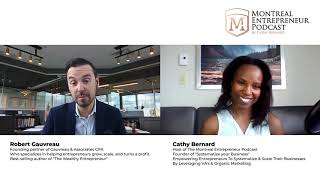
Bob Gauvreau from Govro CPA breaks down Canada's COVID relief programs: CERB paid $2,000 monthly, wage subsidies covered 75% of payroll, and the government offered $40,000 interest-free loans with partial forgiveness. He walks through eligibility, timing, and what small business owners and self-employed people need to track.
Chapters
Well, once again, Bob, thank you for taking the time to sit down with me so we can put some clarity to all this information we have. We see on the news and we can see how business owners can actually benefit from them, from the plans. Okay, we can start by maybe you can tell us a little bit about you and what you do for your community and the business that you do.
Yeah. So I'm the founding partner at my firm, Govor and Associates, Charter professional Accountants. And we work with entrepreneurs and small businesses, helping them with their accounting, bookkeeping, tax, and most recently a virtual CFO program that helps business owners not only get from where they are now, but to where they want to get to and to provide a map for people to follow so that they can achieve those financial results.
Okay, that's very good. So you mean virtual before you didn't have that. Is it because of COVID 19?
No, no, just virtual CFO that it's built out as essentially like a part time CFO program that we've, we've designed so that it can be very specific to an individual, but it's, it's a flow of a program that we can continue to implement business to business. That, that essentially is a framework for allowing them to grow, scale and become as profitable as they can.
That's very good. I've been following your content on LinkedIn. You do very well.
Thank you very much. We're trying again, it's, you know, there's so much uncertainty right now and we're just trying to provide a little bit of guidance and a bit of direction that maybe isn't otherwise out there.
Yeah, I noticed that too. And you do that on a daily basis? It seems like.
Yeah. And well, so this is the interesting thing. When the, when the government agents come out on a daily basis, they making these announcements. Now some of them apply to some of the small business community and some do not. So we're trying to decipher what that is and take it from the political announcement to how is that going to actually be brought into legislation. So we're kind of doing interpretation at this point, but a lot of it, we continue to have dialogue with the Minister of Finance and continue to understand exactly how this is going to flow through and impact self employed people and small business owners.
Yeah, for sure. Well, when I'm looking at your guide here that you put together, we can start with the cerb. You can tell us what it is and how can people benefit from it. This week actually.
Yes. So the CERB or the Canadian Emergency Response Benefit is essentially the unemployment insurance for those wouldn't otherwise qualify for that EI program. So it applies for people who are self employed who had to leave their job because they had to complete social isolation, they had to go home and take care of their kids because the schools were closed or they had to care for a family member who had to have isolation as well due to Covid. So anyone who those particulars apply to that wouldn't be eligible for ei, this is the program for them. And also anybody who had applied for EI who would be under the traditional program but applied after March 15 would also fall into this program. So this is a $2,000 a month program. It is a four week program that you can apply for four times. So it started, the application started this week. The applications are online for the first week. We're looking at applications being January or Monday was people whose birthdays were January to March, Tuesday was April to June, and so on and so on until everybody would hit their day. So to register for that you would go on to my account on Canada Revenue Agency. And if you don't have one, they created essentially a program there where you can get temporary access to your MY account. Apply for this online. Now what I can tell you is we've had quite a few people apply for this at this point and people are giving us really good feedback that it takes maybe three minutes tops to go through the entire program. So yeah, it's working out quite well.
So would you suggest maybe it's faster and better if some people apply for it instead of ei? Let's say I was going to benefit from ei. I would be eligible. Can I still apply for this?
Yes. So I would definitely go towards this program now. So they're transitioning anyone who would have applied after March 15th into this program anyway.
Okay, so if I apply for this, I don't have to apply for ei?
That's correct, yeah. It's not two separate programs. And I do get that where people go, well can I apply for EI and for the cerb? And the answer is no. Everything is transitioning over to the CERB benefit anyway.
Okay, so then that's put some clarity over that. And it's $2,000 per month. Do they have to reapply just once application? And that's it.
You apply once and it's for essentially a four month period. So one of the things with EI is that if you're still earning income, so this has been a question that we've received a lot is you know, I'm a small business owner, you know, our income has dropped substantially, but we still have some small income that's coming in. How does that apply to us? So on the Canada Revenue Agency website, under the area where you're looking at, if you're on EI benefits or receiving EI benefits, you have to report to the Service Canada representative what your income being earned during that period is. Now on their site they talk specifically about self employed people and they mention that the income that you have to report to Service Canada is the net income, meaning you know, your gross receipts minus your operating expenses. So it's your net amount. So so many small business owners who their business has essentially been shut down might have a few small things they're still able to generate. If, if those aren't covering operating expenses, then the income that you have to report is zero.
Okay, but is there a minimum of the amount of income they can generate?
So you have to. So again, these rules keep evolving, but we found out Monday morning that what you are able to do is work up to 10 hours a week. And if you're working under 10 hours a week and earning whatever income, you just have to report the income. And what I would say is when you report it, it's at the net value, not on whatever sales you're making. It's your sale minus your expenses.
If it's a corporation and then the corporation is actually generating some revenue and the business owner is not taking out any dividends, could that still be considered that the person is that earned income also because it's a separate entity, how would you respond to that?
Great, great question. And this is something that the experts are still trying to come up with an answer. But I'll give you some direction because I feel like we're pretty confident with it, but we're still waiting for more to be announced from the Minister of Finance and from the Prime Minister. So our understanding of it right now is if you're the owner of a corporation and your corporation income has diminished severely because of COVID but there's still the on and end income coming in as long as you're not pulling that income out and that your business is still not generating a positive net income. And so I say that because I feel like a lot of people still have a lot of operating expenses, including rent, insurance, professional fees, whatever it is, membership, subscriptions, whatever it is that's still sitting there. Those expenses, as long as they're not being completely covered by your revenue, so that your net is zero or below that would help you qualify and that you're not pulling any money out of the corporation that's being earned. Now, we got some feedback last night from someone who's working closely with the Canada Revenue Agency. And it sounds like any entrepreneurs who have a corporation and have surplus cash in there that had been earned previous to Covid, you're not going to be penalized for taking that out because it was previous money earned. It would only be the money that's being earned now. And you're pulling it out now. You, you could be penalized for that.
So now, as of March, is there a date?
18Th. Yeah, 18th is kind of the drop dead date.
So if there's a little bit of money that's a surplus, then you definitely disqualified.
Yeah. So if you're, again, if you're earning, if you're still earning income inside your corporation, you know, there's probably other programs that you can qualify outside of cerv that the CERB program is essentially created to help those who have no other source of income. And so if you have a source of income, even if you're not pulling it out, but the corporation's still making money, you shouldn't really be qualifying for the CERB benefit.
Okay, perfect. So I think we covered this whole thing pretty well. Was there anything that.
I think so. No. I think so. And you know what? This is, again, the challenge that we're facing with right now is that it's continuously evolving. And I know in social media, on LinkedIn and we've got a Facebook group, you know, we're constantly posting the updates. I think I posted two today trying to keep up with the announcements. And so here's the good news is that I feel like as we continue to move forward, if we don't qualify for any of these programs, we're going to discuss. There's a chance that as they continue with, we may qualify. We just don't at this present time. So the one thing I will say that maybe we didn't touch on with the CERB is initially when they released the program, they had mentioned that to qualify for the CERB, you had to have $5,000 of earned income. And the only thing that they modified, and I think that was over the weekend last week, and that dividends which are not technically earned income are now being included in that. So if you're, if you own a corporation and you only take out dividends, which is a good tax planning tool, and if anybody's not doing that, we should definitely talk. But it's a Good compensation strategy as a shareholder to take dividends out. Now, that initially disqualified people from getting access to this, but they just amended it to say if you earn dividends, you still qualify for the CERB benefit.
Yeah, well, I see that. It's very evolving. So things will change in the next few days, and I'm sure you'll keep us updated on those new changes.
We're going to try our best. Yeah, we're going to try our best.
I know you will. All right, now let's move on to the other difficult part is the wage subsidy. It was 10%. Now it's 75%. And. And how can small businesses like owners, how can they apply that to them? Let me give you a quick scenario. So let's say I have a bakery shop and I had, like, five employees. January, February, I paid them $10,000 in wage. And now in March, I had to close down. How does that. How do I benefit from this? Or can I actually benefit?
Yep. So first things first, we'll address this as the 75% wage benefit. And so in this scenario, with the 75% wage benefit, you would qualify if your revenue and each of these periods are in isolation. So when we're talking about applying for a wage subsidy, we're talking about March as one period in one application, April and then May. So we have to apply for each one of them. And to qualify for March, we need to substantiate that our revenue has dropped 30%, or that's at least until today, what was the case? So in order to justify that our revenue went down 30%, we had to compare March 2020 to March 2019, and just the revenue. If the revenue had gone down 30%, we would qualify. So in the case of the bakery, if the revenue had dropped for March down 30%, you would qualify for the 75% wage subsidy on your overall wages. Now, March has been modified, and they just gave us some new benchmarks today. So trying to incorporate some new business or maybe some. Some smaller businesses that were just getting up and running. So they indicated that right now we could compare March to February or January. And if we can show that March dropped in revenue by 30% compared to those months, that we would still qualify. Now, the other piece they sent out today is that if your revenue only dropped 15%, you would still qualify for March. But that April and May, it would still have to substantiate a 13% drop in 30% drop in revenue for those periods. So back to the bakery we've been working in March up to March 18th is essentially when a lot of people had to close down. The bakery was paying payroll for their employees all through March. Let's say that the last week of March we had to completely shut down and there was no revenue. And that's 25% of our overall month in revenue, which would be more than the 15% that they're asking for. So we would qualify and we would apply for a 75% rebate of any wages that were paid in March. Now what's going to happen is the bakery is closed and there's no more wages. So when we go to apply, even though our revenue is dropped, if we don't have employees on payroll in April, we're not going to qualify for a wage subsidy.
Okay.
So that's part of it is they want employers to take some of the burden off the EI system and they're gonna pay and reimburse 75%. But if you're not paying your employees, then, you know, you're not gonna qualify. Here's the thing with that, though. As a strategic, like, from a financial perspective, my advice is if you have no revenue, you're still gonna be out 25% if you bring all your employees back. So strategically, you know, thinking that in the best interest of our employees, we need to provide a future for them, and to provide a future for them, we need to make sure our business survives this. If you have no revenue, we need to make sure that our employees are laid off. And we need to make that decision quickly so that we don't run out of money and not be able to reopen. Hopefully that's a long winded way to answer.
No, no, my example. So they don't qualify for, for that one. But let's say they had some money coming in and with the wage subsidy 75%, does that mean I could call in more workers? I have to pay them first and then get reimbursed?
That's right. So you would have to pay the employees the 75% up front. And now the government has talked about needing to make an attempt to pay the extra 25. And, you know, we're not really sure what that clarification means, considering that the wage subsidy is going to be based on the wages of the employees. So, you know, it's going to be reduced down to the 75% or whatever we're paying our employees. So not really sure what they're trying to get at there. But we definitely need to be paying the employees in order to apply for that rebate. Now I'll take one more step at the bakery and let's say the Bakery only dropped 10% in revenue in March because we were able to stay open until later in the month and maybe because we grew and we had invested in growth in our business. So they don't qualify for the 75%, they would still qualify for the 10% wage subsidy. So it's an either or. You don't get access to both. So if you don't qualify for the 75% wage subsidy because your revenue didn't drop, or you can't substantiate a drop in your business revenue by enough in order to apply for that grant, you still can apply for the 10% wage subsidy. So I can jump into that and say that the 10% subsidy is a different application process. 75% is. We're going to be applying online through my business account through Canada Revenue Agency and it's going to be available in about two weeks from now. And from there we're going to get a direct deposit check. If we give them our info, about three weeks following that. So we're about five weeks away from getting that subsidy money with the 10% grant or wage subsidy. What we're going to do when we go to make our 15th of the month source deduction payment, we're going to calculate what our 10% subsidy is and reduce our money monthly source deduction payment. The source deductions for our employee payrolls, we're going to reduce our payment to the government by that 10%.
Okay, so they're a bit different.
They're a little bit different. And you know, you always go for the 75% wage subsidy and if you don't qualify for that, you can always get the 10%.
Okay, I think that was very clear. It makes sense.
Okay, good.
So we covered the 75, we covered the 10%. What else do we have left?
Well, the other big one that's sitting right There is the $40,000 government backed loan that's available. So that is going to be available through our primary banks, so through the five primary banks. And it should be available if not this week, the start of next week. So each of the banks has kind of been releasing, it's going to be available very soon. You're going to be able to apply for this through your online banking in your business account. So if you don't have online banking, we need to set that up real soon because that's going to be the only way to apply. Okay, so what this is is a $40,000 line of credit that's going to be set up through this bank application process and it's going to be interest, interest free until December 31, 2022. And so what this amount has to be used for is it has to be used for payroll or other operating expenses like insurance, obviously payroll, professional fees, rent, any of the requirements that can't be deferred in your business right now. So what you're supposed to do is you're supposed to draw this money down to pay for those expenses right now. And you're supposed to draw this money down before December 31st. So if you don't spend the money that's in this account by December 31st, you're going to lose access to it. So whatever you don't spend, you lose. Now the interesting part about this, this is 0% interest, and there's 0% interest until December 31, 2022. And when you pull down on the full 40, if you're able to repay 30,000 of that by December 31, 2022, they will forgive $10,000 of it. So super important, you know, if you. And I'll talk to the eligibility requirement in a second. But if this makes sense and it applies to your situation, this is a program that you don't want because we could all use an extra $40,000. And even if we're just using that to pay for operating expenses, any of the money that we would have otherwise spent on operating expenses for the next few months, we can hold on to and increase our safety net and our working capital that's sitting there just so that we, you know, have a little bit more peace of mind.
And I'm guessing that you have to also prove on how you actually spend that money. Keep, you know, good tracking.
Totally. And you know, I think of a business like mine, you know, my Payroll, we have 20 plus people here, you know, our payroll is 25,000 a week. So this should do one and a half payroll runs for me. So I'm thinking of other small businesses, you know, if you, if you are able, if you're a digital company, for example, and you have no expenses, you know, the only thing you could draw this money down for would really be payroll or maybe subcontractors to help who are delivering some of your revenue right now. So be very careful. They're being pretty strict that if you're not using these for the right reasons, that they're going to come back at you and be some sort of penalty. Now, the qualification factors to be eligible for this 40,000, you need to have reported on your 2019 T4 summary wages of $50,000 or more under a million. So if you've got a couple of employees and you paid them in total more than $50,000 and less than a million, you qualify.
Yeah. If it's under 450,000 then you don't qualify.
Option plan B don't qualify. Yeah, so, so, and what the banks are possibly going to ask, and again, this one is cut and dry. If you file T4s for your employees, you can go back and look at your T4 summary for 2019 that summarizes the T4s and if it's less than $50,000, you don't qualify. And what I would not recommend is going back and amending these to try and make it work now because they will be looking at those and if you don't qualify, you know you shouldn't get access.
Yes, I totally understand, but earlier you said that it's a line of credit so it will be available in the long run.
That's it. So it's available up until December 31, 2020 to use it. So if you use it now, then you get to keep that money and not pay interest on it until again, December 31, 2022. Just keeping in mind that you need to pay 30,000 of it back by then and if you can't, it's okay, they're just not going to forgive 10,000 of it and they're going to charge you 5% interest and have I think a demand payment within five years.
But it's a way to encourage people to actually spend the money and keep, keep it in the economy and get things going.
Absolutely. So one of the, one of the strategies right now is that, you know, if you've got, let's go back to the bakery, let's say you're selling baked goods online right now and you've still got some of your employees that are working, you're qualifying for the 75% wage subsidy. So in order to pay the full 100% wages, if you get access to the $40,000, you can use that to top up your employees wages and then get access to the full 75% wage subsidy for sure.
And are you seeing a lot of clients qualifying for this right now?
So it's again, it should come out this week, hopefully at the start of next week. I feel like obviously if your payroll is over 50, you're going to qualify and it's going to be an easy way to get access to working capital. If you're so big that you have over a million dollars in wages then, which you know, we're close to. You think of 20 plus people, but it might be, you know, a 30 person business. You're not going to qualify for this 40,000. And when you get to be that big, that 40,000 isn't going to have a substantial impact on your operations. Anyway.
That's where the other the BDC comes in.
That's where the BDC comes in. And now are we going to transition into the bdc? What a great segue.
All right, let's talk about that. The 100,000 we can qualify for.
Absolutely. And it is, you know, there is access to more. But a few weeks ago the BDC was provided with $10 billion of working capital funds to help support small medium sized businesses. And what has been there for a long time has been the ability to apply online for up to $100,000. Now that program is working extremely well right now and people are applying very quickly. I can tell you that I applied for it as well and I actually applied for more. So I went through an agent and within 10 business days I had the full amount, which for us was 200,000 deposited into my bank account. So the process works, you know, it works pretty efficiently. Again, everyone's human who's dealing with the administration of these loans. It's going to be bogged down at this point, but you can apply for up to $100,000 online and it's relatively easy. Now to qualify for that you have to have been in business for two years. So the new startup isn't going to qualify for BDC funds. You need to have a good credit rating, you need to have your financial reporting up to date, which again we can help with. And you're going to need to make sure that you can substantiate in your business that you can repay this loan. Now this loan, whatever value it is, is going to be a term loan over five years. So it's going to have to be repaid monthly over a five year period and has an interest rate of 3.3% which is very low, which is fantastic. And to be honest, it's a non secured loan either. So it's not like you need assets to attach to it, but they are asking for personal guarantees.
Of course. Of course. So you said that you needed an agent. If you go above 100,000 then you need an agent to apply to help you out.
That's right, that's right. And I think I posted out on my Facebook channel today if Anybody needs to be connected to an agent who can help them, let me know, which I'll offer that here as well. Now, this poor agent is going to get about 20 emails here this evening with introductions to new people. Now, it's great, but it's just going to take them some time to get through those applications and it's fairly easy.
I did check the application online and the process is seamless.
Yeah, for sure. So they ask a few questions. You have to upload, I think, your personal notice of assessment and corporate notice of assessment for the last couple years and financial statements. But again, you know, it's pretty straightforward and you can probably get through the whole application within an hour and you provide them your direct deposit info and in comes the money. So it's pretty seamless.
So why did you choose them instead of the other banks, for example? Td.
Great question, Kathy. I chose them all, you know, so. Yeah, totally. And this is, you know, and this is very real. You know, we're all kind of in survival mode. And if we get time, I can show you the model that we've created that's called survive and thrive. But ultimately we're all in survival mode. And 82% of businesses that fail, fail because they run out of cash, not because they're not successful, not because they don't have an amazing future, but they run out of money to be able to operate. So what we need to do is make sure that we increase our working capital and our resources so that. That's not gonna happen.
Yeah, but.
So one of the. Go ahead.
But did you find that the application process was easier with the BDC instead of the other banks?
So I reached out to the BDC and I said, I want some money. And they said, how much? And I said, all of it. Right. And they said, well, what's all of it? And I threw out 200,000. Not really. I, you know, I feel like now I'm disappointed. I should have asked for more. But, but right. To have access to that money at 3.3% is really important right now. So they were super easy. And then I went to my other banks and asked for the same thing. So. And, you know, I didn't really ask for much there because I was so happy with bdc. But, you know, knowing and reaching out to your account manager I think is really important too right now.
Yeah.
Because $300 billion of money has been freed up from the bank of Canada to your primary banks to give you extended working capital, give you higher credit card limits. And I think they've actually reduced credit card interest rate as well. Yeah. Extending your loans, postponements, postponing loan payments, for sure. Took advantage of that. And also extending extra amounts. Now, I didn't ask my bank for extra money, but you're able to right now because they do have access to more capital. So either way, it's been pretty seamless. You know, I got approval for postponements personally and in my business, for all our business loans. Again, you know, we'd survive without it, but right now, making sure that we have all the resources, because here's the thing, Kathy. This is. This is my biggest thing right now, is that we're all dealing with all this uncertainty. We're trying to survive, but knowing that this is probably going to be in the next few months, the greatest opportunity for entrepreneurs that's ever been in our lifetime. And hopefully this never happens again. But there's so much opportunity, which is why communities like yours are invaluable right now. Right. Because of the resources, the connection, the advice, the guidance that your community is providing to its members that, you know, you can't compete with that. If you're not part of this community right now, you're missing out. And this community is going to capture that opportunity better than everyone else. And this could be the greatest opportunity that we ever face.
It is.
Right.
Definitely agree. And because there's a lot of people, they see, oh, you know, it's the end of the world right now, but they're not seeing the possibilities that, you know, they can benefit from, actually.
Absolutely. Yeah.
Yeah. I'm really glad you brought up that point.
Yeah, absolutely. Well, and you know what, this is from a mindset standpoint, for sure, it's important. But that's why when, you know, we talk about the money and the resources, you know, BDC money, why wouldn't everyone apply for this? Because here's the reality. So let's talk about the bakery again as an example. So, you know, we're the business owners in the bakery and, you know, we're struggling and we're trying to adapt to the different environment and we're trying to get online sales going, but we're struggling even though we're part of this community. And, you know, we're a plus as far as bakeries go, and our competition can't keep up with us regularly. So here's what's going to happen with your competition. They're not part of these communities. They're not getting the right advice. And what's happening is they're going into this and maybe they're 65 and ready to retire. They're going to go into this either potentially failing or they're going to go into this and say, you know what, I know that this is going to be a fight afterwards because we're all going to have to hustle more than maybe ever. But we're not willing to do that right now. And we're going to just say, you know, now's a good time to close our doors. So for us, as the bakery, we're going, we have the advice, we have the community, you know, we have the guidance that we need. We're going to go out with this new opportunity because there's new markets to serve and we're going to capture it. So if I have all the money, like I said to bdc, I can go all in and invest on marketing and other strategic opportunities because again, and I feel very strongly about this, there's going to be more opportunity out of this than there ever has been in our lifetime.
Yes. And then you tell somebody that with a different mindset, they were like, no marketing at this time. No, we know we're keeping all our cash. But then they don't understand the future, the long run, how this can benefit them.
Yeah, absolutely.
Well, hopefully most people that are listening to this or taking good notes and then they can quickly go and then do all these things rapidly so that they can benefit. Because next month, we don't know in April what will happen. All the funds run out.
That's. And you know what, they haven't said that there's limited resources. But you know, we all know that there is. Right. We can't, you know, there's a limit to how much can be provided. And you know, we do know that 10 billion. BDC has 10 billion and 10 billion might run out. So that's, it's a big number. But if they run out, they're going to have to go back to the bank of Canada and ask for more money. And they might say no.
Do you know what's the maximum they can apply for? Like a business owner, you apply for 200.
Yeah. Again, I wish I had have applied for more. So what you need to do. And so fortunately for me, I'm a CPA and it's easier for me, me to pull this together. But what you need to do is you need to forecast your projections and justify to them how much you can repay. So when I look at my business, I can go, okay, well, based on the available cash resources in my business, on a regular month to month. This is how much I have available to repay this principal amount over a five year period. So you're not going to be able to get more than that. But if you can justify your repayment with your projections or with your historical information, then you're going to get access to that money.
Yeah, for sure. Very simple.
Very simple.
Yeah, I like that. I think pdc. No, I think we can move on to corporate taxes.
Absolutely.
So some of them can be deferred. My first question was if I had installment payments back in 2018 for income taxes, are they deferred also or they don't apply.
So if you have any installments that are required for your 2020 taxes, so that would be like your June 15 installment as a self employed individual, then you can Defer that until August 31st. Same with your corporation. Any corporate taxes that we're owing after March 18, 2020, which would include either a balance that is new and owing or, or installments that were required for 2020, they can all be deferred until August 31, 2020 as well.
So anything prior to that don't qualify.
Anything prior to that, you still owe it. And but here, here's the thing too with Canada revenue agencies. So as long as we're filing on time, right, and the importance for everyone who's watching is file your stuff on time. And this is related to the risk profile that you have and your risk of being audited too. If you file on time, right. And your stuff has consistently been accurately reported, the risk of you getting audited is extremely low. You need to file your hst, your gst, your qst, any of your sales tax, any of your corporate tax, any of your personal tax, they all have to be filed on time to avoid an extra risk rating. Now, corporate taxes, again deferred to August 31st. Any HST that's owing for any annual filers or anyone who would be remitting HST between now and the end of May is being deferred to June 30th. So HST payments are being deferred as well.
Okay. Do you have a lot of people coming to you and they didn't file things on time? Is that common?
Well, sometimes what happens is when the deferral, when they say, you know, you don't have to pay this until June 30th, people think they don't have to file until June 30th, but the importance is now with that they may, you know, you might not be charged a penalty for late filing in this particular instance but you should still file. And this goes, you know, outside of COVID 19 as well. You know, if you don't have the money to pay the bill, the HST or the corporate tax, just file. You eliminate any risk of penalties. Yes, you might have the collections people call and ask where their money is, but they're going to charge you interest. Right. And I think the last I checked it was 5% interest per year for Canada Revenue Agency. It's not, it's not that much. So, you know, HST is being deferred till June 30th. If you don't have the funds for June 30th to pay the HST, then don't pay it. You know, it's 5% interest. And yes, they might call you. But I think there's some extraordinary circumstances that are happening that, you know, if you can come up with a payment plan, they're going to accept it. They will keep in mind, they tend to, as long as it's reasonable. Right. They'll ask you to justify why you want to reduce the payment. But if you can justify it to them, then they will be accommodating and they're humans as well. And you know, again, if you don't have the cash to pay the bill, just make sure you file it on time and deal with the payment at a later date.
Even in this case, file it anyway at the end of April and then pay later.
Absolutely, yeah. And the same goes for personal taxes, which is how. See, I'm getting good at this. We're.
Seeing that.
So personal taxes filing season has been extended from April 30 to May 31 at this point. And any balance that's typically owing is to be paid on April 30th. That has been extended to August 31st as well. So a nice deferral on payments, but again, get your taxes done. And if you're a lower income household, you typically would get a GST credit or a child tax benefit. Just know that to get access to those in July, you're going to have to file your tax return because they use your tax return numbers to justify how much you get. Now GST and child tax benefits for lower income households have been doubled and have been enhanced. So look forward to that as well if you're eligible in July.
Yeah, I think these are very great support that have been made available for families and individuals.
Absolutely. Well, and you know what, it's challenging because so many people still feel like they're the specific circumstance that doesn't apply to anything. I Think of the small business owner who doesn't have employees, who maybe just started six months ago, who still has a low amount of income, but their income's been slashed because of COVID 19. But they still need to keep that revenue going and serving customers, so. So that there's a business after the fact. And you know, those people are having a challenge because they don't qualify for the wage subsidy, they don't qualify for the $40,000 loan, they won't qualify for the $2,000 a month. So there is a piece of the small business community that is being impacted by this. So it's a challenge. And we're hoping that the government will continue to announce incentives for that part of the small business community.
Yeah, for sure. But I'm sure that they will because I'm sure there's a lot of people that fall into this, into this basket.
I feel like there are especially, you know, that small realtors are a good example of someone who falls into that because they've got commission on selling their real estate properties. And right now their commissions are starting to come in on closing of those real estate deals. So they won't necessarily qualify for that $2,000 a month subsidy, but they might be shut off from an income source, you know, so that when the closings would normally come in June, July, August, they might not have any income. So the part of that is with the CERB benefit that you might want to defer your application to a later period, because you can qualify for four periods of four weeks. So if you defer that and maybe you still have income coming in now, but defer it to a later date to apply so that when you apply, any of your income coming in isn't going to claw back your CERB benefit. So there's some strategy in timing related to that application as well.
Yeah. And with the right advice, with the right professionals, they can definitely help. Guideline for sure. Well, on my end, I think that was really good. You gave out a lot of goodies for business owners.
We tried again, hopefully some certainty in times of uncertainty.
Yes, yes, for sure. Is there anything else you want to add, Bob?
I think, you know what, I feel like that's. I think we've gone through the list and like I said, you know, we're trying to access communities and work with those coaches and who are providing such great insights and value to their communities. And hopefully this is helpful. If you were willing to show people our Facebook group, we would love to have people follow there. Follow us on LinkedIn as well, because we're providing, at least under my personal profile, we're providing updates on a daily basis. Our Facebook group is called Vision to Results by Govro cpa. So if you follow there, we're putting out content and resources. It's free. We're just trying to help as many people as possible and have a big impact. Now is maybe the only time in history that people want to listen to accountants so much. And, you know, we're just trying to make sure that our voice is heard and that we can help.
So many people love accountants.
Oh, Kathy, you know, that makes me smile, but I'm not sure that. I'm not sure that's the case.
Well, I'm glad you're taking that opportunity to shine.
Absolutely. And you know what? That's the value of accountants is providing, you know, proactive advice instead of reactive. And so many accountants are live in the reactive world where it's just related to tax filing. You know, the real value in working with a proactive accountant is help them helping you get to the next level in your business financially. So, you know, if there's anybody who's looking for that, you know, that is our team. We've got 20 plus people. We're a virtual firm that's serving Canada and the United States. Also would love the opportunity to work with people who are interested in that.
And that's throughout Canada, Quebec, the different laws. You're familiar with that also.
Absolutely. And we have French speaking. My partner. My business partner is French speaking as well, which is wonderful. So we can definitely adapt to our Canadian and US Market.
That's good. Well, thank you for being on the show. And who knows, maybe another time you can come back again.
I'd be happy to, Kathy.
More from Bob

What Does a Successful Business Exit Actually Require And How Long Does It Take to Build Toward?









