'You're the CEO of You' Trent University Panel Discussion
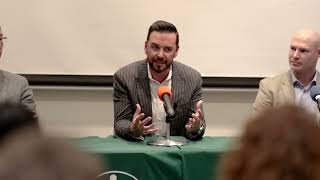
Panel discussion (Trent University, CEO in Residence series) on "The CEO of You: building your personal leadership brand." Moderator Dr. Melanie Bell introduces Bob Gauvreau (CEO in Residence), Dr. Ken Chen, and Dean Howley. Panelists discuss leadership evolution, leading through acquisitions and scale, resilience and mental/physical self-care, balancing analytics and intuition, networking/personal branding, venturing from 0→1, and giving back to community. The session includes audience questions and practical tips for students (informational interviews, setting boundaries, building networks and values-aligned teams).
Chapters
Great. Welcome. So I'm going to start with a land acknowledgement, then I'll introduce myself and everybody else. Tran University respectfully acknowledges that we are located on the treaty and traditional territory of the Michisagi Anishinaabe. We offer our gratitude to the first peoples for their care for and teachings about our earth and our relations. And may we honour those teachings. You've heard that before. At Trent, we take it seriously. It's more than words. You should think a little bit about where you are and how you interact with the land you are on and the people you're interacting with. I think we all benefit if we check out First People's House of Learning at Trent University. So My name is Dr. Melanie Bell. I am principal of Peter Zoski College. My background is as a historian, but my background is actually gender and business history which not everybody knows over here. So yeah, gender, family and entrepreneurship in fact. So I can share more about that later because it's is not about you. So before I introduce our entire program and our guests, I want to talk a little bit about the Trent School of Business CEO in Residence program. The CEO in Residence programming is directly supported by and affiliated with Trent School of Business. The School of Business, as many of you know, is one of the larger and faster growing schools of study at Trent. With uncompromising academic excellence, pivotal experiential learning and unprecedented choice, the student body. You gain first hand career experience through VBA co op streams available in every VBA specialization and through internships and placements. And you get to learn from professors who take great pride in their student centric approach to business education. Some of whom you will hear from in just a few moments. The CEO in Residence program also benefits from some key partners including Alumni Affairs, Life After Trent, Career Space, Peter Zoski College and Campaign for Momentous Change. The program is also generously supported by the Dean's Enhancement Fund in Humanities and the Social Sciences. So the CEO in Residence Program provides you with, at both campuses, Durham and Peterborough, unparalleled access and opportunities to learn from business leaders across the country and around the globe. The CEO in Residence program is meant to inspire and mentor students from keynote addresses to meetups, lectures and panel discussions late this month. Since launching in 2020, Trent's CEO in Residence program has brought Dr. Katie Taylor, Chair of the Board of the Royal bank of Canada and past President and CEO of Four Seasons Hotel and Resorts. And last year, Anita Erskine, who is a Trent alum, CEO of Anita Erskine Media, a communications professional who was twice named one of the top 100 most influential women in Africa this year. We are very lucky to have with us CEO in residence Robert Gobrough and fortunate to have him here tonight to lead our panel discussion. And I will properly introduce him in a minute but I'm going to briefly explain tonight's format. So I'm going to introduce each speaker and then I'm going to give them just one minute to briefly comment on the overall theme of tonight's panel which is the CEO of you building your personal leadership brand. Then we'll get into the meat of the discussion and I will invite each panel is to take a lead on a question. Depending on the question and the timing, I will give a little bit of time for the others to comment on that question. I'll then move us along to the next panelist and we'll kind of go in order. I will open up the discussion as time permits to you as well. We're on a bit of a tight schedule, but I hope we have time for your questions as well. And again, you can use the, whatever it's called, QR code or you can use your own voices and really ask a question which I highly encourage.
As.
We do all of these things. I will ask any also to share questions if you can, if I'm missing some. And again we'll try to leave some time at the end for all of you. So I'm going to go on to the introductions of the one minute part. I'm very pleased to introduce Robert Gobrough, the 2023, 2024 CEO in residence. Bob is an award winning chartered professional accountant who works exclusively with entrepreneurs to help them gain financial clarity in their businesses. As a financial expert and author, Bob works directly with more than 500 businesses across North America, helping them build a better business and generate greater financial performance. His passion to think outside the accounting box led him in 2008 to open GoPro accounting tax law Advisory. Bob's dedication to helping entrepreneurs has led to the expansion of his business advisory services to include his best selling book the Wealthy Entrepreneur, his mastermind coaching program, the million dollar year Peak performance program and his virtual event, the Ascent Summit. Bob is also a proud Trent U. Graduate and a Lady Eaton College alum. We're thrilled to have you with us Bob, sharing your expertise with our students across your residency here. So thank you. And you now have 1 minute to comment on our overall being the CEO of you or building a personal brand. So there's your minute.
Well, amazing. A minute is never enough for me, so I'll get it kicked off. First off, thank you guys for being here. It is what an incredible honor it is to be back at Trent as a Trent business alum. So building the CEO of you. This has been the topic that we sort of outlined for today. The idea and the concept for me is we can't influence everyone in their opinions. We can't stop judgment. We all we can do is control how we act, how we behave, how we invest in ourselves. And the CEO of you is really defining and finding a passion for what's exciting for you in your career, in your life, finding something that you're excited about, almost as if you would find something that if you never got paid a day in your life, you would feel extremely fulfilled. You find that you understand how to become the leader that you need to be to live a fulfilling life and to build people around you who also believe in what you believe. Find that you will build your passion and you will find a way to make money at it. Because we are Trent alum and we are damn good at what we do. So super grateful to be here. Thank you guys for showing up and hopefully I did that in under 60 seconds.
Perfect. Thank you. All right, I'm going to introduce Dr. Ken Chen and assistant professor at the School of Business at Trent. Ken's research interests focus on how firms innovate to develop and capture opportunities in high tech, fast paced and unpredictable markets. His research has been published in leading journals including the Journal of Product Innovation Management, Journal of Interactive Marketing and European Journal of Marketing. Prior to his academic career he held management positions where he built go to market and product development strategies for high growth companies in the consumer packaged goods and investment industries. Welcome to you Ken. And you also now have a minute for an overall comment on the theme.
Thank you. Honored to be here. I want to start by saying an average person changes careers seven times during working life and that experience can be vastly different for anybody. A couple years ago I coached and facilitated one of Canada's first senior entrepreneurship training camp and senior entrepreneurships means we are providing some training for people who are 55 plus and want to become an entrepreneur, start a business and running a business. And as I discussed with you know, over hundreds participants with bare time spectrum, common themes start to emerge. Many of them have been diligent at work yet they found themselves being obsolete, not desirable over time and they got pushed out of their career one after the other and they wish they have learned how diverse their career. How do you think about owning the career and leading their careers early on? In their career. And I think you have the opportunity today. You can start early, you can start to think about how you can lead your career, what you want to do. And I would argue that in order to do that, you need to think and act like the CEO of you. And I hope today we will have some interesting ideas and useful ideas for you to start your journey.
Thank you.
Perfect.
Thanks so much, Ken. All right. And Dean Howley is an award winning educator and entrepreneur who mixes theory and real world experience in his interactive and engaging approach to teaching and learning. He teaches entrepreneurship at Trent here in Peterborough and communications at Durham College in Oshawa. Dean's business King and Tucker produces handcrafted Montessori inspired wooden toys and furniture for children. He holds a BBA from Trent University and MSc in Management from Smith School of Business, Queen's University. Dean brings a wealth of professional experience to his instruction from former positions in commercial real estate valuation, commercial financial services, tourism, recreation and higher education. And I'm going to add that Dean is Azovsky College alum as well.
So the CEO in you, to me, I think about what we pay CEOs for. You know, if you look at those stats, it's outrageous what they get paid for. And we sometimes go, why? And the answer is they make really hard decisions and they set the direction of really large organizations and there's a lot of pressure to that. And they have to take ownership for that. They have to lead. And that's really what you can do in your own life. They're not going to pay you millions of dollars to do it, but the decisions that you make, the strategies that you think about, the leadership and the ownership that you take in your own life is going to guide you through your life. The decisions that you make, the choices and the paths that those lead to. And so what I encourage you to think about tonight is as the CEO and you, what are those decisions that you're going to be looking at in your future and what are the outcomes going to mean for the path that you take? And be strategic about it, think thoroughly and thoughtfully about those things and your life path will go in a more perhaps beneficial but strategic direction.
I think that's something to consider.
Thanks.
Great. Thank you, Dean. All right, thank you everyone. So I'm now going to ask the first question and our lead panelist is going to address this one. So this one's for Bob and you have five minutes or so to expound upon the theme and then we'll throw it to others if they have, if they have stuff to add. And again, hold your questions for a bit until we ask for them or type them in if the QR code word. So this question's around the meaning and evolution of these leadership himself. How has our understanding of leadership evolved over time? What does it mean to be the CEO of a firm in 2023? And how does it relate to taking charge of your own career and life as the CEO of you?
So I'm glad I have five minutes for this one, but I could probably take a year because it's taken me 41 years to try and figure out exactly what this looks like for me. I'll take you guys on a quick story. I like to tell stories. This past year has been one of the most challenging entrepreneurial years for me, mostly because I had to understand how to be the next generation of leader because I wasn't the leader I needed to be in order to get to the next level. So this past year, November 1, 2022, we acquired a company. We added 30 people to our team. We initially had 50 people on our inside our business, really well aligned. The company that we acquired was very innovative, very well aligned, very similar values. We use the same technology. But as soon as we tried to bring a group of 30 and 50 people together, everybody's emotions and feelings got involved, which is completely fair, as you can expect, right? Circumstances change, we all start to have an emotional response. And for me, as much as I had planned for this and had a vision and created a story of how these two brands were aligned and to the point where I was emotional about how passionate I was for what it is we were doing, when everybody came together, everybody felt like they lost trust. And it was not something that I was expecting because everybody was seemingly really well aligned. But immediately everyone thought, what does this mean for me? How is this impacting my opportunities in the future? And for me, it was a great challenge because Now I had 80 people that I had to bring together and to resynchronize into one entity. Really great challenge. One that I've never been faced with, with, you know, essentially 80 people coming together. And we've added 20 people since then. We're just shy of 100 people. So it's been a really challenging year. So what I did as far as leadership went is I read 50 books within the first three months of the year. The 50 books were to solve a problem, a problem I didn't know how to answer. And so I jumped deep into leadership and how to respond to difficulties, how to the psychology of people, how to give and create accountability in team members, how to build an even stronger culture. And essentially, as part of the leader, or as being the leader of this entire brand, this entire organization, I had to go back down to the foundation of saying, what is the true value and meaning of why we're all together? We did this back in March. We went back through and we outlined exactly what we're trying to accomplish as a team. Although it was very similar with those two teams before they came together because we didn't have a new defined identity together, nobody had come together yet. And so we essentially came out with the mission that we're here to empower entrepreneurs with good quality information to create confident decisions so that those entrepreneurs, which is some of you guys, can change the world and we can support you in changing the world. And that's a deep meaning for an organization that everybody could align with. We also then recreated our core values so that they were all aligned, they were all something that meant something to us. And then from there, our recruitment we go through. When we recruit any new team member, they all go through that exact same information. This is what we believe in. Do you believe in it? If you don't, that's okay. You're probably not a fit. If you believe in this, come join us. These are the core values that mean something to us. Do they mean something to you? If they mean something to you, great. You're going to be an incredible fit with our organization. And as we were building this team out and bringing everybody together, it was that foundation of meaning that really allowed us to start to excel and build momentum together. So for me, when I think of leadership, I think a leader's job is to bring people together with a united meaning, with shared values, so that you guys, together with the people who believe in what you believe, can come together and be on a mission to change the world together. So for me, that's what leadership looks like. That's been my evolution of leadership. I know we're a $10 million company right now. I need to be the leader of $100 million firm because that's where we're heading. So for me, I'm back into the 50 books to define who that leader needs to be so I can learn that first and bring everyone with me. Because I think a characteristic of good leadership is being out in front and building the safety net and the security for everybody to buy into what you believe together and bring them with you. So to me, that's what leadership is all about.
Wow. Really, the evolving part of that Question. Thank you, Dean. Did you want to add anything to that?
How do you follow that? I get pretty passionate. I get pretty passionate. Yeah.
So I think from my perspective, I like to think of the difference between management and leadership. And I think that's a really key thing to consider. You guys are learning in most of your courses, management, management techniques, the skills, the knowledge, the attributes. But there is a marked difference between being a manager and being a leader. And you've probably worked for people who are good at managing. They micromanage, they tell you what to do. They say be here. They say, don't do this, they say do this. And nobody likes to follow those people because management is not leadership. And so as you're thinking about your own roles in organizations, not necessarily as leaders, but even as people that might be able to give feedback to leaders, consider what you can do to help create a sense of leading by example, a sense of mentorship, a sense of being involved. And I'm going to, I'm going to give Bob a shout out here on my way in. He was holding up the tarp. Who was a tarp?
A backdrop. Backdrop.
CEOs don't need to do that. He doesn't need. He's got people, he hires people. He's got what you say, 95.
95 people.
Somebody could have done it, but he's sitting there in the middle of his team holding it up. That's leading by example. That's being part of the culture and showing them what, what leadership really is. Hats off to you, but be mindful of that. Don't be a manager, be a leader.
Okay.
Anything you want to add, Ken?
I, I would like to compliment the, the very insightful comments by bringing the macro perspective. The first academic publication on leadership was 1923. That's it. You look at web science, look at the earliest articles on leadership. 1923, the first theory of leadership, the Great Man Theory, 1840. If you look at pre industrial record of employment, the vast majority of people work for themselves because there was no factories to work for. Industrial evolution came by. We favored big organization, focus on efficiency. Now everybody worked for a big organization. But the definition of leadership was not only very young, it evolved over the past 200 years. If you look at today, leadership means you're not always right. You have to listen to others, you have to be collegial sometimes. And creative vision is not an internal exercise among top management team only. You have to get everybody involved. Right? And I think that is a very important lesson of evolving leaders. Everyone need to Evolve. Different skill sets will be needed given different kind of environment. If you look forward, don't look back, look forward. What you're going to see is organization structure that is incredibly flat. And you can see a lot of ecosystem like design in organization. What does that mean? It means that single person having the right answer is impossible. You have to have different innovators and they work in a network. Right. What does that mean? Well, we need to have some new leadership skills for that kind of mind. So you guys start at some point. But as Bob said he learned, so will you. And we continue to refine and learn some new skills and hopefully know can unite more people together to do some great things. So that would be my perspective, the macro perspective.
Thank you. As the moderator, I'm not supposed to weigh in on this, but just one quick gender thing, which is that what you said about factories opening, women's entrepreneurship went up when that happened because who wasn't working in the factories?
The women.
So you actually see married women and older women and women with family becoming entrepreneurial because they were left out of the working factors that we had. I won't carry on. This one is for Dean. Thank you for, for all of your insightful answers. A CEO confronts many surprises and has to make tough choices. Similarly, in career pursuits, individuals often encounter unexpected and high stakes decisions. How do you view the tension between our mind's logic and our hearts, heart's desires? And do you have any insights for students on navigating that tension?
I do.
Great.
So I too like to tell stories.
And I'm going to start with that.
When I introduce myself to students at the beginning of every semester, I tell them a little bit about myself. And one of the things that I tell them is that I work for Magna International, the auto parts manufacturer for one day. And I always tell them that if you want to know, you gotta, you gotta ask me for story.
Normally they don't.
I don't know why, but they don't. But I'm going to tell you guys that story. So I was hired as a staff accountant. And if you've ever been to the building, it is beautiful.
It's.
It's kind of like a Google of auto parts manufacturer. It's beautiful. I was young, I was fresh out of university, I didn't even have my designation. So being hired as an accountant was great. And I went for the first day and hated it. It was terrible. I sat at a cubicle, I looked at a screen, they walked me through everything that I was going to do and Bob, I'm not gonna. I'm not an accountant. I can't do it. It's not my thing, which is why I do what I do now. But that was a really hard day for me. But I left, I left at the end of the day and I thought, you know what? First day jitters. I'll be fine. I'm gonna come back the next day. And I was commuting at the time and I had to take the 407. And if you've ever taken the 407, it's beautiful.
Just fast, quick.
It was dead stocked that day. Couldn't go anywhere. There was an accident and I took that as a sign and I got to Aurora, where the head office is, and, you know, I was kind of talking to myself in the car. Anybody looking through a window was. I thought I was crazy. And I drove past the exit and I just kept driving until I got to a Walmart parking lot where, you know, lots of stuff happens in those places. And I, I called them and I said, you know what? I'm not feeling well today. I'm going to, you know, I'm going to take the day and you know, I'll come back tomorrow. And I kept driving. You know where I drove to here, I drove to Trent. And this is where the tension between that gut and your instinct and logic comes in. Because what I did and why I drove here is I talked to everybody I could. Okay? There were still people that I went to school with, other students, and I talked to them. I said, hey, like, what do you think of this? Like, I'm young, I've got this great job, huge future. But it felt awful. What do you think? And I went to college principals, I went to my professors, I went to anybody that I could that I knew and had those discussions and got that insight. And so I took both the way that I was feeling about that particular role and the thought that this isn't the right fit. I don't think this is something I'm going to want to do long term. And it's not something I want to waste my time doing, even for a little bit, just as a stepping stone. And I had that conversation with people and they said, dean, you know what? If your gut's that strong about this, then go with it. You know what? You've got a degree, you just left the school, you'll find something else. And it turned out to be the best winter I ever had. I taught skiing for the winter.
So much fun.
And what ended up happening was I taught skiing to a gentleman who then hired me for my first corporate job in commercial finance, which then led to my next job and my next job, all in the entrepreneurship field, which has gotten me here. And so, long story short, you've got to recognize that your gut means something. That instinct that you have is valuable. And don't just push it away because you don't think you're right. Have those conversations with the people around you, the mentors that you have, the people who can give you another perspective. And once you've had those conversations, you can make an informed decision. But both are valuable, that instinct and that feeling inside you. So use both when you're making decisions.
Beautiful. I don't remember you talking to me about it, but that's okay. It's a good job. Oh, that's beautiful.
It was out there.
Yeah.
That's part of the beauty of your schooling is you do meet people that.
You'Re going to come back to, though.
And your professors are really good resources. So. Yeah.
Really important.
Okay, we have a couple minutes on this question. Do either of you want to hop on this one?
So, for me, I'm a numbers guy. I know it's not. Numbers aren't for everybody, right? Yeah, exactly. And I was in the first year accounting class the other day, which is required. Right. For the bba. And I asked the same question. How many people like numbers and. Or how many people want to pursue accounting? And it was about 10% of the people were like, yeah. And the other 90% hate their lives for being there. And I totally get that. Right. But my message to the 90% was understand the foundations of how these numbers come together, because these numbers don't lie. And they will help you build out a successful outcome and entrepreneurship. 90% of the clients that come in to work with me and hire our firm and pay us good money to support them, they have zero idea of how their company is performing from a level of success or not. They don't know if they're profitable or not profitable, which is very scary.
So.
So to tie back into the emotion. Right. In a different angle from what Dean was talking about, know your numbers, build out your plan, because numbers don't lie. Then follow your gut, supported by good information to follow your outcome. And for me, I've always been a really heavy gut instinct person to the point where I'm probably too close to the line at all times. But the reason I'm able to be close to the line and follow such a tight gut is because I know the financial Numbers and they're not lying to me. They're telling me that you're really close to the line. And that's okay because I'm confident and I know them. But emotion leads so much and passion leads so much in our lives. And the last thing I'll say, because I know I'm over a minute, is to follow that passion, find that passion and follow it and then figure out how you make it financially rewarding. Because if you don't find something that you're passionate about, you will go through at least seven jobs looking for it. Try different things. It's okay to not be passionate about what you're trying, but continue on the pursuit to find that one thing that you would do even if you didn't get paid for it. That's following your gut, finding that passion, and then find a way to make money. Because again, you guys are all really smart people. You've got a really fantastic world class education, which I can vouch for 100%. People respect and appreciate what you guys have gone through to get through this education process. Find your passion and follow that with a really great education background.
Ken, I think actually if I ask you the next question, you're going to be able to tie these two together.
I'm going to tie together both here.
Okay.
I think this is a very important message and it's really built upon what box set and also, you know, add to what Dean said. If you look at research, you need both. You need conscious processing, which is analysis, information seeking. And you also need to, if you want to be highly productive, you need to tap into what is called unconscious processing. Our brain, the unconscious part is actually much more powerful than the conscious part. In fact, unconscious or subconscious processing can deal with many, many more parameters. Meaning that you can process information and complex information. Now I'll give you an example. I was at Google last year and Google will be an exemplar of innovative workplace design. And our host Will, which is a senior engineer, was telling us that we by design, make sure that people within 15 steps have access to food, healthy food, and also playground and socializing space. Now why is that? But it turns out there has been a very influential model of creativity introduced in 1929. It's called the Wallace Cycle. What it's trying to say is our conscious mind is very good at checking facts and gathering information, but our unconscious brain is very good at processing all the complex information and come up with what we today call the eureka moments, or aha moments. But the problem with the subconscious mind Is that sometimes those are thoughts, epiphanies. Your gut feeling can be wrong.
Wrong.
Your intuition can be wrong. Well, that's why we need Bob. We need someone to check. And oftentimes that's us.
Right.
We have to look at the fact, look at the great idea, look at a great emotion and check. And then just like what Dean said, check with others, talk to others.
Right.
Am I making sense to you or am I just making crazy stuff up? And give me both. And productive people, they do both.
Right.
So for you, all the training that we gave you, research, number analysis, great. But also think about creativities. How can I tap into this unconscious processing? And there is Walnut cycle, which is like very well established and well researched in the creativity research and innovation research and more of that. And I think that I think can help tighten the perspective together.
Great point. Yeah. And I think it's actually pointing to the interdisciplinarity of your degree. Trent, I think exactly what you've said is why you're taking courses in, for example, psychology.
Yeah.
More about the human mind while you're learning about business. It's beautiful. All right, Ken, did you want to add anything around strategies for people to stay resilient?
So I researched uncertainty.
So.
So that's my topic. Okay. So we can grab a drink and talk about this forever. But I think the first thing that we need to be mindful is there are different types of uncertainties and there are different strategies for different type uncertainties. The most common type of uncertainty is what we call the known unknowns. While it's not perfectly predictable, we have a reasonably reasonable range of scenarios and outcomes and we can even get with some of those scenarios and outcomes within that kind of known unknowns. Oftentimes we have two very effective strategies. One is prediction. The second one is adaptation. Prediction means gather better information, more information, help you to predict exactly what's going to happen. Okay. Adaptation means agility, responsiveness, change quickly, wait and see. Okay. And those are wonderful. And I think, you know, our school education system has done a fantastic job teaching me that the more challenging and perhaps more interesting uncertainty is called unknown unknowns. Think of yourself. What happens if you get dropped into the Amazon's forest. You have no GPS and you don't know where to go. It turns out in very innovative companies and in innovative industry, we often face what we call the unknown unknowns. Everybody's forecast, everybody's prediction is equally unreliable. Wait and see. Or adaptation sometimes means that you can be late to the party. So what are you going to do not engage at all. And that actually is not a bad choice. If you don't know anything about it, don't engage.
Okay?
Warren Bradford is very famous saying that. Well, I don't know anything about technology. That's why I'm not investing in technology. That's actually very good strategic decision, not engaged. But what we also learned in more recent entrepreneurship research is that there's a third strat. It's called venturing. What does venturing mean? In simple way, it means that you want to create one customer, one supporter at a time. And you may start with zero supporter, zero customers. Okay. But you create something useful. You create something that can address people's problem and then you have one customer and then you find your products solution and you get 10 customers and then 100 customers and then adopt them customers. And you know what happens when you have enough people commit to something, anything. You have a market, you have a new business, you have a viable business where there are buyers and sellers. And that is really what market creation or radical innovation is about. So what does any of those have to do with you? Well, it means that for you to navigate your career, you're going to run into ups and downs and unpredictability, so on and so forth. You need to learn how to gather information and predict. You need to learn how to adapt quickly. But also you need to think about how to venture sometimes, how to create one customers at a time, one support at a time. Go from 0 to 1, 1 to 10, 10 to adaptables. So I think those are the three strategies that I tend to think about when I talk about uncertainty.
So we've heard a lot so far. In a second, I'm going to move to the next question, but I'm going to pause here to see if anybody with all of that information so far, because they will want to throw a question out.
While we're waiting for one question, can I just speak to resilience for one moment? Let me tell you a quick story, right? My wife is a fantastic individual. When we had our first kid, I remember how much pressure she felt from social media by seeing that everybody's family was perfect. Every mother on social media was absolutely perfect. And she was an epic failure in her mind. This is no different from every business owner who posts every single moment of success. And everybody who's trying to get started posts exactly what everyone want, what they want everyone to see. I do it. You know, I don't necessarily point out the fact that you've had the greatest challenge in your life, you're having, you know, challenges, inspiring your team, financial failures. People don't necessarily talk about those. So just because everybody shows the perception that everything is going well, they're all lying to you. And that's okay. Just know it, right? And know that you're going to go through the exact same process. Resilience is likely the greatest attribute I can put towards being a successful entrepreneur is being willing to face failure and to keep going and to reach uncertainty. The only. And I think what Ken, you know, what I was taking away from Ken was the only certainty is that it's uncertain what's going to happen. We need to know that because everything you plan out is not going to go as as you want it to. And I feel like that as a message for me being part of this program is that that is very real. I'm here because I've reached some element of success and they've brought me back to share that journey with you. It has been bumpy as hell. The entire road, including this year, which has been our greatest level of success and development, has been the hardest year of my life. And that's what you're going to get into when you get into business. And that's okay. Just be ready for it. Be ready to be resilient and to deal with uncertainty. And if you can deal with that emotionally and physically, you'll be successful. But just know it's coming.
Yeah. Okay, very quick.
It's a great topic. It's a great topic.
So you guys. Yeah, we're going rogue. So I just wanted to say. So, and I kind of take this from Ken's perspective, that building that first customer and then the 10 customers, you do not need to be resilient alone. Right. And that's something that. That didn't necessarily show up in either of those comments. We think of entrepreneurs as going at it alone often.
Right.
That lone wolf, you know, everything is on you. And in many respects, that is true. But build your. Build your path, build your team, build your support network.
Right?
I always preach to students. Network with as many people as you possibly can. The other day, I introduced a student of mine to Bob. I said, hey, Bob, will you talk to the student? Bob said, yes.
Right.
The only reason that happened is because of the network. But that network can also support you through those really challenging times.
Right.
That story that I told earlier, that network of people got me through that challenge that I had helped me be resilient. So find your tribe, find those people, keep them close, maintain those relationships over Time. And they will be incredibly valuable to you at multiple points throughout your life. And just have them there at your side.
Okay, that was a good point. And actually, I know I said I was gonna ask her questions, but because it's right built in, I'm gonna do the next question for Bob, then I really will ask. So start percolating now for your question. So, Bob, discuss the significance of building a personal brand and networking for career profession. And maybe some tips, which actually Dean's already shared a few great ones around that. And there's some. There are some really great how to network events coming up through Career Space and the Innovation cluster in the winter. So talk to us after. But do you want to tackle that one?
Absolutely. So when I first started my business in 2008, social media wasn't a real big thing. So how do you connect with people? Right. It was different than I got out into the community. I shook hands, I went to every business function I possibly could, my community. And my engagement was very localized because that's who I was able to go out and shake hands with. And it was incredible. You know, over time, I built relationships. Not asking somebody to give me something in exchange, but just building connection and relationships. And over time, every room I would go into, all of those people were my clients, right? Everybody hired me. Not because I told them that you should pay me for what I do, because I created a connection. I shared experience of what I do. And they came to me in a know, like trust relationship and came back and hired me. That's how we got through our first year was building those relationships. That exact same thing exists right now. But it's. It's better, right? My relationships and my ability to go out and connect with people in social networks, online mastermind programs. We've got a program called Million Dollar Year, which does exactly what Dean's talking about. It's a safe space for entrepreneurs to come together and share their wins and losses. Because here's the other thing, guys. When you're winning, not everybody's cheering for you. And that's not easy to hear and it's not easy to feel. In fact, a lot less people are cheering for you than you think because they're envious of your success. And that's okay. That's a reality. But find those people who do want to cheer you on and be your cheerleaders, which is why we go to masterminds, which is why we go out and we connect with people who have similar interests. Maybe find people who are just that next level above you find out what they did to get them there. And that for me, social networking right now is super powerful. A lot of my connections are across the world. I have a lot of friends in Australia, which is a very weird thing to say. The only reason I've met them is in different masterminds. We have similar connections, similar interests. They're cheering for me, I'm cheering for them. They're giving me insights and tips and tools to build my career, build my team, and we're supporting each other and finding that group is so very important. But also back to my shaking hands locally. Always lead with a giveaway. Don't ask. Lead with offering value. And this is something I had the opportunity to work with Tony Robbins for a few years. One of the things he always said was, always lead with value. Give more than everyone else and you will always be rewarded. And it's so true, you know, in all of these relationships and handshakes and connections online, it's all about how can I support everybody else? And in exchange, they always come back to me and they hire me because I've given to them. I've created a level of trust and relationship. And that's how we build our network, right? That's how we build our business, that's how we build our customers. That's how we build some of the strongest relationships in our life, is we give. And in exchange, people start to build trust and relationships with us. So for me, that's about personal brand and networking. And the last thing. I'll just share a quick story. We just brought somebody in who is a very experienced salesperson. And in an accounting firm, you don't really think of having salespeople involved in an organization. Right?
We're.
We're changing the industry and we will continue to. So we're bringing in a sales team. This person is a very seasoned veteran, and he went to all of these communities that I'm talking about because he's in a similar network, which is amazing. You'll find that all the people you want to align with are also already there as well. And he came back to me and he said, I want to work with you. And here's why. Because every single person that I talked to talked about the level of integrity that you were never willing to compromise. And he's like, that's the type of leader that I want to work with. So when you're out there building these relationships and you're talking about your personal brand, build your personal brand about the values that mean the most to you. And if you are being true to yourself, sharing what values, what's important to you, what you believe in, you will find people who believe in you and want to be part of that.
That's great. Thank you. Unless you think that it's easy for some people and I mean I can't speak for Bob, maybe it's easy for him. But in case you think watching people network and shake hands and smile and get it is hard and people do it well, don't necessarily love it. So don't assume that. I always think that because people say, well, you can talk to anybody, you're really good at that. To various of us, I'm sure. And it doesn't actually mean that it's easy or that we're not introverted at heart or that we don't find it challenging. So remember that when you, it's kind of like your point about social media and it always showing the best, remember that it's hard to do it. And even though you feel icky about it and being like hi, I'm, you know, it's challenging, challenging for everyone, including the people around you that look like they are nailing it. So I just wanted to add that. So I'm going to ask you if you have any questions before I move to the next question you want to try. Yes. So you talked about like mission, vision, values in a macro sense but like.
For a day to day, how do you keep your employees aligned with values.
When they might not be.
For sure? So the question being, you know, people aren't always having the best day. So on their not best day they're maybe not totally aligned with buying into your values, they've got other priorities or maybe lack of focus or how do you as a leader continue to bring everybody together? And it's a great question. And I had between sessions today at Trent, I had one of my employees reach out to me and say they were having a really tough time at home. They didn't really want to talk about it with anybody but they just wanted me to know that they weren't showing up their best. And so I immediately had them call me and just said we're here to support you. Right, I'm here, I've got your back. And I think a lot of being a leader and keeping everybody aligned with the values is that you need to lead with those values, you know, to the greatest extent possible. So one of our values is better together. Right? So when one of our team members is having a challenging day, it's like we're better Together. I got you, right? Get on my back and I will pull you across the finish line. And that's who we are as an organization. And we leave live that. And the idea is that as I continue to be a leader of more and more people, I know a lot of you guys have asked, you know, used to probably be able to know everybody's name. And I try really hard to know everybody's name in an organization. Half of those people are working online. I don't get to interact with them as much. It becomes really tough. But what I do know is that those people who are leading them, I know their name, I make sure that they continue to buy into the values and they support the team, team members as well. So it continues as you're leading, you're pushing down your values and your leadership attributes to those that are leading other members. And together we're able to keep everybody aligned and support them where they need it. It's not easy, though. Like, it's not easy. And you don't know what's going to happen tomorrow. Right. You don't know what challenge everybody is having. Like, this individual reached out to me today and said, hey, I'm having this problem. There's probably five to 10 people who are having that same problem that aren't going to reach out to me. So we also have to be, as a leader, be aware that people are going through things that we just don't understand, that we're not, you know, part of a discussion about it. And that's okay. We need to create a safe space where they can be encouraged and supported. And that has been part of my 2023 learning, because I don't know everybody as well as I used to, to create that environment where people can feel safe, supported and know that they're trusted. They can go deal with the things that they need to and come back and know that they're welcomed with open arms.
Thank you. Great question. One more before I go on to the next panel discussion.
Question.
Yeah.
Bringing it back to resiliency. What supports do you put in place on a daily basis, weekly, monthly basis, in terms of like coaching, training, mental health support, in order to stay resilient and be resilient, wake up and be. I'm going to be resilient today. And then someone slaps you in the face and it goes the other way.
Absolutely. And. And I'll jump into that. I don't know if you guys want to add to that too, but for me, I'll talk about me personally because I think Again, we create an environment where hopefully we've got all the benefits in the organization to support those things for our team. Professional development, we've got counseling services, we've got an internal coach that helps performance and career development. So we've built all those things in internally. But somebody's got to do that for me too, right? Because I'm pretty much the one who's having to be the most resilient. I protect everybody else. And I was telling a few people in the mentorship yesterday is as corny as it sounds. A few things that I do to make sure that I'm ready to deal with uncertainty. First is I exercise a lot because if my body's not ready to take this, my mind won't be ready either. So I'm always. And I could probably work out more than I do, but I'm three or four times a week with a personal trainer for accountability, because otherwise I'll give it up to go support somebody at the office. Right? So I do that for myself. After I'm working out, if I'm having a day where I'm not focused, I'll go for a walk and I will throw on a corny motivational talk. I'll throw it on YouTube and it'll be like, best motivational talks of 2023. Put it on where it says, stop whining and complaining to yourself. Get back in there. They need you. And I'm like, okay. But it works for me, right? That works for me. And everybody's gotta find what works for them. And because that's not gonna work for everybody, I can guarantee you, if my wife put that on, she would run out and say, you're a loser. And that's okay. And I need her to say that to me, too, to keep it real. But the other thing is, I always make sure that I'm well nourished. I take vitamins. I wanna make sure that my body and mind is ready to deal with the pressure and the uncertainty that comes up, because it will happen. And if you're not prepared for it, physically, emotionally, mentally, it will run you over. And. And so those are a few of the things that I do.
I can add something.
Yeah.
A lot of times we are not getting an uncertainty. A lot of times we're getting anxiety. What is anxiety? Very simple formula. Overestimate the level uncertainty and underestimate. You are going to deal with it. So what are you going to do? Well, first, let's increase our capacity with stress and uncertainty. Exercise physiological mindfulness. Exercise meditation. Right all of those help. But the other equation seems to be difficult. Like, how am I going to deal with, you know, estimating the uncertainty correctly? Because by definition, uncertainty is not to be estimated. And here's the secret. There will always be more uncertainty than you can, can ever deal with. You don't focus on uncertainty. You focus on the noise, the certainty. If you look at all entrepreneurs or people who are dealing with, you know, chaos and anything like that, they always focus on what can I miss the most out of what I have. That's the noise. Remember what I told you, Venture create one customers at a time. What do they do? Well, what's the certainty? If someone pay me and I'm doing something that is useful, that's certainty. I don't need to worry about anybody else. So if you focus the know and make the most out of that, you take care of the other half of the equations. So sometimes it's about the mindset. Nobody really like human being. Look at history of human race. Have you ever do anything successful by a single uncertainty? Never. We think of a stone that's known, we make something out of it, do something about it, and then move on. Later on we realize that there's a better way to do things. That's a known. Right. Unknowns always overwhelm and trump anything that you know. So I think that's very important mindset that you have.
Yeah, that's great. Thank you to both of you. Dean, I'm going to throw you the next question.
Sure.
All right. What are our perspectives? Perspectives on the role of passion in charting a successful career and enriching our lives.
Oh, golly.
Absolutely.
Yeah.
I should be doing that right now. Yeah.
So I think there's.
There's two schools of thought on the passion piece and I'm going to be very practical here. There are going to be people in your life, in your life that says, follow your passion, the money will come. That's kind of what you said. And I'm going to be real with you. That doesn't always happen for people. The money doesn't always come ideally. But there's the other side, which is the passions that you create a life that allow you to do them right. And so you've got to love what you do.
Right.
It doesn't necessarily have to be passion, Right. Ideally, in an ideal circumstance, yes, it's a passion and you are doing exactly what it is. Even if you didn't get paid for fantastic. But you gotta like what you do, right? I didn't like that one day At Magna, I didn't want to do that.
Right.
You've probably all had a job that you didn't like and ideally you made a change and it got better.
Right.
But I like to look at life very pragmatically, which is if you like what you do and you can find the balance to go exercise, to spend time with your network, family, friends, whatever it is, that balance is going to allow you to spend time with your passion.
Right.
So maybe that job isn't, you know, being a starving artist because you absolutely love painting. Right. But maybe it's something that allows you the time and the income to be a painter and to spend time doing that. So again, that's my pragmatic point of view is that be mindful that you.
Need to have that balance and you.
Need to have the ability to go out and earn an income and it doesn't always come with that.
Yeah, that's really great point. It is true. We hear a lot and passion is so important. But I like your take on sort of earn some money to buy the paint. Let's just go there, right? Yeah, yeah, that's great.
Yeah.
The down there. You want to ask.
Oh yeah, I think, Dean, bringing a very important perspective and a perspective that I think is very important for many students. And let me start by saying, I'm paraphrasing a very famous unfinished quote. And the quotes go something like this. Very few people quit. Very few people quit something that they're good at because it's fun to be good at because it's fun to be one of the best. I often use this example in my class. Michael Jordan, what's his passion? Basketball. That's the first reaction, right?
Really?
Michael Jordan quit basketball to play baseball. And he seems to like baseball a lot. And after retirement of basketball, he spent.
More time playing golf.
Right. And if you go through, you know, the history and you know the fun story of Michael Jordan, you realize that, sorry, MJ is actually passionate about winning. This is the competition side and he happens to be built for basketball. And if you know anything about basketball, having a giant hand makes everything different. And he happens to have one of the biggest hands for his size. Right. So why this is important for student. Many students don't have passion. Many adults don't have passions. We can find one start doing. You don't need to wait and just find your passion and then do start doing things that you're good at and do more what you're good at. And you know what? You will never get tired of what you're good at, then you just keep doing it. One study from a bunch of, you know, researchers and Stanford a couple years ago and they actually look at this question and it turned out what they found through the experiment was that passion can help people to be more resilient to a point. But once you pass that point, it can make you less open minded. What you love may not be what can fit you, may not be what you can bring your families with. You know, healthy and, you know, kind of comfortable kind of situations. And passion sometimes can lock you in, in a sense that prevent you from trying other things. And at your age, try as many things as you want, right? Because you need to find out what am I good at? And then you can do more of that and then you can build your passion, find your passion later on. And passion doesn't have to be a career. Passion can be a hobby. And I think that really enable you to do right and not wait. And I think that's a very important message from Dean. That's my interpretation as well. Great, thank you.
Just the last thought on that because I feel like I always have to throw a word in. I completely agree with these guys, right. And I think, you know, one, I think even if you do find your passion, not every day is going to be something that you're excited about. You know, like I, in my career, as passionate as I am about what I do, I sometimes have to fire people. I feel sick to death about that. It's my least favorite thing to do in the entire world. Even if there's absolutely no reason why I shouldn't fire that person. It's the hardest thing to do. But I'm still passionate about what I do. And I think to these guys point, I think it's really important to understand that sometimes just having a particular job that fulfills the financial and security need, it might give you the opportunity to find the passion outside of that. And that's totally cool too, right? And I think just finding a way to live a fulfilled life. But I think at this point experiencing different things and finding out what it is that you do, like going and trying a job at Magna, maybe give it more than a day. Give it a. Give it a chance.
He's not wrong.
But I love that though, like it took the chance, right? There's been lots of things that I've started and very quickly went, that is not for me. And that's totally cool. But you've given yourself the opportunity to try. And I think that's a lot of taking that first step, we were talking about networking, and I had some mentoring sessions yesterday. There were a few people in the room who came in and we went around and we said, do you have any questions? And they were extremely introverted and didn't want to ask a question, but they put themselves out of their comfort zone and they sat in the room so they could hear the discussion. And I was so proud of those students that were in that room because I know how hard it is. But getting uncomfortable is just one of the things that we learn the most when we get ourselves a little bit uncomfortable and we try new things. So, yes, passion is important. Finding something you enjoy. But sometimes a job that you're good at and pays the bills will also allow you to fulfill your true passion in life, which might be, you know, donating time back to the big brothers, big sisters, or supporting an organization, whatever it is. I think the idea is that you wake up every day hopeful of what you get to do, and then you get to find that passion and live that life.
Thanks for that bump. And I'm going to come back to Community as our last question. But first, a short one from Ken here. Unlimited resources. But I didn't want to end unlimited resources. So, Ken, as the CEO of oneself, starting with possibly limited resources, I mean, I shouldn't speak for all of you, but maybe as a student you might have limited resources. What creative approaches can someone take to tackle that, to tackle that possible limitation of resources?
I'm beautifully. A slogan from 1K. You are richer than you think. You said, you may be richer than you think, but if you look deep, you are. There are a lot of entrepreneurs who start with nothing. And when I say nothing, $2 or 2 cents in the pocket travels, you know, across Pacific seas and just landed on somewhere and then somehow become successful. A lot of times the limited resources has to be measured and, you know, kind of understand relative to your goal. Nobody starts with a giant goal that is not reachable and not feasible. And if you can actually pace or divide up your big goal into smaller ones, and all of a sudden you will become much more resources for their sink. Think about Steve Jobs. Steve Jobs started Apple by selling his mozai $1,500. That was it. And his partner sold his science calculator $50. And last night when I was preparing for this, you know, I punch in today's value of, you know, fifteen hundred dollars when Speedrunk started, it's about right. But because they didn't want to, they didn't build a Apple that we Know as Nick. They just built computers that people want to buy and that's the one customer's aircraft from 0 to 11 to 10.
Right.
So I think that's a very important message. Also, people around you in entrepreneurship, we often talk about fff and for now I'm just using. Using the explanation of family, friends and people who believe in you. They are always in the story of any successful entrepreneurs at the beginning, there are always going to be people who will help you if you look deep enough and start with that, that's your norm. Make something small, make something undesirable, go from 0 to 11 to 10. And I think that's my key takeaway from this.
Yeah, that's a great answer. I'm going to move us right to.
The last question, so I give you.
Time to ask a few more because I don't want to run out of time for you to bring a few more questions I don't want to recommend to you. So let me just go to this last one, which is for Bob, and I'll comment on it and then we'll ask you if you'd like to ask a few more questions. In what ways is giving back to the community influenced your personal and professional life? And why should giving back BS you never can or should be a significant consideration for future business leaders? I do think it ties back to the passion question, but I'll let you.
I think, I think it also comes back to the give again. You know, our team is pretty united on values and mission and what our passion is together. Listen, not everybody's as excited to come in and do a tax return thinking about empowering an entrepreneur to change the world. Right? That's. That doesn't tie into every single tax return that gets done in our office. But the collaboration of what we build together, it does come down to that. And I'll tell you with 100% certainty, in an uncertain world, 100% certainty. The thing that brings our team together the most is our community engagement committee. And our community engagement committee goes into to Peterborough and surrounding areas, finds needs that we relate to and that means something to us as a team. Not one individual, but us as a team. And we go back into the community and we donate and we support and you'll find that it's hard to sometimes always get people to volunteer and show up for you every time you need them when it means something bigger than us as a team. Like, for example, we did this backpacks for kids, for Big Brothers, big sisters. We had 101 kids that are big brothers, big sisters that didn't have a fresh haircut, a backpack full of supplies, they were going to school unprepared because their families couldn't support them. As soon as we brought that initiative in for our team, you should watch how incredible it is to see the passion and their eyes light up. And not just our team, but to watch the change that it makes in the lives of those little kids that are going back to school with a fresh start that is giving back to the community, that is building a culture in our team. I can see Brittney nodding in the back because it's very real. We feel that together. And as soon as we're giving back and we're creating a difference in the lives of those that need us, it makes a huge impact and pulls everybody together. So for me, community advancement is a massive opportunity. I know. I talked to Paul Rellinger yesterday in an interview and he asked what it meant to come back to Trent University. And I said, truthfully, it is such a great honor because I want to give back. And one of the things that we need to do as a community, a Peterborough community, not a Trent community, that we need to do better, is to continue to keep the talent and resources that Trent is building in this incredible facility. We need to find opportunities for all of you to stay in this town. And I know it's not going to happen. Right. I know a lot of you are going back home or to a new city or to live a different life somewhere else. But us as a city needs to figure out how we give opportunities to the talent that exists here. And that's something that I'm committed to as well as part of this. To say, how do we create opportunity for all of you in our community? Because you guys are super talented. You may not believe in yourself just yet, but I believe in you. And I know that the people in this community believe in you. But people like me have to continue to create opportunities so that you stay here. So for us, giving back to the community, creating community is everything. And that's what unites everybody together.
But I heard there was jumps for everyone.
Totally. We do have a lot of Trend alumni. We definitely do.
Sucking you back in.
As someone who absolutely grew up locally.
Left, and I ended up back here, it's hard to leave, actually, after a point. Do either of you want to touch on that question? Are you comfortable again, Dean?
Yeah, comfortable, comfortable.
Pro social spending, it's the same. You give of time and money enriches you. And the value of your life. Not only monetarily, although we can. That was a really lovely spot to end. Thank you so much to all three of you. I am gonna. There's a question online as well. Okay, I'm ask for one more from the audience, then I'll go to a couple online and we'll come back to you. We have enough time to do that. So somebody want to throw one out?
Yes.
One of the most important resources is your network. And especially as you grow the amount of people in your network and you're not relying them all the time, how do you retain like that network when you have people from all different disciplines, stages and communication styles, how do you keep those people in your network?
Yeah, and it's a challenge, right? And part of the reason it's a challenge and sorry, I'm just jumping in like that was meant for me. But sorry guys, sorry about that. But it is a challenge. And here's part of the challenge and why I think it's okay that it's a challenge is that as we continue to evolve as people, our interests change. You know, I've got a lot of friends from high school that we have nothing in common anymore and that's okay. You know, I'm cheering them on. They maybe have kids that are younger than I have. My kids are 15 and 13. That's okay. I'm doing 15 and 13 year old kid things versus a two or three year old thing and it's okay. So my network changes and evolves based on what's going on in my world. But I'm always continuing to look and expand on that network to have people pull me up and make me better. And I think that's something too that we can all continue to do is continue to find people who make us better and push us to be the best version of ourselves. And it's okay if some people don't stay in that network. Right. It's okay to say, you know, we wish you well and carry on to try and be the best version of yourself. You know, you shouldn't ever feel bad about investing in you and being the CEO of you and finding your best network. Because truthfully, that's what we're here for, is to find that best version for us. So as far as keeping connected with those networks, I think with social media it makes it way easier than it used to be because I used to have to go and show up at people's door, especially around Christmas time like I was dropping off bottles of wine. But man, is it easy to Send out a message to 50 people now that says, we appreciate you and we value you. That doesn't involve me showing up at the door. That also still works really well. There's only so much time. I know. The wine is always good, right? Yeah, you had me at wine. But again, I think it's okay to sometimes let networks go and sometimes continue to build and evolve your network based on the time of life and the stage that you're at.
Yeah.
So I would add, and I like the always working on the next level of that network, which you always want to be doing. You know, they say, you know, spend time with the people who aspire to be.
Right. Learn from them, try and emulate them.
But also, and I think the social media part here is effective. You know, you build that large network, all those people are part of it. Think of LinkedIn, think of Instagram, whatever it happens to be, it is really easy. And you talk about giving to provide some value that keep those people seeing.
You as a valuable part of your network.
You know, you read an article from Entrepreneur and you say, maybe Bob wrote it actually.
Right?
You wrote.
Yeah, he does.
So, you know, and you could share, Right. And it doesn't have to be the person that you talk to every week, but somebody can read that, see that, and find value in that. Right. And that's one way that's, that's very easy to keep that network up. And you know, the next time that you, you need that person, right. Or, or they need you, you've got that little bit of connection. So that's just a very practical way.
That you can use the tools available to us now to do that thing too. I think you have to go back to brand, your personal brand. And I think most of you have Ticket Marketing 101 and you have learned about the concept of brand equity. Brand equity is by and large two parts, brand awareness. People need to know you exist. Second, people need to understand who you stand for and how can you make people aware you exist. Well, you have to be in the traffic, right?
You have to be.
Have you constantly interface, if you will, talking to them. How do you know? How do people know what you stand for? That's all your vision, your integrity. That's what Bob talked about. And you have to work on both sides and you have to build brand equity. And as Bob said, your brand will change because your network will change and you will have different needs and you just constantly evolve before in the ramp up. But awareness and meaning, you have to take care of those two.
And I think knowing that, as we said earlier, confidence is hard.
It's.
You're learning who you are, but you'll like you're most intense. Like all of them have talked about integrity. If you kind of lead with who you really are, that's a really great way to set your baseline. I'm going to go to the mentee and see if there's a good one. How do you ensure that a diverse company or that a diverse team feels accommodated and heard when not everybody? I think it's kind of related to the point where ch earlier about values and people have different values, but with a very diverse team, how do you make sure that that is also accommodating that in a number of ways. But.
Yeah, so for sure, in our organization, diversity is something, something that we celebrate, but it does make it more challenging to make sure that everybody and their interests are taken care of because there's multiple different interests. And again, this is something as a leader, continuing to evolve and find out exactly what those interests or needs are is something that I continue to try and work on. So one of the things that we do is every quarter we do an employee satisfaction survey where we're constantly trying to find out what people are looking for, what support they need, where they feel like we could improve. We make it anonymous so that everybody can feel honest and share that, and we continuously take that feedback and make improvements. We don't just send it out and say, well, we don't agree with any of those things. But sometimes I am not fully aware of any of the. Not any, but all of the diversity perspectives or needs. And it sometimes comes down to a conversation or a survey that brings that awareness forward. So just I think that commitment level to being committed to finding how we bring value to diversity and making sure that everybody's taken care of as a like, as a team community is important. So leading leadership and commitment to making sure that those changes happen. I don't have a team like he.
Does, but I think in a classroom it's similar.
You have conversations with people and you.
Find out what those perspectives are and you learn from them and you adjust accordingly. You know, it's not a secret that people have different backgrounds and perspectives and life experiences and all of those things are incredibly valuable, but do create a challenge and it's just about understanding them, trying to reflect them, and then make subtle changes to get closer to where we want to be.
I don't think it's rocket science.
I don't think it's something we need to be Afraid of. But it's about having those conversations and then using them.
You ask the question, right? Ask what is it that's meaningful to you? Yeah.
Good.
I have one more from Benji and I'm going to come back to the room. And I thought this one was kind of actually a fun one. As a CEO or as a leader, how do you. The wording is force yourself to stop working. And it's an interesting question because we've talked about balance and we're talking about exercise and taking time for your. Your other self. But we also know this is kind of like the flip side of that social media world. People like, here I go for a jog. And meanwhile they stayed up till midnight trying to get the thing done. And you it yourself too, right. You're like living my best life with my friends, typing my neighbor till, you know, three in the morning. So how do you do it when you're the leader to really stop working? Because it's hard.
Yeah, I'm not very good at this. So I can tell you guys, you know, again, starting in 2008. 2008, uncertainty, being resilient was another really challenging year. Getting started, not really having a team. If you wanted something done, you had to do it yourself. Right. If you don't have a team to support you and you want to get the outcome that you need for the clients that are paying you money, it's got to get done one way or another. I had a lot of 100 plus hour weeks. They still happen. Not as often as they used to, but there were lots of days where, you know, my one or two team members would come in and I'd be wearing the same clothes as I was wearing the day before because I hadn't gone home. Right. Red Bull was really great. It, it didn't give me wings, but it gave me a lot of ability to keep going. But it is very challenging and that's not sustainable in any way, shape or form. It's not good for your mental health, it's not good for your physical, it's not good for your relationships. It does happen where you sometimes have to extend yourself to make sure you hit a deadline. And that's real. Right. We're all going to have to do that. We all have to do that with assignments. Nothing changes when we, when we hit the working sort of component of our life. I'll tell you right now. I hired an executive assistant. Some of the Trent team has been working with her this week. And a really good example of this was I went to a Fourth year accounting class this morning. I don't know if anybody's here. David's here from that class and last night she messaged me and said, oh, we just heard from Trent. And I told him you weren't able to go on Thursday morning to that lecture. I was like, what do you mean? Like I sent you a message saying I confirmed that. She goes, oh no, you're too busy. You know, we're not giving anyone your schedule. She's very committed to making sure that my time is my time. I'm not overextended. I've never had anybody as committed to my work life balance as she is. And I am totally good with it, you know, and I it's funny how when your schedule is now managed and you don't let people in to force you to work 12, 15 hour days, that it all still continues to get done even though my schedule is not as available for everybody as it used to be. So you know, I would challenge you all. Set your parameters, set your rules, be strict with will, help you stay healthy and ready to show up. And managing those as expectations is super important. Like hey, I'm not available after 5 o' clock so don't think that I am. And then don't answer them when they ask you because I know I'm 247 access to my clients. Roxanna does a good job of making sure that doesn't happen for me and I can still override it because I showed up to the lecture this morning and made sure I was there. Right. But that was a huge value add that she was saying no and I could say yes, it's okay and let that still happen. So controlling your schedule, setting expectations and putting parameters on what you're willing and able to do is very important.
Yeah.
You can still burn out even if you learn something totally critical. Yeah, yeah, yeah.
So when we look at researching entrepreneurship and highly productive people, one of the most important capability and skill is self regulatory, your ability to stay focused on something. Don't touch your phone, don't touch the fridge, don't touch anything else, just focus. And that turned out to be one of the most important skills. And by skills it means that you were not born with that. You have to learn and you have to establish that habit. Right. And when you hear someone like Bob talking about how to establish this kind of boundary and so on and so forth, it takes mindfulness. You have to be mindful that wasting time on something else will otherwise affects the most important things in life. You have to have A system. It's not just a computer.
Right.
It's your routine. Morning, what do I do? Afternoon, what do I do? When do I say turn off? Right. All of those require you to experience and find out your boundaries.
Right.
You have some sort of panic attack or something like that. Well, good for you. You try hard enough, right? If you notice, spinning, informing no one means that you're not trying hard enough, but you can recover. You learn, you look at yourself.
Where's my limits?
How can I always add the 95% and then occasionally 120. Right. A miracle is 100. Those takes really times and experience habits and so on, so forth.
So start early.
I think that's the message. Start early, find degrees. You may realize that you only need two hours. Sleep up for hours. I know someone like that. I need days to be functional. ALBINI Students want 10 to be productive. Everybody can be different. Great point.
Thanks, Kim. Okay, we have time for one more question from the audience before I wrap this up. Maybe two if you guys can be quick. You're to give yourself one piece of advice when you start your business. What would it be? One word.
One piece of advice. I've got a lot.
She said one.
I know. And I'm trying to think of what that one is, Dean, because there's so many. You know, I would say failing is okay. Nothing is going to go as you plan. And in fact, you can plan that nothing is going to go perfectly. You can plan for that and it's okay. It's. We'll figure it out. You know, I think a lot of small businesses and business owners put a lot of pressure on themselves to be perfect and to always have everything to go according to plan. But I think as soon as you can accept that it won't and you can adapt to it. You know, we've talked about a few characteristics of entrepreneurship today. Resilience, resourcefulness, adaptability is huge because it's just not going to go the way that you plan. So. And that's okay. Just be ready to adapt and go with the flow.
Great. Thank you. One piece from Ken. One piece of advice.
Customers, commitment. If you don't have commitment, you don't have customers, you don't have a business.
Right.
Let's just establish that. Commitment means the market agrees with you. That's the validation. And if you have validation, you have a viable business and you start up there.
Thank you, Dean.
Just serve.
Just try. So many people mull it over their minds for so long and they try to and make it perfect. Everything has to be exactly the way you want it. And then you never start it, or it takes you way too long and you've lost your opportunity. Just start.
Which is why your class is really fun for the challenge. You guys do class, right? You've been there. Yeah, it's just. You just started. Okay, last question.
All right, so I'm so glad Dean just brought us up because this question. So I wanted to talk back on, like, the passion part and how.
Well.
For free.
And Dean figuring out, like, on one.
Day, there's not what you want to do.
So my question is for someone that.
Has, like, two or three ideas or, like, paths, they want to explore what's like a practical way to, I guess, fix something or realize, I guess, what it is to pursue or which. Which idea to pursue.
Which idea to pursue. What to rule out in a way.
Yeah, exactly.
Yeah. Feeling if you have, like, multiple options, I guess you want to explore what's like, a practical way to go about this.
That's for you.
It looked like it was for me.
It's for you.
I feel very good.
Yeah.
So, I mean, I'll be very practical with this.
A lot of people are willing to.
Share what it's like to work in a place or do a thing. And so one tool that you have.
Is an informational interview, right? So one of the things that you.
You.
What are they? What are the things?
So actually, because I'm doing accounting, so.
It was direct to, okay, see, I felt good for a bit. I'm still useful.
So let's use accounting for an example.
Right.
Do you have a job in accounting?
No.
So go talk to an accountant. Right?
You know, reach out to somebody like.
Bob or somebody that Bob employs and.
Say, hey, can I sit down with you for a coffee?
I want to learn about what you.
Do and do that for those few things that you have in mind.
Right.
And, you know, the next best step. Get an internship. Next best step is get a job and try them.
Right.
But that informational interview is a very practical way to go. Oh, this sounds a lot like what.
I'd like to do. Or, you know what?
Maybe it's not as good a fit as I thought.
Right.
And many people in employment situations would be willing to have that conversation.
You just have to ask others. That's great.
No, I think that's great. And just try it. You know, just give it a go. Get uncomfortable. Right. And if you've got four things, one of them is going to be your preferred. You might as well figure out which three you don't like, which means you're going to fail three times. Get ready for it and put yourself out there and give it a try. Right. And make sure that you reach out to us because we're always hiring trend students.
Amazing.
Thank you.
That's a great job question. Thank you very much. Thanks to both of you. I want to take this moment to thank our panel deeply for their commitment and interest. So I'm going to say no words, but why don't we all give them.
A round of applause.
The other questions online was about how, like, networking is actually hard. It's kind of referencing what I said earlier about how. How do you get past it? And you just get past it by doing it and coming up with a question that you can ask and lead with. You can do that for a few minutes, you know, 111 if you want. So here are some snacks. So if you want to join us for a snack in 111, you can. I have a couple of gifts here to thank you all. I have a little gift from Durham for Ken. I have a little gift from Lady College for Lady College alum Bob. And I have a little college gift for Pete. So from the all of us, from all the organs. And before we pop that again, I want to say thank you to Lorelei, to Jessica. Careerspace did a lot of work on this. That's another place to go to get help with networking. Career Space School of Business, thank you very much for the energy you put in. Thanks to Bob's team as well. And thank you to all of you. Thank you for being here.
More from Bob

What Does a Successful Business Exit Actually Require And How Long Does It Take to Build Toward?









