12 TV Interview Tips for Rocking Your Book Promotion in 2021 | Live Replay
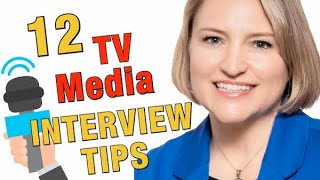
This is a recorded livestream (Jan 26, 2021) by Julie Broad giving 12 practical tips for doing TV/media interviews over Zoom to promote books and build an author brand. The guidance focuses on presentation (look at the camera; use a laptop; camera at eye-height), technical setup (lighting, background, sound, microphone/headset), messaging (prepare 5–15s sound bites; one clear call-to-action; how/when to mention your book), wardrobe, and rehearsal. The session includes live audience interaction, prize giveaways, and a Q&A covering book length, promoting older books, revisions/audiobooks, and launch timing (book launch Feb 23 mentioned).
Chapters
All right. Hello, hello. And happy Tuesday to you, my friends. Make sure that when you're joining in, whether you're tuning into the replay or you're kicking it here with me live, that you say hello. It is a fabulous Tuesday to hang out with you. So today we have a really, really fun topic. We're talking media preparation for 2021. This is media interviews in the world of zoom. So not live in studio interviews. And it's going to be a fun topic. I've got 12 tips for you today. As you're joining in. Do say hello and let me know you're here. And as always, make sure that you can hear me. Awesome poetry from the hearts in the house. Brian, great to have you here. I'm assuming the sound is good and we're ready to rock and roll. So, yeah. And there's Angela, and Melissa's here. Melissa's from our production team. She's our client care specialist. And Angela, of course, is our operator. All right, so I'm going to kick it right off. Sound is good. So I'm going to dive right in. We're going to get to it. So, as I said, the topic is media preparation tips for 2021. This is Media in the land of Zoom. But before I dive in, I do want to say thank you to everyone who has joined my book army. There is a great crew of supporters who are going to be reading and reviewing Self Publish and Succeed, which is coming out February 23rd. So thank you so much to each of you. I know that you have bought the book, so it will be a verified review. So thank you so much. And if you missed the book army, that's cool. There's going to be some really, really great opportunities for you to buy the book and be rewarded for celebrating in the launch week. So that's happening February 23rd. It also happens to coincide with our livestream date, so we'll be doing a YouTube live on the book launch day. So it's going to be a lot of fun. But yeah, I just want to give you guys a shout out because a lot of you are here and I'm very, very grateful for your early support. And I'm just checking my notes here to see if there's anything else I want to say. No, I'm going to start. I'm going to dive right in. So some podcasts, I'm really specifically talking about TV media today, but some podcasts, you know, this can apply to any kind of interviews you're doing from your computer. So, you know, at Home, not in studio. I'm. I'm going to focus on tv, but this could be longer form content as well, like podcasts or webinar interviews, those kind of things. Um, and really what we want to talk about is how do you. How do you look the best you can, how do you sound the best you can? And what are you saying? So that you are positioning yourself not just as an expert, but hopefully creating enough curiosity so people go and look you up and buy your book. Because this is all about media, which ultimately the goal is that it leads to selling your book or growing your business and of course, building your brand along the way. Now, if you just joined in, because I see quite a few people have hopped on. Make sure you say hello if this is your first time joining us for a live stream or catching the replay. Well, in particular the live stream portion participation matters. We have prizes for people who participate. So make sure you're saying hello, asking questions and just chatting and supporting, supporting each other. This really is a grand community as you will soon see if you're just joining in. Okay, so while you guys are saying hello, let's get to the first three tips, shall we? So tip number one is exactly what I'm doing right now. I am looking right at you. So look at that camera. It's tempting to stare at your beautiful self in the screen, but just look at how that feels differently for you. So I'm looking at you. I'm looking at the screen. I'm looking at me. I'm looking at you. I'm looking at me. It is a very different feeling when somebody is looking at the camera versus looking at the screen. It takes practice. I have trained myself. I pretty much live on zoom all day long, and for the most part, I just stare at the camera. I don't really need to look at myself anyways, so I stare at the camera and that gives that connection to the viewer. One thing I will say is really try to. You can look away if you can have notes. I always recommend you have some bullet points on some note cards and you can look down and then look back up. That's totally fine. But check this out. How does this feel? So I'm just going to give you two different situations, two different scenarios. So I'm looking at you chatting. I get asked a question, I look down, I look back up, I answer, okay, that's one. Now what about this? And then answer. Looking up is a very different feeling for the audience. So I highly recommend you have your note cards. You can't see where my hand is, but have your note cards just slightly down and to the side and you look down there and look back up to the screen versus looking up and even looking around. Really try to keep your focus on the camera and look down at your notes occasionally. Don't read from your notes, but you can definitely have notes. That's. That's okay. But practice looking at that. That camera. It's a game changer. Second to that is using your laptop, not your smartphone. And this is really in particular for tv. Again, because the sizing on your smartphone doesn't work very well for tv. Sizing the camera on your computer, your laptop will give them a better size for them to be broadcasting that out. So that's one big reason why the laptop camera is in fact better than your smartphone. And mostly these days, laptop cameras actually have really good camera quality if your laptop's relatively new. My only caveat to this is if you have one of those laptops, and I know Angela's here and I think it was her boyfriend's computer, it had a camera down underneath the screen. Don't use that one. If you have a laptop that has that camera underneath the screen screen, I highly recommend you get an external camera and put it up here on your computer. I have seen nose hairs and you can't unsee that. And you don't want that. You don't want that broadcast on the Internet or on television. So, yeah, camera should be. And that's kind of my third point, actually. The camera should be at eye height. So you want to raise up your laptop. I have a laptop stand because it's more ergonomic anyways to have your laptop raised up so your head isn't down like this all day. But if you don't have that kind of a laptop stand, then raise it up with some books and just get that camera to eye level because that's going to give you the best. And if you can even get it up a little higher and just point it down, then that will give you a better angle above your head as well, because you don't want too much space above the head. And, you know, downward angles tend to be more flattering anyways, so that's the first three tips. If you're just joining us, we're talking about media being prepared for media interviews in 2021. And really specifically, I'm talking TV. These interviews move fast. You've got three to five minutes at the most. And you want to look your best, sound your best, and hopefully give the audience Enough value in that short interview that they check you out and ideally, buy your book. So number one was look at your computer camera, like what I'm doing right now. Use your laptop, not your smartphone, and raise that laptop up. So those were the first three tips. All right, let's dive in and give away a prize. Angela, are you ready? Let's do. It is November. No, not November. Oh, my goodness. It is not November. It is January 26th today. So let's do the 26th person from the top. And I see a few folks have already done the thumbs up, so thank you for that. If you haven't already, you should try it. It feels good. And folks have been saying hello, Brian, great to have you here. Mike, fantastic. Efren, hello. Ben Preston, great to have you here. Ms. Kimoli, great to have you here as well. All right. Perish the thought of seeing me bigger. I love it. And Angela's commenting on. Yes, it was an unflattering angle, having that camera angle pointing up. Yeah, you. You just don't want that. So I don't know why they're building laptops with cameras down there. I really don't understand that. But all good there. Okay, so 26th from the top. And I don't know why you're speechless, Melissa. I missed that. Okay, so 26 from the top is our first prize winner. I'm just waiting for Angela to chime in. And also for anybody who is new, you can always ask questions. And at the end, we'll answer any questions that are lingering that aren't specific to media today. Oh, nose hairs. Yeah, sorry, I probably shouldn't have gone there, but I have seen nose hairs I can't unsee on camera. I do a lot of zoom interviews, a lot of zoom conversations. It's been. It's been interesting. Okay, so it wasn't you, Brian, I don't think. I don't remember who it was. Anyways, I've erased it from my memory. There isn't a 26 comment. Oh. All right, so we gotta. You guys gotta chat more. It's a quiet day today. We. I. My newsletters are off schedule from. From these live streams. They usually go out the day before, but I'm off. I'm off schedule. All right. So will I be talking about makeup for men? It's a great question, Colin. And actually, I hadn't planned on talking about it, so why don't I just quickly touch on it right now? I do highly recommend everyone get themselves some face powder, and especially if you are prone to Shiny foreheads. Because the other thing we're going to talk about in a minute is lighting. And lighting can make you look really shiny. And so it's really. And just go into any makeup store, Sephora, you know, even like a Nordstrom's or the Bay or wherever you are, and, and just get powder. They have powder that's actually specifically made for camera and for men. And so I would just go in, get a, get the right brush, get the powder and find out how to put it on. But yes, I do highly recommend you do that because the shiny forehead thing, especially when you're on live television, is it can be bad. And if you're sweating, definitely. But beyond that, I don't, I don't do a lot of makeup, I don't recommend a lot of makeup for men, but I do think there's value in doing the powder for sure. Okay, sorry. I trimmed my nose hairs regularly. And then Efren underneath there says only tip. I probably won't follow. I'm assuming you're not talking about that, but this has gone places I did not expect. You might be talking about the powder, but it doesn't matter. Okay. Lauren is from Trinidad, Tobago. Welcome. Fantastic. Okay, so Angela, we're going to do the 26th comment and to make it fair, just remove yourself from it as you count so that I think we have 26 now. So I think you can pick a prize winner and just remove yourself from it so that nobody was gaming the system and being the next one to comment knowing what the number was. Cool. Okay, so while she's doing that, I'll just go back to my notes and pick up a couple things. Okay, so number four to me is the most important thing for all of you to practice. And probably, I'm guessing very few of you have done this. And it is the most important thing when you do TV interviews in particular. But I highly recommend you get good at this for all interviews pertaining to your subject. And this is preparing sound bites. Now, sound bites are 5 to 15 second kind of clips or snippets you want to equate it to when you do newspaper articles. It's like a quote. It is, you know, a kick butt tip. It's a way you summarize your thought or a quote you like to say. So a couple examples that I thought that I could share with you, that if you have been watching YouTube, you've heard me say a lot of these things over and over. But you know, one of the things that always comes up in conversations leads me to say, your book may be about you, but it's not for you, and you have to write it for the reader. That's one little clip. That's a sound bite that can work, really. You know, that has a big impact. Your book is not for you, it's for your reader. The book might be about you, but it's for your reader. So you want to write it with the reader in mind. The other one that I say a lot or that I can say specifically to media is deliver so much value in 15 seconds that the reader just has to get your book. Because if that's what you give them in 15 seconds, what in the world. They do not want to miss out on what is in your book. So something like that. I would practice it. I haven't practiced that was trying to think of an example for this one. So, yeah, so deliver so much value in 15 seconds that the viewer has to buy your book because they know it's going to knock their socks off. You know, something like that. One of the questions I do get asked a lot goes back to how few books get sold. You know, everybody has a different quote, but often the number that comes up a lot is, you know, the average book sells less than 250 copies in its lifetime. You know, what do you have to say about that? Or why do you think that is? So that's a very, very common question that I get asked. And I mean, there's so many different ways I can answer it. So sometimes it depends what we've talked about and what we haven't. But one of the ways that I, you know, one of the sound bites that comes to mind for me on that is that many authors think that they're done when their book is published. But that is actually the beginning. And the real work begins when you're. When your book is published. And now you have to market it. And that's the, you know, if you think your book is done, and this is kind of my point of that is if you think your book is done when you publish it, or if you think your work is done when you publish it, that's why you're going to sell less than 250 copies in your lifetime. Now, of course, the other way I can answer that is that a lot of people haven't thought about book marketing before. They write their book. They write their book and then they figure out book marketing. So that's another way that I would answer that question. So I have. I have different angles that I can take. And so what I Recommend is you sit down and kind of write out the common questions you get asked and think about different ways that you can answer it in 5 to 15 seconds and even time it because 15 seconds is actually a lot more time than you think it is. And you know, if you have to wrap up something, you're like okay, what's your closing thought on this? And you've got 10 seconds or 15 seconds, you want to know that you've got a sentence that you can deliver or two sentences, but that you can deliver something in 10 to 15 seconds that is going to make you a really, really great interview. And people will likely ask you back and other people who see you on that telev television show or that media outlet, they are likely to be interested in interviewing you on their show as well. So that is I think the most under practiced and the most important thing you can do if you are doing television interviews and for our clients because there's some of you here, you have your media kits and the questions we've prepared are sometimes the media will look at those, sometimes they won't. But it's a very good idea to use those questions as a basis for you to start creating sound bites if you haven't already done that. Okay, so tip number five is lighting. Now I am going to tell you what I do wrong in this and and then kind of tell you how I correct it. So relighting. It's really important for you to have light in front of you, which I do. However, what I do wrong is that I am sitting facing a window. Now currently, if you don't already know, I am up in Canada. We left Los Angeles last year thinking we'd be away from Los Angeles for a few months and we're still in Canada kind of waiting for the 14 day quarantine to re enter Canada to be lifted. So I am in a very much a makeshift office situation. So I'm facing a window and I'm in gray British Columbia. It's gray most of the time. So I can get away with facing a window. But what can happen is the sun can suddenly show up from behind the gray clouds and suddenly I have weird lines on my face because of the blinds in front of me. So I would close the blinds and just use the ring light, which I also have the ring light. Now I want to show you the difference between and I am facing a window so I have light on me no matter what unless it's dark outside. But I want to show you the difference when I turn off the ring Light and turn it back on, because the ring light just gives that extra light, even though I am facing a window. So I have some natural light right now, so I won't be dark. But there is a difference, right? Ring light off, ring light on. So I highly recommend you get yourself a light. And these ring lights are great. They're 30 bucks most of the most. The time. You can get the little ones, you can get the big ones, But I highly recommend you get some lighting to put behind your laptop or your computer and in order to just. Just give yourself some better lighting. Backgrounds would be number six. And then I'll come back and we'll do one more prize draw and I'll see who Angela has for the winner. So backgrounds, again, this is kind of like what I have is not necessarily ideal. You kind of want a background that has some depth to it without being distracting. So the ideal scenario. And I wish I actually could show you some of our team members backgrounds. We have some team members that really have great backgrounds. Now. They've gone all out, some have lights, and they've got a shelf with a plant. Angela used to sit in front of a bookshelf, which is a great background. Again, you don't want it to be distracting. So using the zoom backgrounds, for example, those are distracting because as people move, they kind of go in and out of the background. So that is not ideal for TV interviews. Keep it simple. So if you have to do something like what I'm doing, which is just, you know, I've got a plain screen set behind me, so it's, it's, you know, it's not, it's not the perfect setup, but it is better than having an open closet or a bed or the kitchen where people are wandering around. So you want to avoid distractions and if possible, create a backdrop that has something of interest in it to just create depth to your picture. But if not, you know, just have a plain backdrop of some kind that you can use to just keep the focus on you. That is really the ideal scenario. Okay, so let's do a YouTube draw and hey, that's a great point. So Brian said, I used to work in TV and I use two large living room lamps where you can aim the light. One at 10 o' clock and the other at 2. And it gives good balance. That is an excellent point. So thank you. Kevin McGuire's in the house. Hello. Great to have you here. Let's see. Diana said, I made purchase and in line. Waiting for yourself. Publish and succeed. Oh, great. Thank you for Joining my book army. I'm so grateful for all of your guys support. Okay, so yeah, the light definitely made a difference. So that was a good example. I didn't, I thought it would be a good way for you guys to see that. Okay, so let's see. Okay, I'm just checking your guys comments to see if there's anything else. Okay, Diana, we'll come to that question after. Angela will be making notes of any questions. So let's see. I'm just looking for the winner. Angela who was. Oh, there we go. Lauren Joseph is our 26th comment from the top. So congratulations Lauren. So our prizes if you're new here, we have our noboringbooks mug and we also have our oh so soft journal which I. Oh I know where I put it. Maybe. No, I don't know what I did with it. I used it. I recorded my audiobook last week and I wrote in my. One of the things, when you do your audiobook, this is not related to media but when you do your audiobook, do it before your book is finalized because you're going to find mistakes. And in my case I found actually quite a few mistakes. A couple things that I didn't realize had gotten changed in the editing process that actually changed sentences so they were wrong. So I was making notes in the oh soft journal of all the things that I wanted changed in my book before you early reviewers get your copy this week. Which we will be emailing you out with your copy this week now that the changes have been made. So I'm excited for you guys to see that. But I was writing in it and so now I don't know where my oh so soft journal is. But Lauren, you can email us@teamoklaunchers.com with your mailing address so we know where to send it. And let us know if you want the mug or the journal. So thanks so much for being here and for commenting and participating. Okay, let's see. And was Lauren the one in Trinidad Tobago? We get to send things all over the place. Okay, fantastic. All right, so diving back in, let's see, where was I? Oh yeah. Okay, so we covered already the sound bites, we covered lighting and backgrounds. Now number seven is sound. So at a minimum use a headset of some kind. And actually the Apple headsets are pretty darn good quality for media interviews. You'll even see some of the professional newscasters using them on their when they're shooting from home, which a lot of them have been lately. And the Apple AirPods are also really Quite good quality for media. I often use. I have a yeti mic, which is what I'm using right now, and I would put AirPods in for to hear them and then use the yeti mic. But you know the big thing, the big thing is that you do not want to use your computer audio. It echoes. It doesn't sound as good. You just, you have to use some sort of a headphone, headset or mic in order to improve your quality. Also, do your best to reduce background noise. I get it, we're at home. Your dog might bark, your kids might yell. But whatever you can do to reduce that background noise is ideal. I was on a call with somebody yesterday and there was airplanes going overhead. Roosters, whatever they do, cock a doodle doing dogs barking and car noise. It was. It was quite distracting and I was. It wasn't a media interview, but still, there was a lot going on in his background. So do your best to minimize the distractions for the viewer. Okay, so I'm going to do a YouTube draw. I actually forgot, so I'm going to go back. And so if you're new here, every Tuesday and Friday we have new YouTube videos. These replays count when you comment the day a video is released, you get entered to win and of course, course you're entered to win the mug or the oh so soft journal. So I've taken the last two weeks, we've put them in a random name drawer and I'm just hitting the random name button right now. Oops, I clicked the wrong button. Okay, hold on, let me click the right button now. Okay. And it's spinning all of your names up and it's giving me Steven Searle. Congratulations. I don't know if you're here live today, but I do believe that we have a book launch to celebrate. I think I remember reading a comment that you said you top to the category, top four different Amazon categories with your book launch. So congratulations, Stephen. You might be busy doing book promotion stuff, but email us@teamoklaunchers.com when you catch up and watch this video and let us know if you want the mug or the journal. And make sure you include your mailing address because we don't know where you live and we'll get that out to you. So congratulations and thank you so much for commenting on the videos the day they were released. Okay, I'm just checking. Let's see Melissa. I see Melissa's cold. Yetis are nice. I just read a book to my son called how to Catch a Yeti. Oh, the books you get to read to 4 year olds. And how do you get to be an early reviewer? It's pretty much closed now, Jude, but you can definitely grab a copy launch week and there's going to be some really great incentives for grabbing a copy launch week and then you can write your review and it will still be incredibly appreciated at any time. But yeah, so the early reviewers, they're all closed. They're going to be getting their copies this week and then launch week, which will be February 23rd. There's going to be a lot of incentives for buying the book that week and that will be a lot of fun too. So there's the, the thank you for your interest. But right now we've got the early reviewers. They've all bought their copies and they're ready to roll and we're just sending them out. Yeah. So that's great. Let's see. Okay, back to our notes. Let's see where we're at. So number seven. Okay, we got that. Number eight, what to wear. Now, is it business on the top and pajama on the bottom? I would recommend not. I would. You can, but it seems like inevitably you get caught doing that somehow. And it can be funny, but do you want to be remembered as the guy or gal who had their pajama bottoms on or do you want to be remembered for the value that you brought to the audience that day? So my recommendation is whatever fits with your brand. So you know, business. If you want to be business on top, that's great. Jeans on the bottom is good. You don't have to, you know, get full suited up. And I don't even think you need to be tie and suit jacket, especially when you're at home. It kind of looks a little funny unless you're the broadcaster. But what I do recommend is you stick to solid colors as much as possible and do go with a color. You don't have to go crazy like, you know, bright green. But you know, having a little bit of color can really help you stand out on the screen and patterns and other like, lots of colors can be distracting or even get distorted on the cameras. So that's why I like to just stick with a solid color if you can and just keep it, you know, simple. But you know, a color that fits with you. Now of course, if you have an out there brand and you want to stand out, go ahead. But I would test it on camera first, especially if it has a lot of patterns because that really does look a little funky sometimes on, on Screen number nine is kind of touching on how to plug your book. Now, what I do not want you to do, there's two things I don't want you to do and then I'll tell you what I recommend. The first thing is I don't want you to go through the entire interview without having your book mentioned. And if you haven't prepped the producer of the TV show in advance to have you introduced as the author of X book and to have that shared at the end, then they probably won't do it. So one of the things we do when we're getting, when we, when our clients get on TV is we make sure the producer has a copy of the book so they can show it on screen or at least an image. We put it in the bio for the, for the client. And then we also mentioned that we would really like it mentioned at the end. So that's. The first piece is you want to make sure that that whole interview doesn't go by and your book hasn't been mentioned because we've seen that happen and that's sad. The other piece is you don't want to be one of those people that is like, well, in my book I talk about and in my book I say this, and in my book I say this. That's not good either. So you're there to deliver massive value to the audience. Ideally make that interviewer look good and, and hopefully have people find you interesting and you know, create curiosity, deliver enough value that they want to check you out. So that's really what you're there to do. However, I think it's great to have if there's a really clear opportunity for you to do something like say, just trying to think, okay, my book's called Self Publish and Succeed how to Write or sorry, the no Boring Books Way to write a nonfiction book that sells. So let's say an interviewer says, well, how do I write? How do I write a book and make sure it's not boring? And you know, that's what my entire book is about. So I could say, well, inside of my new book, Self Publish and Succeed. There are tons of tactics and techniques and strategies for doing that. But ultimately the most important thing is to have a really unique hook that is reader focused. How when they're done reading your book, how is their life going to be better? And that creates interest and intrigue, which makes sure that your book is not boring right from the start. That'd be one way to answer it. And I've, I've Seeded my book in a subtle way. And it's also legitimate. Like. Like, it's basically saying you're asking me to tell you in 20 seconds what took me 260 pages to explain. So it really sees the fact. There's a lot more to talk about, but I still gave value. That's one way. So that's what I would recommend is kind of practicing opportunities for that. But I wouldn't do it more than once, especially in a short interview. In a longer podcast, you might do it a couple of times. But I really. I think it can take away from your interview if you do it too much. Number 10. Have water on hand in case you get dry mouth. But take a drink when the interviewer is asking a question if you really need to. Not, not well. And see, this is exactly why. See, this is all about not doing this stuff right? Because if you take a drink right before you talk, the water can go down the wrong pipe. I literally did not mean to be the demonstration of how that can go wrong. I just thought I would explain it. All right, so again, you won't forget this, right? Because I just did it. You will not forget. I generally just take. When you go. When you're about to go live, there's usually a three, right? This is what will happen, and your whole three minutes will be gone, and you're. You'll be choked up. So there's usually a warning that you're about to go live. It goes black, and you're just waiting till you go live. During that time, I take a drink, I take some deep breaths, and I get. I get ready. I try not to need to drink, drink, but if you're nervous, take a drink, but do it when the interviewer is talking and try to do it before you're going to have to talk so that exactly what just happened to me does not happen to you. You're welcome. All right, let's do another YouTube draw while I recover, shall we? Okay, so picking another random name from the folks who commented every Tuesday and Friday when the videos came out, they commented the day a video was released. And our winner is. Rachel Robertson. I mean, I don't know how many mugs or journals you could possibly want or win, Rachel, but if you're here, congratulations. And if you're watching the replay, also, congratulations. You know what to do. So email us@teamoklaunchers.com and let us know what you want to win. I'm going to try this drinking thing again. Okay, that feels better. All right. Oh, goodness. And Mike has the giggles now. Wow. Yeah. Nice mute reflexes. You can tell I've done that before, right, Efren? What an actor. I wish. Yeah. Hey, Dale. I didn't know you were here for my performance. Welcome, by the way, guys, speaking of awesome books, Dale and you. Yeah, Dale, you are. You can drop links. So if you want to drop a link to your pre order page for your book, please go ahead. Dale has a fantastic book coming out on a fantastic day, also known as my birthday. He is literally launching a great book on my birthday. It doesn't get any better than that. Except it does. He asked me to write the foreword for that book. So I have written the foreword for a fantastic book on Amazon. This is really the ultimate guide for selling your book on Amazon. Everything you need to understand to succeed on Amazon, from keywords to ads to a lot of features that I actually, I knew about, but I wasn't using. We weren't teaching our clients about. So we've improved our game thanks to Dale and this book. So, yeah. So definitely check out this book. If he isn't ready to drop a pre order link. He did. Okay, awesome. So check that out. It is great. And yes, it is kind of fun. It is launched on my birthday with a forward from me and it's a book I can wholeheartedly recommend to everyone selling books on Amazon. So it's pretty fantastic. So it's great to have you here, Dale, and thank you for that. And Dale says he was honored to have me write the forward and he thought that I would reject him. No, I was. It was absolutely my pleasure and a complete honor. So I'm really excited for that launch. So it's great to have you here and thanks for dropping that link. And we'll make sure that goes in the description for those of you watching the replay afterwards as well. Okay. Now that I am fully recovered from my illustration of having water on hand, but when not to take a drink, let's finish up, shall we? So number 11 in these media tips for 2021, doing TV interviews through Zoom is when you were asked where people can connect with you, resist the urge to give them a list. I know you're on Instagram and Facebook and YouTube and everywhere and all the places. Give them one place. And my best recommendation is to give them your author website. If that is not an option, you didn't do one, or it's not. It doesn't look good for whatever reason, then give them the next best place. But give them one place and hopefully that's a place where they can buy your book, send you an email, contact you, connect with you all those things, which is what your author website really should be. But if you give them a list, they will not remember. So it's really, really important to just have one clear call to action. Just say they can go to, you know, juliebroad.com and they'll find links there to buy my book, connect with me on social, social media and send me an email. Boom, done. Juliebroad.com and then they can put it on the screen below as well. So it's much better if you just give them one place to go and then they're more likely to do it. The one thing with TV interviews, by the way, in all of my experience doing them and our clients, it is rare that TV sells very many books. But it is common that TV leads to a lot of other opportunities. And that TV interview can give you a lot of credibility that can be leveraged for speaking interviews and other bigger media and so on. One of the things that as you get closer to doing more national media, they will want to see a media reel. They'll want to see that you can show up and do an interview without choking on your water. You know, little things like that. So they will want to see previous interviews of you before they put you on their big show. So these smaller shows can lead to bigger things. There are exceptions to this. We have seen Good Morning America in 2020 and some of the major national shows. If they put you on their show, your book probably has a lot of of national interest. And so we have seen those result in, you know, pretty good sales volumes. But those local TV spots, there's a lot of value in doing them. And there's also a video on my YouTube channel on leveraging them. So using that one media interview over and over for a lot of other reasons and ways in your business to benefit your business and your books. But yeah, that was just a side note. The final tip we have for you today is test and practice a few times before your live appearance. So if you haven't done a media interview on Zoom before, I highly recommend you get a friend to hop on Zoom with you, even take screen captures of what you look like on that side, test your lighting, test your sound, test being asked questions and time how long you answer some of these questions and just see what it feels like for the person watching on the other side and just, you know, I would say watch it if you can. So record it and watch. That's the quickest way to improve is watching yourself. It's a little painful at times, but it's a really, really important step. If you are new to this and you haven't done a lot of live streams, you haven't done a lot of video, I highly, highly recommend you do some practice and test your setup so that you're getting it good for when you do have that media. Because again, the t we're talking specifically about TV and it is fast. It is three minutes to five minutes. You're in, you're out before you even know it. And so you want to you have a very short period of time to make a very strong impression on the news outlet as well as their audience. So hopefully these 12 tips will help you. Now for today's other prize, the participation is what was your favorite tip today and why? I know which one was the most memorable, at least I think it was. But what was your favorite tip today and why? So go ahead and post that in the comments and we'll pick from those for our winner. And I'll take questions now. A couple couple quick notes. Our next live will be February 9, same time, same place, happening at 2pm Pacific Standard Time if you are catching the replay and wondering when this went live. So February 9th, 2:00pm Pacific Standard Time, and then our next one's February 23rd, which is the launch day for self publish and succeed. Our next deep dive training is going to be on February 20th and we don't have a topic yet. So I'm actually going to post a a poll in the Community channel probably tomorrow with some ideas and open to suggestions for our next three deep dive topics. One of them, I'm strongly considering being on Clubhouse. My friend and two co authors just released the first book on clubhouse. It's called the Clubhouse Guidebook and she has been in Clubhouse all over it with the major players since August of last year. So she has some really phenomenal insights and there's been some really great successes coming out of it for authors. So it might be a great topic for you guys. But I'm going to put a poll up so you guys can tell me what you want to hear. All right, so let's see who our winners are here. Let's see. Okay, let's check you guys out. These are great tips. So the I knew you guys would really remember the water one. Okay. Repurposing ideas and presentation. Yes. Okay, so I did a YouTube clip and it took three hours and I couldn't nail it at first. Yeah. So Mike's tip was don't drink while talking. Kevin remembers don't choke on water. And Brian K. Morris Rising Tide publication says the sound bite was my favorite file that under I should have thought of that. Efren practiced the interview because it will reveal what we don't even think about. Yes, yes. Melissa says lighting is important and eye contact. Absolutely. Brian, camera up. You got it. Drinking. Don't drink at the wrong time because of what happened to you. Yes. Practice muting. Yes, Practice muting. It was a quick mute on my part, and it's. You don't really want to mute very often, but it's. You really don't want to cough into the can, into the camera, into the mic, sneeze. So if you can't, you know, if you. If you're not practiced at muting, turn away, obviously. Kelly says, I like the tip of giving only one place for people to find you. It keeps it memorable. That's great. The tip for water was the most memorable, but the best tip was practicing and hearing yourself. And Aaron's favorite tip was telling people one place to contact you. Mostly because that's the one I caught live, but also because that one I would normally have given them everything. Yeah, that's great. All right. Okay, fantastic. So. Oh, Clubhouse. I was wondering what you were waiting to be invited to, Mike. Clubhouse. Yes, I have it. So if you want an invite, I can hook you up because I have five invites that I don't use it. My friend Deb dragged me into Clubhouse and insisted I lock down my username. So I do have five invites, so I could hook you guys up if anybody does want it. Okay, so I'm actually going to pick Kelly Des Moines, partly because you're new and I know you haven't won yet, and most of the other people have won something already. But also, I think. I think she was the first one to mention I like the tip of giving one place for people to find you. And she answered, why? Because it keeps it memorable. So congratulations, Kelly. Thank you so much for being here. All you have to do is email us@teamoklaunchers.com and let us know if you want the mug or the, oh, soft journal, which is probably in the house. Not out here right now, because I was typing up notes from it on the weekend. All right, so there was a couple questions, Angela. So if you can go ahead and post them for me here, that would be great, and we'll answer those questions. Otherwise, you must have an iPhone for Clubhouse. Oh, it doesn't work on any. I think I set up initially on. I don't know. I'm not a clubhouse expert, but I think I was set up on the computer, and then I switched to iPhone. But you're right. You did have to download an app, so maybe you do need an iPhone. Okay, so Angela says the first question was from Diana for a. Nonfiction. For nonfiction. In your opinion, does such a book sell more if it's a small, short book or a thick one? Okay, so this is an almost impossible question to answer with a specific answer, because it really depends on the subject, the audience, the category you're competing in, and ultimately the goal for the book. So if you're selling a really, really short book and you're trying to sell it for a lot of money, you know, there probably is going to be a disconnect. But it really depends on the subject of the book and what is the value that you are delivering. So what's that hook of your book? What is. What is the reader getting from that book when they're done? How is their life better? You know, how are they more beautiful, more popular, you know, more financially better off their business more successful? On and on. What. What is it that you are delivering in that book? And when you do that, and it's clear it matters a lot less what the size of the book is than how it's positioned and who it's selling to and who it's selling against. Right. So what's the competition in that category look like for that kind of a book? The one thing I do. I do prefer to avoid, generally speaking, is if you are writing this book for credibility, you want to use it to get media. You want to use to be on stages. The book really should be of enough substance that it's more than a brochure. You want it to be big enough that it can have the title on the spine, which is at least 110 pages. And you really want to. You want it to have something that has enough value that people actually treat it like a real. A real book. So it's more about what you want the book to do than anything. Again, it's really hard to generally answer that question, or it's actually really hard to give that a really good answer because it's a general question that needs a lot more information in order to give a really good answer. Okay, so was there another question? Mary's World? How can I promote an older book? Yes, absolutely. I mean, my first book is from 2013, and I'm still generating sales. I don't actually promote it But. But you can promote it through Amazon ads. Again, this is another plug for Dale's book. Read that. Figure out how you can refresh your Amazon listing. What can you do to update what's going on on Amazon for your book and also really look at what is going on in the world today that is still relevant for your book and find angles that you can talk about around it. I don't think it's as important. The age of the book isn't as important in general. Media isn't as interested in putting an author on, you know, when it's not hot and new. So there has to be a really clear angle. But there's always a way. You can also relaunch, refresh, do a revised edition to give it, you know, to give it an update. If I was still in real estate, I would definitely be doing a second edition of More than Cash Flow because there's a lot of chapters I would add and expand upon now, and especially, you know, as it pertains to working with partners. I could go into a whole new book almost on what it's like to not only leave the city where you did your investments, but leave the country and have those conversations with the people who invested their money with you in those deals. So there's a whole new angle that I could be covering, and that's what I would do. To refresh it and then promote it is kind of looking at what's changed, what's new and doing a revised edition. But there's a lot of ways to do it. But it really comes back to your goals and what's in the book that's still current. Okay, let's see. How about repurpose older ideas into newer formats? Yeah, absolutely. I really think that's a great idea too. Mike is really looking at. I mean, audiobooks is another way to kind of refresh. I still. Audiobooks are hard to sell on their own. I think it's better to package it and launch it all around the same time. But again, this is that revised edition. Like, what is it? What is in your original book that is still really valuable today and kind of take that and like revitalize it really often. A good cover update can even do. Do wonders for a book too. Okay, let's see. How much of your profits do you invest back into the business typically? Oh, like. Like author profits. I'm not really sure how to. Hey, Doug, it's been great. I was just thinking I hadn't seen you on a live. But I thank you for all your comments. It's been great to have you commenting on the channel and. And if I remember correctly, you're a fellow Canadian, so. Yeah. So, Mario, if you're still there, can you give me a little bit more specific what you're thinking? And I mean, ultimately there's no. No answer to that because it's really comes back to your goals and what you're trying to accomplish. Like what. What are you. What did you write your book for in the first place? If you wrote it to build your brand and build your business, then to me, you're putting all of the profits from sales into, you know, getting more book sales and getting it out there. If you're an author who's really trying to build your income from your business, then it's probably a different approach. That's a tough question to answer. Again, without kind of diving into specifics. There's certainly no defined percentage of what you would do with profits from your author business. Yeah. Oh, Halifax. So you're on the other coast. I'm. I'm currently hiding on Vancouver Island. So I'm hiding in the west coast right now. Now. Okay, cool. So I think I. I don't see any other questions. I think we'll call it a day for now. Oh. The answer must include non financial aspects such as blood, sweat and tears. Yes. There's no tears involved in book publishing, is there, Mike? Okay, I. I definitely have cried. Full, full transparency here. I have definitely cried. Okay, friends, let's meet back here on February 9th at. At 2:00pm Pacific Standard Time. It was great to spend a little time with you all today. If you're a winner, make sure you email us@teambook launchers.com Melissa and Angela, from my team, thanks so much for being here and of course, huge shout out to all of you. I'm really excited to spend the next month with you and share self publish and exceed succeed with you. So thank you again to all the folks that are early reviewers and if you missed that, it's fine. The launch week is going to be pretty awesome. There's going to be great opportunities for you to grab your copy and review the book then. So, yeah, thank you so much. We'll see you again here in two weeks. All right, take care, everybody. Bye.
More from Julie








Should You Skip Amazon When You Publish Your Book? #digitalmarketing #amazonauthor

