Author Marketing Stories: USA Today Bestsellers, Bulk Sales Success, and Speaking in Prisons
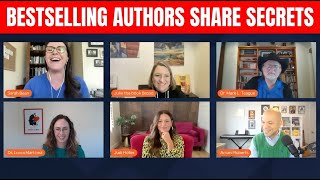
Recorded panel hosted by Julie Broad (Book Launchers) featuring authors Becca Powers, Imani Roberts, Judy Holler, Dr. Lorea Martinez Perez, and Dr. Mark Teague. Panelists describe their author journeys, brand-building, marketing tactics (email lists, lead magnets, book events/tours, keynote stages, bulk sales/book-study guides, prison speaking engagements), and lessons for new authors about authenticity, pacing, and experimentation. Several speakers reference USA Today bestseller placements and book-launch outcomes.
Chapters
We're going to turn it over to Becca to say a few words about her journey as an author. And then when we come back, we're going to talk book marketing with four authors. And I think you are going to love that conversation. So I'm going to turn it over to Becca and we'll be back in three minutes.
After stalking Julie on the YouTube channel and feeling that the wisdom that came from Julie Broad, she has her YouTube channel, she's the owner of Book launchers. I felt that there was a genuineness and a full knowledge base around all the different steps of writing the book. And as I was exploring other companies, so many of them focus on one element. And to have the end to end model was something I didn't want to keep. Changing companies to have a space where I could do the full thing, from a writing coach to marketing the book once it was released. Becca I'm Becca Powers and the name of my book is Harness your inner CEO. My life before writing this book really just revolved around work and kids. I was a senior sales manager working 10 to 12 hour days. And then I had four kids in middle school. My husband and I were raising a blended family. I have two, he has two. And I share all that detail because writing to me is something that I used to do for fun. I would consider myself a writer back and even like as early as grade school, this passion project for me, I enjoyed writing short stories, poems, song lyrics, longer stories, fiction, stories, nonfiction, concepts, all writing, all good. But then you start adulting. In my 30s, I was just working and working and working. And one day I worked myself into extreme burnout and I fell to the bathroom floor in complete exhaustion. And the thought that came to me from the inside as I was in my, what I would say my most powerless moment, was an empowering thought that was like a whisper from within that was like, becca, you're the CEO of your life. And so my book is harness your inner CEO. And it comes from this state of me being in the grind of what most of us are in our nine to five with no passions, just work. And when I rose up off that bathroom floor, I came up a different woman than the one that went down. And it took me like probably about two years to course correct. But then I found my passion, my prosperity, and all these beautiful things happened. I was like, I got to turn this into a book. And that's what happened.
So when I knew I had this.
Book inside me, I researched multiple companies to invest my time and money into to help me bring this dream to fruition. And I found Book Launchers. And one of the things that I really liked about Book Launchers is that they have a subscription model and that I can go as fast as I want to or as slow as I want to. And I say that because as a writer, not only are you writing, but then you have the marketing side of the book and there's just a lot of different parts of the journey that you're going through. And so you can move as fast as you want to or as slow as necessary. And so I found that model of having a subscription base that put the onus back on me to do it at a timeframe that felt comfortable to me, but also honored the quality of the book product that I wanted to put out into the world. I felt like Book Launchers had the best framework to support that journey. The number one benefit I've had as a result of writing my book with Book Launchers is building my Persona as an author. Not only did I write and produce the quality book I wanted to, but then I was able to get it out into the world. And on the post writing side, on the marketing and selling side of everything, I. Over the two years that I was with Book Launchers, I ended up having an audience of over 4,000. I think when I left, I might have even been at 5,000 readers. So your inner CEO has propelled my career as an author. Currently I am in my second full book launch with a traditional publisher. So all that readership that I just talked about before I got picked up by New World Library. I have my second book, A Return to Radiance, out now. And I mean, I'm a real author.
Like I'm doing it, so that's what.
It'S done for me. I recommend Book Launchers because they embrace you through the whole process. As I stated before, writing a book is one phase. Marketing the book as a second. And to be with someone who has the full end to end vision with you, who's part of the writing process and part of the strategy is very helpful for the full execution of the book. And learning, especially as a new author, learning all the different stages that are involved. And Book Launchers totally rocks at it.
I just realized I was muted. Sorry everybody. Welcome back. Love hearing that from Becca. She is definitely one of our favorites. Still is. All right, so I am super excited to move into our next. I'm just going to see if I can bring this up real quick. Is it going to.
Let me.
Let's say. There we go. Okay. So we have a fantastic author panel for you guys this afternoon or I guess, morning. For those of you out on the West Coast, I'm super excited to bring in some of our book launchers veterans. We have Imani Roberts, author of the Quiet Storm and DJs Mean Business, Judy Holler. Holler at your dreams just came out in September. We're super excited to have her, both Imani and Judy Holler hit the USA Today bestseller list with their books. And today they are going to fill us in on all of the things that they did for their book marketing platform before those book launches. In addition, we have Dr. Larrea Martinez Perez, who is a phenomenal educator out of California. Her book teaching with the Heart and Mind reaches school districts across the country. And then we also have, excuse me, Dr. Mark Teague, author of Working Man's Guide, who has been able to take his book into the prison system across Oregon and and be able to talk directly to his readers. So thank you all. I'm going to go ahead, I'm going to stop sharing. Maybe, maybe. Thank you very much. And I'm going to go ahead and add all of our authors to the sage. Dr. Teague, Imani, Judy and Dr. Larrea.
Hello.
Hello.
Thank you so much for being here, you guys.
Pleasure.
Thank you. Thank you.
So.
Oh, yes, you guys and all of you, I've worked with each one of you over the last few years and have seen your growth. I mean, particularly Imani, who's been with Book Launchers for almost as long as some of our employees, longer than some of our employees, has been a Book Launchers member. In addition, you know, so all of your books have been out in the last, you know, two to three years. And to get us started, I just want each of you to give a brief intro about who you are, what your book is, and then what your brand is all about. Like what you do. What do you do? Let's start with Imani.
Go for it.
All right. Imani Roberts, based out of Las Vegas. I am a music business professor, professional DJ and author. And I really just help the 9to5 creative monetize their artwork. It's primarily musicians, some authors. And that's what I do. My book is the Quiet Storm, a historical and cultural analysis of the power, passion and pain of R B groups. And there it is right there. USA Today bestseller came out in February this year. And I love it.
Some of your books I have within arm's reach. Some of them I don't.
So I'm sorry. All right.
Up next, we have Judy Haller.
Holla, my girl. I was literally born with that last name too, y'.
All.
So this is not a joke. This is not a joke. When I got married, I said to my husband, I go, you know I won't be changing my last name, right? The brand was already rolling deep. So, yes, my name is Judy Holler. I would say that I am a dream catcher. I'm an artist, I'm a seeker, I'm a guide. I make my living as a professional keynote speaker. I speak inside of corporations and organizations about courageous self expression, creativity, psychological self safety, and really building cultures of courage. And I use the arts to help people, teams and leaders do that. My first book is a book called Fear is My Homeboy, about embracing fear and fearing fear less. And my newest book, my My Soul's Work really truly is my latest book called holler at yout Dreams365 Dangerously inspiring ideas for the wildly dope so soul to help people fear less and truly self express.
Love it.
Love it.
Yes, absolutely.
Okay.
And up Next we have Dr. Larrea Martinez. It's so wonderful to see you, Lorea.
So good to see you, Sarah. It has been a while.
It has been. It's great to connect with you again. Let's hear a little bit about you, your book and what your business is all about.
Yeah. So my book I published in 2021, so it has been out for a few years now. At the beginning of this year, I reached 10,000 copies, which is an incredible milestone. I never thought I would do that. When I published the book, it was a calling. I felt like I had this book inside of me and I just wanted to put it out there. Never thought that the journey would be as exciting as it has been. My book is for educators, for school leaders, and it helps schools and districts to integrate social emotional learning in the teaching practices. My clients are mostly educational organizations, but I also do some work with parents and other organizations that want to grow their social emotional skills.
Amazing. Amazing.
I love it.
All right. And Dr. Mark Teague, thank you for joining us today.
It's a pleasure, Sarah. Welcome to all of you. My passion is the American working class. All things regarding that scene, that's who I want to help and inspire, instruct and the unique part of our story. My wife and I had a very traditional background. Farm and ranch. Grew up on farms and ranches in North Texas and we grew up together. We have a picture of me attending her second birthday party when she's two years old. We grew up together, high school sweethearts, have been married 40 years now. We left the farm and ranch and worked through corporate America, had a banking finance career for about 30 years and then we built a manufacturing company and sold that. And I'm twice retired working on a third time. And I'm an author and a speaker now. And I do have a passion for the American working class. That's who I want to speak to.
Absolutely. And you brought up something very specific there that we worked on quite a bit as we were working on the marketing of your book, which is bringing your personal story into your brand. The fact that you were raised in sort of this old old world values, you know, working on the ranch, very, you know, you know, sort of blue collar. But then you merged that with not only getting a PhD but then also working in corporate America for over 30 years. So you really had the best of both worlds when it came to your perspectives, which we've been able to use and use that as part of your story as we're marketing you.
Yes, that was a key part of the, of the book and our experience, you know, growing up in that farm and ranch environment. The incentives are very straightforward. If you don't work, you don't eat. It's very cut and dried. There's nothing unclear about it. But then you go through the corporate world and it's very unclear. There's every incentive and motivation you can imagine. So I found myself reaching back to those old fashioned principles and applying them in a modern environment. And that turned out to be a very powerful, powerful tool and approach. And so the book is steeped in that. That's basically the theme. It's a roadmap for success for the working class and that. So that came through our experience. And I have high praise for book launchers. You guys helped me a great deal to shape that format, make it very clear. You guys are top notch. Thank you very much.
I love it.
I love coming out of these panels because sometimes Imani calls me Mama Bean because I love all my clients so much and I act like Mama Bear. A little bit of time now I feel like all my kids have come home to roost. Welcome back all of you. It's so great to have you here. So I want to start, you know, we have a lot of people that are here that are very early on in the journey. They're maybe just writing their book, maybe they're just starting out, building their platform. I'm going to just, just so in interest of time, I'm going to start with just A couple of you, and then, you know, we'll go through and answer more questions. But let's start with Imani. You know, when you wrote your first book, because you're on your second book now. Oh, oh, look what I have here.
There it is.
Look at that handsome man right there.
Yeah.
When you wrote your first book, can you explain a little bit about where your platform and your business and your brand was at that time? Where did you start? Because it's been a, you know, seven years with book launchers. Tell us a little bit about your starting point.
Yeah, so my platform was. Was probably much smaller back then, and I was still trying to kind of grow and make sure that I. My book reached the audience. I was really trying to just be like, become a thought leader more than just a dj, just a thought leader. And so that's where the platform was. It was kind of like I was really at the beginning and this was pre Covid, So this is 2018, 2019. And yeah, that's how it was. I was writing a book, hoping, like, increase my fees, get to be getting more professional speaking opportunities. And that's where I was kind of right at the beginning.
Yeah, you were just, you know, sort of starting out.
You.
You had your corporate clients, but your list wasn't that robust or anything. You were just sort of starting out and then talk a little bit about what it was like to grow not only that list, but your brand after. In between books one and two.
Yeah. So in between books one and two. Covid. So through Covid, you know, I did a lot of live streaming then, so that's how I was able to kind of grow my platform. People got to know me across the world. And then coming out of COVID I just really learned the importance of an email list because you put your faith in a lot of these platforms, but you really, really have to own your email list. So I became more focused on that. And then for this book, like, you have like your good lead magnet. Mine was my quiz, and just speaking to people and really focusing on growing the email list was probably the important factor. And then once we about editing, my editing on the first book kind of tripped me up for like four or five months, where this one for the next book, it only took me like two or three weeks because I kind of. I knew what to expect. So those are kind of the big differences.
Yeah, yeah, actually that's a really good point. That going them through the process a few times helps you refine those turnaround times and everything. Yeah. So moving To Judy. You know, so you've got a couple of books that are out now as well. And I want to get an understanding of your audience building technique as you. Not, I mean, because you're, you're a pretty active keynote speaker, you're in front of audiences fairly often. But launching a book is very different than launching like your keynote career. Can you talk a little bit about what it was like building your platform over time? What are some of the strategies you used?
Yeah, I mean, you know, patience and discipline. You know, I always say there's no five seconds to famous or you know, take two weeks to publish or, you know, you see a lot of these clickbait courses and I'm, I'm like, you know, I'm going to tell you the thing you don't want to hear. It's going to take a lot of time and energy and patience and trust and discipline and just sort of faith right in yourself. And it's all those beautiful, that combination of all those beautiful mistakes and all of that trial and error that really help you figure out an algorithm that works for you because you're the only you. So, you know, I think just to get anyone new watching, some, some perspective. Perspective. And Amani knows me pretty well, he knows this and we've talked very openly about, I mean, when I put my first book out into the world, holler at your dreams. I think a lot of people don't start because they're like, oh my gosh, I don't have enough followers or I'm not ready or I'm not somebody, or I'm not on stages. And oh my gosh, and who am I to write like this? Overthinking, this self sabotage, the self doubt, all fear, by the way. So, you know, when I put my first book out, I maybe had on Instagram, I don't know, a thousand followers, friends, family, social cats. So I had, you know, a thousand followers, something like that. And you know, I grew pretty quickly on the other. So I didn't, I did not have a big following when I launched and I really utilized and leveraged the keynote stages I was speaking on to move that book and to build community around the ideas in the book. So I think my answer to the question, what's really helped me from a platform perspective is the stage is why I really wrote my first book. Because I was like, oh, this is going to be the best business card I could ever have on the planet as a pro speaker. And I think that's truly the work I want to be doing in the world. And I knew a book would help me with that. I just so happened to love writing, and it's become a thing now. And I'm like, oh, my gosh, I can't wait. I'm already thinking of my third book. Right. And so it caught fire a little bit. But I used the stage a little bit to leverage, you know, sort of the community I built around the book. And I think that's the second strategy that really worked for me, which was not just leveraging the stage and growing slowly. There's no five seconds to famous, but really building community around this is big attaching. Like, people don't buy ideas. My opinion, I think people buy identities. And so in Fear Is My Homeboy, we were fear bosses. And if you were coming with me and you were grabbing my hand, we were going off and we were going to be the boss of our fear. And I built this fear boss community around the body of work that I created in Fear is My Homeboy. And now with Holler at yout Dreams, we are building this wildly dope soul community. What does it mean to live, be, and align with the energy of a dope soul? And if you feel that way, too, come with me, because I am you and you are me. And I think that's an interesting way to look at the way we market our books to really build identity around the concepts in the book. And I think it can be a fun way for you as the creator, to promote it and get people to purchase. They're not just purchasing a book. They're purchasing an identity. And when, anytime. The last thing I'll say, anytime someone shared the COVID of my book or the covers of my book or a piece of art in my books, they're sort of saying something about themselves.
Yeah, yeah.
Always have to remember that.
Yeah, work for me. I love it. You know, you brought up so many good points. I'm going to dive into some of those. But before I do, a short aside. So when I was recently in. Earlier in the fall, when I was sending out books for book review, because I do that for all of our clients, I package up the books, I get all the book review packages ready and send them out to all the editorial outlets. Every time I package up Julie Judy's, and it would say, you know, for the wildly dope soul, I was like, oh, I'm so excited for this reviewer to open this up and see that for the first time, like it was. It's so perfectly on brand for who you are, for you specifically. And Each one of you have very wildly different brands, wildly different audiences you're targeting. And so Judy, you brought up so many good points about community and using the book on stage. And I want to get into that. But since we've been on the topic of branding, I want to talk a little bit about how each of you sort of determine what your brand is and how you were going to build it. So I want to switch to Dr. Teague. So, Mark, you know, you came to us and you had this great plan. It was book is going to lead into your keynote speaking, which is going to lead into foundation, lead into a lot of help. But we were building your brand from scratch. What was that discovery process like for you? How did you kind of determine? All right, we're on the right track here.
Well, first of all, the life experience of where we grew up, where we came from, and then working through corporate America, that, that built in that deep passion for the working class, essentially the awareness that America is, is a working class nation. We always have been, we always will be. We just need to embrace that. We need to just be upfront about that and not pretend to be anything else. And by the way, working class should not be defined by income. The number of the dollar signs don't matter. Working class should be a literal definition. The working class is the class that is working. That's how you get things done. And the principles that apply to that are the same for all of us. Melissa and I have been in all status financially, we've been poor as church mice. We've had very thin budgets, we've had medium sized budgets, we've had very big ones. The principles at play are the same and that's something we need to rediscover and we can unite around that. So that was a burning passion of mine. Now what you guys did as book launchers, you took us through the process and we refined it, defined it, made it something very actionable, something that is reachable by an audience. You could put it in front of an audience and they can understand it. So that professional quality that you guys brought in terms of editing and focus and vision and delivery, that was so helpful. So you get the, if you go down the self published route, you're making a choice to forego a given network so that you have freedom of control. It's your content, it's your voice. But with book launchers, you get that. You still control it, but you have a professional support network. You guys know what you're doing, you have a great process and it takes you where you want to go, but you need to. The author needs to supply the vision. Your book will be a platform. It's going to open doors and reach audiences that you could not reach otherwise. So think carefully about what you want that platform to support. Create it. You need to bring the vision. You need to bring the purpose. The Passion Book Launchers has a program that will take it to delivery.
No. Fantastic.
Yeah. Thank you for that.
I mean, it has been really fun watching your brand grow and really fun watching you put the pieces in place. I mean, because we've built out quite a bit of the content around it. And I love seeing. Because Mark, I follow everybody on social media. Mark pops up on my feed, and I'm like, oh, there's another new video, you know, So I share them, and I'm so excited by that. So I want to move a little bit into how to connect that book with your target reader and how your platform really helped with that. And I want to move to Lorea for this one, because, Lore, when you came to Book Launchers originally with your book idea, you were working in social and emotional learning for schools, and you did some consulting. You already had some clients that you were working with. Talk a little bit about what it was like launching the book and then how that book has helped you grow since then. Like, what has sort of been the story since the book has been out when it comes to your. Your particular business?
Yeah, absolutely. So I think that the transition brought me from consultant to expert, because once you have something tangible that people can purchase and read and know about your point of view, they don't necessarily need to work with you directly in order to do that. But once you have the book out there, they will have a bigger motivation to engage with you and bring you into their organizations and be a voice, in my case, in professional development. And I know that when I started, I didn't see myself as a keynote speaker, but the book, actually opposite to Judy, opened stages for me to do keynote presentations and to really kind of elevate the work that I was already doing. And one of the things that Amani said that was true for me as well, is that I was always a writer. So I had a website, and I had been blogging about social emotional learning for several years. So the book was truly a culmination of all the writing that I had been doing up to that point. So I had a readership and people that would follow my work. And when the book came out, it was kind of like, you're ready. They were ready to buy. So that was really helpful to maintain that. And also before the launch, once the book was written, I started sharing snippets of the book through my newsletter. And I felt that that kept readers engaged and they were excited when the book came out. I remember working with book launchers, and that we did. When I saw the number of people that had purchased the book even before it went out, I was blown away. So I think that that strategy really helped with that and to keep the reader engaged. And there was something else that I did that I thought it would work really well to promote bulk sales, which was to create a book study on the book. So a PDF that I have on my website, it's free, downloadable, and that promoted organizations and schools and districts to download that book guide and then go ahead and purchase hundreds of books for their schools. So they could do. They could have a professional development that they would run on their own. But they were using the book as the resource, and with the book guide, they thought that that was a good way to study the content. And then because it's a very practical book to implement many of the strategies that were in the book and those same organizations were later on, the ones that said, oh, we have read your book. We love the work. Come do in person professional development or participate in our conference. So that was real helpful to also, even for people that I didn't know about, there were clients that potential clients at the time that became part of the organizations that I was able to work with. That's awesome.
Yeah, it's so fantastic because for us, it's incredibly rewarding to work with our authors early on in the process and then sometimes even months or years later, even after you're no longer a member with us, it is so gratifying for our team to understand that your book has actually achieved the things you wanted it to do.
You.
You told me your goals on our first call. Right. This is where I want to go with it. And it's so incredibly gratifying to be able to see that actually come to fruition and see that actually happening. Okay, so I'm going to. I'm going to switch gears a little bit and talk to some of you individually about some of the things that you have done since your book has launched that have helped either with brand growth or sales. I'm going to turn directly to Imani on this one because you have spent the last year traveling the country talking to different audiences, being in bookstores. I want to tell us a little bit about the method you Use post launch to continue to grow the book.
Yeah. So any city that I would be traveling to, it could be for like a professional speech or like, I'll do a lot of work with Meeting Professionals International, go to their national conference or keynote speech or a DJ opportunity. I would, in advance, I would go on Reddit, I would look for the city and you would ask and figure out what were the top 10 independent bookstores in that city. And then I would email them. I'd email all 10 bookstores and say, I'm going to be in your city. I just released this book. I'd love to do a book event at your location. How can we collaborate? Usually If I emailed 10, two or three would write back. And so then I would work with them. And you know, sometimes they would ask for books in advance, sometimes they would just charge me a fee and I would pick one location and then I would do a book event. So I think this past summer I was in seven cities and I did like seven different book events. Sometimes you have two or three people show up. Sometimes when I was in Baltimore, I like 35 or 40 people show up because I did it at Morgan State through a connection. So I just using my network to see where I host a book event. How can I get the books there? Either, either. Sometimes you have to put them in your luggage, sometimes you ship in advance. I mean, everything, it's just really, it's really grassroots. Like back in the day when DJs would sell or artists would sell their mixtapes and everything out of the car. It was very similar concept, very grassroots, very on the ground. And that's what I did. And, and I had a lot of good turnout. You sell a lot of books, you grow your platform, your network. But then I can always go back to these cities and do another book event for the, for a third book or for this book. And so that's kind of was my focus this summer. And then going forward, any city that I visit, either I try to get there early or stay late and see if I can do a book event there also, or try to do some press or interview or something just to continue the momentum of the book.
That's fantastic. I mean, you literally set up your own sort of book tour.
Right.
And just continue to do that over and over and over where you got to meet your readers face to face.
Yeah, yeah, yeah. Very successful. I highly recommend.
That's great. Now, Judy, right after your book launch, I remember you held Dream Church, which I think was just, you know, such a fun Event name. And you, you did so many amazing things for that. Can you tell us a little bit about what that event was like and who you were reaching with it?
Yeah. So I threw. I brought people into the first official sort of holoverse experience. We did it on a Sunday. I have this movement on social media, we call it Self expression Sunday, where it's one day a week. We sort of create a ritual around publicly and bravely sharing our art. The art is you, the essence of who you are. Because I'm trying to get people to get into the discomfort on purpose, to get more comfortable in it, because that's how we make things happen and sort of, sort of creating these cultures where it feels safe to do that. And so I have this movement around self expression Sunday. So I figured, you know, if we were going to celebrate this book and do a book launch event, let's do it on a sort of sacred self expression Sunday. Bring people out to the desert, open up tickets. You know, locally, you know, people traveled in. We had probably 75, 85 people attend the event in September here in the desert. They came to the desert in September. In the desert in September. So these are. These are ride or die. There's no doubt about it. And it was beautiful. I turned the stage into a boombox. We had books, my current book, my old book. We had some merch, some hats. We had, you know, light snacks, drinks, and all of that. But whether you decide to make that sort of investment or not, I think you've got to decide how you want to best take a victory lap for and with your book. So whether you're doing what Imani did, whether you take your. Your show on the road liter and be strategic about where you already are, or you throw a party or you have people into the living room of your home, I think it's really cool to be able to take a victory lap publicly with your book and be able to share it with people and to sort of give people the opportunity to meet you and go kind of bts on the book and the stories and the energetics. And for me, my book is very creative from the sense of its art, a lot of poetry, a lot of storytelling. So I wanted to be able to read from the book and sort of turn the book party into sort of a, you know, a motivational experience for the people who attended as well. And it was a lot of fun. You know, I certainly loved doing it, but I also learned a lot.
Yeah.
Yes.
Because I think we.
We.
I think I overdid It.
If you.
If I'm being frank, would I do it again? Probably not. Y'. All way too much money. I think I was. I was, you know, taking on two. And I think this is a tip for everybody listening. There's going to be a lot of noise from the outside world. People telling you what to do with the launch and how to be and where to go and what to do and how to, how to, how to. And I think the second we start, and it's all great and there's so much you can do, but it can feel so overwhelming and it can get really expensive and really draining really quick. And because I was trying to keep up with the Joneses, like, sort of energetically, I went away from. From my truth and I did what other people thought I should do instead of really doing what I wanted to do. And I think what's always made me successful in career in entrepreneurship and in authorship is taking advice. Of course, we need outside opinions, but only taking that advice if it's going to affirm what I know to be true about what I really want to do and where my energy is and sort of where my bottom line is and my budget is, too. I think I just caution everyone because I think we can see a lot of shiny things online. And it all looks great, and it is great. We had a blast. And I turned the stage into a boombox. And it's great when I watched them tear down that boombox and I knew that I was never going to see it again, and I knew what I paid for that boombox. I'm just being fully transparent. I'm like, okay, could we have done something different? So I'm just being. Trying to be honest with y' all that I think, you know, think about that, think deeply about it. And to be honest, we, you know, Imani knows this. When you are chasing a bestseller list and you're really pulling out everything to. To move a lot of books and move them fast and distribute that, there is an energetic, you know, exhaustion that comes from that. And I would have probably waited. I would have done it in a few months. I would have taken a beat and taken my own victory lap and maybe done something virtually or just done something softer and just sort of refilled the cooker energetically and financially before I moved on and did something, because I felt like I kind of tried to squeeze it in. So hopefully that's helpful to the new author listening and sort of consuming the content and should just all of us, because I think we can look a lot of at a lot of things online. And maybe it works for that person, but it's not for you. So really trust yourself because soul knows. It always knows.
You know, that is.
That is preaching.
She is. No, it's true. And I really, actually really appreciate that you shared that because it is so. It is so easy to get caught up in the, oh, this is the best path or that, oh, I got to do this and I gotta do this and I gotta do this. And if I don't do all of.
Them, I'm gonna fail.
Yeah.
And that's not the case. That's not the case.
And I gotta look cool. I gotta be cool. I gotta do what everybody else is doing. Oh, I gotta be somebody. And then it's like, it doesn't work if you're go. If you're broke, like, yeah.
You already look cool.
You already look cool. It's okay. You already look cool.
I know. Yeah.
Caution. Slow and steady. Trust yourself.
Yes.
And you have so much more cre. Last thing I'll say. You have so much more creative freedom. You feel so much more free when there is money in the bank and you have.
Things are softer.
Right. And I'm not saying I, you know, but I'm not trying to be too dramatic here, but I, you know, again, I still have PTSD from the boombox being torn down that I. I spent.
It was a good looking boo Boox though. Good looking boo boox.
You're gonna be seeing those pictures for five years, y'.
All.
It looked great. It was a really good look. And I love that you made the little pamphlets the USA Today bestseller size. I hope you kept a bunch of those wallpaper your. Your room with them.
I'll send you one. I'll send. Please do.
I would love it. I'll put it right up here. Right up here.
I love it.
I'll send you one and then can. Can DJ your next virtual event.
Yeah, we can make that happen. But Judy.
Oh, sorry.
I was gonna say Judy makes a great point about how draining it is to launch the book. And you need to really conserve your energy because that is a. That is a monster. And I don't. I've drawn. I released my book in the middle of a semester, which I would not recommend. And so it's just. It's just a huge energy. So you got to balance yourself. I just wanted to reiterate that. Go ahead. Yeah.
Agree. Yes.
Yeah. I just want to say. I wanted to share that when it's. This is your first book that you are launching as it was for me. Sometimes you just have to try things without knowing they are going to work. So there's also a little bit of risk.
Or.
Or I would say you are piloting the things that you do when it comes to growing your platform and increasing your readership. There are things that you do and that they will work and others they won't. But you have to try different things to see how you can really connect with readers. So I would encourage the audience here to really be thinking about. You just have to put yourself out there and agreeing with Judy. You have to do it in a way that feels authentic to you. You are not mimicking anybody. You are just being yourself with your voice and the message that you want to share with others. But that also means that you have to try different things. And sometimes that entails that you are going to be uncomfortable. For me, that I'm mostly an introverted person being out there speaking and talking to others about my work. It's not my most comfortable place, but I know I can do it. And you also get experience. So the more that you are out there sharing about your work and your purpose and these beautiful messages that you have, the more you are going to connect with the audience and the easier it will get. But you have to risk a little bit because you have to try new things.
Yeah, absolutely. And I love that you brought that up. Yeah, snap away on that one. Yeah. I would love to hear actually from you, Luria, like, what were some of the things. And actually from any of you, you guys, feel free to chime in here. What were some of the things that you tried that maybe didn't work or weren't authentic to you and your brand? What were some of the things that maybe you. You did try and. And do that just didn't work and you had to switch gears?
Yeah. So for me, the social media advertisement, I would say that that was a hit and miss. That didn't work as well. I would say that Amazon ads or. Yeah, Amazon ads work a little better, especially at the beginning of the book getting launched. But then after that I was trying to increase and grow my platform. I also created a course based on the book that I was trying to promote. And I spent quite a bit of money on ads, particularly on Facebook. And that's something that. Because I was kind of doing it myself and I didn't have a lot of expertise, that's something didn't work. And maybe it has worked for others, but I think it's one of those things that you need to really monitor and change as you see how things are, how people are receiving the content, how much they are engaging with the content. But in my case, I was trying to do it by myself, and it didn't work.
Yeah, I think that. I mean, having a support system is incredibly valuable, but I love hearing that, because what I'm pulling from that is flexibility and adaptation is going to be part of the process, both in brand building and then marketing. Your book is. Not every avenue is going to work for every person. You know, it's not going to work for everybody. So you need to find those things that work for you. We only have a couple minutes left. There's a couple.
There's a.
There's. There's so much more that I want to cover with you guys. And one of the things that I do want to hear from is Mark recently did something very cool in terms of building his brand and then also getting in his book in front of target readers. He was recently able to connect with an organization that was able to get him in front of inmates at a prison to be able to talk about some of the topics from the book. Marc, can you talk a little bit about how that came about and then what that experience was like for you, how it's. How it's been, just, you know, talking directly to some of your readers?
Yes, it was through a friend of mine that he had an organization. He had done service work inside the Oregon State prisons for about 18 years, almost two decades. And it was the book that opened the door. So he read the book, he looked at it, and he said, would you create a presentation? We can then take it around through the prison system. We spoke to about 300 inmates just a little under. This was in late September, early October was a fantastic trip. The openness, the engagement, just the eagerness to hear from the inmates was striking to me. It really. I'll never forget it. It was a tremendous experience and just what I wanted. It's not something I anticipated when I wrote the book, but it's something that. It's a door that was opened by the book itself. So I would encourage all of you aspiring authors to think carefully about your platform, what you want it to say, because the book will definitely open doors. It will connect you with audiences that you wouldn't otherwise have. But that was a great experience for me. We just had a great time.
Yeah, absolutely. And I think it's interesting. And what I really want to point out, out of that is that that opportunity to speak to 300 inmates and listen to them Directly and get that, you know, the eagerness to learn is not necessarily a moneymaker, but it is something that is building your brand, it's giving you experience, and it's helping you refine content from the book. So I do encourage all the authors out there to understand that not every opportunity is going to be a money generator, but it could be building your brand. It could be giving you exposure that you wouldn't have had otherwise. So before we wrap up, I know we have one or two questions from the audience, so I want to get to those. But before I do that, I have one last question for all of you. What is for those that are in the audience that are like, I don't have a big platform. I'm starting from scratch. Like, should I even do this? What advice? Where would you say that they should start? What is that? Step one.
Step one. What do you want to say? Yeah, what do you want to say? Start right there.
What's your point of view? What's your perspective? What inspires you? Like, what's that thing you would talk about? Everybody always says, who do I write about? What do I speak about? I'm like, here's the hat. Like, how do you write a good book? How do you give a good speech? I'm like, go live a really interesting life and tell me all about it.
So there you go.
Think of the stories you're going to be able to tell on the other side of that. Take. Oh, and take good notes. Take good notes. Take good notes. Because all the things that are happening you to. To what Dr. Martinez said, all the mistakes, all the trial, all the error stories.
Yeah.
And just start collecting data.
And you don't have to actually write it. You can just use your phone and record it and then transcribe it. A lot of people get caught up in the actual physical act of writing. And you don't have to do that. You can just speak to your phone, get a transcription app, and then just let that do the writing for you, because that will lower some of the biggest barrier. Because people are so scared of actually writing and doing the work. If you just talk to your phone and get a transcribe, you'll be well along the way.
Yes.
Love that.
Yes.
I have a practice that I do before writing, which is to, you know, sometimes they call it like a brain dump. So you write three. Three pages of anything that is in your head. You don't look at spelling, you don't look at grammar. You just dump it all. And what happens with that is that that Self critic that tells you you cannot do it. You're not good enough. All that negative self talk gets on that page, and you can put it aside once you're done with those three pages of writing, and then you can sit down if that's your writing day or you have the time to do it. And then whatever comes out after you have done that, it will be much better, it will be cleaner, it will be your true self. And I think that in order to write, you have to bring your authenticity, and in order to bring your authenticity, you have to put that negative self talk aside. Otherwise, it's only dabs and self criticism.
I love this, you guys. Okay, so look at this. We have four very different authors that are each reading, reaching very different audiences who all came in and started at different spots in their platform. I mean, some of them started from scratch when they wrote their books. Some of them had an established platform and built on it. But the one message I'm pulling from all four of you is be authentic. Be yourself.
Yes.
Don't be afraid to make some mistakes and try things out, you know, and be flexible and adaptable with what happens.
Yes.
All right, we've got. I know I'm running a little bit long, Julie, but I'm next. So I figure I could just eat.
Yeah, you can cut.
You can cut from yourself. You guys are awesome.
Thank you for being here.
I want to make sure that you.
See some of these comments coming in, and there's a couple questions we can throw to you guys as well, but I'm going in reverse order.
Oops.
Oops.
Wrong one. I want this. I thought this was really amazing. So Alvin said, thanks for sharing how your book opened up opportunities to work in prisons. I was born in prison, and also there's a prison population being part of my work. So I thought that was pretty incredible.
Yes, it is. That's a story.
It is a story. Right? And.
And it's like you guys were here for my branding presentation. I was cheering. I was like.
Yeah, that's what I was just saying. I was just saying that. I know. It's actually. It was very like. What do you call it? Synchronicity. Yeah, there was a lot of synchronicity. There was a lot.
Simon said, great advice, Judy. To thine own self be true and not to overextend by moving to the beat of someone else's drum. And then, let's see. A lot of. A lot of fans of the hollow verse.
I'm gonna start dropping websites in the chat while Julie Goes through these. Please, please do.
I'm just trying to find a couple others here. Oh. So this question came in. So please ask panelists about how they curate their appearance, mode of dress to.
Fit their image and brand.
I thought that was a fantastic question. Anybody who wants to answer, please jump in.
Yeah.
I'm so sorry. This is so big. I. Okay, so I. I think there's something really beautiful here. Based on your message, based on who you are, based on what you talk about. I mean, look at Mark up there. He's got a swagger. Look at Imani. He's got like, you know, Dr. Martinez, she's gonna have her thing, right? Even that heart and that red. So based on your message, you're going to want to align this. But for me, I speak on courage and creative creativity and innovation. How can I do that in jeans and a T shirt in a basic black suit? So I now today graffiti my suit. So I take my message and I have a graffiti artist locally take my message and graffiti everything. Holler at your dreams. Holler self expression all over my suits. And that's what I speak about on stage. Number one, decision fatigue. I don't have to worry about what I'm wearing. I know what I'm packing. There's a lot to be stressed about when you're on stage, so it's one thing I don't have to worry about, but it says the message without me even saying anything. Before that, it was hot pink. Before that, it was sequence. So I've always been playing with something different and innovative on stage as a way for me to walk the talk.
Right.
Because I can't get in here and talk about courage and click copy on paste and copy and paste on what everybody else has done or seen. So for me, that works. I think we have an opportunity here to have some fun and to be you. Whether maybe it's a color or a pair of glasses, classes or something you do with your slides or, you know, a fun thing, a fun trinket or giveaway that comes with your book. I think we owe ourselves.
Yes.
The.
The.
The creative permission to have some fun here.
Yes.
To add to what Judy said, I'll always wear, like, a bright blazer, either. Green, orange. Orange is my color, if you didn't know. You look at the book color, you look at the book cover. So I have this really, really cool orange blazer there. So I. That's the appearance. And then I always bring music to the stage. Also, I've kind of, you know, the bow tie is Kind of gone a little bit to the side. But our headphones.
The headphones, that's always somewhere for you. Yeah, that's an anchor. That's an anchor. So now the headphones can become, ooh, a giveaway. A little this. A little graphic on your social. You start to anchor in. And it's these visual cues around visual identity. I love visual identity. I'm, you know, I'm an artist, so it's like, I think we can, you know, say things and people go, oh, they may not remember my name, but they'll remember the pink or the graffiti or something, you know?
Exactly.
Yeah, I love that. Yeah, absolutely. I.
You know what?
I do really encourage all of our panelists to go back through these comments because we've had some fantastic ones. This panel is very positive. Yes, there was an. Yeah, there was one up here. Oh, I'll need to revisit this segment so I can make sure I glean what I may have missed while taking notes, which is just fantastic. I mean, just so many great advice. So definitely, team, go back through and. Sorry, I'm trying to do too many things at once. Go back through, Read all those comments.
It's been.
People have really enjoyed what you've shared today. Thank you for the vulnerability. Thank you for sharing your story, donating your time and your effort to help help us with all of these fantastic viewers who are watching us today. So thank you all for being here. I owe you.
All websites that you want us to share, please put them in the comments and then we'll put them with the replay as well. So please put your website in the comments so people can connect with you and find you and find your work.
I actually dropped them all in the chat already. Oh, did you?
Awesome.
Great.
Thank you. I didn't even see it. I didn't see it come in.
I did. It's because we've had so many positive comments. Comments come in after. But I did put each of their website websites in there. You can reach each of them through those websites and follow them on socials as well. And always platform building.
How fun are these? I've had it clicked on the private chat the whole time.
Yeah, nobody's here.
Nobody's talking. What are they talking about?
Yeah, no, they're all there. They're all there.
I love it.
Thank you so much to everyone for being here. It was such a pleasure to hear your stories again and have you here sharing with everybody.
Thank you, thank you, thank you.
More from Julie








Should You Skip Amazon When You Publish Your Book? #digitalmarketing #amazonauthor

