Author Showcase - April Deep Dive
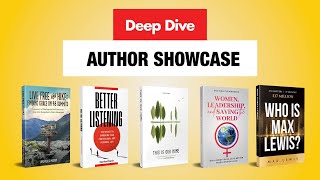
Julie Broad hosts four authors discussing why they wrote their books and how they published them. Stan Sloven, Trent Romer, Linda Magoon, and Max Lewis share writing tips like outlining and time-blocking, their experience with Book Launchers for editing, and strategies for marketing through podcasts and book signings. Julie also demos AI voice cloning tools for audiobooks.
Chapters
Hello. Happy Saturday. I am just hanging out here waiting for our special guest authors to arrive. So while we're doing that, you guys can all say hello in the chat. I see Jack has said hello. Suzanne, Kevin, black market leadership in Scottsdale, Arizona. Hey, I know your face. And Darla. They're all here. Hello and welcome. Um, yeah, so right now, it's a little strange, but none of my authors have arrived. So I don't know Angela, if you can check on it. I don't know if people are having technical difficulties, but Angela was able to arrive. She's hanging out in backstage, so not totally sure. But in the meantime. And we also have let fear bounce, tossing out nuggets of hope. Welcome. In the meantime, a couple updates for you. I was. I was doing. I prepped a video shoot and did a video shoot yesterday, and for that, I have, I think, pretty successfully cloned my voice and have been able to. I haven't finished producing the audiobook version of More Than Cash Flow, my very first book, but I started, and I have four chapters done, and they sound pretty darn good. I. I let my husband listen to it, and he listened, and he was like, is that you? So he wasn't sure. Like, so it's really good. He couldn't. He was not certain that it was. It was not me. So it's not 100%. But, you know, I'm not trying to clone my voice so that it passes off 100% as me. I just want it to be a good listening experience. So. So that's kind of cool. So I shot a video that will be coming out probably in May that walks you through how I cloned my voice and how you can produce an audiobook, you know, with. With the tools that I did. And the cool part is that you can. You can't sell it. So the uncool part is you can't sell it on Audible or any of those places right now, but you can, you know, upload it to Book Funnel and sell it on your website and sell it and give it away for free if you want, or whatever you want to do with it. And there are some platforms that you can supposedly upload your own digitally narrated content, too. But I haven't gotten so far as to finish the book so that I can test that part of it for you. Google Play is one of them. Apple Books, supposedly. But Apple Books interface is a nightmare. I want to cry every time I try to do something inside of that interface. All right, Efren's here. Thomas is here. Michael Harris. Hello. Welcome, everybody. We still don't have our authors, so. So something's wrong. Can you call them, Angela, and see what's going on? Yeah, I can see. I can see you. Hold on. I'm going to bring her to stage here.
Yeah, I'm actually. I was just going to turn my camera off so that I can give everyone a call, but there's no emails in the inbox either from any of them. So I'm going to give them a call real quick.
Yeah, it's strange. So there's obviously some sort of a technical glitch because all four of them not being on is very strange. So in the meantime, do you guys have any questions that we can talk about while Angela goes and sorts out our. Those poor. The poor. The poor folks, they're probably hanging out somewhere and it's not working and they're wondering why. Why it's not working. So, yeah, Efren's like, I'll fill in. Sure, you can come on on Efren. I can text you the link in the meantime. So. So, yeah, so questions? I don't think there's any questions yet, but if you guys have questions, you can go ahead. And in the meantime, you know what we'll do? We'll do an early bird arrival prize. So let me go ahead and share my prize screen. So if you haven't commented yet, now is a great time to go ahead and comment. And Am I cloning using AI? Yes, I am cloning using AI. There's three different tools that I tested and there's Be Human, which is B, and then Human Descript. And also, sorry, I'm doing two things at once here. Here we go. Descript and then 11 labs. And I think, you know, Descript is, I think, a more robust tool. But eleven Labs has now done a lot of updates and they are. And they now have it really set up for audiobooks, so you have to pay for the higher levels. But when you do that, you are able to really set your book up and produce it in a pretty high quality. Now, there was some funny glitches. And so again, I shot the video and I walked you through the video took hours and hours to make because I was doing it while I was creating the video. But anyways, I think it's really cool. And again, you can't really sell it anywhere, but it gives you the option of producing it. And to me, that makes a great launch. You know, launch week giveaway. Hey, you can get my book. And it's still in your Voice. It still sounds pretty darn good. You know, it's not 100%, but I don't really want my voice to be cloned. 100% personally close is good enough for me. Okay, so if you haven't already commented, I'm just delaying. I'm going to hit this button and we're going to have an early bird arrival prize while we're waiting for the speakers. So there's 14 of you in here. And here we go. Let's see who our first prize of the day is. Oh, I thought it was going to be effort again. Although Darla wins all the time, too. But Darla, congratulations. So we will be giving away a copy of all of our author's books today, each of the authors that will be joining us today. So you'll get to know them. So you can. You can wait to choose from one of those books. Or of course, we always have our hashtag no boring books mug. Our. Oh, so soft journal or copies of Self, Promote and Succeed, which you can see over on that side. And Self. There we go. Self Publish and Succeed. Sorry, My. This. This mirrors. It's kind of funny. Okay. And so you can email Angela@teamoklaunchers.com and. And she will. She will send you whichever prize you choose. And like I said, you can wait until after you've met the authors and. And seen their books. I see Angela's back, so I'm going to bring her on stage and get an update.
Yeah, so Trent's the first person I called. He is backstage as well. So he said that only you can see him. At least that's what it's showing for him.
I don't. I don't see him.
Does it. Is there something then perhaps that solo layout. Okay, I perhaps will hop off and hop back on and see if that's also the case with the other authors as well. He's just the first one that I called so far, but he says he's here, so it's just. He can't. You can't see him? I guess so.
No. So make sure he's using the same link that you used to get in.
Yeah, because he's saying the same thing that I was seeing. Like that the host can only see you at that point until you put my screen up here. So, yeah, let me hop off and then hop back on and see if I see any glitches. So I'll be right back.
Cool. Check my permissions. I mean, we've done this so many times. Sue, I don't Know what my permissions would be? But we've done this, like, a lot. I don't know why it would have changed. Let me just make sure. Yeah, it looks like Stan is having the same issue. Okay, this is fun. Always a good time. It does sound like a setting issue, doesn't it? It's very. It's very strange. But Angela was able to join. Let me just check the settings. You're right. So this is where I need an effort. Oh, I was going to send Efren the link so then Efren can carry the show for me while I'm sorting this out and getting our guests on. Thank you everybody for your patience. And I saw somebody. I saw somebody ask about the. The email for the prize drawing. So that's only if you win. You only need to. Oh, there's Stan.
So that.
That link worked. So there must have been something wrong with the other link. So here we go. I'll bring Stan on in a second. And so. So there must the email. Sorry, so many thoughts all at once. Just ground myself. Okay, so the email is TeamOK launchers.com, but you only need to email that if you are selected as a winner. If you email that and you haven't won, Angela will politely reply, but it won't get you a prize. The. The way to win prizes is just by commenting. And then at various points we'll say, hey, here's a question or here's something. And then we randomly draw from all the commenters and then we also will pick somebody's. Somebody's comments at various times too. So that's fantastic. And. And we will go ahead and bring Stan on. Hello, Stan, it looks like you're in the car. Where are we going?
Hi, Julie, I'm downtown Chicago today.
Do you have your book? Are you going to be able to introduce it and showcase it?
Absolutely. I'm so excited. In fact, I think I can drive and have. I think. Yes, I have it. Yay.
Fantastic. So do you want to. Since you're the first one that we were able to get on, because we had some sort of a weird technical thing this morning, do you want to go ahead and introduce yourself and introduce your book to everybody?
Sure, I'd be happy to start. First of all, thank you so much for having me on and I'm really excited for a fun conversation, so it's very exciting. So my name is Stan Sloven. As Julie mentioned, I am in Chicago, Illinois, and I am a new author. My book, which is called Better Listening. So this is what it looks like the secret to improving your professional and personal life. So came out in September of last year, and with the amazing help of book launchers, we were able to bring out the book. And basically, if you want, I can just briefly just tell what the book is about.
Please do.
One day about 10 years ago, I realized that the world was kind of busy and everyone's multitasking and our attentions were short and we're constantly distracted. The world is just full of distractions. And I realized that conversations were starting to really get lost in terms of that. We were just cutting each other off all the time. We were constantly thinking about what we wanted to say while other people were talking. We were hijacking conversations, and we were really not letting people, you know, really empty their buckets. We were like, listening to respond versus listening to understand. I thought, you know what, boy, we need a book on better listening so that we can create just more impactful conversations, just have more meaningful dialogues and actually deeper discussions. And I thought that would be a great way to help not only people in the professional world, which is I'm in the professional world for 31 years, but also personal relationships that really just the cry for being heard more and just helping people just have a better communication with each other. So that's how I get it.
I love it. Thank you. And since we still have you, we can just keep shining the light on you, if that's okay. And you got lots of congrats in here. There's some people that are very excited that you're in Chicago. And some people are like, why is he in his car?
It's my favorite office. It's my best office, by the way.
Yes. I'm just thankful you were able to make it work. So thank you. And lots of people are saying, congrats on being an author. And then somebody said, may we know what Stan's profession is?
Yes, I. I've been in the wealth management, investment banking for 31 years. So I've been around a lot of relationships. Individual investing, corporate investing, institutional investing. And honestly, you know, not just in our industry, but in most professional services industry, it was just so evident that over the years, I just realized that, you know, people were just not great listeners. I think we're all good listeners because if I didn't say that in the book, no one would buy the book. So we're all good listeners. We could just all be better. And it really also was interesting and with the help, and I'll share this later with book Launchers, the Marketing of the book. Afterwards, the title of the book found itself in the leadership category. So there's a lot of leaders that want to be better listeners, more effective, more efficient, and more communicative with their, you know, with their projects and people that they're working with. And then I also realized that better listening also fell into the inspirational motivational and. And then the personal relationships. How to make your relationship better by having better listening skills. So that's kind of like what happened after the book. After the book was published.
Fantastic. Thank you and welcome, Linda and Trent. Sorry for whatever weird little glitch thing's been going on today. Don't know. It's all part of the technology adventure, isn't it? Glad you guys were able to make your way in, though.
Yeah. It's also like writing a book. Right? Like it's never. It never goes smoothly. Right. You just gotta figure it out. It's all good.
Exactly. So. Well, while you're talking, Trent, if, if you're okay, I'd love to turn it over to you. Just have you introduce yourself and share a little bit about the book you've written.
Super. Yeah. My name is Trent Romer. I wrote this is Our Home and it's a sustainability story to help you start your own eco friendly journey. And the book is really meant for people who feel like they want to do something in the environmental space, but they feel overwhelmed by the challenges. So the book helps you to think, to act, and to communicate in a more sustainable direction. And the book is not written as a scientific book. It's not really a how to book. It's written as a story. And the story goes to a town, a small town that's been marred by environmental degradation for 50 years. And that town happens to be my hometown. So it gave me a chance to go back and tell the story of my hometown and, and the effects of environmental issues and then some really good findings that come out of that to help people.
Fantastic. And I just completely removed him from stage. There we go. Sorry. It was nothing. You said. Thank you so much, Linda. I muted you because your cat was getting talkative, but we'll bring you back on. So would you like to please take a moment and introduce yourself and your book? Oh, can you hear me?
Oh, sure. Thanks, Julie. It's great to see you and thank you for having me. I appreciate it. Yes, can you hear me?
Yeah, I can hear you. Now. There was this. There's a delay now.
The cat has left the room. Oh, perfect.
All right.
My name is Linda Magoon. And I am the author of Live Free and Hike finding grace on 48 summits. And the title is a nod to the New Hampshire state motto, which is Live Free and Die. And in my case, I used it to title my book to symbolize the fact that I left an abusive relationship very late in life, in my mid-50s, and set a goal to hike these 48 mountains in New Hampshire that are 4,000ft and higher. So hiking these is kind of a thing, like hiking the Pacific Crest Trail or the Appalachian Trail. If you complete your goal, you get a little patch and a little certificate suitable for framing. And after my divorce and found my freedom, I rediscovered my love for hiking and set about to write a book for others who are in a similar situation to learn from from what I was doing. Hiking to heal took on a brand new meaning, though, when I discovered that my husband had been arrested for some pretty unspeakable crimes, some of which he committed while we were still married. So the book is a little bit of memoir, a little bit of self help, and the finding grace on 48 summits. I'm just going to leave that as a cliffhanger, and you can read all about that.
Great. Thank you. Let's see. Oh, and there's Max. Just got here, too. All right, fantastic. I'm going to bring Max on the stage. And it's perfect timing, Max, because everybody else has introduced themselves and their book, so it's like you arrived just in time so we can say hello to Max and please introduce yourself and your book.
Hi, everyone. I'm Max Lewis, the author of who is Max Lewis? 37 chapters, 37 lessons, 37 million. It's an autobiography on how I basically started a business from scratch, grew it, and ended up selling it for $37 million. All the challenges and obstacles that I had to overcome to achieve that. And the book is written a way that it's one part my story, another part of practical workbook, as Julie would say, that engages the reader and gets you to kind of work on your own challenges and help you accomplish your own goals in life and in business.
Fantastic. Thank you. We have a couple questions for you guys, and then I have some questions to ask as well. So the question, and I kind of feel like we should just say maybe you'll win the book to find the answer. But, you know, Liza said, have you been on 48 summits, Linda?
Why? I have the certificate and patch to prove that I have. So, yes.
And you've got fans of your chair, Max.
Thank you.
Might as well have some fun. Right?
Right. I love it. I love it. It's very cool. All right, so the first question. And we might as well go in the same order that we introduced ourselves in. So we'll start with Stan, but, you know, I want to ask. And anybody watching, you're welcome to ask any questions as well. And we'll. We'll have time at the end, but we'll bring them in as they kind of fit with what we're talking about as well. But the question is kind of, what's the best thing you did in the entire process? Whether it's something that worked or a problem that you solved in a way that that other people watching and listening would benefit from. So, Stan, I'll turn it over to you.
Okay, sure. Well, first of all, before I even answer, I just want to say congratulations, obviously, to Max and to Trent and to Linda. Book also. But it's great. It's great to be on because it's just. It's so fun to share collaboration, you know, with especially new authors. You know, I would say, so what was the most important? What was the key thing? I would say that I learned a lot about myself. I really did. This was a new process. You know, all of us, obviously today, we've had our successes in areas, and then we wanted to put it down on paper. We wanted to become that author. And I would say that I probably really needed to hone in on understanding that it was a new process. So I had to learn to compromise a little bit more. I had to learn and relearn about patience and understanding, because that was not my world. Writing a book, you know, when you put it in hands, especially, you know, with a company like Book Launchers and Julie's team, which was, again, it was phenomenal. You have to learn that that's not your life, that's not what you're used to, that's not your profession and how you handle things like, you know, Max, you know, how he did it with his business. And so all of the. We have to step back. So that was one big, big thing, was the patience, the compromising understanding that it was a new world. And also the last thing was trust. You know, I really had to learn how to a new area. I'm very trust. I'm very trusting. And sometimes that's a good and a challenge. But you have to trust those that were taking you through this process. And the key thing was for them to be able to communicate those steps. I think those are the three big things. Trust, communication, patience, and A little bit of just understanding, compromise.
Wonderful. Thank you. I love that Linda is drinking from her no Boring Books mug. Trent, I'll turn it over to you now.
Yeah, I think when you sort of begin this process or begin to think about writing a book, you have sort of this mind dump of sorts where you're just writing a lot and you're not quite sure where it's going. And one of the things I picked up early on with Book Launchers and Tim Test at the time was writing. I started to really look at it about. It's about selection. What actually you include is only up to the author. Now you can have help, and that's where Book Launchers really help me. But I really began to think about everything that I wrote as selection. I had to select the pieces that made the most sense. And what it really did is started to make me think of myself a little bit more as a sculptor. In other words, I had all the information here and I just needed to chip away the stuff I didn't want. And then I sort of slowly but surely ended up with the thing that I really did want. And that. That mindset of selection and sort of learning or thinking about it more as a sculptor than a writer sort of gave me the freedom to write as much as I wanted, but then sort of chip away and realizing that's part of the process. So the. The Book Launchers team really helped me sort of figure that out, and it gave me a really good direction as I moved forward.
Oh, great. Thank you. Yeah, I really like that. Linda, what do you have to share about what you did? I know you've had quite a journey and I love seeing your pictures.
Thanks, Julie. So I'll share my writing process with your viewers.
I think of.
The Stool is the actual writing part, where we're in a room by ourself, typing away and the words are flowing. And the second leg of the stool is the publishing end, and the third leg of the stool is the marketing. So you need all of those pieces for the stool to stand up. And what was crucial for my success in the writing process was that I had two amazing critique and accountability partners who helped me get that first draft in such a manner that I could send it off to Book Launchers or content editor and feel good about it. I mean, it was just an amazing experience to finish that first draft. It was almost like childbirth. It was so exciting to type. The end, where Book Launchers came in for me was this second and third legs of the stool, the publishing process and the Marketing. I had a publishing contract. I had submitted my manuscript to a publisher. I had a publishing contract in my inbox. And what happened is that the. I don't know if the. If the owner of the publishing company was having a bad day or I was having a bad day. But when we talked about it, when we connected to talk about it, we just weren't on the same wavelength. I felt that my questions weren't being answered respectfully. I felt this. This was a relationship in which they were superior and I was almost inferior. And I felt my chest tightening. And I thought, wait a minute, this is what I was married to. I was divorced enough now. And I knew what a controlling relationship looked. I was like, I'm not signing up for this. And so that's why I signed up for book launchers. And the relationship between the author and the book launcher staff, your business partners, they're on the same level. They will walk you through, step by step, what you need to do to publish and market your book. And you really need those all three legs of that stool in order for your book to be successful and to be out in the world. So I thought of us as partners. We all had the same goal. And there wasn't this like master slave relationship where I was working for them and that was instrumental to having the book launch.
Great. Thank you. Yeah, it was. I talked to somebody yesterday who. He had a. He had a publisher 10 years ago, and now he's self published his book. And we were talking about book marketing and he was saying. He was saying that it was weeks after his book was out that he actually realized he could take some of that content and use it to promote the book because he owned the content. And it sounds so funny to people if you've never read the contracts or you're gotten to that point. But, you know, he said, I was so limited with what I could do with my book because they owned it. And he said, and now he said, I'm kind of feel like I'm in that bad relationship even though I self published this one. He said, I've. I'm like, I'm harmed from that past experience. He said, I'm trying to undo the things that I was kind of stuck in last time. So he was like, suddenly he's like, I realized I can market with the material in my book. And yeah, it was just. It's interesting how a lot of people don't realize how they don't realize it till after. And you realized it before. So that was very. I think that Was very good to hear. Max, how about you? What's been. What's been a lesson or something that's gone really well for you?
Well, that guy had ptsd, right?
Yes, exactly.
So what worked for me in writing the book? And I think that was the question, right? Like, what worked for me?
Yeah.
What worked for me was setting apart the time to write and getting isolated. So for me, I. I went to have another home in the Keys, and I just isolated myself, like, from everyone, from the world, my girlfriend, dogs, everything, just so I could have that complete peace and quiet and not get distracted or thrown off. You know, when you're having a. When you're having a good day writing, you know, you could. I mean, speaking for myself, I could write for 10 hours. And then when you're having a bad day, you know, you struggle to write for one. Controlling the distractions was huge for me. So creating that isolated environment, turning off my phone, really knowing that no one was going to disturb me was probably the best. One of the best things I did. Another thing I did, which I don't hear a lot of people talking about, maybe they don't do it, but I was really focused on my diet at that time. Actually got in amazing shape writing my book, because in the beginning, I started noticing I was eating a lot of junk food. And I said, you know what? I can't keep going down this road. I said, all right, let me create a diet. I got like, a. Like a really healthy diet plan. I had the food set up on my counter. You know, everything was there, so I couldn't make any, like, impulse decisions or order any food. Like, I make my. I'd cook my food and kind of have it all laid out. And as time would go by, an alarm would go off to remind me to eat. Because, you know, again, you writers know you. I'll forget to eat. You know, hours would go by, I'd forget to eat. So timer would go off. I had to grab my apple or whatever it is, keep going at it. And I also made sure that I exercised in the mornings so that I didn't feel just, you know, you're sitting in a chair, sitting in front of a computer all day long, 10, 12 hours a day. You know, it could take its toll on your body. So another thing I did was I made sure that I exercised every morning before I began writing. Those were pretty much the main things I did to. To. To write my book. Another thing is. Well, what helped. Well, I'll save that for later. I'll save that Tip for later. But those are the main ones.
Awesome. Thank you. Yeah. One thing I think, exercises, something people don't bring up very often. But I also think that when you're stuck and, you know, we often tell people when they get their content edit back, as an example, because content edits can be a little jarring for some people to get the feedback. You know, it can feel like you're being judged when really, you know, especially when you're working with us. Our editor's goal is for your book to be as good as it possibly can be. So that when it goes out into the world, you know, anybody reading it is not judging it badly. Right. They're reading it and getting the benefits from it that you want. But it can feel like personal judgment when it comes back. So we always tell people, go for a walk, go for a run. Like, go get some exercise. Get your body moving. Because everything feels different after some work, after some exercise, after you've worked out.
So I used to call those nature breaks, Julie. Nature breaks.
Nature breaks.
I'm like, all right, I need a nature break. I go out, walk my lawn or something, and then come back in, get back to it.
Exactly. I like that. I like that. Incorporate nature breaks into your journey as an author. Not just in the writing, but in the whole. Even when you get your covers, you know, before you make a decision on those, I think it's really important. So that's fantastic. Thank you. I'm going to actually bring one of these questions up here. I think this is a really cool one, and I won't make everybody answer, but if somebody wants to share, what was the one thing that prompted each author to want to write a book? So if you. If you have an answer, you can just hop right in and go ahead.
You know, I'll say. I'll say that that was a question that actually book launchers asked me. It's like when. The very beginning. So it's a great question because you think you have a quick answer, but then you have to kind of reflect a little bit and think about. And I gotta tell you, the one thing is, we all want to write a book, okay? Everyone wants to write a book. And we know that 99.5% never get the book written. So number one, that was one of my goals is that I wanted to just. I wanted to always be an author. The second thing, which was interesting is that I felt it gave me a little bit more credibility, not only in my industry, and now I've realized afterwards, even around my friends, my Colleagues, my community. If I go on a speaking circuit, if I'm talking, there's that credibility of being an author, you know, being, you know, being a published. A published writer. And then the third one, which was, I think the most important is that I did it because I. I wanted to give back. You know, we're always trying to think of ways to pay forward. And again, I know it's fiction versus nonfiction. You know, mine obviously is a little bit more of a relationship self help, but I wanted to do something that I thought could maybe help someone. And I'll share a very fast story. One of the things that we're promoted to do with book launchers, which is incredible, and we'll talk about this later, is getting a. Getting reviews. And I had a review from a CEO that was flying home and said, stan, fun book, Love the better listening. Caught a couple tips, blah, blah, blah. And then he says, he types, he goes, but that's not the review. I was home and I was sitting at the dinner table with my daughter, and she started telling me about some of the problems of work and at school. And I was about to give her parental. I think the word was pontification, when I stopped. I paused, I reflected. I wanted to clarify, I wanted to hear a little bit more. I looked at her and said, tell me what else is going on. She goes on for 15 minutes and I'm about to answer. I said, well, what else? And she went on and got up from the conversation and finished, gave him a hug and said, dad, thank you for finally listening to me. And that hit me as it wasn't a big company, it wasn't a big conference, it was a father and daughter having a situation that we all have, we all have in our relationships. And it hit hard. And just from the book, he took a couple tips and made him a better listener to his daughter that day.
So I love it. And I think, I mean, that kind of also, I think, ties to a question, I think, who was Michael Harris asked about, you know, what's one of the, you know, one of the big successes from your, from your book and your experience. And it. Whenever I ask questions like that, very rarely does anybody ever go to the money. It's almost always somebody's life or a review that they got or somebody's life they've impacted with their book. So I. I love that story. Thank you. Thank you. Anybody else want to share what prompted you to write your book?
I can say that I never, ever wanted to write a book. Honestly. It was never something that I wanted to do. And people kept suggesting that I write a book, and I thought that was interesting. But I didn't go to college or anything, so I don't know. I just wasn't a great student, let's just say. And when people. When Covid happened and I had nothing to do, I said, you know, let me look into this and let me just try. You know, It's. It's a new challenge. It should be exciting. I've heard that people take a year or two years to write a book. Five years. And that's bullshit. I'm gonna do it in three months. Boy, was I wrong about that. But, you know, but. But, you know, it was. It was really fun. And. And what I learned through that process. In the beginning, I didn't really know what I was doing. I was like, all right, I. I bought a Dell laptop. I kind of had to teach myself how to type, which took quite a while. And in the beginning, I was, like, a little confused. I was, like, writing my story, like, okay, this happened. That happened, whatever. And then maybe around the third chapter, I was like, man, I could provide a lot of value. Like Stan was saying, like, there's. You know, you could. There's things you could teach people. There's. There's things that I've experienced that are very natural and come second nature to me because I've experienced it, and it's my life. But there's. There's knowledge that you can impart on other people, you know, that could be useful for them. You know, like these parenting tools that this guy picked up. So, you know, that once I realized that, I said, man, there's a lot that I can teach. And it became a really fun for me, and I started taking it very serious.
Great. Thank you. All right, so I'm going to go to my question. My next question for each of you. And since Trent hasn't. Will kind of go to Trent next. What is something that you would do different on. And this is actually a fun question for you because this was your second book, right? If I'm remembering, it was.
Yes. Yeah, yeah.
So what would you do different on book 3?
I want to go back to the previous question, if I.
Please. Go ahead.
So it's funny you should know these answers. The reason that you started writing like that should just roll off your tongue. But each time, you have to sort of think about it, because so much transpires in the interim since you started. And my book is about. Really about my hometown, where toxic waste was dumped in a Nearby Lake from 1952 to 1968, and it killed Nassau Lake and has really put a black mark on the entire area for the last 50 years. It's still not cleaned up. The lake is still silent. And so the environmental degradation part of it has is as it was when I was a boy. And I didn't really understand it. And I think I wanted to know more. I wanted. And I feel like you completely understand something or you have a much better sense of what something is when you write about it. When I write something down and say, this is really what transpired, as far as I can tell, and then have a reaction to that. So I really wanted to fully understand what transpired and what's happening now. And I felt like the best way to do that was to write about it and hopefully help people understand it more and sort of chart a path forward. So that's sort of the reason I wrote this second book. And moving forward, I think writing a third book is something I didn't do in the first two, which I could have saved myself a lot of time. I never really wrote a extensive outline, and I realized how important that is. I kind of just started writing and didn't really have a sense of the story I was trying to tell. And I think I would spend much more time on writing that outline. And one of the things that book launchers really helped me think about, and I like writing stories, so it sort of has a beginning, a middle, and an end is writing to a point. And when you think about three quarters of the way through the book, usually the story has some kind of climax. And when you figure out what that point is, you can back into that. And I think those two things will really help me moving forward.
Great. Thank you. I was worried about Stan there for a second. I heard car horns. All right, Linda, I'll turn it over to you. And if you want to answer why you wrote the book and also what you would do on your next book differently, that would be fantastic.
Yeah. So, like the others, I. I enjoy writing. I always wanted to be a writer, and I set out to write this book initially. It was initially meant to be funny about this woman in her mid-50s who goes, you know, hiking. And on one summit, I. My pants almost get blown off. On another summit, I get lost. And. And it was meant to be funny, and there are funny parts in it, to be sure, but it definitely took a different turn, as your. As your readers may know. What I would do differently is I like the outlining idea, and I would build all three legs of the stool at the same time. So I would be working on the marketing piece at the same time I would be writing my draft, because they really do intertwine, and that's what I plan on doing with my second book. My. My first book is. It's about hiking, and you don't have to be a hiker to. To like it because there's many other life lessons to be learned. But what I'm finding in my marketing is that hikers like to read stories about other hikers who've died. So if you haven't died or aren't part of a search and rescue, then it's kind of. It's, you know, it's okay. I find that my book resonates women, especially women who maybe have left or in abusive relationships and women in midlife. So my second book is going to be about a true story in the White Mountains where people die. It's a plane crash, and it's a story about survival and about resilience, which resonates with the theme of my current book. So. So what I would do differently is definitely work on all three legs of the stool at the same time and not be so laser focused on the draft and say, oh, I've got to sell this thing. Oh, I'd never thought of that before. And outline.
That's great. I mean, that's part of why I started Book Launchers is so you're not alone. There's so many authors that write a book and then go, oh, okay, my book's done. Now I'm going to sell it. And it's not that you can't do that, but it's that you're not necessarily set up for success with the marketing, and you've missed some pieces. And I tell. A lot of people come to us with a finished book, and they're like, here, market it. And I'm like, you might not like what we need to do first, because we're probably going to have to take two steps back before we can take that step forward into marketing. Because you didn't think about marketing before, but some authors will be willing to do that. And you know that. That, that works out great. So it's okay if you're that far along, but. All right, Stan, what would you do differently on book two? Oh, and I'll unmute you here. Sorry. There we go.
What would I do differently on book two? Wow. Well, first of all, you know, to Linda's point, I like that I would definitely be thinking about the world after the publishing of the next book. So I will tell you that I think that life begins not really on getting your book published. And again, I view it. I'm very sports oriented and I kind of think about football all the time in terms of the red zone, getting it over that goal line. And I think that that's one of the things that sometimes new authors are focusing on. They're so close. They have the draft, they're in the process like that, but they're just not getting it over the goal line. It's taking time and you need help. And this is where again, our friends from book launchers. You know, I think that's. That's how I viewed it is like they got me over the goal line. They literally got me published. But that really was just the beginning of my journey. That was not my goal only was to just get published. It was to really figure out how to get that message out. And I think that if I did book number two, I would realize that you have to have a partnership with your publisher. You can't rely on your publisher only to do your marketing. And you definitely cannot rely on yourself because you don't have necessarily the expertise. Even if you have 80 to 85% of expertise in marketing your own book, there's always that 15 or even 20% that you don't even think about. So, for example, podcasts. I don't do a podcast, but I've been on already seven to nine podcasts and I would have never been able to do that unless I would have had avenues getting your book on Amazon and different distribution lines. Yeah, you could figure it out. You could do research, but you want to. And if I did my second book or when I do my second book, I think that the process is going to be quicker in terms of after the writing. In fact, that's what I would take away from, you know, if your audience took something away from publishing, that's just part one. Life begins after that book. And I think that I would do differently is I want to work on how do I get that book out. Whether it's podcasts, speaking engagement. Here, I'll give you another one. Book in the box where book launcher says, hey, do a video of opening your box on the day your book arrives. I thought, oh, God, that's so stupid. That's so hokey. That's so corny. That's like probably my most viewed thing on my website. Okay. Is everybody seeing the excitement of Stan opening up Better listening? Okay. Because you get to tell this excitement because people Want. They really do. People love to share in your excitement. They want to share in your journey. The other thing is think about also your network of friends and your marketing of friends and family who you want to book launchers and Julie, help me again, what's it called when you're reaching out to your. What's it called? Your war book?
Book army.
Your book army. Yeah, that book army. I would go over that video over and over and listen to Julie's video and this team's video because it gets you out on Facebook and social media, all the different avenues that you're not used to. Necessarily, necessarily because you're a first time author, you've never really promoted. So that's what I would do differently. I would be thinking about marketing your book army, how to get it out so that when it does get published, that's the beginning of the fun journey, not, not the end of the task.
Fantastic. I heard you go, if I write. No, when I write my next book. I heard that.
Well, that's because of you, Julie. That's all because of you.
It is. I mean I admire those people who can write a book and then like, like churn them out.
Right.
Like some people just write books constantly. I kind of need a couple year break in between each of my books. But it seems inevitable once you write one book that there's going to be another one. It's like, it's kind of addicting.
Yeah. Anyway, one last note real quickly about book technique. The other thing that I would do differently is sometimes you get caught up on the font or the size of the chapter lettering or the colors or the front cover, the back cover, you know, all those things. And that could like literally put you back possibly. I mean this almost a month or two months. Sometimes you really need to like let it go and realize that, hey, let, let your publisher let Book Launcher help you on the actual framework and, and the guidelines and the font and the, and the, in the. What's it called? The formatting. That's the word that sometimes really catches. People don't get hooked on that. In fact, I won't tell the story today, but I got mine solved in literally one week. That's because mine is very similar to Julie's font and tag setting. And I just said do how she did, you know. So what my point is don't, don't get caught up on getting yourself back on some. The little details that really stop the process. The bigger picture is, you know, getting it promoted once it's, once it's published.
Fantastic. Thank you. Max, what would you do differently on book two?
Okay. Well, first, I put less pressure on myself to get it done, because I think I put too much pressure on myself, and I'd have more fun.
Because.
It was really fun. But I'm this type of person that I want to get everything done yesterday. So there was some times where I made it not fun, which is unfortunate, but I kind of learned throughout the process to kind of chill out and have fun with it. So I just. Going into it, I know. Have fun with it and don't rush it. Secondly, something that really, really helped me at the end of writing my book. My book is 37 chapters. Some are very short. One page, couple pages. But when I got to, like, chapter 30, 31, I wanted to get it done. You know, I was, like, tired of writing, and, you know, and I said, you know what? I'm gonna try something different. I already knew the story, right? It's my story. So I put the talk to text feature on the laptop, and I said, you know what? I'm gonna. I'm gonna do an outline of what happens in these chapters. So I just spoke it, you know, and it was a super, super rough drafts. You know, I just. All right, chapter 31, okay, this happened with this guy. This happened. Boom, boom, boom, boom, boom. Okay, bam. Chapter 32, this happens. That happens. This girl goes here. That guy goes here. I make this money. I sell this. You know, Like, I just. I did that. It probably took me 10 minutes. And the weight off my shoulders was incredible. And it also just really helped me just, you know, fill in the blank, or I was, all right. The book is basically here already. You know, like, my rough draft was done, which. I didn't have a rough draft. I was just writing the story, which took very. It took a lot, a lot. It took a very long time because I was very naive in thinking that, you know, once I finished the chapter, it was done and I was never going to go back to it, which is cool. You know, you have editing and, you know, there's always, like a million edits that you do. I think when you finish a book, at least in my case, that's. I've done so many edits, but so just speaking it out was incredible because I had it there already. You know, I used to have this thought when I was writing. I was like, man, if something happens to me, the book is not going to get written. You know, the story's not down. You know, so. Especially after putting so many months and months into writing It, I was like, I just, that's, I think where a lot of that pressure came from. I was like, it's not done. It's not done. So doing that, speaking to text and having the book like out already, I could relax after that. I was like, okay, cool, it's here. Now I just have to make it make sense and write it better. And you know, that was extremely, extremely fun for me. Another thing that I would do differently is I would give away the first, I don't know how many copies or make it extremely cheap for reviews. You know, I sold my book from day one and I sold a lot of books. I've sold thousands and thousands of books, which is awesome. But I got to Amazon, like I got to number three on Amazon, which was, was really good considering the categories that I was in. I'm in like the big categories. I don't put like underwater basket weaving to try to get, I don't do.
Any of that stuff.
So getting into to top three was huge. But I never made it to number one. If I would have done underwater basket weaving, I guarantee you would have got one. And I think if I would have put the book either very cheap or free for that initial launch, I guarantee you I would have gotten number one. But we were selling the book for like 1799 or something like that, so it was great. But I was a first time unknown author, so, you know, trying to get to number one in huge categories. You know that that's what I would have done different.
Great, thank you. And you actually, while we're, while we're talking to you, I think you're the only one here that has done a Spanish translation of your book. Do you have any? I don't know, I'm kind of throwing this one at you just spontaneously. But do you have any kind of tips or thoughts on doing a translation of your book?
Well, when I started, which by the way, we haven't even promoted it yet, we're about to start, we have Spanish actress or something that's gonna promote the book and hopefully that'll start to take it off and I'll probably lower the price now that we're talking about it. I should make a note of that. Give it away or whatever. So at first I said I need a translator and we started researching translators. I saw was like $4,000. I Dude, that's ridiculous. Put it in, put it in Google. Google Translate. Google Translate translated my entire book in 10, 15 minutes.
Wow.
400 page book. So it did the entire translation, but the translation Wasn't great. So I kind of went back and had to. I didn't, I didn't have to, but I did because I'm a perfectionist. I, I ended up hiring a translator to, To. To do it. It took them months, took them like three months. But I was much more happy with that result because, you know, Google, you know, it's. Some translations were very literal, some you didn't understand that they didn't really make much sense. So I did that. It cost me more money. But I don't know if you guys are like me. I mean, you spend so much time, hours and hours and months and months, years of your life trying to write something. I think you, you owe it to yourself, to your audience to just do it the right way, you know, so that was my experience with that. And that book will probably. We've released it, but it hasn't been like, promoted at all. We're going to start promoting it soon.
Great, thank you. And the Community Positive Project is asking, excuse me, how long did you work with Book Launchers before your book was ready to launch?
My book launched. I started with Book Launchers after it launched. And it was like a breath of fresh air because I did everything myself, which was a lot of pressure. And again, I didn't know what I was doing. So I was like, learning. And it was very frustrating because, you know, I was learning and, you know, like, I don't know about you, other authors, but, like, for example, I'd write a chapter and let my girlfriend read it and she'd be like, oh, it's great. And I'd be like, you're just saying that chapter sucks. Yeah, I gotta rewrite it, you know, oh, it's a phenomenal book. I'm like, ah, she's just saying that she's my girlfriend. But anyway, I had like that kind of experience with all the different hurdles and challenges. And once I found Julian Book Launchers, it really took another weight off my shoulders because I felt, okay, I'm dealing with professionals, I'm dealing with people who have done this before. They had the answers to all the questions that I, that I had been asking myself and other people for months on end without getting really any positive results. So it really helped me. Obviously, if I could go back in time, I would have started working with them before, but I actually had already launched my book before I started working with them. And I'm very glad that I started working with them because if not, I don't know where I would be without Julie and the team.
Oh, thank you. That's sweet. So, yeah, so Max is one of those rare beings that was okay going two steps back for us to go forward with him, and, and that allowed us to help him do a lot of things, a lot of great things with his book. One thing you did do, Max, that I thought was phenomenal, that was before you came to us, was you created a really amazing looking box so that when you sent somebody a copy of your book, it looked amazing. Do you have. Do you have one right there you can show people?
Yeah, this perfect black box, right? And you open it, it's got a letter. I don't know if you guys can see it, but it's got a letter that like a cover letter will go out to whoever it's going to. Then it's got these three questions that kind of go out through the book, which is, what do you want? Why do you want it? And what are some of the things you can do to get what you want? Then there's the actual book, which is here, gold. You'll pull this little tab. And then there is this box that has like a little magnetic clip here. You open the book and it's got. Wow, my mirror. It's. It's a very expensive book, by the way. It's very expensive. It's got. Everything's like gold leaf. It's got gold pages. There's a lot of like fancy materials. Paper. It's really, it's honestly. And I. I mean, and I picked all this stuff I think Linda was saying earlier. I'm not sure who was saying it, but like, sometimes you get hung up on picking the materials and, you know, this ribbon, what color. I mean, I agonized over what color this ribbon should be. What color black should this be? What color gold should this be? All this stuff took a lot of time and energy. Atomy. This mirror that I got from China. Bookmark. But so, yeah, I was saying it took a lot of energy out of me, but everybody I hand this book to tells me the same thing. Is the nicest book I've ever seen in my life. And that's what I was going for. You know, I wanted it to impress people before they even like, read the book. You know, they say you can't judge a book by its cover. Well, you're right. You can gain a lot of interest by having a really nice cover. Right. And a really nice subtitle and things like that.
Awesome. So awesome.
Thank you, guys.
Yeah, thank you. I'm glad you had that handy to show because I was looking in my office and I went, oh, no, it's at home. And I'm at the office. But, yeah, it's so. It's so impressive. And I think that when you, you know, it is. It is a pricey thing to do. So anything, you know, I always talk about, what's your strategy? Like, why are you going to do something? But if you're looking to be, you know, get on big stages, or you're looking for a significant consulting arrangement or a media placement, that thing's going to get noticed and remembered. And those. That's really important for those kind of, you know, goals and strategies versus a box that shows up or. Sorry, a book that shows up in a. In an envelope and probably got squished in transit and, you know, the pages come out looking funny. You know, that. That's not going to be as memorable as something like that. So fantastic. So. Oh, yeah, go ahead, Max.
I want to show you something real quick. So obviously that book is crazy expensive, and you can't afford to give that or sell that to everyone. But what I did was. So this is the regular print of the book, right? Doesn't have all those fancy features. It's just a nice book. So what I. What I do when I'm gonna personally ship one to someone, I'll just do this. This is a little, like a little gold wrapping that I put on it. I don't think you can see it. And it's. It's nothing crazy, but it just gives a little touch, you know, sometimes I've received books in the mail, and they're just normal to book, and. And that's fine, but I just. I always like to make things just a little bit more unique, you know, and a little bit more, like, memorable. So when they get it, I mean, I'm butchering it right now, but it's like. And this little paper costs, you know, I don't know, a couple cents something. So whenever I'm personally sending a book to someone, I'll have them wrap it in this, sign it, I'll put the bookmark in it, which is cool. Just to kind of add a little bit something extra to make it a little bit more memorable, if I can.
That's great. Thank you, Angela. Angela's probably taking notes for all the books that she sends out. All right, so what we're gonna do is we're going to give everyone that's watching right now a chance to win a copy of each of your books. And so Angela's gonna go ahead to Help everybody remember who's got what book. She's gonna put your website addresses and your hopefully your book title, the comments, so you guys can check that out. And then what we want you to do to enter to win is just to say which book you want. And you know, you don't have to write a book or a paragraph, but just a sentence as to why you want to win that book. And then we're going to pick winners to take home copies of each of these authors books today. So Angela's going to drop that in the comments any second. And it's, there's a little bit of a delay with the comments. Here we go. So they're starting to come in so you can check it out and then you can tell us which book you want to win and why. And we'll do that. We'll pick them in the next 10 minutes. So you've got 10 minutes to put your name, your choice and your reason in the comments. All right, so next up, what I want to ask is. Sorry, I'm just looking at my notes here. Oh yes. What worked best for your launch or for your marketing to date? So I mean, we all do, especially because you guys are all working with or have worked with book launchers. You know, there's certain things that we do for everybody, but for certain people, some things work really well and other things are like, okay, let's try the next thing. So what I would love to hear from you is the thing that worked the best for you so far. So Stan, I heard you laughing, so I'm gonna put you on the spotlight first.
Well, the funniest part is like after the first two weeks I said, so how's it going? You know, like they're like, well, no one is interested in your book. I was like, what? Like what? But no, I'm joking. The team actually prepped me for pre sale. And I think that what worked really well from the marketing standpoint was that we were working together again. Like I said, this was a book that was trying to get into the industry, into the professional and the personal. So Angela and Roy and Sandy, the whole everybody on the team really came together and kind of helped me script. Helped me script what I was going to kind of promote what I was going to communicate. And really I think we took a three pronged approach. One, we were trying to see how we can get in front of live and in person. So book signings. So from a marketing getting in front of some chambers of commerce and audiences. The second one, which book launchers does. Again, they're amazing at it. I don't have that professional experience or the skill set, but reaching out to the medias that could read your book, review your book, invite you to be on podcasts. And that's really, I think what we really learned a lot together in the beginning part was that one again, patience, compromise and being understanding that you're in a new world. It doesn't happen overnight, but over the time, over the last, you know, four or five months that I've been doing this with book launchers, every month I'm getting signed up for three or four new podcasts. I'm going in front of new speaking engagements, I'm getting ideas. That was the other thing. And I'll switch this. The ideas that came from book launchers because of their experience or their skill set or what they have seen work and not really helped me open up my eyes of like what we should be spending our time doing. So. And I forgot Shane Julie, is that his name? Shane who's working on the marketing. He's like, listen, let's try to get this out by creating some keywords or focus words that people will see. And I forgot if it's called imprints or algorithms. But you know, 100 to 200,000, okay, hits or touches. And all of a sudden every month we were getting another like 20, 30, 40, 50 books being sold because of things being caught up. So areas that I took advantage of that I never had exposure to was one letting book launchers utilize their experience. And again, this is the key. If you are an author and you are looking to do signings or speaking or you want to be on a podcast or you want to coach or you want to do meetings in your industry or you want to reach out, like Trent was saying, to different communities that may be affected their ability to identify, their ability to target market and their ability to campaign your book through the right search engines and the right search words and the right the modes of receiving, I think was incredibly very strong. So, you know, that was kind of like from a marketing and branding standpoint. And just as a note, moving on, even today, I'm only six months in, or five and a half, six months in. And I will tell you that I'm getting now calls and I'm getting emails asking me, hey, I saw you on this podcast. Would you like to be on our podcast? Or hey, I have a buddy that runs a podcast on leadership and I just did one last week in London and leadership, okay, I don't know about you, but I've never been on an international podcast before in my life, before writing this book, and now I've been on two internationals because I guess, you know, listening is important also in Europe, I just realized that. And listening is also important in South America, I just realized that. So my point is that, you know, don't limit yourself on just, you know, little, your little niche. Allow book launchers to expand the potential of reaching markets and audiences that you didn't even think about. And work with them, collaborate, give your input, give your feed, let them share. And I think, you know, you'll, you'll see very quickly some great venues to use your marketing and branding.
Thank you.
Does that answer, did that answer your question or no?
If I was to summarize, I would say hire book launchers.
But no, I mean, no, no. But does that summarize?
I mean, it was great. You gave, you gave a mini, a mini masterclass in marketing. So thank you. So, Linda, I'm going to turn it over to you next. And I want to, I want to note one thing. I don't have the picture. I was trying to find it. But one of my favorite, I have lots of favorite pictures of things that Linda has done, but one of them was my team. We had a booth at the American Library association and we had some of our authors come and do signings. And, and most of the time when you're at the American Library association and you're an indie, you know, company like us, your, your authors aren't the people that everybody's like lining up to go see, because they're, they're going to see like a James Patterson equivalent, right? Like, you know, those are the kind of authors that get the lineup. But this picture was like the Linda Magoon lineup of librarians that wanted her book was down the aisle. And it was fantastic. I just loved that. So I'm going to turn it over to you for what has worked best for your marketing.
Yeah.
Thanks, Julie. By the way, that was all Sarah and Nicole. I had nothing to do with that. But I think I have to echo. I think it was Stan's comments about the pre launch. I mean, I think that was so important. And I had no idea of the work involved in a pre launch of getting your book army together, getting your book army poised to not only buy, but to think about reviews, about the Goodreads giveaway. I had no idea about the work that went in with that pre launch. What made that ALA conference so exciting was that my book launched, I think, a week earlier and then A week later, my daughter had her first baby. So that was kind of a crazy time. In mid June, between the launch, the ALA conference and being a grandmother, that was pretty cool. But after the, after that honeymoon period, after that, after that bubble of pre launch and launch, I think what I've learned the most is that I think, Julie, you said to be persistent, but my mantra is you reap what you sow, what you sow, what you sow, what you sow. And so I try to do something every day that has to do with marketing. Whether it's, you know, posting on social media or reaching out to a library or to a bookstore for a speaking engagement, I try to, I try to sow that garden every single day for me. I like speaking engagements. I don't mind being in front of an audience most of the time. You can squeeze a little stipend or get paid for that. That's a bonus. But I really love selling my books at these speaking engagements because it allows for a connection to my audience. People like it when you sign a book. It means something to them. And I also like hearing their stories because there's a reason why they're buying your book. And I just like that opportunity to make a connection. So I don't have a fancy package like Max does. But what I'm doing now for marketing is that for my book talks, I've created a little, a little bookmark and one side of it is going to have the title and, and I have like the 10 hiking essentials for keeping safe, like, you know, carrying a map and a compass and a flashlight and matches and that type of thing. And on the other side I have 10 essentials for healing. And it spells the mnemonic nature walk. And we in shares some of the things we've talked about today about going for a walk, you know, eating well, asking for help. And there's also a QR code that goes to my website. So if you're at a talk and you're kind of sitting on the fence about the book, well, at least you can take the bookmark with you. And if you decide to buy it later, there's the link to my website. If you don't want to take a, if you don't want to buy the book, that's fine, but at least take a bookmark. And I, I feel like a part of me is, is putting out some good into the world in terms of either staying safe in the woods or providing some advice or some tips for some self help. So try new things, be persistent you reap what you sow, what you sow, what you sow and. And do something that excites you and that you like to do.
Great. Thank you. I like the. I really like the bookmark and having the practical tips on it, too. That's. That's really cool. It ties into your book and it's something that people will keep around. So that's great. All right, over to Trent.
Yeah. So those. I don't know how much I can. More I can add to what Linda and Stan said. I certainly echo the things that they had mentioned. But I will tell you, and I'll tell the audience that it can feel very overwhelming, the marketing side of it. Probably just like most people, we all have families. I have a family of three boys work full time, my wife works. And I. I felt like while I wanted the book marketing to take over my life, I kind of knew in my heart of hearts, I. I didn't have the time to do it the way I really would like to. And I really struggled with that. And what book launchers sort of helped me do is to say, all right, let's figure out what's important to you and really target on the couple of marketing efforts that would really make sense for you. And what I really came to the conclusion through some question and answers with the book launching team is what's important for me is that the people within the Nassau community, they have a sense of hope that something that transpired 50, 60 years ago, tell them the story and then offer some hope moving forward. And I think the book does that. So what we did, or I did, is had an event at the Nassau Public Library. It's only a four room little old schoolhouse that I went to as a little boy. And we went two days after the book actually launched. We had 50 people come. I gave away 50 books. I donated 50 books. And I said to everybody, you can pay whatever you want for the book. All the proceeds will go to the library. So this may be the only time somebody actually pays me a hundred bucks for the book. And we raised over $1500 for the library. So it was a super powerful thing. I think in my own way, I tried to bring the community together to some degree. And when you begin to realize that the Nassau story is a story that's happening all over America, there's 1300 other sites just like Nassau. They're called Superfund sites. In America today, 22% of Americans live within three miles of a Superfund site, which is a place that's been Environmentally degradated to the point that it gets on a national priority list for cleanup. And most sites just continue to wait for that, for that cleanup. So I've been to four other local libraries, so that library theme continues. I typically donate 10 books when I leave the library to. For them to try and sell for whatever they can to try and raise money for them. So while it's not sort of probably the most entrepreneurial thing to do to try and make money off all your efforts and whatnot, I find it brings me the most joy in doing it. I didn't anticipate this, but it's where I am right now in life in terms of family and work and whatnot, and it brings me joy. So that's my little snippet.
Thanks, Trent. That was fantastic. And there's a lot to be said for doing things that bring you joy. It's not always about, you know, the. The money or the business outcomes. I think. I think even Max kind of mentioned, like, next time I'm going to make sure I have more fun. I think, you know, focusing on joy and fun in everything we do just makes life better. All right, Max, last but not least, what's been your favorite or most successful marketing technique tactic tip that you have to share?
Well, I think there's been two. One has been the giveaways with, unlike Goodreads, I think a lot of people have gotten the book for me. Again, it wasn't. It's not a money. It's not a business for me, really. And the outreach in the beginning was very successful. Like when I told my community, my friends, and, like, literally smiled and dialed like, hey, I have a book coming out. I'd appreciate your. Or it came out, we just launched it. I'd appreciate your support. Pretty much everybody that I called bought the book, which was cool, because then when they bought the book, then they would post about the book, put it on their Instagram, put on their social media, things like that. So those. Those two have been, like, the most effective that I've seen so far. You know, direct engagement with. With people that I know or my audience. And then also giveaways are great because, you know, people like free stuff. They're gonna take it, right?
I mean, we constantly give away free stuff for people to be here to engage. I mean, part of why we give things away is, you know, we. It just. It's just fun. It just kind of brings another element, but it is the engagement factor. Because in the early days with our YouTube channel, we didn't give Anything away and people were watching. You know, you can see the stats. People were watching, but nobody was commenting. And it, it's, it's not as fulfilling creating content in the world when people don't respond. So I was like, fine, I'll bribe you to talk to. All right, thank you. So what we're going to do now is because I have drank my whole container of water. I need to take, I need to take a moment. So I'm going to bring Angela, our operations manager on and she's been collecting the comments and she's got prize winners and then she might. She'll probably have a couple questions that she'll throw it to you guys and I'll be back before you know it.
Awesome.
Hello, guys. I think this is the first time.
I've gotten to chat. Can everyone hear me?
Yes, yes.
Yes, you can. Okay, perfect. Well, it's so nice to be here. I've been seeing everything, catching all the comments and we have some books to give away. So I have posted in the comments, you know, the links, the titles of the book, so that way it's easier for everyone to find them. I've posted them separately as well as in one big comment. I will post them again because we still have a couple books up for grabs and I don't know if it's because the comments are delayed, but there are a couple books up for grab. But until then, the winner of a Stan's book, which Stan's book is better listening, is Let Fear Bounce. So Let Fear Bounce. I'm not sure what your actual name is, but that's your handle and your reasoning was we can all benefit from being able to listen better.
And that's so true.
So let Fear Bounce. Please email me with your full name and mailing address and we will get you a copy of Stan's book. So you'll need to email me@teamoklaunchers.com I will actually put that in the chat right now. There we go. Awesome. The winner of Max's book is Sue Grace. And sue wrote Max's book why Multi level books for different audiences rock. So sue, same thing. Please email me with your mailing address and I will get you a copy of Max's book. So you'll email me@teamoklaunchers.com and again, like I said, some of the comments I feel are delayed because I still have Trent's book, which trends book is this is our Home as well as Linda's book, Live Free and Hike that are up for grab. So I Will be keeping that open for the time being. And then I will choose winners for that book for those books, I should say. And I'm looking at, you know, the. A lot of the questions that came in. I will say, max, you became extremely popular in the comments by your box. A lot of people were really impressed by that. Let's see if there was another comment that perhaps came in that a few of you guys could answer. So Ping had actually asked, how long did it take each of you guys to complete your book? So, Linda, we'll start with you. How long did it take for you to. To complete your book? Now I should be able to pinpoint you, I think.
There we go.
Perfect.
Right? So the short answer is. Yeah, so the short answer is. Is when I went to Book Launchers, I had a manuscript and pretty good shape. And from there to launch, it took about 12 months.
Awesome. Fantastic. Let's see. Oh, I'm figuring this out. Perfect. Trent, what about you? How long was the process for you?
So the book not only goes to my hometown, but it goes to seven other places. So I visited three other Superfund sites to try and get a feel of their stories. So some of their stories are told. One's in Pitcher, Oklahoma. One's in Love Canal, that's Buffalo, New York. And one's in Syracuse, New York. And then I went to four places of supernatural beauty, like Yosemite National Park, Acadia national park, and Rachel Carson Wildlife Preserve, and then the Cape Cod National Seashore. So the book sort of looks at four Superfund sites where there's environmental degradation to an extreme and then four places of extreme beauty. And it really compares and contrasts those sort of the answers to moving forward sort of found in these places. So I went to these places. So I started that about three years ago. It took me about a year or two to finish those trips and write about them, and then took about a year to finish writing and then get it launched. So for me, the whole process from tip to tip was about three years.
Awesome. Yeah. And you actually have apparently a. A semi neighbor in the comments stand and. Oh, let me make everyone visible again because Kevin hall said, Trent, loved your comments. I live not far from Love Canal. That is. That is interesting. Julie. I had been asking them. One of the comments had come in. People were curious how long the process took. So Linda and Trent have answered theirs. So, Max or Stan, let's. Max, let's go to you first. You're the first person I see of you two. How was it for you?
I Just wanted to add something before we move on. Anyone who wants my book, just have them reach out to me and I'll. I'll ship them a signed copy for free. Anybody who wants. That's not the regular. Not the fancy one there.
That's awesome. Thanks, Max.
My email, or you can find me on Instagram or max.com and send me your mailing address, and I'll show you soon. The process. I. I would say I did about eight months of solid writing. And then there was the audiobook, which was like four months. I didn't read it myself. I had, like, 100 auditions. Found the perfect guy, which I think his voice is phenomenal. And then I directed him as he wrote. He'd send one chapter to me. I'd say, okay, emphasize this word or say this differently or, you know, I kind of. It was a lot. It took, like. I said it took four months. What was cool about that was that as I would listen and like, oh, I don't like how I wrote that. I actually, I could. I could do a better job. I can. I can write that sentence better. I can. I can elaborate better. I could paint a better picture. Then I'd go back, rewrite whatever. I didn't, like, like, you know, quickly, not like painstakingly. Maybe an hour of just fixing it, and then back and forth. That was four months. So it was eight months of writing, four months with the audiobook, so about a year. And then everything else, picking out the packaging, the color, the tie, the. The. The COVID the. The papers, the box, all that stuff, probably almost a year. So I'd say the whole project for me, from starting it to publishing, it was two years.
Awesome. Yeah.
All right.
And I like that you added the. The amount of time that it took to write it, and that will vary for every author, but as Trent mentions, you know, with your next book, having an outline can actually help with that, and it can help guide you and provide some context for when you're writing for this chapter or this section. What should you be including? So that's fantastic. And then, Stan, what about for you?
Yeah, so, I mean, I had been collecting data and really just, like, putting it in a box for, like, for like six or eight years. You know, I never. I never got into a formal writing, but I finally, I. I spent time in Utah. I went into the mountains. I locked myself up for about two weeks with my boxes and all the notes and everything and my computer, and I got a rough draft. I went through the process of finding kind of a. An Editor, ghostwriter. Because I. I'm a horror. I'm just a horrible writer. I am. But someone who kind of like formatted it at least into a manuscript. And we went back and forth for about six months. So I think that the process for me to get it into a manuscript was about six months. I then approached Book Launcher from a referral who had used them. And I talked about that. Oh, before that, I got a copywritten. That's one thing for your listeners. For those books that need to be copywritten, make sure you give enough time. Don't be shocked that it could take a month, two or three, because sometimes they're just behind at the Office of Copyright in Washington, D.C. so that was something, you know, that took an extra month and a half. But once I had my manuscript that was copyright and it was edited, I brought it to Book Launchers. And that process with them kind of going through fact check and everything, I think it was about three months. So I would say it took me a total of a year to get it done. So that would. That was probably. That was my process.
Awesome. Yeah. Thank you.
Okay, well, wait, can I just put one more thing? The COVID in the back.
Cover.
Can I tell you something? This cover is all because of Book Launchers. I had, like, in my mind, I was like, better listening, you know, like big red letters, you know, our big black. And they're like, you know, Stan, maybe we could come up with something different. Like.
No, no, no.
I want, like, better listen, you know, And I was so stubborn and really working with the team, you know, not just with like Sarah and Nicole and Angela, but even the call from Julie. And Julie says, you may want to listen and you should take your own advice about better listening. You can maybe let us look at a cover. They came back and I am telling you, this cover is because of them. It has been so well received and the positive comments. So sometimes even when you get really entrenched in that writing process, you got to step back and give them a chance to share some of their wisdom and their best practices. That's what I would call it, their best practices. And that was about. It was a year, a one year process.
Awesome. That's great. And I love that you put that just because, you know, sometimes it is nice to take a step back, maybe go for a nature break, like Max had said, and be like, okay, let's look at these cover comps again. Let's see which one is best going to work for my reader versus what I might have been thinking in my Mind. Okay, well, I do have a couple winners. I had said that there were a couple books still left on the table, and you guys delivered. So the winner of Let me pull it up, Linda's book, which is Live Free and Hike, is Suzanne Riley. She chose Lip Free and Hike because. And she said it's ideal for me because we have a cabin on the north country trail and we love to hike. So that is fantastic. And then Trent's book, I accidentally deleted their name, but. Ping Zia. So Ping Zia, you are the winner of Trent's book, which is. This is our home. So for Ping and for Suzanne, please do email me@teamoklaunchers.com and I will get you copies of their books. Thank you. Thank you, guys.
All right, thanks, Angela. I'll. I'll put you back in the background now if you prefer. I know that's.
I'll go back in time out. It's okay.
All right. Yeah, she Usually on YouTube, on our YouTube lives, Angela doesn't usually have to, you know, she's in the comments and she's working like crazy, but she doesn't usually have to man the show. So thank you for filling in for me for a few minutes, Angela. All right, so I've got one more question for each of these authors, and then we're going to open it up to your questions completely. The last question is something that we never used to ask until people were like, why don't you ever ask this? So now we always ask it, which is, what is your advice for somebody either working with book launchers? Because there's actually quite a few clients here in the comments. So what is your advice for them or your advice for somebody considering working with book launchers? So let's see, we'll start with Trent.
So, yeah, that's a good question. And I think about that, and what book launchers sort of really pounded into me was, what are you going to do with the book once it's done? And I think for most of us who started, you know, writing the book, we've talked about this a bunch. Is, you know, the book is just a small piece of it, and what can you do with that book? And I think Stan talked about credibility, which is a huge piece of it. I know for me, it led to a TED talk that I was able to do in Boston 18 months ago, and that added credibility. So these things sort of all stem from that experience in writing the book. And when you write a book, I think you become whether you want to advertise yourself or not as an expert, I hate that word, but I was convinced I had to use it. But you do know a lot. And I think the experience in writing, it allows you to have a lot of knowledge about something and then what you do with it afterward, because that is coming. And I think book launchers really helps you think about what's going to happen next. And I really appreciate that mindset.
Great. That's. I mean, that is. I love to hear that, because that is one thing that we try to do right from the very beginning, which is, you know, think about. I mean, first of all, we. We try to help everybody realize their readers. Not everyone, no how. No matter how much some people will insist that their reader is everyone. You know, that's part one. And part two is to help you figure out what to do with your book so that it helps you in your world and helps the people that you most want to help. So thank you for that. All right, I know, Stan, you have to leave soon, so I will turn it over to you for your answer.
Sure. So, first of all, I would clearly set expectations. Number one, that'd be the first thing on my list. Set expectations of what you are trying to accomplish in the timeframe that you're trying to accomplish it and in the big picture. So have big picture expectations and have also your short term. Number two, be clear. Be clear on what you want so that you can communicate that to book launchers. Okay. And also be clear to understand what they want to do to help you. And listen. Like, again, my book is all about active, reflective listening. But my. My one little plug for my book is the difference is that it adds empathy. It adds empathy into the art of listening, which means you have to find out what's most important to them to help you, but you have to share with them what is most important to you in working with a publisher. And that's a great question. I would write that down. What is most important. Important to you with regards to a relationship with working with a publisher, and let them hear what's important and go through that and dig deeper so that not only are you optimistic, but then you're realistic. So optimistic is you're writing the book. Realistic is the process of reading, of actually writing that book. Number four, be patient. Be patient, but be proactive. Be patient because you don't know that it takes time and it takes research and it takes a collaboration on book launchers part to sit and to look what you're trying to achieve. They have to go over that, and it doesn't always come back right away, but you also have to be proactive to make sure that if there's an issue or you have a concern, they need to know that, because if you don't, they won't know. And that's a really good back and forth. And then finally, when you're checking in, remember, it's your book, it's your name, it's your reputation, but it's not all about you. It's about a team effort. And I would say that that's. Those are my four or five areas.
Thank you. I love how prepared you were for that. Yeah. Max is clapping for you too, so thank you.
Very good.
All right, well, since you are already speaking, Max, I'll turn it over to you.
Yeah, I would just say trust them. You know, trust the process. You know, that's. That's. That's what I've done with Book Launchers. Everything that Stan said was amazing. And just trust them. Trust them. You know, they. They know what they're doing, so follow their guidance.
Short, short and sweet and to the point. I love it. Linda, how about you?
Yeah, I would say I echo what everyone else has said, and. And I think if I were to do it again, I would leverage the foundation library more, go into that a little bit more. And it is a relationship again. It's a collaboration between yourself and Book Launchers. I'm an investigator for my state's environmental agency, and so I researched and researched and researched traditional publishers, independent publishers.
You.
Know, everything in between. I researched Book Launchers, and I just kept. Just kept going back to Book Launchers. It just was an ideal fit for me. And, you know, their staff is very dedicated, and I found them very responsive. It was a. It was a positive experience for me.
Thank you, Trent. I think. I think you're the last, but. But absolutely not least. Here we go.
Yeah, Well, I did go first, but I also have something to add, so I will add this to it. I think when you're an author or you consider yourself an author or a writer of some degree, you enjoy learning. And I think I learned a ton by going by being with book launchers for 18 months. It was almost a class is the way I looked at it. So I think if you're interested in learning about developmental editing and editing and marketing and everything that goes into writing a book and then getting it out to be published and out into the world, it's a master class in doing it, and I really appreciate it, and I will take that with me, you know, forever. So I think I'm very thankful for that.
Thank you.
I just asked. Yeah, Max, can you, you know, I loved your comment about trusting the process. So when you're saying trust, I mean, can you talk a little?
Just.
Can you share more about that? Because I just, I love that. I think that was also, you know, and it resonates. But in your situation, what does that mean, trusting the process?
Well, I mean, it means a lot of. I mean, I've communicated with them so frequently when in the past. Now I kind of let them take the wheel. But, you know, like, I had my own ideas of how things should, should maybe necessarily be how I wanted them to be. And through the guidance of the team, they'd just be like, you know, this is the way it's worked in the past. This is, you know, like our proven track record for success. There's certain, certain steps that you need to take or that they're suggesting that you take in order to achieve the outcome that you're after. So, you know, I, I certainly did it my own way before I found book launchers and I felt it was the right way and, you know, I didn't fall flat on my face, but, you know, I probably could have achieved a better result, you know, dealing with an expert. And I think that goes. You can say that about anything. You know, when you're dealing with experts, you know, it makes the ride a little bit smoother. So I think, you know, it's good advice in any case to ask an expert or someone who's been down these roads before for their advice and how things should be done in their opinion and take their guidance, take their advice.
Thank you. I appreciate it.
Thanks.
Great. All right, so now it's questions. Angela, I don't know if there is. Are there questions that we missed along the way that you want to highlight on the screen? So if you want to just pop it up on the screen, we'll put the question on the screen and then if you want to answer it, you just go ahead and hop on in and we'll turn it over to you that way. And then we do have one last round of prizes that we will do. So. And it'll be another one of those random with the comments. But I will do that after this next question. So Angela's just going to put it up on the screen and then. And then we'll go. She gave me the wait one minute signal. I do see one here that I'll put. While we wait for her as well, which is. Oh, here we go. There it is. That's actually the one I was going to bring up. So how do you manage to disconnect from your everyday chores, to center your full attention to writing a book? So not everybody has to answer, but if you have an answer, please jump on in.
So that's kind of the one. What I alluded to earlier, it's like you control your environment. So for me, it was a little different because I. I physically left my house, went to another place and said, okay, I'm gonna write. I'm gonna turn off my phone. I'm just gonna write. If it's. If you can't do that, you know, maybe find a room in your house, let your. Let your family know or whoever you live with. If you live with someone, hey, you know, it's my writing time. I'm gonna go in there for, I don't know, three hours, five hours, two hours, whatever the time is. Please don't knock on the door. Please don't make any noise. Leave me alone. I'm gonna. I'm gonna come out eventually. I'm gonna come out eventually. I need absolute concentration when I'm in that room. So you're just preparing your. Your environment and the people who are in your environment to. To allow you to have that time that you're gonna need, you know, and eliminate the potential distractions unless there's an absolute emergency. Don't make any noise. Don't knock on my room. Don't look for me. Leave me alone while I'm right. Take your food with you. You know, try to limit bathroom breaks and go to it.
I'm gonna add one thing before I go. What was the call? Nature. The nature break. Max. So my one comment if I was writing when. I'm sorry, when I'm writing my next book. Thank you, Julie. I will definitely tell you is you're gathering information for your books all the time from the computer, from your notes, from even testimonies from other people or your experiences you're constantly gathering. I highly recommend a hall pass. So I asked my work and I asked my wife for a hall pass. I went away to the mountains of Utah. You can go to, you know, a local hotel or just, you know, a watering. Whatever it is, wherever you're. Wherever your Camp David is in your life. And I feel that that's that concept of, like, you close that door. I love what Linda said. Typing away. I see the papers flying through the room and the. The Chinese boxes of food, you know, and the candy wrappers all over, but there's that Amazing feeling of it's not the I need to be alone to write my book. It's that when you are alone and you write your book, you will always remember that experience. You will always remember that experience of having total, total freedom of quiet, your own time, you know, to focus, focus to take the culmination. And when you come out of that room, whether like Max said, and in the house or in the mountains of Utah or wherever it is, when you come out of that room with that manuscript, it is something of not only a great satisfaction, you'll remember that moment when the book comes out and someone says, where did you write that book? Or how did that. You know. And that was my experience. I'm gonna hop off. Julie, thank you so much for having me. Linda Maxtren. It was awesome sharing with you guys. Congratulations on all your success. And again, I'll offer the same thing. If anyone wants my book, just have them email me and I'll get out a book for them as well.
Thank you, Stan. Thanks for being here. I appreciate it.
Thanks for having me. Thank you, book launchers. And thanks to the team of book launchers. Thank you all.
So I'm going to add on this question about writing, finding time to write your book. Because for me, my fourth book, I was struggled to finish it. I had, my approach had always been to write first thing in the morning. And you know, because it's quieter, I wouldn't check my email, you know, the first hour or two of the day I would sit down and write. And then, you know, I was a mom of a three and a four year old and it was Covid and it was miserable, right? There was no hour of quiet. Like it was like he had a radar and he's like, mom's up, I'm going to get up too. And it was, yeah, it was just, it wasn't going smooth. And there was all kinds of other issues that I was dealing with in the business. And so even when I did have quiet time, I didn't have mental quiet time for the book. And so three quarters of the way through the book, when I was stalled out, my somebody on my team went, you know, we have writers. And, and I felt kind of, I was like, well, I've always written my own books. What, I don't need a writer. But it was such a magical thing. So, you know, I turned it over to the writer. The book was 3/4 written. So it was really easy for her to capture the voice. I have a lot of video content. She took scripts from the Videos. She interviewed Sarah, our book marketing manager on the team to fill in some of the blanks and she interviewed me and the book was done in a month. So sometimes, sometimes, you know, there's a lot of benefits to writing your own book but sometimes it's okay to bring in somebody because that finally got the darn thing done. You guys probably still wouldn't have Self Promote and Succeed if you were waiting for me to finish.
It. Makes me think, oh, there you go.
Love it. Thanks, Linda.
Julie. I actually considered the title of my book writing a book 20 minutes at a Time. No, I did not. But that's the way I felt like, you know, and, and what Max and Stan were describing is just not something I, I don't know if I afforded myself or whatever. Just, I mean everybody's different. It just didn't work for me. So it was, it was always the 5am you know, so it was 5 to 7 and sometimes it was great and sometimes it was really bad and sometimes I was really tired and it didn't make a lot of sense. But I do envy that idea of. And I think I will take advantage of that of my kids are a little older now so I can sort of take some time because when you get in that zone and you can get so much done and doing it in small snippets is a challenge. But if that's all you have, you know, you can do it, you know. So.
Thank you. Angela, do you want to pop up the next question? And while we're doing that I was going to. Oh, here we go. So you guys can think about that. I'm going to do the prize while. Because I've almost forgot and I sometimes will forget. So let me pop on over and this is going to be everybody that has commented so far today and but the only rule is you can't win twice. So if you've already won today, then you know you're already a winner because you're here getting to chat with these fabulous folks. But okay, here we go. I gotta pop on over to my giveaway tool and that is from before. So we're gonna draw again from everybody else that's commented today. And this you can pick whatever you want. So you can get our traditional hashtag no boringbooks mug our oh soft Michael Harris. Congratulations. You can get our oh so soft journal copy of self promote and succeed or self Published and succeed or you can choose from one of the authors books. So thank you so much Michael and congratulations. You just need to email Angela and I know you know where to find her. Okay, now the question. Thank you. Kevin Hall. How do you get readers to convert into reviewers on book buying platforms? Well, isn't that a joyous question for all of us? Anybody want to share wisdom on this? Because I'm listening.
I'm listening to too. I, you know, I've had so many. I have a, a little album in my phone of all the people who have texted me, email, LinkedIn, message. Oh, my God, they send you pictures of them reading the book and all the stuff. And it's awesome. They're all amazing. I have hundreds. I have probably three or 400. You go to my reviews, there's 104. I'm like, leave a review. Like, don't text me. Don't find me on social media library. Oh, I just wanted to let you know, hey, love the book. I'm like, awesome. Thank you so much. Hey, you could do me a huge favor. Could you leave a review?
They don't leave a review.
They won't.
I'm like, why?
So?
I don't know. I haven't, I have yet to figure that out. It's crazy to me. Crazy, crazy. And I meet people all the time. Hey, loved your book. Blah. Did you leave a review? Oh, no. Can you do me a favor and leave one? Absolutely. When I get home, as soon as I get home, it doesn't happen. So I don't know, I need to figure that out myself.
Yeah, it's a challenge and it is something. That's why I'm always telling people, you know, it's the greatest gift you can ever give an author. So everybody watching today, especially when you get the copy of their book, but it is, you know, taking that two minutes and you don't have to write an elaborate review. I encourage you to write more than great book, but you don't have to write an elaborate review. A sentence is, is great. And it does help. You know, I always tell people, if you're stuck, just say, hey, this book would be a great read for so and so. You know, this. And this was my favorite tip. That's one thing you could do. You could even just say, you know, I highly recommend this book. I read it. For what reason? And there you go. And it doesn't have to be complex, but it is. It is a challenge for all of us. And you know, I throw myself in that hat too. I had a bunch of, I had 12 reviews disappear and they were legitimate. I don't do anything. And I don't for this exact reason, because I'VE seen a lot of authors lose reviews because they get, you know, they've done things that aren't necessarily, they're not necessarily bad, but they're against Amazon's terms, I.e. getting friends or family to write reviews. And so I am very careful, you know, I am very careful about where I get my reviews from. And they still removed 12 of my reviews for Self Promote and Succeed. And some people tried to write reviews and were blocked before they even got to post it. And so it's a journey and it's a challenge. And I think that it is something that we always have to keep doing because even if you have 100 or 200 reviews, you want to make sure there's some fresh ones too. Right? So even after you hit those milestones, you don't want your last review to have been a year ago because people will look at what's the most recent review and also determine that too. So, you know, I don't know if Linda or Trent have any advice, but part of me is just going to tell you guys, just keep asking and asking personal, like, like personally asking is going to get you more than ever mass asking for it.
Yeah, yeah. So rather than say, gee, can you leave a review? Because it sounds kind of selfish, so how I couch it is I say can you, can you leave an honest review that and by doing so you'll help other people find the book and it's a little more outward facing and less icky, less me, me, me. And you know, one co worker said, I'll leave a review. I thought your book was great. I, I, I didn't know what you went through and I had to ask him like three times because he just kept forgetting. So just be persistent and say, hey, you know, I'm just following up not to be a pest and, and, and that's, you know, persistence and then say, you know, help others find the book or couch it in a different way than then it's self serving.
There is one very, very small subset that I have found a lot of success with and that is other authors. So other people who have written a book and they feel the same pain, you know, if you can read their book, that's almost, I almost feel like I'm 100% on that now. That's more of an investment obviously because you're reading their book. But you know, there's probably a circle of people that, you know that somebody's probably written a book and sort of quid pro quo, it's, it's a place to Start.
Yeah, you want to be careful of what looks like to Amazon a review exchange. So. So, you know, definitely. I find authors are the ones that are most likely to post reviews for you. But you almost need a triangle, right? So like you can review Linda', Linda can review Max and Max can review trends.
So if, if say Linda and I exchanged books and then I reviewed Linda's in two months and then Linda reviewed mine in five months. Does is the Amazon algorithm that smart to ferret that out and whack them?
Yeah, they're smart enough that they are going to. So this is one of the reasons why we always create separate accounts for our authors to create their Amazon and Goodreads profiles from. Because if you, because Goodreads is owned by Amazon and as soon as you create your Goodreads profile, you probably go and attach it to your social media and as soon as you do all of that, they know who all you're connected to. And while it's never been 100%, there are a lot of very smart people in the publishing industry that are certain that's one of the ways they use to remove it. So if they're able to draw, connect the dots that way, I can assure you they can connect the dots that you read that book and, and the other one, you know, and she read that book and posted the reviews, that doesn't mean they'll get swept. But what I try to avoid is creating anything that's going to flat like basically attract the bot's attention because there's no humans that are reviewing this. It's all the bots. And the bots then do a sweep and that's where they remove anything that they can kind of say there could be a violation of our terms and it's frustrating. But also we have to remember this is what gives reviews value. Right. Because if they don't keep reviews clean, nobody's going to put value in the reviews. So it's a trade off. You know, it's frustrating, especially when they are legitimate reviews that get wiped off. But on the other side, if they didn't do any of this, then the reviews would lose all value. So there's trade offs. Okay, so what else? What other questions do we have? We have 11 more minutes and then we're going to wrap this up. Oh, there we go. Max, how much did the translation cost?
It was like almost four grand.
Wow. How many words is your book? That'll give people a sense of what?
Around 100k. It's 403 pages.
Yeah, yeah, that's about what I would expect would be right around that for a good translation. And then I assume you still put it through editing after that?
I had him do it. It was a professor, Spanish professor. And then I gave the book to three Spanish speakers.
Great.
Had them read it and said, hey, get back to me with any notes. And then it.
Fantastic. Okay, wonderful. Well, actually, Angela says that's our last question of the day. So I don't know if anybody has any last thoughts or tips. Oh, see, we answered this. There's a slight delay coming through for us. So people, somebody else said how many words? So I beat them to it. So, yeah, so what I'll do is to wrap things up. Any last words that you want to share. And Angela, if you can also put their websites, each of them, including Stan's back in the comments too, if you missed it earlier, for people who joined in last minute, because I saw a few people saying, oh, I'm late, I'm sorry, I'll have to watch the replay. So we'll put the websites in there again. But any kind of last tips or words or anything that you want to say to wrap things up. Linda, we'll start with you.
Yeah, so I don't have any final comments. I do have a shameless plug, though. Maybe Angela can do this. I'm wondering if we can, like, have a screenshot of the panel today, then I'll put it on my social media and say, hey, I was part of a prestigious panel and we can get the word out that way. So can Angela do that? Do we do that?
Yeah, we can. Yeah, we can definitely do that. And then we also will. You can also go in. This is going to be on YouTube, so you can pull whatever captions and screens you want off of the YouTube. We can send it to you as well. And then we'll cut this up and we'll create clips, too. So it'll take a month or so to get it all cut up and edited, but we'll send you guys clips too. So we'll make sure you can share it wherever you want, many times over.
My final. My final comment is, anyone who's getting a copy of my book, please leave a review. It's the best gift you give me as an authority.
Exactly. Thank you. And it also, you know, one of the other things that I say is it helps me find great readers to help them with this book. So, you know, I always tell people that, you know, often I'll say, hey, they say, I loved your book. I'm like, great. Can you help me find some other people like you that need help from a book like this by posting a review? So just giving you another strategy, but, yes, it is the gift. So, everybody, everybody here today, you all have a small token to give these authors for their time today, which is a review. All right, Trent, last this time. I know you haven't gone yet.
Yeah, there you go. I guess I would say that you started this process of writing for a reason, and I would just remind yourself of that reason when you sort of question yourself a little bit. So just remember that. I kind of do that. I write that down and look at it and maybe it'll help you.
Wonderful. Well, thank you, Linda, Max, and Trent, for taking time out of your Saturday to share with everybody here today. And thank you, everybody that joined in. And also a huge thank you to Angela, who gave us her time on a Saturday to help coordinate and organize and fill in for me when I needed my own nature break. All right, thank you so much, everybody. And if you're watching the replay, you can post comments as well as well, and we'll respond and get back to you there, too. All right, have a fantastic weekend, everybody. Thank you.
Take care.
More from Julie








Should You Skip Amazon When You Publish Your Book? #digitalmarketing #amazonauthor

