Author Success: Creating Influence, Impact and Income from Your Book
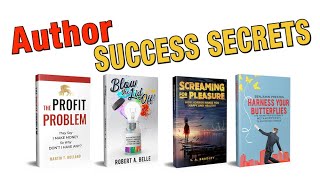
Julie Broad hosts five authors discussing how they used books to build influence and income. Robert Bell won a TED talk, Ben Preston and others share their launch strategies across podcasts, Amazon ads, and keynotes. The group answers questions on choosing topics, editors, and international distribution.
Questions this video answers
March 12, 2020.
June 2, 2020.
November 2018.
Mid-November (year stated in audio as the most recent November prior to the session).
He won a TED Global idea search and said his TED talk "should be on Ted.com in June."
Chapters
Awesome. Okay, cool. All right. Hello and welcome, everybody, to this deep dive training we are going to be covering. Creating impact and influence, and of course, income from your book. Now, if you have not been to a deep dive training before, this is definitely a little different than a typical training. This is really all about you, and we are really trying to deliver massive value to you. We are also doing something a little different today. For those of you who have been to our deep dive trainings, I've invited five of our authors to really be the experts for the day. So I'm more of the facilitator. And I don't know what they're going to say, but I know they're going to have awesome advice because every one of them, I chose each of them because I know they have had some really cool wins and successes from their book. It's not like in many cases, it didn't come easy, which is also something I want you to hear. But also, I know they're going to come in here really trying to deliver value and give you some really actionable, useful advice. Sorry. When you come in, Angela will just make sure you're muted. And then when you want to talk, you can be unmuted. But if you do notice that you are unmuted, please just go ahead and mute yourself just so we have a clean audio for everyone. So, yeah. So one of the things I always like to talk about and focus on is the fact that a lot of people say, how many books am I going to sell? And especially in nonfiction, you know, selling books is certainly part of the whole process and the plan, but I like to focus rather on where my book is going and how I'm utilizing it. And for me, it's one of the things like Self Publish and Succeed. I didn't even look. I haven't actually looked at the sales dashboard once because for me, the book is really about getting. Having that tool to give to people that contact us and want to work with us. But also, you know, we've been using it to facilitate some new relationships. And one of those relationships, probably one of the best examples I can give is there's a book prize called the North Street Book Award, or North Street Book Prize. And we've partnered with them, and everybody who enters their 2022 book award is going to receive a copy of Self Publish and succeed. So that's 2,000 copies of the book that will be going out into the world, which is really cool. And these are all authors, people that will know other authors. It's a Great fit. It's a place where we can add a lot of value and build a lot of really cool connections and relationships. So that's just one example. And so for me, that's a huge win. I'm not as worried about how many copies have sold on Amazon, because that is one of those kind of wins. And we've also partnered with another organization. It's a paid. This one's a paid promo, but it's available to us only because of the book. And it's with a group that focuses on. They do different programs in the Hamptons. And so there's some cool promotional opportunities that we're doing with that group. We're using it as a test for our clients. So this is. The Hamptons test is one of those things. We're trying to test it. So my book allows us to spend money and see where the returns come and what happens, so that if something is really good and valuable, then we're able to roll that out to our author clients. So that's just some examples of how self publish and succeed is being used as a tool to have more impact for our clients as well as for the business and. And ultimately generate more income for the business, too. But book sales is important, of course, but it's not where I focus. And for a lot of nonfiction authors, I don't think it should be your measure of success. In fact, it can be a disappointing measure of success at times, depending on where you set your standards. And then what we see, we've had a couple of really, really strong launches recently, and we see the authors moving the bar up. So instead of being thrilled that they crushed their goal for launch, now they're all of a sudden, they're like, well, that was good. So why don't you know now it's like, now they've shot their goal up huge. So they're not satisfied with that. They're just. They keep moving the target. And so I feel like they're never, like, it's never going to be enough for them, which is okay. But at the same time, that's a tough way to live if you're never stopping and going, whoa, I crushed my target now, like, what else can I do in order to have that impact and influence? So I'm really excited to get this to go. I'm going to introduce the folks here. I think we've got a good start. Start for people attending. So I'm just going to look around. I know. I see Scott is here, so that's awesome. I saw. Oh, and there's Martin. Hello. And I thought I saw. Oh, there's. Oh, Robert, you're here. I didn't think you were coming till later. Awesome. So good to see you. And Martha. I see Martha. And then I thought I saw Ben come in. Ben, are you going to hide on us? You're going to come on video, aren't you?
Yeah, I'm here.
Okay, but you're hiding.
You don't hear now I'm here.
Okay, awesome. I think that was everybody. I hope I didn't miss somebody. I think that was my five. Okay, awesome. So I'm going to introduce these fabulous folks. If you guys have questions. And somebody just said, what are we talking about? We're talking about using your book to create income impact and influence. So it's, you know, it's about book sales in a part, but really what I'm looking for is, is what are those cool things that have come from writing a book and how are you using your book as a tool to create that impact, to create that income and just create new opportunities? So I've asked five of our authors to join us and they're really going to be the featured experts. So as you have questions, I may answer some of them. But I also am going to direct them to different people on our panel, if you will, in order to have them answer so that you can hear it direct from people who are in the trenches doing this with their books and have some really cool experiences and advice and guidance of things that are working and things that didn't work, things that they tried and even hopes and expectations that didn't happen, but other things that happened instead because I see that happening a lot. Okay. So with that in mind, we have five fabulous folks here. Hopefully they have their books on hand because I don't have everybody's books here, here. So get ready to show your book. Yep. Okay. So first up, I saw Martha's book come up first. So Martha Tettenborn, you may have seen her, she was featured on a recent Book Launchers TV episode. Her book, Hacking Chemo Using Ketogenic Diet, Therapeutic Fasting and Kick Ass Attitude to Power Through Cancer. She is our first. She's one of our five, I should say. And I'll have her talk soon. But I want to introduce everybody first. Then we also have Ben Preston whose book is Harness yous Butterflies, the Young Professional's Metamorphosis to an Exciting Career. There it is. We also have SA Bradley, or well, we call him Scott, but you can call him SA and he's got screaming for how horror makes you happier and healthier. So that's his fabulous book right there. Martin Holland, I saw you there. There you are. And his book, the Profit Problem. They say. They say I make money, so why don't I have any? Isn't that a fantastic subtitle? Subtitle I love that. Actually, I love all of all of these. Title subtitles are probably some of my favorite. Robert Bell, Blow the lid off Reclaim your stolen creativity, increase your income and let your light shine. Yeah. Yay. All right, welcome all of you. Thank you so much for agreeing to give us time on Saturday to share with everyone. I'm very, very grateful. So, you know, I'm going to kick it off. I'm going to go in reverse order since I just to keep you guys on your toes. So to kick it off, Robert, why don't you give us a quick intro and tell us what your book is about and why you wrote it.
Great.
Thanks, Julie.
Hi, everyone.
My name is Robert Bell. As Julie said, I'm the author of this book. My first book, blow the Lid, Reclaim youm Stolen Creativity, increase your income and let your light shine. My book is written specifically for that person who feels stuck in their career. Someone who just looking for that magic, let me call it the magic pill to skyrocket their career and also their life is for people who consider themselves not to be creative to help them to reclaim that stolen creativity, that innate creativity we all had as a child so they can live a more fulfilling life. That's what my book is about. And I am an accountant. I have to say that proud accountant and an accountant who has stepped forward from behind the back office and from the spreadsheets and is sort of a life coach now.
Awesome.
Thanks.
And I, and I, you have some amazing news, which I know we can't talk about yet, but I'm like bursting at the seams. I mean, the most amazing thing has happened, but other than that, because we can't talk about that thing yet. You guys should follow. You should follow Robert. If you're not following him on Instagram, we'll drop his website in the chat for you and you can find his Instagram and social media from there. But he has a phenomenal. Yeah, I'm truly like, I'm so excited for you. But anyways, besides that thing that we can't tell everybody about yet, what's a really cool success that's come from your book?
Well, Julie, I actually have a surprise. I have permission to. Yeah, I can see excitement. I do have permission to share some good news. And you guys here on this call are going to be some of the first people publicly to know about it. I can't share it on social media yet, but one of the biggest things that have happened for my book, I guess to answer that, Julie, is to say that I went into writing this book because I wanted to increase my authority on the subject of creativity and being innovative. As I said, I'm an accountant, so that's a tough sell. That's a really tough sell. An accountant talking about creativity. So my goal primarily was not about making money. Yes, of course, I do need to make money, but I was very clear with the team that I want to build my authority on it. So one of the coolest things that has happened is because of all the media training I've gotten working with a team of book launchers, I've done over 30 podcast interviews, which I never did before. You know, the team pushed me to be on camera a lot. I entered a TED Global idea search competition, and I came out the winner in the entire world. So I'll be giving a TED Talk. It should be on Ted.com in June. I am so excited about that news. I think, Julie, you do a better job of bringing out the excitement. That is the coolest thing that. I mean, I would never have dreamt about this. It was a dream of mine to be on the TED stage, and it's happening, you know, simply because. Well, not simply, but I wrote a book, and I established myself as an authority figure, as a thought leader, and. Yeah, that's. I think I can stop there, Julie.
I got chills. Like, I am just. It's ted. It's ted, like, and TED Global Ideas. Yeah. So thank you. I'm so glad you could share, because I was truly. I'm truly bursting. So I'm really glad we got to share that. So thank you for that. Yeah. It's so exciting, and you've worked incredibly hard, and that's one of the things I want to emphasize, like, this is not. And it wasn't a direct path either. I mean, when did your book come out?
My book came out March 12, 2020, just before the pandemic went full swing. So, yeah, it's been a lot of work in between there. And I think what I did between March 2020 to now has been, like, three years of work because of the pandemic and the need for creativity. Like, it was three years shrunk in one. And you're right, Julie, it was a lot of work. And I would definitely say that it's a lot of hard work.
Yeah. Thank you. And I mean, my third question for you is like, one of what do you think's really worked for you? But before you kind of answer that, I want to tag into that and say, a lot of people expect the book comes out, and then I'm like, I achieve X. Right? Like, it's. They feel like the book launch happens, and if amazing things aren't happening instantly after, they. There's this sense of disappointment. And I always try to tell people, like, it's. It's, you know, doing something every day that will promote your book. Over time, it builds massive, massive momentum and results. And then it's really these little things that you're doing like this. Like you said, it wasn't necessarily the book immediately leading to this. It was the book. Okay. And then I'm doing all these podcast interviews. I'm on camera, I'm hearing what people are resonating with, and I'm learning how to have that presence and what matters. And it's all of that whole process that you've gone through that kind of led to this. And a lot of people kind of miss that. And it's. You know, I always joke that when my book went to number one on Amazon, Oprah didn't call and I didn't get to dance with Ellen. Like, you know, even though I'd sold thousands and thousands of copies and I, you know, was an indie book at number one, you know, there wasn't any confetti raining down from the sky. You know, none of those things happened. But my life, like, looking back, my life shifted just a little bit. Little bit. Little bit, you know, moment by moment. And that's where ultimately I launched a real estate book in 2013. And it has led me to running book launchers and being a part of this awesome community, working with these great people. Couldn't imagine it working out any better. But in the moment, I never imagined this is where I would be. So thank you, Robert. I'm very glad you shared that. And please tell us, what do you think really has worked the most in the last year?
Thanks, Julie. That's a very difficult question. It's very difficult for me to put my finger on it, but you've said it quite well. It's a question I've been asking myself because I've not had that much reflection time as to see how did I get here. But to answer that question, I would say that I trusted the process. I trusted expert to lead me I put up as least resistance as possible if I'm told, you got to start doing this. I remember when your team reached out to me, said, okay, we're going to book you for podcasts. I'm like, what? Like, me going to podcast? Like, what are you talking about? What am I going to talk about? Like, yeah, you better promote your book. And here, you know, And I was like, that's. That's just not me. I've never been on a podcast. And the first one was nerve reckoning. We had technical issues. I was. I was sweating, literally sweating. And I had a very good host who said, robert, calm down. We'll get through this. And we ended up having one of the best interviews she had on her podcast when she started it. And that's just. I'm answering the question by saying I was myself. I just decided to be myself and do what works for me, but also challenging myself, trying something different and just keeping. I think I would say, Julie, never underestimate the magnitude of power that your book can have in the life of one person. I think sometimes we get so caught up with the numbers that we forget the magical transformation that the book has to one person. So I keep that in front of my mind that I'm on this podcast, even though the podcast has 10,000 downloads a day. I'm just trying to reach one person. Because that transformation of one person, they talk about it, it spirals. You get a lot of insight. People come back to me. I mean, just getting that message back that, listen, I've gotten. People write to me like, I was such in a dark place. I had literally just given up on everything. And when I read your book, I would never get back to that position. I mean, that. That is just the thing that kept me going and that set me apart because I kept thinking about that one person. I don't show up for this. There's one person who won't hear it. So I would say that's the one thing. I know it's not like the best Google answer, but it's what I see that has worked for me. And that's what even led to the TED idea, the TED competition. Because I was like, all right, what am I going to pitch about? Because, I mean, let me let you know, these guys are like, we don't want to hear an idea that has been talked about before. So if you pitch an idea that has been talked about on TED stage, we won't even pay attention. I was like, what am I going to talk about? And then I remembered I can't talk about creativity because like the number one most TED Talk is by the late Sir Ken Robinson, why Schools Kill Creativity. So I was like, oh my goodness, this is horrendous. What am I going to do? And I realized, look, I'm an accountant who talks about creativity. No one can beat me on that. Like, just no one can beat me on that because that's just my story and that's what I went into pitch and that's what worked. So that's what's been working in building my authority and my platform, just being me and using my vulnerabilities as an advantage.
That's awesome. Thank you. If you guys have questions for Robert, just when you go and type the question, just maybe put Robert at the start and Angela will keep track of them and we'll come back, we'll do questions in a little bit. Are you here for the whole time, Robert, or are you going to. You're good? Okay, great.
I'm here.
I'm here.
Yeah, I'm here.
Awesome, thank you. Okay, so yeah, if you have questions for him, go ahead and put them in the chat and otherwise I'm going to now introduce you guys or actually have Ben introduce himself to you. So Ben, if you want to let us know who you are, what your book is, is about, why you wrote it, that would be fantastic.
Hi, my name is Ben Preston. I wrote Harness yous Butterflies, the Young Professionals Metamorphosis to An Exciting Career. Which is funny cause I feel like every time I say it, I like mess the title up the subtitle. But yeah, so originally I wrote the book because I wanted in my long term goal, I wanted to be like a speaker, like a Tony Robbins, but talking about career and passion and kind of that sort of thing, which is not necessarily where I'm at right now because of COVID Like I was planning on doing like all these speaking engagements and whatever. So I had to write. And my book launched June 2020. Yeah, June 2020. So almost a year ago. Similar story to Robert where it was like I launched mine during the pandemic and it actually launched on June 2, which was like, it was Instagram blackout because it was Black Lives Matter movement. So it was like, I was like, okay, so I can't necessarily like talk about my book because there's this other thing happening. So yeah, it was an interesting book launch and I'm happy where I am right now. But yeah, so my original plan was to be a speaker. And since then I've pivoted and I've been doing a lot of really cool stuff since then.
Awesome. Yeah, thank you. What I've loved about watching you is you went into this really like, okay, the book is going to be the foundation and I'm going to build from the book. So it's been really awesome. And we actually have. I think you're the book launchers TV author spotlight that you did, which Angela might be able to grab that link and drop it in here. I think it was a really awesome value for people to really understand because there's really kind of two ways to use a book. One is to leverage or to grow from whatever it is that you already have, which it can be very valuable. But it's also very smart to use a book to build that brand and grow that foundation because, you know, it's a little harder because the book is like, okay, what am I going to talk about? What's my brand going to be? You know, kind of really doing that thinking to create the book and grow from there. But it's been really fun watching you. And then of course, the challenge of COVID it's been, you know, I love your resilience and your ability to pivot and find new ways to work. So, I mean, huge, huge kudos to you because anybody who had to launch their book, you know, between March and July, I feel for everyone. But it's been really phenomenal watching everyone kind of pivot and learn and grow from the entire experience. So, yeah. So kudos to you. What's one cool success? I know you actually have quite a few, so you're probably kind of going, I don't know which one to draw from.
Yeah, I had some really cool wins actually the past couple within like the past three weeks, honestly. So my, the way that I kind of approach my business was I was developing out what I'm calling like these corner. So my background is in marketing, so I'm used to selling other people's products and other people's services. So when it came to like marketing my own stuff, I was like, I don't know what I'm doing. Even though I knew what I was doing, I was like, I don't really know what I'm doing. So. But it was interesting because my. I was kind of building out these cornerstone content. So I have like my book and then I built a course on top of it and I'm building out a YouTube channel and I have like career coaching and a business consulting. So I'm kind of like creating this network of stuff that people can Keep buying from me. So, like, they can buy a book, then they can buy a course, then they can watch my YouTube channel, then they can hire me to work on their business. So, anyway, so one of the cool successes I had recently was I did a speaking engagement, probably like July 2020. And nothing really came of it. It was just like a chapter, a career development chapter in Close in Virginia where I'm based out of. And I was just doing a presentation and nothing really came of it. The past two weeks, I actually had two people that were on the presentation or on my talk because I was talking about leadership and career development and how to kind of build. One of the chapters from my book is like, puzzle piece strengths. So treating individual team members like their individual puzzle pieces and putting them together to make this bigger picture. But yeah, so now I have two new clients that are business clients, which is, for me, where most of my money is coming from at the moment for my business. So I have two of those. One of them is actually the National Park Service. They like, hey, we want you to lead, like, our employee engagement thing. Because they're rolling out a new platform for their employees. So I was just like, I'll take on that challenge. That was one of the really cool ones. And then the other one, which is probably not as big of a win as I would say, like, what Robert's was, because that's like, huge. So I have my YouTube channel, which right now has 275 subscribers, which has taken me a year and some change to get to that point. But I'm still excited about it. But my idea was to build out my YouTube channel to obviously promote my book, but more kind of tactically promote my course. Cause that's like the higher price item for me. And one of my videos recently in the past couple weeks has been blowing up. Like, blowing up as in, like, it probably has like 400 views, where normally my videos would have, like, 100 views. And I actually got a person to join my course, like, purchase my course through YouTube, which I thought was really, really cool. So I'm hoping, I'm assuming, like, what Robert said, like, going through the process, like, for a while I wasn't seeing any traction, and now it's like, boom, boom, boom, boom, boom. So I'm excited to see kind of what keeps happening. But, yeah, for a while it was like dead silence. And then it's like, da, da, da, da, da. Everything's kind of going. So those are my. The two most recent wins that I had.
That's fantastic. I Didn't even know. I didn't know any of that. So that's fantastic. Yeah, way to go. And even Andy's like, wow, new clients and leads, that's gold. So. Yeah. And again, I don't know if you said it, you said your book came out in June last year. So. Yeah, just emphasizing the fact that, you know, it takes time and, you know, building on that. What, what are some of the things or a couple of the things or the one biggest thing that you think you've done that has led to this success so far?
Um, I am someone that likes looking at metrics a lot and I think for me, if I don't see the needle moving on something, I get really frustrated or really like kind of almost like annoyed where I'm like, what am I doing wrong? What I feel like for me, the thing that worked really, really well was like obviously setting out a strategy, setting out a plan, doing like incremental improvements from there, but really like doubling down on the stuff that I'm seeing traction. So for me it's. I was doing everything all at once. I was doing Facebook, LinkedIn, Instagram, email newsletter, YouTube. It's like literally a full time job to try to manage everything. And I'm like, honestly, for me, I need to have everything set up, but where is my like high profile content coming from? Probably YouTube. So for me, I was doubling down on the stuff that's working and then using that on my other platforms instead of specifically like creating an Instagram thing, creating a LinkedIn campaign, creating a Facebook event, like all of that stuff takes a lot of time. And for me, I have a lot of other stuff I'm trying to do. So I think the thing that's been working for me most is like doubling down on the stuff that's working and like keep reinvesting and just putting in the time and then eventually you'll start. I mean, if things aren't working after like a year and a half or so, like, for me I saw that things just weren't working. Like me using Instagram to sell my book wasn't like necessarily the best thing. So I'm like, all right, let me double down on YouTube. So I invest in like getting a video editor and I've started just like focusing on my keywords more and I'm starting to see a lot more traction because I'm investing more time in one platform as opposed to 13 different platforms.
And are you okay if we talk about like the thing we're testing with your cover?
Oh, yeah, that's the other thing that I'm actually really excited for. So this is my current cover. I don't know if everyone can see it, so it's really cool. So the idea of the book is basically like following the things that are exciting to you and kind of doubling down on the things that are exciting to you to create the career that you really want. And the COVID represents that, but it hasn't been. We've been doing a lot of Amazon ads and it just hasn't been selling as much as probably we think it should be. So we're going to revamp the COVID and almost see if that helps rejuvenate kind of the selling process, which I actually think some of the designs, Julie, that you guys had, I think are really like, I saw them and I was just like, oh, my God, it's real. Like, it just is that super exciting feeling. So, yeah, that's one of the other.
Things that's happening, I have to tell you. So. So I was looking at your numbers on the ads and I kept saying, something's wrong. Something's wrong. Like the COVID Like, we're not getting the clicks. Like, we were getting the impressions. So the keywords were right, but we weren't getting the clicks. So I just kept telling the team, I'm like, something's wrong. Like, the COVID needs to be changed. Like, it's either the title of the COVID If we're not getting clicks, it's the title or the COVID We love the title. We really think it speaks really clearly to your market. And titles are really hard to change. So it was kind of like, you know, and I kept saying this, but the team loves your current cover. And so I was up against a lot of resistance. I'm like, look, this is the data. It doesn't matter if we love the COVID The data is telling me. So I was really happy that you're open to it. And then just from a tactical side, we're testing the ebook cover. We're not going to change the print cover first. We're going to test the ebook cover because it's really easy to change an E book cover and test it out. So we're testing. We're going to test. We're in the design phase, as Ben just alluded to. So once we've chosen a design, and when I say we, that's really then. But it's a team effort, right?
Yeah.
So, yeah, so then we'll test the ebook design, and if that solves our problem, then it's, you know, kind of obvious answer that the COVID just wasn't speaking to the market. And this is a really good lesson. So I'm glad you're open to talking about it because it doesn't matter what we love. Like, doesn't matter what book Launchers loves or even what you as the author loves. It is really what matters is, is it speaking to your ideal reader? And if they're not clicking on it for whatever reason, that means it's not speaking to them. It's not grabbing them the way it should. So. So, yeah, so that's. I'm glad you shared that because I really thought this is cool and we'll see what happens. I mean, hopefully it's the COVID because that's a really easy change in terms of the Amazon ads, but yeah. Anyways, thank you. Anything else you want to say about that?
I'm just going to reiterate what Robert said because I think he made. I mean, he probably said it better than what I'm going to say, but, like, the process you just have to do. You have to do the work. It's not something like, for me, I'm used to marketing other people's stuff where you market it for a couple weeks or a month and you're like, okay, I got results. I've been working on this book since November 2019. I think that, or maybe even before that. October 2019 is like, when I started and I wasn't like, I had no profile. I was like, it just wasn't a thing. And even now I'm looking at my numbers and I'm like 275 YouTube subscribers. Like, that's not. That's not where I'm going to be ending. But like a year and some change or almost two years later, year and a half later, that's where I'm at. So I think the process, like, just taking your time and focusing on, like, making sure that I'm doing the right things right now and then it'll pay.
Off in the long run. Awesome. Thank you. And yeah, I think Robert gave some phenomenal advice, too, about just focusing on one person. Can I impact one person with this? That's how I used to get up on stage and do speaking gigs, because I used to. I used to get blackout nervous. I obviously did okay because people kept inviting me back, but I would not remember the talk. Like, I would go on stage, give my talk, which I think worked only because I'd rehearsed so much. I would kick into autopilot, and then I get off stage and I would literally remember almost nothing, or I'd have, like, a slight flash of something, and then somebody just said to me, like, stop worrying about yourself and focus on the one person that you want to hear your message. And I still get a little bit of nerves, and usually when I first start talking, I'm still, like, a little jittery, but then I kind of find that one face in the audience that just looks friendly, and they're smiling and nodding at you. And then I think about them, and I'm like, I'm going to give them the best talk, and I focus on them. And it just. I think it really helps. But I also think it helps authors if you're focused on. Okay, I'm going to find one person to impact with my message today. So awesome. Thank you so much, Ben, and thanks for being here today. It's great to have you. And somebody was asking for your YouTube link, so if Angela didn't drop it in there, I didn't see it get dropped in there. Please do drop it in. And Andy found you, and he's already subscribed to you. Oh, speaking of YouTube, one more thing. The 400 views. So that's fantastic. That's really, really good. I mean, I have 29,000 subscribers, and some of my videos don't get 400 views, so that's great. But also, I wanted to mention that that's the. There's something about that topic. So create another video on that topic, because that's. YouTube's gonna like that. So whenever you start getting a video with a lot of views, create another just slightly slight variation of that same topic and just do that again. And then that's also a sign that you may want to create a lead magnet and other pieces around that topic.
So, which what I will say on that is I. What I did with the few videos that are, like, my gateway breakthrough videos that have, like, a thousand views or 700 views. Like, I sent that to Sarah for marketing, and I said, hey, this topic's doing really well for me. Can we pitch that for podcasts? And we were getting a lot of traction on that. So, like, one of the video topics I did was how to be a leader without. Because the keyword was how to be a leader, but then it was the long tail was how to be a leader without being bossy. And that video got a lot of traction for me. And so Sarah was pitching that, and people were like, let's. Like, we're on podcast interviews. They're like, hey, let's talk through that And I was like, perfect because I already had the script done, so I could say 0.1, 2.3. So that's the other way that I was kind of using the YouTube breakthrough content and stuff.
Fantastic. Thank you. That's great. And Sarah, for those of you who aren't part of the Book Launchers family, Sarah is our book marketing manager. So she oversees the book marketing and she does some of the pitching. And then we have other people that do pitching, but Sarah works with them on the strategy. So. Yeah. Cool. And I don't know if you guys know, but she's with child, so she's going to be having a baby in July. So Charlotte's getting a brother. Her daughter Charlotte's getting a brother. So that's very exciting too. All right. The book launcher's family is growing. All right, thank you, Ben. If you guys have questions for him, just same with Robert. Put his name and then just ask your question. Angela's going to keep track of those and we'll pause after the next person and answer some questions and give away some books because we like books. Okay, so Martin, let's go with you next. So same thing. Please introduce yourself, tell everyone a little bit about your book, and we'll go from there.
Hey, thanks for having me on. Kind of a couple of tough facts to follow. They're very impressive. Martin Holland. I'm in Oklahoma. I'm a business coach. Have been for about the last 10 years. After 40 years in small business myself and my purpose in life, and this really is, it is to eliminate suffering in small business. I just, I could go on for hours about how much I love small business owners. They're the backbone, courage and so on. So that's really my purpose in life. And that's one of the reasons I wrote my book the Profit Problem. They say I make money, so why don't I have any? There are about 30 million small businesses in the United States and only 4% of them ever make it to a million dollars in sales. And 85% of them never really never hire a single employee. Which means rather than being a business, they're really a high risk job. And one of the main reasons that the stats on moving from a high risk job into business are so low is that people don't know what they don't know. And one of the topics that they just very few know about is how to use financial information to make meaningful decisions. And it's a shame. I think the reason for that are one that the topic is obtuse. Well, the first reason is people aren't aware they've heard of bookkeeping and heard of financial reports, but not really familiar.
With what they are.
Second reason is it's obtuse. They really don't want to get into it. It's just something for accountants. And the third reason is they don't realize that if they knew these things they would be transformative, life changing. And that's. There's more to business coaching than bookkeeping in this. But this is one of the four areas and that's why I wrote the book. I've had a lifelong goal to write a book. I don't know why, but it just always was there an itch in there that, hey, I've got to do this. Those of you who have written and those of you who are writing, you realize, wow, there's a lot to it. And so it took me two years of Sunday afternoons, almost every Sunday afternoon riding away to finally get it done. So I'm very proud to actually had it done. On the economics of it. Julie I got some news while I was on my calendar waiting for this to start. I gave a keynote last Wednesday to a professional group. A man approached me. Anyway, he got on my, my calendar. Schedule a time and we begin a new. We're going to schedule him to sign him up as a client at 9:20 Monday morning. And statistically on average that's worth $25,000 to me. Each client is worth 25,000. Julie when you talked about big scores, I picked up. I coach people in Canada and across the United States and in Mexico who speak English in Mexico. But I picked up a client in California. He's the CEO of a $200 million company and somebody had given somebody a book who had sent it to him. And he called me up and he said, you're the only guy who ever. Anyway, just start all this stuff and I'm going to. Okay. So he pays me every Monday at 11:30 to talk. I mean, when I go, when I as a coach now, Benjamin and Robert, I'm not sure exactly where Robert is, but there's, there's so much more than numbers and so on. But I always like to have an objective, a goal. This is what we're doing, this is where we're going. It's a little weak with this man. He said, don't worry about that. I just have somebody, have to have somebody to talk to who gets it. So on the total math on the economics of my book, it came out in October in direct revenue from selling the Book, it's about a break even proposition. I probably spent 10 to $12,000 out of pocket and I've gotten that back. But I also code people who came from the book. And I'm into well into the mid five figures. And it's monthly recurring revenue because I coach on a monthly basis. And just like the keynote I gave last week, hey, I'm not there trying to sell anything because I couldn't. I'm there trying to eliminate suffering, which starts with finding out what's the source of the suffering. It resonates with people. And Julie, you're exactly right. You got to look at one person or at least have one person in mind. Now, it might be a different person all the time, but boy, your eyes connect with somebody. They come up afterwards. So I don't know, does that, is that, Did I cover your questions?
Yeah, I love it. And yes, Brian, I do have tears. Like, I get tears when I hear these stories. I care. I think it's phenomenal. So, yeah, there is real tears coming out. I get so excited. That's great, Martin. I'm so excited. And yeah, and I love, I love your book. And Andy was saying his book's probably perfect for me right now. And if you're thinking that you absolutely need to get it and we're going to give one away, so you might get it today, Andy. But one of the things I thought was really cool, not necessarily to dive into your topic, but really quick, like, one of the things you talk about is how just like a slight percentage change in your margin, like dramatically changes everything. So do you want to just give people like a quick 60 seconds on.
Yeah, I mean, as I said, the third reason, maybe the first reason people don't use books and don't worry about it, don't go to the effort, is they don't realize why it matters. And I have four, I have more than this, but I have what I call the 1% rule. And if you're small business owners out there, this applies to you. On average, in the United States, if you can increase your gross profit margins by 1%, you will increase your profits by 15%. Your net profit. Another one. If you can increase Your sales by 17%, you will double your net profit. That's when people quit texting underneath the desk while I'm speaking and come back and say, now what? Another one. If you raise your prices 10%, the average company in the United States could lose 22% of its business before it affected their profitability. Okay, so those are all things that are out there to be understood. But people don't. And once they do, they realize, hey, I can get. I challenge groups. I said, who in here can get 1% better? And they, they'll, most of them raise their hand today, leave this keynote and go get 1% better today. And if you don't know how to do that, come up, talk to me afterwards, and then get 1% better tomorrow and 1% better. So that's. It's an obtuse topic. People don't want to read books about bookkeeping and accounting, but if we can motivate them to why it matters, it's just powerful stuff.
Fantastic. And so what do you think is one thing that's worked well since your book came out to kind of get you to where you are now?
I think it's keynote. I mean, it's referrals is one thing. Referral based, people reading the book. But keynotes are my absolute favorite thing. And sometimes they're keynotes to 20, sometimes they're keynotes to 100. I'm not doing thousands, but I love that. And I think my enthusiasm comes across in person. And so I think I also have a blog and a podcast called the Cash Flow Contractor, itunes, Spotify, anywhere else where we talk about these and other subjects. And just I have a co host. I just managed to get my book mentioned in every podcast. Somehow that happens. I've also been through you, Julian, that it's continued. Guests on a lot of had a client from Chicago call me. Driving in Florida. I did a radio show in Chicago. They were listening on an app in Florida called me up. Anyways, so you never know where it's going to come from, but just keep the activity up.
That's awesome. Thank you. Yeah, it's funny, I did a clubhouse interview on Thursday and that it was kind of almost random clubhouse interview, just talking about turning your book into a podcast and that after that I got contacted by two people that they want to be on their podcast. So you know those like one, like little things can lead to other things and it really can kind of. What's the word? Cascade afterwards. So thank you so much. All right, we're going to take a slight pause in that. I want to get everybody to participate so we can give a couple books away. So we're going to give a copy of Robert's book away, a copy of Ben's book away, and a copy of Martin's book away. So to get yourself entered, I want to hear your best tip. So what's your favorite favorite tip that you had today from one of them, and then we'll go ahead and give you guys a book. And then, Angela, were there any questions? I think I saw you say you were archiving at least or making a note of at least one question. So do you want to share what those questions were? Where people put their favorite tip?
Yeah. So it seems like there was one specifically for Robert so far, and it says, my question is how I believe.
This is for Robert.
But, Vijay, you may have to correct me if I'm wrong. It says, how did you choose the topic? Was it always coming from your area of expertise?
Yeah, so let me add.
I mean, it is for all the authors that time Robert was speaking, but yeah, this is for everyone, actually.
Oh, that's for all the authors.
Okay, so here, let me repeat the question so you guys can all be thinking of your answers. Says, how did you choose the topic? Was it always coming from your area of expertise? Robert, do you want to go first?
All right. In choosing the topic? I didn't choose the topic. I think that's one thing that I've learned during this experience of writing a book. Don't focus too much on the topic. The topic is going to be your calling card, is going to be what you're ready to present, and it should. Should spark that curiosity for someone to dig deeper into the book. I find, and I was there, a lot of times authors get hooked on the topic. I gotta have the title of the book so well, and then I'll write after, I think, write first, test out what's connecting with people. And then you want to lead with a topic that connects with the person where they are. Because remember when you grab a book on a bookshelf or you see it or you're scrolling through Amazon, you want it to be able to spark just enough curiosity to pull you in. I was like, I think that's speaking to me right now. So that's how we ended up working with the team to pick the topic. I was very open. I actually came with book launches with my topic ready. And trust me, I think if I went to that topic, maybe I can tell you guys so you can tell me the book. Initially, I wanted to call it craft your creativity. And I think if you saw a book with that title on the bookshelf, you just pass it along, it would mean something so different. So the topic, the title, for me, for the book, comes from really getting into the heart of the content. And as Julie likes saying, working on the hook. The hook will inform the title.
So, yeah, yeah, definitely. Ben, same question to you, and let me know if you need me to repeat it.
Yeah, I think I got it. So it was. I think the question was, like, hitting on, like, the stuff that I wrote about, which was career development. Is that something that I'm trained in or versed in? Not at all. My background is marketing and communications prior how to sell things, how to communicate things. And then I end up writing a book about communication or about career development. For me, it was always like, a passion thing. Like, people would call me, like my friends, or people would be like, hey, I need your advice on what do I do in this scenario?
Or my.
You know, I'm looking to trade jobs, like, what should I do? So eventually I got to the point where I'm like, this is a topic I'm passionate about. So I ended up diving into it. And then, like, what Robert said, I didn't know what I wanted the book to be about, but I, like, kind of knew what I wanted it to be about. And so then through the process of writing and figuring out, okay, what's my focus area, you can kind of narrow down your specific topic. But it had nothing to do with what my previous career was, if that makes sense.
Okay, great. And then, Martin, same question to you.
The pronounce really is. I've had 400 clients since I began coaching, and it's a common thread. Virtually everyone, I can't think of an exception, did not understand one of these key areas of business, which is how to use financials. I'm sure there's somebody out there who did. I just can't think of it. So I thought, there needs to be something written on that. And my approach I've not found. I read all kinds of finance and accounting books. I've not found anybody that approaches it the way I do. So I thought, well, I've always wanted to write a book. This is the book I have to write. And then the book that I wrote is one that I wish. Excuse me. One that I would have read. And so I was thinking, well, maybe there's somebody out there like me who would appreciate getting this book. So it was really to answer a need and also to scratch the itch that I had that I needed to write a book before I died.
Can I hold your book. Book up again and tell us the title? Yeah.
The Profit Problem. They say I make money, so why don't I have any? And Julie very. This is Judy. I don't know if you even remember that, Julie, which is great. She said hey, you got to have two or three words. This was my title. She said it's too long. And I said, that is not going away. Because if you are a business owner, when you say that to somebody, they just start laughing and go, yeah. But it also needed this. So thanks to Julie because we got two and we also got my part in there without. So it's been a lot of fun.
Team effort.
Valuable.
Awesome. Thanks, Martin. Do we have other questions, Angela?
Yes. Ben actually answered one that came in the chat and the question from Vijay was technically direct to everyone, all the authors. So we could ask Martha and Essay if they want to. If they want to answer it. I can repeat it for you guys. It says, how did you choose your topic, meaning your book? Was it always coming from your area of expertise? Martha, you want to go first?
Sure.
I haven't done sort of the rest of my blurb yet for people to kind of know what my expertise is, but my book is Hacking chemo. It came out of my own experience as somebody going through cancer treatment, but also someone going through cancer treatment. As a 30 year veteran dietitian, my expertise was certainly not cancer prior or cancer nutrition prior to my own experience. It was an epiphany for me that there was a nutritional approach to cancer and things that you could do. Who knew? And I had a passion to get that information out. So I mean, I'll say more when it's my turn for the blurb. But yeah, I did write it from the perspective of a dietitian, but also from the it's my own story in terms of the cancer, my cancer experience. And then as a dietitian, you have a food first approach to most things. And so yeah, the book's definitely written from that perspective.
Perfect, thanks. And then sa you want to give something real quick about yours, These are little precursors since neither of you guys have gone yet.
Sure. Let me precurse, if I may. So I'm Essay Bradley and my book is screaming for how horror makes you happy and healthy. And if we're talking about expertise, in other words, the way I made money, not anywhere near what I ended up writing about. I was a technical recruiter for software companies, especially startups, for about a decade and really doing that work hard and heavy. And what I was doing was burning out because I was putting 100% of my time into other people's passions. So what I wrote about was a lost passion. And it was a passion that just slowly started to show itself through happenstance as being something that was through My life, something that invigorated me again and again and again when things were starting to go bad. And it was something that kept nagging. And so that became the expertise of my book. So it was something that I used to be a big expert on that I kind of let lay dormant for the regular world, for the business world, for the grown up world. And I went back to that and in doing that opened up some, some new avenues for myself, but also found a lot of people who are in the same kind of position and got me talking to people in a way that was fruitful. So, yeah, a huge difference compared basically in the book, as you'll hear later, I talk about how horror movies are just part of our fabric and how they're allegorical to what happens with us and what happens to our culture and how we tend to find ourselves really drawn towards some of the darkness and that that's okay in immediate amounts anyway. Let me stop there.
Thank you.
And we do have a couple people in. We do have a few more questions. Thank you everyone for answering that one. These ones don't seem to be directed at anyone specific. Do you want me to save them, Julie, or.
Yeah, let's save them and we'll continue on. And for those people that are just coming in. So I'll do a quick kind of reset on the room, as they say in clubhouse, while Angela picks a couple of winners for the book prizes. So, yeah, so we're talking about creating influence, impact and income from your book. So ultimately you're trying to sell books, but it's using the book as a tool to grow your business, build your brand and have an impact on people. So we've already met three authors and we have two more. And if you have questions as you go along, we should have a decent amount of time at the end for questions of those authors or if there's something that you want to ask me, then you can ask that as well. So we haven't yet. We kind of met. You kind of got a sneak preview of Martha and Sa. So I don't know between the two of you, who really wants to go next? I haven't chosen a next person. Martha wants to go. I can tell. Essay ducked. So.
Okay. Funny thing is, I'm got another conference that I'm double. I've double booked, so I did an hour of that, then I'm doing this. And I'll probably go back to the other one, but okay. So my book is Hacking Chemo using Ketogenic Diet, Therapeutic fasting, and a Kick ass attitude to power through cancer. And it was published in November, mid November. So I'm a few months behind some of the other guys in terms of the length of time that I've had my book out. So I guess I have. I wrote it because, as I said, I discovered that there was information about cancer and nutritional interventions for cancer that I didn't know about prior to having had cancer and that weren't part of my training and that were very powerful. That could make a really big impact and people didn't know it. And that just fired up a passion in me to be able to share this with other people. I was already outside of the norm in terms of having moved into a low carb, ketogenic sort of approach to chronic disease. But I was absolutely fired up, inspired to understand how much that sort of approach could impact on cancer. And cancer is like of the chronic diseases, it's the one big scary that nobody seems to be actually moving forward with much. We have made inroads on heart disease and diabetes. And they're chronic things that, yeah, they're scary, but you live with them. Right? But cancer is the one that, you know, when you hear the big C word, it's like life is over as you knew it. And so I just had this huge passion to bring that information forward to other people. So tell me what my questions are, Julie, that I'm supposed to be talking about.
No, that was awesome. Thank you. And so the next thing we were asking is tell us a quick, cool success that you've had from the book since it came out.
Well, it's actually been really interesting. I mean, the book is very tightly niched, which is interesting for me because I have not worked in the field of cancer prior to this. I work in gerontology. That's my day job. But I've had some really since I published the book and started doing some podcasts and reaching out to people for editorial reviews and things like that. I've had a few people come back to me with some really cool opportunities. I just this past week had a company reach out to me to ask about whether I would be able to create some online courses on nutrition for them. They're one of the course platforms that's available online and they have identified for themselves through their own marketing that they have a demand for nutrition courses. And so they reached out to me and I not quite sure how they found me, but they did. And that's just really, really cool. So I'm actually having a zoom call hopefully with them next week to see if there's something I could do so I could actually start. I wanted to develop my own online course through thinkific or one of those platforms, but this may be an alternative and they provide the platform, I just provide the content. So that's pretty cool. I've also had somebody reach out to me to work with them through an organization in the states that does an adjunct to traditional cancer treatments using off label drugs. And then they're looking to develop the nutrition support of the people that they support. It's something that I can totally get behind because the use of those medications is about impacting on the metabolism of cancer, which is the whole direction of my book anyways. That's just really awesome that I possibly can work with them. I've been somewhat limited in how I can grow professionally because of my professional license. I'm a registered dietitian, which means I have a license through legislation. And so I have problems being a dietitian outside of Ontario and certainly into the states. And yet I have people reaching out to me that wants my coaching support as I go through cancer. I've been directing or trying to reinvent myself in a way that I could do cancer coaching, but not as a registered dietitian. I have come up with this concept of the cancer doula, which is the direction that I'm going now when I'm in the process of rebranding myself. A doula is. Most people know about a birth doula. A doula is a person who supports somebody else who is going through a process, usually a health process. So a doula does not deliver the baby. A doula, that's the midwife's job or the doctor's job, but a doula supports the mother going through the process. There are also death doulas and.
And.
There'S only a few other people that have identified themselves as a cancer doula. So I'm not providing the treatment, I'm supporting the person going through the process. And so that's kind of the direction that I'm starting to build myself out. And all of that has happened because.
I published a book that's fantastic. I didn't know about that, but I think that is a brilliant way to overcome the challenge that you're facing, like the limitation that you're facing and ultimately kind of pivot into something that I think is going to help a tremendous number of people and really help you have a lot of impact. So yeah, so that's fantastic. I love it, Martha. It's very, very cool. Okay, so the final question we have for you is what have you done that has worked the most?
That has worked the most, probably. Well, I have done a lot. I've only been published for less than six months, but I've done a number of podcasts. And, you know, I started with some fairly small audience podcasts, but that's fine. That does kind of get me out there. And then I've had a few bigger podcast wins. And the latest one was the podcast with Wellness Mama, and she is. She has a huge following. And I literally had people reaching out to me through my personal email or my business email after that one, looking to work with me. So that has, like, podcasting right now has been what has worked the best. I'm still. I've had pretty good success with Amazon ads, apparently. Yeah, I know. Everybody tells me that it's good numbers.
Your numbers are phenomenal. At least that one ad. That one ad is just crushing it.
But anyways, I only have one ad.
Amazon turned the other ones off, but at least we've got that one. Yeah.
Yeah. So I know Amazon keeps saying I need to spend more money. I'm spending like $5 a day and they want me to spend like $40 a day. And it's like, do you know what that means in Canadian dollars? Like, oh, my God. But anyways, yeah, so Amazon ads has been helpful as well.
Awesome. And then Martin was asking, what's the ad? It's just an Amazon ad. So it's just a. I'm pretty sure the one that is doing well is just a text ad. I'd have to double check. But yeah, it's just. It's just good market targeting. And for some reason, Amazon kept kicking out a bunch of the other ads saying we were trying to cure cancer, which you can't do. Like, that's not something Amazon lets you claim to. So. But this one ad is. Continues to work. And, you know, I think your ad actually has some of the best numbers. And if Amazon says to spend $40 a day, I think you should, for what it's worth. Because you're making. You're making double. What, like your profit on those is double what you're spending. So anyways, that's the side conversation we can have. But I wouldn't be afraid of that. I would dive into it because it's really hard to spend money on Amazon ads. And if you're getting the opportunity to spend $40 a day, because Amazon's going to be able to show your book to that many more people and sell that many more books. Do it, do it.
Yeah, we've had that discussion with Jacob and Sarah. But the problem is that if we try and mess with that ad too much, we're afraid the bots are going to decide to throw it out on us. So the thought at this point has been to just keep our heads down and let it ride for as long as we can.
That's a fair point. We never know when Amazon is going to play with that one since they took our other ads away. But anyways, I won't go on to my soapbox on that one. There's good rationale behind that advice too. Where do we go to get the Amazon ad? Well, you can't see her ad. I mean literally, if you're familiar with Amazon ads, there's different kinds of ads where you can write like a tagline, but a lot of the ads are literally the book cover or like a, a slight small text ad that just pops up when somebody is searching for something related to keywords. A lot of times we target competitive books, competitive authors. You know, we do the keyword research to figure out and then we have keywords that are inside of the book descriptions. So those keywords all get loaded into the Amazon ads. Usually when we start Amazon ads, we start with over 500 keywords and then we drill down over time. So to tell you where you get to see it, I don't know, but it's not actually that exciting, right? To find it. It's not like finding a Facebook ad where you see the click creative and you see the taglines and the copy. Amazon ads aren't that creative. It's really about fine tuning and really getting your keywords and your match. And then that's where I said the data can be really useful to figure out. If you're getting impressions, that means the keywords are working. If you're getting click throughs, that means they like the COVID and the title. And then if they're buying like they're buying Martha's, that means everything is in great alignment.
So yeah, basically when it says customers who looked at this listing also looked at these other listings and then there's that whole string of other book covers or you might be interested in this and that's Amazon ads. What happens is at $5 a day, it rolls over and starts again at midnight every night. By about one o' clock in the afternoon, I'm out of money. Enough clicks have happened that I have run, I've run through my $5 worth of clicks and my, my ad Gets out of budget and it's gone for the rest of the day. So. And I can tell when that happens because they send me an email and go look at how your, your ads are doing, you know, and so it like comes in somewhere around 1 o' clock every afternoon.
I was wondering why you knew the timing. So I'm glad you explained. I'm like, wow, you're really watching this.
But no, it arrives every day.
That's awesome. Thanks, Martha. All right, so for everybody else, if you have questions for Martha specifically, let us know. Otherwise general questions are welcome too. We didn't give our prizes away. So Angela, do you want to tell us who our two winners are?
Yeah. Yeah. We have Andy W. So again, these were. What favorite tip did you get from the first three authors that had talked about their book and their successes? And his favorite tip was from Robert, Use your vulnerabilities to your advantage. And our second winner is Emma Osong, I believe is that last name. It says one takeaway is success is not linear. So those are our two winners and which books, Julie?
Yeah. So yeah. Hey, Emma, it's good to hear your voice. So you guys can pick. We have one of each of the fabulous authors who are on here today. So we have Martha's book. We have so yeah, I'll tell you the titles again. So Martha's is hacking chemo using ketogenic diet, Therapeutic fasting and a kick ass attitude to power through cancer. We have Ben's book which is Harness yous Butterflies, the Young professionals Metamorphosis to an exciting career. We have SA Bradley's book which is screaming for pleasure. And you're going to hear from him next how horror makes you happier and healthier. And Martin's book, the Profit Problem. They say I make money, so why don't I have any? And we have Robert's book, Blow the lid Off, Reclaim your stolen creativity, increase your income and let your light shine. So we have one of each of those. We also have my book Self publish and Succeed. So we actually have six books. But let us know. So who was first? Andy was first. So Andy, let Angela know which book you want and then via email. Via email. So teamoklaunchers.com I'll type it in. Yeah. Thank you. And give her your mailing address as well. So same with you, Emma. Let her know which book you want and then. And give her your mailing address and we'll hook you up. Okay. Awesome. Okay, so we have one more author to hear from. Last but not least, S.A. bradley. And fun little fact for you. Like, S.A. is kind of one of the originals. Like, he's what we call an og. He has been with book launchers pretty darn close to our beginning. He was one of the first. First groups or first two groups of clients that were outside of our beta group to work with us. And he's still with us to this day, so. So it's great to have you here. Can you please tell everyone a little bit about yourself and a little bit about your book?
Sure. Thanks for having me on. First off. And I guess it's interesting I get to go last because I'm kind of like the. The grotesque unicorn out of this group. It's not quite the same kind of book that you've been hearing about through the whole thing. And so I'm a little bit of an oddity, and it's kind of worked in my favor. My book is called Screaming for Pleasure How Horror Makes yous Happy and Healthy. And it's a love letter to all things that go bump in the night. And how horror not only reinvents itself to reflect each generation's anxieties, but it can also be healing as well as thrilling. So there is this aspect of the book that is really tapping into your passions and the books. It's there for fans of horror, of course, and film critique explorations of pop culture, if that excites you. But it's also a personal memoir through horror, film and pop culture. And the surprise answer to this is that it's also for people who don't consider themselves horror fans, the horror curious, or people who are like, how in the heck? Why would I want to read a book like this? So it's actually for people who are curious enough to pick it up. And the reason that I have that kind of thing is I wanted to be an authority or an influencer in being able to have conversations around entertainment, pop culture, and where it's going and find value in that. Because film and horror in itself is, you know, very, very much informing our culture on a daily basis. And as time is going on, I think we're starting to realize that culture and pop culture, there used to be a wall between those, and it's kind of dissolved at this point point. Between technology and just a way of mass consumption, we now have pop culture pretty much. There's operas about horror movies. There are theater experiences and musicals that are based on science fiction. So we have this thing where we're starting to embrace the myth that's there. And horror is one of the Oldest storytelling styles. It's tailor made for allegory and metaphor. It allows us to talk about those uncomfortable, comfortable subjects in all of us that we never sit and watch in a normal drama. You won't get me to sit down and watch certain things, but if you have a giant rubber monster, I may actually get what you're talking about. It gives us a safe place, really, to confront our own monsters, those ones that can't be ignored. And the book does have kind of an allusion to the Jungian idea of the shadow, and that's where the idea of happy and healthy comes from. And I think that might have answered the question. I'm not sure.
Can you show your cover? Yeah.
Oh, yeah. Thank you. And I have a question for you, Julie. You can answer this later. I was just at a lecture and they were like, I love your cover. Who is the artist? I was like, I got. And I could not for the life of me. I know it was part of the group, but it was never really said to me. It's kind of like the boys and the kids in the hall for Jack Benny, doing the comedy, writing the comedy. I had this wonderful person who did this cover for me, and I have no name.
I don't know. I'll have to. I'll have to ask Jacqueline and we'll have to look up your file and figure it out, because that was before Cassie, who does most of our phenomenal covers now. So, yeah, I'm not actually certain who did your cover, but that's great. It's one of our favorites still to this day. Yeah. See if I can find it. Okay, cool.
Yeah, I was a taskmaster about that. You came up with a bunch of them, and I was like, no, no, no, no.
You're in good company.
I'll bet.
Also, I'm wondering, maybe I need to put some rubber monsters in my YouTube videos, perhaps. Okay, so again, because your book. Did you tell everybody when your book launched?
Oh, my book launched November of 2018. So it was a while ago. It's over two years old. And if people are saying, boy, perseverance, and, you know, is it a slow process? Yeah, if you. I'm like the king of the slow process. Because mainly, you know, I always like to say there's a bit of context. My book was outside of the experience of book launchers. You know, most of the books that. They're very obvious. The business, niche, finances, real estate, self help, spirituality. It's nonfiction, my book. But at the same point, it wasn't something that, you know, People are like, how can I make money? Or how can I do this? It was something that was a little bit off. So mine didn't have an easily defined audience. It was not going to have a well defined marketing and advertising outlet. So I was kind of an experiment for them as they were an experiment for me. It was unfamiliar territory, new demographics. They didn't have a bunch of friends in their back pocket that they can force to do something with my book. They had to find new things, right? And so it was a great experience and it did work pretty well for me. And it's been all about perseverance and it's all about passion. The thing that I got in here for was to speak. You know, as I mentioned before, I spoke for a living. But I was pounding, pounding the pavement to get people, engineers in software and get the next best thing going. And that can drain you when you're on someone else's passion and you're the person who can help them get a voice. And I realized I hadn't spoken about what I loved in about five years. I had spoken about everybody else's love. And so when I started this, I actually started with a podcast first. It's called Hell Ben for Horror. It's been nominated for a couple awards, never won. I'm going to be the Susan Lucci of that forever. But I had created this podcast and the idea behind it was I just want to start conversations. I wanted to start conversations where people felt that passion or whatever it is. And I look at what I talk about with horror as it could be any passion. I love the idea of talking about horror in this way of almost being self help because it can be anything. Whatever it is that that makes you really excited, brings that inner child back to you, brings a certain engagement. It can be anything. If it can be a horror movie, it can be anything. And so I talk about that in the book. What's happy and healthy is the Jungian idea of looking at your shadow, not having. You can have a healthy handshake with that shadow and not have shame. Take a look at what it is that's in your life and maybe have that allegory, be able to get you to where you can get over something. Like I say often that horror movies are, you know, everybody talks about it as a roller coaster. Was it a roller coaster for, you know, you have to take a look at what the, what is it that you're. That's burning inside of you. So I talk a lot about how you can look at the nastiest drive in movie from the 50s. And if you watch that, you can tell what people are anxious about in that decade. Because all horror movies have to tap into what bothers you. Either you're for it or you're against it. Doesn't really matter. It goes for the thing that makes us all anxious at the time. And so I say that that's part of what we do, but it's also a sense of play. We lose a sense of play and nothing gets past all of the things of us having hang ups then sitting there going, oh man, horror movies. When I go to conferences, it's like I sit there and somebody comes up to me and goes, so what do you do? And I'm like, well, I talk about horror. It's like they want to pat you on top of the head. Oh, that's so sweet. But they either, you know, if they love horror movies, they'll talk to me for about 20 minutes on it. If they hate horror movies and like, man, I can't stand horror movies, they'll talk to me for about 20 minutes. Because there is this thing that happens, we have an engagement on something like that and it's just everybody has an opinion. So I love being like an advocate for just taking a look at it and talking about some specific movies and go, did you ever think about why that movie does what it does? It's really art depreciation. I'm just bringing horror into the conversation. Doesn't usually get put into. And so that finding a tribe, all those things.
Yeah, that's great. And so I mean, currently, what's been your biggest success? I kind of have a guess of what you're going to say. But everybody else has surprised me, so. Except for Robert. I figured that was going to be Robert if he was allowed to share.
Well, I've had a lot. I mean, the thing that I've learned about my book is that if I talk about it, if I talk about this subject, I get books sold. And so it's getting to be in front of groups of people because that's where my passion is really talking about this and finding a connection. And so for me, obviously, conventions that I've been to, book signings that I've done tons of podcasts because I already had a podcast thing. But the biggest thing is that the coolest success is I've been a guest lecturer at universities. There are a lot of film and theater colleges courses that are out there. And it's starting to get to a point where we are finding that the Pop culture references are starting to get to where it's not just always going to be about the classics, as people may say. So what's happening is that I've been guest lecturer at two different universities, two different colleges so far. One is Webster University in St. Louis and my book is now part of the company curriculum there. So that's kind of like a weird and crazy thing. And I was able to talk at the College of Idaho just a few weeks ago and that went over really well. And so we're in process of making a list of all the different universities that are out there. I now have a track record. Before it was an anomaly when it was just one university. Now it's two. Now that's a track record. And so we have this thing where it seems as if it's getting a little bit of energy, which is great because the 2020 was just death.
Awesome. Yeah, that's great. Thank you. And what do you. I mean, you kind of answered this already, but talking, getting yourself out there, talking, sounds like it's been one of the biggest things that worked. Any other quick tips you want to add on top of that of what's worked?
Sure. I think one of the big things has been talked about before is Amazon ads because you go through a lot of things. Especially since my book was a little bit off nich, we needed to try everything. So we were throwing stuff all over the place. I was getting on like health podcasts and like, I don't know what to tell this guy who wants to talk about Frankenstein, but we tried everything. And one of the things that really worked well is Amazon ads. I cannot say enough for the person who's coming into this to really work on getting that because that's the best return on investment. My book gets anywhere between like 750,000 to a million impressions any month and about a thousand click throughs just with this service. And not all of those are book sales, but it's getting out there and it is something to. It allows it to get in different places. I notice every time that I do some kind of speaking engagement, I sell a few books and I don't have a month where I don't sell books. And I was expecting it to be like, well, there I had my 40 books that I sold. You know, that's all the relatives that I have. And here we go. We're in that, this, we're in this spot where nobody's gonna buy this damn thing and it's still selling. And of course the, the thing is to try and do the next thing. So we're working on a. A second book now through Book Launchers, because the. The first one was a great entrance. It is for anybody who is thinking about being an author or is in process of it. Continue to persevere. Because I went from being just a short schlub with a podcast like to talk about things that wear black T shirts to being an authority. People are like, oh, you wrote a book. Really? You sat down and put words together. And so it has. It is a definite way to open a door. And it also tells you a little bit about your passion. You will find out what you are truly passionate about as you write the book. You will also find out how much you're willing to fight for your book and how much you can agree with others to create a baby that is going to be healthy.
Awesome. Thank you so much. That was great. If you guys have questions for essay, you can go ahead and put them in the comments and we'll circle back to all the questions I want to give. We've got more books, so we want to make sure we give those away. So let's take it back to. Let's talk about what's one of the YouTube videos? Because I'm assuming almost everybody here has watched at least one book launchers TV video. What's one of your favorite YouTube videos? So let us know that, and then we can drop a link in there for that. We'll change it up from what we've been doing before to reward everyone who knows the YouTube channel. I know, I know almost every name here. There's a couple names that aren't quite familiar, but I know almost everybody here has at least commented on a video. So hopefully that means you watch the video. Okay. So, Angela, what other questions do we have?
Yeah, we've had a few. So let me actually go back to the very first question that came in. So it wasn't directed at a specific author. It says it's from Tobias, and it says, how do you keep your book idea confidential until publishing during the edit stage?
So, Tobias, what's your concern with this? If you want to kind of give us a little more context, that would probably help.
Well, I think that in sharing ideas on a stage or in a group, a lot of times people end up, you can share an idea, and the next day somebody wakes up and says, hey, I've got a great idea. And it's just, they're not trying to copy you. It's just a part of psychology. And so my fear is if it Takes a year to write a book and you get the content out there and suddenly the idea of the book is, you know, developed to somebody else that may get it to the market sooner. So it's probably just an un based fear, but I want to keep it close to my chest until I'm ready to publish the book.
I mean that's. So are you worried about like starting the early promo and building an author platform and sharing some of those ideas and doing that or are you worried about like an editorial team taking the idea and running with it?
Well, yeah, more the editorial team because again, not that they would try to and they can have confidentiality, but again there may be just be one or two important points that I've stated in the book and then later they share that with somebody else and you know, maybe it could become a competitive issue. I don't know, maybe I'm overthinking it.
Yeah, I mean, I understand where the fear comes from and I guess so. And there are situations, right? There's. For every fear people have, you can always find that one time when that happened, generally speaking. And I can't speak to all editors, but I can tell you our editors are so darn busy they don't have time to write another book. And they all sign confidentiality agreements which their entire livelihood would, would be at risk if they were to take somebody's idea and do something with it. But the bigger thing that I always go back to, I mean if you go to Robert's example of his TED Talk, like Robert is like, that's a really phenomenal idea. Somebody else could potentially pitch Ted on this idea. But Robert is Robert, like he is an accountant who has written the book on creativity. He is so perfectly positioned. And so if your idea is positioned within you and most of the time our books are unique because of us. So whatever it is, somebody might be able to take that idea, but it won't be what it'll be when you write it. And if somebody can completely take an idea and create a book, then I would. That would be better or the same as what you put out. Then I would question if it was really a good enough book idea anyway to position you and to do anything for your business. Because if it's that easily copied, it's kind of like a product, right? If somebody can steal your product and go and make it like you don't have a very good barrier to entry and you don't have something that's going to distinguish you amongst the million of other books anyways. So that's kind of. That's my perspective. I don't worry, obviously, because I tell everybody on YouTube pretty much everything about how to write a book, publish a book. I'm obviously not very worried that people are going to do what Book Launchers does. And part of that's because of the heart and soul that we put into working with every single client. That's not something you can steal and run with, like the vision that we have for what we're doing as a company. You can execute the tactical steps that we do based on my videos. You know, exactly how we do things by process. But you won't be able to copy what we do and the heart that we have in this business and in every book that we create. So, yeah, there's lots of. I can answer in lots of different ways. And it's not to say your fear isn't real or that I, you know, it's not, you know, that you just have to set it aside. But I would say do your research. Make sure you're working with reputable people, and then, you know, if you are a little nervous about it, you know, be cautious. But at the same time, your book's not going to do anything if you don't get it out there, and you're going to need help to do that. So at some point, you are going to have to put some trust in some people in order to create that impact and that influence.
I appreciate that. I guess to further that, it's. It's kind of like the Silicon Valley. You know, people come up with a new idea and then it becomes the standard after a period of time. And so it's a. It's a matter of, you know, to market. So if my book was completely finished and I'm ready to go, I wouldn't have this concern. And so I guess my idea is more of a local editor, somebody that is, is. Is closer or that I can interview a little bit more. Maybe it's because I haven't gone through interviewing editors or, or spoken to you about editors yet. And I don't want to, you know, spread a fear out there. It's just a concern that I have. And again, it may not be substantiated.
Yeah, I mean, somebody else said that they've had that fear too, and, and I understand it, but it's kind of one of the things, like, you know, with my company, it's all of the editors. If that ever happened, there would be major repercussions for them, not only on their livelihood, but in Things that could happen legally to them. So we take that very seriously. But also again, I think it really comes back to making sure your book is unique and that it's your voice that comes through. So nobody ever could copy it because let's face it, I mean there are lots of books out there on pretty much all the topics we've talked about today. But there really is no book that is exactly the same because each book has their own personality and perspective injected in it and you can't copy that. So yeah, so that's, I mean that's. There's again, I understand it and so you know, it's whether you work with us or someone else, I don't think local does anything different than working with a bigger company. In some cases larger companies have. I don't know, it depends. I think it really comes down to your own comfort level and do whatever you feel good about. Any other questions, Angela?
Yeah, we definitely have several essay did want to because I know this is also in the video as well was curious if he could say a quick note on the importance of editors.
Oh yeah, yeah, I feel you on that. I wanted to talk address that directly. You really. When I work with the editors here, I did not feel that they were so concerned about my overall idea. They were basically there to save me from killing myself and destroying my book. Because you don't know what you need to do for your idea until you put it in front of a copy and a content editor. You have no idea how much those services are important. It's like death by a thousand paper cuts. That's writing and self publishing a book. If you have the time, you can get all that stuff and you can maybe, I don't know, maybe if somebody's local you'll feel that they won't try to screw you over as easy. But I don't know if that's absolutely true. What I will say is that the idea of what the editor did for me was I consider it like having the Internet troll that we all fear. Like if you're doing nonfiction books, your biggest worry is am I going to write something that's a confessional that I didn't do enough research? Is this going to show me as a moron who thinks single mindedly about something? And what I had was I knew my subject in and out until I got in front of the editors here. The editor didn't ask me about wow, what an amazing idea you have. He said, she said, tell me right now why you're not going to get sued Doing this. I'm like, what do you mean? And then we had an argument about it, and they were right. And that was the stuff that I wouldn't get from a pal down the street. I got this from a group of people who had done this an awful lot. And they were not looking at the forest. They're looking at the rotten tree. They're looking at the one that has all this nasty stuff that's going to take out the forest. So what I found was I was angry for a couple times, and then I was so indebted because I realized there were entire chapters that the way that my point of view was I thought I was being funny. I was actually being litigious. And I had no idea. And it wasn't even just that. It was like, tell me more about this history. You're just saying this stuff, you know? And sometimes you get into situations where it's very, very sensitive. And what happened was I found my voice did not get dampered by that. It actually got raised up because I threw a lot of detritus in there. And so I had a better book. I had a much more streamlined book. And I had that because I didn't have anybody who owed me anything, really. Right. You know, sometimes you get your best advice from confessional strangers, and that's what happens sometimes. You have someone who has a professional distance, and those folks can do the best work for you. And that's what happened for me. And Book Launchers, the editing there, you know, I make fun out of it, but it's like, basically, you have your Internet troll, the one who's going to embarrass you in front of millions of people. You have that one viral YouTube video, and somebody puts that one word that you become an embarrassment over. And instead of having that go viral, he sits with you, has coffee with you, and says, okay, I could rip you apart, but I'm not gonna. I'm gonna tell you how you can change it, pal. And that is, like, the most important thing that I got out of it is that my book doesn't have these moments that I have to be embarrassed about five years from now. That's my piece.
Yeah.
We love hearing about your experience with our editors. We've talked about it before.
That's great. Thank you.
And that is very pertinent. So thank you very much for sharing that.
I'm laughing. I'm like, so now everybody wants to sign up and work with Book Launchers. There's a link to apply to talk to us.
Well, what's Funny is while you were talking essay, Robert was like, yes, like.
Shaking his head so vigorously. That's great. Yeah.
Julie, we do have several more questions. You want me to go ahead?
Yeah, let's do it. But, yeah, thank you, essay. I really appreciate it. And honestly, it sounds funny, but I'm really proud to hear that whenever people talk about our editors in a way that they can, they explain how our editors have elevated the book. I'm incredibly proud. And something that some, a few people have said to us, they're just like, oh, well, you guys are probably just like, brushing over this. You know, they just want to get the book out and publish it. And it couldn't be further from the truth. And this is also why I say tactically, you can't, you can do what we do, but you can't actually repeat. You can't actually duplicate. What we do is because every single person cares deeply about our authors, and so they're fighting in order to make your book better, which can be hard and it can feel emotional because you're getting challenged and it can be difficult, but it is a really important part of the process is somebody challenging you so that you're putting your best ideas forward. So thank you for sharing. I really do appreciate it. Okay. Angela.
Yes. Okay. Let me pull up my list. So.
Okay.
Lori Clemens asked. I've been working to build my audience before working on my book, but after listening to the authors, perhaps I can launch my book and use that to build my audience. Lots to think about. How do you know the time is right?
I don't know if anybody wants to chime in. If you do, you can kind of put your hand up on that. I would very much welcome anybody who wants to comment on, you know, how do you know the time is right? Especially those that launched in the middle of the pandemic. Ultimately, I mean, there's. There's tactical. There's a tactical way to answer this in terms of we try to avoid summer. We also try to avoid December. And we avoid those reasons not because nobody's buying books, but because it's very hard to get attention. It's very hard to get your reviewers to follow through on reviewing. It's very hard to get media to pay attention. It's just a harder time to get people's, you know, they may commit to things, but it's actually get hard to get their follow through during those times. That doesn't mean you can't launch during that time. The one thing I'll say is books take a long time and you've heard today, you know, I didn't. I didn't bring any of our clients on that have just launched a book. Some of them had great success, but it's too soon for them to actually start to see and realize the impact when you've just launched a book. Which is why I selected folks that have been at this for a while. And so knowing that, that you're going to be at this for a while, I would say the best time is as soon as you possibly can. But I would love if you have anybody else has anything to add. I'm welcome. Oh, look, we got Ben and Martha. Great, Ben, we'll go with you then, Martha. Thank you.
So I actually started building my community before because my book launch was in June, and I started working on building up because I literally had nothing. But I knew that I wanted to have some sort of, like, retention strategy for people that bought my book because I knew that I wanted them to interact with me in different ways, whether it's like hiring me for consulting work or taking my course. So for me, I wanted to build all that stuff ahead of time so that when I got to the point of actually launching my book, it wasn't like, hey, it's launched, and then no one cares. I was like, hey, I launched. And like, 10 people cared, which was good. But the earlier that you build it, the more success that you'll have on launch day and then be able to kind of like, use that community or that series of people that you're working with as a retention strategy, whether it's, like, engaging with your content or however you want to interact with them. But I would talk about what Julie just said, which is, the sooner that you can do it, the better, because then it'll be more successful on your launch day, but then you'll be able to interact with them and continue building that momentum, which will then take you into the future and make it a lot easier for you to sell a second book or whatever other services or products that you want to do.
Oh, yeah, go ahead, Martha. Sorry. I was reading essay. Bradley's dropping some. Some gold over here. He said there's an old Chinese adage, when is the best time to plant a tree? The answer is 20 years ago. The second best time to plant a tree is right now. And then, in other words, there's no time in the future that is a better time because the future is completely abstract and uncertain. It's very true. And I do think, you know, you build while you're writing your book. Build your platform and once your book launches, use that book to grow your platform. And I think that's ultimately the best way because there's never going to be the perfect. Like, there's no optimal amount of platform and there's no optimal time for the book launch.
So, Martha, I guess I just wanted to add that when you get finished writing a book, there are months and months before launch day. And I mean, I didn't get that when I first started working with book launchers, but when they, you know, because I went to them with a. With a first draft of a manuscript, then I figured, you know, by late spring I'd be. I'd have it done or out. And they came back and said, no, we think your launch date needs to be November 19th. I'm like, what? But there's so many steps to the process. So you have, like, don't wait on getting the book going, because you have months and months and months and months to then work on whatever your author platform is, whether it's a blog or whether it's a Facebook group or whatever else it is that you're doing. Once you get to the end of your actual I'm writing this. Not that there isn't a ton of work. Every time they send an edit back to you, you have to sit down and read every single word of your manuscript again and that, like, for at least four or five times. But. But there's lots of other time to do the other stuff. And Julie pushes building your author platform, and it's really important you can get so much of that done during the months that it takes for you to go through the process before launch.
That's awesome. Thank you, Martha. Angela, next. Actually, while you're gonna find the next question I wanna just comment on, I saw Carol's. Carol made a comment or question about UK writing, and she said someone written a book in British English and wondered if they should write it in the American English. And the consensus was no. I find that really interesting. As a Canadian who loves those U's in those words, let me tell you, like, color has a U in it. And Martha, like, yay to process. I always tell my team, I'm like, you gu to start saying process one day. And I've heard them the odd time. But all that said, if you want to sell to the American audience, I actually recommend that you do write it in American English. If you're selling to the British audience, sure, focus on your British English. Same with Canada. If your market's primarily in Canada, you can have Those typos. But believe me, that's what Americans read it as, is typos. When you have those extra use in those words and things like that. So it's interesting that that was the consensus. I'd be curious, but kind of to understand more around that. But just as a side note. Okay, Angela, we actually never drew a.
Winner from the favorite. Was it favorite YouTube videos?
You know, I kind of got focused on what everybody was talking about and did we even have. Do we.
Yeah, there were people.
Yeah, there was a lot. Okay, awesome.
I can let you look and I'll ask the next question.
Yeah, please.
Okay, so this is from Michael, and it says, I believe what you meant.
To say was, are your books worldwide?
Why or why not? Michael, you might need to clarify in the chat, if you can, if that wasn't the correct way. But it says, are your books worldwide? Why or why not? So, Julie, unless you're looking, do you want to take a stab at that one first or hand it over to someone else?
Let's pass it over to somebody else. Because I was reading. Sorry.
Okay, from our five, does anyone want to tackle that first? Are your books worldwide? You want to go, Robert?
Go for it.
I'll go. I'll try and actually answer it with another question I've just seen in the chat. So I'm based in Nairobi, Kenya, and my book sells worldwide. So I write primarily to a US Audience, but also to other audiences. Actually, we've gotten some good sales in Australia, bulk sales in Australia and other places, South Africa and so on. And of course here in Kenya. And if you don't mind, Angela, I saw another question kind of related to that where Michael was asking, saying that he has 50 people works with in South Africa who wants like an autographed copy of his book. But he's going to be in the US So he wants to know how I handle that. Well, I just, I found a local printer, worked with the team, identified them, and I got the books, you know, sent to them. So it's just finding a quality printer that can, you know, just print for you, or if you want, you can order from Amazon and get it shipped. Not too much of a difficult task, I guess, just looking at the cost benefit analysis of that. So, yeah, books, my book, at least to an international audience.
Okay, awesome. And then essay. It looks like you had your hand raised to answer too.
If I could just add.
So, yeah, I'm based in Kenya, but I also grew up in the Caribbean, so I also sell my book to a Caribbean audience. So I don't think it gets any much more worldwide than that.
So yeah, my books sell worldwide and of course we have it where, you know, it's on. As somebody else mentioned about Amazon, KDP obviously sell a lot through Amazon. But what's great is that we also go with a bunch of the indies that are out there. And the ISBIN number is something that I can show at any given time because there are people who, you know, have an issue with Amazon. And so I have found when I've gone on like book tours and stuff or if I wanted to get my book in brick and mortar stores, if it's only on Amazon, they don't want to deal with me. So one of the great things that I learned with Book Launchers was, you know, get on millions of books, get on the other smaller ones. So it is truly worldwide. It's not just an Amazon product. And I do both ebook and I do print as well. And I even have obviously a box for myself when I go on any kind of conventions that I can, I can sell them that way. But yeah, thanks to the Internet, they're international.
Awesome. Thank you. And I'll just time I saw some questions about the format. I want to make a quick comment. So with, with at least how we do it at Book Launchers and our clients, typically our clients are selling like depends on how many formats they have. But if they have ebook and softcover, they're typically selling 65, 70% of their books in print and then the rest is ebook. Over time that may level off a little bit. Like the print might go down a little and the ebook go up a little bit. It but especially around those early launch months and post, you know, first couple of post launch months, you're going to see your sales much higher in print. So just a side note on that, and we don't use just KDP print. In fact, you can't do a print pre sale with kdp. So in order to achieve a print pre sale, which is when your book is done but not launched but people can buy it, we use Ingram in order to get that pretty. So we set it up through ingramspark for that. So Angela, what else do we have? Well, I think we have the winner. Now you're muted.
Sorry, I thought I hit unmute. Yes, we do have the winner. And I couldn't remember the title of that video, Julie, so you may have to tell me so I can drop the link in the chat. But the winner is Michael's suggestion for the favorite video. It is make each chapter title a course that you could teach.
It's actually going to be featured in the newsletter that's going out on Monday. So if you haven't. If you don't subscribe to our biweekly launch letter, I highly recommend you go to book launchers.com and make sure that you're subscribed. But it is that, and I'll drop the link in there. But it's also featured in the newsletter on Monday. It's on winning chapter titles, which is something that I think all nonfiction authors should spend a whole lot more time working on their chapter titles. I'm actually curious if Ben's nodding, so why don't you give us a little perspective on that? I feel like you've got something to add.
I love my chapter titles, which I did not come up with them. I'm pretty sure I had, like, an idea of what the titles were. I was like, oh, I want to talk about this topic in this chapter. And then you guys were like, hey, here's a really cool thing. I actually did that exact thing of, like, cause there are many hooks within your book. So, like, one of the chapter titles that I had was Canada as the 51st state. And, like, in a podcast interview, someone was like, what? Like, let's talk about it. And so, like, it just alludes. But I actually did that exact thing of using my chapter titles as my course subjects. Like, when I built out my online course, that was kind of the framework that I used. So, yeah, I would say that if you look at chapter titles and you think of them as, like, mini pitches within your overall book, because it gets people excited. Especially my audience is young professionals. Like, people just don't always love reading, especially when they get halfway through a book and they want to stop. But the more enticing that your chapter titles are, the more that they're going to be like, what's this one about? And what's this one about? And I want to keep reading because I'm interested to hear why Canada is the 51st state. Like, that type of thing.
Awesome. That's a great example. Thank you. Angela. What other questions do we have? We always finish. If you're new to deep dives, they always wrap up at exactly two hours. So. So if we run out of questions before then, we'll quit sooner. But we almost never run out of questions.
Something I forgot to add is, Michael, I'll drop the email in here again. Please send me your mailing address for the book and we'll get one sent to you. Okay, next question is. Okay, this is from Brian, and it says, what keeps you motivated? Chair low, lowest point, you were discouraged. Don't mean to put a cloud in the sky of this most excellent deep dive, but it's one of the best so far. So question what keeps you motivated to your lowest point that you were discouraged?
All right, show of hands. Anybody that wants to answer that question? Not really, no. Martin. I think you do. I had sensing. Martin has an answer.
I don't know if I can answer it wisely, but, boy, it has to be a vision and it has to be a goal. I mean, those words are used so much they're almost cliche. But there has to be a driving. I am going to, by God, do this. I don't know what else to say. And it's not because you're going to get rich. I mean, or in my case, that's all I can. It just has to be. I said I was going to do this and I'm going to to do it. And some of it was a lot of fun. A lot of it was. It was all a lot of work. Somebody said, did you get discouraged? I never got discouraged. I got tired and. But for me, that's it. Set a goal and I'm gonna do it or I'm gonna die trying. A little hyperbole there, but.
Awesome. Thanks, Martha.
I struggled a lot with imposter syndrome, which I talked about on some of the videos that we've, like the author spotlight video that we've done and stuff. And so that probably I would call kind of my lowest point. But then when I do get on like a podcast or something, I really do. I really do realize that I know more about this than some other people do or most other people do. And I listen to a lot of podcasts and they're science and health based and they go into biochemistry and hormone fluctuations and all kinds of stuff that I start thinking, oh, God, I can't talk about that stuff. But I'm a dietitian. I talk about food and the bigger picture and I talk about spirit and attitude and gratitude and all that kind of stuff that has to do with the cancer journey. So. So what keeps me motivated is the fact that this information needs to get out, that people have a power that they don't understand because they don't know this information. So I'd say my lowest or the thing I struggle with the most is imposter syndrome. And what drives me is the passion to help other people to do as good a job of getting through cancer as I did.
So that's awesome. Thank you. For me, I can answer that because I've definitely gone through that many times. I always go back to the reader, like, the ultimate. Like, who am I really hoping reads this book and how do I want to help them? And then with self publish and succeed. For me, it was also my team when I really didn't feel like doing it, because there was definitely a period of time when there was so many other things going on and I was tired and I didn't really feel like doing it, But I was like, my team needs this book to be out because it's going to be something that will help them as much as it's going to help other people. So for me, those were kind of. It helps me to put the focus back on somebody else, and that can motivate me to get it done, because it matters for somebody else, not. Not for me. So if anybody else has a really quick thing to add to that, others will go ask Scott or essay. Sorry.
Scott's fine, everybody. We're all friends here. But for me, it's a little bit of a different thing. On the imposter syndrome, it certainly was that. But I started to slow down as I got closer to the finish line. I started getting very scared as I started getting closer to the finish line. You know, I had an ego that, oh, what I've got to say is so important. And then it was like, I'm going to be done with this. What am I going to do with this, this? And what if I put this out and everyone doesn't read? They just laugh. And so what was really important was getting the group. You know, I wish I could tell you it was an inner resolve that I was so strong I pulled myself up on my own bootstraps. But you don't really do that. You have people who are around you and book launchers kept on my butt. You know, there were times when I just stopped writing or I stopped. I got paralyzed. Paralysis by analysis did hit. And so what happened was I realized I was compelled to do it. I got involved in this in the first place because I was compelled to say these things that may mean nothing to anybody else, but it was so important for me. And I was reminded of that by the group, you know, so that's. That's how I look.
That's awesome. Thank you. We had one client who. I actually should get this as a testimonial. But he thanked. He thanked him, who's our story expert. And he was like, thanks for firemen carrying me over the finish line. He's like, he was just one of those people who just wasn't getting it done. And Tim was like, you're gonna do this book? Like, you're doing it. And so Tim. Tim, you know, kind of kept pushing him along all the way. Even when he wasn't working with Tim anymore, Tim was still like, hey, like, I hear you're not moving, Robert. Go ahead.
Yeah, just a quick one on that, because I know. I think everyone goes to that. Like, Essay said, I got tired also. You know, I got tired. You know, I think Martin said that also. So what's important and what's gotten me through that is getting out of my head. I think during the writing process, we, as authors, you get stuck in your head a lot. So, like, what essay said is about the team. Whenever I would meet someone new and say, hey, I'm working on a book, and it's about this. Just that renewed image is like, what? Like, yeah, I agree. We all have creativity. And, yeah, I lost my. And just hearing that just reminds me, all right, you know, I gotta get back at this. And it's okay to take a break. I think that's what got me through it.
It.
It's perfectly okay to take a break. It's perfectly okay to, you know, be tired. It's. There's nothing wrong with that, but just resolving that. I'm going to get back up. So it's not a break to give up. It's just a break to take a break. So whenever I speak to someone new, I just get that renewed energy. Like, yes, this is why I am doing this. This is why I'm doing this. And that kept me going.
Awesome.
Thank you. Yeah. Oh, I heard somebody. Martin. Yeah, go ahead.
I just have to compliment Martha on her comment and talking about imposter syndrome, I see that all the time and in the most unlikely places. So if you are suffering from that, just know that you're not alone. And your answer was exactly right. I just wanted to congratulate you on it. If you look around, you will. We all tend to look forward and see the things that we don't know. We discount the things that we learned yesterday and that we know before, and you forget about that. And then you learn this new, difficult thing and you throw it over your shoulder and look. If you turn around, your answer was, I do know about food. I have been through it. I do have something to say. And so I just. I wish I had said that, too, because I was always Worried a real accountant's going to read my stuff.
And they're.
And I spent time on numbers. I'm telling you, nobody's at that level. They're not worrying about it. And so anyway, thank you Martha. I think that's huge. And I'll bet you there are people that say who am I to write a book or who am I to write on this subject? So.
That'S awesome. Thank you. And Andy said this session has been eye opening, life changing for me. The information is so good. Thank you Julie. And authors and team and yeah, I mean really, we're not quite wrapped yet. We're going to probably go into what we'll have to do rapid fire to finish up. But Martin and Ben and Robert and Sa and Martha, you guys have been extraordinary today. So thank you for your openness and your honesty and sharing. I mean I only prepped you with three questions and you guys have just showed up and just added massive, massive value. This is one of the few deep dives where I will launch a replay. I'll wait till Robert's allowed to have more like public knowledge of what's going on for him. But like mid late June. I hope we can put this out on YouTube and let everybody see this because you guys have really shared massive, massive value today and I know there's some people here that probably will want to come back and even rewatch. So thank you. Just I'll say it again when we wrap but Angela, let's do rapid fire. So we've got seven minutes left. Let's hit as much as we can.
Yeah, okay. So Emma actually asked and this is something you'd be able to give a quick good answer on. Julie is how long should your title be to be suitable? And then the second part the of her question is would you say the genre of the books are self help category and do you find that they are the ones that sell?
Okay, so the title and Martin gave us a great example earlier so he came to us with the title of they say I make money so why don't I have any? And I said okay, would you consider a shorter title? And so we brainstormed some ideas and it came to me that you know, a lot of his book is about, you know, you're making money but it's not, not working. So I said well what about the Profit problem? And I like the Profit problem. It's three words or less, which is the ideal thing. It's memorable, it's easy to say, it's got alliteration which is a bonus if you can get alliteration in your title, that's gold. And so it's that kind of, you want it to be memorable, you want it to be easy to say. You also want it to help with your cover if you can. And so that's just one of those things where the profit problem helps with the COVID Harness your butterflies helps with the COVID Screaming for pleasure helps with the COVID You know, all of these titles, Hacking chemo helped with the COVID And then the subtitle really sells. Who the book is for and what is the core benefit of reading this book or really, what are you going to get out of this book when you're done? So that's the goal. And there's definitely some YouTube videos. Maybe Angela can find one of the most recent ones on, you know, title subtitle, because that's a great one, Martin. I can tell you want to say something, jump in.
You told me that. And I looked on. I've got 14 books on my desk right now, so I just looked. One of them has five. All the rest are three or four. Boom. And that's how you convince me.
Yeah. Thank you. And yeah, everybody, always. Whenever I tell people that, they're always like, but what about how to win friends and influence people? I'm like, there's always an exception to everything. I tell you there's always an exception, but it's not the rule. Okay, next. The other part of that was, Sorry, self help. Selling well. Is that what it was, Angela?
Yeah, sorry, I was pulling that YouTube video.
It was.
Let's go back to it. Would you say the genre of the books is self help category? And do you find that those are the ones that sell?
Our clients are in all kinds of nonfiction genres. We've got Jill here. She's got more of a historical memoir, I think. I'm not sure if that's the exact category it's in, Jill, but. And I'm putting her on the spot, she didn't know I was going to say anything about her, but. And Martha's not in. Is your self help or is it in. I don't even know what category we ended up going with with yours, Martha. Diet.
Yeah, it's more diet, health, cancer sort of direction.
Yeah. Yeah. Thank you. An essay is definitely not in self help. Although arguably there's an element of self help because it's going to make you happy and healthy. I mean, so, no, they're not all in self help. We're nonfiction. But the books we work with are really about that impact sharing a powerful story, having, you know, having that outcome for the reader. Right. That outcome can be an experience or it can be something else that they're going to do that's going to change their life. But when it comes to sales, there's no universal answer to that. And it doesn't come down to the category ever, ever, ever, ever. It always comes back to the audience that's already there for that book. The hook of the book, how it's marketed and a whole bunch of other elements. If only it were as simple as putting it in a certain category. Okay, next question.
Okay, so this is a big question. It's from, I think it's Gina and it says how should I go about launching my book online? I'm in Jamaica, but I would love to share my words with the world.
Oh, Gianna. I think that's Gianna. I met her at clubhouse on Thursday. She was in the clubhouse session that I was in. Robert, why don't you answer that?
That.
Work at book launches? That's what I did.
You.
Yeah, you have Amazon and everything to get it out. I mean a quick tip, I would say if you're from Jamaica, write a reggae jingle to it. You know, write on what's poppin, you know, from your area. I mean it's an international language. That's just a light note anyway.
Awesome. I mean I would say start with a single audience. So you know, even if you want to write for the right and have it impact the world, start with a single audience that has a very clear and specific problem and then look for wherever those people with that specific problem are hanging out. If you try to go big from the beginning, you'll end up with a washed out message. So no matter what you're trying to do, start with a single audience, get specific and I think you'll be set up for a lot more success.
Okay, we have one more question. So we're doing well and I will be posting all of our authors websites in the chat. So if you guys missed it or you want to get them all, I will be putting them all in one big chat. Okay, last question from Emma is how do you make a. How do you make a difficult subject like conflict or war in distant places that does not have the self help component be of interest to readers.
Anyone? Bren? Okay, cool.
So I'll say my book is like 100% self help. But I think the thing that like at least I've seen really successful people focusing on transformation and like what's the.
Goal of your book.
If it's to raise awareness about a topic or something like that. Like you can write about it, but make sure that you have whatever you want, your audience, whatever journey you want your audience to go through, make sure you have that in mind when you start writing. So if you're talking like whatever conflict and war type of stuff that you're talking about, you can be sensitive to it, but make sure you have some sort of angle or goal in mind. So then when you're kind of taking people when you're writing, you can take them on a journey and get them from where they are to where you want them to be. Whether it's to agree with your opinion or whatever that is. It's not necessarily self help, but like thinking about kind of what the goal of the arc is for them from where they are to where they're going.
Also, I think if it's a book about history, you know, like the history of a conflict or something, it doesn't need to have a self help aspect or it doesn't need to have a you aspect. You have picked up the book out of an interest in history, which, or you know, an interest in world geography or something. So yeah, it doesn't have to be, it doesn't have to have any self help aspect if that's where your interest is. I read books about interesting things in history all the time.
Yeah, I would say quickly also tell the story. Tell the story on the ground. You know, be the voice of the voiceless. I think that's the best way to, to get the attention and to, as Ben said, the outcome. And Julie, I would just say one bonus. I was thinking about it, that for everyone on the call, you want to figure out how to do something, don't let that be a procrastination tactic of actually getting your book done. We're here to talk to authors, not writers. And the difference between a writer and an author is an author establishes himself as an authority or herself as an authority. So it's a transformation for own it. You are an authority on whatever subject you want to write on. Don't let anything hold you back. Don't try to figure out, how do I do this? Those are avoidance tactics. Just get it done. Put your work in it and just get it done.
Oh, that was lovely, Robert, thank you.
What a perfect message to wrap on. So thank you, that was great. Yeah. Okay, go ahead.
Yeah, sorry, very quickly because we are on the dot. We have two more winners. And both of you guys, please email Team Templook Launchers calm. So our two winners are Lori Clemens and I messed it up earlier and you corrected me. Julie Gianna. Gianna.
So those were participation winners. So thank you for participating in the chat throughout the day today. Thank you. Huge, huge, huge thank you again to Robert, Martha, Martin, Ben and S.A. bradley for being here. I really, really appreciate. You guys were fantastic. And a huge shout out to Angela too for giving us all time on Saturday to help support me today so that we stay organized with everybody's questions. Thank you all of you for being here. Yeah. Thank you so much and please connect with these authors, buy their books, post reviews. Reviews are the greatest gift you can give an author and if you really loved what they did today, buy their book and post a review as a thank you. So thanks again everybody. Have a fantastic weekend and we'll see you guys again soon. Bye.
More from Julie







Should You Skip Amazon When You Publish Your Book? #digitalmarketing #amazonauthor



