Book Launch and Book Marketing Author Spotlight Deep Dive Session
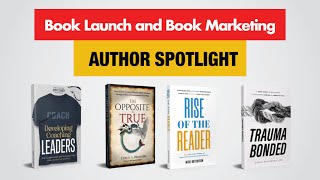
Julie Broad hosts four authors discussing how to launch and market books. They cover pre-order strategies, leveraging podcasts and review channels, and tactics for book signings like QR codes and shipping logistics. Nick Hutchison launched Rise of the Reader in November; Efren Delgado staggered The Opposite Is True as an eBook in August, then paperback in September.
Chapters
Hello and good morning. I want to say welcome. There were some people here ready to go. We've got Bonnie Michael. Kate is here from the Vegas airport after the 20 books to 50k show. So she's making her way home and didn't get enough of me or Efren this week, so she joined in again. And then Renee is here and Alanna's here already. And anybody else who's here, please do say hello if you haven't been to one of our live streams before. We give prizes for participation. So the more you chat and ask questions and play along, the more chances you have to win some of our prizes. And our prizes today include copies of the four fabulous authors that we have that I'll introduce you to in just a sec. Copies of their books, as well as Self Publish and Succeed or Self promote and Succeed. We also have, I'm sure, a mug or two to give away. Angela's always happy to empty. Yeah, she's nodding. See, Angel, Angela from my team is here. She's always happy to clear out her storage in her. In her house of her mugs and her journals. I think we might even have a T shirt or two left. Yeah, she's nodding to that.
Yeah, yeah, we have T shirts, we have mugs, journals, both copies of Self Publish and Succeed. So there's lots to clear out, guys.
All right, so that motivated a few folks to say hello. Okay, fantastic. All right, first, before we dive in, I do want to just take a moment to acknowledge our veterans. In the US It's Veterans Day. In Canada, it's Remembrance Day. You can see Scott is in between ceremonies today for Remembrance Day. So, yeah, let's just take one moment here to just say thank you to everyone who has served and just take a moment to remember those who are no longer with us. All right, great. Well, thank you and thank you to everybody who's joined in. We've got somebody else from Canada here, Scott. We've got Louis from British Columbia. So always great to have the Canadian contingent in the house. All right, so before. Before we go, go forward, I just want to let you know who's here. So Angela is our. She's got there her operations manager. So she is in charge of prizes. So it always pays to be nice to Angel. She is the operations manager at Book Launchers. And we also have four of our fabulous authors here. And so what I'm going to do is just call out one of them and they are going to introduce themselves and tell you just their short little pitch about their book and then we have questions for them that we'll ask. And at any time, if you have questions, please go ahead and ask them. And if it fits with the moment, we'll ask it on the spot. Otherwise, Angela saves them all up and we do Q and A at the end. So. So anytime you have a question, just go ahead and post it in the chat. All right. Efren, you're the first one I see, so I am going to turn it over to you to introduce yourself, if you would, please.
Yeah, no problem. Efren Delgado My book is the opposite is true. I've been with Book Launchers for a while. I even used a lot of the free YouTube stuff before I officially joined because there's great content there. And I've enjoyed the process all along because I'm a kind of a rookie on this is my first official book. So, you know, obviously it took a lot of time to do, but it's nice instead of having to search for all the different people like editors, content editors, copy editors, and learning the whole process, Book Launchers had it all together. And there's other companies who I researched and they just weren't as effective. So it's been great being with Book Launchers. And now that I officially published, August was the ebook and September was the paper, technically the hardback, even though that was delayed a little bit, it's good to have it out. And now I'm switching to marketing phase and doing podcasts, trying to get out there, trying to explore the whole social media thing, which I'm not too good at. But yeah, do you want to know about the book or are you waiting on that, Julie?
Yeah, tell us about the book.
So essentially my background is I'm a former FBI agent, but I've always been interested in psychology and human behavior. Noticed patterns since I was like 6 or 7 years old that just continued to get corroborated throughout my life and particularly my career, and chasing around bad guys. And essentially I compare the bad guys to Chihuahuas barking at the doorbell. They're. They're weaker than the good guys, even though we, the good guys often are intimidated or scared of the. The loud danger and violence and aggression of the bad guys. But my book is meant to encourage the reader just for the sake of you being not one of the bad guys means you're stronger than they are. And I point out several examples of why, why they're weaker and. And essentially they don't want to expose their vulnerability because most truths are counterintuitive. So when you make Yourself vulnerable, you're actually making yourself stronger. And the good guys make themselves vulnerable all the time. And the bad guys, that's the last thing they would want to do. So their aggression and their attacks are always hardening their turtle shell. So that should encourage the reader to know when you're in danger or you see somebody, you're actually stronger than they are. And that's kind of the essence, what I'm trying to encourage the realize that. And I guess, in a nutshell, yeah, adversity is the catalyst to purpose, action, and success. And I convey that in different biographies and my own FBI stories to try to get the message across.
Fantastic. Thank you. Let me see. There we go. Oh, now I'm on the solo. Okay. Still, I haven't had six people on here before, so bear with me. All right, so, Sarah, I see you next time. If you would kindly introduce yourself and your book, please.
Yes, absolutely. Hi, I'm Sarah Westbrook. I am a licensed professional counselor in the United States. I've got a license in a couple of states, and I own my own private practice. My. Let's see. So I'm an Army wife. My husband retired from the United States military a little over a year ago, and I am the mother of now eight children. My husband and I are adoptive parents. My book, Trauma Bonded, is my memoir. And I wrote it because over the life, over my lifetime, I've learned, both in my professional practice and then as a parent, a foster parent, and adoptive parent, that the attachments that we have forged in trauma really affect the way that we interact with people, how we show up for people. And so I wanted to write my story and my memoir in order to demonstrate that trauma bonds change the way that we interact with people and also to be a voice for those that are stuck in that toxic relationship, to help them overcome those challenges from their own trauma and then show up differently in their own lives, and to let them know that they're not alone and to write about the really ugly parts of me, because most people will look at me and say, wow, she's got it all together. And so I wanted to write a book where I was able to say, hey, look, I didn't always have it all together, and that's a normal part of your healing journey. So I really wanted my readers to know they're not alone, things can get better, and how to do that.
Fantastic. Thank you. And I am going to switch it to Scott, this time without remove. I took Efren right out of the whole livestream last time, but this time I kept Sarah and brought on Scott. So, Scott, if you would kindly take a moment to introduce yourself and your book. Thank you for being here.
Well, thanks a lot, Julie. Yes, I'm Scott Clancy, retired major general from the Royal Canadian Air Force. My connection to the great United States of America is I was, I served seven years in the NORAD Enterprise North American Aerospace Defense Command, finished as the director of operations defending the continent. After my 37 years of service, I wanted to try to figure out a way in which we could add coaching skills to teams so that because the best leaders I saw were coaching their teams well and the best coaches I saw, and I was coaching basketball right up until the, right up to the university level, they were leading their teams well. I want to develop fundamentals and real pragmatic, you know, tips and tools that people could use to lead their teams well and add coaching skills where we're focused more on development within the teams. That's what the book's all about. You know, it applies to just about anybody. But really the focus was on leaders that wanted to move away from just that performance related stuff where they were having interactions that were just about what their teams were, you know, aspiring to and performing to developing the individuals on those teams and developing the teams themselves. And I have to say now I want to buy, I already bought Efren's book, but now I want to buy the Trauma Bonded and I'm really excited to hear all about the rest of the book. And I'm a huge Book Launchers fan. I've been with Julie for about a year now, so that's me.
Fantastic. Thanks Scott. I'm going to turn it over to Nick. Hopefully it's not. There we go. I brought you on now, Nick, and same thing to you. Please tell us, I mean you have a few books back there, but tell us about your book.
Just a few. Yes. So my book is Rise of the reader strategies for mastering your reading habits and applying what you learn. So over the last six or seven years I built a marketing agency called Book Thinkers that has a large social media following. We review books and as a result I've received hundreds and hundreds of the same questions. Hey Nick, how do I choose the right book for me in the world of personal development? Skill acquisition, problem solving or how do I take effective notes? How do I read faster? How do I implement more of what I'm reading? How do I retain more? And so I didn't have a resource to point people to, so I decided to write one on my process and this is the result of that. It just launched on November 1, and the feedback has been fantastic. I've really enjoyed working with book launchers. Our project started a couple of years ago now, and I'm super happy with the results. That's my story. And as you can see, I've got raz of the reader on the hat as well. Awesome.
Thank you. There we go. Back to our group layout.
Wonderful.
Thank you. If you're not reading the comments that are coming in, everybody's so excited about the. All the topics you guys have written about, all the. All the things that you have already shared. So. So thank you for that. And just saying hello to a few more folks that joined in. Suzanne's there. I don't know if you saw it, Efren, but Michael would like you to come on his podcast. So you've got a pod, a podcast invite over there, and. And then lots of book launchers love, which I appreciate. Thank you, Suzanne and Bonnie as well. And Joe says congrats. And St. John Butler says, hey, all. So we have another one from Canada, so we've got more Canadian contingents in here. All right, so I want to ask each of you a question that I'm sure all the authors or authors that are in the process of writing their book are wondering, and that is, what is the best thing that you did in this whole journey? So. And I'll leave it wide open because I don't want to necessarily restrict it to any one part of the. The phase. Like, I'll give you just an example, which is, you know, with my book, Self Promote and Succeed. I've shared this before, but I was three quarters of the way through the book, and there was just a lot going on, personally and in the company, and I wasn't right. Like, the book was not getting done. I think it sat barely tinkered with for probably almost six months. And then finally I had the. You know, embarrassingly. But I had the realization, hey, we have writers. Somebody else could help me finish writing this book. And I brought on a writer, and it was done in a month. And, you know, for me, that was the best thing I could have done because the project wasn't going to get done with everything else that was going on. And so, you know, just leaving it wide open, because it could be something you did in marketing, it might be something that you did, you know, somewhere along the process where you changed course. So I'll just leave it wide open to you. Does anybody have an answer they're ready to give? So I don't put. Put somebody on the spot who's not ready. Sarah's ready. All right, awesome. So, Sarah, what's the best thing you've done on your author journey so far?
So unlike you, Julie, I'm not willing to give my book to somebody else. Like, I've got to be in the driver's seat of it. And so for me, the best thing that I did was I set aside time to write the book, and I actually took a vacation so that I could go away to a hotel, escape my family, escape life, and. And just sit down and write. The other thing I did was I found a friend who I absolutely love, who was in my corner for getting my book out there, and she became my accountability partner. So really, it's get the words on the page, no matter how it works for you. If it's hiring a writer, great. If that works for you, do it. For me, I had to escape into a hidey hole to get the words onto the paper because you can't publish if you don't have words on paper. So however you do that, do it.
I love that. Yeah. Eight kids. I don't know. I can understand why you needed a vacation. Scott's shaking his head. He's like, whoa. Awesome. Awesome. Thank you. Efren, do you have an answer ready to go?
Yeah, I do. Mine's kind of simple. I got a little sticky, and I wrote two points on my iPad where I mostly wrote the book. And the first one was reader first, just so that every chapter, every paragraph, every sentence benefited the reader in some way, at least in my interpretation of it. And the second one was book launcher slogan is no boring books. So no part, no chapter, no paragraph, no sentence could be boring. And just keeping that in mind, as I was writing the book and illustrating my points with stories and. And different anecdotes, I just kept those two things in mind for the goal of just making the overall book useful or entertaining, either educational or entertaining throughout, so it wouldn't be boring. So you guys will tell me if I succeeded, but that was my goal. And I. I like those two points. Just focusing on that, no matter what you're writing.
That's music to my ears. No boring books and reader first. I mean, that's fantastic. And like I shared with you, I haven't read the whole book, but every piece that I've read because I've randomly picked it up and read sections. The stories are great. They're so cool and interesting, and one of my favorite things is that they're not stories that people will necessarily like a lot of people. I get a lot of books that, you know, talk about the same people. And even, even though you did mention Elon Musk, who's one of the people everybody talks about, the story you shared about Elon was not a story that I'd heard before. So that's the cool thing is even when you did mention people that everybody kind of talks about as like an example of things you used him in for an example, and I'm just going to tease it. I'm not going to tell people what it is. But you used him for an example that people would probably wouldn't necessarily know unless they've gone deep on. On that. So that's kind of cool. Scott, do you have an answer for us?
So I do. And it's a small story and it involves you, Julie. I would say that the number one thing is I arrived with a manuscript that I already had and engaged, found Julie in Canadian Connection. So there we are. Scheduled a phone call with her and her first reaction was, yeah, I don't think this is going to work with us. It's not a topic we're kind of interested in. And I went, oh, that's a little surprising. And then she said, yeah, but, oh, and we talked a little bit about stuff that was going on inside the company and leadership things. And she said, well, maybe, but, you know, so I went away and I read her book and then I rewrote the first three chapters like verbatim. Took another month away and then came back. Julie magnanimously allowed me to join Book Launchers and everything's history from there. So to me, focus on translating your content. Because that translation of focusing on the reader, the things that I didn't know and understand, translating your. Without losing your voice, that's what I would say was the number one piece of advice that I would give.
Fantastic. Thank you. Now, anybody who's ever had me tell them that some people get really mad, but, you know, you took my. My input and you actually made your book incredible. So. So thank you for that because some people don't like it when I do that and they get really mad at me.
I can take criticism. I've, you know, I grew up in a system that was all about criticism. Sarah knows something about that system too.
Oh, fantastic. Well, thank you for sharing. So we've got. We've got a good list going. We've got accountability partner, taking a vacation. You know, no boring books, Reader first, twice over. You know, focusing on the reader was the thing I wrote down for you, Scott. So Nick, what's left?
I think that the best thing I did was sort of treat the book like a minimally viable product and collect feedback during the process so that I didn't assume what the reader wanted to read. I involved everybody in my community. So I would create content, video content related to the subjects that I was teaching in the book and I would measure how my community responded to those subjects. Did they find them interesting, useful, helpful? Did they have follow up questions? Was the message clear and easy to understand? And if it was, I would double down and keep it in the book and if it wasn't, I would rework it. So yeah, I think building the book with my community based on their feedback and what they wanted to read about. So putting the reader first, another way to say that I think was probably the best thing that I did. And now that the book's been out for a couple of days now, it seems like it is a good fit for the target reader. Because of that, I didn't assume anything. I collected that feedback and implemented it as I built the book.
Fantastic. You know, one of the things I remember you doing was sharing your cover. And I often don't necessarily recommend. So as I say this, I'm going to put a caveat on it for everyone. Generally speaking, I wouldn't necessarily recommend folks do a social media share because it's your friends and family, but your channel was already built with your readers that are watching your channel or watching your, you know, different, different social media places where you're posting it. And it was interesting to see your cover kind of evolve and change as you went through that process? Do you have any kind of thoughts on what you did and how you collected the feedback and how you were able to kind of discern which feedback to pay attention to? And not because there was some, there was a lot of comments where I kind of nonsense because I read some of them. I was like, oh, that's not useful. But then there was some really good comments. So I'm curious how you managed to filter it and come up with, with the final cover.
Yeah, I, I had multiple, I had multiple versions of my cover reveal. So I think the first iteration I had four different covers that I wanted feedback on. And a very interesting thing emerged as I was filtering through and sort of tallying up votes. People said something like, hey, take the concept from COVID two, but add this concept from COVID three and merge them together. And like 20 people said that. And I had never thought about merging different aspects. I was just going to choose one of the four. I said, well, that's interesting. Then I gave that feedback to your team, Julie, and I said, hey, let's try this new iteration, which wasn't even on the consideration table at first. Then I received multiple versions of what I had asked for in different color schemes and I put it out again. And I said, hey, I took your feedback into consideration. Here's what people are looking for. Now vote on these two. So I just gave an A or B decision. And what I'll say is that my community overwhelmingly voted for the one that I wouldn't have chosen and that I don't. I think the book launcher's team had also chosen the other color scheme too. So it just showed me that sometimes you have to get out of your own way and you have to realize that you aren't the one that knows the. The value the best. I think sometimes the community, when you can scale across tens of thousands of impressions and hundreds of comments, like, a clear winner might emerge. And I think in this case it wasn't like 51, 49. I think it was like 8 to 2. So big difference.
That's great. Thank you for sharing that. And yeah, it is interesting. I've often told people that yellow was never like. Because my book self publish and succeed, yellow is the COVID that was not going to be my choice. But it won out in a lot of different kind of versions that we putting it in the top 10 lineup and, you know, having other people kind of select it was always the yellow, which it never would have been yellow if it was left up to me. So. So yeah, so it's always interesting. So thanks for sharing. Okay, so let's do a prize now. I am curious. First of all, we'll do a random prize. And then while Angela's picking our random prize, what is the date? It's the 11th today. So let's do our 11th commenter, Angela. And then. And then what's your best takeaway already? Share that. And we'll pick one of those for. For another prize today. So take a moment to think about your favorite takeaway from the authors already, because there's already been some great stuff. And then we will move on to lessons and we all learn lessons in this journey. You know, my entire channel is dedicated to all my lessons. So let's go. Let's go in reverse order. So, Nick, what's a lesson that you have learned that you would love to share with other authors so they maybe don't have to learn? The lesson in the same way that you did.
I wish that I started my preorder process sooner and I wish that I did the work as far as preorder incentives and list building sooner. So I think I had a six week pre order window and I continued to build and modify my preorder incentives during that window. So I mean even today the book is live and some of those things were never finalized. That could have helped me in a big way. And I also, again, I wish I involved my community more. I wish I asked them what pre order incentives they'd be interested in and what would encourage them to move to pull that audience so I could have been more creative and incentivize more people to pre order. So I think that's, that's what I would do.
Yeah, those are, those are great. And it's funny because you actually had, as far as a self published book goes, your pre order period was actually quite long. You know, we're always fighting with authors to get even, even half of what you did.
Yeah. And I think that it was super beneficial to have the six weeks or however long it was. But now just in hindsight, I wish, even though it's self published, I wish I pushed even harder for a little bit longer because I see the benefits of it and having all of those books go live in one day was great and it allows you to get more reviews and everything like that. So.
Yes. Which we are definitely.
Nick, you're killing it. We need to copy you.
Yeah, for sure. I was going to say we need. You know, I don't even know. It's like 71 reviews in nine days I think is what I put on the email yesterday. So you're definitely going to be asked questions about getting reviews for your book. I mean, it helps that you have a channel that reviews books for a living, but besides.
And there were some surprising difficulties, you know, even having that in your back pocket. But yeah, I'm happy to answer some of those questions as we get to them.
Yeah, we'll definitely talk about that. For sure. Okay, so now I've forgotten the order we were in before, but I think, I think we'll go to Scott next for your, your lesson so far.
Yeah, so the big lesson for me was I was very happy with the pre order stuff that I did and the work and the team, Nicole, Angela and all them set that up well. But I didn't focus enough on the actual launch, the event, but the events around that to create enough hype during the launch. So it just fizzled I think a little bit of that was personal burnout. There was a lot of other things going on around the news and stuff like this. It was drawing my attention and focus around on other stuff. And so that launch event to drive sales almost didn't happen. And I really wish I had a focused on that and understood how much effort that was going to take to do that really well and, and maximize that in order to drive people to purchase the book.
Yeah, and it's, it is one of those things where it is, it's, it can be difficult if you haven't given yourself a lot of like a lot of pre order time. That's where a pre order time can really help too. I mean you did have decent pre order time as well, but you have to use that pre order time.
Right.
And, and there's, there's a lot of things going on as your book is about to launch, which is why having a little more time and, and you know, preparing yourself. But I know even with my latest book book release, you know, I had, I had a death in the family. I had lots of things going on just as the book was about to launch and the book launch was like lowest priority and that in that given week for me, which is, is harder to pick up after the, after the book is launched. It's harder to kind of get the momentum going post launch, but it's still possible and you can do things every single day to get, gain momentum and keep the book going. So I, I guess I'm just saying I feel you, I get it and you know, all is not lost. But I do also understand we don't have the same like gigantic firework launch and it just doesn't feel the same. Okay, Sarah, if you would kindly share your lesson. Next.
Sorry, technical difficulties. They're trying to get myself unmuted. I'm going to actually go a lot earlier in the process for the lesson that I learned. So I wrote a memoir and I, my focus was be honest, be real, be raw for your audience. Because that's in, in my field people really value the genuine raw truth. And so when my book hit content editing, I remember comments from the content and I loved my content editor, but we had a love hate relationship. I'm going to say that's probably normal with your content editor, but there were times where she would say things like this isn't believable or how could this, you know, why are you being so hard on this character? And it, I mean it, it hurt. I'm gonna be honest. There were some really raw emotions during the content editing. Mostly because I poured my entire soul into writing this book. And what I would do is, number one, I would lick my wounds. I think it's very important for us to feel our feelings and work through some of those difficulties, for sure. So I took some time away. I licked my wounds. When I needed a little bit of support from book launchers, I reached out to book launchers. I was like, hey, I'm not sure how I'm feeling about this. So that way I could get some of that feedback. But over the course of content edits, what I learned was that it's not personal. In no way was my content editor telling me that my story was a lie. Rather, what she was saying was, the way that it's written does not make sense to the reader. You need to connect these dots. You need to fix these things. You know, if you're saying, hey, I don't understand why you're being so hard on this character, what does that mean? That. And for me, that meant I needed to go back in and clarify why that character was not why the way that I was interacting with that character didn't fit the situation or what was going on. And so I would say the biggest lesson I learned is do not take the editing process personal. You've got to be able to step back after you lick your wounds and look at it from the. What can I do to make this believable? What can I do to make these connections make sense so that it is the best finished product out there? So, good luck. Content editing sucks.
It's especially hard with memoirs because it's. I mean, it's. I think it's challenging for. For all of us to have somebody edit because ultimately they're, you know, judging what you've written, which can feel like they're judging you, which is a whole. A whole thing unto itself. Yes. But I think with. With memoirs and personal stories like that, it's even harder because you have put your heart, your blood, your tears like it is on the page, and to have, you know, somebody give you feedback on that, it is hard. So I love what you've shared about licking your wounds. You know, we usually say, you know, take the feedback, read through it, and put the manuscript away for a few days. Go for some walks, like, just give yourself time to digest it. Because it is not uncommon for people to have a strong emotional reaction. And this is also why we generally don't tell you who your content editor is. We've had people hunt them down Find out where they, like, find their name, search them on LinkedIn and contact them and get mad at them. So it's a thing. But, you know, generally speaking, over time, kind of like, you know, with Scott, what he did, you know, took the input I gave him and then made the book so much better. You know, I think the best authors do that, which is why your book has turned out so beautifully and will have so much impact with everybody that reads it. But thank you for sharing that, because that is something a lot of people don't, necessarily because you're so far from that moment, they sometimes forget about that moment. But thank you.
And I agree with Kevin Hall. You might need a book launchers. Content editing sucks mug for your merchandise. Way to go, Kevin. I think that's fabulous feedback. That's true.
I don't know. I don't know if that will help grow my business, but I. I understand where you're coming from. All right, Efren, you're next.
Yes. It's actually perfect that Sarah went before me because I'm going to piggyback off her points. The heaviest part and the biggest lesson I got was the content edit. The first content edit, not to plug my book, but I've got this ongoing theme where humility is the only path to wisdom. And I quote Greg Laurie, he's a pastor out here, and his metaphor, he says, fruit grows in valleys and not on mountaintops. So I always tell people, and I did this when we were at 20 books yesterday, just telling everybody that when you're in the valley, when you're humbled, pick up all that fruit of wisdom, stuff your pockets, nourish yourself, and resume your climb. And I just love that metaphor because it's so useful. And I was definitely humbled from my first content edit, too. I'm like, who is this person? So I felt all that same angst. But I had. Chad Sanborn was helping me as a book coach, and he said, use the devil's advocate approach. And that's often what they do, just so that you're ahead of it. So when your book does come out, anybody who would have an issue with whatever aspect of the book that's being criticized or giving you the devil's advocate approach, you could already get ahead of it, address it, even, like, give a. Like a preamble to. In the interest of intellectual honesty, I'm saying xyz and then go on with your point. And I really got a lot out of that. And another main theme in my book is assess, adapt, overcome. And this was a way to personally challenge me to assess the. The criticism or the lack of clarity issue and just be authentic, intellectually honest and, and move forward from it and grow from it. And I think it made my book better.
Fantastic. Yeah, thank you. You dropped some great nuggets there. Yeah, that was great. I'm going to turn it over to Angela for a moment and she's got some prizes. And I'm going to step away just for a sec, but I will be right back. And the next question, just so the authors can start thinking about it, is what worked best for your launch or for your marketing so far to date. And that will be the next question. But for now, Angela's got prizes. And I'll be right back.
Awesome. Yes, I do have a couple prizes. So I did post one of these in the comments section. So the 11th comment was Suzanne Murray. And Suzanne, I know you have been on all of the things and I know you just won a prize like a few days ago. So if you want another prize, you are more than welcome to claim it. Or if you want to nominate someone else that is also accepted. Either way, just let us know. You can email me at our team email address@booklodgers.com and let me know if you do want to claim the prize or if you want to nominate someone. Feel free to post their name in the comment section. Okay. Yep, she definitely does want a T shirt. That's funny. Okay. Yeah, still email me please and we will get that sent your way. And then our prize winner for our favorite T shirt takeaway. There were so many good ones, you guys, that it was. It was actually pretty tough to decide, but I'm gonna gonna go with Irma Prossers and her takeaway was putting the two together. Will my reader want to read this sentence, this page, etc, Just because it is so important to put your readers in top of your mind when you are writing your book. So I think that's great. So, Irma, same thing. Please do email me at teamoklaunchers.com to claim your prize. And if you guys are interested in T shirts, any of our prize winners today, please let me know your size of choice we have. There are going to be some limitations on how many we have of them, but there is small to extra large and there are men's and women's shirts. Okay, let us go to that next one. I see you responded in the chat. Awesome. So let's go to that next question. And so, Sarah, let's start off with you. What is something that that you would have done differently. Oh, just in time, Julie. I was just going into the questions, but kick us off, Sarah. Please, please share your answer with us.
Yeah, absolutely. So first I wanted to say to Bonnie Lester, who. Who commented. So I can't respond in the comments without this apparently showing up on my podcast audience. So I wanted to speak out to Bonnie Lester and just say, hey, what I learned from content editing also helped me heal from my own trauma and see my own story from a different perspective. So terrifying, hard, totally worth it. Like Efron said, a huge opportunity for growth. So I just want to plug that in before I answer the question. So the two things that I did to have a successful launch, which I feel like I had, I definitely had a much more successful launch than I was expecting. I mean, just it was a phenomenal launch week for me. And I think the two things that I did really well that I would want to share with people is, number one, I identified the competition. So when I looked at my book, I said, okay, whose book is the most similar to mine that I have ever read? And the answer for me was the book Educated by Tara Westover, which I believe that book was a traditionally published book. It was not an independently published book. And so I went in and I did a ton of research on what did she do that was successful? Like, where did she grab her audience? What did she do? And then I mimicked the things that really worked for my brand. I also listened to book launchers because, frankly, their marketing team has a whole lot more experience. Experience in marketing books than I do. And so a lot of the things that they were recommending, I would never have thought about, or I would have been like, yeah, no, I'm not doing that. But I listened to what they said. I followed those recommendations as best as I could, and I. And I asked questions. The other thing that I did really well, I think that that really helped is the exposure of your brand. So for me, my book is one of several that are going to be coming out. And so I wanted to make sure that my brand was visible. And so for me, I've got a podcast. I advertised it, I did merchandise that has nothing to do with my book. I've got, like, a duffel bag and all kinds of little things. And then I also use my own merchandise. So that way, everywhere I go, I travel a lot. Everywhere I go, my brand is visible to people. And I'll hand out free pens to random strangers that have my website on it so that they end up going. And when they're like, oh, thank you so much. Oh, where'd you get this cute pen? I love your logo or whatever. I'm like, oh, yeah, that's my brand. I wrote a book, blah, blah, blah, blah. And that really helped me because when you look at my sales numbers, I've got sales all over the country rather than just in my own local community, which I think had a lot to do with just exposure of the brand for a long time.
Fantastic. Was that an audience question or was that starting on the new question? Sorry, I missed the new questions.
I do have an audience question that Tammy had asked if we want to do it now, but no, that was the one you could ask.
Okay, yeah, hang on. Hang on to the audience questions and we'll keep going on. So this is the marketing. What worked best for Launcher for the post. Okay, perfect. Thank you. Okay, awesome. Nick, we've got a lot to talk about with you, but it's fresh.
I'll try to be brief, and then maybe we could. You could follow up where you'd like to. I do have a company that focuses on sort of the intersection between social media marketing and books. So there were sort of three things that I focused on for the book launch. Number one was podcasts. I had over a hundred interviews in the world of personal development and nonfiction books that I recorded in the months prior to my launch. And I asked every one of those podcasters to hold my interview until my launch week. So as the book was getting ready to come out in late October, I'd have like 2, 3, 4, 5, 6 podcasts coming out per day. And then as the book was actually launching, I had 10, 15 podcasts coming out a day for a few days, and I had each podcaster order a copy of the book. So I think that helped a lot. These are people who order books on Amazon all day long, every day anyway. So I think it was kind of the right Amazon profiles pre ordering copies of the book. Strategy number two was book reviews. So I do have a book review page. So obviously we were pumping the book out there, but I also worked with probably two dozen other book review pages to get them advanced copies of the book and have them post about it, at least on their stories. And again, I'm getting the book in front of the target reader. I know that the target reader exists. Exists in these social media communities, and I'm creatively working with the hosts of each one of these communities to get the books posted in advance of the launch. And then, number three, I started my own personal instagram I had my own personal Instagram page, right. So it had no book related content on it. But I had my team come over and film a bunch of book related content. And I started to put that out there for friends and family, like people that aren't in the book community already. They're just looking at my personal life and my travel and stuff like that, friends and family. And I started to put book content out there for them as well. So I think those are the three main things that I focused on. And there were other strategies that I had. Books in lieu of services and bulk purchases and a pre order giveaway and stuff. But I think that most of my traction came from the first three things that I mentioned.
I love that. I think you distilled that in a really great way for everybody. So thank you. And anybody who has further questions, you can go ahead and ask them and Angela's going to queue them up for you. So thank you. And sorry, Efren, you haven't gone yet.
Yeah, I guess my main thing is relatively simple. Do something every day. Because there's so much to do. One of the random and concrete things I did was I made a bunch of like itty, itty bitty stickers of this. I don't know if you could see that, this icon here, because I noticed a lot of like younger people putting stickers on their laptops. So my buddy called it guerrilla marketing. So I did that. But I learned something at this conference yesterday that I wanted to share with everybody. They gave the metaphor, one of the speakers gave the metaphor of a traffic light. Like you have green days where everything's going great, you're in a zone and no problem, you're plowing through everything you have to do. That's, that's a great, no problem day. Then they had yellow days where things are going okay, but it's not the best. So just kind of push through and, and make progress there. But it's essentially a good day. Focus on the positive. Then people have read days with family issues, things going on in the world, or just curveballs that come at us and humble us. And the speaker was saying, just do something that day. They were giving the specific, they were talking about the specific goal of writing your book. So they say write 50, 50 lines that day. Or maybe it was just 50 words. But anyway, the point is, do something every day and you'll, you'll keep moving forward. So that's my main takeaway is just do something every day.
That's great. Thank you. And yeah, Cynthia, I Just wanted to acknowledge. We'll definitely answer this, but Efren and I just did 20 books to 50k this past week and there was a big giant book, say, book signing and book selling event. I see the sun is coming in on my screen here. And so we'll have. I definitely have a few thoughts from that and I'll be curious to, to hear what Efren has. And then, you know, I know Sarah's done quite a few live events as well, so we can ask her for that too. I'm gonna figure out where the sun is coming from and block it. While Scott shares his lesson from marketing. Oh, you're. Oh, sorry, you're muted. Hold on one sec. There you go, you're good.
Sorry about that. Yeah, My lesson from the marketing would be focus on that book army. That baseline book army gets you to those pre sales, enables you to have a platform and an audience that, you know you can count on. I still struggle with driving them towards an email list to driving them towards, you know, my leadership forums, so, so that I can, you know, give them content that's good. Social media can help with that. But that book army, reaching out at a personal level, that's what drove initial sales inside the launch, which, you know, I was relatively happy with. So that would be my one piece advice surrounding the launch and marketing.
Awesome. Thanks, Scott. I think Julie is still fixing her, her blinds. Otherwise it's still, still going to be focused on you for a second. While we have you on here, we will just go ahead and address that question that Tammy had asked you and let me just read it for everyone in case you didn't see see the chat. And then after Scott answers, Nick, Efren, Sarah, if any of you guys would like to chime in, feel free to do so. But she had asked what would you have done to prepare beyond what you did do for pre launch?
Yeah, so what I put in the chat is, is exactly that I was focused on and I'm military guy, so the whole business thing and earning money was foreign to me. So not a business guy would rather have had Nick as the talking head to launch my book. And then I would have been just fine. Julie could have written it and then we, you know, we would have gotten much further than I did. So I was focused on content and the content that I was still pushing out to those people that I was, you know, I had executive coaches and senior leaders in both nations that seek mentoring and mentoring for their teams and this kind of stuff. So I'm focused on the content focus on the book sales. But I didn't market the actual launch event. And that's what I would do differently is I would focus on those events. Secondly, I went, oh, really? It's a more virtual world. I'll do all my events virtually. Bomb, bomb, because it's a workday, whether we like it or not. There's certain hours in that workday and most people are going to be at work, they're not going to be doing your stuff. So that's a real problem if you do all of your stuff virtually. And what I've had since then is so much more benefit to the live events. And so, you know, if I go back again, I wouldn't focus on virtual events and I'd want to know exactly what it is that you wanted to get from those events. So for me personally, I went a little bit of humility here. Hey, this isn't about me. This is about the reader. Going back to Julie, a little bit of this is about you. Okay? You want to celebrate those wins. So thinking about what you want to do, thinking about it, spend a little bit of time in that space, what it is that you want to get out of those launches.
And.
And to me, I would have had. I would have focused on a physical event because if I had a focused on even a local one, I think it would have fundamentally been there. I don't sure that would have drove in any different sales, but it would have made me feel better about that. I did the right things in leading up to that. So market the launch as much as you market the book and the content you plan for that piece. Spend some time thinking about it. And I would, I would do a mix at least, but at least something live as a celebration of your launch. That's what I would do different.
Fantastic. Thank you. Was that a question that you wanted to circle around to other people, Angela.
Or was that it was directed at Scott? But if anyone else wanted to chime in, feel free. I had left it open if they wanted to chime in afterward. If you guys want to, go ahead. Otherwise we can continue with the other questions that you have lined up.
Julie? I can. I would say that what I wish I had done differently was to pace myself. I was really good at ignoring all the emails from book launchers until like one day when I had a free minute and then I would like knock it all out in that day and then I'd ignore them again and then I'd knock it back out. And so I think some time management is really Good. I think one of the things that would have helped me is if I had done a little bit every day rather than like a lot all on Fridays, which is kind of how I run my life because I'm a huge procrastinator and so I think just being consistent and a little bit every day would have. It may not have changed my, my numbers because I definitely got everything done on time the way that I needed to. But I think for like my overall burnout, I think it was Scott who said it earlier. Like once the book came out, I was like and kind of fell off the wagon. And so I think by pacing myself, there's a little bit more self care there so that I would have had the energy needed to continue that marketing post launch excitement.
Great. Thank you. Nick, were you going to say something? I saw you nodding. I didn't know if you were going to add something. Something.
Yeah, a little bit of both of those answers from Sarah and Scott. I wish that I had paced a little bit better so that I had more energy during the launch itself to host an in person event for friends and family. So I think a little bit of those two things. I put a lot of effort into the pre launch phase and you know, the book just launched and I'm still doing podcasts and posting about it and reaching out to people, but my energy has definitely lowered a lot now. That kind of like gets off my chest and I think, you know, one of the reasons I know we're going to talk about the reviews. 70 something so far. I think one of the things that I did well there was reaching out to people individually and asking them to leave a review. And that would have been so much easier had it been in person for friends and family, with food and like a little speech and, and stuff to hand out and blah, blah, blah. So a little bit of both.
That's great. Efren, do you have anything? You don't have to, but if you have something.
Yeah, I've got a short thing. I think all of us aspiring entrepreneurs would love to be authors full time, but the reality is we all have to earn an income with our day jobs while we're trying this second career. So that's tough for everybody. And then our third career is our personal lives, our families that need us and everything. So I just encourage everybody to just persist, persist, persist and do something every day and we'll get there where we're supposed to be. So it's fine.
Wonderful. Thank you. And so the final formal question that I have and then there's lot. And it actually feeds into some of the questions because some people are asking, how far along were you in the writing process prior to joining Book Launchers? You know, there's questions about that. And so the final question I wanted to ask each of you was advice for somebody thinking of working with Book Launchers or. And there's actually quite a few folks here who are already working with us, so suggestions on how to get the most from it. And also, I'm just really glad that you shared at the beginning, Scott, that, you know, we don't. We don't work with everybody. So it is okay to say what parts are a great fit for somebody versus what parts aren't a great fit if you're looking for X. Because we are very particular about who is a great fit because we want everybody to come out of it with fantastic books and great things to say. So, so basically, it's okay. Whatever you have to say is okay. All right, so with that, I'll start with Scott.
Hey, yeah, so I. I'm gonna give you, like, just a quick list of Scott's military list of saying, this is what I would do. And it starts with Book Launchers has a process, and that multifaceted process involves videos and calls and advice and answer emails, prep for calls, all the rest of this stuff. Do the homework. You know, from a guy who tried to do absolutely everything to make sure that all y'. All. And that's an American term that I've learned over the years, all y' all are safe all the time. You do the research. So I would listen to all the videos and associated videos from Book Launchers. You read Julie's book and then apply all of that stuff in there and decide what you didn't want to apply. I did some of that, too. Prep for the calls so that you're doing your homework, so that when you walk into those marketing calls, you're set. You're not learning them. They're not giving you information that's new for the first time. You're kind of reviewing it and then tailoring it to what you need for your stuff. Know where you are in the process. They give you a sheet of that. Know where that is in the process, so that you can prepare in advance. You know what's coming that allows you to be. And I wish I had known that a little bit better, especially as it pertained to the launch. And then, you know, everything on those topics that they give you. Oh, you could watch this video. You could do that. Do those things. If it's like a job, you do those things, that is what's going to set you up for success. And those. That's my advice. And made all the difference in the world in being extraordinarily well prepared so that I wasn't wasting Book Launchers time, but I was maximizing their advice they could give to me. That's kind of my list of advice that I would give.
Great. What do you want to add to that, Sarah?
I absolutely love that, Scott, having, you know, the wife version of a military experience. I love those checklists. So I'm just going to add a few to his. For me, I wrote them down. That's why I'm looking at my lap here. Number one, you've got to know what you want for your book before you're going to be able to really know who's going to be a good fit for you in a publishing firm and what are your expectations of that publishing firm. Because you're going to need to understand things like, am I going to hire a writer? Or, you know, do I. What is it that I want? What am I expecting? What, you know, what am I hoping to gain out of the sales? What are my end goals? And then work yourself backwards. I kind of interviewed Book Launchers, to be completely honest. I kind of asked Julie 10 million questions about what Book Launchers could do for me. And then Julie, you know, would ask me back, you know, what are some of your thoughts here? And so definitely do your research. I wrote, and I think I sent in, when I. When I sent in my writing sample, I sent you just the prologue of my book. I didn't send anything else to Book Launchers because I wanted to see what that feedback was as part of my interviewing Book Launchers process. And I'm really grateful that I did that because that opened the doorway for questions and it helped me set my expectations. And, you know, they brought me down out of the clouds a little bit on some things, and they lifted me up into the clouds a little bit higher on some other things. But for me, it was the reason I ended up choosing Book Launchers was because the team was positive. They were very helpful and inspiring. They, when they gave me criticism, it wasn't, you know, this sucks and you can't do it this way. It was delivered in a way of, hey, I love your goal. Let's look at some of these statistics and facts now. How can we grow your goal and make this fit and work for you? The other thing that I absolutely love about Book Launchers is that there were a couple of things where I was like, no, this is how I want it. And they would give me the, you know, these are the pros and cons. These are some of the risks that you're going to take. And then they respected my decision. And, you know, I. I'm a boss of my own company. I'm used to being in charge, and it. It's my life story in that book. And so there were some things that I was like, no, this is what I really want. And because they were able to honor my choice without shaming me, that made a huge difference. And so, honestly, for me, Book Launchers, not only were they looking at me to make sure that what I was writing was a good fit for their company, I was looking at them to determine if they were a good fit for me based on how I value boundaries and healthy communication and relationships and whatnot. And I can absolutely say 100% book launchers fit that bill for what I was doing and for my project. So thank you so much to Book Launchers for that.
Oh, thank you. I'm so happy. And I'm proud, too, because this is something that we take very seriously. And, you know, I even got a little teary because I was like, oh, way to go my team. Because, you know, we do. We care so much about the projects, and sometimes people, you know, it can be like, well, they want to do it this way, and we're worried about this. And, you know, the conversation we always have is let them know why we would recommend something different. But it's their book. And this, you know, that's part of the advantage of self publishing is at the end of the day, this is your book. And if you want to do something different, you know your readers better than we know your readers, and so you know your audience, you know your story. And so at the end of the day, it really is your choice, but it's also our responsibility to let you know, hey, in our experience, this is what we've seen, and then you make your informed decision based on that, and then our job is to rally behind you and help you get where you want to go. So. So, yeah, you just made my day. So thank you for sharing that. And, yeah, I just. I feel so much pride for my team because we do. We discuss this all the time behind the scenes, so. So that's fantastic. Thank you. Nick, what would you like to share about advice on working with book Launchers?
Well, let's see. My journey started a long time ago, and I only had an Idea, sort of. So I didn't come with a manuscript, I didn't come with an outline. I just said, hey, I'd like to write a book. And this seems like the right place to do it. So the journey has been great. And I'm so happy with the finished product. You know, working in the book space. Authors, they love their books, right? And authors are very opinionated. It's their story, it's their advice. And so I work in the social media space, and so I'm kind of in the same seat that Book Launchers is. Sometimes I'm over here saying, here's my educated opinion. Having been in the space and worked with so many people, this is what I think you should do. But at the end of the day, it's up to the author. And so I went into this experience knowing that Book Launchers knew a heck of a lot more about writing a great book than I did. And so, yeah, I sort of had to put the ego aside, I think, sometimes, and default to their expertise. And I'm happy that I did. And so to keep my recommendation short and sweet, it would be that Book Launchers knows more than you do as a first time or second time author, because they work in the space full time and they know what's best and they care about the outcome just as much, if not more than you do. Because, Julie, your entire business is dependent on the success of these books and the quality of the books that are coming out. And so, yeah, just follow the recommendations, follow the process, try to remove your ego for as long as you can. Observe things from a third party perspective and collect feedback along the way and listen to it. So that would be my recommendation.
Thank you, that's great. And last but not least, Efren.
Yeah. I think before you even join with Book Launchers, know who your audience is, who you're interested in reaching out to, and the big why I would really emphasize in the bones of your manuscript, or what you want to say, what does your audience need? And the emotional part is the why, which is the entertaining part of the book. So just kind of keeping in mind what your goal is, I think Sarah and I think a lot alike from your answers. I could have piggybacked on everything Sarah said, but definitely knowing what you want to get out of it. And Book Launchers will ask you all those questions, so you might as well be ready for it.
Yeah.
And that's it. Like, the bones are the foundation, the meat is like the illustrations and the spice are the unexpected things that you read and go, oh, wow, I've never heard that before. So I kind of break it up in those. In those kinds of that. I love metaphors. So I use that metaphor for a lot of things. And I think it'll make your book not boring with those elements.
Not boring. It's very important. And it was on a sticky. So fantastic. So I know there's some questions here. We will collect all those, but first, I just want to really quickly, kind of. And this was partly a question about book signings and things too, but because we are just fresh off of 20k or 20 books to 50k, I should say. Oh, I don't know if that was my Internet, but it just. Everybody just disappeared. So we can still hear you.
You're good.
Okay. Okay. I was gonna say, if I start to go out, just take over, Angela, please, Because, yeah, I'm just getting an Internet warning here. So. So, yeah, so 20 books to 50k, which is going to be rebranded and running under Author Nation next year. But a really fantastic event for indie authors. It's primarily been focused on fiction. There's always nuggets for me to gain from it, so, you know, I still go. Plus, it's in Las Vegas, so, you know, I don't have to get on a plane to attend. Although I did have to fight Formula One traffic. Formula One is here in Vegas next week, and they have shut part of the Strip down to make room for it because it's going to be going around on the Strip next week. So that was a bit of an adventure. But all that to say, and the final day of the event, they have a huge 300 author book selling and book signing event. It was definitely not focused on nonfiction. There was a lot of romance authors. There was even half naked men walking around to appeal to the romance fans. It was interesting. Definitely not the how to kind of conference thing that I'm used to, but there's. There's always lessons to be learned from the conference and from the signing. So, Efren, do you have a takeaway or suggestions or advice, like, what went well, what you do differently at a big event or a small event, doing, selling and signing.
Yeah, you froze. But I think it's my turn. Is that right, Angela?
Yes. Yeah, go ahead, Efren.
Okay. Yeah. I think my. My biggest thing is these events could be overwhelming in a good way. You just have to really prioritize what you're gonna do at a point, particular hour. Because the way they have it laid out, like most events, their schedule overlaps with like three or five different classes you'd be interested in. And it's. That's the biggest struggle is what do I. What do I go to? Because I could benefit from three of those things. So just knowing what you want, what you really need, not necessarily what would be the most interesting. Like, I'm not an AI guy, and I definitely forced myself to go to a couple of the AI classes just to learn about the updates instead of going to the character development or how to write a fun antagonist. So the more interesting stuff I discipline myself and avoided to do, the more useful stuff. So discipline plays a role. And just know that you don't have to participate in everything. There's a lot of pressure to do a lot of different things, and you don't have to participate in everything. Like, I didn't participate in anything where the shirtless guys were. So that was one thing.
For example, I was actually asking about the signing in particular, and that's where the shirtless guys were. So the selling and signing on the last day, like, when you're selling your books to the audience, because I know you were selling books. I saw them in people's carts. So what worked besides, you know, the shirtless guys that were there? Because they were.
Yeah, they avoided my table, thankfully. So that was good. Yeah, they probably sell, like, the one, like, former FBI guy science. Like, I'm not gonna go there. So that was good. Yeah, I think I had a big poster of this, and a lot of people came to my table because they said they saw the. The book cover from across the room. And it was a big room. So when you get to book covers, really think about not just what you want, but what I think I lost. You guys hear me? I lost Internet for a second. So your book cover, you wanted to catch the eye from across the room or in a thumbnail of the. Of the Amazon. You know, when you see all the thumbnails? So that helped me at the table. And so a lot of people came by with that. And then once I started giving my. My. My take on, like, what the book's about and how it could benefit the reader, that's when they were more interested. And a couple fresh people bought books that way. I sold about maybe 12, 13 books. And then some of them didn't want to lug the books back home with all the books that they already bought. So I had a QR code ready with my website and a link to buy the book, and two or three people bought the book that way, too. So that's a Little nugget that could help. And at the end of the day, like Sarah says, as Scott and Nick say, authenticity is huge. So instead of selling them, I just was authentic. And I think that resonated with people because people appreciate that, especially nowadays.
Yeah. Thank you, Sarah. I know you've done several live events as well. Do you have any. While we're on the topic, do you have any tips or takeaways? The QR code to sell your book was huge. So that was something a lot of people were doing, was buying the books on Amazon instead of lugging them home. But, yeah, what else? What else have you learned?
Yeah, I think for me. So I've had two incredibly successful book events. I sold, oh, goodness, 180 copies, I think, between the two book events, which is a huge turnout. One of those is because I returned to my hometown, which is where the book started. And so there were a lot of local people really interested in. In that. And then the second one was in the state that it. That it took place. So it kind of piggybacked off that local author piece. The challenge with live events is marketing. People have to know that you're there. They have to know that you're coming. And for me, both of my successful live events people knew I was coming. And so one of the things that I did, so I have a podcast and I have a podcast producer. And so he and I collaborated and we did a radio ad, we did social media ads, we put stuff in the newspaper. And then I had a little card at the table that said, how did you hear about us? Because I wanted to be able to track for these live events, what is the best way to get the word out. And what I found was radio ads are useless and they cost me the most. And so I won't do that again. And I mean, that makes sense. That tracks with most people. Listen to Spotify or, you know, Pandora or those types of things. My social media word of mouth. And then the signs around the event were the best. I actually pulled this up. So this is. I had this little thing. Let's see how close I can get it.
Hang on.
There we go. I had this. That book launchers put together for me. And then on the back, I have. Here we go. The author signing with my logo for the publishing. My publishing company there at the bottom. And so what I did is I sent these to the publisher, places that I was doing my book signing, and I put all of the information on the back, and I just. I ordered these off of VistaPrint. They're just postcards. And so what that did is that, as, you know, I did one of them in a coffee shop and one of them in a bookstore. And so what ended up happening is those were sitting out for, I want to say, three weeks before the events. And then I saw that people were bringing those back in. There was, you know, take me. I put a little, you know, had a little sign that said, take me sign, and that people were handing them out. The other thing is, I had free giveaways at my events so that people were, you know, oh, I want to go get something for free. Now, be careful with that because you don't want to make your free giveaways more expensive so that you're paying to have these live events. And then I spent time.
So the.
The first live event I did, I was there for, like nine hours doing nothing but signing books and talking to people. And so I would ask them questions. You know, what was your favorite part of the book? Where are you at in reading it? What are you hoping to gain from this? Do you have any questions for me? You know, I gave out my professional email address, and I've had several people, you know, email me. I said, hey, if you've got a question and you don't want to talk about it here, feel free to email me. And so there was a lot of personal interaction. And I think that that really helped because I did one event in the White Mountains of Arizona, which is where the book is. A great deal of the book is based for my book. And then I did an event in Phoenix, Arizona, which is about three hours away. And one of the things that was really interesting to me was that I had people coming to the Phoenix event that had talked to people from the Snowflake, Arizona event. And so I also was huge on supporting the local businesses. So for both of them, we worked on dual marketing. So, you know, my first event was at the Purgatory, which is a little coffee shop in Snowflake, Arizona. So I advertised for that company, they advertised for me. So we collaborated, which benefited both of us. And I did that also in the Phoenix event, but not quite as well, because it was kind of set up last minute. But both of those events were highly successful, and a lot of that is because of visibility. Having said that, most of the people who showed up for my live events are not a part of my. Of the audience that I built, because it. I mean, when I. When I put out those cards, like, how did you hear about this? I had been advertising those live events on my podcasts. And I maybe had, I don't know, 4 pride. Have to go back and look at the numbers. 4 to 6% of the people who showed up for my live events were from my already established audience. Most of them were coming because of the local ads. So, like, I had this little card. It's blown up in a. In a great big sign. I have them on signs that I can stick in the yard as well. And so both of the places that I did that event, they got one of these with a little sticker that said the day and the time that I was going to be there. And again, those advertising things were in place for several weeks before I arrived. And that. That was very successful. And then what Efron said, be genuine, be you, but also be you. This is gonna sound bad. Be you on a lot of caffeine. I'll use that as the analogy instead of my normal illegal drug analogy. Be you on a lot of caffeine. You want to be you, but bigger, because that energy is really important. Important. Don't be like off the wall, flamboyant, bigger than you, but. But be you, but bigger so that your energy is feeding that audience and. And have a good time. So one of the questions I saw, what are some good free giveaways? So I'll show you some of mine. I've got this little pen. He's my cute little screen cleaner. Pen. Let's see. There's his face. Where can I. There's. He's got a face on there. I don't know how much. You can see that. And then it has my logo and stuff on there. It's a little stylus. I've got flashlights, I've got.
Hang on, let me turn around here.
I've got phone wallets that are the puppets. I would find these just little cute things that people are interested in. Like the kids, especially parent. Like, the kids would be picking these up and wandering around, and then the parents would be like, ugh. You know, I guess I have to buy this. I'm like, no, no, no, that's. That's free. And I don't know, people just, they. They really like free stuff. So that's what I did. I priced these out. Like, I did a lot of research to find places that do logo prints and. And those types of things. And then I also found out that, like, my other merchandise that was for sale didn't sell. So just bring books to sell. And then. And then your giveaways is kind of. Because both. Both events none of the merchandise that I brought sold, I think I sold one mug across the two days, but I sold tons of books. Also, talk to them about having your books shipped to the event rather than bringing them with you, because flying with that many pounds of books is expensive. So don't make that mistake.
That was fantastic. Thank you. You could give a mini masterclass on putting on a live event. I love the advertising and your. Your comment about who showed up for the event, because a lot of folks, and I know there's already been some comments about they already have an existing following. A lot of people think I don't have an audience, so I'm not going to be able to do these things. But when you hear somebody who has an audience and only 4% of that audience actually shows up and the rest is from your advertising, well, my friends who say you don't have an audience, so you can't do this, guess what? That excuse is just blown out the window. You can do this. You just have to be willing to put in the extra effort to get the word out about your event. So thank you for sharing. And Efren says he's got one more to mention. And then if, I don't know, Scott or Nick, I don't know, Nick, if you've had a chance to do any live events in person other than your own event, which you didn't have your book for yet, but. Or if Scott, you've done any, and you have any tips you want to add, but. Yeah, go ahead, Efren.
Yeah, real quick. I just had, with pen and paper, as opposed to a computer I just grabbed from the hotel thing, you know, join my subscriber list. And I put name, email, and left a pen there. I didn't ask anybody to put their name and email there, but they just did, naturally. So that was a quick pen and paper way to do it. I've heard from several people, Julie, too, that that works better than a QR code to get subscribers.
Yep, absolutely. Yeah. Thank you for that because we talked about that at the end of the day yesterday. You know, I've done it. I've done all the things I've done. The text this to add you to the email address, the QR code, and that darn pen and paper. When I walk away from a conference, I usually have hundreds of names on the pen, like on the pen and Paper News Method newsletter list. And as I told Efren, there's always a couple on the list that you can't get in. Like, it bounces back. You Just don't get the, the email address. Right. But it is a much better thing. But that also ties back to the thing is you were collecting email addresses at your live event. So congratulations because building your audience is really, really important. So before I see if Scott or Nick has anything to add to the live event conversation, I did post in the chat that if you, if you would like a copy of one of these fabulous books, you just need to post in there. Why. So which book you want and why you want it. And I'm giving Angela the not so easy job of picking one of them to receive a copy of one of these authors books. So you got to post in there. Why? I see the only smiley dude said, oh no wait, it wasn't him, there was somebody. Oh it was. No wait, sorry. I saw somebody posted it and they said because I like true stories and that kind of thing.
Bonnie Lester posted one. The only smiley dude posted one.
Okay, thank you.
Yes, posted one. So there's a few now. Yeah, people are seeing it.
Okay, cool. So keep posting those and, and then I don't know Scott or Nick if you have anything to add on the live event conversation.
Yeah, so maybe I had a couple comments. Julie. Yeah, live events can be really good. I haven't actually done a just a uniquely book focused live event because. And we've spoken about this, you know, I've got this military career with all the rest of these and now people want me to comment on the news on everywhere else about Palestine, Hamas, balloons, you pick that kind of thing. So, so but the, what I've done is I've tried to morph that where I will always have whoever it is not national TV because they won't do that. But try to market a little bit of the book either on the front end or the back end and then have them available at the back. So when I'm shaking hands or meeting people elsewhere, I always have those associated with it. That's a way that I can kind of bridge that gap to try and do that. And from that live event point of view that allows me to do very little prep. But I can have like the books available at the back and I pick a round number. In Canada it's the $20 bill. So yeah, books are $20.
Why?
Because I don't want change and I don't want anything else. And that's about it. And that's so. So that's one. That's the only tip I would have from live events.
That's great. The round number is so important. Yesterday when I was selling books, I did 15 and 20. But then they threw the caveat in us that we had to then give tax. And I was like, so then I had to calculate out my tax at the end. At the end of the event.
I mean, yeah, and it's the same thing with us here in Canada with harmonized sales tax. So you're. So I just do a blanket calculation of that On. On the back end. There's another. There's another thing in there that was. That's associated with these live events that, you know, for me, especially being in the news, being asked to comment on very controversial topics, this is having a polarizing event or a polarizing influence on. On following on people and everything else. And there's no real good way to get around this except I go back to what Sarah said and what Nick and Efron have both said, be authentic. So I provide advice to government. I provide that same advice. You know, it's balanced, it's what it is, but it's who I am. Because in the end, you're going to have people that are going to, especially with controversial topics, you know, channel you into one side or be willing to attack you as a person. So be one, be prepared for that. But there's no real easy way around that other than to remain calm and get past it. My last piece of advice is to surround yourself with people that can see through that, that can provide that balance for you, that. That can provide that support to you when those things happen. Because, you know, once you publish a book, you're in the public eye. Those things are kind of the reality you have to deal with.
Yeah.
I'd also like to add, I have square for my book that's attached to that business account. So when I was there, not only could I accept cash, but I could also work with square. And I just played with the settings to price my books so that they would come out with the tax to get that round number. So that way also, I knew when I had to go to pay the taxes, I knew how much was mine to keep and how much I needed to pay in taxes. So I had. The majority of the people who bought my book used a debit or credit card to pay for it. So make sure when you're at these live events, you have those multiple options for. For payment people wanted for mine. They wanted to walk away with my book in their hand. And so because I had that debit credit option, I sold more books.
Yeah, that's great. And square is cool because I Mean, Efren has the actual square reader, but I was thinking taking square payments just on my phone. You know, they were able to tap it and just go from there. So that's, that's a great piece to talk about too. Thank you for adding that. Nick, do you have anything you want to add?
Sure. I have not. I mean, the book's only been out for a couple of days, so I haven't done any live events yet. The event that Julie and Efren attended, that I hosted recently, the book wasn't available just yet. Physically. A strategy that I've been using after podcasts, which I think you could apply to these in person events, is so many times I'll ask a podcaster to purchase a copy of my book and they'll say, well, I'd love a signed copy. Can I pay you directly for one? And this is how I respond. If they're in the U.S. i just say, listen, buy one. Buy a physical copy on Amazon so that you can leave a verified review, and I will send you a signed, personalized copy of my book at no cost. Because I know that I spent $3 buying the book, I'm spending $3 sending the book, but I'm making that $6 back on the Amazon copy that they're purchasing. So it's a break even exchange. But they're getting two copies of the book, one personalized to them, one through Amazon, so that they can write a verified review and they can hand that second copy to a friend or family and kind of get my message out there. So I'm moving two books sort of for the cost of one, but they're getting that personalized touch. So Efren or anybody, maybe next time at the event, instead of just having them order a copy through Amazon, also just offer to send them a physical copy of the book that you personalize. And I would also recommend taking a picture with them after you sign the copy of the book so that you can throw it up on social media and ask them for their Instagram handle if they're open to it. Hey, I'd love to post a photo of us with the book. Can you give me your Instagram handle so I can tag you? That way you're inviting them into your community and you can build that social momentum as well.
Those are great tips. Thank you for sharing. That was awesome. All right, so prizes. We've got lots of prizes. Angela, I'm going to turn it put the. The spotlight on you for a second to. To play Santa.
I know. My goodness, guys. Like this is. This is tough. Okay, so there's still one more prize I need to figure out the winner for. But we have some people who are vying to win these authors books. So very exciting. I will, I can name two right now and then Julie, if you want me to to do them all, just let me know. Or we could split them up. So we'll start with the winner of Scott Clancy's book. I don't know this person's name but their little handle is the only smiley dude. And the only smiley dude believes that developing coaching leaders will help them to understand better leaders and know which is an excellent one. So please email me with your name and mailing address to teamoklaunchers.com and we will get you a copy of Scott's book. And then for Sarah's book, lots of attention for Sarah's book. So this was really, really tough. So this winner is Tammy K. And Tammy wrote my book Content is Trauma is a trauma based memoir. My husband of 33 years is a retired RCMP member which is paramilitary police organization. So you guys have lots in common. So Tammy K, same thing as the only smiley do, please email me with your full name mailing address to teamoklaunchers.com and we will get you a copy of Sarah's book. Julie, do you want me to continue with the other two books or do we want to split them up?
Sure, let's do the other two because there's other prizes that we want to make sure we give away today, so.
Sure thing.
So keep the comments coming folks.
So for Nick's book, Cynthia Pan, you are the winner of Nick's book. So Cynthia has a young adult son who doesn't want to read and she wants this to inspire him, which sounds.
Love it.
So Cynthia, I have your mailing address because you're one of our awesome clients. So you don't have to email me. You're off the hook. And then for Efren's book, Michael Hurst, you are the winner of Efren's book. So Michael wrote what an amazing and intriguing opportunity to understand the psychology of a criminal. So Michael, same thing. Please email me your mailing address@teamoklaunchers.com and we'll get you a copy of Efren's book.
Fantastic. Thank you. And thank you for everybody for chiming in on why you want copies of their books. They are all fantastic books. So the ones that you didn't win, please head on over to your favorite book buying site. But most importantly, after you get the book. What do you need to do, everyone? That's right, leave a review. And speaking of reviews, I know we have questions, but I want to make sure, because we only have 30 minutes left, I want to make sure that we, we do talk to Nick about any tips he has for reviews because he really has done an extraordinarily fantastic job of getting reviews. Like we said, he's had over 70 reviews in like less than nine days post launch. So, Nick, if you have like one or two tips for folks you know that you think has worked really well, I think that would be, you know, really valuable to everyone.
I. So prior to writing this book and starting my business, Book Thinkers, I worked in a full time tech sales job for a number of years and I worked a lot of sale, I read and implemented a lot of sales books, sales, marketing, communication, and I think it comes down to asking. You have to be really comfortable with that ask and you have to make it feel like somebody leaving a review is good for them. So I think there's a little bit of an art and a science to this. I'll go deeper into that in a second. But I'll show something that I think is a little unique on page 63 of my book. If everybody can see it says, please stop and review this book and I'll just read the copy to everybody. If you're enjoying this book and finding value in what you're learning, please leave a review on the platform where you purchased it. There is no better compliment to an author than a positive book review. Positive reviews help. Books rank better on the platforms that sell them and give potential readers more insight on what they can expect to learn. Plus, a review creates some good karma. And who couldn't use a little of that? Thank you. And so that's inserted 60 pages into the book after I've provided enough value for somebody to leave a review. And then there's another call to action later in the book for a very similar thing. So not only did I put that in the book, which I think is creating a lot of reviews already for people, I don't even know who they are, they're just random names. But then as far as friends and family and business partners and customers are concerned, I just asked. I'm reaching out to these people. First it was, can you buy a copy of the book? And then it was, hey, I hope you're enjoying it so far. I'd love if you could leave a review and I would follow up if people didn't respond to that text message. I would just follow up a couple of times. Not, not pushy, like review, review, review. But like, I genuinely want to know what you think so far. And then people would respond and I would say, great, here's a link to my Amazon page. Can you just post that on Amazon as well? And I would try to get fun and creative. Here's the last thing I'll throw out. There is, I would say bonus points if you throw a couple of pictures of your book on your Amazon review and double bonus points if you leave a video review. And I've had, I think, five or six people so far leave video reviews, which is a differentiator. As far as building out your entire Amazon profile and getting it to look like it's full and complete, those videos go a long way.
Fantastic. Thank you. All right, so now we are ready for all the audience questions that have been coming in, I think because we want to make sure we get all the questions answered, we'll probably just do one person. And then if you, if somebody else has something really quick to add to that, we'll allow you to kind of just jump in and add something quick so we can get through all the questions that have been coming in and any other questions that come in as you guys are answering the questions. Because that always happens too. All right, so, Angela, what? Oh, and wait a minute. One other thing. Did you pick a random. So I asked Angela to grab the name of somebody who has been kind of chatting a lot in the comments but hasn't won yet. Did you find somebody that fit that?
I did and don't know this person's name either. It's just initials, but ds. So ds. Please email me with your full name and mailing address to teamoklaunchers.com let me know your prize of choice. The books are claimed. So the prizes would be a T shirt, one of the two copies of Julie's books, or a mug or a journal. So there's still plenty, plenty of prizes to choose from. Oh, and Julie is showcasing one of our mugs that is actually one of our vintage mugs now because it has our old logo.
Oh, that's right. We have newer logos on there. I don't have any new. I don't have new logo mugs.
I guess I'm the keeper of all things then.
That's funny. I was looking for. I have a journal down there, but I'd have to get off my chair to go get it, so. But anyways, so journal mug, a copy of Self Publish and Succeed or a copy of Self Promote and Succeed, which, by the way, everybody can get the audiobook of Self Promote and Succeed. We have that free. So I have set it up on Book Funnel and you can download it for free at self promote and succeed.com forward/audio. And that was my freebie. So just speaking of event freebies, that was. I just remembered I was going to mention that I gave a freebie that accomplished getting somebody onto my email list and giving them something of value for free. I had a poster that had a QR code and people saw free audiobook, and I don't even think they knew what it was sometimes. And they were like, oh, he'll get that. And they were downloading my audiobook. I think I had, I don't know, I think 61 downloads of my audiobook yesterday, which, again, was a romance audience. So I'm not sure. I'm not certain that they know what they're in for when they get my audiobook. But anyways, that's. That's another idea for you. You don't have to give away your audiobook. It could be an ebook or a checklist or something else, but then it's, you know, it doesn't cost you very much to give that away. So that was another idea. All right. So, Angela, what's our first question?
So this one is from a while back, so I hope the person is still here from the df, not ds, different person. Did all of you have a following prior to writing, like Nick, or was. Was there anyone that built their following after writing their books? If so, how did you grow your tribe? Who wants to take it away first?
Do you? I know Efren or Scott, probably. I mean, and even Sarah. So the question excludes you automatically, Nick, so you could kick back and relax for a minute. But Efren, Scott, Sarah, do any of the three of you want to comment and answer?
Yeah, I could chime in. It's not my forte, so I'm stretching my comfort zone a little bit. I always give the, you know, you guys know I like metaphors. So I imagine a hula hoop and you're just literally stretching it out. And I have no desire to be famous. But when you have a book, you have to promote it. So it's a great, valuable question. And so what I'm doing is pushing for book reviews because anybody who does read your book will recommend it to somebody else because you probably have a good book. So I'll literally pick up the phone and call people that I might know that would be interested in the book and see if they could leave a review since they've already purchased the book. And I do a lot of I'm trying to do networking. So I joined Nick with his event with book thinkers, which was valuable. I met a lot of great people and I did this recent event that Julie was also there at, and I met a lot of people. So once you start talking about your book, your idea is going to get out there and they'll promote it to wherever they go back home after these events. And then you could collaborate on people's podcasts or business ventures or whatever applies to you. And then the last thing I already alluded to it is trying to get on a podcast just to get your book in front of other people's audiences who would appreciate what you have to say. That's an what I've done afterwards.
Great. Thank you. Yes, go ahead, Sarah.
I would say that just keep in mind. So I had a small audience before my book and I would say that my audience is just growing so much faster. And I think it's important to keep in mind every contact you have with somebody about your book or about your brand is a potential future audience person. And as Efren said, they're going to talk about that book. And so just keep in mind how can I make the most out of each of these contacts? And it can be, you know, being personal at your live events or responding to emails and questions. I found that my audience has grown quite a bit because they see the book, then they come to my podcast and are just going to naturally grow. Also set your expectations. You don't need a 6,000 person audience from the get go. Books are around for a really long time. And so as long as you are actively working to build that audience, it will baby steps continue to grow. So my podcast has been around for about 15 months and we've seen exponential growth in that 15 months. I love what Scott said, or I'm sorry, I believe it was Nick, what Nick said about giving a call for action to, you know, share this on social media or talk about what you've heard today with a friend. You know, one of my favorite challenges is go out and talk to somebody about what you learned and what our podcast has brought to your life, how has it improved your living? And what that does is that call of action encourages people to go out and make connections, but also to bring in their friends and their family to your brand. So treat every interaction as a potential audience member and. And you're gonna be good.
I love that. Thank You. And so speaking of takeaways and nuggets and all of the things please do, if you've got another nugget or another takeaway that you've gotten from this, from the session today, please go ahead and post it. And then that'll help the people who, who have joined in later and maybe missed some of the stuff earlier or just reinforce what you've taken away from, from today. And then Angela can read those after a while and figure out who else gets a prize. Now, Liz, I just saw your question come in. I want to address it really quick. Liz said, I thought that I read Amazon forbids asking for a review within your book. That is, Amazon does not want you to pay other people to write a good review. So you can pay a service to write a review. You can ask for reviews in your book. That's totally fine. The, the issue that you can encounter is if you go wide. So which is something I highly recommend. I'm not, I don't advocate people go exclusive with Amazon, although some of our authors do choose to go exclusive for a variety of reasons. But myself, I advocate going wide, which means your book is available for sale on a lot of platforms. Platforms like through, you know, Apple or through, you know, Kindle or, sorry, Kobo. Kobo readers and those kind of things. And if you say write a review on Amazon on the back of your book, it's going to get booted out of those platforms. And so, you know, you can say post a review. That's why I just have trained myself to say post a review on your favorite book buying site. I never say post a review on Amazon, Amazon, just as a habit. So you do want to avoid it for that. But you can absolutely ask for reviews. I also would recommend including a call to action of some kind to invite people into your email list in the early pages and then again at the end of your book, you know, to continue growing your community and your platform. Okay, next question. Angela.
Yeah. Or, Scott, did you have something that you wanted to add? No. You didn't.
Okay.
I want, I just want to make sure, because I didn't see yours. Okay, so this is one that I know. Sarah, I'm going to hand this to you straight off. And then any of the other authors here can hop on as well. But Sarah messaged me saying that she wants to answer this one for sure. So this is a question by Tina, and Tina wrote, how do you deal with controversial topics? My book will discuss how Christ brought me out of homosexuality. And I know I'm Going to get a lot of flack for this.
Yeah. So I love this question. It's right in my wheelhouse as a mental health professional. And so, and it's really personal because in my memoir I talk about being a victim of chronic abuse. I talk about my exiting Mormonism as, as a religion. And so, you know, I've gotten a ton of really positive feedback so that so far my reviews on my favorite book platforms have been really positive. Same with Goodreads, they've been really positive. But I've also received a lot of flack, especially from members of, you know, I, like I said I left Mormonism, so from the Mormon community I've gotten quite a bit of flack saying that I'm the Antichrist, that I don't know what I'm talking about as a professional. I mean there, there have been some really difficult reviews. The most recent one was a reader posted on social media, like one chapter heading called the Birds and the Bees and then it's got my age underneath and I'm like 13 years old. And they said something like, this is really suggestive that 13 year old are supposed to have sex, blah blah, blah, blah, blah. And so number one, recognize, and I tell people this all the time in my clinic, recognize that when people are commenting on your book, they are responding and reacting to your book based on their own personal worldview, their experiences, the way that they interpret, interpret the world, the way that they interface with people. It's not personal. Anybody who's read my book, especially the Birds and the bees chapter, are going to find that it opens with me discovering, you know, oh my goodness, I'm menstruating. I have no idea what this is. Nobody's ever talked to me about it before. I'm 13. So there's some irony there. Like why hasn't anybody talked to Sarah about menstruating? And then later in the chapter it my mom finally teaching me about the birds and the bees. There's absolutely nothing inappropriate or suggestive in that chapter. And so I have to recognize that the feedback coming to me about my book is based on their own personal experiences. So when you're talking about, you know, anything spiritual or religious, you're going to have your haters and whatnot. And so you need to be in a place where you can say, where you can say I am at peace with where I am in my life and I'm okay. And then don't take the negative feedback personal. And yes, I absolutely love Efron's quote here in the Comments, he says no one is more hated than he who speaks the truth from. And that's Plato that he's quoting there. But when you're talking about extremely controversial topics or political topics, you know, we're talking about no longer being homosexual, keep in mind this is your personal journey. You have an audience out there that is going to resonate with that. You also have what I'm going to call your anti audience. And those are the people who are going to do everything that they can to shut you down. And remember, in that audience, in that quote, unquote, anti audience, I'm not going to say that all Mormons are trying to shut me down because that would be a complete. That would be a complete lie. Rather, there are a few people who don't like what I have to say about exiting my church of my youth, and that's okay. They are speaking and commenting and reviewing based on their own personal triggers, from their own personal place of discomfort, from their own views and opinions. And you are speaking from a place of your personal experience, your views and opinions. And people are going to want to hear that. Everybody's voice has an opportunity to be heard, and not everybody is going to agree with you. And that is okay. That is a hundred percent okay. And so when you're talking about coming out of homosexuality and being in a happier place, I guarantee there are people who want to hear that. I also guarantee there's going to be a lot of people who want to shut that down. So make sure that before you publish, you are in a healthy brain space where you can separate who you are as an individual from the opinions of others. That is going to be the best way that you can handle these negative comments.
Yeah, that's great. Thank you. And it's one thing, I kind of want to highlight what you're saying here, because I've had authors come to us wanting support to write their story, and I've turned them away. Not because I don't think there's value in their story, but because they weren't really ready to share their story story in a way that was going to be for the reader. You know, they were in a very emotional space about their story. They were writing it for revenge or for, you know, revenge is a very strong word. But they were writing it for reasons that weren't, you know, to help other people or, you know, just other things. And I could see how it was going to be very challenging through the whole process, but especially when they launched it because, you know, they're. They're we're all going to get. Efren and I talked about this yesterday. We're all gonna get 1 star reviews and haters. And so you have to prepare yourself as an author in general for that and know that, you know, in a lot of cases, people are going to buy your book to because they're, they, they, you're something triggered and they want to hate on it just as much as the people who are going to go, yay, I love this book. So it's going to happen if it hasn't already. All right, Angela, we're gonna just keep moving through. I want to make sure we try and touch the remaining questions that have come in. So thank you for that fantastic answer, Sarah. Angela.
Yeah, so this question was also from df and it's a longer question, so I'll answer the second part and then leave it to you guys for the first part. So their question was how far along was everyone in the writing process prior to joining with Book Launchers? So there's curious if you came in with the draft and is a draft required to be a part of Book Launchers? No. As Nick mentioned earlier, he only had an idea of a book. So we have authors who come to us at various stages, so it is not a requirement. But going back to that first part of their question, how far along was everyone in the writing process prior to joining Book Launchers?
Want to just go rapid fire?
Yeah. Scott, you want to go first?
Sure, yeah. I came and Julie turned me away with a full. I'm just kidding, with a full manuscript. I read her book and redid it, but, you know, I, I stepped right into content edit.
Awesome. Efren, what about you?
I had the, the bones completely written and I had most of the meat written. I was just kind of refining and doing and some spice and needed more meat in there. So essentially I was about a month, maybe a month and a half away from my first content edit. So that, that's how I did it. And then I got humbled quickly.
Sarah, what about you?
I was about halfway through writing my book when I started my interview process with Book Launchers. That was when I started to look for somebody as a good friend fit. And then I came in like Scott, ready for content edits with mine as well.
Awesome. And then, Nick, I know you said with yours earlier you didn't have anything yet. You didn't have an outline or anything. Is that correct?
Right. I think in reality, Julie is the reason that I wrote the book. So yeah, I, I didn't have anything Ready to go. Maybe a little bit of an idea, but it changed quite a bit.
I love it.
You can see right there just from four people all came in at different. Different stages.
Yeah.
Oh, that's great. I love it. Thank you. All right, next question.
What are this is by Professor E.A. burlingame. What are your plans for continuing to market your book? Really good question.
Yeah, so we'll try and do this one rapid fire as well. We only have 10 minutes left, so I want to try and get through the questions. But Sarah, I saw you unmute, so I know you're ready.
Write more books.
That's my favorite answer. Scott.
Content on social media and content on podcast guesting and then writing articles. So basically it's all focused on that content alongside of speaking and. And that stuff. That's what I'm doing to market.
Great. Thank you. Efren.
Promote the reader benefit any in any avenue that that comes across.
Great.
Nick.
All right, I apologize. Can you repeat the question?
No, you're good.
What are your plans for continuing to market your book?
I think Efren sort of alluded to this earlier, but somebody told me you have to wake up every single day and ask yourself, what can I do to sell a copy of my book today? So I will continue to be on podcasts and leveraging social media, and then also I try to make my book as actionable as humanly possible so that as people change their behavior, word of mouth virality starts to happen. So that's what I'm hoping for.
I love it. Thank you.
Awesome. Kevin, I saw your question about QR codes. It seems a little broad. His question was, what are some do's and don'ts for using QR codes? Or do you have an answer right off the bat?
I was gonna say, I don't know exactly what that was. We were talking about QR codes for the live events. And so I mean, I'll give three quick, three quick tips on QR codes. So one is you don't have to pay for them. Kindle Printer has a free QR code creator. So you can go to the Kindle Printer website. There's lots of other free QR codes code creators out there that. That work well. Now you at events, I would not recommend using a QR code to get people to sign up to your email address unless there's a really hot incentive on the other side like an audiobook. Because what happens is they pull. They QR code it, pull it up, and then they pull it up on the screen and they're talking to you, they're talking to other people and then they walk away and then they haven't filled in the name and email address. That's why I did not like QR codes for kidding subscribers to a newsletter. That's why the pen and paper works better because they do it and then they move on. The other thing with QR codes that does work well is for, you know, promoting something. So bringing up a website, bringing up the book page on Amazon or the, the, my preference is the universal book link. You can have a QR code so that can be done really easily at events so people can buy your book on site. So that would be my quick tips on that one. Next question. Angela.
So Cynthia posted is there an ideal month or season to launch a book? And we do have a YouTube video about that. So I'm going to post that link in the chat just to save a little bit of time, but I'll be posting that momentarily. Cynthia, so you'll have your answer there. The only smiley dude asked. Regarding Rise of the Reader, I'm curious to know the answer to how to choose the right book for your growth.
You'll have to read the book. I'm just kidding. I mean I do, I do have pages dedicated to this, but for example, I have a personal inventory that every reader can go through that asks a series of thought provoking questions around what book you should be reading. So in my world of personal development and nonfiction kind of business, books solve problems, they develop skills and they satisfy curiosity. And so I have a whole list of questions that you can go through to help you think about what book is right for you. And then I have suggestions around how to find that book as well. So it's a, it would be too long to answer, I think, but it's all in here.
Great. And I just posted in the comments, but in the description of this video on YouTube, I have have the universal book link and the website link to each of these authors which I should have mentioned earlier in the stream. So apologies for that, but it is there so you can grab your copy and, and go to their website and join their fabulous communities and just stay connected with them. So we have another prize before we do the next question, do we? Angela? Did we do another prize? I think we did.
Yes. Yes we did. So Julie had asked what was exactly like the. Oh, the favorite tips. That's what it was, the favorite.
Thank you. I'm glad you remembered. I was like, I'm not sure. I was pretty sure we had one.
And there were some that came in, but we have to give the prize to Kevin because he took away a favorite tip from all four authors. I'm going to read what they are real quick. Efren. His favorite takeaway was do something every day to keep your book moving forward. From Nick, it was asking for reviews. From Sarah, exposure to your brand and content Editing sucks. And then from Scott, focus on your book army. So, Kevin, please email me@teambook launchers.com to claim your prize. And don't forget your mailing address as well.
Thank you. I realized I wasn't muted when I burst out laughing at that. Thanks, Sarah. It's like my new tagline, content, content editing sucks. That's great. All right, we have five minutes left. What questions remain?
Yeah, we have a couple. There are some that I really are. Are pretty narrowed down, so I want to get some that might apply to multiple people. So Emily Romero asked, what is the single most important thing to prepare for a book launch? Big question.
All right, I'm just going to leave it to you guys. Whoever has an answer, jump in. Yeah, go ahead, Nick.
I would say build a community in advance of your launch. I think that that's how I was able to sell a bunch of books on day one. And, you know, if you're thinking about writing a book, build your community at the same time that you're building your book.
Yeah. Fantastic. Thank you. What I would say, and I would.
Say, if you haven't done that, follow the steps that Book Launchers gives you because it works in helping you build that community.
Thank you. That's great. And I think currency, like, one thing, you know, even if you didn't have a giant audience already, Nick, you have currency with a lot of folks because you've been doing favors for years. Like, well, before you knew you were going to have a book out there, you've been supporting other people very generously. So I feel like, you know, even if it's not the same person, you know, I always tell people, give without expectation of receiving. And you've done that for years, and it's just beautiful to see it coming back to you as well. All right, any other quick ones before we go to the next question? No. Okay.
Okay, then this one is also a question for Nick, actually, from Cynthia. It says your strategy of writing and asking for a book Review on page 60. Does this strategy work for every kind of book?
Yeah, I'd say absolutely. It's about making the person reading the book feel like they're helping the author get the book in additional hands. And so if they like the author, you know, they'll kind of follow through with that call to action. So I'd say yes, absolutely. Could fit for any book. Awesome.
Okay.
And then another One is from KJ. How do. @ a book fair, how do mini book stands stand out? Did they work or.
What? How do they work and what.
Are the ins and outs? There we.
Go. Sorry about.
That. Mini book stands. Any ideals on that? Anyone ever done those?
Nope.
Okay. Sorry, kj. None of our. Our authors have done a mini book stand before. Okay. And then this would be the last question then. Going back to talking about the tax, Suzanne asked, do you have have to use the tax of the jurisdiction where you are doing the live.
Event? So my accountant told me, because my business is physically located in Missouri, that I would charge Missouri tax, but it depends on what state you're going to. And so anytime I'm going somewhere new, I check in with my accountant and then I make sure that I keep track of where I've gotten, because I'm not going to call my accountant every single time before an event, because as I'm scheduling out next year, there's. There's a lot of events. But I make sure that I'm aware of what the local tax rate is for where I'm going, if it's city, county, and then what mine is here, where I live and where my business originates from. But yeah, you definitely want to ask that question of your.
Accountant. Yeah, that's great. Thank you. And there's also thresholds in different states, so you have to sell a certain amount of books before you hit the threshold in that state. And it's. It's not. It's not a fun part of it. That's why I was laughing yesterday. I'm like, this is why I give my books away for free at live events. Just like it's so much easier than calculating out this tax and filling out a tax form and all the things. But anyways, different models. I'm gonna. That's the last question, right.
Angela?
Yeah. Okay. Awesome. So I just want to say thank you to each of you, Sarah, Scott, Efren, and Nick for taking two hours out of your day on a Saturday. And Scott especially. I know it's a very busy day for you. We're sandwiched in between two events for Scott. So thank you so much for including us and sharing so much wisdom, sharing so much transparency with what you've been through in this journey. So please do go and check out their websites. They're in the description below grab their books, post glowing, fabulous reviews. I can. I can say that you guys, because I do think every one of your books deserves a glowing, fabulous five star review. So after you've grabbed the book, please please post a review for each of them. And if you guys have further questions, you can ask in the comments below. And we will always do our best to get back to you. But yeah, just huge, huge. Thank you for being here and thank you for giving so much energy and enthusiasm to this process and to everyone that was here today. So thank you. And thank you to everyone who joined us for today or is watching the replay as well. All right, take care everybody. Have a fantastic.
More from Julie








Should You Skip Amazon When You Publish Your Book? #digitalmarketing #amazonauthor

